instrument panel AUDI Q5 2017 User Guide
[x] Cancel search | Manufacturer: AUDI, Model Year: 2017, Model line: Q5, Model: AUDI Q5 2017Pages: 296, PDF Size: 74.43 MB
Page 145 of 296
a,
a,
..... N r-N ..... 0 0
0:
co
A WARNING
Not wearing safety belts or wearing them im
properly increases the risk of serious personal
injury and death . Safety belts can work only
when used correctly.
-Always fasten your safety belts correctly be fore driving off and make sure all passen
gers are correctly restrained.
- For maximum protection, safety belts must
always be positioned properly on the body .
- Never strap more than one person, includ
ing small children, into any belt .
- Never place a safety belt over a child sitting
on your lap.
- Always keep feet in the footwell in front of
the seat while the vehicle is being driven.
- Never let any person ride with their feet on
the instrument panel or sticking out the
window or on the seat .
- Never remove a safety belt while the vehicle
is moving . Doing so will increase your risk of
being injured or killed.
- Never wear belts twisted.
- Never wear belts over rigid or breakable ob-
jects in or on your clothing , such as eye
glasses, pens, keys, etc., as these may cause
injury.
- Never allow safety belts to become dam
aged by being caught in door or seat hard
ware.
- Do not wear the shoulder part of the belt
under your arm or otherwise out of position .
- Several layers of heavy clothing may inter
fere with correct positioning of belts and re
duce the overall effectiveness of the system.
- Always keep belt buckles free of anything
that may prevent the buckle from latching
securely .
- Never use comfort clips or devices that cre
ate slack in the shoulder belt . However, spe
cial clips may be required for the proper use
of some child restraint systems.
- Torn or frayed safety belts can tear, and
damaged belt hardware can break in an acci
dent. Inspect belts regularly.
If webbing,
bindings, buckles, or retractors are dam-
Safety belts
aged, have belts replaced by an authorized
Audi dealer or qualified workshop.
- Safety belts that have been worn and loaded
in an accident must be replaced with the
correct replacement safety belt by an au
thor ized Audi dealer. Replacement may be
necessary even if damage cannot be clearly
seen. Anchorages that were loaded must al
so be inspected.
- Never remove, modify, disassemble, or try to repair the safety belts yourself.
-Always keep the belts clean . Dirty belts may
not work properly and can impair the func
tion of the inertia reel~
table Interior
cleaning on page 206.
Safety belts
Fastening safety belts
Safety first -everybody buckle up!
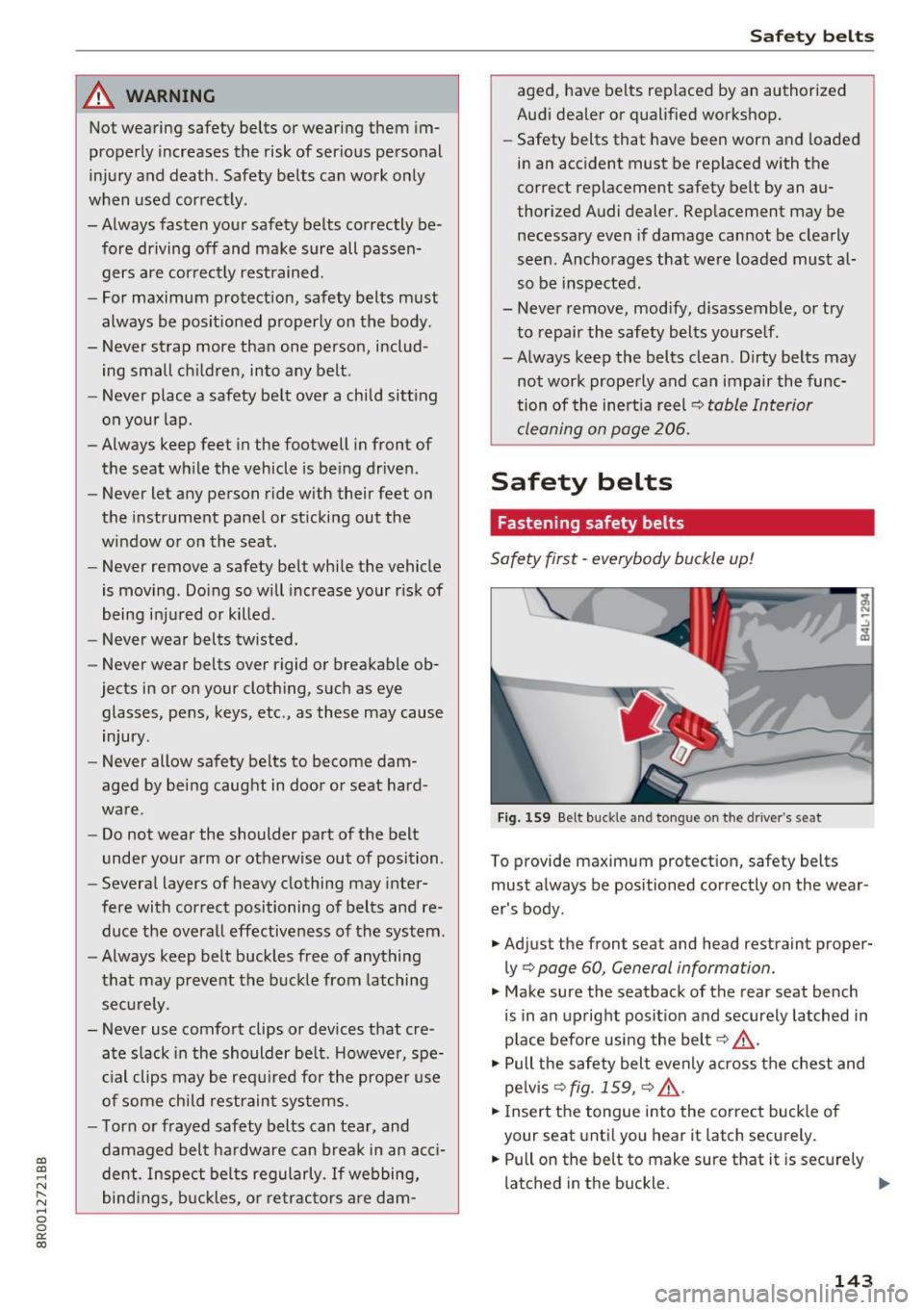
Fig. 159 Belt buckle and tongue on the driver 's seat
To provide maximum protection, safety belts
must always be positioned correctly on the wear
er's body .
.. Adjust the front seat and head restraint proper
ly¢
page 60, General information.
.. Make sure the seatback of the rear seat bench
is in an upright position and securely latched in
place before using the belt¢,&. .
.. Pull the safety belt evenly across the chest and
pelvis
¢fig. 159, ~ ,&. .
.. Ins ert the tongue into the correct buckle of
your seat until you hear it latch securely.
.. Pull on the belt to make sure that it is securely
latched in the buckle.
IIJ,,
143
Page 151 of 296
CD
CD
.... N ,-... N ..... 0 0 C<'. 00
also not inflate in side or rear collisions, or in
ro ll-overs.
A lwa ys rememb er: Airbags will deploy only o nce,
and on ly in certain kinds of coll is ions. Your safety
be lts are always there to offer protection in those
situations in which airbags are not supposed to
deploy, or when they have a lready deployed; for
examp le, when your vehicle str ikes or is struck by
another after the first collis ion.
This is just one of the reasons why an airbag is a
supp lementary restraint and is not a substitute
for a safety belt. The airbag system works most effect ively when used with the safety belts.
Therefore, always properly wear your safety belts
c::>page 140.
A WARNING
Sitting too close to the steer ing whee l or in
st rument panel will decrease the effect ive
ness of the airbags and will inc rease the risk
o f persona l injury in a co llision.
- Never sit closer than 10 inches (25 cm) to
the steering wheel or instrument panel.
- If you cannot sit mo re than 10 inches
( 2 5 cm) from the steering wheel, inves ti
gate whethe r adaptive equipment may be
available to help you reach the pedals and
increase your seating distance from the
steering wheel.
- If you are unrest rained, leaning forward, s it
ting s ideways or out of position in any way,
your risk of in jury is much h igher.
- Yo u will also receive serious injur ies and
cou ld even be killed if you are up against the
airbag or too close to it when it inf lates -
even with an Advanced Airbag.
- To reduce the risk of in jury when an airbag
inflates, a lways wear safety belts p roperly
i=> page 143, Safety belts .
-Always make certain that ch ild ren age 12 or
younger always ride in the rear seat. If chil dren are not properly restra ined, they may
be severe ly injured o r kill ed when an airbag
inflates .
- Never let children ride un restrained or im
prope rly restrained in the veh icle. Adjust the
fro nt sea ts properly.
-
Airb ag sys tem
-Never ride with the back rest recl ined.
-Always sit as fa r as possible from the steer-
ing wheel o r the instrument panel
c::> page 132.
- Always sit upright with your back against
the backrest of your seat.
- Never p lace your feet on the instrument
panel or on the seat. Always keep both feet
on the floor in front of the seat to help pre
vent ser ious injuries to the legs and hips if
the airbag inflates.
- Never recline the front passenger's seat to transpo rt objects. Items can also move into
the area of the s ide a irbag or the front air
bag during braking or in a sudden maneu
ver. Objects nea r the airbags can become
p roje ct il es and cause injury when an airbag
inflates.
A WARNING
A irbags tha t h ave deployed in a cr ash m ust be
r e p laced.
- Use o nly orig inal equipment airbags ap
p roved by A udi a nd insta lled by a trained
technici an who has the necessary tools and
diagnostic equipment to properly replace
any airbag in yo ur vehicle and assu re system
effect iveness in a crash.
- Never permit salvaged or recycled airbags to
be installed in you r vehicle .
Child restraints on the front seat - some
important things to know
.,. Be sure to read the important i nformat ion and
head the WARNINGS for important deta ils
about ch ildren and Advanced A irbags
c::> page 168 .
Even though your veh icle is equipped wit h an Ad
vanced Airbag System, make certa in that a ll chil
dre n, espec ia lly those 1 2 yea rs and yo unger, al
ways r ide in the back se at prope rly res train ed fo r
their age and size. The ai rbag on t he p asse nger
s ide makes t he fron t seat a potentia lly dange rous
place for a child to ride. The front seat is not the
sa fest p lace for a child in a forward-facing child .,.
149
Page 152 of 296
Airbag syste m
safety seat. It can be a very dangerous p lace for
an infant or a child in a rearward-facing seat.
The Advanced Airbag System i n your veh icle has
been ce rt ified to comp ly with the requirements
of United States Federal Motor Vehicle Safety
Standard (FMVSS)
208, as well as Canada Motor
Veh icle Safety Standard (CMVSS)
208 as applica
b le at the time your vehicle was manufactured.
According to requirements, the front Advanced
Airbag System on the passenger s ide has been
certified for "suppression " for infants of about
12 month old and younger and for "low risk de
p loyment " for children aged
3 to 6 years o ld (as
defined in the standard).
The
PA SSENGER AIR BAG OFF light in the instru
ment panel tells you when the front Advanced
Ai rbag on the passenger side has been tu rned off
by the elect ronic cont rol unit.
Each t ime you tur n on the ignit ion , the
PASSEN
GER AIR BAG OFF
light will come on fo r a few
seconds and :
- will stay on if the front passenger seat is not
occupied,
- will s tay on if there is a small c hild or child re
straint on the front passenger seat,
- will go off if the front passenger seat is occu
pied by an adult as reg istered by the weight
sensing mat¢
page 158, Monitoring the Ad
vanced Airbag System .
The PAS SENGER AIR BAG O FF light comes on
when the control unit detects a total we ight on
the front passenger seat that requires the front
airbag to be turned off.
If the tota l weight on the front passenger seat is
more than that of a typical 1 year -old child but
less than the we ight of a small adult, the front
a irbag on the passenger side can deploy (the
PAS SENGER AIR BAG OFF light does not come
on) .
If the PAS SENGER AIR BAG OFF light does
not come on, the front a irbag on the passenger
side has not been turned off by the electronic
control unit and can deploy if the control unit
senses an impact that meets the condit ions stor
ed in its memory.
For e xample, the airbag may deploy if:
150
- a small chi ld that is heavier than a typica l 1
year-o ld child is on th e front passenger seat
(regard less of whether the child is in one of the
child safety seats listed¢
page 170), or
- a child who has outgrown c hild restraints is on
the front passenger seat.
If the front passenger a irbag is t urned off, the
PASSENGER AIR BAG OFF light comes on in the
instrument cluster and stays on.
The fro nt airbag on the passenge r side may
not
deploy (the PAS SENGER AIR BAG OFF light does
not ill uminate and stay lit) even if a small adu lt
or teenager, or a passenger who is not sitting up
right with thei r back against a non-recl ined back
rest with the ir fee t on the vehicle floor in front of
the sea t is on the fron t passenger sea t
<=> page 132, Proper seating position for the driv
er .
If the front passenger a irbag deploys, the Feder
al Standard requires the airbag to meet the "low
risk" deployment cr iteria to reduce the r isk of in
jury through interaction w ith the airbag . "low
risk " deployment occurs in those crashes that
take place at lowe r de cele rations as defined in
the e lec tronic co ntro l unit ¢
page 159, PASSEN
GER AIR BAG OF F light.
Always remembe r, a chi ld safety seat or infant
c ar rie r ins talled on the front seat may be s truck
and knocked ou t of posit ion by t he rap idly i nflat
i ng passenge r's airbag in a frontal coll is ion . The
airbag could greatly red uce the effectiveness of
the child restraint and even seriously injure the child during inflation.
Fo r th is reason, and beca use the back seat is the
safest place for children -when properly restrain
ed according to their age and size -we strongly
recommend that children always sit in the back
seat
c> page 168, Child safety .
A WARNING
A child in a rearward-facing child safety seat
installed on the front passenger seat will be
seriously injured and can be killed if the front
a ir bag inflates - even with an Advanced Airbag
Sys tem.
Ill>
Page 154 of 296
Airbag syste m
Front airbags
Description of front airbags
The airbag system can provide supplemental
protection to properly restrained front seat occu
pants.
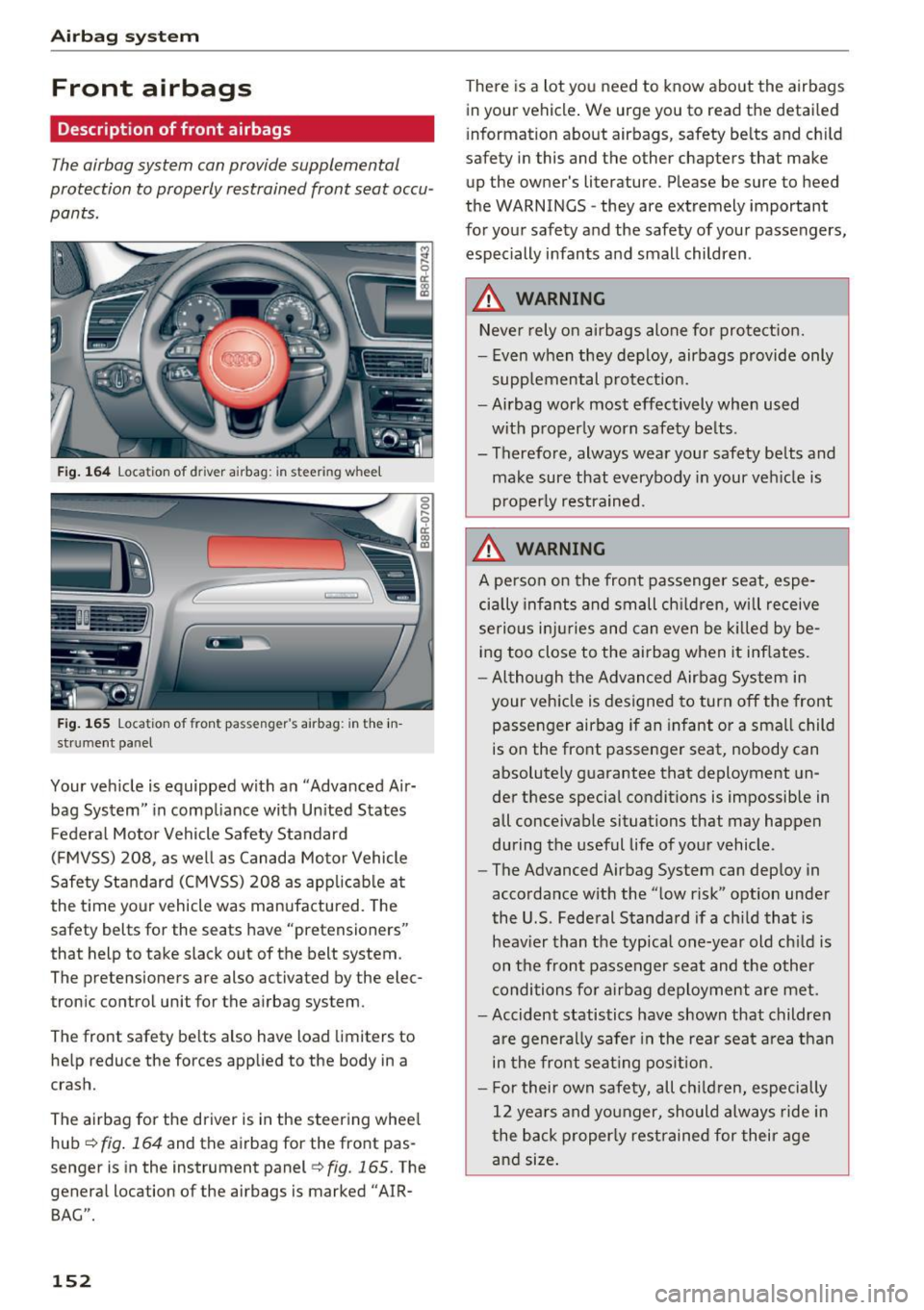
Fig. 164 Location of driver airbag: in steering whee l
Fig. 165 Location of front passenger's airbag: in the in
strument panel
Your veh icle is equipped with an "Advanced Air
bag System" in compliance with Un ited States
Federa l Motor Vehicle Safety Standard
(FMVSS) 208, as well as Canada Motor Vehicle
Safety Sta ndard (CMVSS) 208 as app licable at
the time your vehicle was manufactured. The
safety belts for the seats have "pretensioners"
that help to take slack out of the belt system.
The pretensioners are also activated by the elec
tronic control unit for the airbag system.
The front safety be lts also have load limiters to
help reduce the forces applied to the body in a
crash.
The airbag for the driver is in the steering wheel
hub<=>
fig . 164 and the airbag for the front pas
senger is in the instrument panel
<=>fig. 165. The
general location of the airbags is marked "AIR
BAG".
152
There is a lot you need to know about the airbags
in your vehicle . We urge you to read the detailed
i nformation about airbags, safety belts and child
safety in this and the other chapters that make
up the owner's literature. Please be sure to heed
the WARNINGS -they are extremely important
for your safety and the safety of your passengers,
especially infants and small children .
.&_ WARNING -
Never rely on airbags alone for prote ct ion.
- Even when they deploy, airbags provide only supp lemental protection.
- Airbag work most effectively when used with properly worn safety be lts.
- Therefore, always wear your safety belts and make sure that everybody in your veh icle is
properly restrained .
.&_ WARNING
A person on the front passenger seat, espe
cially infants and small ch ildren, wi ll receive
serious inju ries and can even be killed by be
ing too close to the airbag when it inf lates.
- Although the Advanced Airbag System in
-
your vehicle is designed to turn off the front passenger airbag i f an infant or a small child
is on the front passenger seat, nobody can
absolutely guarantee that deployment un
der these special conditions is impossible in
all conceivable situations that may happen
during the useful life of your vehicle.
- The Advanced Airbag System can deploy in
accordance with the "low risk" option under
the U.S. Federal Standard if a child that is
heav ier than the typical one-year old ch ild is
on the front passenger seat and the other
conditions for airbag deployment are met.
- Accident statistics have shown that children are generally safer in the rear seat area than
in the front seat ing pos ition.
- For their own safety, all chi ld ren, especially
12 years and younger, should always ride in
the back proper ly restrained for their age
and size .
Page 155 of 296
CD
CD
.... N ,-... N ..... 0 0 C<'. 00
Advanced front airbag system
Your vehicle is equipped with a front Advanced
Airbag System in compliance with Un ited States
F edera l Motor Vehicle Safety Standard 208, as
well as Canada Motor Vehicle Safety Standard
(CMVSS) 208 as applicable at the time your vehi
cle was manufactured .
The front Advanced Airbag System supp lements
the safety belts to provide additional protection
for the driver 's and front passenger's heads and
upper bodies in frontal crashes . The airbags in
f late only in frontal impacts when the veh icle de
cele rat ion is high enough.
The front Advanced Airbag System for the front
seat occupants is not a substitute for your safety be lts . Rather, it is part of the overall occupant re
s tra int system in your vehicle. Always remember
that the airbag system can on ly help to protect
you, if you are sitting upr ight, wear ing your safe
ty belt and wear ing it prope rly . This is why you
and your passengers must always be prope rly re
stra ined, not just beca use the law req uires yo u to
be .
The Advanced Airbag System in your veh icle has
been ce rtified to meet the "low r is k" requi re
ments fo r 3 and 6 ye ar-old children o n the pas
senger side and very sma ll adults on the drive r
side . The low risk dep loyment cr iteria are intend
ed to help reduce the risk of injury through inter
action with the front a irbag that can occur, for
examp le, by being too close to the steering wheel
and instrument panel when the airbag inflates .
In addition , the system has been certified to
comp ly with the "suppression" requi rements of
the Safety Standard, to turn off the front a irbag
for i nfants 12 months old and younger who are
restrained on the front passenger seat in child re
stra ints that are listed in the Standa rd
¢ page 170, Child restraints and Advanced Air
bags.
"Suppress ion" requ ires the front a irbag on the
passenger side to be turned off if:
- a ch ild up to about one year of age is restra ined
on the front passenger seat in one of the rear
facing or forward -fac ing infant restra ints listed
Airb ag sys tem
in Federal Motor Veh icle Safety Standard 208
with which the Advanced Airbag System in your
veh icle was certif ied. For a List ing of the child
restraints that were used to certify your vehi
cle's compliance with the US Safety Standard
¢ page 170,
-weight less than a threshold level stored in the
con trol un it is detected on the front passenger
seat .
When a person is detected on the front passen ger seat, weighing more than the total weight of
a chi ld that is about
1 year old restra ined in one
of the rear-facing or forward -fac ing infant re
straints (listed in Federal Motor Veh icle Safety
Standard 208 with w hich the Advanced A irbag
System in your veh icle was certified), the front
airbag on the passenge r side may o r may not de
ploy .
T he
PAS SENGER AIR BAG OFF lig ht comes o n
whe n the elect ronic con trol uni t detects a tota l
weight on the fron t passenger sea t th at req uires
the front a irbag to be turned off . If the
PASSEN
GER AIR BAG OFF
light does not come on, the
front airbag on the passenger side has not been
turned off by the control unit and can dep loy if
the control unit senses an impact that meets the
condit io ns stored in its memory .
If the total weight on the front passenger seat is
more than that of a typica l 1 year-old, but less
than the weight of a small adult, the front airbag
o n the passenger s ide may deploy (the
PAS SEN
GER AIR BAG OFF
light does not come on) .
For example , the ai rb ag may deploy if :
- a small ch ild that is heav ier than a typ ica l 1
yea r-o ld child is on the front passenger seat
(regard less of whether the child is in one of the
child safety seats listed
¢ page 170),
- a child who has outgrown c hild restraints is on
the front passenger seat.
If the front passenge r a irbag is t urned off, the
PASSENGER AIR BAG OFF light in the center of
the instr ument pane l wi ll come on and stay on .
T he front airbag on the passenger s ide m ay
not
deploy (the PASSENGER AIR BAG OFF light does
not illuminate and stay lit) if: ..,.
153
Page 161 of 296
a,
a,
..... N r-N ..... 0 0
0:
co
PASSENGER AIR BAG OFF light
Fig. 167 Sect ion from the instrument panel: PASSENGER
AIR BAG O FF light
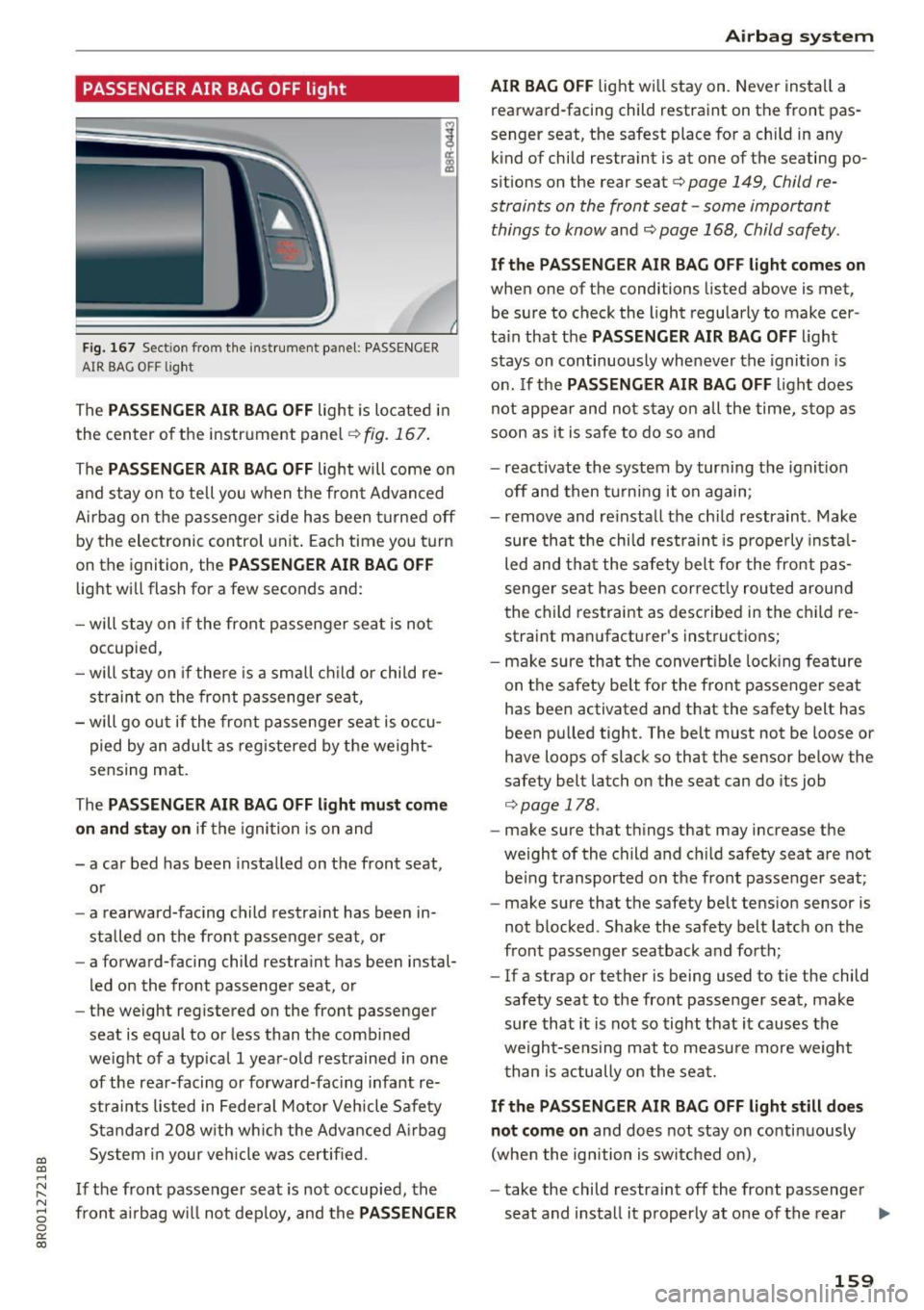
The PA SSENGER AIR BAG O FF light is located i n
the center of the instrument pane l¢
fig. 167 .
The PASSENGER AIR BAG OFF light will come on
and stay on to tell you when the front Advanced
Ai rbag on the passenger side has been t urned off
by the electronic control unit . Each time you turn
on the ignition, the
PA SSEN GER AIR BAG OFF
light will flash for a few seconds and:
- will stay on if the front passenger sea t is not
occupied,
- will stay on if the re is a small child or child re
straint on the front passenger seat,
- will go ou t if the front passenge r seat is occu
pied by an adul t as reg istered by the weight
sensing mat.
The
PASSENGER AIR BAG OFF light mu st come
on and stay on
if the ignition is on and
- a car bed has been installed on t he front seat,
or
- a rearward-facing child restraint has been in
stalled on the front passenger seat, or
- a forward-facing child restra int has been instal
led on the front passenger seat, or
- the weight registered on the front passenger
seat is equal to or less than the combined
weight of a typical 1 year-old restrained in one
of the rear-facing or forward-fac ing infant re
straints listed in Federal Motor Vehicle Safety
Sta ndard 208 with w hich the Adva nced A irbag
System in your veh icle was certified.
I f the front passenger seat is not occupied, the
front a irbag w ill not deploy, and the
PASSENGER
Airb ag sys tem
AIR BAG OFF light wi ll stay on. Never install a
rearward-facing child restraint on the front pas
senger seat, the safest place for a ch ild in any
k ind of child restraint is at one of the seating po
sitions on the rear seat¢
page 149, Child re
straints on the front seat -some important
things to know
and r::;, page 168, Child safety.
If the PAS SENGER AIR BAG OFF light comes on
when one of the conditions listed above is met,
be su re to check the light regularly to make cer
ta in that the
PASSENGER AIR BAG OFF li ght
stays on continuously whenever the ignition is
on. If the
PASSENGER AIR BAG OFF li ght does
not appear and not s tay o n all the time, stop as
soon as it is safe to do so and
- reactivate the system by turning the ignit ion
off and then t urning it on again;
- remove and re insta ll the child restraint . Make
sure that the child restraint is properly insta l
led and tha t the safety belt for the fro nt pa s
senger seat has bee n correct ly routed around
the child res traint as desc ribed in the c hild re
stra int man ufactu rer's instructions;
- make sure that the convert ible lo ck ing fea ture
on the safety be lt for the front passenger seat
has been activated and that the safety belt has
been pulled tight. The belt must not be loose or
have loops of slack so that the sensor be low the
safety belt latch on the seat can do its job
c:;, page 178 .
-make sure that things that may increase the
weight of the child and ch ild safety seat are not
be ing transported on the front passe nger seat;
- make sure that the safety belt tens ion sensor is
not blocked . Shake the safety belt latch on the
front passe nger seatback and forth;
- If a strap or tether is being used to tie the child
safety seat to the front passenger seat, make
sure that it is not so tight that it causes the
weight-sens ing mat to measu re more weight
t han is actually on the seat.
If th e PA SS ENGER AIR BA G OFF light still does
not come on
and does not stay on continuously
(whe n the ignition is switc hed on),
- take the child restraint off the front passenger
seat and insta ll it properly at one of the rear
Iii--
159
Page 163 of 296
CD
CD
.... N ,-... N .... 0 0 C<'. 00
OFF light comes on and stays on all the time
whenever the ignition is switched on.
A WARNING
- If the PASSENGER AIR BAG OFF light does
not go out when an adult is sitting on the
front passenger seat after taking the steps described above, make sure the adult is
properly seated and restrained at one of the
rear seating positions.
- Have the airbag system inspected by your
authorized Audi dealer before transporting
anyone on the front passenger seat.
(0 Tips
If the weight-sensing mat in the front passen
ger seat detects an empty seat, the front air
bag on the passenger side will be turned off,
and
PASSENGER AIR BAG OFF will stay on.
Repair, care and disposal of the airbags
Parts of the airbag system are installed at many
different places on your Audi. Installing, remov
ing, servicing or repairing a part in an area of the
vehicle can damage a part of an airbag system and prevent that system from working properly in a collision.
There are some important things you have to know to make sure that the effectiveness of the
system will not be impaired and that discarded
components do not cause injury or pollute the
environment.
A WARNING
Improper care, servicing and repair proce
dures can increase the risk of personal injury
and death by preventing an airbag from de
ploying when needed or deploying an airbag
unexpectedly:
-
- Never cover, obstruct, or change the steer
ing wheel horn pad or airbag cover or the in
strument panel or modify them in any way.
- Never attach any objects such as cupholders
or telephone mountings to the surfaces cov
ering the airbag units.
Airbag system
-For cleaning the horn pad or instrument
panel, use only a soft, dry cloth or one mois
tened with plain water. Solvents or cleaners
could damage the airbag cover or change
the stiffness or strength of the material so
that the airbag cannot deploy and protect properly.
- Never repair, adjust, or change any parts of
the airbag system.
-All work on the steering wheel, instrument panel, front seats or electrical system (in
cluding the installation of audio equipment,
cellular telephones and CB radios, etc.) must be performed by a qualified technician
who has the training and special equipment
necessary.
- For any work on the airbag system, we
strongly recommend that you see your au
thorized Audi dealer or qualified workshop.
- Never modify the front bumper or parts of
the vehicle body.
- Always make sure that the side airbag can
inflate without interference:
- Never install seat covers or replacement
upholstery over the front seatbacks that
have not been specifically approved by
Audi.
- Never use additional seat cushions that
cover the areas where the side airbags in
flate.
- Damage to the original seat covers or to
the seam in the area of the side airbag
module must always be repaired immedi
ately by an authorized Audi dealer.
- The airbag system can be activated only
once. After an airbag has inflated, it must
be replaced by an authorized Audi dealer or
qualified technician who has the technical
information, training and special equipment
necessary.
- The airbag system can be deployed only
once. After an airbag has been deployed, it
must be replaced with new replacement
parts designed and approved especially for
your Audi model version. Replacement of complete airbag systems or airbag components must be performed by qualified work-
shops only. Make sure that any airbag
Ill-
161
Page 168 of 296
Airbag system
since the circumstances will vary considerab ly be
tween one collision and another. Important fac
tors include, for example , the nature (hard or
soft) of the impacting object, the ang le of im
pact, vehicle speed, etc.<=>
page 166, How side
curtain airbags work .
Aside from their normal safety function, safety
belts work to help keep the driver or front pas
senger in position in the event of a collision so
that the side curtain airbags can provide protec
tion .
The airbag system is not a substitute for your safety belt. Rather, it is part of the overall occu
pant restraint system in your vehicle . Always re
member that the airbag system can only help to
protect you if you a re wearing your safety belt
and wearing it properly . This is another reason
why you should always wear your safety belts,
not just because the law requires you to do so
<=> page 140, General information.
It is important to remember that whi le the s ide
curtain airbag system is designed to help reduce
the likelihood of serious injuries, other injuries,
for example, swelling, bruising, and minor abra
s ions can a lso be associated with these airbags .
Remember too, these a irbags w ill deploy only
once and only in certa in kinds of accidents -your
safety belts are always there to offer protection.
The side curtain airbag system basically
consists of:
-The electronic control module and external side
impact sensors
- The side curtain airbags
above the front and
rear side windows
- The airbag indicator light in the instrument
panel
The airbag system is monitored electronically to
make certain it is f unctioning properly at all
times. Each time you turn on the ignition, the air
bag system ind icator light will come on for a few
seconds (self d iagnost ics) .
The side curtain airbag is not activated:
- if the ignition is turned off,
-in sid e collisions when the acceleration meas-
ured by the sensor is too low,
166
- in rear -end collisions.
./1. WARNING
-Safety belts and the airbag system will only
provide protect ion when occupants are in
the proper seat ing position
<=> page 60, Gen
eral information .
- If the airbag indicator light<=> page 13
comes when the veh icle is being used, have
the system inspected immediately by your
author ized Audi dealer. It is possible that
the airbag will inflate when it is not sup
posed to, or will not inflate when it should.
How side curtain airbags work
Side curtain airbags can work together with side
airbags to help reduce the risk of head and upper torso injuries for occupants who ore properly re
strained.
Fig. 171 Illus tratio n of principle: Inflated sid e c urta in a ir
bags o n the left s ide
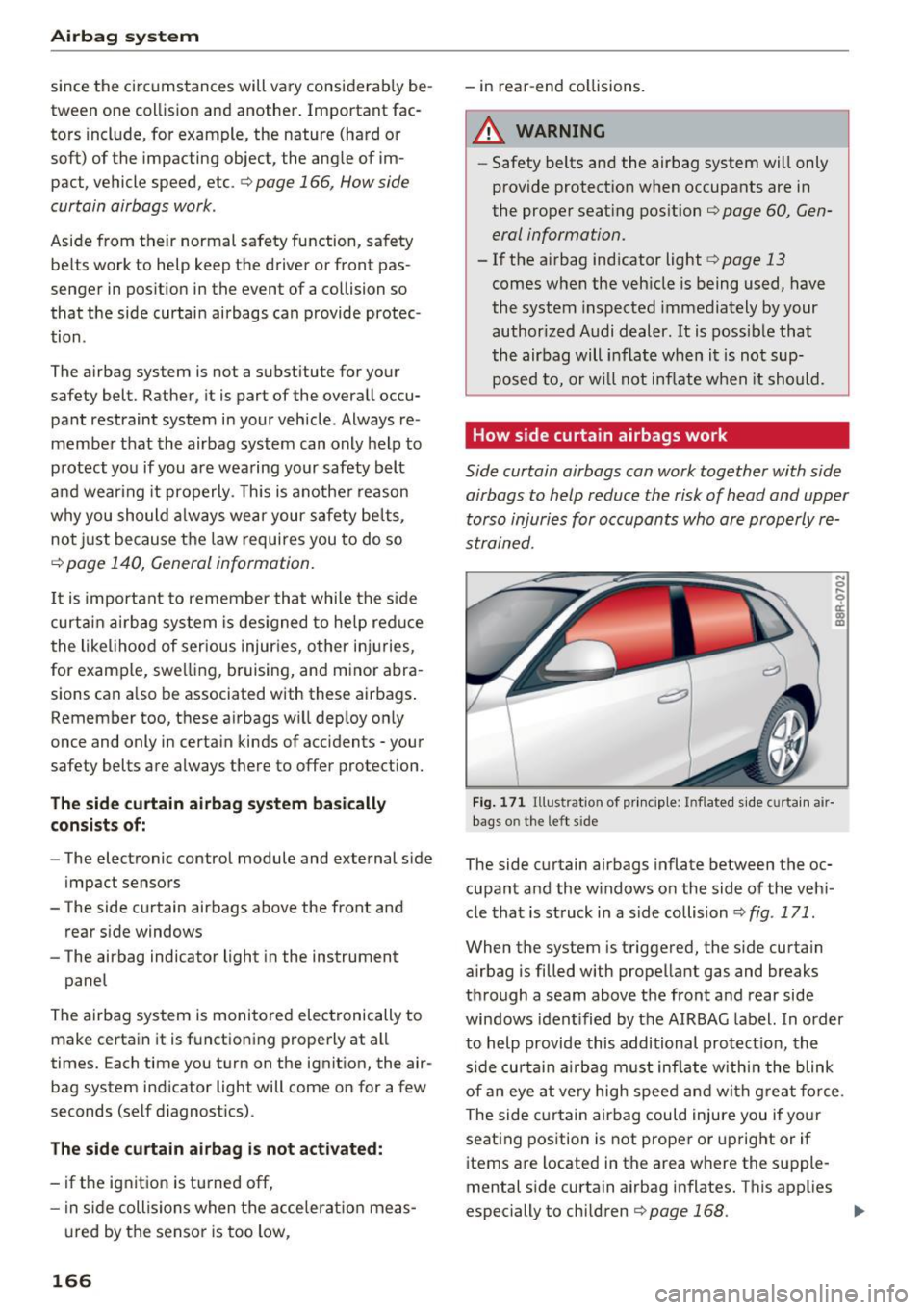
The side curtain airbags inflate between the oc
cupant and the windows on the side of the vehi
cle that is struck in a side collision
<=> fig. 171 .
When the system is triggered, the s ide curtain
airbag is filled with propellant gas and breaks
through a seam
above the front and rear side
windows identified by the AIRBAG label. In order
to help provide this additional protect ion, the
s ide curtain a irbag must inflate withi n the blink
of an eye at very high speed and with great force.
The side curtain airbag could injure you if your
seating position is not proper or upright or if
items are located in the area w here the supple
mental side curtain airbag inflates. This applies
especially to ch ildren
r=> page 168 . .,..
Page 171 of 296
CD
CD
.... N ,-... N ..... 0 0 C<'. 00
A WARNING
Child ren on the front seat of any car even w ith
Advanced Airbags can be seriously injured or
even killed when an airbag inflates. A child in
a rearward-facing child safety seat installed
on the front passenger seat will be seriously
injured and can be killed if the front airbag in
flates.
- The inflating airbag will hit the child safety
seat or infant carrier with great force and
will smash the ch ild safety seat and child
against the backrest, center armrest, or
door.
- Always install rear-facing child safety seats
on the rear seat.
- If you must install a rearward fac ing ch ild
safety seat on the front passenger seat in
exceptiona l circumstances and the
PA SSEN
G ER AIR BAG OFF
light does not come on
and stay on, immediately insta ll the rear
facing child safety seat in a rear seating po
sition and have the airbag system inspected
immediately by your Audi dealer.
A WARNING
If, in exceptional circumstances, you must in
stall a forward-facing chi ld restraint on the
front passenger's seat :
- Always make sure the forward-fac ing seat
has been designed and certified by its man
ufacturer for use on a front seat with a pas
senger front and s ide a irbag .
- Always follow the manufacturer's instruc
tions prov ided with the ch ild safety seat or
carrier.
- Always move the front passenger seat to
the highest position in the up and down ad
justment range and move it back to the
rea rmost position in the seat's fore and aft
adjustment range, as fa r away from the air
bag as possib le, before insta lling the for
ward-facing child restraint .
- Always ma ke sure that the safety bel t upper
anchorage is behind the child restraint and
not next to or in front of the chi ld restraint
so that the safety belt will be properly posi
tioned.
Ch ild safety
-Always make sure that the PA SSENGER AIR
BAG OFF
light comes on and stays on all the
time whenever the ignition is switched on.
@ Tips
A lways replace child restraints that were in
stalled in a vehicle during a crash. Damage to
a child restraint that is not v is ible could cause
i t to fai l in another collision situat ion.
Advanced front airbag system and children
Your vehicle is equipped with a front "Advanced
Airbag System" in compliance with Un ited States
Federal Motor Vehicle Safety Standa rd (FMVSS)
208, as we ll as Canada Moto r Vehicle Safety
Standard (CMVSS) 208 as app licab le at the time
your vehicle was manufactured.
T he Advanced A irbag system in you r vehicle has
been certified to meet the "low-risk" require
ments fo r 3- and 6-year old ch ildren on the pas
senger side and sma ll adu lts on the driver side.
T he low risk deployment criter ia are intended to
reduce the risk of injury t hrough interaction with
the airbag that can occur, for example, by being
too close to the steering wheel and instrument
panel when the airbag inflates . In addition, the
system has been cert ified to comply with the
"supp ression" requirements of the Safety Stand
ard, to turn off the front a irbag fo r infants up to
12 months who are restrained on the front pas
senger seat in c hild rest raints t hat are lis ted in
the Standard.
E ven though your veh icle is eq uipped wit h an Ad
vanced Airbag system, all ch ild ren, especially
those 12 yea rs and younger, should a lways ride
in the back seat proper ly restrained for their age
and size . The airbag on the passenger side makes
the front seat a potentially dangerous p lace for a
child to ride. The front seat is not the safest place
for a child in a forward-fac ing ch ild safety seat. It
can be a very dangerous place fo r an infant or a
larger ch ild in a rearward-facing seat .
169
Page 219 of 296
Checking and Filling Hood
Releasing the engine hood
The engine hood is released from inside the vehi
cle .
Fig. 194 Drive r's side footwell: e ng ine hood re lease lever
"' Wi th the driver's door open, pu ll th e leve r un
der the instrument panel in the direction of the
arrow ¢fig.194 .
The hood pops up s light ly unde r spri ng p ressure.
Opening the engine hood
Fi g. 19 5 Release lever under t he eng ine hood
Before opening the engine hood, make sure tha t
the w indshield wipe rs are fla t against the w ind
shie ld. Otherwise, they could d amage t he paint
on the hood .
"' Pull up on the release under the hood
~fig . 195. Th is releases the cat ch.
"' Open the hood all the way¢&,, .
a,
~ ,&. WARNING
r--
~ Hot engine coo lant can burn you. 0 0
0:
co
Checking and Filling
- To reduce the r isk of being burned, never
open the hood if you see or hear steam or
coo lant escaping from the engine compart
ment. Wa it until no steam or coolant can be
seen or hea rd before carefully ope ning t he
hood.
Closing the engine hood
"' Pull the hood down until the press ure from the
s truts is red uced.
"' Le t the hood
drop down and latch in p lace. Do
not try to push it shut ;
it may fail to engage
¢ &,, .
A WARNING
- -
A hood that is not completely latched co uld
f ly up and block your view while dr iv ing.
- When you close the engine hood, c heck it to
make sure the safety catch has prope rly en
gaged . The hood should be flush with the
sur rounding vehicle body parts .
- If you notice while driv ing that the hood is
not secured prope rly , stop at once and close
it .
Working in the engine compartment
Be especially careful whenever you work in the
engine compartment.
Whenever you must pe rfo rm any work in the
eng ine compa rtment , for e xample check ing and
fill ing diffe rent fluids, the re is a ris k of injury,
burns and acciden ts. To pre vent personal injur y
always ob serve the fo llowing WARNINGS . The
eng ine compartment of any vehicle is a hazard
ou s area
~ .&, .
A WARNING
To he lp avoid injury, befo re yo u check any
t h ing u nder the hood:
- Tur n off the engine.
- Remove the ig nitio n key .
- Apply the parking brake.
-
- Move selector lever of automatic t ransm is-
sion to P (Park).
217