fuel AUDI S8 2013 Owner's Manual
[x] Cancel search | Manufacturer: AUDI, Model Year: 2013, Model line: S8, Model: AUDI S8 2013Pages: 318, PDF Size: 79.34 MB
Page 219 of 318
(D Note
-Never try to remove dirt, mud or dust if
the surface of the vehicle is dry. Never
use a dry cloth or sponge, since this
could scratch your vehicle's pa int or w in
dows .
- Never wash your car in bright sunlight.
Drops of water act as magnifying lenses
and may damage your paint.
- When you wash your car in the w inter : if
you r inse your vehicle w ith a hose, be
careful not to aim the stream of water
direct ly at locks, or at door or hatch
openings - they can free ze shut.
- Never use sponges des igned to remove
i nsects, or any kitchen scouring sponges
or similar products. They can damage
you r paint finish .
- Never use a dry cloth o r sponge to clean
the headligh ts. On ly use we t cloths or
sponges to prevent scratches .
It is best
to use soapy wate r.
- You sho uld remove debris (su ch as in
sects) from the head ligh t lenses on a
r egular basis, for example when refuel
ing your vehicle . Never clean the head
li ghts w ith a dry cloth or sponge. Use a
wet cloth or sponge. It is best to use
soapy water.
@ For the sake of the environment
On ly wash the vehicle in facilit ies specially
designed for that purpose. Th is w ill reduce
the risk of d irty water contaminated with
oil from entering the sewer system . In
some areas, wash ing vehicles outs ide of
these facilit ies is prohib ited.
Washing your vehicle with a power
washer
Cleaning the exterior of your car with a high
pressure power washer is safe as long as you observe a few simple rules .
~ Before usi ng the power washe r, make sure
yo u have re ad an d u nderstood the WARN-
Cleaning and protec tion 217
INGS ¢ A in General information on
page 215 .
~ Always follow the operating instr uctions for
the power washer.
~ Make sure that the jet on the spray hose
produces a "fan shaped spray" .
~ Do not hold the spray nozzle too close to
soft mater ials .
Keep a distance from soft materia ls suc h as
rubbe r hoses or insulating material as well as
senso rs and camera lenses .
When cleaning the vehicle with a power was h
er
always follow the operating instructions .
This applies part icu larly to the operati ng pres
su re and the spraying d istance . Do not point
the spray d irectly at the seals around the side
windows, around the doo rs, on t he rear lid or
o n the sunroo f*. L ikewise, do no t poi nt i t di
re ct ly a t tires, rubbe r hoses, insula tion mate
ria l or senso rs ~
page 218 . Hold the spray
nozzle at least 1.3 ft (0.4 m) away from the
vehicle.
Do no t use a high-pressure power was her to
remove snow and ice.
Do not use a jet which sprays wate r in a d irect
stream o r one that has a ro ta ti ng jet.
Water temperature should not exceed 140 °F
(60 °().
&_ WARNING
N eve r wash tires wi th a jet that sprays w a
ter in a direc t stream . T his co uld ca use in
v isi ble damage to the t ires and weaken
them, even i f the spray is from a re lative ly
l ong distance and for a sho rt time. Dam
aged and weakened tires can fail and cause
accidents and personal in jury.
Q) Note
To avoid damaging yo ur vehicle, a lways
make sure that there is suffic ient d istance
between the spray head and soft materia ls
lik e rubber hoses, plast ic parts a nd sound
deaden ing mater ia ls as well as sensors
and camera lenses . Never a im t he spray
head at the same point fo r a long time .
•
•
Page 220 of 318

218 Cleaning and protection
This also applies to cleaning headlights
and painted bumpers. Remember: the
closer the nozzle is to the surface of the
material, the greater the stress on the ma
terial.
Caring for vehicles with matte finish
paint
Ap plies to vehicles: with matte fi nish pa in t
Vehicles with matte finish paint require spe
cial care due to the characteristics of the
paint.
Washing by hand
To avoid damaging the paint when washing,
first remove dust and large particles from
your vehicle. Insects, grease spots and finger
prints are best removed with a
special cleaner
for matte finish paint.
Apply the product using a microfiber cloth . To
avoid damaging the paint surface, do not use
too much pressure .
Rinse the vehicle thoroughly with water . Clean
the vehicle starting at the top and working to
ward the bottom using a
neutral shampoo
and a soft microfiber cloth . Stop frequently to
rinse the cloth thoroughly .
Clean the wheels and sill panels last. Use a
clean
sponge on these areas.
Rinse the vehicle thoroughly again and let it
air dry. If there are any water spots, they can
be removed using a
leather cloth.
Clean again with the special cleaner for matte
finish paint
if necessary.
Removing stubborn dirt
Bird droppings or tree sap
are best removed
with plenty of water and a microfiber cloth.
You should rinse off
gasoline residue immedi
ately with plenty of water.
_& WARNING
- Wash your vehicle only when the ignition
is switched off to reduce the risk of a
crash. -
Always read and heed all WARNINGS and
other information ¢
page 215.
@ Note
-Do not treat vehicle parts painted with
matte finish paint using polishing mate
rials or hard wax. These products could
cause damage to the appearance or sur
face that cannot be repaired.
- Never use protective wax. It can destroy
the matte finish effect.
- Do not place any stickers or magnetic
signs on vehicle parts painted with
matte finish paint. The paint could be
damaged when the stickers or magnets
are removed .
- To prevent paint damage, do not wash
the vehicle in direct sunlight.
- To prevent damage to the paint surface,
do not use insect removal sponges,
rough kitchen sponges or similar items.
- You should remove debris (such as in
sects) from the headlight lenses on a
regular basis, for example when refuel
ing your vehicle . Only clean the head
lights using a wet cloth or sponge, never
a dry one. Cleaning with soapy water is
recommended.
(D Tips
For more information on special cleaning
products designed for matte finish paint,
seeyourAudidea~~
' Sensors and camera lenses
- Remove snow with a hand brush and remove
ice with a de-icing spray that does not con
tain solvents.
- Clean the sensors (adaptive cruise control*,
parking system*) with a cleaning solution
that does not contain solvents and a soft
cloth.
- Dampen the camera lens with a household alcohol-based glass cleaner, and then wipe
the lens clean with a dry cloth . The area in
front of the camera lens is normally cleaned
by the windshield wipers (lane assist*) or .,.
Page 230 of 318
228 Fuel supply and filling your fuel tank
Fuel supply and filling
your fuel tank
Gasoline
Fuel supply
Using the righ t fuel helps keep the environ
ment cle an and preven ts engine dam age .
Fuel recommendation
The fuel recomme nded for you r vehicle is un
lead ed premium
g rade gasoline . See a lso
¢
pag e 292, Doto . Audi recommends usi ng
T OP TIER D eterge nt Gaso line wi th a mini mu m
octa ne ra tin g of 9 1 AKI (95 RON). For more
in fo rmation on TO P TI ER De tergent Gaso line,
p lease go to the officia l webs ite (www.toptier
gas.com).
Th e re commended g asoline oct ane r ating for
your engine can a lso be fo und on a label loca t
e d on the ins ide of the fue l filler flap . This rat
ing may be specified as A KI or RO N.
Your veh icle m ay also be oper ated using un
l ea ded regular g asoline with a min imum o c
tane rating of 87 AKI/91 R ON. However, using
87 AKI/91 RON octa ne f ue l w ill slightly re
d uce eng ine perfo rmance.
Use unleaded gasoline only. Unleaded g aso
line is availab le th rou gho ut the USA, Canada ,
and in most E uropean countries . We recom
mend that you do not ta ke yo ur vehicle t o
areas or countries where unleaded gasoline
may not be ava ilable.
F or mo re in format io n on refue ling your ve hi
cle, see¢
page 229.
Octane rating
Octa ne r ating in dicates a gaso line's abili ty to
res ist engine damagin g "knoc k" ca used by
p remature ign ition and detonation. Therefore,
buy ing the correct grade of gaso line is very
important to help prevent possible engine
damage and a loss of engine performance.
Gasoline most commonly used in the Unite d
States a nd Canada has the following octane r
at ings t hat can usu a lly be found on the fi ller
pump:
- Pre mium G ra de: 91 -9 6 A KI
- Regular Grade : 87 -90 AKI
Explanation of the abbreviations:
AKI = Anti K nock Index= (R+M) /2 = (RO N
+ MON)/2
R ON= Resea rch Octane Numb er
MON = Motor Octane Num ber .
(D Note
-Do not use a ny f ue l w it h octane rat ings
lower tha n 87 A KI or 9 1 RO N othe rwise
expensiv e engine damage w ill occur.
- Do
not use leaded gasoline . The use of
lead ed gasoline w ill severely damage
yo ur v ehicl e's catalytic co nve rter a nd its
ability to co ntrol exha ust e mission s.
Blended gasoline
Use of gasoline containing alcohol or
MTBE (methyl tertiary butyl ether)
You may use unleaded g asoline blende d with
alcohol o r MTBE (commonly re ferred to as
oxygenates) if the blende d mixture meets t he
f o llow ing criteria:
Blend of gasoline methanol (wood alcohol or
methyl alcohol)
- Anti -kno ck index mus t be 87 A KI or higher.
- Blend must contain no mor e than 3% me th-
anol.
- Blend must contain more than 2% co-sol-
ve nts .
Blend of gasoline and ethanol (grain alcohol
or ethyl alcohol)
- Anti -knoc k index must be 87 AKI or higher .
- Blend must not conta in mo re than 10%
ethanol.
Blend of ga soline and MTBE
- Anti-knoc k index must be 87 AKI or high er. ll-
Page 231 of 318
-Blend must contain not more than 15%
MTBE.
Seasonally adjusted gasoline
Many gasoline grades are blended to perform
espec ially we ll for winter or summer driving.
During seasonal change-over, we suggest that
you fill up at busy gas stat ions where the sea
sonal adjustment is more likely to be made in
time .
(D Note
-Methanol fuels which do not meet these
requirements may cause corrosion and
damage to plastic and rubber compo
nents in the fuel system .
- Do not use fue ls that fail to meet the
specified criter ia in this chapter.
- If you are unable to determine whether
or not a particular fue l blend meets the
specifications, ask your service station or
its fuel supp lier.
- Do not use fuel for which the contents
cannot be identified.
- Fuel system damage and performance
problems resulting from the use of fuels
different from those specified are not
the responsibility of Audi and are not
covered under the New Vehicle or the Emission Control System Warranties.
- If you experience a loss of fuel economy
or driveability and performance prob l ems due to the use of one of these fuel
blends, we recommend that you switch
to unblended fuel.
Gasoline additives
A major concern among many auto manufac
turers is carbon deposit build- up caused by
the type of gasoline you use.
Although gasoline grades differ from one manufacturer to another , they have certain
things in common. All gasoline grades contain
substances that can cause deposits to collect
on vital engine parts, such as fuel injectors
and intake valves. Although most gasoline brands include additives to keep engine and
Fuel supply and filling your fuel tank 229
fuel systems clean, they are not equally effec
tive .
A udi recommends using TOP TIER Detergent
Gasoline. For more info rmation on TOP TIER
Detergent Gasoline, please go to the official
website (www.toptiergas.com).
After an extended period of using inadeq uate
fuels, carbon deposit build-ups can rob your
engine of peak performance.
Q) Note
Damage or malf unct ion due to poor fue l
quality is not covered by the Aud i New Ve
hicle Limited Warranty.
Fuel tank
Fuel filler neck
The fuel filler neck is located on the right rear
side panel behind the fuel fille r flap.
If the power locking system should fail, you
can still open the flap manually -for deta iled
instruct ions see ¢
page 231.
You can find the fuel tank capacity of your ve
hicle in
Technical Data ¢ page 292.
The label on the inside of the fuel fi ller flap
tells you the correct fue l for your vehicle. For
more information about fuel specifications,
see ¢
page 228.
Your vehicle fue l tank has an on board refuel
li ng vapor recovery system. This feature helps
to prevent fuel vapors from escaping from the
tank and polluting the environment while you refuel your vehicle . In order to fill the tank
properly while protecting the environment,
please fo llow this refueling procedure careful
ly.
_&. WARNING
Under normal operating conditions, never
carry additional fuel containers in your car.
Gas canisters and other containers used to
transport f uel can be dangero us. Such con
tainers, full or empty, may leak and could
cause a fire in a collision. If you must
•
•
Page 232 of 318
230 Fuel supply and filling your fuel tank
transport fuel to use for your lawn mower,
snow blower, etc., be very careful and al
ways observe local and state laws regard
ing the use, transportat ion and storage of
such fuel containers. Make certain the con
tainer meets industry standards (ANSI/
AS TM F852 -86) .
(D Note
Never drive your vehicle until the fuel tank
is completely empty. The irregular supply
of fuel can cause misfiring. Gasoline could
enter the exhaust system and damage the
catalyt ic converter.
Refuelling
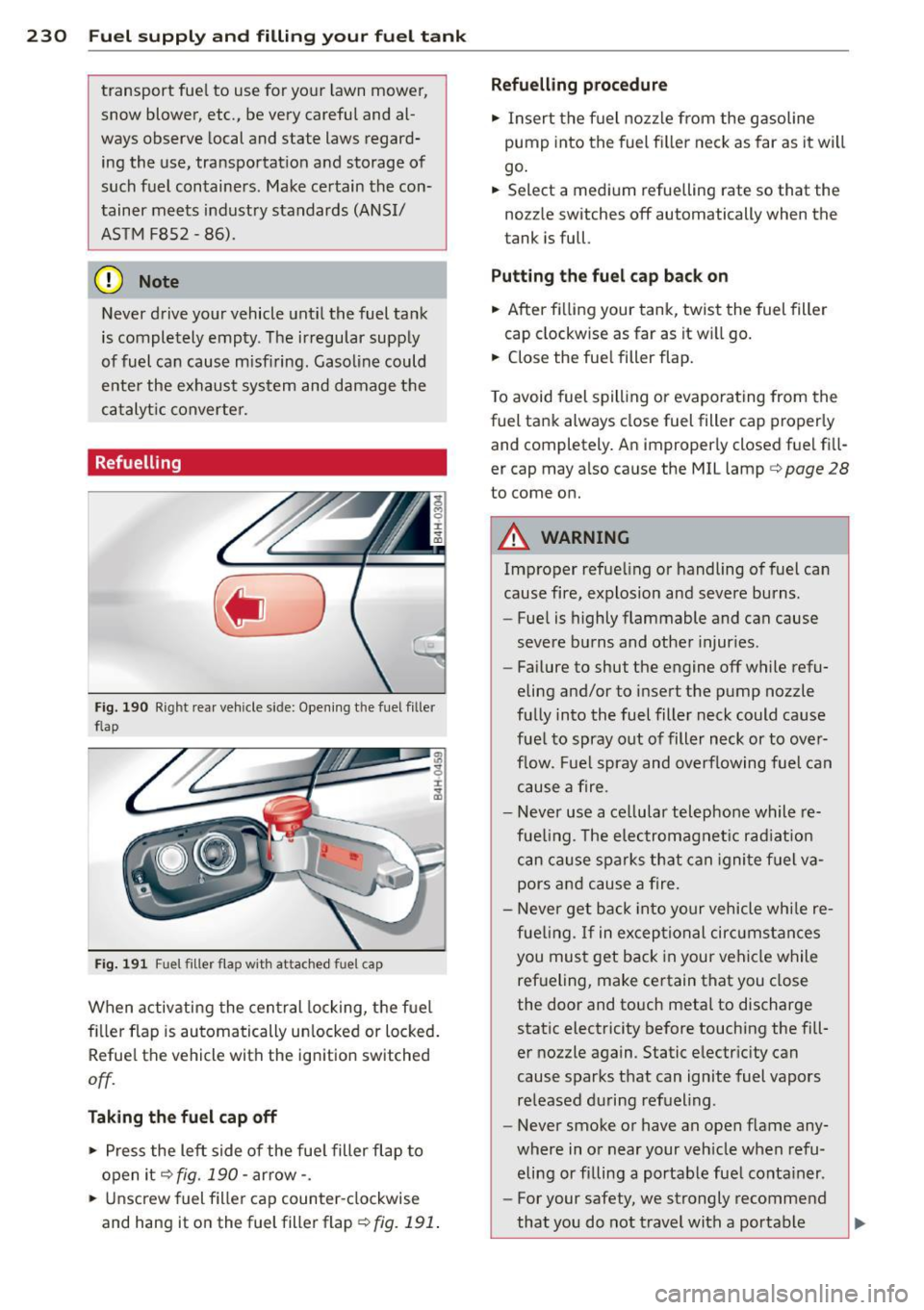
Fig. 190 Right rear vehicle side: Opening the fuel filler
flap
Fig . 191 Fuel filler flap with attached fuel cap
When activating the central locking, the fuel
fi ller flap is automatically un locked or locked.
Refuel the vehicle with the ignition switched
off.
Taking the fuel cap off
~ Press the left side of the fue l filler flap to
open it
q fig. 190 -arrow-.
~ Unscrew fuel filler cap counter-clockwise
and hang it on the fuel filler flap¢
fig. 191.
Refuelling procedure
~ Insert the fu el nozzle from the gasoline
pump into the fuel filler neck as far as it will
go .
~ Select a medium refuelling rate so that the
nozzle switches off automatically when the
tank is full.
Putting the fuel cap back on
~ After fi lling your tank, twist the fuel filter
cap clockwise as far as it w ill go.
~ Close the fue l filler flap.
T o avoid fuel spilling or evaporating from the
fuel tank always close fuel filler cap properly
and completely. An improperly closed fuel fill
er cap may also cause the MIL lamp¢
page 28
to come on.
A WARNING
Improper refue ling or handling of fuel can
cause fire, explosion and severe burns.
- Fuel is highly flammable and can cause
severe burns and other injur ies.
- Failure to shut the engine
off while refu
eling and/or to insert the pump nozzle
fully into the fuel filter neck could cause
fuel to spray out of filler neck or to over
flow. Fuel spray and overflowing fuel can
cause a fire.
- Never use a cellular telephone while re
fue ling. The electromagnet ic rad iat ion
can cause sparks that can ignite fuel va
pors and cause a fire.
- Never get back into your vehicle whi le re
fueling.
If in exceptional circumstances
you must get back in your vehicle while
refueling, make certain that you close
the door and touch metal to discharge
static electricity before touching the fill
er nozzle again. Static electricity can
cause sparks that can ignite fuel vapors
released during refueling.
- Never smoke or have an open flame any
where in or near your veh icle when refu
eling or filling a portable fuel container.
- For your safety, we strongly recommend
that you do not travel with a portable
Page 233 of 318
fuel container in your vehicle. The con
tainer, full or empty may leak and could
cause a fire, especially in a crash.
- If, under exceptional circumstances, you
must transport a portable fuel container,
please observe the following:
- Never fill a portable fue l container
while it is anywhere in or on the vehicle
(for example, in the luggage compart
ment, or on the tr unk). Static electrici
ty can build up while filling and can ig nite fuel vapors causing a fire .
- Always place a portable fuel container
on the ground before filling.
- Always keep the fi ller nozzle comp lete
ly inside the portable container before
and during filling.
- If filling a portable container made of
metal, the filler nozz le must always be
in contact with the container. Th is w ill
help prevent static electricity from dis
charging and cause a fire .
- Never sp ill fuel inside the vehicle or
luggage compartment. Fuel vapors are
h ighly flammable .
- Always observe local and state/provin
cial laws regarding the use, storage
and transportation of fuel containers .
- Make certain the fuel container meets
industry standards (ANSI/ ASTM
F852 -86) .
(D Note
If any fuel has spilled onto the car, it
should be removed immediately to prevent
damage to the paint.
~ For the sake of the environment
As soon as the correctly operated nozzle sw itches off automatically for the first
time, the tank is full. Do not try to add more fue l because fuel may spill out . In
add it ion, the expans ion space in the fuel
tank will be fi lled -causing the fuel to
overflow when it becomes warm and pol
lute the environment.
Fu el su ppl y and filling your fuel ta nk 231
@ Tips
- Running your engine while refue lling
may cause vapors to escape or even
cause fuel to spill out of the tank. This
would then shut off the fuel nozzle be
fore the tank is full.
- Do not refuel your vehicle with the igni
tion switched on. The fuel gauge may
otherwise not ind icate the correct fuel
level after refuell ing .
- The fuel filler flap of your vehicle is not
locked when you lock the vehicle from
the inside.
Fuel filler flap emergency release
You can open the fuel filler flap by hand if the
power locking system should fail .
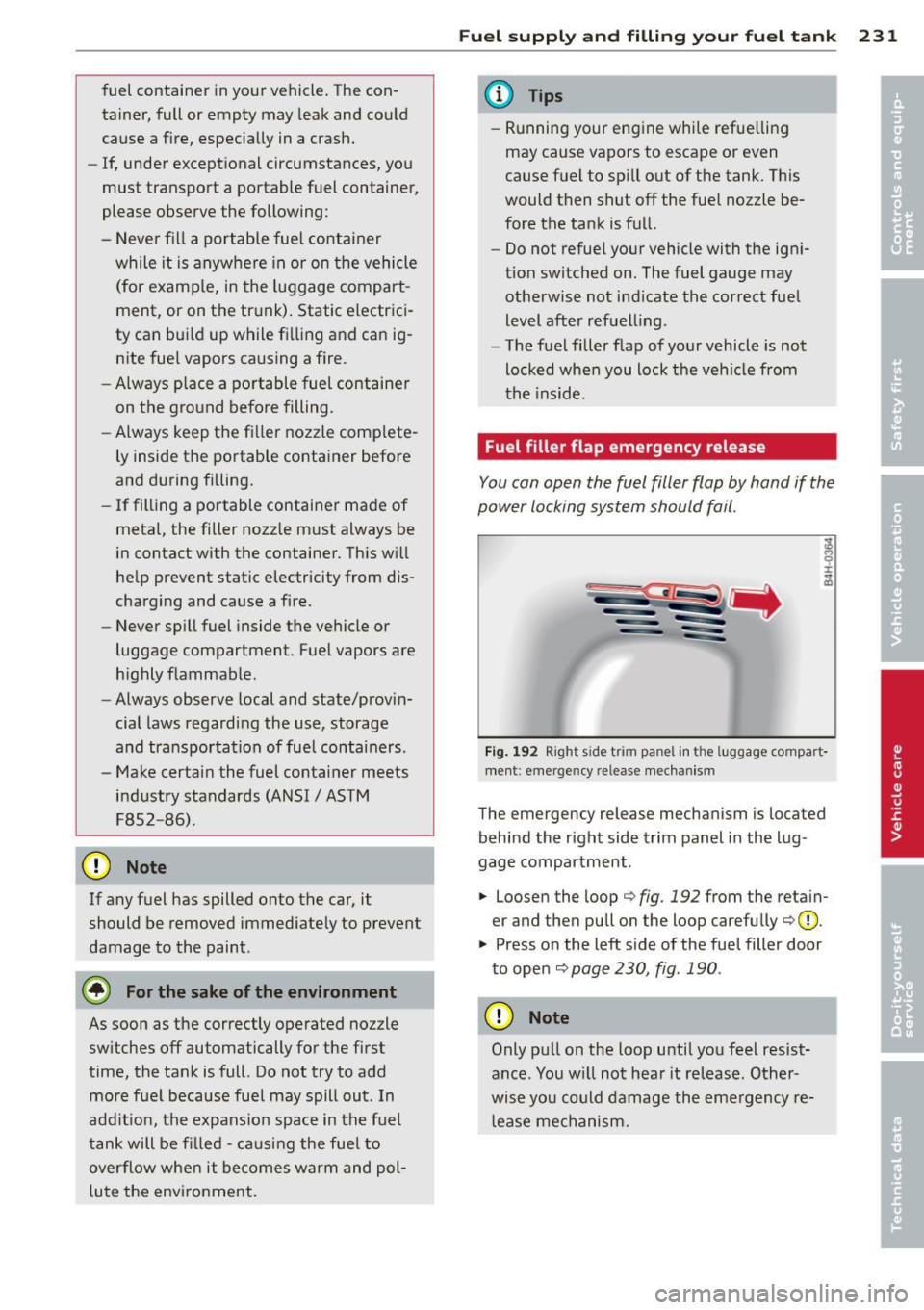
Fig. 192 Rig ht s ide tr im panel in t he luggage compart
ment : emerge ncy re lease mechanis m
The emergency release mechanism is located
behind the right side trim panel in the lug
gage compartment .
.,. Loosen the loop
o fig. 192 from the retain
er and then pull on the loop carefully
o (D.
.,. Press on the left side of the fuel filler door
to open
o page 230, fig . 190 .
(J) Note
Only pull on the loop until you feel resist
ance . You w ill not hear it release . Other
wise you could damage the emergency re
lease mechanism.
Page 234 of 318
232 Checking and filling
Checking and filling Engine hood
Releasing the engine hood
The engine hood is released from inside the
vehicle .
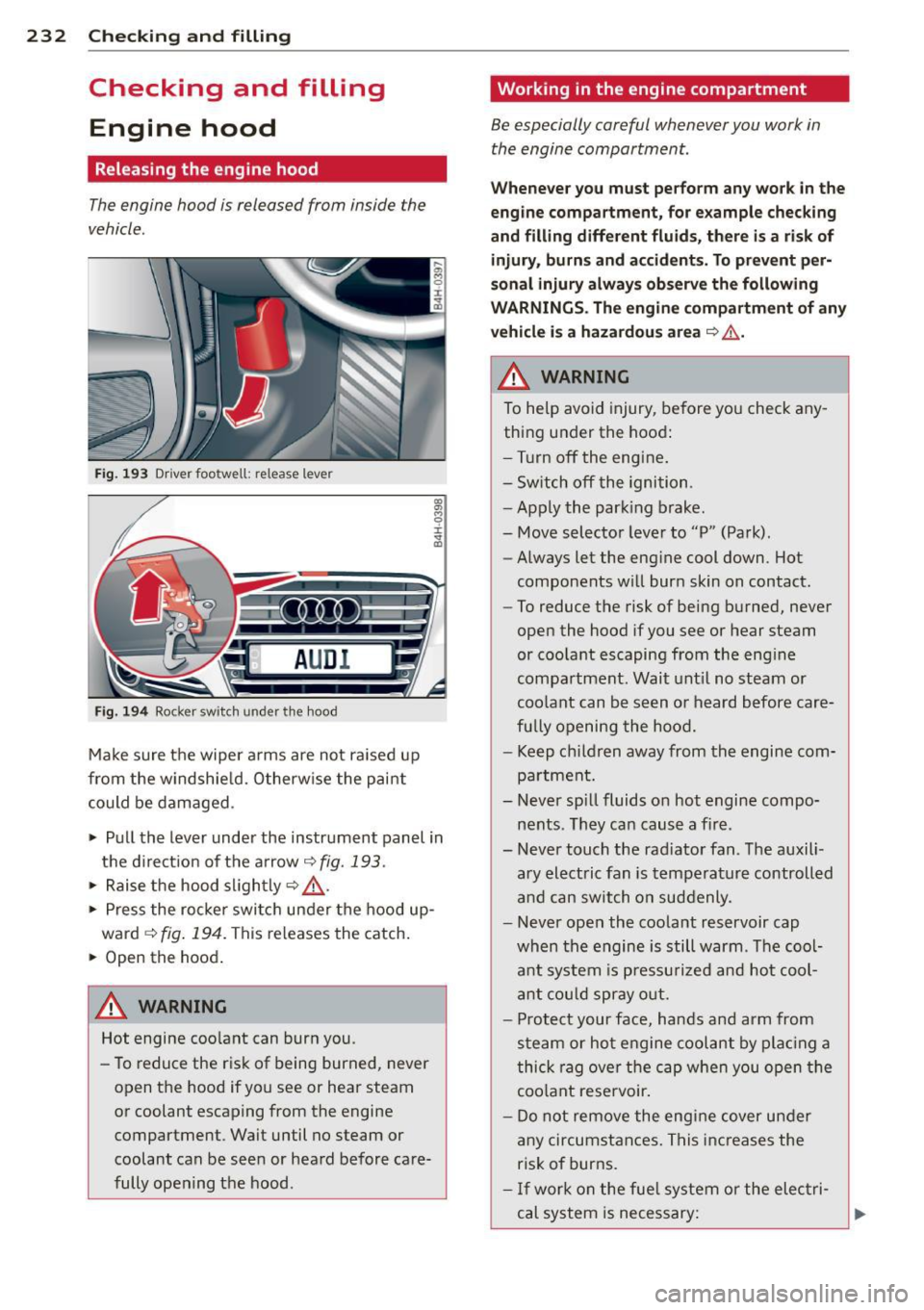
Fig. 193 Driver foo twell: release lever
AUD I
Fig. 194 Rocker switch un der the hood
Make sure the wiper arms are not raised up
from the windshield. Otherwise the paint
could be damaged .
.,. Pull the lever under the instrument panel in
the direction of the arrow
~ fig. 193.
.,. Raise the hood slightly~,&. .
... Press the rocker switch under the hood up
ward
~ fig. 194. This releases th e catch.
... Open the hood.
&_ WARNING
Hot engine coolant can burn you.
- To reduce the risk of being burned, never
open the hood if you see or hear steam
or coolant escaping from the engine compartment . Wait until no steam or
coolant can be seen or heard before care
fully opening the hood .
' Working in the engine compartment
Be especially careful whenever you work in
the engine compartment.
Whenever you must perform any work in the
engine compartment, for example checking
and filling different fluids, there is a risk of injury, burns and accidents. To prevent per
sonal injury always observe the following
WARNINGS. The engine compartment of any
vehicle is a hazardous area
~ ,&. .
A WARNING
To help avoid injury, before you check any
thing under the hood:
- Turn off the engine.
- Switch off the ignition .
- Apply the parking brake.
- Move selector lever to "P" (Park) .
- Always let the engine cool down. Hot
components will burn skin on contact.
- To reduce the risk of being burned, never
open the hood if you see or hear steam
or coolant escaping from the engine
compartment. Wait until no steam or
coolant can be seen or heard before care
fully opening the hood.
- Keep children away from the engine com
partment.
- Never spill fluids on hot engine compo
nents . They can cause a fire .
- Never touch the radiator fan. The auxili
ary electric fan is temperature controlled
and can switch on suddenly .
- Never open the coolant reservoir cap
when the engine is still warm . The cool
ant system is pressurized and hot cool
ant could spray out.
- Protect your face, hands and arm from
steam or hot engine coolant by placing a
thick rag over the cap when you open the
coolant reservoir.
- Do not remove the engine cover under
any circumstances. This increases the
risk of burns.
- If work on the fuel system or the electri
cal system is necessary:
Page 239 of 318
With all these variables coming into play, no
standard rate of oil consumption can be es
tablished or specified . There is no alternative
to regular and freq uent checking of the oi l lev
e l, see
Note .
If the ye llow engine oi l level war ning symbol
in the instrument cluster
II lights up, you
should check the o il level as soon as possible
¢
page 23 7 or ¢ page 238. Top off the oil at
your earliest convenience¢
page 238 .
.&_ WARNING
Before yo u check anything in the engine
compartment, always read and heed all
WARN INGS
¢ &. in Working in the engine
compartment on page 232.
0 Note
Dr iving with an insufficient oil level is like
ly to ca use seve re damage to the eng ine.
{1) Tips
- The oil pressu re warning display. i s
not an indicator of the oi l level. Do not
rely on it. Instead , check th e oil level in
your engine at regular interval s, pref
erably each time you refuel, and always before going on a long trip .
-If yo u have the impres sion your engine
consumes excessive amo unts o f oil, we
r ecommend that yo u consult your Audi
dealer to have the ca use of yo ur conce rn
proper ly diagnosed . Keep in mind that
the accurate measurement of oil con
sumption requires great care and may
take some time. You r Audi dealer has in
str uctions about how to measure o il con
sumption accurately.
Checkin g and fillin g 237
Checking the engine oil level
Applies to vehicles : wit h oil level indicator
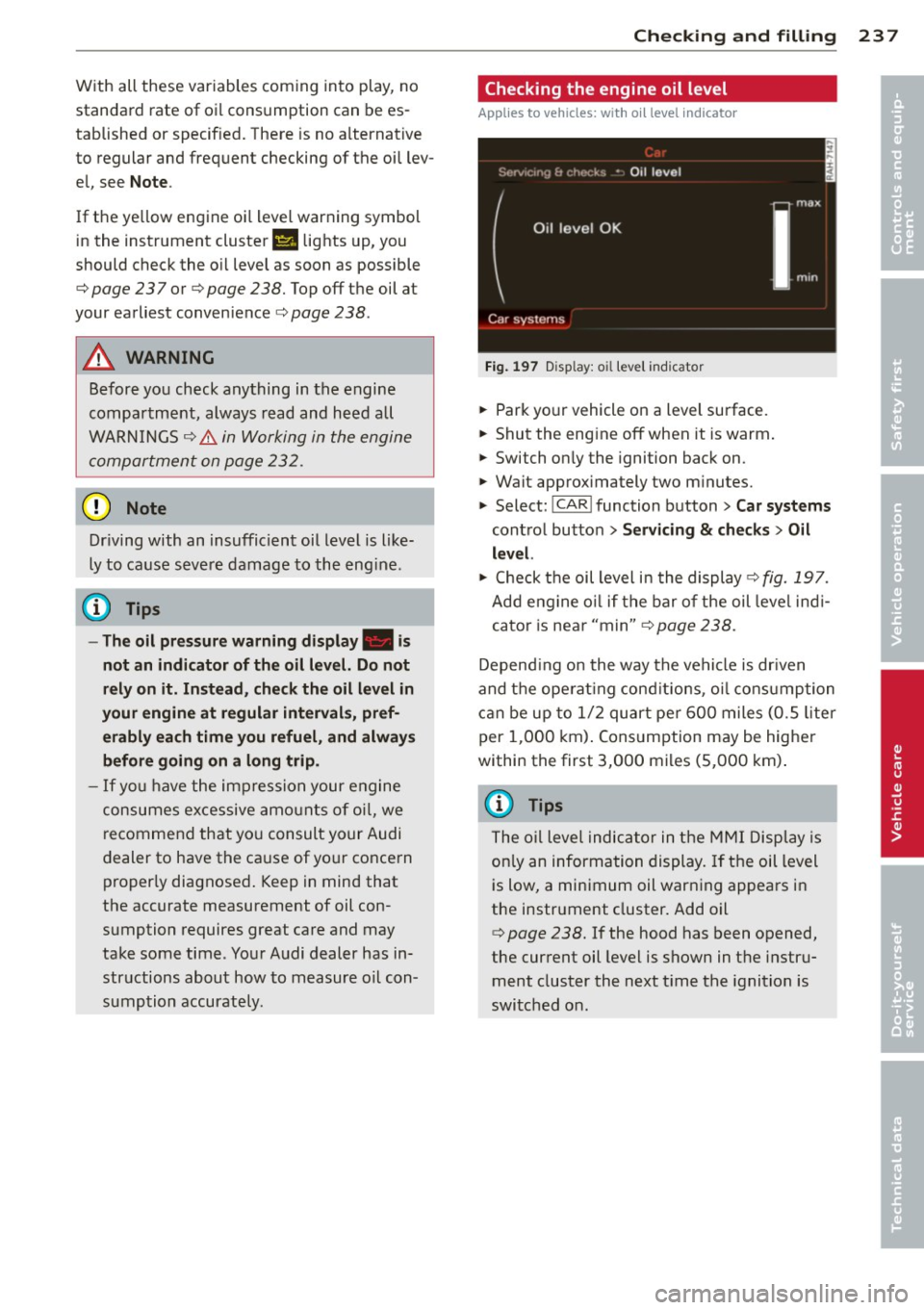
Fi g. 1 97 Disp lay: o il leve l indicator
.,. Park yo ur vehicle on a level surface.
.,. Shut the eng ine off when it is warm .
.,. Switch on ly the ignition back on .
.,. Wait approx imately two m inutes.
.,. Select:
I CAR ! function button > Car systems
contro l butto n > Servicing & checks > Oil
level.
.,. Check t he oil level i n the display ¢ fig. 197.
Add eng ine o il if t he bar o f the oil leve l ind i
cator is near "min"¢
page 238.
Depend ing on the way the vehicle is dr iven
and t he ope rat ing cond it ions, oi l cons umption
c a n be up to 1/ 2 quart pe r 60 0 miles (0.S liter
per 1,000 km) . Cons umption may be higher
within the first 3,000 m iles (S,000 km) .
(D Tips
The o il leve l indic ato r in the MMI Disp lay is
on ly an informa tion display.
If t h e oil level
i s low, a minimum oil warn ing appears in
the instrument cluster. Add oil
¢
page 238. If the hood has been opened,
the current oil level is shown in t he instr u
ment cluster the next t ime the ignition is
swi tched on.
•
•
Page 252 of 318
250 Tire s and wheel s
-Never mount used tires on yo ur vehicle if
you are not sure of their "previous histo
ry." Old used tires may have been dam
aged even though the damage cannot be
seen that can lead to sudden t ire failure
and loss of vehicle control.
- If you notice unusual vibration or if the
vehicle pulls to one side when driving, al
ways stop as soon as it is safe to do so
and check the wheels and tires for dam
age.
(D Note
Please note that summer and wi nte r tires
are designed for the cond itions that are
Glossary of tire and loading terminology
Accessory weight
means t he comb ined we ight (in excess of
those sta ndard items which may be rep laced)
of au toma tic tra nsmission, power steer ing,
power brakes, power windows, power seats,
radio, and heater, to the extent that th ese
items are availab le as factory -installed equip
ment (whether installed or not) .
Aspect ratio
means t he ratio of the he ight to the w idth of
the tire in percent . Numbers of 55 or lower in
dicate a low sidewall for improved steering re
sponse and better overall handling on dry pavement .
Bead
means the part of the ti re that is made of
steel wires, wrapped or reinforced by ply cords
and that is shaped to fit the rim.
Bead separation
means a b reakdown of the bond between
components in the bead.
Cord
means the strands forming the plies in the
tire . typ
ica l in those seasons . Aud i recommends
using winter tires during the winter
months . Low temperatures signif icant ly
decrease the e lasticity of summer tires,
which affects tract ion and brak ing ability.
If summer tires are used in very co ld tem
peratures, cracks ca n form on the tread
bars, res ulting in permanent tire damage
that can cause loud driving no ise and un
balan ced t ires. Audi is not responsible for
th is type of damage .
Cold tire inflation pressure
means the tire p ressu re recommended by t he
vehicle manufacturer fo r a tire of a des igna ted
s iz e that has not bee n driven for more than a
coup le of miles (k ilometers) at low speeds in
t h e three hour period before the tire pressure
is measured or adjusted.
Curb weight
mea ns the we ight of a motor ve hicle with
standard equipment in cl uding the max imum
capacity of fuel, oil, and coolant, air condi
tioning and additional weight of optiona l
equipment.
Extra load tire
me ans a t ire design to operate at higher loads
and at h igher inflation pressures than the cor
responding standard tire . Extra load tires may
be identified as "XL", "x l" , "EXTRA LOAD", or
"RF" on the sidewall.
Gross A xle Weight Rating ("GAWR ")
means the lo ad -c a rry ing c apac ity of a s ingle
axle system , measured a t the tire-ground in
terfaces.
Gross Vehicle Weight Rating ("GVWR ")
mea ns the maximum total loaded we ight of
t h e ve hicl e. .,.
Page 259 of 318
-Only when a ll tires on the vehicle are fi l
led to the correct pressure, the tire pres
sure monitoring* system can work cor rect ly.
- The use of incorrect tire pressure values
can lead to accidents or other damage.
Therefore it is essential that the d river
observe the specif ied tire pressure values
for the tires and the co rrect p ress ures for
the f un ct ion of t he tire pressure mo nitor
ing sy stem*.
- Always inflate ti res to the recommended
and co rrec t tire pressu re befo re dr ivi ng
off.
- Driv ing wi th under infla ted ti res bend
more, letti ng them get too ho t res ulting
in t read separation, sudden t ire fail ure
and loss of control.
- Excessive spee d and/ove rloading can
ca use heat bui ld -up, sudden tire fa il ur e
and loss of control.
- If the t ire pressure is too low or too high,
the tires w ill wea r prematu rely an d the
vehicle will not hand le we ll.
-If the t ire is no t flat and you do no t have
to change a w heel imme diate ly, drive at
reduced speed to the nearest service sta
t ion to check the tire pressure and add
air as required.
(D Note
Driving without va lve stem caps ca n cause
damage to the t ire va lves. To prevent this,
always make s ure that facto ry installed
valve stem caps on all wheels a re secure ly
mounted on the va lve .
@) For the sake of the environment
Underinflated tires will a lso increase the
fue l consumption .
Tires and vehicle load limits
There are limits to the amount of load or
weight that any veh icle and any t ire can carry .
A vehicle that is ove rloaded w ill not ha ndle
well and is more difficult to stop . Overload ing
can no t on ly lead to loss o f vehi cle con tro l,
Tire s an d wheel s 257
but can also damage important parts of the
vehicle and ca n lead to sud den tire fai lure, in
clud ing a b lowout and s udden def lation that
can cause the vehicle to cras h.
Your safety and that of your passengers also depends on making sure that load limits are
not exceeded . Vehicle load includes everybody
and everything in and on the veh icle. These
load lim its are technically referred to as the
vehicle's
Gross Vehicle We ight Rating
("GVWR ") .
The "GVWR" includes the weight of the basic
vehicle, all factory installed accessories, a full
tank of fuel, o il, coo lant and other fluids plus
maximum load . The max imum load includes
the number of passenge rs that th e vehicle is
i n tended to car ry ("seat ing capa city") wi th an
ass umed we igh t of 150 lbs (68 kg) fo r each
passenger at a designated seating posi tion
and t he tota l weight of any luggage i n the ve
hicle . If you tow a trai ler, the weight of the
tra iler hitch and the tongue weight of the
loaded tra iler must be included as part of the
vehicle load.
T he
Gro ss Axle Weight Rating ("GAWR") is
the maximum load that can be applied at each
of the vehicle's two axles.
T he Gross Vehicle Weight Rating and the
G ross Ax le Weig ht Rating are listed on the
safety comp liance sticker label located on the
driver's side B-pillar. Your Audi has 5 seat ing
pos itions, 2 in the front and 3 in the rea r fo r
total seating capacity of 5 . Vehicles with pow
er ind iv idual rea r seats* have 4 seat ing pos i
tions, 2 in the front and 2 in the rea r fo r total
seat ing capac ity o f 4. Each seating position
has a safety belt~
page 144, Safety belts.
The fact that there is a n uppe r limit to you r
vehicle's G ross Vehicle We ight Rating means
t h at the to tal weig ht of whatever is bei ng car
ried in the vehicle ( in cl ud ing t he weight of a
trai ler hitch and the tongue weigh t of t he
loa ded trai le r) is limite d. The more passen
gers in the vehicle or passengers who are
heavier than the standard we ights assumed
•
•