sensor CHEVROLET CAMARO 1982 Repair Guide
[x] Cancel search | Manufacturer: CHEVROLET, Model Year: 1982, Model line: CAMARO, Model: CHEVROLET CAMARO 1982Pages: 875, PDF Size: 88.64 MB
Page 638 of 875
GM – CAMARO 1982-1992 – Repair Guide (Checked by WxMax) 638
ELECTRONIC IGNITION SYSTEM
GENERAL INFORMATION
The High Energy Ignition (HEI) system
controls the fuel combustion by
providing a spark to ignite the compress ed air/fuel mixture at the correct time.
To provide improved engine performance, fuel economy, and control of exhaust
emissions, the engine contro l module (ECM) controls distributor spark advance
(timing) with an ignition control system.
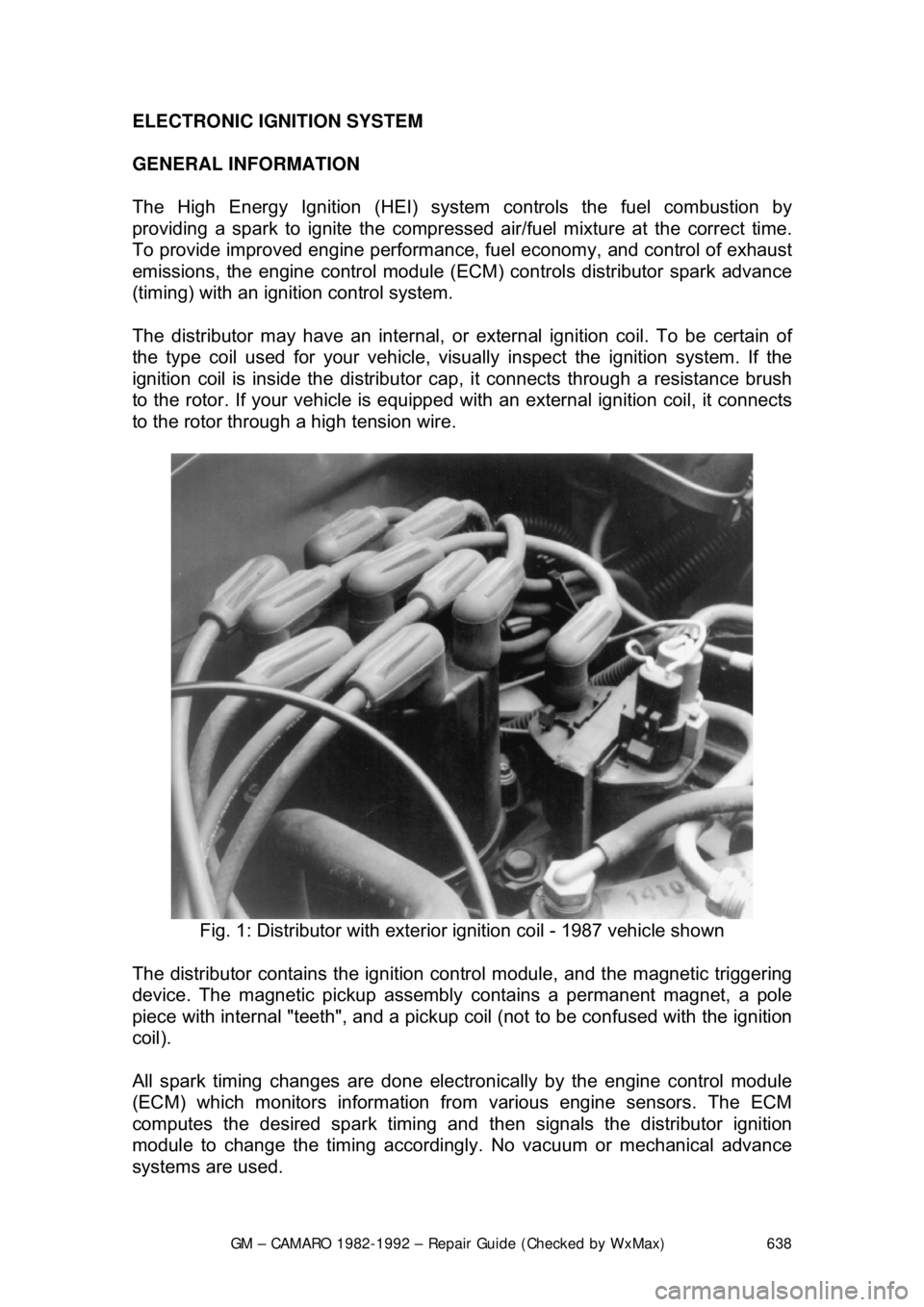
The distributor may have an internal, or ex ternal ignition coil. To be certain of
the type coil used for your vehicle, vis ually inspect the ignition system. If the
ignition coil is inside the distributor c ap, it connects through a resistance brush
to the rotor. If your vehicle is equipped with an external ignition coil, it connects
to the rotor through a high tension wire.
Fig. 1: Distributor with exterior ignition coil - 1987 vehicle shown
The distributor contains the ignition c ontrol module, and the magnetic triggering
device. The magnetic pickup assembly contains a permanent magnet, a pole
piece with internal "teeth", and a pickup co il (not to be confused with the ignition
coil).
All spark timing changes are done electr onically by the engine control module
(ECM) which monitors information from various engine sensors. The ECM
computes the desired spark timing and t hen signals the distributor ignition
module to change the timing accordingly. No vacuum or mechanical advance
systems are used.
Page 640 of 875

GM – CAMARO 1982-1992 – Repair Guide (Checked by WxMax) 640
The tachometer terminal should never
be allowed to touch ground, as damage
to the computer control module and/or ignition coil assembly can result.
CONNECTORS
When disengaging connectors, do not use a screw driver or other tool to release
the locking tab, as this mi ght break the connector.
SYSTEM TESTERS
Instruments designed specific ally for testing HEI or C
3I systems are available
from several tool manufactur ers. Some of these will even test the module itself.
However, the tests given in the followin g section will require only an ohmmeter
and a voltmeter.
TESTING
The symptoms of a defective component within the HEI or C
3I system are
exactly the same as those you woul d encounter in a conventional system.
Some of these symptoms are:
• Hard or no starting
• Rough Idle
• Poor fuel economy
• Engine misses under load or while accelerating
PRELIMINARY CHECKS
If you suspect a problem in your igniti on system, there are certain preliminary
checks which you should carry out befor e you begin to check the electronic
portions of the system. First, it is extrem ely important to make sure the vehicle
battery is in a good state of charge. A defective or poorly charged battery will
cause the various components of the ignition system to read incorrectly when
they are being tested. Second, make su re all wiring connections are clean and
tight, not only at the battery, but also at the distributor cap (if so equipped),
ignition coil, camshaft and/or crankshaft sensors (if so equipped) and at the
control module.
Since the only difference between these ignition systems lies before the spark
plug wiring, it is important to check the secondary ig nition circuit first. If the
secondary circuit checks out properly (ther e is spark), then the engine condition
is probably not the fault of the ignition system. To check the secondary ignition
system, perform a simple spark test. Remove one of the plug wires and insert
some sort of extension in the plug socket. An old spark plug with the ground
electrode removed makes a good extension. Hold the wire and extension using
an insulated tool (NOT BY HAND) about
1/4 in. (6mm) away from the block and
crank the engine. If a normal spark occurs, then the problem is most likely not in
the ignition system. Check for fuel system problems, or fouled spark plugs.
Page 659 of 875

GM – CAMARO 1982-1992 – Repair Guide (Checked by WxMax) 659
VALVE LASH
All models utilize a hydraulic valve lifter system to obtain zero lash. No periodic
adjustment is necessary. An initial adjustm
ent is required anytime that the lifters
are removed or the valve tr ain is disturbed. This procedure is covered in Engine
& Engine Overhaul .
IDLE SPEED AND MIXTURE ADJUSTMENTS
Mixture adjustments are factory set and sealed; no adjustment attempt should
be made, except by an aut horized GM dealer or reputable shop equipped with
the necessary equipment.
IDLE SPEED
2-BBL CARBURETOR
WITHOUT AIR CONDITIONING
The engine must be running in "Closed Loop" mode (engine fully warmed) when
making all idle speed adjustments. In this mode, the oxygen sensor affects
control of the fuel delivery.
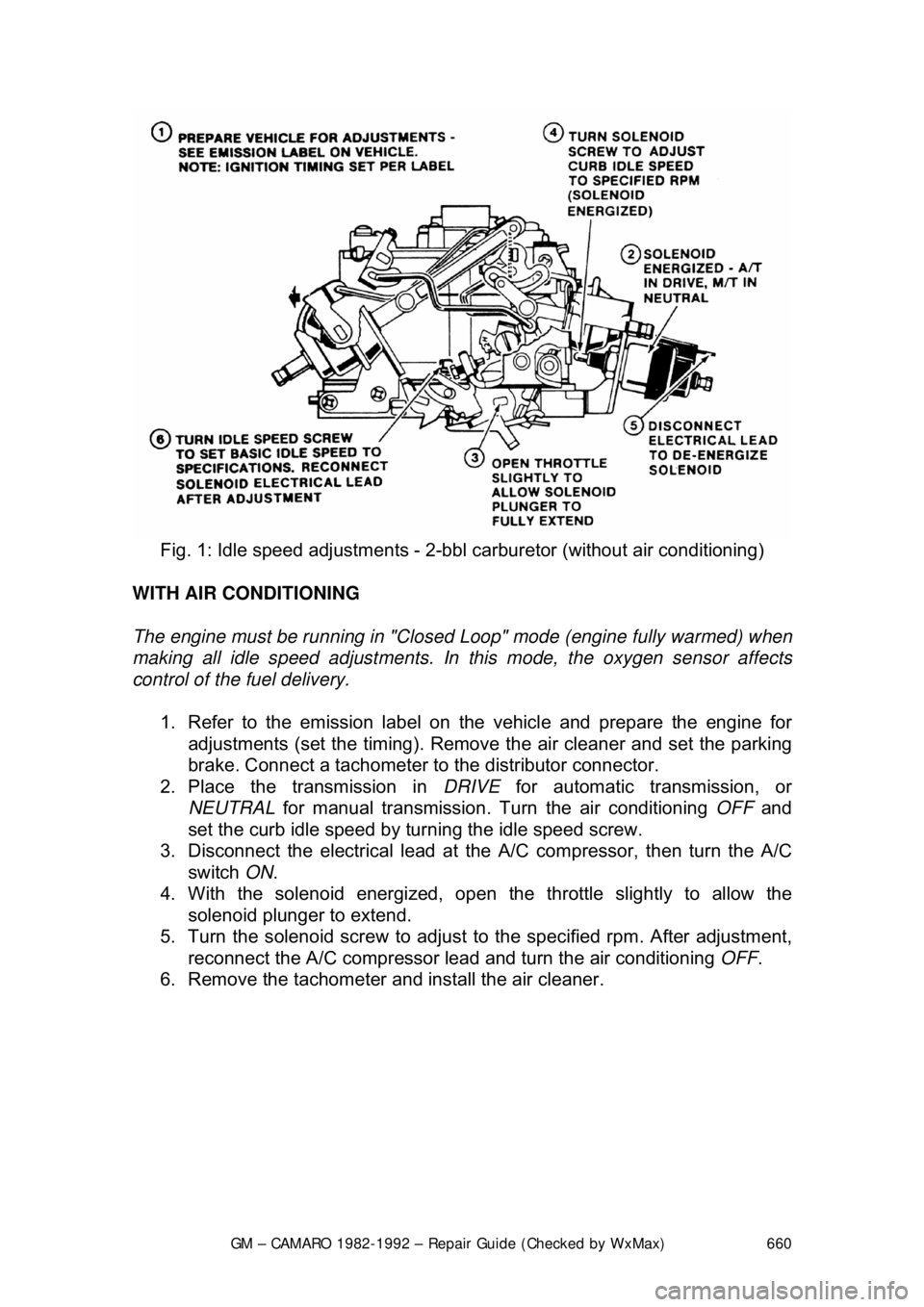
1. Refer to the emission label on the vehicle and prepare the engine for
adjustments (set the timing). Remove the air cleaner and set the parking
brake. Connect a tachometer to the distributor connector.
2. Place the transmission in DRIVE for automatic transmission, or
NEUTRAL for manual transmission; make sure that the solenoid is
energized.
3. Open the throttle slightly to allow the solenoid plunger to extend. Adjust
the curb idle speed to the specified rpm by turning the solenoid screw.
4. De-energize the solenoid by disconnecting the electrical lead.
5. Set the basic idle speed rpm by turning the idle speed screw. After
adjustment, reconnect the solenoid electrical lead.
6. Remove the tachometer and install the air cleaner.
Page 660 of 875
GM – CAMARO 1982-1992 – Repair Guide (Checked by WxMax) 660
Fig. 1: Idle speed adjustm ents - 2-bbl carburetor (without air conditioning)
WITH AIR CONDITIONING
The engine must be running in "Closed Loop" mode (engine fully warmed) when
making all idle speed adjustments. In this mode, the oxygen sensor affects
control of the fuel delivery.
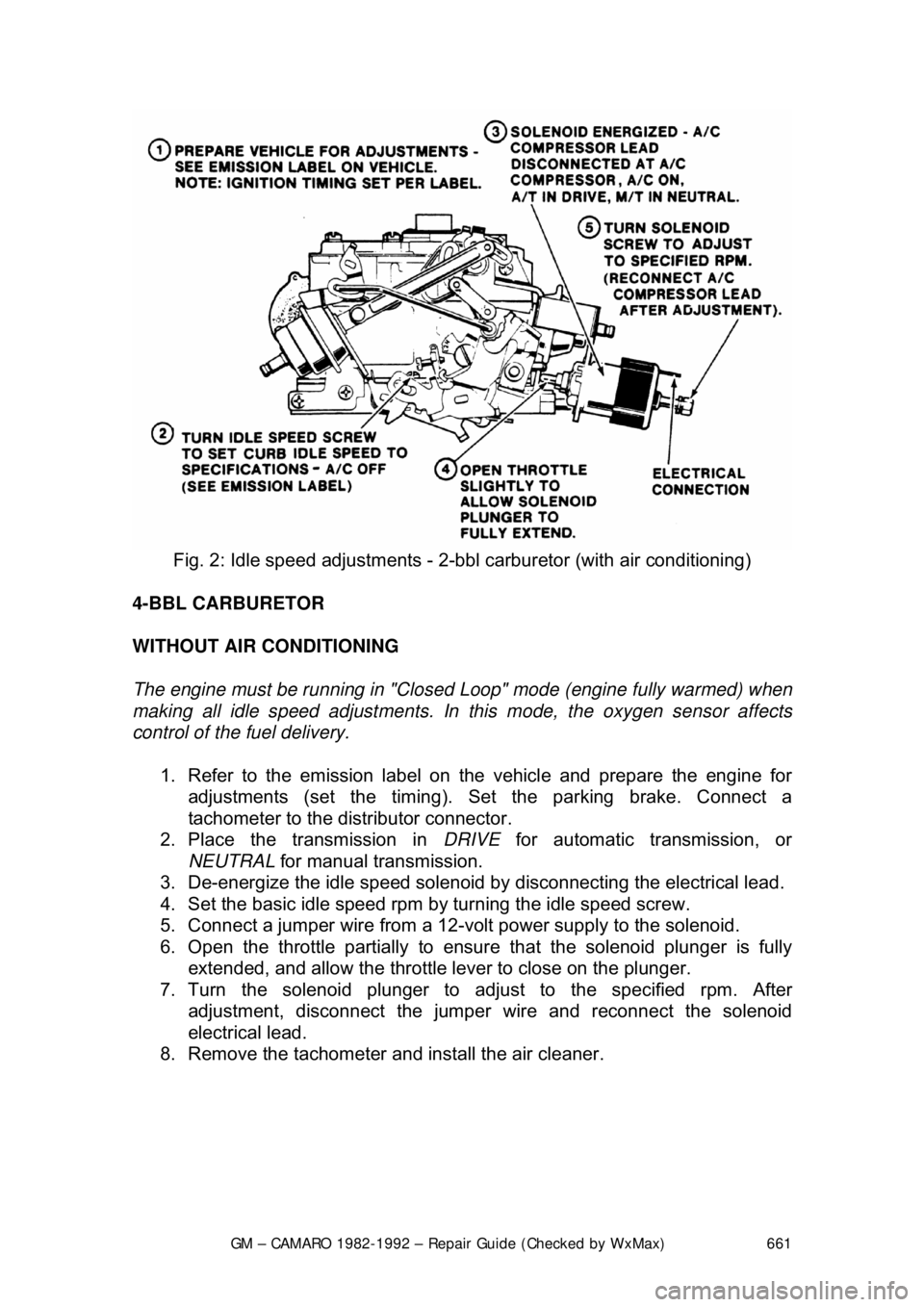
1. Refer to the emission label on the vehicle and prepare the engine for
adjustments (set the timing). Remove the air cleaner and set the parking
brake. Connect a tachometer to the distributor connector.
2. Place the transmission in DRIVE for automatic transmission, or
NEUTRAL for manual transmission. Tu rn the air conditioning OFF and
set the curb idle speed by turning the idle speed screw.
3. Disconnect the electrical lead at the A/C compressor, then turn the A/C
switch ON.
4. With the solenoid e nergized, open the throttle slightly to allow the
solenoid plunger to extend.
5. Turn the solenoid screw to adjust to the specified rpm. After adjustment,
reconnect the A/C compressor lead and turn the air conditioning OFF.
6. Remove the tachometer and install the air cleaner.
Page 661 of 875
GM – CAMARO 1982-1992 – Repair Guide (Checked by WxMax) 661
Fig. 2: Idle speed adjustm ents - 2-bbl carburetor (with air conditioning)
4-BBL CARBURETOR
WITHOUT AIR CONDITIONING
The engine must be running in "Closed Loop" mode (engine fully warmed) when
making all idle speed adjustments. In this mode, the oxygen sensor affects
control of the fuel delivery.
1. Refer to the emission label on the vehicle and prepare the engine for
adjustments (set the timing). Se t the parking brake. Connect a
tachometer to the dist ributor connector.
2. Place the transmission in DRIVE for automatic transmission, or
NEUTRAL for manual transmission.
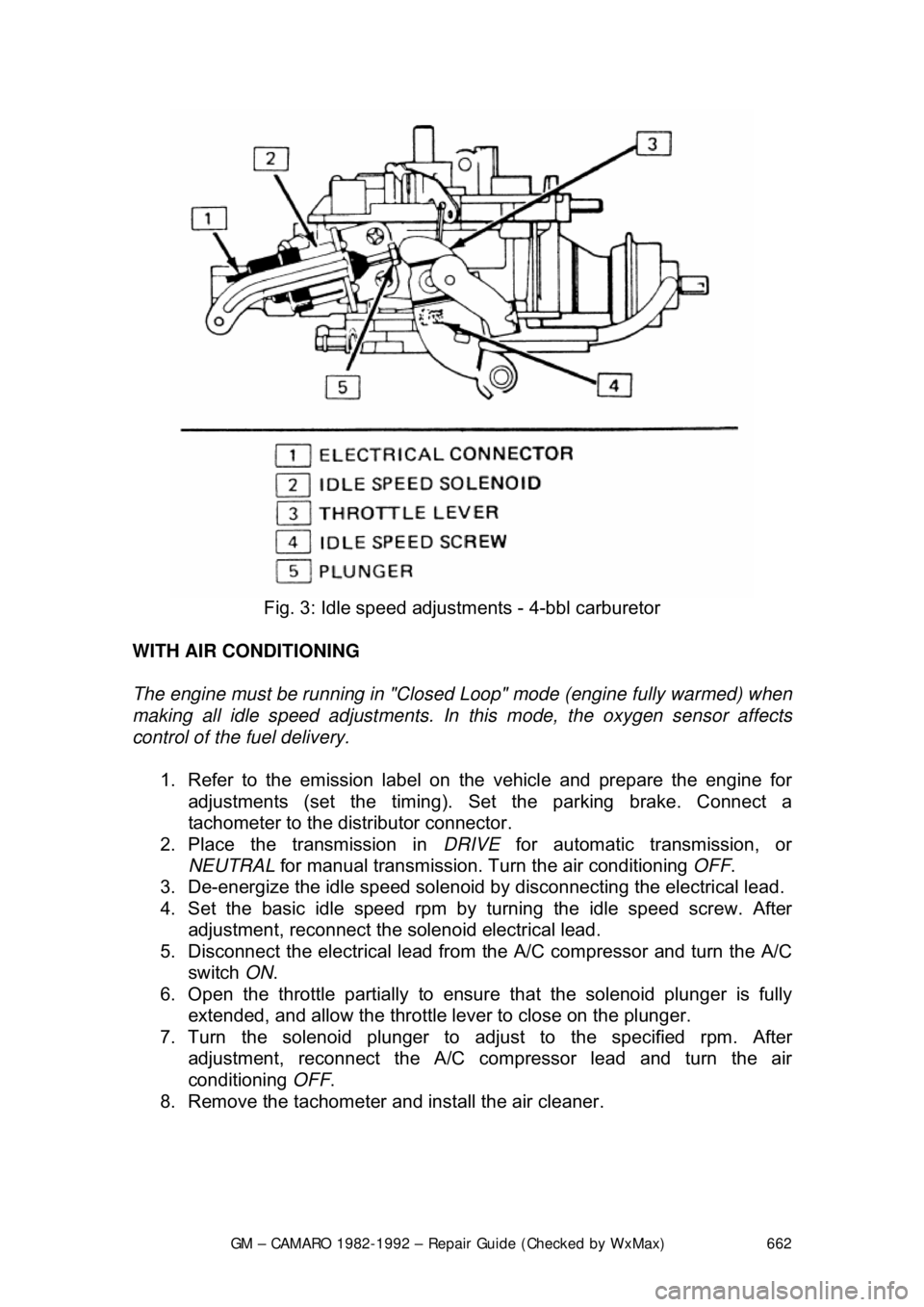
3. De-energize the idle speed solenoid by disconnecting the electrical lead.
4. Set the basic idle speed rpm by turning the idle speed screw.
5. Connect a jumper wire from a 12-vo lt power supply to the solenoid.
6. Open the throttle partially to ensure that the solenoid plunger is fully
extended, and allow the throttle lever to close on the plunger.
7. Turn the solenoid plunger to adj ust to the specified rpm. After
adjustment, disconnect the jumper wire and reconnect the solenoid
electrical lead.
8. Remove the tachometer and install the air cleaner.
Page 662 of 875
GM – CAMARO 1982-1992 – Repair Guide (Checked by WxMax) 662
Fig. 3: Idle speed adjustm ents - 4-bbl carburetor
WITH AIR CONDITIONING
The engine must be running in "Closed Loop" mode (engine fully warmed) when
making all idle speed adjustments. In this mode, the oxygen sensor affects
control of the fuel delivery.
1. Refer to the emission label on the vehicle and prepare the engine for
adjustments (set the timing). Se t the parking brake. Connect a
tachometer to the dist ributor connector.
2. Place the transmission in DRIVE for automatic transmission, or
NEUTRAL for manual transmission. Tu rn the air conditioning OFF.
3. De-energize the idle speed solenoid by disconnecting the electrical lead.
4. Set the basic idle speed rpm by turning the idle speed screw. After
adjustment, reconnect the solenoid electrical lead.
5. Disconnect the electrical lead from the A/C compressor and turn the A/C
switch ON.
6. Open the throttle partially to ensure that the solenoid plunger is fully
extended, and allow the throttle lever to close on the plunger.
7. Turn the solenoid plunger to adj ust to the specified rpm. After
adjustment, reconnect the A/C co mpressor lead and turn the air
conditioning OFF.
8. Remove the tachometer and install the air cleaner.
Page 694 of 875

GM – CAMARO 1982-1992 – Repair Guide (Checked by WxMax) 694
IDLE MIXTURE
E2SE CARBURETORS
1. Remove the carburet or from the engine.
2. Remove the plugs coveri ng the idle mixture needles.
3. Turn the mixture needle in until slight ly seated, then back it out 4 turns.
4. If the plug in the air horn coveri ng the idle air bleed has been removed,
replace the air horn. If the plug is still in place, do not remove it.
5. Remove the vent stack screen a ssembly to gain access to the lean
mixture screw.
6. Using tool J-28696-10 or equivalent, turn the lean mixture screw in until
lightly seated, then back out 2
1/2 turns.
7. Install the carburetor on the engine.
8. Disconnect the bowl vent line at the carburetor.
9. Disconnect the EGR hos e and canister purge hose at the carburetor.
Cap the ports on t he carburetor.
10. Find the hose from port D of the carburetor to the temperature sensor
and secondary vacuum break thermal vacuum switch. Disconnect and
plug the vacuum hose going to the air cleaner.
11. Connect the positive lead of a dwell me ter to the mixture control solenoid
test lead (green connector). Connect the other lead to ground. Set the
meter to the 6 cylinder position.
12. Run the engine on the high step of the fast idle cam until the cooling fan
starts to cycle.
13. Run the engine at 3,0 00 rpm and adjust the lean mixture screw slowly.
Allow the reading to stabilize, obtain an average dwell of 35 degrees. It is
normal for the dwell to vary in a narrow range.
14. Return to idle.
15. Adjust the idle mixt ure screw to obtain an av erage dwell of 25 degrees.
Allow time for the reading to stabilize.
16. Run the engine at 3,000 rpm and not e the dwell reading. It should be
varying with an average reading of 35 degrees. If it does not, repeat the
earlier steps.
Page 699 of 875
GM – CAMARO 1982-1992 – Repair Guide (Checked by WxMax) 699
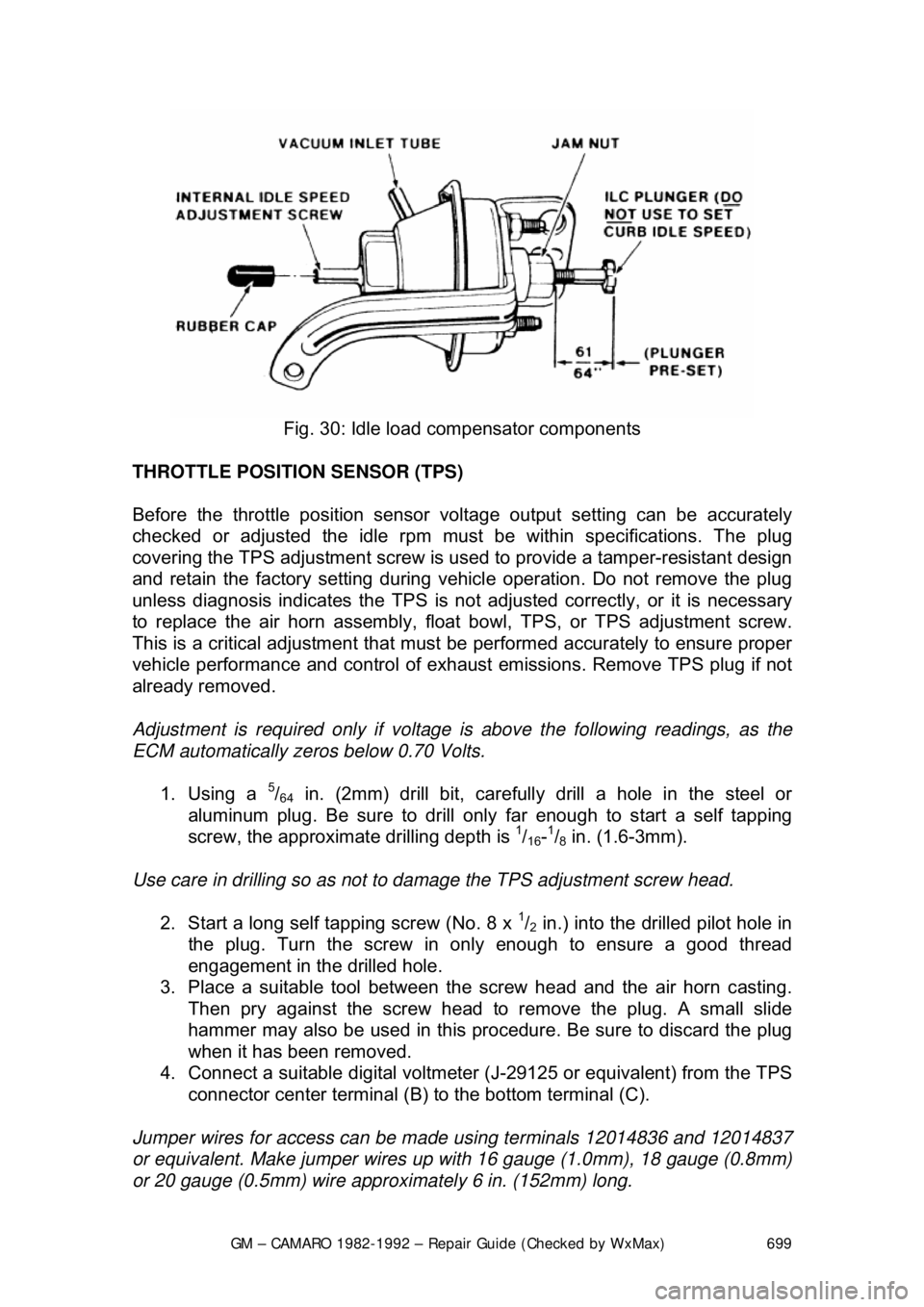
Fig. 30: Idle load compensator components
THROTTLE POSITION SENSOR (TPS)
Before the throttle position sensor voltage output setting can be accurately
checked or adjusted the idle rpm mu st be within specifications. The plug
covering the TPS adjustment screw is used to provide a tamper-resistant design
and retain the factory setting during vehicl e operation. Do not remove the plug
unless diagnosis indicates t he TPS is not adjusted correct ly, or it is necessary
to replace the air horn assembly, float bowl, TPS, or TPS adjustment screw.
This is a critical adjustment that must be performed accurately to ensure proper
vehicle performance and contro l of exhaust emissions. Remove TPS plug if not
already removed.
Adjustment is required only if voltage is above the following readings, as the
ECM automatically zeros below 0.70 Volts.
1. Using a
5/64 in. (2mm) drill bit, carefully drill a hole in the steel or
aluminum plug. Be sure to drill only far enough to start a self tapping
screw, the approximat e drilling depth is
1/16-1/8 in. (1.6-3mm).
Use care in drilling so as not to damage the TPS adjustment screw head.
2. Start a long self tapping screw (No. 8 x
1/2 in.) into the drilled pilot hole in
the plug. Turn the screw in only enough to ensure a good thread
engagement in the drilled hole.
3. Place a suitable tool between the screw head and the air horn casting.
Then pry against the screw head to remove the plug. A small slide
hammer may also be used in this proc edure. Be sure to discard the plug
when it has been removed.
4. Connect a suitable digital voltmete r (J-29125 or equivalent) from the TPS
connector center terminal (B) to the bottom terminal (C).
Jumper wires for access can be made using terminals 12014836 and 12014837
or equivalent. Make jumper wires up with 16 gauge (1.0mm), 18 gauge (0.8mm)
or 20 gauge (0.5mm) wire approximately 6 in. (152mm) long.
Page 700 of 875
GM – CAMARO 1982-1992 – Repair Guide (Checked by WxMax) 700
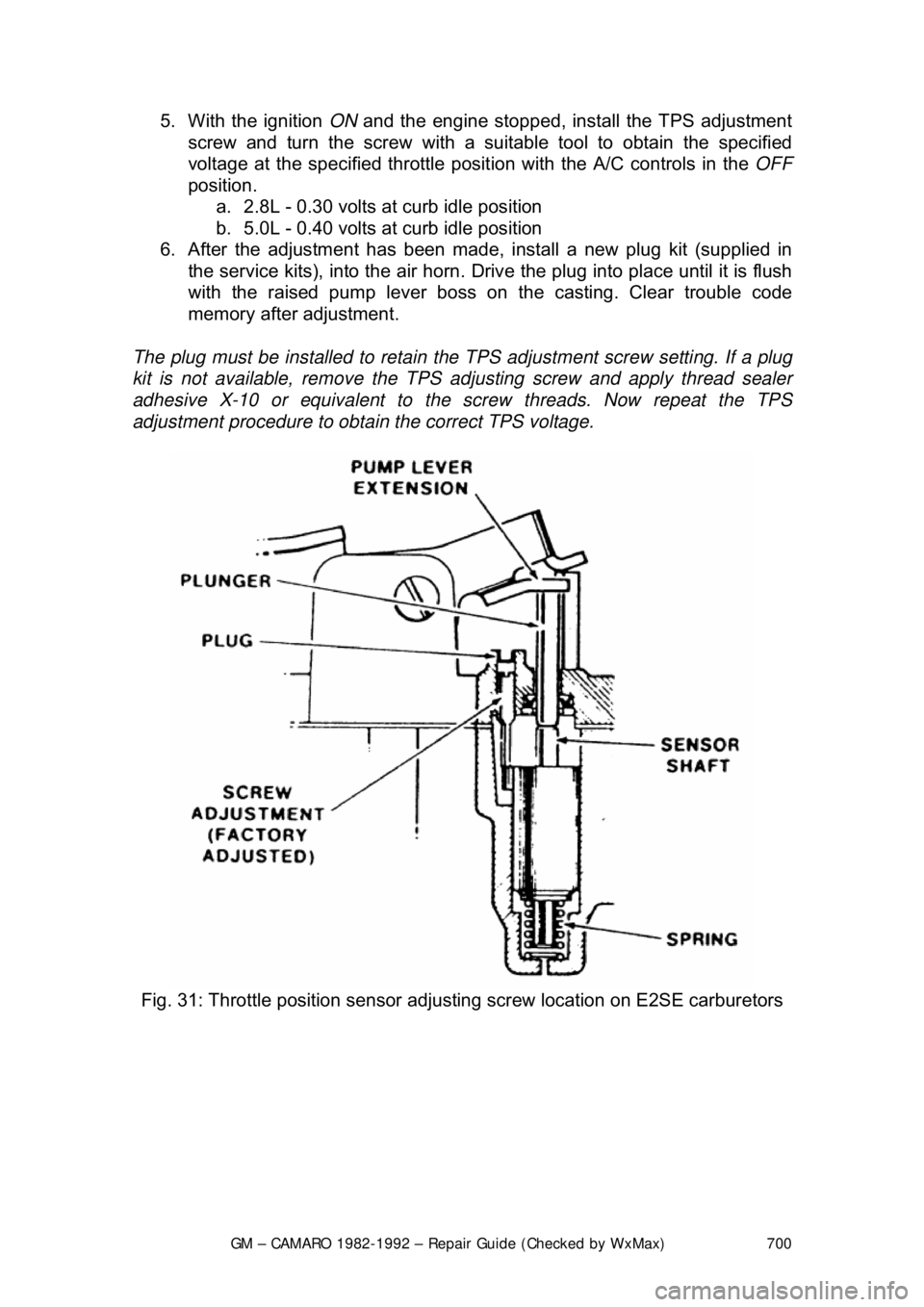
5. With the ignition
ON and the engine stopp ed, install the TPS adjustment
screw and turn the screw with a suitable tool to obtain the specified
voltage at the specified throttle posit ion with the A/C controls in the OFF
position. a. 2.8L - 0.30 volts at curb idle position
b. 5.0L - 0.40 volts at curb idle position
6. After the adjustment has been made, install a new plug kit (supplied in
the service kits), into the air horn. Driv e the plug into place until it is flush
with the raised pump lever boss on t he casting. Clear trouble code
memory after adjustment.
The plug must be installed to retain the TPS adjustment screw setting. If a plug
kit is not available, remove the T PS adjusting screw and apply thread sealer
adhesive X-10 or equivalent to the scr ew threads. Now repeat the TPS
adjustment procedure to obtain the correct TPS voltage.
Fig. 31: Throttle position sensor adjus ting screw location on E2SE carburetors
Page 701 of 875
GM – CAMARO 1982-1992 – Repair Guide (Checked by WxMax) 701
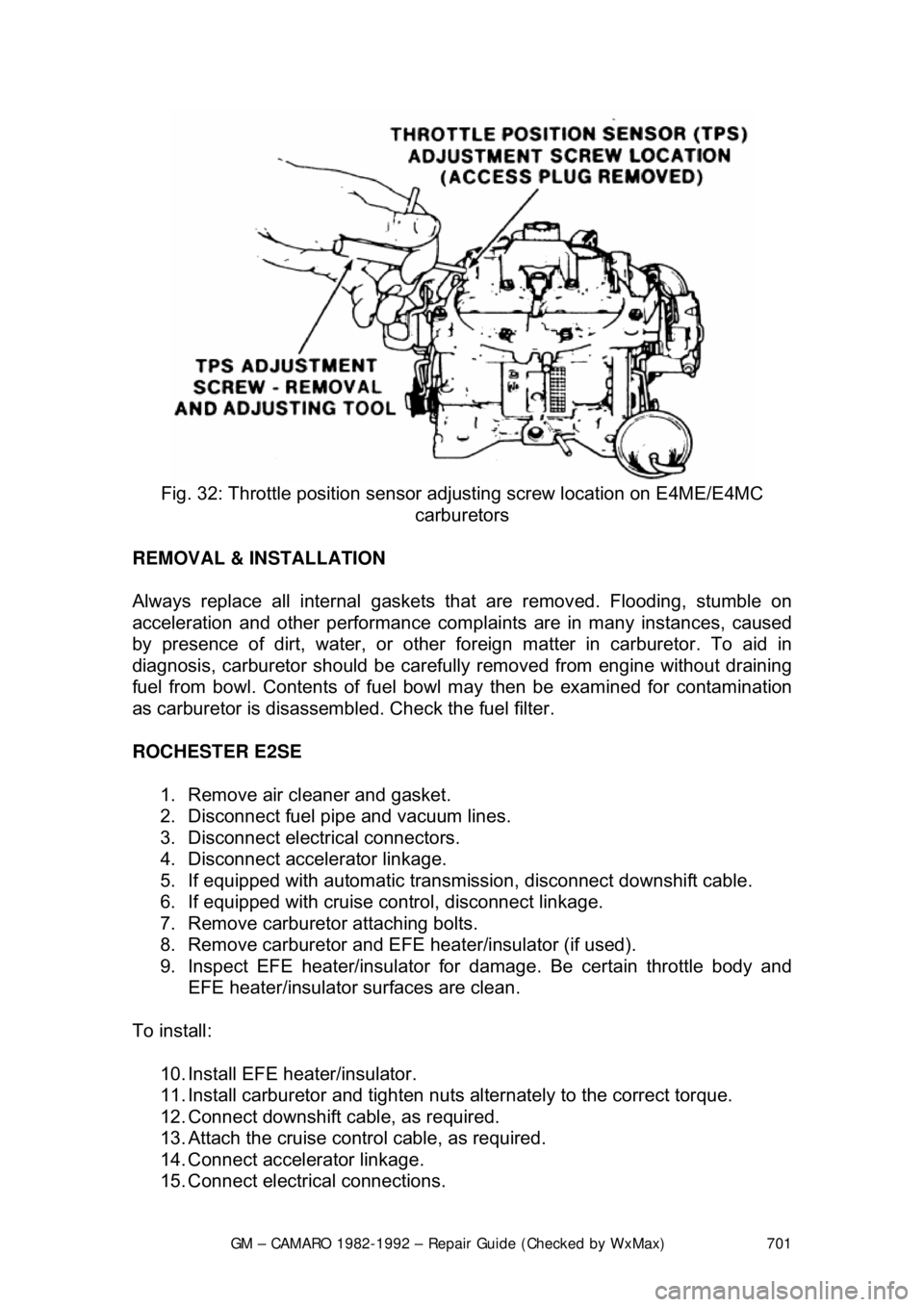
Fig. 32: Throttle position sensor adjusting screw location on E4ME/E4MC
carburetors
REMOVAL & INSTALLATION
Always replace all internal gaskets that are removed. Flooding, stumble on
acceleration and other performance comp laints are in many instances, caused
by presence of dirt, water, or other foreign matter in carburetor. To aid in
diagnosis, carburetor should be carefully removed from engine without draining
fuel from bowl. Contents of fuel bowl may then be examined for contamination
as carburetor is disassembl ed. Check the fuel filter.
ROCHESTER E2SE 1. Remove air cleaner and gasket.
2. Disconnect fuel pipe and vacuum lines.
3. Disconnect electrical connectors.
4. Disconnect accelerator linkage.
5. If equipped with automatic transmi ssion, disconnect downshift cable.
6. If equipped with cruise c ontrol, disconnect linkage.
7. Remove carburetor attaching bolts.
8. Remove carburetor and EF E heater/insulator (if used).
9. Inspect EFE heater/insulator for damage. Be certain throttle body and
EFE heater/insulator surfaces are clean.
To install: 10. Install EFE heater/insulator.
11. Install carburetor and tighten nuts alternately to the correct torque.
12. Connect downshift cable, as required.
13. Attach the cruise cont rol cable, as required.
14. Connect accelerator linkage.
15. Connect electrical connections.