tow Hyundai Ioniq Hybrid 2017 Service Manual
[x] Cancel search | Manufacturer: HYUNDAI, Model Year: 2017, Model line: Ioniq Hybrid, Model: Hyundai Ioniq Hybrid 2017Pages: 553, PDF Size: 59.51 MB
Page 434 of 553
7-13
7
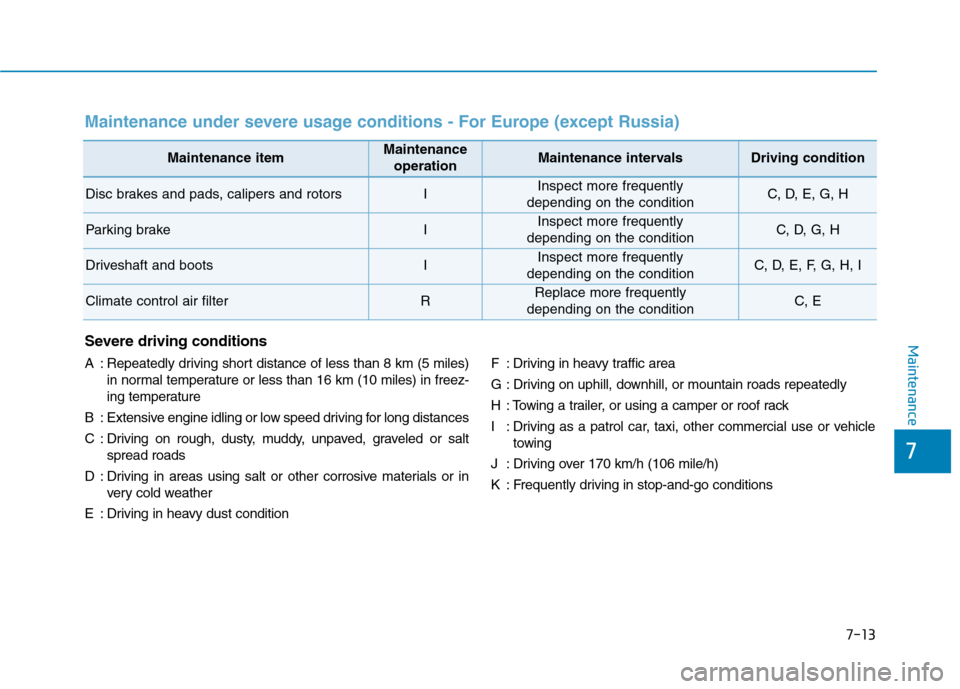
MaintenanceSevere driving conditions
A : Repeatedly driving short distance of less than 8 km (5 miles)in normal temperature or less than 16 km (10 miles) in freez-
ing temperature
B : Extensive engine idling or low speed driving for long distances
C : Driving on rough, dusty, muddy, unpaved, graveled or salt spread roads
D : Driving in areas using salt or other corrosive materials or in very cold weather
E : Driving in heavy dust condition F : Driving in heavy traffic area
G : Driving on uphill, downhill, or mountain roads repeatedly
H : Towing a trailer, or using a camper or roof rack
I : Driving as a patrol car, taxi, other commercial use or vehicle
towing
J : Driving over 170 km/h (106 mile/h)
K : Frequently driving in stop-and-go conditions
Maintenance itemMaintenance operationMaintenance intervalsDriving condition
Disc brakes and pads, calipers and rotorsIInspect more frequently
depending on the conditionC, D, E, G, H
Parking brakeIInspect more frequently
depending on the conditionC, D, G, H
Driveshaft and bootsIInspect more frequently
depending on the conditionC, D, E, F, G, H, I
Climate control air filterRReplace more frequently
depending on the conditionC, E
Maintenance under severe usage conditions - For Europe (except Russia)
Page 440 of 553
7-19
7
Maintenance
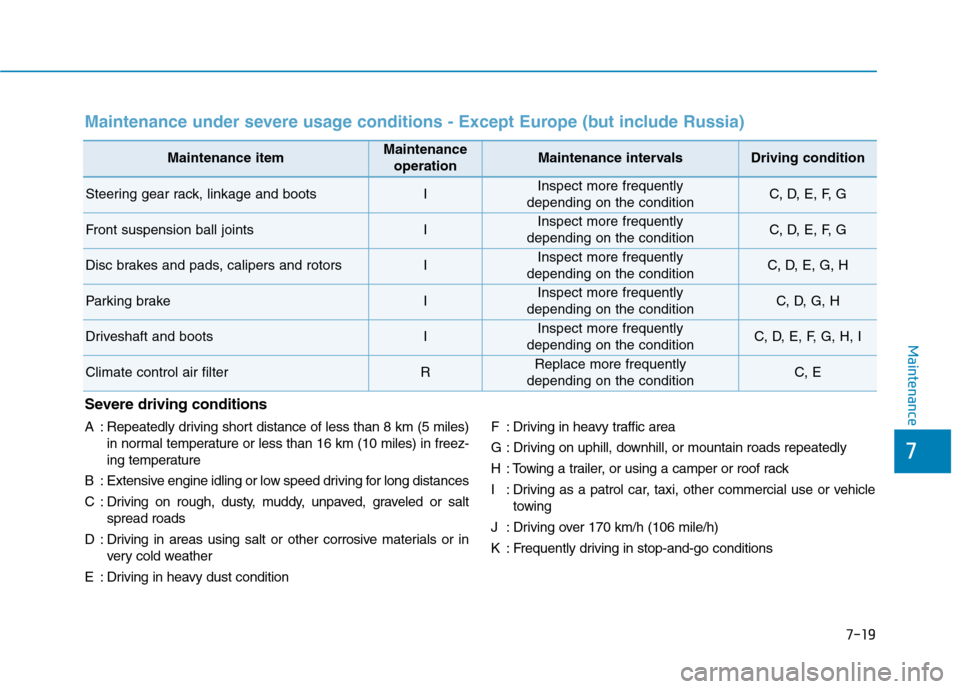
Maintenance itemMaintenance operationMaintenance intervalsDriving condition
Steering gear rack, linkage and bootsIInspect more frequently
depending on the conditionC, D, E, F, G
Front suspension ball jointsIInspect more frequently
depending on the conditionC, D, E, F, G
Disc brakes and pads, calipers and rotorsIInspect more frequently
depending on the conditionC, D, E, G, H
Parking brakeIInspect more frequently
depending on the conditionC, D, G, H
Driveshaft and bootsIInspect more frequently
depending on the conditionC, D, E, F, G, H, I
Climate control air filterRReplace more frequently
depending on the conditionC, E
Maintenance under severe usage conditions - Except Europe (but include Russia)
Severe driving conditions
A : Repeatedly driving short distance of less than 8 km (5 miles) in normal temperature or less than 16 km (10 miles) in freez-
ing temperature
B : Extensive engine idling or low speed driving for long distances
C : Driving on rough, dusty, muddy, unpaved, graveled or salt spread roads
D : Driving in areas using salt or other corrosive materials or in very cold weather
E : Driving in heavy dust condition F : Driving in heavy traffic area
G : Driving on uphill, downhill, or mountain roads repeatedly
H : Towing a trailer, or using a camper or roof rack
I : Driving as a patrol car, taxi, other commercial use or vehicle
towing
J : Driving over 170 km/h (106 mile/h)
K : Frequently driving in stop-and-go conditions
Page 446 of 553
7-25
7
Maintenance
Information
The engine coolant and/or inverter
coolant level is influenced by the
hybrid system temperature. Before
checking or refilling the engine
coolant and/or inverter coolant, turn
the hybrid vehicle off. i
Never remove the
engine coolant cap
and/or inverter coolantcap or the drain plugwhile the engine and
radiator are hot. Hot coolant and
steam may blow out under pres-
sure, causing serious injury.
Turn the hybrid system off and
wait until the engine cools down.
Use extreme care when remov-ing the engine coolant cap
and/or inverter coolant cap.
Wrap a thick towel around it, and
turn it counterclockwise slowly
to the first stop. Step back while
the pressure is released from the
cooling system. When you aresure all the pressure has been
released, press down on the cap,
using a thick towel, and continue
turning counterclockwise to
remove it.
WARNING
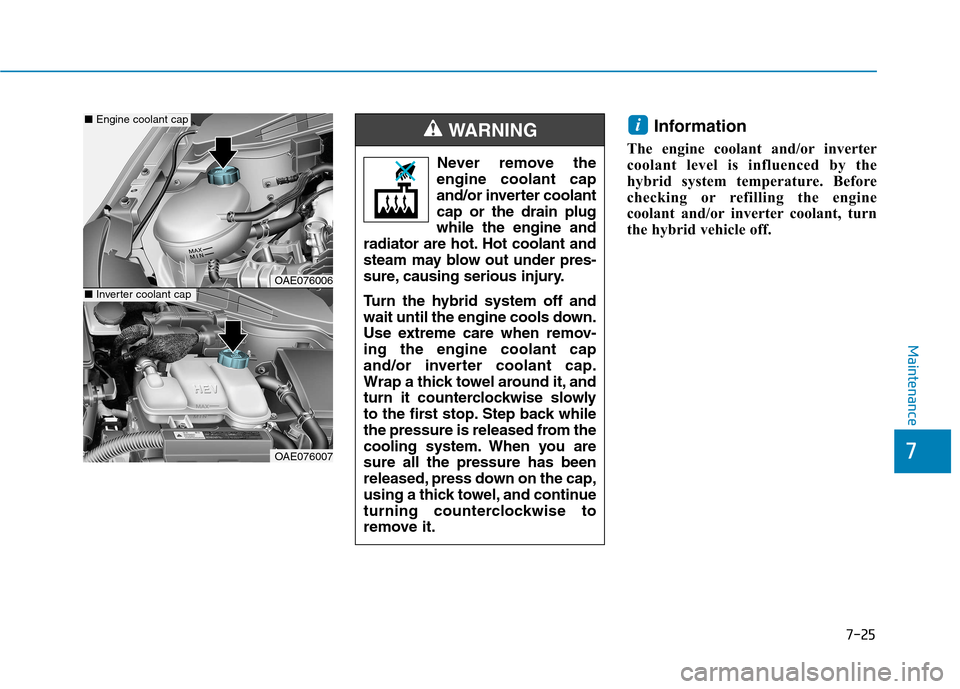
OAE076006
OAE076007
■ Engine coolant cap
■Inverter coolant cap
Page 448 of 553
7-27
7
Maintenance
Recommended coolant
When adding coolant, use onlydeionized water, distilled water or
soft water for your vehicle and
never mix hard water in the coolant
filled at the factory.
An improper coolant mixture can result in severe malfunction or
engine/hybrid system damage.
The engine in your vehicle has alu- minum engine parts and must be
protected by an phosphate-based
ethylene glycol coolant to preventcorrosion and freezing.
Do not use alcohol or methanol coolant or mix them with the spec-ified coolant.
Do not use a solution that contains more than 60% antifreeze or less
than 35% antifreeze, which would
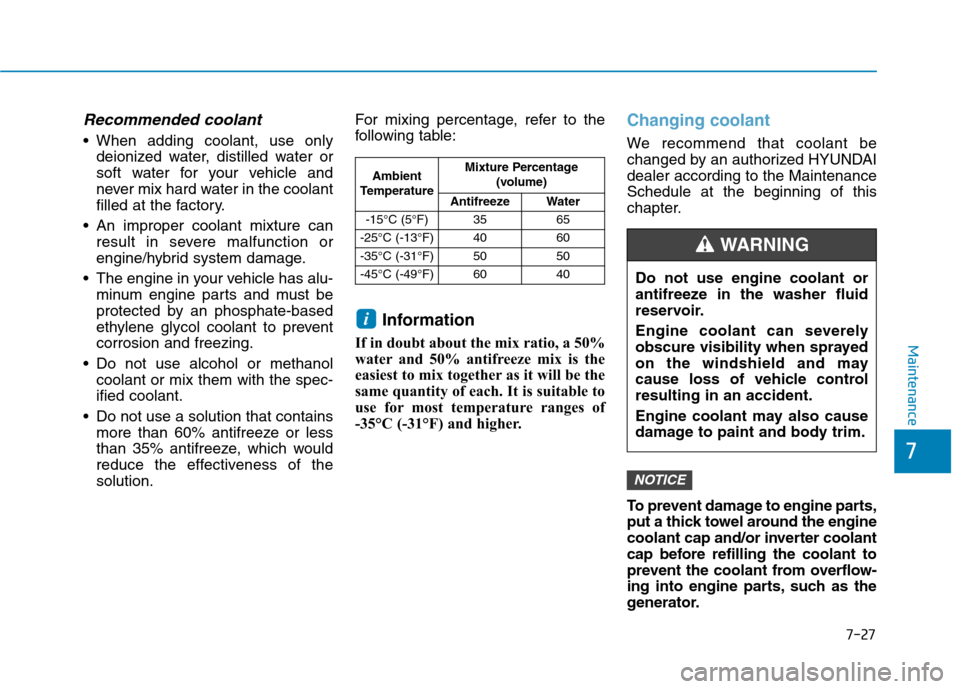
reduce the effectiveness of thesolution. For mixing percentage, refer to the
following table:
Information
If in doubt about the mix ratio, a 50%
water and 50% antifreeze mix is the
easiest to mix together as it will be the
same quantity of each. It is suitable to
use for most temperature ranges of
-35°C (-31°F) and higher.
Changing coolant
We recommend that coolant be
changed by an authorized HYUNDAIdealer according to the MaintenanceSchedule at the beginning of this
chapter.
To prevent damage to engine parts,
put a thick towel around the engine
coolant cap and/or inverter coolant
cap before refilling the coolant to
prevent the coolant from overflow-
ing into engine parts, such as the
generator.
NOTICE
i
Ambient
Temperature Mixture Percentage
(volume)
Antifreeze Water
-15°C (5°F) 35 65
-25°C (-13°F) 40 60
-35°C (-31°F) 50 50
-45°C (-49°F) 60 40
Do not use engine coolant or
antifreeze in the washer fluid
reservoir.
Engine coolant can severely
obscure visibility when sprayed
on the windshield and may
cause loss of vehicle controlresulting in an accident.
Engine coolant may also cause
damage to paint and body trim.
WARNING
Page 538 of 553
JAZDA ZIMĄ (POLISH)
9-14
Appendix
Surowe warunki pogodowe zimą
powodują większe zużycie pojazdu i
inne problemy. Aby zminimalizować
problemy związane z jazdą w zimie,postępuj zgodnie z poniższymisugestiami:Jazda w warunkach
śniegowych i przy oblodzeniu
Aby prowadzić pojazd w głębokim
śniegu, może okazać się niezbędne
użycie opon zimowych lub
zainstalowanie łańcuchów
śniegowych. Jeśli potrzebne okażą
się opony zimowe, konieczne jest
wybranie opon o rozmiarze i typie
odpowiadających oponom, w jakie
pojazd był pierwotnie wyposażony.
Jeśli założone zostaną
nieodpowiednie opony, będzie to
miało negatywny wpływ na
bezpieczeństwo i prowadzenie
pojazdu. Ponadto jazda z nadmierną
prędkością, gwałtowne
przyspieszanie, nagłe hamowanie i
ostre skręty będą stanowiły
potencjalnie bardzo duże
niebezpieczeństwo.
Podczas zwalniania należy w pełni
wykorzystać hamowanie silnikiem.
Nagłe hamowanie na zaśnieżonej
lub oblodzonej drodze może
spowodować poślizg pojazdu.Należy utrzymywać odpowiedniodstęp od pojazdu jadącego z
przodu. Hamulców należy używać
ostrożnie. Należy pamiętać, że
założenie łańcuchów śniegowych
zapewni większą siłę napędową, alenie zapobiegnie ślizganiu się naboki.
Stosowanie łańcuchów śniegowych
nie jest zgodne z prawem we
wszystkich krajach. Przed założeniem
łańcuchów śniegowych należy
sprawdzić przepisy danego kraju.
UWAGA
Page 539 of 553

Opony zimowe
Kiedy zakładane są opony zimowe,
należy upewnić się, że są to opony
radialne o takim samym rozmiarze i
zakresie obciążeń co pierwotne
opony pojazdu. Opony zimowe należy
zakładać na wszystkie cztery koła
pojazdu, by we wszystkich
warunkach pogodowych pojazd
pozwalał się prowadzić równomiernie.
Należy pamiętać, że przyczepność
zapewniana przez opony zimowe na
suchej drodze może nie być równie
wysoka jak przyczepność
pierwotnych opon pojazdu. Pojazd
należy prowadzić ostrożnie nawet
wtedy, gdy drogi są oczyszczone. Aby
poznać informacje na temat
zalecanych ograniczeń prędkości dla
danych opon, należy skontaktować
się ze sprzedawcą opon.
Opon okolcowanych nie należyzakładać bez uprzedniegosprawdzenia w przepisach lokalnych, stanowych i miejskich, czy na ichużycie nie są nałożone ograniczenia.
Łańcuchy śniegowe
(przeciwpoślizgowe)
Ponieważ ścianki boczne opon
radialnych są cieńsze, założenie
niektórych rodzajów łańcuchów
śniegowych może spowodować ich
uszkodzenie. Z tego względu zaleca
się korzystanie z opon zimowych
zamiast łańcuchów śniegowych.
Łańcuchów śniegowych nie należyzakładać w pojazdach, które są
wyposażone w felgi aluminiowe,
ponieważ mogą one powodować
uszkodzenia felg. Jeśli użycie
łańcuchów śniegowych jest ni ezbędne,
należy zastosować łańcuchy drutowe o
grubości poniżej 12 mm.
9-15
A
Appendix
Rozmiar opon zimowych
Opony zimowe powinny mieć
rozmiar i typ odpowiadający
standardowym oponom pojazdu.
Jeśli tak nie jest, może to mieć
negatywny wpływ na
bezpieczeństwo i prowadzeniepojazdu.
OSTRZEŻENIE
OAE056091
Page 541 of 553
9-17
A
Appendix
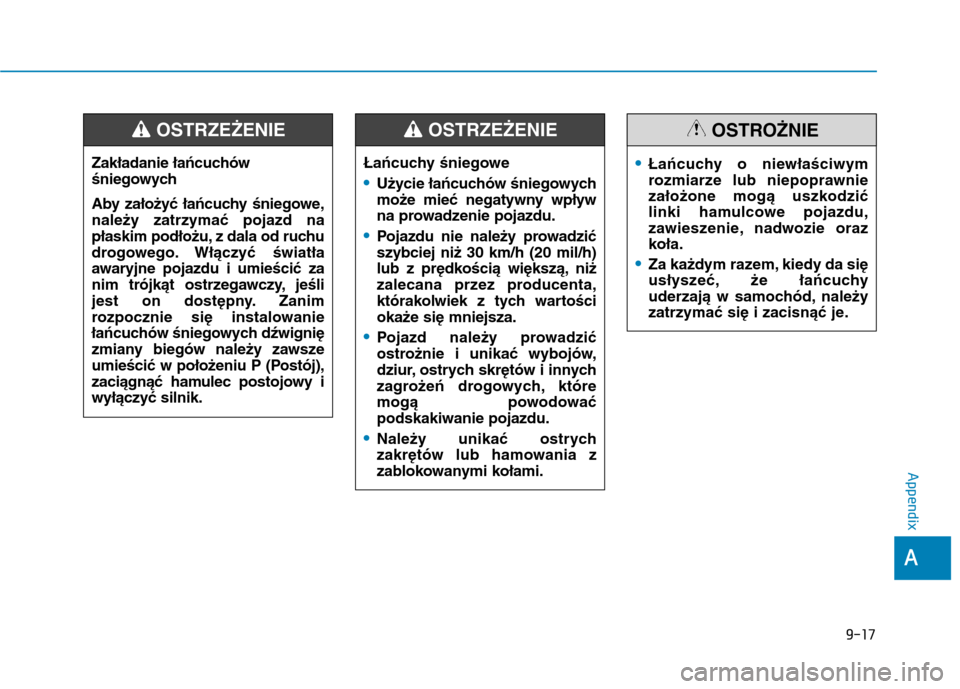
Zakładanie łańcuchów
śniegowych
Aby założyć łańcuchy śniegowe, należy zatrzymać pojazd na
płaskim podłożu, z dala od ruchu
drogowego. Włączyć światła
awaryjne pojazdu i umieścić za
nim trójkąt ostrzegawczy, jeśli
jest on dostępny. Zanim
rozpocznie się instalowanie
łańcuchów śniegowych dźwignię
zmiany biegów należy zawsze
umieścić w położeniu P (Postój),
zaciągnąć hamulec postojowy iwyłączyć silnik.
OSTRZEŻENIE
Łańcuchy śniegowe
•Użycie łańcuchów śniegowych
może mieć negatywny wpływ
na prowadzenie pojazdu.
•Pojazdu nie należy prowadzić szybciej niż 30 km/h (20 mil/h)
lub z prędkością większą, niż
zalecana przez producenta,
którakolwiek z tych wartości
okaże się mniejsza.
•Pojazd należy prowadzić
ostrożnie i unikać wybojów,
dziur, ostrych skrętów i innych
zagrożeń drogowych, które
mogą powodowaćpodskakiwanie pojazdu.
•Należy unikać ostrych
zakrętów lub hamowania z
zablokowanymi kołami.
OSTRZEŻENIE
•Łańcuchy o niewłaściwym
rozmiarze lub niepoprawnie
założone mogą uszkodzić
linki hamulcowe pojazdu,
zawieszenie, nadwozie oraz
koła.
•Za każdym razem, kiedy da się
usłyszeć, że łańcuchy
uderzają w samochód, należy
zatrzymać się i zacisnąć je.
OSTROŻNIE
Page 546 of 553
I-5
Easy access function .....................................................3-19
ECO mode ....................................................................5-20
Electric chromic mirror (ECM) ....................................3-23
Electric power steering (EPS) ......................................3-20
Electronic stability control (ESC) ................................5-31
Emergency commodity .................................................6-36
Emergency stop signal (ESS) .......................................5-36
Emergency towing ........................................................6-34
Emission control system ...............................................7-90
Crankcase emission control system ...........................7-90
Evaporative emission control System .......................7-90
Exhaust emission control system...............................7-91
Engine compartment ...............................................1-8, 7-3
Engine compartment panel fuse replacement...............7-54
Engine coolant ..............................................................7-24
Engine coolant temperature guage ...............................3-46
Engine number................................................................8-9
Engine oil......................................................................7-22
Engine specification .......................................................8-2
Engine Start/Stop button.................................................5-9
Evaporative emission control System ..........................7-90
Exhaust emission control system .................................7-91
Explanation of scheduled maintenance items ..............7-20
Exterior care .................................................................7-83
Exterior overview Front view ....................................................................1-2
Rear view .....................................................................1-3 Flat tire
Changing tires ............................................................6-17
EC Declaration of conformity for Jack .....................6-23
Jack and tools.............................................................6-16
Jack label ...................................................................6-22
Tire Mobility Kit (TMK) ...........................................6-24
Use of compact spare tires.........................................6-20
Floor mat anchor(s) ....................................................3-138
Fluid Brake fluid .................................................................7-28
Washer fluid ...............................................................7-29
Front seat adjustment......................................................2-7 Forward and rearward adjustment .............................2-18
Manual adjustment.......................................................2-8
Power adjustment.......................................................2-10
Removal/Reinstall......................................................2-18
Seatback pocket .........................................................2-13
Fuel filler door ..............................................................3-39
Fuel gauge.....................................................................3-45
Fuel requirements ...........................................................F-6
Fuse switch ...................................................................7-54
Fuses .............................................................................7-52 Engine compartment panel fuse replacement ............7-54
Fuse switch ................................................................7-54
Fuse/relay panel description ......................................7-56
Instrument panel fuse replacement ............................7-53
Main fuse ...................................................................7-55
Multi fuse ...................................................................7-55
I
Index
EF
Page 550 of 553
I-9
Parking assist system ..................................................3-108
Parking brake ................................................................5-26
Parking brake ................................................................7-30
Passenger's front air bag ON/OFF switch ....................2-55
Passenger's front air bag ...............................................2-54
Position lamp position ..................................................3-92
Power brakes.................................................................5-25
Power gauge .................................................................3-45
Power outlet ................................................................3-133
Power steering ..............................................................3-20
Power window lock button ...........................................3-31
Pre-tensioner seat belt...................................................2-31
Puddle lamp ................................................................3-100
Rear center seatbelt.......................................................2-31
Rear fog lamp ...............................................................3-94
Rear fog lamp ...............................................................3-94
Rear parking assist system .........................................3-105
Rear seat adjustment .....................................................2-13
Armrest ......................................................................2-16
Folding the rear seat ..................................................2-13
Rear seat headrests .......................................................2-20 Adjusting the height up and down.............................2-20
Rear seat warmers.........................................................2-24 Rear view camera .......................................................3-104
Recommended cold tire inflation pressures .................7-42
Recommended lubricants and capacities........................8-6
Recommended SAE viscosity number ........................8-7
Remote key .....................................................................3-4
Battery replacement .....................................................3-6
Mechanical key ............................................................3-5
Removable towing hook ...............................................6-33
Replacement light bulb .................................................7-66
Returning used vehicles ................................................F-9
Rocking the vehicle ......................................................5-92
Rotation (Tire) ..............................................................7-44
Safety messages..............................................................F-5
Scheduled maintenance services ....................................7-7
Seat belt warning light..................................................2-24
Seat belts .......................................................................2-25 Additional seat belt safety precautions ......................2-34
Care of seat belts .......................................................2-36
Do not lie down .........................................................2-36
Height adjustment ......................................................2-30
Keep belts clean and dry............................................2-36
Lap/shoulder belt .......................................................2-29
One person per belt ....................................................2-36
Periodic inspection.....................................................2-36
Pre-tensioner seat belt ................................................2-31
I
Index
P
R
S
Page 552 of 553
I-11
Sunroof .........................................................................3-33
Automatic reversal .....................................................3-34
Resetting the sunroof .................................................3-35
Sliding the sunroof.....................................................3-33
Sunroof opening and closing .....................................3-33
Sunshade ....................................................................3-35
Tilting the sunroof .....................................................3-34
Sunroof inside air recirculation ..................................3-129
Sunvisor ......................................................................3-133
Tachometer ...................................................................3-44
Tailgate .........................................................................3-38
Tailgate room lamp .......................................................3-99
Theft-alarm system .......................................................3-17
Tilt steering / Telescope steering ..................................3-21
Tire chains ....................................................................5-96
Tire load and speed capacity ..........................................8-5
Tire Mobility Kit (TMK) ..............................................6-24
Tire pressure monitoring system (TPMS) ....................6-10
Tire rotation ..................................................................7-44
Tire specification and pressure label ..............................8-9
Tires and wheels ...........................................................7-41 Checking tire inflation pressure.................................7-43
Compact spare tire replacement ................................7-46
Low aspect ratio tires.................................................7-51
Recommended cold tire inflation pressures ..............7-42 Tire care .....................................................................7-41
Tire maintenance........................................................7-47
Tire replacement ........................................................7-45
Tire rotation ...............................................................7-44
Tire sidewall labeling.................................................7-47
Tire traction................................................................7-46
Wheel alignment and tire balance .............................7-45
Wheel replacement .............................................7-46, 8-4
Towing ..........................................................................6-32
Traffic change .............................................................3-124
Trip computer ...............................................................3-86
Average fuel economy ...............................................3-87
Average vehicle speed ...............................................3-88
Digital speedometer ...................................................3-89
Distance to empty (for cluster type A) ......................3-87
Driving Info display...................................................3-89
Driving style ..............................................................3-90
Elapsed time...............................................................3-88
Energy flow................................................................3-90
Engine coolant temperature .......................................3-90
Instant fuel economy .................................................3-87
Tripmeter....................................................................3-88
Turn signals ..................................................................3-93
I
Index
T