turn signal SATURN SKY 2008 User Guide
[x] Cancel search | Manufacturer: SATURN, Model Year: 2008, Model line: SKY, Model: SATURN SKY 2008Pages: 342, PDF Size: 5.53 MB
Page 166 of 342

AM
The range for most AM stations is greater than for FM,
especially at night. The longer range can cause
station frequencies to interfere with each other.
For better radio reception, most AM radio stations
boost the power levels during the day, and then reduce
these levels during the night. Static can also occur
when things like storms and power lines interfere with
radio reception. When this happens, try reducing
the treble on your radio.
FM Stereo
FM stereo gives the best sound, but FM signals only
reach about 10 to 40 miles (16 to 65 km). Tall buildings
or hills can interfere with FM signals, causing the
sound to fade in and out.
XM™ Satellite Radio Service
XM™ Satellite Radio Service gives digital radio
reception from coast-to-coast in the 48 contiguous
United States, and in Canada. Just as with FM,
tall buildings or hills can interfere with satellite radio
signals, causing the sound to fade in and out.
In addition, traveling or standing under heavy foliage,
bridges, garages, or through tunnels could cause loss of
the XM™ signal for a period of time. The radio may
display NO XM SIGNAL to indicate interference.
Fixed Mast Antenna
The xed mast antenna can withstand most car washes
without being damaged. If the mast should ever
become slightly bent, straighten it out by hand. If the
mast is badly bent, replace it.
Check occasionally to make sure the mast is still
tightened to its base. If tightening is required, tighten by
hand, then with a wrench one quarter turn.
XM™ Satellite Radio Antenna
System
Your vehicle may have the XM™ Satellite Radio
antenna that is located on the trunk of your vehicle.
Keep this antenna clear of snow and ice build up
for clear radio reception.
3-72
ProCarManuals.com
Page 172 of 342

Traction Control System (TCS)
Your vehicle may have a Traction Control System (TCS)
that limits wheel spin. This is especially useful in
slippery road conditions. The system operates only if it
senses that the rear wheels are spinning too much
or are beginning to lose traction. When this happens,
the system works the rear brakes and reduces
engine power by closing the throttle and managing
engine spark to limit wheel spin.
If your vehicle has TCS, there is a ESC/TCS button
located on the instrument panel.
This light will ash when
your traction control
system is limiting
wheel spin.
You may feel or hear the system working, but this is
normal.
SeeElectronic Stability Control (ESC)/Traction Control
System (TCS) Indicator/Warning Light on page 3-29
for more information.If your vehicle is in cruise control when TCS begins to
limit wheel spin, the cruise control will automatically
disengage. When road conditions allow you to safely
use it again, you may re-engage the cruise control.
SeeTurn Signal/Multifunction Lever on page 3-7.
When this light is on solid
and either the SERVICE
TRACTION or TRACTION
OFF message is
displayed, the system will
not limit wheel spin.
Adjust your driving accordingly. SeeDIC Warnings and
Messages on page 3-41for more information.
The Traction Control System is automatically enabled
whenever you start your vehicle. To limit wheel spin,
especially in slippery road conditions, you should always
leave the system enabled. You can turn TCS off if
you ever need to.
It is recommended to leave the system on for normal
driving conditions, but it may be necessary to turn
the system off if your vehicle is stuck in sand, mud,
ice or snow, and you want to “rock” your vehicle to
attempt to free it. It may also be necessary to turn off
4-6
ProCarManuals.com
Page 195 of 342

Service............................................................5-3
Accessories and Modications..........................5-3
California Proposition 65 Warning.....................5-4
California Perchlorate Materials Requirements.....5-4
Doing Your Own Service Work.........................5-4
Adding Equipment to the Outside of
Your Vehicle..............................................5-5
Fuel................................................................5-5
Gasoline Octane............................................5-5
Gasoline Specications....................................5-6
California Fuel...............................................5-6
Additives.......................................................5-6
Fuels in Foreign Countries...............................5-7
Filling the Tank..............................................5-8
Filling a Portable Fuel Container.....................5-10
Checking Things Under the Hood....................5-10
Hood Release..............................................5-11
Engine Compartment Overview.......................5-12
Engine Oil...................................................5-15
Engine Oil Life System..................................5-19
Engine Air Cleaner/Filter................................5-21
Automatic Transmission Fluid.........................5-23
Manual Transmission Fluid.............................5-23Hydraulic Clutch...........................................5-23
Engine Coolant.............................................5-24
Coolant Surge Tank Pressure Cap..................5-26
Engine Overheating.......................................5-26
Cooling System............................................5-28
Power Steering Fluid.....................................5-33
Windshield Washer Fluid................................5-34
Brakes........................................................5-35
Battery........................................................5-38
Jump Starting...............................................5-39
Rear Axle.......................................................5-44
Headlamp Aiming
...........................................5-44
Bulb Replacement..........................................5-44
Halogen Bulbs..............................................5-45
Headlamps and Parking Lamps......................5-45
Front Turn Signal, Parking and Fog Lamps......5-46
Taillamps, Turn Signal, Stoplamps and
Sidemarker Lamps.....................................5-46
Back-Up Lamps............................................5-47
License Plate Lamp......................................5-48
Replacement Bulbs.......................................5-48
Windshield Wiper Blade Replacement..............5-49
Section 5 Service and Appearance Care
5-1
ProCarManuals.com
Page 240 of 342
Front Turn Signal, Parking and
Fog Lamps
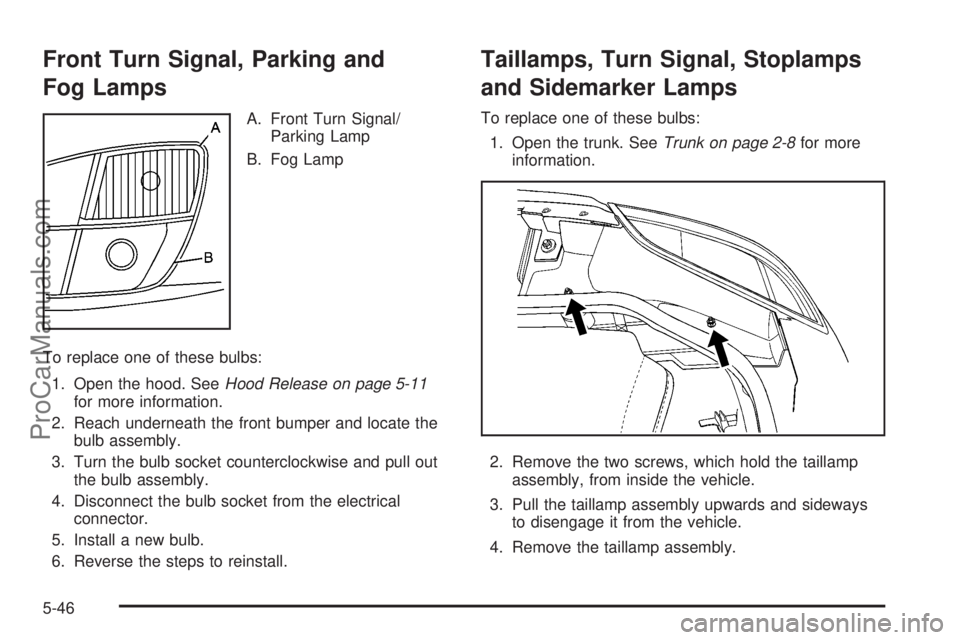
A. Front Turn Signal/
Parking Lamp
B. Fog Lamp
To replace one of these bulbs:
1. Open the hood. SeeHood Release on page 5-11
for more information.
2. Reach underneath the front bumper and locate the
bulb assembly.
3. Turn the bulb socket counterclockwise and pull out
the bulb assembly.
4. Disconnect the bulb socket from the electrical
connector.
5. Install a new bulb.
6. Reverse the steps to reinstall.
Taillamps, Turn Signal, Stoplamps
and Sidemarker Lamps
To replace one of these bulbs:
1. Open the trunk. SeeTrunk on page 2-8for more
information.
2. Remove the two screws, which hold the taillamp
assembly, from inside the vehicle.
3. Pull the taillamp assembly upwards and sideways
to disengage it from the vehicle.
4. Remove the taillamp assembly.
5-46
ProCarManuals.com
Page 242 of 342
License Plate Lamp
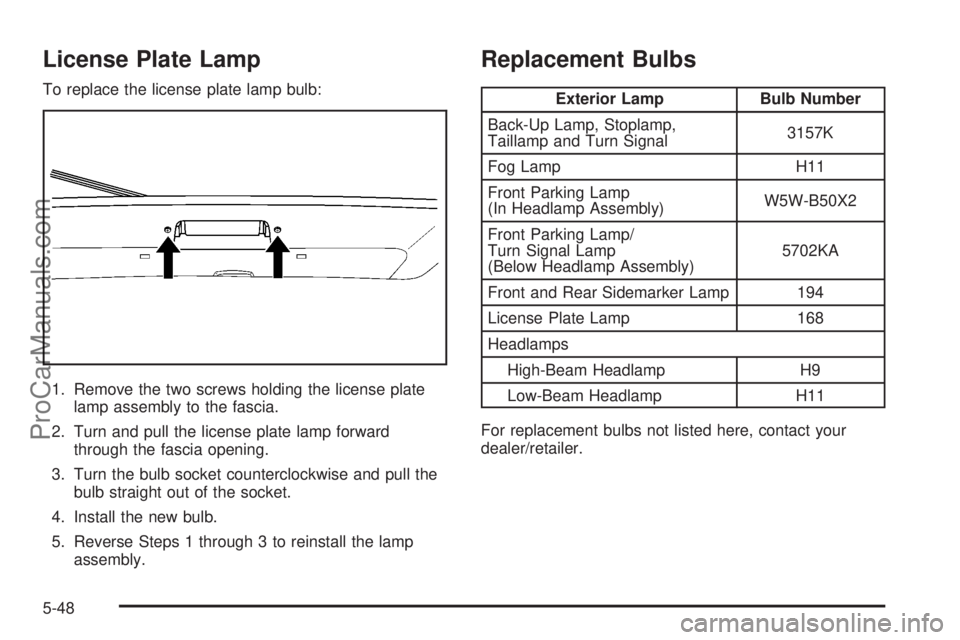
To replace the license plate lamp bulb:
1. Remove the two screws holding the license plate
lamp assembly to the fascia.
2. Turn and pull the license plate lamp forward
through the fascia opening.
3. Turn the bulb socket counterclockwise and pull the
bulb straight out of the socket.
4. Install the new bulb.
5. Reverse Steps 1 through 3 to reinstall the lamp
assembly.
Replacement Bulbs
Exterior Lamp Bulb Number
Back-Up Lamp, Stoplamp,
Taillamp and Turn Signal3157K
Fog Lamp H11
Front Parking Lamp
(In Headlamp Assembly)W5W-B50X2
Front Parking Lamp/
Turn Signal Lamp
(Below Headlamp Assembly)5702KA
Front and Rear Sidemarker Lamp 194
License Plate Lamp 168
Headlamps
High-Beam Headlamp H9
Low-Beam Headlamp H11
For replacement bulbs not listed here, contact your
dealer/retailer.
5-48
ProCarManuals.com
Page 256 of 342
The TPMS matching process is outlined below:
1. Set the parking brake.
2. Turn the ignition switch to ON/RUN with the
engine off.
3. Press and hold the Remote Keyless Entry (RKE)
transmitter’s LOCK and UNLOCK buttons, at the
same time, for about ve seconds to start the TPMS
learn mode. The horn sounds twice indicating the
TPMS receiver is ready and in learn mode.
4. Start with the driver side front tire. The driver side
front turn signal also comes on to indicate that
corner’s sensor is ready to be learned.
5. Remove the valve cap from the tire’s valve stem.
Activate the TPMS sensor by increasing or
decreasing the tire’s air pressure for about
eight seconds. The horn chirp, can take up to
30 seconds to sound. It chirps one time and then
all the turn signals ash one time to conrm the
sensor identication code has been matched to
the tire/wheel position.
6. The passenger side front turn signal comes on to
indicate that corner sensor is ready to be learned.
Proceed to the passenger side front tire and
repeat the procedure in Step 5.7. The passenger side rear turn signal comes on to
indicate that corner sensor is ready to be learned.
Proceed to the passenger side rear tire and
repeat the procedure in Step 5.
8. The driver side rear turn signal comes on to
indicate that corner sensor is ready to be learned.
Proceed to the driver side rear tire, and repeat
the procedure in Step 5.
9. After hearing the single horn chirp for the driver
side rear tire, two additional horn chirps sound to
indicate the tire learning process is done.
Turn the ignition switch to LOCK/OFF.
If no tires are learned after entering the TPMS
learn mode, or if communication with the receiver
stops, or if the time limit has expired, turn the
ignition switch to LOCK/OFF and start over
beginning with Step 2.
10. Set all four tires to the recommended air pressure
level as indicated on the Tire and Loading
Information label.
11. Put the valve caps back on the valve stems.
5-62
ProCarManuals.com
Page 332 of 342

Audio System(s).............................................3-54
Automatic Door Lock......................................... 2-7
Automatic Transmission
Fluid..........................................................5-23
Operation...................................................2-20
B
Battery..........................................................5-38
Run-Down Protection...................................3-15
Brake
Emergencies................................................ 4-5
Brakes..........................................................5-35
System Warning Light..................................3-27
Braking........................................................... 4-3
Braking in Emergencies..................................... 4-5
Break-In, New Vehicle.....................................2-16
Bulb Replacement...........................................5-44
Back-Up Lamps...........................................5-47
Front Turn Signal, Parking and Fog Lamps.....5-46
Halogen Bulbs............................................5-45
Headlamp Aiming........................................5-44
Headlamps and Parking Lamps.....................5-45
License Plate Lamps....................................5-48
Replacement Bulbs......................................5-48
Taillamps, Turn Signal, Stoplamps
and Sidemarker Lamps.............................5-46
Buying New Tires...........................................5-66
C
California Fuel.................................................. 5-6
California Perchlorate Materials Requirements....... 5-4
California Proposition 65 Warning....................... 5-4
Canadian Owners................................................ ii
Capacities and Specications............................5-99
Carbon Monoxide.....................2-8, 2-27, 4-18, 4-28
Care of
Safety Belts................................................5-87
CD, MP3 .......................................................3-64
Center Console Storage Area...........................2-33
Chains, Tire...................................................5-72
Charging System Light....................................3-27
Check
Engine Light...............................................3-32
Checking Things Under the Hood......................5-10
Chemical Paint Spotting...................................5-91
Child Restraints
Child Restraint Systems...............................1-29
Infants and Young Children...........................1-26
Lower Anchors and Tethers for Children..........1-31
Older Children.............................................1-22
Securing a Child Restraint in the
Right Front Seat Position..........................1-32
Cigarette Lighter.............................................3-16
2
ProCarManuals.com
Page 335 of 342
F
Filter
Engine Air Cleaner......................................5-21
Finish Damage...............................................5-91
Fixed Mast Antenna........................................3-72
Flashers, Hazard Warning.................................. 3-6
Flash-to-Pass................................................... 3-8
Flat Tire........................................................5-72
Fluid.............................................................5-23
Power Steering...........................................5-33
Windshield Washer......................................5-34
Fog Lamp
Fog ...........................................................3-14
Fog Lamp Light..............................................3-35
Fuel............................................................... 5-5
Additives...................................................... 5-6
California Fuel.............................................. 5-6
Filling a Portable Fuel Container....................5-10
Filling the Tank............................................. 5-8
Fuels in Foreign Countries.............................. 5-7
Gage.........................................................3-37
Gasoline Octane........................................... 5-5
Gasoline Specications.................................. 5-6
Low Warning Light.......................................3-37
Fuses
Floor Console Fuse Block.............................5-95
Fuses and Circuit Breakers...........................5-94
Underhood Fuse Block.................................5-96
G
Gage
Fuel..........................................................3-37
Speedometer..............................................3-22
Tachometer.................................................3-22
Gasoline
Octane........................................................ 5-5
Specications............................................... 5-6
Glove Box.....................................................2-33
GM Mobility Reimbursement Program.................. 7-6
H
Hazard Warning Flashers................................... 3-6
Headlamp
Aiming.......................................................5-44
Headlamp Wiring............................................5-94
Headlamps....................................................3-13
Bulb Replacement.......................................5-44
Daytime Running Lamps...............................3-14
Flash-to-Pass............................................... 3-8
Front Turn Signal, Parking and Fog Lamps.....5-46
Halogen Bulbs............................................5-45
Headlamps and Parking Lamps.....................5-45
High/Low Beam Changer................................ 3-8
On Reminder..............................................3-13
Heater...........................................................3-17
5
ProCarManuals.com
Page 340 of 342

S
Safety Belt
Reminder Light............................................3-23
Safety Belts
Care of......................................................5-87
How to Wear Safety Belts Properly................1-11
Lap-Shoulder Belt........................................1-19
Safety Belt Extender....................................1-22
Safety Belt Use During Pregnancy.................1-21
Safety Belts Are for Everyone......................... 1-6
Safety Warnings and Symbols.............................. iii
Scheduled Maintenance..................................... 6-4
Seatback Latches............................................. 1-5
Seats
Driver Seat Height Adjuster............................. 1-2
Reclining Seatbacks...................................... 1-3
Seatback Latches.......................................... 1-5
Securing a Child Restraint
Right Front Seat Position..............................1-32
Security Light.................................................3-35
Service........................................................... 5-3
Accessories and Modications......................... 5-3
Adding Equipment to the Outside
of Your Vehicle.......................................... 5-5Service (cont.)
California Pershlorate Materials
Requirements............................................ 5-4
California Proposition 65 Warning.................... 5-4
Doing Your Own Work................................... 5-4
Engine Soon Light.......................................3-32
Publications Ordering Information...................7-15
Service, Scheduling Appointments....................... 7-9
Servicing Your Airbag-Equipped Vehicle..............1-48
Sheet Metal Damage.......................................5-91
Shifting Into Park (P).......................................2-25
Shifting Out of Park (P)...................................2-26
Signals, Turn and Lane-Change.......................... 3-8
Specications, Capacities.................................5-99
Speedometer..................................................3-22
Starting the Engine.........................................2-18
Steering........................................................4-11
Steering Wheel Controls, Audio.........................3-71
Steering Wheel, Tilt Wheel................................. 3-6
Storage Areas
Center Console Storage Area........................2-33
Cupholder(s)
...............................................2-33
Glove Box..................................................2-33
Stuck in Sand, Mud, Ice, or Snow.....................4-22
Sun Visors.....................................................2-12
10
ProCarManuals.com
Page 341 of 342

T
Tachometer....................................................3-22
Taillamps
Turn Signal, Stoplamps and
Sidemarker Lamps...................................5-46
Theft-Deterrent, Radio.....................................3-70
Theft-Deterrent Systems...................................2-12
Content Theft-Deterrent................................2-12
PASS-Key
®III+...........................................2-14
PASS-Key®III+ Operation.............................2-14
Tilt Wheel........................................................ 3-6
Time, Setting..................................................3-51
Tire
Pressure Light.............................................3-31
Tires.............................................................5-50
Aluminum or Chrome-Plated Wheels,
Cleaning.................................................5-90
Buying New Tires........................................5-66
Chains.......................................................5-72
Cleaning....................................................5-91
Different Size..............................................5-67
If a Tire Goes Flat.......................................5-72
Ination - Tire Pressure................................5-56
Inspection and Rotation................................5-63
Pressure Monitor Operation...........................5-59
Pressure Monitor System..............................5-58Tires (cont.)
Tire Sealant and Compressor Kit...................5-74
Tire Sidewall Labeling..................................5-52
Tire Terminology and Denitions....................5-54
Uniform Tire Quality Grading.........................5-68
Wheel Alignment and Tire Balance.................5-69
Wheel Replacement.....................................5-70
When It Is Time for New Tires......................5-65
Winter Tires................................................5-51
Towing
Recreational Vehicle.....................................4-28
Towing a Trailer..........................................4-28
Your Vehicle...............................................4-28
Traction
Control System (TCS).................................... 4-6
Limited-Slip Rear Axle.................................... 4-8
Traction Control System...................................3-29
Transmission
Fluid, Automatic...........................................5-23
Fluid, Manual..............................................5-23
Transmission Operation, Automatic....................2-20
Transmission Operation, Manual........................
2-23
Trunk.............................................................. 2-8
Trunk Ajar Light..............................................3-36
Turn and Lane-Change Signals.......................... 3-8
Turn Signal/Multifunction Lever........................... 3-7
11
ProCarManuals.com