Cv axle TOYOTA RAV4 1996 Service Service Manual
[x] Cancel search | Manufacturer: TOYOTA, Model Year: 1996, Model line: RAV4, Model: TOYOTA RAV4 1996Pages: 1632, PDF Size: 41.64 MB
Page 160 of 1632
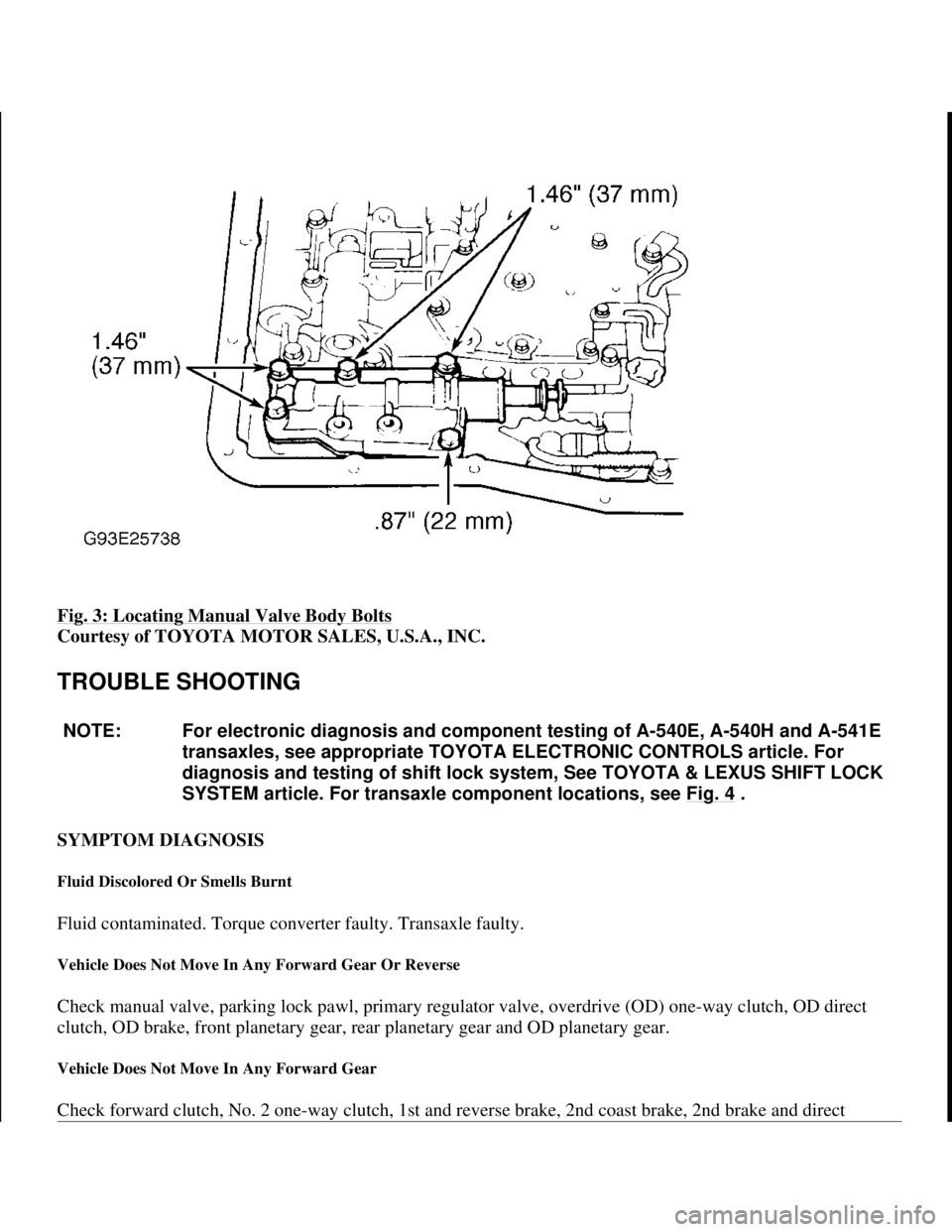
Fig. 3: Locating Manual Valve Body Bolts
Courtesy of TOYOTA MOTOR SALES, U.S.A., INC.
TROUBLE SHOOTING
SYMPTOM DIAGNOSIS
Fluid Discolored Or Smells Burnt
Fluid contaminated. Torque converter faulty. Transaxle faulty.
Vehicle Does Not Move In Any Forward Gear Or Reverse
Check manual valve, parking lock pawl, primary regulator valve, overdrive (OD) one-way clutch, OD direct
clutch, OD brake, front planetary gear, rear planetary gear and OD planetary gear.
Vehicle Does Not Move In Any Forward Gear
Check forward clutch, No. 2 one-way clutch, 1st and reverse brake, 2nd coast brake, 2nd brake and direct
NOTE: For electronic diagnosis and component testing of A-540E, A-540H and A-541E
transaxles, see appropriate TOYOTA ELECTRONIC CONTROLS article. For
diagnosis and testing of shift lock system, See TOYOTA & LEXUS SHIFT LOCK
SYSTEM article. For transaxle component locations, see Fig. 4
.
1998 Toyota Avalon XLS
1997-99 AUTOMATIC TRANSMISSIONS Toyota A-540E, A-540H & A-541E Overhaul
Helpmelearn
November-03-08 10:28:16 AMPage 6 © 2005 Mitchell Repair Information Company, LLC.
Page 163 of 1632
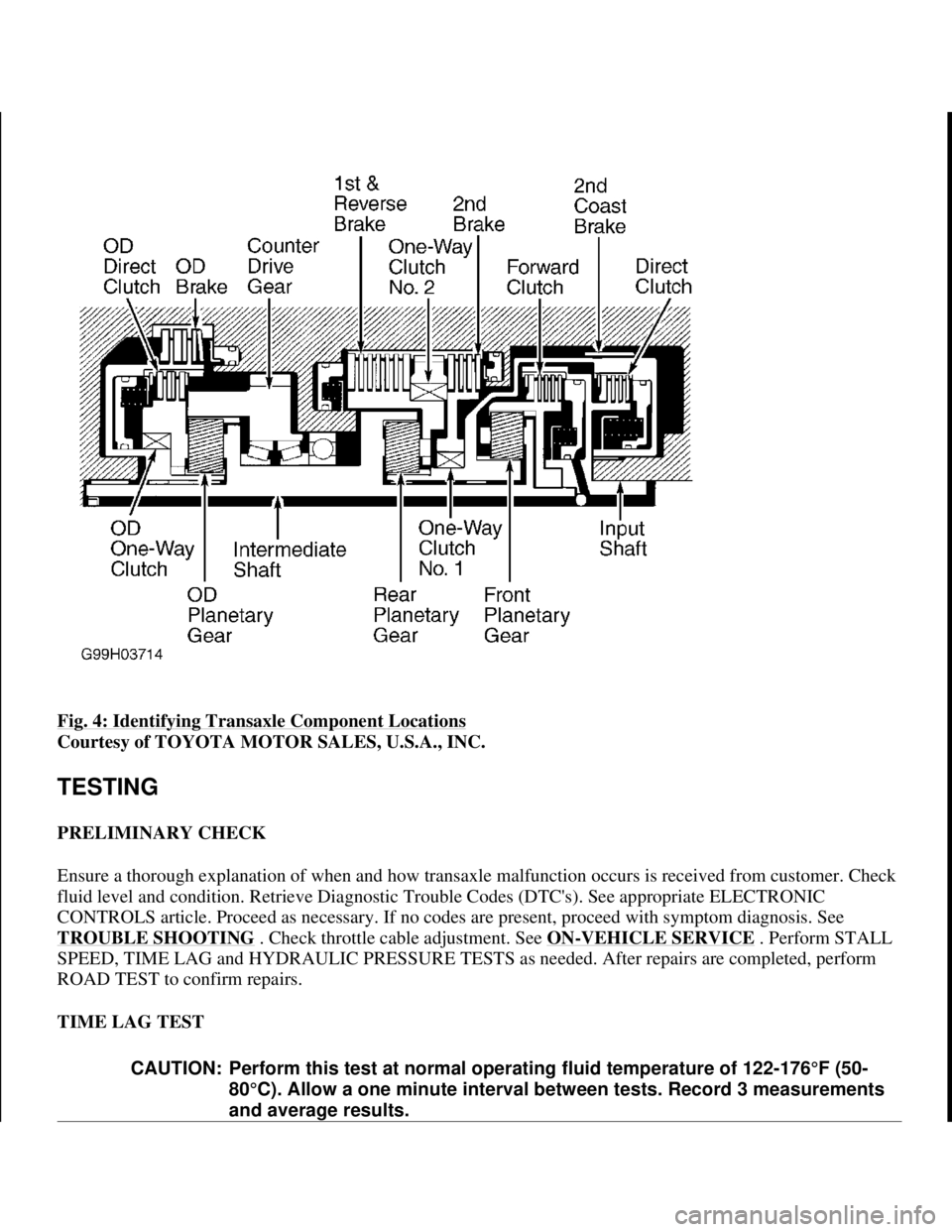
Fig. 4: Identifying Transaxle Component Locations
Courtesy of TOYOTA MOTOR SALES, U.S.A., INC.
TESTING
PRELIMINARY CHECK
Ensure a thorough explanation of when and how transaxle malfunction occurs is received from customer. Check
fluid level and condition. Retrieve Diagnostic Trouble Codes (DTC's). See appropriate ELECTRONIC
CONTROLS article. Proceed as necessary. If no codes are present, proceed with symptom diagnosis. See
TROUBLE SHOOTING
. Check throttle cable adjustment. See ON-VEHICLE SERVICE . Perform STALL
SPEED, TIME LAG and HYDRAULIC PRESSURE TESTS as needed. After repairs are completed, perform
ROAD TEST to confirm repairs.
TIME LAG TEST
CAUTION: Perform this test at normal operating fluid temperature of 122-176°F (50-
80°C). Allow a one minute interval between tests. Record 3 measurements
and average results.
1998 Toyota Avalon XLS
1997-99 AUTOMATIC TRANSMISSIONS Toyota A-540E, A-540H & A-541E Overhaul
Helpmelearn
November-03-08 10:28:17 AMPage 9 © 2005 Mitchell Repair Information Company, LLC.
Page 164 of 1632
1. If shift lever is actuated with engine idling, a time lag will be noted before shock can be felt. This test is
used for checking condition of OD direct clutch, forward clutch, direct clutch, and 1st and reverse brake.
2. Apply parking brake. Start engine. On RAV4, ensure idle speed is 700-800 RPM. On all other models,
ensure idle speed is 650-750 RPM. Shift transaxle from "N" into "D" range. Use a stop watch to measure
elapsed time between shifting of lever until shock is felt. Standard time lag is less than 1.2 seconds.
3. Repeat procedure outlined in step 2) to measure time lag for "N" to "R". Standard lag time is less than 1.5
seconds.
4. If "N" to "D" time lag is longer than specification, line pressure is too low, forward clutch may be worn,
or OD one-way clutch is not operating properly.
5. If "N" to "R" time lag is longer than specified, direct clutch may be worn, 1st and reverse brake may be
worn, line pressure is too low or OD one-way clutch is not operating properly.
ROAD TEST
"D" Range Test In NORM & PWR Pattern Ranges
1. Shift into "D" range. Hold accelerator pedal constant at full throttle. Place shift mode button in NORM or
PWR position. Check 1-2, 2-3, and 3-OD lock-up and upshift points. See appropriate table under SHIFT
SPEED SPECIFICATIONS .
zIf no 1-2 upshift occurs, check 1-2 shift valve or solenoid.
zIf no 2-3 upshift occurs, check 2-3 shift valve or solenoid.
zIf no 3-OD upshift occurs, check 3-OD shift valve.
zIf all shift points are incorrect, check throttle valve, 1-2 shift valve, 2-3 shift valve and 3-OD shift
valve.
zIf all lock-up points are incorrect, check lock-up relay valve or shift solenoid valve SL.
2. Use procedure outlined in step 1) to check for shock and slip between 1-2, 2-3, and 3-OD upshifts. If
shock is harsh, line pressure may be too high. Check accumulator or check ball.
3. Run vehicle in "D" range lock-up or overdrive gear. Check for abnormal noise and vibration.
4. While running in "D" range, confirm correct kickdown vehicle speed limits for 2-1, 3-2, OD-3 shift
points. Check for abnormal shock and slip at kickdown.
5. Check loc
k-up function. Drive vehicle in OD gear of "D" range with lock-up on. Hold vehicle speed NOTE: Perform test at normal operating fluid temperature of 122-176°F (50-80°C).
NOTE: There is no overdrive upshift when coolant temperature is below 140°F
(60°C). There is no lock-up when vehicle speed is 6 MPH less than the set
cruise control speed.
NOTE: Check for cause of abnormal noise and vibration must be made with
extreme care as problem could be due to an unbalanced drive shaft,
differential, tire, torque converter, etc.
1998 Toyota Avalon XLS
1997-99 AUTOMATIC TRANSMISSIONS Toyota A-540E, A-540H & A-541E Overhaul
Helpmelearn
November-03-08 10:28:17 AMPage 10 © 2005 Mitchell Repair Information Company, LLC.
Page 165 of 1632
steady at 43 MPH for 1997 Avalon, 47 MPH for RAV4 and 37 MPH for all other models. Lightly depress
accelerator pedal. Ensure engine RPM does not change abruptly. Large increase in engine RPM indicates
lock-up function is faulty.
"2" Range Test
1. Shift into "2" range and fully depress accelerator pedal to full throttle. Ensure 1-2 upshift takes place and
shift point conforms to specifications. See appropriate table under SHIFT SPEED SPECIFICATIONS
.
2. While driving in "2" range, 2nd gear, release accelerator pedal and check engine braking effect. If there is
no engine braking effect, 2nd coast brake is faulty. Check for abnormal noise and shock at acceleration
and deceleration.
"L" Range Test
While running in "L" range, ensure there is no upshift to 2nd gear. While running in "L" range, release
accelerator pedal. If there is no engine braking effect, 1st and reverse brake is faulty. Check for abnormal noise
at acceleration and deceleration.
"R" Range Test
Shift into "R" range. Accelerate vehicle from a stop at full throttle. Ensure slipping does not occur.
"P" Range Test
Stop vehicle on 5 degree or more gradient. Shift transaxle into "P" range. Release parking brake. Ensure parking
pawl holds vehicle.
SHIFT SPEED SPECIFICATIONS
AVALON A-541E SHIFT SPEED SPECIFICATIONS
Application (1)MPH
"D" Range (NORM or PWR)
1st-2nd41-44
2nd-3rd76-81
3rd-OD117-123
3rd-OD (2)24-27
OD-3rd (2)12-15
OD-3rd113-118
3rd-2nd70-75
2nd-1st34-37
"2" Range (NORM or PWR)
1st-2nd41-44
3rd-2nd83-88
2nd-1st34-37
1998 Toyota Avalon XLS
1997-99 AUTOMATIC TRANSMISSIONS Toyota A-540E, A-540H & A-541E Overhaul
Helpmelearn
November-03-08 10:28:17 AMPage 11 © 2005 Mitchell Repair Information Company, LLC.
Page 170 of 1632
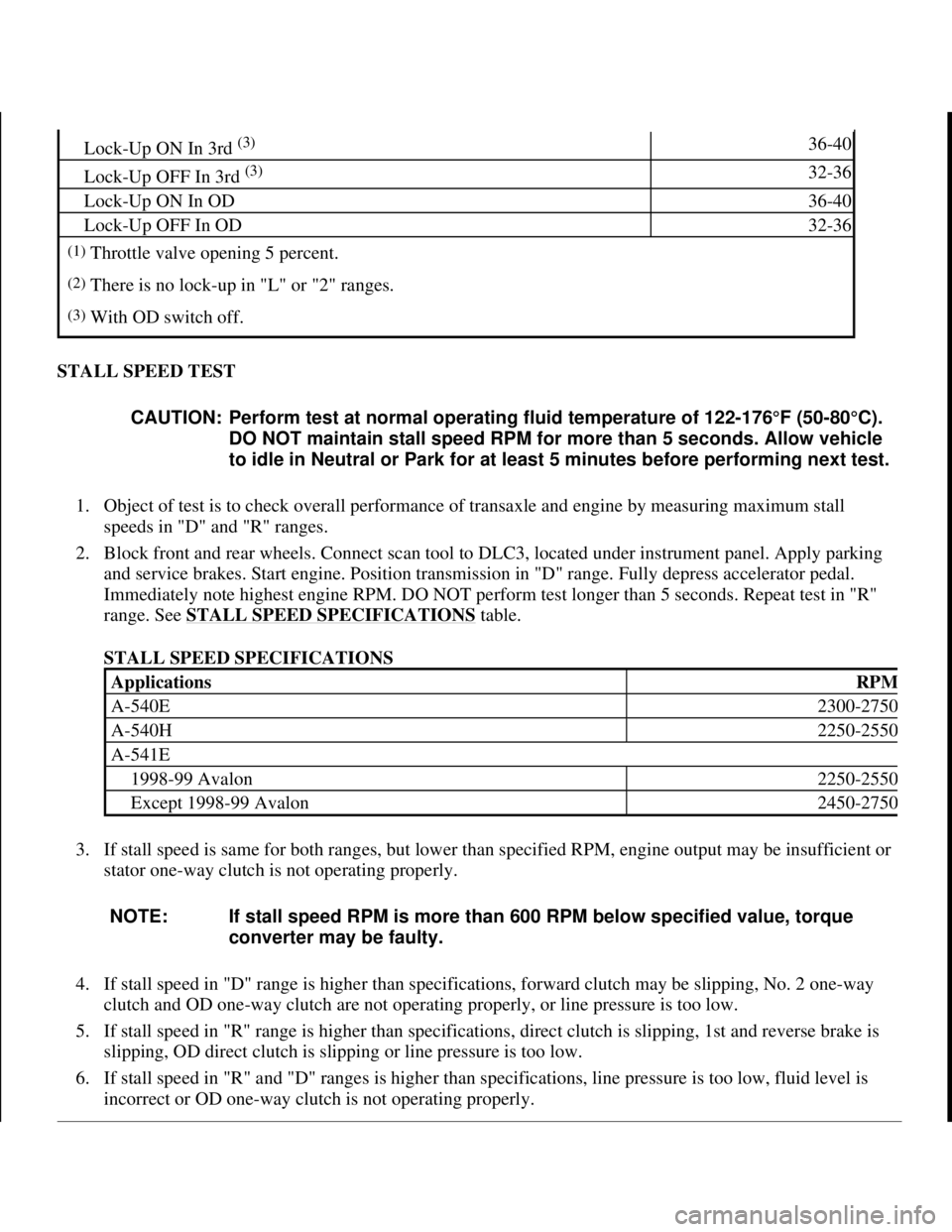
STALL SPEED TEST
1. Object of test is to check overall performance of transaxle and engine by measuring maximum stall
speeds in "D" and "R" ranges.
2. Block front and rear wheels. Connect scan tool to DLC3, located under instrument panel. Apply parking
and service brakes. Start engine. Position transmission in "D" range. Fully depress accelerator pedal.
Immediately note highest engine RPM. DO NOT perform test longer than 5 seconds. Repeat test in "R"
range. See STALL SPEED SPECIFICATIONS
table.
STALL SPEED SPECIFICATIONS
3. If stall speed is same for both ranges, but lower than specified RPM, engine output may be insufficient or
stator one-way clutch is not operating properly.
4. If stall speed in "D" range is higher than specifications, forward clutch may be slipping, No. 2 one-way
clutch and OD one-way clutch are not operating properly, or line pressure is too low.
5. If stall speed in "R" range is higher than specifications, direct clutch is slipping, 1st and reverse brake is
slipping, OD direct clutch is slipping or line pressure is too low.
6. If stall speed in "R" and "D" ranges is higher than specifications, line pressure is too low, fluid level is
incorrect or OD one-wa
y clutch is not operating properly.
Lock-Up ON In 3rd (3)36-40
Lock-Up OFF In 3rd (3)32-36
Lock-Up ON In OD36-40
Lock-Up OFF In OD32-36
(1)Throttle valve opening 5 percent.
(2)There is no lock-up in "L" or "2" ranges.
(3)With OD switch off.
CAUTION: Perform test at normal operating fluid temperature of 122-176°F (50-80°C).
DO NOT maintain stall speed RPM for more than 5 seconds. Allow vehicle
to idle in Neutral or Park for at least 5 minutes before performing next test.
ApplicationsRPM
A-540E2300-2750
A-540H2250-2550
A-541E
1998-99 Avalon2250-2550
Except 1998-99 Avalon2450-2750
NOTE: If stall speed RPM is more than 600 RPM below specified value, torque
converter may be faulty.
1998 Toyota Avalon XLS
1997-99 AUTOMATIC TRANSMISSIONS Toyota A-540E, A-540H & A-541E Overhaul
Helpmelearn
November-03-08 10:28:17 AMPage 16 © 2005 Mitchell Repair Information Company, LLC.
Page 171 of 1632
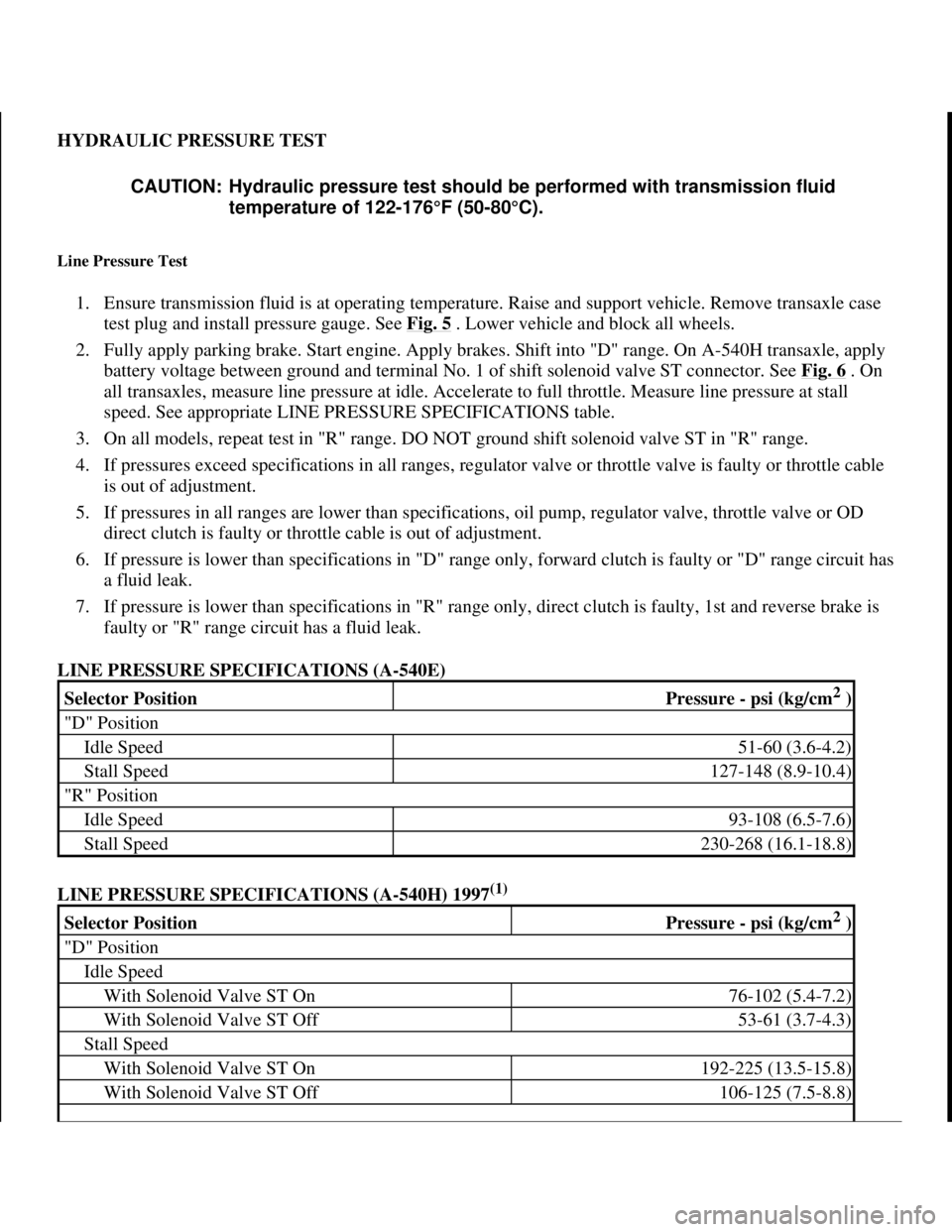
HYDRAULIC PRESSURE TEST
Line Pressure Test
1. Ensure transmission fluid is at operating temperature. Raise and support vehicle. Remove transaxle case
test plug and install pressure gauge. See Fig. 5
. Lower vehicle and block all wheels.
2. Fully apply parking brake. Start engine. Apply brakes. Shift into "D" range. On A-540H transaxle, apply
battery voltage between ground and terminal No. 1 of shift solenoid valve ST connector. See Fig. 6
. On
all transaxles, measure line pressure at idle. Accelerate to full throttle. Measure line pressure at stall
speed. See appropriate LINE PRESSURE SPECIFICATIONS table.
3. On all models, repeat test in "R" range. DO NOT ground shift solenoid valve ST in "R" range.
4. If pressures exceed specifications in all ranges, regulator valve or throttle valve is faulty or throttle cable
is out of adjustment.
5. If pressures in all ranges are lower than specifications, oil pump, regulator valve, throttle valve or OD
direct clutch is faulty or throttle cable is out of adjustment.
6. If pressure is lower than specifications in "D" range only, forward clutch is faulty or "D" range circuit has
a fluid leak.
7. If pressure is lower than specifications in "R" range only, direct clutch is faulty, 1st and reverse brake is
faulty or "R" range circuit has a fluid leak.
LINE PRESSURE SPECIFICATIONS (A-540E)
LINE PRESSURE SPECIFICATIONS (A-540H) 1997
(1)
CAUTION: Hydraulic pressure test should be performed with transmission fluid
temperature of 122-176°F (50-80°C).
Selector PositionPressure - psi (kg/cm2 )
"D" Position
Idle Speed51-60 (3.6-4.2)
Stall Speed127-148 (8.9-10.4)
"R" Position
Idle Speed93-108 (6.5-7.6)
Stall Speed230-268 (16.1-18.8)
Selector PositionPressure - psi (kg/cm2 )
"D" Position
Idle Speed
With Solenoid Valve ST On76-102 (5.4-7.2)
With Solenoid Valve ST Off53-61 (3.7-4.3)
Stall Speed
With Solenoid Valve ST On192-225 (13.5-15.8)
With Solenoid Valve ST Off106-125 (7.5-8.8)
1998 Toyota Avalon XLS
1997-99 AUTOMATIC TRANSMISSIONS Toyota A-540E, A-540H & A-541E Overhaul
Helpmelearn
November-03-08 10:28:17 AMPage 17 © 2005 Mitchell Repair Information Company, LLC.
Page 174 of 1632
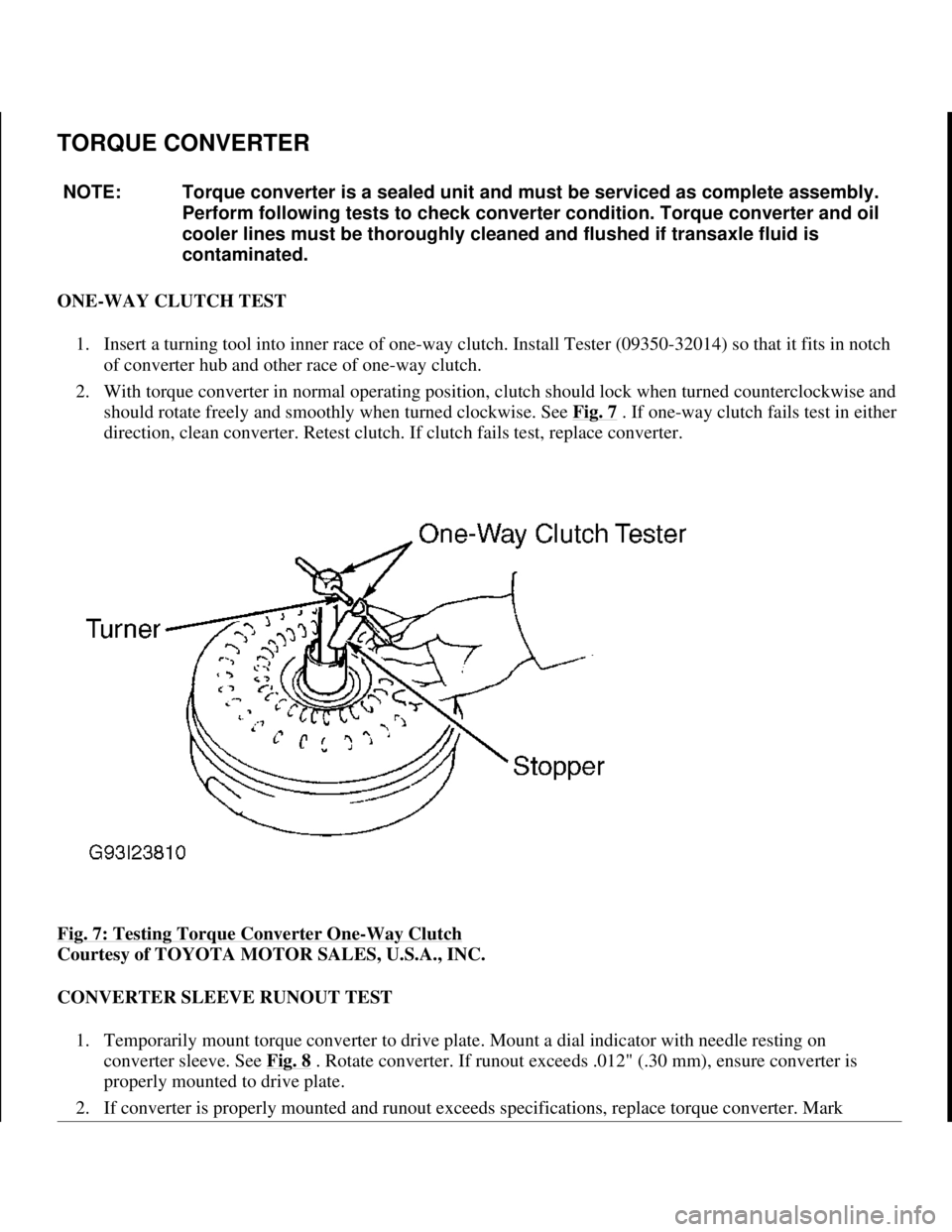
TORQUE CONVERTER
ONE-WAY CLUTCH TEST
1. Insert a turning tool into inner race of one-way clutch. Install Tester (09350-32014) so that it fits in notch
of converter hub and other race of one-way clutch.
2. With torque converter in normal operating position, clutch should lock when turned counterclockwise and
should rotate freely and smoothly when turned clockwise. See Fig. 7
. If one-way clutch fails test in either
direction, clean converter. Retest clutch. If clutch fails test, replace converter.
Fig. 7: Testing Torque Converter One
-Way Clutch
Courtesy of TOYOTA MOTOR SALES, U.S.A., INC.
CONVERTER SLEEVE RUNOUT TEST
1. Temporarily mount torque converter to drive plate. Mount a dial indicator with needle resting on
converter sleeve. See Fig. 8
. Rotate converter. If runout exceeds .012" (.30 mm), ensure converter is
properly mounted to drive plate.
2. If converter is properl
y mounted and runout exceeds specifications, replace torque converter. Mark NOTE: Torque converter is a sealed unit and must be serviced as complete assembly.
Perform following tests to check converter condition. Torque converter and oil
cooler lines must be thoroughly cleaned and flushed if transaxle fluid is
contaminated.
1998 Toyota Avalon XLS
1997-99 AUTOMATIC TRANSMISSIONS Toyota A-540E, A-540H & A-541E Overhaul
Helpmelearn
November-03-08 10:28:17 AMPage 20 © 2005 Mitchell Repair Information Company, LLC.
Page 176 of 1632
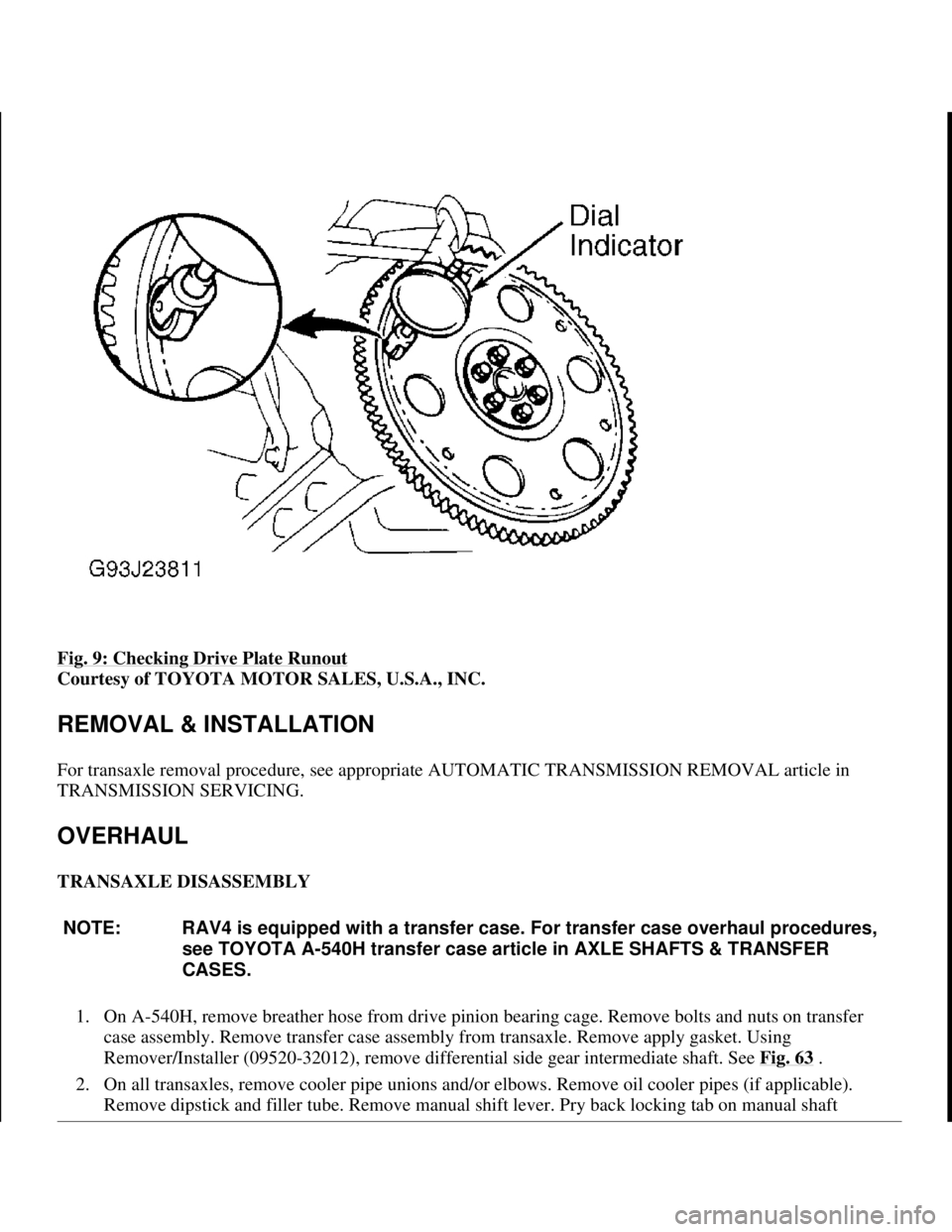
Fig. 9: Checking Drive Plate Runout
Courtesy of TOYOTA MOTOR SALES, U.S.A., INC.
REMOVAL & INSTALLATION
For transaxle removal procedure, see appropriate AUTOMATIC TRANSMISSION REMOVAL article in
TRANSMISSION SERVICING.
OVERHAUL
TRANSAXLE DISASSEMBLY
1. On A-540H, remove breather hose from drive pinion bearing cage. Remove bolts and nuts on transfer
case assembly. Remove transfer case assembly from transaxle. Remove apply gasket. Using
Remover/Installer (09520-32012), remove differential side gear intermediate shaft. See Fig. 63
.
2. On all transaxles, remove cooler pipe unions and/or elbows. Remove oil cooler pipes (if applicable).
Remove dipstick and filler tube. Remove manual shift lever. Pry back locking tab on manual shaft
NOTE: RAV4 is equipped with a transfer case. For transfer case overhaul procedures,
see TOYOTA A-540H transfer case article in AXLE SHAFTS & TRANSFER
CASES.
1998 Toyota Avalon XLS
1997-99 AUTOMATIC TRANSMISSIONS Toyota A-540E, A-540H & A-541E Overhaul
Helpmelearn
November-03-08 10:28:17 AMPage 22 © 2005 Mitchell Repair Information Company, LLC.
Page 177 of 1632
washer. Remove nut and washer. Remove Park/Neutral Position (PNP) switch.
3. Remove throttle cable retaining bolt. Remove solenoid harness connector retaining bolt (if applicable).
Remove vehicle speed sensor mounted in differential cover. Remove sensor adapter. Remove direct
clutch speed (T/M revolution) sensor mounted to upper case cover (if equipped). Remove upper case
cover. Remove transaxle oil pan. Examine any contamination in pan to aid in diagnosis.
4. Remove oil stainer (filter) and oil pipe hold-down bracket. Remove manual valve body including detent
spring. Gently remove all oil pipes by prying up on end of pipe with screwdriver.
5. Disconnect solenoid harness connectors. Remove connector clamp and apply pipe retainer. Remove 1st
and reverse apply pipe. Remove valve body bolts. Remove wiring harness clamp. Disconnect throttle
cable from cam and remove valve body.
6. Remove throttle cable and solenoid wiring harness. Remove 2nd brake apply gasket. Loosen accumulator
cover bolts in crisscross pattern. Remove cover and gasket. Remove forward clutch accumulator. See Fi
g.
10 .
7. Remove remaining accumulators by applying 14 psi (1kg/cm
2 ) of air pressure to apply hole. See Fig.
11 . Cover accumulator bores with a rag when applying air.
8. Mark 2nd coast brake servo apply piston rod where it meets case. Apply 57-114 psi (4-8 kg/cm
2 ) of air
pressure to apply hole and measure piston rod travel (stroke). See Fig. 12
. Piston rod travel should
be .079-.138" (2.0-3.5 mm). If rod travel is not within specification, further inspect band during
disassembly.
9. Remove 2nd coast brake piston cover snap ring. Apply air to oil hole and remove cover and piston
assembly. See Fig. 12
. Remove oil pump bolts. Using appropriate puller, remove oil pump.
10. Remove direct clutch and forward clutch. Separate components and remove thrust washer. Remove thrust
bearings from front and rear of forward clutch. Push out 2nd coast brake band anchor pin. Remove band
and inspect.
11. Remove front planetary ring gear. Remove front planetary gear with thrust bearings on either side.
Remove thrust bearings. Remove sun gear shell with thrust washer.
12. Apply compressed air to 2nd brake piston port and check operation of 2nd brake. See Fig. 13
. Remove
2nd coast brake band guide. DO NOT separate band guide and bolt. Remove snap ring securing 2nd
brake drum. Remove drum.
13. Remove 2nd brake piston return spring. Remove No. 1 one-way clutch. Remove 2nd brake clutch discs,
plates and flange. Note number and location of components. Remove snap ring securing No. 2 one-way
clutch and rear planetary gear. See Fig. 14
. Remove components.
14. Remove thrust washer from rear planetary gear. Remove rear planetary ring gear with thrust bearing.
Apply air into appropriate passage to check 1st and reverse brake operation. See Fig. 15
.
15. Using feeler gauge, check pack clearance of 1st and reverse brake assembly. Clearance should be .033-
.081" (.85-2.05 mm) for A-540E transaxle, .041-.085" (1.04-2.16 mm) for A-540H transaxle, or .076-
.106" (1.92-2.68 mm) for A-541E transaxle. Remove snap ring securing 1st and reverse brake. Remove
1st and reverse brake discs, plates and flange. Note number and location of components.
16. From back of transaxle, remove 13 bolts securing overdrive unit. Using soft-faced hammer, tap around
outside of case until overdrive unit loosens and can be removed.
17. Remove overdrive (OD) planetary gear from transaxle case. Remove OD brake drum. See Fig. 14
.
Remove gaskets for OD clutch apply and OD brake apply ports.
18. Usin
g appropriate compressor, compress 1st and reverse piston. See Fig. 16 . Remove snap ring. Apply
1998 Toyota Avalon XLS
1997-99 AUTOMATIC TRANSMISSIONS Toyota A-540E, A-540H & A-541E Overhaul
Helpmelearn
November-03-08 10:28:17 AMPage 23 © 2005 Mitchell Repair Information Company, LLC.
Page 181 of 1632
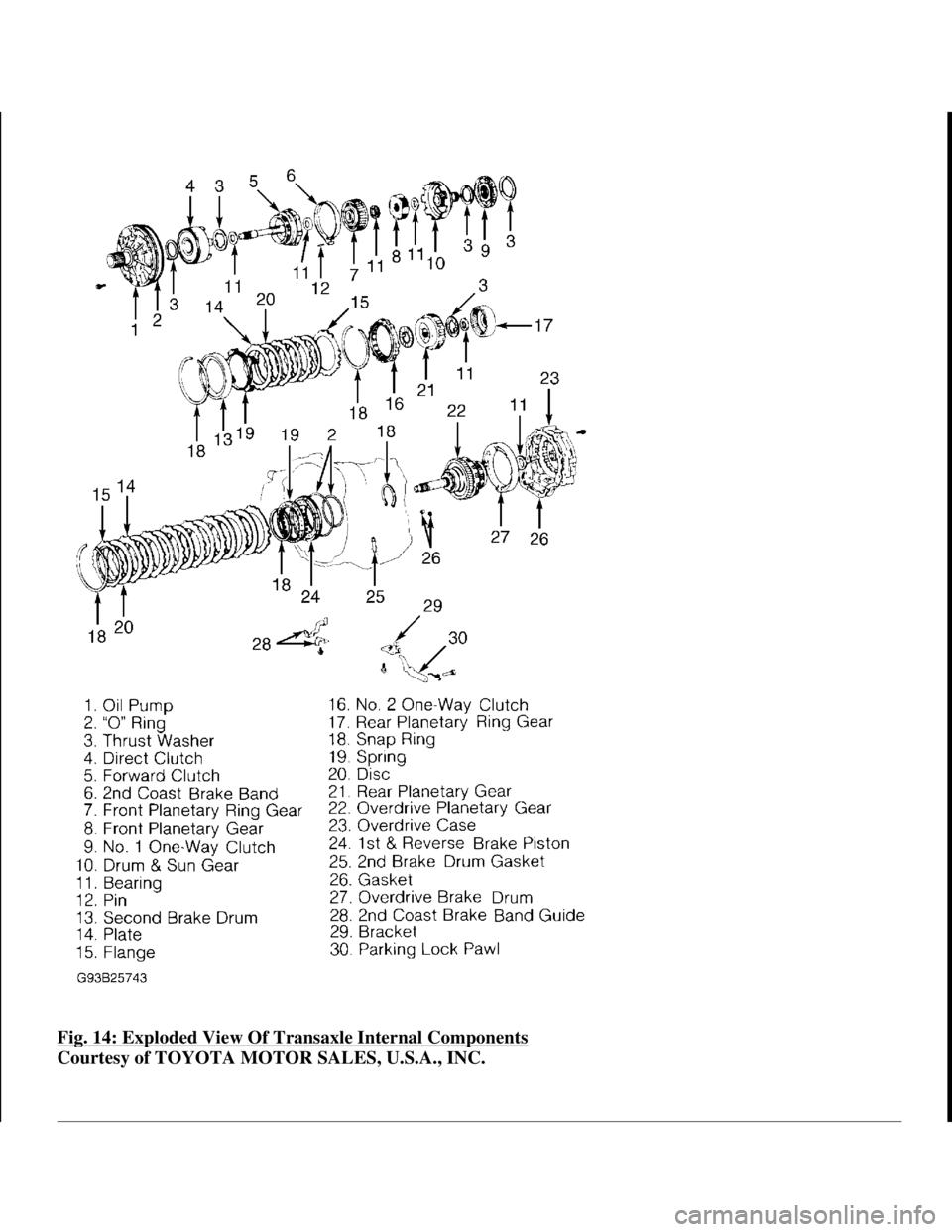
Fig. 14: Exploded View Of Transaxle Internal Components
Courtesy of TOYOTA MOTOR SALES, U.S.A., INC.
1998 Toyota Avalon XLS
1997-99 AUTOMATIC TRANSMISSIONS Toyota A-540E, A-540H & A-541E Overhaul
Helpmelearn
November-03-08 10:28:17 AMPage 27 © 2005 Mitchell Repair Information Company, LLC.