check oil TOYOTA RAV4 1996 Service Manual PDF
[x] Cancel search | Manufacturer: TOYOTA, Model Year: 1996, Model line: RAV4, Model: TOYOTA RAV4 1996Pages: 1632, PDF Size: 41.64 MB
Page 819 of 1632
1999-2000 SUSPENSION
Front - Avalon, Camry, Camry Solara, Celica, Corolla, Echo, RAV4 & Sienna
DESCRIPTION
Vehicles are equipped with front wheel drive and independent MacPherson strut (shock absorber) front
suspension. RAV4 can also be equipped with all wheel drive. Suspension consists of vertically mounted strut
assemblies, control arms, and stabilizer bar. Shock absorbers are mounted between inner fender and steering
knuckle. Tie rod ends connect rack and pinion steering to steering knuckle. Ball joint connects steering knuckle
to lower control arm. On some models, a suspension crossmember is used. A stabilizer bar attaches to lower
control arms.
ADJUSTMENTS & INSPECTION
WHEEL ALIGNMENT SPECIFICATIONS & PROCEDURES
BALL JOINT CHECKING
Remove ball joint and place in vise, with ball joint stud pointing upward. Flip stud back and forth about 5 times.
Reinstall the ball joint nut. Place torque wrench on ball joint nut and turn nut continuously 1 turn every 2 to 4
seconds. Read torque measurement on 5th turn. See BALL JOINT TURNING TORQUE
SPECIFICATIONS table. If torque is not within specification, replace ball joint.
BALL JOINT TURNING TORQUE SPECIFICATIONS
WHEEL BEARING CHECKING NOTE: See SPECIFICATIONS & PROCEDURES
article in WHEEL ALIGNMENT.
NOTE: Ball joint must be removed for the following checking procedure. See LOWER
CONTROL ARM and BALL JOINTS under REMOVAL & INSTALLATION.
ApplicationINCH Lbs. (N.m)
Avalon, Camry, Camry Solara & Sienna8.7-30 (1-3.4)
Celica
19998.7-26 (1-2.9)
20008.7-43 (1-4.0)
Corolla8.7-26 (1-2.9)
Echo5.2-30 (.59-3.4)
RAV413-43 (1.5-5.0)
NOTE: Wheel bearings are not adjustable. Whenever bearings are removed, replace
with NEW bearings, races and oil seals.
1999 Toyota RAV4
1999-2000 SUSPENSION Front - Avalon, Camry, Camry Solara, Celica, Corolla, Echo, RAV4 & Sienna
1999 Toyota RAV4
1999-2000 SUSPENSION Front - Avalon, Camry, Camry Solara, Celica, Corolla, Echo, RAV4 & Sienna
Microsoft
Sunday, November 22, 2009 10:36:34 AMPage 1 © 2005 Mitchell Repair Information Company, LLC.
Microsoft
Sunday, November 22, 2009 10:36:38 AMPage 1 © 2005 Mitchell Repair Information Company, LLC.
Page 823 of 1632
Removal (Celica, Corolla & RAV4)
1. Remove front wheel. On Celica, remove ABS speed sensor. Check wheel bearing backlash and deviation
(rotational free play). See WHEEL BEARING CHECKING
under ADJUSTMENTS & INSPECTION.
2. Remove cotter pin and lock nut cap. Hold drive shaft from turning by applying brakes and remove drive
shaft lock nut. Remove brake caliper and disc and support caliper out of way.
3. On Corolla and RAV4 with ABS, remove ABS speed sensor and wire harness clamp. On Corolla, remove
brake hose from shock absorber clamp. Loosen 2 nuts on lower end of shock absorber (DO NOT
remove).
4. On all models, remove cotter pin and nut from tie rod end. Use separator tool to disconnect tie rod end
from steering knuckle. On Celica, disconnect stabilizer bar link from lower control arm.
5. On all models, remove 2 nuts and 1 bolt and disconnect lower ball joint from lower control arm. Remove
2 nuts and bolts from lower end of shock absorber. Remove steering knuckle and axle hub from vehicle.
See Fig. 2
.
6. Mount assembly in vise. Carefully pry dust deflector from hub. Remove cotter pin and nut, and use
separator tool to remove lower ball joint from hub assembly. On Celica and Corolla, remove inner oil seal
from hub. On Corolla, remove inner snap ring.
7. On all models, use slide hammer and attaching plate to remove axle hub. Place axle hub on press and use
appropriate support plates to press inner bearing race from axle hub. Remove Torx bolts and remove dust
cover.
8. On Celica and Corolla, use a suitable extractor to remove outer oil seal from hub. On RAV4, use a
suitable extractor to remove inner and outer oil seals from hub. On all models, remove wheel bearing
snap ring, if equipped. Place inner race against outside of bearing and press wheel bearing from axle hub.
See Fig. 2
.
Installation
To install, reverse removal procedure. Use NEW snap ring after pressing in NEW wheel bearing. Use NEW
cotter pins. Ti
ghten bolts to specifications. See TORQUE SPECIFICATIONS.
1999 Toyota RAV4
1999-2000 SUSPENSION Front - Avalon, Camry, Camry Solara, Celica, Corolla, Echo, RAV4 & Sienna
Microsoft
Sunday, November 22, 2009 10:36:34 AMPage 5 © 2005 Mitchell Repair Information Company, LLC.
Page 826 of 1632
1. Remove front wheel. Check wheel bearing backlash and deviation (rotational free play). See WHEEL
BEARING CHECKING under ADJUSTMENTS & INSPECTION.
2. Using punch and hammer, unstake drive shaft lock nut. Apply brakes and remove lock nut. Remove 2
bolts, brake caliper and disc. Support brake caliper out of way.
3. Remove bolt, and disconnect ABS speed sensor. Remove clip and nut. Using separator, separate steering
knuckle from lower suspension arm. Remove cotter pin and nut, and using tie rod separator, disconnect
tie rod end.
4. Remove 2 nuts, bolts and steering knuckle with axle hub from shock absorber.
Installation
To install, reverse removal procedure. Use NEW snap ring after pressing in NEW wheel bearing. Use NEW
cotter pins. Tighten bolts to specifications. See TORQUE SPECIFICATIONS
.
SHOCK ABSORBER
Removal & Installation
1. Remove front wheel. Disconnect brake hose and ABS speed sensor clamp from shock absorber. On
Sienna, remove outer front cowl top panel. See Fig. 6
.
2. Remove 2 lower shock absorber nuts and bolts and disconnect shock absorber from steering knuckle.
Remove 3 upper shock absorber mounting nuts from inside engine compartment and remove shock
absorber with coil spring.
3. To install, reverse removal procedure. Tighten bolts and nuts to specification. See TORQUE
SPECIFICATIONS . NOTE: On Camry, note mounting position of curved mounting plate on shock
absorber tower. Ensure it is reinstalled in same position.
1999 Toyota RAV4
1999-2000 SUSPENSION Front - Avalon, Camry, Camry Solara, Celica, Corolla, Echo, RAV4 & Sienna
Microsoft
Sunday, November 22, 2009 10:36:34 AMPage 8 © 2005 Mitchell Repair Information Company, LLC.
Page 882 of 1632
Courtesy of TOYOTA MOTOR SALES, U.S.A., INC.
IDLE AIR CONTROL (IAC) VALVE
Start engine and bring to normal operating temperature. Turn A/C switch on, set blower switch to high position
and adjust temperature control lever to maximum cooling. Ensure compressor clutch is engaged. Using
tachometer, ensure when compressor clutch engages, idle RPM increases 100-200 RPM and decreases a similar
amount when clutch is disengaged. If idle does not react as specified, check IAC valve and air intake system.
COMPRESSOR CLUTCH & COMPRESSOR LOCK SENSOR
Inspect pressure plate and rotor for signs of oil contamination. Check clutch bearing for noisy operation and
grease leakage. Check compressor lock sensor resistance. Disconnect compressor clutch/lock sensor 3-pin
connector. Measure resistance between terminals No. 1 (White wire) and No. 2 (Blue wire). Resistance should
be 65-125 ohms at 68°F (20°C). Replace as necessary. Check magnetic clutch operation. Apply battery voltage
to compressor clutch connector terminal No. 3 (Black wire). Connect negative battery lead to ground. Ensure
compressor clutch is energized. If compressor clutch is not energized, replace compressor clutch.
THERMISTOR
1. Disconnect negative battery cable and wait at least 90 seconds. Remove lower trim panel and glove box.
Disconnect thermistor 2-pin connector from top of evaporator case. See Fig. 6
. Measure resistance of
thermistor while still installed.
2. Resistance should be 1500 ohms at 77°F (25°C) ambient temperature. If resistance is not within
specification, replace thermistor. If resistance is as specified, go to next step.
3. Remove evaporator case. See EVAPORATOR ASSEMBLY
under REMOVAL & INSTALLATION.
Disassemble evaporator case and remove thermistor. Check thermistor operation. Submerge thermistor at
least 3.94" (100 mm) deep in cold water. See Fig. 7
.
4. Place thermometer in water and measure resistance of thermistor at various temperatures. Use ice or hot
water to vary water temperature. If readings are not within specification, replace thermistor. See
THERMISTOR RESISTANCE VALUES
table.
THERMISTOR RESISTANCE VALUES
Water Temperature °F (°C)Ohms
77 (25)1300-1800
68 (20)1700-2200
59 (15)2200-2600
50 (10)2800-3300
41 (5)3700-4200
32 (0)4600-5300
1999 Toyota RAV4
1999 MANUAL A/C-HEATER SYSTEMS RAV4
Microsoft
Sunday, November 22, 2009 10:29:28 AMPage 9 © 2005 Mitchell Repair Information Company, LLC.
Page 891 of 1632
1999-2000 ACCESSORIES & EQUIPMENT
Instrument Panels - Trucks
DESCRIPTION & OPERATION
GAUGES
Standard instrument clusters contain fuel and temperature gauges with telltale warning lights. Some optional
instrument panels are equipped with a tachometer, oil pressure gauge and voltmeter. Gauge internal operating
components use either a 2-terminal bimetallic strip type or a 3-terminal coil type. The 2-terminal type gauges
are generally used on clusters without tachometers.
SWITCHES
All models contain hazard warning switch on instrument panel. All models use a combination switch for
headlight, turn signal, wiper/washer, and cruise control switches. Combination switch is mounted on steering
column. For testing and/or removal and installation procedures for combination switch components, see
appropriate STEERING COLUMN SWITCHES article.
COMPONENT TESTS
A/T OIL TEMPERATURE SWITCH
RAV4
1. Turn ignition switch to OFF position. Disconnect A/T oil temperature switch 1-pin connector. Switch is
located on side of transaxle, near park/neutral position switch. Remove A/T oil temperature switch. Place
probe end of switch and thermometer in a container of water.
2. Connect an ohmmeter between switch terminal and switch body. Heat water and check for continuity.
With temperature at 284-302°F (140-150°C), continuity should exist. If continuity does not exist, replace
switch.
A/T OIL TEMPERATURE WARNING LIGHT
RAV4
Disconnect A/T oil temperature switch connector. Switch is located on side of transaxle, near park/neutral
position switch. Using a jumper wire, connect switch connector terminal to ground. Turn ignition switch to ON
position. A/T oil temperature warning light should be on. If warning light is off, check bulb and wiring harness.
Repair as necessary. WARNING:Deactivate air bag system before performing any service operation. See
AIR BAG RESTRAINT SYSTEMS article. DO NOT apply electrical power to
any component on steering column without first deactivating air bag
system. Air bag may deploy.
1999 Toyota RAV4
1999-2000 ACCESSORIES & EQUIPMENT Instrument Panels - Trucks
1999 Toyota RAV4
1999-2000 ACCESSORIES & EQUIPMENT Instrument Panels - Trucks
Microsoft
Sunday, November 22, 2009 10:54:09 AMPage 1 © 2005 Mitchell Repair Information Company, LLC.
Microsoft
Sunday, November 22, 2009 10:54:14 AMPage 1 © 2005 Mitchell Repair Information Company, LLC.
Page 913 of 1632
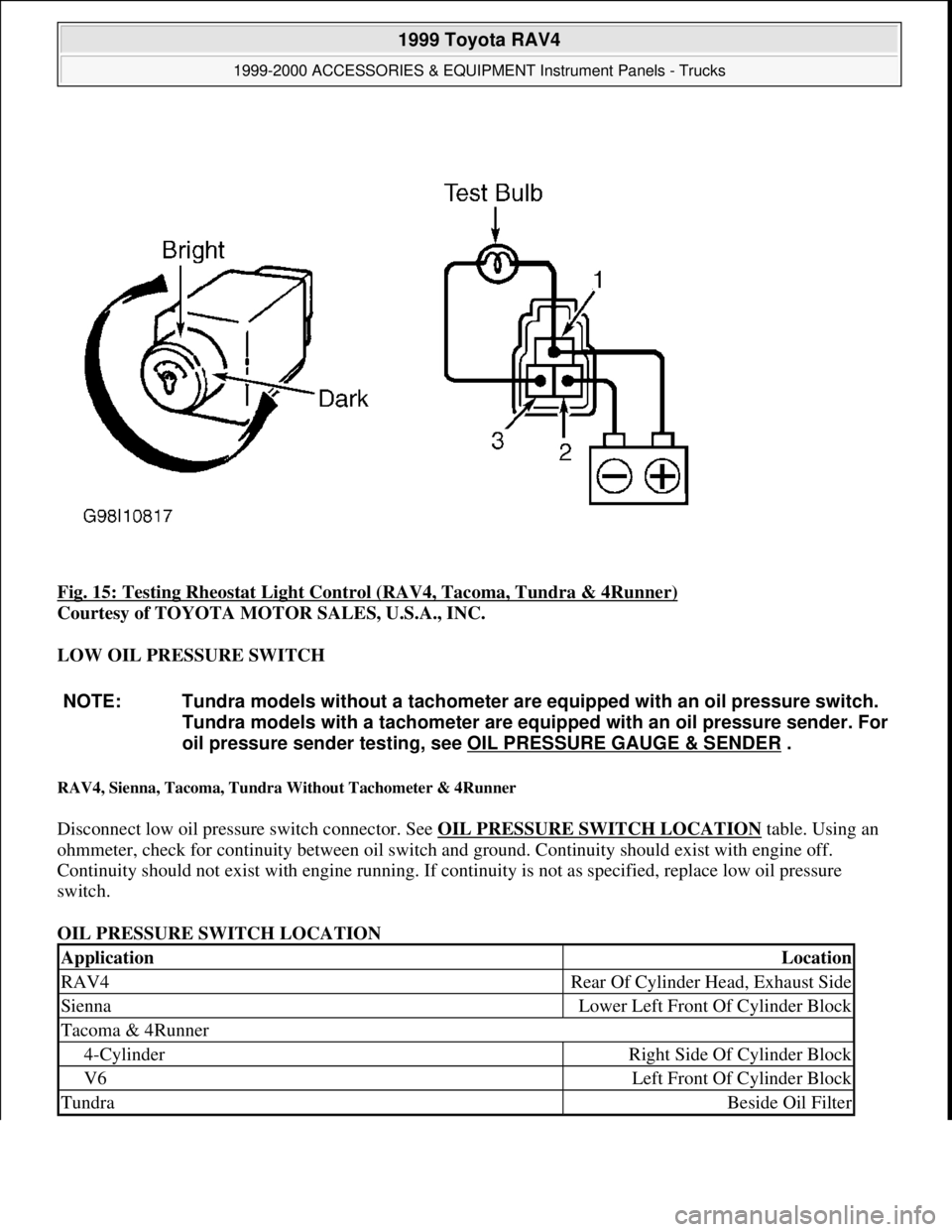
Fig. 15: Testing Rheostat Light Control (RAV4, Tacoma, Tundra & 4Runner)
Courtesy of TOYOTA MOTOR SALES, U.S.A., INC.
LOW OIL PRESSURE SWITCH
RAV4, Sienna, Tacoma, Tundra Without Tachometer & 4Runner
Disconnect low oil pressure switch connector. See OIL PRESSURE SWITCH LOCATION table. Using an
ohmmeter, check for continuity between oil switch and ground. Continuity should exist with engine off.
Continuity should not exist with engine running. If continuity is not as specified, replace low oil pressure
switch.
OIL PRESSURE SWITCH LOCATION
NOTE: Tundra models without a tachometer are equipped with an oil pressure switch.
Tundra models with a tachometer are equipped with an oil pressure sender. For
oil pressure sender testing, see OIL PRESSURE GAUGE & SENDER
.
ApplicationLocation
RAV4Rear Of Cylinder Head, Exhaust Side
SiennaLower Left Front Of Cylinder Block
Tacoma & 4Runner
4-CylinderRight Side Of Cylinder Block
V6Left Front Of Cylinder Block
TundraBeside Oil Filter
1999 Toyota RAV4
1999-2000 ACCESSORIES & EQUIPMENT Instrument Panels - Trucks
Microsoft
Sunday, November 22, 2009 10:54:10 AMPage 23 © 2005 Mitchell Repair Information Company, LLC.
Page 914 of 1632
LOW OIL PRESSURE WARNING LIGHT
RAV4, Sienna, Tacoma, Tundra Without Tachometer & 4Runner
Disconnect low oil pressure switch connector. See OIL PRESSURE SWITCH LOCATION table. Using a
jumper wire, connect low oil pressure switch connector terminal to ground. Turn ignition switch to ON position.
Low oil pressure warning light should turn on. If low oil pressure warning light is off, check bulb or inspect
wiring harness.
OCCUPANT DETECTION SENSOR
Land Cruiser & Tundra
Disconnect occupant detection sensor connector, located under passenger seat. Check continuity between sensor
connector terminals. Continuity should exist only when pressing on sensor. If continuity is not as specified,
replace occupant detection sensor.
OIL PRESSURE GAUGE & SENDER
Oil Pressure Gauge & Harness Operational Test (Land Cruiser & Tundra With Tachometer)
1. Disconnect oil pressure sender connector. See OIL PRESSURE SENDER LOCATION table. Turn
ignition switch to ON position. Oil gauge should indicate LOW. Turn ignition switch to OFF position.
Connect a 12-volt, 3.4-watt test light between oil sending unit harness connector terminal and ground.
2. Turn ignition switch to ON position. Test light should be on and oil pressure gauge should slowly move
to HIGH. If gauge functions as specified, perform OIL PRESSURE SENDER OPERATIONAL
TEST . If gauge does not function as specified, perform OIL PRESSURE GAUGE RESISTANCE
TEST .
Oil Pressure Sender Operational Test (Land Cruiser & Tundra With Tachometer)
Disconnect oil pressure sender connector. See OIL PRESSURE SENDER LOCATION table. Using 12-volt
source, connect an LED tester between positive battery terminal and oil pressure sender terminal. With engine
off, LED should be off. With engine running, LED should flash. LED flashes will vary with engine speed and
oil pressure. Replace oil pressure sender if LED does not operate as specified.
OIL PRESSURE SENDER LOCATION
Oil Pressure Gauge Resistance Test (Land Cruiser & Tundra With Tachometer)
Remove instrument cluster. See INSTRUMENT CLUSTER under REMOVAL & INSTALLATION. Using
an ohmmeter, check resistance between oil gauge terminals on rear of instrument cluster. See Fig. 16
or Fig.
17 . See OIL PRESSURE GAUGE RESISTANCE SPECIFICATIONS table. If resistance is not as
specified, replace oil pressure
gauge.
ApplicationLocation
Land Cruiser & TundraOn Oil Filter Housing
1999 Toyota RAV4
1999-2000 ACCESSORIES & EQUIPMENT Instrument Panels - Trucks
Microsoft
Sunday, November 22, 2009 10:54:10 AMPage 24 © 2005 Mitchell Repair Information Company, LLC.
Page 916 of 1632
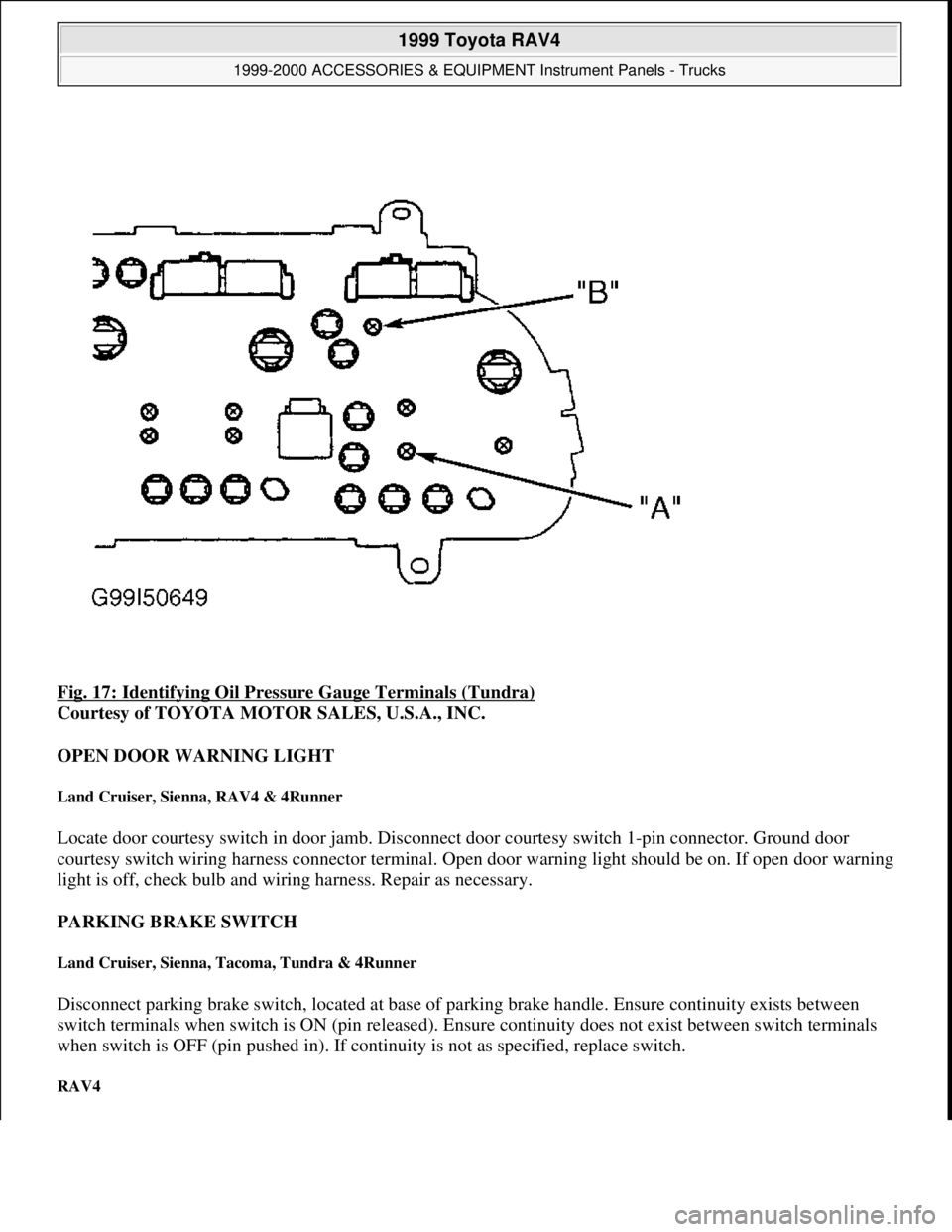
Fig. 17: Identifying Oil Pressure Gauge Terminals (Tundra)
Courtesy of TOYOTA MOTOR SALES, U.S.A., INC.
OPEN DOOR WARNING LIGHT
Land Cruiser, Sienna, RAV4 & 4Runner
Locate door courtesy switch in door jamb. Disconnect door courtesy switch 1-pin connector. Ground door
courtesy switch wiring harness connector terminal. Open door warning light should be on. If open door warning
light is off, check bulb and wiring harness. Repair as necessary.
PARKING BRAKE SWITCH
Land Cruiser, Sienna, Tacoma, Tundra & 4Runner
Disconnect parking brake switch, located at base of parking brake handle. Ensure continuity exists between
switch terminals when switch is ON (pin released). Ensure continuity does not exist between switch terminals
when switch is OFF (pin pushed in). If continuity is not as specified, replace switch.
RAV4
1999 Toyota RAV4
1999-2000 ACCESSORIES & EQUIPMENT Instrument Panels - Trucks
Microsoft
Sunday, November 22, 2009 10:54:10 AMPage 26 © 2005 Mitchell Repair Information Company, LLC.
Page 945 of 1632
Normal Service
Driven More Than 10 Miles Daily
No Operating Conditions From Severe Service Schedule
Severe Service (Unique Driving Conditions)
CAMSHAFT TIMING BELT
Inspect timing belt at 60,000 miles or 48 months and thereafter inspect timing belt every 15,000 miles, or 12
months. Replace belt as necessary.
The condition of camshaft drive belts should always be checked on vehicles which have more than 50,000
miles. Although some manufacturers do not recommend belt replacement at a specified mileage, others require
it at 60,000-100,000 miles. A camshaft drive belt failure may cause extensive damage to internal engine
components on most engines, although some designs do not allow piston-to-valve contact. These designs are
often called Free Wheeling.
Many manufacturers changed their maintenance and warranty schedules in the mid-1980's to reflect timing belt
inspection and/or replacement at 50,000-60,000 miles. Most service interval schedules in this manual reflect
these changes.
Belts or components should be inspected and replaced if any of the following conditions exist:
Cracks Or Tears In Belt Surface
Missing, Damaged, Cracked Or Rounded Teeth
Oil Contamination
Damaged Or Faulty Tensioners
Incorrect Tension Adjustment NOTE: Use the Severe Service schedule if the vehicle to be serviced is operated under
ANY (one or more) of these conditions:
Towing a trailer or using a camper or car-top carrier.
Repeated short trips of less than 5 miles in temperatures below freezing.
Extensive idling or low-speed driving for long distances as in heavy
commercial use such as delivery, taxi or patrol car.
Operating on rough, muddy or salt covered roads.
Operating on unpaved or dusty roads.
CAUTION: Failure to replace a faulty camshaft timing belt may result in serious
engine damage.
1999 Toyota RAV4
MAINTENANCE INFORMATION 1997-99 MAINTENANCE Toyota Maintenance Information
Microsoft
Sunday, November 22, 2009 10:32:41 AMPage 3 © 2005 Mitchell Repair Information Company, LLC.
Page 982 of 1632
Fig. 8: Measuring Output Shaft Journals
Courtesy of TOYOTA MOTOR SALES, U.S.A., INC.
Reassembly
1. If output shaft rear bearing replacement is necessary, support bearing with bearing splitter or blocks.
Press output shaft out of bearing. To replace, support bearing with Adapter (09316-60010), press shaft
onto bearing. Use 2-jaw puller to remove bearing race from clutch housing. To replace, use driver.
2. Install components in reverse order of disassembly. Install ball, and 1st gear bearing inner race, and align
hole in bearing to shaft. Install No. 1 clutch hub and shifting keys to No. 1 hub sleeve. Install shifting key
springs under shifting keys. Ensure key spring end gaps are not in-line. Apply multipurpose grease to
needle bearings. Install bearing in 1st gear. Place synchronizer ring on gear, and align ring slots with
shifting keys. Press 1st gear and No. 1 hub sleeve onto output shaft. See Fig. 7
. Install 1st gear snap ring.
3. Recheck 1st gear thrust clearance. Clearance should be .004-.014" (.10-.35 mm). Install spacer. Apply
multipurpose grease to needle bearing. Place synchronizer ring on 2nd gear, and align ring slots with
shifting keys. Install 2nd gear. Using press, install 3rd driven gear onto output shaft. Recheck 2nd gear
thrust clearance. Standard clearance should be .004-.018" (.10-.45 mm). Install spacer. Using press, install
4th driven gear on output shaft. Press onto output shaft rear bearing.
OIL PUMP
Disassembly & Inspection
1. Install oil pump drive gear onto drive rotor. Ensure drive rotor turns smoothly. Remove gasket from oil
pump case. Remove bolt, and pull out oil strainer. Hold oil pump cover. Unbolt and remove cover.
Remove spring holder, spring, ball and relief valve seat. See Fig. 9
.
2. Install oil pump drive gear onto drive rotor. Measure clearance between driven rotor and oil pump case.
See Fig. 10
and Fig. 11 . Clearance should be .004-.006" (.10-.16 mm). Service limit is .012" (.30 mm).
Measure tip clearance between drive rotor and driven rotor. See Fig. 10
and Fig. 11 . Standard clearance
should be .003-.006" (.08-.15 mm). Service limit is .012" (.30 mm).
3. Remove oil pump drive gear. Using straightedge and feeler gauge, measure side clearance of both rotors.
Standard clearance should be .001-.003" (.03-.08 mm). Maximum clearance is .006" (.16 mm). Remove
oil pump drive rotor and driven rotor.
Reassembly
Replace "O" ring in oil pump case. Install driven rotor and drive rotor. Install relief valve, ball, spring and
spring holder into oil pump case. Install oil strainer to oil pump case. Tighten oil pump cover bolts to 89 INCH
lbs. (10 N.m). Insert oil pump drive gear onto drive rotor. Ensure drive rotor turns smoothly. Install NEW
gasket onto oil pump case. NOTE: Output shaft inner bearing race is non-reusable and should be replaced.
1999 Toyota RAV4
1999 MANUAL TRANSMISSIONS Toyota E250 & E250F 5-Speed Overhaul
Microsoft
Sunday, November 22, 2009 10:48:07 AMPage 12 © 2005 Mitchell Repair Information Company, LLC.