steering VOLKSWAGEN T-ROC 2021 Owner´s Manual
[x] Cancel search | Manufacturer: VOLKSWAGEN, Model Year: 2021, Model line: T-ROC, Model: VOLKSWAGEN T-ROC 2021Pages: 502, PDF Size: 9.42 MB
Page 66 of 502

First read and observe the introductoryinformation and safety warnings⇒Introduction
The proactive occupant protection system is an assistance system that initiates measures to protect
vehicle occupants in dangerous situations. However, the system cannot prevent a collision.
The full range of functions of the proactive occupant protection system will be available only if the
function has been activated in the Infotainment system, no special driving profile has been selected
and there are no malfunctions ⇒ Driving profile selection and 4MOTION Active Control , ⇒ Function
limitations .
Basic functions
Depending on country-specific legal requirements and also on the vehicle equipment, the following
functions may be initiated, either individually or jointly, in critical situations (e.g. emergency braking
or in the case of oversteering or understeering) as of a speed of approximately 30 km/h (19 mph):
Reversible tensioning of the fastened front seat belts.
Depending on the critical driving situation, the seat belts can be tensioned separately or together.
Additional information for vehicles with an area monitoring system (Front Assist)
In vehicles fitted with the area monitoring system (Front Assist) ⇒ Area monitoring system (Front
Assist) , the probability of a collision with the vehicle ahead is also calculated within the system
limits. The system can trigger the proactive occupant protection system if it detects a probable
collision or initiates strong braking.
Function limitations
The proactive occupant protection system will not be available, or will be available only to a limited
extent, in the following situations:
If there is a fault in the ESC, belt tensioner ⇒ Seat belts or airbag control unit ⇒ Airbag system .
WARNING
The intelligent technology of the proactive occupant protection system cannot overcome the laws of
physics, and functions only within the limits of the system. Never let the extra convenience afforded
by the proactive occupant protection system tempt you into taking any risks when driving. The
system cannot prevent a collision. The system is not a substitute for the full concentration of the
driver.
Adapt your speed and distance from the vehicles ahead to suit visibility, weather, road and traffic
conditions.
The system cannot detect objects in all situations.
The proactive occupant protection system does not react to people, animals, objects crossing in
front of the vehicle, or objects which are hard to detect.
Page 67 of 502

Reflective objects such as safety barriers, tunnel entrances, heavy rain and ice can impair the
performance of the proactive occupant protection system and thus prevent it from detecting a
collision risk.
Incorrect system activation can occur.
WARNING
Accidents and injuries can occur if the driver is distracted.
Never change settings in the Infotainment system when the vehicle is in motion.
WARNING
Failure to observe illuminated warning lamps and text messages can lead to your vehicle breaking
down in traffic, and can cause accidents and serious injury.
Never ignore any illuminated warning lamps or text messages.
Stop the vehicle as soon as possible and when safe to do so.
NOTICE
Failure to observe illuminated indicator lamps and text messages can lead to your vehicle being
damaged.
Airbag system
Introduction
This chapter contains information on the followingsubjects:
⇒ Types of front passenger front airbag system
⇒ Indicator lamp
⇒ Description and function of the airbags
⇒ Front airbags
⇒ Switching the front passenger front airbag on and off
The vehicle is equipped with a front airbag for the driver and front passenger. The front airbags can
provide front seat occupants with additional chest and head protection if the seat, seat belts, head
restraints and, in the case of the driver, steering wheel are adjusted and used correctly. Airbags are
designed only for additional protection. The airbag system is not a substitute for the seat belts. Seats
belts must always be worn, even when the front seats are equipped with airbags.
Page 71 of 502

The airbags can protect vehicle occupants during frontal and side collisions by reducing their
movement in the direction of the collision.
Each triggered airbag is filled by a gas generator. This causes the airbag covers to break open and the
airbags inflate forcefully to cover their deployment zones within milliseconds. Once a vehicle
occupant wearing a seat belt starts to sink into the inflated airbag, the gas inside the airbag starts to
escape to cushion the occupant and slow down their movement. This reduces the risk of severe and
fatal injuries. A triggered airbag will not always prevent other injuries from occurring, such as
swelling, bruising, burning and grazing. Deployment of an airbag can also result in frictional heat.
The most important factors for triggering the airbag are the type of accident, the angle of impact,
the vehicle speed and the type of object with which the vehicle collides. Therefore, visible damage
to the vehicle does not always mean that the airbag should have been triggered.
The triggering of the airbag system depends on the vehicle deceleration rate caused by the collision
and registered by the electronic control unit. If this rate is below the reference value programmed
into the control unit, the airbags will not be triggered, even though the vehicle may be badly
damaged as a result of the collision. Vehicle damage, repair costs or even the lack of vehicle damage
in an accident is not necessarily an indication of whether an airbag should inflate or not. It is not
possible to define a range of vehicle speeds and reference values, since the circumstances will vary
considerably between one collision and another. It is therefore impossible to cover every possible
kind and angle of impact that would trigger the airbags. Important factors in the triggering of the
airbag include, for example, the nature (hard or soft) of the object that the vehicle hits, the angle of
impact as well as vehicle speed.
Airbags serve only as a supplement to the three-point seat belt in some accident situations when the
vehicle's deceleration is sufficient to trigger the airbags. Airbags can be triggered only once and only
in certain situations. The seat belts are always there to provide protection in situations when the
airbags are not triggered or have already been triggered. For example, if the vehicle collides with a
further vehicle following the initial collision, or is hit by another vehicle.
The airbag system is part of the vehicle's overall passive safety concept. The airbag system can work
effectively only when the occupants are wearing their seat belts correctly and have assumed a
proper sitting position ⇒ Sitting position .
Components of the vehicle safety concept
The following vehicle safety equipment makes up the vehicle's safety concept to reduce the risk of
severe and fatal injuries. Depending on the vehicle equipment level, some of the equipment may not
be fitted in your vehicle or may not be available in some countries.
Optimised seat belts for all seats.
Front airbags for driver and front passenger.
Airbag indicator lamp .
Control units and sensors.
Adjustable steering column.
If applicable, mounting points for the top tether for child seats.
Page 72 of 502
Front airbags
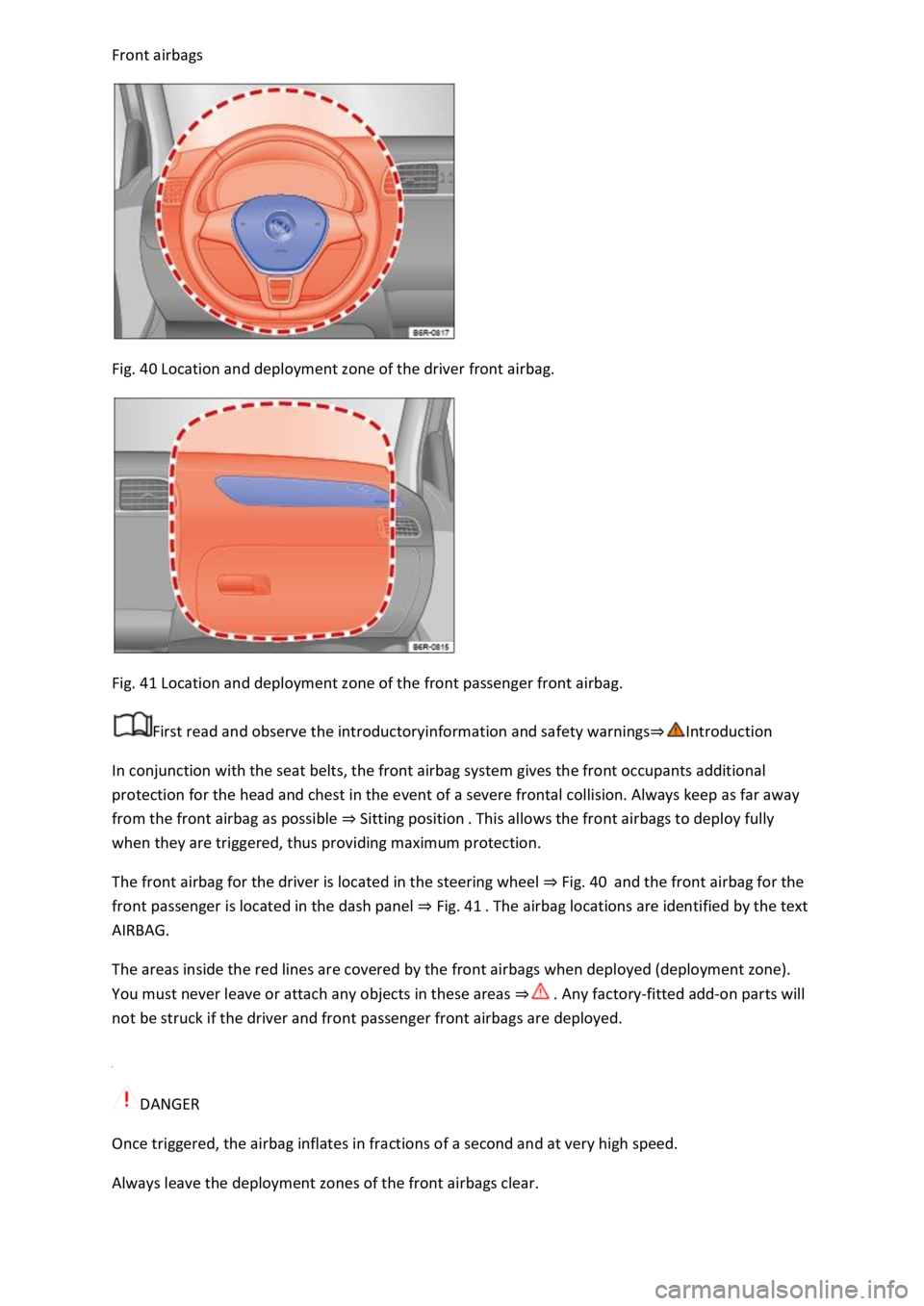
Fig. 40 Location and deployment zone of the driver front airbag.
Fig. 41 Location and deployment zone of the front passenger front airbag.
First read and observe the introductoryinformation and safety warnings⇒Introduction
In conjunction with the seat belts, the front airbag system gives the front occupants additional
protection for the head and chest in the event of a severe frontal collision. Always keep as far away
from the front airbag as possible ⇒ Sitting position . This allows the front airbags to deploy fully
when they are triggered, thus providing maximum protection.
The front airbag for the driver is located in the steering wheel ⇒ Fig. 40 and the front airbag for the
front passenger is located in the dash panel ⇒ Fig. 41 . The airbag locations are identified by the text
AIRBAG.
The areas inside the red lines are covered by the front airbags when deployed (deployment zone).
You must never leave or attach any objects in these areas ⇒ . Any factory-fitted add-on parts will
not be struck if the driver and front passenger front airbags are deployed.
DANGER
Once triggered, the airbag inflates in fractions of a second and at very high speed.
Always leave the deployment zones of the front airbags clear.
Page 73 of 502
Never attach any objects, such as drink or telephone holders, to the covers of the airbags or
anywhere in the airbag deployment zone.
No other people, animals or objects may be carried between the occupants of the front seats and
the airbag deployment zone. Make sure that children and passengers also keep to this rule.
Do not attach any objects, e.g. mobile navigation devices, to the windscreen above the front airbag
on the front passenger side.
Do not cover or stick anything on the steering wheel hub or the soft plastic surface of the airbag unit
on the front passenger side, and do not obstruct or modify them in any way.
WARNING
The front airbags are deployed in front of the steering wheel ⇒ Fig. 40 and dash panel⇒ Fig. 41 .
When driving, always hold the steering wheel with both hands on the outside of the rim at the 9
o'clock and 3 o'clock positions.
Adjust the driver seat so that there is at least 25 cm between your breastbone and the hub of the
steering wheel. Contact a qualified workshop if your physical build makes this impracticable.
Adjust the front passenger seat so that the distance between the front passenger and the dash panel
is as large as possible.
Switching the front passenger front airbag on and off
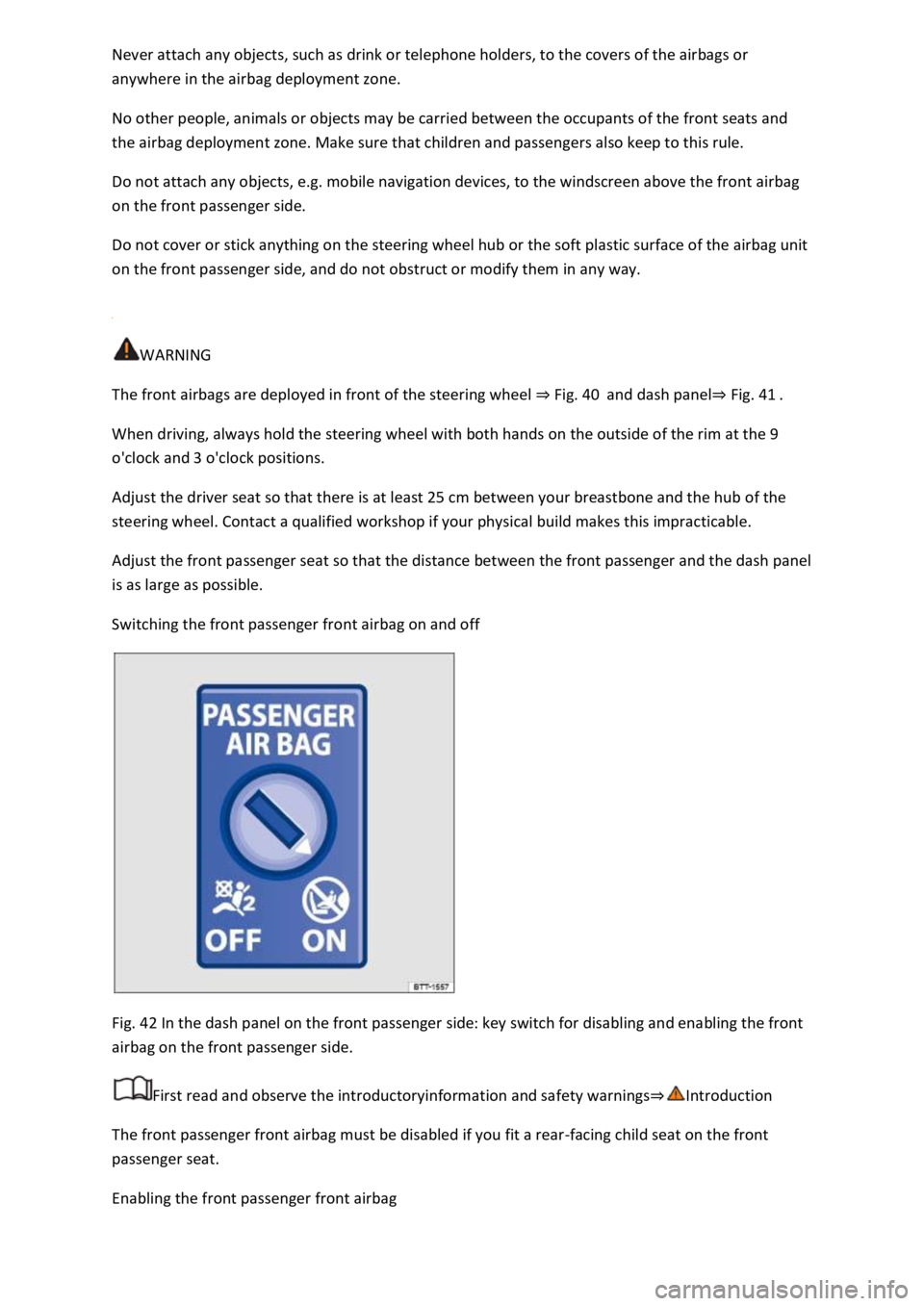
Fig. 42 In the dash panel on the front passenger side: key switch for disabling and enabling the front
airbag on the front passenger side.
First read and observe the introductoryinformation and safety warnings⇒Introduction
The front passenger front airbag must be disabled if you fit a rear-facing child seat on the front
passenger seat.
Enabling the front passenger front airbag
Page 90 of 502
Never leave children or people requiring assistance alone in the vehicle. They could become trapped
in the vehicle in an emergency and may not be able to get themselves to safety. For example, locked
vehicles may be subjected to very high or very low temperatures depending on the season. This can
cause serious injuries and illness or fatalities, especially in the case of small children.
Never switch off the ignition while the vehicle is in motion. The steering column lock or steering lock
mechanism may be activated and you will no longer be able to steer the vehicle.
NOTICE
Every electric vehicle key contains electronic components. Protect the key from damage, moisture
and excessive vibration.
Replacing the button cell
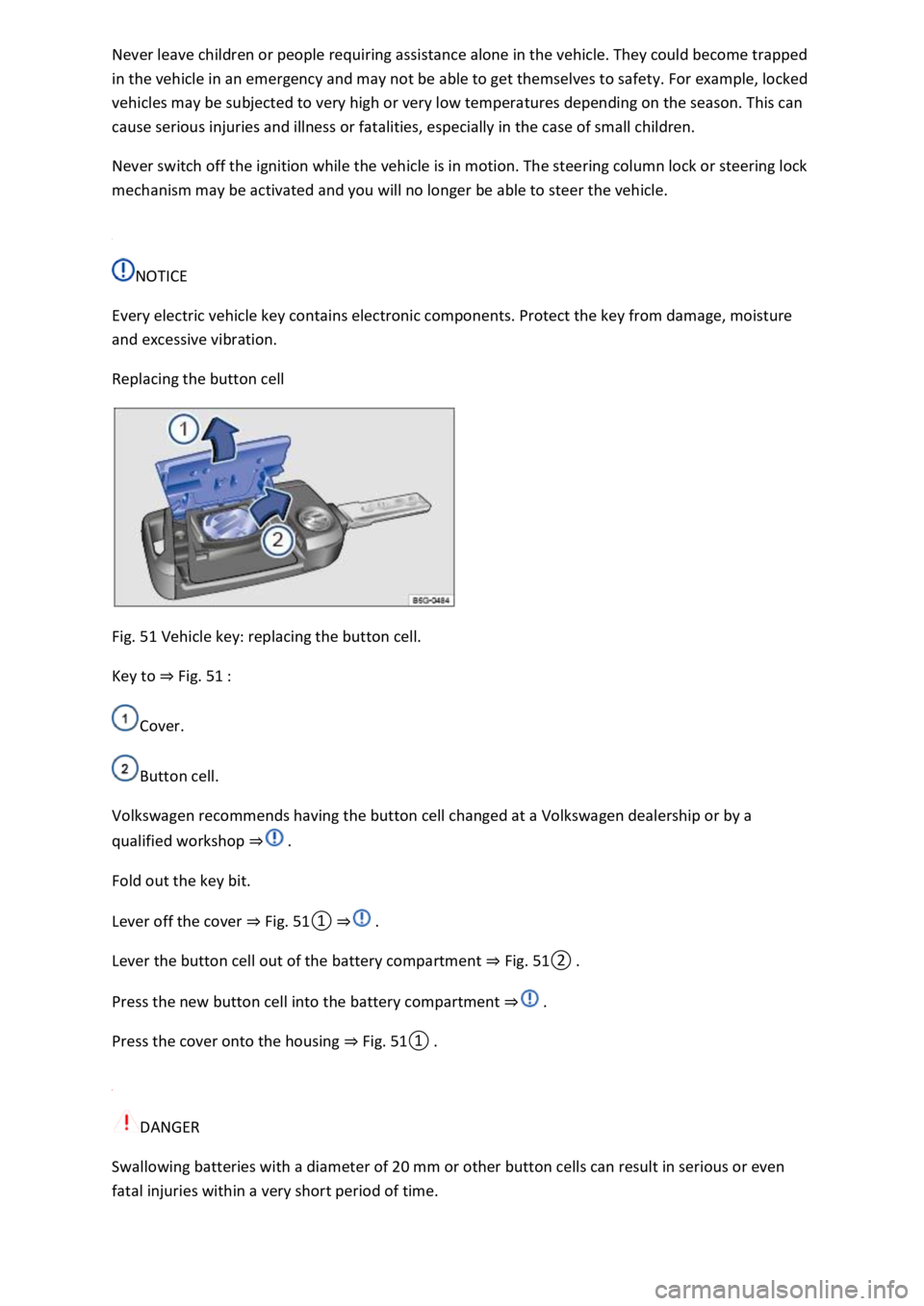
Fig. 51 Vehicle key: replacing the button cell.
Key to ⇒ Fig. 51 :
Cover.
Button cell.
Volkswagen recommends having the button cell changed at a Volkswagen dealership or by a
qualified workshop ⇒ .
Fold out the key bit.
Lever off the cover ⇒ Fig. 51① ⇒ .
Lever the button cell out of the battery compartment ⇒ Fig. 51② .
Press the new button cell into the battery compartment ⇒ .
Press the cover onto the housing ⇒ Fig. 51① .
DANGER
Swallowing batteries with a diameter of 20 mm or other button cells can result in serious or even
fatal injuries within a very short period of time.
Page 116 of 502
WARNING
Closing the glass roof without the roll-back function can cause serious injuries.
Always close the glass roof carefully.
Ensure that nobody obstructs the path of the glass roof, especially if the roll-back function is not
active when it is closed.
The roll-back function does not prevent fingers or other body parts from being pressed against the
roof frame and being injured.
The roll-back function is also activated if you use the convenience closing function on the vehicle key
to close the windows and the glass roof.
Troubleshooting
Glass roof does not close
The glass roof works only when the ignition is switched on. The glass roof can still be opened or
closed for a short time after the ignition has been switched off, provided that the driver door or
front passenger door are not opened.
Steering wheel
Adjusting the steering wheel position
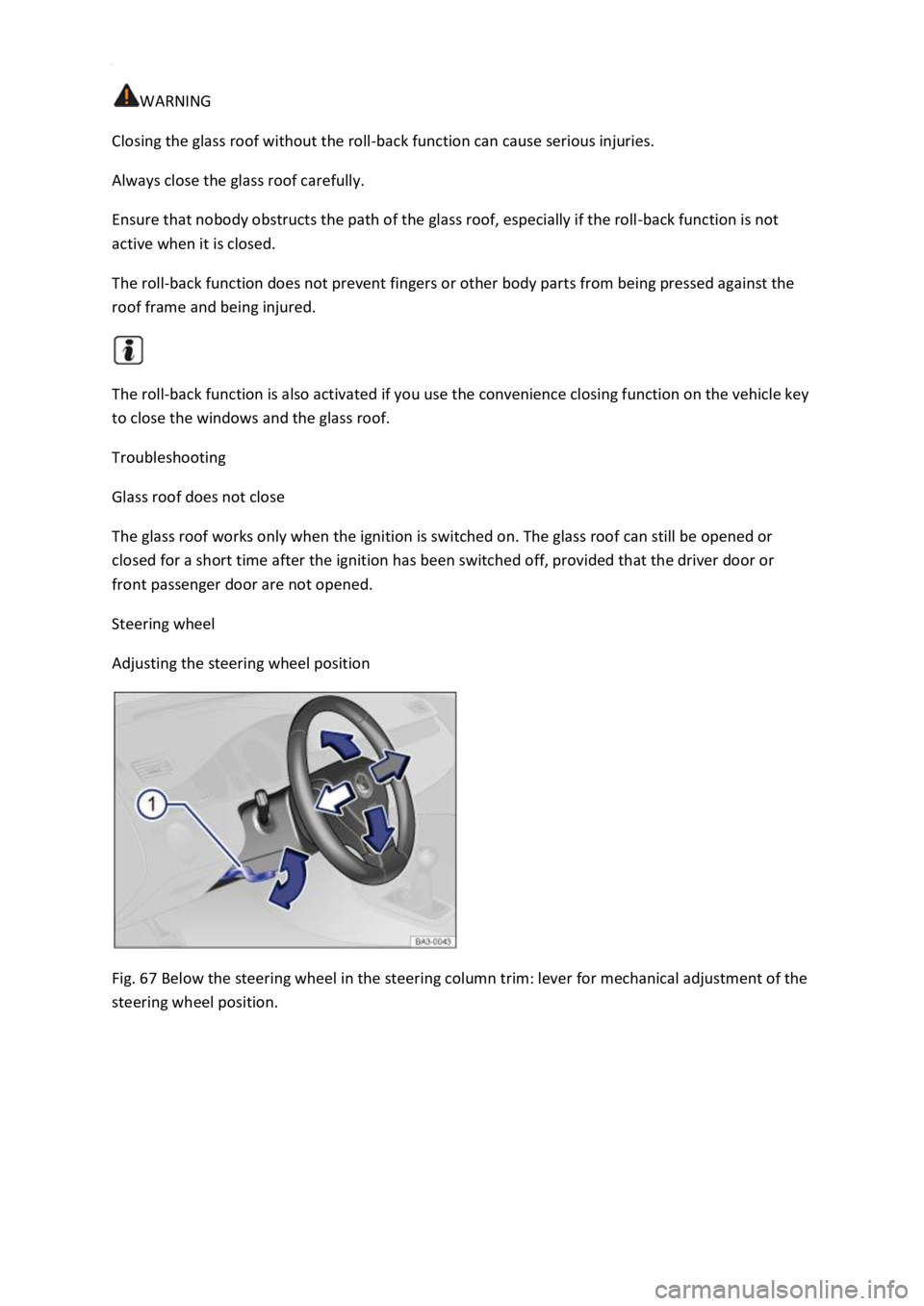
Fig. 67 Below the steering wheel in the steering column trim: lever for mechanical adjustment of the
steering wheel position.
Page 117 of 502
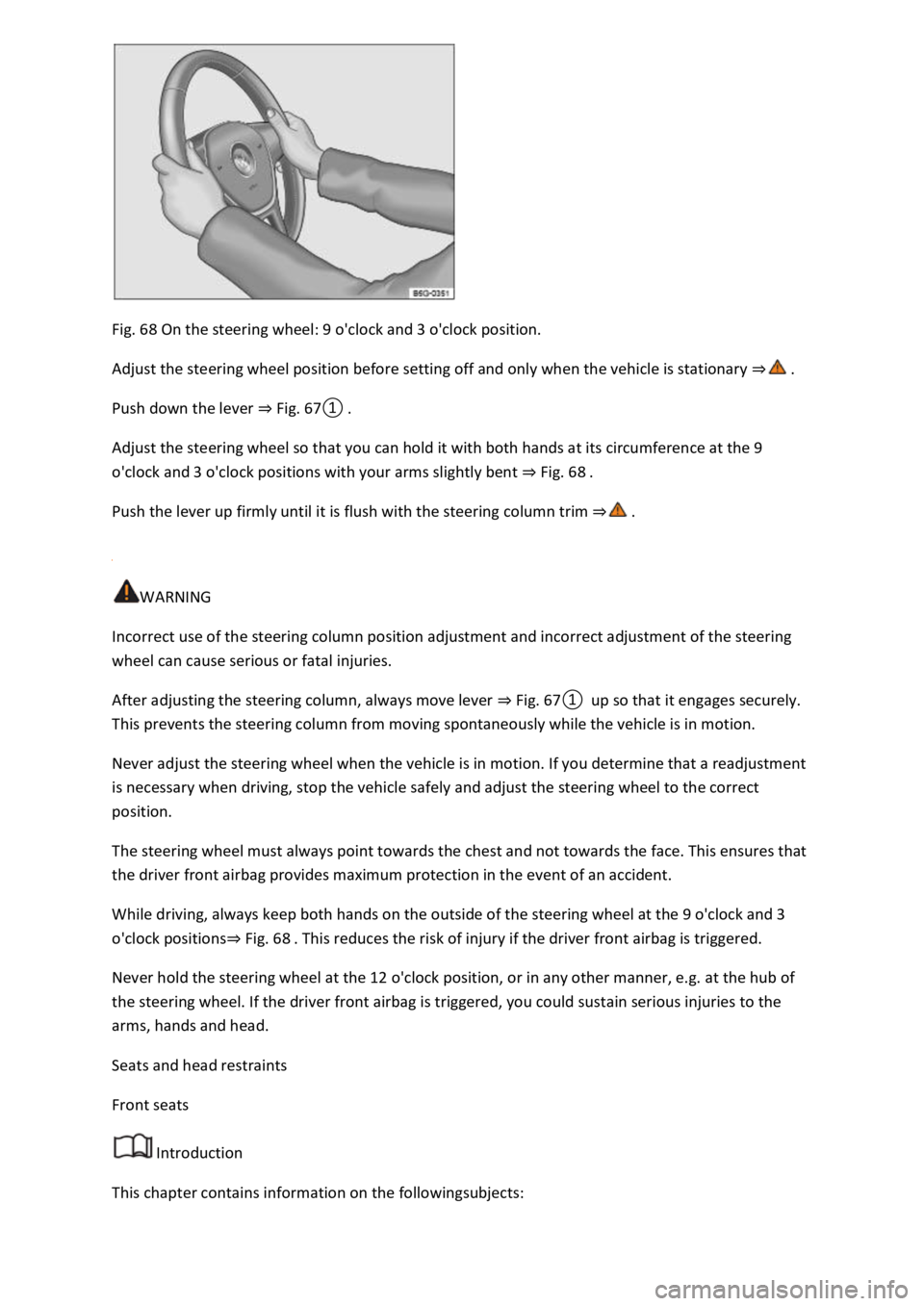
Fig. 68 On the steering wheel: 9 o'clock and 3 o'clock position.
Adjust the steering wheel position before setting off and only when the vehicle is stationary ⇒ .
Push down the lever ⇒ Fig. 67① .
Adjust the steering wheel so that you can hold it with both hands at its circumference at the 9
o'clock and 3 o'clock positions with your arms slightly bent ⇒ Fig. 68 .
Push the lever up firmly until it is flush with the steering column trim ⇒ .
WARNING
Incorrect use of the steering column position adjustment and incorrect adjustment of the steering
wheel can cause serious or fatal injuries.
After adjusting the steering column, always move lever ⇒ Fig. 67① up so that it engages securely.
This prevents the steering column from moving spontaneously while the vehicle is in motion.
Never adjust the steering wheel when the vehicle is in motion. If you determine that a readjustment
is necessary when driving, stop the vehicle safely and adjust the steering wheel to the correct
position.
The steering wheel must always point towards the chest and not towards the face. This ensures that
the driver front airbag provides maximum protection in the event of an accident.
While driving, always keep both hands on the outside of the steering wheel at the 9 o'clock and 3
o'clock positions⇒ Fig. 68 . This reduces the risk of injury if the driver front airbag is triggered.
Never hold the steering wheel at the 12 o'clock position, or in any other manner, e.g. at the hub of
the steering wheel. If the driver front airbag is triggered, you could sustain serious injuries to the
arms, hands and head.
Seats and head restraints
Front seats
Introduction
This chapter contains information on the followingsubjects:
Page 118 of 502

⇒ Mechanically adjusting the front seat
⇒ Folding the front passenger seat backrest forwards
The following section describes the options for adjusting the front seats. Always ensure that you
adjust the correct sitting position ⇒ Sitting position .
WARNING
Always adjust the front seats to their correct position before any journey and ensure that all
passengers have fastened their seat belts.
Push the front passenger seat as far back as possible.
Adjust the driver seat so that there is at least 25 cm between your breastbone and the hub of the
steering wheel. Adjust the driver seat by moving it forwards or backwards so that you are able to
press the pedals to the floor with your knees still slightly angled and the distance to the dash panel
in the knee area is at least 10 cm. If your build makes it impossible to fulfil this requirement, you
must contact a qualified workshop so they can make any necessary modifications.
Never travel with the backrest tilted far back. The further back the backrest is tilted, the greater the
risk of injury caused by incorrect seat belt routing or an incorrect sitting position.
Never travel with the backrest tilted far forwards. When a front airbag is triggered, it could force the
seat backrest backwards and injure vehicle occupants on the rear seats.
Adopt and maintain the greatest possible distance from the steering wheel and dash panel.
You should always sit upright with your back against the seat backrest with the front seats properly
adjusted. Do not position any body part too close to where the airbags are fitted.
The risk of serious injury is increased for passengers on the rear seat if they are not sitting upright
because the seat belts are incorrectly positioned.
WARNING
Incorrect adjustment of the seats can cause accidents and serious injuries.
The seats must be adjusted only when the vehicle is stationary, or else the seat could change
position unexpectedly while the vehicle is in motion, leading to a loss of control of the vehicle.
Furthermore, an incorrect seating position is adopted while adjusting the seat.
Adjust the height and tilt of the seat or move it forwards and backwards only when the area around
the seat is clear.
The adjustment range of the seats must not be restricted by any items.
Adjust the tilt angle of the rear seats or move them forwards and backwards only when the area
around the seats is clear.
The adjustment and locking areas of the seats must not be soiled.
Page 129 of 502
WARNING
The rear centre armrest must always be folded up while the vehicle is in motion in order to reduce
the risk of injury.
The middle seat on the rear bench seat must never be used when the centre armrest is folded down
– neither by adults nor children. An incorrect sitting position can cause severe injuries.
Lights
Turn signals
Switching turn signals on and off
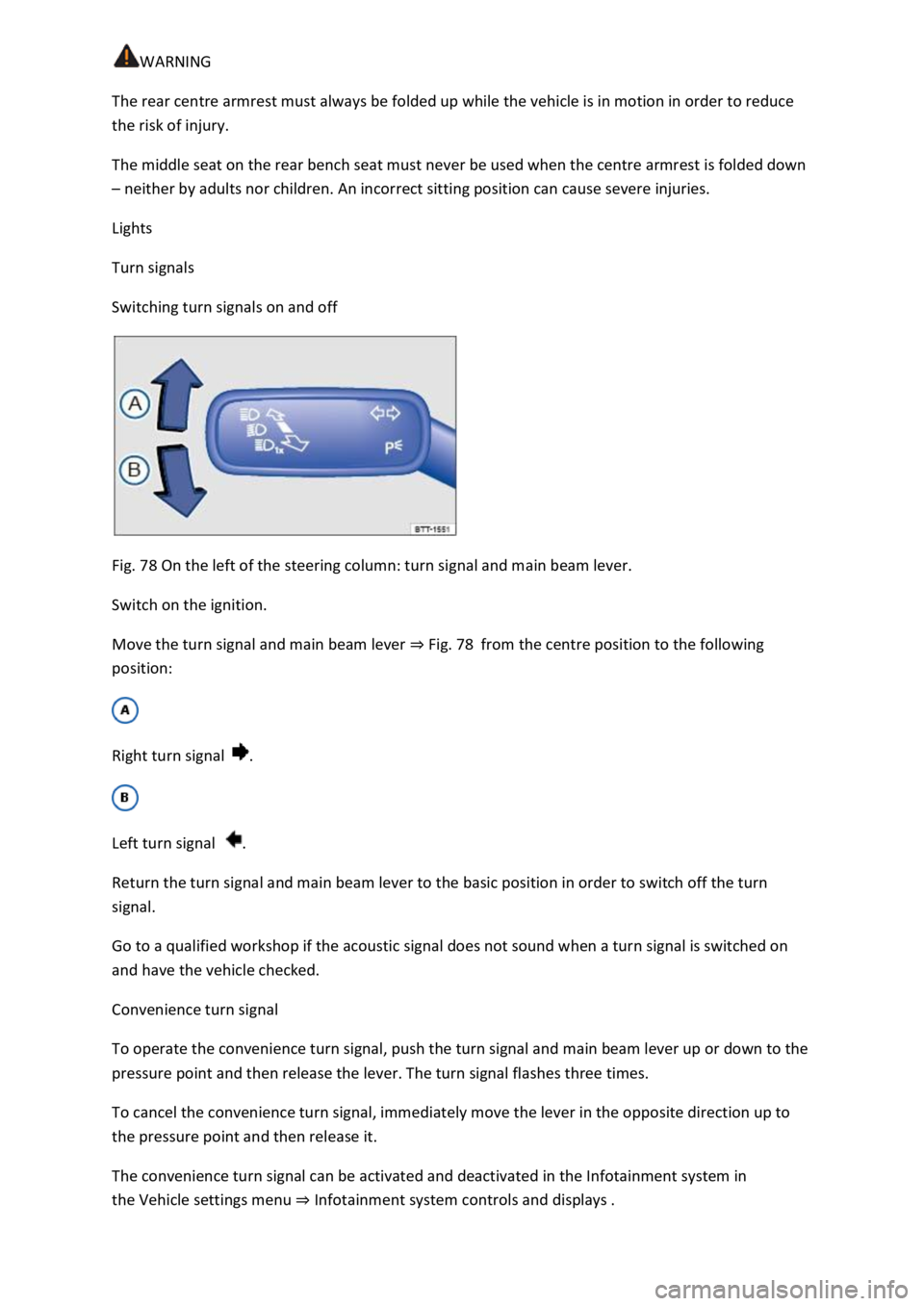
Fig. 78 On the left of the steering column: turn signal and main beam lever.
Switch on the ignition.
Move the turn signal and main beam lever ⇒ Fig. 78 from the centre position to the following
position:
Right turn signal .
Left turn signal .
Return the turn signal and main beam lever to the basic position in order to switch off the turn
signal.
Go to a qualified workshop if the acoustic signal does not sound when a turn signal is switched on
and have the vehicle checked.
Convenience turn signal
To operate the convenience turn signal, push the turn signal and main beam lever up or down to the
pressure point and then release the lever. The turn signal flashes three times.
To cancel the convenience turn signal, immediately move the lever in the opposite direction up to
the pressure point and then release it.
The convenience turn signal can be activated and deactivated in the Infotainment system in
the Vehicle settings menu ⇒ Infotainment system controls and displays .