battery AUDI A3 2012 Owner´s Manual
[x] Cancel search | Manufacturer: AUDI, Model Year: 2012, Model line: A3, Model: AUDI A3 2012Pages: 280, PDF Size: 70.11 MB
Page 170 of 280
168 Intelligent technology
If starting capability is jeopa rdized due to en
ergy consumption, a message appears in the
driver information disp lay.
You have to start the eng ine to charge the
battery.
With the engine running
A lthough electrical energy is generated when
the vehicle is be ing driven, the battery can be
come discha rged. This happens mos tly when
little e nergy is be ing generated and a great
dea l consumed and the battery's state o f
charge is not optima l.
To br ing the energy balance back into equili
brium, cons umers which require especia lly
l arge amo unts of energy are temporari ly c ut
back or switched off. Heating systems in par
ticular requ ire a great dea l of energy. If you
notice, for example, that the heated seats* or
the heated rear window are not heating, they have been temporar ily cut back or switched
off. These systems will be ava ilable again as
soon as the energy ba lance has bee n restored.
You will a lso notice that engine idle speed has
been increased s lightly . This is norma l and not
a cause fo r co ncern . By increas ing engine idle
speed the add itiona l ene rgy required is gene r
ated and the ba tte ry is charged.
Driver notification in the instrument
cluster display
If batte ry power drops into the range w here it
can limit the ab ility of the engine to start, th is
is shown in the instrument cluster display
with the following driver message:
(•) Low batter y charge : batte ry will be
charged while dr iving
This notif ication reminds you tha t the s tarti ng
capability of the engine may be limited. As
soon as you start d riving again, the battery
will be recharged and the notification wi ll go
out.
Driver notification appears and goes out
again
If this driver notif ication appears after the ig
nition is t urned on or whi le driving and it goes
out again after a while, the battery has been
adequately recharged.
Driver notification appea rs and doe s not
go out again
If this driver notif ication appears after the ig
nition is turned on or whi le driving and does
not go out again, the battery 's state of charge
is not in the optima l range. Starting ab ility is
rest ricted . H ave t he battery chec ked as soon
as possib le by an autho rized Aud i dea le r o r
qualified wo rks hop.
Page 197 of 280
-Set the parking brake fully.
- Move selector lever of automatic trans-
mission to "P" (Park); put manual trans
mission in Neutral.
- Always let the engine cool down . Hot
components will burn skin on contact.
- To reduce the risk of being burned, never
open the hood if you see or hear steam
or coolant escaping from the engine
compartment . Wait until no steam or
coolant can be seen or heard before care
fully opening the hood .
- Keep children away from the engine com
partment .
- Never spill fluids on hot engine compo
nents. They can cause a fire.
- Never touch the radiator fan. The auxili
ary electric fan is temperature controlled
and can switch on suddenly.
- Never open the coolant reservoir cap
when the engine is still warm. The cool
ant system is pressurized and hot cool ant could spray out!
- Protect your face, hands and arm from
steam or hot engine coolant by placing a
thick rag over the cap when you open the
coolant reservoir .
- If work on the fuel system or the electri
cal system is necessary:
-Always disconnect the battery.
- Never smoke or work near heaters or
open flames. Fluids in the engine com
partment could start a fire.
- Keep an approved fire extinguisher im
mediately available.
- To avoid electrical shock and personal in
jury while the engine is running or being
started, never touch:
- Ignition cables
- Other components of the high voltage
electronic ignition system.
- If you must perform a check or repair
with the engine running:
- First, fully apply the parking brake,
move selector lever of automatic trans-
Checking and filling 195
mission to "P" (Park); put manual
transmission in Neutral.
- Always use extreme caution to prevent
clothing, jewelry, or long hair from get
ting caught in the radiator fan, V-belts
or other moving parts, or from contact
ing hot parts . Tie back hair before
starting, and do not wear clothing that
will hang or droop into the engine .
- Minimize exposure to emission and
chemical hazards~&. .
A WARNING
California Proposition 65 Warning:
- Engine exhaust, some of its constituents,
and certain vehicle components contain
or emit chemicals known to the State of
California to cause cancer and birth de
fects and reproductive harm. In addition,
certain fluids contained in vehicles and
certain products of component wear con
tain or emit chemicals known to the State of California to cause cancer and
birth defects or other reproductive harm.
- Battery posts, terminals and related ac
cessories contain lead and lead com
pounds, chemicals known to the State of
California to cause cancer and reproduc
tive harms. Wash hands after handling.
Q) Note
When adding fluids, always make sure that
they are poured into the proper container
or filler opening, otherwise serious dam
age to vehicle systems will occur .
@ For the sake of the environment
To detect leaks in time, inspect the vehicle
floor pan from underneath regularly . If
you see spots from oil or other vehicle flu ids, have your vehicle inspected by an au
thorized Audi dealer. •
•
Page 198 of 280
196 Checking and filling
Engine compartment
2.0 liter 4-c tinder turbo gasoline engine (200 hp)
Applies to vehicles: with 2.0 l turbo, 4-cylinder engine
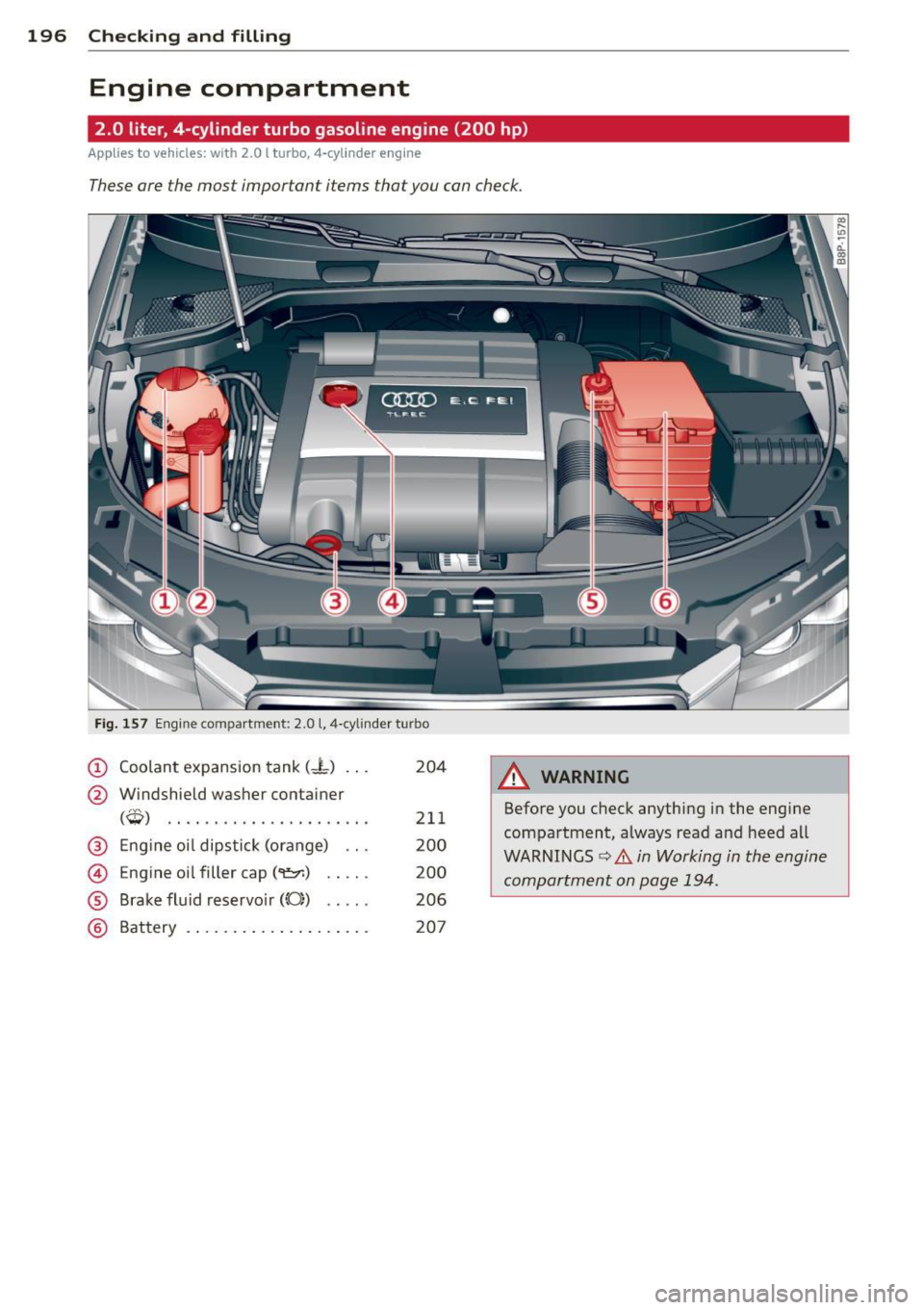
These are the most important items that you can check.
(]JD[) £. C. l"E. t .,.."-.., &t".
~ ------
fig. 157 Engine compartment: 2.0 L, 4-cylinder tu rbo
(!) Coolant expansion tank (- L) .. .
@ Windshield washer conta iner
( ffi
) ,... ...... ........... .... .
® Eng ine oi l dipstick (orange) .. .
@ Engine oil filler cap ('1:::r.) .. .. .
® Brake fluid reservo ir ((0)) .... .
@ Battery .. ..... ..... .... .. . .
204
211
200
200
206
207
A WARNING
-Before you check anything in the engine
compartment, always read and heed a ll
WARNINGS c:> &. in Working in the engine
compartment on page 194.
-
Page 199 of 280
Checking and fillin g 197
2.0 liter, 4-cylinder turbo diesel engine (140 hp)
Applies to vehicles: with 2.0 l TOI, 4-cylinder diese l-engin e
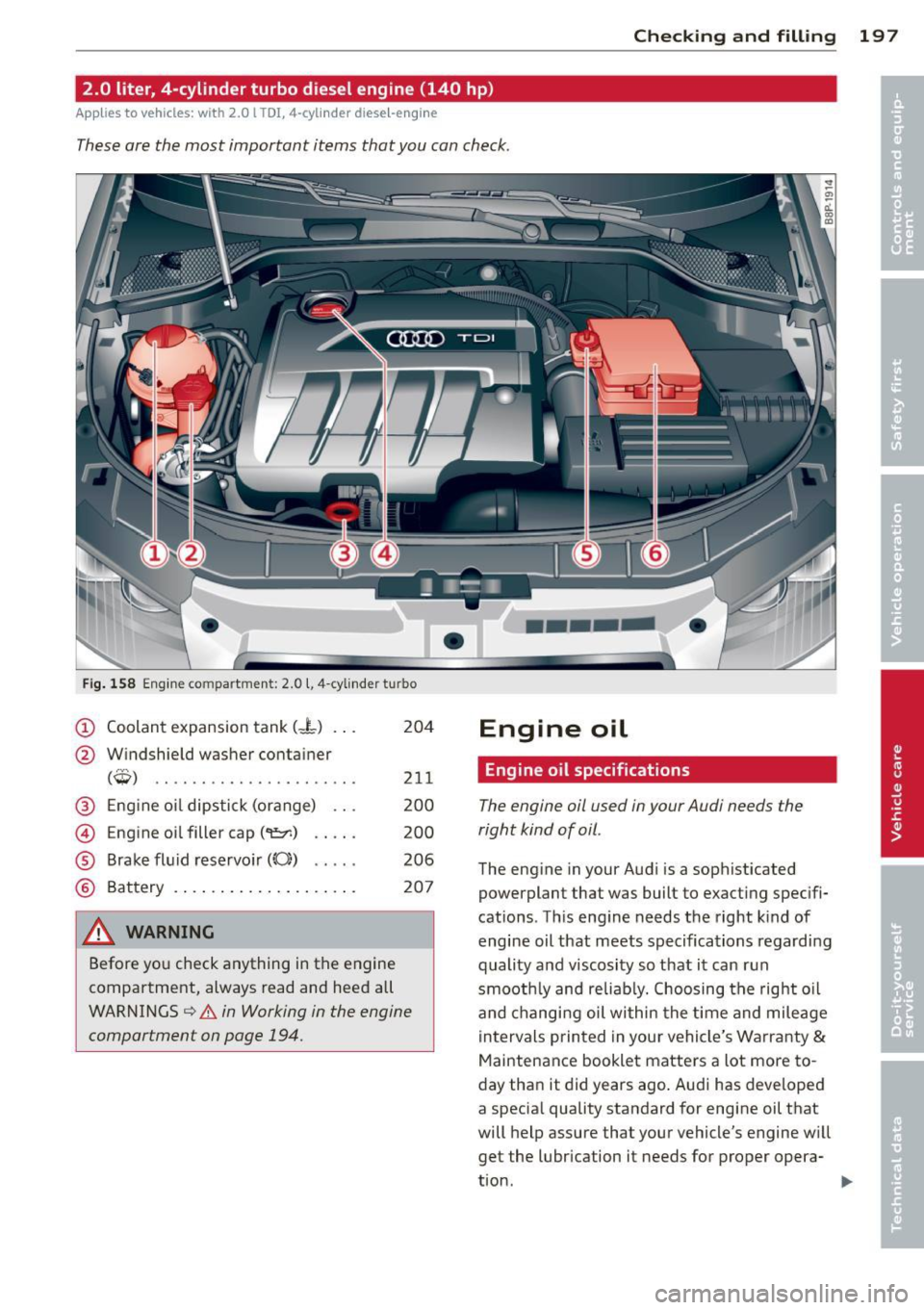
These are the most important items that you can check .
Fig. 158 Engine compartment: 2.0 l, 4-cylinder tu rbo
(D Coolant expansion tank ( ... t) .. .
@ Windshield washer container 204
Cw)
.............. ...... . . 211
@ E ng ine oi l dipstick (orange) . . . 200
@ Engine oil filler cap ("t!::r.) . . . . . 200
® Brake fluid reservo ir ((0)) . . . . . 206
® Battery . . . . . . . . . . . . . . . . . . . . 207
A WARNING
Before yo u check anything in the engine
compartment, always read and heed all
WARNINGS ¢&. in Working in the engine
compartment on page 194.
-
Engine oil
Engine oil specifications
The engine oil used in your Audi needs the
right kind of oil.
The engine in your Audi is a sophisticated powerplant that was built to exacting specifi
cations . Th is eng ine needs the right kind of
engine oil that meets specifications regarding
quality and viscosity so that it can run
smoot hly and reliab ly. Choosing the right o il
and changi ng oil within the t ime and mileage
intervals printed in you r vehicle's Warranty
&
Maintenance booklet matters a lot more to
day than it did years ago . Audi has developed
a specia l quality standard for engine oil that
will help assure that your vehicle's engine w ill
get the lubr ication it needs for proper opera
tion.
Page 209 of 280

@ For the sake of the environment
Because of the problem of proper disposal
of brake fluid as we ll as the special tools
req uired and the necessary expert ise, we
recommend that you have the brake fluid
changed by your author ized Audi dealer.
Battery
General information
All work on the battery requires technical
knowledge!
F ig . 1 64 Eng ine co mpa rtment: Batte ry w it h cover*
The battery is located in the engine compart
ment
c::> fig. 164 and is near ly m ain te nance
fre e.
The condition of the battery is checked in the
framework of the inspection.
Disconnecting the battery
The batte ry should not be disconnected. Some
ve hicl e functions such as power windows are
unavailable if the battery termina ls are dis
connected. These funct ions have to be re
l earned after the battery term inals are con
nected aga in. To prevent this, the battery
should only be disconnected from the vehicle
electrical system if absolutely necessary .
Function
Power window
one-touch up/
down function
Master key with
remote control
Reprogramming
c::, page 45, Reactivating
the system after battery
disconnection
Synchronization
~page 38
Checkin g and fillin g 207
Reprogramming
Digita l clock c::, page 11
ESP indicator light The indicator ligh t goes
out after driving a few
meters
Vehicl es not driven for long periods and
sho rt -d is tance op eration
If you do no t drive your vehicle for several
days or weeks, electrical consumers are grad
u ally scaled back or switched off . This reduces
energy use and ensures the vehicle will be
able to start after long periods of time
c::, page 167. Some convenience functions
such as opening w it h the remote control key
may not be available. These conve nience func
tions wi ll be available again once you switch
the ignit io n on and sta rt the engine. Even
whe n consume rs a re switched off, the battery
will become deeply discharged by stand -by
power consumers if the vehicle is not driven
for several months . Deep discharging results
in a chemical reaction that destroys the inside
of the battery. The battery must be charged
every month to prevent th is
c::, page 209. Do
not disconnect the battery or the anti-t heft
alarm system* will not work .
Winter operation
Cold weather places higher demands on the
battery. This results in reduced starting abili
ty. Have the battery checked and recharged if
necessary befo re the cold weather begins.
Avoid unnecessary power consumpt ion, par
ticularly in city traffic or when traveling only
short distances . Let your authorized Audi
dealer check the capacity of the vehicle bat
tery before winter sets in
c::, page 209 . A well
c harged bat tery will not o nly prevent s tarti ng
problems when the weather is cold, but will
also last longer .
(D Note
-All wo rk on the batte ry requ ires techn i
cal know le d ge. P lease con ta ct an Audi
dealership or another authorized fa cility
lill>
Page 210 of 280
208 Check ing and filling
for questions about the battery -danger
of acid burns and explosion hazard!
- The battery must not be opened! Do not try to change the battery's liq uid level ,
otherwise detonating gas will escape
from the battery- explosion hazard!
- The AGM battery in the luggage com
partment cannot leak, because the elec
trolyte for th is battery is absorbed into a
spec ial glass mat . Th is leak-proof battery
must not be replace with a conventional
battery .
- Make sure the ventilat ion hose on the
s ide of the battery is connected, other
wise fumes or battery acid can leak out .
- Battery ho lder and terminals a lways
have to be secured correctly .
- Before all work on the battery follow the
warning s below c> &. in Working on the
battery on page 208 .
Working on the battery
All work on the battery requires technical
knowledge! Be especially careful when work
ing on or near the battery!
Be fo re you check any thing in the engine com
partment, always
r e ad a nd heed all WARN
INGS
~ .&. in Working in the engine compart
ment on page 194 .
Always heed the s afety warnings , when work
i ng on the vehicle battery or the vehicle elec
tr ica l system to preve nt injury .
The following WARNINGS are very
important when working on the battery:
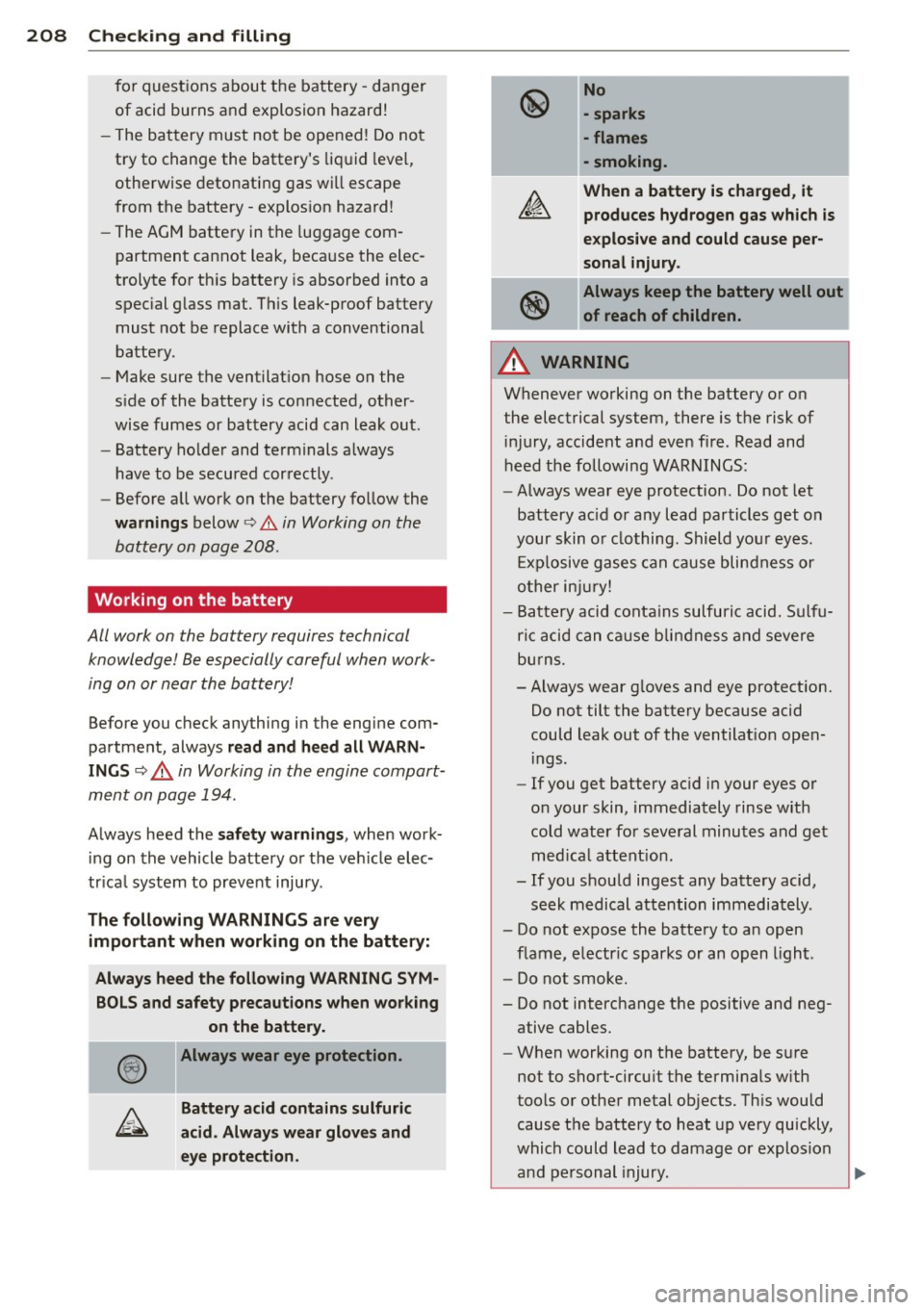
Always heed the following WARNING SYM ·
BOLS and safety precautions when working on the battery.
Always wear eye protection.
Battery acid contains sulfuric
acid . Always wear glove s and
eye prote ction . No
• sparks
• flames
- smoking.
When a battery is charged , it
produces hydrogen gas which is
e x plosive and cou ld cause per
sonal injury .
®
Always keep the battery well out
of reach of children.
A WARNING ,___
Whenever working on the battery or on
the electrical system, there is the risk of
i njury, accident and even fire . Read and
heed the following WARNINGS :
- Always wear eye protection . Do not let
battery ac id or any lead particles get on
your skin o r clothing . Shield you r eyes.
Exp losive gases can cause blindness or
o ther inju ry!
- Battery acid conta ins sulfuric acid. Sulfu
ric acid can ca use blindness and severe
bu rns.
-Always wear g loves and eye protection.
Do not tilt the battery because acid
could leak out of the ventilat ion open
ings .
- If you get battery ac id in your eyes or
on your skin, immediately rinse with
cold water for several minutes and get med ica l attent ion .
- If you shou ld ingest any battery acid,
seek medical attention immediately .
- Do not expose the batte ry to an open
flame, electr ic sparks or an open l ight.
- Do not smoke.
- Do not interchange the positive and neg-
ative cables.
- When working on the battery, be s ure
not to short-circu it the terminals w ith
too ls or othe r metal objects. Th is would
cause the battery to heat up very quickly,
which could lead to damage or explosion
-
and pe rsonal injury . ~
Page 211 of 280

-When a battery is charged, it produces
hydrogen gas which is explosive and
could cause personal injury.
- Always keep the battery well out of the
reach of children.
- Before work is done on the electrical sys
tem, disconnect the negative ground ca
ble.
- Before performing any work on the elec
trical system, switch off the engine and
ignition as well as any electrical equip
ment. The negative cable on the battery
must be disconnected. If you are just go
ing to replace a light bulb, then it is
enough to switch off the lights.
- Before disconnecting the battery, switch
off the anti-theft alarm system! Other
wise you will set off the alarm.
- When disconnecting the battery, first
disconnect the negative cable and then
the positive cable.
- Before reconnecting the battery, make
sure all electrical consumers are switch
ed off. Reconnect the positive cable first
and then the negative cable. Never inter
change the cables -this could start a fire!
- Never charge a frozen or a thawed-out
battery. It could explode! If a battery has
frozen, then it must be replaced. A dis
charged battery can freeze over at
32 °F
(0 oc).
-Mak e sure the vent hose is always attach
ed to the opening on the side of the bat
tery.
- Never use batteries which are damaged.
There is the danger of an explosion! Al
ways replace a damaged battery.
_& WARNING
California Proposition 65 Warning:
- Battery posts, terminals and related ac cessories contain lead and lead com
pounds, chemicals known to the State of
California to cause cancer and reproduc
tive problems. Wash hands after han dling.
Checking and filling 209
(D Note
- Do not disconnect the vehicle battery
when the ignition is switched on or when
the engine is running, otherwise, you will
damage electronic components in the
electrical system.
- When working on the engine, protect the
battery housing from ultraviolet (UV)
rays by not parking the vehicle in direct
sunlight .
- If your vehicle is going to stand for a
long period of time without being driven,
protect the battery from "freezing", oth
erwise it will be damaged and will then
have to be replaced
~ page 209.
Charging of battery
All work on the battery requires technical knowledge!
Fig. 165 E ngine compart ment: conne ctors for a charg
er and jump start cables
A charged battery ensures good starting per
formance . A discharged battery can
freeze at
temperatures of only
O 0C. A frozen or thawed
battery must be replaced, as the battery
housing may be cracked due to freezing and
could therefore leak acid.
.,. Always read and heed all WARNINGS be
low~ .&, and ~.&, in
Working on the bat
tery on page 208.
... Switch off the ignition and all electrical con
sumers .
.,. Make sure the area is well ventilated when
you charge the battery.
.,. Connect charger cables.
Charger cables
must always be connected POSITIVE
G to ..,.
Page 212 of 280
![AUDI A3 2012 Owner´s Manual 210 Check ing and filling
POS IT IVE E] and NEGATI VE [:] to NEGATIVE
(j ump sta rt pins)[:].
.. Switch on the charger.
• Make sure the charging rate is not over
6 amps.
â€](/img/6/40267/w960_40267-211.png "AUDI A3 2012 Owner´s Manual 210 Check ing and filling
POS IT IVE E] and NEGATI VE [:] to NEGATIVE
(j ump sta rt pins)[:].
.. Switch on the charger.
• Make sure the charging rate is not over
6 amps.
â€")
210 Check ing and filling
POS IT IVE E] and NEGATI VE [:] to NEGATIVE
(j ump sta rt pins)[:].
.. Switch on the charger.
• Make sure the charging rate is not over
6 amps.
• Turn off the charger¢,&..
• Disconnect the charger cables.
• Connect both battery cables to the battery
i f necessary -
first plus, then minus.
The battery must not be opened!
¢ @ in Gen
eral information on page 207 .
Chargi ng the b attery
Only use chargers with a m ax im um cha rg in g
v oltage o f
14.8 V. The battery connecting ca
bles do not need to be disconnected. Do not
open the battery when charging.
Read all of the manufacturer's instructions for
the charger before charting the battery.
It is not necessary to remove the battery from
the engine compartment, and it is a lso not
necessary to disconnect the cables.
Normally, a battery should be charged at no
more than 10 percent of its rated capacity.
For example, a charging current of 4.5 amps
wo uld be used on a battery rated at 45 Ah.
Rated capacity of the battery in your veh icle is
listed on the battery housing .
The battery caps shou ld
not be opened when
cha rg ing a battery.
_& WARNING
Cha rging a battery can be dangerous.
- Never charge a frozen battery. It may ex
plode because of gas trapped in the ice .
Allow a frozen battery to thaw o ut first .
- Do not reuse batteries which we re fro
zen. They must be replaced. The battery
housing may have cracked and weakened
when the battery froze.
- Charge the battery in a we ll ventilated
area. Keep away from open f lame or elec
trical spark. Do not smoke. Hydrogen gas generated by the battery is explosive. -
To reduce the danger of exp losion, never
connect or d isconnect charger cab les
while the charger is operating.
- Fast charging a battery is dangerous and
should only be attempted by a compe
tent techn ic ian with the proper equip
ment.
- Battery acid that may sp ill dur ing charg
ing should be washed off with a solut ion
of warm water and baking soda to neu
tralize the ac id.
{[) Note
-Make sure that the gas venting hose is
always connected to the or iginal opening
on the battery s ide. Otherwise gasses or
battery acid could leak out.
- Never use a fast charger as a booster to start the engine. This will seriously dam
age sensitive electron ic components,
such as contro l units, re lays, radio, etc.,
as well as the batte ry charger.
- T he vehicle may be optionally equ ipped
w ith a gel battery, wh ich can only be
charged at a cons tant current-lim ited
voltage . To prevent damage to the bat
tery and the electronics system, a gel battery that is connected must under no
circumstances be charged with a quick
charger.
{!) Tips
- The vehicle battery must not be charged
with a standard small charger that pl ugs
into the outlet.
- Only charge the battery through the con
nections in the engine compartment.
Battery replacement
The new battery must hove the some specifi
cations as the old one.
Intelligent energy management in your vehi
cle is responsible for distributing the electri
ca l energy throughout your vehicle
¢
page 167. The intelligent energy manage-
ment system will keep the engine battery .,..
Page 213 of 280
charged better then vehicles without this sys
tem . To make sure the additional e lectrica l en
ergy is available once again after you have
changed the battery, we recommend that you install batteries of the same type and manu
facture only (the same as those installed at
the t ime your vehicle was delivered). Specifi
cations are listed on the battery hous ing . Your
authorized dealer must code the battery in
the energy management system to enable yo u
to use the energy management functions cor
rectly after replacing the bat tery.
If it is not possible to use a battery of this
type, the new battery must have the same ca
pacity, voltage (12 volts) , amperage, con
struction and plug sealing.
We re commend that you use ma intenance
free or
cy cle -re sis tant /le ak-proof batteries
that conform to the standards TL
825 06
(from December 1997) and VW 7 SO 73 (from
Aug ust 2001).
When insta lling the bat tery , make sure the ig
n ition and all e lectrica l consumers are turned
off .
CD Note
-Make sure tha t the gas venting hose is
always connected to the o riginal open ing
on the battery side . Otherwise gasses or
battery acid could leak out.
- Battery mounts and clamps m ust always
be secured correctly.
- Read and follow the warnings under
C? page 208, Working on the battery be
fore performing any work on the battery .
@ For the sake of the environment
Because of the problem of proper d isposa l
o f a battery, we recommend your author
ized Audi dealer change the batte ry for
you. Batteries contain su lfuric ac id and
lead and must always be disposed of prop
erly in compliance w ith all environmental
regu lations . D isposing of vehicle batte ries
improperly is very dangerous to the envi
ronment. Make sure that the removed bat-
Checkin g and fillin g 211
tery cannot overbalance, otherwise su lfu
ric acid might escape!
Windshield washer container
Using plain water is not adequate for filling
the $ windshield washer system .
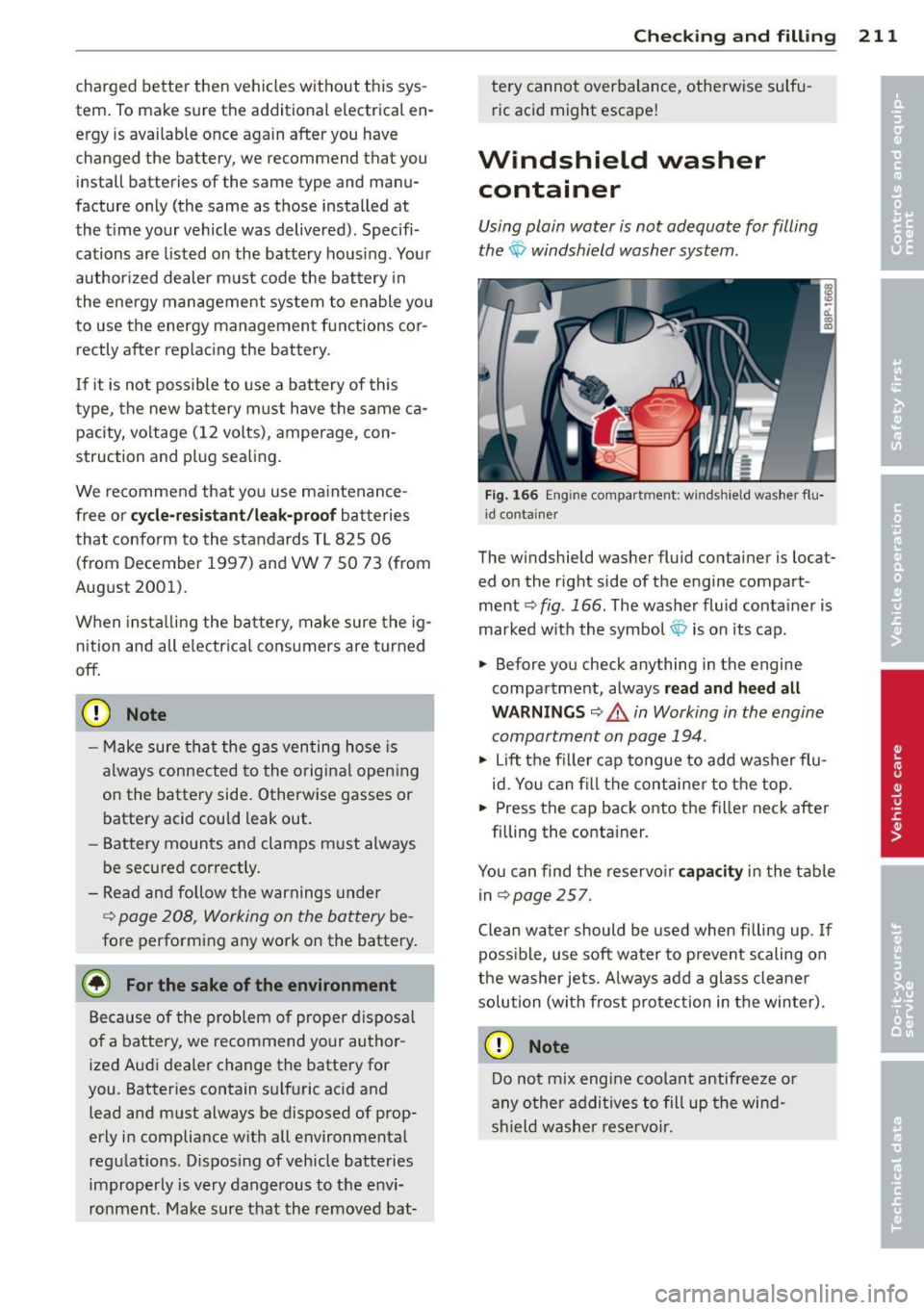
Fig. 166 En gin e compart men t: w in ds hield washer flu
i d co ntai ner
The windshield washer fluid container is locat
ed on the right side of the engine compart
ment ~
fig. 166. The washer fluid conta iner is
marked w ith the symbol $ is on its cap .
.,. Before you check anything in the engine
compartment, always
read and heed all
W ARNINGS ~ _&. in Working in the engine
compartment on page 194.
.,. Lift the fil le r ca p tongue to add washer flu
id. You can fi ll the container to the top.
.,. Press the cap back onto the f iller neck after
f illing the container .
You can find the reservo ir
capacity in t he t able
in
C? page 257.
Clean water should be used when filling up . If
poss ible, use soft water to prevent scaling on
the washer jets. Always add a glass cleane r
solu tion (with frost protection in t he win ter).
CD Note
Do not mix engi ne coolant antifreeze o r
a ny o ther addi tives to fill up the wind
sh ield washer rese rvoi r.
Page 216 of 280

214 Tires and wheels
Maximum loaded vehicle weight
means the sum of:
(a) Curb weight
(b) Accessory weight
(c) Vehicle capacity weight, and
(d) Production options weight
Maximum (permissible) inflation pressure
means the maximum cold inflation pressu re
to which a tire may be inflated. Also called
"maximum inflation p ressure."
Normal occupant weight
means 150 lbs. (68 kilograms) times the
number of occupants seated in the vehicle up
to the total seating capacity of your vehicle.
Occupant distribution means distribution of occupants in a vehicle .
Outer diameter means the overa ll diameter of an inf lated new
tire.
Overall width
means the linear distance between the exteri
ors of the sidewalls of an inflated tire, includ
ing e levations due to labeling, decorations, or
protective bands or ribs.
Ply
means a layer of rubber-coated parallel cords.
Production options weight
means the comb ined weight of those installed
regular production options weighing over 5
lbs . (2 .3 kg) in excess of those standard items
which they replace, not previously considered
in curb weight or accessory weight, including
heavy duty brakes, r ide leve lers, roof rack,
heavy duty battery, and specia l trim .
Radial ply tire
means a pneumatic tir e in which the p ly cords
that extend to the beads are laid at substan
tially 90 degrees to the centerline of the
tread . Recommended inflation pressure
see
~
page 213, Cold tire inflation pressure.
Reinforced tire
means a t ire designed to operate at higher
loads and at higher inflation pressures than
the corresponding standard tire . Re inforced
t ir es my be identified as "XL", "xl", "EX TRA
LOAD", or "RF" on the sidewall.
Rim
means a metal support for a tire or a t ire and
tube assembly upon which the tire beads are seated.
Rim diameter
means nom inal d iameter of the bead seat. If
you change your wheel s ize, you w ill have to
purchase new tires to match the new r im di
ameter .
Rim size designation
means rim diameter and width.
Rim width
means nominal distance between rim flanges .
Sidewall
means that portion of a tire between the
t read and bead.
Speed rating (letter code)
means the speed at which a tire is designed to
be driven for extended periods of time. The
ratings range from 93 mph (150 km/h) to
186 mph (298 km/h)
~ page 224 . You may
not find this information on all tires because
it is not requ ired by law.
The speed rating letter code, where applica
ble, is molded on the tire sidewall and indi
cates the max imum pe rmissibl e road speeds
~ A in Winter tires on page 228.
Tire pressure monitoring system*
means a system that detects when one or
more of a veh icle's tires are underinflated and
illuminates a low tire pressure warning tell
tale.