weight AUDI A3 2012 Owner´s Manual
[x] Cancel search | Manufacturer: AUDI, Model Year: 2012, Model line: A3, Model: AUDI A3 2012Pages: 280, PDF Size: 70.11 MB
Page 145 of 280
Child Safety
Important things to know
Introduction
The rear seat is generally the safest place in a
collision .
The physical principles of what happens when
your veh icle is in a crash app ly also to chi ldren
¢ page 114, What happens to occupants not
wearing safety belts? .
But unlike adults and
teenagers, their muscles and bones are not
fu lly developed. In many respects children are
at greater risk of serious injury in crashes than
adu lts.
Because children's bod ies are not fully deve l
oped, they require restraint systems especial ly designed for their size, weight, and body
structure. Many countries and all states of the
United States and provinces of Canada have
laws requiring the use of approved child re
straint systems for infants and small children .
In a fronta l crash at a speed of 20 -35 mph
(30-56 km/h) the forces acting on a 13-pound
(6 kg) infant w ill be more than 20 t imes the
weight of the child . This means the weight of
the child would suddenly be more than
260 pounds (120 kg). Under these conditions,
on ly an appropriate chi ld restraint properly
used can reduce the risk of ser ious injury .
Child restraints, like adult safety belts, must
be used properly to be effective. Used improp
erly, they can increase the risk of serious in
jury in an accident.
Consult the child safety seat manufacturer's
instruction to be sure the seat is right for your
child 's size ¢
page 146, Important saf ety in
struc tions for using child safety seats.
P lease
be sure to read and heed all of the important
information and WARNINGS about child safe
ty, Advanced Airbags, and the installat ion of
chi ld restraints in this chapter .
There is a lot you need to know about the Ad
vanced Airbags in your vehicle and how they work when infants and children in child re-
Child Sa fet y 143
straints are on the front passenger seat . Be
cause of the large amount of important infor
mation, we cannot repeat it a ll here . We urge
you to read the detailed information in this owner's manual about airbags and the Ad
vanced Airbag System in your vehicle and the
very important information about transport
ing children on the front passenger seat .
Please be sure to heed the WARNINGS -they
are extremely important for your safety and
the safety of your passengers, especially in
fants and small chi ldren .
.A, WARNING
-Accident statistics have shown that chil
dren are generally safer in the rear seat
area than in the front seating position.
Always restrain any child age 12 and un der in the rear.
- All vehicle occupants and especially chil
dren must be restrained properly when
ever riding in a vehicle . An unrestrained
or improperly restrained chi ld could be
injured by str ikin g the interior or by be
ing ejected from the vehicle during a
sudden maneuver or impact. An un re
strained or improper ly restrained chi ld is
also at greater risk of injury or death
through contact with an inflating airbag.
- A suitable chi ld restraint properly instal
led and used at one of the rear seating
positions provides the highest degree of
protection for infants and small children
in most accident situations.
A WARNING
Children on the front seat of any car even
with Advanced Airbags can be ser iously in
jured or even killed when an a irbag in
flates. A child in a rearward-fac ing ch ild
safety seat installed on the front passen
ger seat will be ser iously injured and can
be killed if the front airbag inflates .
- The inflating airbag will h it the child
safety seat or infant carrier with great
force and will smash the child safety seat
and child against the backrest, center
armrest, or door.
•
•
Page 146 of 280

144 Child Safety
-Always install rear-facing child safety
seats on the rear seat.
- If you must install a rearward facing
child safety seat on the front passenger
seat in exceptional circumstances and
the
PASSENGER AIR BAG OFF light does
not come on and stay on, immediately
install the rear-facing child safety seat in
a rear seating position and have the air
bag system inspected immediately by
your authorized Audi dealer.
_& WARNING
If, in exceptional circumstances, you must
install a forward-facing child restraint on
the front passenger's seat:
- Always make sure the forward-facing
seat has been designed and certified by
its manufacturer for use on a front seat
with a passenger front and side airbag.
- Always follow the manufacturer's in
structions provided with the child safety
seat or carrier.
- Always move the passenger seat into its
rearmost position in the seat's fore and
aft adjustment range, as far away from
the airbag as possible before installing
the child restraint. The backrest must be adjusted to an upright position .
- Always make sure that the
PASSENGER
AIR BAG OFF
light comes on and stays
on all the time whenever the ignition is
switched on.
(D Tips
Always replace child restraints that were
installed in a vehicle during a crash. Dam
age to a child restraint that is not visible
could cause it to fail in another collision
situation.
Advanced front airbag system and children
Your vehicle is equipped with an "Advanced
Airbag System" in compliance with United
States Federal Motor Vehicle Safety Standard (FMVSS) 208 as applicable at the time your
vehicle was manufactured.
The Advanced Airbag system in your vehicle
has been certified to meet the "low-risk" re
quirements for 3- and 6-year old children on
the passenger side and small adults on the driver side. The low risk deployment criteria
are intended to reduce the risk of injury
through interaction with the airbag that can
occur, for example, by being too close to the
steering wheel and instrument panel when
the airbag inflates . In addition, the system
has been certified to comply with the "sup
pression" requirements of the Safety Stand
ard, to turn off the front airbag for infants up
to 12 months who are restrained on the front
passenger seat in child restraints that are list
ed in the Standard.
Even though your vehicle is equipped with an
Advanced Airbag system , all children, espe
cially those 12 years and younger, should al
ways ride in the back seat properly restrained
for their age and size. The airbag on the pas
senger side makes the front seat a potentially dangerous place for a child to ride . The front
seat is not the safest place for a child in a for
ward-facing child safety seat. It can be a very
dangerous place for an infant or a larger child
in a rearward-facing seat .
Advanced Airbags and the weight
sensing mat in the front seat
The Advanced Airbag System in your vehicle
detects the presence of an infant or child in a
child restraint on the front passenger seat us
ing the weight-sensing mat in the seat cush
ion and the sensor below the safety belt latch
on the front passenger seat that measures the
tension on the safety belt.
The weight -sensing mat measures total
weight of the child and the child safety seat
and a child blanket on the front passenger
seat. The weight on the front passenger seat
is related to the design of the child restraint
and its "footprint", the size and shape of the
bottom of the child restraint as it sits on the .,..
Page 147 of 280
seat. The weight of a child restraint and its
"footprint" vary for different kinds of child re
straints and for the different models of the
same kind of child restraint offered by child restra int manufacturers.
The weight ranges for the individual types, makes and mode ls of ch ild restra ints that the
NHTSA has specified in the Safety Standard
together with the we ight ranges of typical in
fants and typical 1 year -old child have been
stored in the control unit of the Advanced A ir
bag System . When a chi ld restraint is being
used on the front passenge r seat with a typi
cal 1 year -old ch ild, the A dvanced Airbag Sys
tem compares the we ight measured by the
weight sensing mat with the information stor
ed in the electronic control unit.
The electron ic contro l unit al so registers the
tension on the front passenger safety be lt.
The tension on the safety be lt for the front
passenger seat will be different for an adult
who is properly using the safety belt as com
pared to the tension on the be lt when it is
used to attach a child restraint to the seat.
T he sensor below the latch for the safety belt
for the front seat passenger measures the
tension on the belt . T he input from this sen
sor is t hen used w ith the we ight to "decide",
whether there is a ch ild restraint with a typ ica l
1 year-o ld child on the front passenger seat
and whether or not the airbag must be turned
off .
Child restraints and Advanced Airbags
Regard less of the child restraint that you use,
make sure that it has been certified to meet
United States Federal Motor Vehicle Safety
Standards and has been certified by its manu
facturer for use with an airbag . Always be sure
that the chi ld restraint is p roperly instal led at
one of the rear seat ing pos itions . If in excep
tional ci rcumstances you must use it on the
front passenger seat, carefu lly read all of the
information on child safety and Advanced Air
bags and heed a ll of the app licable WARN
INGS. Make certain that the child restraint is
correctly recognized by the weight-sensing
Child Sa fet y 145
mat inside the front passenger seat, that the
front passenger airbag is turned off and that
the a irbag status is always correct ly signaled
by the
PAS SENGE R AIR BAG OFF light.
Many types and models of child restraints
have been available over t he years, new mod
els are introduced regu larly incorporating new
and improved des igns and o lder models are
taken out of product ion. Ch ild restraints are
not standard ized . Child restraints of the same
type typ ically have d ifferent weights and sizes
and different 'footpr ints,' the size and shape
of the bottom of the ch ild restrai nt that sits
o n the seat, when they a re insta lled on a veh i
cle seat. These diffe rences make it v irtually
impossible to certify compliance with the re
quirements for advanced airbags with each
and every ch ild restraint that has ever been
sold in the past or will be sold over the course
of the useful life of your veh icle.
For this reason, the United States National
Highway Traffic Safety Adm inistrat ion has
published a list of spec ific type, makes and
models of child restraints that must be used
to certify comp liance of the Advanced Airbag
System in your veh icle with the suppression
requirements of Federal Motor Vehicle Safety
Standa rd 208. These chi ld restraints are :
Subpart A - Car bed child restraints
Model
Angel Guard Angel Ride AA 2403FOF
Manufactured on or
after
September 25, 2007
Subpart B - Rear-facing child restraints
Model Manufactured on or
after
Century SmartF it December 1, 1999
4543
Cosco Arriva September 25, 2007
22-013PAW and base
22-999WHO
Evenf lo Discovery Ad- December 1, 1999
just Right 212
I
j
•
•
....
Page 148 of 280
146 Child Saf ety
-Model Manufactured on or
a fter
Ev enflo First Choice December 1, 1999
204
G ra co Infant 8457 December 1, 1999
Graco Snugride September 25, 2007
Peg Perego Primo Vi -September 25, 200 7
aggio SIP I MUN00US
Subpart C -Forward-facing and
con vert ibl e child re straint s
Model Manufactured on or
after
Britax Roundabout September 25, 2007
E9L02xx
Cosco Touriva 02519 December 1, 1999
Cosco Summit Deluxe September 25, 2007
High Back Booster
2 2-26 2
Cosco High Back September 25, 2007
I Booster 22-209
E venflo Tribu te V September 25, 200 7
379xxxx
Evenflo Medallion December 1, 1999
1 254
Evenflo Generations September 25, 2007
352xxxx
Graco ComfortSport September 25, 2007
Graco Toddler Safety September 25, 2007
Seat Step 2
Graco Platinum Cargo
A WARNING
T o reduce the risk of serious injury, make
sure that the
PASSENGER AIR BAG OFF
light comes on and stays on whenever a
child rest raint is installed o n the front pas
senge r seat and the ignition is switched
on .
- Take the child rest raint off the front pas
senger seat and install it properly at one
of the rea r seat positions if the
PASSEN
GER AIR BAG OFF
light does not stay on. -
Have the airbag system inspected by
your author ized Audi dealer immed iate
ly .
@ Tips
The child seats listed in categories A to C
have been statically tested by Audi on ly for
the Advanced A irbag function.
Important safety instructions for using
child safety seats
Correct use of child safety seats substantially
reduces the risk of injury in an accident!
As the dr iver, you are responsib le for the safe
ty of everybody in the veh icle, especially ch il
dren:
... Always use the right chi ld safety seat for
each child and always use it properly
c::;,page 148.
.,. Always carefully follow the child safety seat
manufacturer's instruct ions on how to route
the safety belt properly through the c hild
safety seat .
.,. When using the vehicle sa fe ty belt to ins tall
a ch ild safe ty seat, yo u m ust first a ctivate
t he convertib le locking retractor on the
safety belt to prevent the child safety seat
from moving
¢ page 152 .
.,. Push the ch ild safety seat down with your
full weight to get the safety be lt really tight
so that the seat cannot move forward or
sideways more than one inch (2 .5 cm) .
.,. If a st rap o r tet he r is be ing used to tie the
child safety seat to the front passenger
seat , m ake sure tha t it is not so tight th at i t
causes the weigh t-se ns ing ma t to measure
more weight than is act ually on the seat.
Always remember: Even tho ugh yo ur vehicle is
equipped wi th an A dvan ced Air bag system, all
children, especially those 1 2 years and young
er, shou ld always ride in the back seat proper-
ly restrained for their age and size. ..,.
Page 150 of 280
148 Child Safet y
as possible before insta lling the child
restra int.
- Always make sure t hat nothing pre
vents the front passenger's seat from
being moved to the rearmost position
in its fore and aft adjustment range.
- Always make sure that the backrest is in the upright position .
- Always buck le the child safety seat firmly
in place even if a child is not s itting in it.
A loose ch ild safety seat ca n fly around
dur ing a sudden stop or in a coll is ion.
- Always read and heed all WARNINGS
whenever using a child restrained in ave
hicle is being used
<=:>page 113, Safety
belts,<=:> page 122, Airbag system
and
<=;> page 143, Child Safety.
A WARNING
To reduce the risk of serious injury, make
sure that the
PASSENGER AIR BAG OFF
light comes on and stays on whe never a
child rest raint is installed on the front pas
senge r seat and the ignition is switched
on.
- Take the child rest raint off t he front pas
senger seat and install it proper ly at one
of the rear seat positions if the
PAS SEN
G ER AIR BAG OFF
light does not stay on.
- Have the airbag system inspected by
your authorized Audi dealer immediate ly.
A WARNING
-
A child in a child restraint installed w ith
the LATCH lower anchorages or w ith the
standard safety belt on the rear seat may play with unused rear seat safety belts and
become enta ngled resu lting in ser ious per
sonal inj ury and even dea th.
- Always buck le unused rear seat safety
bel ts out of reach of ch ildren in ch ild
sea ts and p roperly activate the conve rti
ble locking retrac to r so that the child
cannot un reel the safety belt from the
retracto r.
(D Tips
Always replace chi ld restraints that were
i nstalled in a vehicle d uring a crash. Dam -
age to a chi ld restraint that is not visible
could cause it to fail in another collision
s ituation.
Chi Ld safety seats
Infant seats
Babies and infants up to about one year old
and
20 lbs. or 9 kg need special rearward-fac
ing child restraints that support the back,
neck and head in a crash.
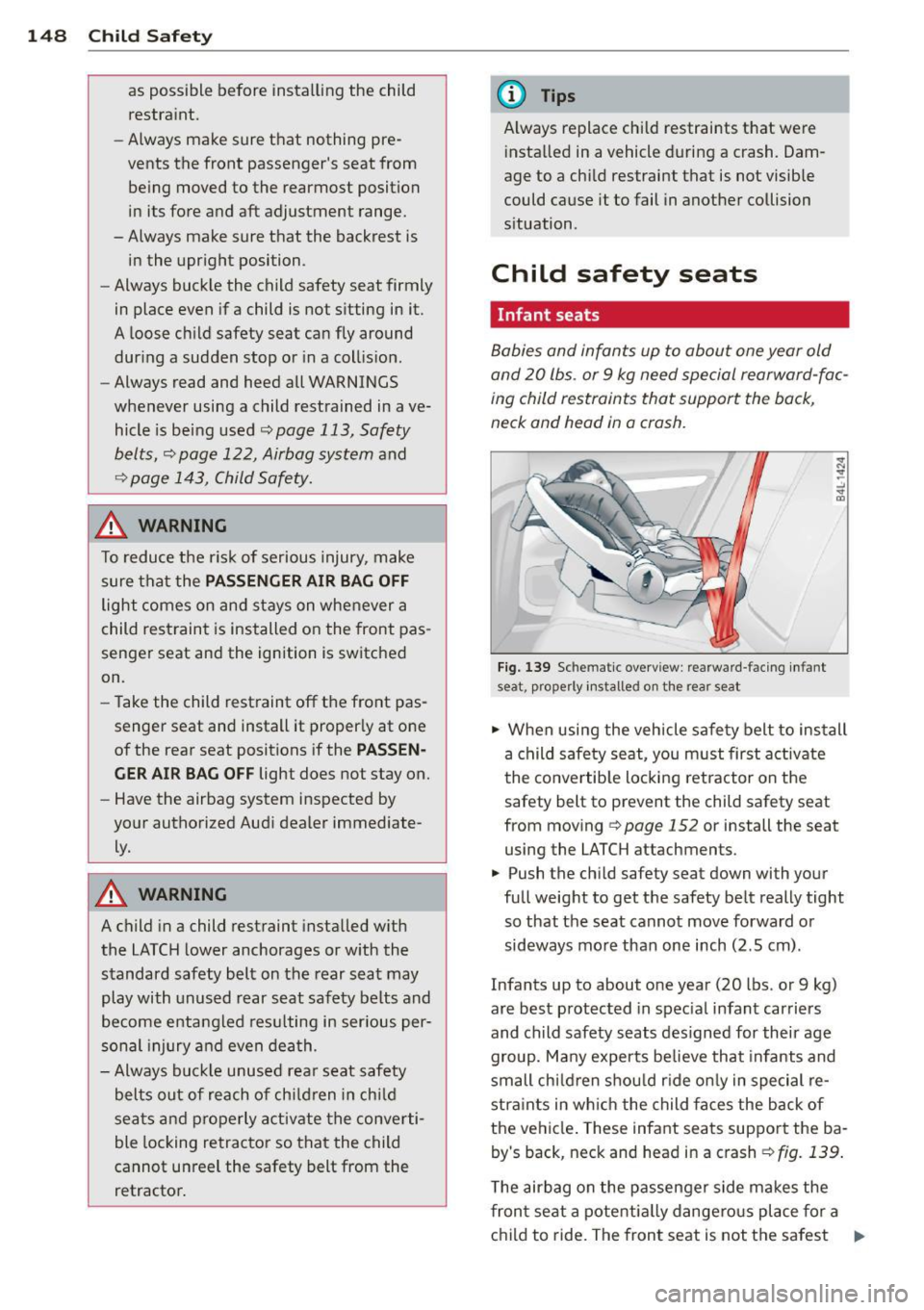
F ig . 13 9 Schema tic overview : rearward -facing infan t
seat, properly installed o n the rear seat
.. When using the vehicle safe ty belt to install
a child safety seat, you m ust first activate
the convertib le locking retractor on the
safety belt to prevent the child safety seat
from mov ing <=:>
page 152 or install the seat
using the LATCH attachments .
.. Push the chi ld safety seat down with your
full weight to get the safety be lt really tight
so that the seat cannot move forwa rd or
sideways mo re than one inch (2 .5 cm).
Infants up to about one year (20 lbs . or 9 kg)
are best protected in spec ial infant car riers
and ch ild safety seats designed for their age
group. Many experts believe that infants and
small chi ld ren shou ld r ide o nly in special re
stra ints in wh ich the child faces the back of
the vehicle . These infant seats suppo rt the ba
by's back, neck and head in a c rash
<=:> fig. 139 .
The airbag on the passenger side makes the
fron t se at a pote ntia lly d angero us place for a
c h ild to ride. The front seat is not the safest ..,..
Page 151 of 280
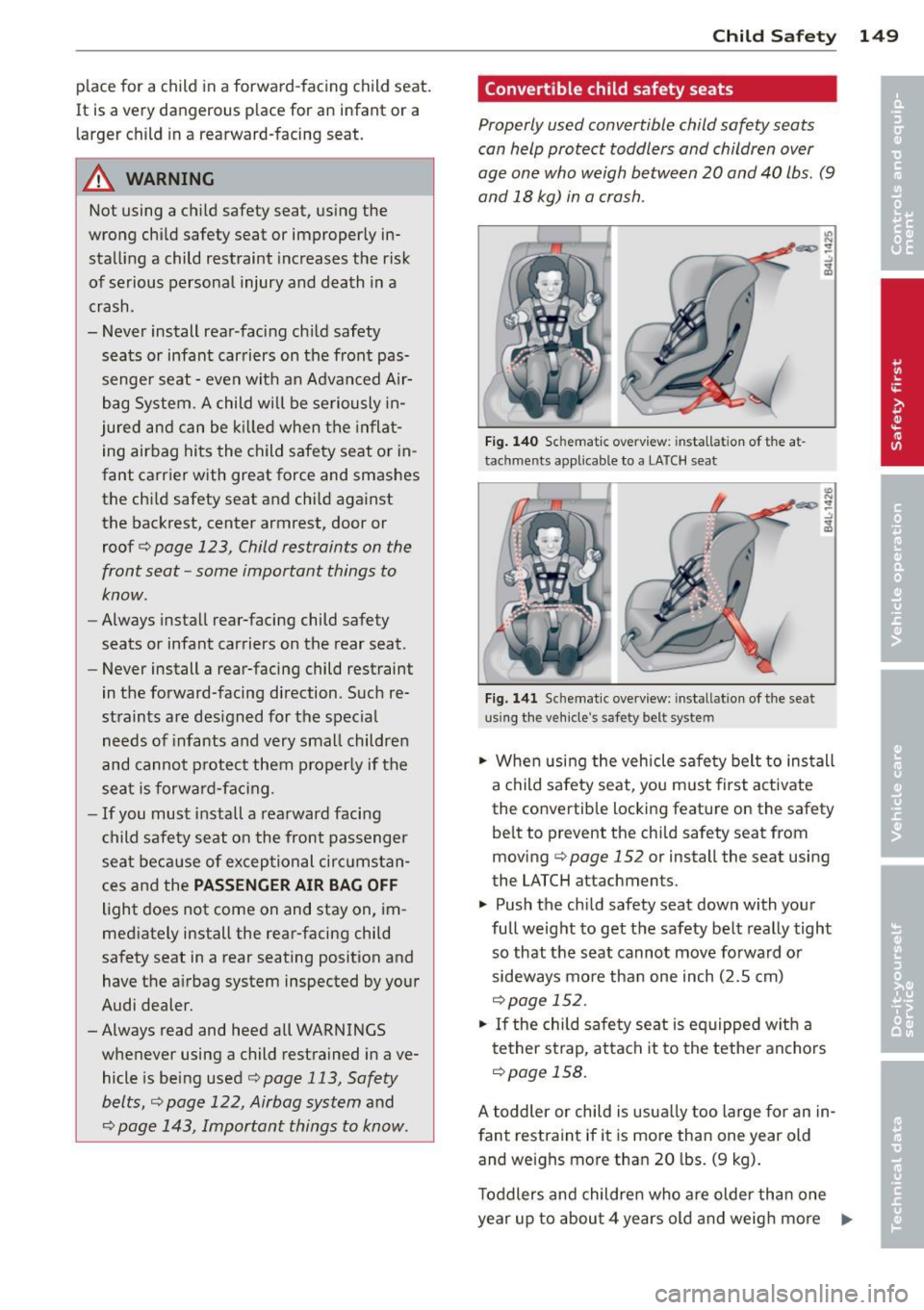
place for a child in a forward-facing child seat.
It is a very dangerous place for an infant or a
larger child in a rearward-facing seat.
.&_ WARNING
Not using a child safety seat, using the
wro ng chi ld safety seat or improper ly in
stalling a child restraint increases the risk
of serious personal injury and death in a
crash .
-
- Never install rear-facing ch ild safety
seats or infant carriers on the front pas
senger seat -even with an Advanced Air
bag System. A child will be se riously in
jured and can be k illed when the in flat
ing airbag hits the child safety seat o r in
fant carrier with great force and smashes
the child safety seat and chi ld against
the backrest, center armrest, door or
roof
c:> page 123, Child restraints on the
front seat -some important things to
know .
-Always install rear-facing child safety
seats or infant carriers on the rear seat.
- Never install a rear-facing child restraint
in t he forward-facing direction . Such re
straints are designed for the spec ial
needs of infants and very small children
and cannot p rotect them properly if the
seat is forward-fa cing.
- If you must install a rearward facing
child safety seat on the front passenger
sea t beca use of exceptional cir cumstan
ces and the
PASSENGER AIR BAG OFF
light does not come on and stay on, im
med iately install the rear-facing child
safety seat in a rear seating position and
have the a irbag system inspected by your
Audi dealer.
- Always read and heed all WARNINGS whenever using a child restrained in ave
hicle is being used
c:> page 113, Safety
belts,
c:> page 122, Airbag system and
c:> page 143, Important things to know.
Child S afety 149
Convertible child safety seats
Properly used convertible child safety seats
can help protect toddlers and children over
age one who weigh between 20 and 40 lbs. (9
and 18 kg) in a crash .
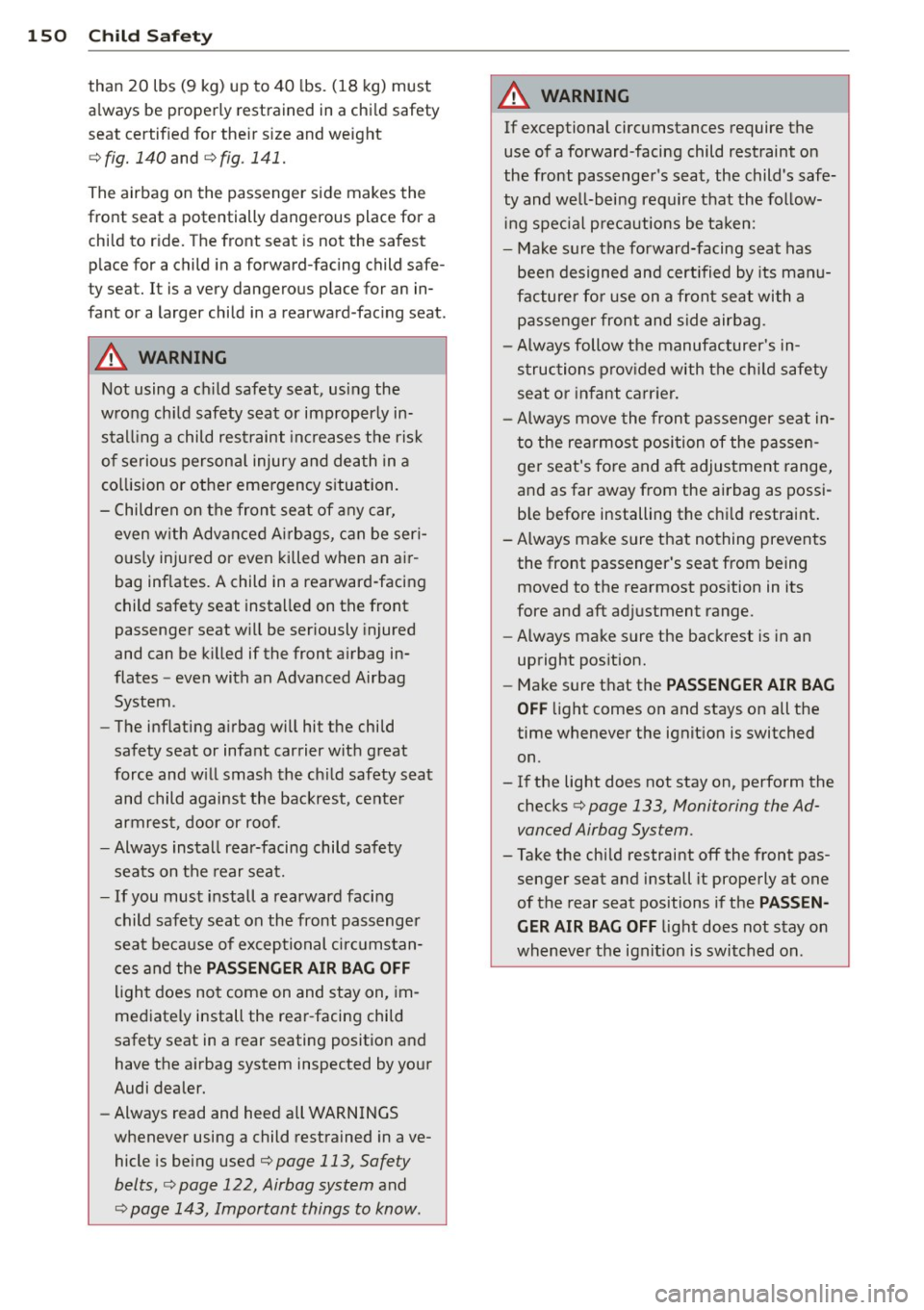
Fig. 140 Sc hem atic overv iew: in stallation of the at
tac hments applicable to a LATCH seat
Fi g. 141 Schema tic overv iew: in stallatio n of the seat
us ing the ve hicle 's safety be lt system
.,. When usi ng the vehicle safe ty belt to ins tall
a child safety seat, you must first activate
the convertible locking feature on the safety be lt to prevent the child safety seat from
moving
c:> page 152 or install the seat using
the LATCH attachments.
.,. Push the ch ild safety seat down with your
full weight to get the safety belt really tight
so that the seat cannot move forward o r
sideways mo re than one inch ( 2.5 cm)
c:> page 152.
.,. If the child sa fe ty seat is eq uippe d wit h a
tether strap, attach it to the tethe r anchors
<=) page 158.
A toddler or child is usu all y too large for an in
f ant restraint if it is more than one year old
and we ighs more than 20 lbs. (9 kg) .
T oddlers and children who are older than one
year up to about 4 years old and weig h mo re
~
Page 152 of 280
150 Child Saf ety
than 20 lbs (9 kg) up to 40 lbs. (18 kg) must
a lways be properly restrained in a chi ld safety
seat certified for the ir s ize and weight
c::> fig. 140 and c::> fig. 141.
The airbag on the passenger side makes the
front seat a potentially dangerous place for a
chi ld to r ide. T he front seat is not the safest
p lace for a child in a forward-facing child safe
ty seat. It is a very dangerous place for an in
fant or a larger child in a rearward -fac ing seat .
A WARNING
Not using a ch ild safety seat, using the
w rong ch ild safety seat or improper ly in
stall ing a child res traint increases the risk
of serious person al injury and de ath in a
co llision or other eme rgency s ituation.
- Children on the front seat of any car,
even w ith Adv anced A irbags, can be seri
o usly inju red or even killed when an a ir
bag inflates. A child in a rearward-facing
child safety seat installed on the front
passenger seat w ill be seriously injured
and can be k illed if the front a irbag in
flates -even with an Advanced Airbag
System .
- The inflating a irbag will hit the child
safety seat or infant car rier with g reat
force and w ill smash the ch ild safety seat
and child against the backrest, cente r
armrest, door or roof.
- Always install rear-facing child safety
seats on t he rear sea t.
- If you must install a rearward facing
child safety seat on the front passenger
sea t be cause of ex cep tional circ ums tan
c es and the
PASSENGER AIR BAG OFF
ligh t does no t come on and stay on, im
me diately install the rea r-facin g child
safety seat in a rear seating position and
have the airbag system inspected by your
Audi dealer.
- Always read and heed all WARNI NGS
whenever using a child rest rained in ave
hicle is being used
c::> page 113, Safety
belts,
c::> page 122, Airbag system and
c::> page 143, Important things to know .
A WARNING
If exceptional circumstances require the
use of a fo rward-facing child restraint on
the front passenge r's sea t, the child's safe
ty and well-being require t hat the follow
i ng spe cial preca utions be ta ken:
- Make sure t he forward-facing seat has
been designed and cert ified by its man u
f a cturer fo r use on a front seat with a
p assenger front and side airbag.
- Always follow the manufacturer' s in
s truc tions prov ided with t he ch ild safety
se at o r infant ca rr ier.
- Always move the front passenger seat in
to the re armos t posi tion of the passen
ge r seat's fo re and aft adjustment range,
an d as far away from the airbag as possi
b le before installing the ch ild restraint.
- Always make sure that no thing prevents
the front passenger 's seat from being
moved to the rea rmost pos ition in its
fore and aft ad justment range .
- Always make sure the bac krest is in an
upright pos ition.
- Make sure t hat the
PASSENGER AIR BAG
OFF
li ght comes on and stays on all the
time whenever the ignit ion is switched
on.
- If the light does not stay on, perform the
checks
c::> page 133, Monitoring the Ad
vanced Airbag System.
- Ta ke the chi ld restraint off the front pas
senger seat and install it properly at one
of the rear seat positions if the
PASSEN
GER AIR BAG OFF
l ight does not s tay on
wheneve r the ignit ion is switched on.
-
Page 153 of 280
Booster seats and safety belts
Properly used booster seats can help protect
children weighing between about 40 lbs. and
80 lbs. (18 kg and 36 kg) who are less than 4
ft. 9 in. (57 inches/1 .45 meters) tall.
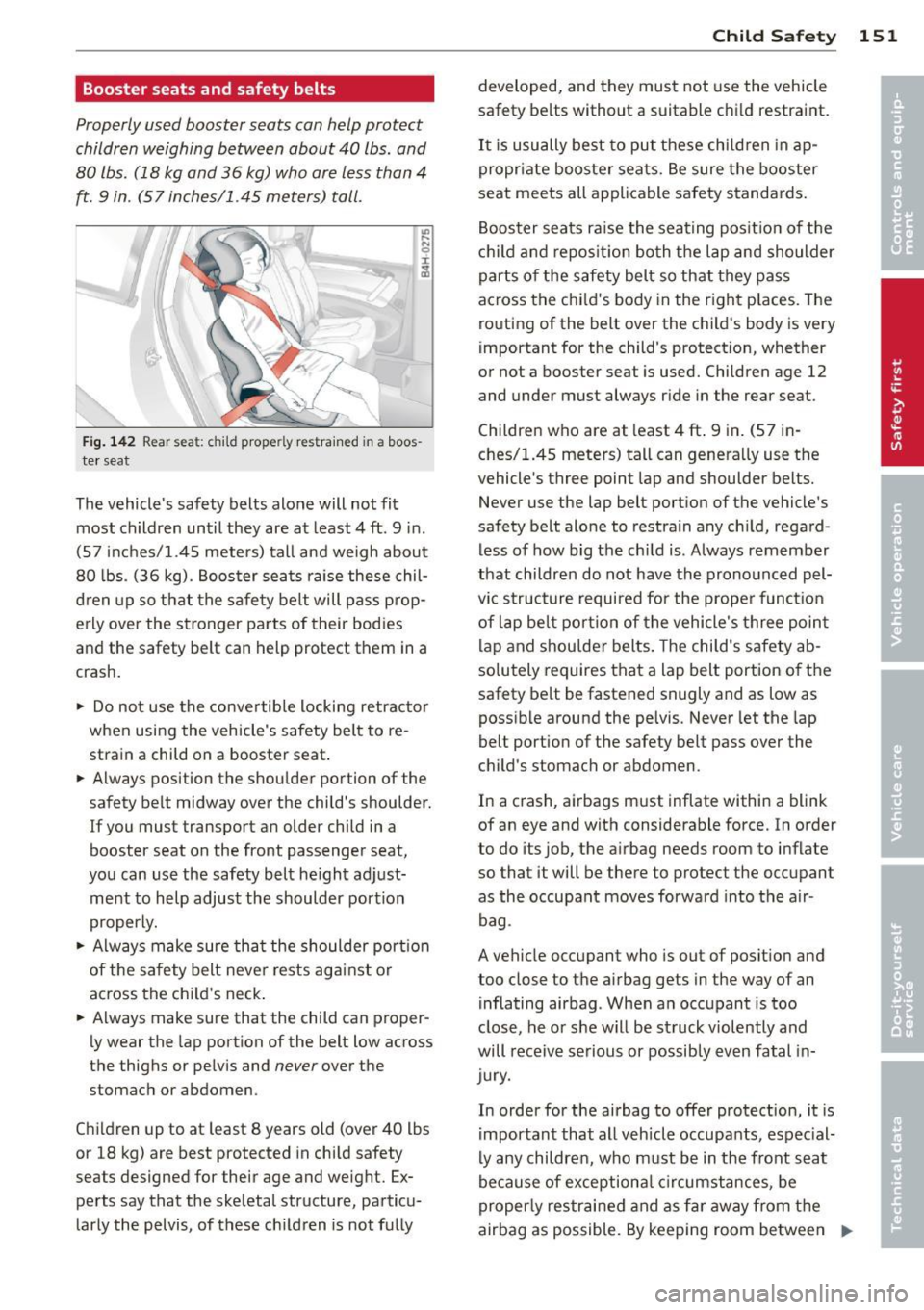
Fig. 142 Rear seat : child prope rly restrained in a boos
ter seat
The vehicle's safety belts alone will not fit
most children until they are at least 4
ft. 9 in.
(57 inches/1.45 meters) tall and weigh about
80 lbs. (36 kg). Booster seats raise these chil
dren up so that the safety belt will pass prop
erly over the stronger parts of their bodies
and the safety belt can help protect them in a
crash.
.,. Do not use the convertible locking retractor
when using the vehicle's safety belt to re
strain a child on a booster seat .
.. Always position the shou lder portion of the
safety belt midway over the child's shoulder.
If you must transport an older child in a
booster seat on the front passenger seat,
you can use the safety belt he ight adjust
ment to help adjust the shoulder portion
properly .
.. Always make sure tha t the shoulder port ion
of the safety belt never rests against or
across the child's neck .
.. Always make sure that the child can proper
ly wear the lap portion of the belt low across
the thighs or pelvis and
never over the
stomac h or abdomen.
Children up to at least 8 years old (over 40 lbs
or 18 kg) are best protected in chi ld safety
seats designed for their age and weight. Ex pe rts say that the ske letal structure, particu
larly the pelvis, of these ch ildren is not fully
Child Safety 15 1
developed, and they must not use the vehicle
safety belts without a suitable chi ld restraint.
It is usually best to put these child ren in ap
propriate booster seats. Be sure the booster
seat meets all applicable safety standa rds.
Booster seats raise the seat ing pos ition of the
child and reposition both the lap and shoulder
parts of the safety belt so that they pass
ac ross the child's body in the right p laces. The
routing of the belt over the child's body is very
important for the child's protect ion, whether
or not a booster seat is used. Children age 12
and under must always r ide in the rear seat.
Children who are at least 4
ft. 9 in. (57 in
ches/1.45 meters) tall can generally use the
vehicle 's three point lap and shoulder belts.
Never use the lap belt portion of the vehicle's
safety belt alo ne to restrain any child, regard
less of how big th e ch ild is. Always remember
that children do not have the pronounced pel
vic structure required for the pro pe r function
of lap belt portion of the vehicle's three point
lap and shoulde r belts. The child's safety ab
so lutely requires that a lap belt portion of the
safety belt be fastened snugly and as low as
possible around the pelvis. Never let the lap
belt portion of the safety belt pass over the
child's stomach or abdomen .
In a crash, airbags must inflate within a blink
of an eye and with considerable force. In order
to do its job, the a irbag needs room to inflate
so that it will be there to protect the occupant
as the occupant moves forward into the a ir
bag.
A veh icle occupant who is out of position and
too close to the a irbag gets in the way of an
inflating airbag. When an occupant is too
close, he or she will be st ruck v iolently and
will receive serious or possibly even fatal in
jury.
In order for the airbag to offer protection, it is
im portant that all veh icle occupants, especial-
ly any children, who must be in the front seat
because of exceptiona l circumstances, be
properly restrained and as far away from the
airbag as possible. By keeping room between ..,_
Page 155 of 280
is locked so that the child and child safety
seat will stay in place.
Always remember: Even though your vehicle is
equipped with an Advanced Airbag system, all
children , especially those 12 years and young
er, should always ride in the back seat proper
ly restrained for their age and size.
A WARNING
Improperly installed child safety seats in
crease the risk of serious personal injury
and death in a collision.
- Always make sure that the safety belt re
tractor is locked when installing a child
safety seat. An unlocked safety belt re
tractor cannot hold the child safety seat
in place during normal driving or in a
crash.
- Always buckle the child safety seat firmly
in place even if a child is not sitting in it.
A loose child safety seat can fly around
during a sudden stop or in a collision.
- Always make sure that the rear seat
backrest to which the center rear safety
belt is attached is securely latched when
ever the rear center safety belt is being
used to secure a child restraint.
- If the backrest is not securely latched,
the child and the child restraint will be
thrown forward together with the back
rest and will strike parts of the vehicle
interior. The child can be seriously in
jured or killed.
- Never install rear-facing child safety
seats or infant carriers on the front pas
senger seat . A child will be seriously in
jured and can be killed when the passen
ger airbag inflates.
- The inflating airbag will hit the child
safety seat or infant carrier with great
force and will smash the child safety seat and child against the backrest, center
armrest, door or roof.
- Always install rear-facing child safety
seats or infant carriers on the rear seat.
- Forward-facing child safety seats or in
fant carriers installed on the front pas-
Child Safety 153
senger's seat may interfere with the de
ployment of the airbag and cause serious
injury to the child.
- It is safer to install a forward-facing
child safety seat on the rear seat.
- Always read and heed all WARNINGS
whenever using a child restrained in ave
hicle is being used
c=> page 143. Special
precautions apply when installing a child
safety seat on the front passenger seat
c=> page 12 3, Child restraints on the front
seat -some important things to know.
A WARNING
Always take special precautions if you
must install a forward or rearward-facing
child restraint on the front passenger's
seat in exceptional situations:
- Whenever a forward or rearward-facing
child restraint is installed on the front
passenger seat, the
PASSENGER AIR
BAG OFF
light must come on and stay on
whenever the ignition is switched on.
- If
the PASSENGER AIR BAG OFF light
does not come on and stay on, perform
the checks described
c=> page 133, Moni
toring the Advanced Airbag System.
- Take the child restraint off the front pas senger seat and install it properly at one
of the rear seat positions if the
PASSEN
GER AIR BAG OFF
light does not stay on
whenever the ignition is switched on .
- Improper installation of child restraints
can reduce their effectiveness or even
prevent them from providing any protec
tion.
-An improperly installed child restraint
can interfere with the airbag as it de ploys and seriously injure or even kill the
child.
-Always carefully follow the manufactur
er's instructions provided with the child
safety seat or carrier.
- Never place additional items on the seat
that can increase the total weight regis
tered by the weight-sensing mat and can
cause injury in a crash.
~
•
•
Page 156 of 280
154 Child Safety
A WARNING
Forward-facing child restraints:
- Always make sure the forward-facing
seat has been designed and certified by
its manufacturer for use on a front seat
w ith a passenger front and side airbag.
- Never put the forward-facing child re
straint up, against or
very near the in
strument panel.
-Always
move the passenger seat into its
rearmost position in the seat's fore and
aft adjustment range, as far away from
the airbag as possible before installing
the forward-facing child restraint . The
backrest must be adjusted to an upright
position.
- Make sure that the
PASSENGER AIR BAG
OFF
light comes on and stays on all the
time whenever the ignition is switched on.
A WARNING
Rearward-facing child restraints:
-A child in a rearward-facing child safety
seat installed on the front passenger
seat will be seriously injured and can be
killed if the front airbag inflates -
even
with an Advanced Airbag System.
- The inflating airbag will hit the child
safety seat or infant carrier with great
force and will smash the child safety seat
and child against the backrest, center
armrest, door or roof.
- Always be especially careful if you must
install a rearward facing child safety seat
on the front passenger seat in exception
al circumstances.
- A tight tether strap on a rearward-facing
child restraint attached to the front pas
senger seat can put too much pressure on the weight-mat in the seat and regis
ter a heavier weight in the Advanced Air
bag System . The heavier weight regis
tered can make the system work as
though an adult were on the seat and de
ploy the Advanced Airbag when it must be suppressed causing serious or even
fatal injury to the child.
- Make sure that the
PASSENGER AIR BAG
OFF
light comes on and stays on all the
time whenever the ignition is switched
on .
- If the
PASSENGER AIR BAG OFF light
does not come on and stay on, immedi
ately install the rear-facing child safety
seat in a rear seating position and have
the airbag system inspected by your Audi
dealer.
Activating the convertible locking
retractor
Use the convertible locking retractor to se
cure a child restraint.
Always heed the child safety seat manufactur
er's instructions when installing a child re
straint in your vehicle . To activate the conver
tible Lacking retractor:
.,. Place the child restraint on a seat , prefera
bly on the rear seat.
.,. Slowly pull the belt
all the way out.
.,. Route it around or through the child re
straint belt path
~ _&..
.,. Push the child safety seat down with your
full weight to get the safety belt really tight.
.,. Insert the belt tongue into the buckle for
that seating position .
.,. Guide the safety belt back into the retractor
until the belt lies flat and snug on the child
safety seat.
.,. You should hear a "clicking " noise as the
belt winds back into the inertia reel. Test the
convertible locking retractor by pulling on
the belt. You should no longer be able to
pull the belt out of the retractor. The con
vertible locking retractor is now activat ed.
.,. Make sure that the red release button is fac
ing away from the child restraint so th at i t
can be unbuckled quickly .
.,. Pull on the belt to make sure the safety belt
is properly tight and fastened so that the
seat cannot move forward or sideways more
than one inch (2.5 cm). .,.