check oil AUDI A3 CABRIOLET 2015 User Guide
[x] Cancel search | Manufacturer: AUDI, Model Year: 2015, Model line: A3 CABRIOLET, Model: AUDI A3 CABRIOLET 2015Pages: 302, PDF Size: 73.83 MB
Page 222 of 302
220 Check ing and F illin g
Never mix oil additives with your engine
oil. These additives can damage your en
gine and adversely affect your Audi Limit
ed New Vehicle Warranty.
@) For the sake of the environment
- Before changing your oi l, f irst make sure
you know where you can properly dispose of the used o il.
- Always dispose of used engine oil proper
l y. Do not dump it on garden so il, wood
ed areas, into open streams or down
sewage dra ins.
- Recycle used engine oil by taking it to a
used engine oil collection facility in your
area, or contact a service station .
Cooling system
Coolant
The engine coolant performs two functions: it
keeps the engine from overheating and it pro tects the engine from freezing in the winter.
The cooling system is sea led and generally re
q ui res little attention .
The cooling system has been filled at the fac
tory with a pe rmanent coolant which does not
need to be changed. The coolant consists of a
mixture o f spec ia lly condi tioned water and the
manufacturer's glycol -based coolant addi -
tive G l3 antifreeze with anticorrosion addi
tives (50% for USA models ; 60% for Canadian
models). This mixture both assures the neces
sary frost pro tection and protec ts metal com
ponents in the engine's cooling system from
corrosion and scaling . It also raises the boil
i ng po int of the coo lant .
Do not red uce the concentr ation of the coo l
ant in the summer by adding plain water.
The
proportion of coolant add iti ve mu st be at
least 50 % but not more than 60 %
to main
tain antifreeze protection and cooling efficie n
cy.
If t he coolant frost protect io n is too low,
the coo lant cou ld freeze and damage the veh i
cle heating and engine cooling system. F
or year -ro und driving, antifreeze is added a t
the factory for temperatures down to :
- -31°F(-35°C)USA
- -40°F ( -40°C) Canada.
If you must add coolant, use a mixture of wa
ter and coolant additive . Mix ing the coo lant
additive with distilled water is recommended .
.&, WARNING "---
Before you c hec k anyth ing in the engine
compartment, a lways read and heed a ll
WAR NIN GS ~
page 214.
0 Note
- Before wi nter sets in, have the coo lant
checked to see if the coolant additive in
your vehicle is sufficient to meet the cli
ma te conditions. This is especi ally impo r
tan t if you live in a reg ion where the win
ter is extreme ly cold . If necessary, in
crease the p roportion of coo lant add itive
to 60% .
- Whe n adding coolant additive to yo ur
cooling system, remembe r:
- We recommend us ing on ly coola nt ad
d itive Gl2++ or Gl3 (check the labe l)
fo r your vehicle. This coolant additive is
a va ila ble at au thorize d Au di dea le rs.
Other types of antifreeze can sign ifi
ca ntly reduce corrosion p rotection. The
resu lting corrosion can cause a loss of
coolant and serious engine damage.
- Do not add any type of radiator leak seal
ant to yo ur vehicle's engine coolant .
Add ing radiator repair f luid may adverse
ly affect the function and performance of
your cooling system and cou ld resu lt in
damage not covered by you r New Ve hicle
Limited Warranty.
Page 223 of 302
....,
N
r--. > co
rl I.O
"' rl
"' rl
Adding coolant
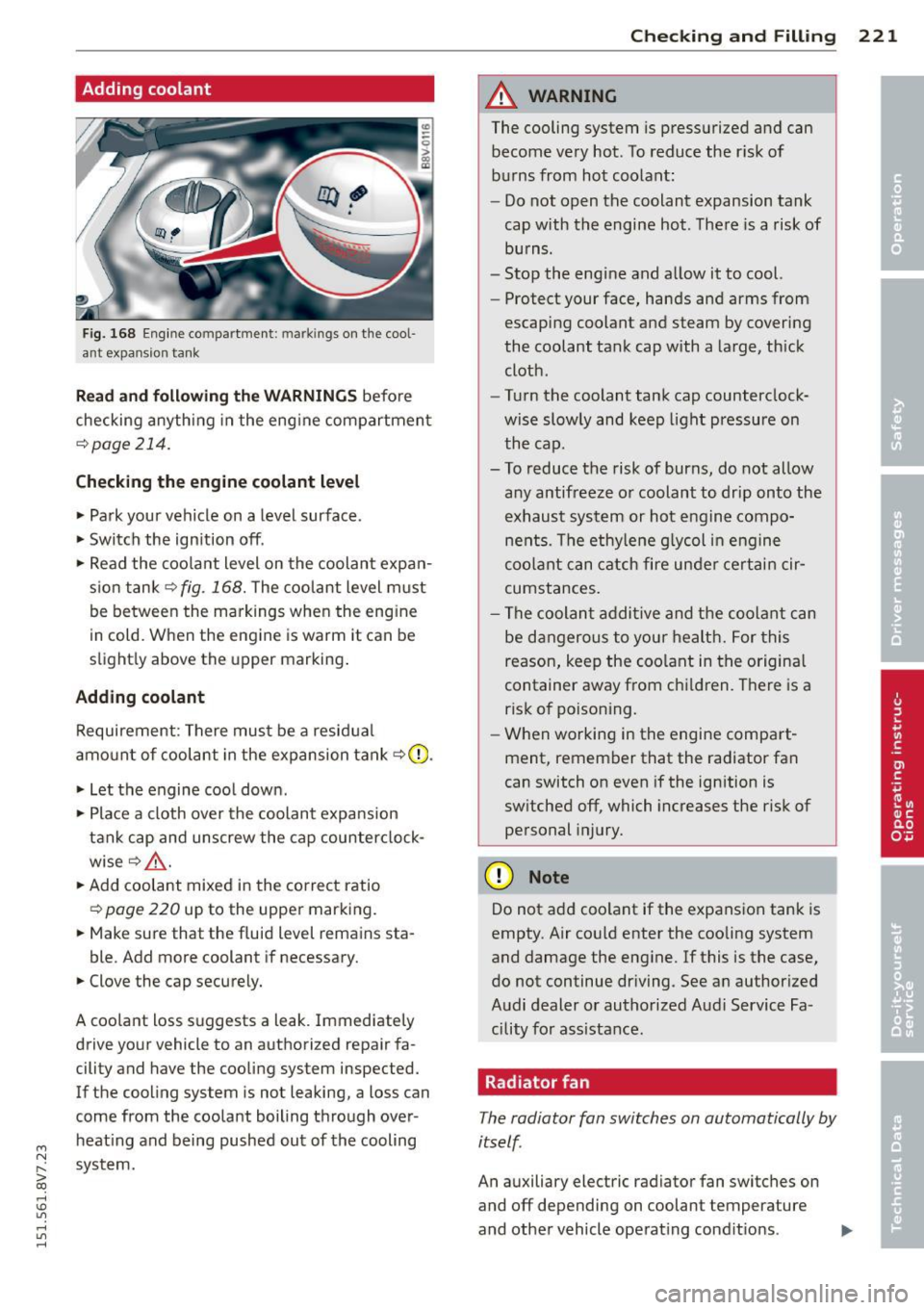
Fig. 168 Eng ine co mpa rtme nt: m ark in gs on the cool
ant expansio n tank
Read and following th e WARNING S before
checking anythi ng in the eng ine compartmen t
c::>page 214.
Checking th e engine coolant leve l
"'Park your vehicle on a level surface .
"' Switch the ign ition off.
"' Read the coo lant level on the coolant expan
s ion tank
c::> fig. 168. The coolant level must
be between the markings whe n the eng ine
in cold. When the eng ine is warm it can be
slight ly above the upper marking .
Adding coolant
Requirement: There must be a residua l
amo unt of coolant in the expansion tank
c::> (D .
"'Let the engine coo l down .
"' Place a cloth over the coolant expa nsion
tank cap and unscrew the cap counter clock
wise <=:>
A.
"'Add coolant mixed in the correct ratio
c::>page 220 up to the upper marking.
"' Make sure that the fluid level remains sta-
ble. Add more coolant if necessary.
"' Clove the cap securely.
A coolant loss suggests a leak. Immediately drive your vehicle to an authorized repair fa
cility and have the cooling system inspected.
If the cooling system is not leaking, a loss can
come from the coolant boiling through over
heat ing and being pushed out of the cooling
system.
Che cking and Fillin g 221
A WARNING
The cooling system is pressurized and can
become very hot. To reduce the r isk of
burns from hot coolant:
- Do not open the coolant expansion tank
cap with the engine hot . The re is a risk of
burns .
- Stop the engine and allow it to cool.
- Protect your face, hands and arms from
escaping coolant and steam by covering
the coolant tank cap with a large, th ick
cloth .
- Tu rn the coolant tank cap counterclock
wise slowly and keep light pressure on
the cap.
- To reduce the risk of burns, do not allow
any antifreeze o r coolant to drip onto the
exhaust system or hot engin e compo
nents . The ethy lene g lycol in eng ine
coo lant can catch fire under certai n cir
cumstances.
- The coolan t addi tive and the coolant can
be dangerous to your health. For this
reason, keep the coo lant in the origina l
container away from ch ildren. There is a
risk of poisoning.
- When working in the engine compart
ment, remember that the radiator fan
can switch on even if the ignition is
sw itched off, which increases the risk of
personal injury.
(D Note
Do not add coolant if the expans ion tank is
empty. Air could enter the cooling system
and damage the eng ine. If this is the case,
do not continue dr iving. See an author ized
Audi dealer or authorized Audi Service Fa
c ility for ass istance.
Radiator fan
The radiator fan switches on automatically by
itself.
An auxiliary electric radiator fan switches on
and off depending on coolant temperature
and other vehicle operat ing condit ions .
IJJ,
Page 224 of 302
222 Checking and Filling
After you switch the engine off, the auxiliary
fan can continue running for up to 10 minutes
- even with the ignition off. It can even switch
on again later by itself
c:> .&. , if
- the temperature of the engine coolant rises
due to the heat build-up from the engine in
the engine compartment, or
- the engine compartment heats up beca use
the vehicle is parked in intense sunlight.
A WARNING
- To reduce the risk of personal injury
nev
er touch the radiator fan.
- The auxiliary electr ic fan is temperature
contro lled and can switch on sudden ly
even when the engine is not running.
- The auxiliary radiator fan switches on au tomatically when the engine coolant
reaches a certain temperature and will
continue to run until the coolant temper
ature drops.
Brake fluid
Checking brake fluid level
N
N
;;;
" 00 co
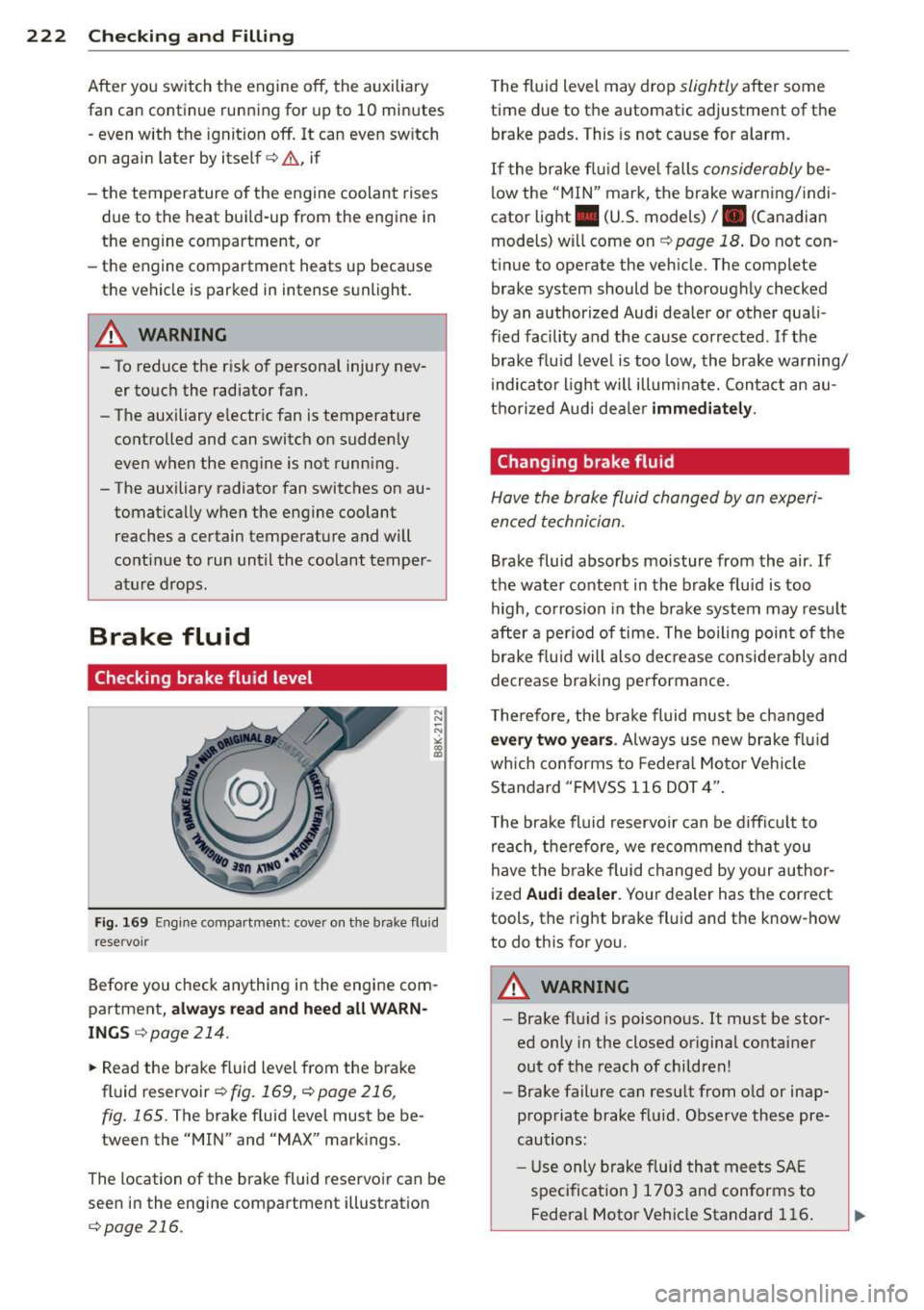
Fig . 169 Engine compartment : cove r on the brake flu id
r eservoir
Before you check anything in the engine com
partment,
always read and heed all WARN ·
INGS c:> page 214.
.. Read the brake fluid level from the brake
fluid reservoir
c:> fig.169, c:>poge216 ,
fig. 165.
The brake f luid level must be be
tween the "MIN" and "MAX" markings.
The location of the brake fluid reservoir can be
seen in the engine compartment illustration
c:> page 216 .
The fluid level may drop slightly after some
time due to the automatic adjustment of the
brake pads . This is not cause for a larm.
If the brake f luid level falls
considerably be
low the "MIN" mark, the brake warning/indi
cator light . (U.S. models)
I. (Canad ian
models) will come on
c:> page 18 . Do not con
tinue to operate the vehicle. The complete brake system should be thoroughly checked
by an authorized Audi dealer or other quali
fied facility and the cause corrected. If the
brake fluid level is too low, the brake warning/
indicator ligh t will illuminate. Contact an au
thorized Audi dea ler
immediately.
Changing brake fluid
Have the broke fluid changed by an experi
enced technician.
Brake fluid absorbs moisture from the air. If
the water content in the brake f luid is too
high, corrosion in the brake system may result
after a period of time. The boiling point of the
brake fluid will also decrease considerably and
decrease braking performance.
T he refo re, the brake fluid must be changed
every two years. Always use new brake fluid
wh ich conforms to Federal Motor Vehicle
Standard "FMVSS 116 DOT 4".
T he brake fluid reservoir can be difficult to
reach, therefore, we recommend that you
have the b rake fluid changed by your author
ized
Audi dealer. Your dealer has the correct
tools, the right brake fluid and the know-how
to do this for you .
A WARNING
---Brake flu id is poisonous. It must be stor
ed only in the closed or iginal container
out of the reach of children!
- Brake failure can resu lt from o ld or inap·
propriate brake flu id. Observe these pre·
cautions:
- Us e only brake fluid that meets SAE
specification
J 1703 and conforms to
Federa l Motor Vehicle Standard 116.
Page 245 of 302
M N
" > co ,...., \!) 1.1'1 ,...., 1.1'1 ,....,
tire failure and loss of
control.
-Excessive speed and/over loading can cause heat
build -up, sudden tire failure
and loss of control.
-If the tire pressure is too low or too high, the tires
will wear prematurely and
the vehicle will not handle
well.
-If the tire is not flat and you do not have to change a
wheel immediately, drive at
reduced speed to the near
est service station to check
the tire pressure and add air as required.
(D Note
Driving without valve stem
caps can cause damage to
the tire valves. To prevent
this, always make sure that
factory installed valve stem caps on all wheels are secure
ly mounted on the valve.
@ For the sake of the environment
Underinflated tires will also
increase the fuel consump
tion.
Tires and wheels 243
Tires and vehicle load limits
'
There are limits to the amount of load or weight that any vehi
cle and any tire can carry. Ave
hicle that is overloaded will not
handle well and is more diffi
cult to stop. Overloading can
not only lead to loss of vehicle
control, but can also damage important parts of the vehicle
and can lead to sudden tire fail
ure, including a blowout and
sudden deflation that can cause
the vehicle to crash.
Your safety and that of your passengers also depends on
making sure that load limits are
not exceeded. Vehicle load in
cludes everybody and every
thing in and on the vehicle .
These load limits are technical ly referred to as the vehicle's
Gross Vehicle Weight Rating
("GVWR").
The "GVWR" includes the
weight of the basic vehicle, all
factory installed accessories, a
full tank of fuel, oil, coolant and other fluids plus maximum ""
' •
•
' •
Page 259 of 302
M N ,....
> co ,...., \!) 1.1'1 ,...., 1.1'1 ,....,
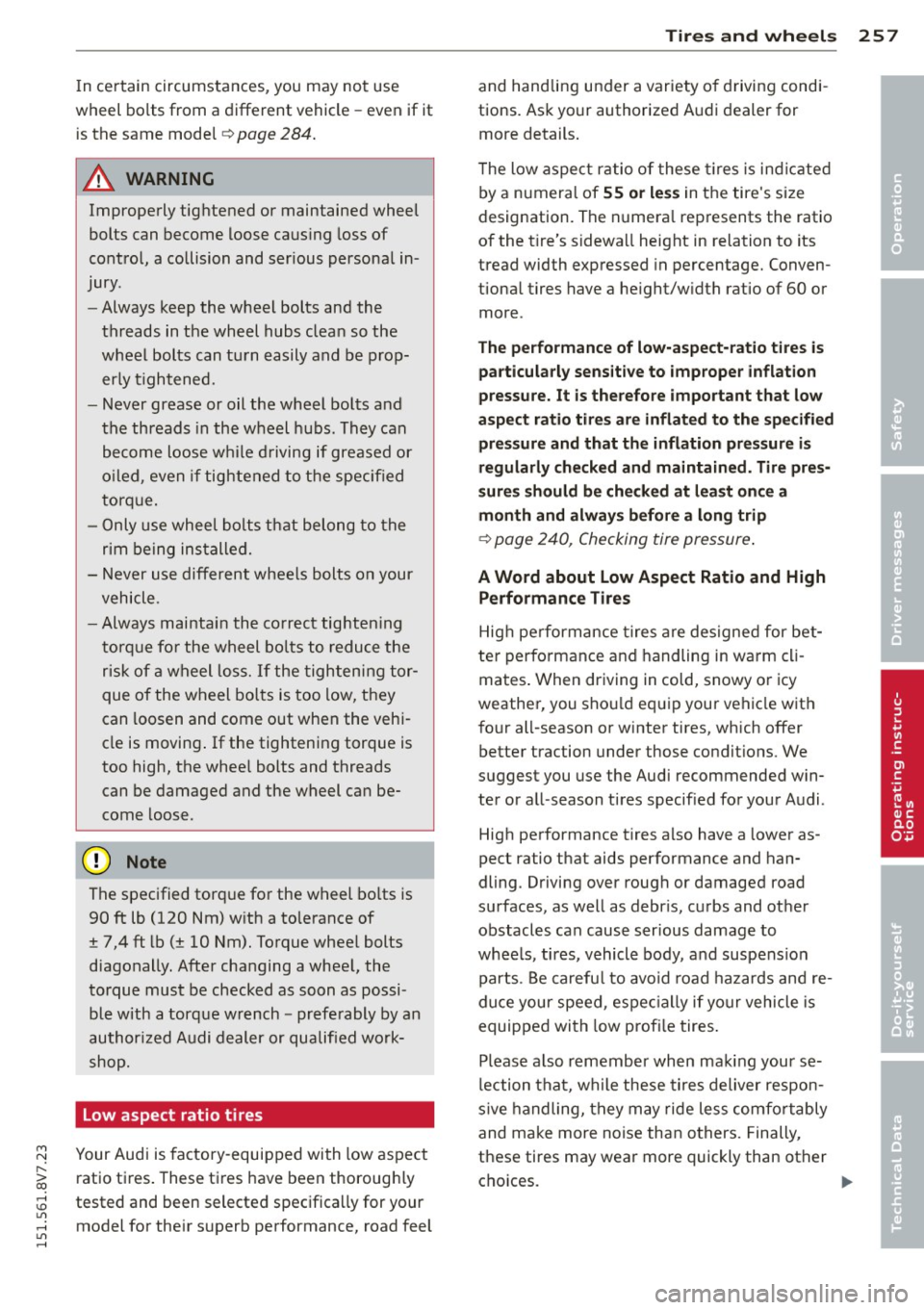
In certain circumstances, you may not use
wheel bo lts from a different vehicle -
even if it
i s the same mode l
Qpage 284.
A WARNING
Improperly tightened or maintained wheel
bolts can become loose caus ing loss of
control, a collision and ser ious personal in
jury .
- Always keep the wheel bolts and the
threads in the wheel hubs clean so the
wheel bolts can turn easily and be prop
erly t ightened.
- Never grease or oil the wheel bolts and
the threads in the wheel hubs. They can
become loose w hile d riving if greased or
o iled,
even if tightened to the spec ified
torq ue.
- Only use wheel bo lts that belong to the
rim being ins talled.
- Never use different whee ls bolts on your
vehicle .
- Always maintain the correct tightening
torque fo r the wheel bolts to reduce the
risk of a wheel loss. If the tigh teni ng tor
que of the wheel bolts is too low, they
can loosen and come out when the vehi
cle is moving . If the tightening torque is
too high, the whee l bolts and threads
can be damaged and the wheel ca n be
come loose .
(D Note
The specified torque for the wheel bo lts is
90 ft lb (120 Nm) w ith a tolerance of
± 7,4 ft lb(± 10 Nm). Torque whee l bolts
diagonally. After changing a wheel, the
torque must be checked as soon as possi
b le with a torque wrench -prefe rably by an
author ized Audi dealer or qualified wo rk
shop.
Low aspect ratio tires
Your Audi is factory-equipped with low aspect
ratio tires . These tires have been thorough ly
tested and been selected spec ifically for your
model for the ir superb performance, road feel
Tire s an d wheel s 257
and handling under a variety o f driving condi
tions. Ask your authorized A udi dealer for
more details .
T he low aspec t ratio of these tires is ind icate d
by a numera l of
55 or le ss in the tire's size
designation. The numera l represents the ratio
of the t ire's sidewa ll height in relation to its
tread width expressed in percentage.
Conven
tiona l tires have a he ight/w idth rat io of 60 or
more .
The performance of low-a spect-ratio tire s is
particularl y sens it iv e to improper inflation
pressure. It is therefore important that low
a spect ratio tir es are inflated to the specified
pre ssure and that the inflation pr essure i s
regularly checked and ma intain ed . Tire pr es
s ure s should be checked at lea st on ce a
month and alway s bef ore a long trip
~ page 240 , Checking tire pressure .
A Word about Low Aspect Ratio and High
Performance Ti res
Hig h pe rformance tires are des igned for bet
ter performance and handling in warm cli
mates. When driving in cold, snowy or icy
weather, you sho uld equ ip your vehicle w it h
four all-season or winter tires, which
offer
better traction under those condit ions. We
suggest you use the Audi recommended win
te r or a ll-season tires specified for you r Audi.
High performance tires a lso have a lower as
pect ratio that aids performance and han
dling . Driving over rough or damaged road
surfaces, as well as debr is, cu rbs and other
obstacles can cause serious damage to
whee ls, tires, vehicle body, and suspens ion
parts . B e carefu l to avo id road hazards and re
du ce your speed , espec ia lly if your vehicle is
equipped wi th low prof ile tires .
Please a lso remember when making your se
lection that, wh ile these tires deliver respon
s ive handling, t hey m ay ride less comfo rtably
and make more noise than o thers . Finally,
these tires may wear more quickly than other
c h oices.
IJJ>
•
•
•
Page 280 of 302
2 78 Emergency situations
fa ll from a lift if the re is a change in ve
h icle we ight d istribution and balance.
This might happen, for example, when h eavy components such as the engine
b lock or transmiss io n are removed .
- When removing heavy components like
these, ancho r vehicle to ho ist or add cor
r e spond ing weig hts to ma inta in the cen
te r of g ravity . Othe rwise, the vehicle
m ight tilt o r slip off th e hois t, c aus ing
s er ious pers on al injury.
(D Note
-Be awa re of th e f ollowing poin ts b efo re
li fting th e vehicle:
- The vehicle should never be lifted or
jacked up from underneath the engine oil pan, the transmission housing, the
front or rear axle or the body side members. This could lead to serious
damage .
- To avoid damage to the underbody or
chassis frame, a rubber pad must be
inserted between the floor jack and
the lift points.
- Before driving over a workshop hoist,
check that the vehicle weight does not
exceed the permissible lifting capacity
of the hoist .
- Before driving over a workshop hoist,
ensure that there is sufficient clear
ance between the hoist and low parts
of the vehicle.
Page 286 of 302
28 4 Con sum er Inf ormation
in P (Park position) and the park brake is
applied.
@) For the sake of the environment
- Changing the engine settings wi ll ad
versely affect emission levels . This is det
rimental to the environment and increas
es fue l consumption .
- Always observe env ironmental regula
tions when disposing of old engine oil,
used brake fluid, dirty engine coolant,
spent batteries or worn out tires.
- Undeployed airbag modules and preten
sioners might be classif ied as Perchlo
rate Material -spec ial handling may ap
ply, see www .dtsc .ca .gov/hazardous
waste/perch lorate . When the veh icle o r
parts of the restraint system including
airbag modules safety belts wit h preten
s ioners are scrapped, all appl icable laws
and regulations must be observed. Your
a utho rized Audi dea ler is familiar with
these requirements and we recommend
that you have your dealer perform this
serv ice for you .
Additional accessories,
modifications and
parts replacement
Additional accessories and parts
replacement
Always consult an authorized Audi dealer be
fore purchasing accessories .
Your vehicle incorporates the latest safety de
sig n features ensuring a high standard of ac
tive and passive safety .
This safety could be compromised by non-ap proved changes to the veh icle. For this reason ,
if parts have to be replaced, p lease observe
the following points when installing addition
a l accessories:
Approved Audi accessor ies and genuine Audi
parts a re ava ilable from authorized Aud i deal
e rs. These dea
lers a lso have the necessary facili
ties, tools and trained specialists to install the
parts and accessories proper ly .
A WARNING
=
Using the wrong spare parts or using non-
approved accessories can cause damage to
the veh icle and ser ious perso na l injury .
- Use on ly accessories express ly approved
by Audi and genuine Audi spare parts
- These parts and accessories have been
specia lly designed to be used on your ve
h icle.
- Never install accessor ies such as tele
phone crad les or beverage ho lders on a ir
bag covers or within the airbag deploy
ment zones . Do ing so wi ll increase the
ris k of injury if a irbags are triggered in an
accident!
- Before you check anything in the engine
compa rtment, always read and heed a ll
WARNINGS
c:::> page 214 .
(D Note
-If items other than genu ine Audi spare
parts, add-on equipment and accessory
items are used o r if repair wo rk is not
performed ac cord ing to spe cified meth
ods, this c an resu lt in seve re damage to
yo ur vehicle's eng ine and body (such as
co rrosion) and adversely affect yo ur vehi
cle's warranty.
- If emergency repairs must be performe d
elsewhere , have the vehicle examined by
an authorized Audi dealer as soon as
possible.
- The manufacturer cannot be held liable
for damage wh ich occ urs due to failure
to comply with these stipu lations.
Technical Modifications
Our guidelines must be complied with when
t echnical modifica tions are made.
Always consult an authorized Audi dealer be-
fore start ing work on any modifications. ll>-
Page 290 of 302
288 Index
Centra l indicator light .... .. .. .. .... . . 1 3
Central locking ............. ... .. .... 3 1
Ce ntr al loc king switch ..... .. .. .... .. 35
Conven ience key . . . . . . . . . . . . . . . . . . . . 34
Emergency locking ........ .. .. .. .. .. 37
Folding the exterior mirrors .. .... .. .. 36
Luggage compartment lid .. .. .. .... . . 38
p . d ower win ows ........... ... .... . . 39
Remote control key ....... .. .. .. .. .. 33
Safety central locking . . . . . . . . . . . . . . . 3 7
Setting .. ................. ...... ..
36
Certification ............. ... .. .... . 285
Changing a wheel ................... 263
Changing engine oil ........ .. .. .. .. . 219
Checking
Tire pressure ..... ......... ... .... .
240
Child restra ints
Danger of us ing c hild restra ints in the
front seat . . . . . . . . . . . . . . . . . . . . . . . .
148
Where can I get addit ional information
about child restraints and their use? ..
187
Ch ild restra int system anchors ... .. ... 183
Child safety .... ............. .. .... . 169
Convertible lo cking retractor .. .. .. ... 180
Important safety instructions for using
ch ild safety seats .............. ....
173
Important things to know when driving
with ch ildren .....................
169
Tether anchors .................... 185
Tether straps . ........... .... .... . 185
Child safety lock
Power wi ndows . . . . . . . . . . . . . . . . . . . .
38
Ch ild safety seats ............ .. .. .. . 175
Booster seats ............ .. .. .... . 178
Convertible child seats .......... .. . 176
Convertible locking retractor . . . . . . . . . 180
H ow do I properly install a child safety
seat in my vehicle? ........ .. .. .. .. .
173
Infant seats ...................... 175
Install ing .. .. ... ..... ..... .. .. .. . 180
Installing a child restraint using the
L ATCH system .... ..... ... .. .. .... .
185
LATCH system .. . ...... ... .. .. .... . 185
Lower anchorages ............ .... . 184
Mount ing and releasing the anchorage
hook .. ... ................... ... .
185
Safety instructions . . . . . . . . . . . . . . . . . 173
Unused safety belts on the rea r seat .. 17 5 Cleaning
Cleaning/removing ice from windows
.. .
Cleaning Alcantara . ... .......... .. . .
204
206
207
Cleaning artificial leather ......... .... 20 7
Cleaning carbon parts . . . . . . . . . . 206, 207
Cleaning contro ls .. ... .. ..... ... .. .. 207
Cleaning decorative parts/trim ........ 206
Cleaning displays .. ............. .... 207
Cleaning exhaust tail pipes .... ... .. .. 205
Cleaning plastic pa rts ............... . 206
Cleaning rims ... .. ... .. ..... ... .. .. 205
Cleaning seat covers ............. .. .. 20 7
Cleaning textiles . .. .......... ....... 207
Cleaning the tail lights . .. ..... ... .. .. 205
Cleaning th e wind deflector ........... 206
Climate control system
Key recogni tion . . . . . . . . . . . . . . . . . . . .
70
Climate control system (automatic)
Adjusting air vents . . . . . . . . . . . . . .
73 , 74
Air distrib ution, air vents ..... ... .. .. . 73
Audi drive select .. ... ...... .... .. .. 107
AUTO (climate control system) ....... . 72
B lower ....... .................... 73
Controls . . . . . . . . . . . . . . . . . . . . . . . . . . 72
Defrost ing the windsh ie ld .......... .. 73
Rea r window defogger .......... .... . 74
Recirc ulat ion mode ............ .... . 73
Setting the temperatu re . . . . . . . . . . . . . 73
synchronizing .... .. ... ..... ... .. .. . 73
Climate control system (manual)
Adjusting air vents ... .......... .
71, 7 4
Adjus ting the temperature ........... 71
Air distrib ution, air vents ...... .... .. . 71
B lowe r ... .... .. .. ... ..... ... .. .. . 71
Defrosting windows ..... .... ... .. .. . 71
Operation . . . . . . . . . . . . . . . . . . . . . . . . . 71
Rear window defogger .......... .. .. . 74
Recirculation mode ............ .... . 72
Clock . ... .. .... .. .. ... ..... ... .. .. . 10
Clos ing
Hood . .... .... .. ............. ....
216
Windows . .. .. .. .... ......... .... . 38
Closing/opening
by remote control . . . . . . . . . . . . . . . . . . 33
with the central locking switch ..... .. .
35
with the conven ience key . . . . . . . . . . . . . 34
with the door lock ........... .... .. . 35
Page 292 of 302
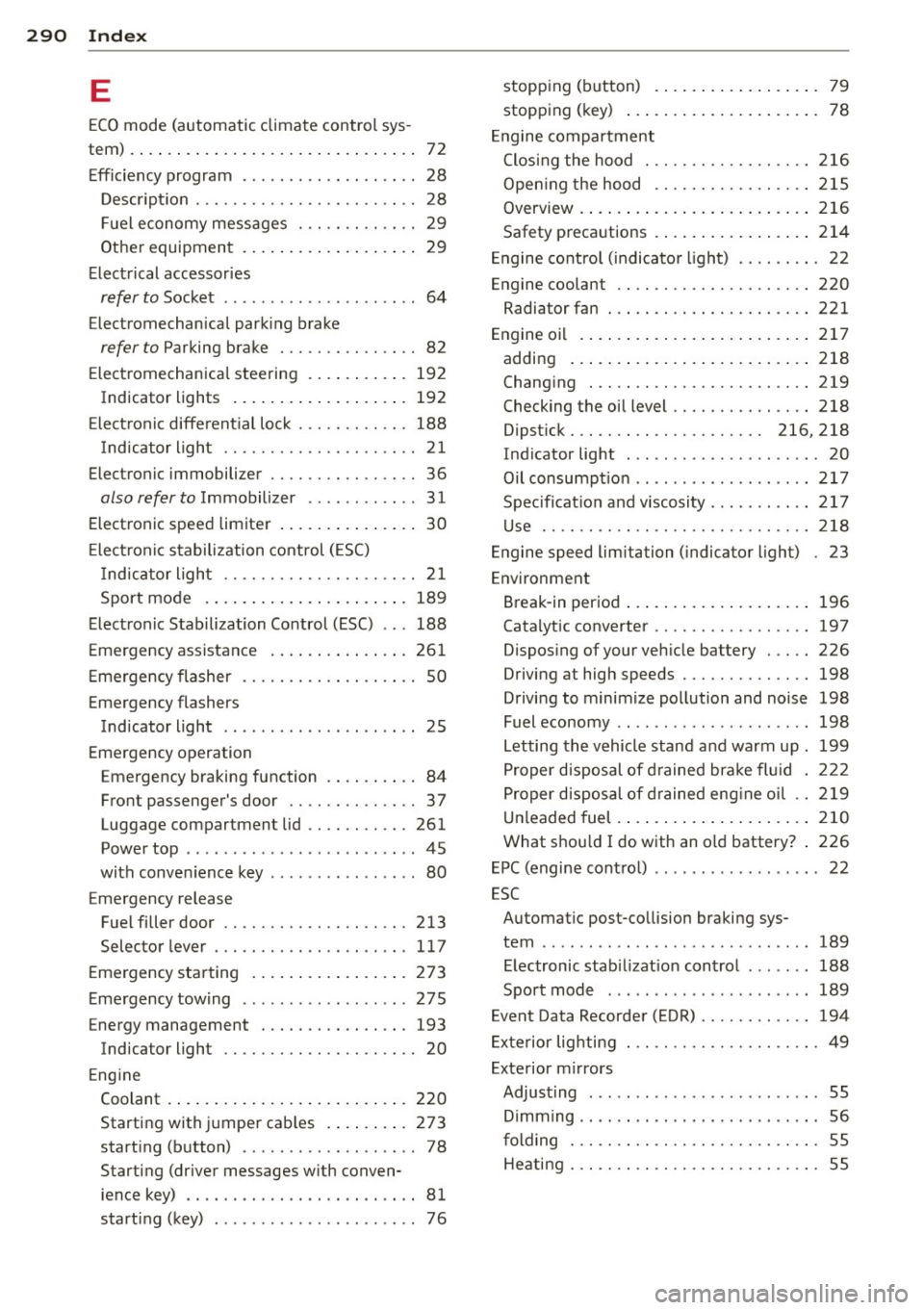
290 Index
E
ECO mode (automatic climate control sys -
tem) . ..... .. ................ ..... ..
72
Efficiency program . . . . . . . . . . . . . . . . . . . 28
Description .............. .... .. .. .. 28
Fu el economy messages . . . . . . . . . . . . . 29
Other equipment . . . . . . . . . . . . . . . . . . . 29
Electrical accessor ies
refer to Socket . . . . . . . . . . . . . . . . . . . . . 64
Electromechanical parking brake
refer to Parking brake ......... .... .. 82
Electromechanical steering ....... ... . 192
Indicator lights ................... 192
Electronic diffe rent ial loc k ... .. .. .. .. . 188
Indicator light . . . . . . . . . . . . . . . . . . . . . 21
Electronic immobilizer ...... .... .... .. 36
also refer to Immobilizer . . . . . . . . . . . . 31
Electronic speed limiter . . . . . . . . . . . . . . . 30
Electronic stabilization control (ESC)
I ndicator light . . . . . . . . . . . . . . . . . . . . .
21
Sport mode ................ ..... . 189
Electronic Stabilization Control (ESC) . . . 188
Emergency assistance ....... ... .... . 261
Emergency flasher . . . . . . . . . . . . . . . . . . . 50
Emergency flashers
Indicator light . . . . . . . . . . . . . . . . . . . . .
25
Emergency operation
Emergency braking function .... .... ..
84
Front passenger's door ...... .. .. .. . . 37
Luggage compartment lid .. .... .... . 261
Power top . . . . . . . . . . . . . . . . . . . . . . . . . 45
·th ' k
w1 convenience ey . . . . . . . . . . . . . . . . 80
Emergency release
Fuel filler door ........... .........
213
Selector lever . . . . . . . . . . . . . . . . . . . . . 117
Emergency starting ......... ... .... . 273
Emergency towing ... .. .... .. .. .. .. . 275
Energy management ....... .. .. .. .. . 193
Indicator light . . . . . . . . . . . . . . . . . . . . . 20
Engine
Coolant
.. .. ................ ..... . 220
Starting with jumper cables . ..... .. . 273
starting (button) ............. .... .. 78
Starting (driver messages with conven-
ience key) .. ........ ..... .. ........
81
start ing (key) . .. ...... .... ... .. .. .. 76
stopping (button) ............. ..... 79
stopping (key) ... ................ .. 78
Engine compartment
Closing the hood .............. .. ..
216
Open ing the hood ................. 215
Overview . ..... .. ................ . 216
Safety precautions ............. .... 214
Engine control (indicator light) ...... .. . 22
Engine coolant .. .. ............. .... 220
Radiator fan ... .. ... .......... .... 221
Engine oil . ..... .. ................ . 217
adding ....... .. ................ . 218
Changing ........................ 219
Checking the oil level ............... 218
Dipstick. .. .. .. .. ............ 216, 218
Indicator light . .. ... ......... ... .. . 20
Oil consumption .. ..... ..... ... .. .. 217
Specification and viscosity ... .. .. .. .. 217
Use ...... .... ................... 218
Engine speed limitation (indicator light) . 23
Environment
Break-in period . . . . . . . . . . . . . . . . . . . .
196
Catalytic converter ............. .. .. 197
Disposing of your vehicle battery . .. .. 226
Driving at high speeds ............ .. 198
Driving to minimize pollution and noise 198
Fuel economy . ... ....... ...... .. .. 198
Letting the vehicle stand and warm up. 199
Proper disposal of drained brake fluid . 222
Proper disposal of drained eng ine oil .. 219
Unleaded fuel .... ................ . 210
What should I do with an o ld battery? . 226
EPC (engine contro l) . . . . . . . . . . . . . . . . . . 22
ESC
Automatic post-collision braking sys-
tem .. ... ... .. .. .. ...... ....... ..
189
Electronic stabilizat ion control . .. .. .. 188
Sport mode . .. .. ... ....... ... .. .. 189
Event Data Recorder (EDR) . . . . . . . . . . . . 194
Exterior lighting . .. ... .......... ..... 49
Exterior m irrors
Adjusting . . . . . . . . . . . . . . . . . . . . . . . . .
55
D. . 1mming .. .. ...... .. ... ... ... ..... 56
folding ... ................... ..... 55
Heating . .. ................... .... . 55