change time AUDI A3 CABRIOLET 2016 User Guide
[x] Cancel search | Manufacturer: AUDI, Model Year: 2016, Model line: A3 CABRIOLET, Model: AUDI A3 CABRIOLET 2016Pages: 272, PDF Size: 67.88 MB
Page 158 of 272
Airbag syste m
-If, in exce ptional circumstances, you must
install a forward-faci ng chi ld restraint on
t h e front passenger seat, always m ove the
seat into its rearmost pos ition in the s eat's
f ore an d aft adjustm ent ra nge, as far away
from th e airbag as pos sibl e. Th e backrest
mus t be adjusted to an up right posit ion.
Make s ure that the
PAS SENGER AIR BAG
OFF
light comes on and stays on all the time
whenever the ignition is switched on.
.&_ WARNING
- If the PASSENGER AIR BAG OFF light does
not go out when an ad ult is sitting on the
front passenger seat after taking the steps
described above, make sure the adu lt is
properly seated and restrained at one of the
rear seat ing positions .
- Have the airbag system inspected by your
Audi dealer before transporting anyone on
the front passenger seat .
(D Tips
If the capacitive passenger detection system
determines that the front passenger seat is
empty, the frontal airbag on the passenger
side will be turned off, and the
PASSENGER
AIR BAG OFF
l ight will stay on.
Repair , care and disposal of the airbags
Pa rts of t he a irbag system are installed at many
d ifferent places on your Aud i. Insta lling, remov
ing, servic ing o r repa iring a part in an area of the
veh icle can damage a part of an airbag system
and p revent that system from working properly
in a co llision .
There are some important things you have to
know to make sure that the effectiveness of the
system wi ll not be impaired and that discarded
components do not cause injury or poll ute the
env ironment.
.&_ WARNING
Improper care, serv icing and repair proce
dures can increase the r isk of personal injury
and death by preventing an airbag from de-
158
-
p loying when needed or deploy ing an a irbag
unexpectedly:
- Never cover, obstruct, or change the steer
ing wheel horn pad or airbag cover or the in
strument panel or modify them in any way.
- Never attach any objects s uch as c up ho lders
or telephone mountings to the surfaces cov
ering the a irbag un its .
- For cleaning the horn pad or instrument
panel, use only a soft, dry cloth or one mois
tened w ith plain water. Solvents or cleaners
could damage the airbag cover or change
the st iffness o r streng th of the material so
that the airbag cannot deploy and p rotect
prope rly.
- Never repair, ad just, or change any parts of
the airbag system.
- All work on the steering wheel, inst rument
panel, front seats or e lectr ica l system ( in
cluding the installation of a udio eq uipment,
cellular tele phones and C B radios, etc.)
m ust be perfo rmed by a qu alified techn ician
who has the training and specia l equipment
necessary.
- For any work on the airbag system, we
strong ly recommend that you see your au
thorized A udi dealer or qualified wo rkshop.
- Never modify the front b umper or parts of
the vehicle body.
- Always make sure that the side a irbag can
inflate w ithout interference:
- Never install seat covers or replacement
upholstery ove r the front seatbacks that
have not been specifically approved by
A udi .
- Never use addi tional seat c ushions that
cover the areas where the side airbags in
flate .
- Damage to the orig inal seat cove rs or to
the seam in the area of the s ide airbag
module mus t always be repaired immedi
ate ly by an autho riz e d Au di dealer .
- The a irbag sys tem can deploy only once. Af
ter an airbag has been deployed, i t m ust be
replaced with new replacement parts de
signed and approved espec ia lly for your
Aud i model version . Replacement of com
plete airbag systems or airbag components
Page 167 of 272
<( co .... N r--N .... 0 r--> co
rear seating position and have the airbag
system inspected by your authorized Audi
dealer.
- Always buckle the child seat firmly in
place even if a child is not sitting in it. A
loose child seat can fly around during a
sudden stop or in a collision.
- Always read and heed all WARNINGS
whenever using a child restraint in a vehi
cle
c!;> page 135, Safety belts, c!;> page 143,
Airbag system
and c!;> page 165, Impor
tant information.
{D) Tips
Always replace child restraints that were in
stalled in a vehicle dur ing a crash. Damage to
a child restraint that is not visible could cause
it to fail in another collision situation.
Advanced front airbag system and children
Your vehicle is equipped with a front "Advanced
Ai rbag System" in compliance with United States
F edera l Motor Vehicle Safety Standard ( FMVSS)
208, as well as Canada Motor Vehicle Safety
Standard (CMVSS) 208 as applicable at the time
your veh icle was manufactured.
The Advanced Airbag system in your vehicle has
been certified to meet the "low-risk" require
ments for 3- and 6-year old children on the pas
senger side and small adults on the driver side.
The low risk deployment criteria are intended to
reduce the risk of injury through interaction with
the airbag that can occur, for example, by being
too close to the steering wheel and instrument
panel when the airbag inflates. In addition, the
sys tem has been certified to comply with the
"suppression" requirements of the Safety Stand
ard, to turn off the front airbag for infants up to 12 months who are restrained on the front pas
senger seat in child restraints that are listed in
the Standard.
Even though your vehicle is equipped with an Ad
vanced Airbag system, all children, especially those 12 years and younger, should always r ide
in the back seat properly restrained for their age
and size . The airbag on the passenger side makes
Child safety
the front seat a potentia lly dangerous p lace for a
child to ride. The front seat is not the safest place
for a ch ild in a forward-facing child safety seat . It
can be a very dangerous place for an infant or a
larger ch ild in a rearward-facing seat.
The vehicle's Advanced Airbag System has a ca
pacit ive passenger detection system in the front
passenger seat cushion that can detect the pres
ence of a baby or a child in a child restraint sys
tem on this seat.
The capacitive passenger detection system regis
ters the changes that result in an electrical field
when a child, a child restraint, and a baby blanket are on the front passenger seat . The change in
the measured capacitance due to the presence of
a chi ld, a child restraint, and a baby blanket on
the front passenger seat is related to the child
restraint system resting on the seat. The meas
ur ed capacitance of a child restra int system var
ies depending on the type of system and specific
make and mode l.
T he elect rical capacitance of the various types,
makes, and models of child restraints specif ied
by the U.S .National Highway Traffic Safety Ad
ministration (NHTSA) in the relevant safety
standard are stored in the Advanced Airbag Sys
tem control unit together with the capacitances
typ ical of infants and a 1-year old child. When a
child restraint is used on the front passenger
seat w it h a typical 1 year-old infant, the Ad
vanced Airbag System compares the capacitance
measured by the capacitive passenge r detection
system with the data stored in the electronic con
trol unit.
Child restraints and Advanced front airbag
system
Regardless of the ch ild restraint that you use,
make sure that it has been certified to meet Safe
ty Standards and has been cert ified by its manu
facturer for use w ith an airbag . Always be sure
that the child restraint is properly installed at
one of the rear seating positions. If in exception
al circumstances you must use it on the front
passenger seat, carefully read all of the informa-
tion on child safety and Advanced Airbags and .,.
167
Page 184 of 272
Check ing and F illing
Checking and Filling
Gasoline fuel
Gasoline grade
A pp lies to: ve hicles w ith gaso li ne engines
The correct gasoline grade is stated on the inside
of the fuel filler door .
The vehicle is equipped with a catalytic converter
and must only be driven w ith
unlead ed ga soli ne.
Aud i recommends using TOP TIER Detergent Gas
oline. Additional information on TOP TIER Deter
gent Gasoline can be found on the official web
site (www .toptiergas.com) .
The individua l gasoline grades are differentiated
by
oct ane rating s. This value is given with (R +M)/
2 equating to AK I or in RON.
The fo llowing headings match the corresponding
sticker in the fuel fi ller door .
UNLEADED FUEL ONLY MIN. (R+M) /2 87
R egula r/ MIN. RON
91 Regular
Use regu lar gasoline with minim um 87 AKI/
9 1 RON ~@ .
The max imum engine power is only reached if
p rem ium gasol ine 91 AKI/ 95 RON is used.
UNLEADED FUEL ONLY PREMIUM MIN . (R
+M )/2
91 / SUPER MIN. RON 95
Using premium gasoline with m inim um 91 AKI/
95 RON is recommended.
If premium gasoline is not available, you can also
use regula r gasoline 87 AKI/ 91 RON . However
this does reduce the engine powe r slight ly.
CD Note
- Fil li ng the tank just one time with leaded
fuel or other meta llic additives will cause
permanent deteriorat ion to the cata lyt ic
conve rter func tion.
- When gasoline with an octane rati ng that is
too low is used , h igh speeds o r heavy engine
l oad can lead to engi ne dam age.
184
(D Tips
The vehicle can be fi lled with fue l that has a
h igher octane rating than what is requi red by
the eng ine.
Blended gasoline
App lies to : vehicles wit h gasol ine engi ne
U se of g asoline cont aining alcohol or MTBE
(m ethyl tertiary butyl ether )
You may use unleaded gasoline blended with al
cohol o r M TBE (commonly referred to as oxygen
ates) if the blended m ixt ure meets the fo llow ing
c rit eria:
Blend of ga soline methanol (wood alcohol or
methyl alcohol)
- Anti-knock index must be 87 AKI or h igher.
- Blend must contain no more than 3% metha-
nol.
- Blend must contain more than 2% co-solvents.
Blend of ga soline and ethanol (grain alcoh ol or
ethyl alcohol)
- Anti-knoc k index must be 87 A KI or h igher.
- Blend must not conta in more than 15% etha-
nol.
Blend of gasoline and MTBE
- Anti -knock index must be 87 AKI or higher.
- Blend mus t contain no t more than 15% MTBE .
Seasonall y adjusted ga soline
Many gasoline grades are blended to perform es
pecially well for winter or summer dr iv ing . Du r
i ng seasonal change-over, we suggest that you
fill up at busy gas stat ions where the seaso nal
adjustment is mo re l ikely to be made in t ime .
CD Note
-Methanol fuels which do not meet these re
quirements may cause corrosion and dam
age to plasti c and rubber components in the
fue l system.
- Do not use fue ls that fa il to meet the speci
fied cr iteria in th is chapter.
...
Page 191 of 272
<( co ..... N
" N ..... 0 r--. > 00
Checking and Filling
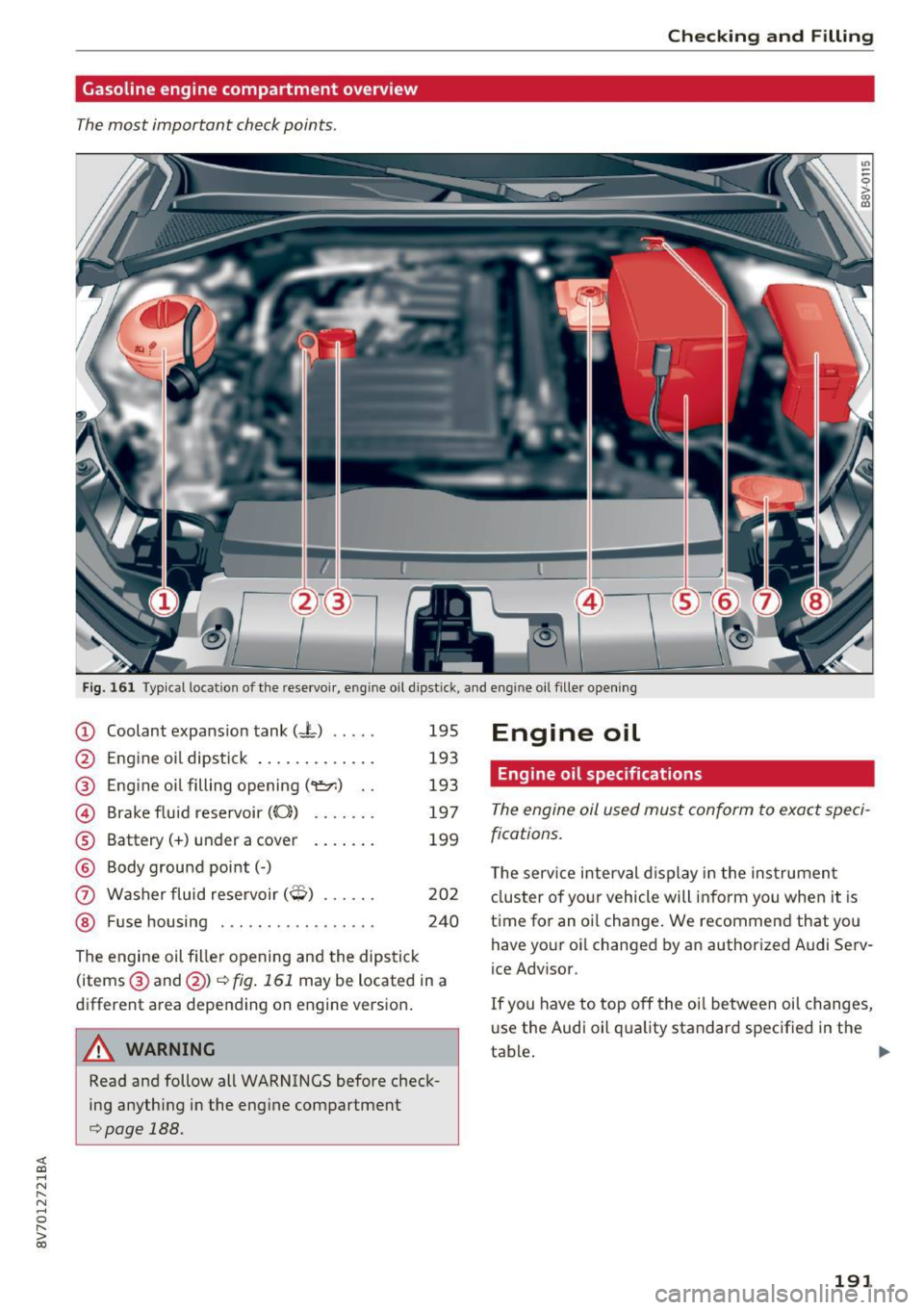
Gasoline engine compartment overview
The most important check points .
Fig. 161 Typical location of the rese rvoir , engine oil dipst ick, and engine oil filler opening
(D Coolant expansion tank (-L) .....
@
®
©
®
©
(J)
®
Engine oil dipstick ............ .
Engine oil filling opening
('er.) . .
Brake fluid reservoir (0))
Battery(+) under a cover
Body ground point(-)
Washer fluid reservoir
(O) ..... .
Fuse housing . .... .... ....... .
195
193
193
197
199
202
240
The engine oil filler opening and the dipstick
(items ® and @)
¢ fig. 161 may be located in a
different area depending on engine version.
A WARNING
Read and follow all WARNINGS before check
ing anything in the engine compartment
¢page 188.
Engine oil
Engine oil specifications
The engine oil used must conform to exact speci
fications.
The service interval d isplay in the instrument
cluster of your vehicle will inform you when it is
time for an oil change. We recommend that you
have your oil changed by an authorized Audi Serv
ice Advisor.
If you have to top off the oil between oil changes,
us e the Audi oil quality standard specified in the
tab~ .
~
191
Page 194 of 272
Check ing and F illing
- After adding engine oil, the o il level must
not be above the marking@~
fig. 162, be
cause this increases the risk of cata lytic con
verter and/or eng ine damage. Do not start
the engine. Contact an authorized Audi
dealer or authorized Audi Service Fac ility to
have excess engine oil extracted if necessa
r y .
- Do not mix any additional lubricants into
the engine o il. Damage cause by such addi
tives is not cove red by the war ranty .
@ For the sake of the environment
-Engine o il should never enter the sewe r sys
tem or come into contact with the ground
under any circumsta nces.
- Pay attention to legal requirements when
d ispos ing of empty oil containe rs .
(D Tips
The engine oil consumption may be up to 0.5
quart/600 m iles (0.5 liter/1,000 km), de
pending on d rivi ng s tyle and operating condi
tions. Consumption may be higher du ring the
fi rst 3,00 0 miles (5, 000 km). Be cause of this,
t he engine oil leve l m ust be chec ke d r egular
ly. It wo uld be best to check each time you re
fue l your vehicle and before long drives .
Changing the engine oil
We recommend that hove your oil changed by an
authorized Audi dealer or a qualified service sta
tion .
Before you check a nyth ing in the eng ine compart
men t,
alway s read and heed all WARNINGS
~ page 188.
The engine oil must be changed accord ing to the
i n tervals specified in your Warran ty
& Mai nte
nance booklet . This is very importan t because the
lubricating p roperties of o il diminish gradually
during normal vehicle use.
Under some c irc ums tances the eng ine o il sho uld
be changed more frequently. Change oil more o f
ten if yo u drive most ly short distances, operate
the vehicle in dusty areas or under predominantly
stop-and-go traffic cond it ions, or have your vehi-
194
de where temperatures remain be low free zin g
for extended periods.
Dete rge nt additives in the oi l will make fres h oil
l ook dark a fter the engine has been r unning for a
short time . This is normal and is no t a reason to
change the oi l more often than recommende d.
Bec ause of t he pr oblem of prope r dispos al, along
with t he speci al tools and ne ce ssary expertise re
quired, we strongly recommend that yo u have
your oi l changed by an authorized
Audi dealer or
a q ua lified serv ice station .
If you choo se to change your oil your self , please
note the fo llowing important information:
_& WARNING
To reduce the risk of persona l injury if you
must change the eng ine oil in you r vehicle
yourself:
- Wear eye protect ion .
- To reduce the r isk o f bu rns from hot engine
oil, let t he engine cool down to the touch.
-
- When removin g the oil dr ain plug with yo ur
fingers, stay as far away as possible. Always
keep your forearm pa rallel to the gro und to
he lp prevent hot oil from running down your
arm.
- Drain the oil into a conta iner designed fo r
this purpose, one la rge enough to hold at
least the tota l amount of oil in your engine.
- Engine oil is poisonous. Keep it well out of
the reach of children .
- Continuous contact wit h used engine o il is
ha rmf ul to your skin . Always protect your
skin by washing oil off thoroughly with soap
and water .
{[) Note
Neve r mix oil additives with yo ur engine oil.
These additives can damage your engine and
adverse ly affect you r Audi Limited New Vehi
cle Warranty .
@) For the sake of the environment
-Be fore chang ing your oi l, first make sure
you know where you can p roperly dispose of
the used oil.
Ill-
Page 197 of 272
<( co ..... N
" N ..... 0 r--. > 00
Brake fluid
Checking brake fluid level
Fig. 165 Engine compartment : cover on t he brake fluid
reservoir (examp le)
"' N N
~ .,
Before you check anything in the engine compart
ment,
always read and heed all WARNINGS
¢page 188, Working in the engine compart
ment.
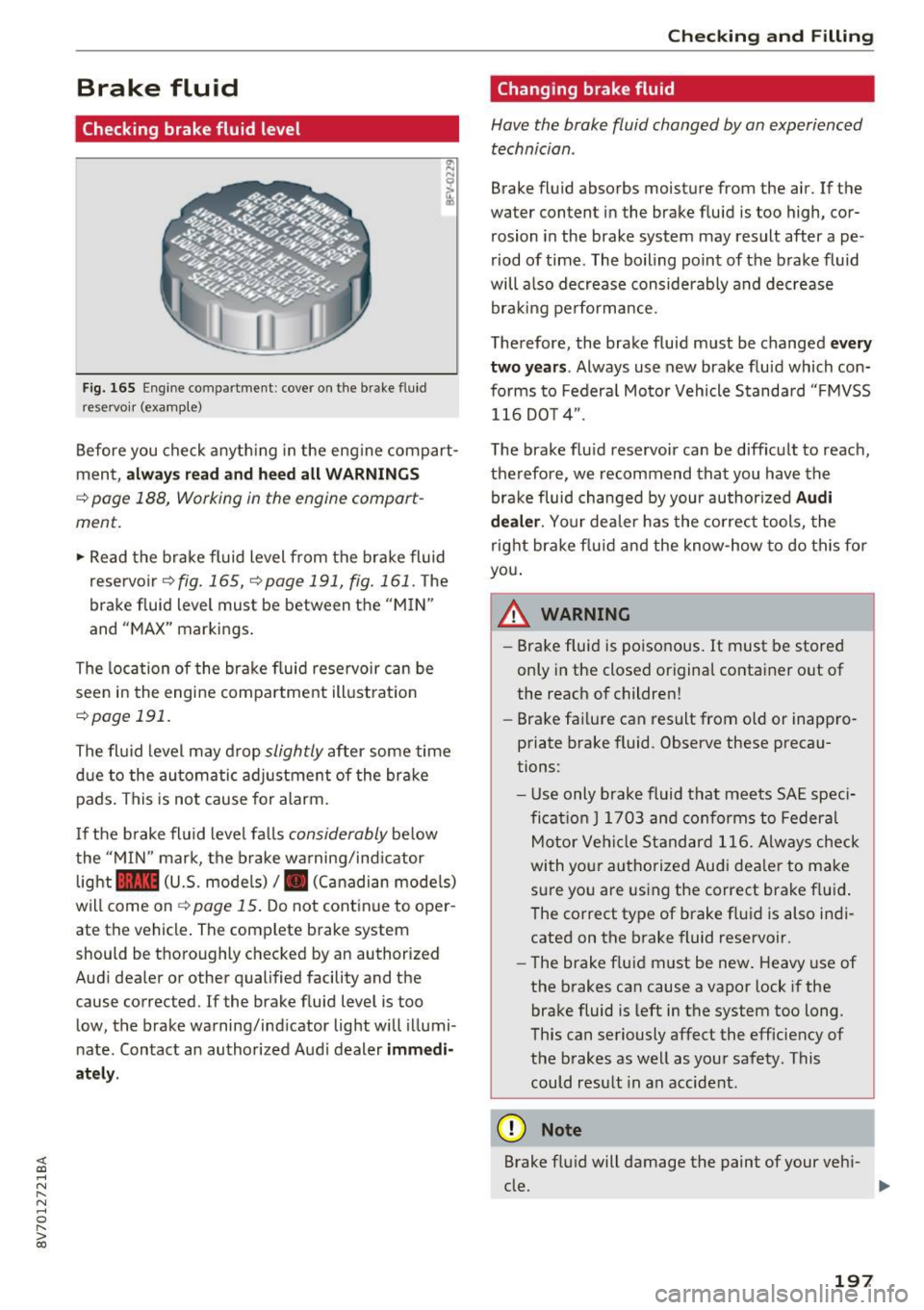
.,. Read the brake fluid level from the brake fluid
reservoir
~fig. 165, ¢page 191, fig. 161 . The
brake fluid level must be between the "MIN"
and "MAX" markings .
The location of the brake fluid reservoir can be
seen in the engine compartment illustration
¢page 191.
The fluid level may drop slightly after some time
due to the automatic adjustment of the brake
pads . This is not cause for alarm.
I f the brake fluid level falls
considerably below
the "MIN" mark, the brake warning/indicator
light
1111 (U.S. mode ls)/ . (Canadian models)
will come on¢
page 15. Do not continue to oper
ate the vehicle . The complete brake system
should be thoroughly checked by an authorized
Audi dealer or other qualified facility and the
cause corrected. If the brake fluid level is too
low, the brake warning/indicator light will illumi
nate. Contact an authorized Audi dealer
immedi
ately.
Checking and Filling
Changing brake fluid
Have the brake fluid changed by an experienced
technician.
Brake fluid absorbs moisture from the air. If the
water content in the brake fluid is too high, cor
rosion in the brake system may result after ape
riod of time . The boiling point of the brake fluid
will also decrease considerably and decrease braking performance.
Therefore, the brake fluid must be changed
every
two years. Always use new brake fluid which con
forms to Federal Motor Vehicle Standard "FMVSS
116 DO T 4" .
The brake fluid reservoir can be difficult to reach,
therefore, we recommend that you have the
brake fluid changed by your author ized
Audi
dealer. Your dealer has the correct tools, the
right brake fluid and the know-how to do this for
you.
A WARNING
- Brake fluid is poisonous. It must be stored
only in the closed original container out of
the reach of children!
- Brake failure can result from old or inappro
priate brake fluid . Observe these precau
tions:
- Use only brake fluid that meets SAE speci
fication
J 1703 and conforms to Federal
Motor Vehicle Standard 116. Always check
with your authorized Audi dealer to make
sure you are using the correct brake fluid .
The correct type of brake fluid is also indi
cated on the brake fluid reservoir.
- The brake fluid must be new. Heavy use of
the brakes can cause a vapor lock if the
brake fluid is left in the system too long.
This can seriously affect the efficiency of
the brakes as well as your safety. This
could result in an accident.
(D Note
Brake fluid will damage the paint of your vehi-
cle. ..,.
197
Page 198 of 272
Check ing and F illing
@ For the sake of the environment
Because of the prob lem of proper disposal of
brake fluid as we ll as the special tools re
quired and the necessary expertise, we rec
ommend that you have the b rake fluid
changed by your author ized Audi dealer .
Battery ( 12 V)
General information
All work on the battery requires expert knowl
edge .
Read and follow the WARNINGS
before check
i n g a nyth ing in the engine compartment
c::> page 188, Working in the engine compart
ment.
The batte ry in you r Aud i does not need any main
tena nce unde r
normal operating cond itions. A udi
re commends hav ing the e lectro lyte level check
by an au thor ized A udi dealer or au thori ze d Audi
Serv ice Facility when there a re
high outs ide tem
peratures or when driving a ll day. The elect rolyte
level sho uld a lso be checked each time the bat
tery is charged
c::> page 200.
Have the battery checked when you bring your ve
hicle in for an inspection. It is a good idea to re
p lace the battery if it is more than 5 years old .
T he batte ry is located in the eng ine compar tment
and is practically
maintenance-free .
Disconnecting the battery terminals
The battery shou ld not be d isconnected. Severa l
veh icle functions (power w indows, for example)
w ill be lost w hen the b attery is disconne cted. The
f u nctions mus t be reprog rammed after connect
in g the battery. To avo id th is, the battery shou ld
only be disconn ecte d from the vehicle e lectrica l
system when it is abso lutely necessary.
T o reprogram the func tions, proceed as follows:
198
Function Reprogramming
Power window one-c::> page 35, Correcting
touch up/down func-power window malfunc-
tion tions
Remote control key o r If the vehicle does no t
Convenience key react to the key, it must
be synchronized
c::> page29
Dig ita l cl ock c::>page 10
ESC indicator light The ind icator light goes
o ut after driving a few
meters
Not running the vehicle for long period s of
time
If you do not drive your vehicle for severa l days o r
weeks, electrical components are gradually re d u ced or switched off . This reduces energy con
s u mp tion and mai ntain s the vehicle's ability to
st art over a long perio d of time
c::> page 1 21.
Some conven ien ce f unctions, such as inter ior
li ght ing o r power seats* may not wor k. T hese
convenience functions will be availab le aga in
once you sw itch the ignition on and start the en
gine.
Winter operation
D ur ing the winte r mon ths, it is common for the
batte ry capac ity to decrease as the temperatures
become lower . This is because more power is
needed to start the vehicle and components such
as the headlights and the rear window defogger
a re used more freque ntly .
Avoid using power unnecessa rily, espec ia lly in
c ity dr iving o r on short t rips. Have your author
i z ed Audi dealer or author iz ed Audi Se rvice Facili
ty check the battery capacity be fore the start of
winter
c::> page 200 . A well -cha rged battery will
not only reduce sta rting prob lems in cold wea th
e r, bu t it will a lso l ast longer.
.&_ WARNING
- W ork on the b attery requires e xper t knowl
e d ge. Con tact an a uthor ized Audi dealer or
author ized Audi Se rvice Facility for info rma
tion rega rding the vehicle batte ry. There is a
-
ris k for chemical burns or e xplosions . ..,.
Page 200 of 272
Checking and Filling
-Before reconnecting the battery, make sure
all electrical consumers are switched off.
Reconnect the posit ive cab le first and then
the negative cable. Never interchange the cables -th is could start a fire!
- Never charge a frozen or a thawed-out bat
tery. It could explode! If a battery has fro
zen, then it must be rep laced . A discharged
batte ry can freeze over at 32 °F (0 °C).
- Make sure the vent hose is always attached
to the opening on the side of the battery.
- Never use batteries which are damaged.
The re is the danger of an explos ion! Always
r e place a damaged batte ry .
A WARNING
California Proposit ion 65 Wa rning:
- Battery posts, termina ls and re lated acces
sories contai n lead and lead compounds,
c hem icals known to the State of Califo rnia
to ca use c ancer and rep rodu ctive p roblems.
Wash hands after h andling.
(D Note
- Do no t disconnect the veh icle bat tery when
the ig nition is o n or when the engine is run
n ing, othe rw ise, you will damage elec tronic
componen ts in the ele ct ric al sys tem.
- If you r vehicle is goi ng to stand for a l ong
period of time wi thout be ing driven, p rotect
the battery from "freezing", otherwise it
will be damaged and will then have to be re placed .
200
Battery charging
Starting the engine requires a well charged bat
tery .
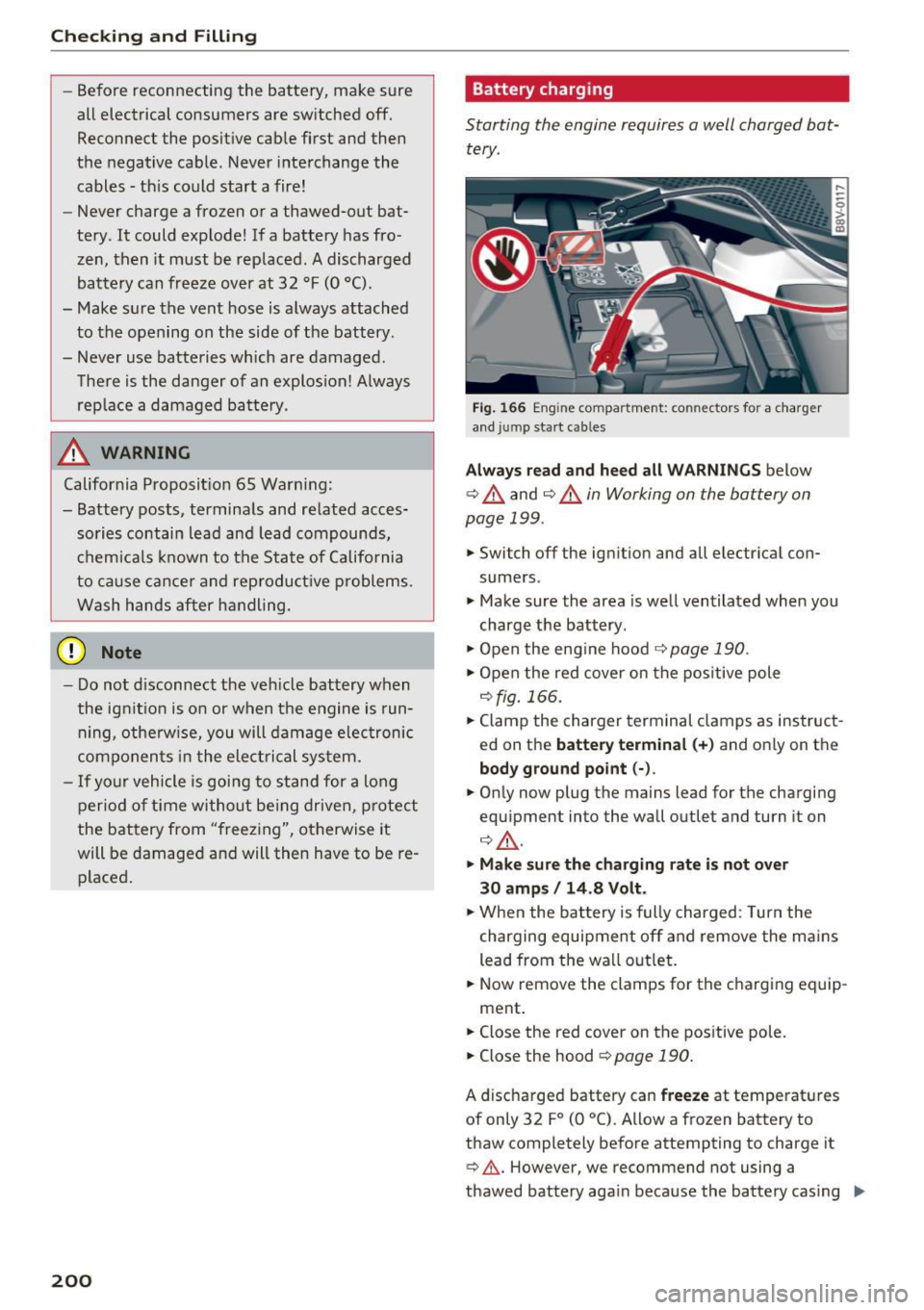
Fig. 166 Eng ine compartment: connectors for a c harge r
a n d jum p start cab les
Alway s re ad and h eed a ll WARN IN GS below
c:> ,& and c:> .& in Working on the battery on
page 199 .
.,. Switch off the ignit ion and all electrical con
sumers .
.,. Make sure the area is we ll ventilated when you
charge the battery .
.,. Open the eng ine hood
i=!.) page 190 .
.,. Open the red cover on the pos itive pole
i=!,) fig. 166.
.,. Clamp the charger terminal clamps as instruct
ed on the
battery terminal (+ ) and only on the
body ground point (· ).
.,. On ly now plug the mains lead for the charging
equipment into the wall outlet and turn it on
i=!,) ,& .
.,. M ake sure th e charg ing rate i s not o ver
30 amp s/ 14.8 V olt .
.,. When the bat tery is fully charged : Turn the
charging equipment off and remove the mains
lead from the wall outlet .
.,. Now remove the clamps for the charging equip -
ment .
.,. Close the red cover on the positive pole .
.,. Close the hood
q page 190.
A discharged battery can freeze at temperatures
of only 32 F
0 (0 °C). Allow a frozen battery to
thaw completely before attempting to charge it
c:> .&.. However, we recommend not using a
thawed battery aga in because the battery casing .,..
Page 202 of 272
Check ing and F illing
with all environmental regulations. D isposing
of vehicle batteries improperly is very danger
ous to the env ironment .
Windshield washer
system
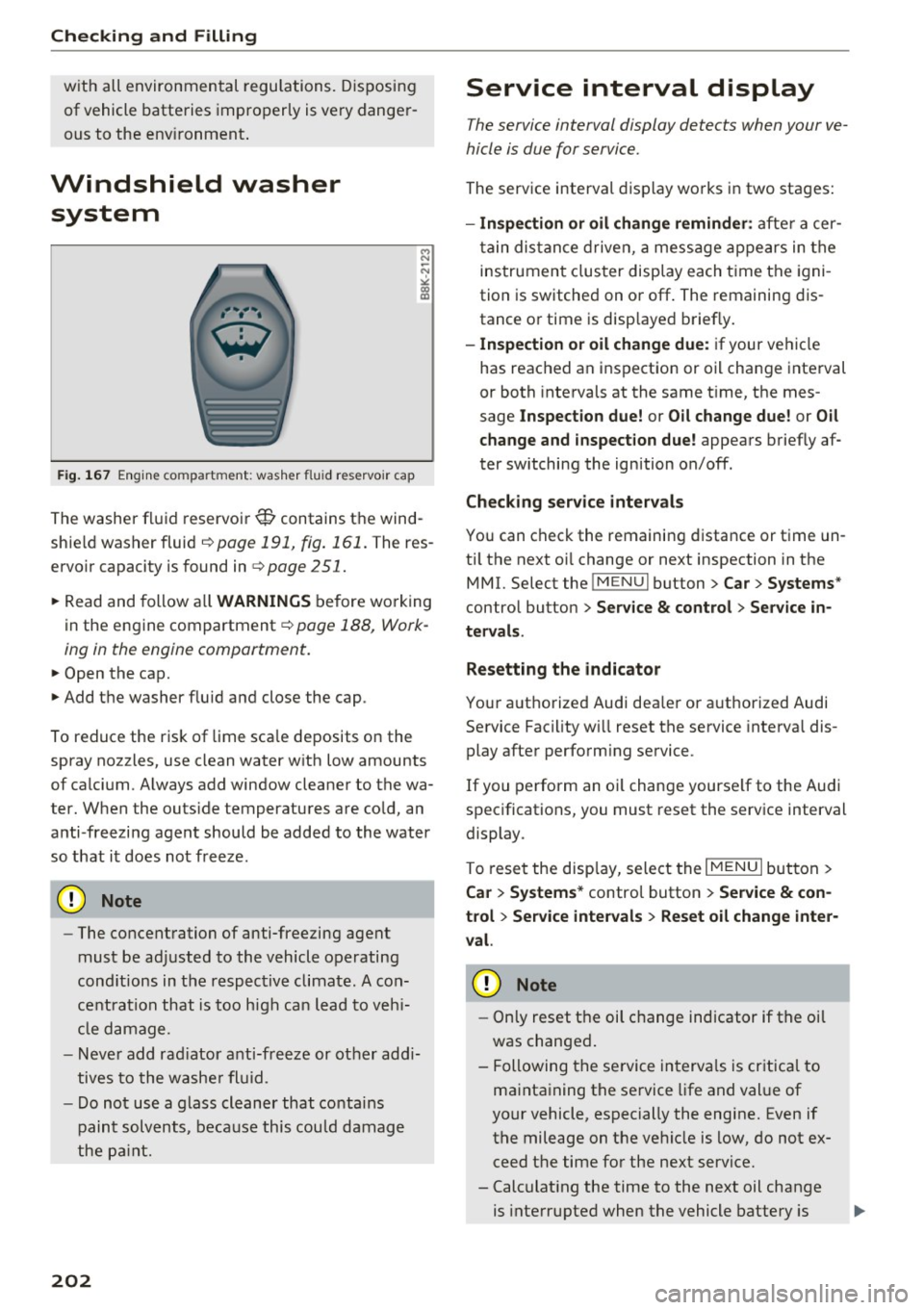
F ig. 16 7 Engin e co mpartment : washer fluid reservoir cap
"' N
-N
" 0:, lD
The washer flu id reservoir§ contains the wind
shie ld wash er fluid
¢ page 191, fig. 161. The res
ervoir capacity is found in
9 page 251.
.. Read and follow a ll WARNINGS before wo rking
in the engine compartment ¢
page 188, Work
ing in the engine compartment.
.. Open the cap .
.. Add the washer fluid and close the cap .
To reduce the risk of lime sca le deposits on the
spray nozzles, use clean water w ith low amounts
of calc ium . A lways add window cleaner to the wa
t er. When the outs ide temperatures are co ld, an
anti-freezing agent should be added to the water
so that it does not freeze .
(D Note
-The concentration of anti-freezing agent
must be ad justed to the vehicle operating
cond itions in the respect ive climate . A con
ce ntration that is too high can lead to veh i
cle damage.
- Neve r add rad iator ant i-freeze or ot her addi
tives to the washe r fl uid .
- Do not use a glass cleaner that conta ins
paint solvents, beca use this cou ld damage
the pa int.
202
Service interval display
T he service interval display detects when your ve
hicle is due for service.
The service interval display works in two stages :
-Inspe cti on or oil change reminder: afte r a cer-
tain dis tan ce dr ive n, a message appears in the
instrument cluster display each t ime the igni
tion is switched on or off . The remaining dis
tance or tim e is disp layed briefly.
- Inspection or oil change due : if your vehicl e
has reached an inspection or oil change inte rval
or both intervals at the same t ime, the mes
sage
Inspection due! or Oil change due! or Oil
change and inspection d ue!
appears briefly af
ter switching the ignition on/off.
Check ing ser vice inter vals
You can check the remaining d istance or t ime un
ti l the next oi l change or next inspection in the
MMI. Select the
i MENU I button> Car> Systems *
control button > Ser vice & control > Service in
tervals .
Resetting the indic ator
Your a uthorized Audi dea ler or authorized Audi
Service Facility w ill reset the service interva l dis
play after perform ing service .
If you perform an o il change yourse lf to the Audi
specifications, you must reset the service interval
display .
To rese t the disp lay, select the
I MENU I but ton>
Car > Systems * control button > Service & con
t rol > Service inter vals > Re set oil change inter ·
val.
(D Note
- Only reset the oil c hange indicator if the oi l
was changed .
- Following the service in terva ls is cr itica l to
mainta ining the se rvice life and val ue of
your vehicle, especially the engine. Even if
the mileage on the ve hicle is low, do not ex
ceed the time for the next service.
- Calculat ing the time to the next oil change
is inte rrupted when the vehicle battery is
Page 209 of 272

<( a:, ... N .... N ... 0
s: a:,
"XL" "xl" "EXTRA LOAD" or "RF" ' ' '
on the sidewall.
Rim
means a metal support for a tire
or a tire and tube assembly upon
which the tire beads are seated .
Rim diameter
means nominal diameter of the
bead seat. If you change your
wheel size, you will have to pur
chase new tires to match the new
rim diameter .
Rim size designat ion
means rim diameter and width.
Rim width
means nominal distance between
rim flanges.
Sidewall
means that portion of a tire be
tween the tread and bead.
Speed rating (letter code )
means the speed at wh ich a t ire is
designed to be driven for extend
ed periods of time . The ratings
range from 93 mph (150 km/h)
to 186 mph (298 km/h)
¢ table
on page 205.
You may not find
this information on all tires be
cause it is not required by law .
Tires and wheels
The speed rating letter code,
where applicable, is molded on
the tire sidewall and indicates the maximum permissible road
speeds
¢ & in Winter tires on
page 219 .
Tire pressure monitoring
system*
means a system that detects
when one or more of a vehicle's
tires are underinflated and illum i
nates a low tire pressure warning
telltale .
Tread
means that portion of a tire that
comes into contact with the road.
Tread separation
means pulling away of the tread
from the tire carcass .
Treadwear indicators (TWI)
means the projections within the
principal grooves designed to give
a visual indication of t he degrees
of wear of the tread . See
¢ page 213, Treadwear indicator
for more information on measur-
ing tire wear. .,.
209