weight AUDI A3 SEDAN 2018 User Guide
[x] Cancel search | Manufacturer: AUDI, Model Year: 2018, Model line: A3 SEDAN, Model: AUDI A3 SEDAN 2018Pages: 404, PDF Size: 62.3 MB
Page 277 of 404
u. 00 .-< N l' N .-< 0 N > 00
The front Advanced Airbag System for the front
seat occupants is not a substitute for your safety
be lts. Rather, it is part of the overa ll occupant re
stra int system in your vehicle. A lways remember
that the airbag system can on ly help to protect
you, if you are sitting upr ight, wear ing your safe
ty belt and wear ing it properly . This is why you
and your passengers must always be prope rly re
stra ined, not just beca use the law req uir es yo u to
be.
The Advanced Airbag System in your ve hicle has
been ce rt ified to meet the " low r isk" requ ire
ments fo r 3 and 6 yea r-o ld children o n the pas
senger side and very sma ll adul ts on the d rive r
side . The low r is k dep loymen t cr iteria are intend
ed to he lp reduce t he ris k of injury through inter
action with the front airbag that can occ ur, for
examp le, by being too close to the steering whee l
and instrument pane l when the airbag inflates .
I n addition, the system has been certified to
comp ly with the "suppression" requirements of
the Safety Standard, to t urn off the front a irbag
for infants 12 months old and younger who are
restrained on the front passenger seat in c hild re
stra ints that are listed in the Standard
<=:> page 297, Child restraints and Advanced front
airbag system.
"Suppress ion" requ ires the front a irbag on the
passenger side to be turned
off if:
- a ch ild up to about one year of age is restra ined
on the front passenger seat in one of the rear
facing or forward-fac ing infant restra ints listed
in Federal Motor Vehicle Safety Standard 208
with wh ic h the Advanced Airbag System in your
vehicle was ce rt ified. For a listing of the c hild
r estra in ts tha t were used to certify your ve hi
cl e's comp lian ce wi th t he US S afety St andard
<=:> page 29 7,
- When a person is de te cte d on the fron t passen
ger sea t th at has an electr ica l capaci tance t hat
is mo re t han t he tota l electrical capac itance of
a chi ld that is about 1 year old restrained in one
of the rea r-facing or forward-facing infant re
straints (listed in Federal Motor Vehicle Safety Standard 208 w ith which the Advanced A irbag
System in your ve hicle was certified), the front
Airbag syste m
airbag on the passenger side may or may not
dep loy.
T he
PASSENGER AIR BAG OFF lig ht comes o n
whe n the elect ronic con trol uni t detec ts a t otal
electrica l capacitance on the front passenger seat
t h at requires the front airbag to be turned
off . If
t h e
PASSENGER AIR BAG OFF light does not
come on, the front airbag on the passenger side
has not been turned
off by the contro l unit and
can deploy if the contro l unit senses a n impact
t h at meets the cond it ions stored in its memory .
If the total electr ica l capacitance reg istered o n
the front passenger seat is more t han that of a
typ ical 1 year-old , but less than the weight of a
small ad ult, the front a irbag on the passenger
s ide may dep loy (the
PASSENGER AIR BAG OFF
li ght does not come on) .
For example, the airbag may deploy if :
-a small ch ild that is heav ier than a typ ica l 1
year-o ld child is on the front passenger seat
(regardless of whether the child is in one of the
child seats listed
¢ page 297),
- a child who has outgrown c hild rest raints is on
the front passenger seat.
If the front passenge r ai rbag is t urned off, the
PASSENGER AIR BAG OFF light in the center of
the instr ument pane l will come on and stay on.
If the front passenge r airbag deploys, the Feder
al Standard requi res t he airbag to meet the " low
risk" deployment criteria to he lp reduce the r is k
of i njury through interaction with the a irbag.
"Low risk" deployment occurs in those crashes
t h at take place at lower decelerations as defined
i n t he electron ic co ntro l
unit ¢ page 281 .
Always remember : Even though your vehicle is
equipped with Advanced Airbags, the safest place
for ch ildre n is properly restra ined o n the back
seat . Please be s ure to read the impo rtant in for
mation in the sect ions that fo llow a nd be sure to
heed all of the WAR NIN GS.
_&. WARNING
To redu ce th e r is k of injury when an air bag in -
fl ates, always wea r sa fe ty be lts properly .
...,
275
Page 285 of 404
u. 00 .-< N l' N .-< 0 N > 00
-take the child restraint off the front passenger seat and install it properly at one of the rear
seat positions. Have the a irbag system inspect
ed by your Audi dealer immediately .
-move the child to a rear seat position and make
sure that the child is proper ly restrained in a
child restraint that is appropriate for its size
and age.
Th e PASSENGER AIR BAG light should NOT
come on ...
The PASS ENGER AIR B AG OFF light shou ld NOT
come on whe n the ignition is on and an adult is
sitting in a proper seating position on the front passenger seat . If the
P A SSENGER AIR B AG OFF
light comes on and stays on or flashes for about
S seconds while d rivi ng, under these c ir c umstan
ces, make s ure that:
- the adult on the front passenger seat is proper
ly seated on the center of the seat cushion with
his or her back up aga inst the bac krest and the
back rest is not recl ined,
-the ad u Lt is not ta king weig ht off t he seat by
hold ing on to the passenger
assist handle
above t he fron t passenger door o r su pporting
their weight on the armrest,
-the safety be lt is be ing properly wo rn and that
there is not a lot of slack in the sa fety be lt web
bing,
-there are no aftermar ket seat covers or c ush
ions or other things (such as blankets) on the
front passenger seat that might cause the ca
pacitive passenger detection system to miscal
cu late electrical capac itance.
Important safety instructions on
monitoring the Advanced Airbag System
.&_ WARNING
-If the status of the Adv a need Airbag System
has changed while the vehicle is moving, the
PA SSENGER AIR BAG OFF light blinks for
about S seconds to catch the driver's atten
t ion. If th is happens, a lways stop as soon as
it is safe to do so and check the steps descri
bed above.
-
Airbag syste m
- If the PASSENGER AIR BAG OFF light does
not go off when an adult who is not very
small is sitting on the front passenger seat
after taking the steps described above,
make sure the adu lt is properly seated and
rest rained at one of the rear seating posi
tions. Have the a irbag system inspected by
your author ized Audi dealer befo re t rans
port ing anyone on the front passenger seat .
.&_ WARNING
= -
An airbag system that is not functioning prop
erly cannot provide supplemental protection in a fronta l crash .
-If the ai rbag ind icator light ~page 26
comes when the vehicle is being used, have
the system inspected immediately by your
author ized Audi dealer. It is possib le that
the airbag will inflate when it is not sup
posed to, or w ill not inflate when it should.
.&_ WARNING
--If the front a irbag inflates, a ch ild witho ut a
chi ld restraint, or in a rearward-facing child
safety seat, or in a forward-fac ing child re
stra int that has not been properly insta lled
will be serious ly injured and can be killed.
- Even though you r vehicle is equipped with
an Advanced A irbag System, make certain
that all children, espec ially 12 years and
younger, always ride on the back seat prop
erly restrained for their age and size.
-Always install fo rwa rd or rea r-f acing child
seats on the rear seat -even w ith an Ad
vanced Airbag System.
-If you must install a rearward-facing child
seat on the front passenger seat because of
exceptional circumstances an d the
PASSEN
GER AIR BAG OFF
light does not appear and
stay on, immed iate ly install the rea r-facing
child seat in a rear seat ing pos ition and have
the airbag system inspected by your Audi
deale r.
- If, in exceptional circumstances, you must
install a forward-facing child restraint on
the front passenge r seat, always move the
283
Page 292 of 404
Airbag system
-Damage to the original seat covers or to
the seam in the area of the side airbag module must always be repaired immedi
ately by an authorized Audi dealer .
- Objects between you and the airbag can in
crease the risk of injury in an accident by in
terfering with the way the airbag unfolds or by being pushed into you as the a irbag in
flates.
- Never place or attach accessories or other
objects (such as cup holders, telephone
brackets, or even large, bulky objects) on
the doors, over or near the area marked
"AIRBAG" on the seat backrests .
- Such objects and accessories can become
dangerous projectiles and cause injury
when the supplemental s ide airbag de
ploys.
- Never carry any objects or pets in the de
ployment space between them and the
airbags or allow chi ldren or other passen
gers to travel in this posit ion.
- Always use the built-in coat hooks only for
lightweight clothing . Never leave any heavy
or sharp-edged objects in the pockets that
may interfere with side airbag deployment
and can cause personal injury in an accident .
- Always prevent the side airbags from being
damaged by heavy objects knocking against
or hitting the sides of the seatbacks.
- T he airbag system can only be triggered
once .
If the airbag has been triggered, the
system must be replaced by an authorized
Audi dealership.
- Damage (cracks, deep scratches etc.) to the
original seat covers or to the seam in the
area of the side airbag modu le must always
be repaired immediately by an authorized
Audi dealer.
-If children are seated improper ly, their risk
of injury increases in the case of an acc ident
¢ page 2 94, Child safety.
-Never attempt to modify any components of
the a irbag system in any way.
-In a side collision, side airbags w ill not func
t ion properly if sensors cannot correctly
measure increasing air pressure inside the
290
doors when air escapes through larger, un
closed openings in the door panel.
- Never drive with inte rior door trim panels
r emoved.
- Never dr ive when parts have been re
moved from the inside door panel and the
openings they leave have not been proper
l y closed.
- Never drive when loudspeakers in the
doors have been removed unless the
speaker holes have been properly closed.
- Always make certain that openings are
cove red or filled if additional speakers or
other equipment is installed in the inside
door panels .
- Always have work on the doors done by an
authorized Aud i dealer or qualified work
shop .
Side curtain airbags
Description of side curtain airbags
Applies to: vehicles with side curtain airbags
The side curtain airbag sys tem can provide sup
plemental protection to properly restrained oc
cupants .
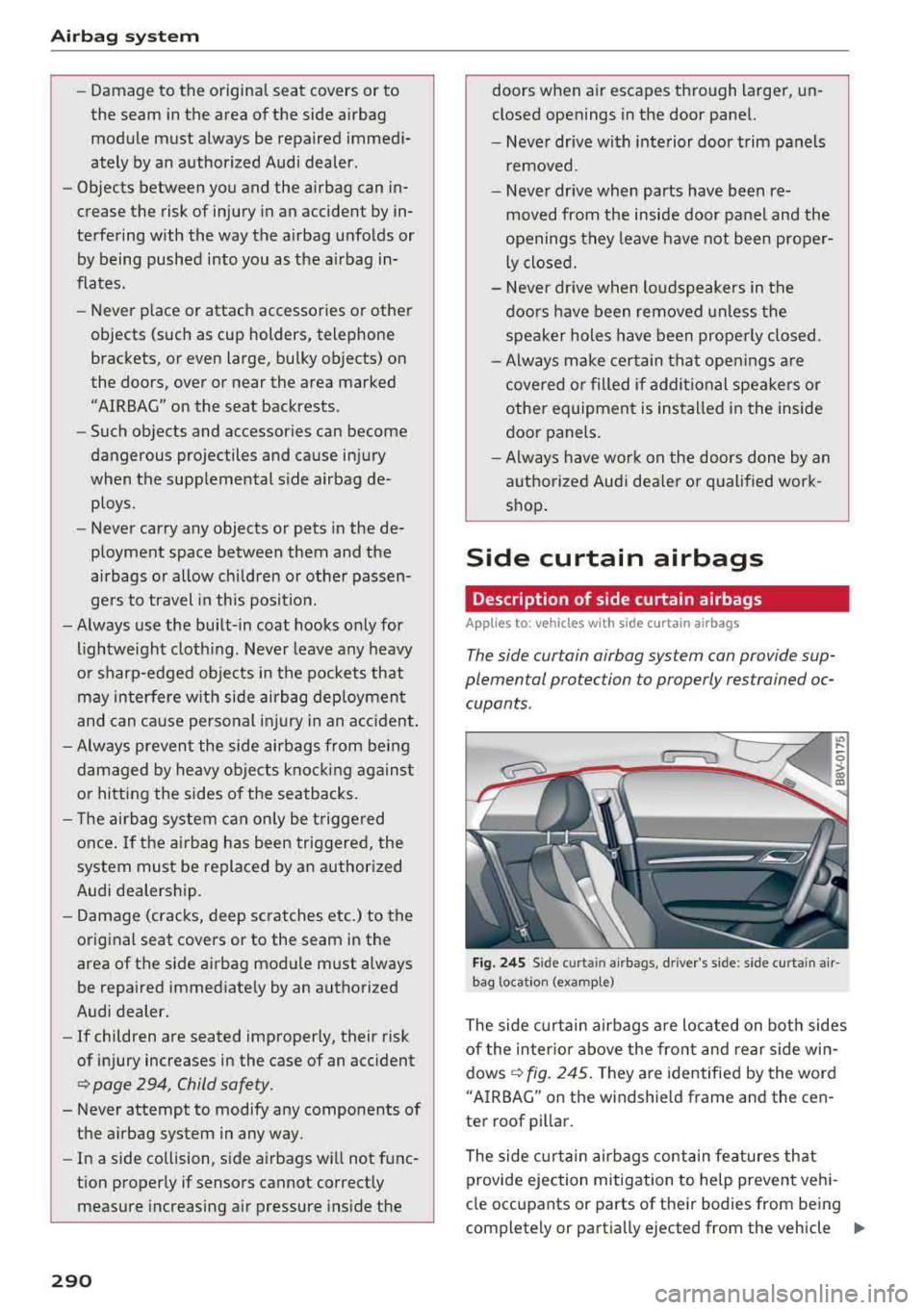
Fig. 24S Sid e curt ain air b ags , driver's s ide: s ide curt ain air
bag location (example)
The side curtain airbags are located on both sides
of the inter ior above the front and rear side win
dows ¢
fig. 245. They are identified by the word
"A IRBAG" on the windshie ld frame and the cen
ter roof pillar.
The side curtain airbags contain features that
provide ejection mitigation to help prevent vehi-
cle occupants or parts of their bodies from being completely or partia lly ejected from the vehicle
II>
Page 294 of 404
Airbag system
How side curtain a irbags work
A pplies to: ve hicles w ith s ide curta in a irbags
Side curtain airbags can work together with side
airbags to help reduce the risk of head and upper torso injuries for occupants who are properly re
strained.
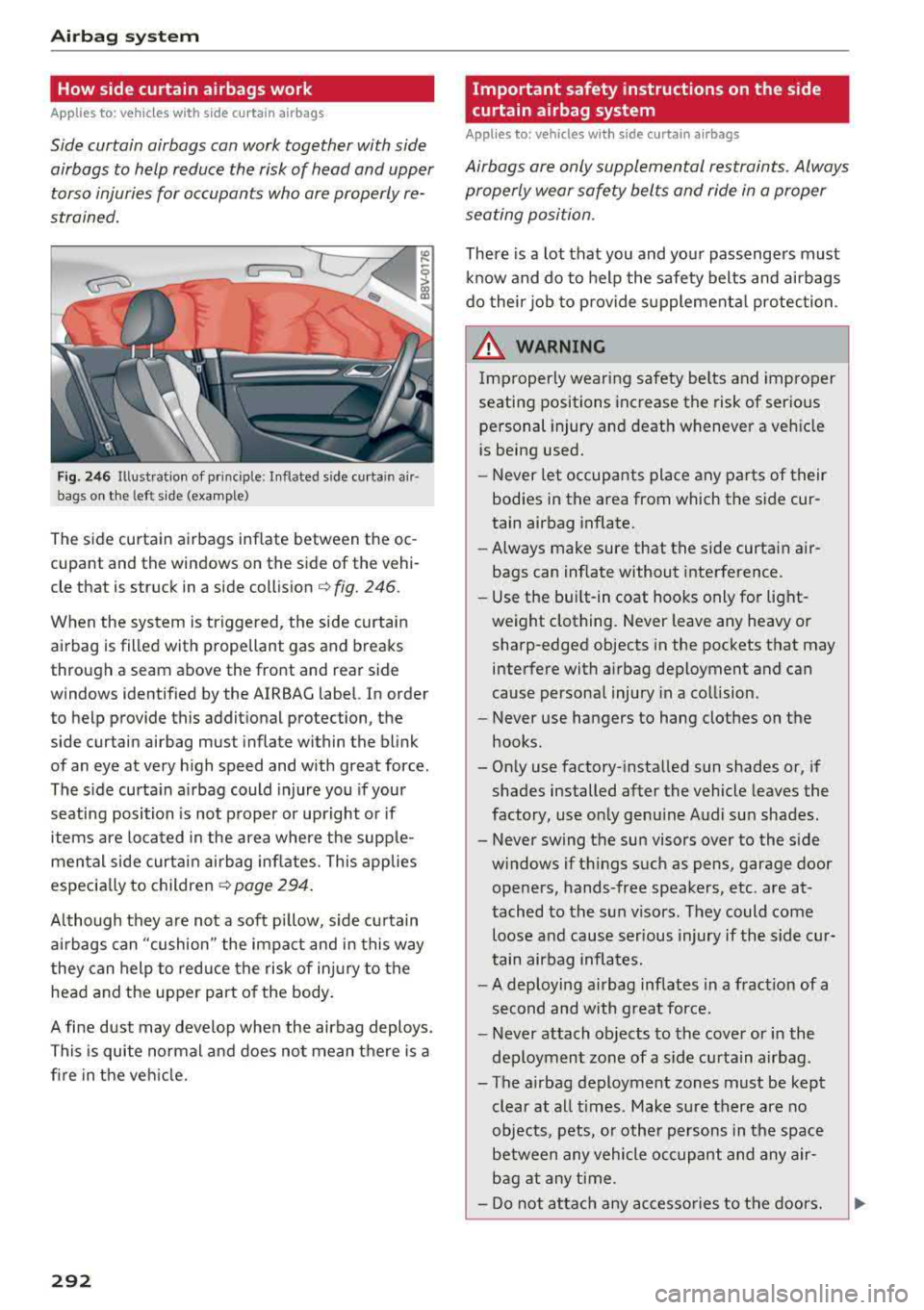
F ig . 246 Ill ustrat ion of pr inciple : In flated s ide curta in air ·
bags on the left side (example)
The side curtain airbags inflate between the oc
cupant and the windows on the side of the vehi
cle that is struck in a side collision
c::> fig. 246 .
When the system is triggered, the side curtain
airbag is filled with propellant gas and breaks
through a seam above the front and rear side
windows identified by the AIRBAG label. In order
to help provide this additional protection, the
side curtain airbag must inflate within the blink
of an eye at very high speed and with great force .
The s ide curtain airbag could injure you if your
seating position is not proper or upright or if
items are located in the area where the supple
mental side curtain a irbag inflates . This applies
especially to children
c::> page 294.
Although they are not a soft pi llow, s ide curtain
airbags can "cushion" the impact and in this way
they can help to reduce the risk of injury to the
head and the upper part of the body.
A fine dust may develop when the airbag deploys.
This is quite normal and does not mean there is a
fire in the vehicle.
292
Important safety instructions on the side
c urtain airbag system
Appl ies to : vehicles wi th side curtain airbags
Airbags are only supplemental restraints . Always
properly wear safety belts and ride in a proper
seating position .
There is a lot that you and your passengers must
know and do to help the safety belts and airbags
do their job to provide supplemental protection.
A WARNING
-Improperly wearing safety belts and improper
seating positions increase the risk of serious
personal injury and death whenever a vehicle
is being used.
- Never let occupants place any parts of their
bodies in the area from which the side cur
tain airbag inflate.
- Always make sure that the side curtain air
bags can inflate without interference.
- Use the bu ilt-in coat hooks only for light
weight clothing. Never leave any heavy or
sharp-edged objects in the pockets that may
interfere with airbag deployment and can
cause personal injury in a collision.
- Never use hangers to hang clothes on the
hooks.
- On ly use factory-installed sun shades or, if
shades installed after the vehicle leaves the
factory, use only genu ine Audi sun shades.
- Never swing the sun visors over to the side
windows if things such as pens, garage door
openers, hands-free speakers, etc . are at
tached to the sun visors. They could come
loose and cause serious injury if the side cur
tain airbag inflates.
- A deploying airbag inflates in a fract ion of a
second and with great force.
- Never attach objects to the cover or in the
deployment zone of a side curtain airbag .
- The airbag deployment zones must be kept clear at al l times. Make sure there are no
objects, pets, or other persons in the space
between any vehicle occupant and any air
bag at any time .
- Do not attach any accessories to the doors.
Page 296 of 404
Child safety
Child safety
Important information
Introduction
The rear seat is generally the safest place in a
collision .
The physical principles of what happens when
your vehicle is in a crash apply also to children
¢ page 261, What happens to occupants not
wearing safety belts? .
But unlike adults and
teenagers, their muscles and bones are not fully
developed. In many respects children are at
g reater r isk of serious injury in crashes than
adults .
Because children's bodies are not fully devel
oped, they require restraint systems especially
designed for their size, weight, and body struc
ture. Many countries and all states of the United
States and provinces of Canada have laws requir
ing the use of approved child restraint systems
for infants and small children .
I n a frontal crash at a speed of 20-35 mph
(30 -56 km/h) the forces acting on a 13-pound
(6 kg) infant will be more than 20 times the
weight of the child. This means the weight of the
child would suddenly be more than 260 pounds
(120 kg) . Under these conditions, only an appro
priate child restraint properly used can reduce
the risk of serious injury. Child restraints, like
adu lt safety belts, must be used properly to be
effect ive. Used improperly, they can increase the
risk of serious injury in an accident.
All ch ildren, especially those 12 years and young
er must always ride in the back seat properly re
strained for their age and size. If you must insta ll
a child restra int on the front passenger seat in
exceptional circumstances, be sure to read and
heed the important information and warnings
¢ page 270. Infants and other chi ldren who are
properly restrained in an appropriate child re
straint that is for their si ze and age can benefit
from the protection that supplemental side air
bags provide in some kinds of crashes .
For more information please see information
provided by the:
294
- National Highway Traffic Safety Administration
(NHTSA), currently at: http://www.safe
rcar.gov (for the USA)
- Tr ansport Canada Information Centre, current-
ly at: http ://www.tc .gc.ca (for Canada)
Consult the child safety seat manufacturer's in
structions in o rder to be sure the seat is right fo r
your c hild's
size ¢ page 298, Important safety
instructions for using child safety seats .
Please
be sure to read and heed all of the important in
format ion and WARNINGS about child safety,
Advanced Airbags, and the installation of child
restraints in this chapter .
T here is a lot you need to know about the Ad
vanced Airbags in your veh icle and how they work
when infants and children in child res traints are
on the front passenger seat . Because of the large
amount of important informat ion, we cannot re
peat it all he re . We urge you to read the detailed
info rmat ion in this owner's manual about airbags
and the Advanced Airbag System in your vehicle
and the very important information about trans
porting children on the front passenger seat.
P lease be sure to heed the WARNINGS -they are
extremely important for your safety and the safe
ty of your passengers, especially infants and
small children .
A WARNING
-Accident statistics have shown that children
are generally safer in the rear seat area than
in the front seating position. Always restrain
any child age 12 and under in the rear.
- All vehicle occupants and especially children
must be restrained properly whenever riding
in a vehicle. An unrestrained or improperly
restrained child could be injured by striking
the interior or by being ejected from the ve
hicle during a sudden maneuver or impact.
An unrestrained or improperly restrained
child is a lso at greater r isk of injury or death
through contact w ith an inflating airbag.
- A suitable ch ild restraint properly installed
and used at one of the rear seating positions
provides the highest degree of protection
for infants and small children in most acci
dent situat ions.
Page 299 of 404
u. 00 .-< N l' N .-< 0 N > 00
Child restraints and Advanced front airbag
system
Regardless of the child restraint that you use,
make sure that it has been certified to meet Safe
ty Standards and has been certified by its manu
facturer for use with an airbag. Always be sure
that the child restraint is properly installed at
one of the rear seating positions . If in exception
al c ircumstances you must use it on the front
passenger seat, carefully read all of the informa
tion on child safety and Advanced Airbags and
heed all of the applicable WARNINGS. Make cer
tain that the child and child restraint are correct
l y recognized by the capacitive passenger detec
tion system in the front passenger seat, that the
front passenger airbag is turned off, and that the
airbag status is always correctly signaled by the
PASSENGER AIR BAG OFF light.
Many types and models of child restraints have
been available over the years, new mode ls are in
troduced regularly incorporat ing new and im
proved designs and older models are taken out of
product ion . Child restraints are not standardized .
Ch ild restraints of the same type typically have
different weights and size s and different "foot
prints", the size and sh ape of the bottom of the
chi ld restraint that sits on the seat, when they
are installed on a vehicle seat. These differences
make it virtua lly impossible to certify compliance
with the requirements for advanced airbags with
each and every child restraint that has ever been
sold in the past or will be sold over the course of
the useful life of your veh icle.
F or this reason, the United States National High
way Traffic Safety Administration has published a
list of specific type, makes and models of child
restraints that must be used to certify compli
ance of the Advanced Airbag System in your vehi
cle with the suppression requirements of Federal
Motor Vehicle Safety Standard 208. These child
restraints are:
Subpart A -Car bed child restraints
Model Manufactured on or
after
Ange l Guard Angel September 25, 2007
Ride AA2403FOF
Child safety
Subpart B - Rear-facing child restraints
Model Manufactured on or
after
Century SmartFit 4543 December 1, 1999
Cosco Arriva September 25, 2007
22-013PAW and base
22-999WHO
Evenflo Discovery Ad- December 1, 1999
just Right 212
E venflo First Choice December 1, 1999
204
Graco Infant 8457 December 1, 1999
Graco Snug ride September 25, 2007
Peg Perego Primo Viag- September 25, 2007
g io SIP IMUNOOUS
Subpart C -Forward-facing and convertible
child restraints
Model Manufactured on or
after
Britax Roundabout September 25, 2007
E9L02xx
Cosco Touriva 02519 December 1, 1999
Cosco Summit De luxe September 25, 2007
Hi gh Back Booster
22-262
Cosco High Back Boos- September 25, 2007
ter 22-209
E venflo Tribute V September 25, 2007
379xxxx
Evenflo Medallion 254 December 1, 1999
E venflo Generations September 25, 2007
352xxxx
Graco ComfortSport September 25, 2007
Graco Toddler Safety September 25 , 2007
Seat Step 2
Graco Plat inum Cargo September 25, 2007
A WARNING
To reduce the risk of serious injury, make sure
that the
PASSENGER AIR BAG OFF l ight
comes on and stays on whenever a child re
straint is installed on the front passenger seat
and the ignition is switched on .
~
297
Page 300 of 404
Child sa fety
- Take the chi ld restraint off the front passen
ger seat and insta ll it proper ly at one of the
rear seat positions if the
PA SSEN GER AIR
BA G OFF
light does not stay on.
- Have the airbag system inspected by your
authorized Aud i dealer immediately.
(D Tips
The chi ld seats listed in categories A to C have
been statica lly tested by Aud i only for the Ad
vanced Airbag function.
Important safety instructions for using
child safety seats
Correct use of child safety seats substantially re
duces the risk of injury in an accident!
As the driver, you are responsible for the safety
of everybody in the vehicle, especially chi ldren:
~ A lways use the right chi ld safety seat for each
c h ild and a lways use it properly
c::> page 300.
~ Always carefully follow the child safety seat
manufacturer's instructions on how to route
the safety belt properly through the child safe
ty seat .
~ When using the vehicle safety be lt to insta ll a
c hi ld safety seat , you must first activate the
conve rtible locking retractor on the safety be lt
to prevent the child safety seat from mov ing
c::> page 305 .
~ Push the child safety seat down wit h your fu ll
weight to get the safety be lt really tight so that
the seat cannot move forward or sideways
more than one inch (2.5 cm).
~ Secure unused safety belts on the rear seat
c::> page 300 .
Always remember: Even though your vehicle is
equ ipped w ith an Advanced Airbag system, all
children, especially those 12 years and younger,
should always r ide in the back seat prope rly re
stra ined fo r th eir age and size.
_& WARNING
N ot using a c hild safety seat, usi ng the w rong
c hild safety seat or imp roper ly installing a
298
chi ld restraint increases t he risk of serious
personal injury and death.
- All vehicle occ upants and especially children
must be restra ined properly whenever rid ing
in a vehicle. An unrestrained or improperly
restrained child cou ld be injured by strik ing
the inter ior or by being ejected from the ve
h icle dur ing a sudden maneuve r o r i mpact.
An unrest rained or imprope rly rest rai ned
child is a lso at g rea ter r is k of inj ury o r death
through con ta ct w it h an infl ati ng a irbag.
- Commerc ia lly availab le child safety seats
a re requ ired to comply with U.S. Federal
Motor Vehicle S afety Standard ( FMVSS) 2 13
(in Canada CMVSS 213).
- When buying a child restra int, select one
that fits your chi ld and the vehicle .
- Only use child restra int systems that fully
contact the flat port ion of the seat cush
i o n. The ch ild restraint must not tip or
lean to e ither side . Audi does not recom
mend using child safety seats that rest on
l egs or tube -like frames. They do not p ro
v ide adequate cont act wi th t he seat.
- Always heed all lega l req uirements per
ta in ing to the inst allation and use of child
sa fe ty seats and caref ully follow the in
str uctions provided by the manufact urer
of the seat you are using .
- Never a llow children under 5 7 inc hes
( 1. 45 meters) to wear a normal safety be lt.
They must a lways be restrained by a proper
child restraint system. Otherwise, they
could sustain injuries to t he abdomen and
neck areas dur ing sudden brak ing maneu
vers or accidents .
- Never let more than one c hild occupy a chi ld
safety seat.
- Never let babies or o lder ch ildren ride in a
ve hicle w hile sitting on the lap of a nother
passenger.
- Holding a c hild in your a rms is never a s ub
stitute fo r a ch ild restraint system .
- The s tronges t person cou ld no t hold the
c hil d with the forces tha t exist in an acc i
dent. The c hild will strike the inte rior of
the ve hicle and can also be struck by the
passenger.
Page 302 of 404
Child safety
-Take the child restraint off the front passenger seat and install it properly at one of the
rear seat positions if the
PASSENGER AIR
BAG OFF
light does not stay on.
-Have the airbag system inspected by your
authorized Audi dealer immediately.
Secure unused safety belts on the rear seat
l8 , ,.,_ _ g
---0
Fig. 247 Schematic overv iew: keep unu sed safety belts
away from chi ldren in chil d safety seats. @-outer rear
safety belt,@- center rear safety belt*
~
If a child safety seat is used on the rear bench,
especially with LATCH universal lower anchorag
es, the unused safety belts
must be secured so
that the child in the child restraint cannot reach
them
c::> ,&. .
-Guide the safety belt webbings @and ®* be
hind the head restraint of the seat where the
c hild restraint is installed
c::>fig. 247. When do
ing so, do not engage the convertible locking
retractor! You should not hear a "clicking"
sound when winding up the safety belt .
-Let the belt retractor wind up the safety belt
webbing .
A WARNING
A child in a child safety seat installed with the
LATCH lower anchorages or with the standard
safety belt or a child in a booster seat on the
rear seat could play with unused rear seat
safety belts and become entangled. This
could cause the child serious personal injury
and even death.
-Always secure unused rear seat safety belts out of reach of children in child seats such
as by properly routing them around the
300 head restraint of the seat where the child
restraint is installed .
- Never activate the convertible locking re
tractor when routing the safety belts around
the head restraints.
-Never let anyone sit at the center rear seat
ing position* if the center rear safety belt
has been routed around a rear head re
straint.
Child safety seats
Infant seats
Babies and infants up to about one year old and
20 lbs. or
9 kg need special rearward-facing
child restraints that support the back, neck and
head in a crash.
Fig. 248 Sc hema tic ove rview : re arward -facing infan t seat ,
prope rly installed on th e rear seat
.,. When using the vehicle safety belt to install a
child safety seat, you must first activate the
convertible locking retractor on the safety belt
to prevent the child safety seat from moving
c::> page 305 or install the seat using the LA TCH
attachments .
.,. Push the child safety seat down with your full
weight to get the safety belt really tight so that
the seat cannot move forward or sideways more than one inch (2.5 cm) .
.,. Secure unused safety belts on the rear seat
c::> page 300 .
Infants up to about one year (20 lbs. or 9 kg) are
best protected in special infant carriers and child
safety seats designed for their age group. Many
experts believe that infants and small ch ildren
should ride only in special restraints in which the
child faces the back of the vehicle. These infant
Ill-
Page 304 of 404
Child safety
Convertible child safety seats
Properly used convertible child safety seats can
help protect toddlers and children over age one
who weigh between 20 and 40 lbs. (9 and 18 kg)
in a crash.
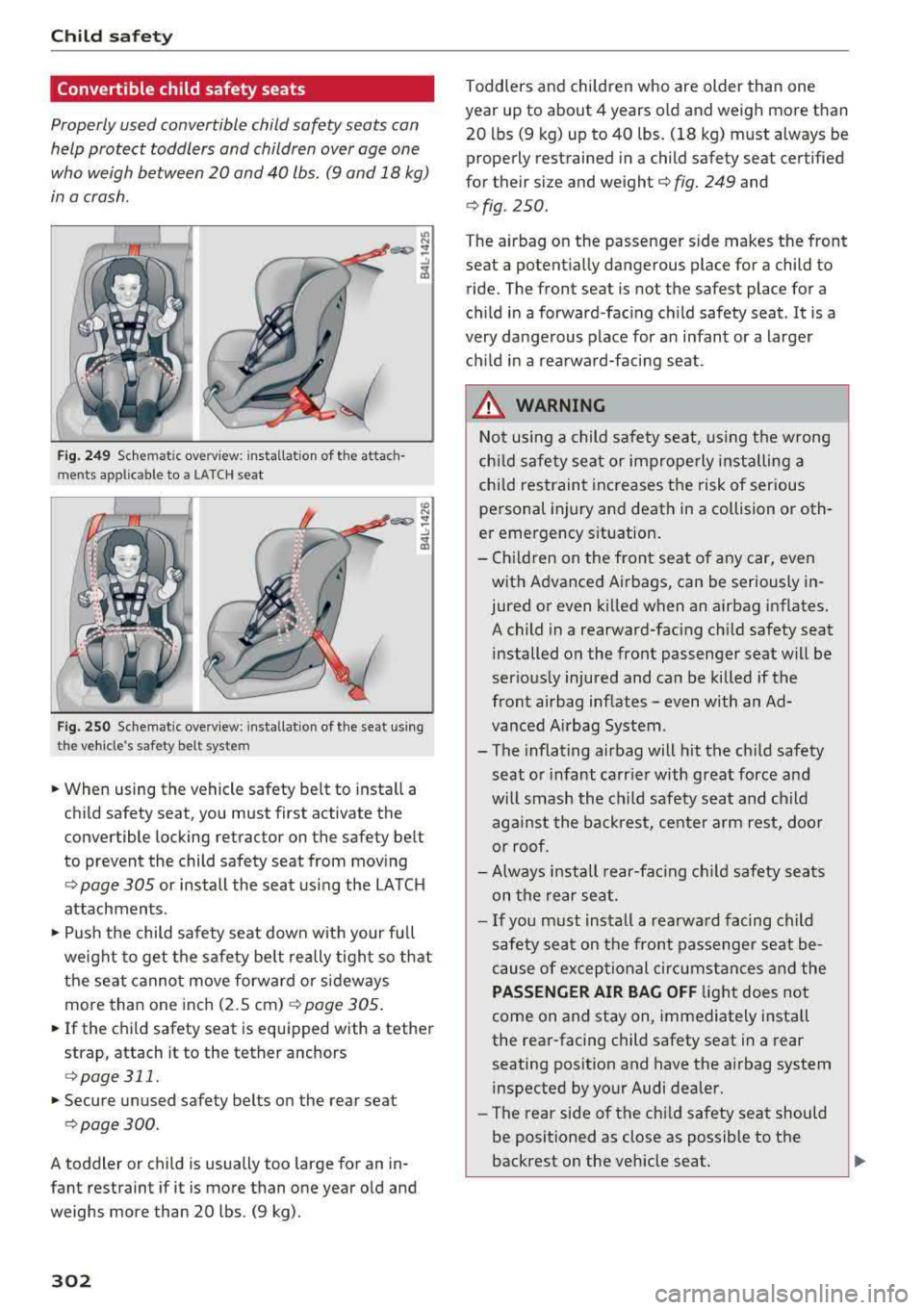
Fig. 249 Schemat ic overv iew: installat ion of the attac h
m ents app licab le to
a L ATCH seat
Fig. 250 Schematic overv iew : instal lat ion of the sea t using
the vehicl e's safety bel t sy stem
... When using the vehicle safety belt to install a
child safety seat, you must first activate the
convertible locking retractor on the safety belt
to prevent the child safety seat from moving
c:> page 305 or install the seat using the LATCH
attachments .
... Push the child safety seat down with your full
weight to get the safety belt really tight so that
the seat cannot move forward or sideways more than one inch (2.5 cm)
c:>page 305.
... If the child safety seat is equipped with a tether
strap, attach it to the teth er anchors
r::> page 311.
... Secure unused safety belts on the rear seat
r::>page 300 .
A toddler or child is usually too large for an in
fant restraint if it is more than one year old and
weighs more than 20 lbs . (9 kg).
302
Toddlers and children who are older than one
year up to about 4 years old and weigh more than
20 lbs (9 kg) up to 40 lbs. (18 kg) must always be
properly restrained in a child safety seat certified
for their size and weight
c> fig. 249 and
c:> fig. 250 .
The airbag on the passenger side makes the front
seat a potentially dangerous place for a child to ride. The front seat is not the safest place for a
child in a forward -facing child safety seat . It is a
very dangerous place for an infant or a larger
child in a rearward-facing seat .
.&_ WARNING
Not using a child safety seat, using the wrong
child safety seat or improperly installing a
child restraint increases the risk of serious
personal injury and death in a collision or oth
er emergency situation.
-Children on the front seat of any car, even
with Advanced Airbags, can be seriously in
jured or even killed when an airbag inflates. A child in a rearward-facing child safety seat
installed on the front passenger seat will be
seriously injured and can be killed if the
front airbag inflates - even with an Ad
vanced Airbag System .
-The inflating airbag will hit the child safety
seat or infant carrier with great force and
will smash the child safety seat and child
against the backrest, center arm rest, door
or roof.
-Always install rear-facing child safety seats
on the rear seat.
-If you must install a rearward facing child
safety seat on the front passenger seat be
cause of exceptional circumstances and the
PASSENGER AIR BAG OFF light does not
come on and stay on, immediately install
the rear-facing child safety seat in a rear seating position and have the airbag system
inspected by your Audi dealer .
- The rear side of the child safety seat should
be positioned as close as possible to the
backrest on the vehicle seat.
~
Page 334 of 404
Wheel s
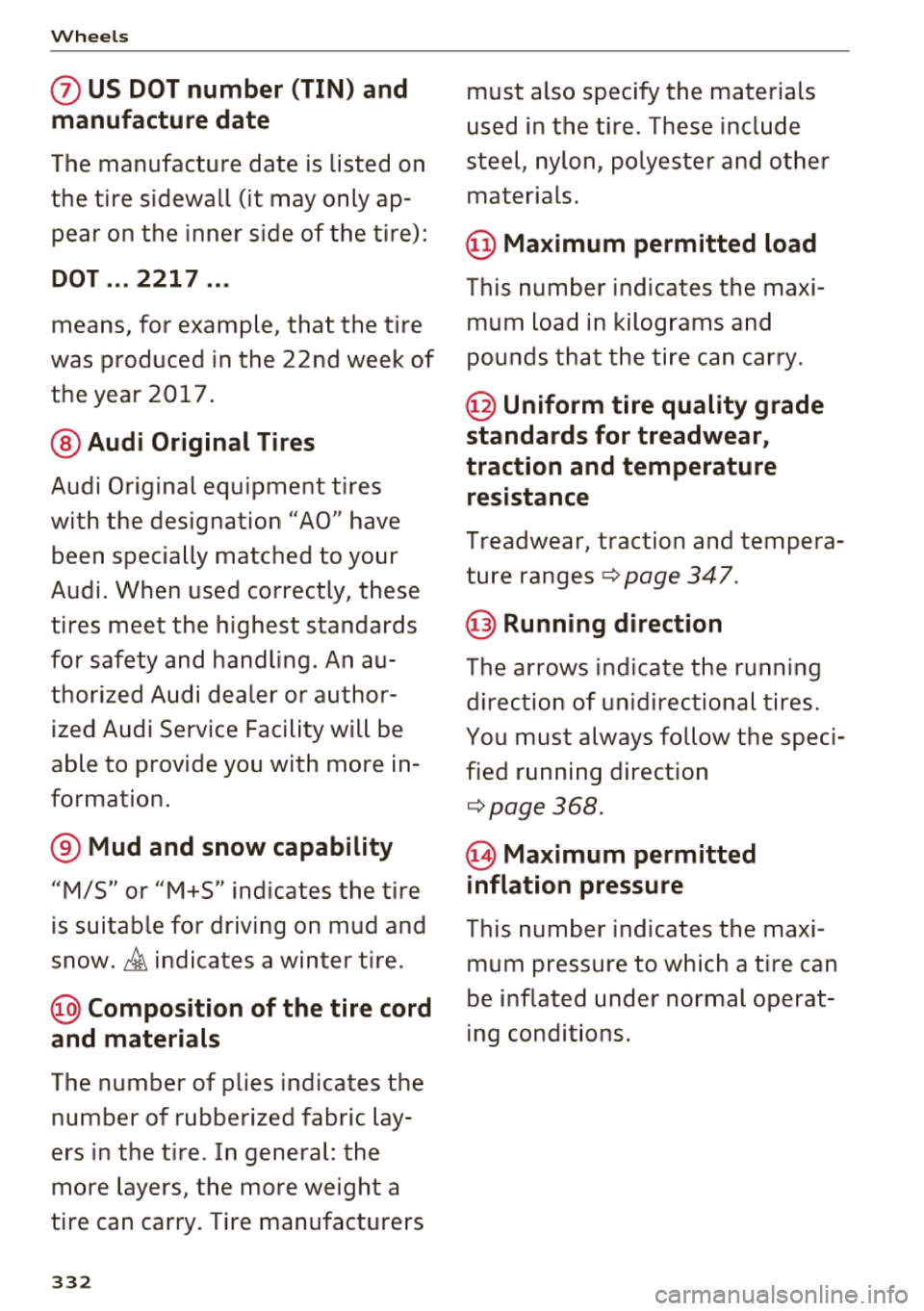
0 US DOT number (TIN) and
manufacture date
T he manufacture date is listed on
the tire sidewall (it may only ap
pear on the inner side of the tire) :
DOT ... 2217 ...
means, for example, that the tire
was produced in the 22nd week of
the year 2017.
@ Audi Original Tires
Audi Original equipment tires
with the designation
"AO" have
been specially matched to your
Audi. When used correctly, these
tires meet the highest standards
for safety and handling. An au
thorized Audi dealer or author
ized Audi Service Facility will be
able to provide you with more in
formation.
® Mud and snow capability
"M/5" or "M+S" indicates the tire
is suitable for driving on mud and
snow.
& indicates a winter tire.
@ Composition of the tire cord
and materials
T he number of plies indicates the
number of rubberized fabric lay
ers in the tire . In general: the
more layers, the more weight a
tire can carry. Tire manufacturers
332
must also specify the materials
used in the tire. These include
steel, nylon, polyester and other materials.
@ Maximum permitted load
This number indicates the maxi
mum load in kilograms and
pounds that the tire can carry.
@ Uniform t ire quality grade
standards for treadwear ,
traction and temperature resistance
Treadwear, traction and tempera
ture ranges
q page 347 .
@ Running d ir e ction
The arrows indicate the running
direction of unidirectional tires.
You must always follow the speci
fied running direction
q page 368 .
@ Maximum permitted
inflation pressu re
This number indicates the maxi
mum pressure to which a tire can
be inflated under normal operat
ing condit ions.