battery AUDI A4 2015 User Guide
[x] Cancel search | Manufacturer: AUDI, Model Year: 2015, Model line: A4, Model: AUDI A4 2015Pages: 304, PDF Size: 74.86 MB
Page 42 of 304
40 Opening and closing
& WARNING
-Never close the rear lid inattentively or
without checking first. Although the
closing force of the rear lid is limited,
you can still seriously injure yourself or
others.
-Always ensure that no one is within
range of the rear lid when it is moving, in
particular close to the hinges and the up
per and lower edges -fingers or hands
can be pinched.
- To help prevent poisonous exhaust gas
from being drawn into the vehicle, al
ways keep the rear lid closed while driv ing. Never transport objects larger than
those which fit completely into the lug gage area, because then the rear lid can
not be fully closed .
- Never leave your vehicle unattended es pecially with the rear lid left open. A
child could crawl into the car through the
luggage compartment and pull the lid
shut, becoming trapped and unable to get out . To reduce the risk of personal in
jury, never let children play in or around
your vehicle . Always keep the rear lid as
well as the vehicle doors closed when not in use.
- If there is a luggage rack or bicycle rack
mounted on the rear lid, it may not be
able to open completely or an opened rear lid may close by itself because of the
added weight . So the open rear lid must
be supported or the weight must be re
moved from the luggage rack first .
(D Tips
-When the vehicle is locked, the rear lid
can be unlocked separately by pressing
the button
~ on the master key. When
the rear lid is closed again, it locks auto
matically .
- The following applies to vehicles equip
ped with the convenience key* feature: if
the remote control key is left in the lug
gage compartment, luggage compart
ment will automatically unlock itself af- ter you
lock the vehicle. This prevents
you from unintentionally locking your
key in the luggage compartment.
- If the vehicle battery charge drops be
low a certain level, you can still open or
close the rear lid manually, however, you
will need to apply more force to close it.
Sedan: Rear lid emergency release
Applies to vehicles: with fixed rear seat backrest
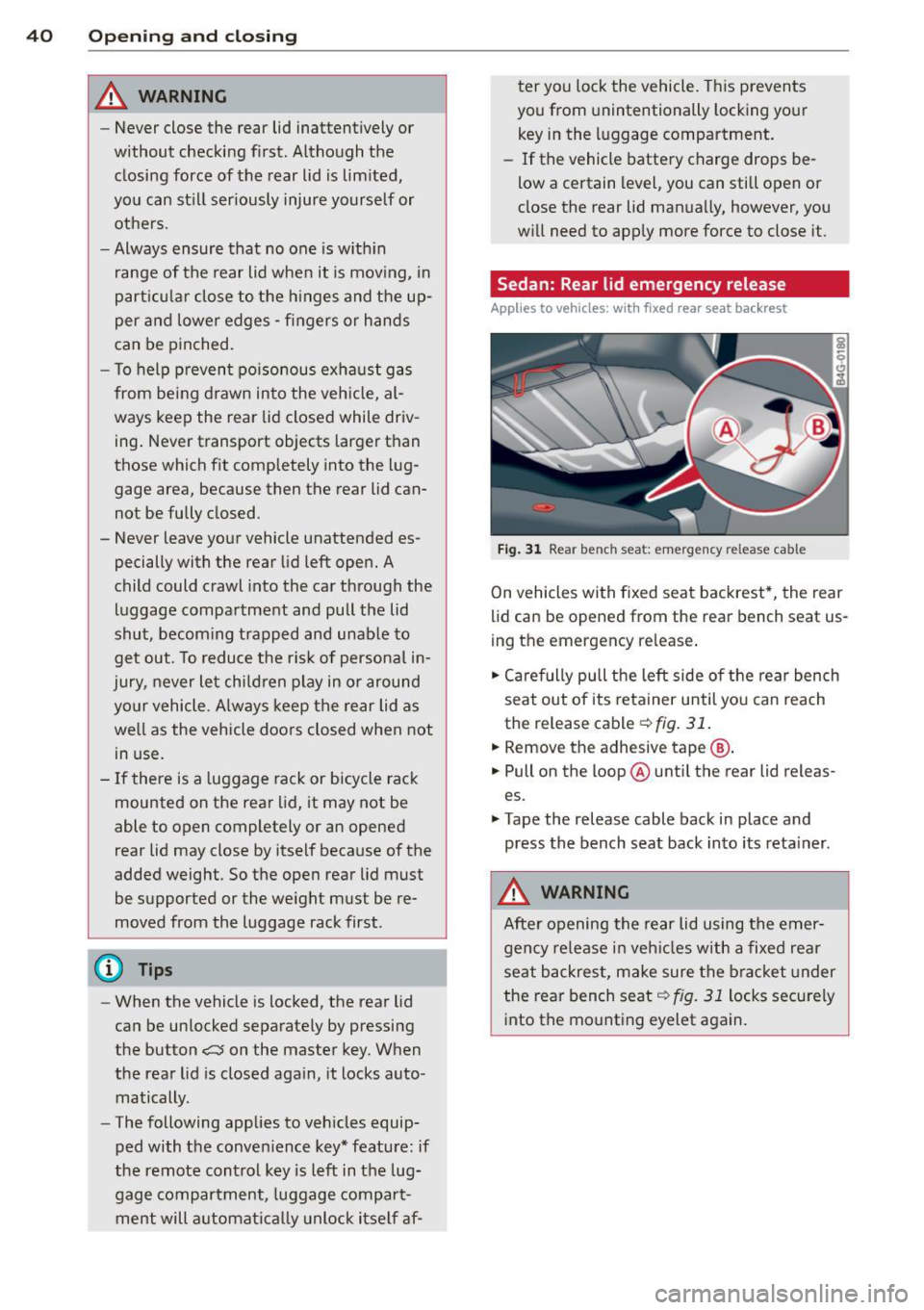
Fig. 31 Rear ben ch s eat: e merg ency r ele ase ca ble
On vehicles with fixed seat backrest*, the rear
lid can be opened from the rear bench seat us
ing the emergency release.
.,. Carefully pull the left side of the rear bench
seat out of its retainer until you can reach
the release cable
¢ fig. 31.
.,. Remove the adhesive tape @.
.,. Pull on the loop @ until the rear lid releas
es.
.,. Tape the release cable back in place and
press the bench seat back into its retainer .
& WARNING
After opening the rear lid using the emer
gency release in vehicles with a fixed rear
seat backrest, make sure the bracket under
the rear bench seat
qfig. 31 locks securely
into the mounting eyelet again.
Page 45 of 304
M N
~ co
rl I.O
"' rl
"' rl
.. Turn the key to position ¢ fig. 36@ until a ll
the windows have reached the desired posi
t ion and the power sunroof is open.
Conv enience closing feature
.. Use the emergency key or pull the mechani
ca l key out of the master key¢
page 33 .
.. Turn the key in the lock of the driver's door
to the lock position @ until the windows
and the power sunroof are closed
q &, .
F or vehicles w ith Panoramic sliding sunroof*:
When you open or close the Panoramic sliding
sunroof*, the power sunshade wi ll also open
or close.
A WARNING
- Never close the windows and the power
sunroof inattentive ly and without check
ing -there is risk of injury.
- You must always watch when the win
dows are being ra ised so that no one can
be trapped.
If you release the key, the
closing action is immed iate ly canceled .
- Always read and heed WARNING
¢.&. in
General description on page 31 .
Correcting window regulator
malfunction
After disconnecting the vehicle battery, the
one-touch up and down feature must be acti
vated again.
.,. Pull and hold the power w indow switch until
the window is completely closed .
.. Release the switch and pull the switch again
f or one second.
Opening and closing 43
Sunroof
Operation sliding/tilting sunroof
Applies to vehicles: with sliding/tilting sunroof
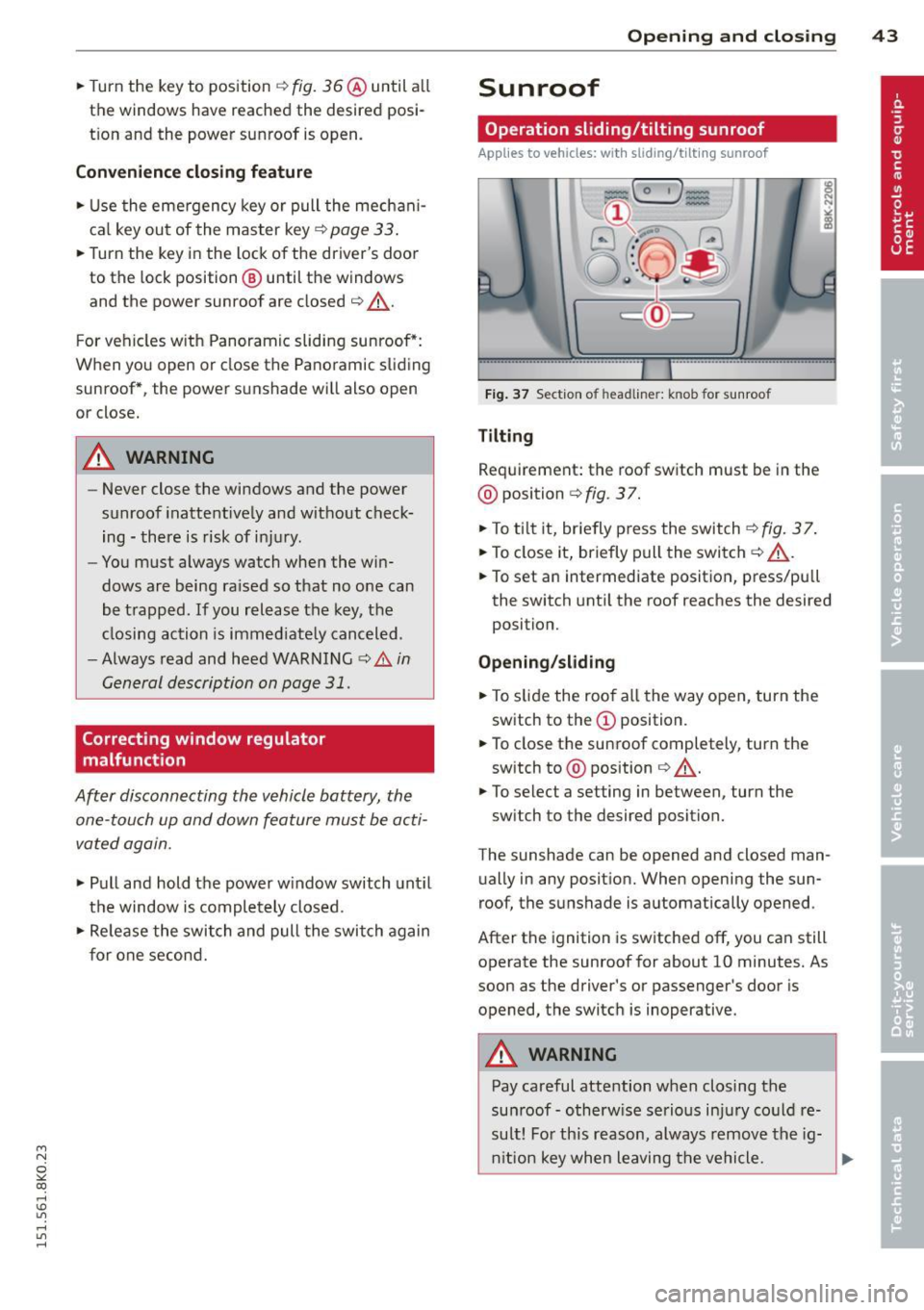
Fig. 37 Section of h ead lin er: k nob fo r sunroo f
Tilting
Requirement: the roof switch must be in the
@ position
<=>fig. 37.
.. To t ilt it, br iefly press the switch ¢fig. 37.
.. To close it, briefly pull the switch<=>&, .
.. To set an intermediate posit ion, press/pull
the switch unti l the roof reaches the desired
position.
Opening/sliding
.. To s lide the roo f all the way open, turn the
switch to the
(D position.
.. To close the sunroof completely, turn the
sw itch to @ position
¢ &, .
.. To select a setting in between, turn the
switch to the desired position.
The sunshade can be opened and closed man
ually in any posit ion. When opening the sun
roof, the sunshade is automatically opened.
After the ignition is switched
off, you can still
operate the sunroof for about 10 minutes. As
soon as the driver's or passenger's door is
opened, the switch is inoperative.
A WARNING
-
Pay careful attention when closing the
sunroof- otherwise serious injury could re
sult! For this reason, always remove the ig-
nition key when leaving the vehicle.
II)>
Page 68 of 304
66 Seats and st o rage
12-volt socket
Appl ies to vehicles: wit h 12-volt socket
Electrical accessories can be connected to the
12-volt socket.
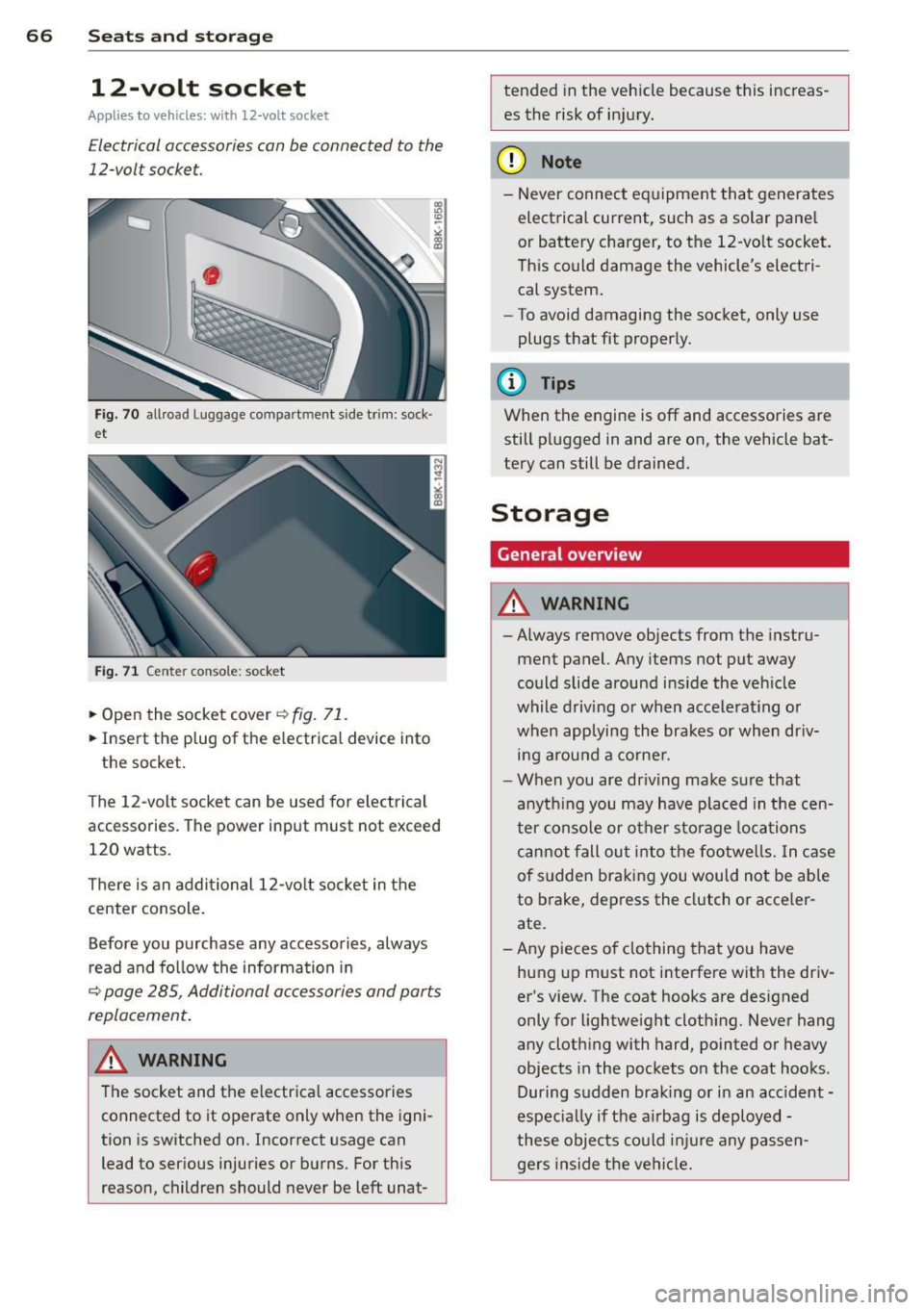
Fig. 70 allroad Luggage compartment s ide trim: sock·
et
Fig . 71 Center conso le: socket
.,. Open the socket cover~ fig. 71 .
.,. Insert the plug of the e lectrical device into
the socket.
The 12-volt socket can be used for electrical
accessories. The power input must not exceed
120 watts.
There is an additional 12-vo lt socket in the
center console .
Before you purchase any accessories, always
read and fo llow the information in
~ page 285, Additional accessories and parts
replacement .
.&_ WARNING
The socket and the electrica l accessories
connected to it operate only when the igni
tion is switched on. Incorrect usage can
lead to serious injuries or burns. For this
reason, children should never be left unat-
-
tended in the veh icle because this increas
es the risk of in jury.
(D Note
- Never connect equipment that generates
electrical current, such as a solar pane l
or battery charger, to the 12-vo lt socket.
Th is could damage the vehicle's electri
cal system.
- To avoid damaging the socket, only use
plugs that fit properly.
(D Tips
When the engine is off and accessories are
still plugged in and are on, the vehicle bat
tery can still be drained.
Storage
General overview
.&_ WARNING
-
- Always remove objects from the instru-
ment panel. Any items not put away
could slide around ins ide the veh icle
while driving or when accele rat ing or
when applying the brakes or when dr iv
ing arou nd a corne r.
- When you are dr iving make su re that
anyth ing you may have placed in the cen
ter conso le or other sto rage locations
can not fall out i nto the footwe lls. In c ase
of sudden braking you would not be able
to brake, dep ress the clutch o r acce ler
ate.
- Any pieces o f clothing that you have
hung up m ust not interfere with the driv
er's view. The coat hooks are des igned
only for lightweight cloth ing. Never hang
any clothing with hard, pointed or heavy
objects in the pockets on the coat hooks .
During sudden braking or in an accident -
especia lly if the a irbag is d eployed -
these objec ts co uld inju re any passen
gers inside the ve hicl e.
-
Page 102 of 304
![AUDI A4 2015 User Guide 100 Transmission
@] Transmission malfunction: Limited driv
ing functionality
There i s a sy stem m alfu nction in the transmi s
sion. The tr ansmission is sw itch ing to emer
gency mod](/img/6/57561/w960_57561-101.png "AUDI A4 2015 User Guide 100 Transmission
@] Transmission malfunction: Limited driv
ing functionality
There i s a sy stem m alfu nction in the transmi s
sion. The tr ansmission is sw itch ing to emer
gency mod")
100 Transmission
@] Transmission malfunction: Limited driv
ing functionality
There i s a sy stem m alfu nction in the transmi s
sion. The tr ansmission is sw itch ing to emer
gency mode. This mode only shifts into cer
tain gea rs or will no longer shift at a ll. The en
g ine may stall . Drive to your authorized A udi
dealer or qualified repair facility immediate ly
to have the ma lf u nction corrected .
@] l;I Transmission malfunction : No reverse
You can continue driving
S tron ic transm issio n: There is a system ma l
function in the transmission. The transmis
sion is switc hing to eme rgency mode. This
mode on ly shifts into certain gears or w ill no
longer s hift at all. The engine may sta ll. You
cannot engage the reverse gear . Drive to your
author ized Audi dealer or qua lified repair fa
cili ty immedia tely to have the malf unction
corrected.
@] Transmiss ion malfunction: Stop vehicle
and shift to p ark.
Do not cont inue driv ing. Select the P se lector
lever position and see yo ur authori zed Aud i
dealer or qualified repair facility for assis
tance .
@ Note
If the transmiss io n sw itches to emergency
mode, you s houl d take the vehicle to an
author ized Audi dealers hip as soon as pos
sib le to have the con dition co rrected .
Selector lever emergency release
Applies to vehicles: with multitronic/5 tronic/tiptronic
If the vehicle 's power supply fails, the selec
tor l ever can be released in an emergency.
Fi g. 1 11 Fro nt ce nter co nsole: Remov ing t he as htray
in ser t
Fig. 112 Selecto r lever e mergency release
.. To access the emergency re lease mecha
nism,
remove the ashtray insert @ using the
release sw itch
® c> fig. 111 .
... Loose n and remove the cap in the ashtray
mou nt.
1> You now have acc ess to a p in . Using a sc rew
driver or sim ila r obje ct, press the p in down
an d hold i t in t hat pos ition¢
fig . 112.
.,. Now press t he re lease button and move the
selecto r leve r to the N positio n.
T he selecto r leve r ca n on ly be moved from the
P position if the key is in the lock and the igni
t ion is swi tched on . If the power supply fails
(for example, the battery is discharged) and
the vehicle m ust be pushed or towed,
move
the selecto r lever to the N position first using
the emergency re lease.
Page 160 of 304
158 Airbag system
-Never attach any objects such as cu
pholders or telephone mountings to the
surfaces covering the airbag units.
- For cleaning the horn pad or instrument
panel, use only a soft, dry cloth or one
moistened with plain water. Solvents or
cleaners could damage the airbag cover
or change the stiffness or strength of the
material so that the airbag cannot de
ploy and protect properly.
- Never repair, adjust, or change any parts
of the airbag system .
- All work on the steering wheel, instru
ment panel, front seats or electrical sys
tem (including the installation of audio
equipment, cellular telephones and CB
radios, etc.) must be performed by a
qualified technician who has the training
and special equipment necessary.
- For any work on the airbag system, we
strongly recommend that you see your
authorized Audi dealer or qualified work
shop.
- Never modify the front bumper or parts
of the vehicle body.
- Always make sure that the side airbag
can inflate without interference:
- Never install seat covers or replace
ment upholstery over the front seat
backs that have not been specifically
approved by Audi.
- Never use additional seat cushions that
cover the areas where the side airbags
inflate.
- Damage to the original seat covers or
to the seam in the area of the side air
bag module must always be repaired
immediately by an authorized Audi
dealer.
- The airbag system can be activated only
once. After an airbag has inflated, it
must be replaced by an authorized Audi
dealer or qualified technician who has
the technical information, training and
special equipment necessary.
- The airbag system can be deployed only once. After an airbag has been deployed,
it must be replaced with new replace -ment parts designed and approved espe
cially for your Audi model version . Re
placement of complete airbag systems
or airbag components must be per
formed by qualified workshops only. Make sure that any airbag service action
is entered in your Audi Warranty
& Main
tenance booklet under
AIRBAG REPLACE
MENT RECORD.
- In accidents when an airbag is deployed,
the vehicle battery separates the alterna
tor and the starter from the vehicle elec
trical system for safety reasons with a pyrotechnic circuit interrupter.
- Work on the pyrotechnic circuit inter rupter must only be performed by a
qualified dealer -risk of an accident!
- If the vehicle or the circuit interrupter
is scrapped, all applicable safety pre
cautions must be followed.
@ For the sake of the environment
Undeployed airbag modules and preten
sioners might be classified as Perchlorate
Material -special handling may apply, see
www .dtsc.ca.gov/hazardouswaste/per
chlorate. When the vehicle or parts of the restraint system including airbag modules
safety belts with pretensioners are scrap
ped, all applicable laws and regulations
must be observed. Your authorized Audi
dealer is familiar with these requirements
and we recommend that you have your
dealer perform this service for you.
Other things that can affect Advanced
Airbag performance
Changing the vehicle's suspension system can
change the way that the Advanced Airbag Sys
tem performs in a crash. For example, using
tire-rim combinations not approved by Audi, lowering the vehicle, changing the stiffness of
the suspension, including the springs, suspen
sion struts, shock absorbers etc. can change
the forces that are measured by the airbag sensors and sent to the electronic control
unit. Some suspension changes can, for
Page 193 of 304
"" N
0 ::.,: co ,...., \!) 1.1'1 ,...., 1.1'1 ,....,
The all-wheel drive concept is designed fo r
high engine power. Your vehicle is exception
ally powerful and has exce llent dr iving charac
ter istics both under normal driving conditions
and on snow and ice . Always read and follow
safety precautions
c> & .
Winte r tir es
When driving in the winter, your ve hicle with
all-wheel drive has an advantage, even with
regular t ires. In winter road conditions it may
be adv isable to mount winter tires (or all-sea
son t ires) for imp roved driveability and brak
ing: these tires must be mounted on
a ll four
w heel s.
See also c> page 254, Winter tires.
Tire chain s
Where tire cha ins are mandatory on certain
roads, th is normally also applies to vehicles
with all-wheel drive
c> page 255, Snow
chains.
R eplacing wheel s/tire s
Vehicles with all-wheel drive must a lways
have tires of the same size. Also avoid t ires
with d ifferent tread depths . For details see
page ~
page 248, New tires and replacing
tires and wheels.
Off-Ro ad dri ving ?
Your Audi does not have enough ground clear
ance to be used as an off-road veh icle. It is
therefore best to avoid rough tracks and un
even terrain as much as possible . Also refer to
c> page 193.
A WARNING
Always adjust your driving to road and traf
fic condit ions . Do not let the ext ra safety
afforded by all-wheel drive tempt you into
taking extra risks .
- Although the all-whee l dr ive is very ef
fective, a lways remember that b raking
capacity is limited by tire traction. Yo u
sho uld therefore not drive at excessive
speeds on icy or slippery road surfaces.
- On wet road surfaces, be careful not to
drive too fast because the front wheels
Int ellig ent technolog y 191
could begin to slide on top of the water
(aquaplaning). If th is should occur, you
will have no warning from a sudden in crease in engine speed as w ith a front
wheel drive veh icle . Always drive at
speeds which are su ited to the road con
ditions - risk of crash.
Energy management
Starting ability is optimized
Energy management controls the distribution
of electrical energy and thus optimizes the
availability of electrical energy for starting the engine.
If a vehicle with a conventiona l energy system
is not driven for a long period of time, the bat
tery is discharged by idling current consumers (e .g. immobilizer). In certain circumstances it
can resu lt in there being insuffic ient energy
available to start the eng ine .
Intelligent energy management in your vehi
cle handles the distribution of e lectr ica l ener
gy. Start ing ability is markedly improved and
the life of the battery is extended .
Basically, energy management consists of
battery diagnosis , idling current manage
ment
and dynamic ene rgy management .
Batte ry diagnos is
Battery diagnosis continuously determines
the state of the battery . Sensors determine
battery voltage, battery current and battery
temperature. This determines the current
state of charge and the power of the battery.
Idling current management
Idling current management reduces energy
consumption while the vehicle is standing.
With the ign ition switched off, it controls the
energy supply to the various electrical compo
nents. Data from battery diagnos is is cons id
ered .
Depend ing on the battery's state of charge,
individual consumers are gradually turned
off .,_ •
•
Page 194 of 304
192 Intelligent technology
to prevent excessive disc harge of the battery
and thus maintain starting capability.
Dynamic en ergy management
While the vehicle is be ing dr iven , dynamic en
e rgy management distributes the energy gen
erated accordi ng to the needs of the individu
a l components . It reg ulates cons umption, so
that more electrical energy is not being used
than is being generated and ensures an opti
mal state of charge for the battery.
@ Tips
- But even energy management cannot
negate the limits o f physics. Consider
that the power and life of a battery are li mited .
- If starting ab ility is threatened, the indi
cator light(•) appears ¢
page 16.
What you should know
The highest priority is given to maintaining
starting capabili ty.
The battery is severely taxed in short-distance
d riving, in city traffic and during the co ld time
of year. Abundant e lectr ica l energy is re
qu ired, but only a little is generated. It is also
cr itical if the engine is not run ning and electri
cal components a re turned on . In th is in
stance energy is being consumed but none is be ing generated.
It is in precisely these situations that you w ill
notice energy management actively regulat
ing the distr ib ution of energy.
Vehicle stands for an extended period If yo u do not drive your vehicle over a period
of severa l days or weeks, electrical compo
nents are gradually cut back o r switched off .
This reduces energy cons umption and mai n
tains sta rting capab ility over a longer period .
Some of t he conve nien ce f unctions may no t
ope rate, su ch as the in ter io r l ights o r the
power seat ad justment. The convenience
f u nctions will be avai lable again when you
switch on the ignition and start the engine . With the engine turned off
If you
listen to the radio, for examp le, w ith
t h e engine t urned off or use other M MI func
tions, the battery is being discharged .
If s tarti ng capab il ity is jeopardi zed d ue to en
ergy consumptio n, the following warning ap
pears in the MM I display:
Pl ea se start the engine soon or the syst em
will be turned off .
The warning indicates that the system will be
tu rned off automatically after 3 minutes . If
you w ish to continue using the funct ions, yo u
have to sta rt the eng ine .
With the engine running
Althoug h electrical energy is generated when
the vehicle is being dr iven, the battery can be
come discharged. This happe ns mostly when
li ttle energy is being ge ne rated and a g reat
deal consumed and t he ba ttery's state of
c harge is no t opt imal.
To b ring the energy bala nce back into equ ili
br ium, consumers wh ich requ ire espec ially
lar ge amounts of ene rgy a re temporar ily cut
ba ck or sw itched off. Heat ing systems in p ar
t icu lar require a great deal of energy . If you
notice, for examp le, that the heated seats * or
the heated rear window are not heating, they
have been temporarily cut back or switched
off . These systems w ill be available again as
soon as the e nergy balance has been restored.
You w ill also notice that engine id le speed has
been increased slightly . T hi s is normal and not
a cause for concern. By increasing engine id le
speed the additional energy required is ge ner
ated and the battery is charged .
Page 197 of 304
'"" N
0 ::.,: co ,...., \!) 1.1"1 ,...., 1.1"1 ,....,
-Have your vehicle maintained properly
and in accordance with the service rec
ommendations in your Warranty
&
Maintenance booklet.
- Lack of proper maintenance as well as
improper use of the vehicle will impair
the function of the emission control
system and could lead to damage.
@ For the sake of the environment
Even when the Emission Control System is
operating properly, the exhaust gas can
have a sulfur-like exhaust gas smell under
some operating states. This depends on
the sulfur content of the fuel being used .
Using a different brand of fuel may help,
or filling the tank with lead-free super
grade gaso line.
Shutting down vehicle
If you wou ld like your veh icle to remain inop
erat ive for a longer period of time, contact an
Aud i or other specialized dealer. They can ad
vise you on necessary precautions e .g. corro
sion prevention, maintenance and storage. Pay attention to add itional information con
cerning the battery. Refer to¢
page 222.
Operate your vehicle
economically and
minimize pollution
General
Your personal style of driving will determine
the economy of your vehicle , as well as ex
haust and noise levels .
Fuel economy, environmental impact, and
wear on your engine, brakes and tires largely
depend on three factors:
- your persona l driving style
- operating conditions
- technical lim itations
If you anticipate what you need to do next and
drive economically, you can easily cut your
fuel cons umption by 10-15 percent. This sec-
Driving and environment 195
tion wi ll give you some tips on how you can
help the environment and your pocketbook.
(0 Tips
The consumption estimates as published
by ENVIRONMENTAL PROTECTION AGENCY
(EPA) and Transport Canada may not corre
spond to your actual consumption on the
road, which will vary depending upon vehi
cle load and speed, road and weather con
dit ions, trip length, etc.
Drive smoothly and keep a lookout
ahead
Vehicles use the most fuel when they are ac
celerating .
.,. Avo id unnecessary accelerating and brak ing.
Vehicles use the most fue l when they are ac
ce lerat ing. If you anticipate what is going to
happen next, you will need to brake less and,
thus, accelerate less . Let the vehicle coast
whenever possible -for example when you see
that the next traff ic light is red.
Avoid full throttle
Driving at moderate speeds saves fuel and
improves your mileage .
.,. Try and keep well below your car's maximum
speed.
Acce lerating gently reduces fue l consump
tion, eng ine wear, and does not disturb the
environment .
Fuel consumption, exhaust emissions and en
gine noise increase disproportionately at high
speeds. If you drive at approximately three quarters of top speed, fuel consumption will
be reduced by one half. Never drive faster
than the posted speed l imit and weather con
ditions permit.
•
•
Page 215 of 304
"" N
0 ::.,: co ,...., \!) ..,.,
,...., ..,., ,....,
-To reduce the r isk of being burned, never
open the hood if you see or hear steam
or coolant escaping from the engine
compartment . Wait until no steam or
coolant can be seen or heard before ca re
fully opening the hood .
- Keep children away from the engine com
partment.
- Never spill flu ids on hot engine compo
nents. They can cause a fire .
- Never touch the radiator fan. The aux ili
ary e lectr ic fan is temperature controlled
and can switch on suddenly .
- Never open the coolant reservoir cap
when the eng ine is still warm . The cool
ant system is pressur ized and hot coo l
ant could spray out.
- Protect your face, hands and arm from
steam or hot eng ine coolant by placing a
thic k rag over the cap when you open the
coolant reservoir.
- Do not remove the engine cover under
any c ircumstances. Th is increases the
risk of bu rns.
- If wo rk on the fuel system or the electri
cal sys tem is ne cessary:
- Always disconnect the battery.
- Never smoke or work near heaters or
open flames . Fluids in the engine com
partment co uld start a fire.
- Keep an approved fire extinguisher im
mediately ava ilable.
- To avoid electrical s hock and persona l in
jury while the engine is running or being
started, never touch:
- Ignition cables
- Other components of the high voltage
electronic ignition system.
- If you must perform a check or repa ir
with the engine running:
- Fir st, fully apply the parking brake,
move se lector lever of a utomatic trans-
Checkin g and fillin g 213
mission to "P" (Park); put manual
transmission in Neutral.
- Always use extreme caution to prevent
clothing, jewe lry, or long hair from get
ting caught in the radiator fan, V-be lts
or other moving parts, or from contact i ng hot parts . Tie back hair before
starting, and do not wear clothing that
will hang o r droop into the engine .
- Minimize exposure to emission and
chemical hazards~&. .
A WARNING
California Proposition 65 Warning:
- Engine exhaust, some of its const ituents,
a nd certain vehicle components contain
or emit chemicals known to the State of
Ca lifornia to cause cance r and birth de
fects and reproductive harm. In addition, certain fl uids contained in veh icles and
certain products of component wear con
tain or emit chemica ls known to the
State of California to cause cancer and
birth defects or other reproductive harm.
- Battery posts, terminals and related ac
cessories conta in lead and lead com
pounds, chemicals known to the State of
California to cause cancer and reproduc
tive harms. Wash hands afte r handling.
Q) Note
When adding f lu ids, always make sure that
they are poured into the proper conta iner
or f iller opening, otherwise serious dam
age to vehicle systems w ill occur .
@ For the sake of the environment
To detect leaks in time, inspect the vehicle
floor pan from underneath regular ly . If
you see spots from oil or other veh icle flu
i ds, have your vehicle inspected by an au
thorized Audi dealer. •
•
Page 224 of 304
222 Check ing and filling
@ For the sake of the environment
Becau se of the pr oblem of proper disposa l
of brake flu id as we ll as the special tools
requ ired and the necessary expert ise, we
recommend that you have the brake fluid
changed by your author ized Audi dealer.
Battery
General information
Unde r normal operating conditions, the bat
tery in your Audi does not need any mainte
nance. With
high outside temperatures or
long daily dr ives we recommend that you have
the electro lyte level checked by an authorized
Aud i dea ler o r qualified workshop . The elec
trolyte leve l sho uld a lso be checked each t ime
the battery is charged ¢
page 224.
Have the battery checked when you take your
ve hicle in for service . Yo u are well adv ised to
replace a bat tery that is older tha n 5 yea rs .
W ith certa in types of a irbag deployment, t he
battery is d isconnected from the vehicle elec
tr ica l system fo r safety reasons ¢
& in Re
pair, core and disposal of the airbags on
page 157.
Disconnecting the battery terminals
Some veh icle functions (power w indow regu
lato rs, for example) are lost if the battery ter
m inals a re discon nected. These functions have
to be re lea rned after the batte ry terminals a re
connec ted agai n. T o prevent this, the battery
should o nly be d isconnec ted from the vehicle
e lec trica l syste m when absolu tely necess ary
for repairs.
Vehicles not driven for long periods
I f yo u do not drive you r vehicle over a pe riod
of severa l days or weeks, elec trical co m po
nen ts are gr adually cu t back o r swi tched off .
T his reduces energy consumption and main
tains sta rting capab ility over a lon ger period
¢ page 191.
Some o f the conven ien ce f unct ions m ay no t
ope rate, su ch as the in ter ior lights o r the power seat adjus
tment. The convenience
funct ions wi ll be available again when yo u
tu rn on the ignition and sta rt t he engine.
Winter operation
Du ring the w inte r mon ths , b att ery capac ity
tends to dec rease as temperatures drop . This
is beca use more power is a lso consumed w hile
starting, and the headlights, rear win dow de
f ogger, etc., are used more often.
Avoid unnecessa ry powe r consumpt ion, pa r
ticu lar ly in ci ty traffic o r when traveling only
sho rt distances . Let yo ur autho rized A udi
dealer check the capacity of the vehicle bat
tery before w inter sets in ¢
page 224. A well
charged battery will not on ly prevent starting
problems when the weather is cold, but will
also last longer .
@ Tips
If your vehicle is left standing for seve ral
weeks at extremely low temperatures, the
vehicle battery s hou ld be removed and
s tored w her e it w ill not freeze. This will
preve nt i t fr om be ing d amaged and having
t o be repla ced .
Working on the battery
Be especially careful when working on or near
the battery.
The battery is located in the luggage compar t
ment under the floor . Befo re you che ck any
t hi ng in the luggage co mpartment,
read and
heed all WARNINGS
¢ .&, .
Always heed the safety warnings , when work
i ng on the veh icle ba tte ry or the vehicle e le c
t ric al sys tem to p reven t inju ry.
The following WARNINGS are very
important when working on the battery:
Always heed the following WARNING SYM ·
BOLS and safety precautions when working
on the battery .
®
Always wear eye protection .