change wheel AUDI A4 2016 User Guide
[x] Cancel search | Manufacturer: AUDI, Model Year: 2016, Model line: A4, Model: AUDI A4 2016Pages: 278, PDF Size: 70.26 MB
Page 224 of 278
Wheels
"XL" "xl" "EXTRA LOAD" or "RF" I I I
on the sidewall.
Rim
means a metal support for a tire
or a tire and tube assembly upon
which the tire beads are seated.
Rim diameter
means nominal diameter of the
bead seat . If you change your
wheel size, you w ill have to p ur
chase new tires to match the new rim diameter .
Rim size designation
means rim diameter and width.
Rim width
means nomina l distance between
rim flanges.
S idewall
means that portion of a tire be
tween the tread and bead .
Speed rating (letter code)
means the speed at which a tire is
designed to be driven for extend
ed periods of time. The rat ings
range from 93 mph (150 km/h)
to 186 mph (298 km/h)
¢ table
on page 218.
You may not find
this information on all tires be
cause it is not requ ired by law.
222
The speed rating letter code,
where applicable, is molded on
the tire sidewall and ind icates the
maximum permissible road
speeds
¢ .&. in Winter tires on
page 232 .
Tire pressure monitoring
system*
means a system that detects
when one or mo re of a vehicle's
tires are underinflated and illum i
na tes a low tire pressure warning
te lltale .
Tread
means that portion of a tire that
comes into contact w ith the road .
Tread separation
means pulling away o f the tread
from the t ire carcass .
Treadwear indicators (TWI)
means the projections within the
principal grooves designed to give
a visua l indication of the deg rees
of wear of the tread. Se e
¢ page 226, Treadwear indicator
for more information on measur-
ing tire wear. .,.
Page 230 of 278
Wheels
the risk of an accident. Read and follow the important safe
ty precautions in ¢ page 229,
Tires and vehicle load limits.
-The tire must flex more if the
tire pressure is too low or if
the vehicle speed or load are
too high. This heats the tire up
too much. This increases the
risk of an accident because it
can cause the tire to burst and
result in loss of vehicle con
trol.
-Incorrect tire pressure in
creases tire wear and has a
negative effect on driving and
Tire pressure table
Please note that the informat ion
contained in the following table
was correct at the time of print
ing, and the information is sub
ject to change. If there are differ
ences between this information
and the tire pressures specified
on the label on the driver's side 8- pillar, always follow the specifica
tion on the 8-pillar label
¢ page 227, fig.190.
228
braking behavior, which in
creases the risk of an accident.
(D Note
Replace lost valve caps to re
duce the risk of damage to the
tire valves.
@ For the sake of the environment
Tire pressure that is too low in
creases fuel consumption.
(D Tips
Audi recommends using the
tire pressure specified for a normal load
¢ page 228 or for
a full load when the vehicle is
partially loaded .
Make sure that the tire designa
tion on your tire matches the des ignation on the tire pressure label
and the tire pressure table.
The following table lists recom
mended tire pressures in cold
tires according to the load and the size of the tires installed.
Page 237 of 278
..... N
0 ::..:: co .....
The temperature grade for this tire is established for a tire that is properly inflated and
not overloaded. Excess ive speed, underinfla
tion, or excessive loading, either separately or
in combination, can cause heat buildup and
possible tire failure.
& WARNING
-
-
Temperature grades apply to tires that are properly inflated and not over or underinflat
ed.
Tire pressure monitoring system
U) General notes
App lies to vehicles: with tire pressure mo nitoring system
Each tire, including the spare (if provided),
should be checked monthly when cold and inflat
ed to the inflation pressure recommended by the
ve hicle manufact urer on the vehicle placa rd o r
tire inflat ion press ure label.
(If your vehicle has
tires of a different size than the size indicated on
the vehicle placard or tire inflation pressure la
be l, you should determine the proper tire infla
tion pressure for those tires).
As an added safety feature, your vehicle has been
eq uipped with a tire pressu re monitoring system
(TPMS) that illuminates a low tire pressure te ll
tale when one or more of your t ires is significant
ly under- inflated. Accordingly, when the low tire
pressure tellta le illuminates, you should stop and
check your tires as soon as possible, and inflate
them to the proper press ure. Driving on a s ignifi
cantly under-inflated tire causes the tire to ove r
h eat and can lead to t ire failure. Unde r-inflation
a lso reduces fuel e fficiency and tire tread life,
and may a ffec t the vehicle's handling and stop
p ing ability .
P lease note that the TPMS is not a substit ute for
p roper tire main tenance, and i t is the drive r's re
sponsib ility to ma intain correct tire pressure,
even if under-inflation has not reached the level
to trigger illumination of the TPMS low tire pres
sure telltale .
Wh eel s
Your vehicle has also been equipped with a TPMS
malfunction indicator to indicate when the sys
tem is not ope rating properly. The TPMS ma l
funct ion indicator is combined with the low t ire
pressure telltale. When the system detects a
malfunction, the telltale will flash for app roxi
mately one m inute and t hen rema in continuously
illuminated. This seque nce w ill cont inue upon
s u bsequent vehicle star t-ups as long as the mal
funct ion exists.
When the malfunction indicator is illum inated,
the system may not be able to detect o r signal
l ow tire p ressure as intended. TPMS malfunct ions
may occur fo r a v arie ty of reaso ns, including the
insta llation of replacement or al ternate tires or
whee ls on the vehicle that p revent the TPMS
from functioning proper ly . Always check the
TPMS ma lfunction te lltale after replacing one or
more tires or wheels on yo ur vehicle to ensure
that the rep lacement or a lternate tires and
wheels allow the TPMS to continue to function prope rly.
' If the Tire Pressure Monitoring System
indicator appears
Applies to vehicles: wi th t ire pressure monitoring system
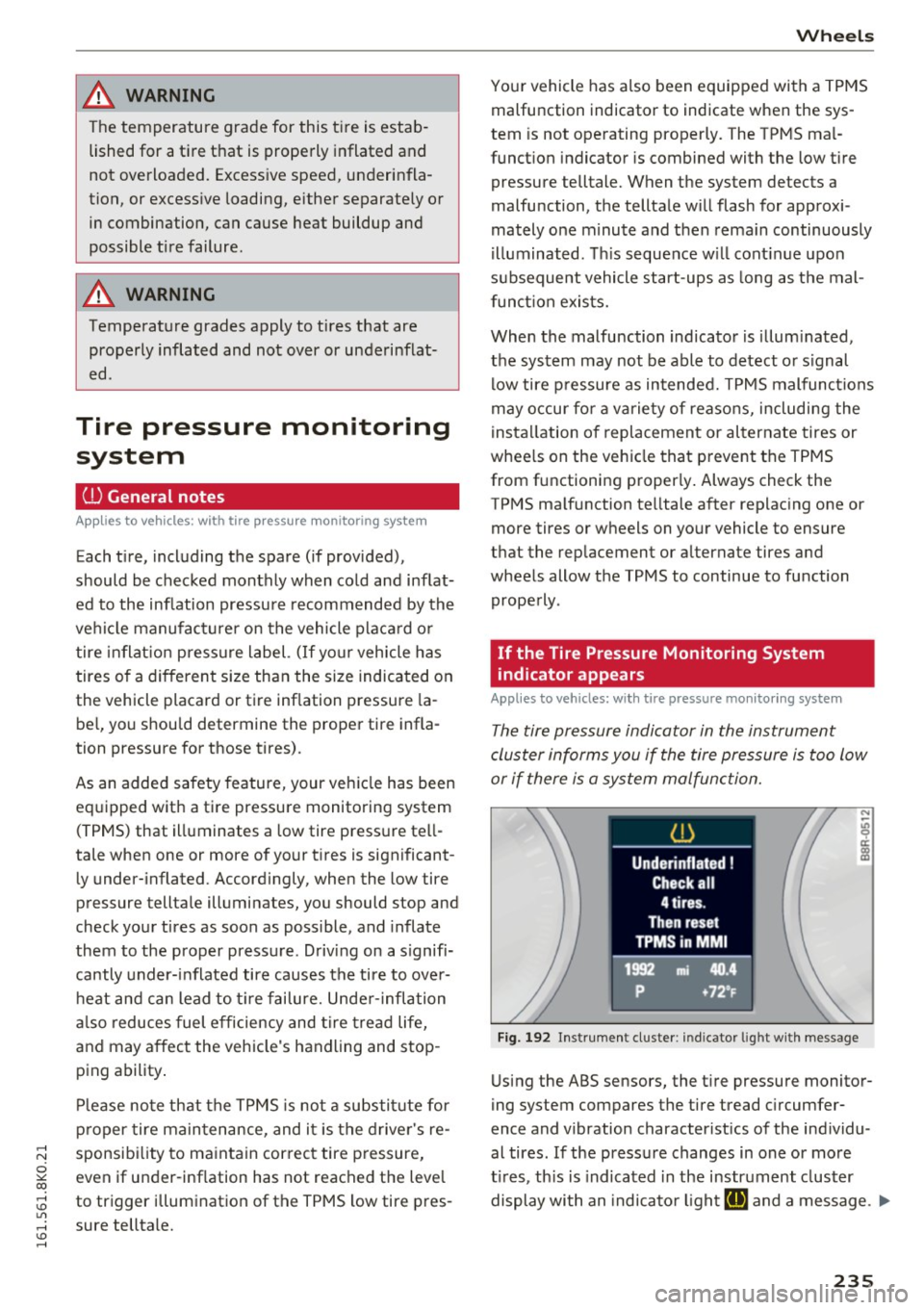
The tire pressure indicator in the instrument
cluster informs you if the tire pressure is too low
or if there is a system malfunction.
Fi g. 192 Instrument cluster: indicator light with message
Using the ABS sensors, the tire pressure monito r
ing system compares the tire tread c ircumfer-
ence and v ibration characterist ics of the ind ividu-
al tires. If the press ure changes in one or mo re
t ir es, th is is indicated in the instrument clust er
display with an indicato r light
RI] and a message . .,.
235
Page 238 of 278
Wheels
If on ly one t ire is affected , the location o f that
tire will be indicated .
The tire pressures must be stored in t he Info tain
men t sys tem ag ain each time the pressu res
change (switch ing between pa rtial and f ull load
pressure) or after changing or rep lacing a tire on
your vehicle ¢
pag e 236. The t ire pressu re moni
toring system only monitors the tire pressure you have stored. Refer to the tire pressure labe l for
the recommended tire pressure for your ve hicle
¢ page 227, fig.191 .
Tire tread circumference and vibration character
istics can change and cause a tire pressure war n
i n g if:
- the tire p ressure in one o r more tires is too low .
- the tire has struct ural damage.
- the tire was repl aced o r the tire p ressure was
changed and i t was not stored
¢ page 236 .
-the sp are t ire* or co llapsible spa re t ire* i s in-
st alled.
Indicator lights
[I] Loss of press ure in at leas t one tire 9 .6, .
Check the tires and rep lace o r repa ir if necessary .
Chec k/correc t th e p ressures o f all four tires and
s to re the pressure aga in in the In fota inment sys
tem
¢ page 236 .
@m (Tir e Pr essure Monito ring System) Tire
pressure : Sy stem malfunction !. If @m
appears
a fte r swi tc hi ng t he igni tion on or wh ile dr iving
a nd the
[I] indicator light in the instrument cl us
ter blinks for approximate ly one minute and then
stays on, there is system malfunction. Try to
sto re the correct tire pressures¢
page 236. If
the indicator light does turn off or tu rns on again
afte r a short period of t ime, dr ive to an a uth or
ized Aud i dealer o r authorized Aud i Serv ice Fac ili
ty immedia tely to have the malfunct ion correct
ed.
_& WARNING
- If the tire pre ssu re indic ator appe ars in the
display, reduce your speed immedia te ly and
avoid any har d steer ing or braking maneu
vers. Stop as soon as possib le and check the
t ir es and t heir pressu re.
236
'
- The drive r is responsible fo r maintain ing the
correct tire pressu re . You m ust check the
tire pressure regularly .
- Unde r ce rtain con ditions (such as a spo rty
driving style, w inter condit ions or unpaved
roads), the pressure monitor indicato r may
be de layed.
- Do not use run-flat tires on your vehicle . U s
ing them when no t perm itted can lead to
ve hicle damage o r acciden ts.
(D Tips
- The tire p ressure mon itor ing system can al
so stop wo rking when there is an ESC mal
function .
- Us ing snow chains may result i n a system
ma lfunction.
- The tires w ith the identif ication "AO" or
"RO"¢
page 224 have been matched w it h
you r Audi t ire pressu re monitoring system.
W e recommend tha t you use these tires.
Storing tire pressures
App lies to vehicles: with tire pressure mo nitori ng syste m
If the tire pressure changes or a tire is replaced,
it must be confirmed in the Infotainment sys tem .
.,. Make sure before stor ing t hat the t ire pressures
of all four tires meet the specified values and
are adapted to t he load
¢ page 22 7 .
.,. Switch o n the ign ition .
.,. Sele ct: the
I CARI fu nct io n but ton > Tir e pres
s ure monitoring
con trol but ton. O r
.,. Sele ct: the
I CAR I funct ion but ton > Car Sys
tems*
cont rol b utton > Servicing & check s >
Tire pressure monito ring .
(D Tips
Do not s tore the tire pressures if snow chains
a re installed .
Page 241 of 278
,....,
N
0
""' CX) ,....,
I.Cl U"I ,....,
I.Cl ,....,
.,. Always store the vehicle tool kit, the jack* and
the replaced tire in the luggage compartment
e::> page 126 .
Stowing the inflatable spare tire
.,. Release the air by unscrewing the valve stem .
.,. Screw the valve stem back in afterwards.
.. Wait a few hours before placing the whee l in
the spare wheel well
e::> .&_.
.. Secure the wheel with the large screw.
.,. Fold the cargo floor back down.
After using the infl atabl e spare w hee l
The inflatable spare tire can be re-used as long as
it is not damaged and is not worn down to the
tread wear indicators~ .&..
When you le t the air out of the infla table spare
tire, it does not assume its folded shape again for
several hours. Until then, it cannot be placed
back in the spare wheel well and stowed securely .
A WARNING
-Never use the spare tire if it is damaged or if
it is worn down to the tread wear indicators.
- If the inflatable spare tire is more than 6
years old, use it on ly in an emergency and
with extreme caut ion and careful driving.
- The inflatab le spare tire is intended only for
temporary and short-term use. It shou ld be
replaced as soon as poss ible with the nor
mal wheel and tire.
- The tire pressure value for the inflatable
spare tire is located on the driver's s ide B
pillar
e::> page 227, fig. 190.
- Maximum perm iss ible speed is 50 mph
(80 km/h).
- Avoid full-throttle accelerat io n, heavy brak
ing, and fast corneri ng.
- When the air is let out of the inflatable
spare wheel, it does not assume its folded
shape for several hours. Until then, it can not be placed back in the spare wheel well
and stowed secu rely .
- Never drive with more than one inflatable
spare tire .
- For technical reasons ., the use of tire chains
on the inf latab le spare tire is not perm itted.
Em ergen cy a ssis tanc e
If it is necessary to drive with tire chains,
the inflatable spare wheel must be mounted
on the rear a xle in the event of a flat in a
front tire. The newly available rear whee l
must then be installed in place of the front
wheel wi th the flat t ire. Installing the t ire
chai n befo re mounting the whee l and tire is
re comme nded.
- L oose items in the passenger compartment
can cause se rious personal injury during
ha rd br aking or i n an accident . Never store
the inflatable spare tire or jack * and too ls in
the passenge r compartment .
(D Note
- The inflatable spa re t ire has been deve loped
specifically fo r thi s ve hicle mode l.
It must
not be exchanged or used for other vehicle
mode ls. S imilar ly, inf latab le tires from oth
er veh icle mode ls must not be used.
- Normal summer or w inte r tires must not be
installed on the inflatable t ire rim.
Inflating inflatable spare
tire
Applies to vehicles: wit h inflatable s pare tir e
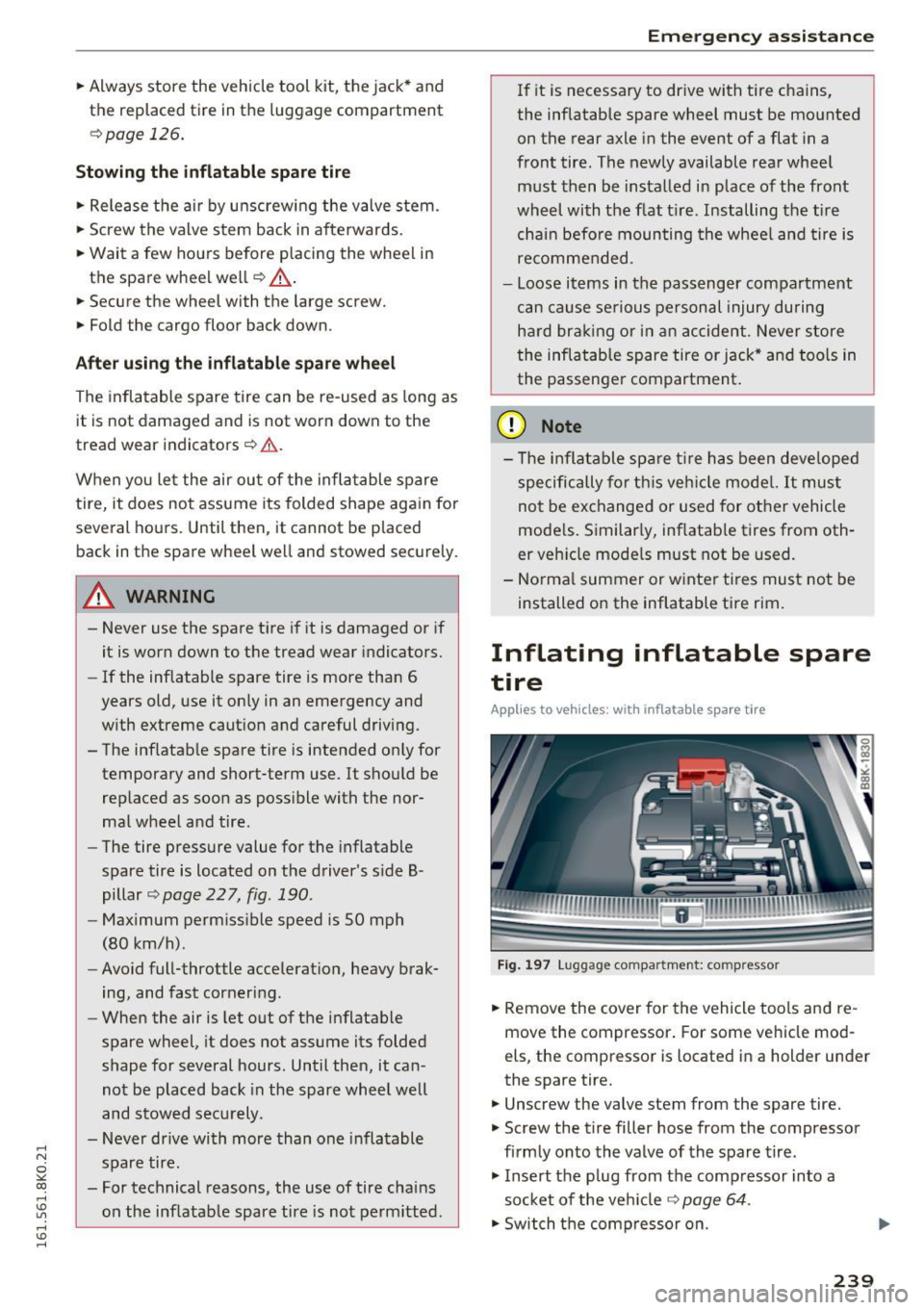
Fig. 19 7 Luggage compartm ent: compressor
.. Remove the cover for the vehicle tools and re
move the compressor . For some vehicle mod
els, the compressor is located in a holder under
the spare tire.
.. Unscrew the valve stem from the spare tire.
.,. Screw the t ire filler hose from the compressor
fi rmly onto the valve of the spare tire .
.,. Insert the p lug from t he comp ressor into a
soc ket of the veh icle
e:> page 64 .
.,. Sw itch t he comp ressor on. .,,.
239
Page 242 of 278
Emergency assistance
"'Let the compressor run until the va lue specified
on the tire pressure label is reach ed
¢ page 227, fig. 191 . Switch the compressor
off after running for 12 minutes at the mos t -
danger of overheating!
A WARNING
The compressor and the tire filler hose can become extremely hot while they are running
- danger of burns!
CD Note
Switch the compressor off after running for
12 minutes at the most -danger of overheat
ing! Allow the compressor to cool down for a
few minutes before you use it again.
Replacing wheels
Before changing a wheel
Observe the following precaut ions for your own
and your passenger's safety when changing a
wheel.
"' After you experience a tire failure, pull the car
well away from moving traffic and try to reach
level ground before you stop ¢.&_ .
"' All passengers shou ld
leave the car and move
to a safe location (for instance, behind the
guardrail) ¢.&_ .
"' Engage the
parking brake to prevent your vehi
cle from rolling unintentionally ¢&_ .
"' Sh ift into
1st gear on vehicles w ith manual
transmission, or move the
selector lever to the
P position
on vehicles with automatic transmis
sion .
"' If you are towing a trailer: unhitch the trailer
from your vehicle.
"' Take the
jack¢ page 237 and the spare tire
¢ page 238 out of the luggage compartment .
A WARNING
You or your passengers could be injured wh ile
chang ing a wheel if you do not follow these
safety precautions :
- If you have a flat tire, move a safe distance
off the road . Turn off the engine, turn the
240
emergency flashers on and use other warn
ing devices to alert other motorists.
- Make sure that passengers wait in a safe
place away from the vehicle and well away
from the road and traffic.
- To help prevent the vehicle from moving
suddenly and possibly slipping off the jack,
always fully set the parking brake and block
the wheel diagonally opposite the wheel be ing changed with the folding chocks or oth
er objects . When one front whee l is lifted
off the ground, placing the Automat ic
T ransmission in "P" (Par k) w ill
not prevent
the vehicle from moving.
- Before you change a wheel, be sure the
ground is level and firm . If necessary, use a
sturdy board under the jack.
- Always store the vehicle tool kit, the jack*
and the replaced tire in the luggage com
partment
¢ page 126.
CD Note
If you a re changing the wheel on a steep in
cline, use a rock or similar object to block the
opposite wheel to prevent the vehicle from
moving.
(D Tips
Obey all laws.
Changing a wheel
When you change a wheel, follow the sequence
described below step-by-step and in exactly that
order .
1. Remove the decorative wheel cover* or the
wheel bolt caps* . For more details see also
¢ page 241, Decorative wheel covers or
¢ page 241, Wheels with wheel bolt cops.
2. Loosen the wheel bolts ¢page 242.
3. Locate the proper mounting point for the
jack and align the jack below that point
¢ page 242.
4. Lift the car with the jack¢ page 242.
5. Remove the wheel with the flat tire and then
install the
spare tire ¢page 243.
6. Tighten all whee l bolts lightly .
Page 243 of 278
,....,
N
0
""' CX) ,....,
I.Cl U"I ,....,
I.Cl ,....,
7. Lower the vehicle with the jack .
8 . Use the wheel bolt wrench and
firmly tighten
all wheel bolts in a crisscross pattern
c>page242.
9. Replace the decorative wheel cover* or the
wheel bolt caps* .
A WARNING
Always read and follow all WARNINGS and in
formation
¢ &. in Raising the vehicle on
page 243
and c> page 244.
After changing a wheel
A wheel change is not complete without the do
ing the following .
.,. Always store the vehicle tool kit, the jack*, and
the replaced tire in the luggage compartment
c>page 126.
.,. Check the tire pressure of the spare tire as soon
as possible.
.,. As soon as possible, have the
tightening tor·
ques
on all wheel bolts checked with a torque
wrench. The correct tightening torque is 90 ft lbs. (120 Nm).
.,. Have the flat tire
replaced as soon as possible.
@ Tips
- If you notice that the wheel bolts are cor
roded and difficult to turn while changing a
tire, they should be replaced before you
check the tightening torque.
- D rive at reduced speed until you have the
tightening torques checked.
Emergency assistance
Decorative wheel covers
Applies to vehicles: with decorative wheel covers
T he decorative wheel covers must be removed
first to access the wheel bolts.
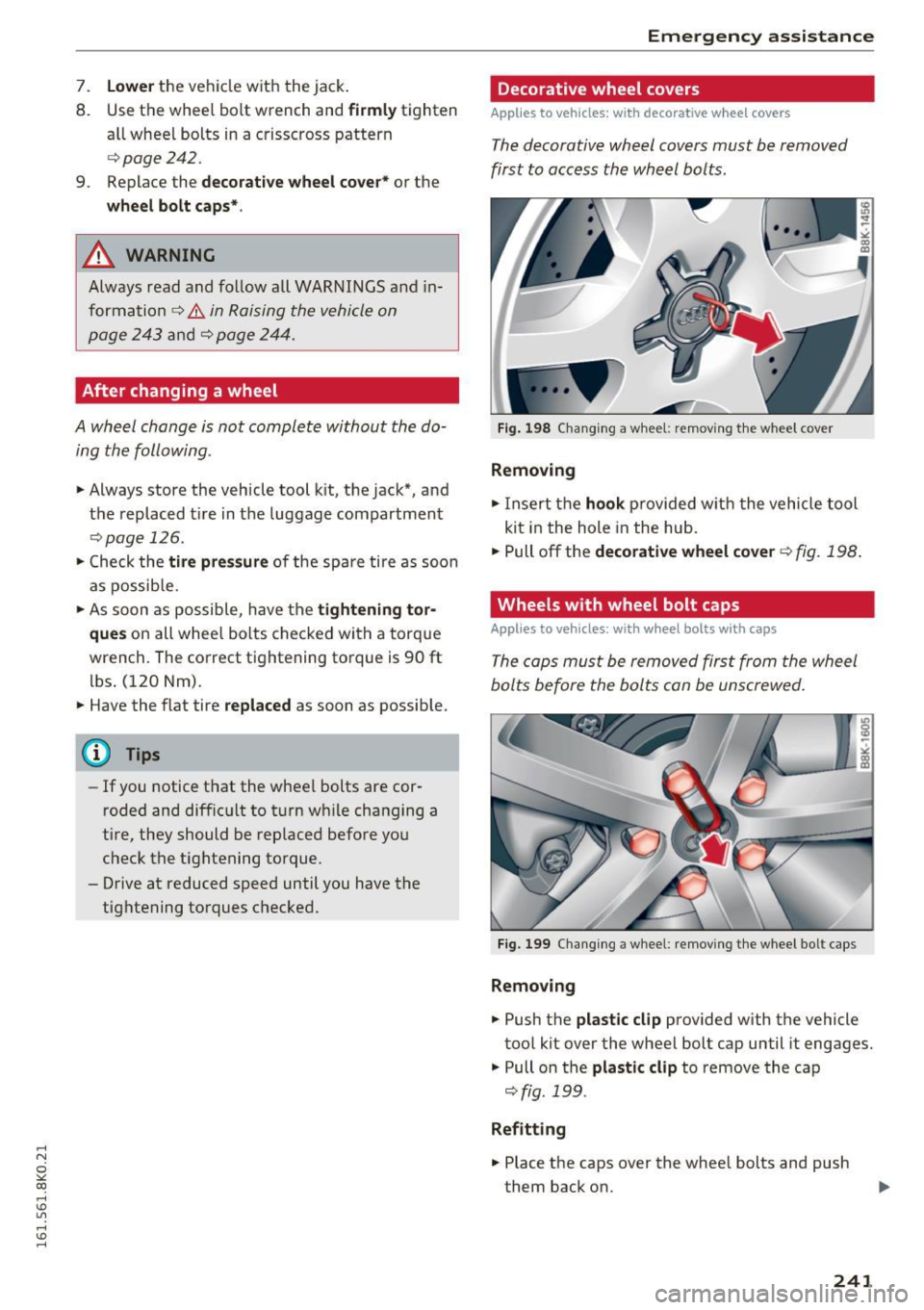
Fig. 198 Changing a whee l: re moving the wheel cover
Removing
.,. Insert the hook provided with t he vehicle tool
kit in the hole in the hub.
.,. Pull off the
decorative wheel cover c> fig. 198 .
Wheels with wheel bolt caps
Applies to vehicles: with wheel bolts w,th caps
The caps must be removed first from the wheel
bolts before the bolts can be unscrewed .
Fig. 199 Changing a wheel: removing the wheel bolt cap s
Removing
.,. Push the plastic clip provided with the vehicle
too l kit over the wheel bolt cap un til it engages .
.,. Pull on the
plastic clip to remove the cap
c>fig. 199 .
Refitting
.,. Place the caps over the whee l bolts and push
them back on.
241
Page 244 of 278
Emergency assistance
The caps are to protect and keep the whee l bolts
clean.
Loosening and tightening the wheel bolts
The wheel bolts must be loosened before raising
the vehicle.
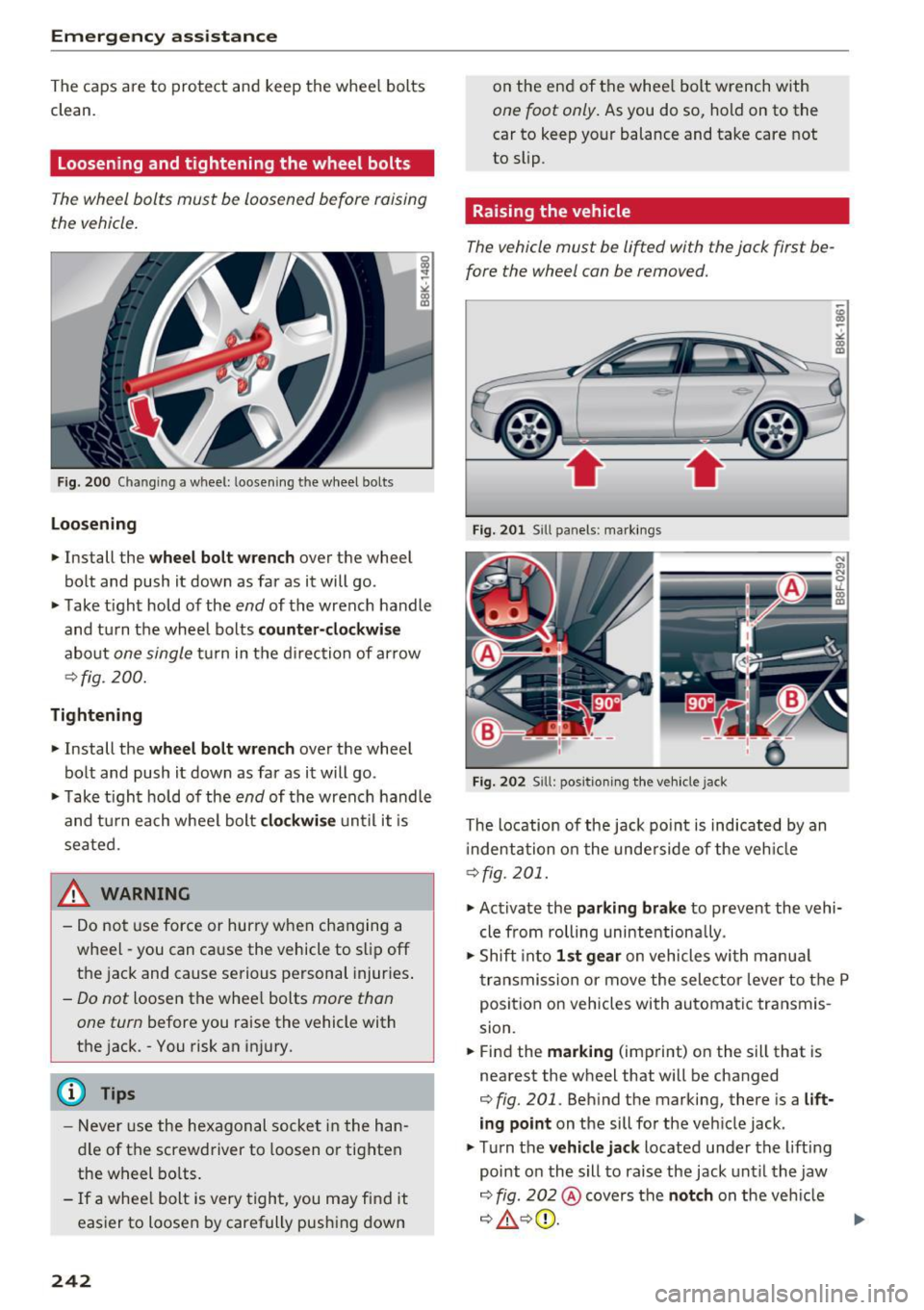
Fig . 200 Changing a wheel: loosening the wheel bolts
Loosening
• Install the wheel bolt wrench over the wheel
bolt and push it down as far as it will go.
• Take tight hold of the
end of the wrench handle
and turn the wheel bolts
counter-clockwise
about one single tur n in the direction of ar row
¢fig. 200.
Tightening
• Install the wheel bolt wrench over the wheel
bolt and push it down as far as it will go.
• Ta ke tight hold of the
end of the wrench handle
and turn each whee l bolt
clockwise until it is
seated.
_& WARNING
- Do not use force or hurry when changing a
wheel -you can cause the vehicle to slip off
the jack and cause serious personal injuries.
-Do not loosen the whee l bolts more than
one turn
before you raise the vehicle with
the jack. -You risk an injury .
(D Tips
-Never use the hexagonal socket in the han
dle of the screwdriver to loosen o r tighten
the wheel bolts.
- If a whee l bolt is very tight, you may find it
easier to loosen by carefully push ing down
242
on the end of the whee l bolt wrench with
one foot only. As you do so, hold on to the
car to keep your balance and take care not
to slip.
Raising the vehicle
The vehicle must be lifted with the jack first be
fore the wheel can be removed.
Fig. 201 Sill panels: marking s
Fig. 202 Sill: positio ning the vehicle jack
The location of the jack point is indicated by an
i ndentation on the underside of the vehicle
¢fig. 201.
• Activate the parking brake to prevent the vehi
cle from rolling unintentionally.
• Shift into
1st gear on vehicles with manua l
transmission or move the selector lever to the P
position on vehicles with automatic transmis
sion.
• Find the
marking (imp rint) on the sill that is
nearest the wheel that will be changed
¢ fig. 201. Behind the marking, there is a lift
ing point on the sill for the vehicle jack.
• Turn the
vehicle jack located under the lifting
point on the sill to raise the jack until the jaw
¢ fig. 202@covers the notch on the veh icle
¢ ~ ¢©. ~