child lock AUDI A4 2018 User Guide
[x] Cancel search | Manufacturer: AUDI, Model Year: 2018, Model line: A4, Model: AUDI A4 2018Pages: 403, PDF Size: 66.81 MB
Page 71 of 403
of injuries, never leave children unattended in
the vehicle with the vehicle key.
(D Note
-To reduce the risk of damage to the vehicle
electrical system, never attempt to charge
the vehicle battery by connecting accesso
ries that provide power, such as solar panels
or battery chargers, to the 12 Volt sockets
or the cigarette lighter.
-To reduce the risk of damage to the sockets,
only use plugs that fit correctly.
Storage
Cup holders
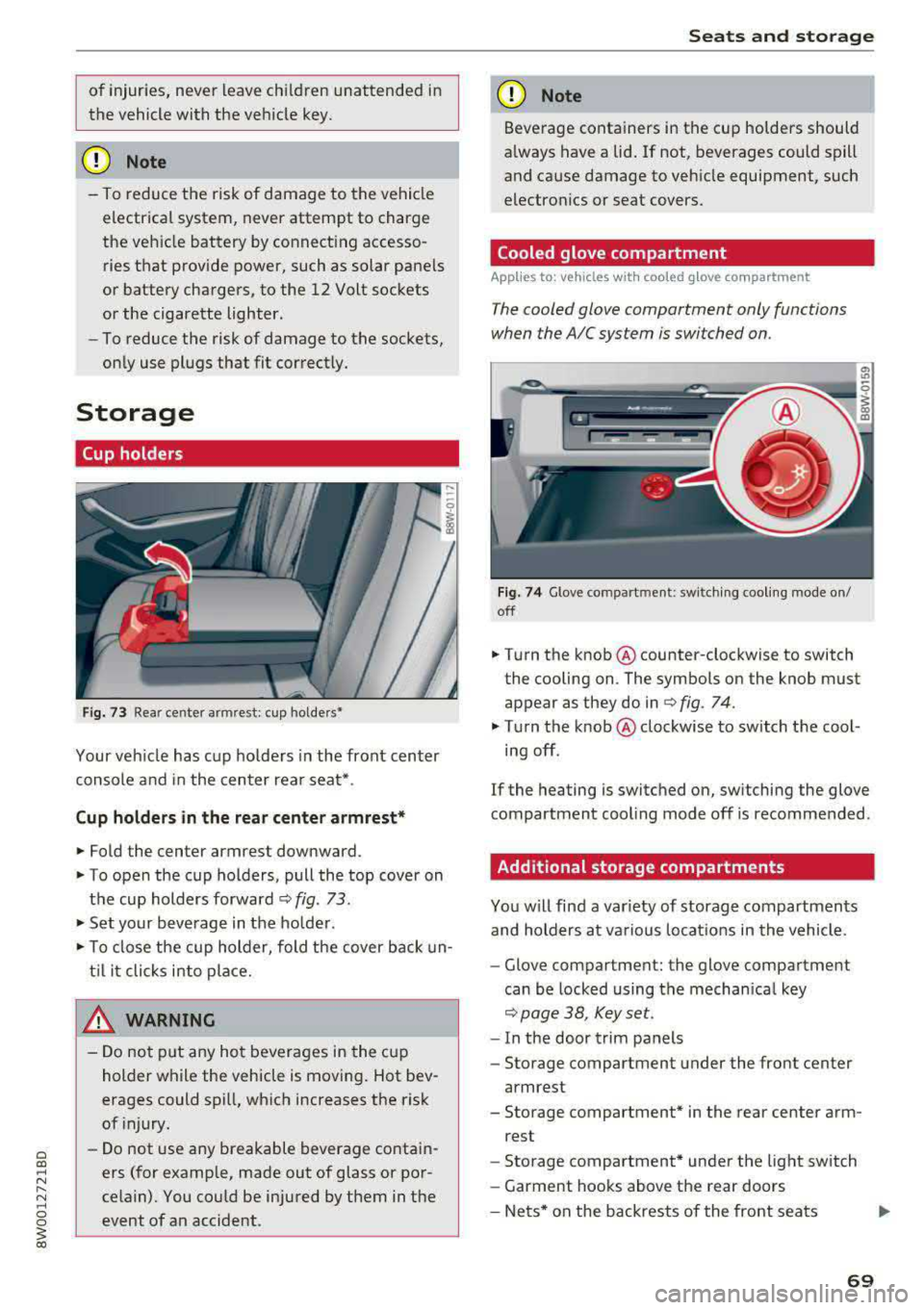
Fig. 73 Rea r cente r arm rest: cup holde rs•
Your vehicle has cup holders in the front center
console and in the center rear seat* .
Cup holders in the rear center armrest*
.,. Fold the center armrest downward.
.,. To open the cup holders, pull the top cover on
the cup holders forward
c::> fig. 73.
.,. Set your beverage in the holder .
.,. To close the cup holder, fold the cover back un
til it clicks into place.
& WARNING
-Do not put any hot beverages in the cup
holder while the vehicle is moving. Hot bev
erages could spill, which increases the risk
of injury.
-Do not use any breakable beverage contain
ers (for example, made out of glass or por
celain). You could be injured by them in the event of an accident.
Seats and storage
(D Note
Beverage containers in the cup holders should
always have a lid. If not, beverages could spill
and cause damage to vehicle equipment, such
electronics or seat covers.
Cooled glove compartment
App lies to: vehicles wit h coo led g love co mpartment
T he cooled glove compartment only functions
when the AIC system is switched on .
Fig. 74 Glove compart ment : swi tching cooling mode on/
off
.,. Turn the knob @counter-clockwise to switch
the cooling on . The symbols on the knob must
appear as they do in
r=> fig. 74.
.,. Turn the knob @clockwise to switch the cool
ing off.
If the heating is switched on, switching the glove
compartment cooling mode off is recommended .
Additional storage compartments
You will find a var iety of storage compartments
and holders at various locations in the vehicle .
-Glove compartment: the glove compartment
can be locked using the mechanical key
c::> page 38, Key set.
-In the door trim panels
- Storage compartment under the front center
armrest
- Storage compartment* in the rear center arm-
rest
- Storage compartment* under the light switch
- Garment hooks above the rear doors
-Nets* on the backrests of the front seats
69
Page 91 of 403
a co .... N ..... N .... 0 0
3 co
~ Applies to: automatic transmission: Select the
P selector lever position .
~ Turn the eng ine off ¢,&. .
~ Applies to: manual transmission: Engage 1st
gear.
~ Turn the steering wheel when parking on in
clines so that the wheels will roll into the curb
if the veh icle starts moving .
A WARNING
-Never accelerate or release the clutch pedal
carelessly when a gear or a selector lever
posit ion (automatic transmission) is engag
ed whi le the vehicle is stationary and the en
gine is running. Otherwise, the vehicle will
start to move immediately and this cou ld re
sult in an accident.
- Emergency braking should only be used in
an emergency, when the normal brake peda l
has failed or the brake pedal is obstructed.
During emergency braking, your veh icle will
brake sim ilar to heavy brak ing . ESC and the
associated components (ABS, ASR, EDL)
cannot overcome the laws of physics,
Around curves and when road or weather
conditions are bad, a full brake application
can cause the vehicle to skid or the rear end
to swerve, which increases the risk of an ac
c ident.
- If the power supply fails, you cannot set the
park ing brake if it is released . If th is is the
case, stop the veh icle on leve l ground and
secure it by engaging 1st gear (manual
transmiss ion) or select ing the P selector lev
er position (automatic transm iss ion). See an
authorized Aud i dealer or autho rized Aud i
Service Facility for assistance .
- Always take the vehicle key with you when
leaving your vehicle, even if for a short pe ri
od of time. This applies particu larly when
children remain in the vehicle. Otherwise,
children could start the engine, release the
parking brake or operate electrical equip
ment such as powe r windows, which in
creases the risk of an acc ident.
- No one, especially children, shou ld remain
in the vehicle when it is locked. Locked
doors make it more difficult for emergency
D riving
workers to get into the vehicle, which puts
lives at risk.
(D Tips
Ap plies to : vehicles with auto matic transmissions
When stopp ing at a traff ic signa l or stopp ing
i n city traffic, you can set the park ing brake
manually . The vehicle does not have to be
held with the brake pedal. The park ing brake
eliminates the tendency to creep when a se
l ector lever position is engaged. As soon as
you press the a ccelerator peda l, the parking
brake releases automatically and your vehicle
starts to move r=;,
page 89.
(j) Tips
-Occasional noises when the pa rking brake is
set and released are normal and are no t a
cause for concern.
- The parking brake goes through a self-test
cycle at regular intervals when the vehicle is
stopped. Any noises assoc iated with this are
normal.
- If there is a power failure, the parking brake
wi ll not set if it is released, and it will not
re lease if it is
set ¢.&. . See an a uthorized
Audi dealer or authorized Audi Service Fa cility for assistance.
Starting to drive
Various convenience and safety funct ions may be
available when the vehicle begins driving, de
pending on vehicle equipment .
Starting on hills with the p arking brake set
Requirement: the driver's door must be closed .
~ To start driving comfortably when on a hill , set
the parking brake and begin driving as usual.
The braking force of the parking brake does not
release a utomatically until the wheels build up
enough driving force.
Starting on hills with hill hold assist
Hi ll ho ld assist makes it easier to start on hills.
Requirement: the driver's door must be closed
and the engine must be running.
89
Page 261 of 403
Driving sa fe ty
Loose items in the luggage compartment can
shift s udden ly, changing vehicle handling charac
ter istics. Loose items can also increase the risk of
serious personal in jury in a sudden vehicle
ma
neuver or in a coll is ion.
.,. Distribute the load evenly in the luggage com
partment .
.,. Always place and properly secure heavy items in
the luggage compartment as low and as far for
ward as possible
c> fig . 226 .
.,. Secure luggage us ing the tie-downs provided
¢ page 73 .
.,. Make su re that the rea r seatbac k is securely
latched in place.
A WARNING
Improperly stored luggage or othe r items can
fly through the vehicle causing serious per
sonal injury in the event of hard braking or an
accident. To help reduce the risk of serious
personal injury:
- Always put objects, for example, luggage or
other heavy items in the luggage compart
ment.
- Always sec ure objects in the luggage com
partment using the tie-down eyelets and
s u itable straps.
A WARNING
Heavy loads will influence the way your vehi
cle handles. To he lp reduce the r isk of a loss
of contro l leading to serious pe rsonal i njury:
- Always keep in mind when transporting heavy objects, that a change i n the center of
grav ity can also cause changes in vehicle
hand ling:
- Always distr ibute the load as even ly as
possible.
- Place heavy objects as far forward in the
luggage compartment as poss ible.
- Never exceed the Gross Axle Weight Rating
o r the Gross Vehicle Weight Rating specified
on the safety compliance sticker on the driv
er's side B-pillar respective ly on the front
end of the driver's door. Exceeding permissi
ble weight standards can cause the veh icle
to slide and handle differently .
260
-Please observe info rmation on safe driving
¢page 254.
A WARNING
To he lp prevent po isonous exhaust gas from
being drawn into the vehicle, always keep the
rear lid closed while driving.
- Never transport objects larger than those
fitting completely into the luggage area be
cause the rear lid cannot be fully closed.
- If you absolutely must dr ive with the rear lid
open, observe the following notes to reduce
the risk of poisoning :
- C lose all windows,
- Close the s unroof*,
- Open all a ir outlets in the instrument pan-
el,
- Switc h off the air reci rculat ion,
- Set the fresh air fan to the highest speed.
A WARNING
-
Always make sure that the doo rs, all win
dows, the sunroof * an d the rear lid are se
curely closed and locked to red uce the risk of
i n jury when the veh icle is not being used.
- After closing the rear lid, always make sure
that it is properly closed and locked.
- Never leave your ve hicle unattended espe
cially with the rear lid left open. A child
co uld crawl into the vehicle th rough the lug
g age com partment an d close the rea r lid
be
coming tr apped and unab le to ge t out . Be
ing trapped in a vehicle can lead to ser ious
pe rsonal i nju ry.
- Never let c hild ren p lay in or around the vehi
cle.
- Never let passengers ride in the luggage
compa rtment. Vehicle occupants mus t
al
ways be p roperly restrained in one of the ve
hicle's seat ing pos itions.
(D Tips
- Air circul ation helps to reduce w indow fog
ging . Stale ai r escapes to the o uts ide
t h roug h vents in the trim panel. Be sure to
keep these slots free and open.
Page 268 of 403
Automatic safety belt r etractors
Every safety be lt is equ ipped wi th an automatic
be lt retractor on the shoulder belt. Th is feature
l ocks the belt when the belt is p ulled out fast,
during hard braking and in an accident. The belt may also lock when you drive up or down a steep
h ill or through a sharp curve. During normal driv
ing the belt lets you move freely .
Safety be lt pret en sioner s
The safety belts are equipped with a belt preten
sioner that helps to tighten the safety belt and
remove slack when the pretensioner is activated
c:> page 269. The function of the pretensioner is
monitored by a warning light
c:> page 32.
Con vertible loc king retractor
Every safety belt exc ept the one on the driver
seat is equipped with a convertible locking retrac
tor that
mu st be used when the safety belt is
used to attach a child safety seat. Be sure to read
the impo rtant information about this feature
c:> page 306.
A WARNING
Improperly posit ioned safety be lts ca n cause
ser ious injury in an accident
c:> page 267,
Safety belt position.
-Safety belts offer optimum protection only
when the seatback is upr ight and belts are
prope rly pos itioned on the body.
-Always ma ke sure tha t the rear sea t bac k
rest to wh ic h t he cente r rea r safety be lt is
attached is secure ly latched whenever the
rear center safety belt is being used. If the
backrest is not securely latched, the passen
ger will move forward with the backrest dur
ing sudden braking, in a sudden maneuver
and especially in a cras h.
-Never attach the safety belt to the buckle
for another seat. Attaching the belt to the
wrong buckle w ill red uce safety belt effec
t iveness and can cause serious personal in
jury.
-A passenger who is not p roperly restrained
can be seriously in ju red by the safety be lt it
self when it moves from the stronger par ts
Safet y bel ts
of the body into critical areas like the abdo
men .
-Always lock the convertible locking retractor
when you are securing a child safety seat in
the vehicle
c:> page 308.
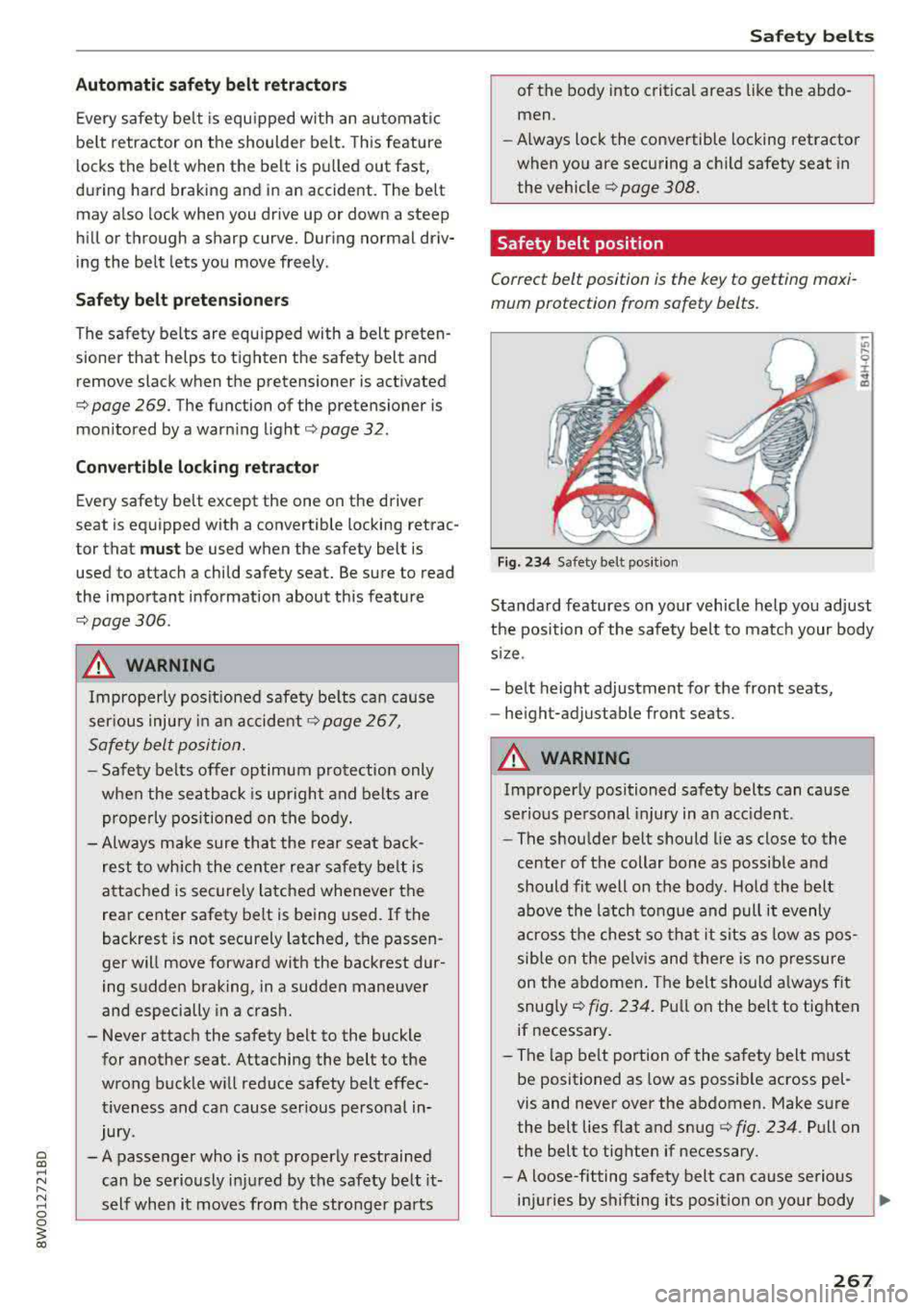
Safety belt position
Correct belt position is the key to getting maxi
mum protection from safety belts.
Fig. 23 4 Safety belt pos it ion
Standard features on your vehicle help you adjust
the position of the safety belt to ma tch your body
s iz e.
-be lt height adjustment for the front seats,
-he ight-adjustable front seats .
A WARNING
Improperly positioned safety belts can ca use
se rious personal injury in an acc ident.
-The shou lder belt should lie as close to the
center of the collar bone as possib le and
should fit well on the body . Ho ld the belt
above the latch to ngue and pull it evenly
across the chest so th at it sits as low as pos
sible on the pe lvis and there is no p ressure
on the abdomen . The belt should a lway s fit
snug ly
c:> fig. 234. Pu ll on the belt to tighten
if necessary .
-The lap be lt portion of the sa fety belt must
be positioned as low as possible across pel
vis and never over the abdomen. Make sure
the belt lies flat and snug
c:> fig. 234 . Pull on
the belt to tighte n if necessary.
-A loose-fitting safety belt can cause serious
in ju ries by shifting its position on your body
~
267
Page 276 of 403
-Improper installation of child restraints can
reduce their effect iveness or even prevent
them from providing any protection.
- An improper ly installed ch ild restraint can
interfere w ith the airbag as it deploys and
seriously injure or even kill the child
-even
with an Advanced Airbag System .
- Always carefu lly follow the manufacturer's
instructions provided with the child safety
seat or carrier.
- Always make sure that there is nothing on
the front passenger seat that will cause the
capacit ive passenger detection system in
the seat to signa l to the Airbag System that
the seat is occupied by a person when it is
not, or to signa l tha t it is occ upied by some
one who is heavier than the person actua lly
sitting on the seat. The p resence of addi
t ional objects could cause the passenge r
front airbag to be turned on when it shou ld
be off, or could cause the airbag to work in a
way that is different from the way it would have worked without the object on the seat .
Front airbags
Description of front airbags
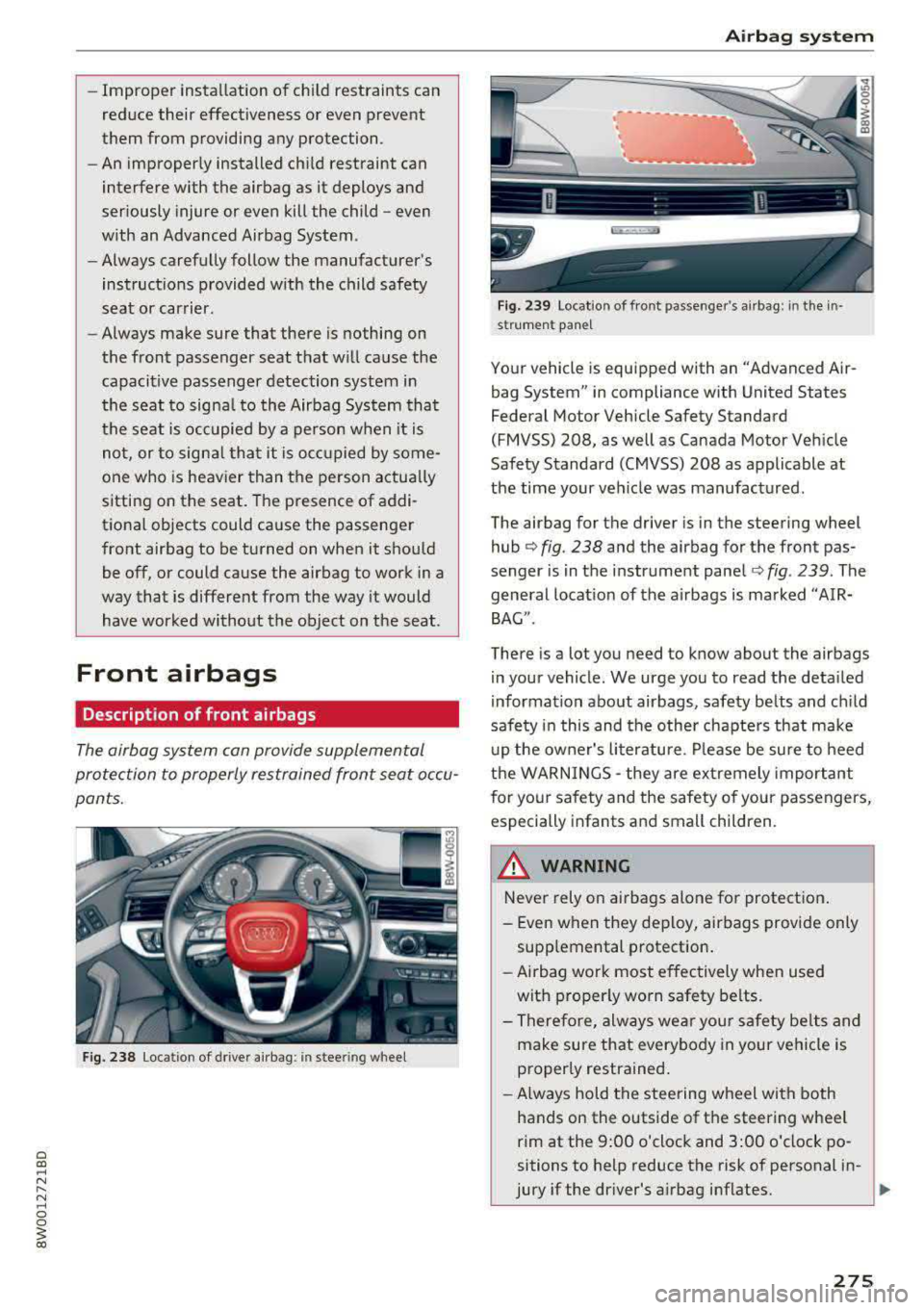
The airbag system can provide supplemental
protection to properly restrained front seat occu
pants.
F ig. 238 Location of driver airbag: in steering whee l
Airb ag sys tem
Fig. 239 Location of front passenger's airbag: in the in·
st rument pane l
Your vehicle is equipped with an "Advanced Air
bag System" in compliance with United States
Federal Motor Vehicle Safety Standard
(FMVSS) 208, as well as Canada Motor Veh icle
Safety Standard (CMVSS) 208 as applicable at
the time your veh icle was manufactured.
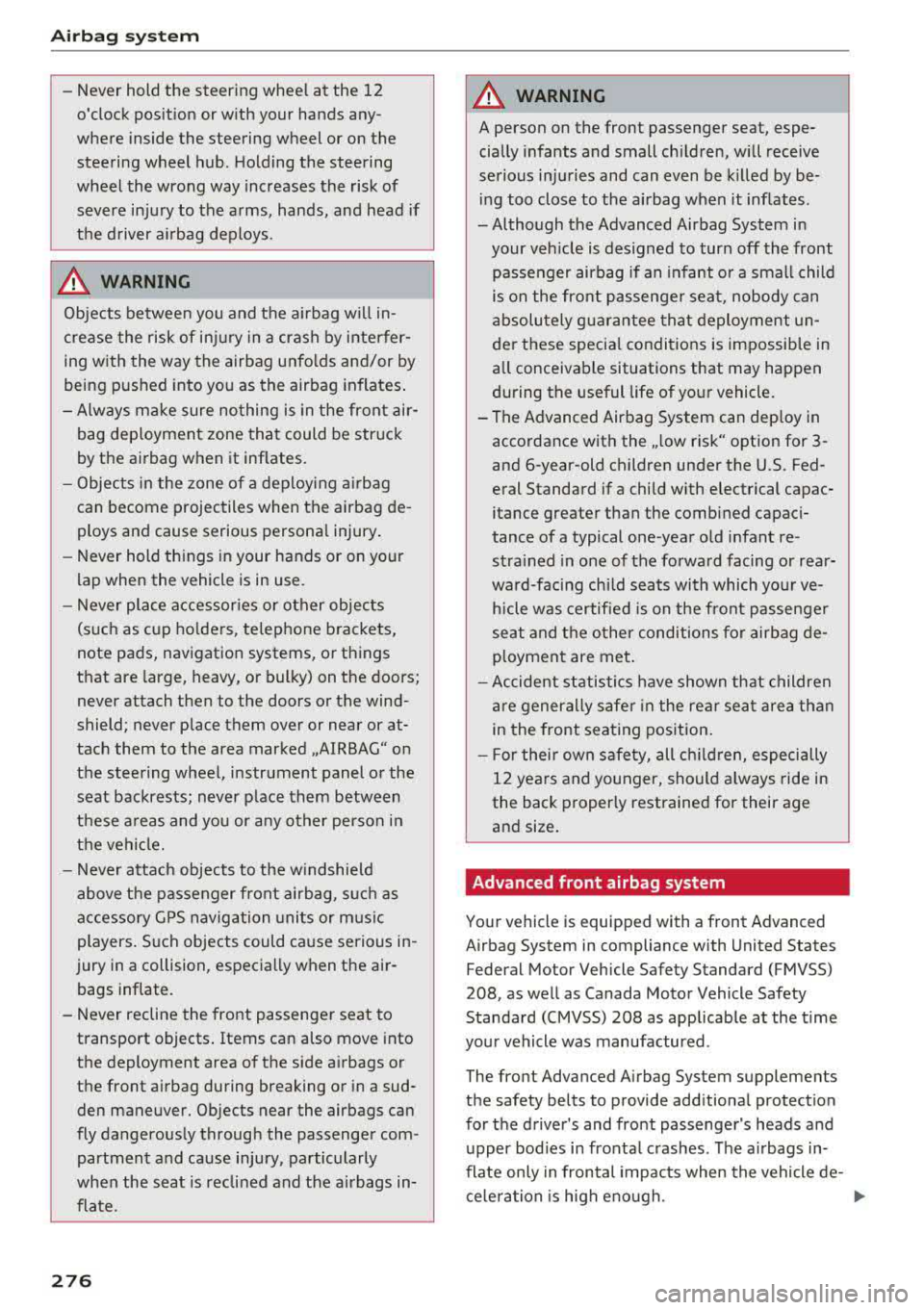
The airbag for the driver is in the steering wheel
hub
¢ fig. 238 and the airbag for the front pas
senger is in the instrument panel
~ fig . 239. The
general locat ion of the airbags is marked ''AIR·
BAG".
There is a lot you need to know about the airbags
i n your vehicle. We urge you to read the deta iled
information abo ut airbags, safety belts and child
safe ty in this and the othe r chapte rs that make
u p the owner's li terature . Please be sure to heed
the WARNINGS
-they are ex tremely important
for your sa fety and the safety of your passengers,
especially infants and small children.
A WARNING
-
Never rely on ai rbags alone for protection .
- Even w hen they deploy, airbags provide only
supp lemental protection .
- Airbag wor k most effec tively when used
with p roper ly worn safety be lts.
- Therefo re, always wea r you r safety be lts and
make sure that everybody in your ve hicl e is
p roper ly restrained.
- Always hold the steering w heel with both
hands on the outside of the steering wheel
rim at the 9:00 o'clock and 3:00 o'clock po
sitions to help reduce the risk of personal in-
jury if the driver's a irbag inflates.
~
275
Page 277 of 403
Airbag system
-Never hold the steering wheel at the 12
o'clock position or with your hands any
where inside the steering wheel or on the
steering wheel hub. Holding the steering
wheel the wrong way increases the risk of
severe injury to the arms, hands, and head if
the driver airbag deploys.
,& WARNING
Objects between you and the airbag will in
crease the risk of injury in a crash by interfer
ing with the way the airbag unfolds and/or by
being pushed into you as the airbag inflates.
- Always make sure nothing is in the front air-
bag deployment zone that could be struck
by the airbag when it inflates.
-
- Objects in the zone of a deploying airbag
can become projectiles when the airbag de
ploys and cause serious personal injury.
- Never hold things in your hands or on your
lap when the vehicle is in use.
- Never place accessories or other objects
(such as cup holders, telephone brackets,
note pads, navigation systems, or things
that are large, heavy, or bulky) on the doors;
never attach then to the doors or the wind
shield; never place them over or near or at
tach them to the area marked ,,AIRBAG" on
the steering wheel, instrument panel or the
seat backrests; never place them between
these areas and you or any other person in
the vehicle.
- Never attach objects to the windshield
above the passenger front airbag, such as
accessory GPS navigation units or music
players. Such objects could cause serious in
jury in a collision, especially when the air bags inflate.
- Never recline the front passenger seat to transport objects. Items can also move into
the deployment area of the side airbags or
the front airbag during breaking or in a sud
den maneuver. Objects near the airbags can
fly dangerously through the passenger com partment and cause injury, particularly
when the seat is reclined and the airbags in
flate.
276
,& WARNING
, -
A person on the front passenger seat, espe
cially infants and small children, will receive
serious injuries and can even be killed by be ing too close to the airbag when it inflates .
- Although the Advanced Airbag System in your vehicle is designed to turn off the front passenger airbag if an infant or a small child
is on the front passenger seat, nobody can
absolutely guarantee that deployment un
der these special conditions is impossible in
all conceivable situations that may happen
during the useful life of your vehicle.
- The Advanced Airbag System can deploy in accordance with the
,.low risk" option for 3-
and 6-year-old children under the U.S. Fed
eral Standard if a child with electrical capac
itance greater than the combined capaci
tance of a typical one-year old infant re
strained in one of the forward facing or rear
ward-facing child seats with which your ve hicle was certified is on the front passenger
seat and the other conditions for airbag de
ployment are met.
- Accident statistics have shown that children
are generally safer in the rear seat area than
in the front seating position.
- For their own safety, all children, especially
12 years and younger, should always ride in
the back properly restrained for their age
and size.
Advanced front airbag system
Your vehicle is equipped with a front Advanced
Airbag System in compliance with United States
Federal Motor Vehicle Safety Standard (FMVSS)
208, as well as Canada Motor Vehicle Safety
Standard (CMVSS) 208 as applicable at the time
your vehicle was manufactured .
-
The front Advanced Airbag System supplements
the safety belts to provide additional protection
for the driver's and front passenger's heads and upper bodies in frontal crashes. The airbags in
flate only in frontal impacts when the vehicle de-
celeration is high enough.
ll>
Page 300 of 403
a co .... N ,....
N .... 0 0
3 co
-Take the child restraint off the front passen
ger seat and install it properly at one of the
rear seat positions if the
P ASS ENGER A IR
BA G
OFF~; light does not stay on .
-Have the airbag system inspected by your
authorized Audi dealer immediately .
The child seats listed in categories A to C have been statically tested by Audi only for the Ad
vanced Airbag function.
Important safety instructions for using
child safety seats
Correc t use of child safety sea ts substan tially re
duces the risk of injury in an accident!
As the driver, you are responsible for the safety
of everybody in the vehicle, especially children:
~ Always use the right child safety seat for each
child and a lways use it
properly ~ page 301.
~ Always carefully follow the child safety seat
manufacturer 's instructions on how to route
the safety belt properly through the child safe
ty seat .
~ When using the vehicle safety be lt to install a
child safety seat , you must first activate the
convertible locking retractor on the safety be lt
to prevent the child safety seat from moving
¢ page 306.
~ Push the child safety seat down with your fu ll
weight to get the safety be lt really tight so that
the seat cannot move forward or sideways
more than one inch (2.5 cm).
~ Secure unused safety belts on the rear seat
¢ page 301 .
Always remember: Even though your vehicle is
equipped with an Advanced Airbag system, all
children, especially those 12 years and younger,
should always ride in the back seat properly re
stra ined fo r their age and size.
_& WARNING
Not using a ch ild safety seat, using the wrong
child safety seat or improper ly installing a
Ch ild safety
child restraint increases the risk of serious
personal injury and death.
-All vehicle occupants and especially children
must be restrained properly whenever riding
in a vehicle. An unrestra ined or improperly
restrained child could be injured by striking
the inter ior or by being ejected from the ve
hicle dur ing a sudden maneuve r or impact .
An unrest rained or improperly restrained
child is a lso at greater r is k of injury or death
through contact w ith an inflating a irbag.
-Commerc ially availab le child safe ty seats
are requi red to comply with U.S . Federal
Motor Vehicle Safety Standard (FMVSS) 213
(in Canada CMVSS 213).
-When buying a child restra int, select one
that fits your ch ild and the vehicle .
-Only use child restraint systems that fully
contact the flat portion of the seat cush
ion. The ch ild restraint must not t ip or
lean to either side . Audi does not recom
mend using child safety seats that rest on
legs or tube-like frames. They do not pro
vide adequate contact with the seat.
-Always heed all lega l requirements per
ta ining to the insta llation and use of child
safety seats and carefu lly follow the in
structions provided by the manufacturer
of the seat you are using .
-Never allow children under 57 inches
(1.45 mete rs) to wear a normal safety be lt.
They must a lways be restrained by a proper
child restraint system. Otherwise, they
could sustain injuries to the abdomen and
neck areas during sudden braking maneu
vers or accidents .
-Never let more than one child occupy a child
safety seat.
-Never let babies or o lder children ride in a
vehicle while sitting on the lap of another
passenger .
-Holding a child in your arms is never a sub
stitute for a chi ld restrain t system .
- The strongest person cou ld not ho ld the
ch ild with the forces that exist in an acci
dent. The child will strike the interior of
the vehicle and can also be struck by the passenger.
299
Page 302 of 403
-Take the child restraint off the front passen
ger seat and install it properly at one of the
rear seat positions if the
PASSENGER AIR
BAG OFF
~; light does not stay on.
- Have the airbag system inspected by your
authorized Audi dealer immediately.
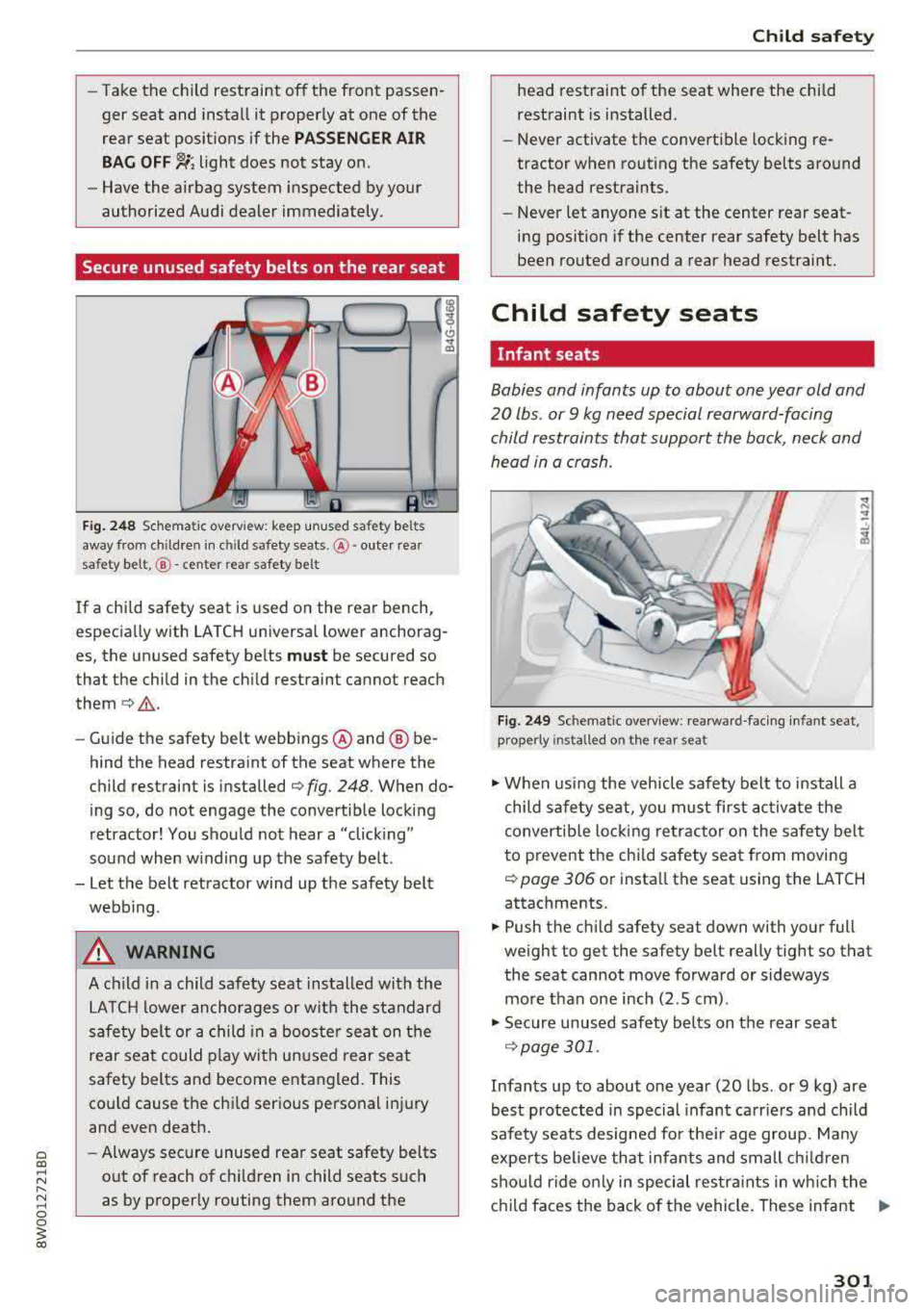
Secure unused safety belts on the rear seat
Fig. 248 Schemat ic overv iew: keep unused s-afety belts
away from children in chil d safety seats. @· oute r rear
sa fety belt,
@ -center rear safety bel t
If a chi ld safety seat is used on the rear bench,
especia lly with LA TCH universal lower anchorag
es, the unused safety belts
must be secured so
that the child in the child restraint cannot reach
them
c::> ,& .
-Gui de the safety belt webbings @ and @ be
hind the head restra int of the seat where the
child restraint is installed
c::> fig. 248. When do
ing so, do not engage the convertible lock ing
retractor! You should not hear a "click ing"
sound when w inding up the safety belt.
- Let the belt retractor wind up the safety belt
webbing .
A WARNING
A child in a child safety seat installed with the
LATCH lower anchorages or with the standard
safety belt or a child in a booste r seat on the
rear seat could play with unused rear seat
safety belts and become entangled. This
cou ld cause the chi ld serious personal injury
and even death.
- Always secure unused rear seat safety belts
out of reach of children in child seats such
as by proper ly routing them aro und the
Child safety
head restraint of the seat where the child
restraint is installed .
- Never activate the convertible locking re
tractor when routing the safety belts around
the head restraints.
- Never let anyone sit at the center rear seat
ing position if the center rear safety belt has
been routed around a rear head restraint.
Child safety seats
Infant seats
Babies and infants up to about one year old and
20 lbs. or
9 kg need special rearward-facing
child restraints that support the back, neck and
head in a crash.
Fig. 249 Schem atic overv iew: rearward -fac ing infa nt seat ,
proper ly insta lled o n the rear seat
., When using the vehicle safety belt to install a
child safety seat, you must first activate the
convertib le locking retractor on the safety belt
to prevent the chi ld safety seat from moving
c::> page 306 or install the seat using the LATCH
attachments .
.. Push the child safety seat down with your full
weight to get the safety belt really tight so that
the seat cannot move forward or sideways
more than one inch (2 .5 cm) .
., Secure unused safety belts on the rear seat
c::>page301.
Infants up to about one year (20 lbs . or 9 kg) are
best protected in special infant carriers and child
safety seats designed for the ir age group. Many
expe rts be lieve that infants and small children
shou ld ride only in special res tra ints in wh ich the
child faces the back of the vehicle. These infant
..,.
301
Page 304 of 403
Convertible child safety seats
Properly used convertible child safety seats can
help protect toddlers and children over age one
who weigh between
20 and 40 lbs. (9 and 18 kg)
in a crash.
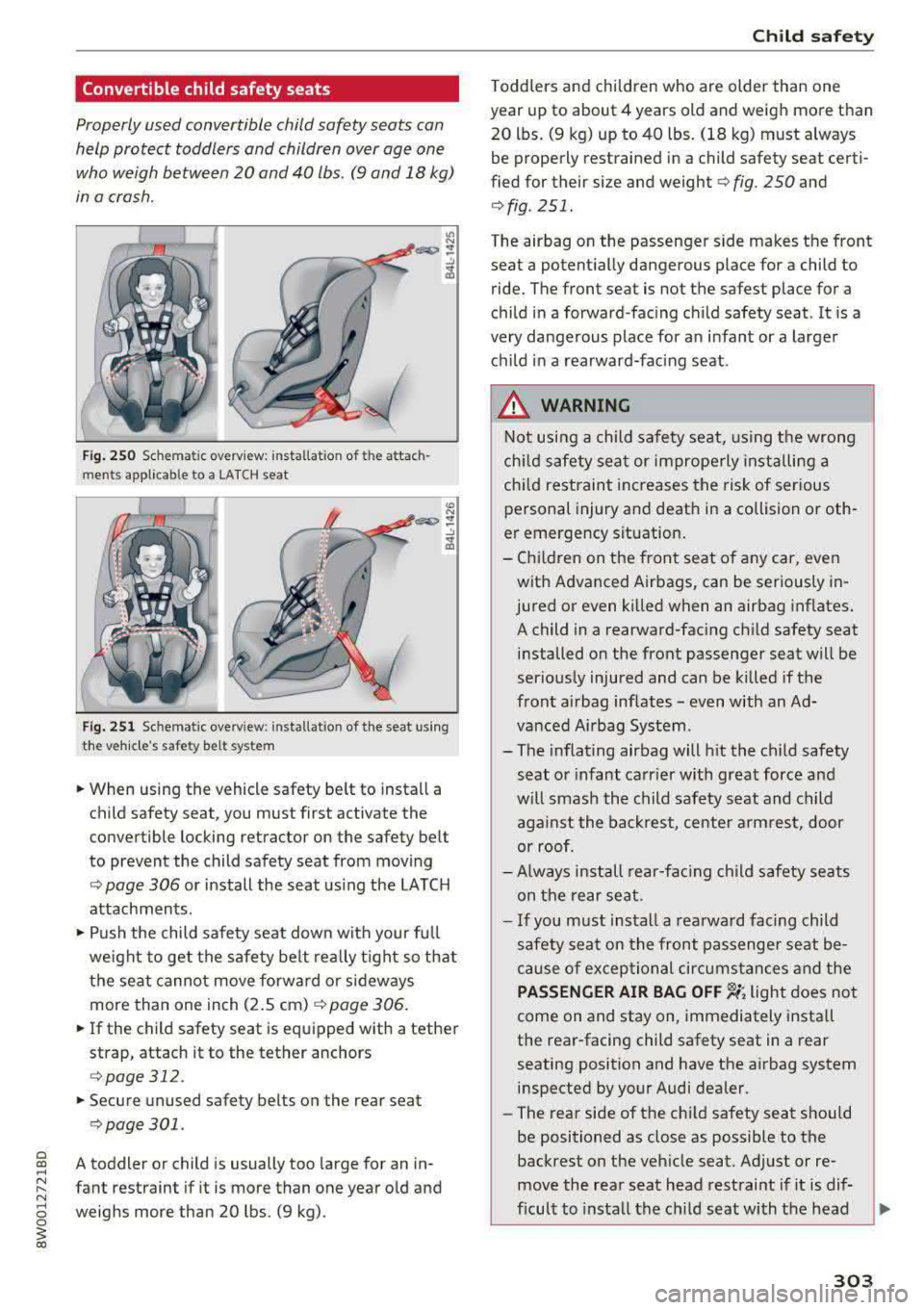
Fig. 250 Schematic overv iew: insta llatio n of the attach
ments applicab le to a LATCH seat
Fig. 251 Schematic overv iew: installat ion of the seat using
the vehicle 's safety belt system
.. When using the vehicle safety belt to install a
child safety seat, you must first activate the
convertible locking retractor on the safety belt
to prevent the child safety seat from moving
Q page 306 or install the seat us ing the LATC H
attachments .
.. Push the child safety seat down with your fu ll
weight to get the safety belt really tight so that
the seat cannot move forward o r sideways
more than one inch (2.5 cm)
Q page 306.
.. If the child safety seat is equipped with a tether
strap, attach it to the tether anchors
Q page 312.
.. Secure unused safety belts on the rear seat
Qpage 301 .
A toddler or child is usually too large for an in
fant restraint if it is more than one year old and
weighs more than 20 lbs. (9 kg).
Child safety
To ddlers and children who are older than one
year up to about 4 years old and weigh more than
20 lbs. (9 kg) up to 40 lbs. (18 kg) must always
be properly restrained in a child safety seat certi
fied for their size and weight
Q fig. 250 and
q fig . 251.
The airbag on the passenger side makes the front
seat a potentially dangerous place for a child to
ride. The front seat is not the safest place for a
child in a forward-facing child safety seat. It is a
very dangerous place for an infant or a larger
child in a rearward-facing seat .
_&. WARNING
Not using a child safety seat, us ing the wrong
child safety seat or improperly instal ling a
chi ld restraint increases the risk of serious
personal injury and death in a collision or oth
er emergency situation.
-Children on the front seat of any car, even
with Advanced Airbags, can be seriously in
jured or even killed when an airbag inflates.
A child in a rearward-facing ch ild safety seat
installed on the front passenger seat will be
seriously injured and can be killed if the
front airbag inflates
-even with an Ad
vanced Airbag System.
-The inflating airbag will hit the child safety
seat or infant carr ier with great force and
will smash the child safety seat and child
against the backrest, center armrest, door
or roof.
-Al ways install rear-fa cing child safety seats
on the rear seat .
-If you must insta ll a rearward facing child
safety seat on the front passenger seat be
cause of excep tional circumstances and the
PASSENGER AIR BAG OFF '-I; light does not
come on and stay on, immediately insta ll
the rear-facing child safety seat in a rear
seating position and have the a irbag system
inspected by your Audi dealer .
-The rear side of the ch ild safety seat shou ld
be positioned as close as possible to the
backrest on the veh icle seat. Adjust or re
move the rear seat head restraint if it is dif
f icult to install the child seat with the head
303
Page 306 of 403
Booster seats and safety belts
Properly used booster seats can help protect
children weighing between about 40 lbs. and
80 lbs . (18 kg and 36 kg) who are less than 4
ft.
9 in. (57 inches/1.45 meters) tall.
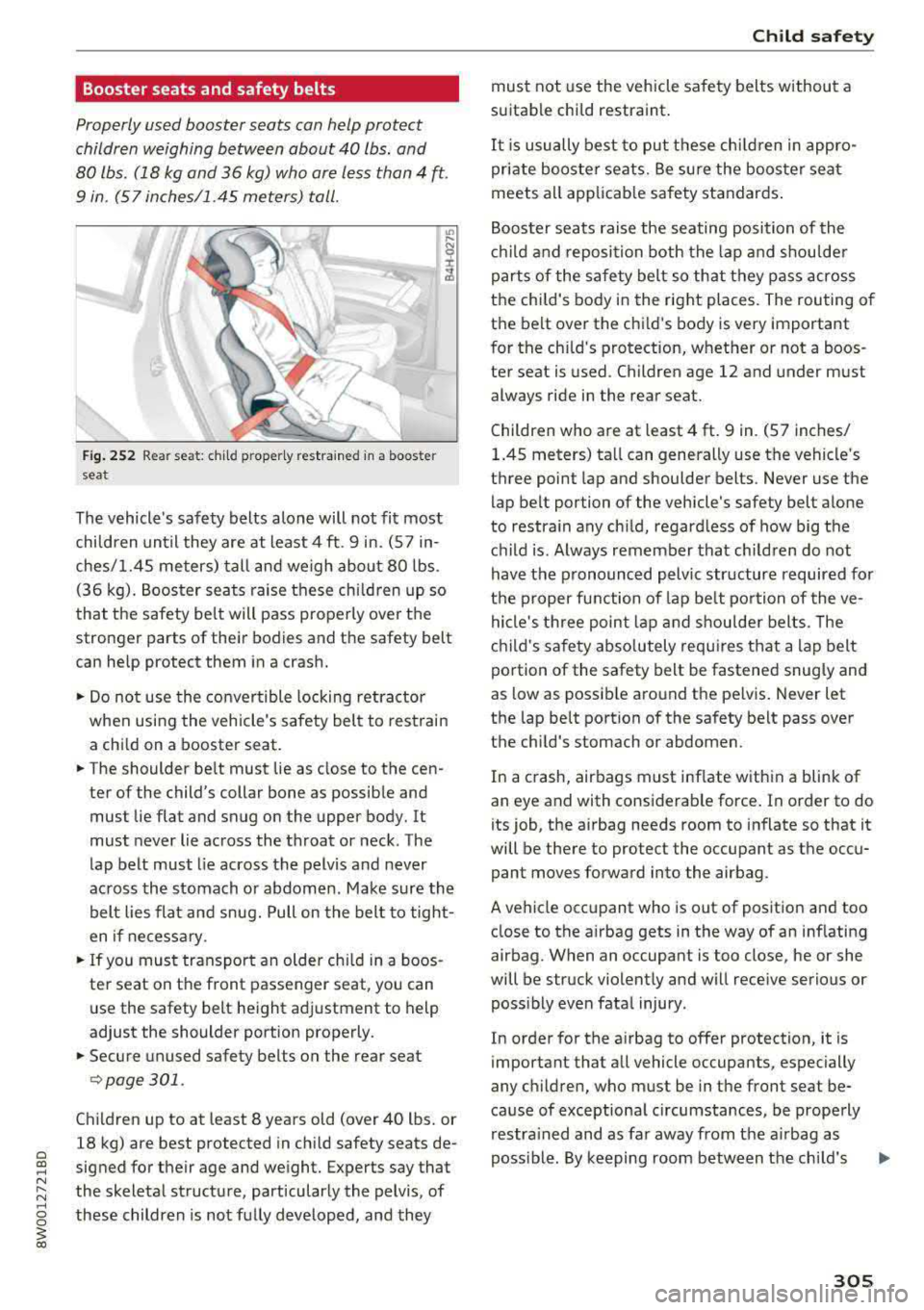
Fig. 252 Rear seat; chi ld proper ly restrained in a booster
sea t
The vehicle's safety belts alone will not fit most
children until they are at least 4
ft. 9 in. (57 in
ches/1.45 meters) tall and weigh about 80 lbs.
(36 kg). Booster seats raise these children up so
that the safety belt will pass properly over the
stronger parts of their bodies and the safety belt
can help protect them in a crash.
.,. Do not use the convertible locking retractor
when using the vehicle's safety belt to restrain
a chi ld on a booster seat .
.. The shoulder belt must lie as close to the cen
ter of the child's collar bone as possible and
must lie fla t and snug on the upper body.
It
must never lie across the throat or neck. The
lap belt must lie across the pelvis and never
across the stomach or abdomen. Make sure the
belt lies flat and snug. Pull on the belt to tight
en if necessary .
.,. If you must transport an older child in a boos
ter seat on the front passenger seat , you can
use the safety belt height adjustment to help
adjust the shoulder portion properly .
.. Secure unused safety belts on the rear seat
r:=>page 301.
Children up to at least 8 years old (over 40 lbs. or
18 kg) are best protected in child safety seats
de
signed for their age and we ight. Experts say that
the skeletal structure , part icularly the pelvis , of
these children is not fully developed, and they
Child safety
must not use the vehicle safety belts without a
suitable child restraint .
It is usually best to put these children in appro
priate booster seats. Be su re the booster seat
meets all applicab le safety standards .
Booster seats raise the seating position of the
child and reposition both the lap and shoulder
parts of the safety belt so that they pass across
the child's body in the right places. The routing of
the belt over the chi ld's body is very important
for the ch ild's protection, whether or not a
boos
ter seat is used. Children age 12 and under must
always ride in the rear seat.
Ch ildr en who are at least 4
ft. 9 in. (57 inches/
1.45 meters) tall can generally use the vehicle 's
three point lap and shoulder belts . Never use the
lap belt portion of the vehicle 's safety belt alone
to restrain any ch ild, regard less of how big the
ch ild is. Always remember that childr en do not
have the pronounced pelvic structure required for
the proper function of lap belt portion of the
ve
hicle's three point lap and shoulder belts . T he
child's safety absolutely requires that a lap belt
portion of the safety belt be fastened snugly and
as low as possible around the pe lvis. Never let
the lap belt portion of the safety belt pass over
the child 's stomach or abdomen .
In a crash, airbags must inflate within a blink of
an eye and with considerab le force. In order to do
its job, the airbag needs room to inflate so that it
will be there to protect the occupant as the
occu
pan t moves forward into the airbag .
A vehicle occ upant who is out of position and too
close to the a irbag gets in the way of an inflating
airbag. When an occupant is too close , he or she
will be struck violently and will receive serious or possibly even fata l injury .
In order for the airbag to offer protection, it is
important that all vehicle occupants, especially
any children, who must be in the front seat
be
cause of exceptiona l circumstances, be properly
restrained and as far away from the airbag as
poss ible. By keeping room between the child 's
..,.
305