tires AUDI A4 2018 Owner's Manual
[x] Cancel search | Manufacturer: AUDI, Model Year: 2018, Model line: A4, Model: AUDI A4 2018Pages: 403, PDF Size: 66.81 MB
Page 349 of 403
Wheels
are listed on the safety compli
ance sticker on the driver's side B pillar respectively on the front
end of the driver's door.
& WARNING
-
Overloading a vehicle can cause
loss of vehicle control, a crash
or other accident, serious per
sonal injury, and even death.
-Carrying more weight than your vehicle was designed to carry will prevent the vehicle
from handling properly and increase the risk of the loss of
vehicle control.
-The brakes on a vehicle that
has been overloaded may not
be able to stop the vehicle
within a safe distance .
-Tires on a vehicle that has been overloaded can fail sud
denly, including a blowout and
sudden deflation, causing loss of control and a crash .
-Always make sure that the to tal load being transported -
including the weight of a trail
er hitch and the tongue
weight of a loaded trailer -
does not make the vehicle
heavier than the vehicle's
Gross Vehicle Weight Rating.
348
Determining correct load
limit
Use the example below to calcu
late the total weight of the pas
sengers and luggage or other
things that you plan to transport so that you can make sure that
your vehicle will not be overload
ed.
Steps for Determining Correct Load Limit
1. Locate the statement "THE
COMBINED WEIGHT OF OCCU
PANTS AND CARGO SHOULD
NEVER EXCEED XXX KG OR XXX
LBS" on your vehicle's placard
(tire inflation pressure label)
¢ page 344, fig. 277.
2. Determine the combined
weight of the driver and pas sengers that will be riding in
your vehicle.
3. Subtract the combined weight
of the driver and passengers
from
"XXX" kilograms or "XXX"
pounds shown on the stick
er ¢ page 344, fig. 2 77.
4. The resulting figure equals the
available amount of cargo and luggage load capacity . For ex
ample, if the "XXX" amount
equals 1400 lbs. and there will
.,.
Page 350 of 403
a co .... N ,....
N .... 0 0
3 co
be f ive 150 lb s. pa ssenge rs in
yo ur ve hicle, th e amo unt of
ava ila bl e c argo a nd lu ggag e
l oa d cap acity is 650 lb s.
(1400-750 (5 X 150) = 650
lb s.)
5 . Determin e th e co mbined
we ig ht of lu ggag e and cargo
bein g load ed on the ve hicle .
Th at w eight may not sa fely ex
c e e d th e ava ilabl e ca rgo a nd
lugg age l oad ca paci ty ca lc ul at
e d in St ep 4 .
6 . If yo ur vehicle will b e to wing a
tr ailer, load from y our tr ailer
will b e tran sferr ed to y our v e
hi cle . C on sul t thi s manual t o
dete rmin e how this re duces
th e av ailabl e c argo and lug
ga ge load capac ity o f your vehi
c le.
..,.Ch eck the tire side wall
(c:> page 334, fi g . 2 7 4) to d eter
min e the de sign ated load r ating
for a sp ecifi c tire.
Wheel bolts and rims
Wheel bolts
Wheel bolts must be clean and loosen/t ighten
eas ily .
Rims
Rims with a bolted rim ring* or with bolted wheel
covers* consist of mu ltip le pieces. These compo
nents were bolted together using special bolts
Wh eel s
and a special procedu re. Yo u must not repair or
disassemb le them
~ &. .
A WARNING
-Wheel bo lts that are tightened or repaired in-
correct ly can become loose and resu lt in loss
of vehicle contro l, wh ich increases the risk of
an accident. For the cor rect tighten ing specifi
cation,
see¢ page 366, Finishing .
-Always keep the wheel bolts and the
threads in the wheel hub clean and free of
g rease .
- Only use wheel bolts that fit the rim.
- Always have damaged rims repaired by an
author ized Audi dealer or author ized Audi
Serv ice Facility . Never repair or disassemb le
rims yourself, because th is increases the r isk
of an a cc ident.
Winter tires
Winter tires signific ant ly imp rove the vehicle 's
handling when dr iv ing in winter conditions . B e
ca use of their construct ion (w idth, compound,
tread pattern), summer tires provide less t rac
tion on ice and snow .
.,. Use winter tires on all four wheels.
.,. Only use winter tires that are approved for your
vehicle.
.,. Please note that the maximum permitted
speed may be lower with winter
tires ¢,& . An
author ized Audi dealer or authorized Audi Serv
ice Facility can inform you about the maximum permitted speed for your tires .
.,. Check the tire pressure after installing wheels
~page 344 .
The effectiveness of winter tires is reduced great
ly when the tread is wo rn down to a depth of
0.16 in (4 mm). The cha racteristics of w inte r
ti res a lso decrease g reatly as the ti re ages, re
gardless of the rema in ing t read.
A WARNING
-
- Never drive fas ter than the max imum per
mitted speed for your tires . This could cause
the tires to heat up too much. This increases
..,.
349
Page 351 of 403
Wheels
the risk of a n acc ident beca use it can cause
the tire to burst.
- Always adapt your driving to the road and
traff ic conditions. Drive carefully and red uce
yo ur speed on icy or slippery roads. Even
winter tires can lose traction on b lack ice.
@ For the sake of the environment
Reinstall summe r tires at the approp riate
time, because they provide better hand ling
when roads are free of snow and ice. S ummer
tires cause less road noise, tire wear and fuel
consumption.
(D Tips
You can also use all season tires instead of
w inter t ires. Please note that in some coun
tries w here w inte r ti res are req uired, only
w inter t ires with the
& symbol may be per
m itted.
Snow chains
Snow ch ains not only i mprove the d riving in win
t er ro ad cond itions, b ut also the brak ing.
... Only insta ll snow chains o n the front wheels .
T h is applies also to ve hicles w ith all wheel
drive* .
... Check an d cor rect the sea ting of the snow
c h ains a fte r dr iv ing a few feet, i f necessary. Fo l
l ow the instructions from the manufacturer .
... Note the maximum permitted speed when d riv
ing with snow chains . Do not exceed 30 mp h
(SO km/h).
Use of snow chains is on ly pe rmitted with certain
rim/t ire combinations due to technical reasons.
Check with an authorized Audi dealer o r autho r
ized Aud i Service Fac ility to see if yo u may use
snow chains.
Use
fine -mesh snow chains . They must not add
more t han 0.53 in (13.5 mm) in height, includ ing
the chain lock .
You must remove the snow c hains on roads wit h
out snow. Othe rw ise, you could impa ir dr iv ing
ab ility and damage the tires.
350
A WARNING ~
Using incorrect snow chains or installing snow
cha ins i ncor rectly can result in loss of veh icle
con trol, which increases the risk of a n acci
d ent.
(D Note
Snow chains can damage the rims/whee l cov
e rs* if the chains come into direct contact
wi th them . Remove the whee l covers* first.
Us e coated snow chai ns.
(D Tips
When using snow chains, it may be useful to
swi tc h on spo rt mode/offroad mode
<:;> pag e 147.
Low-profile tires
Applies to: vehicles with low-profile tires
Your vehicle is equip ped wi th low -profi le t ires* at
t h e factory. Compa re d t o o ther tire/r im com bina
tions, low -profi le tires offer a w ider tread surface
and a larger rim diameter with shorter tire side
walls . This results in an agile dr iv ing style. How
ever, it may reduce the leve l of com fort and in
crease road noise whe n driving on roads in poor
cond it ion.
Low-p rofile ti res can become damaged mo re
q uick ly than standard tires when dr iv ing ove r
l a rge bumps, potholes, manhole covers, speed
bumps and curbs . Therefore, it is particularly im
po rtan t to maintain the correct tire pressure
<:;> page 344.
To reduce the risk of damage to the tires and
rims, drive very caref ully on poor roads.
Check your wheels regu larly eve ry 2,000 mi
(3,000 km) for damage. For example, check for
bulges/cracks on the tires or deformations/
cracks on the rims .
After a heavy impact o r damage, have the tires
and rims inspected or replaced immediately by
an authorized Audi dea ler or authorized Audi
Service Facility .
Page 352 of 403
a co .... N ,....
N .... 0 0
3 co
Low -profile tires can wear out faster than stand
ard tires.
Summer tires are not su itable for cold weather,
snow or b lack ice. If you are driving in these con
ditions, use winter or all season tires
¢ page 349.
Uniform tire quality grading
-Tread wear
- Traction AA AB C
- T emperature ABC
Qual ity grades can be found where app licable on
the t ire side wa ll between tread shou lde r and
maximum sect ion w idth
¢page 334, fig. 274.
For e xample : Tread wear 200 , Traction AA, Tem
pe rature
A .
All passenger car tires must conform to Federal
Safety Requirements in addition to these grades.
Tread w ear
The tread wear grade is a comparative rating
based on the wear rate of the tire when tested
under controlled conditions on a specified gov
ernment test course.
F or example, a tire graded 150 would wear one
and one ha lf
(1 1/2) times as well on the govern
ment course as a tire graded 100.
The relative performance of tires depends upon
the actual conditions of their use, however, and
may depart significant ly from the norm due to
variations in driving hab its, service practices and
d ifferences i n road characteristics and climate.
Tracti on
The traction grades, from highest to lowest, are
AA, A, Band
C. Those grades represent the tire's
ab ility to stop on wet pavement as measured un
der controlled conditions on specified govern
ment test surfaces of asphalt and concrete . A tire
marked C may have poor traction performance
¢ _& .
Temper ature
The temperature grades are A (the h ighest), B,
and C, representing the tire's resistance to the
Wh eel s
generat ion of heat and its ability to dissipate
heat when tested under controlled conditions on
a specified indoor laboratory test wheel.
Sustained h igh temperature can cause the mate
ria l of the tire to degenerate and reduce tire life,
and excessive temperature can lead to sudden
tire
failure ¢.& .
The grade C corresponds to a level of per form
ance which all passenger car tires must meet un
der the Federal Motor Vehicle Safety Standard
No. 109. Grades Band A represe nt higher levels
of performance on the laboratory test wheel than
the minimum requ ired by law.
A WARNING c,...._ -
The tract ion grade assigned to this t ire is
based on straight-ahead braking traction
tests, and does not include acceleration, co r
nering, hyd roplaning or pea k traction cha rac
terist ics.
A WARNING
The temperature grade for this tire is estab
lished for a tire that is properly inflated and
not overloaded . Excessive speed, underinfla
tion, or excessive loading, either separately or
i n comb inat ion, can cause heat bu ildup and
possib le tire fai lure.
A WARNING
-Temperature grades apply to tires that are
properly inflated and not over or under inflat
ed.
Tire pressure monitoring system
ill General notes
Each tire, including the spare (if provided),
.
should be checked monthly when cold and inflat-
ed to the i nflat io n pressure recommended by the
vehicle manufacturer on the veh icle placard or
t ir e infla tion p ressure labe l. (If your ve hicle has
ti res of a different size t han t he si ze ind icated on
IIJi,-
351
Page 353 of 403

Wheels
the vehicle placard or tire inflation pressure la
bel, you should determine the proper tire
inflation pressure for those tires).
As an added safety feature, your vehicle has been
equipped with a tire pressure monitoring system (TPMS) that illuminates a low tire pressure tell
tale when one or more of your tires is significant
ly under-inflated. Accordingly, when the low tire
pressure telltale illuminates, you should stop and
check your tires as soon as possible, and inflate
them to the proper pressure . Driving on a signifi
cantly under-inflated tire causes the tire to over
heat and can lead to tire failure. Under-inflation
also reduces fuel efficiency and tire tread life,
and may affect the vehicle's handling and stop
ping ability.
Please note that the TPMS is not a substitute for
proper tire maintenance, and it is the driver's re
sponsibility to maintain correct tire pressure,
even if under-inflation has not reached the level
to trigger illumination of the TPMS low tire pres
sure telltale.
Your vehicle has also been equipped with a TPMS
malfunction indicator to indicate when the sys
tem is not operating properly. The TPMS mal
function indicator is combined with the low tire
pressure telltale. When the system detects a
malfunction, the telltale will flash for approxi
mately one minute and then remain continuously
illuminated . This sequence will continue upon
subsequent vehicle start-ups as long as the mal
function exists .
When the malfunction indicator is illuminated,
the system may not be able to detect or signal low tire pressure as intended. TPMS malfunctions
may occur for a variety of reasons, including the
installation of replacement or alternate tires or
wheels on the vehicle that prevent the TPMS
from functioning properly. Always check the TPMS malfunction telltale after replacing one or
more tires or wheels on your vehicle to ensure
that the replacement or alternate tires and
wheels allow the TPMS to continue to function
properly .
352
· If the tire pressure monitoring indicator
appears
The tire pressure indicator in the instrument
cluster informs you if the tire pressure is too low
or if there is a system malfunction.
Using the ABS sensors, the tire pressure monitor
ing system compares the tire tread circumfer
ence and vibration characteristics of the individu
al tires. If the pressure changes in one or more
tires, this is indicated in the instrument cluster
display with an indicator light
[I] and a message.
If only one tire is affected, the location of that
tire will be indicated.
The tire pressures must be stored in the Infotain
ment system again each time the pressures
change (switching between partial and full load
pressure) or after changing or replacing a tire on
your vehicle
c:> page 353. The tire pressure moni
toring system only monitors the tire pressure you
have stored . Refer to the tire pressure label for
the recommended tire pressure for your vehicle
c:> page 344, fig . 2 77.
Tire tread circumference and vibration character
istics can change and cause a tire pressure warn
ing if:
- the tire pressure in one or more tires is too low
- the tires have structural damage
- the tire was replaced or the tire pressure was
changed and it was not stored
c:> page 353
- tires that are only partially used are replaced
with new tires
Indicator lights
[I]-Loss of pressure in at least one tire c:> ,&..
Check the tires and replace or repair if necessary.
Check/correct the pressures of all four tires and
store the pressure again in the Infotainment sys
tem
c:> page 353.
mm (Tire Pressure Monitoring System) Tire
pressure: malfunction! See owner's manual.
If
mm appears after switching the ignition on or
while driving and the
[I] indicator light in the in
strument cluster blinks for approximately one minute and then stays on, there is system mal-
function. Try to store the correct tire pressures
IJJ,,,
Page 354 of 403
a co .... N ,....
N .... 0 0
3 co
q page 353. In some cases, you must drive for
several minutes after storing the pressures until
the indicator light turns off . If the indicator lig ht
does turn off or turns on aga in after a short peri
od of time, drive to an authorized Audi dealer or
author ized Audi Service Facility immed iately to
have the ma lfunction corrected .
A WARNING
-If the t ire pressu re indica tor appea rs in the
display, red uce your speed immed iate ly and
avoid any har d st eer ing or braking maneu
vers. Stop a s soon as possib le and check the
ti res and their press ure.
- T he driver is responsi ble for main taining the
cor rect ti re pressure. You must check the
tire pressure regu larly .
- Under certa in conditions (s uch as a sporty
driving style, winte r cond itio ns or unpaved
roads), the tire pressure monitoring system
indicator may be delayed.
(D Tips
- The t ire press ure monitoring sys tem can al
so stop work ing when there is an ESC mal
funct ion .
- Usin g snow chains may result in a system
malfunction.
- The t ire press ure moni toring sys tem in yo ur
A udi was ca librated with "A udi Orig inal
Tires"¢
page 341 . Using these ti res is rec
ommended.
Storing tire pressures
If the tire pressure changes or a tire is replaced,
it must be confirmed in the Infotainment sys tem.
~ Make s ure before storing that the tire pressures
of a ll fo ur ti res meet the specified values and
are adapted to the load
¢ page 344.
~ Switch the ign ition on.
~ Select in the Infotainment system: I MENUI but
ton
> Vehicle > Service & checks > Tire pre s
s ure monitoring > Store tire pres sure > Yes ,
store now .
Wheel s
{!) Tips
Do not store the tire pressures if snow chains
are installed.
353
Page 355 of 403

Care and cleaning
Care and cleaning
General information
Regular, proper care helps to maintain your vehi
cle's value.
It can also be a requirement when
submitting warranty claims for corrosion damage
and paint defects on the body.
The required cleaning and care products can be
obtained from an authorized Audi dealer or au
thorized Service Facility. Read and follow the in
structions for use on the packaging .
A WARNING
-Using cleaning and care products incorrectly
can be dangerous to your health .
- Always store cleaning and care products out
of reach of children to reduce the risk of poi
soning .
@ For the sake of the environment
- Preferably purchase environmentally-friend
ly cleaning products.
- Do not dispose of leftover cleaning and care
products with household trash.
Car washes
The longer that deposits such as insects, bird
droppings, tree sap or road salt remain on the ve hicle, the more the surface can be damaged. High
temperatures such as those caused by sunlight
increase the damaging effect .
Before washing, rinse off heavy deposits with
plenty of water.
Stubborn deposits such as bird droppings or tree
sap are best removed with plenty of water and a microfiber cloth.
Also, wash the underside of your vehicle once road salt stops being used for the season .
Pressure washers
When washing your veh icle w ith a pressure wash
er, always follow the operating instructions pro
vided with the pressure washer. This is especially
important in regard to the pressure and spraying
distance. Do not aim the spray directly at the
354
seals on the side windows, doors, lids or the sun
roof* or at tires, rubber hoses, insulating materi
al, sensors* or camera lenses* . Keep a distance of
at least 16 in (40 cm).
Do not remove snow and ice with a pressure
washer.
Never use cone nozzles or high pressure nozzles.
The water temperature must not be above 140 °F
(60 °().
Automatic car washes
Spray off the vehicle before washing.
Make sure that the windows and roof* are closed
and the windshield wipers are off . Follow instruc
tions from the car wash operator, especially if
there are accessories attached to your vehicle.
If possible, use car washes that do not have
brushes.
Washing by hand
Clean the vehicle starting from the top and work
ing down using a soft sponge or cleaning brush.
Use solvent-free cleaning products.
Washing vehicles with matte finish paint by
hand
To avoid damaging the paint when washing, first
remove dust and large particles from your vehi
cle. Insects, grease spots and fingerprints are
best removed with a special cleaner for matte
finish paint .
Apply the product using a microfiber cloth. To
avoid damaging the paint surface, do not use too
much pressure.
Rinse the vehicle thoroughly with water. Then
clean using a neutral shampoo and a soft micro
fiber cloth .
Rinse the vehicle thoroughly again and let it air
dry. Remove any water residue using a chamois .
A WARNING
-
- Only wash the vehicle when the ignition is
off and follow the instructions from the car
Page 356 of 403

a co .... N ,....
N .... 0 0
3 co
wash operator to reduce the risk of accidents.
- To reduce the risk of cuts, protect yourself
from sharp metal components when wash
ing the underbody or the inside of the wheel
housings .
- After washing the vehicle, the brak ing effect
may be delayed due to mo isture on the
brake rotors or ice in the w inter . This in
creases the risk of an acc ident. The brakes
must be d ried fi rst w ith a few careful b rake
applications.
(D Note
- If you wash t he vehicle in an automatic car
wash, yo u m ust fold the exte rior m irrors in
to reduce the risk of damage to the mirrors.
Power folding exte rior m irrors* must on ly
be fo lded in a nd out using the power folding
fu nct ion.
- To reduce the risk of damage to the rims
and tires, compare the width between the
whee ls on your vehi cle w it h t he dis tan ce be
tween the g uide rai ls in the
car wash.
- To reduce t he risk of damage, compare the
height and width o f you r vehicle wi th the
Ca re and cleaning
height and w idth of the inside of the car
was h.
- T o red uce the risk of pa int damage, do not
was h the vehicle in d irect sun light .
- T o red uce the risk of d am age to the s urf ace,
do not use insect removing sponges, k itche n
sponges or similar items .
- Mat te finish painted veh icle components:
- To reduce the risk of damage to the sur-
face, do not use polishing agents or hard
wax .
- Never use protective wax. It can destroy
the matte finish effect .
- Do not place any stickers or magnetic
signs on vehicle parts painted with matte
finish paint . The paint cou ld be damaged
when the stickers or magne ts are re
moved .
@ For the sake of the environment
Only wash t he vehicle in facilities s pec ially de
s ign ed for that pu rpose . This will reduce the
r isk of dirty wate r contaminated with oil from
ente ring the sewe r sys tem.
Cleaning and care information
W hen cleani ng and ca ring for individua l vehicle
components, refer to the follow ing tables . The
i n formation contained there is simply recom
mendations. For quest ions or for components t
h at are not liste d, co n su lt an autho riz ed Au di
dealer or authorized A udi Se rvice Fac ility . Also
fo llow the information found
in ¢ .&. .
Exterior cleaning
Component Situation Solution
Windshield wiper
Deposits c:> page 61, Cleaning the wiper blades
blades
Headlights /
Deposi ts So
ft spo nge wi th a mild so ap sol ution3>
Tail light s
S ensors /
Deposits Sensors: soft cloth w it h solvent-free cleaning solut ion
Camera len ses Camera le nses: soft clot h w ith alcohol-free cleaning solu-
tion
Snow/ice H
and br ush/solvent-free de-icing spray
Wheels Road salt Water
Brake dust Acid-free special cleaning solution
355
Page 363 of 403
Emergency assistance
Repairing tires
Applies to: vehicles w ith tire mob ility k it
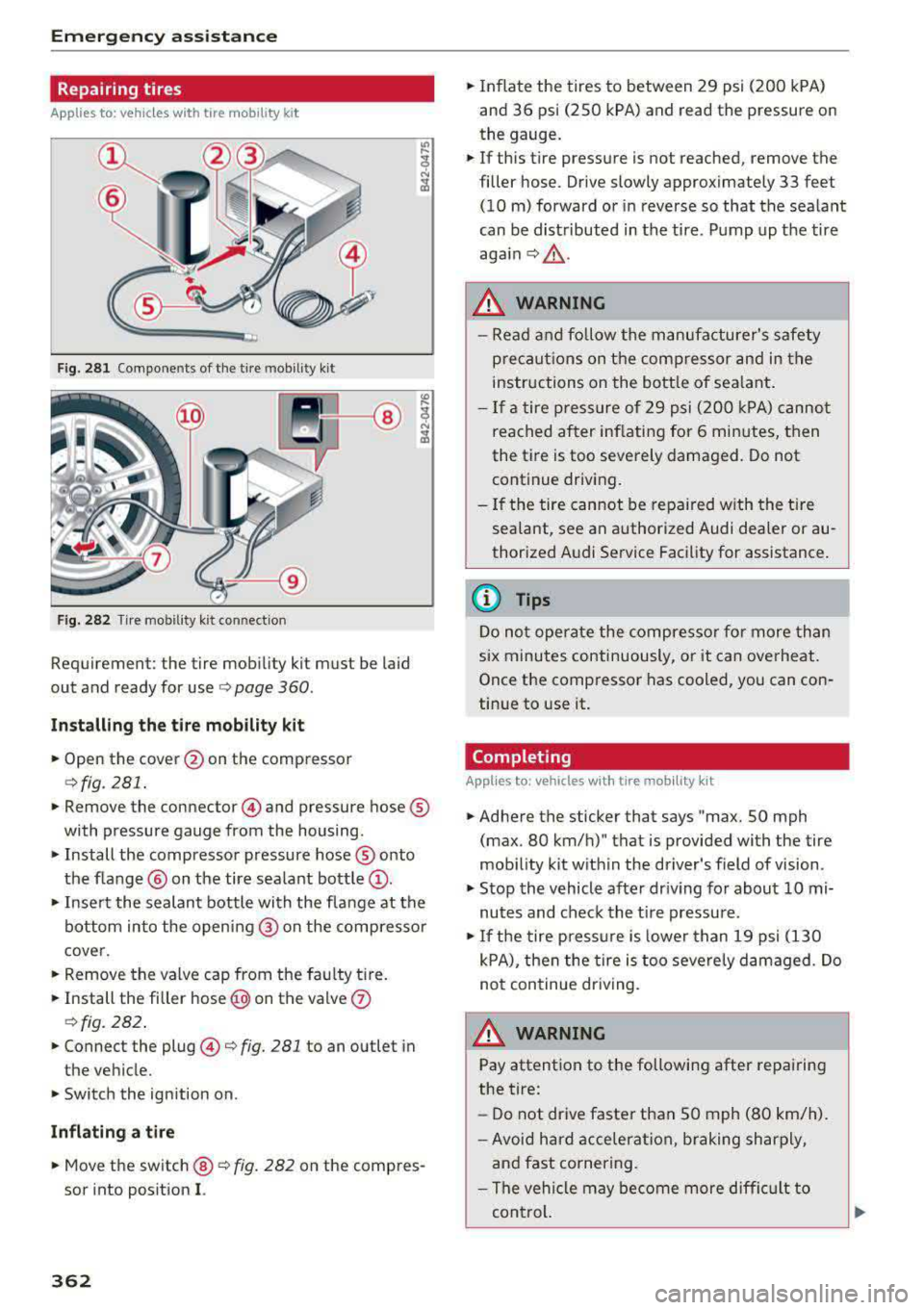
Fig. 281 Components of the tire mobility kit
F ig. 282 Tire mobility k it connec tion
Requirement: the tire mobility kit must be laid
out and ready for use
o page 360.
Installing the tire mobility kit
.. Open the cover @on the compressor
¢fig. 281 .
.. Remove the connector @) and pressure hose®
with pressure gauge from the housing.
• Install the compressor pressure hose ® onto
the f lange @ on the tire sea lant bottle
(D .
.. Insert the sealant bottle with the flange at the
bottom into the opening @ on the compresso r
cover.
.. Remove the valve cap from the fau lty tire.
.. Install the filler hose @) on the valve (J)
ofig. 282 .
.. Connect the plug@¢ fig. 281 to an outlet in
the vehicle.
.. Switch the ignition on.
Inflating a tire
.. Move the switch @ o fig. 282 on the compres
sor into position
I.
362
.. Inflate the tires to between 29 psi ( 200 kPA)
and 36 psi (250 kPA) and read the pressur e on
the gauge .
.. If this tire pressure is not reached, remove the
filler hose. Drive slowly approximately 33 feet
(10 m) forward or in reverse so that the sea lant
can be distributed in the tire. Pump up th e tire
aga in¢ ,&.
.
.&_ WARNING
-Read and follow the manufacturer's safety
precaut ions on the compressor and in the
instructions on the bottle of sea lant .
- If a tire pressure of 29 psi (200 kPA) cannot
reached after inflating for 6 minutes, then
the tire is too severely damaged. Do not
continue driving.
- If the tire cannot be repa ired with the tire
sealant, see an authorized Audi dealer or au
thorized Audi Service Facility for assistance.
(D Tips
Do not operate the compressor for more than
six minutes continuously, or it can overheat.
Once the compressor has cooled, you can con
tinue to use it.
Completing
App lies to : vehicles wit h tire mob ility kit
.. Adhere the sticker that says "max. SO mph
(max . 80 km/h)" that is provided with the tire
mob ility kit with in the driver's field of vision.
.. Stop the vehicle after driv ing for about 10 mi
nutes and check the tir e pressure.
.. If the tire press ure is lower than 19 psi (130
kPA), then the tire is too severely damaged. Do
not continue driving .
.&_ WARNING
Pay attention to the following after repairing
the tire:
- Do not drive faster than SO mph (80 km/h).
- Avoid hard acceleration, braking sharply,
and fast cornering .
- The vehicle may become more difficult to
con trol.
Page 366 of 403
could slip and cause an injury if it does not
have sufficient hold on the vehicle.
- To reduce the risk of an accident, never start
the engine when the vehicle is raised.
- To reduce the risk of injury, support the ve
hicle securely with suitable stands if work is
to be performed underneath the vehicle.
- To help prevent injury to yourself and your
passengers:
- Do not raise the vehicle until you are sure the jack* is securely engaged.
- Passengers must not remain in the vehicle when it is jacked up.
- Make sure that passengers wait in a safe
place away from the vehicle and well away
from the road and traffic.
- Make sure jack position is correct, adjust as necessary and then continue to raise
the jack*.
- If work has to be done under the vehicle, ensure that it is safely supported on suita
ble stands
-risk of injury!
- Never start the engine when the vehicle is on the jack*
-risk of accident!
(D Note
Do not lift the vehicle by the sill. Position the
vehicle jack* only at the designated mounting points on the side sill. Otherwise, your vehicle
will be damaged.
Removing and installing a wheel
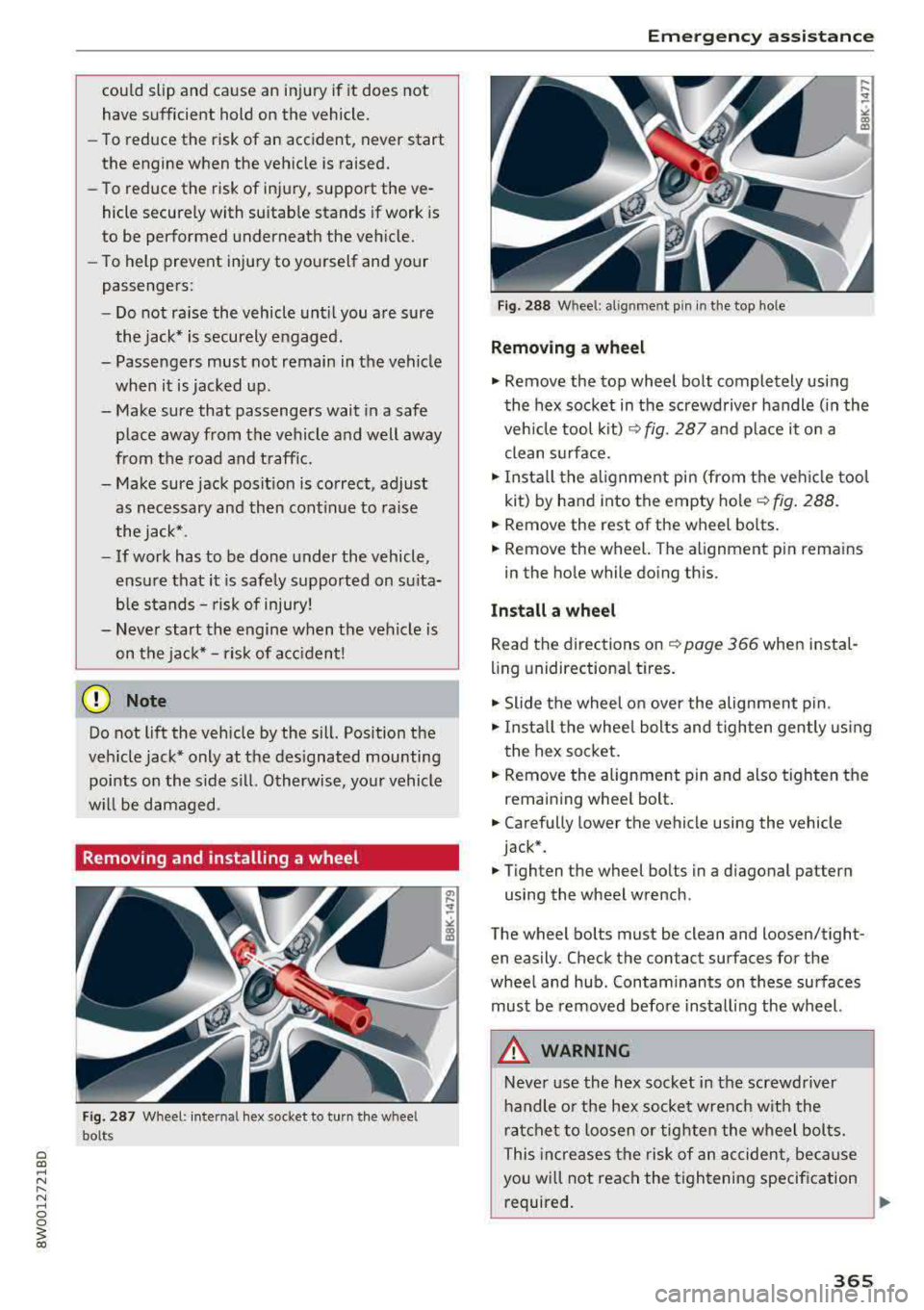
Fig. 287 Wheel: inte rnal hex socket to turn the whee l
bolts
Emergency assistance
Fig. 288 Whee l: alignment pin in the top ho le
Removing a wheel
.,. Remove the top wheel bolt completely using
the hex socket in the screwdriver handle (in the
vehicle tool kit)
~fig. 287 and place it on a
clean surface.
.,. Install the alignment pin (from the vehicle tool
kit) by hand into the empty
hole ~ fig. 288.
.,. Remove the rest of the wheel bolts.
.,. Remove the wheel. The alignment p in remains
in the hole while doing this.
Install a wheel
Read the directions on~ page 366 when instal
ling unidirectional tires.
.,. Slide the wheel on over the alignment pin .
.,. Install the wheel bolts and tighten gently using
th e hex socket.
.,. Remove the alignment pin and also tighten the
remai ning wheel bolt.
.,. Carefully lower the vehicle using the vehicle
jack*.
.,. Tighten the wheel bolts in a diagonal pattern
using the wheel wrench .
The wheel bolts must be clean and loosen/tight
en easily. Check the contact surfaces for the
wheel and hub . Contaminants on these surfaces
must be removed before installing the wheel.
A WARNING
Never use the hex socket in the screwdriver
handle or the hex socket wrench with the
ratchet to loosen or tighten the wheel bolts.
This increases the risk of an accident, because
you will not reach the tightening specification
required .
~
365