instrument cluster AUDI A4 SEDAN 2013 Owner's Manual
[x] Cancel search | Manufacturer: AUDI, Model Year: 2013, Model line: A4 SEDAN, Model: AUDI A4 SEDAN 2013Pages: 294, PDF Size: 73.71 MB
Page 104 of 294
102 Audi adapti ve cruise control and br aking guard
Setting the distance
App lies to vehicles: with Audi adaptive cruise control
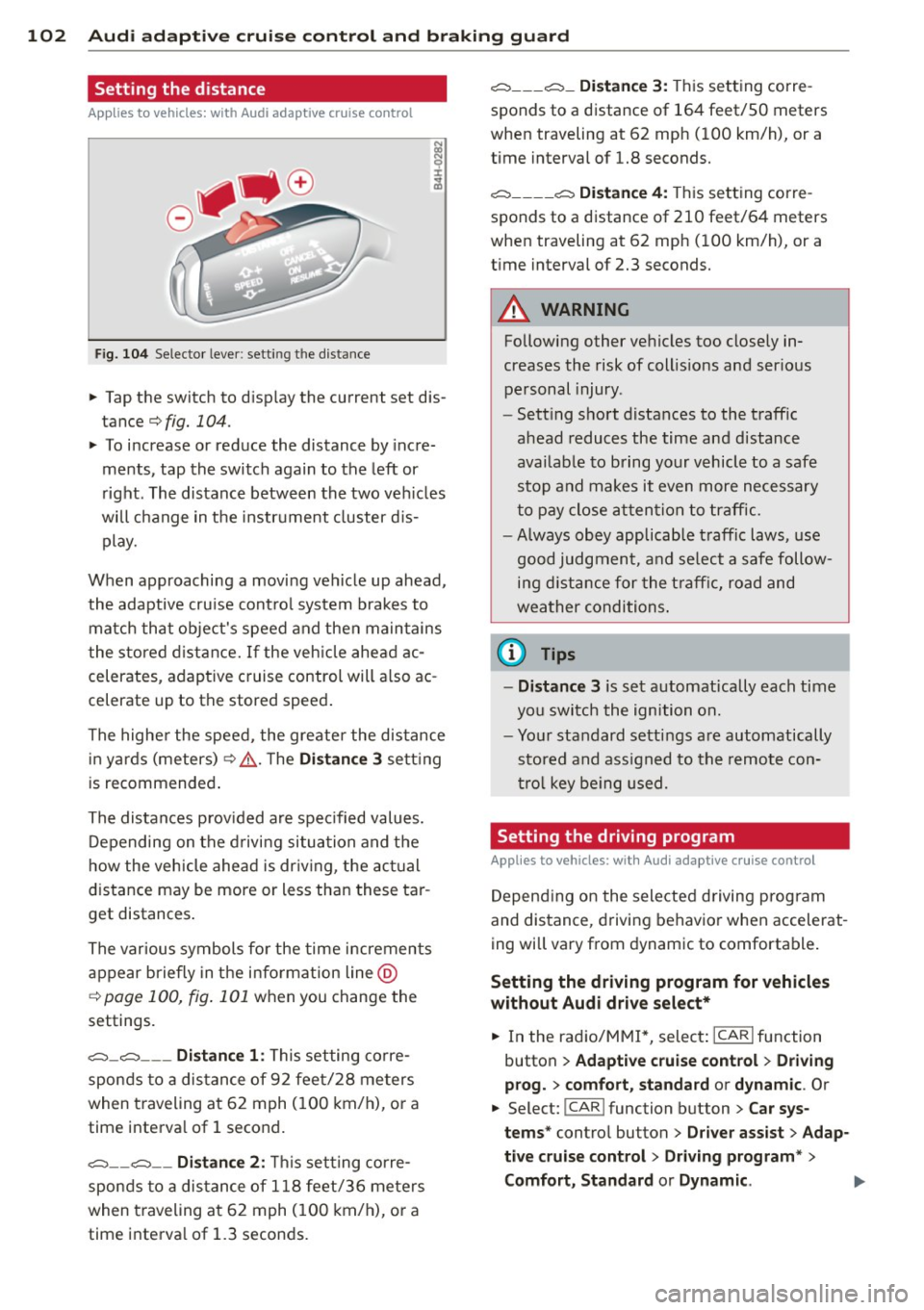
Fig. 104 Selector lever: setting the distance
~ Tap the switch to display the current set dis
tance¢
fig. 104.
~ To increase or reduce the distance by incre
ments, tap the switch again to the left or
right. The distance between the two veh icles
will change in the instrument cluster d is
play.
When approaching a moving vehicle up ahead,
the adaptive cru ise cont rol system brakes to
matc h that object's speed and then maintains
the stored d istance. If the veh icle ahead ac
celerates, adaptive cruise control will also ac
celerate up to the stored speed .
The highe r the speed, the greater the distance
in yards (meters)¢ ,&.. T he
Di stanc e 3 setting
is recommended .
The distances p rov ided are spec ified values.
Depending on the d riving situation and the
how the vehicle ahead is dr iving, the actual
distance may be more or less than these tar
get distances .
The various symbols fo r the time increments
appear briefly in the in fo rmation line @
¢
page 100, fig. 101 when you change the
settings.
c::::::,_c::::::, ___ Dist ance 1: This setting co rre-
sponds to a distance of 92 feet/28 meters
when traveling at 62 mph (100 km/h), or a
time interva l of 1 second.
c::::::, __ c::::::, __ Dista nce 2 : This sett ing corre
sponds to a distance of 118 feet/36 meters
when traveling at 62 mph (100 km/h), or a
time interva l of 1.3 seconds .
c::::::, ___ c::::::, _ Dista nce 3 : This setting corre-
sponds to a distance of 164 feet/SO meters
when traveling at 62 mph (1 00 km/h), or a
time interval of 1.8 seconds.
c::::::, ____ c::::::, Dist ance 4 : This setting corre-
sponds to a distance of 210 feet/64 meters
when traveling at 62 mph (100 km/h), or a
t ime interval of 2.3 seconds.
A WARNING
Following other vehicles too closely in
creases the risk of collis ions and ser ious
personal injury.
- Sett ing short distances to the traffic
ahead reduces the time and distance
availab le to bring your vehicle to a safe
stop and makes it even more necessary
to pay close attention to traffic.
-
- Always obey applicable t raffic laws, use
good judgment, and select a safe follow
ing d istance for the t raff ic, road and
weather conditions .
0) Tips
-Distan ce 3 is set automatically each time
you switch the ignition on.
- Your standard settings are automatically
stored and ass igned to the remote con
tro l key be ing used.
Setting the driving program
Applies to vehicles: with Audi adaptive cruise control
Depend ing on the selected driving program
and distance, driving behavior when accelerat
ing will vary from dynamic to comfortable .
Setting the dri ving program for vehicles
without Aud i d riv e se le ct*
~ In the radio/MM!*, select : ICARlfunction
button
> Ad apti ve crui se cont rol > D rivi ng
p rog.
> comfort, sta nd ard or dyn amic . Or
~ Select: !CAR ! function button> C ar sys
tem s*
control button > Driver a ssist > Adap
ti ve c ruis e c ontr ol
> D rivi ng program * >
Comfort, Standard or Dynam ic .
Page 112 of 294
110 Audi side assist
-Side assist is not active while you are
making the adjustment.
- Your settings are automatically stored
and assigned to the remote control key
being used.
Driver messages
App lies to vehicles: with side assist
If side assist switches off by itself, the LED in
the button turns off and a message will ap
pear in the instrument cluster display:
Audi side assist unavailable: Sensors blocked
The radar sensors' vision is affected. Do not
cover the area in front of the sensors with bike
wheels, stickers, dirt or other objects. Clean
the area in front of the sensors, if necessary
c:::;,page 108, fig. 110.
Audi side assist: Currently unavailable
Side assist cannot be switched on temporarily
because there is a malfunction (for example,
the battery charge level may be too low).
Audi side assist: System fault!
The system cannot guarantee that it will de
tect vehicles correctly and it is switched off .
The sensors have been displaced or are faulty .
Have the system checked by an authorized
Audi dealer or authorized Audi Service Facility
soon .
Audi side assist: Unavailable when towing
Side assist switches off automatically when a
factory-installed trailer hitch is connected to
the electrical connector on the trailer . There is
no guarantee the system will switch off when
using a retrofitted trailer hitch. Do not use
side assist when towing a trailer.
Page 114 of 294
112 Audi drive select
-For vehicles with an automatic transmis
sio n*, se lecting the
Dynamic mode re
su lts in sporty shifting characteristics .
The S gear position engages automati
cally.
- In vehicles that have dynamic steering*,
operating noise is heard when starting or
stopping the eng ine . This does not ind i
cate a problem .
Selecting the driving mode
Applies to vehicles: w ith drive se lect
You can choose between Comfort, Auto, Dy
namic
and Individual * modes.
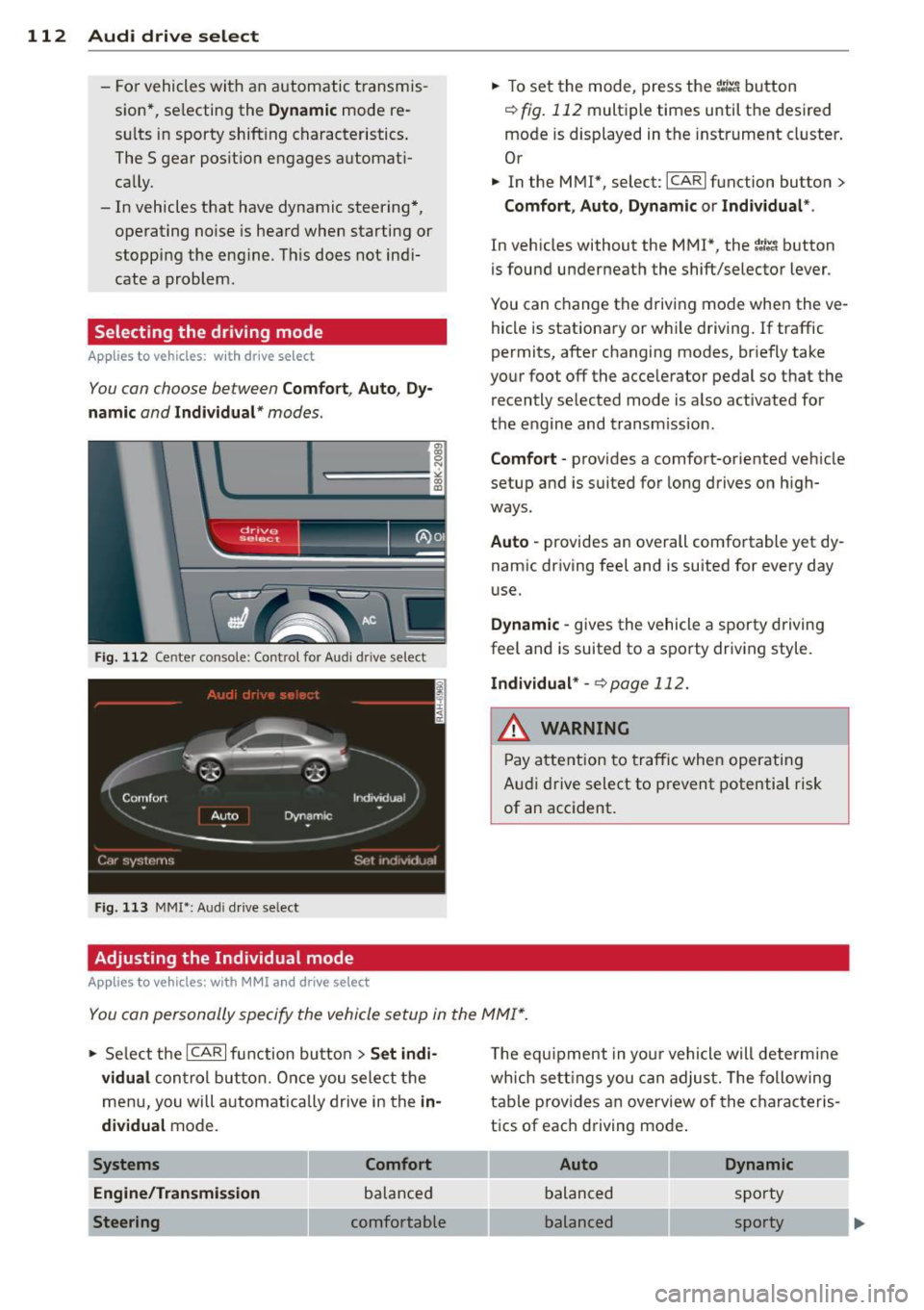
Fig. 112 Center console: Control for Au di dri ve select
Fig. 113 MMI•: Aud i drive select
Adjusting the Individual mode
Applies to vehicles: with MMI a nd drive se lect
.,. To set the mode, press the f:l:-.i button
~ fig. 112 multiple times until the desired
mode is displayed in the instrument cluster .
Or
.,. In the MMI*, select: ICARlfunction button>
Comfort, Auto, Dynamic or Individual *.
In vehicles without the MMI*, the~:/;,~ button
is found underneath the shift/selector lever.
You can change the driving mode when the ve
hicle is stationary or wh ile driving . If traffic
permits, after changing modes, br iefly take
your foot off the accelerator pedal so that the recently selected mode is also activated for
the engine and transm ission .
Comfort -provides a comfort-oriented vehicle
setup and is suited for long drives on h igh
ways .
Auto -provides an overall comfortable yet dy
namic driving feel and is suited for every day
use.
Dynamic -gives the vehicle a sporty driving
feel and is suited to a sporty driving style.
Individual * -¢page 112.
& WARNING
Pay atte ntion to traffic when operating
Audi drive select to prevent potential risk
of an accident.
You can personally specify the vehicle setup in the MMI* .
.,. Select the ICAR I f unc tion button > Set indi
vidual
control button. Once you select the
menu, you will automatically drive in the
in·
dividual
mode.
Systems Comfort
Engine/Transmission
balanced
Steering comfortable T
he equipment in your vehicle will determine
wh ich sett ings you can adjust. The following
table provides an overview of the characteris
tics of each driving mode .
Auto Dynamic
balanced sporty
balanced sporty
Page 138 of 294
136 Safety belts
Safety belts
General notes
Always wear safety belts!
Wearing safety belts correctly saves lives!
This chapter explains why safety be lts are nec
essary, how they work and how to adjust and
wear them correctly .
.. Read a ll the information that fo llows and
heed all of the instruct ions and WARNINGS.
A WARNING
Not wearing safety belts or wearing them
improperly increases the risk of ser ious
personal in jury and death .
- Safety belts are the sing le most effective
means avai lab le to reduce the risk of se
r ious injury and dea th in a utomob ile acci
dents. For your protection and that of
yo ur passenge rs, always co rrectly wear
safety belts when the vehicle is moving.
- P regnant women, injured, or physically
im paired perso ns mu st also use safety
bel ts. Lik e all veh icle occup ants, they are
more like ly to be ser iously injured if they
do not wea r safety be lts . The best way to
protect a fetus is to protect the mother -
throughout the entire pregnancy.
Number of seats
Your Audi has a total of five seating positions: two in the front and three in the rear. Each
seating position has a safety belt.
A WARNING
Not wea ring safety belts or weari ng them
improp erly increases th e risk of ser ious
pe rsonal i njury and dea th.
- N ever st rap more than one pe rson, in
cl uding small ch ild ren, into any belt.
It is
e speci ally dange rous to pla ce a safety
belt over a child s itting on yo ur lap.
- N ever le t mo re people ride in the ve hicl e
than there are s afe ty be lts avail able. -
Be s ure everyone riding in the vehicle is
properly restrained w ith a separate safe
ty belt or child restra int.
Safety belt warning light
Your vehicle hos o warning system for the
driver and (on USA models only) front seat
passenger to remind you about the impor
tance of buckling-up .
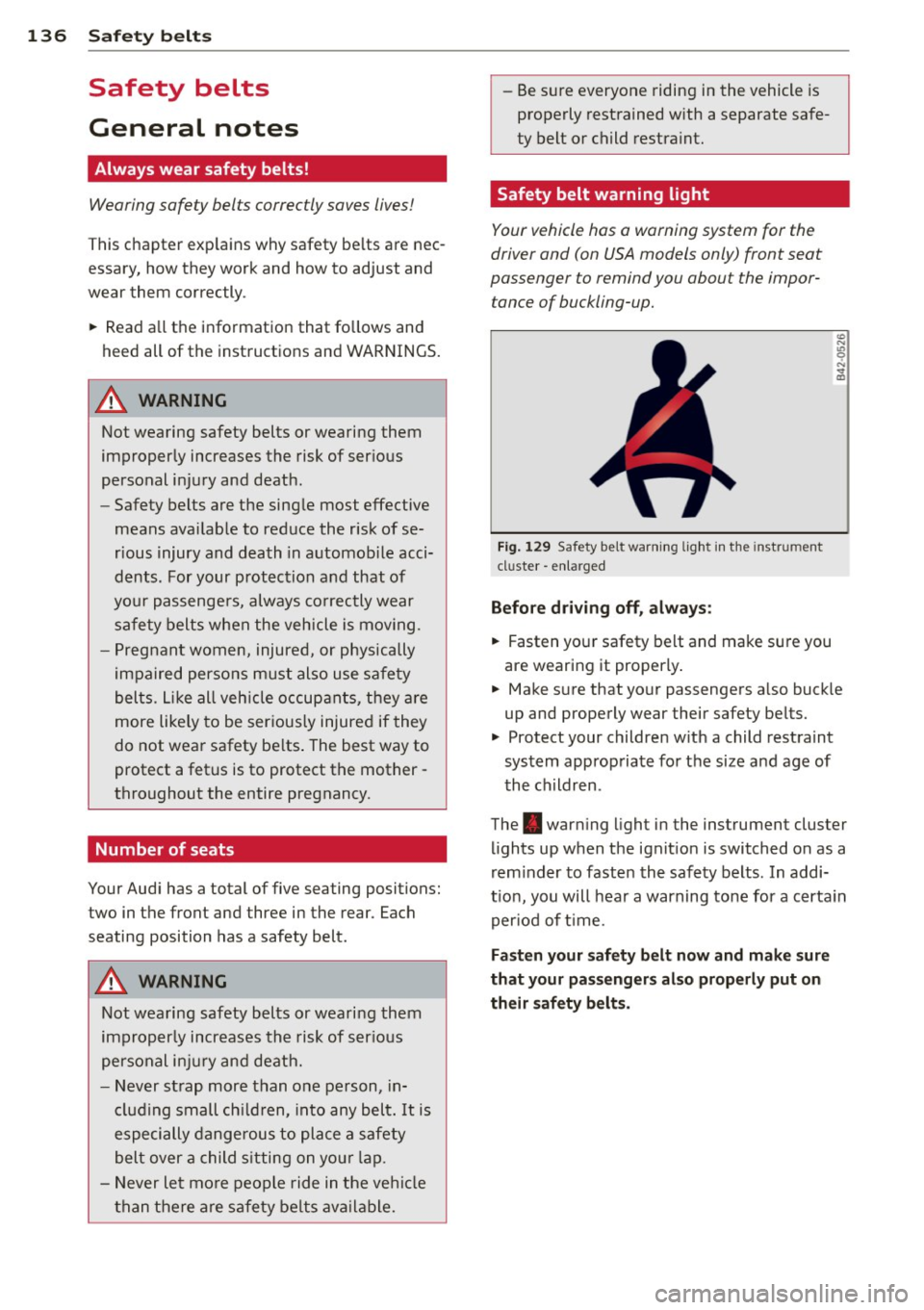
Fi g. 129 Safety belt warni ng lig ht in the instrument
cluster -e nl arge d
Before driving off, always :
.. Fasten you r safety belt and make sure you
are wearing it properly .
.. Make s ure that yo ur passengers a lso buck le
up and properly wear their safety be lts.
.. Protect your children w ith a child rest raint
system approp riate fo r the size and age of
t he children.
The . war ning light in the instrument cluster
lights up when the ignit ion is switched on as a
rem inder to faste n the safety belts. In addi
t ion, you will hea r a warning tone for a certa in
per iod of t ime.
Fasten your safety b elt now and make sure
that your pas sengers also properly put on
their safety belts.
Page 148 of 294
146 Airbag system
Even though your vehicle is equipped with an
Advanced Airbag System, make certain that
all chi ldren, especially those 12 years and
younger, a lways ride in the back seat properly
restrained for their age and size. The airbag
on the passenger side makes the front seat a potentially dangerous place for a ch ild to ride.
The front seat is not the safest place for a
child in a forward-facing child safety seat. It
can be a very dangerous place for an infant or
a child in a rearward-facing seat.
The Advanced Airbag System in your veh icle
has been certified to comply with the Requ ire
ments of United States Federal Motor Vehicle
Safety Standard 208 as applicable at the time
your vehicle was manufactured.
The Standard requires the front a irbag on the
passenger side to be turned off ("sup
pressed") if a child up to about one year of
age restrained in one of the rear-facing or for
ward -facing infant restraints listed in Federal
Motor Vehicle Safety Standard 208 with which
the Advanced Airbag System in your vehicle
was certified has been installed on the front passenger seat . For a listing of the child re
strai nts that we re used to certify compliance
with the US Safety Standard
r=v page 167.
The PASSENGER AIR BAG OFF light in the in
strument panel te lls you when the front Ad
vanced A irbag on the passenger side has been
turned off by the e lectronic control unit.
Each t ime you turn on the ignition, the
PAS
SENGER AIR BAG OFF
light will come on for a
few seconds and:
- will stay on if the front passenger seat is not
occupied,
- will stay on if there is a small child or child restraint on the front passenger seat,
- wi ll go off if the front passenger seat is oc
cupied by an adult as registered by the
weight-sensing mat
r=v page 155, Monitor
ing the Advanced Airbag System .
The PASSENGER AIR BAG OFF light comes on
when the control un it detects a total weight
on the front passenger seat that requires the
front airbag to be turned off.
If the total weight on the front passenge r
seat is more than that of a typica l 1 year -old
chi ld but less than the weight of a small
adult, the front airbag on the passenger side
can deploy (the
PASSENGER AIR BAG OFF
light does not come on). If the PASSENGER
AIR BAG OFF
light does not come on, the
front airbag on the passenger side has not
been turned off by the electronic con trol unit
and can deploy if the control unit senses an
impact that meets the cond itions stored in its
memory .
For example, the airbag may deploy if:
-a small ch ild that is heav ier than a typical 1
year-old ch ild is on the front passenger seat
( re gard less of whether the child is in one of
the child safety seats listed
r=v page 167), or
- a child who has outgrown ch ild restraints is
on the front passenger seat.
If the front passenger airbag is turned off, the
PASSENGER AIR BAG OFF light comes on in
the instrument cluster and stays on.
The front airbag on the passenger s ide may
not deploy (the PASSENGER AIR BAG OFF
light does not illum inate and stay lit) even if a
small adult or teenager, or a passenger who is
not sitt ing upright with their back against a
non-reclined backrest with their feet on the
vehicle floor in front of the seat is on the front
passenger seat
r=v page 12 7, Proper seating
position for the driver.
If the front passenger airbag deploys, the
Federal Standard requires the airbag to meet
the "low risk" deployment criteria to reduce
the risk of injury t hroug h interaction with the
airbag. "Low risk" deployment occurs in those
crashes that take place at lower dece lerat ions
as defined in the electronic control unit
r=v page 155, PASSENGER AIR BAG OFF light .
Always remember, a child safety seat or infant
carr ier installed on the front seat may be
struck and knocked out of posit ion by the rap
idly inflat ing passenger's airbag in a frontal
collision . The air bag could greatly reduce the
effectiveness of the ch ild restraint and even
seriously injure the child during inflation .
Page 153 of 294
-Always move the passenger seat into its
rearmost position in the seat's fore and
aft adjustment range, as far away from
the a irbag as poss ible, before installing
the forward-facing child restraint. The backrest must be adjusted to an upr ight
posit ion.
- Make sure that the
PASSENGER AIR BAG
OFF
light comes on and stays on all the
t ime w henever the ignition is sw itched
on.
Advanced Airbag System components
The fron t passenger seat in your vehicle has a
lot of very important parts of the Advanced
Airbag System in it. These parts include the
weight-sensing mat, sensors, wiring, brack
ets, and more. The function of the system in
the front passenger seat is checked by the
e lectronic control u nit when the ignit ion is on .
The control un it mon itors the Advanced Air
bag System and turns the airbag indicator
l ight on whe n a ma lfunction in t he sys tem
components is de tected. The function of the
airbag indicator light is described in greater
detai l below . Because the front passenger
seat contains important parts of the Ad
vanced A irbag System, you m ust take care to
prevent it from being damaged. Damage to
the seat may prevent the Advanced Airbag for
the front passenger seat from doing its job in
a crash .
The front Advanced Airb ag Sy stem
consists of the following:
- Crash sensors in the front of the veh icle that
measure veh icle acceleration/decele ration
to provide information to the Advanced Air
bag System about the seve rity of the crash.
- An electronic co ntrol unit, with integrated
c rash se nsors for front and side impacts .
T he cont ro l unit " decides " whethe r to fire
the front airbags based on the inform ation
received from the crash senso rs . The contro l
unit a lso "decides" whether the safety belt
pretensioners should be activated .
Airbag system 15 1
-An Advanced A irbag w ith gas gene rator and
contro l valve fo r the driver ins ide the steer
ing wheel h ub.
- An Advanced Airbag w ith gas gene rator and
contro l valve inside the instrument pane l for
the front passenger.
- A weight-sensing mat under the upholstery
padding of the front passenger seat cushion
that measures the total weight on the seat.
The informat ion reg istered is sent continu
ously to the electronic control unit to regu
late deployment of the front Advanced Air
bag on the passenger side.
- An airbag monitor ing system and ind icator
light in the instrument cluster
q page 155 .
-A sensor in each front seat registers the dis
tance between the respective seat and the
steer ing whee l o r inst rument panel. The in
forma tion registered is sent cont inuo usly to
t he elect ron ic cont ro l uni t to regula te de
ployment o f the front Advance d Airbags .
- The
PASSENGER AIR BAG OFF ligh t comes
on and st ays on in the cen ter o f th e instr u
ment panel
<:!;> page 155, fig . 143 and tells
you whe n the front Advanced Airbag on the
passenger side has been tu rned
off .
-A sensor below the safety be lt latch fo r the
front seat passenger to measure the tension on the safety be lt . The tension on the safety
be lt and the weight registered by the
weight-sensi ng mat he lp the control unit
"decide" whether the front a irbag for the
front passenge r seat should be turned
off or
not
r:!;> pag e 145, Child restraints on the
front seat -some important things to
know.
- A senso r in the safety belt latch fo r the d riv
er and fo r the front sea t passenger tha t
senses w hethe r that safe ty belt is latched or
not and transmi ts this informa tion to the
electronic control unit.
_&. WARNING
Damage to the front passenger seat can
prevent the front airbag from work ing
properly.
-
•
•
Page 159 of 294
in the instrument cluster display. This is to in
form the driver of the current front passenger
airbag status.
Important safety instructions on
monitoring the Advanced Airbag System
A WARNING t a=
An airbag system that is not functioning
properly cannot provide supplemental p ro
tection in a frontal crash .
- If the airbag indicator light¢
page 20
comes when the vehicle is be ing used,
have the system inspected immediately
by your authorized Aud i dea ler. It is pos
sible that the a irbag will inflate when it
is not supposed to, or w ill not inflate
when it sho uld.
A WARNING
If the front airbag inflates, a ch ild without
a child restra int, in a rearwa rd-facing child
safety seat or in a forward-facing chi ld re
st raint th at has not been properly insta lled
w ill be seriously injured and can be k illed .
- Even though your veh icle is equipped
with an Advanced Airbag System, make certain that a ll children, especially 12
years and younger, a lways ride on the
back seat properly restrained for their
age and size.
- Always install forward or rea r-facing
child safety seats on the rear seat -even
with an Advanced Airbag System.
- If you must install a rearward-facing
child safety seat on the front passenger
seat because of exceptional circ umstan
ces and the
PASSENGER AIR BAG OFF
light does not appear and s tay on , imme
diately install the rear-fac ing ch ild safety
seat i n a rear seating position and have
the a irbag system inspected by yo ur au
thori ze d Au di dea ler.
- A tig ht tether or other st rap on a rear
wa rd-fa cing child res trai nt at ta che d to
the front passenger sea t can put too
much pressure on the weight -sens ing
-
A irbag system 157
mat in the seat and reg ister more weight
than is actually on the seat. The heavier
weight registered can make the system
work as though an adult were on the seat and deploy the Advanced Airbag when it
must be suppressed causing ser ious or
even fata l injury to the ch ild.
- If, in exceptiona l circumstances, you
must install a forward-fac ing ch ild re
s traint o n the front pas senger seat, al
ways move the sea t into its re armos t po
sition in the seat's fore and aft adjust
ment range, as far away from the a irbag
as poss ible . The backrest must be ad just
ed to an upright pos ition. Make sure that
the
PASSENGER AIR BAG OFF light
comes on and stays on all the time when
eve r the ignit ion is switched on.
A WARNING
- If the PASSENGER AIR BAG OFF light
does not go out when an a dult is sitting
on t he front passe nger sea t after taking
the steps described above, make su re the
ad ult is prope rly seated and restr ained at
one o f the rea r seat ing pos itions.
- Have the airbag system inspe cted by
your author ized Audi dealer befo re trans
port ing anyone on the front passenger
seat.
(D Tips
If t h e weight-sensing mat in the front p as
senger seat detects an empty sea t, the
front airbag on the passenger side wi ll be
turned off, and
PASSENGER AIR BAG OFF
will stay on.
Repair , care and disposal of the airbags
Parts of the airbag system are installed at
many different places o n your Aud i. Insta lling,
removi ng, servicing or repa iring a par t in an
ar ea of the veh icle can damage a part of an
a irbag system and p reven t that system from
wor kin g p ro perly in a coll is io n. .,,.
•
•
Page 199 of 294
Tire pressure
When towing a trai le r, inflate the t ires of your
vehicle to the co ld tire pressure listed under
"Full load" on the label located on the driver's
side B-pillar (vis ible when the door is open).
Inflate trailer tires to trailer and tire manufac
turers' specifications.
Light s
The headlight settings should be checked with
the trailer attached before driving off. Check
to make sure both vehicle and trai ler lights
are working properly.
Safety chains
Be su re tra iler sa fety chains are properly con
nected from the trailer to the hitch on the ve
hicle. Leave enough slack in the chains to per
mit turning corners . When you install safety
chains, make sure they w ill not drag on the
road when you are driving.
The chains shou ld cross under the trai ler
tongue to prevent it from dropping in case of
separatio n from the hitch .
Driving instructions
Driving with a trailer always requires extra
core and consideration.
To obtain the best possible handling o f vehicle
and trai ler, p lease note the following:
.,. Do not tow a loaded trailer whe n your car it
self is not loaded .
.,. Be especia lly careful when passing other
vehicles .
.,. Observe speed limits .
.,. Do not drive at the maximum permissible
speed .
.,. Always apply brakes ea rly .
.,. Monitor the temperature gauge.
Weight di stribution
Towing a loaded trai ler with an empty car re
sults in a highly unstable distribution of
weight . If this cannot be avo ided, drive at very
low speeds only to avoid the risk of losing
steer ing control.
Trailer towing 197
A "balanced" rig is easier to operate and con
trol. This means that the tow vehicle should be loaded to the extent possible and permissi
ble, while keep ing the trailer as light as possi
ble under the c ircumstances. Whenever poss i
ble, transfer some cargo to the luggage com
partment of the tow vehicle while observing
tongue load requirements and vehicle loading
considerations.
Speed
The higher the speed, the more d iff icult it be
comes for the driver to control the rig . Do not
drive at the maximum permissible speed. Re
duce your speed even more if load, weather or
wind conditions are unfavorable -pa rticularly
when going downhill.
Reduce veh icle speed
immediately if the trail
er shows the slightest s ign of sway ing .
Do not
try to stop the swaying by accelerating.
Observe speed limits . In some areas, speeds
for vehicles tow ing tra ilers are lower than for
regular vehicles .
Always apply brakes early. When driving downh ill, shift into a lower gear to use the en
gine braking effect to slow the vehicle . Use of
the brakes alone can cause them to overheat
and fail.
Coolant temperature
The coolant temperature gauge ¢ page 10
must be observed carefully . If the need le
moves close to the upper end of the scale, re
duce speed immediately and/or turn off the
air conditioner.
If the coolant temperature warning light •
in the instrument cluster starts flashing, pull
off the road, stop and let the engine
idle for
about two minutes to prevent heat build -up .
A WARNING
Anyone not properly restrained in a mov
ing vehicle is at a much greater risk in an
accident . Never let anyone ride in yo ur car
who is not properly wearing the restraints
prov ided by Audi.
-
•
•
Page 221 of 294
temperatures stay below freezing point for l ong periods.
Detergent add itives in the o il w il l make fresh
oil look dark after the eng ine has been run
ning fo r a short time . This is norma l and is not
a reason to change the oi l more often than
recommended.
D am ag e or m alfun ction s due to lack of
ma intenanc e
It is essential that you change your oil at the
r ecommended inte rva ls using only engine o il
t hat complies wi th A udi oi l standard
VW 502 00 . Your Limited New Vehicle War
ranty does not cover damage or malfunctions
d ue to fa ilure to fo llow recommended mainte
nance and use requ irements as set forth in
the Audi Owner's Manua l and Warranty
&
Maintenance book let . Your dea ler will have to
deny warranty coverage u nless you present to
the dea ler p roof in the fo rm of Serv ice or Re
pa ir Orde rs that all s chedu led maintenance
wa s pe rformed in a t imely manner .
Engine oil consumption
The engine in your vehicle dep ends on an ade
quate amount of oil to lubricate and cool all
of its moving parts.
In o rder to provide effective lubrication and
cool ing of i nternal engine components, a ll in
ternal comb ustion eng ines consume a cert ain
amo unt of o il. Oil cons umption varies from
engine to engine and may change significantly
over the life of the engine. Typ ica lly, engines
with a specified break-in per iod (see
¢
page 192) consume more oil during the
break-in per iod than they consume after oil
consumption has stabilized .
Under norma l conditions, the rate of oil con
sumpt ion depends on the quality and viscosity
of the oil, the RPM (revo lutions per m inute) at
which the engine is operated, the amb ient
temperature and road condit ions. Furthe r fac
tors ar e the amount of o il d ilution from wate r
condensation or fuel residue and the ox ida
tion level of the oi l. As any engine is s ubje ct to
Checkin g and fillin g 219
wear as m ileage builds up, the oil consump
tion may increase over time until replacement
of worn components may become necessary.
Wi th a ll these variab les coming into p lay, no
standard rate of oil consumpt ion can be es
tablished or specified. There is no alternative
to regular and frequent check ing of the o il lev
el, see
Note .
If the yellow engine oil leve l warning symbo l
1\1 in the instrument cluster lights up , you
sho uld check the oil leve l as soon as possib le
¢
page 220. Top off the oil at your earliest
convenience ¢
page 220.
A WARNING
Before you check anythi ng i n the engi ne
compartment, always read a nd heed all
WARNINGS¢ .&.
in Working in th e engine
c ompartment on page 215.
(D Note
D riving w ith an insufficient o il level is like
ly to cause sever e damage to the engine .
(D Tips
- The oil pressure warning display. is
not an indicator of the oil le vel. Do not
rely on it . Instead, check the oil level in
your engine at regu lar intervals, pref
erably ea ch time you refuel, and always
before going on a long trip .
-If you have the impression yo ur engi ne
c ons umes ex ce ss ive amoun ts of o il, we
recommend that you consul t an a uthor
ized Aud i dea ler to have the cause of
your concern properly d iagnosed. Keep in
mind that the accurate measu rement of
oil consumption requ ires great care and
may take some t ime. An authorized Aud i
dealer has instructions about how to
measu re oil consumption accurately.
-
•
•
Page 222 of 294
220 Checking and filling
Checking the engine oil level
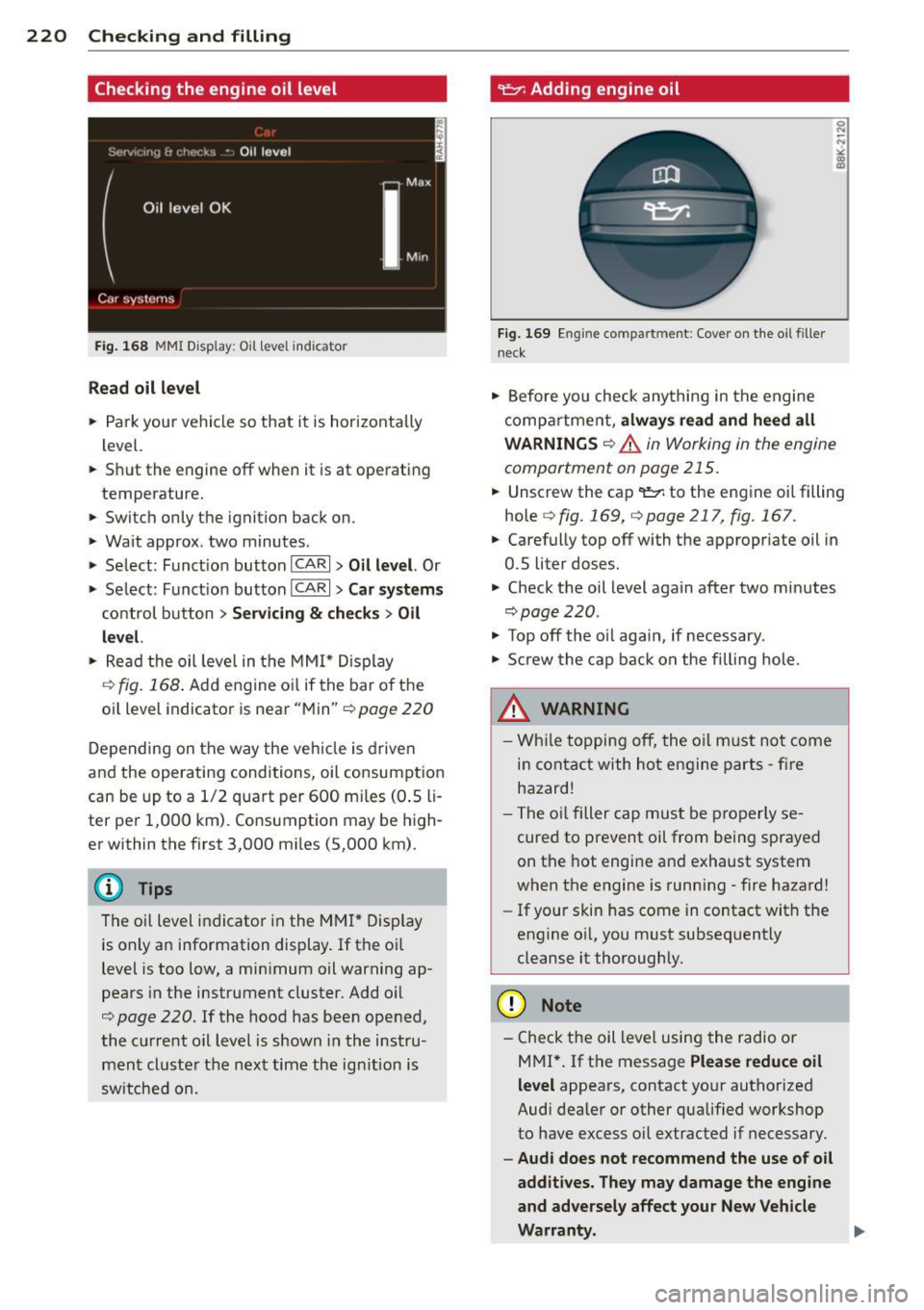
Fig . 168 MMI D isp lay : O il le ve l indic ator
Read oil level
• Park your vehicle so that it is horizontally
level.
.. Shut the engine off when it is at operating
temperature.
.. Switch only the ignition back on.
• Wait approx . two minutes .
> Select: Funct ion button ICARI > Oil level. Or
> Se lect : Funct ion button ICARI > Car systems
control button > Servicing & checks > Oil
level.
• Read the oil leve l in the MMI* Display
c::>fig. 168 . Add eng ine oi l if the bar o f the
oil level indicator is near "Min"
c::> page 220
Depending on the way the vehicle is driven
and the operating conditions, oil consumption
can be up to a 1/2 quart per 600 mi les (0 .5 li
ter per 1,000 km). Consumption may be high
er within the first 3,000 mi les (5 ,000 km).
The o il level indicator in the MMI* Display
is only an information display. If the o il
level is too low, a min imum oil warning ap
pears in the instrument cluster. Add o il
c::> page 220. If the hood has been opened,
the current oil level is shown in the instru
ment cluster the next time the ign ition is
switched on.
~ Adding engine oil
Fig. 169 En g in e compart ment: Cover on the oil filler
neck
• Before yo u check anything in the engine
compa rtme nt,
always read and heed all
WARNINGS
c::> .A in Working in the engine
compartment on page 215 .
.. Unscrew the cap
q fig . 169, qpage 217, fig. 167 .
.. Carefully top off with the appropriate oil in
0.5 liter doses.
.. Check the oil level again after two minutes
qpage220 .
• To p off the o il aga in, if necessary.
• Screw the cap back on the filling hole.
.8_ WARNING
- While topping off, the oil must not come
in contact with hot engine parts - fire
hazard!
- The oil filter cap must be properly se
cured to prevent oil from being sprayed
on the hot engine and exhaust system
when the engine is running - fire hazard!
- If your skin has come in contact with the
engine oi l, you must subsequently
cleanse it thoroughly.
(D Note
- Check the oil level using the radio or
M Ml*.
If the message Please reduce oil
level
appears, contact your authorized
Audi dealer or other qualified workshop
to have excess oil extracted if necessary.
- Audi does not recommend the use of oil
additives . They may damage the engine
and adversely affect your New Vehicle
Warranty. ..,