brake AUDI A4 SEDAN 2013 Repair Manual
[x] Cancel search | Manufacturer: AUDI, Model Year: 2013, Model line: A4 SEDAN, Model: AUDI A4 SEDAN 2013Pages: 294, PDF Size: 73.71 MB
Page 238 of 294
236 Tires and wheels
weight of all of the occupants and luggage or
other cargo that the vehicle can carry. For the
location of the tire pressure label¢
fig. 174.
_& WARNING
Overloading a vehicle can cause loss of ve
hicle control, a crash or other accident, se
rious personal injury, and even death .
- Carrying more weight than your vehicle
was designed to carry will prevent the
vehicle from handling properly and in
crease the risk of a loss of vehicle con
tro l.
- The brakes on a veh icle that has been
overloaded may not be able to stop the
vehicle within a safe distance.
- Tires on a vehicle that has been overload
ed can fail suddenly causi ng loss of con
tro l and a crash.
- Always make sure that the total load be
ing transported -including the we ight of
a trailer hitch and the tongue weight of a
loaded trailer -does not make the vehi
cle heavier than the vehicle's Gross Vehi
cle Weight Rating.
A WARNING
-Incorrect tire pressures and/or underin
flation can lead to a serious or fatal acci dent.
- Incorrect tire pressures and/or underin
flation cause increased tire wear and can
affect the handling of the vehicle.
- Incorrect tire pressures and/or underin
flation can also lead to sudden tire fa il
ure, including a blowout and sudden de
flation, causing loss of vehicle control.
Checking tire pressure
-
The correct tire pressure for the tires original
ly installed on your vehicle is listed on the tire
pressure label located on driver's side 8-pil
lar .
The recommended tire pressures are on the
tire pressure label and in the table
¢ page 234, Cold tire inflation pressure .This
means that the pressure m ust be checked and
adjusted when the tire has not been driven for
more than a couple of miles (kilometers) at
low speeds during the previous three hours.
Air in the tires expands when the tire heats up
as a result of internal frict ion as it flexes in
use. The tire pressure is higher when the tire
has warmed up than when it is "co ld ."
It is the inflation pressure in a "cold" tire that
counts. Therefore, you should never let a ir out
of a warm tire to match "Cold t ire inflat ion
pressure" recommendations ¢
page 234. The
tires would then be underinflated and could
fail suddenly .
The tire pressure label on your Audi lists the
recommended cold tire inflation pressures at
maximum capacity for the new, original
equipmen t tires that were on your vehicle at
the time it was manufactured. For the loca
tion of the labe l
¢page 234, fig. 174.
Most tires lose air naturally over t ime. They
can also lose some air if yo u drive over a pot
hole or hit a curb while parking. It is usually
not possible to see whether the radial tires
used today are underinflated just by looking
at them.
T here fore, be sure to check ti re pressures at
least once a month and a lways before going
on a long trip . Make sur e to take the number
of peop le and the amount of luggage into ac
count when adjust ing tire pressure for a trip -
even one that you would not consider to be
"long ." See ¢
page 238, Tires and vehicle
load limits
for more important information .
Always use an accurate tire pressure gauge
when checking and adjusting inflat ion pres
sures. Check all of the tires and be sure not to
forget the spare tire.
If the pressure in any tire
i s too h igh when the tire is "cold", let air out
of the tire slowly with the edge of the tire
gauge and keep check ing the pressure until
you reach the pressure that is correct for the
load (passengers and luggage) and kind of
driving you plan to do.
If the pressure in any tire is too low, note the
difference between the pressure in the cold .,..
Page 240 of 294
238 Tires and wheels
-If the tire pressure is too low or too high,
the tires will wear prematurely and the
vehicle will not handle well.
- If the tire is not flat and you do not have
to change a wheel immediately, drive at
reduced speed to the nearest service sta
t ion to check the tire pressure and add
air as required.
(D Note
Driving without valve stem caps can cause
damage to the tire va lves. To prevent this,
always make sure that facto ry installed
valve stem caps on all wheels are securely mounted on the valve.
@ For the sake of the environment
Underinflated tires will also increase the
fuel consumption .
Tires and vehicle load limits
There are limits to the amount of load or
weight that any vehicle and any tire can carry.
A vehicle that is overloaded w ill not handle
well and is more difficult to stop. Overloading
can not only lead to loss of vehicle control,
but can a lso damage important parts of the
vehicle and can lead to sudden tire failure, in
cluding a blowout and sudden deflation that
can cause the vehicle to crash .
Your safety and that of your passengers a lso
depends on making sure that load limits are
not exceeded. Vehicle load includes everybody
and everything in and on the vehicle . These
load limits are techn ically referred to as the
vehicle's
Gross Vehicle Weight Rating
("GVWR").
The "GVWR" includes the weight of the basic
vehicle, all factory installed accessories , a full
tank of fuel , oi l, coolant and other fluids plus
maximum load. The maximum load includes
the number of passengers that the vehicle is
intended to carry ("seating capacity") with an
assumed weight of 150 lbs . (68 kg) for each
passenger at a designated seating position
and the tota l weight of any luggage in the ve- hide.
If you tow a trai ler, the weight of the
trailer hitch and the tongue weight of the loaded trailer must be included as part of the
vehicle load.
T he
Gross Axle Weight Rating ("GAWR") is
the maximum load that can be applied at each
of the vehicle's two axles .
T he Gross Vehicle Weight Rating and the
Gross Axle Weight Rating are listed on the
safety compliance sticker label located on the
driver's side B-pillar.Your Audi has 5 seating
positions, 2 in the front and 3 in the rear for
total seating capacity of 5. Each seating posi
tion has a seat belt <=>
page 136, Safety belts .
The fact that there is an upper limit to yo ur
vehicle's Gross Vehicle Weight Rating means
that the to tal weight of wha tever is being car
ried in the vehicle ( including the weight of a
tra iler hitch and the tongue weight of the
loaded trailer) is lim ited. The more passen
gers in the vehicle or passengers who are
heavier than the standard we ights assumed
mean that less we ight can be carried as lug
gage.
T he tire pressure label on your Audi also lists
the maximum combined weight of all of the
occupants and luggage or other cargo that
the vehicle can carry. For the location of the
label <=>page234 , fig.174.
A WARNING
-Overloading a vehicle can cause loss of ve-
hicle control, a crash or other accident, se
rious personal injury, and even death.
- Carrying more we ight than your vehicle
was des igned to carry will prevent the
veh icle from handling properly and in
crease the risk of the loss of vehicle con
trol.
- The brakes on a vehicle that has been
overloaded may not be able to stop the
veh icle with in a safe distance .
- Tires on a vehicle that has been overload
ed can fail suddenly, incl uding a blowout
and sudden deflation, causing loss of
con trol and a crash .
Page 243 of 294
A WARNING
Sudden tire failure can lead to loss of con
trol, a crash and serious personal injury!
- Never drive a vehicle when the tread on
any tire is worn down to the wear indica
tors.
- Worn tires are a safety hazard, they do
not grip well on wet roads and increase
your risk of "hydroplaning" and loss of
control.
- Always keep chemicals that can cause
tire damage, such as grease, oil, gasoline
and brake fluid away from t ires.
- Tires age even if they are not be ing used
and can fail suddenly, especially at high
speeds . Tir es that are more than 6 years
old can only be used in an emergency
and then with special care and at lower
speeds.
- Never mount used tires on your vehicle if
you are not sure of their" previous histo
ry ." Old used tires may have been dam
aged even though the damage cannot be
seen that can lead to sudden tire failure
and loss of vehicle control. Tires and wheels 241
New tires and replacing tires and wheels
New tires and wheels have to be broken in
.
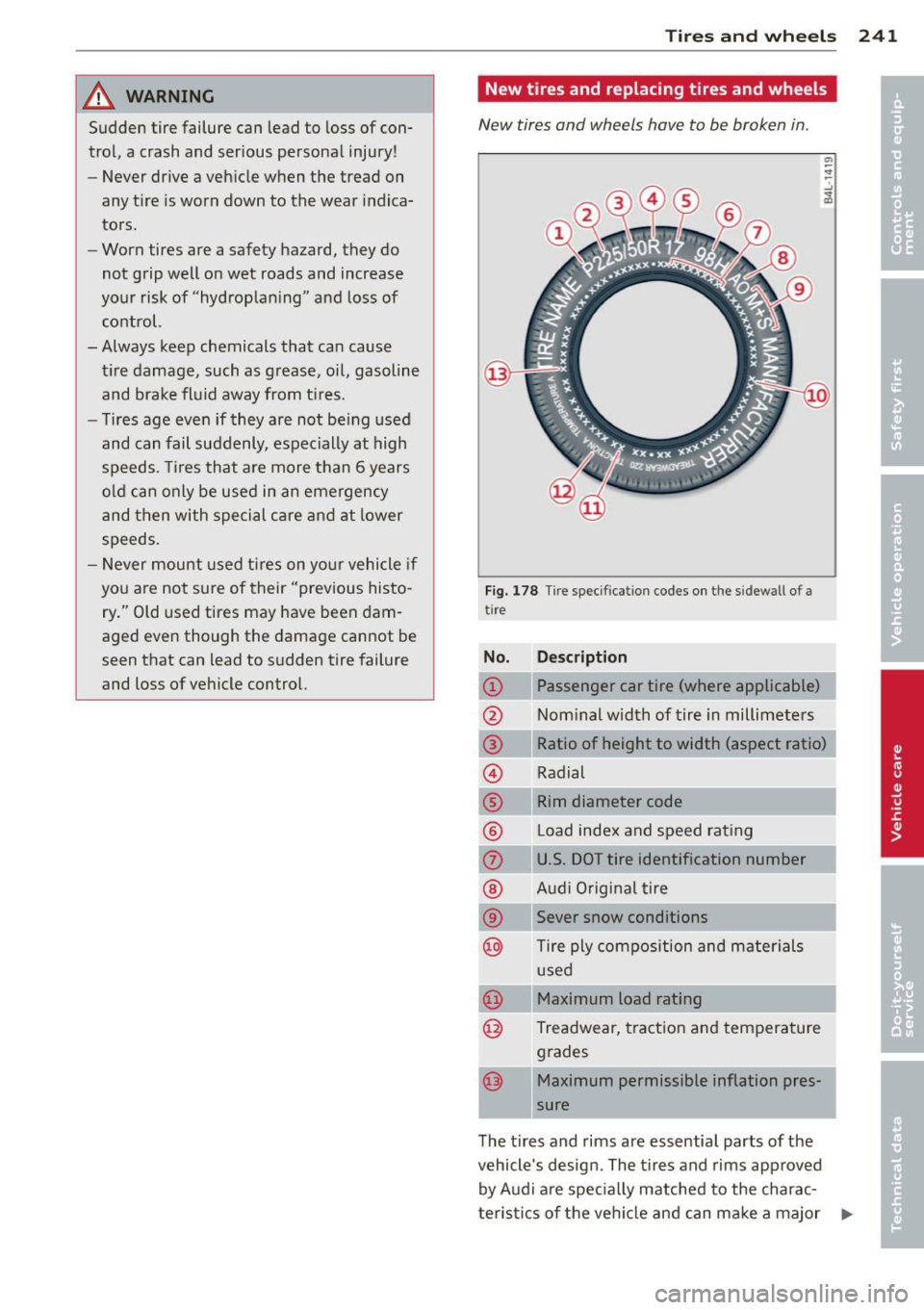
Fig. 178 Tir e specificat ion codes on t he s idewall o f a
tire
No. Description
CD Passenger car tire (where applicable)
@ Nominal width of tire in millimeters
® Ratio of height to width (aspect ratio)
© Radial
® Rim diameter code
® Load index and speed rat ing
(f) U.S. DOT tire identification number
® Audi Original tire
® Sever snow conditions
@ Tire ply composition and materials
used
@ Maximum load rating
@ Treadwear, traction and temperature
grades
@ Maximum permissible inflation pres-
sure
The tires and rims are essential parts of the
vehicle's design . The ti res and rims approved
by Audi are spec ially matched to the charac
teristics of the vehicle and can make a major .,.
•
Page 246 of 294
244 Tires and wheels
-All four wheels must be fitted with radial
tires of the same type, size (rolling cir
cumference) and the same tread pattern.
Driving with different tires reduces vehi
cle handling and can lead to a loss of
control.
- If the spare tire is not the same as the
tires that are mounted on the vehicle -
for example with winter tires - only use
the spare tire for a short period of time
and drive with extra care. Refit the nor
mal road wheel as soon as safely possi
ble.
- Never drive faster than the maximum
speed for which the tires on your vehicle
are rated because tires that are driven
faster than their rated speed can fail
suddenly.
- Overloading tires cause heat build-up,
sudden tire failure, including a blowout
and sudden deflation and loss of control.
- Temperature grades apply to tires that
are properly inflated and not over or un
derinflated.
- For technical reasons it is not always
possible to use wheels from other
vehicles -in some cases not even wheels
from the same vehicle model.
- If you install wheel trim discs on the ve
hicle wheels, make sure that the air flow
to the brakes is not blocked. Reduced air
flow to the brakes can them to overheat,
increasing stopping distances and caus
ing a collision.
- Run flat tires may only be used on
vehicles that were equipped with them
at the factory. The vehicle must have a
chassis designed for run flat tires and a
factory-installed tire pressure monitor ing system* that indicates a loss of tire
pressure. Incorrect use of run flat tires
can lead to vehicle damage or accidents.
Check with an authorized Audi dealer or
tire specialist to see if your vehicle can be
equipped with run flat tires .
If run flat
tires are used, they must be installed on
all four wheels. Mixing tire types is not
permitted.
(D Note
- For technical reasons, it is not generally
possible to use the wheel rims from oth
er vehicles. This can hold true for wheels
of the same vehicle type.
- If the spare tire is different from the tires that you have mounted on your ve
hicle (for example winter tires or wide
profile tires), then use the spare tire for a
short period of time only and drive with
extra care. Replace the flat tire with the
tire matching the others on your vehicle
as soon as possible.
- Never drive without the valve stem cap.
The valves could get damaged.
@ For the sake of the environment
Dispose of old tires in accordance with the
local requirements.
Uniform tire quality grading
- Tread wear
- Traction AA A B (
- Temperature ABC
Quality grades can be found where applicable
on the tire side wall between tread shoulder
and maximum section width
c> page 241,
fig. 178 .
For example: Tread wear 200, Traction AA,
Temperature A.
All passenger car tires must conform to Feder
al Safety Requirements in addition to these
grades .
Tread wear
The tread wear grade is a comparative rating
based on the wear rate of the tire when tested
under controlled conditions on a specified
government test course.
For example, a tire graded 150 would wear
one and one half (11/2) times as well on the
government course as a tire graded 100. ..,_
Page 249 of 294
driving a few yards and correct if neces
sary . Follow the instructions from the
snow cha in manufacturer when doing so.
(D Tips
Where snow chains are mandatory oncer
tain roads, this norma lly also applies to
veh icles with all wheel drive.
Wheel bolts
Wheel bolts must always be tightened to the
correct torque.
The design o f whee l bolts is matched to the
factory insta lled r ims . If different rims are fit
ted, the correct wheel bo lts wit h the right
l ength and correctly shaped bolt heads must
be used. This ensures that wheels are f itted
securely and that the brake system functions
correctly .
In certain circumstances, you may not use
wheel bo lts from a different vehicle -even if it
is the same model
<=> page 274.
A WARNING
Improperly tightened or maintained wheel
bolts can become loose caus ing loss of
cont ro l, a co llision and serious persona l in
Jury .
- Always keep the w heel bolts and the
threads in the wheel hubs clea n so the
w hee l bolts can t urn easily and be p rop
erly t igh tened.
- Never grease or oil the wheel bolts and
the threads in the wheel h ubs. They can
become loose wh ile d riving if greased or
oiled, even if tightened to the specified
torq ue.
- Only use whee l bo lts that belong to the
rim being installed .
- Never use different whee ls bolts on your
vehicle.
- Alw ays m ain ta in the co rrec t tig hten ing
torq ue fo r the wheel bo lts to reduce the
risk of a wheel loss . If the tightening tor
que of the wheel bo lts is too low, they
can loosen and come out when the vehi-
Tire s an d wheel s 24 7
cle is mov ing. If the tightening torq ue is
too high, the wheel bolts and threads
can be damaged and the whee l can be
come loose.
@ Note
The specified torque for the whee l bolts is
90 ft lbs . (120 Nm) w ith a tolerance of
± 7,4 ft lbs. (± 10 Nm). Torque whee l bolts
diagonally . After changi ng a wheel, the
torque m ust be checked as soon as poss i
ble with a to rque wrench -preferably by an
a uthorized Aud i dea le r or qualified wor k
shop.
Low aspect ratio tires
Your A udi is fac tory -eq uipped w ith low aspect
ratio tires . These tires have been tho ro ughly
tested and been se lected specifically for your
model for their superb performance, road fee l
and handling under a variety of driving condi
tions . Ask your authorized Aud i dealer for
more details.
The low aspect ratio of these t ires is ind icated
by a numeral of
55 or less in the tire's size
designation. The numera l represents the ratio
of the tire's sidewa ll height in relation to its
tread width exp ressed in percentage. Conven
tiona l tires have a he ight/w idth ratio of 60 or
more.
The performance of low-a spect-r atio tire s is
particularly sensit ive to improper inflation
pre ssure. It is therefor e important that low
a spect ratio tire s are inflated to the specified
pres sure and that th e inflation pr essure i s
regularly checked and maintained. Tire pre s
sure s should be chec ked at lea st once a
month and always before a long trip
<=> page 236, Checking tire pressure.
What you can do to avo id tire and rim
damage
Low aspect ratio tires can be damaged mo re
easily by impact w ith potholes, curbs, gull ies
or ridges on the road, particularly if the tire is
under inflated . ..,.
•
•
Page 254 of 294
252 What do I do now?
has been designed specifically fo r you r type of
vehicle . It must not be swapped with a com
pact spare t ire from another type of veh icle.
Snow cha ins
F or technical rea son s, the use of snow chains
on the compact spare tire is
not p ermitt ed .
If you do have to dr ive with snow cha ins and a
front tire fails, mount the spare whee l w ith
tire instead of a rear t ire. Install the snow
cha ins on the rear tire and use it to rep lace
the defective front tire .
A WARNING
-Never use the spare tire if it is damaged
or if it is worn down to the tread wear in
dicators.
- If the spare tire is more than 6 years o ld,
use it only in an emergency and w ith ex
treme caution and careful driving.
- The spare tire is intended only for tem
porary and short-term use. It should be
replaced as soon as possib le w ith the
normal wheel and tire.
- After mounting the compact spare tire,
the tire pressure must be checked as
soon as poss ible. The tire pressure of the
compact spa re tire must be 4.2 bar; oth
erw ise, you risk hav ing an accident.
- Do not drive faster than SO mph (80 km/
h). You risk having an acc id ent.
-Avoid full-throttle acce le rat ion, heavy
braking, and fast corner ing . You risk hav
ing an acc ident.
- Never drive us ing more than one spare
wheel and tire. You risk having an acci
dent .
- Normal summer or winte r tires must not
be mounted on the compact spare whee l
rim.
- For technical reasons, the use of ti re
c hains on the spare tire is not permitted.
If it is necessa ry to dr ive wi th tire ch ains,
the spare whee l must be mounted on the
front axle in the event o f a f lat in a rear
t ir e. The newly ava ilable front wheel
must then be installed in place of the rear whee
l with the flat tire. Installing
the t ire cha in before mounting the whee l
and tire is recommended.
- Loose items in the passenger compart
ment can cause serious personal injury
during hard brak ing or in an accident.
Never store the inflatable spare tire or
jack and tools in the passenge r compart
ment.
Changing a wheel
Before changing a wheel
Observe the following precautions for your
own and your passenger's safety when chang
ing a wheel .
.,. After you experience a t ire failure, p ull the
car we ll away from moving traffic and try to
reach
level ground before you stop ¢ A .
.,. All passengers should lea ve the car and
move to a safe location (for instance, behind
the guardrail)¢
A.
.,. Engage the park ing brake to prevent your
ve hicle from rolling unintentionally ¢
A.
.,. Shift into 1st ge ar on veh icles with manual
transmiss ion, or move th e
selector lever to
the P positi on
on vehicles w it h automatic
transmiss io n.
.,. If you are towing a trai ler : u nhitch the trail
er from your vehicle .
.,. Take the
jack ¢ page 251 and the spare tire
¢ page 251 out of the luggage compart
ment.
A WARNING
You or your passengers could be injured
while changi ng a wheel if you do not fo l-
l ow these safety precaut ions:
- If you have a flat tire, move a safe d is
tance off the road. Turn off the engine,
tur n the eme rgency flashers on and use
o ther warni ng device s to a le rt othe r mo
torists.
- Make sure that passengers wait in a safe
place aw ay from the vehicle a nd well
-
away from the road and traffic . ~
Page 255 of 294
-To he lp prevent the vehicle from moving
sudden ly and possibly slipping off the
jack, always fully set the parking brake and block the whee l diagona lly opposite
the wheel being cha nged with the fold
ing chocks o r othe r objects. When one
front whee l is lifted off the g ro und, plac
ing the A utomat ic Transm iss ion in "P"
(Park) wi ll
not prevent the vehi cle from
moving .
- Before you change a wheel, be su re the
ground is level and f irm . If necessa ry,
use a sturdy board under the jack.
- After installing the spare tire, make s ure
that you replace the flat ti re/wheel in its
storage area proper ly and tighten the
knur led retain ing screw securely .
Q;) Note
If you are changing the wheel on a steep
incline, use a rock or similar object to
block the opposite wheel to prevent the
veh icle from mov ing.
Obey all laws .
Changing a wheel
When you change a wheel, follow the se
quence described below step -by-step and in
exactly that order.
1. Remove the d ec orative wheel c ove r* or
the
wheel bolt cap s*. Fo r more de tails see
a lso
¢ page 2 54, Decorative wheel cov
ers
or ¢ page 2 54, Wheels with wheel
bolt caps.
2 . Loosen the wheel bolts ¢ page 254.
3. Locate the proper mount ing po int for the
jack and align the jack below that point
¢ page 255.
4. Lift the car with the jack ¢ page 2 55.
S. Remove the wh eel with th e flat tire and
then install the
s pare tire¢ page 256.
6. Tighten all wheel bo lts light ly .
7.
Lower the vehicle with the jac k.
What do I do now? 253
8. U se the wheel bolt w rench and firmly
tighten a ll wheel bolts in a crisscross pat
te rn ¢
page 254.
9. Replace the decorati ve wheel co ver* or
the
wheel bolt caps* .
A WARNING
Always read and fo llow all WARNINGS and
info rmat ion¢
A in Raising the vehicle on
page 255
and ¢ page 257.
After changing a wheel
A wheel change is not complete without the
doing the following.
.,. Always store the vehicle tool kit, the jack*,
and the replaced tire in the luggage com
partme nt
¢ page 132.
.,. Check the tire pr essure of the spare ti re as
soon as possible.
.,. As soon as possib le, have the
ti ght ening
torque s
on all wheel bolts chec ked w ith a
torque wrench . The correct tightening tor
que
i s 90 ft l bs. (120 Nm) .
.,. Have the flat tire replaced as soon as possi
ble .
(D Tips
-If you notice that the wheel bo lts a re
corroded and difficult to turn while
chang ing a tire, they should be replaced
before you check the tightening torque.
- Dr ive at reduced speed until you have the
tightening torques checked. •
•
Page 257 of 294
@ Tips
-Never use the hexagonal socket in the
handle of the screwdriver to loosen or
tighten the wheel bolts.
- If a whee l bolt is very tight, you may find
it easier to loosen by carefully pushing
down on the end of the wheel bolt
wrench w ith
one foot only. As you do so,
hold on to the car to keep your ba lance
and take ca re not to slip.
Raising the vehicle
The vehicle must be li~ed with the jack first
before the wheel can be removed .
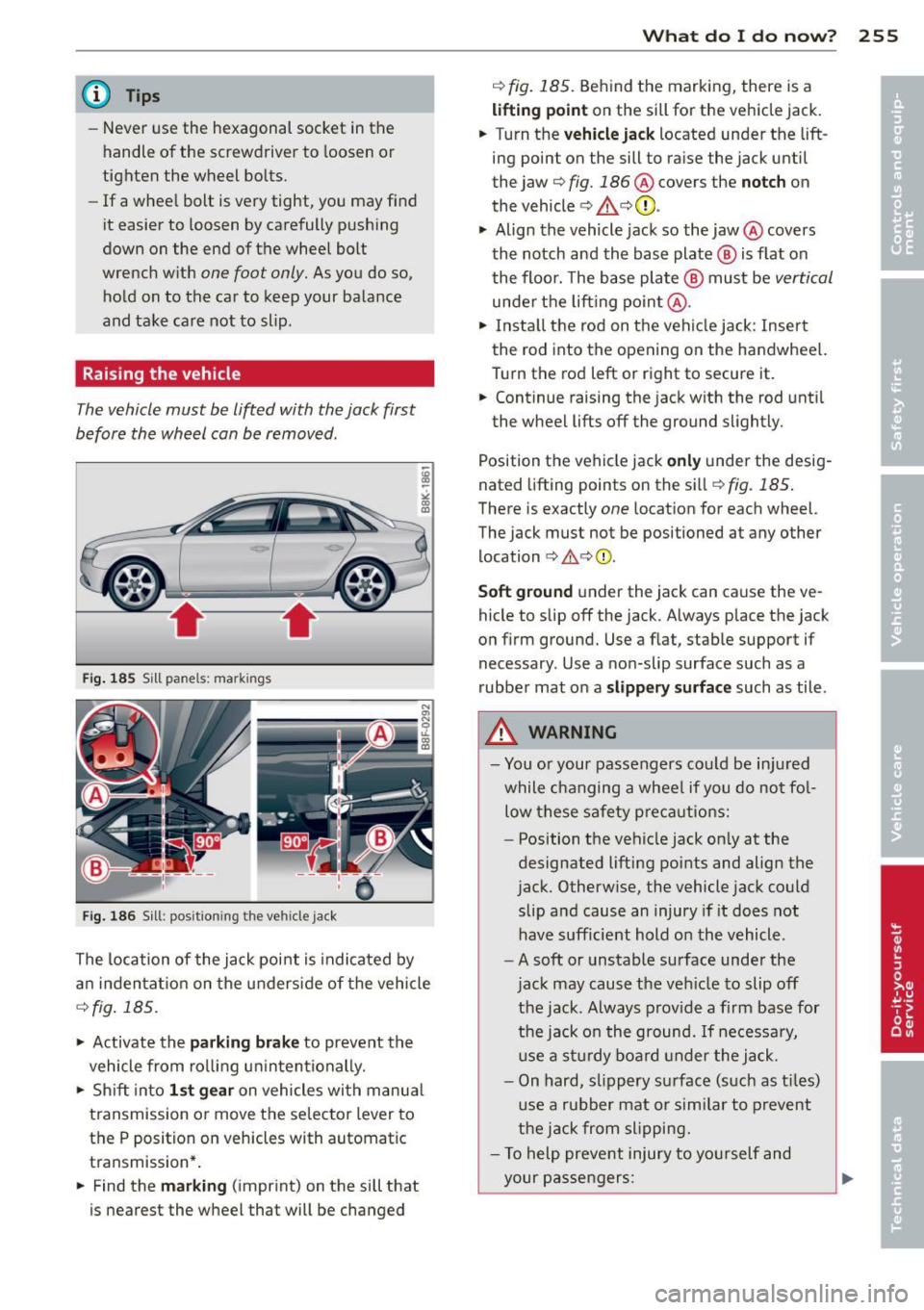
Fig. 1 85 Sill pane ls: ma rki ngs
Fi g. 186 Sill: posit ion ing the ve hicle jack
The location of the jack point is indica ted by
a n in den ta ti on on the underside of the vehicle
Q fig . 185.
"' Activate the parking brake to prevent the
vehicle from ro lling u ninten tionally.
"' Sh ift into
1 st gear on vehicles with m anua l
transmission or move the se lector lever to
the P position on vehicles with automatic
transmission* .
"' Find the
mark ing (imprint) on the sill that
is nearest the wheel that will be changed
What do I d o now ? 255
¢ fig. 185. Behind the marking, there is a
lifting point on the sill for the vehicle jack.
"' Turn the
vehicle jack located under the lift
ing point on the sill to ra ise the jack until
the jaw ¢
fig. 186 @ covers the notch on
the vehicle
¢ & ¢ (D .
"' Align the vehicle jack so the jaw@ covers
th e notch and the base plate @ is flat on
the floor. The base plate @ must be
vertical
unde r th e lift ing po in t @ .
"' Insta ll the rod on the vehi cle jack: Insert
the rod into the opening on the handwheel.
Turn the rod left or right to secure it.
"' Cont inue raising the jack w ith the rod unt il
the wheel lifts off the ground slightly.
Position the veh icle jack
only under the desig
nated lifting points on the sill ¢
fig. 185 .
There is exactly one location for each wheel.
The jack must not be positioned at any other location
¢ ,&. ¢(I) .
Soft ground under the jack can cause the ve
hicle to slip off the jack. Always place the jack
on f irm ground. Use a f lat, stab le support if
necessary . Use a non-slip surface such as a
rubber mat on a
s lipp ery surface such as tile .
A WARNING
-You or your passengers co uld be in ju red
while c hanging a whee l if you do no t fo l
low these safety p re ca utions:
- Position t he veh icle jack on ly at the
designated lifting poi nts and align the
jack. Otherw ise, the vehicle jack could
slip a nd cause an injury if it does not
have sufficie nt hold o n the vehicle.
- A soft or unstable surface under the
jac k may cause the ve hicle to slip off
the jack . A lways prov ide a fi rm base for
the jack o n the ground. If necessa ry,
u se a st ur dy boa rd under the jack .
- On hard, sl ippery su rface (such as t iles)
u se a rubber mat or simi lar to prevent
the j ack from slipping.
- T o help preve nt injury to yo urself and
your pas sengers:
Page 258 of 294
256 What do I do now?
-Do not raise the vehicle unti l yo u are
sure the jack is securely engaged.
- Passengers must not remain in the ve
h icle when it is jacked up.
- Make sure that passengers wait in a
safe p lace away from the vehicle and
well away from the road and traffic.
- Make sure jack position is correct, ad
just as necessary and then continue to ra ise the jack.
CD Note
Do not lift the vehicle by the sill. Position
the vehicle jack only at the designated lift
ing points on the sill. Otherwise, your vehi
cle will be damaged.
Taking the wheel off/installing the spare
tire
Follow these instructions step-by-step for
changing the wheel .
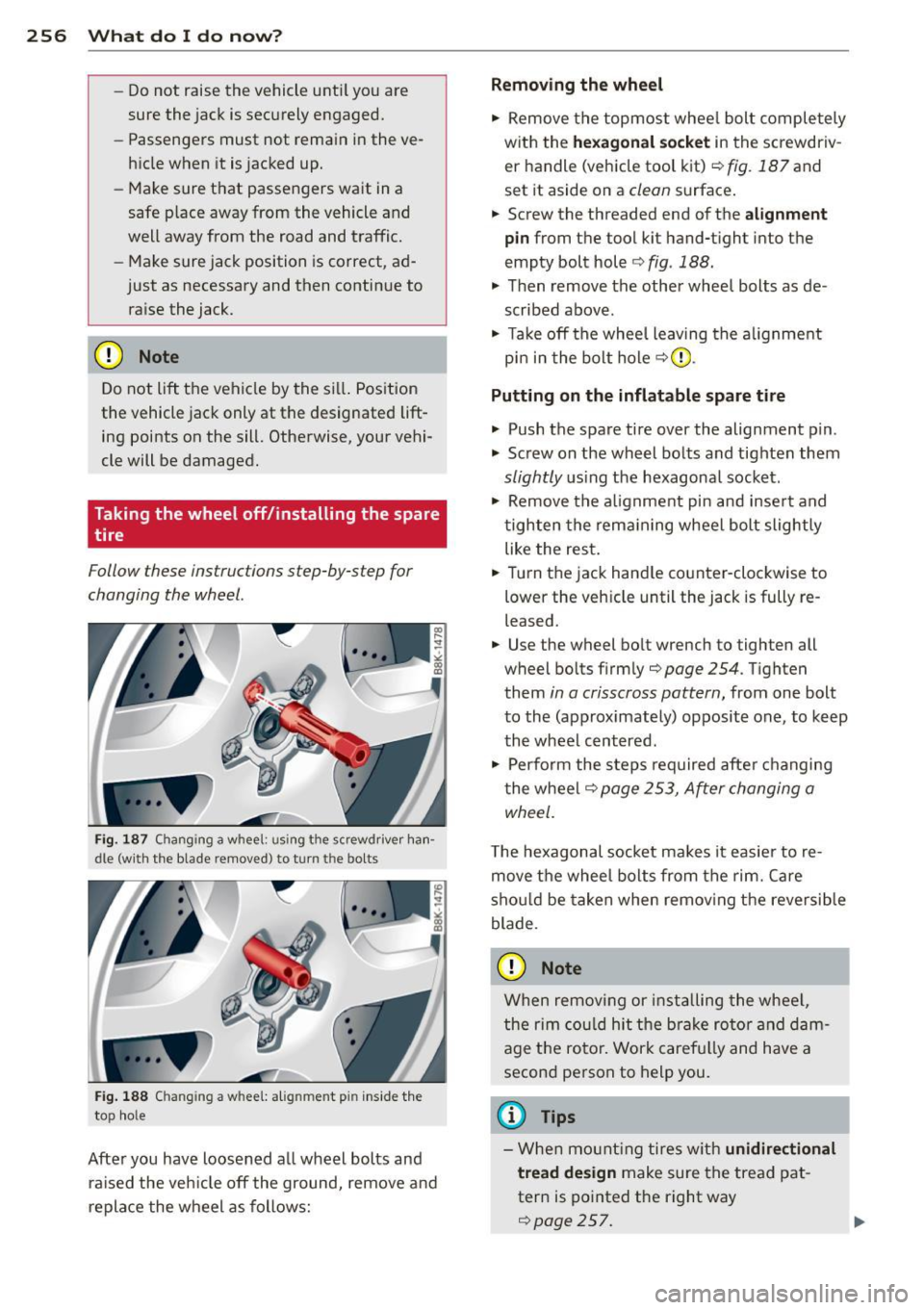
Fig. 187 Changing a w hee l: usi ng the screwdriver han ·
dle (with the blade r~mo ved) to turn th e bo lts
Fig. 188 C hangin g a w hee l: alig nmen t pin inside the
to p hole
After you have loosened a ll wheel bolts and
ra ised the veh icle off the ground, remove and
replace the wheel as follows:
Removing the wheel
.,. Remove the topmost whee l bolt completely
with the
hexagonal socket in the screwdriv
er handle (vehicle tool kit)¢
fig. 187 and
set it aside on a
clean surface .
.,. Screw the threaded end of the
alignment
pin
from the tool kit hand-t ight into the
empty bolt hole ¢
fig. 188.
.,. Then remove the other wheel bolts as de
scribed above.
.,. Ta ke off the wheel leaving the alignment
pin in the bolt hole
c::>(D .
Putting on the inflatable spare tire
.,. Push the spare tire over the alignment p in.
.,. Screw on the wheel bolts and tighten them
slightly using the hexagonal socket .
.,. Remove the alignment pin and insert and
tighten the remain ing wheel bolt slightly
like the rest.
.,. Turn the jack hand le counter -clockwise to
lower the veh icle until the jack is fully re
leased .
.,. Use the wheel bolt wrench to tighten all
wheel bolts firmly
c::> page 254 . Tighten
them
in a crisscross pattern, from one bolt
to the (approximately) opposite one, to keep
the wheel centered .
.,. Perform the steps required after changing
the wheel
c::> page 253, After changing a
wheel.
T he hexagonal socket ma kes it easier to re
move the wheel bolts from the rim. Care
should be tak en when removing the reversible
blade .
CD Note
When removing or installing the wheel,
the rim could hit the brake rotor and dam
age the rotor. Work carefu lly and have a
second person to help you.
(D Tips
-When mounting tires with unidirectional
tread design
make sure the tread pat
tern is pointed the right way
c::>page257. ..,.
Page 260 of 294
258 Fuses a nd bulb s
Fuses and bulbs
Fuses
Replacing a fuse
Fuses that have blown will have metal strips
that have burned through.
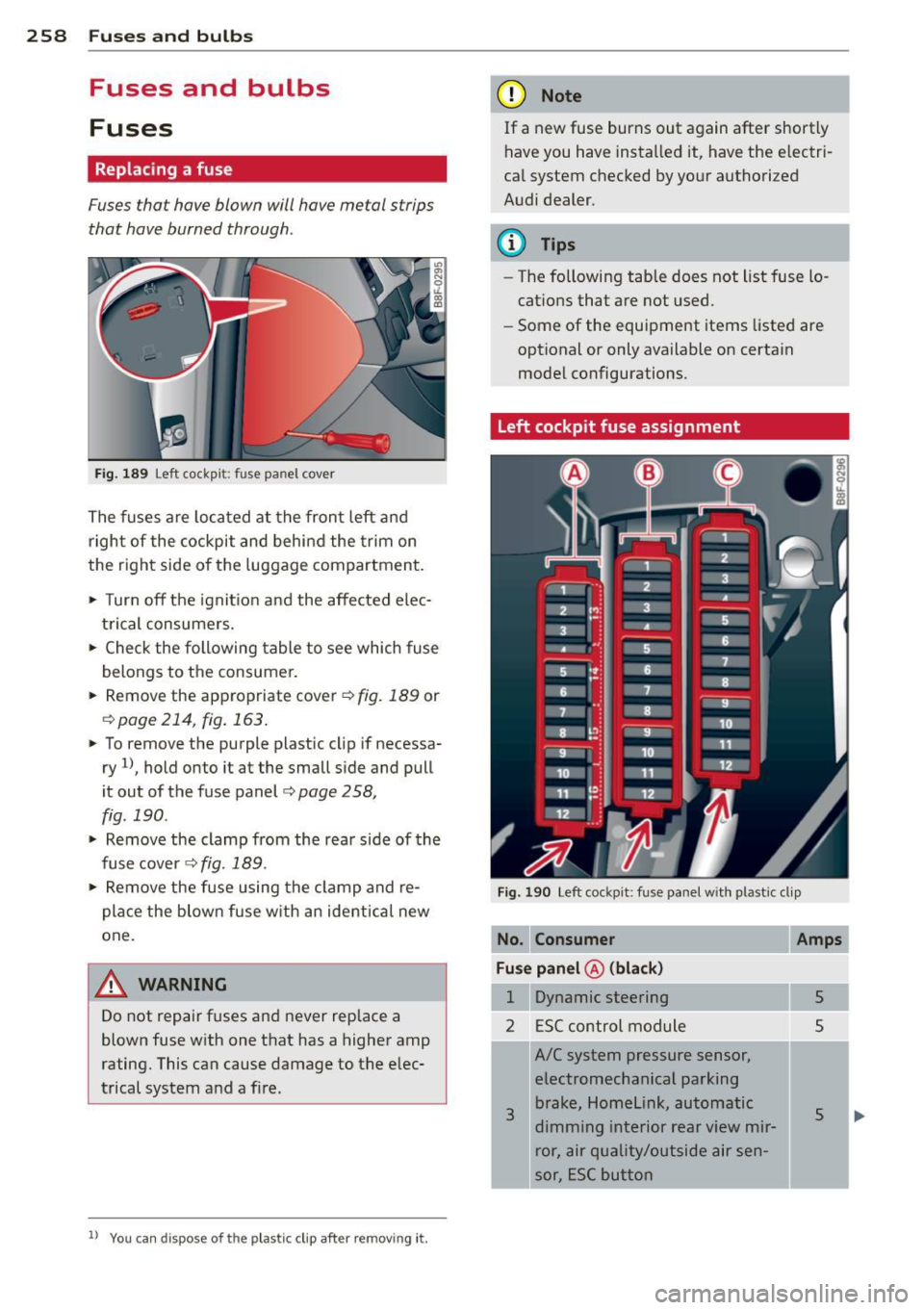
Fig. 189 Left cockpit: fuse panel cover
The fuses are located at the front left and
right of the cockpit and behi nd the trim on
the right side of the luggage compartment.
• Turn off the ignit ion and the affected elec
trical consumers.
• Check the following table to see which fuse
belongs to the consumer.
• Remove the appropriate cover ¢
fig. 189 or
¢page 214, fig.163.
• To remove the purple plastic cl ip if necessa
ry
1l, hold onto it at the small side and pull
it out of the fuse panel
c:> page 258,
fig. 190 .
• Remove the clamp from the rear side of the
fuse cover ¢
fig. 189.
• Remove the fuse using the clamp and re
pla ce the blown fuse w ith an ident ical new
one.
A WARNING
Do not repair fuses and never replace a
blown fuse with one that has a higher amp
rating. This can cause damage to the elec
trical system and a fire.
ll You can dis pose of the plastic clip after removing it.
(D Note
If a new fuse burns out again after shortly
have you have installed it, have the electri
cal system checked by your authorized
Audi dealer.
(D Tips
- The following table does not list fuse lo
cations that are not used.
- Some of the equipment items listed are
optional or only available on certain
model configurations.
Left cockpit fuse assignment
Fig. 190 Left cockpit: fuse panel with plastic clip
No. Consum er
Fu se pan el@ (bl ack)
1 Dynamic steering
2 ESC control module
3
A/C system pressure sensor,
electromechanical parking brake, Homelink, automatic
dimming interior rear view mir ror, air quality/outside air sen
sor, ESC button
Amp s
5
5
5