air condition AUDI A5 COUPE 2013 User Guide
[x] Cancel search | Manufacturer: AUDI, Model Year: 2013, Model line: A5 COUPE, Model: AUDI A5 COUPE 2013Pages: 294, PDF Size: 73.84 MB
Page 187 of 294
Intelligent technology Notice about data
recorded by vehicle
control modules
Your vehicle is not equipped with an Event Da
ta Recorder (EDR), installed by some manu
facturers for the express purpose of capturing
data for retrieval after an accident or crash
event. EDR's are sometimes called "crash re
corders".
Some state laws restrict the retr ieval or down
loading of data stored by EDR's that were in
stalled in a vehicle for the express purpose of
retrieving data after an accident or crash
event without the owner's consent.
Although your vehicle is not equipped with an
EDR, it is equipped with a number of electron
ic control modules for various vehicle systems
such as, for examp le, engine function, emis
sion control, as well as for the airbags and
safety belts.
These electronic control modules also record
vehicle-related data during norma l vehicle op
eration for diagnostic and repair purposes.
The recording capacity of the electronic con
trol modules is limited to data (no sound is re
corded) and only a small amount of data is ac
tually recorded over a very limited period of
time and stored when a system fault or other
condition is sensed by a control unit. Some of
the data then stored may relate to vehicle
speed, direction, braking as we ll as restraint
system use and performance in the event of a
crash or other condition. Stored data can only be read and downloaded with special equip
ment.
Electronic Stabilization
Control (ESC)
Description
ESC helps to improve road holding and vehicle
dynamics to help reduce the probability of
skidding and loss of veh icle control. It works
only when the engine is running. ESC detects
Intelligent technology 185
certain difficult driving situations, including
when the vehicle is beginning to spin (yaw)
out of control and helps you to get the veh icle
back under control by se lectively braking the
wheels, and/or reducing engine power and
providing steering ass istance to help hold the
vehicle on the driver's intended course. The in
dicator light
JjJ in the instrument cluster
blinks when ESC is taking action to help you
control the vehicle.
ESC has limitations .
It is important to remem
ber that ESC cannot overcome the laws of
physics.
It will not always be able to help out
under all conditions you may come up against.
For example, ESC may not always be able to
help you master situations where there is a
sudden change in the coefficient of friction of
the road surface. When there is a section of dry road that is suddenly covered with water,
slush or snow, ESC cannot perform the same
way it would on the dry surface. If the vehicle
hydroplanes (rides on a cushion of water in
stead of the road surface), ESC will not be
able to help you steer the vehicle because con
tact with the pavement has been interrupted
and the vehicle cannot be braked or steered .
During fast cornering, particularly on winding
roads, ESC cannot always deal as effectively
with difficult driving situations than at lower
speeds. When towing a trailer, ESC is not able
to help you regain control as it would if you
were not tow ing a trailer.
A lways adjust your speed and driving style to
road, traffic; and weather conditions. ESC can
not override the vehicle's physical limits, in
crease the available traction, or keep a vehicle
on the road if road departure is a result of
driver inattention. Instead, ESC improves the
poss ibility of keeping the vehicle under con
trol and on the road dur ing extreme maneu
vers by using the driver's steering inputs to
help keep the vehicle going in the intended di
rection. If you are traveling at a speed that
causes you to run off the road before ESC can
provide any assistance, you may not experi
ence the benefits of ESC.
•
•
Page 192 of 294
190 Intelligent technology
steering wheel will be easy to move. Re
initia lization might be necessary if the steer
ing whee l was moved hard to the left and
right while the vehicle was not moving. The
d isplay goes out as soon as in itia lizat ion is
comp lete.
A WARNING
Have the dynamic steering* system ma l
function repaired as soon as poss ible by an
authori zed A udi dealer or any qualified
workshop -risk of accident!
- If the . or
l:r-ij indicator light on ly stays
on for a short t ime, yo u may continue
drivi ng.
- The dynamic steering * stability systems
are not available in the event of a system
malfunction.
- Fo r additional informat ion on dynamic
stee ring*, refer to ¢
page 109.
Driving with your
quattro ®
Applies to vehicles: with all-wheel drive
With all-wheel drive, all four wheels are driv
en.
General information
W ith all-whee l drive, power is distribute d to
a ll fo ur whee ls. This happens automat ica lly
d epending on your dr iving sty le and the road
conditions at the t ime. See also¢
page 185 .
A cen ter different ial d istr ib ut es the dr iv ing
power var iably to the front and rear axle. It
wo rks together with se lective whee l torque
control, which activates when driving throug h
curves ¢
page 186. With the sport differen
tial*, power distribution to the rear wheels is
variable and can be adjusted with Audi drive se lect ¢
page 109 .
The all-wheel drive concept is designed for
h igh engine power . Your vehicle is exception
ally powerful and has exce llent dr iving charac
terist ics bot h under normal driving conditions and on snow and
ice . Always read and follow
safety precautio ns ¢ &. .
Winter tires
When driving in t he win ter, yo ur vehicle wi th
all-wheel d rive h as an adv antage, eve n w it h
r egular tires. In wi nte r road conditions it may
be advisable to mount winter tires (or all -sea
son tires) for improved driveability and brak
i ng : these tires must be mounted on
all fou r
wheels . See also ¢ page 246, Winter tires.
Tire chains
Where tire chains are mandatory on certain
roads, this no rma lly also app lies to ve hicles
with all-wheel drive¢
page 247, Snow
chains .
Replacing wheels/tires
Vehicles wi th a ll-wheel drive m ust always
have ti res of t he same s ize. A lso avoi d tires
with differe nt t read depths . For detai ls see
page ¢
page 242, New tires and replacing
tires and wheels.
Off-Road dr iving?
You r A ud i does no t have e nough gro und clea r
ance to be used as an off -road vehicle .
It is
t h e refore best to avoid roug h tracks and u n
even te rrain as much as possib le . Also refer to
¢ page 193.
A WARNING
Always ad just your dr iv ing to road and traf
f ic conditions. Do not let the extra safety
afforded by all-wheel drive tempt you into
taking ext ra risks .
-Al though the a ll-wheel drive is ve ry ef
fective, always remember that braking capacity is lim ited by tire t raction. You
s hould t herefore no t drive at ex cessive
speeds on i cy or slippe ry road surfa ces.
- On wet road surfa ces, be careful not to
d rive too fast because the fr on t whee ls
could begin to slide on top of the water
(aquaplaning) . If thi s should occur, you
Page 196 of 294
194 Driving and en vironm ent
8_ WARNING
After driving through water, mud, slush,
etc ., the brakes may be slow to take effect
because of wet brake rotors and pads. Dry
the brakes first by braking carefully to re
store the full braking effect.
CD Note
Vehicle components such as the engine,
transmiss ion, suspension or electrical sys
tem can be severely damaged by driving
through wate r.
@ Tips
- Check the depth of the water before dr iv
i ng through it.
- Do not stop the veh icle, dr ive in reverse
or switc h the engine off when driving
t hr ough water.
- Keep in mind that oncoming vehicles
may c reate waves that raise the water
l evel and make it too deep fo r you r vehi
cle to dr ive through safely.
-
- Avoid dr iving thro ugh salt water because
i t can ca use corrosion.
Catalytic converter
It is very important that your emission con
trol system (catalytic converter) is function
ing properly to ensure that your vehicle is run
ning in on environmentally sound manner.
,,. Always use lead-free gasoli ne¢ page 211,
Fuel supply .
,,. Never run the tank down a ll the way to
empty.
,,. Never put too much motor oil in your en-
gine ¢
page 221, "t':::r. Adding engine oil.
,,. Never t ry to push- o r tow-start your veh icle.
The catalytic converter is an effic ient "clean
up" device built into the exhaust system of
the vehicle. The catalytic converter burns
many of the polluta nts in the exhaust gas be
fore they are released into the atmosphe re. The exclusive
use of unleaded f uel is critica lly
important for the life of the catalytic convert
er and proper funct ion ing of the eng ine .
A WARNING
= -
-Do not park or operate the vehicle in
areas where the hot exhaust system may
come in co ntact with dry grass, brush,
fuel spill or other material wh ich can
cause a fire .
- Do not app ly additional undercoating or
r u stp roofing on or nea r the exhaust
manifold, exhaust pipes, cataly tic con
ver ter or heat shields. Dur ing driv ing, the
substance used for under coa ting co uld
overhea t and cause a fire.
CD Note
- Be aware that just o ne tank filling with
leaded fu el w ill already ser io usly de
gr ad e the per form ance o f the catalytic
c onverte r.
- Do not ex ceed t he corre ct engine oil level
r:;!) page 2 21.
- Do not drive until the fuel tank be co m es
completely emp ty. The engine co uld mis
fire . Unburned fuel could also get in to
the exhaust system and this co uld cause
the cata lytic converter to overheat .
- Do not turn off the igni tion whi le the ve
hicle is mov ing.
- Do not contin ue to ope rate your veh icle
unde r these conditions, as otherwise fuel
can reach the catalyt ic converte r. T his
co uld resu lt in overheating of the con
verter, requir ing its replacement.
- To assure efficient operation of the Emis
sion Control System:
- H ave you r vehicle maintained p rope rly
and in accordance w ith the se rvi ce rec
ommen dat ions in yo ur Warranty &
M ain tenance boo klet.
- L ack of prope r maintenan ce as we ll as
i mprope r use of t he ve hicl e wi ll impair
the func tion of the em ission cont ro l
system and could lea d to damage .
Ill>
Page 198 of 294
196 Driving and en vironm ent
(0 Note
Do not leave engine idling unattended af
ter starting . If warning lights should come
on to indicate improper operation, they
would go unheeded. Extended idling also
produces heat, which could result in
over
heating or other damage to the vehicle or
other property.
Regular maintenance
A badly tuned engine unnecessarily wastes a lot of fuel .
.,. Have your vehicle serv iced at regular inter-
vals.
By having your vehicle regularly serviced by an
author ized Audi dealer he lps to ensure that it
runs properly and economically. The condition
of your vehicle not only affects its safety and
ab il ity to hold its value, it also affects
fu el
con sump tion .
C heck your oil each time you fill your tank.
The amount of oil used is related to engine
l oad and speed.
I t is normal for the oil consumption o f a new
engine to reach its lowest val ue after a certain
mileage has been driven.
You mus t drive yo ur vehicle abo ut 3,000 miles
(5,000 kilometers) be fo re yo u can properly
assess oi l consumption.
This a lso applies to fuel consumption and en
g ine output.
(]) Note
-Have yo ur vehicle maintai ned properly
and in accordance with the service re c
ommendations in your War ran ty
& Mai n
tenance bookle t. Lack of proper mainte
nance as well as imp roper use of the
ve
hicle will impair the function of the
emission control system and could lead
to damage. -
Do not alter or
remove any component of
the Emission Control System unless ap
proved by the manufacturer .
- Do not alter or
remove any device, such
as heat shie lds, switches, ignition w ires,
valves, which are designed to protect
your vehicle's Emission Control System and other important vehicle compo
nents.
Fewer short trips
Fuel consumption will always be relatively
high on short trips .
.,. Try to avoid driv ing short distances w ith a
cold engine.
The engine and cata lytic converter have to
reach their opt imal
oper ating temperature to
reduce fuel consumpt ion and nox ious em is
s ions effectively.
Just after starting, a co ld engine in a mid-size
car on ly achieves a fuel economy of 6-8 m iles
per gallon (30-40 l/100 km). After about a
half a mile, fuel economy climbs to 12 mpg
(20 l/100 km) . After about
2 .5 miles (4 km),
the engine is at its prope r operating tempera
tu re and fuel economy has reached a normal
level. So you can see that yo u should avo id
short trips whenever poss ible.
T he
outside temperatur e is also cr it ical in t his
regard. Your car consumes more fue l in the
winter tha n in the s umme r.
Page 200 of 294
198 Trailer towing
Tire pre ss ure
When towing a trai le r, inflate the t ires of your
vehicle to the co ld tire pressure listed under
"Full load" on the label located on the driver 's
side B-pillar (visible when the door is open).
Inflate trailer tires to trailer and tire manufac
turers' specifications.
Light s
The headlight settings should be checked with
the trailer attached before dr iving off. Check
to make sure both vehicle and tra iler lights
are working properly.
Saf ety chains
Be sure tra iler sa fe ty cha ins a re p roperly con
nected from the trailer to the hitch on the ve
hicle. Leave eno ugh slack in the chains to per
mit turning corners. When you install safety
cha ins, make sure they w ill not drag on the
road when you are driving.
The chains shou ld cross under the trai ler
tongue to prevent it from dropping in case of
separation from the hitch.
Driving instructions
Driving with a trailer always requires extra
care and consideration.
To obtain the best possible handling o f vehicle
and trai ler, p lease note the following:
.,. Do not tow a loaded tra iler whe n your car it
self is no t loaded .
.,. Be especia lly careful when passing other
vehicles .
.,. Observe speed limits .
.,. Do not drive at the maximum permissible
speed.
.,. Always apply brakes early .
.,. Monitor the temperature gauge.
Weigh t di stribution
Towing a loaded trai ler with an empty car re
sults in a highly unstable distribution of
weight . If this cannot be avo ided, drive at very
low speeds only to avoid the risk of losing
steer ing control. A "ba
lanced' ' rig is easier to operate and con
trol. This means that the tow vehicle should be loaded to the extent possible and permissi
ble, while keep ing the trai ler as light as possi
ble under the c ircumstances. Whenever poss i
ble, transfer some cargo to the luggage com
partment of the tow veh icle while obse rving
tongue load requ irements and vehicle load ing
considerations.
Speed
The higher the speed, the more d iff icu lt it be
comes for the driver to control the rig. Do not
drive at t he maximum permissible speed. Re
duce your speed even more if load, weather or
wind conditions are unfavorable -pa rtic ularly
whe n going downhill.
Reduce veh icle speed
immediately if the trail
er shows the slightest s ign of sway ing.
Do n ot
try to sto p th e swaying by acc elerating .
Observe speed limits. In some areas, speeds
fo r vehicles tow ing tra ile rs a re lower than for
regular veh icles .
Always apply brakes early. When driving downh ill, shift into a lower gear to use the en
gine braking effect to slow the vehicle . U se of
the brakes alone can cause them to overheat
and fail.
Coolant tempe rature
The coo lant temperature gauge c> page 10
must be observed carefu lly. If the needle
moves close to the upper end of the scale, re
duce speed immediately and/or turn off the
air conditioner.
If the coolant temperature warning light •
i n t he i nstrument cluster starts flashing, pull
off the road, stop and let the engine
idle for
abo ut two min utes to prevent he at build-up .
_& WARNING
Anyone not proper ly restra ined in a mov
i ng vehicle is a t a much greater risk in an
accident . Never let anyone ride in yo ur car
who is not p roperly wea ring the rest raints
prov ided by Audi.
-
Page 202 of 294
200 Cleaning and protection
Cleaning and protect ion
General information
Regular core preserves vehicle value .
Any automobile is exposed to industr ial
fumes, corrosive road salt, etc. A well cared
for Audi can look like new many years after
p ur chase . Reg ular and correct care w ill con
tr ibute to maintain ing the beauty and valu e of
your Aud i.
Furthermore, good care may be a condition
for substantiating a warranty claim should
corrosion damage or paint defects occur.
Your auth orized Audi dealer has a variety of
dedicated vehicle-care products and can ad
v ise wh ich ones to use for cleaning the ext eri
or a nd inte rior o f you r vehi cle.
Whether you use products recommended by
Aud i or other commercially ava ilable clean ing
agen ts, pleas e make sure you apply t hem cor
r ectly .
A WARNING
-Cleani ng agen ts m ay be poi sonous. Kee p
them o ut of t he rea ch of childre n.
- H eed a ll ca ution labels.
- Always read directions on th e co ntai ner
b efore using a ny produc t. Follow the di
rec tions caref ully.
- Most chemical cleaners a re concentrat ed
and have to be diluted.
- Use spot removing flui ds only i n well
ventila ted areas.
- Do not use gasoline, ke rosene, d iesel
fuel, nail pol is h remov er or ot her volati le
fluid s. T hey may be to xic, flammab le or
h azar dou s in other w ays. D o not was h,
w ax or dry the vehicle wi th the ig nit ion
on or the eng ine running .
- D o not cl ean t he under sides of ch assis,
f en ders, wheel cove rs , etc. without pro
tectin g your hands and a rms. You may
c u t yourself on s harp-ed ged metal parts . -
Moisture and ice on b rakes may impair
brak ing eff ic iency
c::> page 188. Test t he
brakes carefully each time you was h the
ve hicle.
@ For the sake of the environment
Selec t on ly environ mentally frien dly clean
i ng products. Leftover cleaning pr oducts
s hou ld not d isposed of in the househo ld
waste .
Care of exterior
Washing
Frequent washing protec ts the vehicle .
The best p rotection against environmen tal i n
fluences is
frequent wash ing and waxing . H ow
often t his is requ ire d d epends o n:
- How much t he ve hicle is used
- W he re the veh icle is parked (garage, i n the
open under trees, etc .)
- The seasona l and weather conditions
- Environmental infl uences
T he longer b ird d roppings, inse cts, tree res in,
r oad and indus trial grime, t ar, soo t, ro ad salt
and other mater ials remain on the veh icle
body, the more lasting their destr uctive ef
f ects w ill be . Hig h temperatures ca used by ex
pos ure to intense su nlight i ntens ify the c orro
s ive effect, particular ly when hum id ity is high
as wel l.
U nder certa in circumstances,
weekly washing
may be necessary. Unde r other cond itions, a
monthly washing and waxing may be ade
quate .
After the winter, the unders ide of the vehicle
sho uld be thoroughly washed, preferab ly in a
professional ca r wash.
A WARNING
-A lways read and heed all WARNINGS and
other info rma tion
c::> page 20 0.
Page 221 of 294
Modern eng ine lubrication has taken a quan
tum leap in the last few years . Many synt hetic
oils ava ilable today provide better engine lu
brication that can outlast traditional pet role
um-based o ils, making them a smart choice
for use throughout the life o f your Audi .
W hether you use synthetic or petroleum
based engine oil, the oil that you use must
c o nform to Audi's oil quality standard
VW 502 00 to help keep your vehicle's engine running smoothly and help prevent the for
mat ion of harmfu l deposits, sometimes called
"sludge", that ove r time can lead to expensive
r epairs .
At the time of pri nting, engine o ils available in
the U .S . and Canada that meet the exacting
specifications of Audi oi l standard VW 502 00
are synthetic engine oils. This does not mean, h owever, that every synthetic engine oil w ill
meet Audi oil standard VW 502 00. So always
be sure that you use an approved oi l.
To help prevent the format ion of harmful de
posits use only oi l with the fo llowing spec ifi
cations printed on the oil container:
Audi oil standard VW 502 00
O il conta iner labels may carry the specif ica
tion s ingly or in comb inat ion w ith other des ig
nations and oil qua lity standards .
Viscosity
Engine oi ls are graded according to their vis
cosity. The proper v iscosity grade oi l for your
engine depends on cl imactic or seasonal con
d itions where you dr ive. You can use oil with a
viscosity grade of SAE SW40 across all tem
pe rature ranges for normal d riving conditions .
However, if eng ine oi l viscosity grade SAE
SW40 is not avai lab le, you can also use viscos
ity grade SAE SW-30 or SAE OW-40 as long as
it meets Audi o il quality standard VW 502 00
specifications.
Because engine oil that meets the Audi oil
standard may not be available everywhere
when you need it, we st rongly recomme nd
that you always carry with you a n ext ra quart
Checkin g and fillin g 219
(li ter) of oil that exp ress ly con forms to the
VW 502 00 specification, in case you have to
top
off the o il while on the road.
Only if the level of the o il is at or be low the
minimum mark -and no oi l that expressly
confo rms to Audi oil standard VW 502 00
spec ifications is available -may you top
off
with a h igh quality engine o il, preferab ly syn
thet ic-based, that meets ACEA A3 or API SM
specifications, but even then, only in v iscosity
grades SAE SW-40, SA E SW-30, o r SAE
OW-40. However, dur ing the entire time be
tween o il cha nge inte rva ls, never top
off with
more than a tota l of 0. 5 q t/liter engine o il
that does not con form to A udi oil specification
vw 502 00.
Fo r more information about eng ine oi l tha t
has been approved for your veh icle, ple ase
contac t either yo ur a uthorized Aud i dea le r or
Audi C ustomer Re lations at 1 (800) 822 -2834
or visit our web site at www .audiusa.com or
www.aud icanada .ca. Here you w ill also find a
current list of oils (manufacturers, brand
names etc.) that conform to Audi oil standard
vw 502 00.
Changing the engine oil
T he eng ine oi l and o il f ilter m ust be changed
according to the mileage (kilometers) and
time intervals specified i n your vehicle's War
ranty
& Maintenance booklet. Do not exceed
these interva ls - harmful deposits from old
engine oil can reduce engine performance and
can lead to expensive engine repairs.
Changi ng the oil at the recommended inter
vals is so very important beca use the lubricat
ing propert ies of oil decrease gradually during
norma l veh icle use . If you a re not sure when
you have your o il cha nged, ask your author
ized Audi Se rv ice Adv isor.
Under some circumstances the engine oil
shou ld eve n be changed more frequent ly.
Change oil more often if you dr ive most ly
sho rt distances, operate the veh icle in dusty
areas o r most ly under stop-and-go traff ic con-
di tions, o r when you use your vehi cle where .,..
•
•
Page 225 of 294
Engine cooling system
Coolant
The engine coolant performs two functions: it
keeps the engine from overheating and it pro
tects the engine from freezing in the winter .
The cooling system is sealed and generally re
quires little attention .
The cooling system has been filled at the fac
tory with a permanent coolant which does not
need to be changed. The coolant consists of a
mixture of water and the manufacturer's gly
col-based coolant additive G13 antifreeze with
anticorrosion additives (50% for USA models;
60% for Canadian models). This mixture both
assures the necessary frost protection and
protects metal components in the engine's
cooling system from corrosion and scaling. It
also raises the boiling point of the coolant.
Do not reduce the concentration of the cool
ant in the summer by adding plain water.
The
proportion of coolant additive must be at least 50% but not more than 60%
to main
tain antifreeze protection and cooling efficien
cy. If the coolant frost protection is too low,
the coolant could freeze and damage the vehi
cle heating and engine cooling system .
For year-round driving, antifreeze is added at
the factory for temperatures down to:
- -31°F(-35 °C)USA
- -40 °F ( - 40 °C) Canada.
A WARNING
Before you check anything in the engine
compartment, always read and heed all
WARNINGS
¢ .&. in Working in the engine
compartment on page 216.
(D Note
- Before winter sets in, have the coolant
checked to see if the coolant additive in
your vehicle is sufficient to meet the cli
mate conditions . This is especially impor
tant if you live in a region where the win
ter is extremely cold. If necessary, in-
Checking and filling 223
crease the proportion of coolant additive
to 60%.
- When adding coolant additive to your
cooling system, remember:
- We recommend using only coolant ad
ditive G12++ or G13 for your vehicle .
This coolant additive is available at au
thorized Audi dealers. Other types of
antifreeze can significantly reduce cor
rosion protection. The resulting corro
sion can cause a loss of coolant and se
rious engine damage.
- Do not add any type of radiator leak seal
ant to your vehicle's engine coolant.
Adding radiator repair fluid may adverse
ly affect the function and performance of
your cooling system and could result in
damage not covered by your New Vehicle
Limited Warranty.
Checking the engine coolant level
The engine coolant level can be checked with
a quick glance.
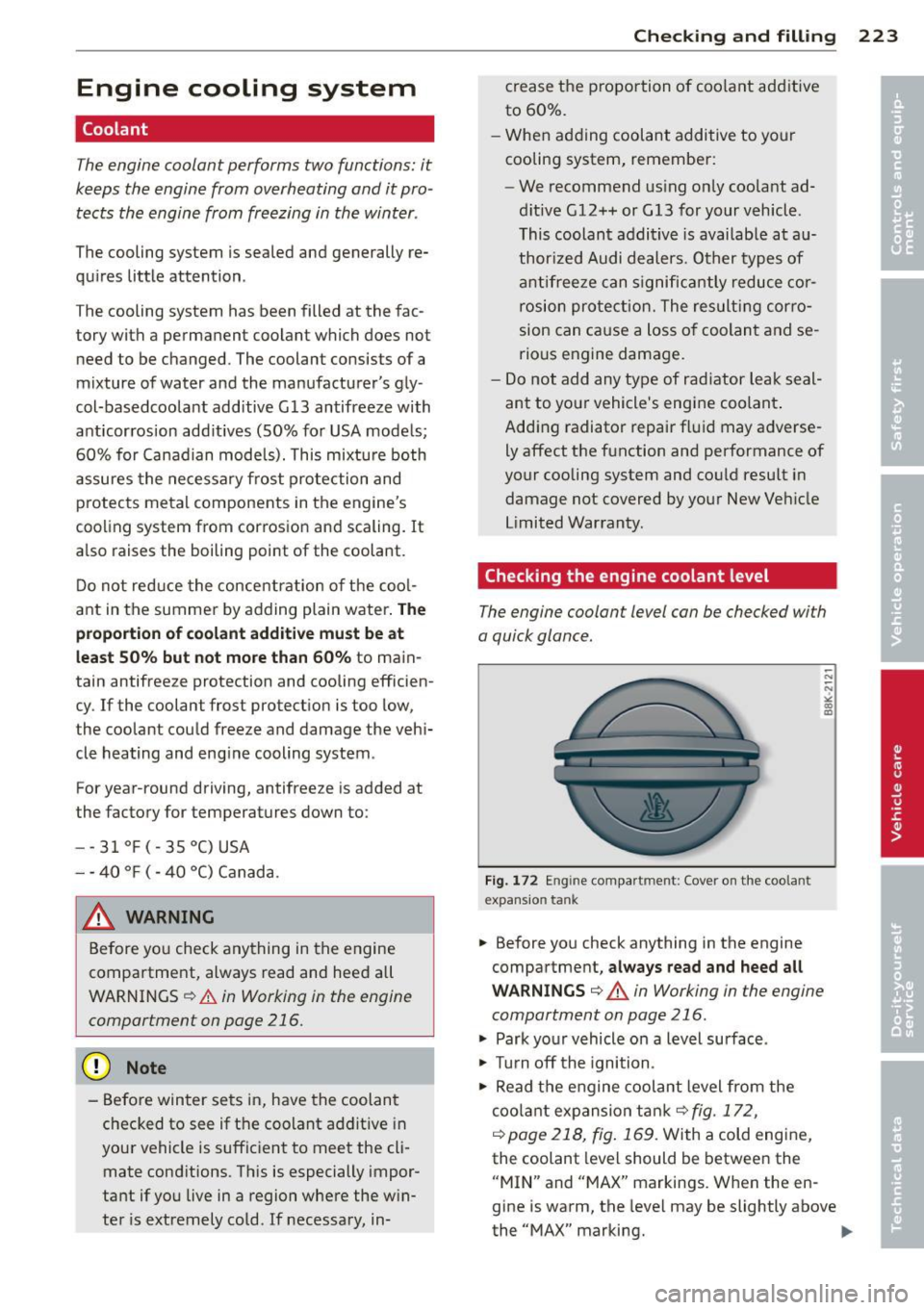
Fig. 172 Engine compar tment: Cover on the coola nt
expansio n tank
-... ;;; ,; a, m
.. Before you check anything in the engine
compartment,
always read and heed all
WARNINGS ¢ & in Working in the engine
compartment on page 216.
"' Park your vehicle on a level surface .
"' Turn off the ignition .
"' Read the engine coolant level from the
coolant expansion tank¢
fig. 172 ,
¢ page 218, fig. 169 .
With a cold engine,
the coolant level should be between the
"MIN" and "MAX" markings . When the en
gine is warm, the level may be slightly above
the "MAX" marking.
Iii>
Page 245 of 294
contribution to good road holding and safe
handling when in good condition and properly
inflated
¢ .&. .
We recommend that all work on t ires and
wheels be performed by an authorized A udi
dealer. They are familiar with recommended
procedures and have the necessary spec ial
too ls and spare parts as we ll as the proper fa
cilities for dispos ing of the old tires .
Authorized Audi dealers have the necessary information about techn ica l requ irements for
installing or changing tires and r ims.
R eplacing t ires and wheel s
Tires shou ld be rep laced at least in pairs and
not individua lly (for example both front tires
or both rear tires together).
Be s ure to read and heed the information to
the tire pressure monitoring system*
¢ page 249.
Always buy rep lacement radial tires that have
the same specifications as the t ires approved
for your ve hicle by Audi. Replacement tires
must always have the same load rating speci
fication as the original equipment or approved
optional tires listed in the table
¢ page 235.
Audi-approved specification tires are specially
matched to your vehicle and its load limits ,
and can contribute to the important road hold
ing, driving character istics, and safety of the
veh icle. The table
( ¢ page 235) lists spec ifica
tions o f the t ires approved for the Audi mod
e ls covered by your Owner 's Literature .
T he tire pressure labe l located on dr iver 's side
B-pillar (¢
page 235, fig. 177) lists the speci
fications o f the orig inal equipment tires in
stalled on your veh icle at the time it was man
ufactured .
Federal law requires t ire manufacturers to
p lace s tanda rd iz ed information on the s ide
wall of all tires¢
fig. 180 . This information
i dent ifies and desc ribes the fundamental
characterist ics , the quality grade of the tire
and a lso provides a tire ide ntificat io n number
Tire s an d wheel s 243
for sa fety standard certification and in case of
a reca ll.
Tire specifications
Knowledge of tire specifications makes it eas
ier to choose the co rrec t tires . Radial ti res
have the tire specifications marked on the
sidewa ll, for examp le:
P255 / 35 Rl 9 96Y XL
This co nta ins the following information :
P Indicates the tire is for passenger cars
(where app licab le)
255 Nom inal tire width i n mm of the tire
from sidewall edge to sidewall edge. In
general, the larger the number, the wider
the tire
35 Height/w idth ratio in percent (aspect ra -
t io)
R Tire construct ion: Radial
1 9 Rim diameter code (i n inches)
96 Load rating code
Y Speed ra ting letter code
XL (or "xl", " EXTRA LOAD", or "RF" Indicates
t h at the t ire is a"Re info rced" or an " Extra
Load " tir e
M+S (or "M/S") Indicates that the ti re has
some mud and snow capab ility
The tires could also have the informat ion of
direction of rotation ¢
page 231 .
Tire manufacturing d ate
The manufact uring date is also indicated on
the tire sidewall (possibly only on the
inner
s ide of the wheel):
"DOT ... 2212 .. . "means, for examp le, that
the tire was produced in the 22nd week of 2012.
Speed rating (letter cod e)
The speed rating letter code on the whee ls in
dicates the maximum permissible road speeds
¢ .&. in Winter tires on page 247.
P up to 93 mp h (150 km/h)
Q up to 99 mp h (1 58 km/h)
R up to 106 mph ( 170 km/h)
•
•
Page 247 of 294
-All four wheels must be fitted with radial
tires of the same type, size (rolling cir
cumference) and the same tread pattern .
Driving with different tires reduces vehi
cle handling and can lead to a loss of
control.
- If the spare tire is not the same as the
tires that are mounted on the vehicle -
for example with winter tires -only use
the spare tire for a short period of time and drive with extra care. Refit the nor
mal road wheel as soon as safely possi
ble.
- Never drive faster than the maximum
speed for which the tires on your vehicle
are rated because tires that are driven
faster than their rated speed can fail
suddenly.
- Overloading tires cause heat build-up,
sudden tire failure, including a blowout
and sudden deflation and loss of control.
- Temperature grades apply to tires that
are properly inflated and not over or un
derinflated .
- For technical reasons it is not always
possible to use wheels from other
vehicles -in some cases not even wheels
from the same vehicle model.
- If you install wheel trim discs on the ve
hicle wheels, make sure that the air flow
to the brakes is not blocked. Reduced air
flow to the brakes can them to overheat,
increasing stopping distances and caus
ing a collision.
- Run flat tires may only be used on
vehicles that were equipped with them at the factory. The vehicle must have a
chassis designed for run flat tires and a
factory-installed tire pressure monitor ing system* that indicates a loss of tire
pressure. Incorrect use of run flat tires
can lead to vehicle damage or accidents.
Check with an authorized Audi dealer or
tire specialist to see if your vehicle can be
equipped with run flat tires .
If run flat
tires are used, they must be installed on
all four wheels. Mixing tire types is not
permitted.
Tires and wheels 245
@ Note
- For technical reasons, it is not generally
possible to use the wheel rims from oth
er vehicles. This can hold true for wheels
of the same vehicle type.
- If the spare tire is different from the
tires that you have mounted on your ve
hicle (for example winter tires or wide
profile tires), then use the spare tire for a
short period of time only and drive with
extra care. Replace the flat tire with the
tire matching the others on your vehicle
as soon as possible.
- Never drive without the valve stem cap .
The valves could get damaged.
(® For the sake of the environment
Dispose of old tires in accordance with the
local requirements.
Uniform tire quality grading
- Tread wear
- Traction AA A B C
- Temperature ABC
Quality grades can be found where applicable
on the tire side wall between tread shoulder
and maximum section width
c:> page 242,
fig. 180 .
For example: Tread wear 200, Traction AA,
Temperature A.
All passenger car tires must conform to Feder
al Safety Requirements in addition to these
grades.
Tread wear
The tread wear grade is a comparative rating
based on the wear rate of the tire when tested
under controlled conditions on a specified
government test course.
For example, a tire graded 1S0 would wear
one and one half (1 1/2) times as well on the
government course as a tire graded 100.
1JJ>
•
•