engine overheat AUDI A5 COUPE 2013 User Guide
[x] Cancel search | Manufacturer: AUDI, Model Year: 2013, Model line: A5 COUPE, Model: AUDI A5 COUPE 2013Pages: 294, PDF Size: 73.84 MB
Page 200 of 294
198 Trailer towing
Tire pre ss ure
When towing a trai le r, inflate the t ires of your
vehicle to the co ld tire pressure listed under
"Full load" on the label located on the driver 's
side B-pillar (visible when the door is open).
Inflate trailer tires to trailer and tire manufac
turers' specifications.
Light s
The headlight settings should be checked with
the trailer attached before dr iving off. Check
to make sure both vehicle and tra iler lights
are working properly.
Saf ety chains
Be sure tra iler sa fe ty cha ins a re p roperly con
nected from the trailer to the hitch on the ve
hicle. Leave eno ugh slack in the chains to per
mit turning corners. When you install safety
cha ins, make sure they w ill not drag on the
road when you are driving.
The chains shou ld cross under the trai ler
tongue to prevent it from dropping in case of
separation from the hitch.
Driving instructions
Driving with a trailer always requires extra
care and consideration.
To obtain the best possible handling o f vehicle
and trai ler, p lease note the following:
.,. Do not tow a loaded tra iler whe n your car it
self is no t loaded .
.,. Be especia lly careful when passing other
vehicles .
.,. Observe speed limits .
.,. Do not drive at the maximum permissible
speed.
.,. Always apply brakes early .
.,. Monitor the temperature gauge.
Weigh t di stribution
Towing a loaded trai ler with an empty car re
sults in a highly unstable distribution of
weight . If this cannot be avo ided, drive at very
low speeds only to avoid the risk of losing
steer ing control. A "ba
lanced' ' rig is easier to operate and con
trol. This means that the tow vehicle should be loaded to the extent possible and permissi
ble, while keep ing the trai ler as light as possi
ble under the c ircumstances. Whenever poss i
ble, transfer some cargo to the luggage com
partment of the tow veh icle while obse rving
tongue load requ irements and vehicle load ing
considerations.
Speed
The higher the speed, the more d iff icu lt it be
comes for the driver to control the rig. Do not
drive at t he maximum permissible speed. Re
duce your speed even more if load, weather or
wind conditions are unfavorable -pa rtic ularly
whe n going downhill.
Reduce veh icle speed
immediately if the trail
er shows the slightest s ign of sway ing.
Do n ot
try to sto p th e swaying by acc elerating .
Observe speed limits. In some areas, speeds
fo r vehicles tow ing tra ile rs a re lower than for
regular veh icles .
Always apply brakes early. When driving downh ill, shift into a lower gear to use the en
gine braking effect to slow the vehicle . U se of
the brakes alone can cause them to overheat
and fail.
Coolant tempe rature
The coo lant temperature gauge c> page 10
must be observed carefu lly. If the needle
moves close to the upper end of the scale, re
duce speed immediately and/or turn off the
air conditioner.
If the coolant temperature warning light •
i n t he i nstrument cluster starts flashing, pull
off the road, stop and let the engine
idle for
abo ut two min utes to prevent he at build-up .
_& WARNING
Anyone not proper ly restra ined in a mov
i ng vehicle is a t a much greater risk in an
accident . Never let anyone ride in yo ur car
who is not p roperly wea ring the rest raints
prov ided by Audi.
-
Page 225 of 294
Engine cooling system
Coolant
The engine coolant performs two functions: it
keeps the engine from overheating and it pro
tects the engine from freezing in the winter .
The cooling system is sealed and generally re
quires little attention .
The cooling system has been filled at the fac
tory with a permanent coolant which does not
need to be changed. The coolant consists of a
mixture of water and the manufacturer's gly
col-based coolant additive G13 antifreeze with
anticorrosion additives (50% for USA models;
60% for Canadian models). This mixture both
assures the necessary frost protection and
protects metal components in the engine's
cooling system from corrosion and scaling. It
also raises the boiling point of the coolant.
Do not reduce the concentration of the cool
ant in the summer by adding plain water.
The
proportion of coolant additive must be at least 50% but not more than 60%
to main
tain antifreeze protection and cooling efficien
cy. If the coolant frost protection is too low,
the coolant could freeze and damage the vehi
cle heating and engine cooling system .
For year-round driving, antifreeze is added at
the factory for temperatures down to:
- -31°F(-35 °C)USA
- -40 °F ( - 40 °C) Canada.
A WARNING
Before you check anything in the engine
compartment, always read and heed all
WARNINGS
¢ .&. in Working in the engine
compartment on page 216.
(D Note
- Before winter sets in, have the coolant
checked to see if the coolant additive in
your vehicle is sufficient to meet the cli
mate conditions . This is especially impor
tant if you live in a region where the win
ter is extremely cold. If necessary, in-
Checking and filling 223
crease the proportion of coolant additive
to 60%.
- When adding coolant additive to your
cooling system, remember:
- We recommend using only coolant ad
ditive G12++ or G13 for your vehicle .
This coolant additive is available at au
thorized Audi dealers. Other types of
antifreeze can significantly reduce cor
rosion protection. The resulting corro
sion can cause a loss of coolant and se
rious engine damage.
- Do not add any type of radiator leak seal
ant to your vehicle's engine coolant.
Adding radiator repair fluid may adverse
ly affect the function and performance of
your cooling system and could result in
damage not covered by your New Vehicle
Limited Warranty.
Checking the engine coolant level
The engine coolant level can be checked with
a quick glance.
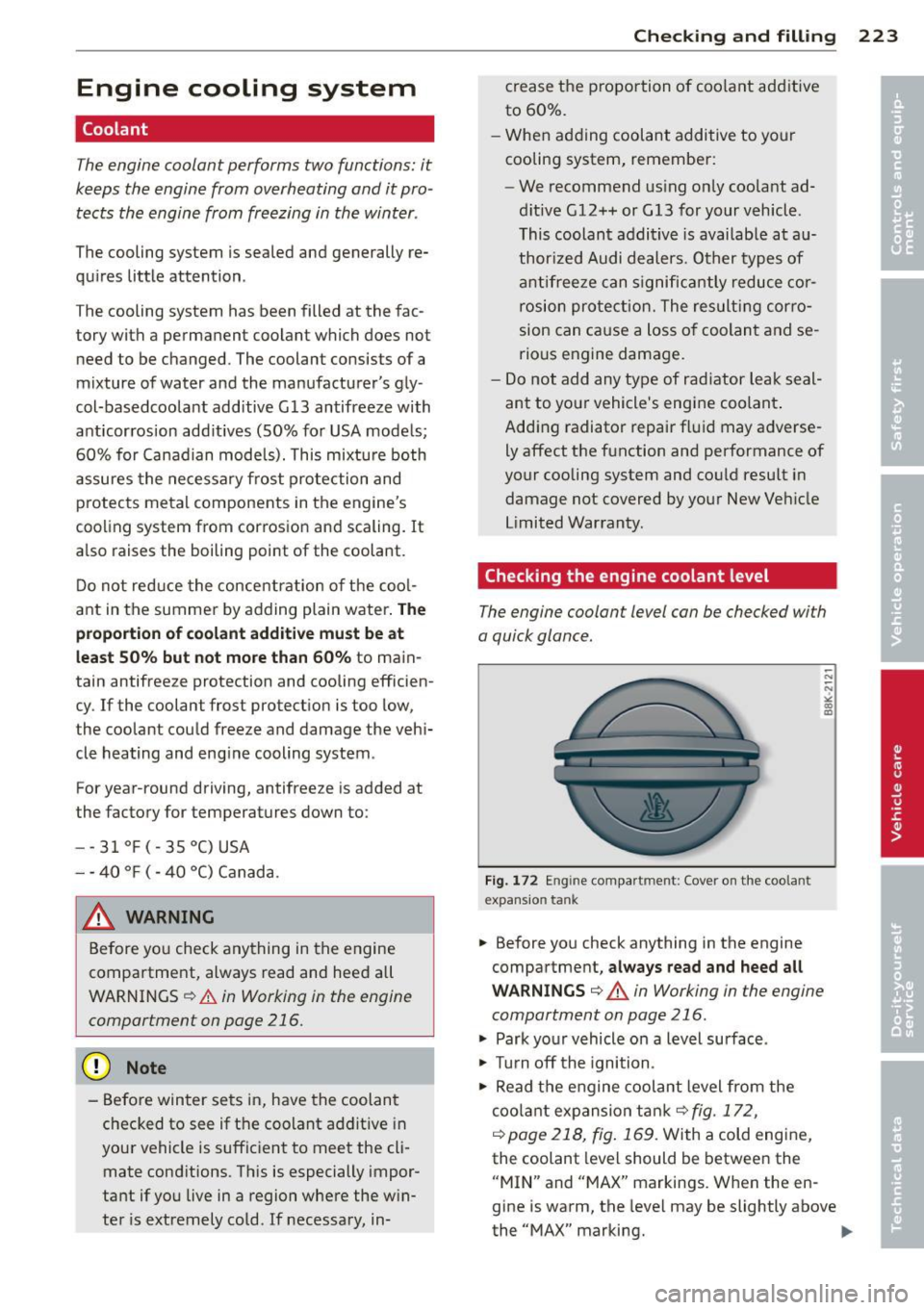
Fig. 172 Engine compar tment: Cover on the coola nt
expansio n tank
-... ;;; ,; a, m
.. Before you check anything in the engine
compartment,
always read and heed all
WARNINGS ¢ & in Working in the engine
compartment on page 216.
"' Park your vehicle on a level surface .
"' Turn off the ignition .
"' Read the engine coolant level from the
coolant expansion tank¢
fig. 172 ,
¢ page 218, fig. 169 .
With a cold engine,
the coolant level should be between the
"MIN" and "MAX" markings . When the en
gine is warm, the level may be slightly above
the "MAX" marking.
Iii>
Page 226 of 294
224 Check ing and filling
The location of the coolant expansion tank
can be seen in the engine compartment illus
tration
¢ page 218.
To obtain an accurate read ing, the eng ine
must be switched off .
The expans io n tank in you r vehicle is equipped
with an e lectr ic cool ant level sensor.
When the coolant level is too low, the warning light in the A uto-Check System
¢ page 18 w ill
b link until you add coo lant and the level has
been restored to no rm al. Even though the re is
an e lec tric coolant level sensor, we s till rec
ommend you check the coolant leve l from
time to time.
Coolant loss
Coolant loss may indicate a leak in the cooling
system. In the event of coolan t loss, the cool
i ng system should be inspected immedia tely
by your authorized A udi dealer. It is not
enough merely to add coolant.
I n a
s e aled system, losses can occur only if
the boiling poin t of the coolant is excee ded as
a result of overheating.
A WARNING
The cooling system is unde r pressure and
can get ve ry hot. Reduce the risk of sca ld
ing from hot coolant by following these
steps.
- Turn off the engine and allow it to cool
down.
- Protect yo ur face, hands and arms from
escaping fluid and steam by covering the
cap with a large, thick rag.
- Turn the cap slowly and ve ry carefu lly in
a counter-clockwise direction wh ile ap
plying light, downward pressure on the
top of the cap .
- To avoid being b urned, do not spill ant i
freeze or coolant on t he exhaust system
or hot eng ine parts. Unde r certain condi
tions, t he ethy lene g lycol in engine cool
an t can ca tch fire .
(D Note
Do not ad d any type of radiator leak sea l
ant to your veh icle's engine coo lant. Add
i ng radiator repa ir fluid may adverse ly af
fect the funct ion and performance of your
cooling system and could result in damage not cove red by your New Veh icle L imited
War ran ty .
Adding coolant
Be very careful when adding engine coolant.
Before you check anyth ing in the eng ine com
partmen t,
always read and heed all WARN
INGS ¢ &. in Working in the engine compart
ment on page 216.
.. Turn off the engine.
.. Let the engine cool down.
.. Place a thick rag over the coolant expansion
tank ¢
page 223, fig. 172 and carefully turn
the cap counter-clockwise ¢
,&..
.,. Add coo lant.
.. Twist the cap on aga in
t ightly.
Replacement engine coo lant must confo rm to
exact spec ificat ions ¢
page 223, Coolant. We
recommend using on ly coo la nt add itive G 12+
+ , G 13 or in an eme rgency G12+. Do
not use a
different additive. In an emergency use plain
water until yo u can get the correct additive
and can restore the correct ratio . This sho uld
be done as soon as possible .
If you have los t a considerab le amount o f
coolant , then you sho uld add cold antifreeze
and cold wate r on ly w hen the engine is cold.
Always use
new engine coo lan t when refilling.
Do not f ill coo lant abov e the
"MAX" ma rk . Ex
cess coo la nt w ill be fo rced o ut through the
pressure relief valve in the cap when the en
gine becomes hot.
A WARNING
-= -
-The cooling system is under pressure and
can get very hot. Reduce the risk of ..,.