fuel AUDI A5 COUPE 2013 User Guide
[x] Cancel search | Manufacturer: AUDI, Model Year: 2013, Model line: A5 COUPE, Model: AUDI A5 COUPE 2013Pages: 294, PDF Size: 73.84 MB
Page 30 of 294
28 Driver information d isplay
The efficiency program can help you to use
less fuel.
It evaluates driving information in
reference to fue l consumption and shows oth
er equipment influencing consumption as well
as shift recommendations. Fuel economy
messages
¢ page 29 provide tips for effi
cient dr iv ing .
The efficiency program uses distance and con
sumption data from trip computer
1. If the
data are deleted in the efficiency program,
those values are also reset in trip computer
1.
Enhanced shift indicator
Applies to vehicles: with manua l transmission and trip
co mpute r with efficiency program
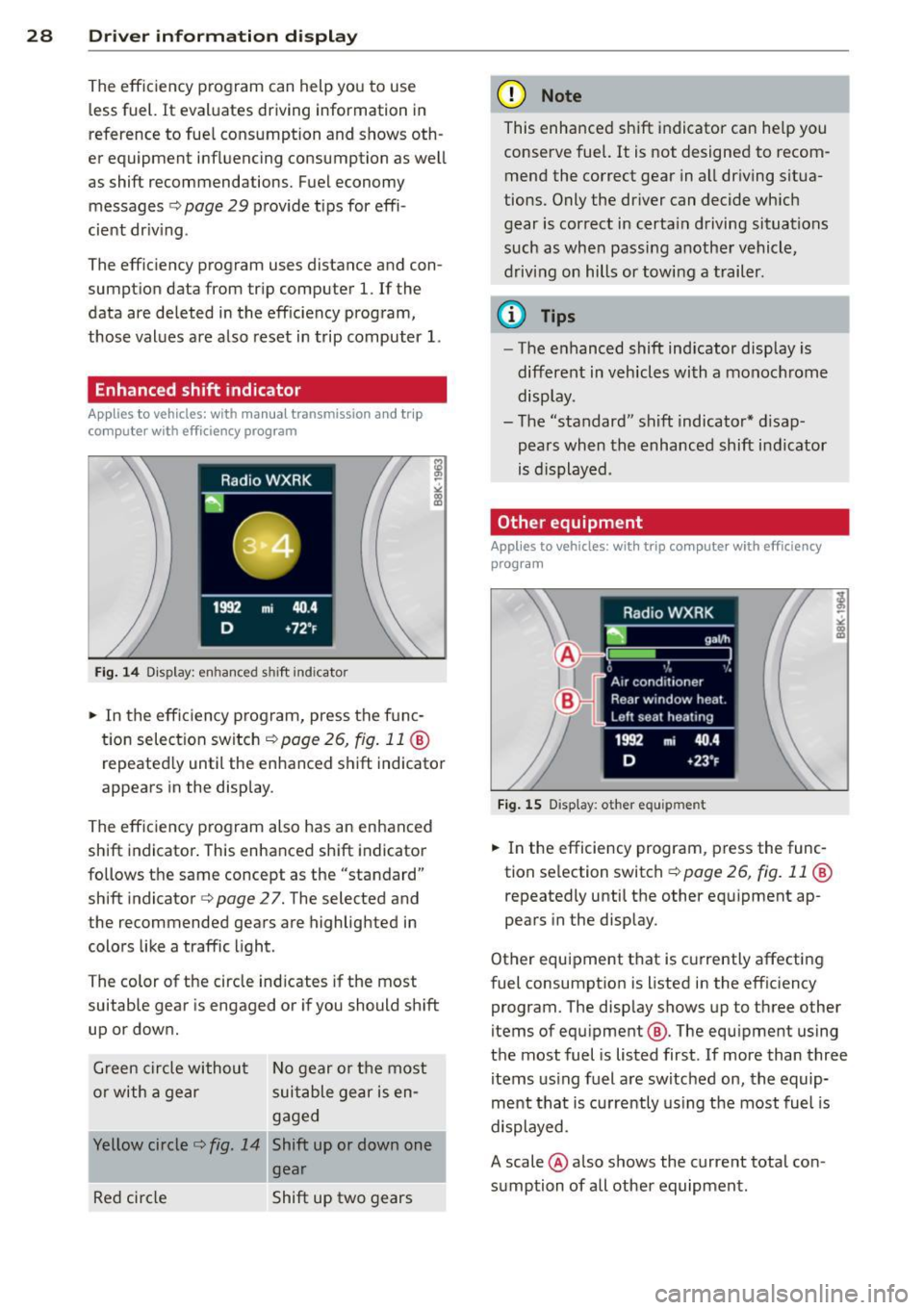
Fig. 14 Dis play : enh ance d shi ft ind icato r
.. In the efficiency program, press the func
tion selection switch
r=> page 26, fig. 11 @
repeated ly until the enhanced shift indicator
appears in the display .
The effic iency program also has an enhanced
shift indicator. This enhanced shift indicator
follows the same concept as the "standard"
shift indicator ¢
page 27. The selected and
the recommended gears are highlighted in
colors like a traffic light .
The color of the circle indicates if the most
suitable gear is engaged or if you should sh ift
up or down.
Green circle without No gear or the most
or with a gear suitable gear is en
gaged
Yellow circle¢
fig. 14 Shift up or down one
gear
Red circle Shift up two gears
(D Note
This enhanced shift indicator can help you
conserve fuel. It is not designed to recom
mend the correct gear in all driving situa
tions. Only the dr iver can decide wh ich
gear is correct in certa in driving situations
such as when passing another vehicle,
driving on hills or towing a trailer.
(0 Tips
-The enhanced shift indicator display is
different in vehicles with a monochrome
display .
- The "standard" shift indicator* disap
pears when the enhanced shift indicator
is displayed.
Other equipment
Applies to vehicles: with trip computer with efficiency
program
Fig. 1 5 Display : other eq uipm en t
.. In the efficiency program, press the func
tion selection switch¢
page 26, fig. 11 @
repeatedly until the other equ ipment ap
pears in the display.
Other equipment that is currently affecting
fuel consumption is listed in the efficiency
program. The display shows up to three other
items of equipment @. The equipment using
the most fuel is listed first . If more than three
items using fuel are switched on, the equip
ment that is currently using the most fuel is
displayed .
A scale @also shows the current total con
sumption of all other equipment .
Page 31 of 294
Fuel economy messages
App lies to vehicles: with trip computer w it h eff ic iency
p rogram
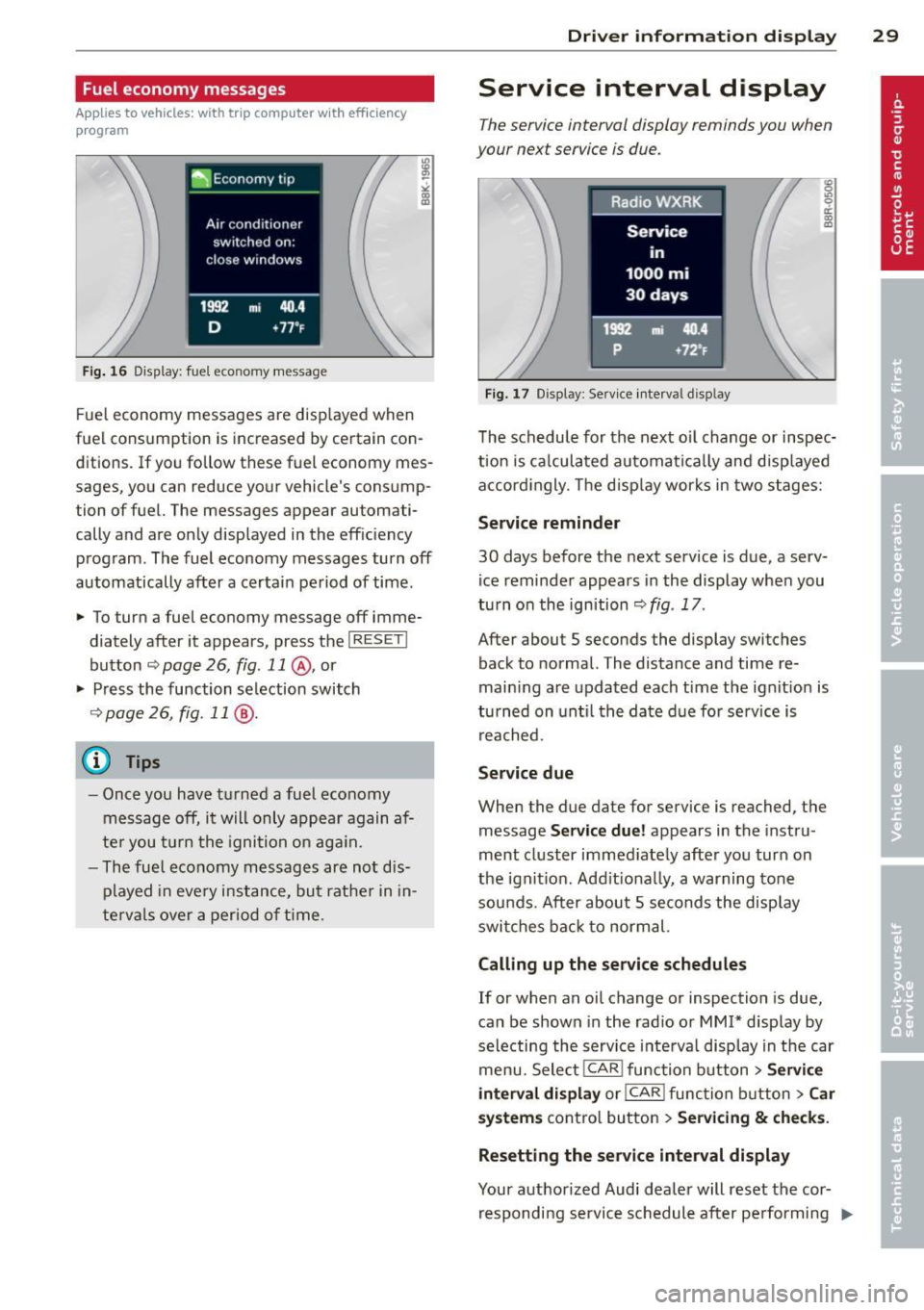
Fig . 16 Display: fuel economy message
Fue l economy messages are disp layed when
fuel consumption is increased by certain con
ditions. If you follow these fuel economy mes
sages, you can reduce your vehicle's consump
tion of fuel. The messages appear automati
cally and are only displayed in the effic iency
program. The fuel economy messages turn off
automatically after a certain period of time.
• To turn a fuel economy message off imme
diately after it appears, press the
I RESE TI
button ¢ page 26, fig. 11 @ , or
• Press the function selection switch
¢ page 26, fig. 11 @.
(D Tips
- Once you have turned a fuel economy
message off, it will only appear again af
te r you turn the ignition on aga in.
- The fuel economy messages are not dis
played in every instance, but rathe r in in
te rva ls over a period of time.
Dri ver inform ation di spl ay 29
Service interval display
The service interval display reminds you when
your next service is due.
Fig. 17 Disp lay: Service i nterval display
The schedule for the next oi l change or inspec
tion is ca lculated automatica lly and disp layed
accord ingly. The d isp lay works in two stages:
Service reminde r
30 days before the next service is due, a serv
ice reminder appears in the display whe n you
turn on the ignition¢
fig. 17 .
After about S seconds the display switches
back to normal. The distance and time re
main ing are updated each time the ignition is
tu rned on unt il th e date due for service is
reached.
Service due
When the due date for service is reached, the
message
Ser vice due! appears in the instru
ment cluster immediately after you turn on
the ignit ion. Add it iona lly, a warning tone
sou nds. After about S seconds the disp lay
switches bac k to normal.
Calling up the service schedule s
If or when an oil change or inspection is due,
can be shown in the rad io or
MMI* disp lay by
selecting the service interva l display in the car
menu. Select !CAR ! func tion button>
Servic e
interval d ispl ay
o r! CAR ! function button> C ar
sys te m s
cont ro l bu tton > S ervic ing & check s.
Resetting the servic e interval display
Your author ized Audi dealer will reset the cor
responding service schedule after pe rforming .,.
Page 32 of 294
30 Driver information display
the approp riate service on your vehicle. You
a lso have the possibility to reset the oil
change schedule after having performed an
oil change according to Audi specifications.
Select
I CAR I function button > Service interval
display > Reset oil change interval
or ICARI
function button> Car systems control button
> Servicing & checks > Reset oil change inter
val.
(CT;) Note
If you disconnect the battery terminals, no
calculations can be made for the service
interva l display during this time and no
service reminder will appear. Remember
that observing the proper serv ice interva ls
is vitally important to extending the life of
your vehicle, particularly the engine, and
maintaining its value. Even if the mileage
driven is low, the maximum period of one
year from one serv ice to the next must not
be exceeded.
@ Tips
-Do not reset the display between oil
changes, otherw ise the display will be in
correct.
- The information in the Service Reminder
remains stored even when the vehicle
battery is disconnected.
On-Board Diagnostic
system (OBD)
Malfunction Indicator Lamp (MIL)
The Malfunction Indicator Lamp (MIL) II in
the instrument cluster is part of the On-Board
Diagnostic (OBD II) system.
The warning/indicator light illuminates when
the ignition is switched on and goes out after
the engine starts and the idle has stabi lized .
This indicates that the MIL is working proper
l y.
If the light does not go out after the engine
is started, or illuminates while you are driv
ing, a malfunction may exist in the engine sys- tern.
If the
light illuminates, the catalytic con
verter could be damaged.
Continue driving
with reduced power (avoid
ing sustained high speeds and/or rapid accel
erations) and have the condition corrected.
Contact your authorized Audi dea ler.
If the light illuminates, the electronic speed
limiter may also be malfunct ioning. For more
information
q page 31, El ectronic speed
limiter .
An improperly closed fuel filler cap may also
cause the MIL light to illuminate
~page 213.
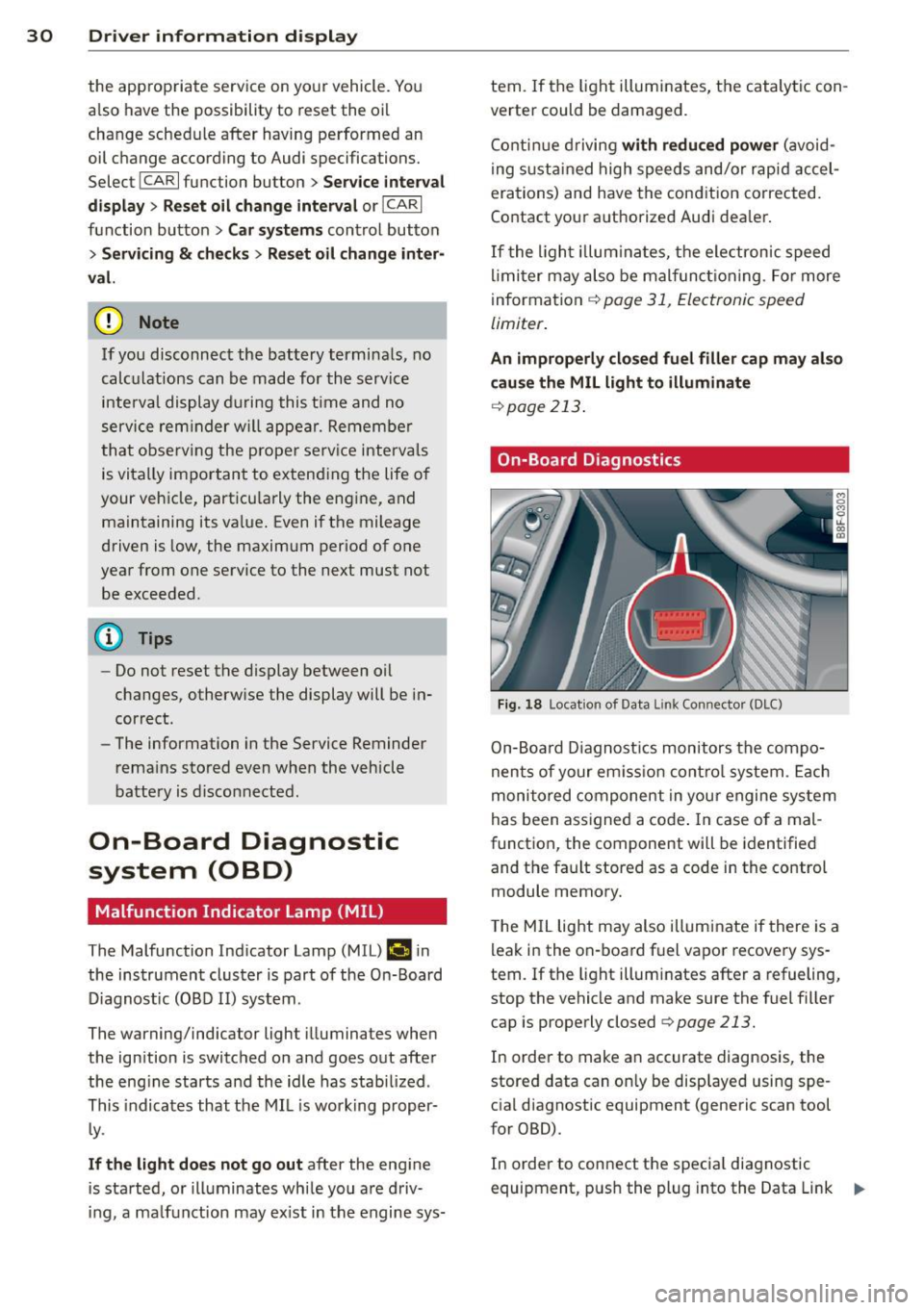
On-Board Diagnostics
Fig. 18 Locat ion of Data L ink Connector (DLC)
On-Board Diagnostics monitors the compo
nents of your em ission control system . Each
monitored component in your engine system
has been assigned a code . In case o f a mal
function, the component will be identified
and the fault stored as a code in the control
module memory.
T he MIL light may also illuminate if there is a
leak in the on-board fuel vapor recovery sys
tem.
If the light illuminates after a refueling,
stop the vehicle and make sure the fuel filler
cap is properly closed
q page 213.
In order to make an accurate diagnosis, the
stored data can on ly be displayed using spe
cial diagnostic equipment (generic scan tool
for OBD).
In order to connect the special diagnostic
equipment, push the plug into the Data Link ..,.
Page 64 of 294
62 Seat s a nd s tor ag e
- We recommend that you keep the installa
tion instructions for your roof rack system
together with your Owner's literature in the
vehicle.
Wh en shoul d th e roof rack b e re mo ved?
-Before going th rough an automatic car wash
(it is best to ask the car wash operator for
advice).
- When not in use, to reduce fuel consump
tion, wind no ise and to guard against theft.
A WARNING
- Use of an unapproved roof rack or incor
rect mount ing of an approved roof rack
can cause the roof rack or the items at
tached to it to fall off the roof onto the road .
- Objects fall ing from the roof of a vehicle
can cause a crash and personal injury .
- Only mount the roof rack on the desig
nated locations on the roof¢ fig. 63.
- The roof rack system must be insta lled
exactly according to the instructions pro
vided.
- When driving w ith a roof rack system,
changes to the center of gravity and wind
resistance can change the veh icle han
dling and lead to a collision . Always
adapt you r driv ing and you r speed to the
cu rrent conditions.
@ Note
- Your vehicle warranty does not cover any
damages to the veh icle caused by using
roof racks or mo unt ing structures not
approved by Audi for yo ur vehicle . T he
same applies to damage resulting from
i ncorrect roof rack installation.
- Always check the roof rack moun tings
and hardware before each trip and dur ing a trip to make sure everything is se
curely tightened . If necessary, retighten
the mount ings and check the ent ire sys
tem from t ime to t ime.
- After mounting a roof rac k system, or
when you transport objects on the roof
of your veh icle, the height of the vehicle is naturally increased
. Be careful when
driving under low bridges or in parking
garages for example . This cou ld cause
damage to the load and even the vehicle
itself.
- Make sure that the open rear lid and the sunroof do not come into contact with
objects on the roof.
Loading the roof rack
Always distribute loads evenly. Make sure anything on the roof rack is securely tied
down.
.. Always distribute the loads on the roof rack
even ly.
.,. Always attach items to the roof rack secure-
ly before you drive off .
The maxim um permissible roof weight is
165 lb (75 kg ). The roof we ight is the total of
the weight of the roof rack, the attachments and the ca rgo you a re carrying. You must also
not exceed the max imum load we ight for the
r oof rack yo u are using.
When using a roof rack system which has a lower load carrying capacity, you must not use
up the tota l maximum permiss ible load carry
ing capac ity specif ied above. Ins tead, you
sho uld load the roof rack system only to the
maximum capacity specified by the manufac
turer of the roof rack system.
A WARNING
Weak, damaged or improper straps used
to secure items to the roof rack can fail
during hard braking or in a coll is ion and
cause ser ious persona l injury.
- Make sure the roof rack is installed exact ly as specified above¢ page 61.
- Always use s uitable mount ing straps for
secur ing items to the roof rack to help
prevent items from s hifting or flying for
ward .
- Items on the roof rack must always be
securely mounted.
Page 88 of 294
86 Transmis sion
Dynamic shift program (DSP)
App lies to vehicles: with tiptronic
The automatic transmission is el ectron ically
controlled .
The transmission is self adapting a nd will au
toma tically
select t he best shift prog ram suit
ed to the driving conditions and driving style .
The transmission will se lect one of the
econo
my
programs when you drive at a steady
speed or a gradually changing speed without
heavy acceleration . This achieves optimum
fuel efficiency, with early upsh ifting and de
l ayed downshifting.
The transmission will automatically select the
sporty shift programs whe n you drive at high
e r speeds, or w ith heavy acceleration and fre
quent ly chang ing speeds. Upshifts are de layed
t o make f ull use of eng ine power. D owns hift
i ng takes p lace a t higher engine speeds than
in the economy programs.
The se lection of the most s uitable shift p ro
g ram is a con tinuous, automa tic process. The
d river can also make the t ransmission switch
to a sporty prog ram by
quickly pressing down
the gas peda l.
T his causes the tran smission to shift down to
a lower gear to achieve ra pid acceler ation, e.g.
for q uickly passing another veh icle. You do not
need to press the gas peda l into the kick -down
range. After the transmission has ups hifted,
the original program is se lected according to
your driving style.
When driv ing on hills and mountains, the gear
selection adapts to the grade. This prevents
constant upsh ifting and downshifting when
driving uph il l.
Manual shift program
Applies to vehicles: wit h tiptronic
Using the manual shift prog ram you can
manually select gears .
'
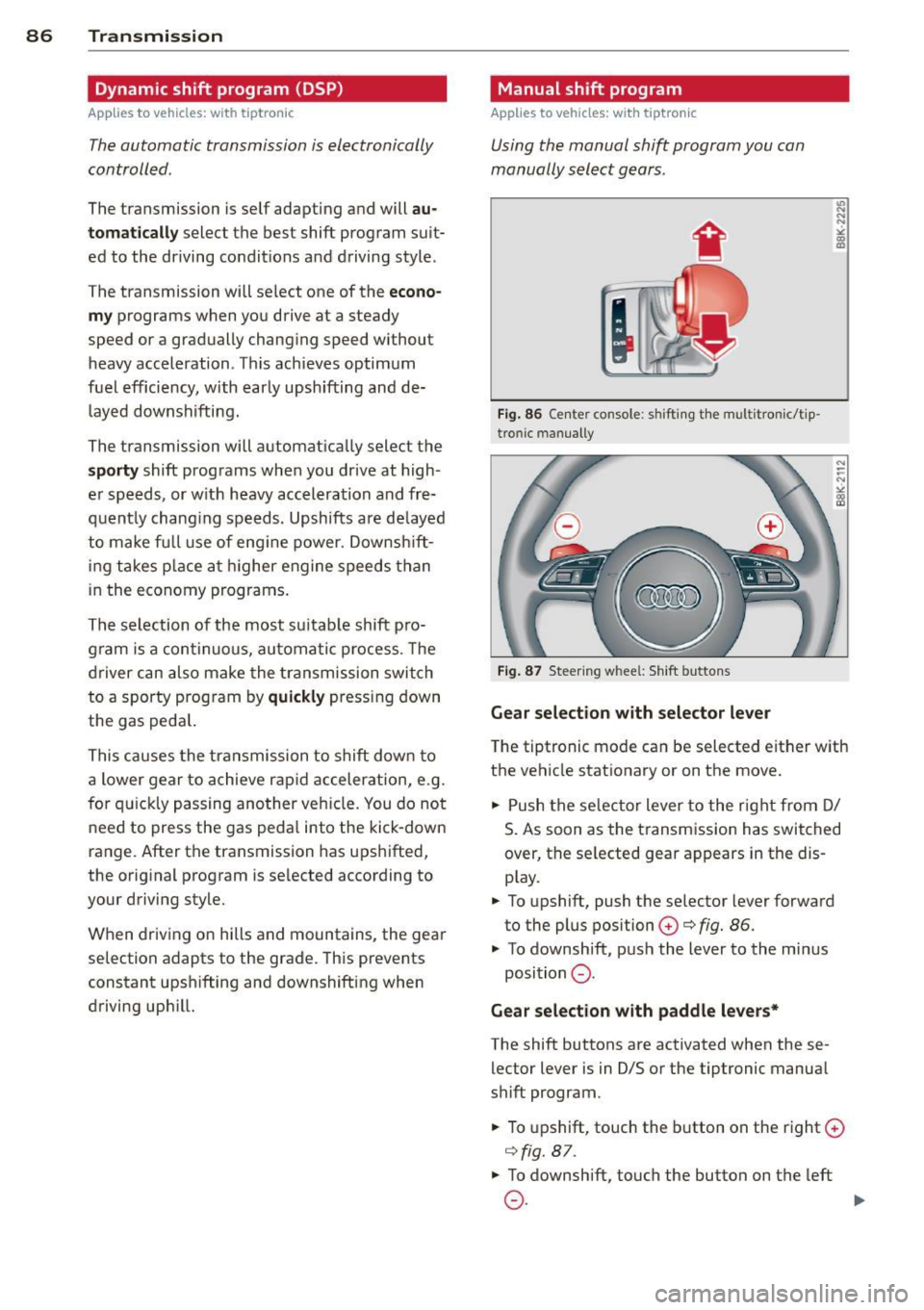
Fig. 86 Center co nsole: s hiftin g t he m ult itr onic/t ip ·
tro nic man ually
Fig. 87 Steer ing w hee l: Sh ift b utto ns
Gear select ion with select or leve r
.,. N
N
~ m Ill
The tiptronic mode ca n be selected either w ith
the vehicle stat ionary or on the move.
.,. Push the se lec tor lever to the r ight from D/
S. As soon as the t ransm ission has switched
over , the se lected gear a ppears in the dis
p lay .
.,. To upshift, push the se lector lever forward
to the plus position
0 ¢ fig. 86.
.,. To downsh ift, pus h the lever to the mi nus
position
0 .
Gear select ion w ith paddle lever s*
The shift buttons are activated when these
lector lever is in D/S or the tiptronic manua l
shift program .
.,. To upshift, touch the button on the r ight
0
¢ fig. 87 .
.,. To downshift, touch the button on the left
0-~
Page 89 of 294
When accelerating, the transmission wi ll au
tomatically shift into the next gear before the
engine reaches its maximum RPM.
I f yo u app ly a ligh t throt tle when acce lera t
ing, tiptronic will a utomatically shift from 1st
to 2nd gear to save fuel. If you apply a heavy
thrott le, the transmission will stay in 1st gear
until near maximum RPM is reached, or unt il
the dr iver shifts into 2nd gear.
If you take your foot off the accelerator peda l
when dr iving down a steep incline, tiptronic
will downshift from the selected gear into the
next lower gear until it reaches 1st gear,
based on road speed and eng ine RPM . Auto
mat ic downshifting is interrupted as soon as
you apply the thrott le aga in .
(D Tips
- When you shift into the next lower gear,
t h e transmiss io n will downshift only
when there is no possibility of over-rev
v ing the engine.
- When the k ick-down comes on, the
transmission will sh ift down to a lower
gear, depending on vehicle and engine speeds.
- Tiptronic is inope rat ive when the trans
mission is in the fail-sa fe mode.
Transmission malfunction
Ap plies to vehicles: with tiptro nic
[O] Tran smi ssion: Press brake pedal and se
lect gear again.
P ress the brake pedal and se lec t th e des ired
selec tor lever pos it io n a gain. You can then
continue dr iv ing.
[O] Trans mission overh eating : Ple ase drive
c onserv atively.
The transmission temperature has increased
significantly due to the sporty dr iving manner .
D rive in a less spo rty manne r until the tem
pe rat ure retu rns to the norma l range a nd the
in dicator light switches of.
[O] Tran smission malfunct ion: You can con
tinue driving Tran
sm iss ion 87
There is a system mal function in the t ransmis
sion . You may contin ue driving . Drive to yo ur
authorized Aud i dea ler o r qualified repa ir fa
c ility soon to have the ma lfunction corrected.
[O] Transmi ssion malfunction: Lim ited driv
ing functionality
T he re is a system malfunc tion in the t ransmis
s ion. The transm ission is swi tching to emer
gency mode. This mode on ly shifts into cer
tain gears or will no longer shift at al l. The en
gine may sta ll. Drive to your authorized Audi
dealer or qualified repair facility immediately
to have the malfunction corrected.
[O] Transmi ssion malfunction : Stop vehicle
and shift to park.
Do not con tinue dr iving. Se lect the P selector
lever position and see your au thori zed A udi
dealer or qualified repair facility for assis
tance.
Q) Note
If the transmission swi tches to emergency
mode, you should ta ke t he ve hicle to an
a uthorized Audi dea lership as soon as pos
sib le to have the condition corrected.
Page 94 of 294
92 Transmission
& WARNING
Hill descent control cannot overcome
physical limitations, so it may not be able
to maintain a constant speed under all
conditions. Always be ready to apply the
brakes.
Manual shift program
Applies to vehicles: with S tronic transmission
Using the manual shift program you can
manually select gears .
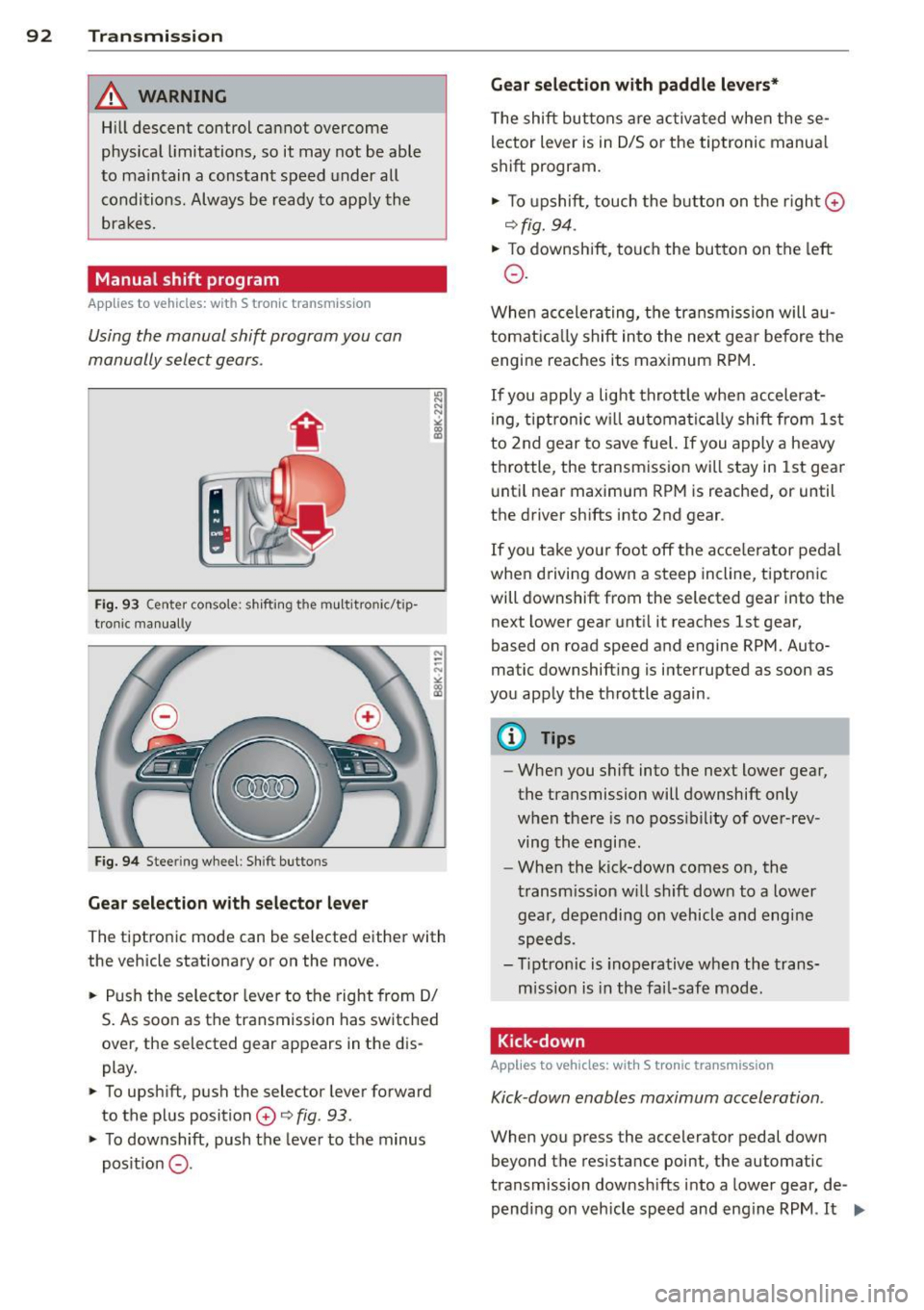
Fig. 93 C en ter conso le : shift in g th e mu ltitro nic/t ip
tron i c manually
Fig. 94 Steering wheel : Shi ft buttons
Gear selection with selector lever
"' N N N
" "' a)
The tiptronic mode can be s elected either with
the vehicle stationary or on the move.
.. Push the selector lever to the right from 0/
S. As soon as the transmission has switched
over , the selected gear appears in the dis
play .
.. To upshift, push the selector lever forward
to the plus position
0 o fig . 93 .
.. To downshift, push the lever to the minus
pos it ion
0 -
Gear selection with paddle levers*
The shift buttons are activated when these
lector lever is in 0/5 or the tiptronic manua l
shift program.
.. To upshift, touch the button on the right ©
ofig. 94 .
.. To downshift, touch the button on the left
0 .
When accelerating, the transmission will au
tomatically shift into the next gea r before the
engine reaches its maximum RPM.
If you apply a light throttle when accelerat
ing, tiptronic will automatically shift from 1st
to 2nd gear to save fuel. If you apply a heavy
throttle , the transmission will stay in 1st gear
until near maximum RPM is reached, or until
the drive r shifts into 2nd gear .
If you take you r foot off the acce le rator pedal
when dr iving down a steep incline, tiptronic
will downshift from the selected gear into the
next lower gear until it reaches 1st gear,
based on road speed and engine RPM. Auto
matic downshifting is interrupted as soon as
you apply the throttle again.
@ Tips
-When you shift into the next lower gear,
the transmission will downshift only
when there is no possibility of over-rev
ving the engi ne.
- When the kick-down comes on, the
transmission will shift down to a lower
gear, depending on vehicl e and engine
speeds .
- Tiptronic is inoperative when the trans
mission is in the fail-safe mode .
Kick-down
Applies to vehicles: with S tronic transmission
Kick-down enables maximum acceleration .
When you press the accelerator pedal down
beyond the resistance point, the automatic
transmission downshifts into a lower gear, de
pending on vehicle speed and engine RPM .
It ...
Page 196 of 294
194 Driving and en vironm ent
8_ WARNING
After driving through water, mud, slush,
etc ., the brakes may be slow to take effect
because of wet brake rotors and pads. Dry
the brakes first by braking carefully to re
store the full braking effect.
CD Note
Vehicle components such as the engine,
transmiss ion, suspension or electrical sys
tem can be severely damaged by driving
through wate r.
@ Tips
- Check the depth of the water before dr iv
i ng through it.
- Do not stop the veh icle, dr ive in reverse
or switc h the engine off when driving
t hr ough water.
- Keep in mind that oncoming vehicles
may c reate waves that raise the water
l evel and make it too deep fo r you r vehi
cle to dr ive through safely.
-
- Avoid dr iving thro ugh salt water because
i t can ca use corrosion.
Catalytic converter
It is very important that your emission con
trol system (catalytic converter) is function
ing properly to ensure that your vehicle is run
ning in on environmentally sound manner.
,,. Always use lead-free gasoli ne¢ page 211,
Fuel supply .
,,. Never run the tank down a ll the way to
empty.
,,. Never put too much motor oil in your en-
gine ¢
page 221, "t':::r. Adding engine oil.
,,. Never t ry to push- o r tow-start your veh icle.
The catalytic converter is an effic ient "clean
up" device built into the exhaust system of
the vehicle. The catalytic converter burns
many of the polluta nts in the exhaust gas be
fore they are released into the atmosphe re. The exclusive
use of unleaded f uel is critica lly
important for the life of the catalytic convert
er and proper funct ion ing of the eng ine .
A WARNING
= -
-Do not park or operate the vehicle in
areas where the hot exhaust system may
come in co ntact with dry grass, brush,
fuel spill or other material wh ich can
cause a fire .
- Do not app ly additional undercoating or
r u stp roofing on or nea r the exhaust
manifold, exhaust pipes, cataly tic con
ver ter or heat shields. Dur ing driv ing, the
substance used for under coa ting co uld
overhea t and cause a fire.
CD Note
- Be aware that just o ne tank filling with
leaded fu el w ill already ser io usly de
gr ad e the per form ance o f the catalytic
c onverte r.
- Do not ex ceed t he corre ct engine oil level
r:;!) page 2 21.
- Do not drive until the fuel tank be co m es
completely emp ty. The engine co uld mis
fire . Unburned fuel could also get in to
the exhaust system and this co uld cause
the cata lytic converter to overheat .
- Do not turn off the igni tion whi le the ve
hicle is mov ing.
- Do not contin ue to ope rate your veh icle
unde r these conditions, as otherwise fuel
can reach the catalyt ic converte r. T his
co uld resu lt in overheating of the con
verter, requir ing its replacement.
- To assure efficient operation of the Emis
sion Control System:
- H ave you r vehicle maintained p rope rly
and in accordance w ith the se rvi ce rec
ommen dat ions in yo ur Warranty &
M ain tenance boo klet.
- L ack of prope r maintenan ce as we ll as
i mprope r use of t he ve hicl e wi ll impair
the func tion of the em ission cont ro l
system and could lea d to damage .
Ill>
Page 197 of 294
@ For the sake of the environment
Even when the Emission Control System is
operating properly, the exhaust gas can
have a sulfur-like exhaust gas smell under
some operating states. This depends on
the sulfur content of the fuel being used.
Using a different brand of fuel may help,
or filling the tank w ith lead-free super
grade gasoline.
Operate your vehicle
economically and minimize pollution
General
Your personal style of driving will determine
the economy of your vehicle, as well as ex
haust and noise levels.
Fuel economy, environmental impact, and
wear on you r engine, bra kes and t ires largely
depend on th ree factors:
= your persona l dr iving style
- operating conditions
- technica l lim itations
I f you anticipate what yo u need to do next and
drive economically, you can easi ly cut your
fuel consumption by 10-15 percent. This sec
tion will give you some t ips on how you can
he lp the environment and your pocketbook.
@ Tips
The consumpt ion estimates as published
by ENVIRONMENTAL PROTECTION AGENCY
(EPA) and Transport Canada may not corre
spond to your actual consumption on the
road, wh ich will vary depending upon vehi
cle load and speed, road and weather con
ditions, tr ip length, etc.
Drive smoothly and keep a lookout
ahead
Vehicles use the most fuel when they are ac
celerating.
" Avoid unnecessary accele rat ing and braking.
Dri vin g and en vironm ent 195
Vehicles use the most fue l when they a re ac
ce lerating. If you anticipate what is going to
happen next, you will need to brake less and,
th us, acce lerate less. Let the vehicle coast
whenever possible -for example when you see
that the next traff ic light is red.
Avoid full throttle
Driving at moderate speeds saves fuel and
improves your mileage.
" Try and keep well below your car's maxi-
mum speed.
Acce lerating gently red uces fue l cons ump
tion, engine wear, and does not disturb the environment.
Fuel consumpt ion, exhaust emiss ions and en
gine noise increase disproportionately at high
speeds . If you drive at approximately th ree
quarters of top speed, fuel consumption w ill
be reduced by one half. Never drive faster
than the posted speed limit and weather con
ditions perm it.
Reducing unnecessary idling
Even when your car is just idling it burns up
fuel .
" Shut the eng ine off when you are not driv
ing the vehicle.
" Do not warm up the ve hicle by letting the
eng ine run at idle .
It makes sense to shut off the engine in traffic
jams, when wa it ing for tra ins to pass at rail
road crossings, or at traffic lig hts t hat have
long waits on red . T ur ning the eng ine off for
just 30-40 seconds saves mo re fuel than is
bur ned star ting the e ngine again.
It takes a long t ime for the engine to warm up
fully when it is run ning at idle . However, wea r
and noxious emissions are espec ia lly high
whe n the eng ine is wa rm ing up. So yo u shou ld
drive away as soon a s you start the e ngine and
avo id r unning at high rpms whi le the engine is
still warming up.
Ill-
•
•
Page 198 of 294
196 Driving and en vironm ent
(0 Note
Do not leave engine idling unattended af
ter starting . If warning lights should come
on to indicate improper operation, they
would go unheeded. Extended idling also
produces heat, which could result in
over
heating or other damage to the vehicle or
other property.
Regular maintenance
A badly tuned engine unnecessarily wastes a lot of fuel .
.,. Have your vehicle serv iced at regular inter-
vals.
By having your vehicle regularly serviced by an
author ized Audi dealer he lps to ensure that it
runs properly and economically. The condition
of your vehicle not only affects its safety and
ab il ity to hold its value, it also affects
fu el
con sump tion .
C heck your oil each time you fill your tank.
The amount of oil used is related to engine
l oad and speed.
I t is normal for the oil consumption o f a new
engine to reach its lowest val ue after a certain
mileage has been driven.
You mus t drive yo ur vehicle abo ut 3,000 miles
(5,000 kilometers) be fo re yo u can properly
assess oi l consumption.
This a lso applies to fuel consumption and en
g ine output.
(]) Note
-Have yo ur vehicle maintai ned properly
and in accordance with the service re c
ommendations in your War ran ty
& Mai n
tenance bookle t. Lack of proper mainte
nance as well as imp roper use of the
ve
hicle will impair the function of the
emission control system and could lead
to damage. -
Do not alter or
remove any component of
the Emission Control System unless ap
proved by the manufacturer .
- Do not alter or
remove any device, such
as heat shie lds, switches, ignition w ires,
valves, which are designed to protect
your vehicle's Emission Control System and other important vehicle compo
nents.
Fewer short trips
Fuel consumption will always be relatively
high on short trips .
.,. Try to avoid driv ing short distances w ith a
cold engine.
The engine and cata lytic converter have to
reach their opt imal
oper ating temperature to
reduce fuel consumpt ion and nox ious em is
s ions effectively.
Just after starting, a co ld engine in a mid-size
car on ly achieves a fuel economy of 6-8 m iles
per gallon (30-40 l/100 km). After about a
half a mile, fuel economy climbs to 12 mpg
(20 l/100 km) . After about
2 .5 miles (4 km),
the engine is at its prope r operating tempera
tu re and fuel economy has reached a normal
level. So you can see that yo u should avo id
short trips whenever poss ible.
T he
outside temperatur e is also cr it ical in t his
regard. Your car consumes more fue l in the
winter tha n in the s umme r.