roof AUDI A5 COUPE 2016 User Guide
[x] Cancel search | Manufacturer: AUDI, Model Year: 2016, Model line: A5 COUPE, Model: AUDI A5 COUPE 2016Pages: 264, PDF Size: 66.92 MB
Page 65 of 264
.... N
0 Ico ....
cause a crash and personal injury.
- Only mount the roof rack on the designated
locations on the roof
c:> fig . 65.
- The roof rack system must be installed ex
act ly according to the instructions provided .
- When driving with a roo f rack system,
changes to the center of gravity and wind
resistance can change the vehicle handling
and lead to a collision. Always adapt your
dr iv ing and your speed to the current condi
t ions .
- Your vehicle warranty does not cover any
damages to the vehicle caused by using roof
racks or mounting structures not approved
by Audi for your vehicle . The same applies to
damage result ing from incorrect roof rack
i nstallation .
-Always check the roof rack mount ings and
hardware before each t rip and dur ing a tr ip
to make sure everyt hing is securely tight
ened.
If necessary, ret igh ten the mo unt ings
and c hec k the en tire system from time to
time.
- After mounting a roof rack system, or when
you transport objects on the roof of your ve
hicle, the height of the vehicle is naturally
increased . Be careful when driving under
l ow bridges or in parking garages for exam
ple. This could cause damage to the load
and even the vehicle itself.
- Make s ure that the open rear lid and the
sunroof do not come into contact with ob
jects on the roof .
Loading the roof rack
Always distribu te loads evenly. Make sure any
thing on the roof rack is securely tied down.
~ Always distribute th e loads on the roof rack
evenly .
~ Always attach items to the roof rack securely
before you drive off .
T he maximum perm iss ible roof weight is
165 lb
( 75 kg ). The roof weight is the total of the
Seat s and sto rage
weight o f the roof rack, the attachments and the
cargo you ar e carrying. You must a lso not exceed
the max imum load weight for the roof rack you
are using.
When using a roo f rack system which has a lower
load carry ing capacity, you must not use up the
total max imum permissible load carry ing capac i
ty specified above. Instead, you should load the
roof rack sys tem only to the maximum capacity
specified by the manufacturer of the roof rack
system .
A WARNING
= -Weak, damaged or imprope r straps used to
secure items to the roof rac k can fail d uring
hard brak ing o r in a co llision and cause seri
ous persona l injury.
- Make sure the roof r ack is installed exactly
as specified above
c:> page 62.
- Always use suitable mounting straps fo r se
cur ing items to the roof rac k to he lp prevent
items from shifting o r flying forward .
- Items on the roof rack mus t always be se
curely mounted.
- The use of a roof rack can negative ly affect
the w ay a vehicle hand les . Cargo tha t is
large, heavy, b ulk y, long or flat wi ll have a
grea ter negat ive infl uence on the vehicle's
aerodynamics, center of gravity and overa ll
handling. Always drive slowly, avoid sudden
braking and maneuvers when transporting
cargo on the roof of your vehicle.
- Never exceed the max imum permissib le
load carrying capacity of the roof of your ve
h icle, the permiss ible axle weights and the
perm iss ible total we ight of your vehicle
c:> page 241, Weights .
@ For the sake of the environment
As a result of the increased wind res istance
created by a roof rack, your vehicle is using
fuel unnecessarily . So remove the roof rack
after using it .
63
Page 70 of 264
Warm and cold
Warm and cold
Climate control system
Description
The climate control system warms, cools and
adds humidity to the air in the veh icle inter ior. It
is the most effective when the windows and sun
roof are closed. If there is a build-up of heat in
side the vehicle, ventilation can help to speed up
the cooling process.
I n all heating mode functions except
defrost, the
b lower only switches to a higher speed once the
engine coolant has reached a certain tempera
ture .
Condensat ion from the cooling system can drip
and form a puddle of water under the veh icle.
This is normal and does not mean there is a leak.
P ollutant filt er
The pol lutant filte r removes pollutants such as
dust and pollen from the a ir.
The air pollutants filter must be changed at the intervals specif ied in your Warranty
& Mainte
nance booklet, so that the a ir cond it ione r can
properly work.
If you drive your vehicle in an area with high air pollut ion, the filter may need to be changed
more frequently than specified i n your Aud i War
ranty
& Maintenance booklet. If in doubt, ask
your author ized Audi Service Advisor for advice.
Ke y cod ed setting s
The climate control settings are automatically
stored and assigned to the remote control key
that is in use .
.8, WARNING
Reduced visib ility is dangerous and can ca use
accidents.
- For safe dr iv ing it is very impo rtan t that all
windows be free of ice, snow and condensa
t ion .
68
-Complete ly familiarize yourself with the
proper use and function of the heating and
ventilation system and espec ially how to de
fog and defrost the wi ndows .
- Never use the windshield wiper/washer sys
tem in freezing weather until you have
warmed the windshield first, using the heat ing and vent ilation system. The washer solu
tion may freeze on the windshield and re
duce visibi lity.
(D Note
- If you suspect that the air conditioner has
been damaged, sw itch the system off to
avoid further damage and have it inspected
by a q ualified dealership.
- Repa irs to the Aud i air cond itioner requ ire
special techn ica l know ledge and spec ial
tools. Contact an a uthorized Audi dealer fo r
assistance.
@ For the sake of the environment
By reduc ing the amo unt of fuel you use, you
also reduce the amount of pollutants emitted
into the a ir.
(D Tips
- Keep t he a ir intake slots (in front of the
windshield) free from ice, snow and debr is
in orde r to maintain the prope r funct ion of
the climate control system .
- The energy management sys tem may sw itch
the seat heating* o r rea r window defroster
off temporarily. These systems are available
again as soon as the energy balance has
been restored.
- Air escapes through vents under the rear
window. When placing items of clothing on
the luggage compartment cover, ensure
that the openings are not covered.
Page 120 of 264
Driving safety
Storing cargo correctly
Loading the luggage compartment
All Luggage and other objects must be properly
stowed and secured in the Luggage compart
ment.
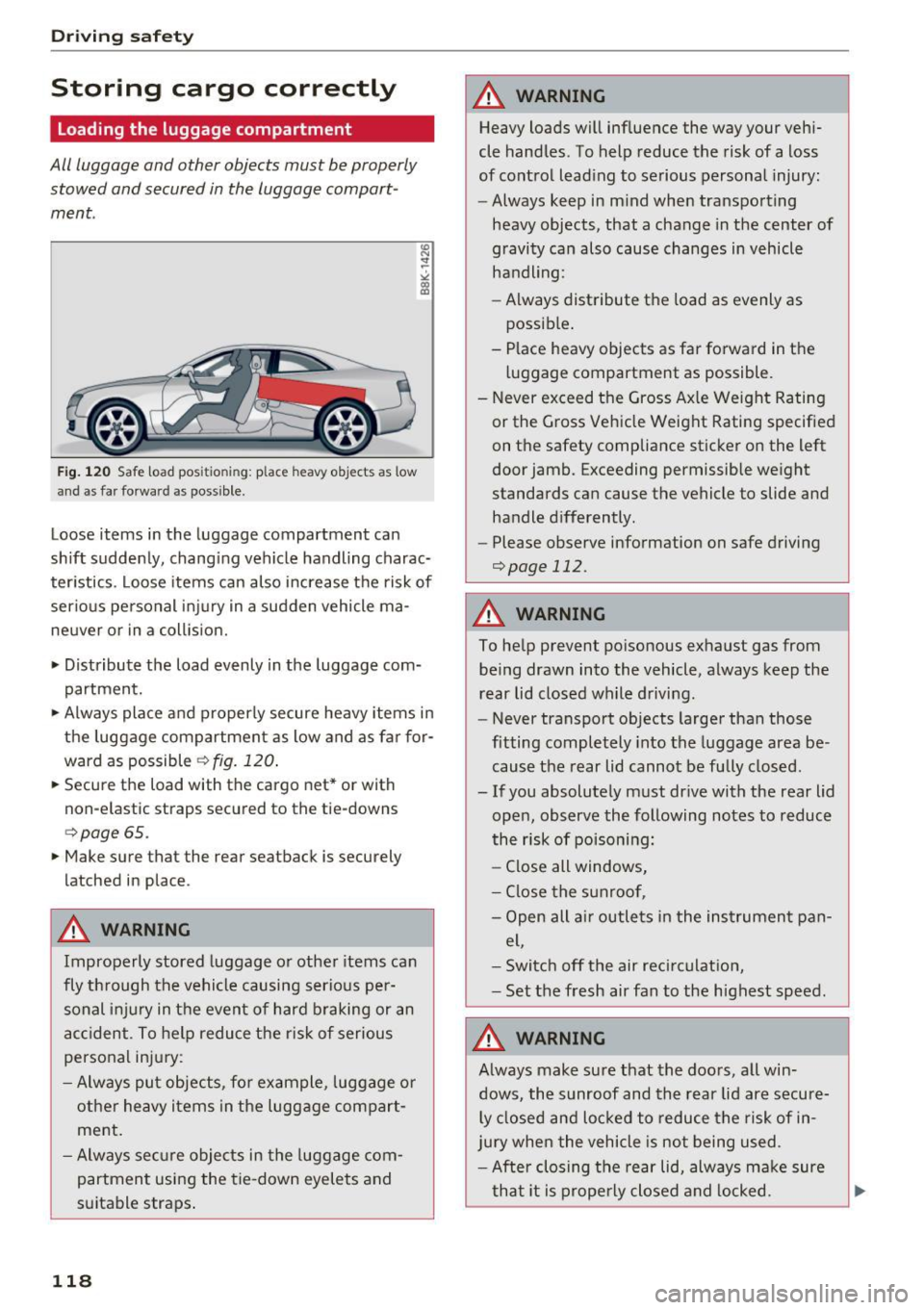
Fig. 120 Safe load positio ning: place heavy objects as low
and as far forwar d as possible.
Loose items in the luggage compartment can
shift suddenly, changing vehicle handling charac
teristics . Loose items can also increase the risk of
serious personal injury in a sudden vehicle ma
neuver or in a collision.
• Distribute the load evenly in the luggage com
partment.
• Always place and properly secure heavy items in
the luggage compartment as low and as far for
ward as possible
¢ fig. 120.
• Secure the load with the cargo net* or with
non-elastic straps secured to the tie-downs
c>page 65.
• Make sure that the rear seatback is securely
latched in place .
A WARNING
Improperly stored luggage or other items can
fly through the vehicle causing serious per
sonal injury in the event of hard braking or an
accident. To help reduce the risk of serious
personal injury :
- Always put objects, for example, luggage or
other heavy items in the luggage compart
ment.
- Always secure objects in the luggage com
partment using the tie-down eyelets and
suitable straps.
118
A WARNING
Heavy loads will influence the way your vehi
cle handles. To help reduce the risk of a loss
of control leading to serious personal injury:
- Always keep in mind when transporting
heavy objects, that a change in the center of
gravity can also cause changes in vehicle
handling:
- Always distribute the load as evenly as
possible.
- Place heavy objects as far forward in the
luggage compartment as possible.
- Never exceed the Gross Axle Weight Rating or the Gross Vehicle Weight Rating specified
on the safety compliance sticker on the left
door jamb. Exceeding permissible weight
standards can cause the vehicle to slide and
handle differently.
- Please observe information on safe driving
c> page 112.
A WARNING
To help prevent poisonous exhaust gas from
being drawn into the vehicle, always keep the
rear lid closed while driving.
- Never transport objects larger than those
fitting completely into the luggage area be
cause the rear lid cannot be fully closed.
- If you absolutely must drive with the rear lid
open, observe the following notes to reduce
the risk of poisoning:
- Close all windows,
- Close the sunroof,
- Open all air outlets in the instrument pan-
el,
- Switch off the air recirculation,
- Set the fresh air fan to the highest speed.
A WARNING
-
Always make sure that the doors, all win
dows, the sunroof and the rear lid are secure
ly closed and locked to reduce the risk of in
jury when the vehicle is not being used.
- After closing the rear lid, always make sure
that it is properly closed and locked. .,..
Page 134 of 264
Airbag syste m
-The inflating airbag will hit the child safety
seat or infant carrier with great force and
will smash the child safety seat and child
against the backrest, center armrest, door
or roof .
- Always install rear-facing child safety seats
on the rear seat .
- If you must install a rearward facing child
safety seat on the front passenger seat be cause of exceptional circumstances and the
P ASS ENGER AIR BAG OFF light does not
come on and stay on, immed iate ly install
the rear-fac ing ch ild safety seat in a rear
seat ing pos ition and have the airbag system
inspected by your authorized Audi dea ler.
- Forward-facing ch ild safety seats installed
on the front passenger's seat may interfere
with the deployment of the airbag and
cause serious personal injury to the child .
A WARNING
If, in exceptional circumstances, you must in
stall a forward-facing chi ld restraint on the
front passenger's seat:
- Always make sure the forward-facing seat
has been designed and certified by its man
ufacturer for use on a front seat with a pas
senger front and side a irbag .
- Never put the forward-facing child restraint
up against or very near the instrument pan
el.
-Always move the passenger seat into its
rearmost position in the seat 's fore and aft
adjustment range, as fa r away from the air
bag as possib le before insta lling the for
ward-facing child restra int. The bac krest
mus t be adjusted to an up right posit ion.
- Make s ure that the
PASSENGER AI R BAG
OFF
light comes on and s tays on all the time
whenever the ignition is switched on.
A WARNING
To red uce the risk of serio us in jury, make s ure
that the
PASSENGER AIR BAG OFF light wi ll
be displayed whenever a child restraint is in
stalled on the front passenger seat and the
ign ition is switched on.
132
- If the PASSENGER AIR BAG OF F light does
not stay on, perform the checks described
¢ page 139, Monitoring the Advanced Air
bag System .
-Take the child restra int off the front passen
ger seat and install it properly at one of the
rear seat positions if the
PA SSENGER AIR
BAG OFF
light does not stay on .
- Have the airbag system inspected by your
author ized Audi dealer immed iately .
- Always carefully follow instructions from
child restraint manufacturers when instal
ling child restra ints.
A WARNING
If, in exceptional circumstances, you must in
stall a forward or rearward-fac ing child re
stra int on the fron t passenger's seat:
- Improper installat ion of child restraints can
reduce the ir effectiveness or even prevent
them from provid ing any pro tect ion.
- An improperly installed child res tra int can
inter fere with the airbag as it deploys and
serious ly injure or even kil l the child -eve n
w ith an Advanced A irbag System.
- Always carefully follow the manufacturer's
instructions provided with the child safe ty
seat o r carrier.
- Never p lace add ition al items on the seat
that can increase the tota l weight registered
by the weight -sensing mat and can cause in
jury in a crash .
Page 137 of 264
.... N
0 Ico ....
s e nger seat
- a passenger who is not sitting uprigh t w ith
their back against a non-reclined backrest with
their feet on the vehicle floor in front of the
seat is on the front passenger seat.
I f the front passenger airbag dep loys , the Feder
al Standard requires the airbag to meet the "low
risk" deployment criteria to help reduce the risk
of injury through interaction with the airbag.
"Low risk" dep loyment occurs in those crashes
t ha t take place at lower decelera tions as defined
in the electronic control unit.¢
page 139
Alway s rem ember: Even though your vehicle is
equipped w ith Advanced Airbags, the safest place
f or children is properly restrained on the back
seat . Please be sure to read the important infor
mat ion in the sections that follow and be sure to
heed all of the WARN INGS.
.&, WARNING
To reduce the r isk of inj ury when an a irbag in
flates, a lways wear safety belts p roperly.
- If you are unrest rained, leaning fo rwa rd, s it
t ing s ideways or o ut of pos ition in any way,
yo ur risk of in jury is much h igher .
- Yo u will also receive serious injur ies and
cou ld even be killed if you are up aga inst the
airbag or too close to it when it inflates -
even with an Advanced Airbag¢
page 129.
.&_ WARNING
A child in a rearward-facing chi ld safety seat
installed on the front passenge r seat w ill be
ser iously injured and can be killed if the front
airbag inflates -even with an Advanced A irbag
System .
- Although the Advanced A irbag System in
your vehicle is designed to turn off the front
airbag when a rearward-facing child re
straint has been installed on the front pas senger seat, nobody can absolu tely g uaran
tee that deployment is impossible in a ll con
c eivable s ituations that may happen during
the useful life of your vehicle .
- The inflating a irbag w ill hit the child safety
seat or infant carrier wi th great force and
Airb ag sys tem
will smash the child safety seat and child
aga inst the backrest, center armrest, door,
or roof.
- Always install rearward-facing child re
stra ints in the back seat.
- If you must install a rearward facing child
safety seat on the front passenger seat be
cause of exceptional circumstances and the
PAS SENGER AIR BAG OFF light does not
come on and stay on, immediately install
the rea r-facing child safety seat in a rear
seating position and have the a irbag system
inspected by your au thorized Audi dealer.
.&_ WARNING
If, in exceptional c ircumstances , you must in
stall a forward-facing child res traint on the
front passenger's seat:
- Always make sure the forward-fa cing seat
has bee n des igned and certified by its man
ufacturer for use on a front seat with a pas
senger front and side airbag.
- Never p ut the fo rward-facing child restraint
up against or very near the instr ument pan ·
el.
-Always move the passenger seat into its
rearmost position in the seat's fore and aft
ad justment range, as far away from the a ir
bag as possible, before install ing the for
ward-facing ch ild restraint. The backrest
m ust be adjusted to an upr ight position .
- Make sure that the
PASSENGER AIR B AG
OFF
li ght comes on and stays on all the time
whenever the ignit ion is switched on .
Advanced Airbag System components
The front passenger seat in your veh icle has a lot
of ve ry important parts of the Advanced Airbag
System i n it. These parts incl ude the weight
sensing mat, senso rs, wir ing , b racke ts, and
more . The f unction o f the system in the front
passenger seat is checked by the electronic con
tro l unit when the ign ition is on . The control unit
monitors the Advanced Airbag System and turns
the a irbag ind icator light on when a malfunction
in the system components i s detected. The func-
tion of the a irbag ind icator light is described in .,.
135
Page 140 of 264
Airbag syste m
-and the head restraints have been properly ad -
justed .
Because airbags i nflate i n the blink of an eye w ith
g reat for ce, th ings you have on your lap or have
p laced on the seat cou ld become dangerous pro
jectiles, and be pushed into you if the airbag in
flates .
When an a irbag deploys, fine dus t is re leased.
This is normal and is not caused by a fire in the
vehicle . This dust is made up mostly of a powder
used to lubricate the airbags as they deploy. It
could irr itate sk in.
It is important to remember that whi le the sup
p lemental airbag system is designed to reduce
the likelihood of serious injur ies, other in juries,
for example swelling, bruising and m inor abra
sions, can also happen when airbags inflate. Air bags do not protect the arms or the lower parts
of the body . Front airbags only supplement the
three po int safety belts in some fronta l co llisions
i n which the veh icle decelerat ion is high enough
to deploy the airbags.
Fr ont airbags w ill not deploy:
- if the ignit ion is switched off when a crash oc -
curs ,
- in s ide collisions,
- in rear-end collisions,
- in rollovers,
- when the crash decelerat ion measured by the
airbag system is less than the minimum thresh
o ld needed for airbag deployment as registered
by the electronic control unit.
The front pass eng er airbag will also not
depl oy :
- when the front passenger seat is not occupied,
- when the weight on the front passenger seat as
sensed by the Advanced A irbag System indi
cates that the front airbag on the passenger
s ide has to be turned off by the electronic con
trol unit (the
PAS SENGER AIR B AG OFF light
comes on and stays on) .
A WARNING
Sitting in the wrong pos ition can increase the
r is k of se rious i njury in c rashes.
138
- To reduce the risk o f injury when the airbags
inflate, the driver and passengers must al
ways sit in an upright position, must not
lean aga inst or place any part of their body
too close to the area where the airbags are
located.
- Occupants who are unbelted, out of posit ion
or too close to the airbag can be serious ly
in ju red by an airbag as it unfolds wit h great
force in the blink of an eye
c:> page 130.
A WARNING
A child in a rearward-fa cing child safety seat
installed on the front p assenger sea t will be
seriously injured and can be killed if the front
airbag inflates -even with an Advanced Airbag
System.
- The inflating airbag will hit the chi ld safety
seat o r infant ca rrier with great force and
w ill smash the child safety seat and child
aga inst the backrest, center a rmrest, door
or roof.
- Always install rear-fac ing ch ild safety seats
on the rear seat.
- If you must insta ll a rearwa rd facing child
safety seat on the front passenger seat be
cause of exceptional circumstances and the
PAS SENGER AIR BAG OFF light does not
come on and stay on, immediately install
the rea r-facing child safety seat in a rear
seating position and have the ai rbag system
inspected by your au thori zed Au di d ealer.
A WARNING
Objects between you and the airbag will i n
crease the r is k of injury in a crash by interfer
ing with the way the airbag unfolds or by be
ing p ushed into you as the airbag inflates .
- Never hold things in yo ur hands o r on your
lap when the vehicle is in use .
- Never transport items on or in the area of
the front passenger seat . Objects could
move into the area of the front airbags dur
ing braking or other sudden maneuver and
become dangerous projectiles that can
cause serious persona l injury if the airbags
inflate.
Page 150 of 264

Airbag syste m
by being pushed into you as the airbag in
flates.
- Never p lace or attach accessories or other
objects (such as cupho lders, telephone
brackets, or even large, bulky objects) on
the doors, over or near the area marked
"AIRBAG" on the seat backrests.
- Such objects and accessories can become
dangerous projectiles and cause in ju ry
when the supplemental side airbag de ploys.
- Never carry any objects or pets in the de ployment space between them and the
airbags or allow children or other passen
gers to travel in this position.
- Always use the built-in coat hooks only for
lightweight clothing . Never leave any heavy
or sharp-edged objects in the pockets that
may interfere w ith side airbag deployment
and can cause personal i njury in an accident.
- Always prevent the side airbags from being
damaged by heavy objects knocking against
or hitting the sides of the seatbacks.
- The airbag system can only be triggered
once . If the airbag has been triggered, the
system must be replaced by an author ized
Audi dealership .
- Damage (cracks, deep scratches etc .) to the
original seat covers or to the seam in the
area of the side a irbag mod ule m ust always
be repa ired immed iate ly by an authorized
Audi dealer .
- If children are sea ted improperly, their r is k
of injury increases in the ca se of an ac cident
~ page 151, Child safety .
-Never attempt to modify any components of
the a irbag system in any way.
- In a side collision, side a irbags w il l not fu nc
t ion properly if sensors cannot correct ly
measure increasi ng a ir pressure ins ide the
doo rs when air escapes through larger, un
closed openings in the door panel.
- Never drive with inter io r door tr im panels
removed .
- Never drive when parts have been re
moved from the inside doo r panel and the
open ings they leave have not been proper
ly closed.
148
- Never drive when loudspeakers in the
doors have been removed unless the
speaker holes have been properly closed.
- Always make certain that openings are
covered or filled if additional speakers or
other equipment is installed in the inside
door panels.
- Always have work on the doors done by an
authorized Aud i dealer or q ualified work
shop.
Side curtain airbags
Description of side curtain airbags
The side curtain airbag system can provide sup
plemental protection to properly restrained oc
cupants .
Fig. 139 Sid e curt ain system , drive r's s ide : side curtai n air
bag loca tion
The side curtain airbags are located on both sides
of the inter ior above the fro nt and rear side win
dows ~
fig. 139. They are identified by the word
"AIRBAG" on the windshie ld frame and the cen
ter roof p illar .
The side curtain airbag system supplements the
safety belts and can help to reduce the risk of in
jury for occupants' heads and upper torso on the s ide of the vehicle that is struck in a side coll i
sion. The side curta in a irbag inf lates in side im
pacts and only when the vehicle accelera tion reg
iste red by the control unit is high enough. If th is
rate is be low the refere nce value prog rammed in
to the control unit, the side airbags will no t be
trigge red, even though the car may be badly
damaged as a resu lt of the co llision .
It is not pos
sible to define an airbag triggering range that
will cover every possible angle of impact, since ..,.
Page 157 of 264
.... N
0 I-co ....
that fits your child and the vehicle.
- Only use child restraint systems that fully
contact the flat portion of the seat cush
ion. The child restraint must not tip or
lean to either side. Audi does not recom
mend using child safety seats that rest on
legs or tube-like frames. They do not pro
vide adequate contact with the seat.
- Always heed all legal requ irements per
taining to the installation and use of child
safety seats and carefully follow the in
structions p rovided by the manufacturer
of the seat you are using.
- Never allow ch ildren under 57 inches
(1.45 meters) to wear a no rmal safety belt.
T hey must always be restrained by a proper
child restraint system. Otherwise, they
cou ld sustain injuries to the abdomen and
neck areas during sudden braking maneu
vers or acc idents.
- Never let more than one child occupy a child
safety seat.
- Never let babies or older children ride in a
vehicle while sitting on the lap of another
passenger.
- H old ing a chi ld in your arms is neve r a sub
stit ute for a child restra int system.
- The strongest pe rson could not hold the
child w ith the forces that ex ist in an acci
dent. The chi ld w ill strike the interior of
the vehicle and can a lso be struck by the
passenger .
- The ch ild and the passenger can also in
jure each other in an accident.
- Never install rearward-fac ing ch ild safety
seats or infant carriers on the front passen
ger seat. A child will be seriously injured and
can be killed when the passenger airbag in
flates -even with an Advanced Airbag Sys
tem.
- The inflating airbag will h it the ch ild safe
ty seat or infant car rier with g reat fo rce
and will smash the child safety seat and
child against the back rest, center arm
rest, door or roof.
- Always install rearward-facing child safety
seats or in fant carr iers on the rear seat .
Child safety
-Forward-facing child safety seats insta lled
on the front passenger 's seat can interfere
with the airbag when it inflates and cause
serious injury to the child. Always install for
ward-facing ch ild safety seats on the rear
seat.
- If exceptional c ircumstances requ ire the use
of a fo rward-facing child restraint on the
front passenger's seat, the ch ild's safety
and well-being requ ire that the following
specia l preca utions be ta ken:
- Make sure the forward-facing seat has
been designed and certified by its manu
facturer for use on a front seat with a pas
senger front and side airbag.
- Always carefully follow the manufacturer's
instruct ions provided with the ch ild safety
seat or carrier.
- Always move the front passenger seat into
the rearmost posit ion of the passenger
seat's fo re and aft adjustment range, and
as fa r away from the ai rbag as possib le be
fore ins tall ing the child restraint.
- Always make sure that nothing p revents
the front passenger's seat from being
moved to the re a rmos t position in its fore
and aft adjustment range .
- Always make sure that the backrest is in
the up right posit ion.
- Always buckle the child safety seat fi rm ly in
p lace even if a ch ild is not si tting in it. A
loose child safety seat can fly around dur ing
a sudden stop or in a co llision.
- Always read and heed all WARNINGS when
ever using a child restrained in a vehicle is
being used
¢page 121, Safety belts,
¢ page 129, Airbag system and
¢ page 151, Child safety.
A WARNING
-To reduce the risk of serious injury, make sure
that the
PASSENGER AIR BAG OFF light
comes on and stays on whenever a child re
stra int is installed on the front passenger seat
and the ign it ion is switched on .
~
155
Page 159 of 264
,-1 N
0 1-CX)
,-1 I.Cl U"I
,-1 I.Cl ......
The airbag on the passenger side makes the front
seat a potentially dangerous p lace for a child to
ride . The front seat is not the safest place for a
child in a forward-facing chi ld seat. It is a very
dangerous place for an infant or a larger child in
a rearward -facing seat .
& WARNING
Not using a ch ild safety seat, using the w rong
child safety seat or improper ly installing a
child restra int increases the r isk of se rious
personal in jury and death in a crash.
- Never install rearward-fac ing c hild safety
seats or infant car riers on the fron t passen
ger seat -even wit h an Advanced A irbag Sys
tem . A child w ill be seriously injured and can
be k illed when the inflat ing airbag hits the
child safety seat or infant carrier with great
force and smashes the child safety seat and child against the backrest, center armrest,
door or roof ¢
page 130, Child restraints on
the front seat -some important things to
know .
-Always install rearward-fac ing ch ild safety
seats or infant car riers on the rear seat .
- Never install a rearward-facing chi ld re
straint in the forward -facing direction . Such
restra ints are designed for the special needs
of infants and ve ry small ch ild ren and can
not protect them prope rly if the seat is for
wa rd -facing.
- If you must install a rearward fac ing ch ild
sa fety seat on t he front p asse nger seat be
ca use of exceptiona l circumstances and the
PASSENGER AIR BAG OFF light does not
come on and stay o n, immediate ly install
the rearward-facing child safety seat in a rear seat ing pos ition and have the airbag
system inspected by your authorized Audi
dealer .
- Always read and heed all WARNINGS when
ever using a child restra ined in a veh icle is
being used¢
page 121, Safety belts,
¢ page 129, Airbag system and
¢ page 151, Important information.
Child sa fety
Convertible child safety seats
Properly used convertible child safety seats can
help protect toddlers and children over age one who weigh between 20 and 40 lbs. (9 and 18 kg)
in a crash.
F ig . 14 3 Schem atic overv ie w: installat ion o f the attac h
men ts applicable to a LA TCH sea t
Fig. 144 Schemat ic overv iew : insta llat ion of the seat usin g
t he ve hicle 's sa fety b elt syst em
.. W hen using the vehicle safe ty belt to install a
child safety seat, you must first activate the
convertib le locking retractor on the safety belt
to prevent t he chi ld safety seat from moving
¢
page 160 or install the seat using the LATCH
attachments .
.. Push the ch ild safety seat down with yo ur full
we ight to ge t the safety belt really tight so that
t he seat can not move forward or sideways
more than one inch (2 .5 cm) ¢
page 160 .
.. If the child safety seat is equ ipped with a tether
strap, attac h it to the tether anchors
¢ page 166 .
.. Secure unused safety belts on the rear seat
¢page 156.
A toddler or child is usua lly too large fo r an in
fant restraint if it is more th an one year old and
weighs more than 20 lbs. (9 kg). ..,
157
Page 160 of 264
Child safety
Toddlers and children who are older than one
year up to about 4 years old and weigh more than 20 lbs. (9 kg) up to 40 lbs. (18 kg) must always
be properly restrained in a child safety seat certi
fied for their size and weight¢
fig. 143 and
¢fig. 144 .
The airbag on the passenger side makes the front
seat a potentially dangerous place for a child to
ride. The front seat is not the safest pl ace for a
child in a forward-facing child safety seat . It is a
very dangerous place for an infant or a larger
child in a rearward-facing seat.
.8, WARNING
Not using a child safety seat, using the wrong
child safety seat or improperly installing a
child restraint increases the risk of serious
personal injury and death in a collision or oth
er emergency situation.
- Children on the front seat of any car, even with Advanced Airbags, can be seriously in
jured or even killed when an airbag inflates. A child in a rearward-facing child safety seat
installed on the front passenger seat will be
seriously injured and can be killed if the
front airbag inflates - even with an Ad
vanced Airbag System .
- The inflating airbag will hit the child safety seat or infant carrier with great force and
will smash the child safety seat and child against the backrest, center armrest, door
or roof.
- Always install rearward-facing child safety
seats on the rear seat .
-If you must install a rearward facing child
safety seat on the front passenger seat be
cause of exceptional circumstances and the
PASSENGER AIR BAG OFF light does not
come on and stay on, immediately install
the rearward-facing child safety seat in a
rear seating position and have the airbag
system inspected by your authorized Audi
dealer.
- The rear side of the child safety seat should be positioned as close as possible to the
backrest on the vehicle seat. Adjust or re
move the rear seat head restraint if it is dif-
158
ficult to install the child seat with the head
restraint in place
¢page 58. Install the
head restraint again immediately once the
child seat is removed . Driving without head
restraints or with head restraints that are
not properly adjusted increases the risk of
serious or fatal neck injury dramatically.
-Always read and heed all WARNINGS when
ever using a child restrained in a vehicle is
being used
¢page 121, Safety belts,
¢page 129, Airbag system
and
¢ page 151, Important information.
.8, WARNING
If exceptional circumstances require the use
of a forward-facing child restraint on the
front passenger's seat, the child's safety and
well-being require that the following special precautions be taken:
- Make sure the forward-facing seat has been
designed and certified by its manufacturer
for use on a front seat with a passenger
front and side airbag .
-Always follow the manufacturer's instruc
tions provided with the child safety seat or
infant carrier.
- Always move the front passenger seat into
the rearmost position of the passenger
seat's fore and aft adjustment range, and as
far away from the airbag as possible before
installing the child restraint .
- Always make sure that nothing prevents the
front passenger's seat from being moved to
the rearmost position in its fore and aft ad
justment range .
- Always make sure the backrest is in an up
right position .
- Make sure that the
PASSENGER AIR BAG
OFF
light comes on and stays on all the time
whenever the ignition is switched on.
- If the light does not stay on, perform the
checks ¢
page 139, Monitoring the Ad
vanced Airbag System.
- Take the child restraint off the front passen
ger seat and install it properly at one of the
rear seat positions if the
PASSENGER AIR