warning light AUDI A6 2016 Owners Manual
[x] Cancel search | Manufacturer: AUDI, Model Year: 2016, Model line: A6, Model: AUDI A6 2016Pages: 294, PDF Size: 73.88 MB
Page 220 of 294
Checking and Filling
Engine compartment
Engine compartment overview
These are the most important items that you can check.
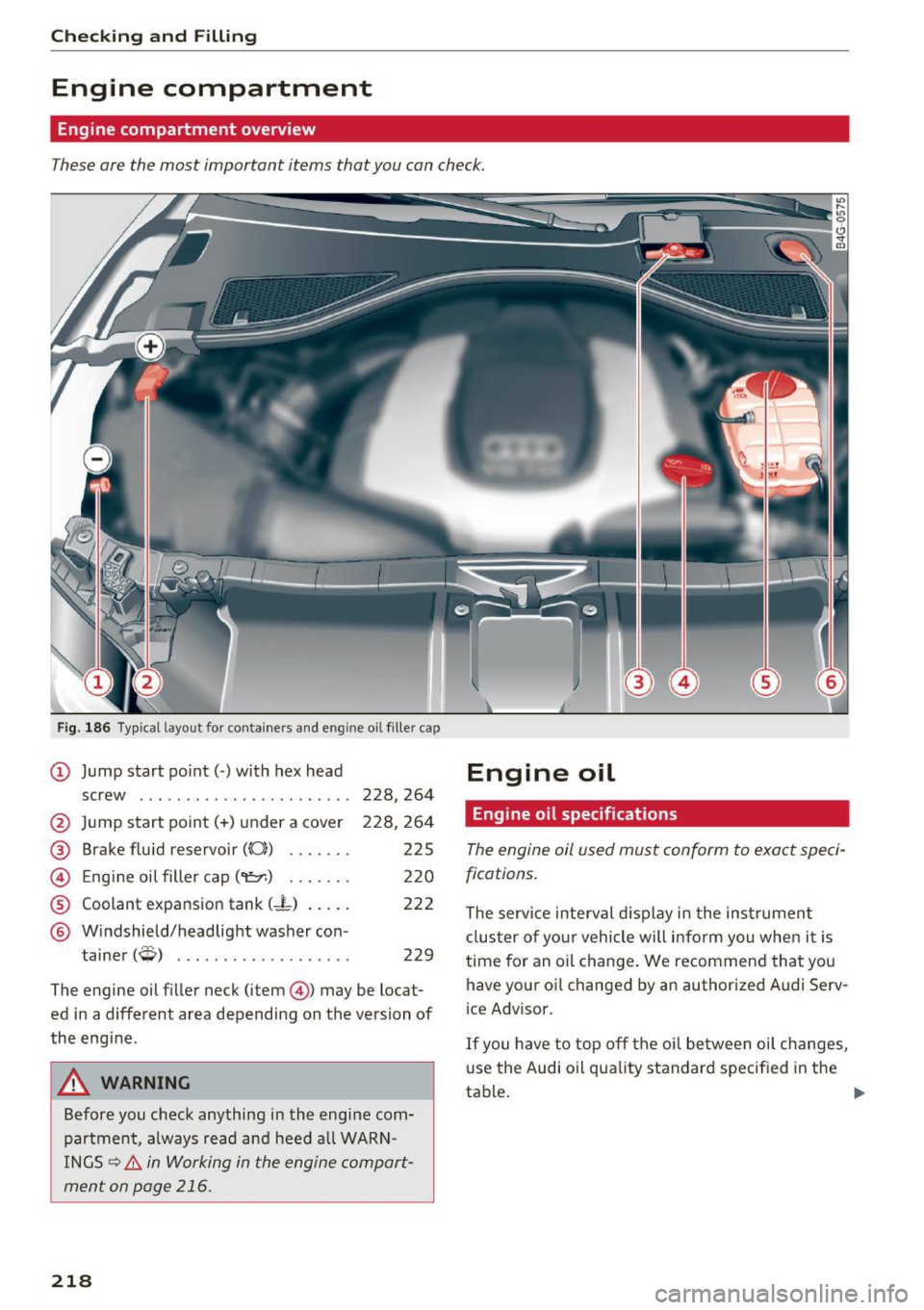
Fig. 186 Typical layout for containers and eng ine oil fille r cap
@ Jump start point(+) under a co ver
® Brake fluid reservoir ((0}) ...... .
@ Eng ine oil filler cap ('t::r.) ...... .
® Coolant expansion tank (-t) .... .
@ Windshield/headlight washer con -
t . (ffi) amer ~ ..................
. 228,264
225
220
222
229
The engine oil filler neck (item@) may be locat
ed in a different area depending on the version of
the engine.
A WARNING
Before you check anything in the engine com
partment, always read and heed all WARN
INGS ~.&.
in Working in the engine compart
ment on page 216.
218
Engine oil specifications
The engine oil used must conform to exact speci
fications.
The serv ice interval display in the instrument
cluster of your vehicle will inform you when it is
time for an oi l chang e. We recommend that you
have your oil changed by an authorized Audi Serv
i ce Advisor.
If you have to top off the oil between oil changes,
us e the Audi oil quality standard specified in the
ta ble.
~
Page 221 of 294
....
Audi oil quality standard
Gas oline
VW 502 00 or
engi ne vw 504 00
Die sel vw 507 00
en gin e
Using the prope r engine oil is important for the
functiona lity and service life of the eng ine. Your
engine was factory-filled with a high -quality oil
which can usually be used throughout the entire
year.
@ Note
Your Limited New Vehicle Warranty does not
cover damage or malfunctions due to failure
to follow recommended maintenance and use
requirements as set forth in the Audi Owner's Manual and Warranty
& Maintenance booklet.
- Use only a high quality eng ine oil that ex-
pressly complies with the Aud i oil quality
standard specified for your vehicle's engine.
Using any other oil can cause serious engine
damage .
- Do not mix any lubricants or other additives
into the engine oil. Doing so can cause en
gine damage.
(D Tips
If you need to add oil and there is none availa
ble that meets the Audi o il quality standard
your eng ine requ ires, you may add a total of
no more than 0.5 quart/liter of a h igh-quality
"synthet ic"oil that meets the followi ng speci
fications.
- Vehicles with gasoline eng ine: AC EA A3 o r
API SM wi th a viscosity g rade of SA E OW-30,
SAE SW-30 or SAE SW-40.
- Vehicles wit h diesel eng ine: ACEA C3 o r
API CF with a v iscosi ty grade of SA E OW-30
or SA E SW -30.
- Fo r more information abou t engine o il that
has been approved for your vehi cle, please
contact either you r a utho rized Audi dea ler
or A udi Customer Relations at
"' 1 (800) 822-2834 or visit our web site at
0
~ www.audiusa.com or www.aud icanada.ca.
....
Engine oil consumption
The engine in your vehicle depends on on ade
quate amount of oil to lubricate and cool oil of
its moving ports.
In order to provide effect ive lubrication and cool
i ng of internal engine components, all internal
combust ion eng ines consume a certa in amount
of oil. Oil consumption varies from eng ine to en
gine and may change s ign ificantly ove r the life of
the engine. Typ ica lly, engines w ith a specified
break-in period (see
¢ page 194) consume more
oi l during the break -in period than they consume
after oil consumption has stabilized.
Under normal cond itions, the rate of oil con
sumption depends on the q uality and viscosity o f
the oil, the RPM (revol utions per minute) at
which the engine is operated, the ambient tem
perature and road condit ions. Further factors are
the amount of oil dilution from water condensa
tion or fuel residue and the oxidation level of the o il. As any engine is subject to wear as mileage
builds up, the oil consumption may increase over
time unt il replacement of worn components may
become necessary.
With all these variables coming into play, no standard rate of o il consumption can be estab
li shed or spec ified . T he re is no alte rnative to reg
u la r and frequent checking of the oi l level , see
Note .
If the yellow engine o il leve l warning symbo l in
the instrument cluster
II lights up, yo u should
c h eck the o il level as soon as possible
¢ page 220. Top off the o il at your earlies t con
venience
¢ page 220.
A WARNING
--=-
Before you check anything in the engine com-
partment, always read and heed all WARN
INGS
¢ &. in Working in the engine comport
ment on page 216.
(D Note
Driving wit h an insufficient oil level is likely to
cause severe damage to the eng ine.
IJJ,,
219
Page 225 of 294
• Park your vehicle on a level surface.
• Switch
off the ignition.
• Read the engine coolant level from the coolant
expansion tank¢
fig. 189, ¢ page 218,
fig. 186.
With a cold engine, the coolant level
should be between the "min" and "max" mark
i ngs . When the engine is warm, the level may
be s light ly above the "max " marking.
The location of the coolant expans ion tank can be
seen in the engine compartment illustrat ion
¢pag e 218.
To obtain an accurate reading, the engine must
be sw itched
off.
The expansion tank in your vehicle is equipped
with an electric coolant level sensor.
When the coo lant level is too low, the warning
light in the Auto-Check System
c:> page 15 wi ll il
luminate until you add coolant and the level has
been restored to normal. Even though there is an
e lectric coolant level sensor, we still recommend
you check the coolant level from t ime to t ime.
Coolant loss
Coolant loss may indicate a leak in the cooling
system. In the event of coolant loss, the cooling
system should be inspected immediately by your
authorized Audi dealer. It is not enough merely
to add coolant.
In a
sealed system, losses can occur only if the
boiling point of the coo lant is exceeded as a re
sult of overheat ing.
A WARNING
The cooling system is under pressure and can
get very hot . Reduce the risk of scalding from
hot coolant by following these steps.
- Turn off the eng ine and allow it to cool
down.
- Protect your face, hands and arms from es
caping fluid and steam by covering the cap
with a large, thick rag.
- Turn the cap slowly and very carefully in a
counter-clockwise direction while applying
light, downward pressure on the top of the
cap.
Checking and Filling
-To avoid being burned, do not spill anti
freeze or coolant on the exhaust system or
hot engine parts. Under certain cond itions,
the ethylene glycol in engi ne coolant can
catch fire.
(D Note
Do not add any type of radiator leak sealant
to your vehicle's engine coolant. Add ing radia
tor repair fluid may adversely affect the func
tion and performance of your cooling system
and could result in damage not covered by
your New Vehicle Limited Warranty.
Adding coolant
Be very careful when adding engine coolant.
Before you check anything in the engine compart
ment,
always read and heed all WARNINGS
¢.&. in Working in the engine compartment on
page 216.
• Requ irement: There must be a residual amount
of coolant in the expansion tank
c:> (D .
•Turnoff the engine .
• Let the engine cool down.
• Place a thick rag over the coolant expans ion
tank
c:>p age 222 , fig. 189 and carefully twist
the cap counter-clockwise
c:> _& .
• Add coo lant mixed in the correct ratio
c:> page 222, Coolant up to the MAX marking .
• Make sure that the fluid level remains stable.
Add more coolant if necessary.
• Twist the cap on again
tightly.
Replacement engine coolant must conform to ex
act specifications
c> page 222, Coolant.
We recommend using only coolant additive Gl2+
+ , Gl3
or in an emergency Gl2+. Do not use a
different additive. In an emergency use plain wa
ter until you can get the correct additive and can
restore the correct ratio. This should be done as
soon as possible.
If you have lost a considerable amount of coo l
ant, then you should add cold antifreeze and cold
water only when the engine is co ld.
Always use
new engine coolant when refi lling.
223
Page 226 of 294
Check ing and F illing
Do not fill coolant above the "MAX" mark. Excess
coo lant wi ll be forced out through the pressure
relief valve in the cap when the eng ine becomes
hot.
A WARNING
- The cooling system is under pressure and
can get very hot . Reduce the risk of scald ing
from hot coolant by followi ng these steps.
- Tu rn off the engine and allow it to coo l
down.
- P rotect your face, h ands and arms from
escaping f lu id and steam by cover ing the
cap with a large, thick rag.
- Tu rn the cap slowly and very carefully in a
co unter -clockw ise direction while applying
light, downward p ressure on the top of
the cap.
- To avoid being bu rned, do not spill anti
freeze or coolant on the exhaust system or
hot engine parts. Under certa in condi
tions, the ethylene glycol in eng ine cool
a nt can catch fire.
- Antifreeze is poisonous. A lways store anti
freeze in its original container and well out
of the reach of children .
- If you dra in the coolant, it must be ca ught
and sa fely stored in a proper conta iner
clearly mar ked "poison".
(D Note
- Do not add coolant if the expansion tank is
empty . A ir cou ld enter the cooling system
a nd damage the eng ine. If this is the case ,
do no t continue dr iving. Seek professional
ass istance .
- Coolant pollutes t he e nvironment a nd could
cause an eng ine fire . Excess coolan t will be
fo rced o ut through th e pressure relief valve
i n the c ap whe n the eng ine be comes hot.
- If, in an emergency, o nly wate r can be add
ed, the co rrect ratio between wate r and an
ti fr ee ze ~
page 222 mu st be resto red a s
soon as possib le.
224
-
® For the sake of the environment
D raine d coolant should not be re use d. Always
d ispose of used coolant while observing a ll
environmental regulations.
Radiator fan
The radiator fan switches on automatically by it
self
An a uxiliary e lectric ra diator fan switches on and
off depending on coo lant temperature and other
vehicle ope rating conditions .
A ft er yo u sw itc h t he engi ne off, the a uxi liary fan
can con tinue running for up to 10 m inutes -even
with t he ignitio n off .
It can even switch on again
l ater by itself~& . if
- t he tempera ture o f the engine coolan t rises d ue
to the heat build -up from the engine in the en
gine compa rtment, or
- t he engine compar tment heats up beca use the
vehicle is pa rked in intense s unlight.
A WARNING
- To red uce the r is k of personal injury never
to uch the radiator fan .
- The a uxiliary e lectric fan is temperat ure
controlled and can switch on s uddenly even
when the engine is not running.
-
- The a uxiliary radiator fan switches on auto
mat ically when the eng ine coolant reaches a
certain temperature and will continue to run
until the coo lant temperature d rops.
Page 227 of 294
.... N
0 CJ '
Brake fluid
Checking brake fluid level
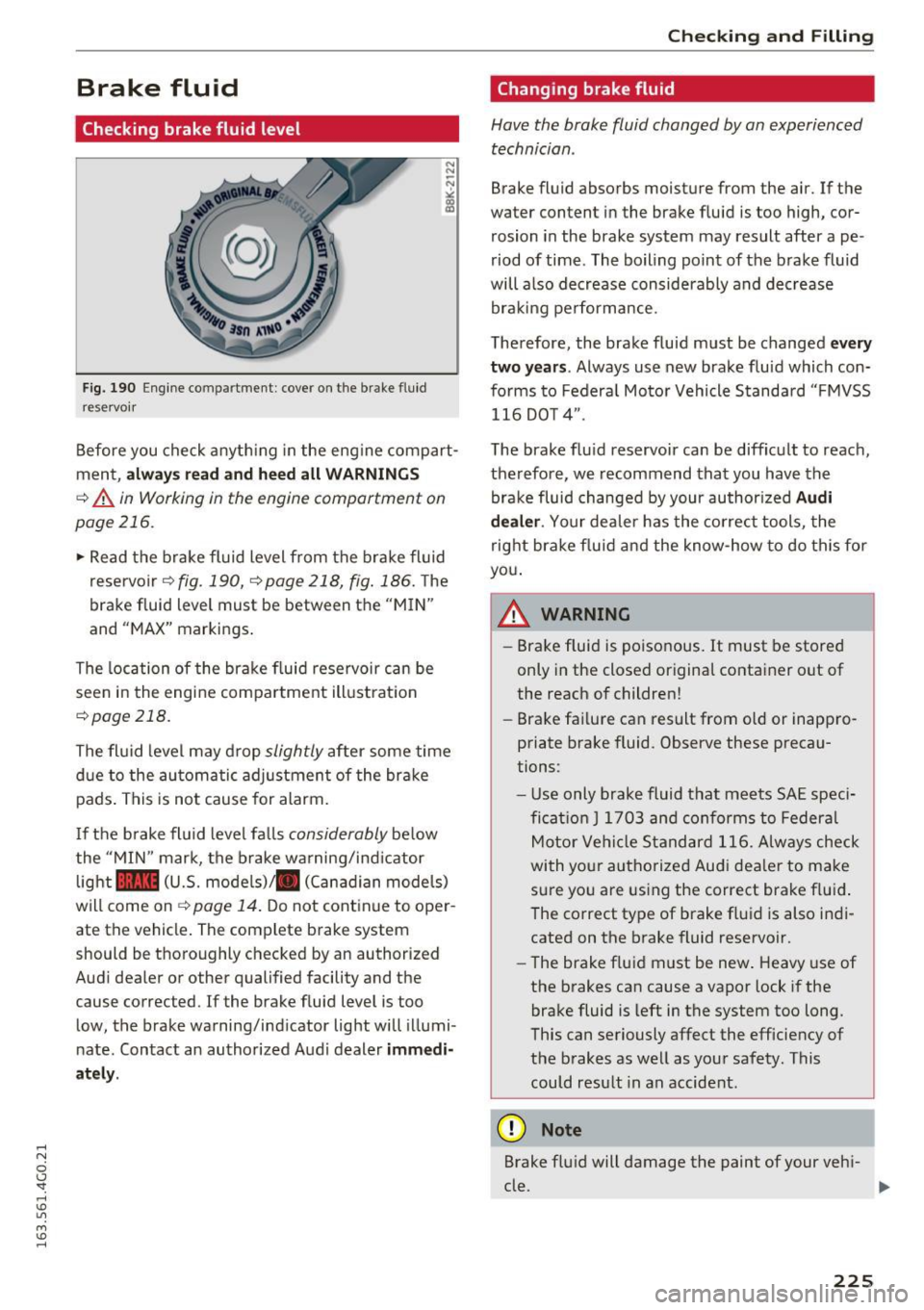
Fig. 190 Engine compartment : cover on t he brake fluid
reservoir
N
N
-N ,::
~
Before you check anything in the engine compart
ment,
always read and heed all WARNINGS
¢ A in Working in the engine compartment on
page 216.
.,. Read the brake fluid level from the brake fluid
reservoir
¢fig. 190, ¢page 218, fig. 186. The
brake fluid level must be between the "MIN "
and "MAX" markings.
The location of the brake fluid reservoir can be
seen in the engine compartment illustration
¢page 218.
The fluid level may drop slightly after some time
due to the automatic adjustment of the brake
pads. This is not cause for alarm.
If the brake fluid level falls
considerably below
the "MIN" mark, the brake warning/indicator
light
1111 (U.S. models) ;II (Canadian models)
will come on¢
page 14. Do not continue to oper
ate the vehicle. The complete brake system
should be thoroughly checked by an authorized
Audi dealer or other qualified facility and the
cause corrected. If the brake fluid level is too
low, the brake warning/indicator light will illumi
nate. Contact an authorized Audi dealer
immedi
ately.
Checking and Filling
Changing brake fluid
Have the brake fluid changed by an experienced
technician .
Brake fluid absorbs moisture from the air. If the
water content in the brake fluid is too high, cor
rosion in the brake system may result after ape
riod of time . The boiling point of the brake fluid
will also decrease considerably and decrease
braking performance.
Therefore, the brake fluid must be changed
every
two years . Always use new brake fluid which con
forms to Federal Motor Vehicle Standard "FMVSS
116 DOT 4" .
The brake fluid reservoir can be difficult to reach,
therefore, we recommend that you have the
brake fluid changed by your authorized
Audi
dealer. Your dealer has the correct tools, the
right brake fluid and the know-how to do this for
you.
A WARNING
- Brake fluid is poisonous. It must be stored
only in the closed original container out of
the reach of children!
- Brake failure can result from old or inappro
priate brake fluid . Observe these precau
tions:
- Use only brake fluid that meets SAE speci
fication
J 1703 and conforms to Federal
Motor Vehicle Standard 116. Always check
with your authorized Audi dealer to make
sure you are using the correct brake fluid.
The correct type of brake fluid is also indi
cated on the brake fluid reservoir.
- The brake fluid must be new. Heavy use of
the brakes can cause a vapor lock if the
brake fluid is left in the system too long.
This can seriously affect the efficiency of
the brakes as well as your safety. This
could result in an accident.
(D Note
Brake fluid will damage the paint of your vehi-
cle.
IJ>
225
Page 228 of 294
Check ing and F illing
@ For the sake of the environment
Because of the prob lem of proper disposal of
brake fluid as we ll as the special tools re
quired and the necessary expertise, we rec
ommend that you have the b rake fluid
changed by your author ized Audi dealer .
Battery
General information
Under normal operating conditions, the battery
in your Audi does not need any maintenance.
W ith
high outside temperat ures or long da ily
drives we recommend that you have the electro
lyte level checked by a service fac ility . The elec
trolyte level should also be chec ked eac h time
the battery is charged ¢
page 228 .
Have the battery checked when you take your ve
h icle in for service. You a re well advised to re
p lace a battery t hat is o lder than S years .
W ith certain types of a irbag dep loyment, the
battery is disconnected from the vehicle electr i
cal system for safety reasons
¢ &. in Repair, care
and disposal of the airbags on page 157 .
Disconnecting the battery terminal s
Some vehicle functions (power window reg ula
tors, for example) are lost i f th e battery termi
na ls are disconnected. These functions have to be
relearned after the battery termina ls are con
nected aga in. To prevent th is , the batte ry shou ld
only be disconnected from the vehicle e lectr ica l
sys te m when abso lutely ne cessary for repairs.
Vehicles not driven for long periods
If you do not drive your vehicle over a period of
seve ral days or weeks, electrical components a re
gradua lly cut back or sw itched off . T hi s reduces
e n ergy cons umption and ma inta ins starti ng ca
pab il ity over a longer pe riod
¢ page 192. Some
of the conve nience f unct io ns may not o pera te,
such as the inter io r lig hts or powe r seat a dju st
ment . The convenience funct ions wi ll be avai lab le
again when you switch on the ignition and start
the engine.
226
Winter operation
Dur ing the winte r mon ths, ba ttery c apacity tends
to decrease as tempe ra tu res drop . This is be
ca use mo re power is also consume d while start
i ng, and the headlights, rear window defogger,
etc., are used more often.
Avo id unne cessary powe r consum ption, pa rticu
l arly in city traffic or when traveling on ly short
distances . Let your author ized Audi dealer check
t h e capacity of the vehicle battery before winter
sets in~
page 228. A we ll charged battery will
not only p reve nt sta rting prob lems when the
weather is cold, but will also last longer.
(D Tips
If yo ur vehicle is left standing for several
weeks at extreme ly low temperatu res, the ve
hicl e battery should be re m oved a nd stor ed
where it will not freeze. This w ill preven t it
fro m bei ng damaged and hav ing to be re
p lac ed .
Working on the battery
Be e specially car eful when working on or near
t he bat tery.
The battery is loca ted in the luggage com part
ment under the floo r. Befo re yo u check anything
i n the luggage compa rtment,
read and heed all
WARNINGS ¢
.cl·
Always heed the safety warnings , when working
o n the vehicle ba tte ry o r the veh icle elect rical
system to p reve nt injury.
The following WARNINGS are very important
when working on the battery:
Always heed the following WARNING SYM·
BOLS and safety precautions when working on
the battery.
®
Always wear eye protection.
A
Battery acid contains sulfuric acid . Al-
ways wear gloves and eye protection.
Page 229 of 294
@
No
• sp ark s
• fl ame s
· sm oki ng .
&
Wh en a battery is charg ed , it produces
h yd rogen ga s which i s ex plosi ve and
c o uld c au se p ers onal injury .
®
Always keep the b atter y well out of
rea ch of child ren.
A WARNING
Whenever working on the battery or on the
electrical system, there is the risk of injury,
accident and even fire. Read and heed the fol
lowing WARN INGS:
- Always wear eye protection. Do not let bat
tery a cid or any lead pa rticles get on your
sk in or cloth ing. Sh ield your eyes. Exp losive
gases can cause blindness or other injury .
- Battery acid contains su lf ur ic ac id. Sulfur ic
acid can cause blindness and severe b urns.
-Always wear gloves and eye protection. Do
not tilt the battery because acid could leak
out of the ventilat ion open ings.
- If you get battery ac id in your eyes or on
your skin, immediately rinse with co ld wa
ter for seve ral minutes and get medical at·
tention .
- If you should ingest any battery acid, seek
medical attention immediately .
- Do not expose the battery to an open flame,
electric sparks or an open light.
- Do not smoke.
- Do not interchange the positive and nega -
tive cab les.
- When working on the battery, be sure not to
short-c ircuit the terminals with tools or oth
er meta l objects. Th is wou ld cause the bat
tery to heat up very quickly, which could
lead to damage or explosion and persona l
injury.
- When a battery is charged, it produces hy
drogen gas which is explosive and could
cause pe rsonal injury.
- Always keep the battery well out of the
reac h of ch ildren .
-
Check ing and Filling
-Before work is done on the electrical sys
tem, disconnect the negat ive ground cable.
- Before performing any work on the electri
cal system, switch off the engine and igni
tion as well as any electrical equ ipment. The
negat ive cable on the battery must be dis
connected . If you are just going to replace a
light bulb, then it is enough to switch off
the lights.
- Before d isconnecting the battery, switch off
the anti-theft a larm system! Otherwise you
will set off the alarm.
- When disconnecting the battery, first dis
connect the negat ive cable and then the
positive cable.
- Before reconnect ing the battery, make sure
all electrical consumers a re switched off.
Reconnect the positive cable first and then
the negative cable. Never in terchange the
cables -this could start a fire !
- Never cha rge a froze n or a thawed-out bat
t ery . It co uld explode! If a battery has fro
zen, then it must be replaced. A discharged
battery can freeze over at 32 °F (0 °C).
- Make sure the vent hose is always attached to the opening on the side of the battery.
- Never use batteries which are damaged.
There is the danger of an exp losion! Always
replace a damaged battery .
A WARNING ,_____
California Proposition 65 Warning:
- Ba ttery posts, term inals and related acces
sories contain lead and lead compounds,
chemicals known to the State of California
to cause cancer and reproductive prob lems.
Was h hands after handling.
(D Note
- Do not disconnect the vehicle battery when
the ignition is on or when the engine is run ning, otherwise, you w ill damage electronic
components in the electrical system.
- If your ve hicle is go ing to stand for a long
period of time w ithout being driven, protect
the battery from "freezing", otherwise it .,..
227
Page 251 of 294
.... N
0 CJ '
_& WARNING
Temperature grades apply to tires that are properly inflated and not over or underinflat
ed .
Tire pressure monitoring
system
CD General notes
Each t ire, including the spare (if provided),
should be checked monthly when cold and inflat
ed to the inflation pressure recommended by the
veh icle manufac turer on the vehicle placard or
tire inflation pressure label. (If your vehicle has
tires of a different size than the size indicated on
the vehicle placard or tire inf lation pressure la
be l, you should determine the proper tire infla
tion pressure for those tires).
As an added safety feature, your veh icle has been
equipped with a tire pressure monitoring system
(TPMS) that illuminates a low tire press ure te ll
tale when one or more of your tires is significant l y under-inflated. Accordingly, when the low tire
pressure tellta le illuminates, you should stop and
check your tires as soon as possible, and inflate
them to the proper pressure. Driving on a s ignifi
cantly under-inflated tire causes the tire to over
heat and can lead to t ire failure. Unde r-inflation
also reduces fuel efficiency and tire tread life,
and may affect the vehicle's handling and stop
ping ability .
Please note that the TPMS is not a substitute for
proper tire maintenance, and i t is the driver's re
sponsib ility to ma inta in correct tire pressure,
even if under -inflation has not reached the level
to trigger illum inat ion of the TPMS low tire pres
sure telltale.
Your veh icle has also bee n eq uipp ed w ith a TPMS
mal function indicator to indicate when the sys
tem is not operating properly. The TPMS mal
function indicator is combined w ith the low tire
pressure tellta le. When the system detects a
malfunction, the telltale will flash for approxi
mately one minute and then remain cont inuously
illuminated . This sequence will continue upon
Wheels
subsequent vehicle start-ups as long as the mal
function exists .
When the malfunction indicator is illuminated ,
the system may not be able to detect or signal
low tire pressure as intended. TPMS malfunctions
may occur for a variety of reasons, including the
i nsta llation of replacement or alternate tires or
whee ls on the vehicle that prevent the TPMS
from functioning properly. Always check the
TPMS ma lfunction telltale after replac ing one or
more tires or wheels on your vehicle to ensure
that the replacement or a lternate tires and
whee ls allow the TPMS to continue to function
properly.
If the Tire Pressure Monitoring System
indicator appears
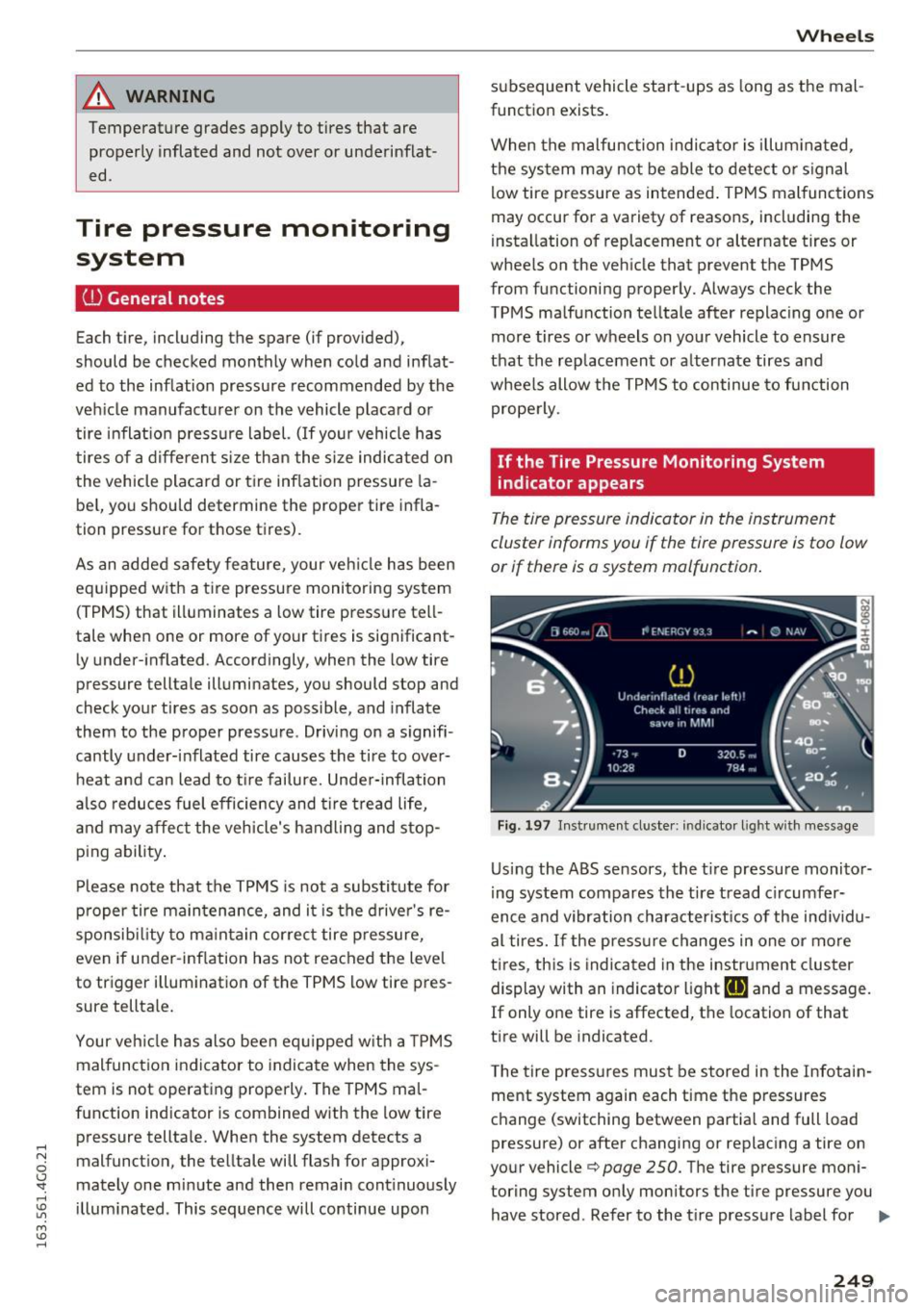
The tire pressure indicator in the instrument
cluster informs you if the tire pressure is too low
or if there is a system mo/function .
Fig. 197 Instrume nt cluste r: indicator light with message
Us ing the ABS sensors, the tir e pressure monitor
ing system compares the tire tread circumfer
ence and vibration characteristics of the individu
al tires. If the press ure changes in one or more
tires , this is indicated in the instrument cluster
display with an indicator light
ti] and a message.
If only one tire is affected, the location of that
tire will be indicated.
T he tire press ures must be stored in the Infotain
ment system again each time the pressures
change (switching between partial and full load
pressure) or after changing or replacing a tire on
your vehicle¢
page 250. The tire pressure moni
toring system only monitors the tire pressure you have stored. Refer to the tire pressure label for ..,.
249
Page 252 of 294
Wheels
the recommended tire pressure for your vehicle
¢ page 241, fig. 196.
Tire tread circumference and vibration character
istics can change and cause a tire pressure warn
ing if:
- the tire pressure in one or more tires is too low.
- the tire has structural damage .
- the tire was replaced or the tire pressure was
changed and it was not stored¢
page 250.
-the spare tire* is installed.
Indicator lights
IE Loss of pressure in at least one tire¢&. .
Check the tires and replace or repair if necessary.
Check/correct the pressures of all four tires and
store the pressure again in the Infotainment sys
tem ¢
page 250 .
mm (Tire Pressure Monitoring System) Tire
pressure: System malfunction!.
Ifmm appears
after switching the ignition on or while driving
and the
IE indicator light in the instrument clus
ter blinks for approximately one minute and then
stays on , there is system malfunction . Try to
store the correct tire pressures¢
page 250. If
the indicator light does turn off or turns on again
after a short period of time, drive to your author
ized Audi dealer or qualified repair facility imme
diate ly to have the malfunction corrected.
A WARNING
- If the ti re pressure indicator appears in the
display, reduce your speed immediately and
avoid any hard steering or braking maneu
vers. Stop as soon as possible and check the
t ir es and their pressure .
- The driver is responsible for maintaining the
correct tire pressure. You must check the
t ir e pressure regularly.
- Under certain conditions (such as a sporty
dr iv ing style, winter cond itions or unpaved
roads), the tire pressure mon itoring system
indicator may be delayed.
- Do not use run-flat tires on your vehicle. Us
ing them when not permitted can lead to
vehicle damage or accidents.
250
(D Tips
-The tire pressure monitoring system can al
so stop working when there is an ESC mal
function.
- Using snow chains may result in a system
malfunction.
- The tires with the identification "AO" or
"RO" ¢
page 2 38 have been matched with
your Audi tire pressure monitoring system.
We recommend that you use these tires.
Storing tire pressures
If the tire pressure changes or a tire is replaced,
it mus t be confirmed in the Infotainmen t sys
tem.
... Make sure before storing that the tire pressures
of all four tires meet the specified values and
are adapted to the load ¢
page 241.
... Switch the ignition on .
... Select: the
I CARI function button > (Car)* Sys
tems
contro l button > Servicing & checks >
Tire pressure monitoring > Store tire pressures
> Yes, store now.
(D Tips
Do not sto re the tire pressures if snow chains
a re installed.
Page 256 of 294
Emergency assistance
2. Remove the decorative wheel cover*. For
mo re deta ils see also
c::> page 254, Decora
tiv e wheel cov ers
or c::> page 2 54, Wheels
with wheel bolt caps.
3. Loosen the wheel bolts c::> page 255 .
4. Locate the proper mounting point for the
jack and align the jack below tha t poi nt
~ pag e 255 .
5. Raise the car w ith the ja ck¢ page 255 .
6. Remove t he wheel with the flat tire an d t hen
install
the spare ¢ page 257.
7. Tighten all wheel bo lts light ly .
8. Lower the veh icle with the jack .
9. Use the whee l bolt wrench and firmly tighten
a ll whee l bolts ¢
page 255 .
10. Replace the decorative wheel cover* .
11. Deactivate the vehicle jack mode * in the
M MI: !CARI function button> ( Car )* systems
control b utton > Servicing & checks > Air
susp.: jack mode > Off .
The vehicle jack mode * switches off automatical
ly a t sp eed s above
6 mph (10 km/h) .
_&. WARNING
Always read and fo llow all WARNIN GS and in
f o rm atio n ¢
A in Raisi ng the vehicle on
p age 256
an d ¢page 258.
After changing a wheel
A wheel change is not complete without th e do
ing the following.
• Always store the veh icle tool kit, the jack* and
the replaced t ire in the luggage compartment
¢ page 131.
• Che ck the tire pressure on the sp are whee l im
med iate ly after mo unt ing it.
• As soon as possible, have t he
tightening tor
ques
on all whee l bo lts checked with a torque
wrench . The correct tightening torque is
90 ft
lb
(120 N m).
• Have the flat tire
replaced as soon as possible.
(D Tips
- If you notice t hat the w hee l bolts are cor
r oded and diffic ult to t urn w hile cha nging a
254
tir e, they s hou ld be re pla ce d b efo re yo u
check the t ightening torque .
- Drive at red uce d spee d unt il yo u ha ve the
t ightenin g torques checked .
- Aft er ch angin g a whee l, the tire pres sure i n
all fou r tires must be che cke d/cor rec ted and
t h e tire pressure mo nito ring ind icator must
be stored in the
MM I ¢ page 25 0.
, Decorative wheel covers
Applies to vehicles: with decorative w heel covers
The decorative wheel co vers must be removed
first to access the wheel bolts .
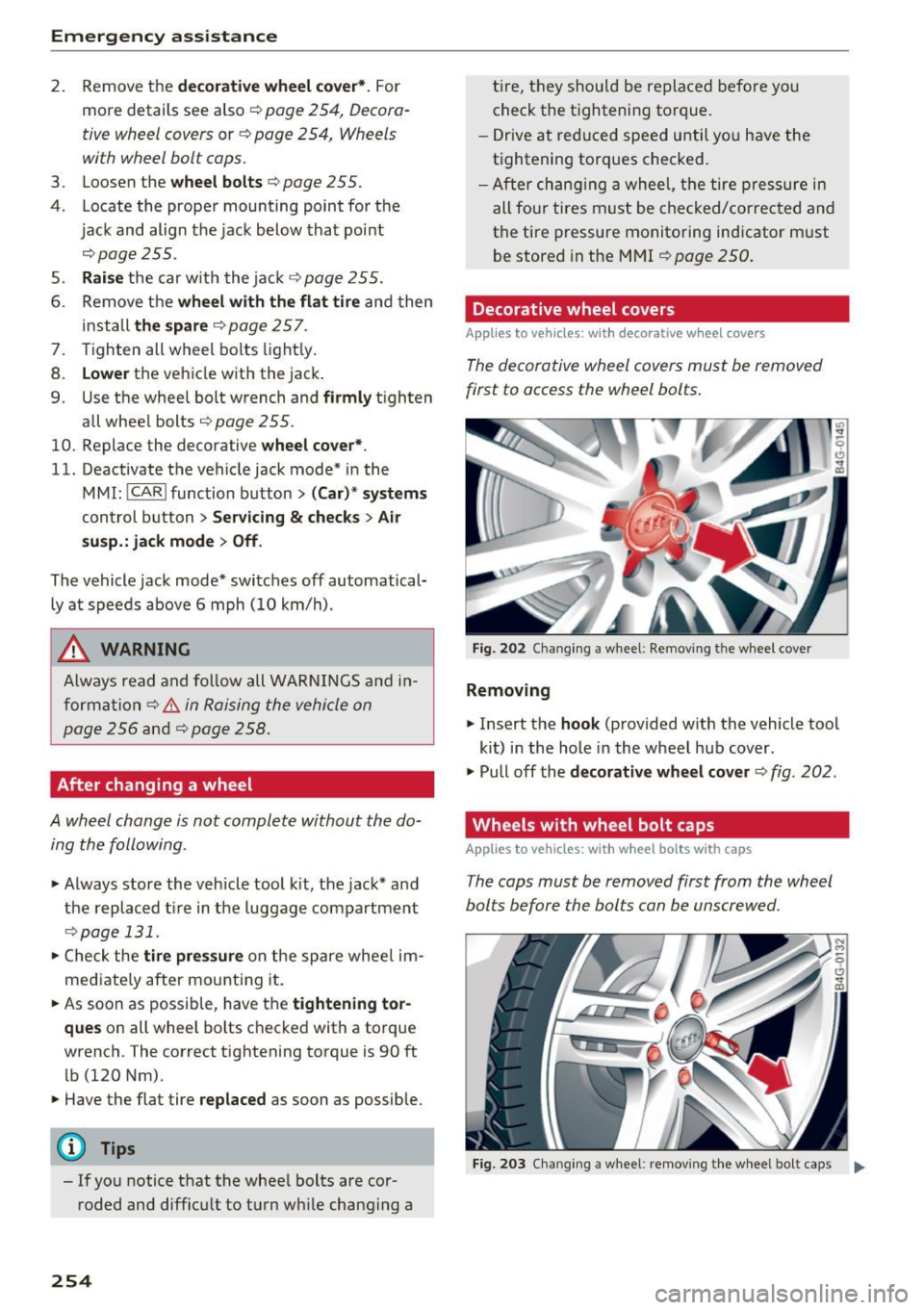
Fig. 202 Cha ng ing a w heel : Re mov ing t he w heel cover
Removing
• Insert the hook (p rovided w ith the vehicle tool
kit) i n the hole in the wheel hub cover.
• Pull off th e
decorative wheel cover ¢ fig. 202 .
Wheels with wheel bolt caps
Applies to vehicles: wit h wheel bolts with caps
The caps must be removed first from the wheel
bolts before the bolts can b e unscrewed .
Fig. 203 Cha ngi ng a w hee l: re m ovin g the w heel bo lt ca ps ..,