roof AUDI A6 2016 User Guide
[x] Cancel search | Manufacturer: AUDI, Model Year: 2016, Model line: A6, Model: AUDI A6 2016Pages: 294, PDF Size: 73.88 MB
Page 133 of 294
-Never place or install floor mats or other
floor coverings on top of already installed
floor mats. Additional floor mats and other
coverings will reduce the size of the pedal
area and interfere with the pedals .
- Always properly reinstall and secure floor
mats that have been taken out for cleaning.
- Always make sure that objects cannot fall
into the driver footwell while the vehicle is
moving . Objects can become trapped under
the brake pedal and accelerator pedal caus ing a loss of veh icle control.
Storing cargo correctly
Loading the luggage compartment
All luggage and other objects must be properly
stowed and secured in the luggage compart
ment.
L oose items in the luggage compartment can
shift suddenly, changing vehicle handling charac
teristics. Loose items can also increase the risk of
serious personal injury in a sudden vehicle ma
neuver or in a collision.
.. Distribute the load evenly in the luggage com
partment.
.. Always place and properly secure heavy items in
the luggage compartment as far forward as
possible.
.,. Secure luggage using the tie-downs provided
¢ page 64, Luggage compartment .
.,. Make sure that the rear seatback is securely
latched in place.
A WARNING
Improperly stored luggage or other items can
fly through the vehicle causing serious per
sonal injury in the event of hard braking or an
accident. To help reduce the risk of serious
personal injury:
- Always put objects, for example, luggage or
other heavy items in the luggage compart
ment.
- Always secure objects in the luggage com
partment using the tie-down hooks and
suitable straps.
Driving safety
A WARNING
Heavy loads will influence the way your vehi
cle handles. To help reduce the risk of a loss
of control lead ing to serious personal injury:
- Always keep in mind when transporting
heavy objects, that a change in the center of
gravity can also cause changes in vehicle handling:
- Always distribute the load as evenly as
possible .
- Place heavy objects as far forward in the
luggage compartment as possible.
- Never exceed the Gross Axle Weight Rating
or the Gross Vehicle Weight Rating specified
on the safety compliance sticker on the left
door jamb. Exceeding permissible weight
standards can cause the vehicle to slide and handle differently.
- Please observe information on safe driving
¢page 125.
A WARNING
To help prevent poisonous exhaust gas from
being drawn into the vehicle, always keep the
rear lid closed while driving .
- Never transport objects larger than those
f itting completely into the luggage area be
cause the rear lid cannot be fully closed.
- If you absolutely must drive with the rear lid open, observe the following notes to reduce
the risk of poisoning:
- Close all windows,
- Close the power roof*,
- Open all air outlets in the instrument pan-
el,
- Switch off the air recirculation,
- Set the fresh air fan to the highest speed .
A WARNING
Always make sure that the doors, all win
dows , the power roof* and the rear lid are se
curely closed and locked to reduce the r isk of
in jury when the vehicle is not being used.
- After closing the rear lid, always make sure
-
that it is properly closed and locked. ~
131
Page 147 of 294
Always remember, a child seat or infant carrier
installed on the front seat may be struck and
knocked out of position by t he rapidly inflating
passenger's airbag in a frontal co llision . The air
bag could greatly reduce the effectiveness of the
chi ld restraint a nd even seriously i njure the ch ild
during inflation .
For this reason, and because the back seat is the
safest place for ch ildren -when properly restra in
ed according to the ir age and size -we strongly
recommend that children always sit in the back
seat
Q page 166, Child safety.
.8, WARNING
A child in a rearward-facing chi ld seat insta l
led on the front passenger seat will be ser i
ously injured and can be k illed if the front air
bag inf lates -even with an Advanced Airbag
System.
- The inflating a irbag w ill hit the child seat or
infant carrier with great fo rce and will
smash the c hild seat and child against the
backrest, center arm rest, door or roof.
- Always ins tall rear-facing child seats on the
rear seat.
-If you must install a rearward fac ing child
seat on the front passenger seat because of
exceptiona l circumstances and the
PASSEN·
GER AIR BAG OFF
light does not come on
and stay on, immediately insta ll the rear
facing child seat in a rea r seat ing position
and have the airbag system inspected by
yo ur Audi dealer.
- Forward-fac ing ch ild seats insta lled on the
front passenge r's seat may interfe re with
the deployment of the airbag and ca use se
rious person al injury to the child.
.8, WARNING
If, in except io nal circumst ances, you mus t in
stall a forward-f acing chi ld restraint on the
front passenger's seat:
- Always ma ke sure the forwar d-fa cing se at
has been designed and ce rtified by its man
ufact urer for use on a front seat with a pas
senger front and s ide a irbag .
.
Airb ag sys tem
-Never put the fo rward-facing child restraint
up aga inst or very near the instrument pan
el.
- Always move the passenger seat into its
rearmost posit ion in the seat's fore and aft
adjustment range, as far away from the a ir
bag as possible before installing the for
ward-facing chi ld restraint. The backrest
must be adjusted to an upr ight position .
- Make sure that the
PASSENGER AIR BAG
OFF
li ght comes on and stays on a ll the time
wheneve r th e ignit ion is switched on.
.8, WARNING
To reduce t he ris k of serious injury, ma ke sure
that the
PASSENGER AIR BAG OFF li gh t will
be d isplayed whenever a child res traint is in
stalled on the front passenger seat and the ignition is switched on.
- If th e
PASSENGER AIR BAG OFF li ght does
not stay on, perform the checks described
¢ page 153, Monitoring the Advanced Air
bag System.
- Take the child restra int off t he front passen
ger seat and install it prope rly at one of the
rear seat positions if the
PASSENGER AIR
BAG OFF
light does not stay on.
- Have the ai rbag system inspected by your
Aud i deale r immediately.
- Always care fully follow instructions from
child restraint manufacture rs when instal
ling child restra ints.
.8, WARNING
--
If, in exceptional c ircumstances, you must in
stall a forward or rearward-facing child re
stra int on the fron t passenger's seat :
- Improper installat io n of child restraints can
reduce the ir effectiveness or even prevent
them from providing any pro tect ion.
- An improperly installed child restra int can
interfere wi th the airbag as it deploys and
serio usly injure or even kill th e chi ld -even
with a n Advan ced A irbag System.
- Always carefully follow the manufacturer's
i n str uctions provided with the child seat or
car rie r.
145
Page 151 of 294
A WARNING
A child in a rearward-facing child seat insta l
led on the front passenger seat will be ser i
ously injured and can be k illed if the front air
bag inflates - even with an Advanced Airbag
System.
- Although the Advanced A irbag System in
yo ur vehicle is designed to t urn off t he front
airbag when a rea rward-facing child re
straint has been insta lled on the fron t pas
senger seat, nobody can absolutely g uaran
tee that deployment is impossible in a ll con
ceivable situations that may happen during
the useful life of your vehicle.
- The inflating airbag will hit the child seat or
infant carrier w ith great force and will
smash the c hild seat and child against the
backrest, center armrest, door, or roof.
-Always install rearward-fac ing ch ild re
straints on the rear seat.
- If you must install a rearward fac ing ch ild
seat on the front passenger seat because of
exceptiona l circumstances and the
PASSEN
GER A IR BAG OFF light does not come on
and stay on, immediately install the rear
facing child seat in a rea r seat ing position
and have the airbag system inspected by
yo ur Audi dealer.
A WARNING
If, in except io nal circumst ances, you must in
stall a forward-f acing chi ld restraint on the
front passenger's seat:
- Always ma ke sure the forward-fac ing seat
has been designed and ce rtified by its man
ufacturer for use on a front seat with a pas
senger front and s ide a irbag .
- Never put the forward -facing child restraint
up against or very near the instrument pan
el.
- Always move the passenger seat into its
rea rmost position in the seat's fore and aft
adjustment range, as far away from the air
bag as possib le, before insta lling the for
ward-facing child restra int. The backrest
must be adjusted to an up right posit ion .
Airb ag sys tem
-Always make sure that there is noth ing on
the front passenge r seat that will cause the
capacitive passenger detection system in
the seat to signal to the Airbag System that
the seat is occup ied by a person when it is
not, or to s ignal that it is occupied by some
one w ho is heavier than the person actually
sit ting on the sea t. T he presen ce of addi
tional ob je cts cou ld cause t he passenger
front airbag to be turned on when it should
be off, or cou ld cause the ai rbag to work in a
way that is d ifferent from the way it wou ld
have wo rked without the object on the seat.
- Make sure that the
PASSENGER AIR BAG
OFF light comes on and stays on a ll the time
whenever the ignit ion is switched on.
Advanced Airbag System components
The front passenger seat in your veh icle has a lot
of very important parts of the Advanced Airbag
System in it . These parts include the capacitive
passenger detection system, wir ing, brackets,
and more. The contro l unit m onito rs the sys tem
o n t he fro nt passenge r seat when t he igni tion is
swi tched on and turns the airbag indica tor ligh t
on when a malfunction in the one of the system
components is detected ¢
page 154. Because
the front passenger seat contains important
parts of the Advanced A irbag System, you must
take care to prevent it from being damaged.
Damage to the seat may prevent the Adva nced
Airbag System for the front passenge r seat from
doing its job in a crash.
The front Ad vanced Airbag System consists
of the following:
- Crash senso rs in the front of the veh icle tha t
measure vehicle acce le ra tion/decele ration to
p rov ide informa tion to the Advanced A irbag
System abo ut the sever ity of the cras h.
- An elect ronic contro l unit, with integ rated
cr ash sensors for front a nd side impac ts. Th e
cont rol un it "decides" whether to fi re the fron t
airbags based on the info rmation rece ived from
the crash sensors . The contro l un it also "de
cides" whether the safety belt pretensioners
should be activated. .,.
149
Page 154 of 294
Airbag syste m
Safety belts are important to help keep front
seat occupants in the proper seated position so
that airbags can unfold properly and provide sup
p lemental protection in a frontal collision.
The front airbags are designed to provide addi
tional protection for the chest and face of the
driver and the front seat passenger when:
- safe ty belts are worn properly,
- the seats have been posit ioned so that the oc-
c u pan t is properly seated as far as possible
from the airbag,
- and for adjustable head restraints: the head re-
straints have been prope rly adjusted.
Because airbags inflate in the blink of an eye with
g reat fo rce, things you have on your lap or have
p laced on the seat could become da ngerous pro
jectiles, and be p ushed into you if the airbag in
flates .
W hen an a irbag deploys, fine dust is re leased.
This is normal and is not caused by a fire in the
ve hicle. This dust is made up mostly of a powder
used to lubricate the airbags as they deploy. It
could irritate skin.
It is important to remember that whi le the sup
p lemental a irbag sys tem is designed to reduce
the likelihood of serious injuries, other inj uries,
for example swelling, bruising and minor abra
sions, can a lso happen when airbags inflate . Air
bags do not protect the arms or the lower parts
of the body. Front airbags supplement the three
point safety belts only i n some frontal collisions
in which the veh icle decelerat ion is high enough
to deploy the airbags .
Front airbag s will not deplo y:
- if the ignit ion is switched off when a crash oc-
curs,
- in s ide collisions,
- in rear-end collisions,
- in rollovers,
- whe n the crash decelerat ion meas ured by the
airbag system is less than the minim um thresh
o ld needed for airbag deployment as registered
by the electronic contro l unit.
152
The front passenge r airbag als o will not
deplo y:
- when the front passenger seat is not occupied,
- when the e lectrical capacitance measured by
the capacitive passenger detection system for
the front passenger seat ind icates that the pas
senger s ide frontal a irbag must be switched off
by the electron ic control un it (the
PA SSENGER
AIR BAG OFF
light c> page 154 and how they
work comes on and stays on) .
A WARNING
Sitting in the wrong posit ion can increase the
risk of serious injury in cras hes.
- To reduce the r isk of injury when the ai rbags
inflate, the drive r and passenge rs must al
ways sit in an up right posit ion, m ust not
le an aga inst or place any part of their body
too close to the area where the airbags are
located .
- Occupants who are unbe lted, out of posit ion
or too close to the airbag can be serio usly
injured by an airbag as it unfolds with g reat
force in the blink of an eye~ page 14 3.
A WARNING
A child in a rearward-facing child seat instal
led on the front passenger seat will be seri
ously injured and can be killed if the front air
bag inflates - even with an Advanced Airbag
System.
- The inflating airbag will h it the ch ild seat or
infant carrier with great force and wi ll
smash the child seat and child against the
backrest, cen ter armrest, doo r or roof.
- Always install rear-fac ing ch ild seats o n the
rear seat.
- If you must install a rearwa rd facing child
seat o n the front passenge r seat because of
except io nal circumstances and the
PASSEN
GER AIR BAG OFF
l igh t does not come on
and s tay on, immed iate ly ins tall the rea r
facing chi ld seat in a rear seating posit ion
and have the airbag system inspected by
your Audi dea ler.
Page 165 of 294
.... N
0 CJ '
by being pushed into you as the airbag in
flates.
- Never place or attach accessories or other objects (such as cup holders, telephone
brackets, or even large, bulky objects) on
the doors, over or near the area marked
"AIRBAG" on the seat backrests.
- Such objects and accessories can become dangerous projectiles and cause injury
when the supplemental side airbag de
ploys.
- Never carry any objects or pets in the de ployment space between them and the
airbags or allow children or other passen
gers to travel in this position.
- Always use the built-in coat hooks only for
lightweight clothing. Never leave any heavy
or sharp-edged objects in the pockets that
may interfere with side airbag deployment
and can cause personal injury in an accident .
- Always prevent the side airbags from being
damaged by heavy objects knocking against
or hitting the sides of the seatbacks.
- The airbag system can only be triggered
once. If the airbag has been triggered, the
system must be replaced by an authorized
Audi dealership .
- Damage (cracks, deep scratches etc.) to the
original seat covers orto the seam in the area of the side airbag module must always
be repaired immediately by an authorized
Audi dealer.
- If children are seated improperly, their risk
of injury increases in the case of an accident
c;, page 166, Child safety.
-Never attempt to modify any components of
the airbag system in any way.
- In a side collision, side airbags will not func
tion properly if sensors cannot correctly
measure increasing air pressure inside the
doors when air escapes through larger, un
closed openings in the door panel.
- Never drive with interior door trim panels removed.
- Never drive when parts have been re
moved from the inside door panel and the
openings they leave have not been proper
ly closed.
Airbag system
-Never drive when loudspeakers in the
doors have been removed unless the
speaker holes have been properly closed.
- Always make certain that openings are
covered or filled if additional speakers or
other equipment is installed in the inside
door panels.
- Always have work on the doors done by an
authorized Audi dealer or qualified work
shop.
Side curtain airbags
Description of side curtain airbags
The side curtain airbag system can provide sup
plemental protection to properly restrained oc cupants.
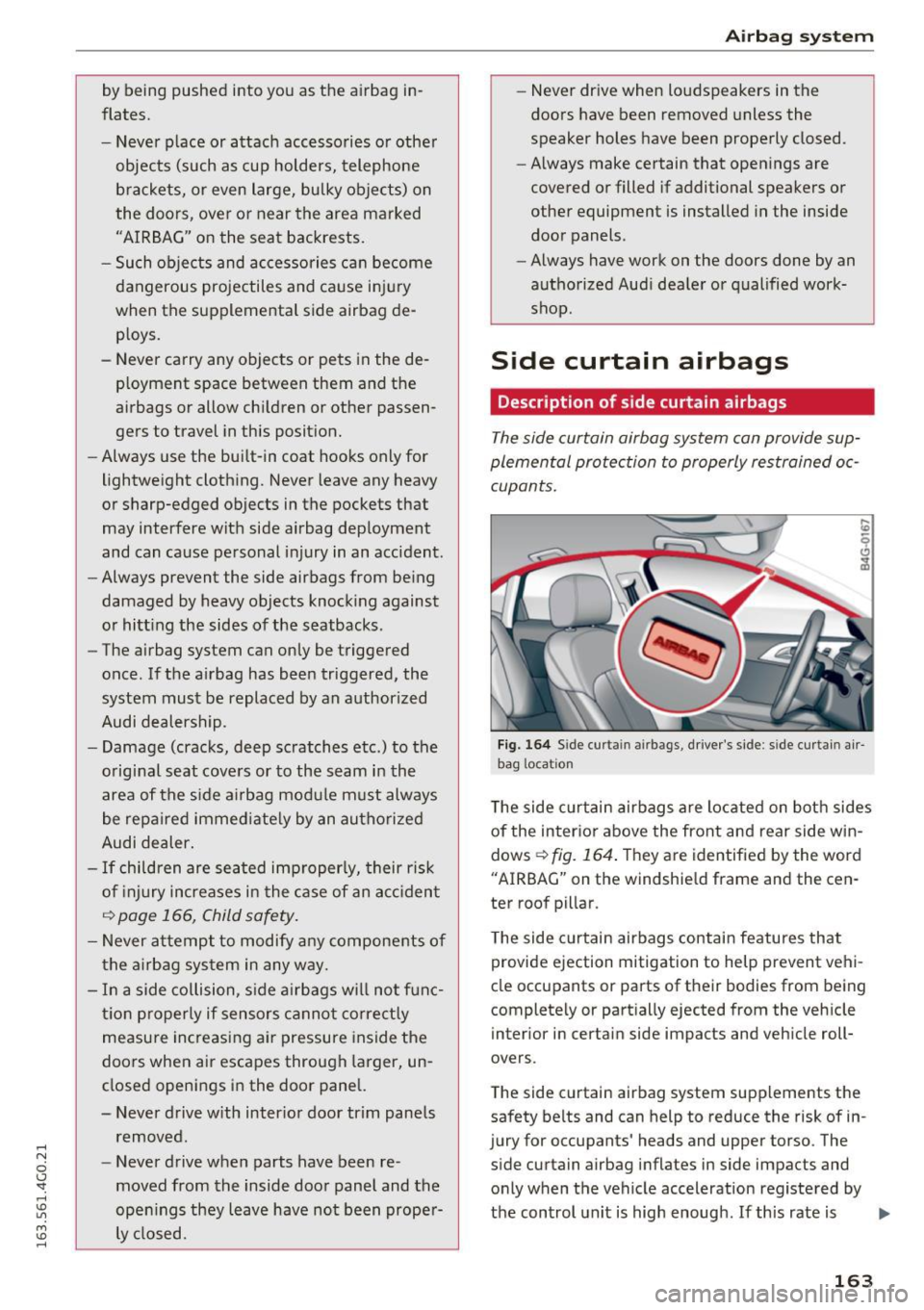
Fig. 164 S ide curta in airb ags, driver's side: s ide curtai n air
bag locat ion
The side curtain airbags are located on both sides
of the interior above the front and rear side win
dows
c;, fig. 164. They a re identified by the word
"AIRBAG" on the windshield frame and the cen
ter roof pillar .
Th e side curta in airbags contain features that
provide ejection mitigation to help prevent vehi
cle occupants or parts of their bodies from being
completely or partially ejected from the vehicle
interior in certain side impacts and vehicle roll
overs.
The side curtain airbag system supplements the
safety belts and can help to reduce the risk of in
jury for occupants' heads and upper torso . The
side curtain airbag inflates in side impacts and
only when the vehicle acceleration registered by
the control unit is high enough. If this rate is
II>
163
Page 172 of 294
Child safety
to prevent the child safety seat from moving
¢page 176.
~ Push the child safety seat down with your full
weight to get the safety belt really tight so that
the seat cannot move forward or sideways
more than one inch (2.5 cm) .
~ Secure unused safety belts on the rear seat
¢page 171 .
Always remember: Even though your vehicle is
equipped with an Advanced Airbag system, all
children, especially those 12 years and younger,
should always ride in the back seat properly re
strained for their age and size.
_& WARNING
Not using a child safety seat, using the wrong
child safety seat or improperly installing a
child restraint increases the risk of serious
personal injury and death.
-All vehicle occupants and especially children
must be restrained properly whenever riding
in a vehicle. An unrestrained or improperly
restrained child could be injured by striking
the interior or by being ejected from the ve
hicle during a sudden maneuver or impact.
An unrestrained or improperly restrained
child is also at greater risk of injury or death
through contact with an inflating airbag .
- Commercially available child safety seats
are required to comply with U .S. Federal
Motor Vehicle Safety Standard (FMVSS) 213
(in Canada CMVSS 213).
- When buying a child restraint, select one
that fits your child and the vehicle.
- Only use child restraint systems that fully
contact the flat portion of the seat cush
ion. The child restraint must not tip or
lean to either side. Audi does not recom
mend using child safety seats that rest on
legs or tube-like frames. They do not pro
vide adequate contact with the seat.
-Always heed all legal requirements per
taining to the installation and use of child
safety seats and carefully follow the in
structions provided by the manufacturer
of the seat you are using.
170
-Never allow children under 57 inches
(1.45 meters) to wear a normal safety belt.
They must always be restrained by a proper child restraint system . Otherwise, they
could sustain injuries to the abdomen and
neck areas during sudden braking maneu
vers or accidents .
- Never let more than one child occupy a child
safety seat.
- Never let babies or older children ride in a
vehicle while sitting on the lap of another passenger.
- Holding a child in your arms is never a sub
stitute for a child restraint system.
- The strongest person could not hold the
child with the forces that exist in an acci
dent. The child will strike the interior of
the vehicle and can also be struck by the
passenger.
- The child and the passenger can also in jure each other in an accident.
- Never install rear-facing child safety seats
or infant carriers on the front passenger
seat. A child will be seriously injured and
can be killed when the passenger airbag in
flates -even with an Advanced Airbag Sys
tem.
- The inflating airbag will hit the child safety
seat or infant carrier with great force and
will smash the child safety seat and child
against the backrest, center armrest door
,
or roof.
- Always install rear-facing child safety seats
or infant carriers on the rear seat.
- Forward-facing child safety seats installed
on the front passenger's seat can interfere
with the airbag when it inflates and cause
serious injury to the child. Always install for
ward-facing child safety seats on the rear
seat .
- If exceptional circumstances require the use
of a forward-facing child restraint on the
front passenger's seat, the child's safety
and well-being require that the following
special precautions be taken: .._
.__ ______________ _j ...
Page 174 of 294
Child safety
_& WARNING
A child in a child safety seat installed with the LA TCH lower anchorages or w ith the standard
safety belt or a child in a booster seat on the
rear seat could play with unused rear seat
safety belts and become entangled. This
could cause the child serious personal injury
and even death.
- Always sec ure unused rear seat safety belts
out of reach of ch ildren in child seats such
as by properly routing them around the
head restraint of the seat where the child
restraint is insta lled .
- Never activate the convertible locking re
tractor when routing the safety belts around
the head restraints.
- Never let anyone sit at the cente r rear seat
ing position if the center rear safety belt has
been routed around a rear head restraint.
Child seats
Infant seats
Babies and infants up to about one year old and
20 lbs . or 9 kg need special rearward-facing
child restraints that support the back, neck and
head in a crash.
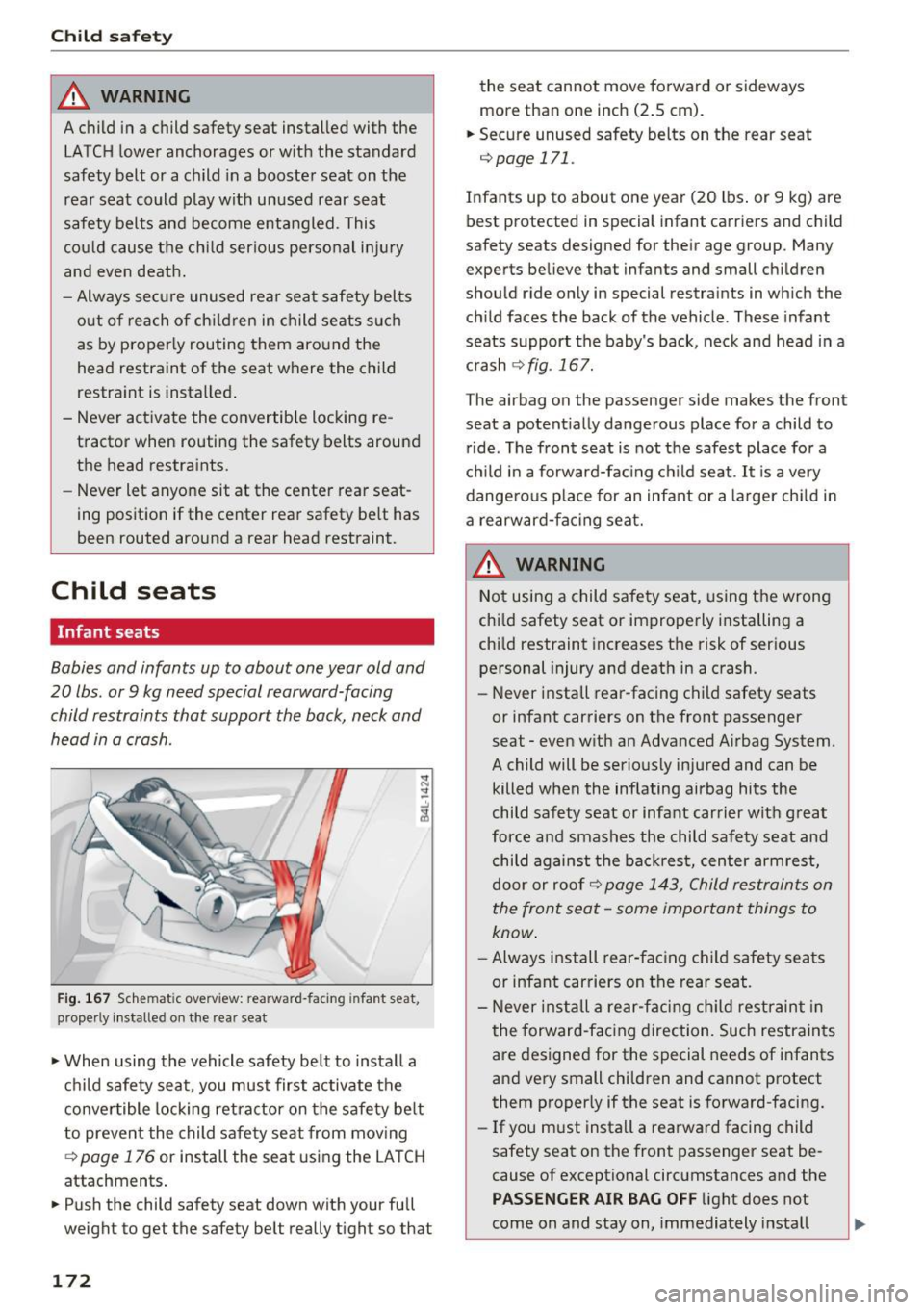
Fig . 167 Schemat ic overv iew: r earwa rd -fa cing in fant seat,
p roperly installe d on the rea r seat
.. When using the vehicle safety be lt to install a
child safety seat, you must first activate the
convertible locking retractor on the safety be lt
to prevent the child safety seat from mov ing
q page 176 or install the seat using the LATCH
attachments .
.. Push the child safety seat down with your full
weight to get the safety belt really tight so that
172
the seat cannot move forward or sideways
more than one inch (2 .5 cm) .
.. Secure unused safety belts on the rear seat
q page 171.
Infants up to about one year (20 lbs. or 9 kg) are
b est protected in special infant carriers and child
safety seats designed for their age group. Many
experts believe that infants and small children
should ride only in special restraints in wh ich the
child faces the back of the vehicle . These infant
seats support the baby's back, neck and head in a
crash
q fig . 167.
T he airbag on the passenger side makes the front
seat a potent ially dangerous place for a child to
ride . The front seat is not the safest place for a
child in a forward-facing ch ild seat .
It is a very
dangerous p lace for an infant or a larger child in
a rearward-facing seat.
_& WARNING
Not using a child safety seat, using the wrong
chi ld safety seat or improperly installing a
chi ld restraint increases the risk of serious
personal injury and death in a crash .
- Never install rear-facing child safety seats
or infant carriers on the front passenger
seat - even w ith an Advanced A irbag System .
A child will be serious ly injured and can be
killed when the inflating airbag hits the
child safety seat or infant carrier with great
force and smashes the child safety seat and
child against the backrest, center armrest,
door or roof
q page 143, Child restraints on
the front seat -some important things to
know .
-Always install rear-facing child safety seats
or infant carriers
on the rear seat .
- Never install a rear-facing child restraint in
the forward-facing direction. Such restraints
are designed for the special needs of infants
and very small children and cannot protect
them proper ly if the seat is forward-facing.
- If you must install a rearward facing child
safety seat on the front passenger seat be
cause of exceptional circumstances and the
PASSENGER AIR BAG OFF light does not
come on and stay on, immediately install
Page 176 of 294
Child safety
personal injury and death in a collision or oth
er emergency situation.
- Children on the front seat of any car, even
with Advanced Airbags, can be seriously in
jured or even killed when an airbag inflates .
A child in a rearward-facing child safety seat installed on the front passenger seat will be
seriously injured and can be killed if the
front airbag inflates -even with an Ad
vanced Airbag System.
- The inflating airbag will hit the child safety
seat or infant carrier with great force and
will smash the child safety seat and child
against the backrest, center arm rest , door
or roof.
- Always install rear-facing child safety seats
on the rear seat.
- If you must install a rearward facing child
safety seat on the front passenger seat be
cause of exceptional circumstances and the
PASSENGER AIR BAG OFF light does not
come on and stay on, immediately install
the rear-facing child safety seat in a rear
seating position and have the airbag system inspected by your Audi dealer .
- The rear side of the child safety seat should
be positioned as close as possible to the
backrest on the vehicle seat.
- For adjustable head restraints: adjust or re
move the rear seat head restraint if it is dif
ficult to install the child seat with the head
restraint in place¢
page 57. Install the
head restraint again immediately once the
child seat is removed. Driving without head
restraints or with head restraints that are
not properly adjusted increases the risk of
serious or fatal neck injury dramatically.
- Always read and heed all WARNINGS when
ever using a child restrained in a vehicle is
being used¢
page 134, Safety belts,
¢ page 142, Airbag system and
¢ page 166, Important information.
A WARNING
If exceptional circumstances require the use
of a forward-facing child restraint on the
front passenger's seat, the child's safety and
174
well-being require that the following special precautions be taken:
- Make sure the forward-facing seat has been
designed and certified by its manufacturer
for use on a front seat with a passenger
front and side airbag.
- Always follow the manufacturer's instruc tions provided with the child safety seat or
infant carrier .
- Always move the front passenger seat into
the rearmost position of the passenger seat's fore and aft adjustment range, and as
far away from the airbag as possible before
installing the child restraint .
- Always make sure that nothing prevents the front passenger's seat from being moved to
the rearmost position in its fore and aft ad
justment range .
-Always make sure the backrest is in an up
right position .
- Never place or use any electrical device
(such as a laptop, CD player, electronic
games device , power inverter or seat heater
for child seats) on the front passenger seat
if the device is connected to the 12-volt
socket or the cigarette lighter socket.
- If a seat heater has been retrofitted or oth
erwise added to the front passenger seat, never install any child restraint system on
this seat.
- Make sure that there are no wet objects
(such as a wet towel) and no water or other
liquids on the front passenger seat cushion.
- Never place objects on the seat (such as a
laptop, CD player, electronic games device,
power inverter or seat heater for child
seats). These may influence the electrical
capacitance measured by the capacitive pas
senger detection system and can also fly
around in an accident and cause serious per
sonal injury.
- Make sure that the
PASSENGER AIR BAG
OFF
light comes on and stays on all the time
whenever the ignition is switched on.
- If the
PASSENGER AIR BAG OFF light does
not come on and stay on, immediately in
stall the forward-facing child seat at a seat-
ing position on the rear seat and have the
~
Page 179 of 294
children, especially those 12 years and younger,
should always ride in the back seat properly re
stra ined for their age and size.
A WARNING
-
Improperly installed child safety seats in
crease the risk of serious personal injury and
death in a collision.
- Always make sure that the safety belt re
tractor is locked when install ing a child
safety seat . An unlocked safety belt retrac
tor cannot hold the child safety seat in place dur ing normal driving or in a crash.
- Always buckle the child safety seat firmly in
place even if a child is not sitting in it . A
loose child safety seat can fly around during
a sudden stop or in a collision.
- Always make sure that the rear seat back
rest to wh ich the center rear safety be lt* is
attached is secure ly latched whenever the
rear center safety belt is being used to se
cure a child restraint.
- If the backrest is not securely latched, the
child and the child restraint will be thrown
forward together with the backrest and will strike parts of the vehicle interior. The chi ld
can be seriously injured or killed.
- Never install rear-facing chi ld safety seats
or infant carriers on the front passenger
seat. A child will be seriously injured and can be killed when the passenger airbag in
flates.
- The inflating a irbag w ill hit the child safety
seat or infant carrier with great force and
will smash the ch ild safety seat and child
against the backrest, center armrest, door
or roof.
- Always install rear-facing child safety seats
o r infant carriers on the rear seat.
- Forward-fac ing ch ild safety seats or infant
carriers installed on the front passenger's
seat may inte rfe re with the deployment of
the a irbag and cause serious injury to the
child.
- It is safer to install a forward-fac ing ch ild
safety seat on the rear seat.
- Always read and heed all WARN INGS when
ever using a child restrained in a veh icle is
Ch ild safety
being used ¢page 166. Special precautions
apply when instal ling a child safety seat on
the front passenger seat
¢ page 143, Child
restraints on the front seat -some impor
tant things to know .
A WARNING
-Always take special precautions if you must
i nstall a forward or rearward-facing child re
stra int on the front passenger 's seat in excep
tional s ituations:
- Whenever a forward or rearward-fac ing
child restraint is installed on the front pas
senger seat, the
PAS SENGER AIR BAG OFF
light must come on and stay on whenever
the ignition is switched on .
- I f the
PASSENGER AIR BAG OFF light does
not come on and stay on, perform the
checks described
¢ page 153, Monitoring
the Advanced Airbag System.
- Take the child restraint off the front passen
ger seat and install it properly at one of the
rear seat positions if the
PA SS ENGER AIR
BAG OFF light does not stay on whenever
the ignition is switched on.
- Improper installat ion of child restraints can
reduce the ir effectiveness or even prevent
them from providing any protect ion.
- An improperly installed child restra int can
interfere with the airbag as it deploys and
serious ly injure or even kill the child .
- Always carefully follow the manufacturer's
instructions provided with the child safety
seat or carr ier .
- After checking to make sure that the child
restraint is properly installed, make certain
that the child restraint is co rrectly recog
n ized by the capacitive passenge r detection
system in the fron t passenger seat and that
the
PASSENGER AIR BAG OFF light signals
the correct front passenger frontal a irbag
stat us.
A WARNING
Forward-facing child restra ints :
-
177
Page 180 of 294
Child safety
-Always make sure the forward-facing seat
has been designed and certified by its man
ufacturer for use on a front seat with a pas
senger front and side airbag.
- Never put the forward-facing child restraint
up, against or very near the instrument pan
el.
- Always move the passenger seat into its
rearmost position in the seat's fore and aft
adjustment range, as far away from the air
bag as possible before installing the for
ward-facing child restraint. The backrest
must be adjusted to an upright position.
- Make sure that the
PASSENGER AIR BAG
OFF
light comes on and stays on all the time
whenever the ignition is switched on.
_&. WARNING
Rearward-facing child restraints:
- A child in a rearward-facing child safety seat
installed on the front passenger seat will be
seriously injured and can be killed if the
front airbag inflates -even with an Ad
vanced Airbag System.
- The inflating airbag will hit the child safety
seat or infant carrier with great force and
will smash the child safety seat and child
against the backrest, center armrest, door
or roof.
- Always be especially careful if you must in
stall a rearward facing child safety seat on
the front passenger seat in exceptional cir
cumstances.
- Make sure that the
PASSENGER AIR BAG
OFF
light comes on and stays on all the time
whenever the ignition is switched on .
- If the
PASSENGER AIR BAG OFF light does
not come on and stay on, immediately in
stall the rear-facing child safety seat in a rear seating position and have the airbag
system inspected by your Audi dealer .
178
· Activating the convertible locking retractor
Use the convertible locking retractor to secure a
child restraint.
Always heed the child safety seat manufacturer 's
instructions when installing a child restrain t in
your vehicle . To activate the convertible locking
retractor:
.. Place the child restraint on a seat, preferably
on the rear seat.
.. Slowly pull the belt
all the way out .
.. Route it around or through the child restraint
belt path
~ ,&. .
.. Push the child safety seat down with your full
weight to get the safety belt really tight.
.. Insert the belt tongue into the buckle for that
seating position.
.. Guide the safety belt back into the retractor un
til the belt lies flat and snug on the child safety
seat.
.. You should hear a "clicking" noise as the belt
winds back into the inertia reel. Test the con
vertible locking retractor by pulling on the belt.
You should no longer be able to pull the belt
out of the retractor. The convertible locking re
tractor is now activated.
.. Make sure that the red release button is facing
away from the child restraint so that it can be
unbuckled quickly.
.. Pull on the belt to make sure the safety belt is
properly tight and fastened so that the seat
cannot move forward or sideways more than
one inch (2 .5 cm) .
_&. WARNING
Using the wrong child restraint or an improp
erly installed child restraint can cause serious
personal injury or death in a crash.
- Always make sure that the safety belt re
tractor is locked when installing a child
safety seat. An unlocked safety belt retrac
tor cannot hold the child safety seat in place
during normal driving or in a crash.
- Always buckle the child safety seat firmly in place even if a child is not sitting in it. A
loose child safety seat can fly around during
a sudden stop or in a crash.