child lock AUDI A7 2012 Owner's Manual
[x] Cancel search | Manufacturer: AUDI, Model Year: 2012, Model line: A7, Model: AUDI A7 2012Pages: 294, PDF Size: 73.33 MB
Page 176 of 294
174 Child Saf ety
the head restraint again immediately
once the child seat is removed. Dr iving
without head restraints or with head re
straints that are not properly adjusted
increases the risk of ser ious or fatal neck
injury dramat ica lly .
- Children on the front seat of any car, even w ith Advanced A irbags, can be seri
ously injured or even killed when an a ir
bag inflates.
- Never let a child stand or knee l on any
seat, for example the front seat.
- Never let a child ride in the cargo area of
your vehicle.
-Always remember that a ch ild lean ing
forward, sitt ing s ideways or out of posi
t ion in any way during an acc ident can be
struck by a deploying airbag. This will re
sult in serious personal injury or death.
- If you must install a booster seat on the
front passenger seat because of excep
tional circumstances the
PASSENGER
AIR BAG OFF
light must come on and
stay on, whenever the ignition is switch
ed on.
- If the
PASSENGER AIR BAG OFF light
does not come on and stay on, perform
the checks described
<=> page 149, Moni
toring the Advanced Airbag System.
- Take the child restraint off the front pas
senger seat and install it properly at one
of the rear seat positions if the
PASSEN
GER AIR BAG OFF
light does not stay on
whenever the ignition is switched on .
- Always read and heed all WARNINGS
whenever using a child restrained in ave
hicle is being used
<=> page 128, Safety
belts, <=> page 137, Airbag system
and
<=> page 163, Important things to know.
_&, WARNING
A child in a booster seat installed with the
standard safety belt on the rear seat may
play with unused rear seat safety belts and
become entangled resulting in serious per
sonal injury and even death. -
Always secure unused rear seat safety
be lts out of reach of children in child
seats such as by properly rout ing them
around the head restraint for the seat ing
position where the child restraint is in
stalled.
- Never activate the switchable lock ing re
tractor when routing the safety belts
around the head restraints.
Installing a child safety
seat
Securing a child safety seat using a
safety belt
Safety belts for the rear seats and the front
passenger can be locked with the convertible locking retractor to properly secure child
safety seats.
The safety belts emergency locking retractors
for the rear seats safety belts and for the
front passenger's seat safety belt have a con
vertib le locking ret ractor for child restraints.
T he safety belt m ust be locked so that be lt
webbing cannot unreel. The retractor can be
activated to lock the safety belt and prevent
the safety belt webbing from loosening up
during normal driving . A chi ld safety seat can
only be properly installed when the safety belt
is locked so that the child and child safety
seat w ill stay in place .
Always remember: Even though your vehicle is
equipped with an Advanced Airbag system, all
children, especially those 12 years and young
er, should always r ide in the back seat proper
ly restrained for the ir age and size .
_&, WARNING
Improperly installed ch ild safety seats in
crease the risk of serious personal injury
and death in a collision.
- Always make sure that the safety belt re
tractor is lo cked when insta lling a child
safety seat . An un locked safety belt re -
tractor cannot hold the child safety seat ..,.
Page 178 of 294
176 Child Safety
-Always move the passenger seat into its
rearmost position in the seat's fore and
aft adjustment range, as far away from
the airbag as possible before installing
the forward-facing child restraint. The
backrest must be adjusted to an upright
position.
- Make sure that the
PASSENGER AIR BAG
OFF
light comes on and stays on all the
time whenever the ignition is switched
on.
A WARNING
Rearward-facing child restraints:
- A child in a rearward-facing child safety
seat installed on the front passenger
seat will be seriously injured and can be
killed if the front airbag inflates -even
with an Advanced Airbag System.
- The inflating airbag will hit the child
safety seat or infant carrier with great
force and will smash the child safety seat
and child against the backrest, center
armrest, door or roof.
- Always be especially careful if you must
install a rearward facing child safety seat
on the front passenger seat in exception
al circumstances.
- Make sure that the
PASSENGER AIR BAG
OFF
light comes on and stays on all the
time whenever the ignition is switched
on .
- If the
PASSENGER AIR BAG OFF light
does not come on and stay on, immedi
ately install the rear-facing child safety
seat in a rear seating position and have
the airbag system inspected by your Audi
dealer.
Activating the convertible locking retractor
Use the convertible locking retractor to se
cure a child restraint.
Always heed the child safety seat manufactur
er's instructions when installing a child re- straint in your vehicle. To activate the conver
tible locking retractor:
.,. Place the child restraint on a seat, prefera
bly on the rear seat.
.,. Slowly pull the belt
all the way out.
.,. Route it around or through the child re
straint belt path
¢ A -
.,. Push the child safety seat down with your
full weight to get the safety belt really tight .
.,. Insert the belt tongue into the buckle for
that seating position .
.,. Guide the safety belt back into the retractor
until the belt lies flat and snug on the child
safety seat.
.,. You should hear a "clicking" noise as the
belt winds back into the inertia reel. Test the
convertible locking retractor by pulling on
the belt. You should no longer be able to
pull the belt out of the retractor. The con
vertible locking retractor is now activated .
.,. Make sure that the red release button is fac
ing away from the child restraint so that it
can be unbuckled quickly.
.,. Pull on the belt to make sure the safety belt
is properly tight and fastened so that the
seat cannot move forward or sideways more
than one inch (2.5 cm).
A WARNING
Using the wrong child restraint or an im
properly installed child restraint can cause
serious personal injury or death in a crash.
- Always make sure that the safety belt re- tractor is locked when installing a child
safety seat. An unlocked safety belt re
tractor cannot hold the child safety seat in place during normal driving or in a
crash.
- Always buckle the child safety seat firmly
in place even if a child is not sitting in it.
A loose child safety seat can fly around
during a sudden stop or in a crash.
- Always make sure the seat backrest to
which the child restraint is installed is in
an upright position and securely latched
-
Page 179 of 294
into place and canno t fold forward. Oth
erwise, the seatback w ith the ch ild safety
seat attached to it could fly forward in
the event of an acc ident or other emer
gency situation .
- Always read and heed all WARNINGS
whenever using a child rest rained in ave
hicle is being used
<=:> page 163 . Special
precautions apply when installing a ch ild
safety sea t on the front passenge r seat
<=:> page 139, Child restraints on the front
seat -some important things to know.
Deactivating the convertible locking
retractor
The convertible locking retractor for child re
straints will be deactivated automatically when the belt is wound all the way back into the retractor.
~ Press the red button on the safety be lt
buck le . The belt tongue will pop out of the
buck le.
ii-G ui de the safety belt all the way back into
its stowed posit ion.
Always let the safety belt retract comp lete ly
i nto its stowed posit ion. The safety belt can
now be used as an ordinary safety belt with
out the convert ib le lock ing retractor for ch ild
restra ints .
If the c onvertible locking retractor shou ld be
activated inadvertently, the safety belt must be unfastened and guided completely back in
to its stowed position to deactivate th is fea
ture .
If the convertib le locking retractor is not
dea ctivated, the safety belt will g radua lly be
come tighter a nd uncomfo rt a b le to wear .
_& WARNING
Improperly installed chil d sa fe ty se ats in
crease the risk of ser ious personal inju ry
and death in a collision.
- Never unfasten the sa fe ty belt to deac ti
vate the convert ible lock ing retractor for
child restraints while the veh icle is mov-
Child Sa fet y 177
ing. You would not be restrained and
could be serious ly injured in an accident.
- Always rea d and heed all WAR NIN GS
whenever us ing a child restrained in ave
hicle is being used ¢
page 163. Special
precautions apply when insta lling a child
safety seat o n the fron t passenger seat
<=:> page 139, Child restraints on the front
seat -some important things to know.
LATCH Lower
anchorages and tethers
for children
Child Restraint System anchors and how
are they related to child safety
T o provi de a simp ler and more practicable way
to attach the c hild restra int on the vehicle
seat, Federal regulat ions req uire spec ial lower
anchorages in vehicles and devices on new
c h ild restra ints to attach to the veh icle ancho
r ages .
The combinat ion of the tether anchorages and
the lower anchorages is now generally called
the
LATCH system for " Lower Anchorages and
T ethers for Chil d ren."
Fo rward-facing chi ld restraints manufactured
after September 1, 1999, are requ ired by U.S.
federa l regu lations to comply with new child
head movement performa nce re quirements .
T hese new pe rfo rmance requ ir e ments ma ke a
tethe r ne cessary on most new c hild sea ts.
Installing a ch ild restra int that requires a top
tethe r without one can seriously impa ir the
p erfo rman ce of the c hild restra int and its abil
ity to p rotect the child in a coll is io n. Insta lli ng
a ch ild res tra in t that re quires a top tethe r
withou t the to p tether may be a violat ion o f
state law.
Child res train t manufacturers offer LA T CH
l ower anchor ages on t heir child seats w ith
hook -on or push -on connectors a ttached to
adjustable straps.
In add ition to the LA TCH lower anchorages,
th ese chi ld res tra int systems usu ally require .,. •
•
Page 181 of 294
All child restraints manufactured after Sep
tember 1, 2002, must have lower anchorage
attachments for the
LATCH system.
Please remember that the lower anchorage
points are only intended for installation and
attachment of child restraints specifically cer
tified for use w ith
LATCH lower anchorages.
Child restraints that are not equipped with the
lower anchorage attachments can still be in
stalled in compliance with the child restraint
manufacturer's instructions on using vehicle
safety belts .
A WARNING
Improper use of LATCH lower anchorages
can cause serious personal injury i n an ac
cident.
- Always carefully follow the child re
straints manufacturer's instructions for
proper installation of the child restraint
and proper use of the lower anchorages
or safety belts in your vehicle .
- Never secure or attach any l uggage or
other items to t he
LATCH lower ancho
rages.
- Always read and heed the important in
formation about child restraints in this
chapter and WARNINGS
¢page 163,
Child Safety.
Installing a child restraint with LATCH
lower anchorages
Whenever you install a child restraint always
follow the child restraint manufacturer's in
structions.
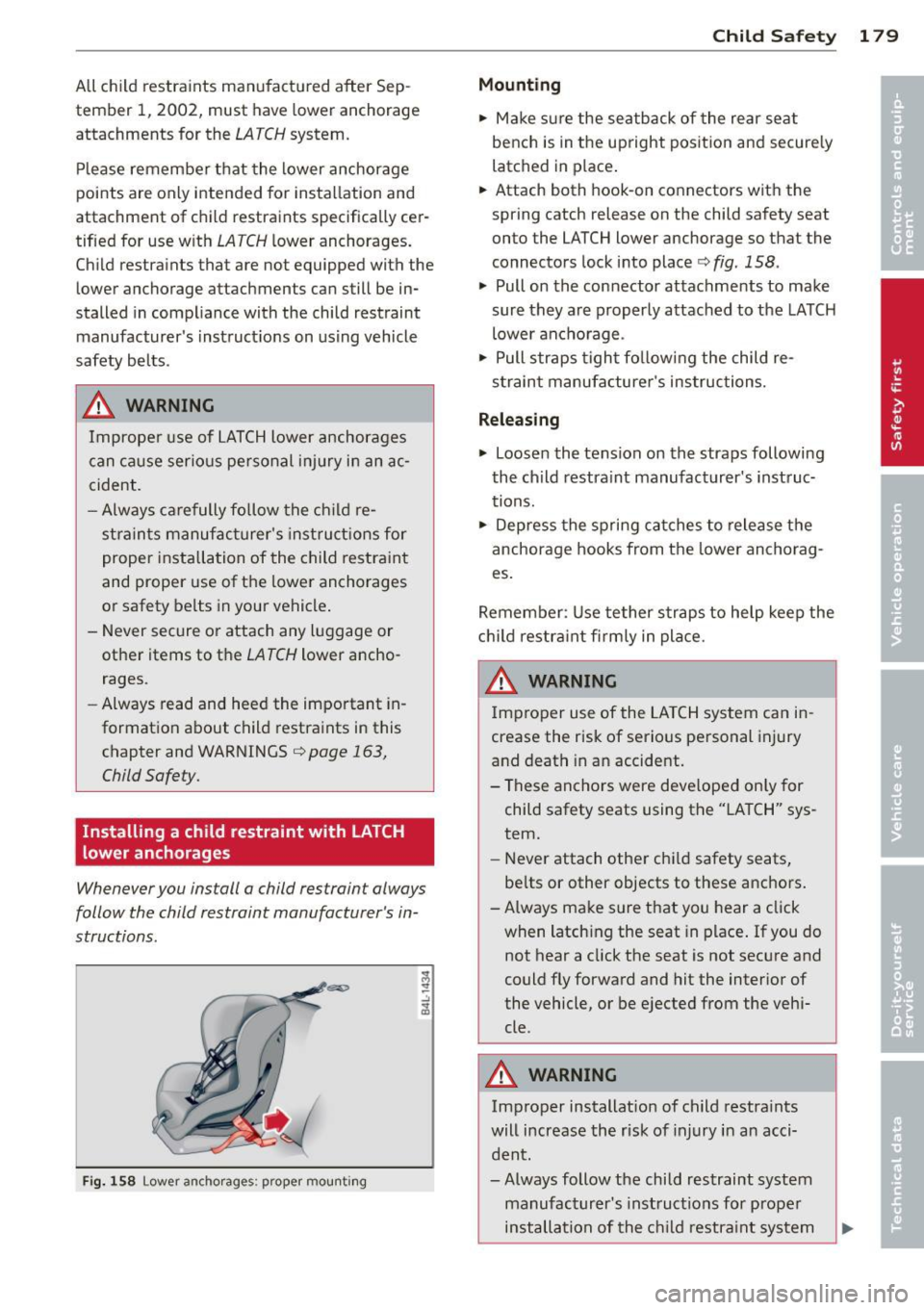
Fig. 158 Lower anchorages: proper mount ing
Child Safety 1 79
Mounting
.,. Make sure the seatback of the rear seat
bench is in the upright position and securely
latched in place.
.,. Attach both hook-on connectors with the
spring catch release on the child safety seat
onto the LATCH lower anchorage so that the
connectors lock into place
¢fig. 158 .
.,. Pull on the connector attachments to make
sure they are properly attached to the LATCH
lowe r anchorage .
.,. Pull straps tight follo wing the child re
straint manufacture r's instruc tions.
Releasing
.,. Loosen the tension on the straps following
the child restraint manufacturer's instruc
t ions.
.,. Depress the spring catches to release the
anchorage hooks from the lower anchorag
es .
Remember: Use tether straps to help keep the
child restraint firmly in place.
A WARNING
-
Improper use of the LATCH system can in
crease the risk of serious personal injury
and death in an accident.
- These anchors were developed only for
child safety seats using the "LATCH" sys
tem.
- Never attach other chi ld safety seats,
be lts or other objects to these anchors.
-A lways make sure that you hear a click
when latching the seat in place. If you do
not hear a click the seat is not secure and
could fly forward and hit the interior of
the vehicle, or be ejected from the vehi
cle.
A WARNING
Improper installat ion of child restraints
will increase the risk of injury i n an acci
dent.
- Always follow the child restraint system
manufacturer's inst ruct ions for proper
installation of the child restra int system
-
Page 227 of 294
_& WARNING
-The cooling system is under pressure and
can get very hot. Reduce the risk of
scald ing from hot coolant by following
these steps.
- Turn
off the engine and a llow itto cool
down.
- Protect your face, hands and arms from
escaping fluid and steam by covering
the cap with a large, thick rag.
- Turn the cap slow ly and very carefully
in a counter-clockwise direction while
applying light, downward pressure on
the top of the cap.
- To avoid being burned, do not spi ll an
tifreeze or coolant on the exhaust sys
tem or hot engine parts . Under certain
conditions, the ethylene glycol in en
g ine coolant can catch fire .
- Antifreeze is poisonous. Always store an
tifreeze in its or iginal containe r and we ll
out of the reach of children.
- If you drain the coolant, it must be
caught and safely stored in a proper con
tainer clearly marked "poison".
(D Note
- Coolant pollutes the env ironment and
could cause an engine fire. Excess cool
ant will be forced out through the pres
su re relief valve in the cap when the en
gine becomes hot.
- If, in an emergency, only water can be
added, the cor rect ratio between water
and antifreeze ¢
page 223 must be re
stored as soon as possib le.
@ For the sake of the environment
Drained coolant should not be reused . A l
ways dispose of used coolant while obse rv
ing all environmental reg ulations.
Checkin g and fillin g 225
Radiator fan
The radiator fan switches on automatically by
itself.
An auxiliary electric radiator fan switches on
and
off depending on coolant temperature
and other vehicle operat ing cond it ions .
After you switch the engine
off, the auxiliary
fan can continue running for up to 10 minutes
- even with the ignition
off. It can even switch
on again later by itself ¢&. , if
- the temperature of the engine coo lant rises
due to the heat build-up from the engine in
the engine compartment, or
- the engine compartment heats up because
the vehicle is parked in intense sunlight.
_& WARNING
-To reduce the risk of personal injury nev
er touch the radiator fan .
- The auxiliary electric fan is temperature
controlled and can sw itch on suddenly
even when the engine is not running.
- The a uxiliary radiator fan sw itches on au
tomatically when the engine coo lant
reaches a certa in temperature and will
continue to ru n until the coolant temper
ature drops.
Brake fluid
Checking brake fluid level
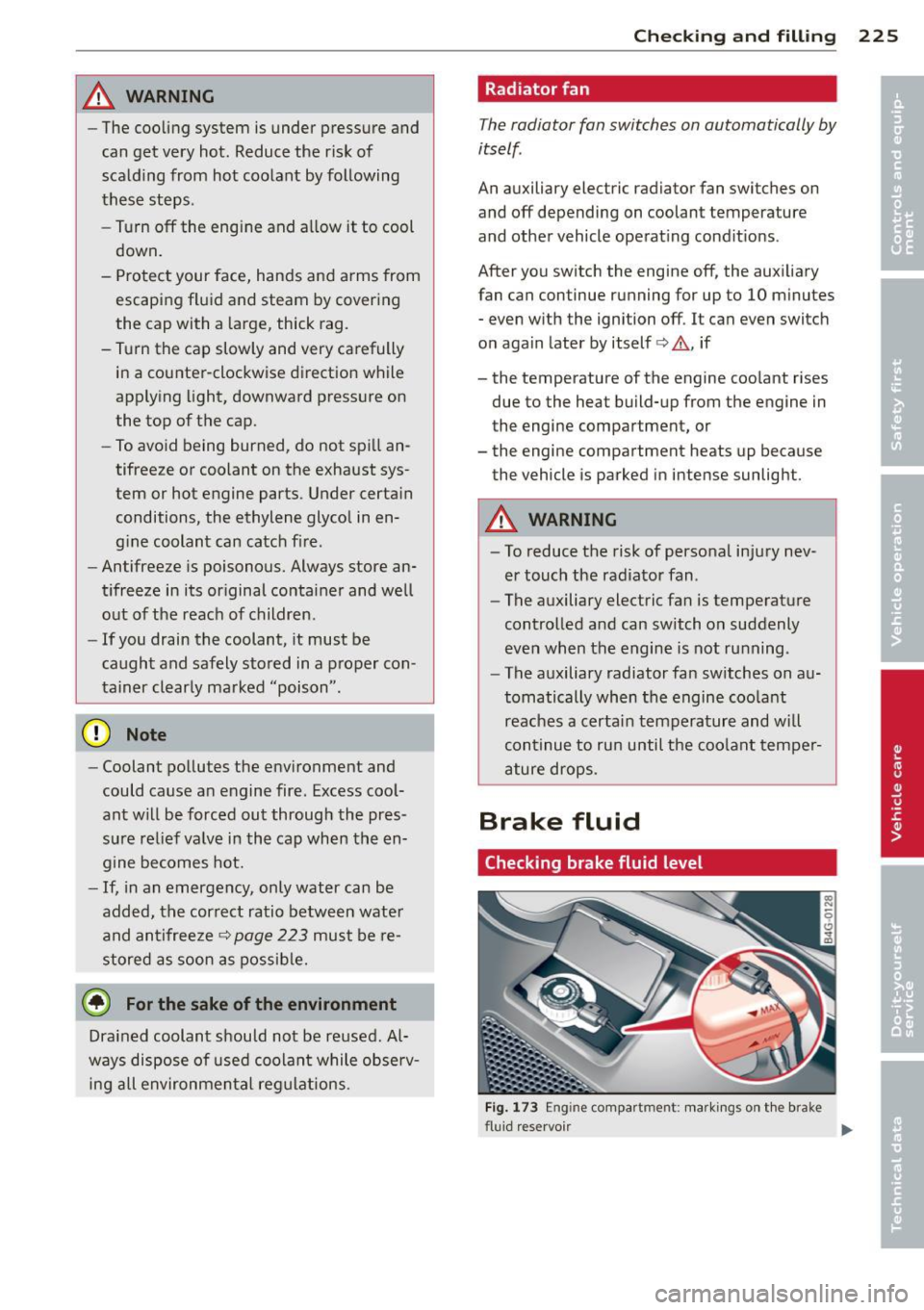
Fig. 173 En gin e compartment: mark ings on th e brake
fluid rese rvoir
Page 228 of 294
226 Check ing and filling
Before you check anything in the engine com
partment,
always r ea d and heed all W ARN
INGS
¢ A in Working in the engine compart
ment on page 216.
• Read the brake fluid leve l from the brake
fluid reservoir
¢ fig. 173. The brake fluid
l evel must be between the
"MIN" and
"MAX" markings .
The location of the brake fluid reservoir can be
seen in the engine compartment illustration
co page 218.
The fl uid level may drop slightly after some
time due to the automatic adjustment of the brake pads . This is not cause for alarm .
I f the b rake fluid level falls
considerably be
l ow the "MIN" mark, the brake wa rning/indi
cator light- (U.S.
models) ;II (Canadian
models) will come on
¢ page 14. Do not con
tinue to operate the vehicle. The comp lete
brake system shou ld be thoroughly checked
by an authorized Audi dealer or other quali
fied fac il ity and the cause corrected. If the
brake fluid level is too low, the brake warn ing/
i ndicator light w ill illuminate. Contact an au
thor ized Audi dealer
imm ediatel y.
Changing brake fluid
Have the brake fluid changed by an experi
enced technician .
Brake fluid absorbs moistu re from the a ir . If
the water content in the brake fluid is too
h igh, corrosion in the brake system may result
after a per iod of t ime . The bo iling po int of the
b rake fluid w ill also decrease considerably and
dec rease braking per formance.
Therefore, the brake flu id must be changed
ev ery tw o y ear s. Always use new b rake fluid
which confo rms to Fede ral Motor Vehicle
Standard "FMVSS 1 16 DO T 4".
The brake flu id rese rvoi r can be difficult to
r each, therefo re , we re commend that yo u
have the brake fl uid changed by yo ur a utho r
ized
Audi dealer. Your dea ler has the correct tools, the
right brake flu id and t he know -how
to do this for you.
A WARNING
-- Brake flu id is poisonous. It must be stor-
ed only in the closed or igina l container
out of the reach of children!
- Brake failure can resu lt from o ld or inap
propriate brake f lu id. Observe these pre
cautions:
- Use only brake f luid that meets SA E
spe cifi cation
J 17 03 and conforms to
Federa l Motor Vehicle Standard 1 16 .
Always chec k with your authorized A udi
dealer to make sure yo u are using the
correct brake fluid. The cor rect type of
brake flu id is also ind icated on the
brake f lu id reservoir.
- The brake fluid must be new. Heavy use
of the brakes can cause a vapor lock if
the brake fluid is left i n the system too
long . This can se riously affect the effi
c iency of the brakes as well as your
safety . T h is i:ou ld result in an ai;i;ident.
(D Note
Brake fluid will damage the pai nt of you r
vehicle .
@ For the sake of the environment
Because of the prob lem of proper disposal
of brake fluid as well as the spec ial too ls
r equired and the necessary expertise, we
r ecommend that yo u have the brake flu id
changed by yo ur autho rized Aud i dea le r.
Battery
General information
Under normal operat ing cond itions, the bat
te ry in your Audi does not need any ma inte
nance. With
high outside temperatures or
long da ily drives we recommend that you have
the e lectrolyte leve l che cked by a se rv ice fa
c il ity. The electroly te leve l should also be
chec ked each time the battery is cha rged
¢ page 22 9.
Page 280 of 294

278 Index
A
Accessories ... .. .. ..... ... .. .. .... . 275
AC (automatic cl imate control) ... .. .. . . 67
AC (climate contro l) . . . . . . . . . . . . . . . . . . 65
Adapt ive cr uise control . . . . . . . . . . . . . . . . 79
C le a ning sensors/cameras .. .. .. .. .. . 202
M essages . . . . . . . . . . . . . . . . . . . . . . . . . 86
Request for driver intervention . . . . . . . . 83
Stop-and-go traffic . . . . . . . . . . . . . . . . . 82
Adapt ive Lig ht (defe ctive) . .. .. .. .. .. . . 21
Adding Eng ine coolant .............. ... ... 224
Eng ine o il .. .......... ...... ... .. . 22 1
W indshie ld washer fluid . .. .. .. .. .. . 230
Addit ives
Eng ine oil .... ........... .... .... . 221
Ad justing
Ai r dist ribution (automatic climate con-
trol) . .. .. .. ............. .. .. .. ... . 68
a ir distribution (climate control) . .. .. . . 65
Front seats . . . . . . . . . . . . . . . . . . . . . . . . 50
Instrumen t illum inat ion .... ... .. .. .. 44
Steer ing column e lectrically .. .. .. .. . . 70
Steer ing column manually . .. .. .. ... . 70
T empe ratu re (a utoma tic climate co ntrol) 68
T empe ratu re (climate con trol) .. .... .. 65
A irbag system . . . . . . . . . . . . . . . . . 137, 158
Advanced Airbag System . ...... .. .. . 141
Advanced Airbag System components . 1 45
Ca re . .. .. ... ............ .. .. .. .. . 153
C hi ldren . .. ... .......... .. .. .. .. . 16 5
Ch ild restra ints . .. ..... ... .. .. .... . 165
Components (front airbags) . ... .. ... 145
Danger of fitting a child seat on t he front
passenger seat ........... .. .. .... . 139
Disposal . ............... .. .. .. .. . 153
Front airbags . . . . . . . . . . . . . . . . 141, 143
H ow do the front airbags wo rk? . .. .. . 147
H ow ma ny airbags does my vehicle
h ave? . .. .... ........... .. .. .. .. . 145
H ow t he Advan ced Airbag Sys tem com-
po nents work toge ther .... .. .. .. .. . 147
I mportant safety instructions on the
knee airbag system .. ... .. .. .. .... . 156
Important things to know . ... .. .... . 137
Knee airbags .. ........... .. .. .... . 154
Mo nitor ing .............. .. .. .. .. . 149 PASS
ENG ER A IR BAG OF F light .... . .. 15 0
Repairs ... .... .. .. ... .. ..... ... .. 153
Safety instr uctions . .. .. ..... ... .. .. 152
S ide a irbags ... .. ............. .... 157
S ide curtain airbags ............ .... 160
Warning/ind icator lights ........... .. 17
Wa rning/Indicato r lights . .. .. .. .. .. 149
When must the system be inspected? . 149
All-wheel drive .. .. ... .......... .... 189
Winter tires ... ... ................ 246
Alloy w heels .... .. .. ... ..... ... .. .. 2 05
Alterna to r ... ... .. .......... ...... .. 16
Amb ience lighting ................ .. . 44
An ti-free ze
refer to E ng ine coolan t ...... ... .. .. 2 23
An ti-lock b rak ing system . .. ... ..... .. 184
Warning/ind icator lights ........... .. 18
Anti-slip reg ulation .. ........... .. .. 184
An ti- theft systems
El ectronic immob ilizer .. ..... ... .. .. . 30
Asht ray ..... ... .. .. ... ........... .. 54
Audi braking guard
refer to brak ing guard .......... .... . 79
Audi dr ive selec t
refer to drive select .... ..... ... .. .. . 96
Audi Se rv ice Repair Manuals and Litera-
tu re ....... .. .. .. .. ........... .... 273
A UTO
automatic climate control . . . . . . . . . . . . 68
Automa tic head lights ....... ...... .. 41
cli mate control . .. .......... ...... .. 65
Auto Lock . . . . . . . . . . . . . . . . . . . . . . . . . . 31
A uto mat ic be lt retractor ......... .. .. 131
Automat ic car wash .......... ...... . 201
A utomatic climate contro l
Air vents .. .... .. ............. .... . 68
Automat ic recirc ulation ......... .. .. . 69
Operation . . . . . . . . . . . . . . . . . . . . . . . . . 67
Setup ........ .. .. ... ........... .. 69
synchronizi ng . . . . . . . . . . . . . . . . . . . . . . 68
A utomat ic transm iss ion ... .... ... .. .. 102
Automat ic Shift Lock (ASL) ...... .... 104
Driving ... .. .. .. ............. .. .. 102
Dynam ic shift program . .. ... ..... .. 105
Emergency mode . ................ . 106
Emergency re le a se .......... ...... . 107
Kic k-down . .. .. .. ... .......... .... 104
Page 281 of 294

Manual shift program . . . . . . . . . . . . . . 105
Selector lever .................. ... 103
Shift buttons . . . . . . . . . . . . . . . . . . . . . 106
Steering wheel with tiptronic . .. .. .. . 106
Automatic wipers .......... .. .. .. .... 45
Auto Safety Hotline ............ ... .. 126
Average consumption .......... ... .. .. 23
Average speed . . . . . . . . . . . . . . . . . . . . . . . 23
Avoid damaging the vehicle .. .. .. .. .. . 193
B
Battery ... .. .. ............. .. .. ... 226
Charging . .. ............. .... .. ... 229
Important warnings ...... .. .. .. .. . 227
Jump starting ............... ... ... 264
Location ... ... .. .. ...... .. .. .. .. . 227
l ow . .. .. .. .. ... .. ..... ... .. .. .. . 190
Replacing the battery ..... .. .. .. .. . 230
State of charge ........... .... .. ... 190
Winter operation ............ ... .. . 226
Working on the battery ....... ... .. . 227
Before driving . . . . . . . . . . . . . . . . . . . . . . 118
Blended gasoline .......... .... .. .. . 211
Blower (automatic climate control) . . . . . . 68
Blower (climate control) . . . . . . . . . . . . . . . 65
Body cavity sealing ............ ... .. . 205
Booster seats ............. .. .. .. .. . 172
Brake fluid Changing the brake fluid ....... ... .. 226
Checking the brake fluid level ... ... .. 225
What is the correct brake fluid level? .. 225
What should I do if the brake fluid warn-
ing light comes on? ....... .. .. .. .. . 225
Brake system Anti-lock braking system . ......... ... 18
Brake assist system .......... .... .. 184
Brake booster ............ .... .. .. . 188
Brake fluid .............. .... .. .. . 225
Brake fluid specifications for refill and re-
placement ................. ... ... 226
Brake light defective ......... ... .. .. 20
Brake pads . ............. .... .. ... 192
Electromechanical parking brake .. .. .. 74
Fluid reservoir ........... .... .. .. . 225
How does moisture or road salt affect the
brakes? .. ............ ...... .... .. 187
Index 279
Warning/indicator lights ............. 14
Worn brake pads symbol ............. 19
braking guard . . . . . . . . . . . . . . . . . . . . . . . 79
Messages . .. .. .. .... ........... .. . 86
Settings .. .. .. .. ................. . 86
Break-in period .. .... .. .. ...... ..... 192
Brake pads ...... .. ............... 192
T ires ... .. .. .. .. ... .. .......... .. 192
Bulbs .... .. .. .. .. .. ............... 263
C
California Proposition 65 Warning ..... 217
Battery specific .. .... ............. 228
Capacities .. .. .. .. .... ........... .. 272
Engine oil ........................ 218
Car care .. .. .. .. .. .. . .. .... ........ 200
Exterior ... .. .. .... ... .. ..... ..... 200
Interior . .. .... .. .. . .............. 206
Cargo area . . . . . . . . . . . . . . . . . . . . . . . . . 124
Cargo net . . . . . . . . . . . . . . . . . . . . . . . . . . . 61
Catalytic converter ................. . 193
Center armrest Cockpi t ..... .. ................... .
Sl
Central locking . . . . . . . . . . . . . . . . . . . . . . 31
Emergency locking . ............... .. 35
Certification ...... .. ............... 276
Changing a wheel .. ............. .. .. 254
Changi ng engine oil .... ............. 222
Chassis (undercoating) ............... 205
Checking Engine coolant level ............ .... 223
Tire pressure . .. .. ................. 237
Child restraints Danger of using child restraints in the
front seat ........................ 139
Where can I get additional information
about child restraints and their use? .. 181
Child restraint system anchors ....... . 177
Child safety ....... .. ..... .......... 163
Convertib le locking retractor ......... 17 4
Important safety instructions for using
child safety seats . .. ........... .... 167
Important things to know when driving
with children .. .... ............... 163
Tether anchors ..... .............. . 180
Tether straps .. .. ................. 180
•
•
Page 282 of 294

280 Index
Child safety lock Rear doors .... .... ...... .. .. .... ..
37
C hild safety seats .......... .... .... . 169
Booster seats .......... .. .. .. .. .. . 172
Conve rtible child seats .... .. .. .... . 170
Conve rtible locking retractor . ..... .. .
How do I properly install a child safety
. h. l ? seat in my ve 1c e. . ............... .
Infant seats .. ........... .. .. .... .
Installing .. ............... .. .... .
Installing a child restraint using the
LATCH system .. .... ...... .. .. .. .. .
174
167
169
174
179
L ATC H system ............. ... .. ... 179
Lower anchorages ............ .... . 178
Mounting and releasing the anchorage
hook .. .. .. ... .... ......... ..... .
179
Safety instructions ......... ... .... . 167
Cigarette lighter . . . . . . . . . . . . . . . . . . . . . 54
Cleaning and protection ..... .. .. .... .
200
Alcantara (synthetic suede) . .. .. .. .. . 209
Eng ine compartment .... .. .. .. .... . 210
Exhaust tail pipes .......... ... .. .. . 206
Fabrics and fabr ic coverings .. .. .. .. . 206
Instrument panel ......... .. .. .... . 207
Inter ior .. .. ............. .. .. .. .. . 206
Lea ther .. .... ........... .... .... . 208
MMI display/controls ............... 206
Plastic and vinyl ................... 203
Plastic parts .. .......... ... .. .. .. . 207
Safety belts ............. .... .... . 209
trim strips 204
Trim str ips .... .. .. ... ... .. .. .. .. . 203
Climate control
Air vents ... .......... ..... .. .... .. 66
C limate controls . . . . . . . . . . . . . . . . . . . . .
64
Climate control (four-zone)
Operation .. ................ ... .. ..
67
Climate control (three-zone)
Operation . . . . . . . . . . . . . . . . . . . . . . . . . 65
C lock ... .. .. ............. .. .. .. .. .. 25
Closing Rear lid .. .. ................ ... ... . 35
Sliding/tilting sunroof ...... ..... .. ..
39
Cold tire inflation pressure ..... .. .... . 235
Com ing home ............. .. .. .... ..
43
Compact spare tire ...... .... ... .. .. . 253
Compartments .. ........ .. .. .. .... .. 55 Compliance
..... .. ... .. ........ .. ..
276
Consumer Information . . . . . . . . . . 126, 273
Consumption (fuel) ... .......... .. .. . 23
Contacting NHTSA
Convenience key ... ................ . . 126
33
Starting the engine ............. ... . 71
Stopping the engine (START ENG INE
STOP button) . . . . . . . . . . . . . . . . . . . . . .
73
Switching the ignition on ....... .. .. . 71
U nlocking and locking vehicle ...... .. . 33
Co nvertible child safety seats ... .. .. .. 170
Convertib le locking retractor
Activating . .... .. .. ........... ....
176
Deact ivat ing ... ... .............. .. 177
Using to secure a child safety seat 1.74, 176
Coolant
refer to Engine coolant ............. 223
Cooling mode (automat ic climate control) 67
Cooling mode (climate control) . . . . . . . . . 65
Cornering light .... ... .......... .. .. .
96
Cruise contro l
Changing speed .. ............. .... .
77
Presetting your speed .......... .. .. . 78
Switching off . . . . . . . . . . . . . . . . . . . . . . 78
Switching on . . . . . . . . . . . . . . . . . . . . . . . 77
Warning/ind icator lights .......... .. . 21
(upholder .... .. .. .. ........... .... . 55
D
Data ........ ... .. .. ... ........... . 272
Data recorder ... .. .. ........... .. .. 184
Date display .. .. .. ............. .... . 25
Daytime running lights ... ..... ... .. .. .
41
Declaration of compliance
Adaptive cruise control ........... ..
276
Audi s ide assist .. ............. .. .. 276
Cell phone package . ........... .. .. 276
Convenience key ... ................ 276
Electronic immob ilizer ....... ...... . 276
Homelink ® un iversal remote control .. 276
Remote control key
DEF What does this mean when it appears in 276
the tr ip odometer display? ....... ... . 25
Defective light bulb warning ...........
20
Page 283 of 294
Defrosting (windows)
automatic climate control ... ... .. .. .. 68
climate control . . . . . . . . . . . . . . . . . . . . . 66
Determining correct load limit ... .. .. . 239
Dimensions .... .. .. .... ... .. .... .. . 271
Dimming the rearview mirror . ... .. .. .. 48
Distance . . . . . . . . . . . . . . . . . . . . . . . . . . . 23
Door/rear lid warning . . . . . . . . . . . . . . . . . 22
Doors Power child safety lock ....... ... .. .. 37
Driver information system CD/radio display . . . . . . . . . . . . . . . . . . . . 22
Door/rear lid warning . . . . . . . . . . . . . . . 22
Efficiency program . . . . . . . . . . . . . . . . . . 24
Exterior temperature display ... .. .. .. 22
On-board computer . . . . . . . . . . . . . . . . . 23
Driver seating position . . . . . . . . . . . . . . . 119
drive select .. .. ........... .. .. .. .... 96
Adaptive dampers . . . . . . . . . . . . . . . . . . 96
Cornering light .............. ... ... . 96
Safety belt tensioner . . . . . . . . . . . . . . . . 96
Driving safely . . . . . . . . . . . . . . . . . . . . . . 118
Driving through water ........ .. .. .. . 194
Driving time . . . . . . . . . . . . . . . . . . . . . . . . 23
Duplicate key . . . . . . . . . . . . . . . . . . . . . . . 29
Dust filter
refer to Pollutant filter . . . . . . . . . . . . . . 64
E
Easy entry feature . . . . . . . . . . . . . . . . . . . . 71
Efficiency program . . . . . . . . . . . . . . . . . . . 24
Fuel economy messages . . . . . . . . . . . . . 24
Other equipment . . . . . . . . . . . . . . . . . . . 24
Electrical accessories (sockets) . . . . . . . . . 55
Electro-mechanical power assist .. . ... . 189
Electromechanical parking brake Emergency braking . . . . . . . . . . . . . . . . . 76
Operation .. ... .. .. ...... .. .. .. .. .. 74
Parking .. ............ ...... .... ... 75
Releasing and closing ........ .... ... 74
Starting assist ........... .... .. .. .. 75
Starting from rest ........ .. .. .. .. .. 75
Starting off with a trai ler ............. 75
Warning/indicator lights ......... .. .. 15
Electronic differential lock (EDL) .. ... .. 184
Warn ing/ indicator lights ..... .. .. .. .. 18
Index 281
Electronic immobilizer . . . . . . . . . . . . 25, 30
Electronic power control (EPC) warning/indicator light ............. . 19
Electronic speed limiter .......... .... . 28
E lectronic stabilization program (ESP) .. 184
Warning/indicator lights ............. 18
Emergency actuation Doors ...... .. .. ................. . 35
Power sunroof . .. .... ........... .. . 40
Rear lid ........................... 37
Emergency brak ing ... . .. .. .. .... .... . 76
Emergency flasher ... .............. .. 42
Warning/indicator lights ........ .. .. . 21
Emergency release Selector lever ...... ............... 107
Emergency starting .. .............. . 264
Emergency towing . ................. 266
Emergency warning triangle ...... .. .. 252
Energy management . ............... 190
Engine Compartment . ..... ............... 218
Coolant ... .. .. .. ............... .. 223
Data ..... .. .. .. ................. 272
starting . .. .. .. .... .. .. ...... ...... 71
Starting with jumper cables ........ . 264
Stopping ........ .. ................ 73
Engine compartment ................ 218 Closing the hood . .. ........... .... 217
Opening the hood .... ...... ..... .. 216
Safety instructions .. .............. . 216
Working in the engine compartment .. 216
Engine coolant .. .. ................. 223
Adding coolant . ...... ............. 224
Checking the engine coolant level . .. .. 223
Expansion tank .... ............... . 223
Malfunction symbol ... .. ...... .... .. 15
Radiator fan . .. .. ................. 225
Temperature gauge ............ .... . 10
Engine oil .. .. .. .. .. . .. .. ..... ... .. 218
Adding ......... .. ............... 221
Additives .. .. .. .. .. . .. .... ........ 221
Changi ng ... .. ...... ........... .. 222
Checking the engine oil level ..... .... 221
Ind ications and conditions requiring ex-
tra checking ..... .. ............... 221
Indicator light ..... .............. .. 17
Oil consumption .. .. .............. . 220
•
•