airbag AUDI A7 2014 Owners Manual
[x] Cancel search | Manufacturer: AUDI, Model Year: 2014, Model line: A7, Model: AUDI A7 2014Pages: 306, PDF Size: 76.83 MB
Page 5 of 306
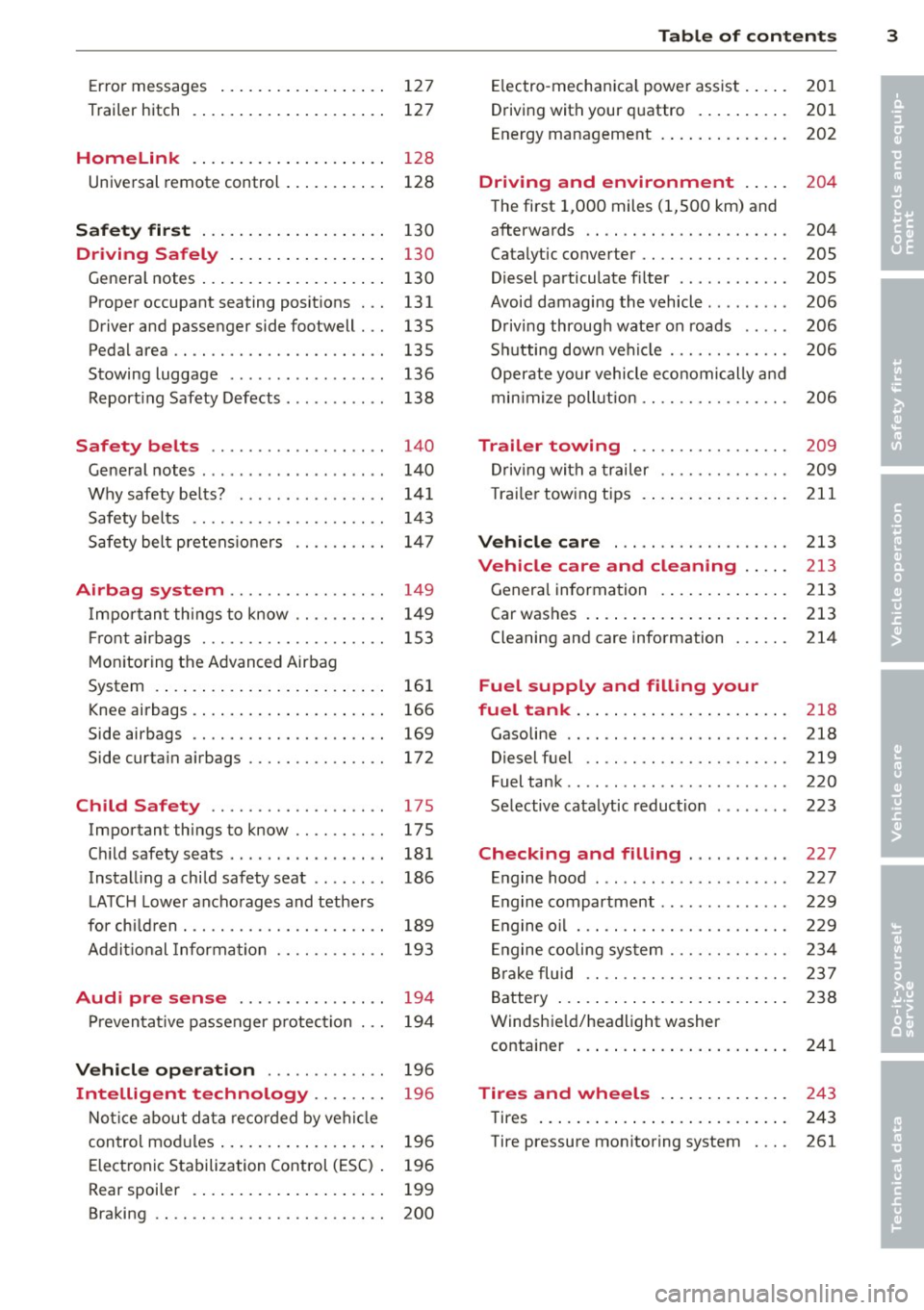
Error messages . . . . . . . . . . . . . . . . . . 127
Trailer hitch . . . . . . . . . . . . . . . . . . . . . 127
Homelink 128
Universal remote control . . . . . . . . . . . 128
Safety fir st . . . . . . . . . . . . . . . . . . . . 130
Dri ving Safely . . . . . . . . . . . . . . . . . 130
Gene ral notes . . . . . . . . . . . . . . . . . . . . 130
Proper occupant seating posit ions . . . 131
Driver and passenger side footwell . . . 135
Pedal area . . . . . . . . . . . . . . . . . . . . . . . 135
Stowing luggage . . . . . . . . . . . . . . . . . 136
Report ing Safety Defects . . . . . . . . . . . 138
Safety belts . . . . . . . . . . . . . . . . . . . 140
Ge neral notes . . . . . . . . . . . . . . . . . . . . 1 40
Why safety be lts? . . . . . . . . . . . . . . . . 141
Safety belts . . . . . . . . . . . . . . . . . . . . . 1 43
Safety bel t pre tens io ners . . . . . . . . . . 147
Airbag system ........... .. .. . .
Impo rtan t th ings to know .. .. .. .. . .
Fr ont airbags . ........... .. .. .. . .
M on itoring the Advanced Airbag
System .... .. .. ... . .... ... .. .. . .
K nee airbags . .. .. ..... ... .. .. .. . .
Side airbags .. ........... .. .. .. . .
Side curta in a irbags ....... .... .. . .
Child Safety ............... .. . .
Important things to know .. .. .. .. . .
C hi ld safety seats ... ...... .... .. . .
Install ing a child safety seat .. .. .. . .
L ATC H Lower ancho rages and tethe rs
for ch ild ren . ............. .... .. . .
Addit ional Information
Audi pre sense ..... ... .. .. .. . .
P reven tat ive passenger p rotection 149
1
4 9
1 53
16 1
166
169
172
175
175
181
186
189
193
194
194
Vehicle operat ion . . . . . . . . . . . . . 196
Intelligent technology . . . . . . . . 196
N ot ice about da ta re cor ded by veh icle
control mod ules . . . . . . . . . . . . . . . . . . 196
Elec tronic Stabilization Control (ESC) . 196
Rear spoiler . . . . . . . . . . . . . . . . . . . . . 199
Braking . . . . . . . . . . . . . . . . . . . . . . . . . 200
Table of contents 3
El ectro -mechan ica l powe r ass ist . . . . . 201
Driving with your q uattro . . . . . . . . . . 201
Energy management . . . . . . . . . . . . . . 202
Driving and environment . . . . . 20 4
The first 1,000 miles (1,500 km) and
afterwards . . . . . . . . . . . . . . . . . . . . . . 204
Catalytic converter . . . . . . . . . . . . . . . . 205
Diesel pa rticulate f ilter . . . . . . . . . . . . 205
Avoid damaging the vehicle . . . . . . . . . 206
Driving through water on roads . . . . . 206
S hu tting down veh icle . . . . . . . . . . . . . 206
Operate yo ur vehicle economi cally and
min imi ze poll ution . . . . . . . . . . . . . . . . 206
Trailer towing . . . . . . . . . . . . . . . . . 209
D rivi ng with a trailer . . . . . . . . . . . . . . 209
T rai le r tow ing tips .. . .. .. ..... ... . 211
Vehicle care . . . . . . . . . . . . . . . . . . . 2 13
Vehicle care and cleaning . . . . . 213
Genera l information . . . . . . . . . . . . . . 213
Car was hes . . . . . . . . . . . . . . . . . . . . . . 213
Cleaning and care information . . . . . . 214
Fuel supply and filling your
fuel tank ... .. .... .. .. ...... ... .
218
Gasoline . . . . . . . . . . . . . . . . . . . . . . . . 218
Diesel fuel . . . . . . . . . . . . . . . . . . . . . . 219
Fuel tank . . . . . . . . . . . . . . . . . . . . . . . . 220
Se lective catalytic reduc tion . . . . . . . . 223
Checking and filling . . . . . . . . . . . 227
E n gine hood . . . . . . . . . . . . . . . . . . . . . 227
Engine compartment . . . . . . . . . . . . . . 229
En gine o il . . . . . . . . . . . . . . . . . . . . . . . 229
E ngine cooling system . . . . . . . . . . . . . 234
Br ake fluid . . . . . . . . . . . . . . . . . . . . . . 23 7
Battery . . . . . . . . . . . . . . . . . . . . . . . . . 238
Windshie ld/headlight washer
container . . . . . . . . . . . . . . . . . . . . . . . 241
Tires and wheels . . . . . . . . . . . . . . 243
Tires . . . . . . . . . . . . . . . . . . . . . . . . . . . 243
Tire pressure monitoring system . . . . 261
•
•
Page 11 of 306
CD
@
®
©
®
®
(j)
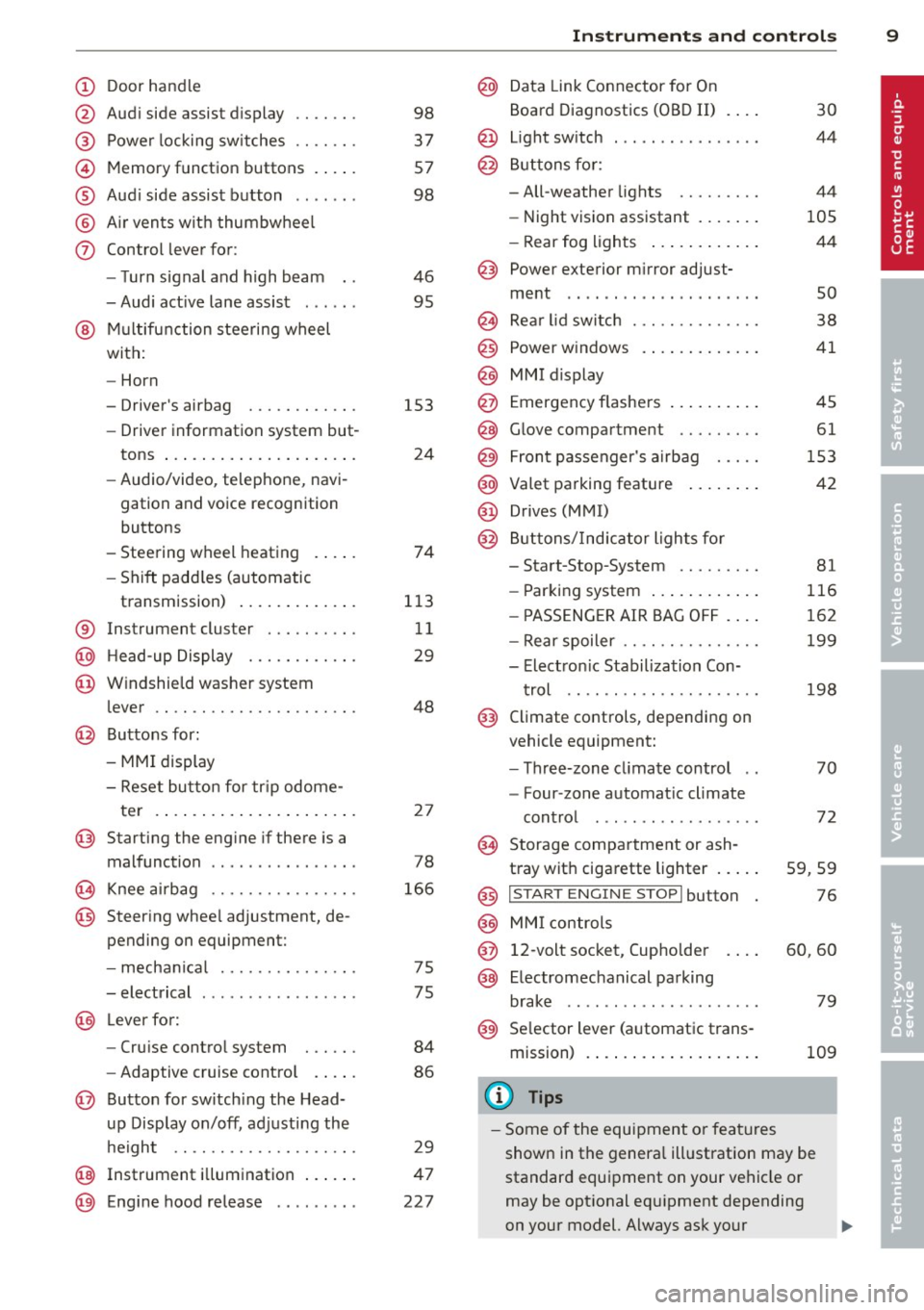
Door handle
Audi side assist display
Power locking sw itches
Memory function buttons .. .. .
Aud i side assist button ...... .
A ir vents with thumbwheel
Control lever for:
- T urn signal and high beam
- Audi act ive lane assist . .. .. .
@ Mu ltifunction steering wheel
with:
- Horn
- Driver's airbag
- Driver information system but-
tons ... ..... ....... ... .. .
- Audio/video , telephone, navi
gation and voice recognition
buttons
- Steering wheel heating . ... .
- Shift padd les (automatic
transmission) ..... ... ... . .
® Instrument cluster ......... .
@ Head-up Display ........... .
@ Windshield washer system
lever ..................... .
@ Buttons for:
- MMI display
- Reset bu tton for tr ip odome-
te r .. .. ... .. ..... ... .. .. .
@ Starting the engine if there is a
malfunction ............... .
~ Knee airbag ........... .. .. .
@ Steer ing whee l adjustment, de
pending on equipment:
- mechan ical .......... .. .. .
- electrical .... .. ..... ... .. .
@ Leve r for:
- Cru ise control system ... .. .
- Adaptive cruise contro l .. .. .
@ Button for sw itch ing the Head
up Disp lay on/off, adjusting the
h eight .. ............. .. .. .
@ Instrument illumination ... .. .
@ Eng ine hood release ........ .
98
37
57
98
46
95
153
24
74
113
11
29
48
2 7
78
166
75
75
84
86
29
47
227
In strument s and control s 9
@ Data Link Connector for On
Board Diagnostics (OBD II)
@ Light switch ... .. . .. .... ... .
@ Buttons for :
- All-weather lights
- Night vision assistant .... .. .
- Rear fog lights .. .. .. ..... .
@ Power exterior m irror adjust-
ment ...... .. .. ..... ..... .
Rea r lid switch . .. . ......... .
Power w indows . .. .. ... .... .
MMI display
E mergency flashe rs
@ G love compartment ........ .
@) Front passenger's airbag .... .
@ Valet parking feature ..... .. .
@ Drives (MMI)
@ B uttons/Indicator lights fo r
- Start-Stop-System ........ .
- Parking system .. .. ..... .. .
- PASSENG ER AIR BAG OF F .. . .
- Rear spoiler .. .. . ......... .
- Electron ic Stabilization Con-
t rol .................... .
@ Climate controls, depending on
vehicle equipment:
- Three-zone cl imate control ..
- F our-zone automatic climate
cont rol ...... ........... .
@ Storage compartment or ash-
t ray wit h cigarette lighter .. ...
@ I S T ART ENGINE STOPI button
@ MM I controls
@ 12-volt socket, (upho lder
@ E lectromechanical parking
brake .................... .
@ Selector lever (a utomatic trans
mission)
(D Tips
30
44
44
105
44
so
38
41
4S
61
1S3
42
81
116
162
199
198
70
72
59 ,59
76
60,60
79
109
- Some of the equipment or fea tures
show n in the genera l ill ustration may be
standard equipment on your vehicle or
may be opt ional eq uipment depending
on your model. Always ask your
Page 21 of 306

Instruments and warning/indicator lights 19
II! Engine start system fault. Please con
tact dealer
If the indicator light turns on and the mes
sage appears, there is a ma lfunction in the en
gine start system.
Drive to your authorized Aud i dea le r immedi
ately to have the malfunction corrected.
~ Air suspension
Appl ies to vehicles: with air suspension
• Air suspension: system fault. Can contin
ue slowly with max. 35 mph .
There is a malfunct ion that can result in re
stricted dr iv ing stab ility.
Carefully drive at a maximum speed of 35
mph (60 km/h) to your authorized Audi dealer
or qua lified workshop to have the malfunction
cor rected.
• Air suspension: service mode. Vehicle
can only be moved with restrictions
Carefully drive to your authorized Audi dealer
or qualified workshop immediately to have
the service mode deactivated .
II Air suspension fault
There is a system ma lfunction that can result
in restricted driving stability or reduced
ground clearance.
Dr ive to your a uthorized Audi dealer immedi
ately to have the malfunction corrected .
II Air suspension: vehicle too low. Ground
clearance reduced
The ground clearance is very low due to a sys
tem malfunct ion . Wait until the air suspen
sion system has restored normal ground clear
ance. Otherwise, conditions such as an uneven
road surface can lead to vehicle damage.
G:;/ !f Safety systems
The fl (USA models) ;EI (Canada models) in
dicator light monitors the safety systems (e.g .
airbags, pretensioners) and illuminates for a few
seconds each time you switch the ignition
on .
If the fl (USA models);EI (Canada models)
indicator light does not go out, or if it illumi
nates while you are driving, or if it starts to
blink, then there is a malfunction somewhere
in the system.
If the light does not illum inate
when you switch the ign ition on, th is also
means there is a malfunct ion.
A WARNING
If you have a malfunction in the safety sys
tems, contact your authorized Audi dealer immediately. Otherwise the safety sys
tems may not work properly in an acc i
dent.
& Central indicator light
If the indicator light. or n turns on, check
the message in the instrument cluster .
nlft Electronic Stabilization Control
(ESC)
If the JjJ indicator light blinks while driving,
the ESC or ASR (Anti-Slip Regulation) is active
ly regulating.
If the
$.J indicator light turns on, the system
has switched the ESC off. In this case, you can
switch the ign ition off and then on to switch
the ESC on aga in. The indicator light turns off
when the system is functioning fu lly.
If the
1B indicator light turns on, ESC was re
stricted using the
1 .$ OFF I button c> page 196.
Stabilization control (ESC/ABS): Fault! See
owner's manual
If the G) indicator light and the ABS indicator
light
fJ] (USA mode ls) ;flJ (Canada models)
turn on and the message appears, the ABS or electronic differential lock is malfunctioning.
This also causes the ESC to malfunction . The
brakes still function with their normal power,
but ABS is not active .
liJI,
Page 37 of 306

-Do not leave children inside the vehicle
unsupervised. In an emergency it would
be impossible to open the doors from
the outside without the key.
- Applies to vehicles with power side door
closer*:
- When closing a door, make sure noth
ing can interfere w ith the door. This
could cause serious personal injury.
- You can stop the door from clos ing at
any time by pulling on the inside or
outside door handle.
(D Tips
- In the event of a crash with airbag de
ployment all locked doors will be auto
ma tically unlocked to give access to the
vehicle occupants from the outside.
- If the power locking system should mal
function, you can lock the driver's door
using the mechanical key¢
page 38.
-If the power locking system should fail,
you can still open the fuel tank flap in an
emergency
¢pa ge 223.
-You are we ll advised not to keep valua
bles inside an unattended vehicle, visib le
or not . Even a properly locked vehicle
cannot provide the security of a safe.
- If the LED in the upper edge of the driv
er's door pane l comes on for abo ut 30
seconds after the vehicle is locked, there i s a malfunction in the power locking or
the anti-theft warning system. Have the malfunction corrected by an author ized
Audi dealership or qua lified repair facili
ty.
Setting power locking
The driver can determine the functions for
power locking in the MMI.
.,. Select: ICARI funct ion button > (Car)* sys
tems
control button > Vehicle settings >
(Central locking)* .
Lock when driving -
If you selec t On , the vehi
cle locks automatically when driving. All of
the doors and rear lid lock .
Opening and closing 35
Central locking
Unlock doors -
You can decide if All doors or
on ly the
Driver shou ld unlock. The rear lid al
so unlocks when
All is selected . If you select
Driver in a vehicle with a convenience key*,
only the door whose hand le you pull will un
lock.
If you se lect
Driver , all the doors and rear lid
will unlock if you press the
CD button on the re
mote control master key twice .
Lock exterior trunk handle -If you select On ,
the rear lid handle is lock ed. In this case the
rear lid can be opened with the b utton
c:s on
the master key or with the
c:s button in the
driver's door. In vehicles with a convenience
key*, you can still open the rear lid using the
handle if an authorized master key is near the
proxim ity sensor .
Fold mirrors * -If you select On , the exterior
rearview mirrors fold in automat ically when
you press the
cfJ button on the remote control
master key or touch the sensor* in the handle.
Tone when locking -When you select On , a
confirmation tone sounds when you lock the
vehicle .
Locking and unlocking the vehicle with
the remote control
Fig. 20 Remote cont rol: fun ction butto ns
Eithe r the driver's door only or the entire vehi
cle w ill unlock when the unlock button
0 (@ )
is pressed once, depending on the sett ings in
the MMI
¢ page 35 .
.,. Press button ffi (@ ) to un lock the vehicle
¢fig. 20.
Page 39 of 306

@ Tips
If your vehicle has been standing for an ex
tended period, please note the follow ing:
- The proximity sensors are deactivated af-
ter a few days to save power. You then
have to pull on the door handle once to
unlock the vehicle and a second time to
open the veh icle.
- To prevent the battery from being dis
charged and to preserve your veh icle's
ability to start for as long as possible,
the energy management system gradu
ally switches off unnecessary conven i ence funct ions. It is possible that you
will not be able to unlock your vehicle us
i ng these conven ien ce f unctions.
- Fo r De clarat ion of Compliance to United
Sta tes FCC and Indus try Canada regula
tions
¢page 288.
Operating locks with the key
In the event of a failure of the power locking
system, the driver's door can be locked and unlocked at the lock cylinder.
Fig. 2 2 Key turns for opening and clos ing .
... Remove the mechanical key¢ page 33.
... Turn the mechanical key to position @
¢ fig. 22 to unlock the driver's door.
... Turn the key to position @ to lock the dr iv
er's door¢ &,.
,& WARNING
Read and follow a ll WARNINGS ¢ & in
General description on page 34.
Op enin g an d clos ing
Locking and unlocking the vehicle from
inside
Fig . 23 Dr ive r's door: power locking switch
Fig. 2 4 Rear power locking switch
... Press the button~ to lock the vehicle¢&, .
.,. Press the button
Im to unlock the vehicle.
If you lock the vehicle using the power locking
switch, p lease note the following:
- You cannot open the doors or the rear lid
from the
outside ( increased security, for ex
ample when you are stopped at a red light).
- The d iodes in the power locking switches il-
luminate when all the doors are closed and
locked.
- Front doors: you can unlock and open the
doors from the inside by pulling on the door
handle .
- Rear doors: pull the door handle
once to re
lease the lock. Pull the handle
again to open
the door .
- If you have a crash and the airbag is activat
ed the doors automatically unlock .
,
A WARNING
-The power lock ing switch works with the
ig nit ion off and automat ica lly locks the
enti re veh icle when it is actuated.
3 7
Page 47 of 306
_& WARNING
-Automatic headlights are only intended
to assist the driver . They do not relieve
the driver of his responsibility to check
the headlights and to turn them on man
ually according to the current light and
visibility conditions. For example, fog
cannot be detected by the light sensors.
So always switch on the headlights
io
under these weather conditions and
when driving in the dark.
- Crashes can happen when you cannot see
the road ahead and when you cannot be
seen by other motorists. Always turn on
the headlights so that you can see ahead
and so that others can see your car from
the back.
- Please observe legal regulations when
using the lighting systems described.
(D Note
The rear fog lights should only be turned
on in accordance with traffic regulation, as
the lights are bright for following traffic.
(D Tips
- The light sensor* for automatic head
light range control* is located in the rear
view mirror mount. You should therefore not apply any stickers to the windshield
in this area in order to prevent malfunc
tions or failures.
- In the event of a light sensor malfunc
tion, the driver is notified in the instru
ment cluster display ~
page 23 .
-You will hear a warning tone if you open
the driver door when the exterior lights
are switched on.
- In cool or damp weather, the inside of
the headlights, turn signals and tail
lights can fog over due to the tempera
ture difference between the inside and
outside. They will clear shortly after
switching them on. This does not affect
the service life of the lighting.
Clear vision 45
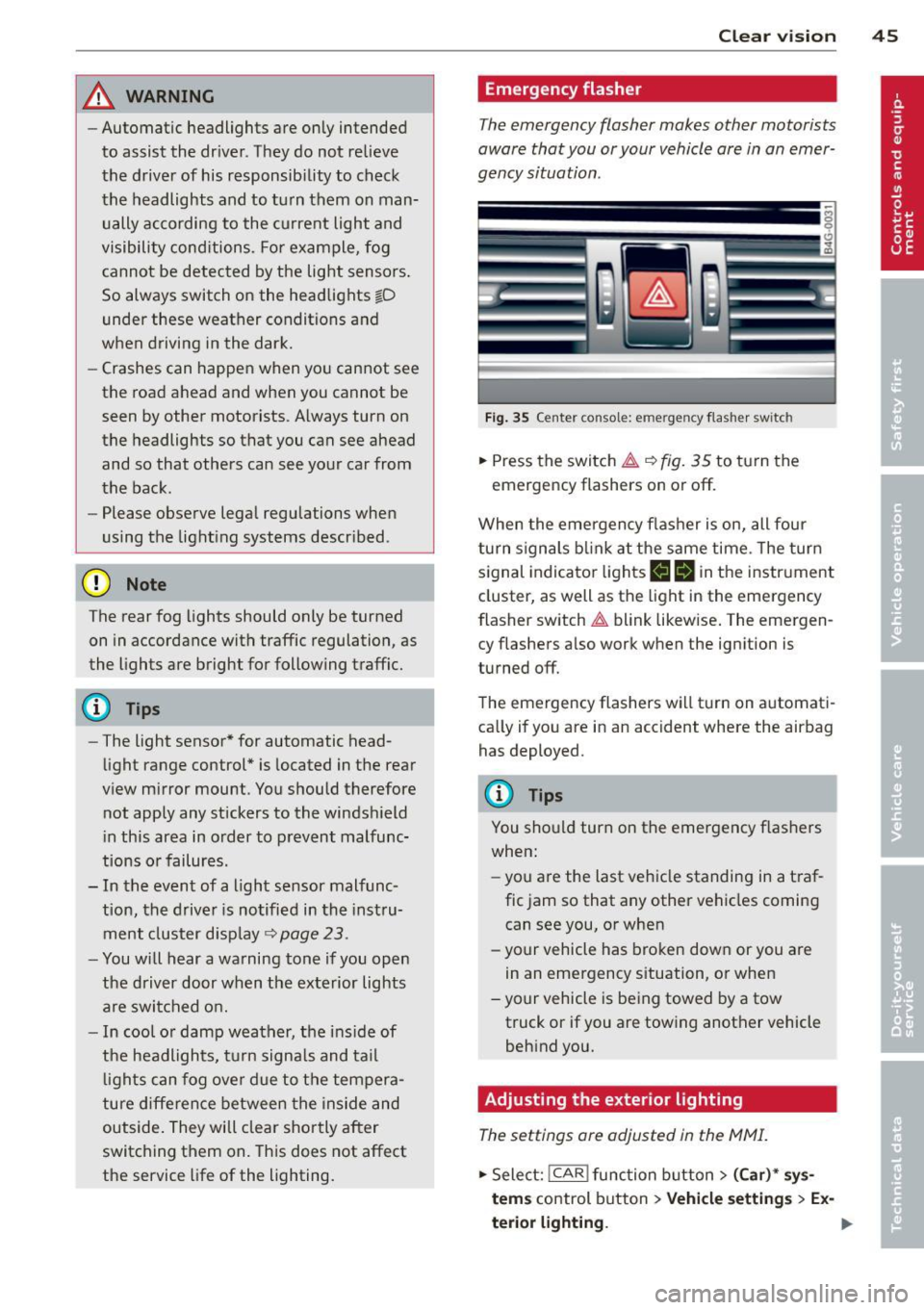
Emergency flasher
The emergency flasher makes other motorists
aware that you or your vehicle are in an emer
gency situation .
Fig. 35 Center consol e: eme rge ncy flash er sw itc h
.,. Press the switch & ~ fig. 35 to turn the
emergency flashers on or off.
When the emergency flasher is on, all four
turn signals blink at the same time. The turn
signal indicator lights
II Nin the instrument
cluster, as well as the light in the emergency
flasher switch
& blink likewise. The emergen
cy flashers also work when the ignition is
turned off.
The emergency flashers will turn on automati
cally if you are in an accident where the airbag has deployed.
@ Tips
You should turn on the emergency flashers
when:
- you a re the last vehicle standing in a traf
fic jam so that any other vehicles coming
can see you, or when
- your vehicle has broken down or you are
in an emergency situation, or when
- your vehicle is being towed by a tow
truck or if you are towing another vehicle
behind you.
Adjusting the exterior lighting
The settings ore adjusted in the MMI.
.,. Select: !CAR ! function button> (Car)* sys
tems control button > Vehicle settings > Ex-
terior lighting. ..,.
Page 55 of 306
Seats and storage
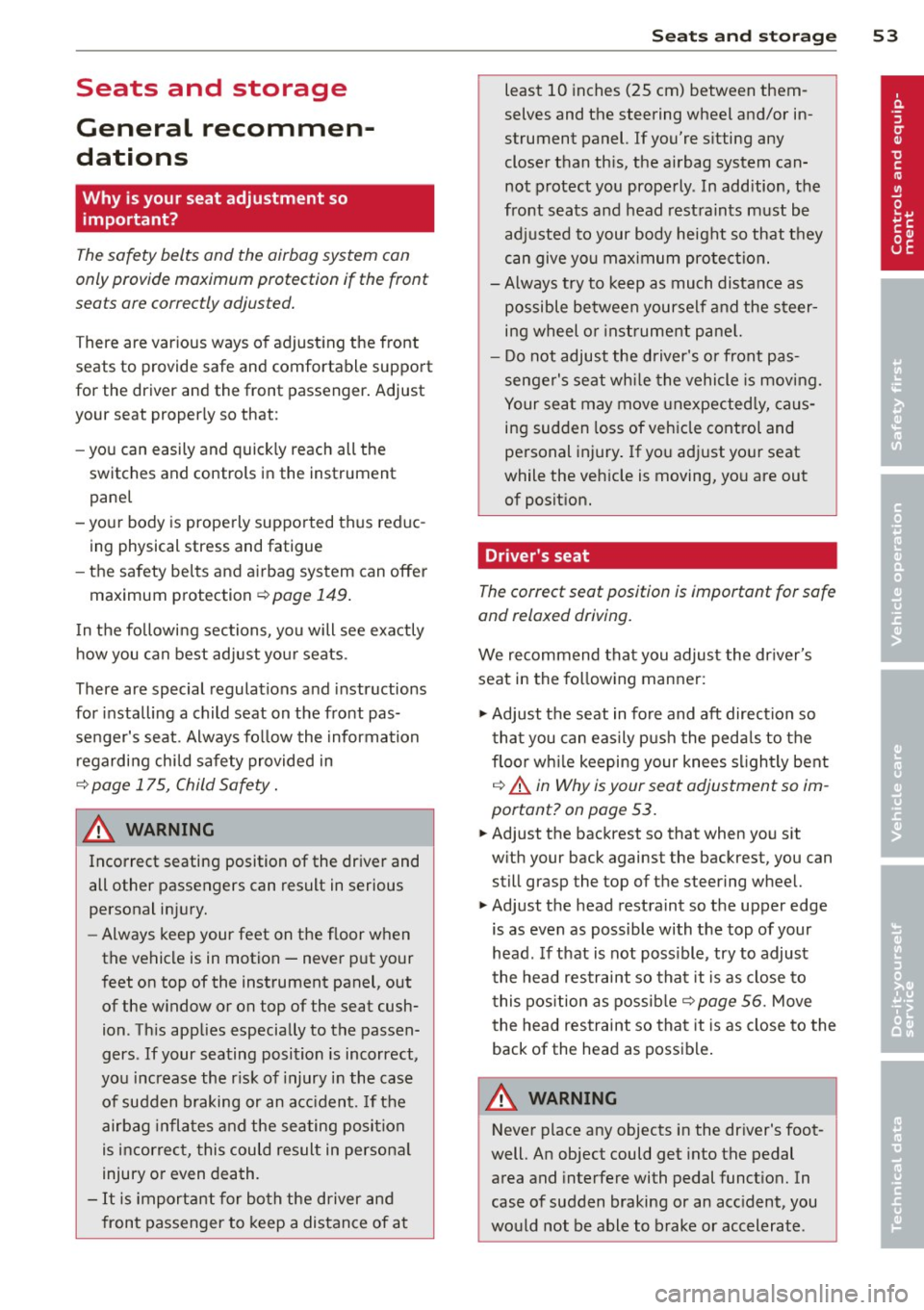
General recommen
dations
Why is your seat adjustment so important?
The safety belts and the airbag system can
only provide maximum protection if the front
seats are correctly adjusted.
There are various ways of adjusting the front
seats to provide safe and comfortable support
for the driver and the front passenger. Adjust
your seat properly so that :
- you can easily and quick ly reach all the
switches and controls in the instrument
panel
- your body is properly supported thus reduc ing physical stress and fatigue
- the safety belts and airbag system can offe r
maximum protection
¢ page 149.
In the following sections, you will see exactly
how you can best adjust your seats .
There are special regulations and instructions
for installing a child seat on the front pas
senger's seat. Always fo llow the information
regarding chi ld safety provided in
¢ page 175, Child Safety.
A WARNING
Incorrect seating position of the driver and
all other passengers can result in serious
personal injury.
- Always keep your feet on the f loor when
the vehicle is in motion -never put your
feet on top of the instrument panel, out of the window or on top of the seat cush
ion. This applies especially to the passen
gers . If your seating position is incorrect,
you increase the r isk of injury in the case
of sudden braking or an acc ident. If the
airbag inflates and the seating position
is incorrect, this could result in persona l
injury or even death.
- It is important for both the driver and
front passenger to keep a distance of a t
Seat s an d sto rage 53
least 10 inches (25 cm) between them
selves and the steering wheel and/or in
strument panel. If you're s itting any
closer than th is, the airbag system can
not protect you properly. In addition, the
front seats and head restraints must be adjusted to your body height so that they
can give you maximum protect ion.
- Always try to keep as much distance as
possible between yourself and the s teer
ing wheel o r instrument pane l.
- Do not adjust the driver's or front pas
senger's seat whi le the vehicle is moving.
Your sea t may move unexpected ly, caus
ing sudden loss of vehicle cont rol and
personal injury . If you adjust yo ur seat
while the veh icle is moving, yo u are out
of posit ion.
Driver's seat
The correct seat position is important for safe
and relaxed driving.
We recommend that you adjus t the dr iver's
seat in the fo llowing manner:
.,. Adjust the seat in fore and aft direction so
that you can easily push the peda ls to the
floor wh ile keeping your knees s lightly bent
i:::> A in Why is your seat adjustment so im
portant? on page 53.
.,. Adjust the backrest so that when you sit
w ith your back against the backrest, you can
still grasp the top of the steering wheel.
.,. Adjust the head restraint so the upper edge
is as even as possible with the top of your
head . If that is not poss ible , try to adjust
the head res traint so that it is as close to
this pos ition as possib le
i:::> page 56. Move
the head restraint so that it is as close to the
back of the head as possible .
A WARNING
Never place any objects in the dr iver's foot
well. An object could get into the pedal
area and interfere with pedal funct ion. In
case of sudden braking or an acc ident, you
would not be able to brake or accelerate.
Page 56 of 306
54 Seats and storage
Front passenger's seat
Always move the front passenger seat into
the rearmost position.
To avoid contact with the airbag while it is de
ploying, do not sit any closer to the instru
ment panel than necessa ry and always wear
the three-point safety belt provided adjusted
correctly. We recommend that you adjust the
passenger's seat i n the fol low ing ma nner:
~ Bring the back rest up to an (a lmost) upr ight
posit ion.
D o not ride w ith the seat reclined.
~ Adjust the head restraint so the uppe r edge
i s as even a s poss ible with the top of yo ur
head.
If that is not possible, try to a dju st
the head rest raint so that it is as close to
this position as possible ¢
page 56. Move
the head restraint so that it is as close to the
back of the head as possib le.
~ Place your feet on the floor in front of the
passenger's seat.
Front seats
Controls
Moving the seat forward or ba ck and adjust
ing the height, backrest angle and seat an
gle .
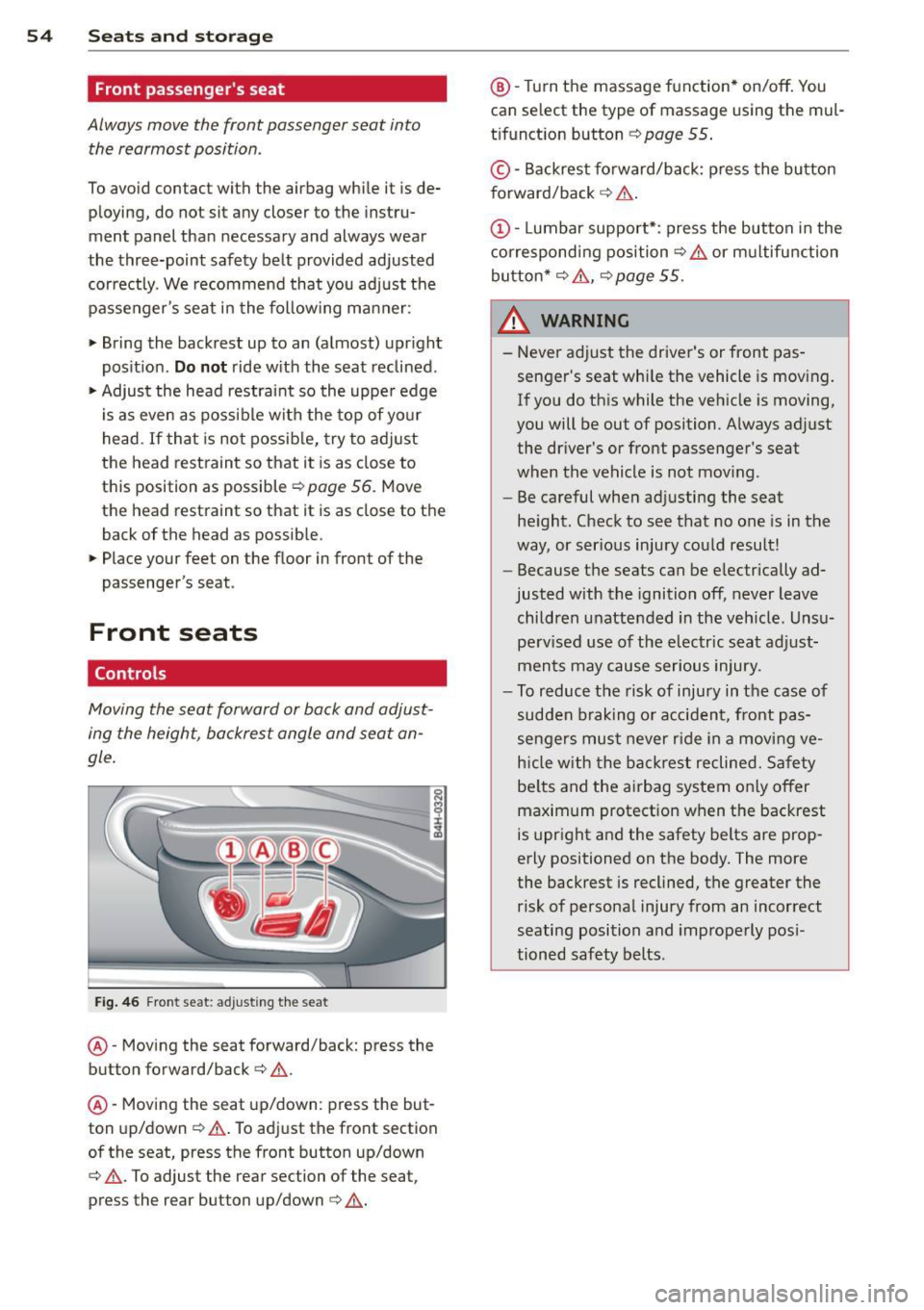
fig . 46 Front seat: ad justing th e seat
@ -Moving the seat forward/back: press the
button forward/back ¢ .&. .
@ -Moving the seat up/down: press the but
ton up/down¢ &,. To adjust the front section
of the seat, press the front button up/down
¢ &, .To adjust the rear section of the seat ,
press the rear button up/down¢&, .
@ -Turn the massage function* on/off . You
can se lect the type of massage using the mul
t ifunct ion button ¢
page 55 .
© -Backrest forward/back: p ress the bu tton
f orward/back ¢ .&. .
(D -Lumbar support*: press the button in the
c orrespond ing position¢ .&. or m ultifunction
button*¢ .&., ¢
page 55 .
_& WARNING
--
-Never adjust the driver's or front pas -
senger's seat whi le the vehicle is moving .
If you do th is while the veh icle is moving,
you will be out of position. A lways ad just
the driver's or front passenger's seat
when the vehicle is not mov ing.
- Be careful when adjusting the seat
he ight. Check to see that no one is in the
way, or ser ious injury co uld result!
- Because the seats can be e lectrically ad
justed with the ignition off, never leave
children unatte nded in the veh icle. Uns u
perv ised use of the e lectr ic seat ad just
men ts may cause serious injury.
- To r educe the risk of injury in the case of
sudden b raking o r accident, front pas
sengers mus t never r ide in a movi ng ve
h icle with the ba ckrest reclined. Sa fety
be lts and the airbag system only offer
maximum protection when the backrest
is upright and the safety belts are prop
erly positioned on the body. The more
the backrest is reclined, the greater the
risk of personal injury from an incorrect
seating position and imprope rly pos i
tioned safety belts.
Page 57 of 306
Multifunction button
Applies to vehicles: with memory function
You con adjust the massage function, Lumbar
support, side bolsters and seating surface us ing the multifunction button .
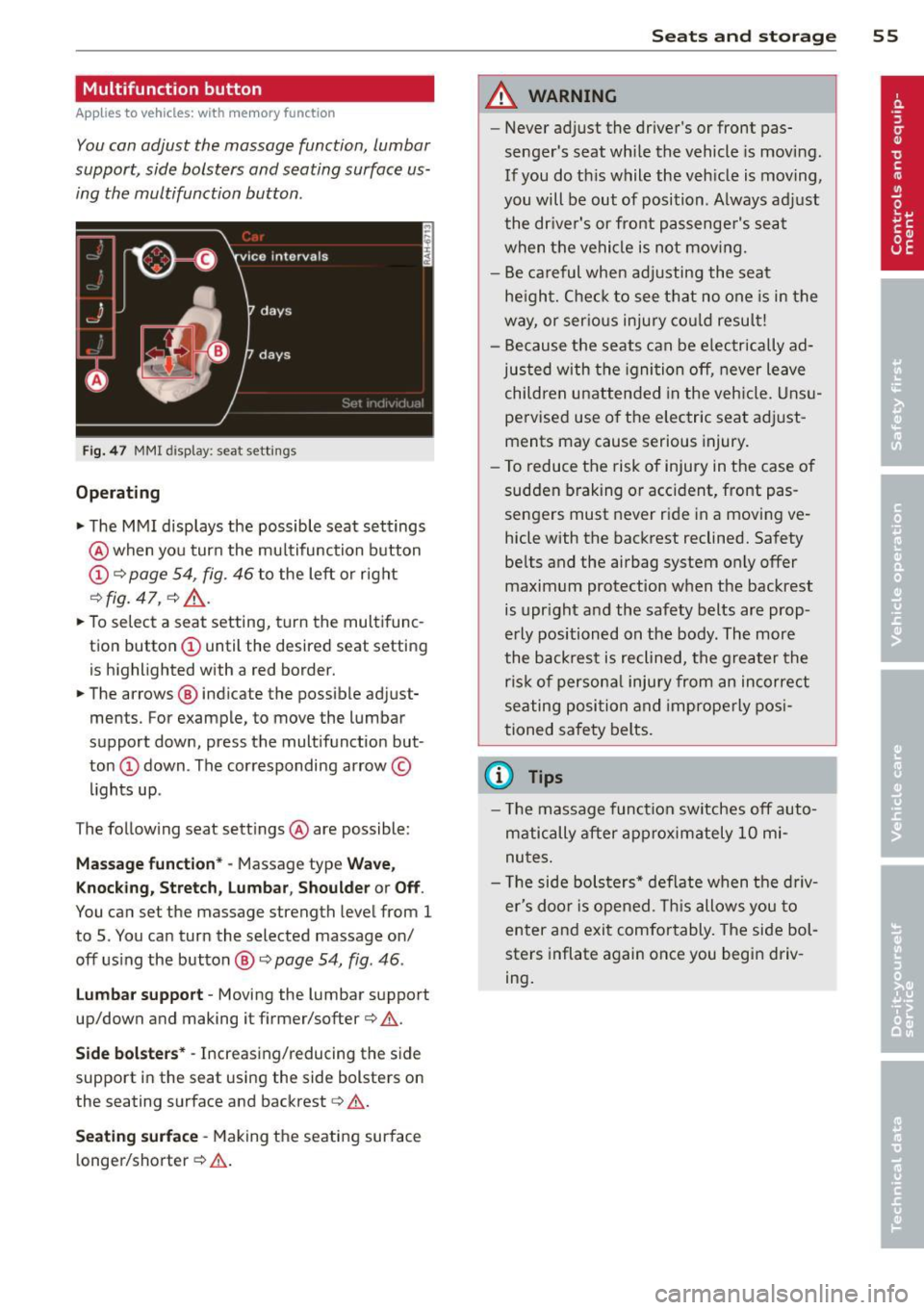
Fig. 47 MMI disp lay : sea t sett ings
Operating
.. The MMI displays the possible seat settings
@ when you turn the multifunction button
(D c:> page 54, fig. 46 to the left or right
~ fig. 47 , c:> ,& .
.. To select a seat setting, turn the multifunc
tion button
(D until the desired seat setting
is highlighted with a red border.
• The arrows @ indicate the possible adjust
ments. For example, to move the lumbar
support down, press the multifunction but
ton
(D down . The corresponding arrow ©
lights up.
T he follow ing seat settings @ are possible:
Massage function* -Massage type Wave,
Knocking, Stretch, Lumbar, Shoulder or Off .
You can set the massage strength level from 1
to 5. You can turn the selected massage on/
off using the button @~
page 54, fig . 46 .
Lumbar support -Moving the lumbar support
up/down and making it firmer/softer
c:> .&. .
Side bolsters * -Increasing/reducing the side
support in the seat using the side bolsters on
the seating surface and backrest
c:> A .
Seating surface -Making the seating surface
l onger/shorter
c:> .&. .
Seats and storage 55
A WARNING
-Never adjust the driver's or front pas
senger's seat while the vehicle is moving.
If you do this while the veh icle is moving,
you will be out of position . A lways adjust
the driver's or front passenger's seat
when the vehicle is not moving.
- Be careful when adjusting the seat
he ight. Check to see that no one is in the
way, or serious injury could result!
- Because the seats can be electrically ad
justed with the ignit ion off, never leave
children unattended in the vehicle. Unsu
pervised use o f the electric seat adjust
ments may cause serious injury.
- To reduce the risk of injury in the case of
sudden braking or accident, front pas
sengers must never ride in a moving ve
hicle with the backrest reclined. Safety
belts and the airbag system on ly offer
maximum protection when the backrest
is upright and the safety belts are prop
erly positioned on the body . The more
the backrest is reclined, the greater the
ris k of persona l inju ry from an incorrect
seating position and improperly posi
tioned safety belts.
(D Tips
- The massage function switches off auto
matically after approximately 10 mi
nutes.
- Th e side bolsters* deflate when the driv
er's doo r is opened. This allows you to
enter and exit comfortably. The side bol
sters inflate again once you begin driv
ing.
Page 64 of 306
62 Seats and storage
-Compartments* on the back of the front
seat backrests
- Garment hooks on the sides of the pillars in
the rear of the vehicle and in the rear grab
handles
- Compartment in the rear center armrest
- Storage in the trim panels in the luggage
compartment
~ WARNING
-
- Always remove objects from the instru
ment panel. Any items not stored could
slide around inside the vehicle while driv
ing or when accelerating or when apply
ing the brakes or when driving around a
corner.
- When you are driving make sure that
anything you may have placed in the cen
ter console or other storage locations
cannot fall out into the footwells. In case
of sudden braking you would not be able
to brake or accelerate.
-Always keep the lid of the compartment
for (sun)glasses* closed while driving to
reduce the risk of injury during a sudden
braking maneuver or in the event of an
accident.
- Any articles of clothing that you have
hung up must not interfere with the driv
er's view. The coat hooks are designed
only for lightweight clothing. Never hang
any clothing with hard, pointed or heavy
objects in the pockets on the coat hooks.
During sudden braking or in an accident -
especially
If the airbag is deployed -
these objects could injure any passen
gers inside the vehicle.
- To reduce the risk of personal injury in an
accident or sudden stop, always keep the
glove compartment closed while driving.
- Read and follow all WARNINGS
~ page 171, Important safety instruc
tions on the side airbag system.
-Hang clothes in such a way that they do
not impair the driver's vision.
- The coat hooks must only be used for
lightweight clothing. Do not leave any
heavy or sharp edged objects in the pock- ets which may interfere with the side cur
tain airbag deployment and can cause
personal
injury in a crash.
- Do not use coat hangers for hanging
clothing on the coat hooks as this can in
terfere with proper deployment of the side curtain airbags in an accident.
- Do not hang heavy objects on the coat
hooks, as they could cause personal in
jury in a sudden stop.
(D Note
Objects located on the rear shelf that rub
against the rear window could damage the heating wires for the rear window defog-
ger .
Roof rack
Description and mounting locations
Additional cargo can be carried with a roof
luggage rack.
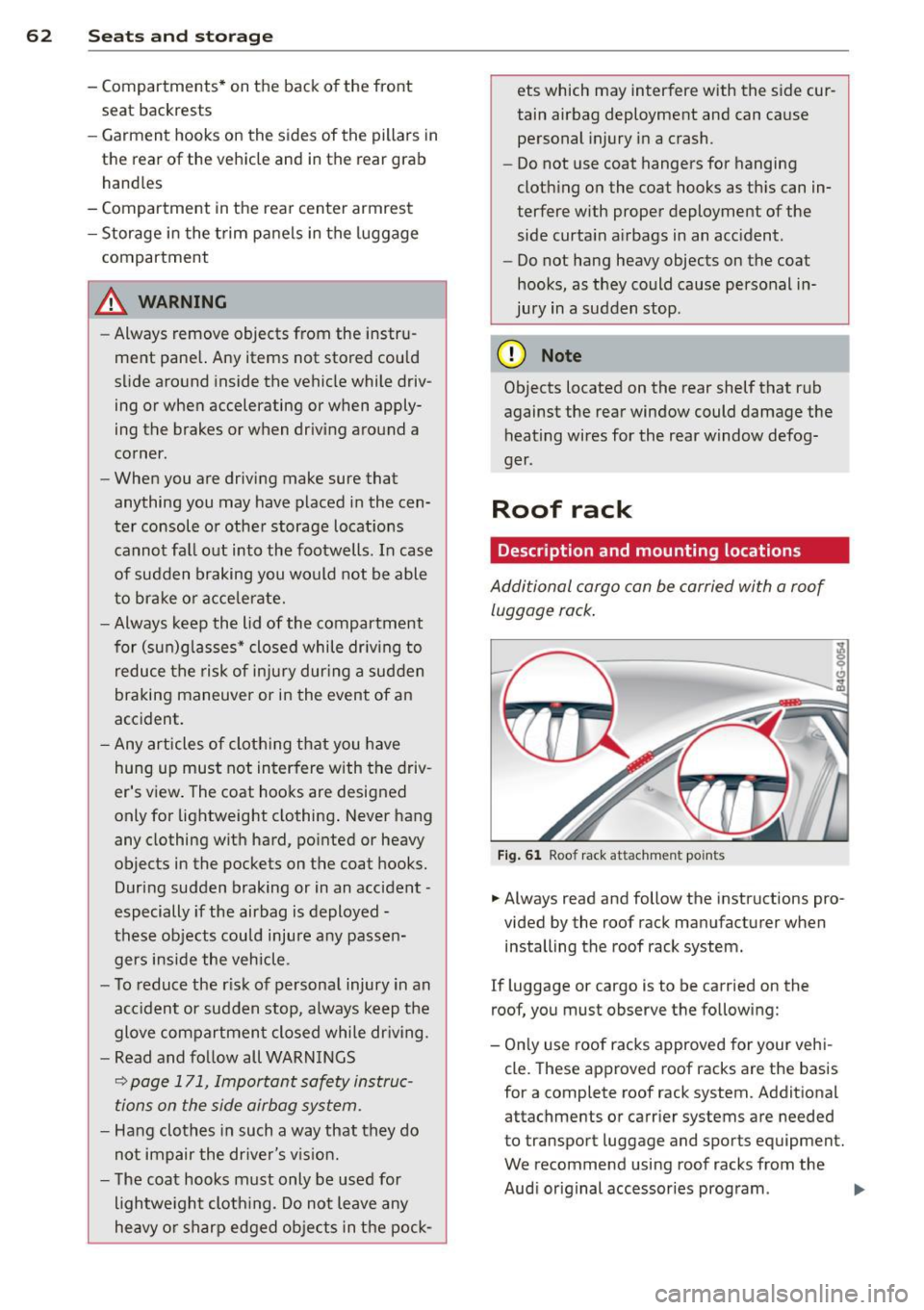
Fig. 61 Roof rack attachment po ints
... Always read and follow the instructions pro
vided by the roof rack manufacturer when installing the roof rack system.
If luggage or cargo is to be carried on the
roof, you must observe the following:
- Only use roof racks approved for your vehi
cle. These approved roof racks are the basis
for a complete roof rack system. Additional
attachments or carrier systems are needed
to transport luggage and sports equipment.
We recommend using roof racks from the
Audi original accessories program . .,..