roof AUDI A7 2016 User Guide
[x] Cancel search | Manufacturer: AUDI, Model Year: 2016, Model line: A7, Model: AUDI A7 2016Pages: 294, PDF Size: 73.82 MB
Page 155 of 294
Safety belts are important to help keep front seat
occupants in the proper seated position so that
airbags can unfold proper ly and provide supple
mental protection in a frontal collision.
The front airbags are designed to provide addi
tional protection for the chest and face of the
driver and the front seat passenger when:
- sa fety belts are worn properly,
- the seats have been posit ioned so that the oc-
c u pant is properly seated as far as poss ib le
from the airbag,
- and for adjustable head restraints: the head re -
stra ints have been properly adjusted.
Because airbags inflate in the blink of an eye w ith
g reat force, things you have on your lap or h ave
p laced on the seat cou ld become dangerous p ro
jectiles, and be pus hed into yo u if the airbag in
flates.
W hen an a irbag deploys, fine dust is released.
This is normal and is not caused by a fire in the
ve hicl e. This dust is made up mos tly of a powde r
used to lubricate the airbags as they deploy. It
could irritate skin.
I t is impor tan t to remember that while the sup
p lemental air bag sys tem is designed to reduce
the likelihood o f se rious injuries, othe r injuries,
for example swe lling, bruising and minor abra
sions, can also happen when airbags inflate . Air
bags do not protect the arms or the lower parts
of the body. Front airbags supplement the three
point safety belts only in some frontal collisions
in which the veh icle deceleration is h igh enough
to deploy the airbags .
Front airbags will not deploy:
- if the ignit ion is switched off when a crash oc-
curs,
- in side collisions,
- in rear-end collisions,
- in ro llovers,
- when the crash deceleration measured by the
airbag system is less than the minimum thresh -
~ old needed for airbag deployment as registered <( o by the electronic control unit. 'SI: ,...., \!) 1.1"1
N \!) ,....,
Airbag syste m
The front passenge r airbag also will not
deploy :
-when t he front passenger seat is not occupied,
- when the electr ica l capacitance measured by
the capacitive passenger detection system for
the front passenger seat indicates that the pas
senger s ide frontal airbag must be switched off
by the electronic control unit (the
PASSENGER
AIR BAG OFF
light¢ page 155 and how they
work comes on and stays on).
A WARNING ,..__ -Sitting in the wrong pos ition can increase the
r isk of ser ious injury in crashes.
- To reduce the risk of injury when the airbags
inflate, the driver and passenge rs must al
ways sit in an up right pos ition, must no t
lean ag ains t or place any part of the ir body
too close to the area where the a irb ags are
located .
- Occupants who are unbel ted, out of position
or too close to the airbag can be serio usly
inj ured by an ai rbag as it unfo lds with great
force in the blink of an eye ¢ page 1 44 .
A WARNING
A child in a rearward-facing ch ild seat insta l
l ed on the front passenger seat will be ser i
ously injured and can be k illed if the front air
bag inflates -even with an Advanced Airbag
System.
- The inflating airbag will hit the ch ild seat o r
infant carrier with great force and will
smash the child seat and child against the
backrest, cente r armrest, door or roof.
- Always install rear-fac ing ch ild seats on the
rea r seat .
- If you must install a rearward fac ing child
seat on the front passenger seat because of
exceptiona l circumstances and the
PASSEN
GER AIR BAG OFF
l ight does not come on
an d stay on , immedi ately ins tall the rear
facing chi ld seat in a rear seat ing pos ition
and have the airbag system inspected by
your Audi dea ler.
153
Page 166 of 294
Airb ag syst em
by being pushed into you as the airbag in
flates.
- Never p lace or attach accessories or other
objects (such as cup holders, telephone brackets, or even large, bulky objects) on
the doors, over or near the area marked "AIRBAG" on the seat backrests.
- Su ch ob jects and ac cessories can become
dangerous projecti les and cause injury
when the supplemental side airbag de
p loys .
- Never carry any objects or pets in t he de
p loyment space between them and the
airbags or allow chi ldren or other passen
gers to trave l in this position .
- Always use the built-in coat hooks only for
lightweight clothing . Never leave any heavy
or sharp-edged objects in the pockets that
may interfere with side airbag deployment
and can cause personal injury in an accident .
- Always prevent the side a irbags from be ing
damaged by heavy objects knocking against
o r hitting the sides of the seatbacks .
- The airbag system can only be triggered
once . If the airbag has been triggered, the
system must be rep laced by an authorized
Audi dealership.
- Damage (c racks, deep scratches etc.) to the
o rig inal seat covers or to the seam in the
area of the side airbag module must a lways
be repaired immedia tely by an authori zed
Audi dealer .
-If children a re seated improperly, their risk
of injury i ncreases in the case of an a cciden t
~ page 167, Child safety .
-Never a ttempt to modify any com po nents of
the a irbag sys tem in any way .
- In a side collision, s ide a irbags w il l not fu nc
t ion prope rly if sensors canno t correc tly
measure increas ing air pressure inside the
doors when air escapes through larger, un
closed openings in the door panel.
- Never drive w ith inter io r doo r tr im panels
removed .
- Never drive when parts have been re
moved from the ins ide door panel and the
open ings they leave hav e not bee n prope r
ly closed.
164
- Never drive when loudspeakers in the
doors have been removed unless the
speaker ho les have bee n properly closed.
- Always make certain that openings are
covered or f illed if add itiona l speakers or
other equipment is installed i n the inside
doo r panels.
- Always have work o n the doors done by an
autho rized Aud i dea le r or q ualified work
shop .
Side curtain airbags
Description of side curtain airbags
The side curtain airbag system can provide sup
plemental protection to properly restrained oc
cupants .
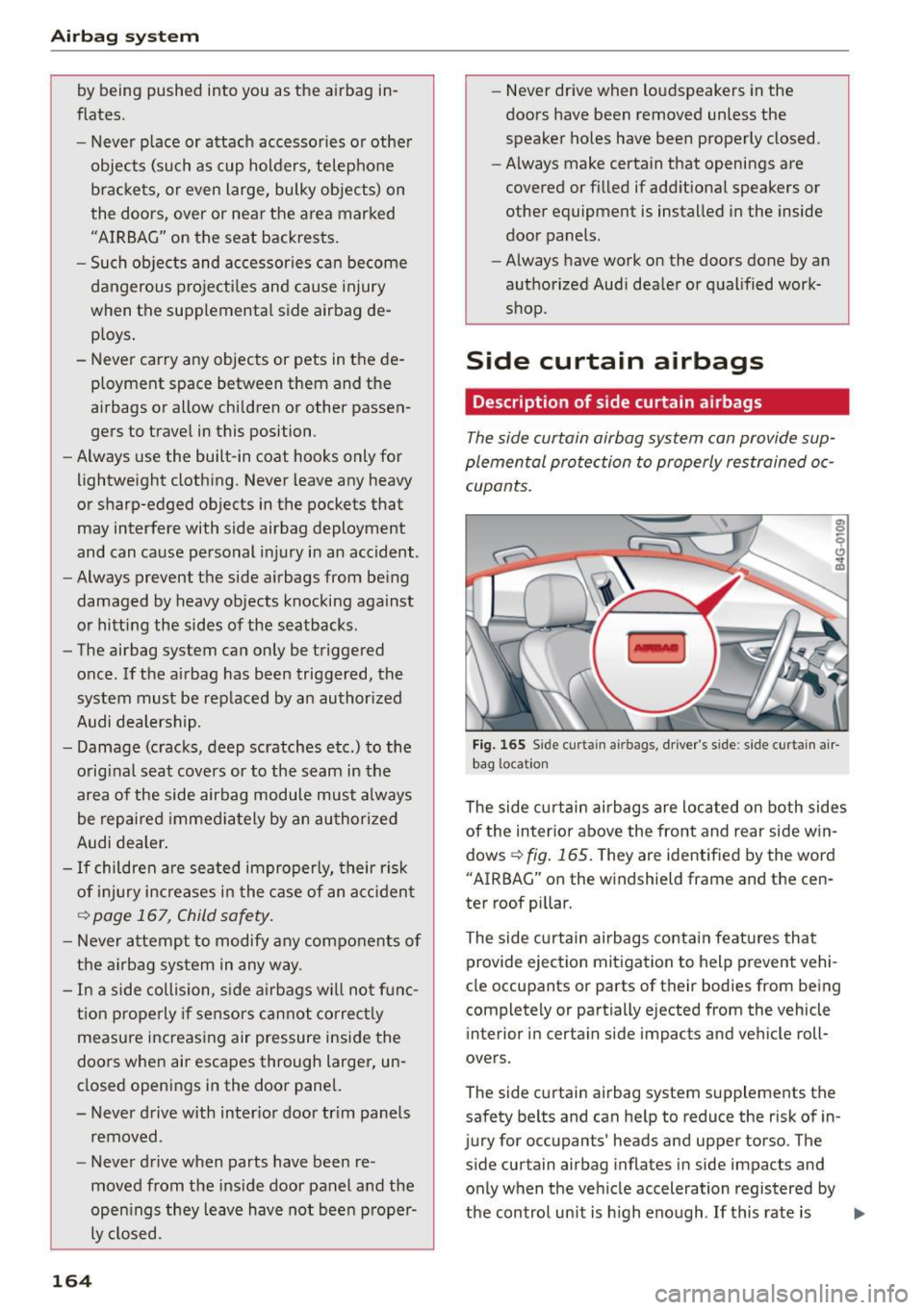
Fig. 16 5 Sid e curt ain airba gs, dr iver's s ide: side cur tain air
bag loca tion
The side curtai n airbags are located on both sides
of the inter ior above the front and rear side win
dows
~ fig. 165 . They are identif ied by the word
"AIRBAG" on the windsh ield frame and the cen
ter roof pi llar.
The side curtai n airbags contain features that
provide ejection mitigation to help prevent vehi
cle occupants or parts of their bodies from being
completely or partially ejected from the vehicle
interior in certa in side impacts and ve hicle roll
ove rs.
The side c urtain airbag system supplements the
safety belts and can he lp to reduce the risk of in
jury for occupan ts' heads and upper torso . The
side curtain airbag inflates in s ide impacts and
on ly when the ve hicle acceleration registered by
the control un it is h igh enough . If this rate is ..,.
Page 173 of 294
M N <( (.J
'SI: ,...., \!) ..,.,
N \!) ,....,
~ When using the vehicle safety belt to install a child safety seat , you must first activate th e
convertible locking retractor on the safety belt
to prevent the child safety seat from moving
¢ page 177.
~ Push the child safety seat down with your full
weight to get the safety belt really tight so that
the seat cannot move forward or sideways more
than one inch (2.5 cm).
~ Secure unused safety belts on the rear seat
¢page 172.
Always remember: Even though your vehicle is
equipped with an Advanced Airbag system, all
children , especially those 12 years and younger,
should always ride in the back seat properly re
strained for their age and size.
A WARNING
Not using a child safety seat, using the wrong
child safety seat or improperly installing a
child restraint increases the risk of serious
personal injury and death.
- All vehicle occupants and especially children
mus t be restrained properly whenever riding
in a vehicle. An unrestrained or improperly
restrained child could be injured by striking
the interior or by being ejected from the ve
hicle during a sudden maneuver or impact.
An unrestrained or improperly restrained child is also at greater risk of injury or death
through contact with an inflating airbag.
- Commercially available child safety seats
are required to comply with U.S. Federal Mo
tor Vehicle Safety Standard (FMVSS) 213 (in
Canada CMVSS 213).
- When buying a child restraint, select one
that fits your child and the vehicle .
- Only use child restraint systems that fully contact the flat portion of the seat cush
ion. The child restraint must not tip or
lean to either side. Audi does not recom
mend using child safety seats that rest on
legs or tube-like frames. They do not pro
vide adequate contact with the seat.
- Always heed all legal requirements per
taining to the installation and use of child
safety seats and carefully follow the in-
Child safety
structions provided by the manufacturer
of the seat you are using .
- Never allow children under 57 inches
(1.45 meters) to wear a normal safety belt.
They must always be restrained by a proper
child restraint system. Otherwise, they
could sustain injuries to the abdomen and
neck areas during sudden braking maneu
vers or accidents.
- Never let more than one child occupy a child safety seat.
- Never let babies or older children ride in a
vehicle while sitting on the lap of another
passenger .
- Holding a child in your arms is never a sub
stitute for a child restraint system.
- The strongest person could not hold the child with the forces that exist in an acci
dent. The child will strike the interior of
the vehicle and can also be struck by the
passenger.
- The child and the passenger can also in
jure each other in an accident.
- Never install rear -facing child safety seats or
infant carriers on the front passenger seat.
A child will be seriously injured and can be
killed when the passenger airbag inflates -
even with an Advanced Airbag System .
- The inflating airbag will hit the child safety
seat or infant carrier with great force and
will smash the child safety seat and child
against the backrest, center armrest, door
or roof.
- Always install rear-facing child safety seats
or infant carriers on the rear seat.
- Forward-facing child safety seats installed
on the front passenger's seat can interfere
with the airbag when it inflates and cause serious injury to the child. Always install for
ward-facing child safety seats on the rear
seat.
- If exceptional circumstances require the use
of a forward-facing child restraint on the
front passenger's seat, the child's safety and well-being require that the following
special precautions be taken:
Ill>
171
Page 175 of 294
M N <( I.J "". rl I.O
"' N I.O rl
_& WARNING
A child in a child safety seat installed with the LATCH lower anchorages or with the standard
safety belt or a child in a booster seat on the
rear seat could play with unused rear seat
safety belts and become entangled. This
could cause the child serious personal injury
and even death.
- Always secure unused rear seat safety belts
out of reach of children in child seats such
as by properly routing them around the
head restraint of the seat where the child re
straint is installed.
- Never activate the convertible locking re
tractor when routing the safety belts around
the head restraints.
- Never let anyone sit at the center rear seat
ing position if the center rear safety belt has
been routed around a rear head restraint.
Child seats
Infant seats
Babies and infants up to about one year old and
20 lbs. or
9 kg need special rearward-facing
child restraints that support the back, neck and
head in a crash .
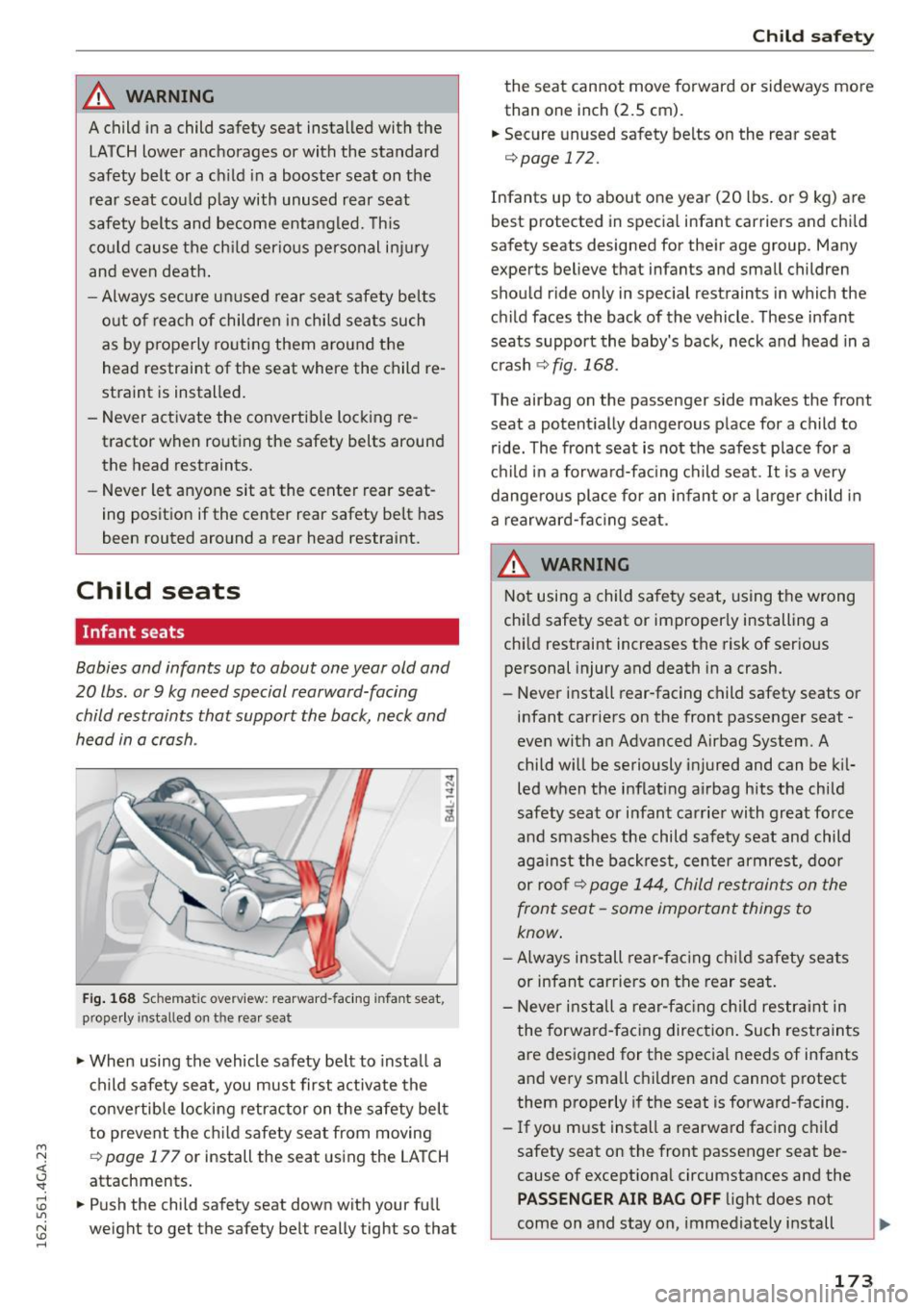
Fig. 168 Schematic overview: rearward-facing infa nt seat,
prope rly instal led on t he rear seat
"When using the vehicle safety belt to install a
child safety seat, you must first activate the convertible locking retractor on the safety belt
to prevent the child safety seat from moving
r::;,page 177 or install the seat using the LATCH
attachments.
"Push the child safety seat down with your full
weight to get the safety belt really tight so that
Child safety
the seat cannot move forward or sideways more
than one inch (2.5 cm).
... Secure unused safety belts on the rear seat
r::;, page 172.
Infants up to about one year (20 lbs. or 9 kg) are
best protected in special infant carriers and child
safety seats designed for their age group. Many
experts believe that infants and small children
should ride only in special restraints in which the
child faces the back of the vehicle . These infant
seats support the baby's back, neck and head in a
crash
¢ fig. 168.
The airbag on the passenger side makes the front
seat a potentially dangerous place for a child to
ride. The front seat is not the safest place for a
child in a forward-facing child seat. It is a very
dangerous place for an infant or a larger child in
a rearward-facing seat.
_& WARNING
-
Not using a child safety seat, using the wrong
child safety seat or improperly installing a
child restraint increases the risk of serious personal injury and death in a crash.
- Never install rear-facing child safety seats or
infant carriers on the front passenger seat -
even with an Advanced Airbag System. A
child will be seriously injured and can be kil led when the inflating airbag hits the child
safety seat or infant carrier with great force
and smashes the child safety seat and child
against the backrest, center armrest, door
or roof
r::;, page 144, Child restraints on the
front seat -some important things to
know.
-Always install rear-facing child safety seats
or infant carriers on the rear seat.
- Never install a rear-facing child restraint in
the forward-facing direction. Such restraints
are designed for the special needs of infants
and very small children and cannot protect
them properly if the seat is forward-facing.
- If you must install a rearward facing child
safety seat on the front passenger seat be
cause of exceptional circumstances and the
PASSENGER AIR BAG OFF light does not
come on and stay on, immediately install
173
Page 177 of 294
M N <( (.J
'SI: ,...., \!) 1.1'1
N \!) ,....,
personal injury and death in a collision or oth
er emergency situation.
- Children on the front seat of any car, even
with Advanced Airbags, can be seriously in
jured or even killed when an airbag inflates.
A child in a rearward-facing child safety seat installed on the front passenger seat will be
seriously injured and can be killed if the
front airbag inflates -even with an Ad
vanced Airbag System.
- The inflating airbag will hit the child safety
seat or infant carrier with great force and
will smash the child safety seat and child against the backrest, center arm rest, door
or roof.
- Always install rear-facing child safety seats
on the rear seat.
- If you must install a rearward facing child
safety seat on the front passenger seat be
cause of exceptional circumstances and the
PASSENGER AIR BAG OFF light does not
come on and stay on, immediately install
the rear-facing child safety seat in a rear
seating position and have the airbag system
inspected by your Audi dealer .
- The rear side of the child safety seat should
be positioned as close as possible to the
backrest on the vehicle seat .
- For adjustable head restraints: adjust or re
move the rear seat head restraint if it is dif
ficult to install the child seat with the head
restraint in place
r=;.page 56. Install the
head restraint again immediately once the
child seat is removed. Driving without head
restraints or with head restraints that are
not properly adjusted increases the risk of
serious or fatal neck injury dramatically.
- Always read and heed all WARNINGS when
ever using a child restrained in a vehicle is
being used
r=;, page 135, Safety belts,
r=;, page 143, Airbag system and
9 page 167, Important information.
_&. WARNING
If exceptional circumstances require the use
of a forward-facing child restraint on the front
passenger's seat, the child's safety and well-
Child safety
being require that the following special pre
cautions be taken:
- Make sure the forward-facing seat has been
designed and certified by its manufacturer
for use on a front seat with a passenger
front and side airbag.
- Always follow the manufacturer's instruc
tions provided with the child safety seat or
infant carrier .
- Always move the front passenger seat into
the rearmost position of the passenger
seat's fore and aft adjustment range, and as
far away from the airbag as possible before installing the child restraint.
- Always make sure that nothing prevents the front passenger's seat from being moved to
the rearmost position in its fore and aft ad
justment range.
- Always make sure the backrest is in an up
right position.
- Never place or use any electrical device
(such as a laptop, CD player, electronic
games device, power inverter or seat heater
for child seats) on the front passenger seat
if the device is connected to the 12-volt
socket or the cigarette lighter socket.
- If a seat heater has been retrofitted or oth
erwise added to the front passenger seat, never install any child restraint system on
this seat.
- Make sure that there are no wet objects
(such as a wet towel) and no water or other
liquids on the front passenger seat cushion.
- Never place objects on the seat (such as a
laptop, CO player, electronic games device,
power inverter or seat heater for child
seats). These may influence the electrical
capacitance measured by the capacitive pas
senger detection system and can also fly
around in an accident and cause serious per
sonal injury.
- Make sure that the
PASSENGER AIR BAG
OFF
light comes on and stays on all the time
whenever the ignition is switched on.
- If the
PASSENGER AIR BAG OFF light does
not come on and stay on, immediately in
stall the forward-facing child seat at a seat-
ing position on the rear seat and have the
Ill-
175
Page 180 of 294
Child safety
children, especially those 12 years and younger,
should always ride in the back seat properly re
strained for their age and size.
A WARNING
Improperly installed child safety seats in
crease the risk of serious personal injury and
death in a collision.
-
-Always make sure that the safety belt re
tractor is locked when installing a child safe
ty seat . An unlocked safety belt retractor
cannot hold the child safety seat in place
during normal driving or in a crash.
- Always buckle the child safety seat firmly in
place even if a child is not sitting in it . A
loose child safety seat can fly around during
a sudden stop or in a collision.
- Always make sure that the rear seat back
rest to which the center rear safety belt* is
attached is securely latched whenever the
rear center safety belt is being used to se
cure a child restraint.
- If the backrest is not securely latched, the
child and the child restraint will be thrown
forward together with the backrest and will
strike parts of the vehicle interior. The child can be seriously injured or killed.
- Never install rear-facing child safety seats or
infant carriers on the front passenger seat.
A child will be seriously injured and can be killed when the passenger airbag inflates.
- The inflating airbag will hit the child safety seat or infant carrier with great force and
will smash the child safety seat and child against the backrest, center armrest, door
or roof.
- Always install rear-facing child safety seats
or infant carriers on the rear seat .
- Forward-facing child safety seats or infant
carriers installed on the front passenger's
seat may interfere with the deployment of
the airbag and cause serious injury to the child.
- It is safer to install a forward-facing child
safety seat on the rear seat.
- Always read and heed all WARNINGS when
ever using a child restrained in a vehicle is
being used
Qpage 167. Special precautions
178
apply when installing a child safety seat on
the front passenger seat
Q page 144, Child
restraints on the front seat -some impor
tant things to know.
A WARNING
Always take special precautions if you must
install a forward or rearward-facing child re
straint on the front passenger's seat in excep
tional situations:
- Whenever a forward or rearward-facing
child restraint is installed on the front pas
senger seat, the
PASSENGER AIR BAG OFF
light must come on and stay on whenever
the ignition is switched on.
- If the PASSENGER AIR BAG OFF light does
not come on and stay on, perform the
checks described
Q page 154, Monitoring
the Advanced Airbag System.
- Take the child restraint off the front passen
ger seat and install it properly at one of the
rear seat positions if the
PASSENGER AIR
BAG OFF
light does not stay on whenever
the ignition is switched on.
- Improper installation of child restraints can
reduce their effectiveness or even prevent
them from providing any protection.
- An improperly installed child restraint can interfere with the airbag as it deploys and
seriously injure or even kill the child .
-Always carefully follow the manufacturer's
instructions provided with the child safety
seat or carrier.
- After checking to make sure that the child
restraint is properly installed, make certain
that the child restraint is correctly recog
nized by the capacitive passenger detection
system in the front passenger seat and that
the
PASSENGER AIR BAG OFF light signals
the correct front passenger frontal airbag
status.
A WARNING
Forward-facing child restraints:
-
Page 181 of 294
M N <( (.J
'SI: ,...., \!) ..,.,
N \!) ,....,
-Always mak e sure the forward-facing seat
has been designed and certified by its man
ufacturer for use on a front seat with a
passenger front and side airbag .
- Never pu t the forward-facing child restraint
up, aga inst or very near the ins trument pan
el.
- Always move the passenger seat into its
rearmost position in the seat's fore and aft
adjustment range, as far away from the air
bag as possib le befo re installing the for
wa rd-fac ing child restra int. The backres t
must be ad justed to an up right posit io n.
- Make sure that the
PASSENGER AIR BAG
OFF
light comes on and s tays on all the t ime
whe never the ignition is switched on.
_& WARNING
Rearw ard-fac ing ch ild restra ints:
- A ch ild in a rearwa rd-facing child safety seat
installed on the fron t passenger seat will be
seriously injured and can be k ille d if the
front airbag inflates - even with an Ad
vanced Airbag System .
- The inflati ng a irbag w ill hit the child safety
seat or infant carrier with great fo rce and
will smash the ch ild safety seat and chi ld
against the backrest, center armrest, door
o r roof.
- Always be especially caref ul if you must in
stall a rearward facing ch ild safety seat on
the front passenger seat in exceptional cir
cumstances .
- Make sure that the
PASSENGER AIR BAG
OFF
light comes on and stays on all the t ime
whenever the ignition is switched on .
- If the
PASSENGER AIR BAG OFF light does
not come on and stay on, immed iately in
stall the rear-fac ing c hild safety seat in a
rear seating position and have the airbag
system inspected by your Au di deale r.
Child sa fety
Act ivating the convertible locking retractor
Use the convertible locking retractor to secure a
child restraint .
Always heed the ch ild safety seat manufac ture r's
ins truc tions when ins talling a child res train t in
your vehicle . T o activate the convertible locking
re tractor:
.. Place the child restraint on a sea t, preferably on
the rear sea t.
.. Slowly p ull the belt
all the way out .
.. Route it a round or through the child rest ra int
be lt pat h
~ .& .
.. Push the c hild safety sea t down with you r full
we igh t to ge t the sa fe ty belt re ally t igh t.
.. Insert the belt tongue into the buc kle for tha t
seating posit ion .
.. Guide the saf ety belt back into the retractor un
til the belt lies flat and sn ug on the ch ild safety
seat .
.. You should hear a "clicking" noise as the belt
w inds bac k into the ine rtia reel. Test the con
vert ible locking retracto r by pu lli ng on the belt .
Yo u shou ld no lo nger be able to pull the belt
ou t of the re tr actor. The conve rtible locking re
t racto r is now ac tiva ted .
.. Ma ke s ure that the red release button is fac ing
away from the child rest raint so that it can be
unbuckled quickly .
.. Pull on the belt to make sure the safety be lt is
properly tight and fastened so t hat the se at
cannot move forward or sideways more than
one inch (2 .5 cm) .
_& WARNING
Using the wrong child re straint o r an i mprop
e rly insta lled child rest raint can cau se serious
p erson al injury or deat h in a cra sh .
- Always ma ke sure that the safe ty belt re
tr act o r i s lo cked when in sta lling a child safe
ty seat . An unloc ked sa fety belt retrac tor
cannot hold the child safety seat in place
du ring normal d riving or in a c rash.
- Always buckle the child sa fe ty seat firmly in
p lace even if a ch ild is not sitting in it. A
loose child safety seat can fly aro und durin g
a sudden stop or in a c rash. ..,.
179
Page 187 of 294
M N <( (.J
'SI: ,...., \!) 1.1'1
N \!) ,....,
Audi pre sense Preventative passenger
protection
App lies to veh icles: with Audi p re se nse
Pre sense can initiate steps to protect veh icle oc
cupa nts in certain dangerous situations. The
functions descr ibed a re ava ilable depending on
ve hicle equ ipme nt:
Pre sense ba sic*
The fo llow ing funct ions can be triggered in cer
tain driving situations:
- Tensioning of the safety be lts (for example,
during heavy b raking) : The front safety belts
have revers ib le be lt pretensioners. If a collision
does not occur, the safety belts loosen sli ght ly
and are ready to trigger aga in.
- Clos ing the windows and the sunroof* (for ex
amp le, when over- or understeering): The door
windows and the sunroof* are closed almost
completely until o nly a sma ll gap is open .
Audi pre sense basic functions can be triggered at
speeds above 20 mph (30 km/h).
Drive se lect: The deployment time is adapted in
Dynamic mode .
Pre sense front (vehicles with adaptive cruise
control* }
Pre sense front contains the functions of pre
sense basic . In add ition, the likelihood of a rear
end collis ion with the vehicle ahead is also calcu
lated, within the limits of the system. If the risk
of a collision is detected, the following functions
can trigger:
- Brak ing guard
¢ page 91
-Tensioning of the safety be lts
- Closing the w indows and the sun roof*
Pre sense rear (v ehicles with side assist* }
Pre sense rea r contains the funct ions of pre sense
bas ic. I n addit io n, the li kelihood of a rea r-end
coll is ion from the veh icle behi nd is also calc ulat
ed, w it hi n the lim its of the system. If the risk of a
collision is de tected, the following functions can
trigger :
Audi pre sense
-Tens ion ing of the sa fe ty belts
- Clos ing the windows an d the s unroo f*
Pre sense plus*
P re sense p lus conta ins the functions of pre
sense front and p re se nse rea r.
Error mes sage
Aud i pre sense: Unavailable
Preventative passenge r protection is not availa
ble. Drive to yo ur autho rized Audi deale r immedi
ately to have the ma lfunction corrected.
A WARNING
-
Pre sense cannot overcome natural physical
l aws. It is a system designed to assist and it
ca nnot prevent a collision. Do not let the in
creased safety prov ided temp t you into taking
risks . This could incr eas e yo ur risk of a co lli
s ion.
- The system can deploy incorrectly .
- Please note that t he sensors do not always
detect a ll objects . This inc reases the r isk of a
coll is io n.
- Pre sense does not react to people or a ni
mals or objec ts that are crossi ng the vehi
cle 's path o r are difficult to det ect
¢ page 85.
-Reflec tive ob jects s uch as guard rai ls o r the
entrance to a tunne l, heavy rai n and ice can
a ffec t the fu nction of the rada r senso rs and
t he system's ability to de te ct a co llision risk.
(D Note
The sensors can be d isplaced by impacts or
d amage to the bumper, w heel housing a nd
u nder body. Pre se nse can be impa ired by th is .
H ave an a utho riz e d Aud i de aler o r au th orized
A udi Service Facility check the ir func tion .
(D Tips
-Certa in p re sense fro nt functions swi tch off
w he n sp o rt mode is sw itche d off or w hen
dr iving in reverse .
- T he p re sense fun ctions m ay not be av aila
b le i f th ere is a m alfu nction in t he ES C sys
tem or t he a irbag con tro l mod ule.
185
Page 199 of 294

M N <( (.J
'SI: ,...., \!) 1.1"1
N \!) ,....,
CD Note
-Vehicle components such as the engine ,
transmission, suspension or e lectr ical sys
tem can be severe ly damaged by driving
through water .
- Always switch the Start-Stop -System* off
when driving through water
c> page 80.
@ T ips
- Determine the depth before driving through
water.
- Do not stop the vehicle, drive in reverse or
switch the eng ine off when driving through
water.
- Keep in mind that oncoming vehicles may
create waves that raise the water level and
make it too deep for your vehicle to drive
through safely.
- Avoid driving through sa lt water (corrosion).
Catalytic converter
Applies to vehicles: with gasoline engine
It is very impor tan t tha t your emission control
system (catalyti c converter) is functioning prop
erly to ensure that your vehicle is running in an
environmentally sound manner .
... Always use lead-free gasoline c> page 210,
F uel supply .
... Never run the tank down all the way to empty .
.,. Never put too much motor oil in your engine
c> page 222, Adding engine oil~-
.,. Never try to push- or tow-start your veh icle.
The catalytic converter is an eff icient "clean-up"
dev ice bu ilt into the exhaust system of the vehi
cle . T he catalytic converter burns many of the
pollutants in the exhaust gas before they are re
l eased into the atmosphere.
The exclusive use of unleaded fuel is cr itically im
portant for the life of the catalyt ic converte r and
proper functioning o f the eng ine .
A WARNING
The temperature o f the exhaust system is
high, both when driving and after stopping
the engine .
Driving and th e en vir onm ent
- Never touch the exhaust tail pipes once they
have become hot. Th is could resu lt in burns.
- Do not park or operate the vehicle in areas
where the hot exhaust system may come in contact w ith dry grass, brush, fuel spill or
other material which can cause a fire.
- Do not app ly additional undercoating or
rustproofing on or near the exhaust mani
fold, exhaust pipes, catalytic converter or heat shields . During dr iving, the substance
used for undercoat ing could overheat and
cause a fire .
CD Note
-Be aware that just one tank filling with lead
ed
fuel w ill already ser iously degrade the
performance of the catalyt ic converter .
- Do not exceed the correct engine oil level
¢ page 222.
-Do not drive until the fuel tank becomes
completely empty . The engine cou ld misfire .
Unburned fuel could also get into the ex
haust system and this cou ld cause the cata
lyt ic converter to overheat.
- Do not switch off the ignit io n while the veh i
cle is movi ng.
- Do not continue to ope rate your veh icle un
der these conditions, as othe rwise f uel can
reach the catalytic converter . This could re
sult in overheating of the co nve rter , requ ir
ing its replacement .
- T o assu re eff icient operation of the Emission
Contro l System:
- Have your vehicle maintained properly and
in accordance w ith the serv ice recommen
dat ions in your Warranty
& Maintena nce
booklet .
- Lack of proper maintenance as we ll as im
p roper use of the vehicle will impair the
function of the emission control system
and could lead to damage.
@ For the sake of the environment
Even when the Emiss ion Control System is op
erating properly, the exhaust gas can have a
su lfu r-like exhaus t gas sme ll unde r some op
erating states. Th is depends on the s ulf ur
197
Page 207 of 294
M N <( (.J
'SI: ,...., \!) 1.1"1
N \!) ,....,
Care and cleaning
General information
Regular, proper care helps to maintain your vehi
cle's value.
It can a lso be a req uirement when
submitting warranty claims for corrosion damage
and paint defects on the body.
The necessary care products can be obtained
from your a uthorized Audi dea ler . Read and fol
l ow the instructions for use on the packaging .
A WARNING
- Using clean ing and care products incorrectly
can be dangerous to your health.
- Always store cleaning and care products out of reach of children to reduce the r isk of po i
soning .
@) For the sake of the environment
- Preferably use environmentally-friendly
products when b uying cleaning agents.
- Do not dispose of leftover cleaning and care
products with h ousehold tras h.
Car washes
The longer that deposits remain on the vehicle ,
the more the s urface may be damaged . H igh
temperatures s uch as those caused by s unlight
increase the damaging effect.
Before washing, rinse off heavy deposits with
p lenty of water.
S tu bbor n depos its s uch a s bird dropp ings o r tree
sap are best removed w ith plenty of wa ter and a
microfiber cloth .
A lso, was h the unde rs ide of your vehi cle once
ro ad salt s tops be ing use d fo r t he season .
Pressure washers
When washing your ve hicles w ith a pressure
washer, always follow the operating instructions
p rov ided with t he p ress ure washer. This is espe
ci ally importan t in reg ard to the p ress ure and
sp ray ing dist ance. Do not aim the spray direc tly
at seals on side windows, doors, the hood, the
rear lid or the sunroof * or at tires, rubber hoses,
Care and cleaning
insulat ing mater ia l, sensors * or camera lenses *.
Keep a distance of at least 16 inches (40 cm) .
D o no t remove snow and ice with a pressu re
washe r.
Never use rotary nozzles or high pressure noz
z les.
The water temperature must not be above 140 °F
(60 °() .
Automat ic car washes
Sp ray off the ve hicle before washing .
Make sure tha t the w indows and roo f* are close d
and the windshield wipers are off . Follow inst ruc
tions from the car wash operator, especially if
there are accessor ies attached to your vehicle.
If possible, use car washes th at do not h ave
brushes.
Washing
by hand
Clean the ve hicle starting from the top and work
i ng down using a soft sponge or cleani ng b rush .
U se solven t-free cle ani ng p rod ucts.
Washing vehicles with matte finish paint
by
hand
T o avoid damaging the pain t whe n washing, first
remove dus t and large particles from yo ur vehi
cle . Inse cts , grease s pots and fingerprin ts a re
best removed with a specia l cleaner for matte
finish pai nt.
Apply t he p rod uct using a mi crofiber cloth. To
avo id damaging the paint surfa ce, do not use too
much pressure.
Rinse the ve hicle thoroughly with water. Then
cl ea n usi ng a neutr al sham poo and a so ft mi cro
fiber clo th .
Rinse the ve hicle thoroughly again and let it air
dry. Remove a ny wate r residue using a s ham my.
A WARNING
- Onl y wa sh the vehicle w hen the ign ition is
off and fo llow the ins truc tions from the car
wash ope rator to reduce the risk of a cci
dents.
-
205