door lock AUDI A7 2016 Owner's Manual
[x] Cancel search | Manufacturer: AUDI, Model Year: 2016, Model line: A7, Model: AUDI A7 2016Pages: 294, PDF Size: 73.82 MB
Page 81 of 294
M N <( (.J
'SI: ,...., \!) ..,.,
N \!) ,....,
A WARNING ,~
- Always take the vehicle key with you when
leaving the vehicle, eve n for a short period
of time. Th is applies partic ula rly whe n chil
dren remain in the vehicle. Otherw ise chi l
dren co uld start the engine, re lease the
p arki ng brake or oper ate elec trical eq uip
ment such as power windows, which in
creases the r is k of an accident .
- No one sho uld remain in the vehicle when i t
is locked, especia lly children . Locked doors
make it more difficult for emergency wo rk
ers to get into the vehicle, which puts lives
at risk.
Starting from a stop
The start assist function ensures that the park
ing broke is released automatically upon start
ing .
Stopping and setting the parking brake
,.. Pu ll the swi tch~ to se t the p ark ing b rake.
Starting and automatically releasing the
parking brake
-
,.. When you press the ac cele ra to r pedal, the park
ing brake is au tom atically re lease d and you r ve
hicle begins to move.
The par kin g b rake can be set if yo u must stop the
ve hicl e at a stop light or in traffic. The vehicle
does not h ave to be he ld wit h t he brake pedal.
The parking b rake elim inates the tendency to
creep when a se lector lever position is engaged.
The parking brake re leases automatically and the
vehicle beg ins to move as soon as you press the
accelerator peda l as usual.
Starting on slopes
When starting on in clin es, the hill start assist
p revents the vehicle from uni ntentiona lly ro lling
back. The braking force o f the parking brake is
not released until sufficient driving force has
been built up at the whee ls .
Dri ving
{!) Tips
Fo r safety reasons, the pa rking bra ke is re
l eased automatically only when the d river 's
safety be lt is engaged in the b uckle.
Starting to drive with a trailer
To prevent rolling bock unintentionally on on in
cline, do the following:
,.. Keep the sw itch pulled ~ and p ress the acce l
erator peda l. The parking brake stays applied
and prevents the vehicle from roll ing backward .
,.. You can re lease the switch
[21 once you are s ure
that you are transferring enough drivi ng force
to the wheels by pressing the accele rato r pedal.
Depend ing on the we ight of the rig (vehicle and
trailer) and the severity of the incline, you may
ro ll backwards as you start.
Emergency braking function
This is used if the conventional broke system
fails or locks up.
,.. To brake your ve hicle in an eme rgency, pull the
[21 switc h and hold it p ulled.
,.. As soon as you release the
[21 switch or acce ler-
ate, the b rak ing stops.
If you pu ll the switch «el) and hold it above a
speed of about 5 mph (8 km/h), the emergency
braking fu nction is i nitiated. The vehicle is braked
at all four whee ls by activati ng the hydrau lic
brake system. The brake perfo rmance is s imi lar
to maki ng an emergency stop~.&. .
In order not to act ivate the emergency braking by
mistake, an aud ib le warn ing tone (buzze r)
sounds when the~ switch is pulled . As soon as
the~ switch is released, or the acce le rator pedal
is depressed, eme rgency b raking stops .
A WARNING
Emergency br aking should only be used in an
emergen cy, when t he norma l brake ped al has
failed or the bra ke peda l is obstructed . Us ing
the parking brake to perfo rm emergency brak-
-
ing will slow yo ur vehicle down as if you had ~
79
Page 83 of 294
M N <( I.J "". rl 1.0
"' N 1.0 rl
-The ignition will turn off if you press the
I START ENGINE STOP I button during a stop
phase . The needle in the tachometer
moves
into the OFF position.
General information
Applies to vehi cles: with Start-Stop-System
The standard Start-Stop mode con be canceled
for different system-related reasons.
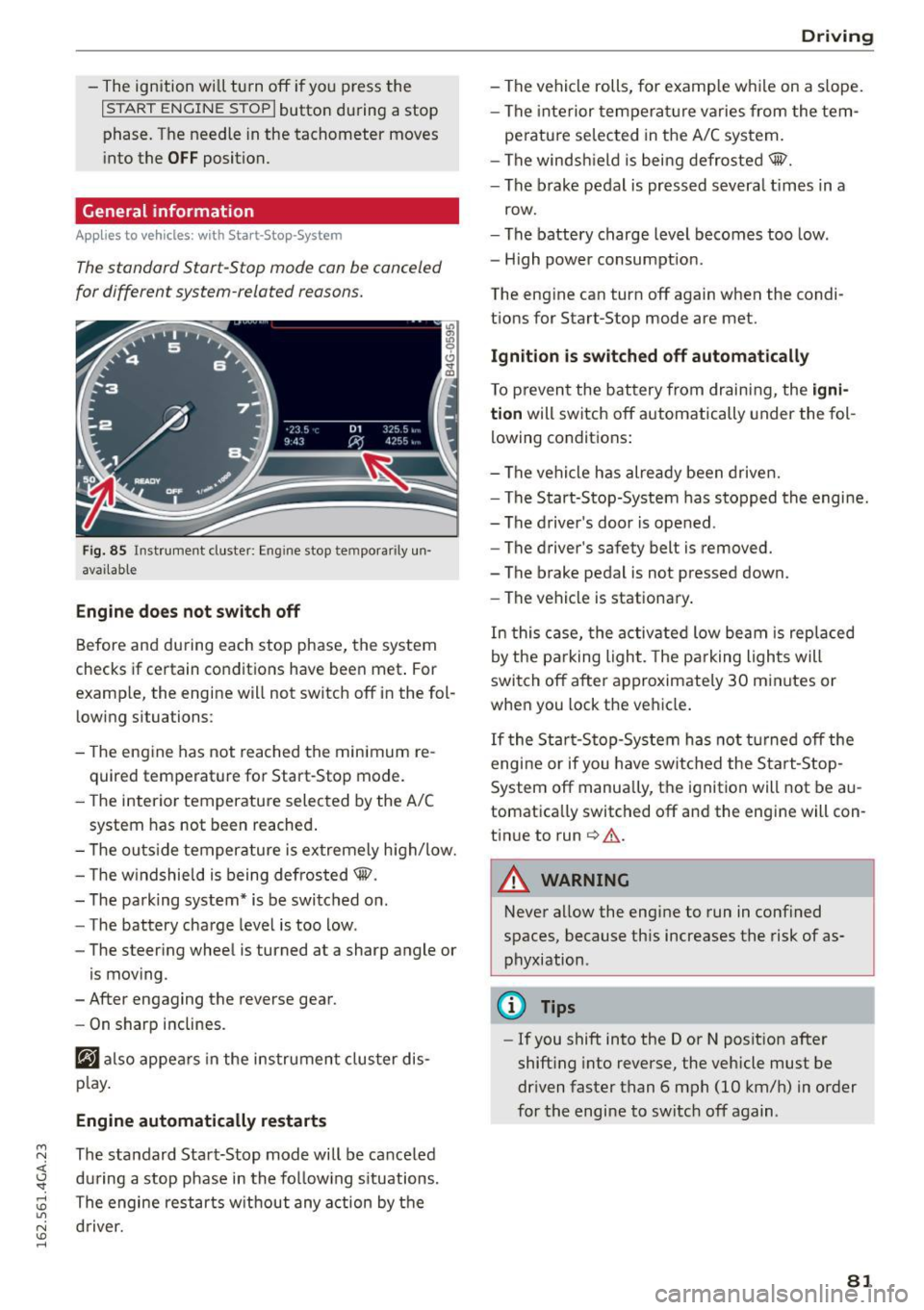
Fig. 85 Instrument cluster: Eng ine stop tempora rily un
avai lable
Engine does not switch off
Before and during each stop phase, the system
checks if certain conditions have been met . For
examp le, the engine will not switch off in the fol
lowing situations:
- The engine has not reached the minimum re
quired temperature for Start-Stop mode.
- The interior temperature selected by the A/C
system has not been reached.
- The outside temperature is extremely high/low.
- The windshield is being defrosted@.
- The parking system* is be switched on .
- The battery charge level is too low .
- The steering wheel is turned at a sharp angle or
is moving .
- After engaging the reverse gear.
- On sharp inclines.
@J also appears in the instrument cluster dis
play.
Engine automatically restarts
The standard Start-Stop mode will be canceled
during a stop phase in the following situations .
The engine restarts without any action by the driver.
Driving
- The vehicle rolls, for examp le while on a s lope.
- The interior temperature varies from the tem-
perature selected in the A/C system.
- The windshield is being defrosted@.
- The brake pedal is pressed severa l times in a
row.
- The battery charge level becomes too low.
- High power consumption.
The engine can turn off again when the condi tions for Start-Stop mode are met.
Ignition is switched off automatically
To prevent the battery from draining, the igni
tion
will switch off automatically under the fol
lowing conditions:
- The vehicle has already been driven.
- The Start-Stop-System has stopped the engine.
- The driver's door is opened .
- The driver's safety belt is removed.
- The brake pedal is not pressed down.
- The vehicle is stationary.
In this case, the activated low beam is replaced
by the parking light. The parking lights will
switch off after approximately 30 minutes or
when you lock the vehicle.
If the Start-Stop-System has not turned off the
engine or if you have switched the Start-Stop
System off manually, the ignition will not be au
tomatically switched off and the engine will con
tinue to run
c> .&. .
A WARNING
--Never allow the engine to run in confined
spaces, because this increases the risk of as
phyxiation .
@ Tips
-If you shift into the D or N position after
shifting into reverse, the vehicle must be
driven faster than 6 mph (10 km/h) in order
for the engine to switch off again .
81
Page 111 of 294
M N <( (.J
'SI: ,...., \!) 1.1'1
N \!) ,....,
than 2 seconds when the brake pedal is not
pressed.
Lock button
The lock button in the selector lever handle pre
vents yo u from moving the se lector lever unin
tentionally while in some se lector lever positions .
The positions that require the lock button to be
pressed are marked in color in the illustration
¢fig. 117 .
Driving the automatic transmission
Starting the engine
.. The selector lever must be in P or N.
Starting off
.. Press and hold the brake pedal.
.. Press and ho ld the release button in the selec
tor lever handle, select the desired selector lev
er position such as D/S and release the button .
.. Wait briefly until the transmission has shifted
(you will feel a slight movement).
.. Remove your foot from the brake pedal and ac
celerate .
Stopping temporarily
.. Keep the vehicle stationary using the braking
pedal, for example at traffic lights.
.. Do not press the accelerator pedal when doing
th is.
.. To prevent the veh icle from rolling when you
start driving, set the parking brake when stop
ping on steep inclines¢,& .
.. Th e parking brake will re lease automatically
and the vehicle will start moving once you press
the accelerator peda l.
Stopping/parking
If the selector lever is not in the P position when
you open the driver 's door, the veh icle could roll.
The message
Transmi ssion : Car may roll! Shift
to park!
appears.
.. Press and ho ld the brake pedal unt il the vehicle
has come to a complete stop.
.. Apply the parking brake¢
page 78, Parking.
.. Select the P selector lever position ¢ ,&.
Automatic transmission
Stopping on an incline
.. Always press the brake pedal to hold the vehi
cle in place and prevent it from "ro lling back"
c::> ,& . Do not try to prevent the vehicle from
"rolling back" when a gear is engaged by in
creasing the engine speed ¢(D .
Starting on an incline
.. Activa te the parking brake.
.. With the driving gear selected, press the acce l
erator pedal carefu lly. The parking brake will re
lease automatica lly if your seat belt is fastened.
Under certain circumstances, such as driving in
the mountains, it may be useful to switch tempo
rarily to the manual shift program in order to ad
just the gears to the dr iv ing condit ions by hand
Q ,&. .
On s lopes, activate the parking brake first and
then move the selector lever to the P position.
This prevents too much stress from being placed
on the locking mechanism.
A WARNING
- The vehicle can also roll when the engine is
stopped.
- Unintended vehicle movement can cause se
rious injury .
- Never leave your vehicle with the engine
running while in gear. If you must leave your
vehicle when the engine is running, activate
the park ing brake and move the selector lev
er to P.
- Power is still transmitted to the wheels
when the engine is running at idle. To pre
vent the vehicle from "creep ing", you must
keep yo ur foot on the brake when the engine
is running and the se lector lever is in D/S or
R or "tiptronic" mode is selected.
- Do not press the accelerator pedal when
changing the se lector lever position while
the vehicle is stationary and the engine is
running .
- Never shift into R or P while driving.
- Before driving down a steep slope, reduce
your speed and shift into a lower gear with
"ti ptronic".
109
Page 134 of 294
Driving safety
-Never place or install floor mats or other
floor coverings on top of already installed
floor mats. Additional floor mats and other coverings will reduce the size of the pedal
area and interfere with the pedals .
- Always properly reinstall and secure floor
mats that have been taken out for cleaning .
- Always make sure that objects cannot fall
into the driver footwell while the vehicle is
moving . Objects can become trapped under
the brake pedal and accelerator pedal caus ing a loss of veh icle control.
Storing cargo correctly
Loading the luggage compartment
All luggage and other objects must be properly
stowed and secured in the luggage compart
ment.
Loose items in the luggage compartment can
shift suddenly, changing vehicle handling charac
teristics. Loose items can also increase the risk of
serious personal injury in a sudden vehicle ma
neuver or in a collision.
.. Distribute the load evenly in the luggage com
partment.
.. Always place and properly secure heavy items in
the luggage compartment as far forward as
possible.
.. Secure luggage using the tie-downs provided
¢ page 63, Luggage compartment.
.,. Make sure that the rear seatback is securely
latched in place .
_& WARNING
Improperly stored luggage or other items can
fly through the vehicle causing serious per
sonal injury in the event of hard braking or an
accident. To help reduce the risk of serious
personal injury:
- Always put objects, for example, luggage or
other heavy items in the luggage compart
ment.
- Always secure objects in the luggage com
partment using the tie-down hooks and
suitable straps.
132
_& WARNING ~ -
Heavy loads will influence the way your vehi
cle handles. To help reduce the r isk of a loss
of control leading to serious personal injury:
- Always keep in mind when transporting
heavy objects, that a change in the center of
gravity can also cause changes in vehicle
handling:
- Always distribute the load as evenly as
possible .
- Place heavy objects as far forward in the luggage compartment as possible.
- Never exceed the Gross Axle Weight Rating
or the Gross Vehicle Weight Rating specified
on the safety compliance sticker on the left
door jamb. Exceeding permissible weight
standards can cause the vehicle to slide and
handle differently .
- Please observe information on safe driving
¢page 126.
_& WARNING
To help prevent poisonous exhaust gas from
being drawn into the vehicle, always keep the
rear lid closed wh ile driving .
- Never transport objects larger than those
fitting completely into the luggage area be
cause the rear lid cannot be fully closed .
- If you absolutely must drive with the rear lid open, observe the following notes to reduce
the risk of poisoning:
- Close all windows,
- Close the power roof*,
- Open all a ir outlets in the instrument pan-
el,
- Switch off the air rec irculat ion,
- Set the fresh air fan to the highest speed.
_& WARNING
Always make sure that the doors, all windows,
the power roof* and the rear lid are securely
closed and locked to reduce the risk of injury
when the vehicle is not be ing used.
- After closing the rear lid, always make sure
-
that it is properly closed and locked. ~
Page 173 of 294
M N <( (.J
'SI: ,...., \!) ..,.,
N \!) ,....,
~ When using the vehicle safety belt to install a child safety seat , you must first activate th e
convertible locking retractor on the safety belt
to prevent the child safety seat from moving
¢ page 177.
~ Push the child safety seat down with your full
weight to get the safety belt really tight so that
the seat cannot move forward or sideways more
than one inch (2.5 cm).
~ Secure unused safety belts on the rear seat
¢page 172.
Always remember: Even though your vehicle is
equipped with an Advanced Airbag system, all
children , especially those 12 years and younger,
should always ride in the back seat properly re
strained for their age and size.
A WARNING
Not using a child safety seat, using the wrong
child safety seat or improperly installing a
child restraint increases the risk of serious
personal injury and death.
- All vehicle occupants and especially children
mus t be restrained properly whenever riding
in a vehicle. An unrestrained or improperly
restrained child could be injured by striking
the interior or by being ejected from the ve
hicle during a sudden maneuver or impact.
An unrestrained or improperly restrained child is also at greater risk of injury or death
through contact with an inflating airbag.
- Commercially available child safety seats
are required to comply with U.S. Federal Mo
tor Vehicle Safety Standard (FMVSS) 213 (in
Canada CMVSS 213).
- When buying a child restraint, select one
that fits your child and the vehicle .
- Only use child restraint systems that fully contact the flat portion of the seat cush
ion. The child restraint must not tip or
lean to either side. Audi does not recom
mend using child safety seats that rest on
legs or tube-like frames. They do not pro
vide adequate contact with the seat.
- Always heed all legal requirements per
taining to the installation and use of child
safety seats and carefully follow the in-
Child safety
structions provided by the manufacturer
of the seat you are using .
- Never allow children under 57 inches
(1.45 meters) to wear a normal safety belt.
They must always be restrained by a proper
child restraint system. Otherwise, they
could sustain injuries to the abdomen and
neck areas during sudden braking maneu
vers or accidents.
- Never let more than one child occupy a child safety seat.
- Never let babies or older children ride in a
vehicle while sitting on the lap of another
passenger .
- Holding a child in your arms is never a sub
stitute for a child restraint system.
- The strongest person could not hold the child with the forces that exist in an acci
dent. The child will strike the interior of
the vehicle and can also be struck by the
passenger.
- The child and the passenger can also in
jure each other in an accident.
- Never install rear -facing child safety seats or
infant carriers on the front passenger seat.
A child will be seriously injured and can be
killed when the passenger airbag inflates -
even with an Advanced Airbag System .
- The inflating airbag will hit the child safety
seat or infant carrier with great force and
will smash the child safety seat and child
against the backrest, center armrest, door
or roof.
- Always install rear-facing child safety seats
or infant carriers on the rear seat.
- Forward-facing child safety seats installed
on the front passenger's seat can interfere
with the airbag when it inflates and cause serious injury to the child. Always install for
ward-facing child safety seats on the rear
seat.
- If exceptional circumstances require the use
of a forward-facing child restraint on the
front passenger's seat, the child's safety and well-being require that the following
special precautions be taken:
Ill>
171
Page 175 of 294
M N <( I.J "". rl I.O
"' N I.O rl
_& WARNING
A child in a child safety seat installed with the LATCH lower anchorages or with the standard
safety belt or a child in a booster seat on the
rear seat could play with unused rear seat
safety belts and become entangled. This
could cause the child serious personal injury
and even death.
- Always secure unused rear seat safety belts
out of reach of children in child seats such
as by properly routing them around the
head restraint of the seat where the child re
straint is installed.
- Never activate the convertible locking re
tractor when routing the safety belts around
the head restraints.
- Never let anyone sit at the center rear seat
ing position if the center rear safety belt has
been routed around a rear head restraint.
Child seats
Infant seats
Babies and infants up to about one year old and
20 lbs. or
9 kg need special rearward-facing
child restraints that support the back, neck and
head in a crash .
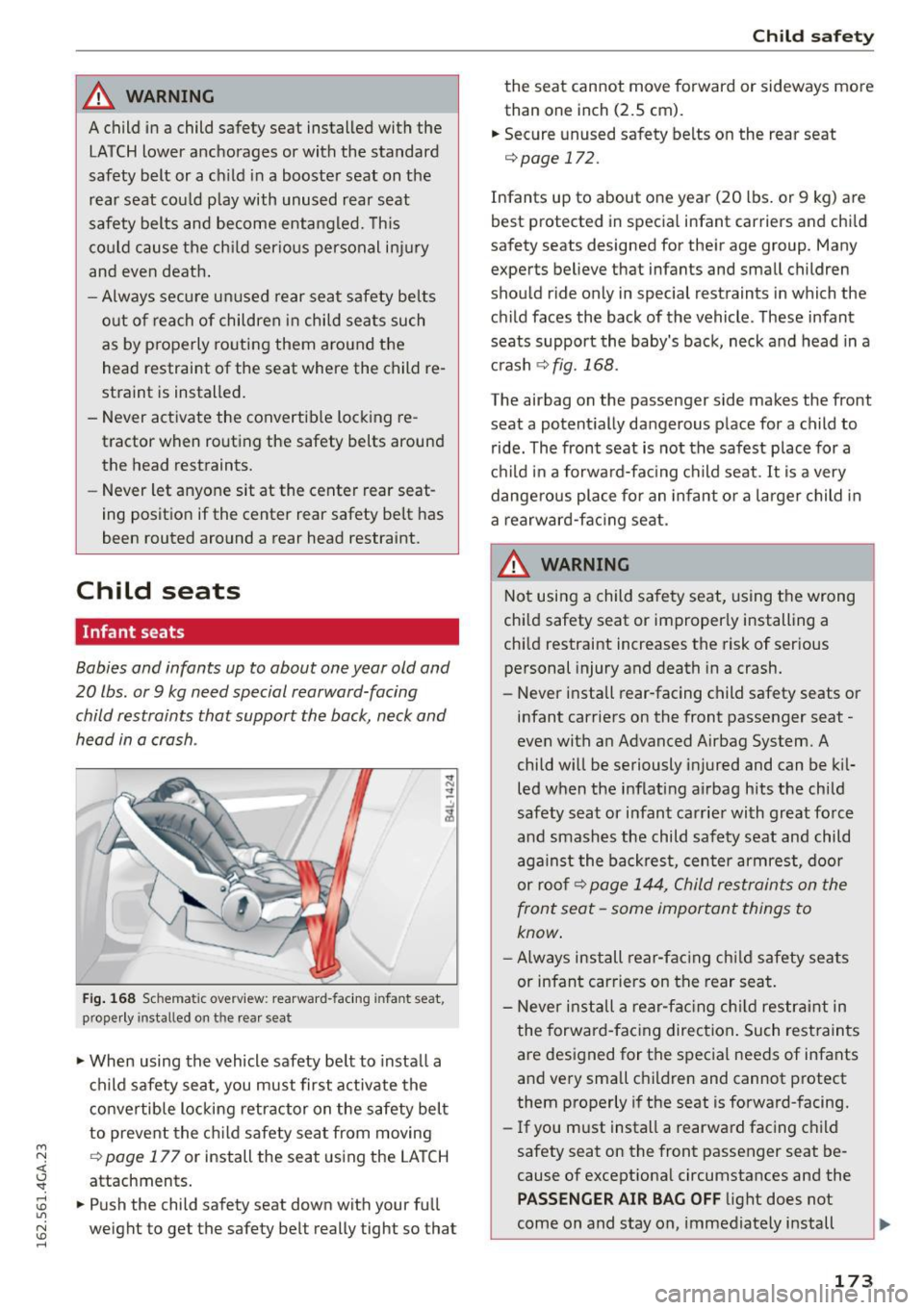
Fig. 168 Schematic overview: rearward-facing infa nt seat,
prope rly instal led on t he rear seat
"When using the vehicle safety belt to install a
child safety seat, you must first activate the convertible locking retractor on the safety belt
to prevent the child safety seat from moving
r::;,page 177 or install the seat using the LATCH
attachments.
"Push the child safety seat down with your full
weight to get the safety belt really tight so that
Child safety
the seat cannot move forward or sideways more
than one inch (2.5 cm).
... Secure unused safety belts on the rear seat
r::;, page 172.
Infants up to about one year (20 lbs. or 9 kg) are
best protected in special infant carriers and child
safety seats designed for their age group. Many
experts believe that infants and small children
should ride only in special restraints in which the
child faces the back of the vehicle . These infant
seats support the baby's back, neck and head in a
crash
¢ fig. 168.
The airbag on the passenger side makes the front
seat a potentially dangerous place for a child to
ride. The front seat is not the safest place for a
child in a forward-facing child seat. It is a very
dangerous place for an infant or a larger child in
a rearward-facing seat.
_& WARNING
-
Not using a child safety seat, using the wrong
child safety seat or improperly installing a
child restraint increases the risk of serious personal injury and death in a crash.
- Never install rear-facing child safety seats or
infant carriers on the front passenger seat -
even with an Advanced Airbag System. A
child will be seriously injured and can be kil led when the inflating airbag hits the child
safety seat or infant carrier with great force
and smashes the child safety seat and child
against the backrest, center armrest, door
or roof
r::;, page 144, Child restraints on the
front seat -some important things to
know.
-Always install rear-facing child safety seats
or infant carriers on the rear seat.
- Never install a rear-facing child restraint in
the forward-facing direction. Such restraints
are designed for the special needs of infants
and very small children and cannot protect
them properly if the seat is forward-facing.
- If you must install a rearward facing child
safety seat on the front passenger seat be
cause of exceptional circumstances and the
PASSENGER AIR BAG OFF light does not
come on and stay on, immediately install
173
Page 180 of 294
Child safety
children, especially those 12 years and younger,
should always ride in the back seat properly re
strained for their age and size.
A WARNING
Improperly installed child safety seats in
crease the risk of serious personal injury and
death in a collision.
-
-Always make sure that the safety belt re
tractor is locked when installing a child safe
ty seat . An unlocked safety belt retractor
cannot hold the child safety seat in place
during normal driving or in a crash.
- Always buckle the child safety seat firmly in
place even if a child is not sitting in it . A
loose child safety seat can fly around during
a sudden stop or in a collision.
- Always make sure that the rear seat back
rest to which the center rear safety belt* is
attached is securely latched whenever the
rear center safety belt is being used to se
cure a child restraint.
- If the backrest is not securely latched, the
child and the child restraint will be thrown
forward together with the backrest and will
strike parts of the vehicle interior. The child can be seriously injured or killed.
- Never install rear-facing child safety seats or
infant carriers on the front passenger seat.
A child will be seriously injured and can be killed when the passenger airbag inflates.
- The inflating airbag will hit the child safety seat or infant carrier with great force and
will smash the child safety seat and child against the backrest, center armrest, door
or roof.
- Always install rear-facing child safety seats
or infant carriers on the rear seat .
- Forward-facing child safety seats or infant
carriers installed on the front passenger's
seat may interfere with the deployment of
the airbag and cause serious injury to the child.
- It is safer to install a forward-facing child
safety seat on the rear seat.
- Always read and heed all WARNINGS when
ever using a child restrained in a vehicle is
being used
Qpage 167. Special precautions
178
apply when installing a child safety seat on
the front passenger seat
Q page 144, Child
restraints on the front seat -some impor
tant things to know.
A WARNING
Always take special precautions if you must
install a forward or rearward-facing child re
straint on the front passenger's seat in excep
tional situations:
- Whenever a forward or rearward-facing
child restraint is installed on the front pas
senger seat, the
PASSENGER AIR BAG OFF
light must come on and stay on whenever
the ignition is switched on.
- If the PASSENGER AIR BAG OFF light does
not come on and stay on, perform the
checks described
Q page 154, Monitoring
the Advanced Airbag System.
- Take the child restraint off the front passen
ger seat and install it properly at one of the
rear seat positions if the
PASSENGER AIR
BAG OFF
light does not stay on whenever
the ignition is switched on.
- Improper installation of child restraints can
reduce their effectiveness or even prevent
them from providing any protection.
- An improperly installed child restraint can interfere with the airbag as it deploys and
seriously injure or even kill the child .
-Always carefully follow the manufacturer's
instructions provided with the child safety
seat or carrier.
- After checking to make sure that the child
restraint is properly installed, make certain
that the child restraint is correctly recog
nized by the capacitive passenger detection
system in the front passenger seat and that
the
PASSENGER AIR BAG OFF light signals
the correct front passenger frontal airbag
status.
A WARNING
Forward-facing child restraints:
-
Page 181 of 294
M N <( (.J
'SI: ,...., \!) ..,.,
N \!) ,....,
-Always mak e sure the forward-facing seat
has been designed and certified by its man
ufacturer for use on a front seat with a
passenger front and side airbag .
- Never pu t the forward-facing child restraint
up, aga inst or very near the ins trument pan
el.
- Always move the passenger seat into its
rearmost position in the seat's fore and aft
adjustment range, as far away from the air
bag as possib le befo re installing the for
wa rd-fac ing child restra int. The backres t
must be ad justed to an up right posit io n.
- Make sure that the
PASSENGER AIR BAG
OFF
light comes on and s tays on all the t ime
whe never the ignition is switched on.
_& WARNING
Rearw ard-fac ing ch ild restra ints:
- A ch ild in a rearwa rd-facing child safety seat
installed on the fron t passenger seat will be
seriously injured and can be k ille d if the
front airbag inflates - even with an Ad
vanced Airbag System .
- The inflati ng a irbag w ill hit the child safety
seat or infant carrier with great fo rce and
will smash the ch ild safety seat and chi ld
against the backrest, center armrest, door
o r roof.
- Always be especially caref ul if you must in
stall a rearward facing ch ild safety seat on
the front passenger seat in exceptional cir
cumstances .
- Make sure that the
PASSENGER AIR BAG
OFF
light comes on and stays on all the t ime
whenever the ignition is switched on .
- If the
PASSENGER AIR BAG OFF light does
not come on and stay on, immed iately in
stall the rear-fac ing c hild safety seat in a
rear seating position and have the airbag
system inspected by your Au di deale r.
Child sa fety
Act ivating the convertible locking retractor
Use the convertible locking retractor to secure a
child restraint .
Always heed the ch ild safety seat manufac ture r's
ins truc tions when ins talling a child res train t in
your vehicle . T o activate the convertible locking
re tractor:
.. Place the child restraint on a sea t, preferably on
the rear sea t.
.. Slowly p ull the belt
all the way out .
.. Route it a round or through the child rest ra int
be lt pat h
~ .& .
.. Push the c hild safety sea t down with you r full
we igh t to ge t the sa fe ty belt re ally t igh t.
.. Insert the belt tongue into the buc kle for tha t
seating posit ion .
.. Guide the saf ety belt back into the retractor un
til the belt lies flat and sn ug on the ch ild safety
seat .
.. You should hear a "clicking" noise as the belt
w inds bac k into the ine rtia reel. Test the con
vert ible locking retracto r by pu lli ng on the belt .
Yo u shou ld no lo nger be able to pull the belt
ou t of the re tr actor. The conve rtible locking re
t racto r is now ac tiva ted .
.. Ma ke s ure that the red release button is fac ing
away from the child rest raint so that it can be
unbuckled quickly .
.. Pull on the belt to make sure the safety be lt is
properly tight and fastened so t hat the se at
cannot move forward or sideways more than
one inch (2 .5 cm) .
_& WARNING
Using the wrong child re straint o r an i mprop
e rly insta lled child rest raint can cau se serious
p erson al injury or deat h in a cra sh .
- Always ma ke sure that the safe ty belt re
tr act o r i s lo cked when in sta lling a child safe
ty seat . An unloc ked sa fety belt retrac tor
cannot hold the child safety seat in place
du ring normal d riving or in a c rash.
- Always buckle the child sa fe ty seat firmly in
p lace even if a ch ild is not sitting in it. A
loose child safety seat can fly aro und durin g
a sudden stop or in a c rash. ..,.
179
Page 216 of 294
Fuel and Refueling
case, try turning the nozzle before inserting
it in the fuel fi ller neck, use a different fuel
pump or see your authorized Audi dea ler or
authorized repair facility for assistance.
- The fuel filler flap of your vehicle is not
l ocked when you lock the vehicle from the
inside .
Fuel filler door emergency release
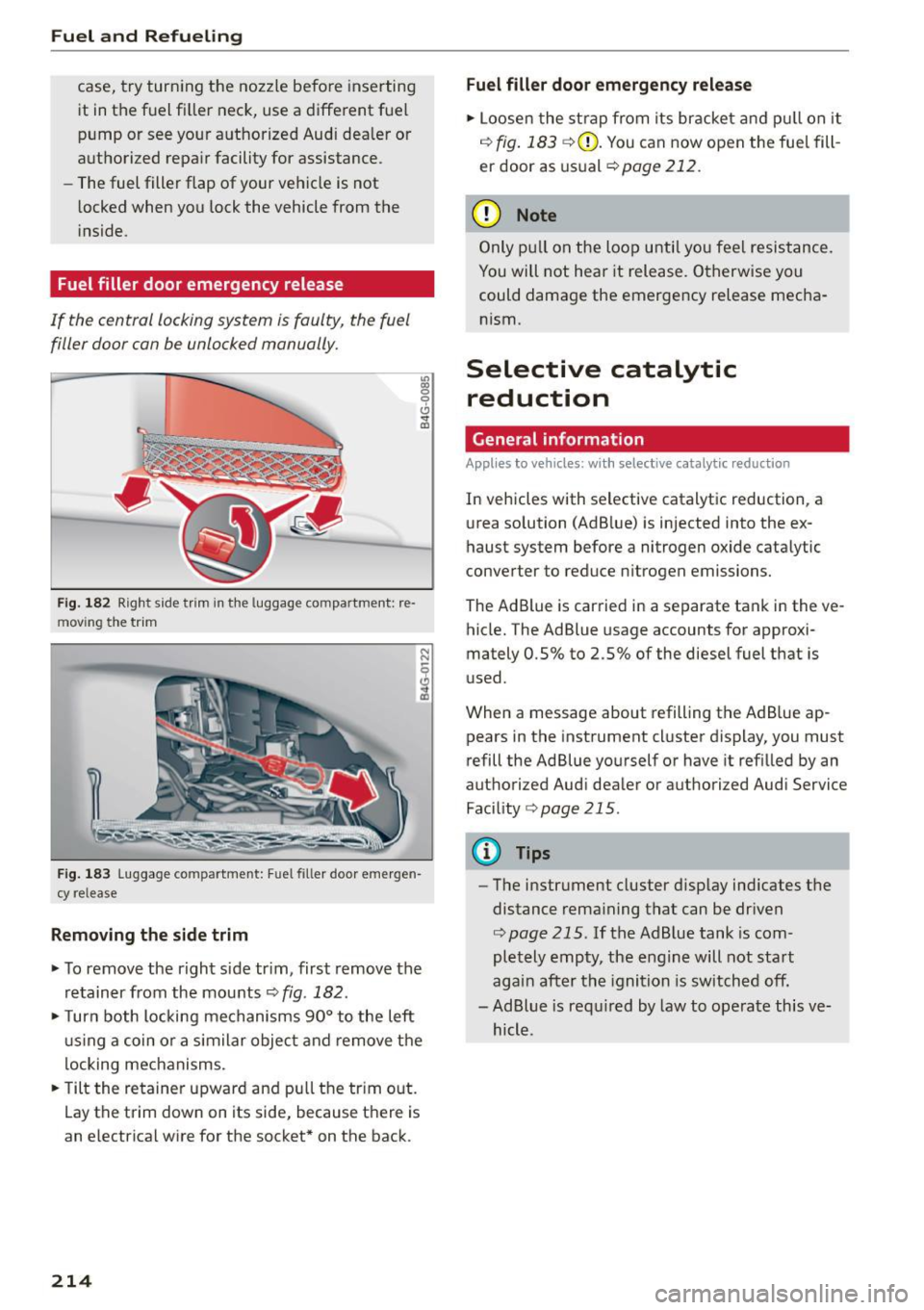
If the central locking system is faulty, the fuel
filler door can be unlocked manually.
Fig. 182 Right side tri m in the luggag e compartme nt: re·
mov ing the trim
"' ~ 0
<.:l
Fig. 183 Luggage compartment: Fuel filler door emergen
cy release
Removing the side trim
• To remove the right side tr im, first remove the
retainer from the mounts
r:!.> fig. 182.
• Turn both locking mechanisms 90° to the Left
using a coin or a similar object and remove the
locking mechanisms.
• Tilt the retainer upward and pu ll the tr im out.
Lay the trim down on its side, because there is
an electrical wire for the socket* on the back.
214
Fuel filler door emergency release
• Loosen the strap from its bracket and pull on it
r:!.> fig. 183 r:!.>{2) . You can now open the fuel fill
er door as usu al
r:!.> page 212.
(D Note
Only pull on the Loop until you feel resistance.
You will not hear it release. Otherwise you
could damage the emergency release mecha nism.
Selective catalytic reduction
General information
Applies to vehicles: with selective catalyt ic red uction
In vehicles with selective catalytic reduction, a
urea solution (AdB lue) is injected into the ex
haust system before a nitrogen oxide catalytic
converter to reduce nitrogen emissions.
The Ad Blue is carried in a separate tank in the ve
hicle. The Ad Blue usage accounts for approxi
mately O. 5 % to 2. 5% of the diesel fuel that is
used.
When a message about refilling the AdBlue ap
pears in the instrument cluster display, you must
refill the Ad Blue yourself or have it refilled by an
authorized Audi dealer or authorized Audi Service
Facility
r:!.> page 215.
{!) Tips
-The instrument cluster d isp lay indicates the
distance remaining that can be driven
r:!.>page 215. If the AdBlue tank is com
pletely empty, the engine will not start
again after the ignition is switched off.
- Ad Blue is requ ired by law to operate this ve
hicle.
Page 217 of 294
M N <( I.J "". rl I.O
"' N I.O rl
Messages in the instrument cluster display
Applies to vehicles: with selective catalyt ic reductio n
The display indicates if the Ad Blue level is low or
if there is a system malfunction .
AdBlue level low
You will be informed if the Ad Blue in the tank
drops be low a certain level.
Please refill Ad Blue. Range 1500 mi (2400 km )
This message appea rs whe n there is o nly enoug h
Ad B lue left to dr ive the d ist ance ind icated in the
d river i nfo rmation sys tem . Fill the AdBl ue.
Ad Blue ,0 Refill AdBlue! No restart in 600 mi
( 1000 km)! See owner 's manual
This message appea rs when there is o nly enoug h
Ad Blue left to dr ive the distance indicated in the
d river info rmation system . Fill the Ad Blue . Othe r
wise the eng ine will not sta rt again if you s top it
once the di stan ce in dicated ha s been driven. You
can also check t he rem ain ing distance in the on
board comp ute r*.
Refill Ad Blu e! No restart! See own -
er' s manual
This message appea rs whe n the AdBlue tank is
empty . Fill t he AdBl ue. Othe rw ise you w ill not be
ab le to start the engine aga in once yo u stop it.
T he AdBlue must be refi lled when t he amo unt in
the tank has reac hed the m inimum leve l
q page 215, Filling Ad Blue .
Incorrect filling/system malfunction
A message appears if the AdBl ue tank was filled
with a fluid other than AdBlue and the system has detected t hat the ta nk was f illed incor rectly,
or if there is a sys tem ma lf u nction .
Ad Blue -I' Ad Blue: System fault! No restart in
600 mi (1000 km). See owner's manual.
This message appea rs when it is only poss ible to
drive the d istance ind icated in the dr iver informa
tion system. Drive to the nearest authori zed Audi
dealer or authorized Aud i Service Fac ility to have
the ma lfunction corrected . Otherwise the engine
w ill not start aga in if you stop it once the dis
tance ind icated has been driven .
Fuel and Refueling
AdBlue: System fault No restart!
See owner's manual
T his mes sage ap pea rs if t he system h as detec ted
t h at the t ank was fi lled incor rectly o r tha t there
is a ma lf u nction . Drive immed iate ly to the near
est authorized A udi dealer or autho rized A udi
Se rv ice Facility to have the ma lf u nction co rrect
ed. Otherwise yo u will not be ab le to start the en
gine aga in once you stop it .
Filling AdBlue
Applies to vehicles: with selective catalytic reduction
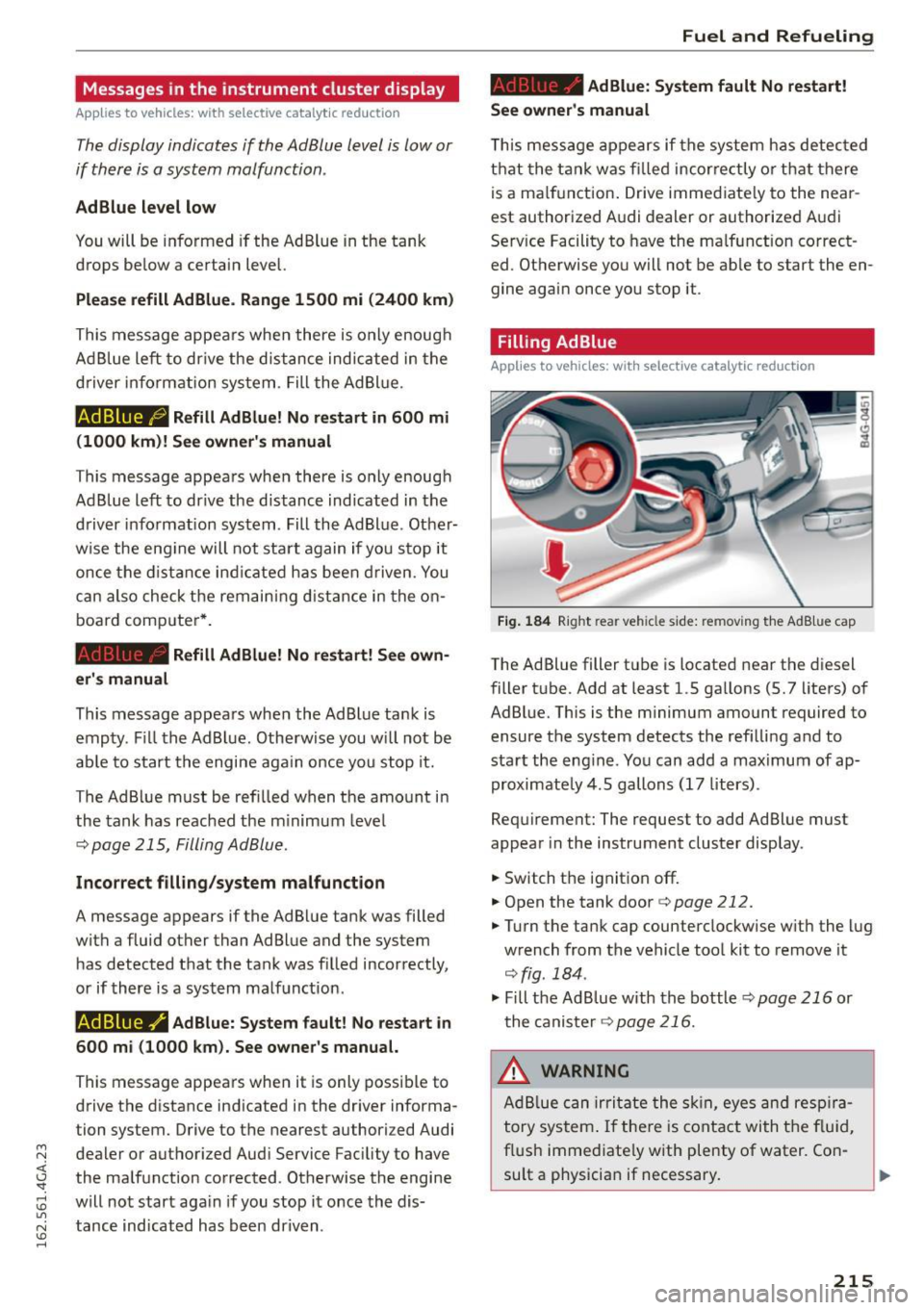
Fig. 184 Rig ht rea r ve hicle s ide: re m oving t he AdB lu e cap
The Ad Blue filler t ube is located near the diesel
filler t ube . Add at least 1.5 ga llons (5.7 liters) of
AdBl ue. This is the m inimum amount required to
ensure the system detects the refi lling a nd to
start the eng ine . Yo u can add a max imum of ap
proximate ly 4.5 gallons (17 liters) .
Req uirement: The request to add Ad Blue must
appear in the instrument cluster display .
.. Switch t he ignit ion off .
.. Open the tank door
q page 212.
.,. Turn the tank cap counterclockwise w it h the lug
w rench from the vehicle too l kit to remove it
q fig . 184 .
.,. Fill the Ad Blue with th e bottl e ~ page 216 or
the caniste r<=>
page 216.
.&_ WARNING
Ad Bl ue can irri tate the skin , eye s and respira
tory sys tem . If the re is con tact with t he flu id,
f lush imme diate ly w ith plenty of water. Co n-
su lt a physicia n if necessary. .,,_
215