brakes AUDI A8 2012 User Guide
[x] Cancel search | Manufacturer: AUDI, Model Year: 2012, Model line: A8, Model: AUDI A8 2012Pages: 300, PDF Size: 75.06 MB
Page 190 of 300
188 Intelligent technology
ESC includes and/or works together with the
anti-lock braking system (ABS), brake assist
system, anti-s lip regulat ion (ASR), e lectronic
d ifferential lock ( EDL), dynamic steering* and
e lectronic interaxle differentia l lock*. ESC is
switched on all the time. I n certa in s ituations
when you need less tract io n, you ca n sw itch
off ASR by pressi ng the button above
~ page 189, fig. 167 the se lector lever. Be
sure to sw itch ASR on ag ain when you no lon
ger need less trac tion.
Anti -lock braking system (ABS)
ABS prevents t he wheels from locking up
when braking. The veh icle can still be st eered
even d uring ha rd b rak ing . Apply steady p res
sure to the br ake ped al. Do no t pu mp the ped
a l. A puls ing in t he bra ke peda l ind icates that
the system is he lping yo u to b rake the vehicle .
Brake assist system
The brake assist system can decrease b ra kin g
d ista nce. It increases braking powe r w hen the
d river p resses the brake pedal quickl y in eme r
gency situa tions . You mus t press and ho ld the
b rake peda l until the situation is over. In vehi
cles with adaptive cruise control*, the brake
assist system is more sensitive i f the d istance
detected to the vehicle ahead is t oo smal l.
Anti-slip regulation (ASR)
ASR reduces engine power w hen the drive
wheels begin to spin and adapts the fo rce to
the road condit ions. This makes it eas ier to
start, accelerate and drive up hills.
Electronic differential lock (EDL )
The E DL brakes wheels that are spinn ing and
transfers the drive powe r to the o ther d rive
wheel o r whee ls if the vehic le is equipped with
a ll whee l drive*. This funct ion is available up
to about 7S mph (120 km/h).
I n extreme cases , EDL automatica lly swit ches
off to help keep the brake on the braked whee l
from overheating. ED L wi ll switch on again au
tomatically when conditions have returned to normal.
Dynamic steering*
On vehicles wi th dynam ic s teeri ng, ES C helps
stab ilize the steer ing in cer tain sit uations.
Electronic interaxle differential lock
function*
T he ele ctronic i nte raxle di fferentia l lock f unc
tion ac tiva tes when dr iving t hrough curves.
B ra king is targeted towar d the whee ls on the
inside of the curve as needed . This helps to
min imi ze front whee l skid, improves traction
and allows for more precise driving throug h
cu rves .
A WARNING
- ESC, ABS, ASR , EDL, dynamic steering*
and the elect ronic interaxle differential
loc k function* cannot ove rcome t he laws
of physics . This is espe cially im po rtant
on slippery o r we t road s.
If the sys tems
begin actin g to stabilize your veh icle, you
should immediately change yo ur speed
to match the road and t raffic conditions .
Do not let the increased safety provided
by these systems tempt you to take risks. Doing so will increase the risk of a loss of
veh icle cont ro l, collision and ser io us per
sonal injur ies .
-Always ada pt your speed to road , traffic
and wea ther conditions. The risk of los
ing contr ol of the vehicle i ncreases wh en
d riving too fast, espe cially through
curve s and on slippe ry or wet roads, and
when dr iv ing too close to vehicles up
ahead. ESC, ABS, the brake ass ist sys
tem, EDL, ASR, dynam ic steering * and
the elect ron ic interaxle differential lock
function * cannot prevent co llisions.
- Always accelerate with s pecial care on
even, smooth s urfaces such as those that
are wet or covered with ice and snow.
The drive wheels can spin even w ith
these assistance sys tems that cannot al
ways he lp to red uce the risk of loss of ve
h icle co nt ro l.
-
Page 191 of 300
@ Tips
-ABS and ASR on ly work correctly when
all four wheels are equ ipped with identi
cal t ires. Different tire s iz es can lead to a
reduct ion in eng ine power.
- You may hear noises when the systems
described are working.
- If the indicator light
D] or m (USA
models) ;£1 (Canada models) appears,
there may be a malfunction¢
page 19,
c> page
18 .
Switching on and off
ESC
turn s on au tomatically when you s tart
the engine .
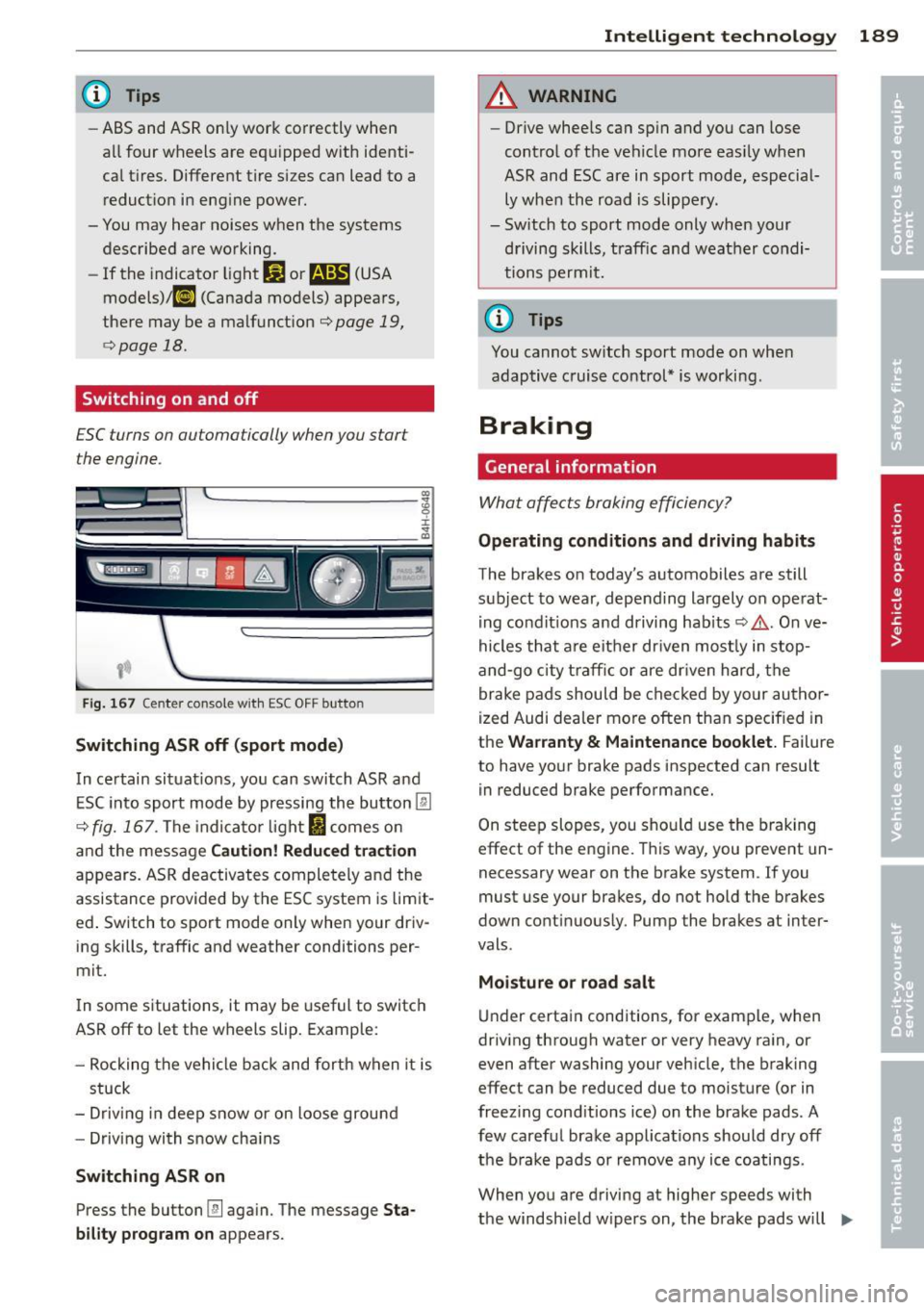
Fig. 167 Cen te r con sol e wit h ES C OF F but ton
Switching ASR off (sport mode )
In certain sit uat ions, you can switch ASR and
ESC in to sport mode by pressing the bu tton
[ru
c> fig. 167 . The indicator light I comes o n
and the message
Cauti on! R edu ced t ra cti on
appears. ASR deactivates completely and the
assistance provided by the ESC system is lim it
ed . Switch to sport mode only when your driv
ing skills, traffic and weathe r conditions per
mi t.
I n some s ituations, it may be useful to switc h
ASR off to let the wheels slip. Example:
- Rocking the vehicle back and forth when it is
stuck
- Driv ing in deep snow or on loose ground
- Driving with snow cha ins
Switching ASR on
Press the button [fil again. The message Sta
bility program on
appears.
Intelligen t technolog y 189
A WARNING
-Drive whee ls can sp in and you can lose
control of the vehicle more eas ily when
ASR and ESC are in sport mode, especial
ly whe n the road is slippe ry .
- Sw itch to sport mode only when your
driving skills, traff ic and weather condi
tions permit.
(D Tips
You cannot sw itch sport mode on whe n
adaptive cruise control* is working .
Braking
General information
What affects braking efficiency?
Operating cond itions and driving h abits
The brakes o n today's automobiles are still
subject to wear, depend ing largely on operat
i ng condit ions and driving habits ¢&, . On ve
hicles that a re either dr iven most ly in stop
and-go c ity t raff ic or are dr iven hard, the
brake pad s should be checked by yo ur author
i zed Audi dealer more often than specified in
the
Warranty & Maintenance booklet. Failure
to have your brake pads inspected can result in reduced brake performance.
On steep slopes, you sho uld use the braking
effect of the eng ine . T his way, you prevent un
necessary wear on the brake system . If you
must use your brakes, do not hold the br akes
down cont inuous ly . Pump the brakes a t in ter
vals .
Moisture o r ro ad sa lt
Under certa in conditions, for example, when
driv ing through water or very heavy ra in, or
even after washing your veh icle, the braking
effec t can be reduced due to moisture (or in
freez ing cond itions ice) on the brake pads . A
few carefu l brake applications should dry off
the b ra ke pads or remove a ny ice coatings.
When you are driving a t higher speeds with
the windsh ie ld w ipers on , the brake pads will
IJJJ,
Page 192 of 300
190 Intelligent technology
briefly touch the brake discs in regular inter
va ls so as to improve reaction time when brak
ing on wet surfaces. You the driver wi ll not no
tice anything.
The effectiveness of the brakes can be reduced
when the vehicle is driven on a salt-covered road and the brakes are not used. Here too,
you sho uld clean off accumu lated salt coat ing
from brake d iscs and pads with a few careful
applicat ions of the brake¢,& .
Cor ro sion
There may be a tendency fo r dirt to bui ld up
on the brake pads and corrosion to form on
the discs if the car is not dr iven regularly or
only for short trips with little use of the
brakes .
If the brakes are not used frequently, or if cor rosion has formed on the discs, it is advisab le
to clean off the pads and discs by brak ing
firm ly a few times from a moderately high
speed <=>,& .
Fault s in the brake sy stem
If you should notice a sudden increase in
brake peda l travel, then one of the two brake
circu its may have failed¢,& .
Low brake flu id le vel
M alfunctions can occur in the brake system if
the brake fl uid level is too low. The brake fluid
leve l is monitored electronically .
Brake lining wear status
Brake lin ing wea r may be chec ked by v is u al in
spection of the condition of the brake pads
through the openings in the whee l. If neces
sary, the whee l may be removed for this in
spection ¢ page 2 59, Changing a wheel.
A WARNING
-You should perform brak ing maneuvers
for the purpose of clean ing the brake
system on ly if road con ditio ns pe rmit.
Oth er road users must not be put at r isk -
yo u may cause an ac ciden t! -
Before descend ing a steep grade, red uce
speed and sh ift transmission into a lower
gear or lower dr iving range. Do not ride
the brakes or hold the pedal down too
long o r too often . This could cause the
brakes to get hot and diminish braking
efficie ncy.
- Do not "ride the brakes" by rest ing you r
foot on th e pedal whe n you do not intend
to b rake. This may c ause the brake s to
overhea t, prem ature wear and incre ased
stopping distance.
- Unde r cert ain cl im atic and ope rat ing
conditions s uch as passing thro ugh wa
ter, driving in heavy rain o r after washing
the vehicle, the effectiveness of the brakes can be reduced. In winte r, ice can
accumu late on the brake pads, lin ings,
d iscs and drums. Carefully app ly brakes
for a test. Brakes will dry and ice coat i n gs w ill be cleaned off after a few care
fu l brake applicat ions.
- Driving for an extended period of t ime on
salt-covered roads without using your
b rakes can a lso affect bra kin g efficiency .
Clea n off accum ulate d sal t coa ting from
b rake discs and pads wi th a few c areful
b rake applications .
- If you d am age t he fron t spoiler, or i f yo u
install a diffe rent spoiler, be s ure the a ir
f low to the front brakes is not obstruc t
e d. Otherwise the brake system could
overheat reducing the effectiveness o f
the entire brake system.
- Fa ilure of one brake circuit will impa ir
the braking capab ility result ing in an in
creased stopping distance. Avoid driving
the vehicle and have it towed to the near
est A udi dealer or qualified workshop .
Brake booster
The brake booster adds extra braking power.
T he brake booster wo rks with vacuum pres
s ur e which is created only when the engine is
runn ing
c> ,& . ..,.
Page 196 of 300
194 Driving and environment
Driving and
environment
The first 1,000 miles
(1,500 km) and
afterwards
New engine
The engine needs to be run-in during the first
1,000 miles (1,500 km).
For the fir st 600 miles (1,000
kilometers ):
.,. Do not use full throttle.
... Do not drive at engine speeds that are more
than 2/3 of the max imum permitted RPM.
... Avoid hig h engine speeds.
From 600 to 1,000 mile s (1 ,000 to
1,500 kilometers):
... Speeds can gradually be increased to the
max imum pe rm iss ible road or eng ine speed .
During and after break-in per iod
.,. Do not rev the engine up to high speeds
when it is cold. Th is app lies whether the
transm ission is i n N (Neutra l) or in gear.
After the break-in period
... Do not exceed maximum engine speed un
der any circumstances.
.,. Upshift into the next hig her gear
before
reaching the red area at the end of the tach
ometer scale
c:> page 10.
During the first few hours of driving, the en
g ine's interna l friction is higher than later
when all the moving parts have been broken
in . How well this break- in p rocess is do ne de
pends to a conside rable extent on th e way the
ve hicl e is driven d uring the first 1,0 00 miles
(1, 500 k ilome ters).
0 Note
E xtremely high engi ne speeds are auto
mat ica lly reduced. However, these rpm
lim its are progr amme d for an engine well
r u n- in, not a new engine .
{® For the sake of the environment
Do not drive with unnecessarily high en
g ine speeds - upshifting ear ly saves fuel,
reduces no ise and protects the environ
ment.
, New tires
If your vehicle is runni ng on new tires, drive
part icularly caref ul for the first 350 miles
(500 kilomete rs) afte r fitt ing .
A WARNING
New tires tend to be sl ippery and mus t al
so be "broken -in" . Be s ure to remember
this dur ing the fi rst 350 mi les ( 500 kilo
meters) . Brake gently . Avoid fo llow ing
closely behind other vehicles or other sit
uations that m ight require sudden, hard
braking .
New brake pads
Remember that new brake pads do not have a
full bra king effect dur ing the fi rst 250 m iles
(400 kilomete rs) afte r they a re insta lled .
New brake pads have to be "burnished in" be
fo re t hey have optima l grab
c:> A .
During the break- in period, you should avoid
putting severe loads on the brakes. Severe
l oads include, for example, sudden hard brak
i ng, in particular at very high speeds or, for
example, on mounta in passes .
A WARNING
New b rake pa ds don't have t he bes t stop
pi ng power and mus t be "broke n-in " dur
i ng the in iti al 1 00 to 150 mi les (150 to
20 0 k ilometers) of no rma l city driving . You
can compensate for this by pressing the
br ake peda l mo re f irm ly . This also applies
l ater when new pads are installed.
Page 198 of 300
196 Driving and en vironm ent
Driving through water
on roads
Note the following to avoid vehicle damage
when driving through water, for example on
flooded roads:
- The water must not be any higher than the
bottom of the vehicle body.
- Do not drive faster than wa lking speed.
A WARNING
After driving through water, mud, slush,
etc., the brakes may be slow to take effect
because of wet brake rotors and pads. Dry
the brakes first by braking carefully to re
sto re the full braking effect.
@) Note
Vehicle components such as the engine,
transmiss ion, suspension or electrical sys
tem can be severely damaged by driving
through water.
- Check the depth of the water before dr iv
i ng through it.
- Do not stop the vehicle, drive in reverse
or switch the engine off when driving
through water .
- Keep in mind that oncoming vehicles
may create waves that raise the water
level and make it too deep for your vehi
cle to drive through safely.
- Avoid dr iving through salt water because
i t can cause corrosion.
Operate your vehicle
economically and
minimize pollution
General
Your personal style of driving will determine
the economy of your vehicle, as well as ex
haust and noise levels.
Fuel economy, environmenta l impact, and
wear on your engine, brakes and tires largely
depend on three factors:
- your personal driving style
- operating conditions
- technical limitations
If you anticipate what you need to do next and
drive economically, you can easily cut your
fuel consumpt ion by 10-15 percent . This sec
t ion will give you some tips on how you can
help the env ironment and your pocketbook.
@ Tips
The consumption estimates as published
by ENVIRONMENTAL PROTECTION AGENCY
(EPA) and Transport Canada may not corre
spond to your actual consumption on the
road, which will vary depending upon vehi
cle load and speed, road and weather con
ditions, trip length, etc.
Drive smoothly and keep a lookout
ahead
Vehicles use the most fuel when they are ac
celerating.
.,. Avoid unnecessary accelerating and braking.
Vehicles use the most fuel when they are ac
ce lerating. If you anticipate what is going to
happen next, you will need to brake less and,
thus, acce lerate less . Let the vehicle coast
whenever possible - for example when you see
that the next traffic light is red.
Page 201 of 300

Trailer towing Driving with a trailer
General information
Your Audi was designed primarily for passen
ger transportation .
If you plan to tow a trai ler, p lease remember
that the addit ional load will affect durab ility,
economy and performance .
Trailer towing not on ly places more stress on
the vehicle, it also calls for more concentra
tion from the driver.
F or this reason, a lways fo llow the operating
and d riving instr uctions provided and use
common sense.
(D Note
If you are going to tow a trai ler, you must
activate the trailer operat ion mode
~ page 199, Operating instructions.
Technical requirements
Trailer hitch
Use a weight-carrying hitc h co nforming to the
gross trailer we ight. The hitch must be suita
b le for your veh icle and trailer and must be
mounted secure ly on the veh icle's chassis at a
technically sound location . Use only a trailer
hi tch wit h a removab le ball moun t. A lways
check with t he trail er hitch ma nufactur er to
make sure tha t you are using the corre ct
hi tch.
Do not use a bumper hitch.
The hitc h must be installed in such a way that
i t does not interfere with the impac t-absorb
i ng bumpe r sys tem. No mod ifica tio ns should
be made to the vehicle exh aust a nd brake sys
tems . From time to time, check that a ll hitch
mo unt ing bolts remain securely fastened.
W hen you are not towing a trail er, remove the
traile r hitch ball mount. Th is prevents the
hi tch from causing damage sho uld your ve hi
cle be str uck from behind ¢& .
Trailer towin g 199
Trailer brakes
If your trailer is equippe d wi th a br akin g sys
tem, check to be s ure that i t conforms to all
r egulations .
T he trailer hy draul ic brak e sys tem mus t not be
direc tly connec ted to the vehi cle' s h ydraulic
brake system .
Safety chains
Always use safety chains between your veh icle
and the tra ile r.
Trailer lights
Trai ler lights must meet all regu lations. Be
su re to check with your Audi dealer for cor rect
wir ing, swi tches and relays .
Mirrors
If you are unable to see the traffic behind you
us ing the reg ular o utside mirrors, then you
must insta ll extended mirrors. It is imp ortant
that you
always have clea r v is ion to the rear.
A WARNING ...__ -
Afte r removing the trailer hitch, do not
stor e it i n yo ur v ehicl e. In cas e o f sudden
b ra king, the hitch co uld fly forwar d and in
ju re you or your p ass en ger s.
Operating instructions
Fi g. 168 MM I dis pl ay: tow ing mode on
Ma ximum trailer weight
A trai ler fo r you r vehicle is limited to a typical
class 1 or class 2 tra iler.
ll>
Page 202 of 300
200 Trailer towing
Trail er load dis tr ibut ion
Be sure the load in the trai ler is held securely
in place to prevent it from shifting forward,
backward or sideways.
N eve r all ow a p assenger to rid e in a trailer
~ .&. in Driving instructions on page 201.
Engine cooling sy stem
Towing a tra iler makes the eng ine work hard
er . It is important that the cooling system's
performance is up to the addit ional load .
Make sure that the cooling system has eno ugh
flu id.
Tir e pressure
When tow ing a tra iler, inflate the t ires of your
vehicle to the co ld tire pressure listed under
" Full load" on the label loca ted o n the dr iver's
side B-pillar (v is ible when the door is open).
I nflate trailer tires to tra iler and tire manufac
turers' specifications.
Lights
Check to make sure both veh icle and trailer
l ights are wor king p roperly.
Safe ty chain s
Be sure tra iler safety cha ins are properly con
nected from the trailer to the hitch on the ve
h icle . Leave enough slack in the chains to per
mit turning corners. When you install safety
cha ins, make sure they w ill not drag on the
road when yo u are driving.
The chains shou ld cross under the tra iler
tongue to prevent it from dropping in case of
separat ion from the hitch .
Adjusting the Audi drive select
Make sure the vehicle is on a level surface be
for e
hitching up the tra iler and b efor e adjust
ing the tongue weight . The vehicle must be i n
auto or comfort driving mode and not raised
~ page 103, ~CD .
Make sure that the vehicle is lowered . In Info
tainment, select:
I CARI function button> Lo w
e r
control button . If you must drive under poor road conditions,
you can raise the vehicle
afte r coupling the
trailer or
a fter adjust ing the tongue we ight
~ page 105.
(D Note
-Changes in temperature or load can af
fect the height of the vehicle .
- Always select auto or comfort mode .
Otherwise, the tongue load specified for
your vehicle will no longer be applicable.
Driving instructions
Driving with a trailer always requires extra
core and consideration.
T o obtain the best possible hand ling of vehicle
and trailer, please note the fo llowing:
.. Do not tow a loaded t railer when you r ca r it
self is not loaded .
.. Be especially carefu l when passing other ve
hicles .
.. Observe speed limits.
.. Do not drive at the maximum permissible
speed .
.. Always apply brakes early .
.. Monitor the temperature gauge .
Weight distribut ion
T owing a loaded trailer with an empty car re
s ul ts in a highly unstable distribution of
weight. If this cannot be avoided, drive at very
low speeds only to avoid the risk of losing
steering control.
A "balanced" rig is easier to operate and con
trol. This means that the tow vehicle should
be loaded to the extent possible and permissi
ble , while keep ing the trailer as light as possi
ble under the ci rcumstances. Whenever poss i
ble, transfer some cargo to the luggage com
partment of the tow vehicle while obse rv ing
tong ue load requi rements and vehicle load ing
considerations .
Speed
The higher the speed, the more d ifficu lt it be
comes for the driver to control the rig. Do not
1111>
Page 203 of 300

drive at the maximum permissible speed. Re
duce your speed even more if load, weather or
wind condit ions are unfavorable -part icularly
when going downhill.
Reduce vehicle speed
immediately if the trail
er shows the slightest sign of swaying .
Do not
try to stop the swaying by accelerating.
Observe speed limits . In some areas, speeds
for vehicles towing trailers are lower than for
regular vehicles .
A lways apply brakes early. When driving
downhill, shift into a lower gear to use the en
gine braking effect to slow the vehicle . Use of
the brakes a lone can cause them to overheat
and fail.
Coolant temperature
The coolant temperature gauge c:> page 10
must be observed carefully. The coo lant tem
perature can increase if you drive on long in
clines in a low gear at high engine speeds. Re
duce your speed immed iate ly if the L EDs in
the top part of the display turn on.
F or more information about indicator lights,
refer to.
i::> page 15.
A WARNING
Anyone not properly restrained in a mov
ing vehicle is at a much greater risk in an
accident . Never let anyone r ide in your car
who is not properly wear ing the restra ints
provided by Aud i.
Trailer towing tips
Important to know
Your veh icle hand les different ly when tow ing
-
a trailer because of the addit ional weight and
d ifferent weight distribution . Safety, perform
ance and economy will greatly depend on how
carefully you load your trailer and operate
your ng .
Before you actually tow your trailer, practice
turning, stopp ing and back ing up in an area
away from traffic. Keep practicing until you
Trailer towing 201
have become completely familiar with the way
your vehicle-trai ler combination behaves and
responds .
Backing up is difficult and requires practice .
Backing up with a t railer generally requires
steering action opposite to that when backing
up your vehicle without a tra iler.
Maintain a greater distance between your ve
hicle and the one in front of you . You wi ll need
more room to stop. To compensate for the
trailer, you w ill need a larger than normal
turning rad ius.
When passing, remembe r that you cannot ac
ce lerate as fast as you norma lly would be
cause of the added load. Make sure you have
enough room to pass. After passing, allow plenty of room for your trailer before chang
ing lanes again.
Avoid jerky starts, sharp turns or rapid lane changes.
(D Tips
- Do not tow a trailer during the break-in
period of your vehicle.
- If you tow a trailer, your Audi may re
quire more frequent maintenance due to
the extra load
c:> page 280.
Parking on a slope
Do not park on a slope with a trailer. If it can
not be avoided, do so only a~er doing the fol
lowing:
When parking:
.,. App ly the foot brake.
.,. Have someone p lace chocks under both the
vehicle and the trailer wheels .
.,. With chocks in place, slowly release the
brakes until the wheel chocks absorb the
load.
.,. Turn the wheels towards the curb .
.,. Apply the parking brake .
.,. Select the P selector lever posit ion .
When restarting after parking:
.,. Apply the foot brake.
•
•
Page 205 of 300
Cleaning and protect ion
General information
Regular core preserves vehicle value.
Any automobile is exposed to industrial
fumes , corrosive road salt, etc. A well cared
for Audi can look like new many years after purchase . Regu lar and correct care w ill con
tr ibute to maintaining the beauty and value of
your Aud i.
F u rth ermor e, good c are may be a conditi on
for subs tantiati ng a w arrant y claim sho uld
c orrosion d amag e or paint d efects oc cur.
Your authorized Audi dealer has a variety of
dedic ated veh icle-car e products and can ad
vise which ones to use for cleaning the exter i
or and interior of your vehicle.
Whether you use products recommended by
Aud i or other commercially available clean ing
agents, please make sure you apply them cor
rectly .
.&, WARNING
-Cleaning agents may be poisonous. Keep
them out of the reach of children.
- Heed all caut ion labels.
- Always read directions on the container
before using any product. Follow the di
rect ions carefu lly.
- Most chemical cleaners are concentrated
and have to be diluted .
- Use spot removing fluids only in well
ventilated areas.
- Do not use gasoline, kerosene, d iesel
fuel, nail polish remover or other volatile
fluids. They may be toxic, flammab le or
haza rdous in other ways. Do not wash,
wax or dry the vehicle with the ign it ion
on or the engine running.
- Do not clean the undersides of chassis,
fenders, wheel covers, e tc. w ithout pro
tecting your hands and arms. You may c u t yourself on sharp -edged metal parts .
Cleaning and protec tion 203
- Moisture and ice on brakes may impair
brak ing effic iency¢
page 189, General
information.
Test the brakes carefully
each time you wash the vehicle.
@) For the sake of the environment
Select on ly environmentally friend ly clean
i ng products . Leftover cleaning products
should not d isposed of in the household
waste.
Care of exterior
Washing
Frequent washing protects the vehicle .
The best protection against environmental i n
fluences is
frequent washing and waxing . How
often t his is required depends on:
- How much the veh icle is used
- Where the veh icle is parked (garage, in the
open under trees, etc.)
- The seasonal and weather conditions
- Environmental infl uences
T he longer b ird droppings, insects, tree resin,
road and indus tria l gr ime, ta r, soot, road salt
and other materials remain on the vehicle body, the more lasting their destructive ef
fects wi ll be . High temperatures caused by ex
posure to intense sun light intens ify the corro
s ive effect, particularly when humid ity is high
as well.
Under certain circumstances,
weekl y washing
may be necessary. Under other cond itions, a
monthly washing and waxing may be ade
quate .
After the winter, the underside of the vehicle
should be thoroughly washed, preferab ly in a
professional car wash .
.&, WARNING ,_
A lways read and heed all WARNINGS and
other information¢
page 203 .
•
•
Page 210 of 300
208 Clea ning and protec tio n
-Never use warm or hot water to remove
snow and ice from windows and mirrors.
This could cause the glass to crack.
- To prevent damage to the wires of the
rear defogger, do not place any adhesive
stickers on the inside of the rear window
over the wires.
- To help prevent d irt from scratch ing the
window, always scrape in a forward d i
rection - pushing the scraper away from
you - never back and forth .
Cast (light) alloy wheels
Cast (light) alloy wheels require special care.
• Wash the wheels with a sponge or hose
brush every other week.
• For deep cleaning afterwards, use only a
dedicated
acid -free cast alloy wheel cleaner.
• Rub a coat of
liquid wax onto the r ims every
three month . Be sure to reach and treat a ll
parts of the rim.
To preserve the decorat ive appearance of the
cast alloy wheels, some special care is neces
sary. In addit ion to road dirt and sa lt, b rake
dust is a lso cor ros ive. If left o n for too long,
b rake dust can cause pitting.
Use only special
acid-free cleaners formulated
for a lloy rims. Safe products are available at
your Aud i deale r. Neve r leave the cleaner on
the r ims longer than spec ified on the label.
If
not rinsed off promptly, the acid contained in
some cleaners can attack the threads on the
wheel bolts .
Never use ab ras ive or metal polishing clean
ing agents. If the protective coating has been
chipped, e .g. by kicked up road dirt, touch it
up as soon as possible .
A WARNING
- Moisture and ice on brakes may affect
braking efficiency¢
page 189, General
information.
Test the brakes carefully
each time you wash the veh icle .
-
-Always read and heed a ll WARNINGS and
other information
¢ page 203.
Body cavity sealing
The body cavity sealing does not need to be
checked.
All body cav it ies which could be affected by
cor rosion have been thorough ly protected at
the factory.
T his sealing does not require any inspection or
additional treatment. If any wax shou ld seep
out of the cavity when the ambient tempera
ture is high, it can be removed with a p lastic
scraper and a suitable solvent.
A WARNING
-Solvents can be dangerous.
- Benzine is flammab le and toxic . If you
use benzine for removing the wax, keep
sparks, flame and lighted cigarettes
away. Never dump benz ine on the
ground, into open streams or down sew
age dra ins.
- Be sure to observe all safety and environ
mental regulat ions . Follow all instruc
tions on the container .
-Always read and heed all WARNINGS and other information ¢
page 203.
Chassis
Have the undercoating checked for damage
from time to time.
The lower body shell of your Aud i is also thor
oughly protected against corros ion.
Any damage to the undercoating ca used by
road hazards should be repaired prompt ly .
A WARNING
-Too much undercoating in the wrong p la-
ces can cause a fire.
- Do not app ly additiona l undercoating or
r u stproofing on or near the exhaust
manifold, exhaust pipes, catalytic con-
verter or heat shields. While driving, the
~