coolant AUDI A8 2012 User Guide
[x] Cancel search | Manufacturer: AUDI, Model Year: 2012, Model line: A8, Model: AUDI A8 2012Pages: 300, PDF Size: 75.06 MB
Page 229 of 300
Engine cooling system
Coolant
The engine coolant performs two functions: it
keeps the engine from overheating and it pro
te cts the engine from freezing in the winter .
The cooling system is sealed and generally re
qu ires little attention .
The cooling system has been filled at the fac
tory with a permanent coolant which does not need to be changed. The coolant consists of a
mixture of water and the manufacturer's gly
col-based coolant additive G13 ant ifreeze
w ith anticorrosion add itives (SO% fo r USA
models; 60% for Canad ian models). This mix
ture bot h assu res the ne cessary frost protec
tion and protects metal components in the
engine's coo ling system from corrosion and
scaling. It also raises the boili ng po int of t he
coolant.
D o not red uce the concentration o f the coo l
ant in the summer by adding plain water .
The
proportion of coolant addit ive must be at
least 50% but not mo re than 60 %
to main
tain antifree ze protection and cooling efficien
cy. If the coolant frost protection is too low,
the coolant cou ld freeze and damage the veh i
cle heating and eng ine cooling system .
For year-round driving, antifree ze is added at
the factory for temperatures down to:
- -3 1°F (-3S°C)USA
- -40 ° F ( - 4 0 °C) Canada.
A WARNING
Before yo u check anything in the engine
compartment , always read and heed a ll
WARNINGS ¢
& in Working in the engine
compartment on page 219.
(D Note
- Befo re winter sets i n, have the coolant
chec ked to see i f th e coo lant ad dit ive i n
you r vehicle is suffic ient to meet the cli
mate cond itions . T hi s is especially impor
ta nt if yo u live in a regi on whe re the w in-
-
Checkin g and fillin g 22 7
ter is ex treme ly co ld. If necessary, i n
crease t he p ro po rtion of coo lant additive
to 60%.
- W hen a dding coolant additive to yo ur
cooling system , remembe r:
- We recommend us ing on ly coo la nt ad
di tive G 12++ or G 13 for your v ehicle .
T his co olan t ad ditive is av ailab le at au
t hor ized A udi dealers . O ther types of
an tifree ze can signi fican tly reduce cor
r osion pro te ction . The resulti ng cor ro
sion can ca use a loss of coolant a nd se
rious engine damage.
- Do not add any ty pe of rad iator leak seal
ant to you r vehicle's engine coo lant .
Add ing radiator repair flu id may adverse
ly affect t he fu nction and performance of
your cooling system and cou ld result in
damage not covered by yo ur New Ve hicle
L imited Warranty .
Checking the engine coolant level
The engine coolant level can be checked with
a quick glance.
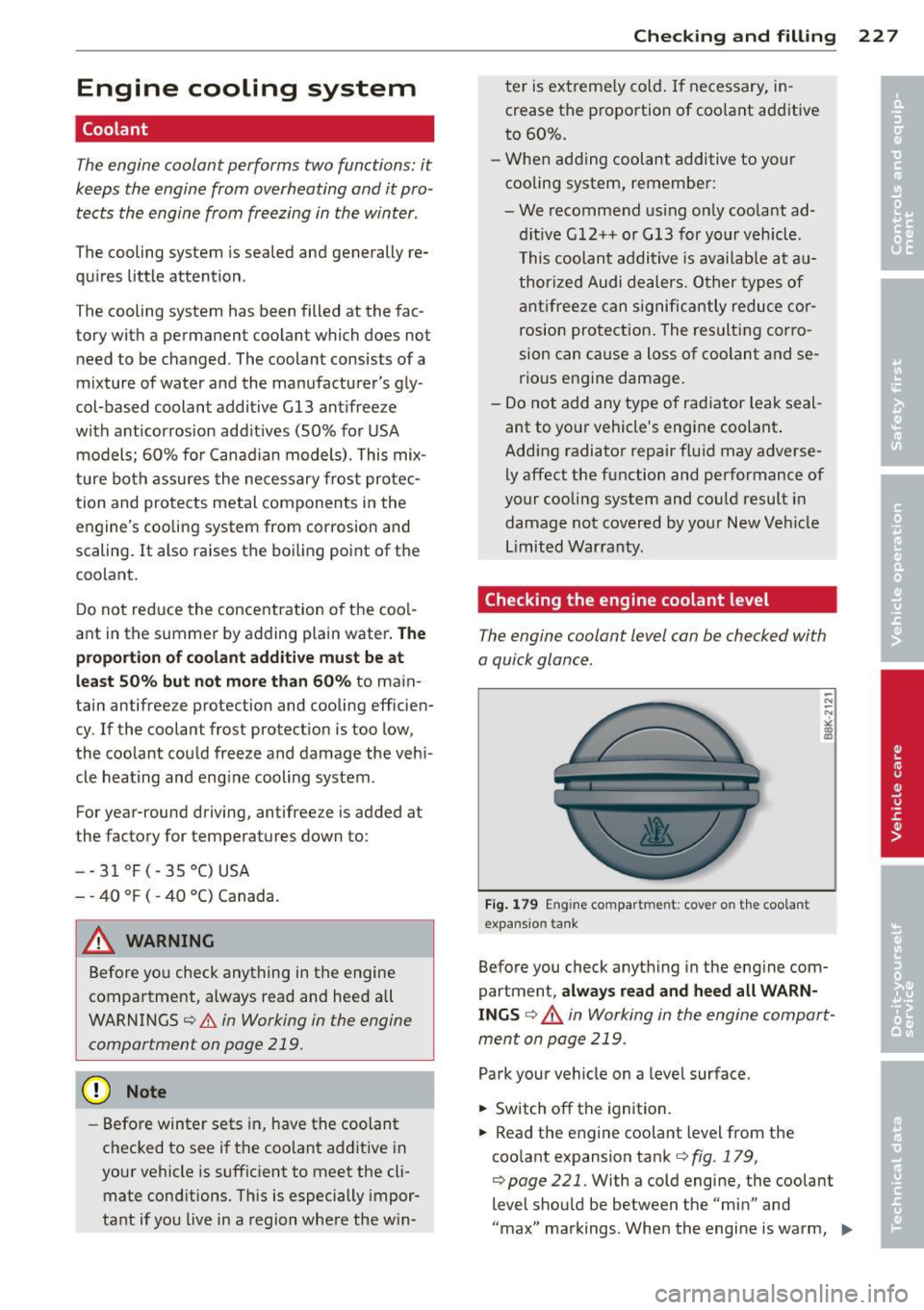
Fig. 179 En gine co mpart ment: cover on t he coo la nt
expansio n ta nk
Before you check a nyth ing in the eng ine com
partment,
always read and heed all WARN
INGS <=>&.
in Working in the engine compart
ment on page 219 .
Park your vehicle on a level surface.
.., Switch off t he ignition.
.., Read t he engine coolant level from the
coo lant expansion tank¢
fig. 179,
¢ page 221 . With a cold engine, the coolant
level shou ld be between the "min" and
"ma x" markings . When the engi ne is warm, ..,.
Page 230 of 300

228 Checking and filling
the level may be slightly above the "max"
marking.
The location of the coolant expansion tank
can be seen in the engine compartment illus
tration
¢ page 221.
To obtain an accurate reading, the engine
must be switched off.
The expansion tank in your vehicle is equipped
with an electric coolant level sensor.
When the coolant level is too low, the warning light in the Auto-Check System¢
page 15 will
illuminate until you add coolant and the level
has been restored to normal. Even though
there is an electric coolant level sensor , we
still recommend you check the coolant level
from time to time.
Coolant loss
Coolant loss may indicate a leak in the cooling
system. In the event of coolant loss, the cool
ing system should be inspected immediately
by your authorized Audi dealer.
It is not
enough merely to add coolant.
In a
sealed system, losses can occur only if
the boiling point of the coolant is exceeded as
a result of overheating.
_& WARNING
The cooling system is under pressure and
can get very hot. Reduce the risk of scald
ing from hot coolant by following these
steps. -
- Turn off the engine and allow it to cool
down.
- Protect your face, hands and arms from
escaping fluid and steam by covering the
cap with a large, thick rag.
- Turn the cap slowly and very carefully in
a counter-clockwise direction while ap
plying light, downward pressure on the
top of the cap .
- To avoid being burned, do not spill anti freeze or coolant on the exhaust system
or hot engine parts. Under certain condi
tions, the ethylene glycol in engine cool
ant can catch fire .
(D Note
Do not add any type of radiator leak seal
ant to your vehicle's engine coolant. Add
ing radiator repair fluid may adversely af
fect the function and performance of your
cooling system and could result in damage not covered by your New Vehicle Limited
Warranty .
Adding coolant
Be very careful when adding engine coolant.
Before you check anything in the engine com
partment,
always read and heed all WARN
INGS ¢&. in Working in the engine compart
ment on page 219.
.. Turn off the engine .
.. Let the engine cool down.
.. Place a thick rag over the coolant expansion
tank
¢ page 227, fig . 179 and carefully
twist the cap counter-clockwise ¢,&. .
.,. Add coolant.
.. Twist the cap on again
tightly.
Replacement engine coolant must conform to
exact specifications
¢ page 22 7, Coolant. We
recommend using only coolant additive G12+
+, G3 or in an emergency G12+ . Do
not use a
different additive. In an emergency use plain
water until you can get the correct additive
and can restore the correct ratio. This should
be done as soon as possible .
If you have lost a considerable amount of
coolant , then you should add cold antifreeze
and cold water only when the engine is cold.
Always use
new engine coolant when refilling.
Do not fill coolant above the
"MAX" mark . Ex
cess coolant will be forced out through the
pressure relief valve in the cap when the en
gine becomes hot.
_& WARNING
-= -- The cooling system is under pressure and
can get very hot. Reduce the risk of ..,_
Page 231 of 300
scalding from hot coo lant by following
these steps.
- Turn
off the engi ne and a llow it to cool
down.
- Protect your face, hands and arms from
escapi ng fl uid and steam by cover ing
the cap with a large, thick rag .
- Turn the cap slowly and very ca refully
i n a cou nte r-clockw ise dir ect ion while
a pply ing lig ht, downwa rd p ress ure on
the top of the cap.
- T o avo id being burned, do no t sp ill an
tifree ze o r coolan t on t he exh aust sys
tem or ho t engine parts . Un der certain
conditions, the ethylene glyco l in en
gine coolant can catch fire .
- Antifree ze is poisono us. Always store an
tifreeze in its or iginal co ntainer and we ll
o ut o f the reac h of children.
- If you drain the coolant , it must be
caught and safely stored in a p roper con
tainer clear ly marked "poison".
(D Note
- Coolant po llutes the env ironment and
could ca use a n engine fire . Excess coo l
ant wi ll be forced out through the pres
sure re lief va lve in the cap when the en
gine becomes hot.
- If, in an emergency, only water can be
added , the correct ratio between water
and antifreeze¢
page 22 7 must be re
stored as soon as possib le .
@ For the sake of the environment
Drained coolant should not be re used . Al
ways dispose of used c oolant while observ
ing all envir onmental regulations .
Radiator fan
The radiator fan switches on automa tically by
itself
T he radiator fan is driven by the engine via the
V-be lt. The viscous clutch regulates the speed
of the fan according to the temperature of the
coolant .
Checkin g and fillin g 229
An auxiliary electric radiato r fan* sw itches on
and
off depending on coolant temperature
and othe r vehicle ope rat ing con ditions.
After yo u switc h the engi ne off, the aux iliary
f an can con tinue r unning for up to 10 minutes
- even with the ignition off. It can even switch
on again later by itself¢ & , if
- t he temperatu re of the engine coo lant rises
due to the heat b uild -up from the en gine in
the engi ne compartment, or
- the engine compartment heats up be cause
the vehicle is parked in intense sunlight.
A WARNING
- To reduce the risk of personal in jury nev
er touch the radiator fan.
- The a uxiliary electric fan is temperat ure
contro lled and can switch on sud denly
even when the engine is not running.
- The a uxiliary radiator fa n switches on a u
tomatically when the engine coo lant
reaches a certain temperature and will
continue to run until the coo lant temper
ature drops .
Brake fluid
Checking brake fluid level
The brake fluid level can be checked with a
qui ck glance.
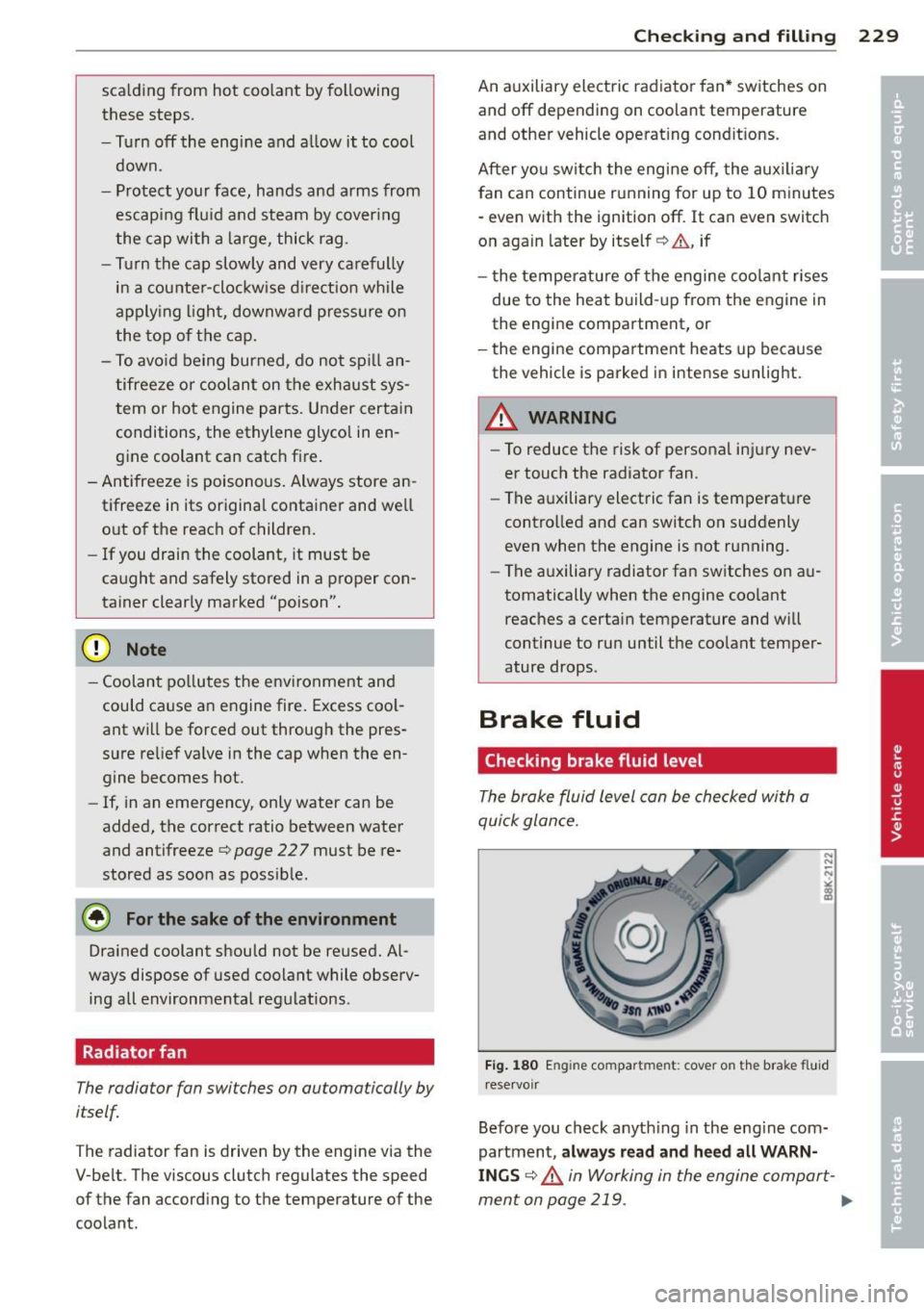
Fig. 180 En gin e compar tment: cov er o n th e bra ke fluid
r ese rvoir
Befo re you check anyth ing in the eng ine com
partment ,
always re ad and heed all WARN
INGS c::> ,& in Working in the engine compar t-
ment on page 219 . .,..
Page 236 of 300

234 Check ing and filling
Never use a fast charger as a booster to
start the engine. This will seriously dam
age sensitive electronic components, such
as control units, relays, rad io, etc ., as well
as the battery charger.
Battery replacement
The new bat tery must have the same specifi
cations and dimensions as the original equip
ment battery .
Intelligent energy man agement in your veh i
cle is respons ible for d istributing the electr i
cal energy throughout your vehicle
c::> page 192. The intell igent energy manage
ment system w ill keep the engine battery
cha rged bette r than vehicles w ithout t his sys
tem. To make sure the additional e lectrica l en
e rgy is availab le once again after you have
changed the battery, we recommend that you install batteries of the same type and manu
facture only (the same as those installed at
the time your vehicle was delivered). Specifi
cations are listed on the battery hous ing. Your
author ized dealer must code the battery in
the energy management system to enable you
to use the energy management funct ions cor
rectly after replac ing the battery .
The new battery must have the same capacity ,
voltage (12 volts), amperage, construct ion
and plug sealing.
When installing the ba ttery, make sure the ig
n ition and all e lectr ica l consumers are sw itch
ed off .
{[) Note
Make sure the venti lation hose on the s ide
of the battery is connected, otherwise
fumes or battery ac id can leak out .
@ For the sake of the environment
Because of the problem of proper d isposa l
of a battery, we recommend your author
ized Aud i dealer change the battery for
you . Batter ies contain su lfuric ac id and l
ead and must a lways be disposed o f prop
erly in compliance with a ll environmental
regulations. Disposing of vehicle batter ies
i mproperly is very dangerous to the envi
ronment .
Windshield/headlight
washer container
Fig . 1 82 Eng in e compar tmen t: cov er on the w inds hield
washe r flu id rese rvoir
T he washer fluid co nta iner is marked w ith the
symbol~ on its cap
c::> fig. 182, c::>page 221.
.. Before you check anything in the engine
compartment, always read and heed all
WARNINGS c::> _& in Working in the engine
compartment on page 219.
.,. Lift the fil le r cap tongue to add washer flu
id. You can fi ll the container to the top.
.. Press the cap back onto the fi ller neck after
fi lling the container .
You can find the reservo ir
ca pacit y in the table
in
c::> pag e 278 .
Clean water should be used when filling up. If
poss ible, use soft water to prevent scaling on
washe r jets . Always add a g lass cle aner solu
tion (with frost protection in the winter).
(D Note
Do not mix engine coolant a ntifreeze or
any other addi tives to fill up the wind
shield washer reservoir .
Page 238 of 300
236 Tires and wheels
-Never mount used tires on yo ur vehicle if
you are not sure of their "previous histo
ry." Old used tires may have been dam
aged even though the damage cannot be
seen that can lead to sudden tire failure
and loss of vehicle control.
Glossary of tire and loading terminology
Accessory weight
means the comb ined weight (in excess of
those standard items which may be rep laced)
of automatic transmission, power steering, power brakes, power windows, power seats,
radio, and heater, to the extent that these
items are availab le as factory -installed equip
ment (whether installed or not) .
Aspect ratio
means the ratio of the he ight to the w idth of
the tire in percent. Numbers of 55 or lower in
dicate a low sidewall for improved steering re
sponse and better overall handling on dry
pavement.
Bead
means the part of the tire that is made of
steel wires, wrapped o r reinforced by ply cords
and that is shaped to fit the r im.
Bead separation
means a breakdown of the bond between
components in the bead.
Cord
means the strands forming the plies in the
tire.
Cold tire inflation pressure
means the tire pressure recommended by the
vehicle manufacturer for a tire of a designated size that has not been driven for more than a
couple of miles (kilometers) at low speeds in
the three hour period before the tire pressure
is measured or adjusted. -
If you notice unusual vibration or if the
veh icle pulls to one side when driv ing, a l
ways stop as soon as it is safe to do so and check the wheels and tires for dam
age.
Curb weight
means the weight of a motor vehicle w ith
standard equipment including the maximum
capacity of fuel, oil, and coolant, air condi
tioning and additional weight of optiona l
equipment.
Extra load tire
means a t ire design to operate at h igher loads
and at higher inflation pressures than the cor
responding standard tire. Extra load tires may
be identified as "XL", "xl", "EXTRA LOAD", or
"R F" on the sidewall .
Gross Axle Weight Rating ( "GAWR ")
means the load-carrying capacity of a s ingle
axle system, measured at the tire-ground in
terfaces .
Gross Vehicle Weight Rating ("GVWR")
means the maximum total loaded weight of
the vehicle.
Groove
means the space between two adjacent tread
ribs .
Load rating (code)
means the maximum load that a tire is rated
to carry for a given inflation pressure. Yo u
may not find this information on all tires be
cause it is not required by law.
Maximum load rating
means the load rating for a tire at the maxi
mum permissib le inflation pressure for that
tire.
Page 245 of 300
@ For the sake of the environment
Underinflated tires will a lso increase the
fue l consumption .
Tires and vehicle load limits
There are limits to the amount of load or
weight that any vehicle and any t ire can carry.
A vehicle that is overloaded w ill not handle
well and is more difficult to stop. Overload ing
can not only lead to loss of vehicle control, but can a lso damage importan t pa rts of the
ve hicle and can lead to s udden tire failure, in
cluding a blowout and sudden deflation that
can cause the veh icle to crash.
Your safety and that of yo ur passenge rs a lso
depends on making s ure that load limits are
not exceeded. Vehicle load includes everybody
and everything in and on the vehicle. These
load limits are technica lly referred to as the
vehicle's
Gros s Vehicle We ight R ating
("GVWR").
The "GVWR" includes the weight of the basic
vehicle, all factory insta lled accessories, a full
tank of fue l, oil, coolant and other fluids plus
maximum load. The maximum load includes
the number of passengers that the vehicle is intended to carry ("seating capacity") with an
assumed weight of 150 lbs (68 kg) for each
passenger at a des ignated seat ing pos ition
and the total we ight of any l uggage in the ve
hi cle. If you tow a trailer, the weight of the
trailer hitch and the tongue weight of the loaded trailer must be included as part of the
vehicle load.
The
Gro ss Axl e W eight R ating ("GAWR") is
the maximum load that can be app lied at each
of the vehicle's two axles.
The Gross Vehicle Weight Rating and the
Gross Axle Weight Rating a re listed on the
safety compliance sticker labe l located on the
driver's side B -pillar . Your Audi has 5 seating
positions, 2 in the front and 3 in the rear for
total seating capacity of 5. Vehicles with pow
er individual rear seats* have 4 seating posi
tions, 2 in the front and 2 in the rear for total
Tire s an d wheel s 243
seating capacity o f 4 . Each seating position
has a safety belt~ page 134, Safety belts .
T he fact th at there is a n upper limit to yo ur
vehicle's G ross Vehicle Weight Rating means
that the total weight of whatever is being car
ried in the vehicle (including the weight of a
tra iler hitch and the tongue weight of the
l oaded tra iler) is lim ited. The more passen
gers in the vehicle or passengers who are
heavier than the standard we ights assumed
mea n that less we ight can be carried as lug
gage .
The tire pressure label on your Audi also lists
the maximum combined weight of all of the
occupants and luggage or other cargo that
the vehicle can carry . For the locat ion of the
label ~page239, fig.183.
A WARNING
Overloading a vehicle can cause loss of ve
hicle contro l, a crash or other accident, se
rious personal injury, and even death.
- Ca rrying more we igh t than your veh icle
was des igned to carry wi ll prevent the
vehicle from handling properly and in
crease the risk of the loss of vehicle con
trol.
- The brakes on a vehicle that has been
overloaded may not be able to stop the
veh icle w ith in a safe distance.
- Tires on a vehicle that has been over load
ed can fail suddenly, incl uding a blowout
and sudden deflation, causing loss of
control and a crash .
- Always make sure that the total load be
ing transported -includ ing the weight of
a trailer hitch and the tongue we ight of a
loaded trailer -does not make t he vehi
cle heavier than the vehicle's Gross Vehi
cle Weight Rating.
Determining correct load limit
U se the exa mple be lo w t o cal
c ulat e th e t otal weight of the
pa sse ngers a nd lu gg age or
•
•
Page 284 of 300
28 2 Con sum er Inf ormation
-Always make sure the transmission se
lector lever (automatic transmiss ion) is
in "P" (Park position) and the park brake
is f irmly app lied .
@) For the sake of the environment
-Changing the engine settings wi ll ad
versely affect em iss ion levels. This is det
rimental to the environment and increas
es fuel consumption .
- Always observe env ironmental regula
tions when dispos ing of old engine oil,
used brake fluid, dirty engine coolant,
spent batteries or worn out tires.
- Undeployed airbag modules and preten
s ioners might be classified as Perchlo
rate Material -spec ial handling may ap
ply, see www.dtsc.ca .gov/hazardous
was te/perch lorate . When the veh icle or
parts of the res traint system including
airbag modules safety belts wit h preten
sioners are scrapped, all applicable laws
and regulations must be observed. Your
authori zed Aud i dea ler is familiar with
these requirements and we recommend
that you have your dealer perform this
serv ice for you .
Additional accessories,
modifications and
parts replacement
Additional accessories and parts
replacement
Always consult an authorized Audi dealer be
fore purchasing accessories.
Your veh icle incorporates the latest safety de
sig n featu res ensu ring a high standard of a c
tive and passive safety .
This safety could be comp romised by non-ap
proved changes to the ve hicle. For this reason ,
if pa rts have to be replaced , please obse rve
the following points when install ing addition
a l accessories: Approved Audi accessories and genuine Aud
i
parts are available from authorized A udi deal
ers.
T hese dea le rs a lso have the necessary facili
ties, tools and tra ined specialists to install the
parts and acc essories proper ly .
A WARNING
-Using the wrong spare parts or using non-
approved accessories can cause damage to
the veh icle and ser ious persona l injury.
- Use on ly accessories express ly approved
by Audi and ge nuine Audi spare parts
- These parts and accessories have been
specia lly designed to be used on yo ur ve
h icle .
- Never install accessor ies such as tele
phone crad les or beverage ho lders on a ir
bag covers or within the airbag deploy
ment zones . Do ing so will increase the
risk of injury if a irbags are triggered in an
accident!
- Before you check anything in the engine
compa rtment, always read and heed a ll
WARNI NGS
9 page 213 .
(D Note
-If items other than genu ine Audi spare
parts, add-on equipment and accessory
items are used or if repair work is not
performed accord ing to specified meth
ods, this c an resu lt in seve re damage to
your vehicle's eng ine and body (such as
corrosion) and adversely affect yo ur vehi
cle's warranty .
- T he innovative a luminium concept of
your Audi AB means that all servicing, re
pairs or other work on the vehicle body
must be carr ied out exclusive ly by an Au
di workshop .
- If emergency repairs must be performed
elsewhere, have the veh icle examined by
an authorized Audi dealer as soon as
possible .
- The manufacturer cannot be held liable
for damage wh ic h occurs due to failure
to comply with these stipulations .
Page 287 of 300

A
Accessories .................. ... ... 282
AC (automatic climate control) ... .. .. .. 76
Adaptive air suspension/sport ......... 103
adaptive cruise control Stop-and-go traffic ................. 91
Adaptive cruise control . . . . . . . . . . . . . . . . 87
Messages . . . . . . . . . . . . . . . . . . . . . . . . . 94
Request for driver intervention . . . . . . . . 92
Sensoren/Kamera reinigen .......... 205
Adaptive Light (defective) ... .......... 21
Adding Engine coolant .............. ... ... 228
Eng ine oil ........................ 225
Windshield washer fluid ............ 234
Additives Engine oil .. ................. .. ... 225
Adjustable steering column ............ 79
Adjusting Air distribution (automatic climate con-
trol) . . . . . . . . . . . . . . . . . . . . . . . . . . . . . . 77
Front seats . . . . . . . . . . . . . . . . . . . . . . . . 54
Instrument illumination ............. 47
Steer ing column .............. ...... 79
Temperature (automatic climate control) 77
Airbag system . . . . . . . . . . . . . . . . . 142, 161
Advanced Airbag System ............ 146
Advanced Airbag System components . 149
Care ........................ ..... 155
Ch ildren ......................... 167
Ch ild restra ints ............... ..... 168
Components (front airbags) . ... .. .. . 149
Danger of fitting a child seat on the front
passenger seat .................... 144
Disposal . . . . . . . . . . . . . . . . . . . . . . . . . 155
Front airbags . . . . . . . . . . . . . . . . 146, 147
How do the front airbags work? ... .. . 151
How many airbags does my vehicle
have? ... ..... ........... ...... .. 149
H ow the Advanced Airbag System com-
ponents work together ............. 150
I mportant safety instructions on the
knee airbag system .......... ... .. . 159
Important things to know ... ... .. .. . 142
Knee airbags ...................... 157
Monitoring . . . . . . . . . . . . . . . . . . . . . . . 153
PASSENGER AIR BAG OFF light ...... . 153
Index 285
Repairs .......................... 155
Safety instructions .. .............. . 155
Side a irbags ... .. .. ............... 160
Side curtain airbags ................ 163
Warning/indicator lights ............. 18
Warning/Indicator lights .......... . 153
Weight-sensing mat ... .. ..... ..... 167
When must the system be inspected? 153
Aircraft Transporting your vehicle ........... 274
Alloy wheels .. .... .. ............... 208
All Wheel Drive ..................... 191
Winter tires ...................... 250
Ambience lighting ................... 46
Anti-freeze
refer to Engine coolant ............ . 227
Anti-lock braking system ............. 187
Warning/ind icator lights ............. 19
Anti-slip regulation ................. 187
Anti-theft systems Electronic immobilizer ............... 29
Audi braking guard
refer to b rak ing guard ............... 87
Audi drive select
refer to drive select 103
Audi Service Repair Manuals and Litera-
ture .............................. 280
AUTO Automat ic climat e control ............ 76
Automatic headlights ............... 43
Auto Lock . . . . . . . . . . . . . . . . . . . . . . . . . . 30
Automatic belt retractor ............. 137
Automat ic car wash ................. 204
Automatic climate control Air vents . . . . . . . . . . . . . . . . . . . . . . . . . . 77
Automatic recirculation .............. 78
Operation . . . . . . . . . . . . . . . . . . . . . . . . . 76
Setup ............................ 78
Automatic climate control system
synchronizing . . . . . . . . . . . . . . . . . . . . . . 77
Automat ic transmission (t iptronic) ..... 109
Emergency mode .................. 112
Kick-down ... ..................... 112
Manual shifting .. .. . .. .. ..... ..... 112
Parking lock emergency release ...... 113
Se lector lever positions ............. 109
Automatic wipers .................... 48
•
•
Page 288 of 300

286 Index .:..:..:..::....::.....:..._ ___________________________ _
Auto Safety Hotline ....... ... .. .... . 132
Average consumption ........... .. .... 24
Ave rage speed . . . . . . . . . . . . . . . . . . . . . . . 24
Avoid damaging the vehicle .. .. .. .... . 195
B
Battery ... .. .. . .. ..... ..... .. .. .. . 230
Charging . .. .. . ... ... .. .. .. .. .. .. . 233
Important warnings .. .... .. .. .... . 231
Location ... ... ............ .. .... . 231
low ..... .. ................ ..... . 192
Replacing the battery ....... ... ... . 234
State of cha rge .... .... ....... .. .. . 192
Winter operat ion .. ... .... .. .. .. .. . 230
Working on the battery .. ... ... .... . 231
Before driving .............. ... .... . 124
Blended gasoline ....... .... ... .. .. . 215
Blower (automatic climate control) . . . . . . 77
Body cavity sealing .. ..... .. .. .. .. .. . 208
Booster seats ................ ... ... 174
Brak e fluid
Ch anging the brake fluid ... .. .. .. .. .
230
Che cking the brake f luid level ... .. .. . 229
What is the correct brake flu id level? ..
229
What should I do if the brake fluid warn -
ing light comes on? ........ .... ....
229
Brake system
Anti-lock b raking sys tem ... .. .. .... ..
19
Brake a ssi st s ystem ...... ..... .. .. . 187
Brake booster ............. ... .. ... 190
Brake fluid .... ... .... ..... .. .. .. . 229
Brake fluid spec ificat ions for refill and re-
p lac ement ....... ....... .. .. .. .. .
230
Brake light defect ive .. .. .. .. .. .. .. . . 21
Brake pads ............... ... .... . 194
Electromechanica l parking brake .... .. 82
Fluid reservoir ............ ... .... . 229
How does moisture or road s alt affect the
br akes? .. ...... .. ... .... .. .. .. .. .
189
Warning/indicator lights .... .... ..... 14
Worn brake pads symbol ....... .. .... 19
braking guard .............. ... .... .. 87
Messages . . . . . . . . . . . . . . . . . . . . . . . . . 94
Se ttings . .. .. . .. ..... ..... .. .. .. .. 94
Break-in period .............. .. .... . 194
Brake pads ............... ... .... . 194
Tires 194
Bulbs ..... ..... .. ............. .... 269
C
Cal iforn ia Proposition 65 Warn ing . .. .. 220
Battery specific . .................. 232
Capacities .. .. .. .. .. ...... ..... .. .. 278
Engine oil ....... ................ . 222
Car care ...... .. .. .. ....... .... .... 203
Exterior ... .. .. .. ...... ..... .. .... 203
Interior .......... .... ........... . 209
Car carrier
Transporting your vehicle .......... .
274
Catalytic converter 195
Center armrest
Cockpit ...... ... .. .............. ..
5 7
Rear .... ... .. .. .. ...... ..... .. .. . 64
Central locking .. .. .... ... .. .. .. .. .. . 30
Eme rgency locking ... ... .... ... .. .. . 34
Certification .. .. . .. ... ..... ... ... .. 283
Chang ing a wheel .. .......... ...... . 259
Changing engine oil ................ . 226
Chassis (undercoating) .. ....... .... .. 208
Checking
Engine coolant level ............... .
227
Tire pressure ... .. ....... ...... .. .. 241
Child restraints
Danger of using child restraint s in the
front sea t . . . . . . . . . . . . . . . . . . . . . . . .
144
Where can I get additional information
about child restraints and the ir use? ..
184
Child restraint system anchors ..... ... 178
Child safety . .. .. .. ...... ..... .. .... 166
Convertib le locking retractor ..... .. .. 175
Guidance fixtures for lower anchorages 180
Important safety instructions for using
child saf ety seats ................. .
169
Important things to know when driving
wi th children .. .. ....... ...... ....
166
Tether anchors ... ....... ...... .. .. 1 82
Tether straps .. .. ................ . 182
Child safety lock
Rear doors (mechanical) . ..... .. .... .
37
Rear doors (power) ...... ..... ..... . 38
Child safety seats . ................. . 171
Booster seats .... ................. 174
Convertib le child sea ts . . . . . . . . . . . . . 172
Page 289 of 300
Convertible locking retractor .... .. .. . 17 5
How do I prop erly install a child safety
seat in my vehicle? ....... ... .. .. .. .
169
Infant seats . . . . . . . . . . . . . . . . . . . . . . 171
Instal ling .. ............. .... .. ... 175
Instal ling a child restraint us ing the
L A T C H system .... .. ... ... .. .. .. .. .
18 1
LATCH system ................... .. 181
Lower ancho rages ........ .. .. .. .. . 179
M ounti ng and releas ing the anchorage
hook . ..... .. .. ... ..... ... .. .. ...
181
Safety instructions ..... ... .. .. .. .. . 169
C leaning and protection .............. 203
Alcantara (synthet ic suede) . .. .. .. .. . 2 12
Cooler . .. .. .... ........... .. .. ... 213
Eng ine compartment ... ... .. .. .. .. . 213
Exhaust tail p ipes . ..... ... .. .. .. .. . 209
Fabrics and fabric coverings . ... .. .. . 209
Instrument panel .................. 210
Interior .......................... 209
Leather . . . . . . . . . . . . . . . . . . . . . . . . . . 211
MMI disp lay/controls ............. .. 209
Plastic and v inyl .... ... ... .. .. .. .. . 206
Plastic pa rts ...................... 210
Safety belts . . . . . . . . . . . . . . . . . . . . . . 2 12
tr im str ips . ............. .... .. ... 207
Trim str ips .... .. ..... ... .. .. .. ... 20 6
Climate controls ............ ...... ... 75
C lock ... .... .. .. .. .. .... .. . .. .. .. .. 25
C losing
Panor amic su nroof ........ .. .. .. .. ..
4 1
Sliding/ tilting sun roof .. ... .. .. .. .. .. 4 0
Sun shade (panoramic sunroof) ... .. .. 42
Cold ti re i nflat ion p ressu re ... .. .. .. .. .
239
Coming home ............. .... .. .... 45
Compact spare tire . ..... ... .. .. .. .. .
258
Compartments ................... ... 7 1
Compass in the mirro r ... ... .. .. .. .. .. 52
Comp lian ce .. ............. .... .. ... 283
Consumer Information . . . . . . . . . . 132, 280
Consumption (fue l) . . . . . . . . . . . . . . . . . . 24
Contact ing N HTSA ................ ..
132
Conven ience key ........... .... .. .... 32
Starting the engine ................. 80
Stopping the engine (START ENGINE
STOP button) ......................
81 Inde
x 287
Switching the ignition on .... ... .. .. . 80
U nl ocking and locking vehicle . ... .. .. . 32
Conve rtib le child safety seats ......... 172
Convertible locking retractor
Activati ng ........................
177
Deact ivating ...... ........... ..... 178
U sing to secure a child safety seat 1.75, 17 7
Coolant
refer to Eng ine coolant ............. 227
Cooler ... .. .. .... ... .. .. ..... ... .. . 72
Cleaning . ... .... .. . .. .. ..... ... .. 213
Operation . . . . . . . . . . . . . . . . . . . . . . . . . 72
Cooling mode (automa tic climate cont rol) 76
Cornering light .. .. ................. 103
C ruise cont ro l
Changing speed .... . .. ..... ... .. .. .
85
Presetting your speed .. ..... ... .. .. . 86
Switch ing off .. .. ............... .. . 86
Switching on . .. .. ................. . 85
Cu pholder . . . . . . . . . . . . . . . . . . . . . . . . . . 71
D
Data .............................. 278
Data recorder . . . . . . . . . . . . . . . . . . . . . . 187
Date disp lay . ..... ... .. .. ..... ... .. . 25
Daytime runn ing lights .............. .. 43
Declarat ion of compliance
Adaptive cruise control .............
283
Audi side ass ist .............. .... . 283
Cell phone package . . . . . . . . . . . . . . . . 283
Convenience key .................. . 283
Electronic immob ilizer .......... .. .. 2 83
Homel in k® uni versal remote control .. 283
Remote con tro l key ... ...... ... .. .. 283
DEF
What does this mean when it appears in
t h e tr ip odometer display? ...........
25
Defective light bulb warning ........... 21
Defrosting (windows) .. .. ..... ... .. .. . 77
Del uxe a utomat ic cl imate control .. .. .. . 76
Determ ining correct load limit ........ 243
Digi tal compass . . . . . . . . . . . . . . . . . . . . .
52
Dimens ions ... .. .. .. . .. .... ...... .. 277
Dimming the rearview mirror .. ... .. .. . 51
Dista nce . .. .. .. .. .. ............... . 24
Door/rear lid warning ............ .. .. .
23
•
•