child seat AUDI A8 2012 Workshop Manual
[x] Cancel search | Manufacturer: AUDI, Model Year: 2012, Model line: A8, Model: AUDI A8 2012Pages: 300, PDF Size: 75.06 MB
Page 180 of 300
178 Child Saf ety
8_ WARNING ,~
Using th e wrong child restraint or an im
prope rly insta lled child rest raint can cause
ser ious perso nal in jury or death in a cras h.
- Always make sure that the safety belt re-
tractor is locked when installing a child
safety seat. An unloc ked safety belt re
t ractor ca nnot ho ld the child safety seat
in pla ce d uring norm al driv ing or i n a
c rash.
- Alway s bu ckl e the child safety seat firmly
in pla ce even if a child is not s itting in i t.
A loose ch ild safety sea t ca n fly around
dur ing a sud den s top or in a crash .
- Alw ays m ake su re the se at backrest to
wh ich the child restrain t is ins talled is in
an upr ight position and sec urely latched
into p lace and cannot fo ld forward. Oth
erwise, the seatback w ith the chi ld safety
seat attached to it could fly forward in
the event of an acc ident or other emer
gency situation.
- Always read and heed all WARNI NGS
w henever using a child restrained in ave
hicle is bei ng used
r::;, page 166 . Special
precautions apply whe n installing a c hild
safety seat on t he fro nt pas senge r seat
r::;, page 1 44, Child restrain ts on the fron t
seat -some imp ortant things to know.
Deactivating the convertible locking
retractor
T he convertible locking retractor for child re
straints will be deactivated automatically
when the belt is wound all the way back into the retractor.
• Press the red button on the safety be lt
buck le . The belt tongue wi ll pop out of the
buck le .
.. Gui de the safety belt a ll the way back into
its stowed posit io n.
A lways let the safety belt retract comp lete ly
into its stowed posit ion. The safety belt can
now be used as an ordinary safety belt with
out the convert ib le lock ing retractor for chi ld
restra ints .
-
If the conve rtib le locking retractor sho uld be
activated inadvertent ly, the safety be lt must
be unfastened and gu ided comp lete ly back in
to its stowed posit ion to deactivate this fea
tu re. If the convert ible locking retractor is not
deact ivated, the safety belt w ill gradua lly be
come tig hte r and uncomfortable to wear .
8_ WARNING
=
Im properly installed ch ild safety seats in-
crease the r is k of serious pe rson al injury
a nd dea th in a co llision.
- Neve r unfasten the safety belt to deacti
vate the conve rtible locking retrac to r f or
child res traints whi le the vehi cle is mov
ing . You would not be restrained and
could be se rious ly in jured in an accide nt.
- Always rea d and heed all WARNIN GS
wheneve r using a chi ld res traine d in ave
h icle is being used
r::;, page 166. Special
preca utions app ly when insta lling a child
safety seat on the front passenger seat
r::;, page 144, Child restraints on the front
seat -some important things to know .
LATCH Lower
anchorages and tethers
for children
Child Restraint System anchors and how
are they related to child safety
T o p rov ide a simple r and more pr acticable w ay
to attach the child restraint on the vehi cle
seat, Federal regulat ions req uire spec ia l lowe r
anchorages in vehicles and devices on new
ch ild restra ints to attach t o the ve hicle ancho
rages.
T he combi nation of t he tether anchorages and
the lowe r anchorages is now generally ca lled
t h e
LATCH system for " Lower Anchorages and
T ethers for Children ."
Forward-facing chi ld restraints man ufactured
after September 1, 1999, are requ ired by U.S.
federa l reg ulations to comply with new child
head movement performance req uirements . .,._
Page 181 of 300
These new performance requirements make a
tethe r necessary on most new chi ld seats.
I ns tal ling a child restraint that req uires a top
tether witho ut one can serio usly impair the
performance of the child restraint and its abil
ity to protect the child i n a co llision . Installing
a child restraint that requires a top tether
wi thout the top tether may be a vio lation of
state law.
Child restraint manufacturers offer LATCH lower anchorages on the ir ch ild seats with
hook-on or push-on connectors attached to
adjustable straps.
In addition to the LATCH lower anchorages,
these child restraint systems usually require
the use of tether straps to help keep the child
restraint firmly in place.
A WARNING
Improper installation of child restraints
w ill increase the risk of injury and death in
a crash .
- Always follow the instructions prov ided
by the manufacturer of the ch ild re
st raint you intend to install in your veh i
cle.
- Never install a child restraint witho ut a
properly attached top tether s trap if the
child restrain t manufacturer's instruc
t ions requ ire the top tether strap to be
used.
- Improper use of c hild restra int LA TCH
lower anchorage points can lead to injury
in a collision . The LA TCH lower anchorage
points are des igned to w ithstand only
those loads imposed by correct ly fitted
child restraints.
- Never mount two chi ld restraint systems
on one LATCH lower anc horage point.
- Never secure o r attach any l uggage or
other item to the LATCH lower anchorag
es.
(D Tips
- In Canada, the terms "top tether" with
"lower universa l anchorages" (or "lower
-
Child S afety 1 79
universal anchorage bars") a re used to
describe the system .
- In o ther coun tries, the term " ISOFIX" is
used to describe the lower anchorages .
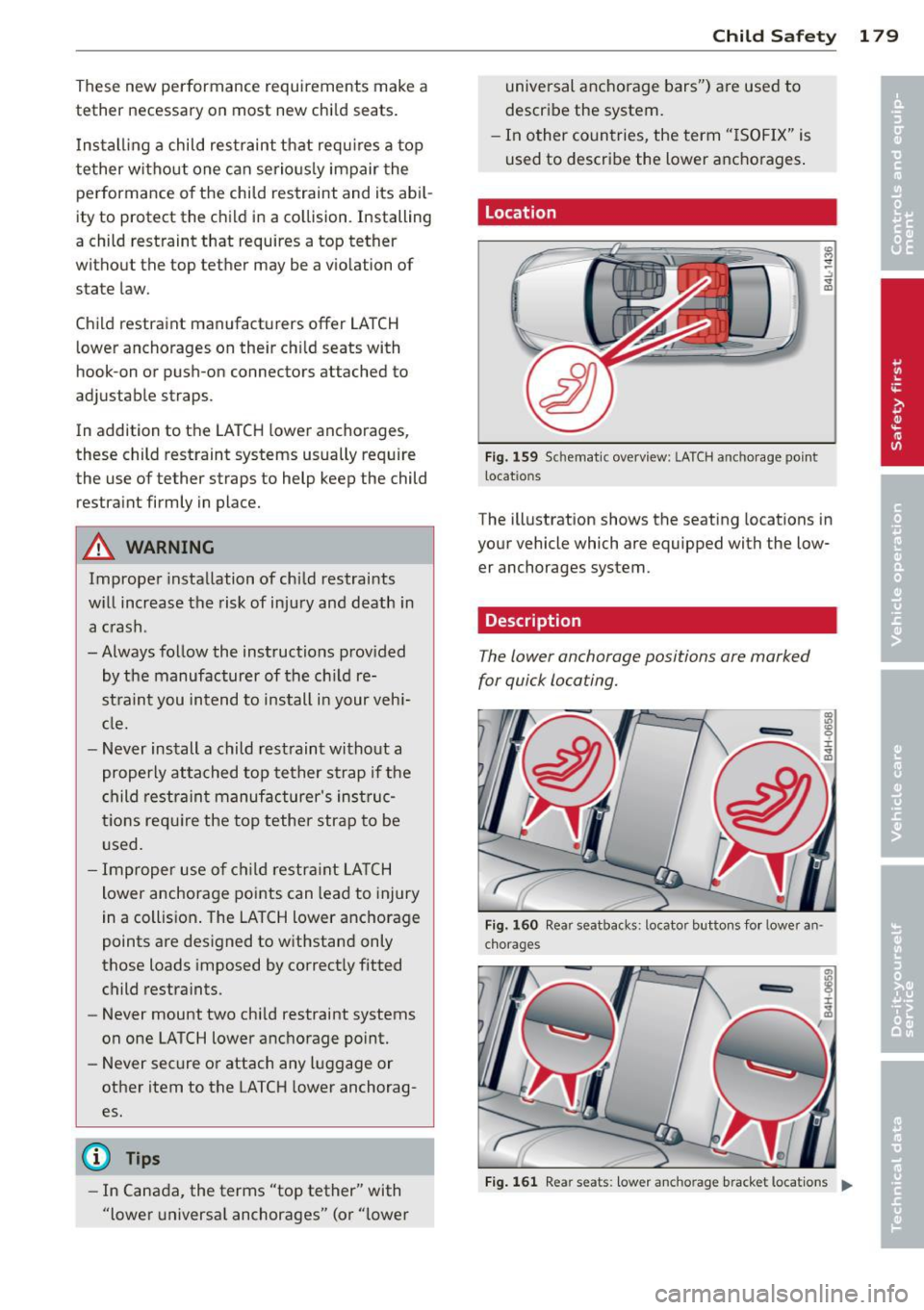
Location
Fig. 159 Sc hemat ic ove rv iew : LAT CH a nch orag e poin t
l ocat io n s
T he illustration shows the seating locations in
your vehicle which are equipped with the low
er anchorages system .
Description
The lower anchorage positions are marked
for quick loca ting.
Fig. 160 Rea r seat backs : locato r but tons fo r lowe r an ·
cho ra g es
r
~ I
Fi g. 1 61 Re ar seat s: low er an cho rage bra cket lo cat ion s IJI,-
Page 182 of 300
180 Child Safety
Attachment locator markers for lower
anchorages
Circular locator buttons on the rear seatback
indicate the lower anchorage locations on the
rear seating positions¢
fig. 160 .
Lower anchorages
The lower anchorage attachment points are
located between the rear seatback and rear
seat cushion
¢ fig . 161.
Lower anchorages secure the child restraint in
the seat witho ut using the vehicle 's safety
belts. Anchorages provide a secure and easy
to-use attachment and minimize the possibili
ty of improper chi ld restraint installation.
All chi ld restraints manufact ured after Sep
tember 1, 2002, must have lower anchorage
attachments for the
LATCH system.
Remember that the lower anchorage points
are only intended for installation and attach
ment of child restraints specifically certified
for use with
LATCH l ower anchorages. Child
restraints that are not equipped with the low
er anchorage attachments can still be instal led in compliance with the c hild restra int
manufacturer's instructions on using vehicle
safety belts.
,&. WARNING
Improper use of LATCH lower anchorages
can cause serious personal injury in an ac
cident .
- Always carefully follow the child re
straints manufacturer's instructions for
proper installation of the child restraint
and proper use of the lower anchorages
or safety belts in your vehicle .
- Never secure or attach any luggage or
other items to the
LATCH lower ancho
rages.
-Always read and heed the important in
formation about child restraints in this
chapter and WARNINGS
¢page 166,
Child Safety.
Guidance fixtures for lower anchorages
Special guidance fixtures increase the conven
ience of the lower anchorages and are availa
ble from your authorized Audi dealer.
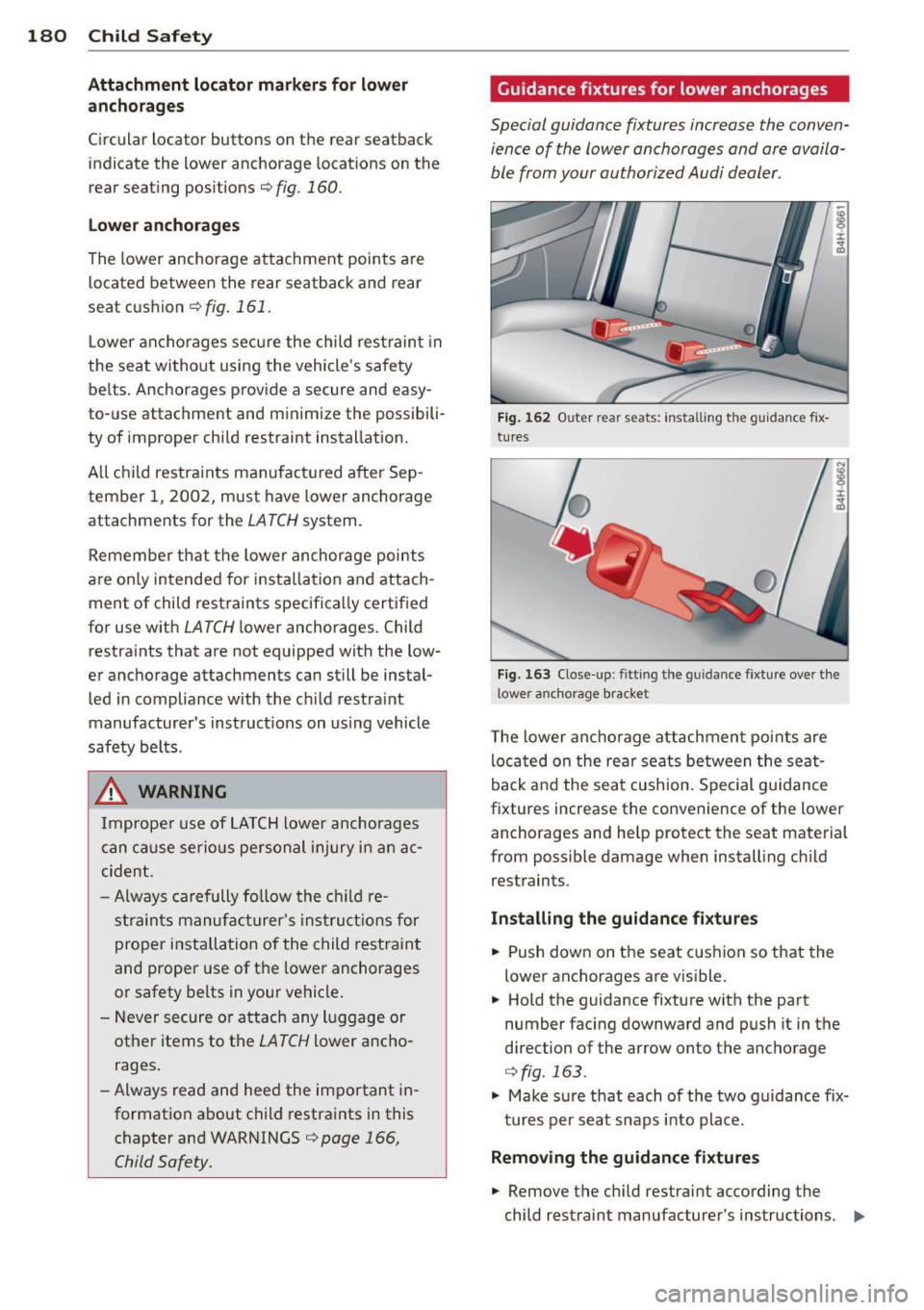
Fig. 1 62 Outer rear seats: inst all ing th e guidanc e fix
tures
Fig . 163 Close-up: fitting th e g uida nce fixture over t he
lower anchorage bracket
T he lower anchorage attachment points are
located on the rear seats between the seat
back and the seat cush ion. Special guidance
fixtures increase the convenience of the lower anchorages and help protect the seat material
from possible damage when installing ch ild
restraints.
Installing the guidance fixtures
.,. Push down on the seat cushion so that the
lower anchorages are visible.
.,. Hold the guidance fixture with the part
number facing downward and push it in the
direction of the arrow onto the anchorage
¢fig . 163 .
.,. Make su re that each of the two guidance fix
tures per seat snaps into place .
Removing the guidance fixtures
.,. Remove the chi ld restraint according the
child restraint manufacturer's instructions. ..,.
Page 183 of 300
.. Push down on the seat cushion so that the
lower anchorages are visib le .
.. Pull
off the guidance f ixtures from the low
er anchorages.
.. Always remove the guidance fixtures and
keep them in a safe place when not in use .
You may find it easier to install child re
straints equipped with hooks attached to
straps without the guidance f ixtures in place.
If th is is the case, remove the guidance fix
tures by pull ing them
off the anchorages .
H owever, the guidance fixtures can help you
to locate the
LATCH anchorages.
& WARNING
Imprope r use of tether anchorages or low
er anchorages can cause serious persona l
injury in a crash .
- Always carefully fo llow the child re
straint manufacturer's instruct ions for
proper installation and use of child re
straint systems .
- Never use the
LATCH or tethe r anchorag
es to attach safety belts or other kinds of
occupant restraints.
- Child restraint tether attachments and
lower attachments are only designed to
secure a child restraint that has bee n
equipped to use these anchorages.
- Tether anchorages and lower anchorages
are designed to withstand only those
loads imposed by correctly fitted chi ld
res traints. Under no circumstances can
they be used safely for adu lt or ch ild
safety belts o r harnesses.
- Never mount more than one ch ild re
straint to a sing le te ther or to a lower an
c ho rage point. A ttaching two child re
strain ts to a single anchor age point can
cause the anchorage to fail and cause se
rious persona l injury in a crash .
(D Note
-Remove the guidance fix ture s before
fo ld ing the rea r seatback to p reven t
damag ing t he seat c ushion .
Child S afety 181
- To attach the chi ld restraint sec urely, the
seat must be moved to the farthest rear
position, the seat he ight set to the low
est position and the head restraint must
be adjusted to the vertical pos ition
9 page 57.
-If you leave the guidance fixtures instal
led for several days, they could leave a
mark on the upholstery on the seat cush
ion and back rest in the area that the
guidance f ixtures were installed. The up
holste ry would also be permanen tly
st re tched aro und the guidance fixtures.
T his app lies especia lly to leather seats .
Installing a child restraint with LATCH
lower anchorages
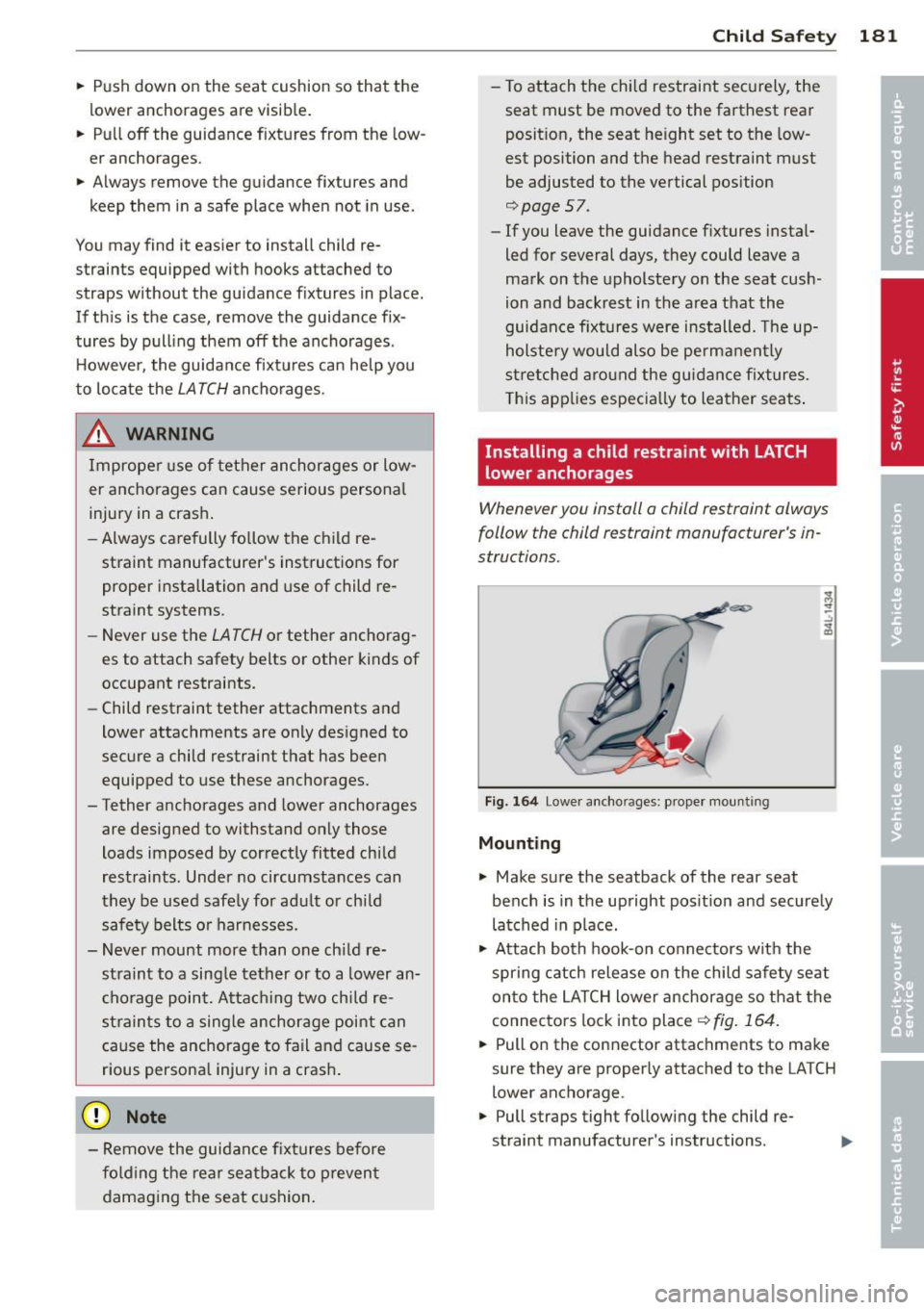
Whenever you install a child restraint always
follow the child restraint manufacturer's in
structions.
F ig. 164 Lowe r anchorages: prope r mount ing
Mounting
.. Make sure the seatback of the rear seat
bench is in the upright pos it ion and securely
latched in place.
.,. Attach both hook-on co nnectors wit h the
spring catch release on the child safety seat
onto the LATCH lower anchorage so that the
connectors lock into place
9 fig. 164.
.. Pull on the connector attachments to make
sure they are proper ly attached to the LATCH
lower anchorage .
.. Pull straps tight following the child re
straint manufacturer's instructions .
Page 184 of 300
182 Child Safet y
Relea sin g
.,. Loosen the tension on the straps following
the chi ld restraint manufacturer's instruc
tions.
.,. Depress the spring catches to release the
anchorage hooks from the lower anchorag
es.
Remember: Use tether straps to help keep the
child restraint firmly in p lace.
A WARNING
Improper use of the LATCH system can in
crease the risk of serious personal injury
and death in an acc ident.
- These anchors were developed only for
child safety seats us ing the "LATCH" sys
tem .
- Never attach other child safety seats,
belts or other objects to these anchors .
- Always make sure that you hear a click
when latching the seat in place. If you do
not hear a click the seat is not secure and
could fly forward and h it the interior of
the vehicle, or be ejected from the vehi
cl e.
&_ WARNING
Imprope r insta llation of chi ld restrai nts
w ill increase the risk of inju ry in an acc i
dent.
- Always fo llow the child restraint system
man ufa cturer's instr uctions for proper
installation of the child restraint system
and proper use of tether straps as we ll as
the lower anchorages or sa fety belts in
your vehicle .
- Always read and heed the important in
format ion and WARNINGS about child
safety and the installation of child re
straint systems
c:> page 166, Child Safe
ty.
(D Note
On veh icles with p ower adjustable rear
seats* some criteria must be observed when attaching the chi
ld restraint using
the
LATCH system:
- T o attach t he ch ild restraint sec urely, the
seat must be moved to the farthest rear
posit ion, the seat he ight set to the low
est position and the head restraint must
be adjusted to the vertical position
c:>page 57.
- If a child safety seat is attached to one of
the rear seats, this seat must not be ad
justed us ing the power controls under
any c ircumstances . T he
Entry as sistanc e
for this seat must also be deactivated in
the MM I
c:> page 60. The child safety seat
a s well as the rear se at can be damaged
by the adj ustment process .
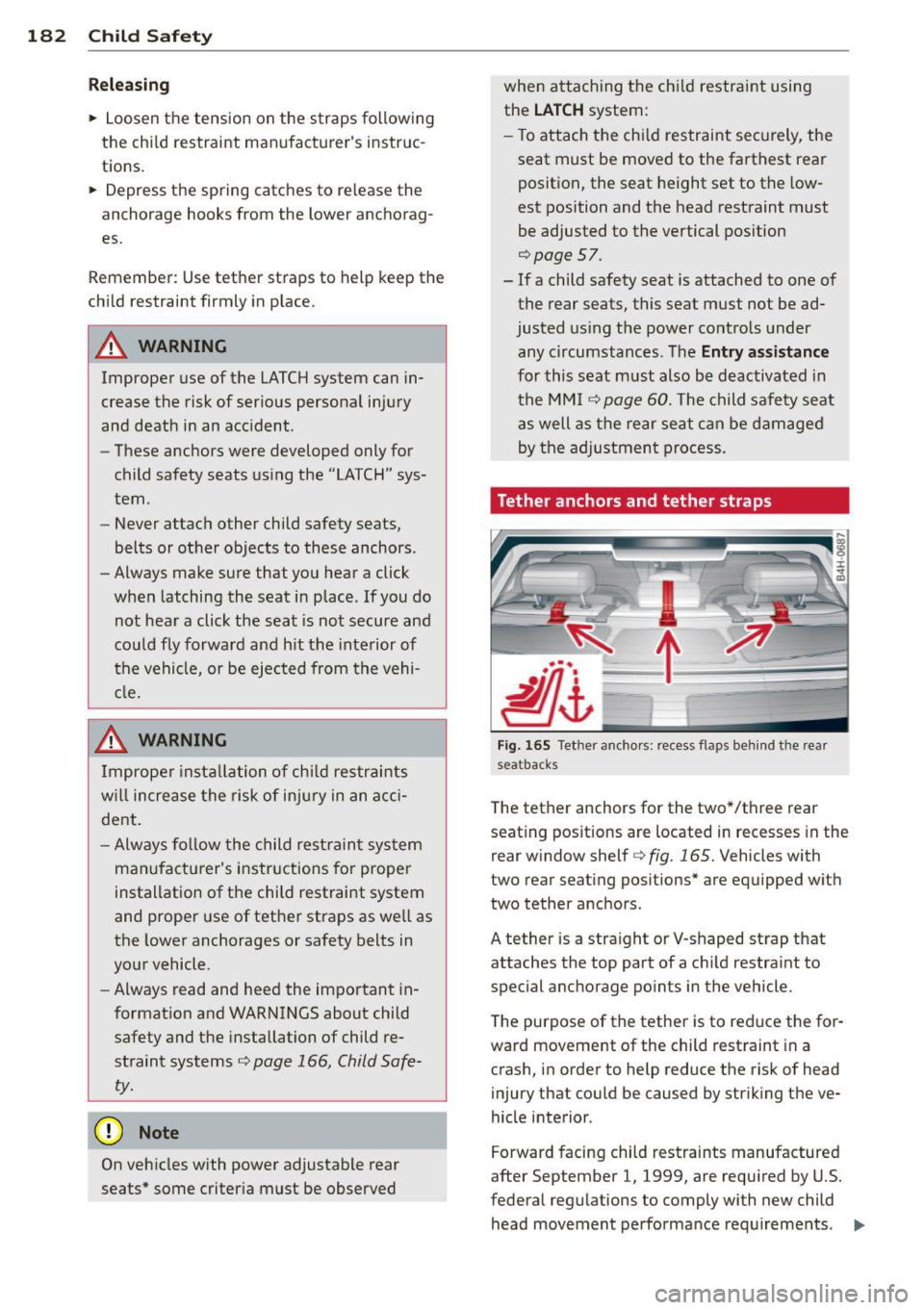
Tether anchors and tether straps
Fig. 1 65 Tet her ancho rs: recess flaps behind th e rea r
seatbacks
T he tether anchors for the two* /three rear
seat ing positions are located in recesses in the
rear w indow shelf
c:> fig . 165. Vehicles with
two rear seating positions* are equipped wit h
two tether anchors .
A tether is a stra ight or V-shaped strap that
attaches the top part of a ch ild restra int to
special anchorage po ints in the vehicle.
T he purpose of the tether is to reduce the for
ward movement of the child restraint in a crash, in order to help reduce the risk of head
injury that could be caused by strik ing t he ve
hicle interior .
Forward facing child restraints manufactured
after September 1, 1999, are requ ired by U.S.
federal regulations to comply with new child
head movement performance requirements . .,..
Page 185 of 300
These new performance requirements make a
tether necessary on most new chi ld safety
seats.
.&_ WARNING
Improper installation of child restraints
will increase the risk of injury and death in a crash.
- Always follow the instructions provided
by the manufacturer of the ch ild re
straint you intend to install in your Audi.
- Improper use of c hild restraint anchors
(including tether anchors) can lead to in
jury in a collision. The anchors are de
signed to withstand only those loads im
posed by correctly fitted ch ild restraints.
- Never mount two chi ld restraint systems
on one LATCH lower anc hor po int.
- Never attach two child restraint systems
to one tethe r strap or tether anchorage.
- Never attach a tether strap to a tie-down
hook in the luggage compartment .
- Never use child restraint tether ancho
rages to secure safety belts or other
k inds of occ upant restra ints.
- Never secure or attach any luggage or other items to the LATCH lowe r ancho
rages or to th e tethe r ancho rs.
- If a tether or other strap is used to at tach a child restraint to the front passen
ger seat, make sure that it is not so
t ight, that it causes the weight -sensi ng
mat to measu re mo re weight than is ac
t u a lly on the seat.
- T he he avier weig ht reg iste red ca n make
the Advanced Airbag Sys tem work as
tho ugh an adult were on the seat and de
ploy the Advanced Airbag w hen it must
be s uppressed causing serious or
even
fatal injury to the child .
- If you must install a rearward facing
child safety seat on the front passenger
seat because of exceptional circumstan
ces and the
PASS ENG ER AIR BAG OFF
light does not come on and stay on, im
med iate ly install the rear-facing chi ld
safety seat in a rear seating posit ion a nd
-
Child S afety 183
have the airbag system inspected by your
Aud i dealer.
Installing the upper tether strap on the
anchorage
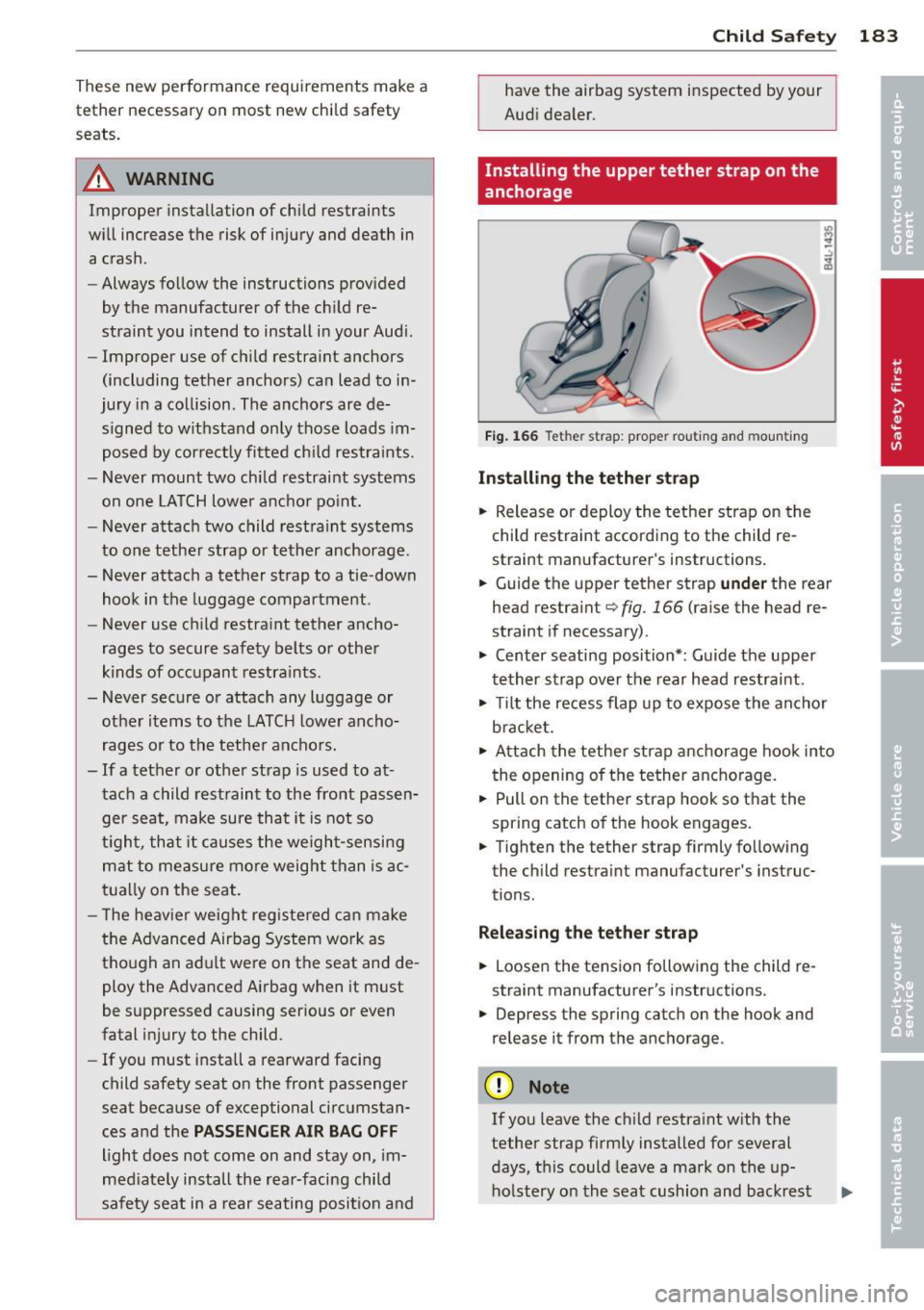
F ig . 1 66 Tet her st rap: proper ro uting and mounting
Installing the t eth er strap
.. Release or deploy the tether strap on the
child restraint according to the child re
straint manufacturer's instructions.
.. Guide the upper tether strap
unde r the rear
head restra int
qfig. 166 (ra ise the head re
straint if necessa ry) .
.. Center seating position*: Guide the upper
tether strap over the rear head restra int .
.. Til t the recess flap up to expose the an chor
bra cket.
.. Attach the tether strap anchorage hook into
the opening of the tether ancho rage .
.. Pull on the tether strap hook so that the
spring catch of the hook engages .
.. Tighten the tether strap firmly follow ing
the child restraint manufacturer's instruc
tions .
Relea sing the tether strap
.. Loosen the tension following the child re
straint manufacturer's instructions.
.. Depress the spring catch on the hook and
release it from the anchorage .
Q) Note
If you leave the child restraint w ith the
tether strap firmly installed for several
days, t his could leave a mark on the up
ho lstery o n the seat cushion and backrest
Page 186 of 300
184 Child Saf ety
in the area whe re the tether strap was in
stalled. The upholstery would a lso be per
manently stretched around the tether
strap. This applies especially to leather
seats.
Using tether straps on rearward-facing
child restraints
Currently , few rear-facing child rest rain t sys
tems come with a tether. P lease read and
heed the child restraint system manufactur
er's instructions carefully to determine how to
properly install the tether .
A WARNING
A child in a rearward -facing child safety
seat installed on the front passenger seat
w ill be seriously injured and can be k illed if
the front a irbag inflates -even with an Ad
vanced Airbag System .
- The inflating a irbag will hit the child
safety seat or infant carrier with great
force and w ill smash the ch ild safety seat
and child against the backrest, cente r
armrest, or door.
- A tight tet her or ot her st rap on a rear
wa rd-fa cing child restra int attached to
the front p assenger sea t ca n put too
much pressure on the weight -ma t in the
seat and register a heavier weight in the
Advanced Airbag System. The heavier
we ight registered can make the system
work as though an adu lt were on the seat
and dep loy the Advanced Airbag when it
must be suppressed ca using se rious or
even fatal injury to the child .
- If you must install a rearward facing child safety seat on the front passenger
seat because of exceptional circ umstan
c es and the
PASSENGER AIR BAG OFF
ligh t does no t come on and stay on, im
med iately install the rear -facing child
safety seat in a rear seating position and
have the a irbag system inspected by yo ur
Audi dealer.
Additional Information
Sources of information about child
restraints and their use
T he re a re a number o f sou rces of add itiona l
information abo ut child rest raint se lection, in
sta llation and use:
N HT SA advises that the bes t ch ild safety seat
is the one that fits your ch ild an d fits in you r
vehicle, and that yo u will use correct ly and
consistently .
T ry before yo u buy!
U.S National Highway Traffic Safety Admin
i s tration
T el.: 1-888-3 27-4 236 (TIY: 1-800- 424-9153)
www.n htsa.gov
National SAFE KIDS Campaign
T el.: (202) 662-0600
www.safe kids.o rg
Safety BeltSaf e U.S .A
Tel.: (800) 745-SAFE (English)
Te l.: (800) 7 47-SANO (Span is h)
www. carseat .org
Transport Canada Information C entre
Tel.: 1-800-333-0371 o r call
1-6 13-998-86 16 if you a re i n the Ottawa area
http://www.tc.gc.ca/e ng/ roadsafe ty/
men u.h tm
Audi Cu stomer R elation s
Tel.: (800) 822-2834
Page 212 of 300
210 Cleaning and protec tio n
grease or dye must be patted off using ab
sorbent materia l. It may be necessary to re
treat the areas with detergent paste and wa
te r.
I n the case of general soi ling of the uphols
tery and cover material, we recommend hiring
a specialist that has the equ ipment to clean
the seat cove rs and other fabric surfaces by
shampooing and spray ex traction.
A WARNING
Always read and heed all WARNINGS and
the information
~ page 203.
(D Tips
Open Velcro fasteners on your clothing can
damage the seat cover. Please make sure
that Velcro fasteners are closed.
Plastic parts and instrument panel
Always use a clean cloth moistened in clear
water to clean these areas. For pers istent dirt
use an Audi approved
s ol ve nt-fr ee plastic
cleane r/protectant.
A WARNING
So lvents can change the properties of
some plastics and make it harder for the
airbag to dep loy.
- Never clean the instr ument pane l or the
surface of airbag modules with cleaning
products that contain solvents .
- Products containing solvents wi ll make
the surface of th is part porous.
- Serious injuries can result if plastic parts
come loose when the airbag is deployed .
- Always read and heed all WARN INGS and
other information ~
page 203.
0 Note
Cleaning agents con taining solvents will
at tac k t he mater ial and can change the
way it behaves .
Trim and molding
Trim and molding in the vehicle interior can
be cleaned with a dry m icrofiber cloth. To pre
vent scratches, do not use any cleaning so lu
tions.
Natural leather
Appl ies to vehicles: with natural leather
Audi makes great efforts to maintain the
properties, natural look and feel of interior
leather .
General
We offer many d iffe rent types of leather o n
ou r vehicles. Most a re d ifferent types of nappa
l eather, which has a smooth s urface and
comes in various colors .
T he intensity of the co lor dete rm ines the visu
al characterist ics and appea rance . If the su r
face of the leather has a typ ica l natural look ,
then the leather is a nappa lea ther that has
been left in a relative ly natural condition . This
l eather offers particularly good comfort and
breathes we ll. Fine veins, closed grains, insect
bites, skin folds, and subtle variations in color
rema in v is ible. These character istics demon
strate that the material is natural.
Natura l nappa leather is not covered by a co l
or finish. It is therefore more sensitive to soil
i ng and wear, which is someth ing you need to
consider if children, animals or other factors
might prove to be part icu la rly ha rd o n the
leather .
By contrast, leather types that are covered by
a colo red finish layer are more durable. This
has a positive effect on the leather 's resist
ance to wear and soiling i n dai ly use . On the
other hand, the typica l char acteristics of natu
ral leathe r are barely or not appa rent. Howev
er, this does not mean that the leather itse lf
is of infe rior quality.
Page 287 of 300

A
Accessories .................. ... ... 282
AC (automatic climate control) ... .. .. .. 76
Adaptive air suspension/sport ......... 103
adaptive cruise control Stop-and-go traffic ................. 91
Adaptive cruise control . . . . . . . . . . . . . . . . 87
Messages . . . . . . . . . . . . . . . . . . . . . . . . . 94
Request for driver intervention . . . . . . . . 92
Sensoren/Kamera reinigen .......... 205
Adaptive Light (defective) ... .......... 21
Adding Engine coolant .............. ... ... 228
Eng ine oil ........................ 225
Windshield washer fluid ............ 234
Additives Engine oil .. ................. .. ... 225
Adjustable steering column ............ 79
Adjusting Air distribution (automatic climate con-
trol) . . . . . . . . . . . . . . . . . . . . . . . . . . . . . . 77
Front seats . . . . . . . . . . . . . . . . . . . . . . . . 54
Instrument illumination ............. 47
Steer ing column .............. ...... 79
Temperature (automatic climate control) 77
Airbag system . . . . . . . . . . . . . . . . . 142, 161
Advanced Airbag System ............ 146
Advanced Airbag System components . 149
Care ........................ ..... 155
Ch ildren ......................... 167
Ch ild restra ints ............... ..... 168
Components (front airbags) . ... .. .. . 149
Danger of fitting a child seat on the front
passenger seat .................... 144
Disposal . . . . . . . . . . . . . . . . . . . . . . . . . 155
Front airbags . . . . . . . . . . . . . . . . 146, 147
How do the front airbags work? ... .. . 151
How many airbags does my vehicle
have? ... ..... ........... ...... .. 149
H ow the Advanced Airbag System com-
ponents work together ............. 150
I mportant safety instructions on the
knee airbag system .......... ... .. . 159
Important things to know ... ... .. .. . 142
Knee airbags ...................... 157
Monitoring . . . . . . . . . . . . . . . . . . . . . . . 153
PASSENGER AIR BAG OFF light ...... . 153
Index 285
Repairs .......................... 155
Safety instructions .. .............. . 155
Side a irbags ... .. .. ............... 160
Side curtain airbags ................ 163
Warning/indicator lights ............. 18
Warning/Indicator lights .......... . 153
Weight-sensing mat ... .. ..... ..... 167
When must the system be inspected? 153
Aircraft Transporting your vehicle ........... 274
Alloy wheels .. .... .. ............... 208
All Wheel Drive ..................... 191
Winter tires ...................... 250
Ambience lighting ................... 46
Anti-freeze
refer to Engine coolant ............ . 227
Anti-lock braking system ............. 187
Warning/ind icator lights ............. 19
Anti-slip regulation ................. 187
Anti-theft systems Electronic immobilizer ............... 29
Audi braking guard
refer to b rak ing guard ............... 87
Audi drive select
refer to drive select 103
Audi Service Repair Manuals and Litera-
ture .............................. 280
AUTO Automat ic climat e control ............ 76
Automatic headlights ............... 43
Auto Lock . . . . . . . . . . . . . . . . . . . . . . . . . . 30
Automatic belt retractor ............. 137
Automat ic car wash ................. 204
Automatic climate control Air vents . . . . . . . . . . . . . . . . . . . . . . . . . . 77
Automatic recirculation .............. 78
Operation . . . . . . . . . . . . . . . . . . . . . . . . . 76
Setup ............................ 78
Automatic climate control system
synchronizing . . . . . . . . . . . . . . . . . . . . . . 77
Automat ic transmission (t iptronic) ..... 109
Emergency mode .................. 112
Kick-down ... ..................... 112
Manual shifting .. .. . .. .. ..... ..... 112
Parking lock emergency release ...... 113
Se lector lever positions ............. 109
Automatic wipers .................... 48
•
•
Page 288 of 300

286 Index .:..:..:..::....::.....:..._ ___________________________ _
Auto Safety Hotline ....... ... .. .... . 132
Average consumption ........... .. .... 24
Ave rage speed . . . . . . . . . . . . . . . . . . . . . . . 24
Avoid damaging the vehicle .. .. .. .... . 195
B
Battery ... .. .. . .. ..... ..... .. .. .. . 230
Charging . .. .. . ... ... .. .. .. .. .. .. . 233
Important warnings .. .... .. .. .... . 231
Location ... ... ............ .. .... . 231
low ..... .. ................ ..... . 192
Replacing the battery ....... ... ... . 234
State of cha rge .... .... ....... .. .. . 192
Winter operat ion .. ... .... .. .. .. .. . 230
Working on the battery .. ... ... .... . 231
Before driving .............. ... .... . 124
Blended gasoline ....... .... ... .. .. . 215
Blower (automatic climate control) . . . . . . 77
Body cavity sealing .. ..... .. .. .. .. .. . 208
Booster seats ................ ... ... 174
Brak e fluid
Ch anging the brake fluid ... .. .. .. .. .
230
Che cking the brake f luid level ... .. .. . 229
What is the correct brake flu id level? ..
229
What should I do if the brake fluid warn -
ing light comes on? ........ .... ....
229
Brake system
Anti-lock b raking sys tem ... .. .. .... ..
19
Brake a ssi st s ystem ...... ..... .. .. . 187
Brake booster ............. ... .. ... 190
Brake fluid .... ... .... ..... .. .. .. . 229
Brake fluid spec ificat ions for refill and re-
p lac ement ....... ....... .. .. .. .. .
230
Brake light defect ive .. .. .. .. .. .. .. . . 21
Brake pads ............... ... .... . 194
Electromechanica l parking brake .... .. 82
Fluid reservoir ............ ... .... . 229
How does moisture or road s alt affect the
br akes? .. ...... .. ... .... .. .. .. .. .
189
Warning/indicator lights .... .... ..... 14
Worn brake pads symbol ....... .. .... 19
braking guard .............. ... .... .. 87
Messages . . . . . . . . . . . . . . . . . . . . . . . . . 94
Se ttings . .. .. . .. ..... ..... .. .. .. .. 94
Break-in period .............. .. .... . 194
Brake pads ............... ... .... . 194
Tires 194
Bulbs ..... ..... .. ............. .... 269
C
Cal iforn ia Proposition 65 Warn ing . .. .. 220
Battery specific . .................. 232
Capacities .. .. .. .. .. ...... ..... .. .. 278
Engine oil ....... ................ . 222
Car care ...... .. .. .. ....... .... .... 203
Exterior ... .. .. .. ...... ..... .. .... 203
Interior .......... .... ........... . 209
Car carrier
Transporting your vehicle .......... .
274
Catalytic converter 195
Center armrest
Cockpit ...... ... .. .............. ..
5 7
Rear .... ... .. .. .. ...... ..... .. .. . 64
Central locking .. .. .... ... .. .. .. .. .. . 30
Eme rgency locking ... ... .... ... .. .. . 34
Certification .. .. . .. ... ..... ... ... .. 283
Chang ing a wheel .. .......... ...... . 259
Changing engine oil ................ . 226
Chassis (undercoating) .. ....... .... .. 208
Checking
Engine coolant level ............... .
227
Tire pressure ... .. ....... ...... .. .. 241
Child restraints
Danger of using child restraint s in the
front sea t . . . . . . . . . . . . . . . . . . . . . . . .
144
Where can I get additional information
about child restraints and the ir use? ..
184
Child restraint system anchors ..... ... 178
Child safety . .. .. .. ...... ..... .. .... 166
Convertib le locking retractor ..... .. .. 175
Guidance fixtures for lower anchorages 180
Important safety instructions for using
child saf ety seats ................. .
169
Important things to know when driving
wi th children .. .. ....... ...... ....
166
Tether anchors ... ....... ...... .. .. 1 82
Tether straps .. .. ................ . 182
Child safety lock
Rear doors (mechanical) . ..... .. .... .
37
Rear doors (power) ...... ..... ..... . 38
Child safety seats . ................. . 171
Booster seats .... ................. 174
Convertib le child sea ts . . . . . . . . . . . . . 172