lock AUDI A8 2012 Workshop Manual
[x] Cancel search | Manufacturer: AUDI, Model Year: 2012, Model line: A8, Model: AUDI A8 2012Pages: 300, PDF Size: 75.06 MB
Page 178 of 300
176 Child Safety
younger, should always ride in the back seat properly restrained for their age and size.
A WARNING
Improperly installed child safety seats in
crease the risk of serious personal injury
and death in a collision .
-Always make sure that the safety belt re tractor is locked when installing a child safety seat. An unlocked safety belt re
tractor cannot hold the child safety seat
in place during normal driving or in a
crash .
- Always buckle the child safety seat firmly
in place even if a child is not sitting in it .
A loose child safety seat can fly around
during a sudden stop or in a collision.
- Always make sure that the rear seat
backrest to which the center rear safety
belt is attached is securely latched when
ever the rear center safety belt is being
used to secure a child restraint.
- If the backrest is not securely latched,
the child and the child restraint will be
thrown forward together with the back rest and will strike parts of the vehicle
interior. The child can be seriously in
jured or killed.
- Never install rear-facing child safety
seats or infant carriers on the front pas senger seat . A child will be seriously in
jured and can be killed when the passen
ger airbag inflates .
- The inflating airbag will hit the child
safety seat or infant carrier with great
force and will smash the child safety seat
and child against the backrest, center
armrest, door or roof.
- Always install rear-facing child safety
seats or infant carriers on the rear seat.
- Forward-facing child safety seats or in
fant carriers installed on the front pas
senger's seat may interfere with the de
ployment of the airbag and cause serious
injury to the child.
- It is safer to install a forward-facing
child safety seat on the rear seat. -
Always read and heed all WARNINGS
whenever using a child restrained in ave
hicle is being used
c> page 166. Special
precautions apply when installing a child
safety seat on the front passenger seat
c:> page 144, Child restraints on the front
seat -some important things to know.
A WARNING
-
Always take special precautions if you
must install a forward or rearward-facing
child restraint on the front passenger's
seat in exceptional situations:
- Whenever a forward or rearward-facing
child restraint is installed on the front
passenger seat, the
PASSENGER AIR
BAG OFF
light must come on and stay on
whenever the ignition is switched on.
- If the
PASSENGER AIR BAG OFF light
does not come on and stay on, perform
the checks described
c> page 153, Moni
toring the Advanced Airbag System.
- Take the child restraint off the front pas
senger seat and install it properly at one
of the rear seat positions if the PASSEN
GER AIR BAG OFF
light does not stay on
whenever the ignition is switched on.
- Improper installation of child restraints
can reduce their effectiveness or even
prevent them from providing any protec
tion.
-An improperly installed child restraint
can interfere with the airbag as it de ploys and seriously injure or even kill the
child.
- Always carefully follow the manufactur
er's instructions provided with the child
safety seat or carrier.
- Never place additional items on the seat
that can increase the total weight regis
tered by the weight-sensing mat and can
cause injury in a crash.
A WARNING
Forward-facing child restraints:
Page 179 of 300
-Always make sure the forward-facing
seat has been designed and certified by
its manufacturer for use on a front seat
with a passenger front and side airbag .
- Never put the forward-facing child re
straint up, against or very near the in
strument panel.
- Always move the passenger seat into its
rearmost position in the seat's fore and
aft adjustment range, as far away from
the airbag as possible before installing
the forward-facing child restraint . The
backrest must be adjusted to an upright
position.
- Make sure that the
PASSENGER AIR BAG
OFF
light comes on and stays on all the
time whenever the ignition is switched
on.
A WARNING ,..__
Rearward-facing child restraints:
- A child in a rearward-facing child safety
seat installed on the front passenger
seat will be seriously injured and can be
killed if the front airbag inflates - even
with an Advanced Airbag System.
- The inflating airbag will hit the child
safety seat or infant carrier with great
force and will smash the child safety seat
and child against the backrest, center
armrest, door or roof.
- Always be especially careful if you must
install a rearward facing child safety seat
on the front passenger seat in exception
al circumstances.
-A tight tether strap on a rearward-facing child restraint attached to the front pas
senger seat can put too much pressure
on the weight-mat in the seat and regis
ter a heavier weight in the Advanced Air
bag System. The heavier weight regis
tered can make the system work as
though an adult were on the seat and de
ploy the Advanced Airbag when it must
be suppressed causing serious or even
fatal injury to the child .
Child Safety 177
-Make sure that the PASSENGER AIR BAG
OFF
light comes on and stays on all the
time whenever the ignition is switched
on .
- If the
PASSENGER AIR BAG OFF light
does not come on and stay on, immedi
ately install the rear-facing child safety
seat in a rear seating position and have
the airbag system inspected by your Audi
dealer.
Activating the convertible locking
, retractor
Use the convertible locking retractor to se
cure a child restraint.
Always heed the child safety seat manufactur
er's instructions when installing a child re
straint in your vehicle . To activate the conver
tible locking retractor:
.. Place the child restraint on a seat, prefera
bly on the rear seat.
.. Slowly pull the belt
all the way out .
.. Route it around or through the child re
straint belt path
¢ _A .
.. Push the child safety seat down with your
full weight to get the safety belt really tight.
.. Insert the belt tongue into the buckle for
that seating position .
.. Guide the safety belt back into the retractor
until the belt lies flat and snug on the child
safety seat.
.. You should hear a "clicking" noise as the
belt winds back into the inertia reel. Test the
convertible locking retractor by pulling on
the belt. You should no longer be able to
pull the belt out of the retractor. The con
vertible locking retractor is now activated.
.. Make sure that the red release button is fac
ing away from the child restraint so that it
can be unbuckled quickly .
.. Pull on the belt to make sure the safety belt
is properly tight and fastened so that the
seat cannot move forward or sideways more
than one inch (2.5 cm). .,._
•
•
Page 180 of 300
178 Child Saf ety
8_ WARNING ,~
Using th e wrong child restraint or an im
prope rly insta lled child rest raint can cause
ser ious perso nal in jury or death in a cras h.
- Always make sure that the safety belt re-
tractor is locked when installing a child
safety seat. An unloc ked safety belt re
t ractor ca nnot ho ld the child safety seat
in pla ce d uring norm al driv ing or i n a
c rash.
- Alway s bu ckl e the child safety seat firmly
in pla ce even if a child is not s itting in i t.
A loose ch ild safety sea t ca n fly around
dur ing a sud den s top or in a crash .
- Alw ays m ake su re the se at backrest to
wh ich the child restrain t is ins talled is in
an upr ight position and sec urely latched
into p lace and cannot fo ld forward. Oth
erwise, the seatback w ith the chi ld safety
seat attached to it could fly forward in
the event of an acc ident or other emer
gency situation.
- Always read and heed all WARNI NGS
w henever using a child restrained in ave
hicle is bei ng used
r::;, page 166 . Special
precautions apply whe n installing a c hild
safety seat on t he fro nt pas senge r seat
r::;, page 1 44, Child restrain ts on the fron t
seat -some imp ortant things to know.
Deactivating the convertible locking
retractor
T he convertible locking retractor for child re
straints will be deactivated automatically
when the belt is wound all the way back into the retractor.
• Press the red button on the safety be lt
buck le . The belt tongue wi ll pop out of the
buck le .
.. Gui de the safety belt a ll the way back into
its stowed posit io n.
A lways let the safety belt retract comp lete ly
into its stowed posit ion. The safety belt can
now be used as an ordinary safety belt with
out the convert ib le lock ing retractor for chi ld
restra ints .
-
If the conve rtib le locking retractor sho uld be
activated inadvertent ly, the safety be lt must
be unfastened and gu ided comp lete ly back in
to its stowed posit ion to deactivate this fea
tu re. If the convert ible locking retractor is not
deact ivated, the safety belt w ill gradua lly be
come tig hte r and uncomfortable to wear .
8_ WARNING
=
Im properly installed ch ild safety seats in-
crease the r is k of serious pe rson al injury
a nd dea th in a co llision.
- Neve r unfasten the safety belt to deacti
vate the conve rtible locking retrac to r f or
child res traints whi le the vehi cle is mov
ing . You would not be restrained and
could be se rious ly in jured in an accide nt.
- Always rea d and heed all WARNIN GS
wheneve r using a chi ld res traine d in ave
h icle is being used
r::;, page 166. Special
preca utions app ly when insta lling a child
safety seat on the front passenger seat
r::;, page 144, Child restraints on the front
seat -some important things to know .
LATCH Lower
anchorages and tethers
for children
Child Restraint System anchors and how
are they related to child safety
T o p rov ide a simple r and more pr acticable w ay
to attach the child restraint on the vehi cle
seat, Federal regulat ions req uire spec ia l lowe r
anchorages in vehicles and devices on new
ch ild restra ints to attach t o the ve hicle ancho
rages.
T he combi nation of t he tether anchorages and
the lowe r anchorages is now generally ca lled
t h e
LATCH system for " Lower Anchorages and
T ethers for Children ."
Forward-facing chi ld restraints man ufactured
after September 1, 1999, are requ ired by U.S.
federa l reg ulations to comply with new child
head movement performance req uirements . .,._
Page 183 of 300
.. Push down on the seat cushion so that the
lower anchorages are visib le .
.. Pull
off the guidance f ixtures from the low
er anchorages.
.. Always remove the guidance fixtures and
keep them in a safe place when not in use .
You may find it easier to install child re
straints equipped with hooks attached to
straps without the guidance f ixtures in place.
If th is is the case, remove the guidance fix
tures by pull ing them
off the anchorages .
H owever, the guidance fixtures can help you
to locate the
LATCH anchorages.
& WARNING
Imprope r use of tether anchorages or low
er anchorages can cause serious persona l
injury in a crash .
- Always carefully fo llow the child re
straint manufacturer's instruct ions for
proper installation and use of child re
straint systems .
- Never use the
LATCH or tethe r anchorag
es to attach safety belts or other kinds of
occupant restraints.
- Child restraint tether attachments and
lower attachments are only designed to
secure a child restraint that has bee n
equipped to use these anchorages.
- Tether anchorages and lower anchorages
are designed to withstand only those
loads imposed by correctly fitted chi ld
res traints. Under no circumstances can
they be used safely for adu lt or ch ild
safety belts o r harnesses.
- Never mount more than one ch ild re
straint to a sing le te ther or to a lower an
c ho rage point. A ttaching two child re
strain ts to a single anchor age point can
cause the anchorage to fail and cause se
rious persona l injury in a crash .
(D Note
-Remove the guidance fix ture s before
fo ld ing the rea r seatback to p reven t
damag ing t he seat c ushion .
Child S afety 181
- To attach the chi ld restraint sec urely, the
seat must be moved to the farthest rear
position, the seat he ight set to the low
est position and the head restraint must
be adjusted to the vertical pos ition
9 page 57.
-If you leave the guidance fixtures instal
led for several days, they could leave a
mark on the upholstery on the seat cush
ion and back rest in the area that the
guidance f ixtures were installed. The up
holste ry would also be permanen tly
st re tched aro und the guidance fixtures.
T his app lies especia lly to leather seats .
Installing a child restraint with LATCH
lower anchorages
Whenever you install a child restraint always
follow the child restraint manufacturer's in
structions.
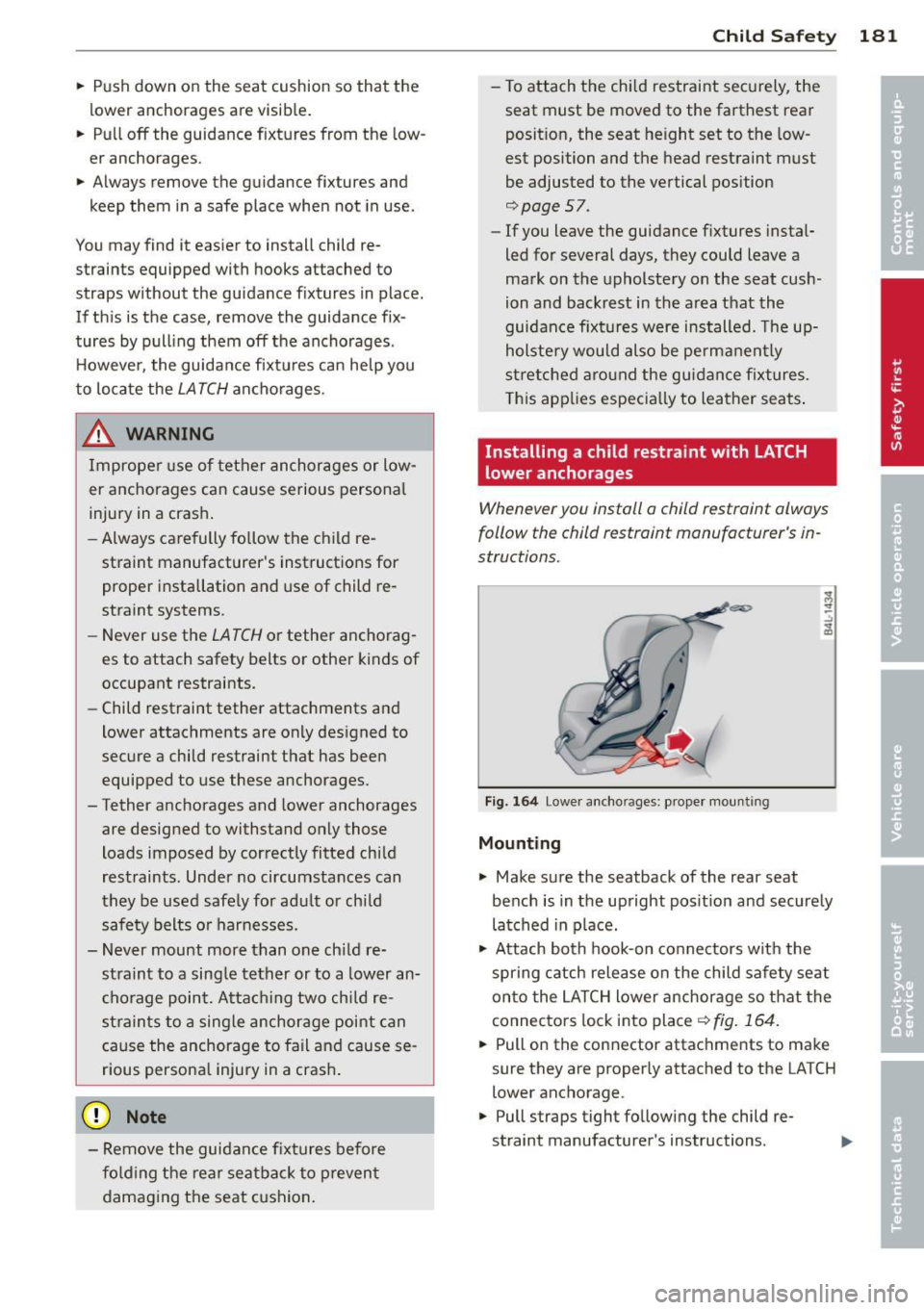
F ig. 164 Lowe r anchorages: prope r mount ing
Mounting
.. Make sure the seatback of the rear seat
bench is in the upright pos it ion and securely
latched in place.
.,. Attach both hook-on co nnectors wit h the
spring catch release on the child safety seat
onto the LATCH lower anchorage so that the
connectors lock into place
9 fig. 164.
.. Pull on the connector attachments to make
sure they are proper ly attached to the LATCH
lower anchorage .
.. Pull straps tight following the child re
straint manufacturer's instructions .
Page 190 of 300
188 Intelligent technology
ESC includes and/or works together with the
anti-lock braking system (ABS), brake assist
system, anti-s lip regulat ion (ASR), e lectronic
d ifferential lock ( EDL), dynamic steering* and
e lectronic interaxle differentia l lock*. ESC is
switched on all the time. I n certa in s ituations
when you need less tract io n, you ca n sw itch
off ASR by pressi ng the button above
~ page 189, fig. 167 the se lector lever. Be
sure to sw itch ASR on ag ain when you no lon
ger need less trac tion.
Anti -lock braking system (ABS)
ABS prevents t he wheels from locking up
when braking. The veh icle can still be st eered
even d uring ha rd b rak ing . Apply steady p res
sure to the br ake ped al. Do no t pu mp the ped
a l. A puls ing in t he bra ke peda l ind icates that
the system is he lping yo u to b rake the vehicle .
Brake assist system
The brake assist system can decrease b ra kin g
d ista nce. It increases braking powe r w hen the
d river p resses the brake pedal quickl y in eme r
gency situa tions . You mus t press and ho ld the
b rake peda l until the situation is over. In vehi
cles with adaptive cruise control*, the brake
assist system is more sensitive i f the d istance
detected to the vehicle ahead is t oo smal l.
Anti-slip regulation (ASR)
ASR reduces engine power w hen the drive
wheels begin to spin and adapts the fo rce to
the road condit ions. This makes it eas ier to
start, accelerate and drive up hills.
Electronic differential lock (EDL )
The E DL brakes wheels that are spinn ing and
transfers the drive powe r to the o ther d rive
wheel o r whee ls if the vehic le is equipped with
a ll whee l drive*. This funct ion is available up
to about 7S mph (120 km/h).
I n extreme cases , EDL automatica lly swit ches
off to help keep the brake on the braked whee l
from overheating. ED L wi ll switch on again au
tomatically when conditions have returned to normal.
Dynamic steering*
On vehicles wi th dynam ic s teeri ng, ES C helps
stab ilize the steer ing in cer tain sit uations.
Electronic interaxle differential lock
function*
T he ele ctronic i nte raxle di fferentia l lock f unc
tion ac tiva tes when dr iving t hrough curves.
B ra king is targeted towar d the whee ls on the
inside of the curve as needed . This helps to
min imi ze front whee l skid, improves traction
and allows for more precise driving throug h
cu rves .
A WARNING
- ESC, ABS, ASR , EDL, dynamic steering*
and the elect ronic interaxle differential
loc k function* cannot ove rcome t he laws
of physics . This is espe cially im po rtant
on slippery o r we t road s.
If the sys tems
begin actin g to stabilize your veh icle, you
should immediately change yo ur speed
to match the road and t raffic conditions .
Do not let the increased safety provided
by these systems tempt you to take risks. Doing so will increase the risk of a loss of
veh icle cont ro l, collision and ser io us per
sonal injur ies .
-Always ada pt your speed to road , traffic
and wea ther conditions. The risk of los
ing contr ol of the vehicle i ncreases wh en
d riving too fast, espe cially through
curve s and on slippe ry or wet roads, and
when dr iv ing too close to vehicles up
ahead. ESC, ABS, the brake ass ist sys
tem, EDL, ASR, dynam ic steering * and
the elect ron ic interaxle differential lock
function * cannot prevent co llisions.
- Always accelerate with s pecial care on
even, smooth s urfaces such as those that
are wet or covered with ice and snow.
The drive wheels can spin even w ith
these assistance sys tems that cannot al
ways he lp to red uce the risk of loss of ve
h icle co nt ro l.
-
Page 204 of 300
202 Trailer towing
• Start the engine.
• Se lect the D selector lever position.
• Re lease the park ing brake and slowly pull
out and away from the wheel chocks.
• Stop and have someone retrieve the wheel
chocks.
(D Tips
If you move the selector lever of the auto mat ic transm ission to P before applying
the park ing brake and before blocking the
wheels, you may have to use more force
later to move the lever out of the P posi
tion.
Page 207 of 300

-Never w ash your ca r in bri ght sunlight.
Drops of water act as magnifying lenses
and may damage your paint.
- When yo u wash your car in the winter : if
you rinse your vehicle with a hose , be
careful not to aim the stream of water
direct ly at locks, or at door or hatch
openings -they can freeze shut.
- Never use sponges des igned to remove
i nsects, or any kitchen scouring sponges
or similar products . They can damage
you r paint finish .
- Never use a dry cloth or sponge to clean
the headlights . Only use wet cloths or
sponges to prevent scratches . It is best
to use soapy water.
- You should remove debris (such as in
sects) from the headligh t lenses on a
regular basis , fo r example when refuel
i ng yo ur vehicle. Never clean the he ad
l ights w ith a dry clo th or sponge. Use a
wet cloth or sponge . It is best to use
soapy water.
@ For the sake of the environment
I n the interes t of the envi ronment, the ve
hicle sho uld only be washed in specia l
wash bays.
Washing your vehicle with a power
washer
Cleaning the exter ior of your car with a high
pressure power washer is safe as long as you observe a few simple rules.
~ Befo re using the power washe r, make sure
you have read and understood the WARN
INGS
c> A in General information on
page 203 .
~ Always follow the operating instructions for
the power washer .
~ Make sure that the jet o n the spray hose
produces a "fan shaped spray ".
~ Do not hold the spray no zzle too close to
soft materia ls.
W hen clea ning the vehi cle w it h a powe r wash
e r
always fo llow the operating instruc tions.
Cleaning and protec tion 205
This applies particu la rly to the operating
pre ssure and the spraying di stance. Keep a
distance from soft materia ls such as rubber
hoses or insulating material as we ll as sensors
and camera lenses.
Do not use a jet which sprays water in a direct
stream or one that has a rotating jet.
Water tempera ture sho uld no t exceed 140 ° F
(60 °().
A WARNING
N eve r wash t ires with a jet that sprays wa
ter in a direct stream . T hi s could cause in
v isib le damage to the t ires and weaken
them, even i f the spray is from a re lative ly
long distance and for a sho rt time. Dam
aged and weakened tires can fail and cause
accidents and personal i njury .
(D Note
To avoid damaging your vehicle, a lways
make sure that the re is suffic ient d istance
between the spray head and soft materials
li ke rubber hoses, plast ic pa rts and sound
deaden ing ma ter ia ls as well as sensors
and camera lenses. Never a im th e sp ray
head at the same point for a long time .
This also applies to cleaning headlights
and painted bum pers. Remembe r: the
cl oser the nozzle is to the surface of the
mater ia l, the greater the stress on the ma
terial.
Sensoren und Kameralinsen
- Entfernen S ie Schnee m it einem Handfeger
und Eis bevo rzugt mit einem losungsm ittel
fre ien Enteisu ngsspray .
- Reinigen Sie die Sensoren (adaptive cruise
cont ro l*, Einparkhi lfe*) mit losungsm itte l
fre iem Re inigungsmi tte l und einem weiche n
t ro ck enen Tuch .
- Befeuchten Sie die Kameralinse m it handel
si.iblichem Glasrein ig ungsm ittel a uf Al ko
holbasis und reinigen Sie die Linse mi t ei
nem trockenen Tuch . Beim lane assist* wird
de r Bereich vor der Linse im Normalfall .,..
•
•
Page 211 of 300
substance use d for u ndercoating cou ld
overheat an d cause a fire.
- Always read and heed all WARNINGS and
other information
¢ page 203.
Exhaust tail pipes
Road sa lt and other corros ive materials will
damage the mater ial in the exhaust tail p ipes
if they are not cleaned regu larly . Do not clean
the ta il p ipes with wheel cleaner, paint polish,
chrome polish or othe r abrasive cleaners .
C lean the tail p ipes with ca r ca re products
that are s uita ble for stain less stee l.
Your authorized Audi dealer can provide clean i ng p rod ucts that have been tested and ap
p roved fo r your vehicle.
Care of interior
Infotainment components
The MMI/RSE* disp lay may be cleaned with a
soft cloth and commercially-ava ilable "LCD
cleaner" . The cloth should be coated light ly
when the clean ing solution when cleani ng the
d isplay.
The MMI/RSE* contro ls must be cleaned first
with a brush so that dirt does not enter the
un it o r enter between the buttons and the
h ousing. Then w iping the controls with a clot h
dampened wi th d ish dete rgent and water is
recommended.
(D Note
To preve nt sc ratches, only clean the dis
p lay when it is d ry.
- To p reven t damage, ma ke s ure fluids do
not enter the cont rols.
Aluminum trim
Use only neutral-pH produc ts to remove spots
and depos its from alum in um s urfaces.
C hr ome ca re products and alkaline cleaners
will attack alum in um s urfaces and can dam
age them over time.
Cleaning and protec tion 209
A WARNING
A lways read and heed all WARNINGS and
other information
¢page 203.
Fabrics and fabric coverings
Fabr ics and fabric cover ings (e.g. seats, door
trim pa ne ls, etc.) shou ld be cleaned at regular
i n tervals w it h a vac uum cleaner. This removes
s ur face di rt particles which cou ld become em
bedded in the fabri c throug h use. Ste am
cleaners sho uld not be used, beca use the
steam tends to p ush the dirt deeper into the
fabric and lock it there .
Normal cleaning
Generally, we recommend using a soft sponge
o r a lint -free microfibe r clo th to the clean fab
ric. Br ushes shou ld only be used for carpets
and floor mats, since other fabric surfaces
could be harmed by br ushes.
Norma l su rface s tains c an be cleaned using a
commerc ially availab le foam cleaner . Spread
the foam on the s urface of t he fabric with a
soft sponge and work it in gently. Do not satu
rate the fabric. T hen pat the foam dry us ing
absorbe nt, dry cloths (e.g. m icrofiber cloth)
and vacuum it after it has dried completely.
Cleaning stains
Stains caused by beverages (e .g. coffee, fr uit
juice, etc.) can be treated with a mild deter
gent solution. Apply the detergent sol ution
with a spo nge. In the case of stubborn stains,
a detergent paste can be applied directly to
the stain and worked into the fabric. After
wards, use copious amounts of clean water to
remove the rem aining de terge nt. Apply the
w at er wit h a d am p clot h or sponge a nd pat
the fabric dry with an abso rbent, dry clot h.
Stains from choco late or makeup should have
de terge nt pa ste (e.g. o x-gall soa p) rubbed i n
to them. Afterwa rds, remove the soap wi th
wa ter (damp sponge) .
Alcohol can be used to treat stains from grease, o il , lipstic k or a ballpoin t pen. M elted ..,_ •
•
Page 213 of 300
Care and handling
Because of the exclusive nature of the types of
leather that Audi uses and their unique prop
erties (such as sensitivity to oils, grease, soi l
ing, etc.), you will need to be somewhat care
fu l with these leathers, and a certain type of
care is required. For examp le, dark cloth ing
materials can d iscolor leather seats (especial
ly if such cloth ing is damp and was not dyed
correctly) . Dust and d irt part icles in pores,
fo lds, and seams can have a n ab ras ive effect
and can damage the leathe r sur face as well as
weaken seams.
The leather should be cleaned regularly as
n eeded . After having been used for a re lative ly
long t ime, yo ur leather seats will acqui re a
rich aged finish. This is a characteristic of nat
ura l leather and a sign o f true quality .
I n o rder to maintain the va lue of th is natura l
p rod uct over the life of yo ur vehicle, you
should follow the recommendations below :
(D Note
-To keep you r leather from bleach ing out,
do not a llow i t to be exposed to bright
s unli ght for long periods of time. If you
have to leave the vehicle parked o utside
for long periods, cover the leather to protect it from d irect exposure to sun
li ght.
- Sharp objects on clothing, such as zip
pers, rivets or sharp pieces on be lts can
l eave permanent scratches or scrape
marks on the surface of the leather.
(D} Tips
- After each time you clean the leather and
at regular interva ls, use a leather preser
vat ive creme that conta ins UV-blockers
and that works into the leather . This
creme w ill nou rish and moistur ize the
l eather, helping it to b reath e and stay
supple. It al so helps to b uild up a pro tec
tive coat ing o n the s urface.
- Clean the leathe r every 2 -3 months,
and clean a ny a reas that get soiled .
Cleaning and protec tion 21 1
- Remove fresh ma rks made by ballpo int
pens, ink, lipstick, shoe po lish, etc. as
soon as poss ible .
- Preserve the color of the leather as need
ed by using a specia l co lored leather care
creme to touch up areas of uneven color.
Cleaning and caring for leather
upholstery and trim
App lies to vehicles: with natural leather
Natural leather requires special care and a t
tention .
Normal clean ing
.. Clean soiled areas with a slightly moistened
cotton or woolen cloth .
More stubborn dirt
.,. More s tubborn di rt ca n be removed using a
cloth sa turated wi th a mild soap sol ution (2
tablespoons mild liq ui d soap) .
.. Never a llow the soap so lution to saturate
the leather, and make certain that no water
s oak s in to the seam s.
.,. Wipe off the soap so lu tion with a soft, d ry
cloth .
Cleaning spots
.. Remove fresh wate r-based spots (such as
coffee, tea, juices, blood) with an absorbent
cloth or paper towel.
.,. Remove fresh
grease or oil -based spots
(such as butter , mayonnaise, chocolate) with
an absorbent clot h or paper towel, or use
the cleaner from the leather care kit if the
spot has no t yet penetrated into t he surface
of the leather .
.,. Use an oil/grease dissolving spray, i f
oil/
grease spot s have d ried on.
.. Remove specific kinds of spots (ballpoint
pen, fe lt marker, fingerna il polish, water
based pa int, shoe po lish, etc.) with a spot
remover specifically formu lated for lea ther.
Leather care
.. Every half yea r use an approved leather care
product (available from your Audi dea ler) to
care for the leather . .,.
•
•
Page 215 of 300
-Wh en cl eaning your safety belts, inspect
them for damage. If you discover dam
age, see your Audi dealer .
- Always read and heed all WARNINGS and
other information ¢
page 203.
Cooler
Applies to veh icles: with coole r
A layer of ic e or frost in th e cool er interfer es
with its cooling performanc e.
Cleaning
The refr igerator sho uld be cleaned reg ula rly .
.,. Wash the cooler w ith lukewarm water a nd a
mild cleaning so lution, if necessary .
.,. The n w ipe the coole r dry.
.. Dust and dir t will acc umu late near the ven
t il ation openings in the luggage compar t
me nt due to normal coole r usage. This
sho uld be cleaned reg ularly.
Defrosting
.,. Switc h the coo ler off ¢ page 72.
.. Remove any food or beverages and al low
the coole r to defrost with the door open .
.. Wipe the inside of the coo ler dry and clean
the cooler , if necessary .
D efrost the cooler if yo u will no t be using it
for ex tended periods of time .
Q) Note
-Do no t try to speed up the defrosting
p rocess by applying heat.
- To red uce the risk of pe rsonal injury or
dam age to the refrige rator,
- do not use any abrasive cleaners, sol
vents, wax, aggressive cleaning solu
tions , so lutions with strong fragrances,
etc.,
- do not clean the coo ler with cleaning
tools such as stee l wool.
l ) U se o nly the co rr ec t cl ean in g so lu tio ns. Ne ve r use ga s
o line or d ie sel fuel.
Cleaning and protec tion 213
Engine compartment
Be especially careful when cleaning the en
gine compartment.
Always switch off the ignit ion before clean
ing the engine
¢ .& .
Plenum panel
Remove leaves from the plenum panel in front
of the windshield under the engin e compart
ment . This prevents the water drain holes
from becoming b locked , and it preve nts de
bris from entering the vehicle interio r through
the heat ing and ventilat ion ducts .
Corrosion protection
The eng in e compartm ent and transmission
have been corrosion-protected at the facto ry .
Good anti -corrosion treatment is very impor
tant , partic ularly in the w inte r.
If the vehicle
is frequently d riven on salt treated roads, th e
entire engine compartment and p lenum panel
shou ld be thoroughly cleaned at the end of
winter a nd retreated to p revent salt damage .
At the same time, the unde rside of the vehicle
shou ld be washed as well.
If the engine compar tment is cleaned at any
time with grease remov ing solutions
1> , or if
you have the engine washed, the ant i-corro
s io n treatment is almost always removed as
well.
It i s therefo re essentia l to have a long
lasti ng cor rosion pro tect ion rea pplied to all
s u rfaces , seams, joints and components in the
engine compartment .
A WARNING
Be aware: The engine com partment of any
motor veh icle is a potentially hazardous
area.
- Before work ing in the engine compart
ment, be sure to read the information
¢ page 219 .
•
•