light AUDI A8 2015 Owners Manual
[x] Cancel search | Manufacturer: AUDI, Model Year: 2015, Model line: A8, Model: AUDI A8 2015Pages: 312, PDF Size: 79.18 MB
Page 239 of 312

,....,
N ,....,
N
0 J:
'SI: ,...., \!) ..,.,
,...., ..,., ,....,
Checking the engine coolant level
The engine coolant level can be checked with
a quick glance .
Fig. 204 Eng ine compartme nt: cover o n the coolant
expansion tank
Before you check anything in the engine com
partment,
a lway s read and he ed all WARN
INGS ¢ & in Working in the engine compart
ment on page 228.
Park your vehicle on a level surface.
~ Switch off the ignition.
~ Read the engine coolant leve l from the cool
ant expansion tank¢
fig. 204, ¢ page 230.
With a cold engine, the coolant level should
be between the "min" and "max" markings.
When the engine is warm, the level may be sl ightly above the ''max" marking.
The location of the coolant expansion tank
can be seen in the engine compartment illus
tration ¢
page 230 .
To obtain an accurate reading, the engine
must be switched off.
The expansio n tank in your vehicle is equipped
with an electric coolant level sensor.
When t he coo lant level is too low, the warning
light in the Auto-Check System¢
page 15 will
illuminate unti l yo u add coolant and the level
has been restored to normal. Even thoug h
there is an electric coolant level sensor, we
still recommend you check the coolant level
from time to time.
Coolant loss
Coolant loss may indicate a leak in the cooling
system. In the event of coolant loss, the cool-
Checkin g and fillin g 237
ing system shou ld be inspected immediately
by your authorized Audi dealer . It is not
eno ugh merely to add coo lant .
In a
s ealed system, losses can occu r on ly if
the boiling point of the coo lant is exceeded as
a resu lt of overheating.
A WARNING
The cooling system is under pressure and
can get very hot. Red uce the risk of scald
ing from hot coolant by follow ing these
steps.
- Turn off the engine and allow it to cool
down.
- Protect your face, hands and arms from
escaping flu id a nd steam by cover ing the
cap with a la rge, th ick rag.
- Turn the cap slowly and very carefully in
a counter-clockwise d irect ion while ap
p lyi ng lig ht, dow nward pressure on the
top of the cap.
- To avo id being burned, do not sp ill anti
freeze o r coolan t on the exhaust system
or ho t engine parts. Und er certa in cond i
tions, the ethylene gly co l in engine coo l
an t can catch fire.
(D Note
Do not add any type of radiator leak sea l
ant to your veh icle's engine coo lant. Add
i ng radia to r repa ir flui d may adverse ly af
fe ct the fun ct io n and perfor man ce o f you r
coo ling system and could result in damage
not cove red by your New Vehicle Limi ted
War ranty.
Adding coolant
Be very careful when adding engine coolant .
Before you che ck a nyt hing in the eng ine com
partmen t,
alway s re ad and he ed alt WARN
INGS ¢ & in Working in the engine compart
ment on page 228.
~ Requirement: There must be a residua l
a mo unt of coolan t in the expansion ta nk
¢(D.
~Tu rnoff the engine . •
•
Page 240 of 312

238 Check ing and filling
• Let the engine coo l down .
• Place a thick rag over the coolant expansion
tank
¢ page 237, fig . 204 and care full y
twist the cap counter-clockwise¢ _&..
• Add coolant mixed in the correct ratio
¢
page 236, Coolant up to the MAX mark
i ng.
• Make sure that the fluid level rema ins sta-
ble. Add more coolant if necessary.
• Twist the cap on again
tightly.
Replacement engine coolant must conform to
exact specifications ¢
page 236, Coolant.
We recommend using only coolant additive
G12++, G13 or in an emergency G12+ . Do not
use a different additive . In an emergency use
p la in water unt il you can get the correct add i
tive and can restore the correct ratio. This
should be done as soon as possible .
If you have lost a considerable amount of
coolant, then you should add co ld antifreeze
and cold water only when the engine is co ld.
Always use
new eng ine coolant when refilling .
Do not fi ll coolant above the "MAX" mark. Ex
cess coolant will be forced out through the pressure relief valve in the cap when the en
g ine becomes hot .
A WARNING
- T he coo ling system is under p ressure and
can get very hot. Reduce the risk of
scalding from ho t coolant by following
these steps.
-Turn off the eng ine and a llow it to cool
down.
- Protect your face, hands and arms from escaping flu id and steam by cover ing
the cap with a large, thick rag.
- T urn the cap slowly and very carefully
in a counter-clockwise d irect ion while
apply ing light, downward pressure on
the top of the cap.
- To avo id being burned, do not sp ill an
tifreeze or coolant on the exhaust sys
tem or hot engine parts . Under certa in cond
it ions, the ethylene g lycol in en
gine coolant can catch fire.
- Antifreeze is poisonous . A lways store an
tifreeze in its origina l container and well
out of the reach of children.
- If you dra in the coo lant, it must be
caught and safely stored in a proper con
tainer clearly marked "po ison".
@ Note
- Do not add coolant if the expansion tank
is empty. Air co uld enter the cooling sys
tem and damage the engine. If this is
the case, do not cont inue driving. Seek
professional assistance .
- Coo lant pollutes the environment and
cou ld cause an engine f ire. Excess cool
ant will be forced out through the pres
sure relief valve in the cap when the en
gine becomes hot.
- If, in an eme rgency, only wate r can be
added, the co rrect ratio between water
and antifreeze ¢
page 236 must be re
stored as soon as possible.
@ For the sake of the environment
D rained coolant should not be reused . Al
ways d ispose of used coolant while observ
i ng all envi ro nmental regula tions.
Radiator fan
The radiator fan switches on automatically by
itself
The rad iator fan is driven by the e ngine via the
V-belt. The viscous clutch regulates the speed of the fan acco rding to the temperatu re of the
coolant.
An auxiliary electric radiato r fan* sw itches on
and off depending on coolant temperature
and ot her vehicle ope rat ing condit io ns.
After you switch the eng ine off, the aux iliary
fan can continue running for up to 10 m inutes
- even w ith the ignition off .
It can even switch
o n aga in later by itself¢.& , if
1111>
Page 241 of 312
- the temperature of the engine coolant rises
due to th e heat bui ld-up from the engine in
the engine compartment, or
- the engine compartment heats up because
the vehicle is parked in intense sunlight.
.&_ WARNING
- To reduce the r isk of personal injury nev
er touch the radiator fan.
- The auxiliary electr ic fan is temperature
controlled and can switch on sudden ly
even when the engine is not runn ing.
- The auxiliary radiator fan switches on au tomat ically when the engine coolant
reaches a certain temperature and will
continue to run until the coolant temper
at ure drops.
Brake fluid
Checking brake fluid level
The brake fluid level can be checked with a
quick glance.
N N
-N
i
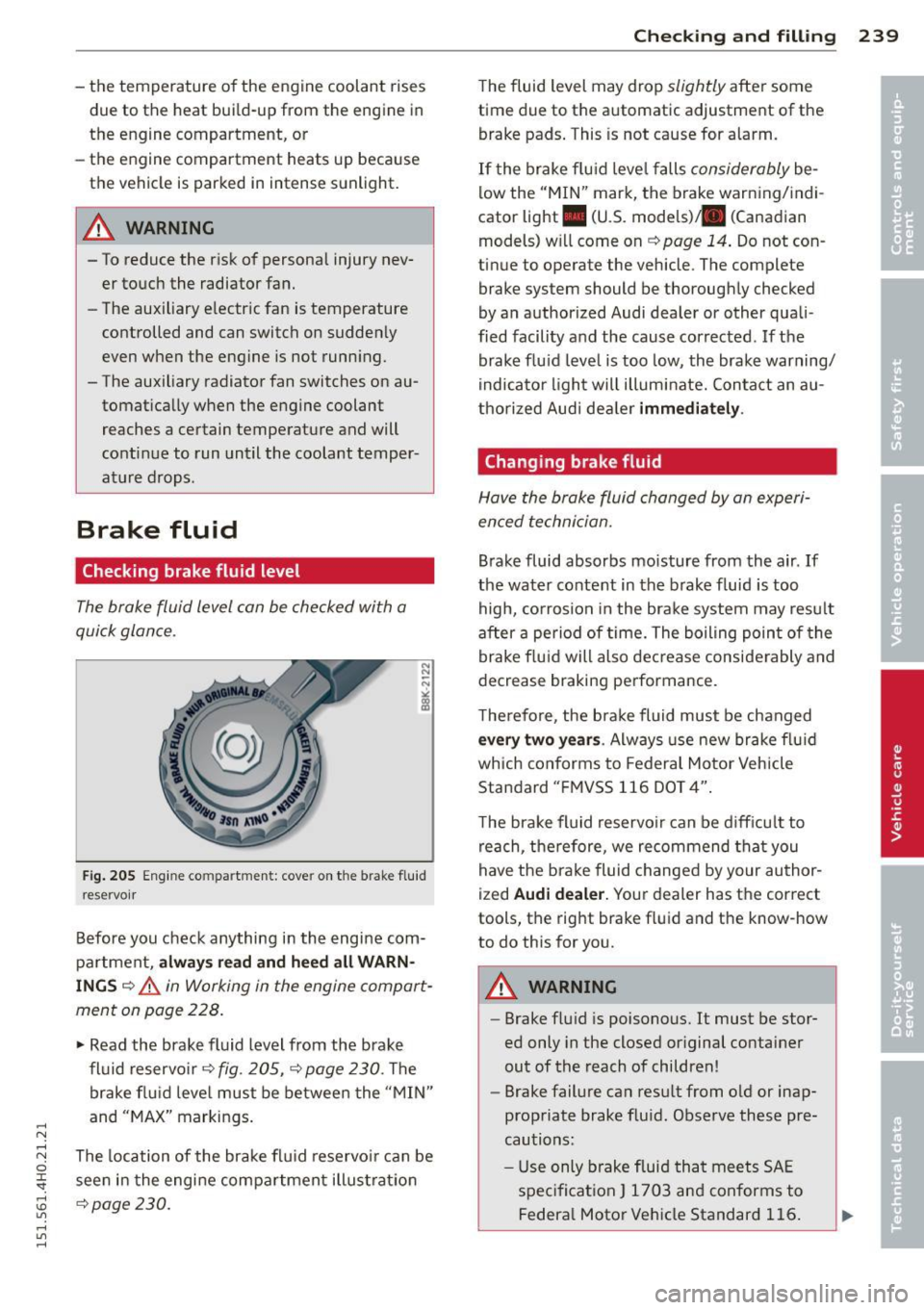
F ig . 2 05 Eng ine co mpartmen t: cove r on the b rake f lui d
r eservo ir
Before you check anything in th e engine com
partment,
alwa ys read and he ed all WARN
INGS c::> .&. in Working in the engine compart
ment on page 2 28.
~ Read the brake fluid level from the brake
fl uid reservo ir ~
fig . 205, c::> page 230. The
brake f luid leve l must be betwee n the "M IN"
and "M AX" marki ngs.
The location of the brake fl uid reservo ir can be
see n in t he engi ne comp artment illus trati on
c::> page 230.
Checkin g and fillin g 239
The fluid level may d rop slightly afte r some
time due to the automatic adjustment of the
brake pads . T his is not cause for alarm .
If the brake flu id leve l falls considerably be
low the "MIN" mark, the brake warning/indi
cator light . (U.S. models) . (Canadian
models) w ill come on
~ page 14 . Do not con
tin ue to operate the vehicle . The complete
brake sys tem should be thoroughly checked
by an authorized Audi dea ler or other quali
fied facility and the cause corrected.
If the
brake f lu id leve l is too low, the brake warning/
indica tor ligh t will illumi nate. Conta ct an au
thorized Aud i de aler
immediately .
Changing brake fluid
Have the brake fluid changed by an experi
en ced technician.
B rake fluid absorbs moisture from the air . If
the water content in the brake fluid is too
high, co rrosion in the brake system may resu lt
after a pe riod of time. The boiling point of the
brake f lu id will also dec rease conside rably and
decrease brak ing performance.
T herefo re , the bra ke fluid must be changed
every tw o year s. Always use new br ake f lu id
which con forms to Federal Mo tor Veh icle
Standard " FMVSS 116 DOT 4".
T he bra ke fluid reservo ir can be d iff icu lt to
reach, the refore, we recommend that you
have the bra ke fluid changed by your author
ized
Audi dealer. Your dealer has the cor rect
tools, the right brake fluid and the know -how
to do this for you.
A WARNING
---- Brake flu id is poisonous. It must be stor
ed only in the closed or iginal container
out of the reach of children!
- Brake failure can resu lt from old or inap
prop riate brake f lu id. Observe these pre
cautions:
- U se only brake fluid tha t meets SAE
specificat ion
J 1703 and conforms to
Federa l Motor Vehicle Standard 116.
Page 242 of 312
24 0 Ch eck ing and filling
Always check wi th your a uthorized Audi
dealer to make s ure you are using the
correct brake flu id. The correct type of
brake fluid is also indicated on the
brake fluid reservoir.
- The brake fluid must be new. Heavy use
of the brakes can cause a vapor lock if
the brake fluid is left in the system too
long. This can ser ious ly affect the effi
ciency of the b ra kes as well as yo ur
safety. This could result in an acc ident.
(D Note
Brake flu id will damage the paint of your
veh icle.
@ For the sake of the environment
Because of the problem of proper d isposa l
of brake flu id as wel l as the special tools
requ ired and the necessary expert ise, we
recommend that you have the b rake fluid
changed by your author ized Audi dealer.
Battery
General information
Under
normal operating conditions, the bat
tery in your Audi does not need any mainte
n ance . With
high outside temperatures or
l ong daily dr ives we recommend that you have
the elec trolyte level checked by a service fa
cili ty. The e lec trolyte level sho uld a lso be
checked each time the battery is charged
¢ page 242.
Have the b attery checked when you ta ke yo ur
ve hicl e in for service. Yo u are well adv ise d to
replace a battery that is older than S years .
W ith certa in types of airbag deployment, the
battery is d isconnected from the vehicle ele c
tr ica l system for sa fety reasons¢
& in Re
pair, care and disposal of the airbags on
page 165.
Disconnecting the battery terminals
Some veh icle func tions (power w indow regu
l ato rs, for example) a re los t if the b attery ter- mina
ls are disconnected. These functions have
to be relearned after the battery termina ls are
connected aga in. To prevent th is, the battery
sho uld only be disconnected from the ve hicle
electrical system when abso lutely necessary
for repairs.
Vehicle s not driven for long peri ods
If you do not d rive your vehicle over a period
of several days or weeks, e lectr ica l compo
nents are gradually cut back or sw itched off.
This reduces energy consumption and ma in
ta ins start ing capability over a longer period
¢
page 202. Some of the convenience func
t ions may not ope rate, such as the inter ior
li gh ts or the power seat adjus tment. The con
venience func tions will be ava ilable ag ain
when you switch on the ignition and start the
engine .
Winter operation D uring the winte r months, battery capac ity
tends to de crease as temperatures drop. This
is beca use more power is also consumed wh ile
sta rting, and the headlights, rear window de
fogger, etc ., are used more often .
Avoid unnecessary power consumpt ion, p ar
t icu lar ly in city traffic or whe n traveling only
short distances. Let yo ur au thorized Aud i
dealer check the capacity of the vehicle bat
tery before winter sets in ¢
page 242. A well
charged battery will not on ly prevent starting
problems when the weather is cold, but will
also last longer.
(!) Tips
If your vehicle is left standing for several
weeks at extremely low temperatures, the
vehicle battery sho uld be removed and
stored where it w ill not freeze. This will
prevent it from be ing damaged and having
to be repla ced.
Page 243 of 312
.... N .... N
0 J:
'SI: .... \!) 1.1'1
.... 1.1'1 ,....,
Working on the battery
Be especially careful when working on or near the battery .
The battery is located in the luggage compart
ment under the floor. Before you check any
thing in the luggage compartment,
r ea d and
h ee d all WARNINGS
~ ,&.
Always heed the safet y warn ing s, when work
i ng on the vehicle battery or the veh icle elec
tr ical system to prevent injury .
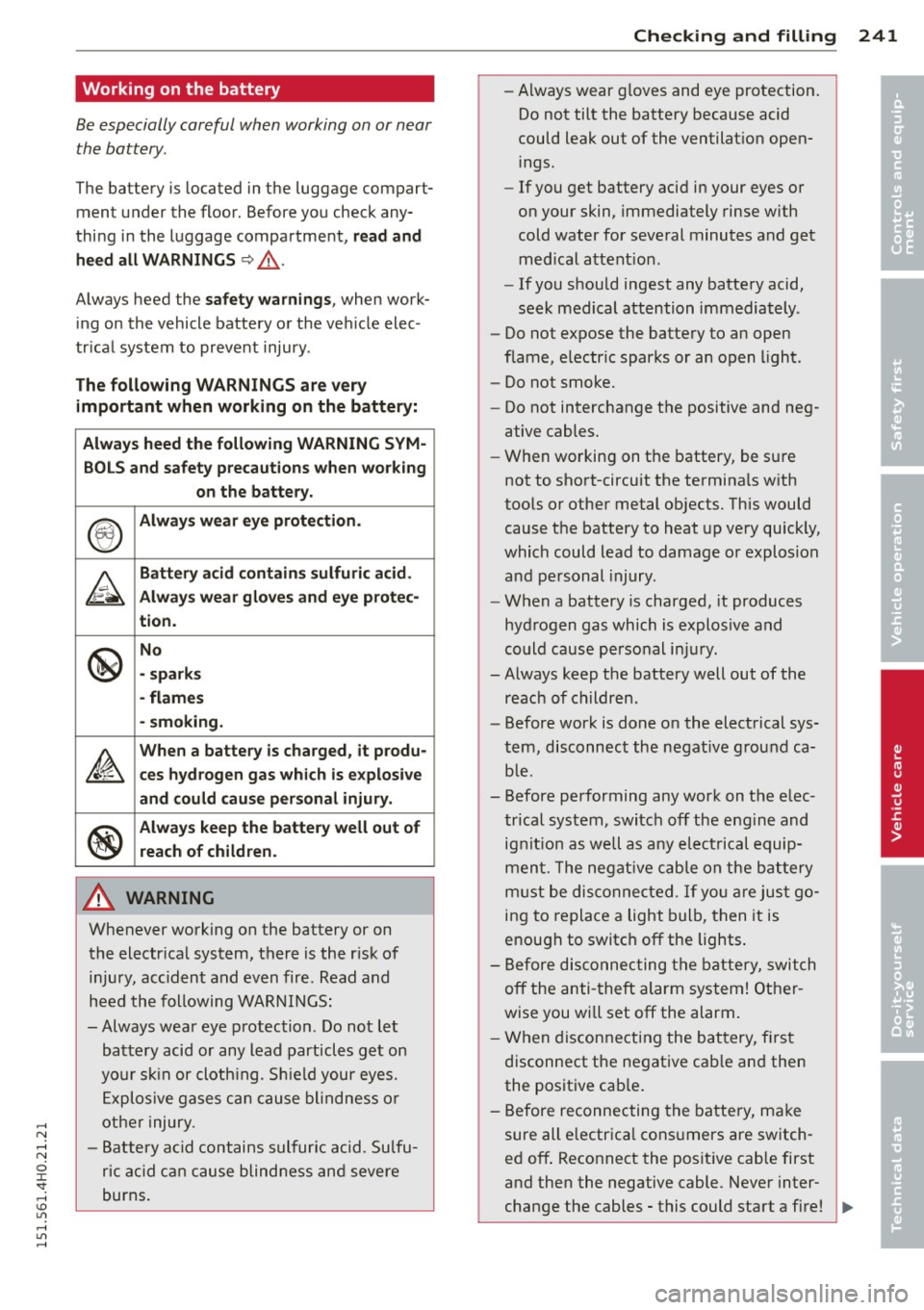
The following WARNINGS are very
impo rtant when work ing on the battery:
Al ways heed the follow ing WARNING SYM-
BOL S an d saf ety pr eca utions when wo rking
on the b atter y.
®)
Alway s w ea r eye protection .
A
Batter y aci d contain s sulfu ric acid.
Alw ay s w ear g lo ves and ey e prot ec-
tion .
@
No
-spa rk s
- flam es
- sm oking .
~
When a batte ry is charge d, it produ -
c es hyd rogen gas whi ch i s ex plosi ve
an d cou ld cause pers ona l injury .
®
Alway s keep the b atter y well out of
reach of child re n .
A WARNING
Whenever working on the battery or on
the electrical system, there is the r isk of
injury, acc ident and even fire. Read and
heed the following WARNINGS:
- Always wear eye p rotection . Do not let
battery acid or any lead particles get on
your sk in or cloth ing . Sh ield your eyes .
E xplosive gases can cause blindness or
other injury .
- Battery acid contains sulfuric acid . Sulfu
ric acid can cause blindness and severe
burns .
Checkin g and fillin g 241
-Always wear g loves and eye protection.
Do not tilt the battery because acid
could leak out of the ventilation open
i ngs .
- If you get battery acid in your eyes or
on your skin, immediately rinse with
cold water for several minutes and get
med ical attent ion .
- If you should ingest any battery acid,
seek medical attention immediately .
- Do not expose the battery to an open
f lame, e lectr ic sparks or an open light.
- Do not smoke.
- Do not interchange the positive and neg-
ative cables.
- When working on the battery, be su re
not to short-circuit the termina ls with
too ls or other metal objects. This would
cause the battery to heat up very quickly,
which could lead to damage or explosion and personal injury .
- When a battery is charged, it produces
hydrogen gas which is explos ive and
could cause personal in ju ry .
- Always keep the battery well out of the reach of children .
- Before work is done on the electrical sys
tem, disconnect the negat ive ground ca
ble.
- Before performing any work on the e lec
trical system, switch off the eng ine and
ignit ion as well as any electrical equip
ment. The negative cable on the battery
m ust be disconnected. If yo u are just go
ing to replace a light bulb, then it is
enough to switch off the lights .
- Before disconnec ting the battery, switch
off the anti -theft alarm system! Other
wise you wi ll set off the alarm.
- When disconnecting the battery, f irst
disconnect the negative cab le and then
the positive cab le .
- Before reconnecting the battery, ma ke
sure all e lectrica l consumers are switch-
ed off . Reconnect the pos it ive cable first
and then the negative cable . Never inter
change the cables - this could start a fire!
~
•
•
Page 246 of 312
244 Checking and filling
@ For the sake of the environment
Because of the problem of proper disposa l
of a battery, we recommend your author
ized Audi dealer change the battery for
you. Batter ies contain sulfuric acid and
lead and must always be disposed of prop
erly in compliance w ith all environmental
regu lations . D isposing of vehicle batteries
improperly is very dangerous to the envi ronmen t.
Windshield/headlight
washer container
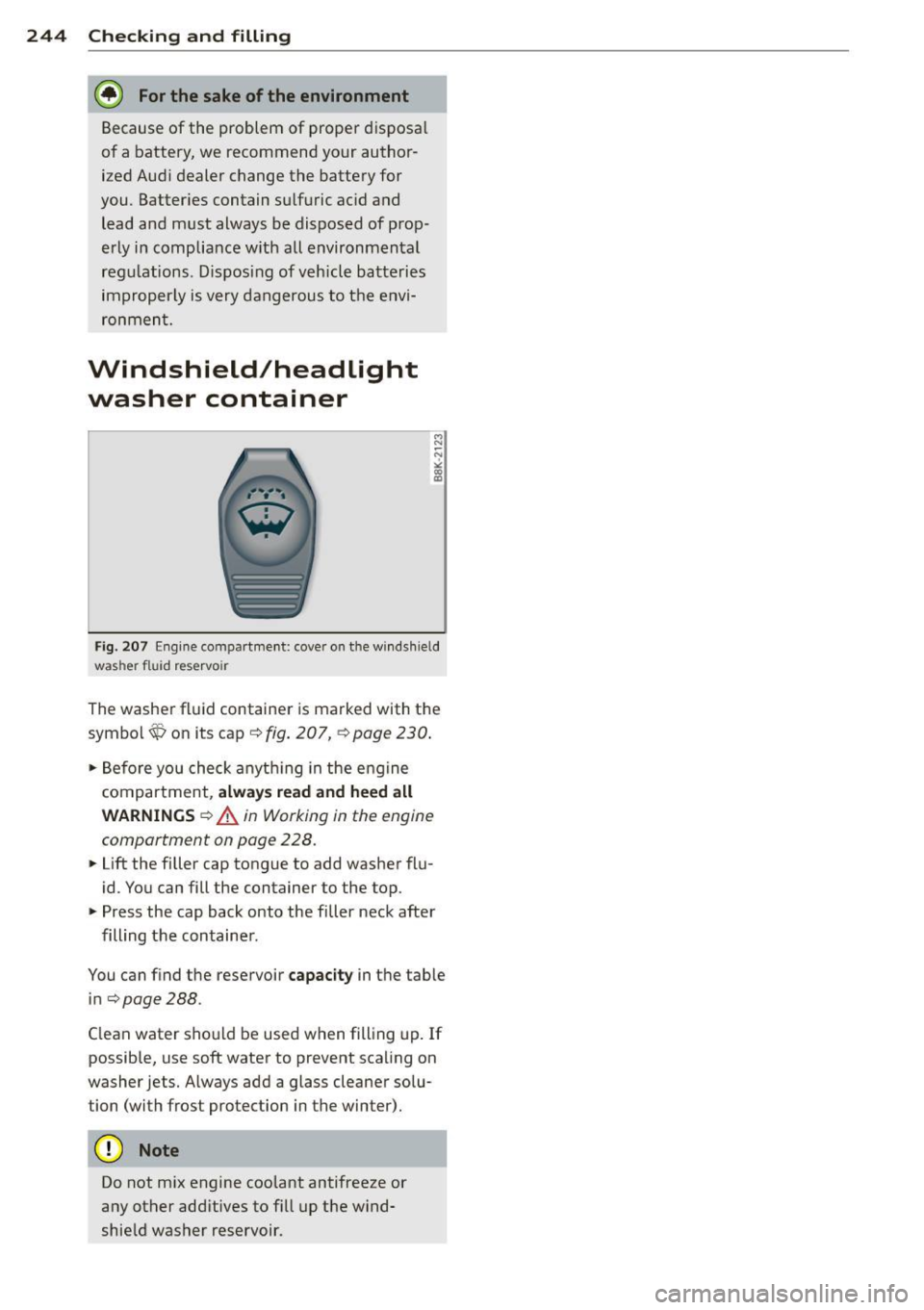
Fig. 207 Engine compartment: cover on the windshield
was her flui d reservo ir
The washer fluid container is marked with the
symbol~ on its cap
c::> fig. 207, c::> page 230 .
.. Before you check anyth ing in the engine
compartment,
always read and heed all
WARNINGS c::> A in Working in the engine
compartment on page 228 .
.. lift the filler cap tongue to add washer flu
id . You can fill the container to the top .
.. Press the cap back onto the filler neck after
filling the container.
You can find the reservoir
capacity in the table
in
c::>page 288.
Clean water should be used when filling up. If
possible, use soft water to prevent scaling on
washer jets. Always add a glass cleaner solu
tion (with frost protection in the winter).
(D Note
Do not mix engine coolant antifreeze or
any other additives to fill up the wind
shield washer reservoir.
Page 252 of 312
250 Tires and wheels
Bear in mind that the tire pressure monitoring
system* can only monitor the tire pressures
you have stored . The system does not recog
nize the load condit ion of your vehicle.
The effectiveness of the tire pressure monitor
ing system* will be impaired if you store nor
mal load pressures but then operate the vehi
cle at its max imum load
c:> &. .
See the illustration c:> fig. 208 for the location
of the label on driver's side B-pillar (color of
the act ua l label and exact location on the ve
hicle will vary slightly). Note
that the following table is accurate at
the time of going to press and is subject to
change. In the event of d iscrepancies, the t ire
pressure label is located on the driver's side B
pillar always takes precedence.
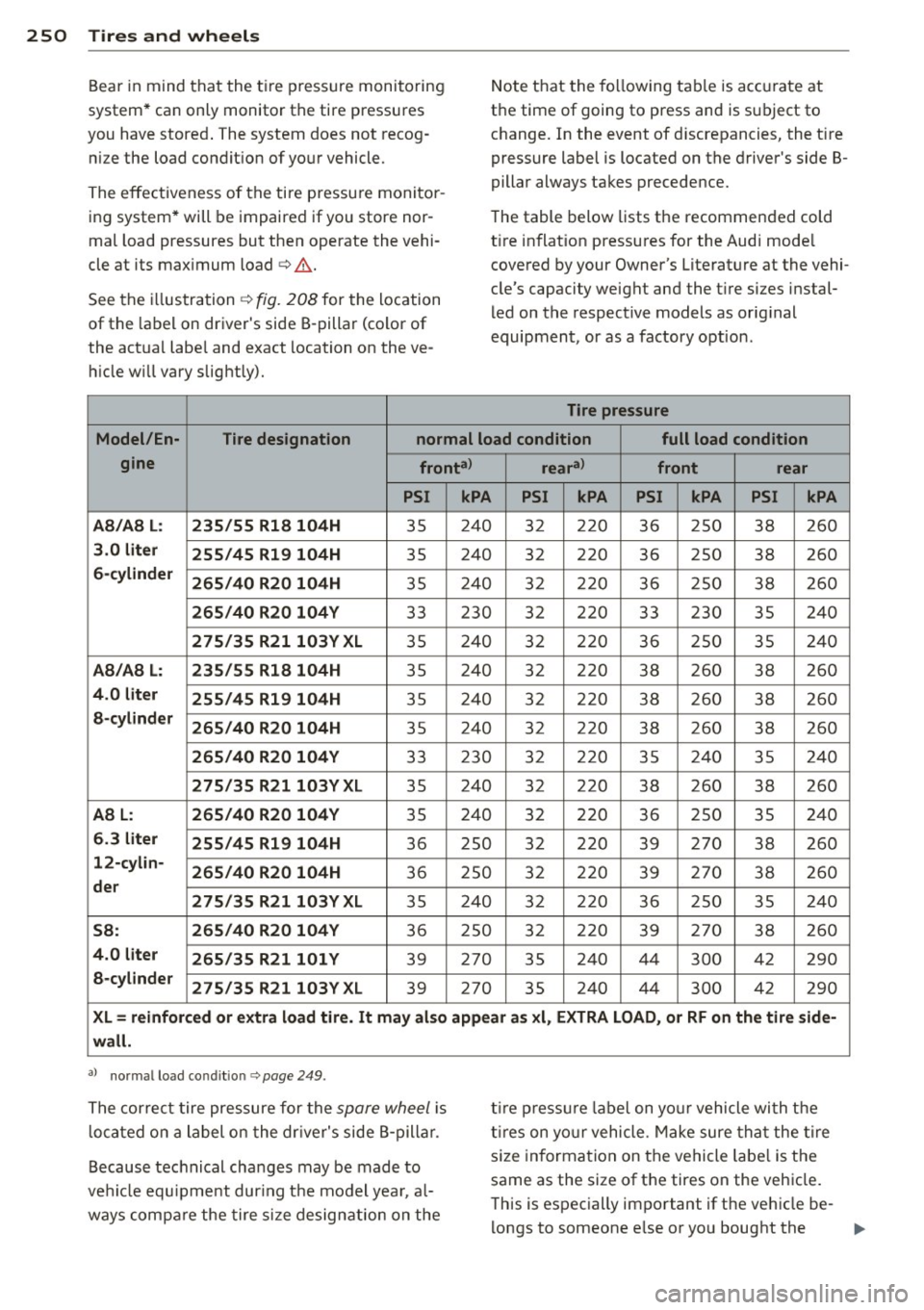
The table below lists the recommended cold
t ir e inflation pressures for the Audi mode l
covered by your Owner's Literature at the vehi
cle's capacity weight and the t ire sizes instal
led on the respective models as orig inal
equipment, or as a factory opt ion.
Tire pressure
Model/En- Tire designation normal load condition full load condition
gine fronta> reara>
front rear
PSI kPA
PSI kPA PSI kPA PSI kPA
A8/A8 L: 235/55 R18 104H
35 240 32 220 36 250 38 260
3.0 liter
255/45 R19 104H 35 240 32 220 36 250 38 260
6-cylinder
265/40 R20 104H 35 240 32 220 36 250 38 260
265/40 R20 104V 33 230 32 220 33 230 35 240
275/35 R21103Y XL 35 240 32 220 36 250 35 240
A8/A8 L: 235/55 R18 104H 35 240
32 220 38 260 38 260
4.0 liter
255/45 R19 104H 35 240 32 220 38 260 38 260
8-cylinder
265/40 R20 104H 35 240
32 220
38 260
38 260
265/40 R20 104V 33 230 32 220
35 240 35 240
275/35 R21103Y
XL 35 240
32 220
38 260
38 260
ASL
: 265/40 R20 104V 35 240 32 220 36 250 35 240
6.3 liter
255/45 R19 104H 36 250 32 220
39 270
38 260
12-cylin-
265/40 R20 104H 36 250 32 220 39 270 38 260
der
275/35 R21103Y XL
35 240 32 220 36 250
35 240
58: 265/40 R20 104V 36 250 32 220
39 270 38 260
4.0 liter
265/35 R21101 Y 39 270 35 240 44 300 42 290
8-cylinder
275/35 R21103Y XL 39 270
35 240
44
300 42
290
XL= reinforced or extra load tire. It may also appear as xl, EXTRA LOAD, or RF on the tire side-
wall.
al n orma l lo ad co ndi tio n~ page 249.
The correct tire pressure for the spare wheel is
locat ed on a label on the driver's side B-pillar.
Because technical changes may be made to
ve hicl e equipment during the model year, al
ways compa re the tire size designation on the tire
pressu re lab el on your vehicle wi th the
tires on your vehicle. Make sure that the tire
s iz e inform ation on the vehicle label is the
same as the size of the tires on the vehicle.
This is espec ially important if the vehicle be-
l ongs to someone e lse or yo u bought the ..,.
Page 266 of 312

264 Tires and wheels
remain continuously illuminated. This se
quence will continue upon subsequent vehicle
start-ups as long as the malfunction exists.
When the malfunction indicator is illuminat
ed, the system may not be able to detect or
signal low tire pressure as intended . TPMS
malfunctions may occur for a variety of rea
sons , including the installation of replace
ment or alternate tires or wheels on the vehi
cle that prevent the TPMS from functioning
properly . Always check the TPMS malfunction
tellta le after replacing one or more tires or
wheels on your veh icle to ensure that the re
placement or alternate tires and wheels allow
the TPMS to continue to function properly.
Tire pressure indicator appears
The tire pressure indicator in the instrument
cluster informs you if the tire pressure is too
low or if there is a system malfunction.
Fig. 213 Display : underi nflatio n warning
Fig. 214 Display: System mal functio n
Using the ABS sensors , the tire pressure moni
toring system compares the tire tread circum
ference and vibration characteristics of the in
dividual tires . If the pressure decreases in one
or more tires, th is is indicated in the i nstru- ment
cluster with a warning symbol
[I] and a
message
r=> fig. 213 .
The tire pressure monitoring system must be
reset via MMI each time the pressures are ad
justed (e.g. when switching between partial
and full load pressure) or after changing or re
plac ing a tire on your vehicle
r=> page 265. The
TPMS indicator only monitors the tire pres
sure that you have previously stored. You can
find the recommended tire pressures for your
vehicle on the Label on dr iver's side B-pillar
r=> page 249.
Tire tread circumference and vibration charac
teristics can change and cause a tire pressure
warning if:
- the tire pressure in one or more tires is too
low,
- the tire has structural damage,
- the tire pressure was changed, wheels rotat -
ed or replaced but the TPMS was not reset
¢ page 265,
-the spare tire* is mounted.
Warning symbols
[I] Loss of pressure in at least one tire¢&,. .
Check the tire or tires and replace or repa ir if
necessary . The indicator light
[I] in the instru
ment cluster also illuminates
¢page 11.
Check/correct the pressures of all four tires
and reset TPMS via MMI.
Ill (T ire Pressure Monitoring System) Tire
pressure! System malfunction.
Iflll appears
after switching the ignition on or while driving
¢fig . 214 and the indicator light [I] in the in
strument cluster blinks for approximately one minute and then stays on, there is a system
malfunction . Attempt to store the correct tire
pressure ¢
page 265. If the indicator light
does not turn off or if it turns on shortly
thereafter , immediately drive your vehicle to
an a utho rized Aud i dealer or authorized repair
facility to have the malfunction corrected.
llll-
Page 276 of 312
274 What do I do now ?
-Passengers must not rema in in the ve
h icle when it is jacked up.
- Make sure that passengers wait in a
safe p lace away from the vehicle and
well away from the road and traffic.
- Make sure jack position is correct, ad
just as necessary and then continue to
raise the jack.
- Changes in temperature or load can af
fect the height of the vehicle.
CD Note
D o not lift t he vehicle by the si ll. Position
the vehicle jack only at the designated lift
ing points on the sill. Otherwise, your vehi
cle will be damaged.
@ Tips
The vehicle jack mode switches off auto mat ica lly at speeds above
10 km/h.
Taking the wheel off/installing the spare
Follow these instructions step-by-step for
changing the wheel.
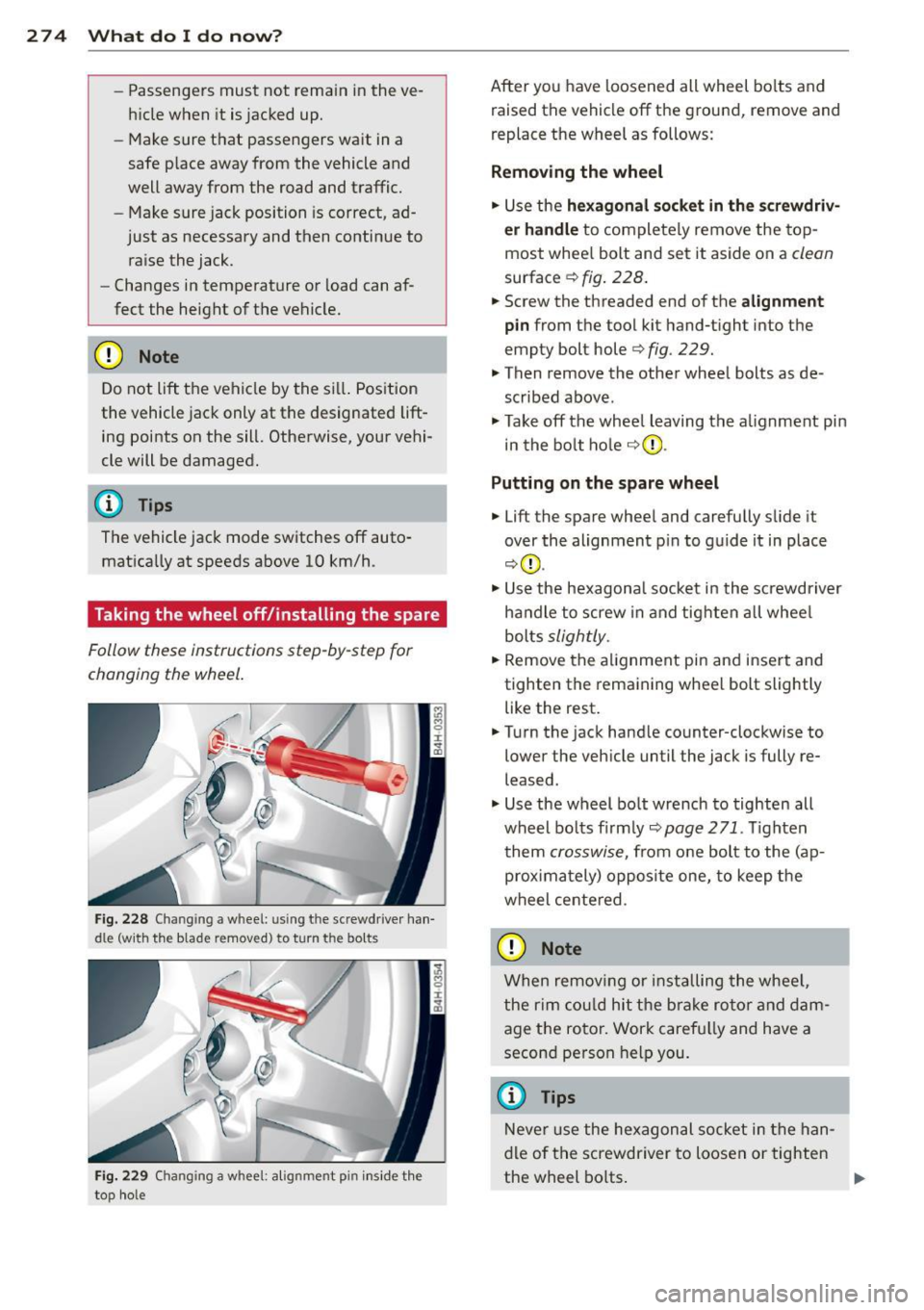
Fi g. 228 Changing a wheel: using the screwdrive r han
dle (w ith t he blade r emoved) to turn the bo lts
F ig . 2 29 Changing a whee l: a lignmen t pin inside th e
top hole
After yo u have loosened all wheel bo lts and
raised the vehicle off the ground, remove and
replace the wheel as follows:
Removing the wheel
.,. Use the hexagonal soc ket in the scr ewdriv
er handle
to completely remove the top
most whee l bolt and se t it aside on a
clean
surface r=> fig. 228 .
.,. Screw the threaded end of the alignme nt
pin from the tool kit hand-t ight into th e
empty bolt hole
Q fig. 229 .
.,. Then remove the other whee l bolts as de
scribed above.
.,. Take off the whee l leaving the a lignment pin
in the bo lt ho le r=> 0 .
Putting on the spare wheel
.,. Lift the spare whee l and carefully s lide it
over the alignment p in to g uide it in place
Q0 .
.,. Use the hexagona l socket in th e screwdriver
ha ndle to screw in and tig hten all whee l
bolts
slightly.
.,. Remove the al ignment pin and insert and
tighten the remain ing wheel bolt slightly
like the rest .
.,. Turn the jack hand le counter-clockwise to
lower the vehicle until the jack is fully re
leased .
.,. Use the wheel bo lt wrench to tighten all
wheel bo lts fi rm ly
r=> page 271 . Tighten
them
crosswise, from o ne bolt to the (ap
p rox ima tely) opposi te one, to keep the
wheel ce nte red .
CD Note
When remov ing or i nsta lling the whee l,
the rim could hit t he b ra ke ro to r and d am
age the ro tor. Wor k caref ully and have a
seco nd person hel p you.
(D Tips
Never use the hexagon al socke t in the han
d le of t he screwdriver to loosen or tighten
the wheel bo lts .
Ill-
Page 279 of 312

.... N .... N
0 J:
'SI: .... \!) 1.1'1
.... 1.1'1 ,-0
Fuse pa nel @ (brown )
No . Equipment
1 Headlight contro l switch
2
Emergency start coil (key
i dentification)
3
Rear door control module
(driver's side)
4 Head-up Display
5 Horn
6 Inter ior lights (head liner)
Steering column lever, mul-
8
tifunction steering wheel
controls, steering wheel
heat ing
10
Electric steering co lumn
lock
11 D river door contro l modu le
12
D iagnostic connector, light/
rain sensor
14
Power steering col umn ad -
justment
15
Power steering, A/C com-
presse r
16 Brake booster
Fu se pa nel © (b la ck)
No . Equipment
1 Front seat heating
2 Windshield w iper
3 Front exterior lighting
4 Sun roof
5 Driver power window
6 Driver seat (pneumat ic)
7 Panoramic sunroof
8 Dynamic steering
9 Front exterior lighting
10 Windshield/headlight
wash-
er system
11
Rear power w indow (driver's
side)
12 Panoramic sunroof
Amps
5
5
7,5 5
15
7,5
10/5
5
7,5 10
25
20
15
Amps
30 30
30 20
30
7,5
20 35
30
35
30
40
Fu ses and bulb s 2 77
Front passenger side cockpit fuse
assignment
Fig . 233 Fro nt passe nger side cockpit: f use pane l with
plast ic brac ket
Fu se panel @ (bl ac k)
No. Equipment Amps
1 Anti-theft alarm system 5
2
Transmission control mod-
15
ule
3 Front climate control fan 40
4 Engine supply 35
6
Engine cont ro l modu le 5
7
Front passenger door con-
7,5 trol module
8
Front passenger power win-
30 dow
9 ESC contro l module
10
10
ESC contro l modu le 25
1 1
Right rear power window 30
1 2
Front passenger seat (pneu-
7,5 matics)
•
•