belt AUDI A8 2017 Owner's Guide
[x] Cancel search | Manufacturer: AUDI, Model Year: 2017, Model line: A8, Model: AUDI A8 2017Pages: 354, PDF Size: 88.68 MB
Page 232 of 354
Airbag system
Front airbags
Description of front airbags
The airbag system can provide supplemental
protection to properly restrained front seat occu
pants.
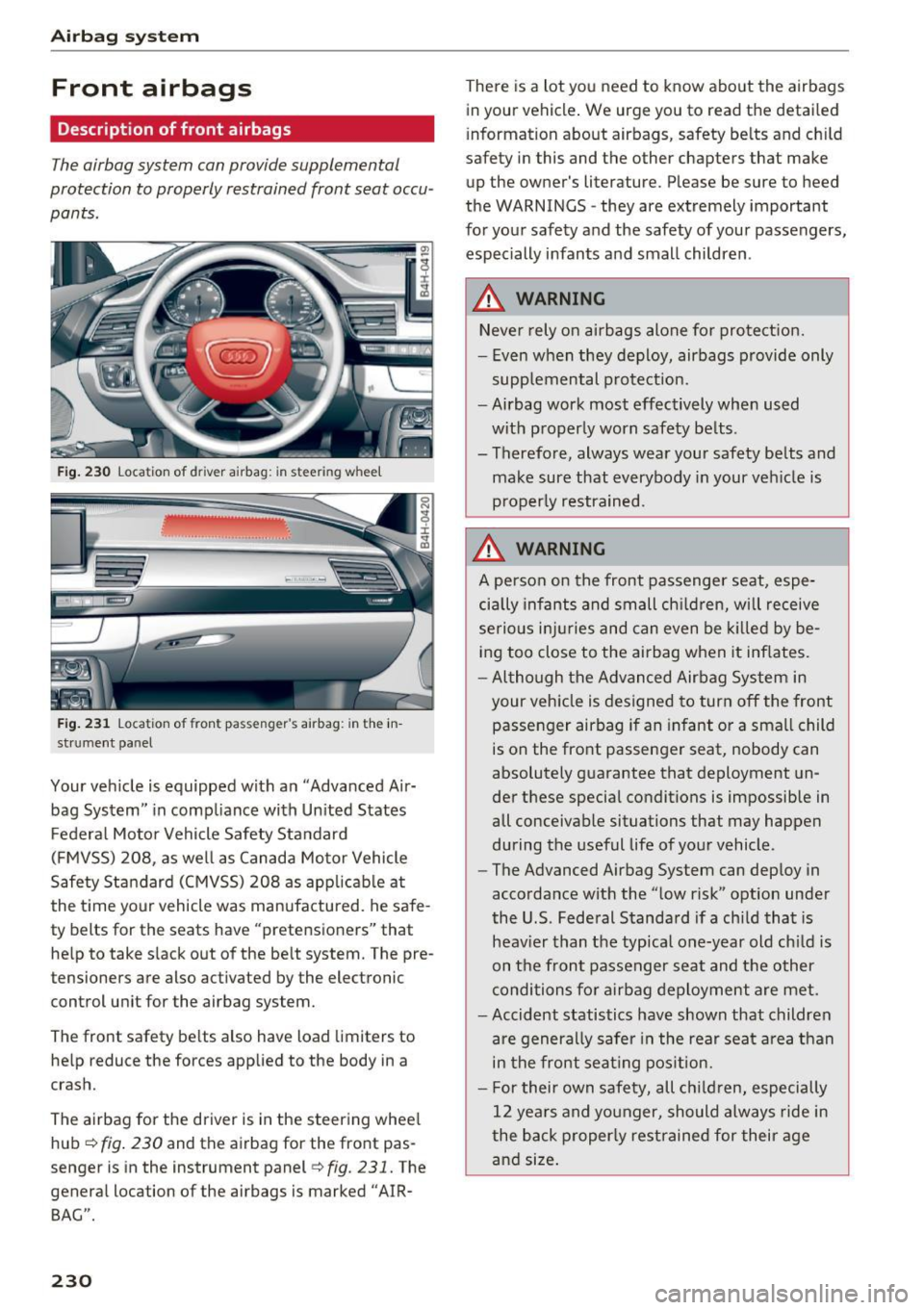
Fig. 230 Location of dr iver airbag: in steering whee l
Fig. 231 Location of front passenger's airbag: in th e in
strument panel
Your veh icle is equipped with an "Advanced Air
bag System " in compliance with Un ited States
Federal Motor Vehicle Safety Standard
(FMVSS) 208, as well as Canada Motor Vehicle
Safety Standard (CMVSS) 208 as applicable at
the time your vehicle was manufactured. he safe
ty belts for the seats have "pretensioners" that help to take s lack out of the belt system. The pre
tensioners are also activated by the electronic
control unit for the airbag system.
The front safety be lts also have load limiters to
help reduce the forces applied to the body in a
crash.
The airbag for the driver is in the steering wheel
hub~
fig . 230 and the airbag for the front pas
senger is in the instrument panel~
fig. 231. The
general location of the airbags is marked "AIR
BAG".
230
There is a lot you need to know about the airbags
in your vehicle . We urge you to read the detai led
i nformation about airbags, safety belts and ch ild
safety in this and the other chapters that make
up the owner's literature. Please be sure to heed
the WARNINGS -they are extremely important
for your safety and the safety of your passengers,
especially infants and small children .
.&_ WARNING -
Never rely on airbags alone for protection.
- Even when they deploy, airbags provide only
supp lemental protection.
- Airbag work most effectively when used
with properly worn safety belts .
- Therefore, always wear your safety belts and make sure that everybody in your vehicle is
properly restrained .
.&_ WARNING
A person on the front passenger seat, espe
cially infants and small ch ildren, wi ll receive
serious injuries and can even be killed by be
ing too close to the airbag when it inf lates.
- Although the Advanced Airbag System in
-
your vehicle is designed to turn off the front
passenger airbag if an infant or a small child
is on the front passenger seat, nobody can
absolutely guarantee that deployment un
der these special conditions is impossible in
all conceivable situations that may happen
during the useful life of your vehicle.
- The Advanced Airbag System can deploy in
accordance with the "low risk" option under
the U.S. Federal Standard if a child that is
heav ier than the typical one-year old ch ild is
on the front passenger seat and the other
conditions fo r airbag deployment are met.
- Accident statistics have shown that children
are generally safer in the rear seat area than
in the front seating pos ition.
- For their own safety, all children, especially
12 years and younger, should always ride in
the back proper ly restrained for their age
and size.
Page 233 of 354
0 co .... N ,..... N .... 0 0 :c '
Your vehicle is equipped with a front Advanced
Airbag System in compliance with Un ited States
F edera l Motor Vehicle Safety Standard 208, as
well as Canada Motor Vehicle Safety Standard
(CMVSS) 208 as applicable at the time your vehi
cle was manufactured .
The front Advanced Airbag System supp lements
the safety belts to provide additional protection
for the driver 's and front passenger's heads and
upper bodies in frontal crashes . The airbags in
f late only in frontal impacts when the veh icle de
cele ration is high enough.
The front Advanced Airbag System for the front
seat occupants is not a substitute for your safety be lts . Rather, it is part of the overall occupant re
s tra int system in your vehicle. Always remember
that the airbag system can on ly help to protect
you, if you are sitting upr ight, wear ing your safe
ty belt and wear ing it prope rly . This is why you
and your passengers must always be prope rly re
stra ined, not just beca use the law req uires yo u to
be .
The Advanced Airbag System in your veh icle has
been ce rtified to meet the "low r is k" requi re
ments fo r 3 and 6 ye ar-old children o n the pas
senger side and very sma ll adults on the drive r
side . The low risk dep loyment criteria are intend
ed to help reduce the risk of injury through inter
action with the front a irbag that can occur, for
examp le, by being too close to the steering wheel
and instrument panel when the airbag inflates .
In addition , the system has been certified to
comp ly with the "suppression" requi rements of
the Safety Standard, to turn off the front a irbag
for i nfants 12 months old and younger who are
restrained on the front passenger seat in child re
stra ints that are listed in the Standa rd
¢ page 250, Child restraints and Advanced Air
bags.
"Suppress ion" requ ires the front a irbag on the
passenger side to be turned off if:
- a ch ild up to about one year of age is restra ined
on the front passenger seat in one of the rear
facing or forward -fac ing infant restra ints listed
Airb ag sys tem
in Federal Motor Veh icle Safety Standard 208
with which the Advanced Airbag System in your
veh icle was certif ied. For a List ing of the child
restraints that were used to certify your vehi
cle's compliance with the US Safety Standard
¢ page 250,
-weight less than a threshold level stored in the
con trol un it is detected on the front passenger
seat .
When a person is detected on the front passen ger seat, weighing more than the total weight of
a chi ld that is about
1 year old restra ined in one
of the rear-facing or forward -fac ing infant re
straints (listed in Federal Motor Veh icle Safety
Standard 208 with w hich the Advanced A irbag
System in your veh icle was certified), the front
airbag on the passenge r side may o r may not de
ploy .
T he
PAS SENGER AIR BAG OFF lig ht comes o n
whe n the elect ronic control uni t detects a tota l
weight on the fron t passenger sea t th at req uires
the front airbag to be turned off . If the
PASSEN
GER AIR BAG OFF
light does not come on, the
front airbag on the passenger side has not been
turned off by the control unit and can dep loy if
the control unit senses an impact that meets the
condit ions stored in its memory .
If the total weight on the front passenger seat is
more than that of a typica l 1 year-old, but less
than the weight of a small adult, the front airbag
on the passenger s ide may deploy (the
PAS SEN
GER AIR BAG OFF
light does not come on) .
For example , the ai rb ag may deploy if :
- a small chi ld that is heav ier than a typ ica l 1
yea r-o ld child is on the front passenger seat
(regard less of whether the child is in one of the
child seats listed
¢ page 250),
- a child who has outgrown c hild restraints is on
the front passenger seat.
If the front passenge r a irbag is t urned off, the
PASSENGER AIR BAG OFF light in the center of
the instrument pane l wi ll come on and stay on .
T he front airbag on the passenger side m ay
not
deploy (the PASSENGER AIR BAG OFF light does
not illuminate and stay lit) if: ..,.
231
Page 235 of 354
control unit when the ignition is on. The control
unit monitors the Advanced Airbag System and
turns the airbag indicator light on when a ma l
function in the system components is detected. The funct ion of the a irbag indicator light is de
scr ibed in greater deta il below . Because the front
passenger seat contains important parts of the
Advanced Airbag System, you must take care to p revent it from being damaged. Damage to the
seat may preven t the Advanced A irbag for the
fron t passenger seat from doing its job in a
crash .
The front Advanced Airbag System consists
of the follo wing :
-Crash sensors in the front of the vehicle that
measure vehicle acceleration/deceleration to
provide information to the Advanced Airbag
System a bout the severity of the crash.
- An e lectronic control unit, with integrated
crash sensors for front and side impacts. The
control unit "decides" whether to fire the front
airbags based on the information received from
the crash sensors. The control unit also "de
c ides" whether the safety belt pretens ioners
should be activated .
- An Advanced Airbag with gas generator and
control valve for the driver ins ide the steer ing
wheel hub .
- An Advanced Airbag with gas generator and control valve inside the instrument pa nel for
the front passenger.
- A weig ht-sensing mat under the upholstery
padd ing of the front passenger seat cushion
that meas ures the total weight on the seat. The
i nformation registered is sent continuously to
the e lectron ic cont rol unit to reg ulate dep loy
ment of the front Adv a need Airbag on the pas
senger side .
- An airbag monitoring system and indicator
light in the instrument cluster
¢ page 236.
-A sensor in eac h front seat registers the dis
tance between the respective seat and the steering wheel or instrument pane l. The infor
mation registered is sent contin uously to the
0 co electronic control unit to regulate deployment ....
~ of the front Adva need A irbags. N .... 0 0 :c '
- The PASSENGER AIR BAG OFF light comes on
and stays on in the center of the instrument
pane l¢
page 237, fig . 233 and te lls yo u when
the front Advanced Airbag on the passenger side has been turned off.
- A sensor below the safety be lt latch for the
front seat passenger to measure the tension on the safety belt. The tension on the safety belt
and the we ight registered by the weight -sens
ing mat help the contro l unit "decide" whether
the front airbag fo r the front passenger seat
should be tu rned off o r not ¢
page 22 7, Child
restraints on the front seat -some important
things to know.
- A sensor in the safety belt latch for the driver
and for the front seat passenger that senses
whether that safety be lt is latched o r not and
transmits this information to the electronic control unit.
A WARNING ,-
Damage to the front passenger seat can pre-
vent the front airbag from working properly.
- Improper repair or disassembly of the front passenger and driver seat will prevent the
Advanced Airbag System from funct ion ing
properly .
- Repairs to the front passenger seat must be
performed by qualified and properly trained
workshop personnel.
- Never remove the front passenger or driver
seat from the vehicle.
- Never remove the upholstery from the front
passenger seat.
- Never d isassemble or remove parts from the
seat or disconnect w ires from it.
- Never carry sharp objects in your pockets or
p lace them on the seat. If the weight-sens
ing mat in the passenger seat is punctured
it cannot work properly .
- Never carry things on your lap or carry ob
jects on the passenger seat . Such items can
increase the weight reg istered by the
weight-sensing mat and send the wrong in
formation to the a irbag con trol u nit.
- Never store items under the front passenger
seat. Parts of the Advanced Airbag System
under the passenger seat cou ld be
~
233
Page 236 of 354
Airbag syste m
damaged, preventing them and the airbag
system from working properly.
- Never place seat covers or rep lacement up
holstery that have not been specifically ap
proved by Audi on the front seats .
- Seat covers can prevent the Advanced Air
bag System from recognizing child re
straints or occupants on the front passenger
seat and prevent the side a irbag in the seat
backrest from deploying properly.
- Never use cush ions, pillows, blankets or
similar items on the front passenger seat.
The add it ional padding will prevent the
weight-sens ing mat in the seat from acc u
rately reg istering the ch ild restraint or per
son on the seat and prevent the Advanced
Airbag System from funct ioning properly.
- If you must use a child rest raint on the front
passenge r seat and the child restraint man
ufacturer 's instructions require the use of a
towel, foam cushion or something else to properly position the ch ild restraint, make
certain that the
PA SSENGER AIR BAG OFF
light comes on and stays on whenever the
child restraint is installed on the front pas
senger seat.
- If the
PASSEN GER AIR B AG OFF light does
not come on and stay on, immed iately in
stall child restraint in a rear seating position and have the airbag system inspected by
yo ur Audi dealer.
How the Advanced Airbag System
components work together
The front Advanced Airbag System and the side
airbags supplement the protection offered by the
front three-po int safety belts with pretensioners
and load limiters and the adjustable head re
stra ints to help reduce the r isk of injury in a wide
range of accident and crash situations. Be sure to read the important informa tion about safety and
heed the WARN INGS in t his chapter.
Deployment of the Advanced Airbag System and
the act ivat ion of the safety belt pretensioners de
pend on the deceleration measu red by the crash
sensors and regis tered by the electronic control
unit. Crash severity depends on speed and decel-
2 34
eration as well as the mass and stiffness of the
vehicle or object involved in the crash .
On the passenger side, regard less of safety be lt
u se, the airbag will be turned off if the weight on
the passenger seat is less than the amount pro
grammed in the electronic control unit . The front
airbag on the passenger side will also be turned
off if one of the child seats that has been certi
fied under Federal Motor Vehicle Safety Standard 208 has been recognized on the seat. The
PA S
S ENGER AIR BAG OFF
light comes on and stays
on to tell you when the front Advanced A irbag on
the passenger side has been turned off
q page 22 7, Child restraints on the front seat
some important things to know.
A WARNING
To reduce the ris k of injury when an airbag in
f lates, always wea r safety belts properly.
- If you are un restrained, leaning forward, sit
ting sideways or out of position i n any way,
your risk of injury is much higher.
- You will a lso receive serious injuries and
could even be killed if you are up against the
airbag or too close to it when it inflates -
even with an Advanced Airbag
q page 226.
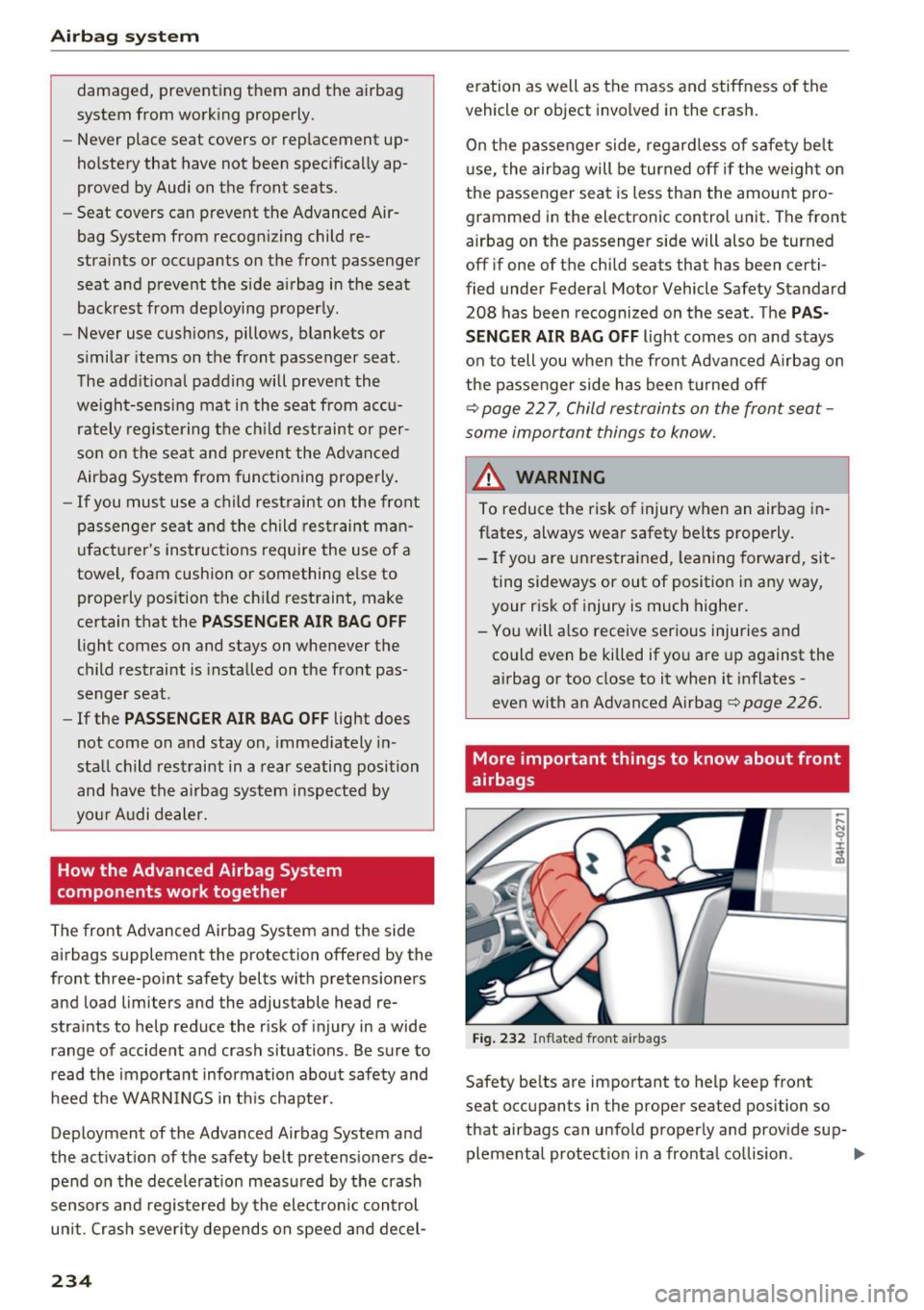
More important things to know about front
airbags
Fig . 232 Inflated front a irbags
Safety be lts are important to help keep front
seat occupants in the proper seated position so
that airbags can unfold properly and prov ide sup-
plemental protection in a fronta l collision . ..,.
Page 237 of 354
0 co .... N ,..... N .... 0 0 :c '
tional protection for the chest and face of the
driver and the front seat passenger when:
- sa fety belts are worn prope rly,
- the seats have been positioned so that the oc-
c u pant is properly sea ted as far as possible
from the airbag,
- and the head restra ints have been p roperly ad-
justed.
Because airbags inflate in the blink of an eye w ith
g reat fo rce, things you have on your lap or have
p laced on the seat cou ld become dangerous pro
jectiles , and be p ushed into you if the ai rbag in
flates.
When an a irbag deploys, fine dust is released.
This is normal and is not caused by a fire in the
ve hicl e. Thi s dust is made up mostly of a powder
used to lubricate the airbags as they deploy. It
could irritate skin.
It is important to remember that whi le the sup
p lemental airbag system is designed to reduce
the likel ihood of ser ious injuries, other i nju ries,
for example swelling, bru is ing and minor abra
sions, can a lso happen when airbags inflate . Air
bags do not protect the arms or the lower parts
of the body. Front airbags supplement the three
point safety belts only in some frontal collisions
i n which the ve hicle decelerat io n is high enough
to deploy the airbags .
Front airbag s will not deploy:
- if the ignit ion is switched off when a crash oc-
curs,
- in side collisions,
- in rear-end collisions,
- in rollove rs,
- when the c rash decelerat io n meas ured by the
airbag system is less than the minimum thresh
o ld needed for airbag deployment as registered
by the electronic contro l unit.
The front passenger airbag also will not
d eplo y:
- when the front passenger seat is not occ upied,
- when the we igh t on the fron t passenge r seat as
sensed by t he Advanced A irbag System indi-
Airb ag sys tem
cates that the front a irbag on the passenger
side has to be turned off by the e lectronic con
trol unit (the
PASSENGER AIR BAG OFF light
comes on and stays on).
A WARNING
Sitting in the wrong position can increase the r isk of ser ious injury in crashes .
- To reduce the r isk of injury when the airbags
inflate, the driver and passengers must al
ways sit in an upright posit ion, must not
lean aga inst or place any part of their body
too close to the area where the airbags are
lo cated.
- Occupants who are unbelted, out of posit ion
or too close to the airbag can be serio usly
in jur ed by an airbag as it unfolds with g reat
force in the blink of an eye
~ page 22 7.
A WARNING
-A child in a rearward-facing child seat instal
l ed on the front passenger seat will be seri
ously injured and can be killed if the front air
bag inflates -even with an Advanced Airbag
System.
- The inflating airbag will h it the ch ild seat o r
infant carrier with great force and will
smash the child seat and child against the backrest, center armrest, door or roof.
- Always install rear-fac ing child seats on the
rear seat.
- If you must install a rea rward facing child
seat on the front passenger seat because of
except ional circumstances and the
PASSEN
GER AIR BAG OFF
light does not come on
and stay on, immed iate ly install the rear
facing chi ld seat in a rear seating posit io n
a nd have the airbag system inspected by
your Aud i dea le r.
A WARNING
Objects between you an d the airbag will in
crease the risk of injury in a crash by interfer
ing with the way the airbag unfolds or by be
i ng p ushed into you as the airbag inflates .
- Never hold things in yo ur hands or on your
lap when the vehicle is in use .
235
Page 239 of 354
0 co .... N ,..... N .... 0 0 :c -
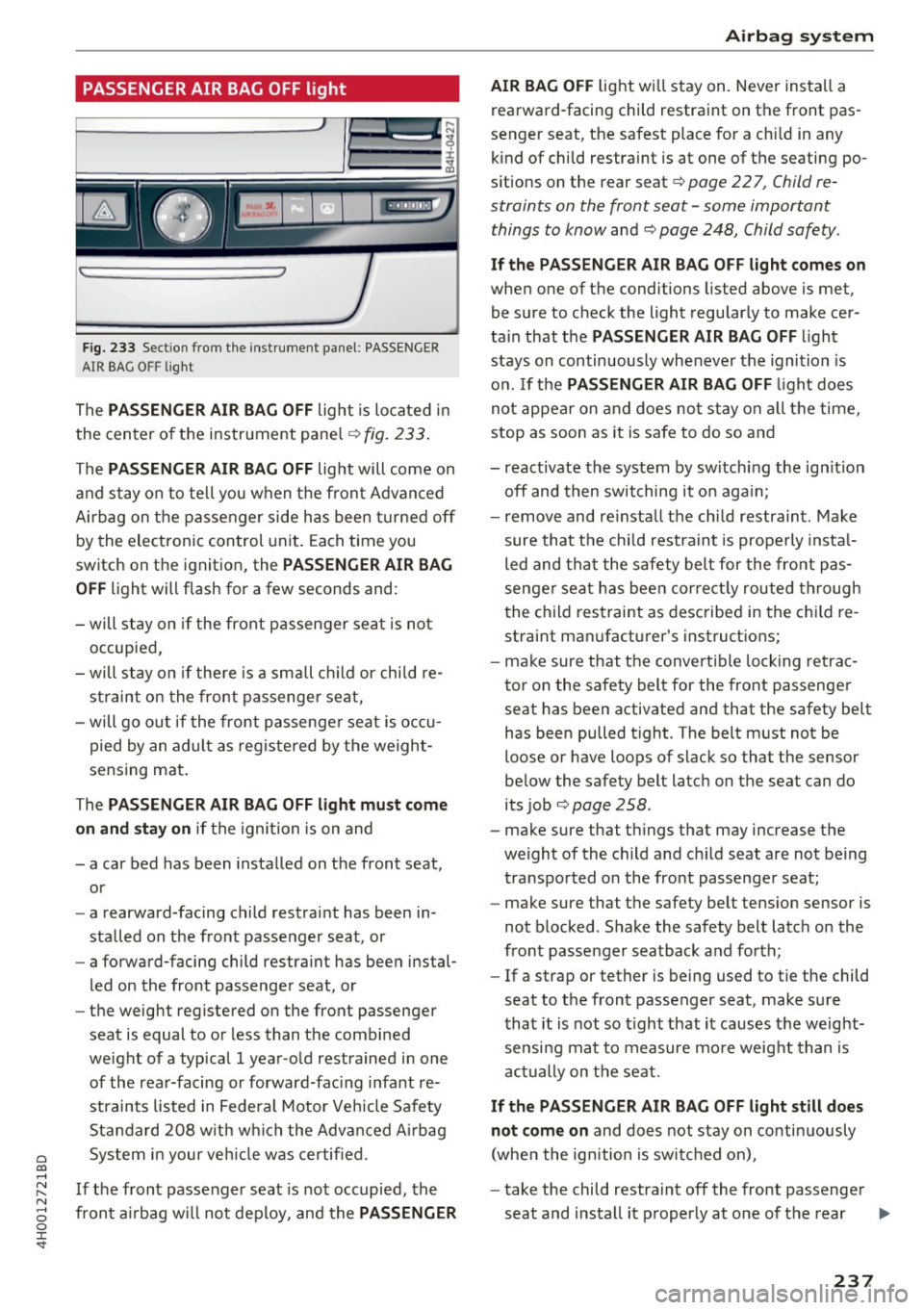
Fig. 233 Section from the instrument panel: PASSENGER
AIR BAG O FF light
The PA SSENGER AIR BAG OFF light is located in
the center o f the instrument panel¢
fig. 233 .
The PASSENGER AIR BAG OFF light will come on
and stay on to tell you when the front Advanced
Ai rbag on the passenger side has been turned off
by the electronic control unit . Each time you
switch on the ignition, the
PAS SENGER AIR BAG
O FF
light will flash for a few seconds and :
- will stay on if the front passenger seat is not
occupied,
- will stay on if there is a small ch ild or chi ld re
straint on the front passenger seat,
- will go out if the fro nt passenge r seat is occu
pied by an adul t as reg istered by the weight
sensing mat .
The
PASSENGER AIR BAG OFF light m ust c ome
on and st a y on
if the ignition is on and
- a car bed has been installed on the front seat, or
- a rearward-facing child restraint has been in
stalled on the front passenger seat, or
- a forward-facing child restra int has been instal
led on the front passenger seat, or
- the weight reg istered on the front passenger
seat is equal to or less than the combined
we ight of a typical 1 year -old restrained in one
of the rear-facing or forward-fac ing infant re
straints listed in Federal Motor Vehicle Safety
Standard 208 w ith w hich the Advanced A irbag
System in your ve hicle was certified .
I f the front passenger seat is not occupied, the
front a irbag w ill not deploy, and the
PASSENGER
Airb ag sys tem
AIR BAG OFF light wi ll stay on . Never insta ll a
rearward -facing child restraint on the front pas
senger seat, the safest place for a chi ld in any
k ind of child restraint is at one of the seating po
s itions on the rear seat¢
page 22 7, Child re
straints on the front seat -some important
things to know
and ¢ page 248, Child safety.
If the PA SSENGER AIR BAG OF F light come s on
when one of the conditions listed above is met,
be sure to check the light regularly to make cer
ta in that the
PA SSENGER AIR BAG OFF light
stays on continuously whenever the ignition is
o n . If the
PA SSENGER AIR BAG OFF light does
not appea r on and does no t stay on all the time ,
stop as soon as it is safe to do so and
- reactivate the system by sw itching the ign ition
off and then switching it on aga in ;
- remove and re install the child restraint . Make
sure that the child restra int is properly insta l
led and tha t the safety belt for the front pas
senger seat h as bee n correct ly routed th rough
the child restraint as desc ribed in the chi ld re
straint manufacturer's instructions;
- make sure that the convert ible lock ing retrac
to r on the safety belt for the fro nt passenge r
seat has been activated and that the safety belt
has been pulled tight. The belt m ust not be
loose or have loops of slack so that the sensor
be low the safety belt latch on the seat can do
its job ¢
page 258 .
-make su re that th ings that may increase the
weight of the child and ch ild seat are not being
transported o n the front passenge r seat;
- make su re that the safety be lt tens ion sensor is
not blocked. Shake the safety belt latch on the
front passenger seatback and forth;
- If a strap or tether is being used to tie the child
seat to the front passenger seat, make su re
that it is not so tight that it causes the weight
sensi ng mat to measure more weight than is
act ually on the seat.
If th e PA SS ENGER AIR BA G OFF light still does
not come on
and does not stay on co ntinuously
(whe n the ign ition is sw itc hed on),
- take the child restra int off the front passenger
seat and install it properly at one of the rear ..,_
237
Page 240 of 354
Airbag syste m
seat positions. Have the airbag system inspect
ed by your Audi dealer immediately.
- move the chi ld to a rear seat position and make
sure that the child is properly restrained in a
c h ild restraint that is appropriate for its size
and age .
The
PA SSENGER AIR BAG O FF light shou ld NOT
come on when the ignition is on and an adu lt is
sitting in a proper seating position on the front
passenger seat. If the
PA SSENGER AIR BAG OFF
light comes on and stays on or flashes for about
5 seconds while driving, under these circumstan
ces, make sure that:
- the adu lt on the front passenger seat is proper
ly seated on the center of the seat cushion with
his or her back up aga inst the backrest and the
backrest is not recl ined
r=> page 208, Correct
passenger seating positions,
-the adult is not taking weight off the seat by
hold ing on to the passenger assist handle
above the front passenger door or supporting
their we ight on the arm rest,
- the safety be lt is be ing properly worn and that
there is not a lot of slack in the safety belt web
bing,
- accessory seat covers or cushions or other
th ings that may cause an inco rrect read ing o r
imp ression on the weight-sens ing mat under
the upho ls tery of the seat have been removed
from the front passenger seat,
- a safety be lt extende r has not been left in the
sa fety belt latch for the front passenge r seat .
I n addition to the
PASS ENGER AIR BAG OFF
light in the center of the inst rument panel, the
message
PA SSENGER AIR BAG OFF or PA SSEN
GER AIR BAG ON
wi ll briefly appear in the inst ru
ment cluster display. This is to inform the driver
of the current front passenger airbag status.
Important safety instructions on
monitoring the Advanced Airbag System
_& WARNING
An airbag system that is not funct ion ing prop
er ly cannot provide supplemental p rotection
in a frontal crash.
238
-If the airbag indicator light r=> page 23
comes when the veh icle is being used, have
the system inspected immediately by your
author ized Audi dealer. It is possible that
the airbag will inflate when it is not sup
posed to, or wi ll not inflate when it should.
_& WARNING
I f the front a irbag inflates, a ch ild without a
chi ld restraint, or in a rea rwa rd-facing child
safety seat, or in a forward-fa cing c hild re
stra int that has not been properly insta lled
will be seriously injured and can be killed.
- Even tho ugh you r vehicle is equipped with
an Advanced A irbag System, make certain
that all children, espec ia lly 12 years and
younge r, always ride on the back seat prop
erly restrained for their age and s ize.
- Always install forward or rear-facing child
seats on the rear seat -even with an Ad
vanced Airbag System.
- If you must insta ll a rearwa rd-facing child
seat on the front passenger seat because of
except ional circumstances and the PASSEN·
GER AIR BAG OFF light does not appear and
stay on, immediate ly install the rear-facing
child seat in a rea r seat ing pos ition and have
the airbag system inspected by your Audi
dea le r.
- A t ight tether or other strap on a rearward
facing chi ld restraint attached to the front
passenger sea t can put too much pressure
on the weight-sensing mat in the seat and
register more weight than is actually on the
seat. The heavier weight registered can
make the system work as though an adu lt
were on the seat and deploy the Advanced
Airbag when it must be suppressed causing
serious or even fatal injury to the child.
- If, in exceptional circumstances, you must
install a forward-facing child restraint on
the front passenger seat, always move the
seat into its rearmost position in the seat 's
fore and aft ad justment range, as far away
from t he air bag as poss ible. The back re st
m ust be adjus ted to an upr ight position.
Make sure that the
PASSENGER AIR BAG
Page 242 of 354
Airbag syste m
service action is entered in your Audi War
ranty
& Maintenance book let under AIRBAG
REPLACEMENT RECORD.
- For safety reasons in severe accidents, the
alternator and starter are separated from
the vehicle battery with a pyrotechnic circuit interrupter.
- Work on the pyrotechnic circuit interrupt
er must only be performed by a qualified
dea ler· risk of an accident!
- If the veh icle or the circuit interrupter is
scrapped, all applicab le safety precautions
must be followed .
@ For the sake of the environment
Undeployed airbag modu les and pretension
ers might be classified as Perch lorate Materi
al -special handling may apply, see
www .dtsc.ca.gov/hazardouswaste/perchlo
rate. When the vehicle or parts of the re
straint system including airbag modules and
safety belts w ith pretensioners are scrapped,
all applicable laws and regulations must be
observed. Your authorized Audi dealer is fa
m iliar with these requirements and we recom
mend that you have your dealer perform this
serv ice for you .
Other things that can affect Advanced
Airbag performance
Changing the vehicle's suspension system can
change the way that the Advanced Airbag System
performs in a crash. For example, using t ire-r im
comb inat ions not approved by Audi, lower ing the
veh icle, chang ing the st iffness of the suspens ion,
including the springs, suspension struts, shock
absorbers etc. can change the forces that are
measured by the airbag senso rs and sent to the
electronic contro l unit. Some suspension changes
can, for example, increase the force levels meas
ured by the sensors and make the airbag system
deploy in crashes in which it would not deploy if
the changes had not been made. Other kinds of changes may reduce the force levels meas ured by
the sensors and prevent the airbag from deploy ing when it should .
240
A WARNING
Changing the vehicle's suspension including
use of unapproved tire-rim comb inations can
change Advanced Airbag performance and in
crease the r isk of serious personal injury in a
crash.
- Never insta ll suspension components that
do not have the same performance charac
ter istics as the components origina lly ins tal
led on you r vehicle.
- N ever use tire-r im combinations that have
no t been approved by Aud i.
A WARNING
It ems stored between the safety belt buckle
and the center conso le can cause the sensors
in the buckle to send the wrong information
to the electronic contro l module and prevent
the Advanced A irbag System from working
proper ly.
- Always make sure that nothing can interfere
with the safety belt buckles and that they
are not obstructed.
Knee airbags
Description of knee airbags
The knee airbag system can provide supplemen
tal protection to properly restrained front seat
occupants.
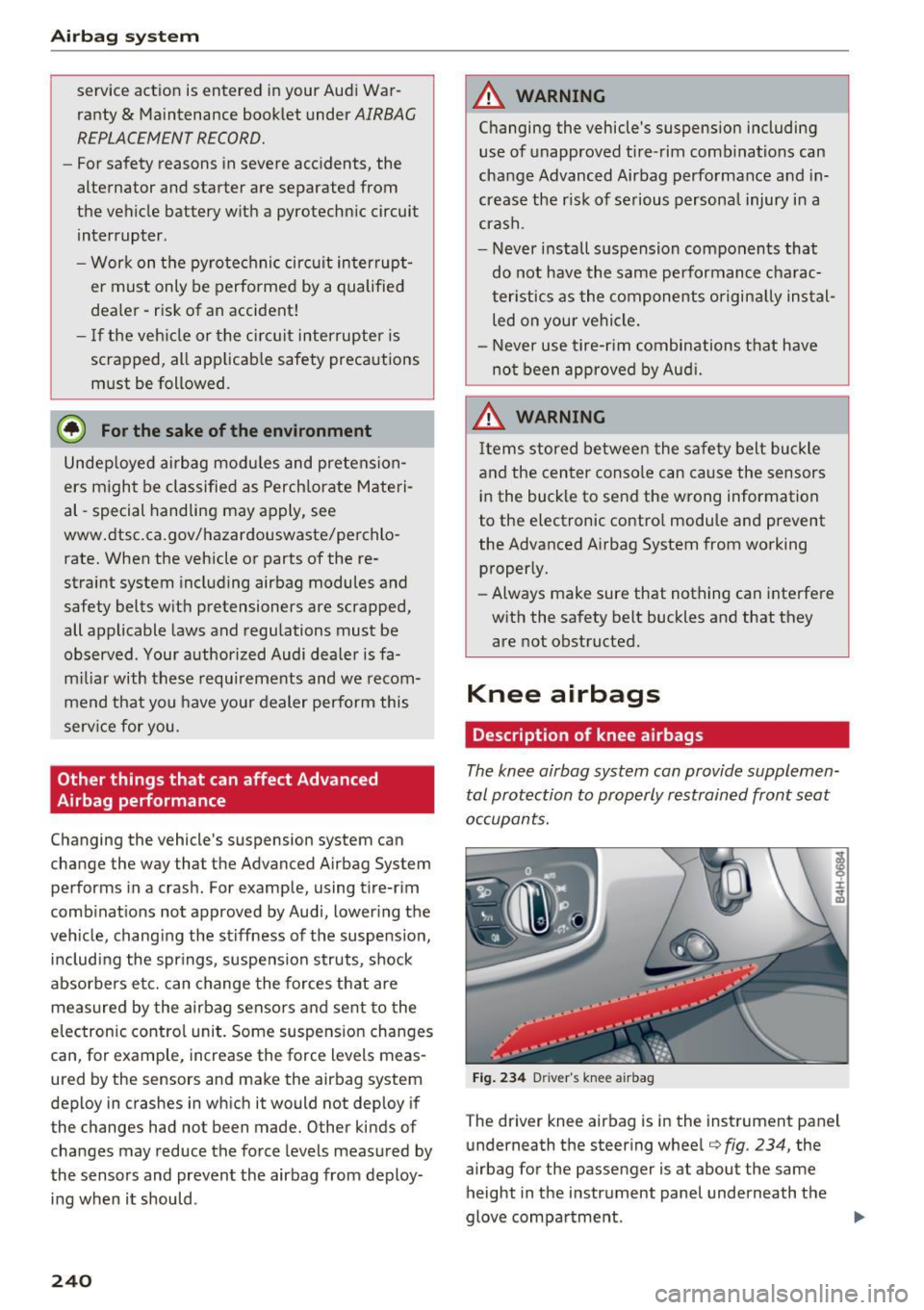
Fig . 234 D river 's knee a irbag
The driver knee airbag is in the instrument panel
underneath the steering wheel~
fig. 234, the
airbag for the passenger is at about the same height in the instrument panel underneath the
glove compartment . ..,_
Page 243 of 354
C) C0 ....
"' " "' .... 0 0 :r
the driver's and passenger's knees and upper and
lower th igh areas and supp lements the protec
tion provided by the safety belts.
I f the front airbags dep loy, the knee airbags also
deploy in fronta l co llisions when the dep loyment
threshold stored in the contro l unit is met
c:::> page 234, More important things to know
about front airbags.
In addition to their normal safety function, safe
ty belts help keep the driver or front passenger in position in a frontal coll is ion so that the a irbags
can prov ide supplemental protect ion.
The airbag system is not a substitute for your safety belt. Rather, it is part of the overall occu
pant restraint system in your vehicle . Always re
member that the airbag system can only help to
protect you if you are wearing your safety belt
and wear ing it properly . T his is why yo u should
always wear your safety belt, not j ust because
the law requires you to do
so <=> page 218, Gener
al information.
Remember too, airbags will deploy only once and
on ly in certain k inds of accidents -your safety
be lts are always there to offer protection in those
accidents in wh ich airbags are no t supposed to
deploy or w hen they have a lready dep loyed, for
examp le when your vehicle strikes or is struck by
another after the first collision .
This is jus t one of the reasons why an airbag is
not a substitute for the safety belt . The a irbag
system works most effectively when used with
the safety belts . Therefore, a lways wear your
safety belts correct ly.
It is important to remember that wh ile the sup
p lemental knee airbag system is designed to re
d uce the likelihood of serious injuries, other inju
ries, for example, swell ing, bruising and minor
abrasions and friction burns can also occur when
an airbag inf lates.
The knee airbag system basically cons ists of:
- The electronic contro l module
- T wo inf latab le airbags (airbag and gas genera-
tor), one for the driver and one fo r the front
passenger
Airb ag sys tem
- The a irbag indicator light in the instrument
panel
The knee airbag system will not deploy:
- when the ignit ion is switched off
- in fronta l co llisions when the decelerat ion
meas ured by the contro l unit is too low
- in side co llisions
- in rear-end collisions
- in rollovers
- in the event of a system malfunction (warning/
ind icator light is on)
c:::> page 23.
A WARNING
--Safety belts and the airbag system can only
provide protect ion when occupants are in
the prope r seat ing pos ition
c:::> page 234.
- If the airbag ind icator light c:::> page 23
comes when the veh icle is being used, have
the system inspected immediately by your
author ized Audi dealer.
It is possib le that
the airbag will inflate when it is not sup
posed to, or w ill not inf late w hen it should.
How knee airbags work
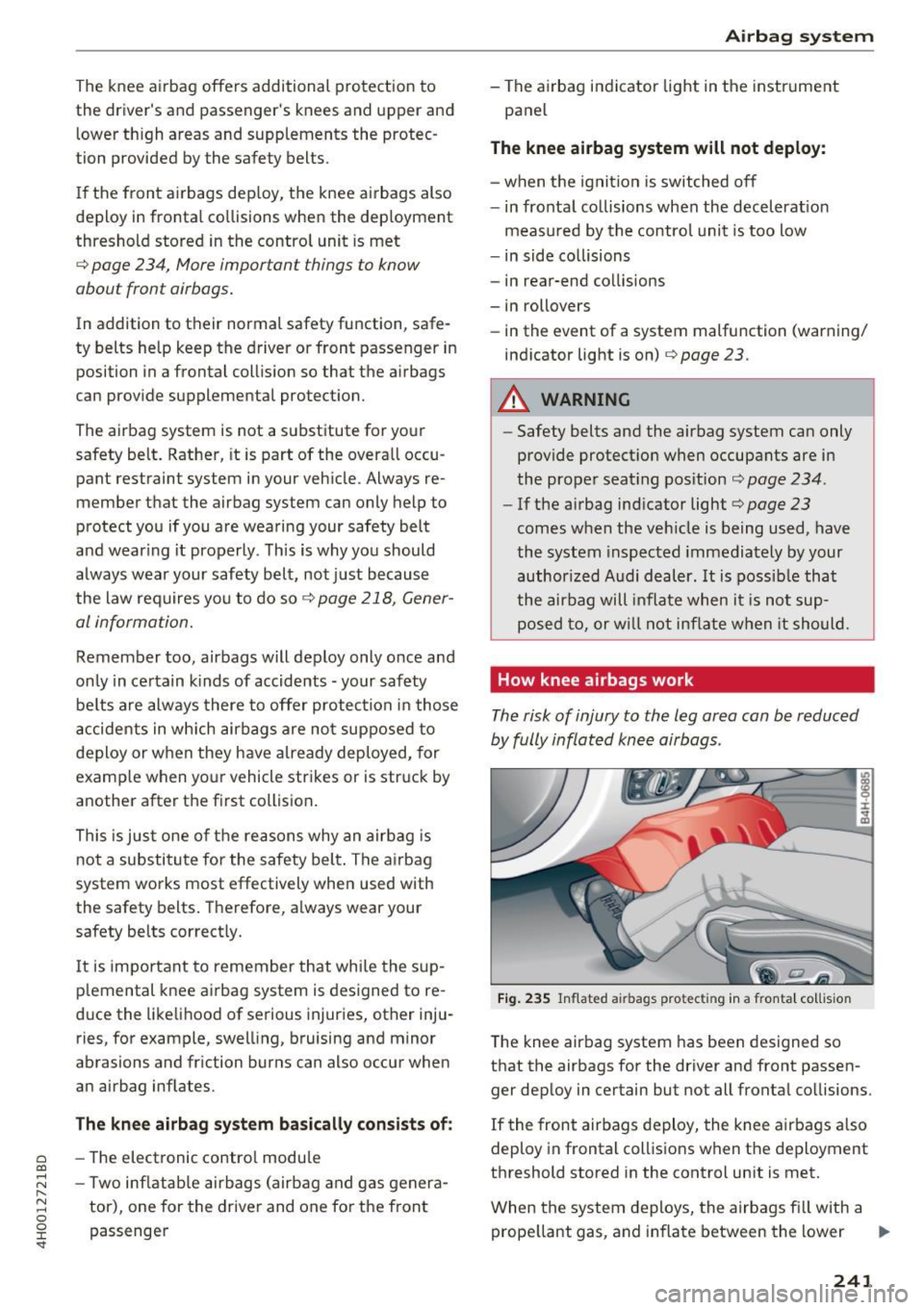
The risk of injury to the leg area can be reduced
by fully inflated knee airbags .
Fig. 2 35 Inflated a irbags protect ing in a fro nta l collision
The knee airbag system has been designed so
that the airbags for the driver and front passen
ger deploy in certain but not all frontal collisions .
If the front airbags deploy, the knee airbags also
deploy in frontal collis ions when the deployment
threshold stored in the control unit is met.
When the system deploys, the a irbags fi ll with a
prope llant gas, and infla te between the lower
Ill-
241
Page 244 of 354
Airbag system
part of the instrument panel and the driver and
the lower part of the instrument panel and the
front passenger
c> poge 234, fig. 232.
Although they are not a soft pillow, they can
"cushion" the impact and in this way they can
help to reduce the risk of injury to the lower ex
tremities.
All of this takes place in the blink of an eye, so
fast that many people don't even realize that the
airbags have deployed. The airbags also inflate
with a great deal of force and it is important for
occupant safety that nothing should be in their
way when they deploy.
Fully inflated airbags in combinat ion with proper
ly worn safety belts slow down and limit the oc
cupant's forward movement and help to reduce
t he risk of injury.
Important safety instructions on the knee
a irbag system
Airbags ore only supplemental restraints. Always
wear safety belts correctly and ride in a proper
seating position.
There is a lot that you and your passengers must
know and do to help the safety belts and airbags
to provide supplemental protection .
A WARNING
An inflating knee airbag can cause serious in
jury. Wearing safety belts incorrectly and im proper seating positions increase the risk of
serious personal injury and death whenever a
vehicle is being used.
- The knee airbag system cannot protect you
properly if you are seated too close to any of
the airbag locations. When adjusting their
seat positions, it is important that both the
driver and the front passenger keep their
upper bodies and knees at the following
minimum safe distances :
- at least 10 inches (25 cm) between the
chest and the steering wheel/instrument panel.
242
- at least 4 inches (10 cm) between the
knees and the lower part of the instru
ment panel.
- The risk of personal injury increases if you
lean forward or to the side, or if the seat is
improperly positioned and you are not wear
ing your safety belt . The risk increases even
more should the airbag deploy.
- Always make sure that the knee airbag can
inflate without interference . Objects be
tween you and the airbag can increase the risk of injury in an accident by interfering
with the way the airbag deploys or by being
pushed into you as the airbag deploys.
- Never let anybody, especially children or
animals ride in the footwell in front of the passenger seat. If the airbag deploys, this
can result in serious or fatal injuries .
- Never carry objects of any kind in the foot
well area in front of the driver's or pas
senger's seat. Bulky objects (shopping bags, for example) can interfere with or
prevent proper deployment of the airbag.
Small objects can be thrown through the
vehicle if the airbag deploys and injure you
or your passengers.
- Make sure there are no cracks, deep scratch
es or other damage in the area of the instru
ment panel where the knee airbags are lo
cated .
- If children are incorrectly seated, their risk
of injury increases in a collision
c> page 248, Child safety.