engine coolant AUDI Q5 2013 User Guide
[x] Cancel search | Manufacturer: AUDI, Model Year: 2013, Model line: Q5, Model: AUDI Q5 2013Pages: 316, PDF Size: 78.89 MB
Page 236 of 316
234 Checking and filling
-Apply the parking brake.
- Move selector lever of automatic trans- mission to P (Park).
- Always let the engine cool down. Hot components will burn skin on contact.
- To reduce the risk of being burned, never
open the hood if you see or hear steam
or coolant escaping from the engine
compartment. Wait until no steam or
coolant can be seen or heard before care
fully opening the hood.
- Keep children away from the engine com partment.
- Never spill fluids on hot engine compo
nents. They can cause a fire.
- Never touch the radiator fan. The auxili
ary electric fan is temperature controlled
and can switch on suddenly.
- Never open the coolant reservoir cap
when the engine is still warm. The cool
ant system is pressurized and hot cool ant could spray out .
- Protect your face, hands and arm from
steam or hot engine coolant by placing a
thick rag over the cap when you open the
coolant reservoir .
- Do not remove the engine cover under
any circumstances. This increases the
risk of burns.
- If work on the fuel system or the electri
cal system is necessary:
- Always disconnect the battery.
- Never smoke or work near heaters or
open flames. Fluids in the engine com
partment could start a fire.
- Keep an approved fire extinguisher im
mediately available.
- To avoid electrical shock and personal in
jury while the engine is running or being
started, never touch:
- Ignition cables
- Other components of the high voltage
electronic ignition system.
- If you must perform a check or repair
with the engine running: -
First, fully apply the parking brake,
move selector lever of automatic trans
mission to P (Park).
- Always use extreme caution to prevent
clothing, jewelry, or long hair from get
ting caught in the radiator fan, V-belts
or other moving parts, or from contact ing hot parts. Tie back hair before
starting, and do not wear clothing that
will hang or droop into the engine.
- Minimize exposure to emission and
chemical hazards
c:> &, .
&_ WARNING
California Proposition 65 Warning:
- Engine exhaust, some of its constituents,
and certain vehicle components contain
or emit chemicals known to the State of
California to cause cancer and birth de
fects and reproductive harm. In addition,
certain fluids contained in vehicles and
certain products of component wear con
tain or emit chemicals known to the
State of California to cause cancer and
birth defects or other reproductive harm.
- Battery posts, terminals and related ac
cessories contain lead and lead com
pounds, chemicals known to the State of
California to cause cancer and reproduc
tive harms. Wash hands after handling.
(D Note
When adding fluids, always make sure that
they are poured into the proper container
or filler opening, otherwise serious dam
age to vehicle systems will occur.
@ For the sake of the environment
To detect leaks in time, inspect the vehicle
floor pan from underneath regularly. If
you see spots from oil or other vehicle flu
ids, have your vehicle inspected by an au
thorized Audi dealer.
Page 237 of 316
Checking and filling 235
Engine compartment
Engine compartment
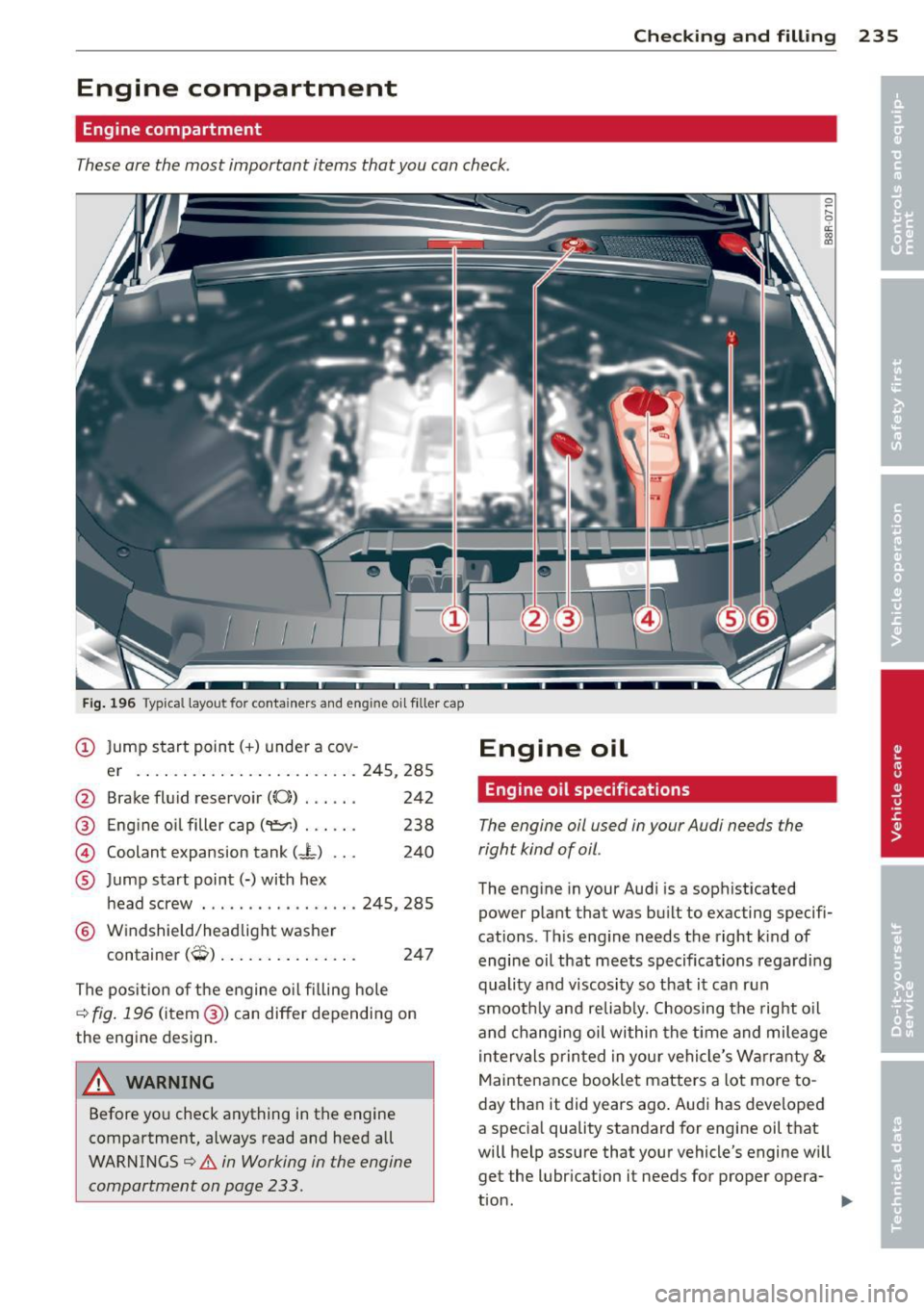
These are the most important items that you can check.
Fig. 196 Typical layout for contain ers and engine oil filler cap
(D Jump start point( +) under a cov -
er .. .. .. .. .............. .. 245, 285
@ Brake fluid reservoir ((0)) . . . . . . 242
@ Eng ine oil filler cap
("t=:?1) . . . . . . 238
@ Coolant expansion tank (J-) . . . 240
® Jump start point(-) with hex
head screw ........... .... .. 245, 285
® Windshield/headlight washer
container
(0) . . . . . . . . . . . . . . . 247
The pos ition of the engine o il filling hole
¢ fig. 196 (item@) can differ depending on
the engine design.
A WARNING
-
Before you check anything in the engine
compartment, always read and heed all
WARNINGS ¢&. in Working in the engine
compartment on page 233.
Engine oil
Engine oil specifications
The engine oil used in your Audi needs the
right kind of oil .
The engine in your Audi is a sophisticated
power plant that was bu ilt to exacting specifi
cations. This eng ine needs the right k ind of
engine oil that meets specifications regarding
quality and viscosity so that it can run
smooth ly and reliab ly. Choosing the right oil
and changing oil within the time and mileage
intervals printed in your vehicle's Warranty
&
Maintenance booklet matters a lot more to
day than it did years ago . Audi has developed
a specia l quality standard for engine oil that
will help assure that your vehicle's engine will
get the lubrication it needs for proper opera-
tion. .,..
Page 242 of 316
240 Checking and filling
Engine cooling system
Coolant
The engine coolant performs two functions: it
keeps the engine from overheating and it pro
tects the engine from freezing in the winter .
The cooling system is sealed and generally re
quires little attention.
The cooling system has been filled at the fac
tory with a permanent coolant which does not need to be changed. The coolant consists of a
mixture of water and the manufacturer's gly
col-based coolant additive Gl3 ant ifreeze
with anticorros ion add itives (SO% for USA
models; 60% for Canadian models). This mix
ture both assures the necessary frost protec
tion and protects metal components in the
engine's cooling system from corrosion and
scaling. It also raises the boiling point of the
coolant.
Do not reduce the concentration of the coo l
ant in the summer by adding plain water .
The
proportion of coolant additive must be at
least 50% but not more than 60%
to main
tain antifreeze protection and cooling efficien
cy. If the coolant frost protection is too low,
the coolant could freeze and damage the veh i
cle heating and engine cooling system .
For year-round driving, antifreeze is added at
the factory for temperatures down to:
- - 31 °F ( - 35°() USA
- - 40°F ( - 40°() Canada .
A WARNING
Before you check anything in the engine
compartment, always read and heed all
WARNINGS
c:> &. in Working in the engine
compartment on page 233.
- Before winter sets in, have the coolant
checked to see if the coolant addit ive in
your vehicle is sufficient to meet the cli
mate cond itions. This is especially impor
tant if you live in a region where the w in- ter
is extreme ly cold . If necessary, in
crease the proportion of coolant additive
to 60%.
- When adding coolant additive to your
cooling system, remember:
- We recommend using only coolant ad
ditive Gl2++ or Gl3 for your vehicle.
This coolant additive is available at au
thorized Audi dealers. Other types of
antifreeze can significantly reduce cor
rosion protection. The resulting corro
sion can ca use a loss of coolant and se
rious engine damage.
- Do not add any type of radiator leak seal
ant to your vehicle's engine coolant .
Add ing radiator repair fluid may adverse
ly affect the function and performance of
your cooling system and could result in
damage not covered by your New Vehicle
Limited Warranty.
Checking the engine coolant level
The engine coolant level can be checked with
a quick glance .
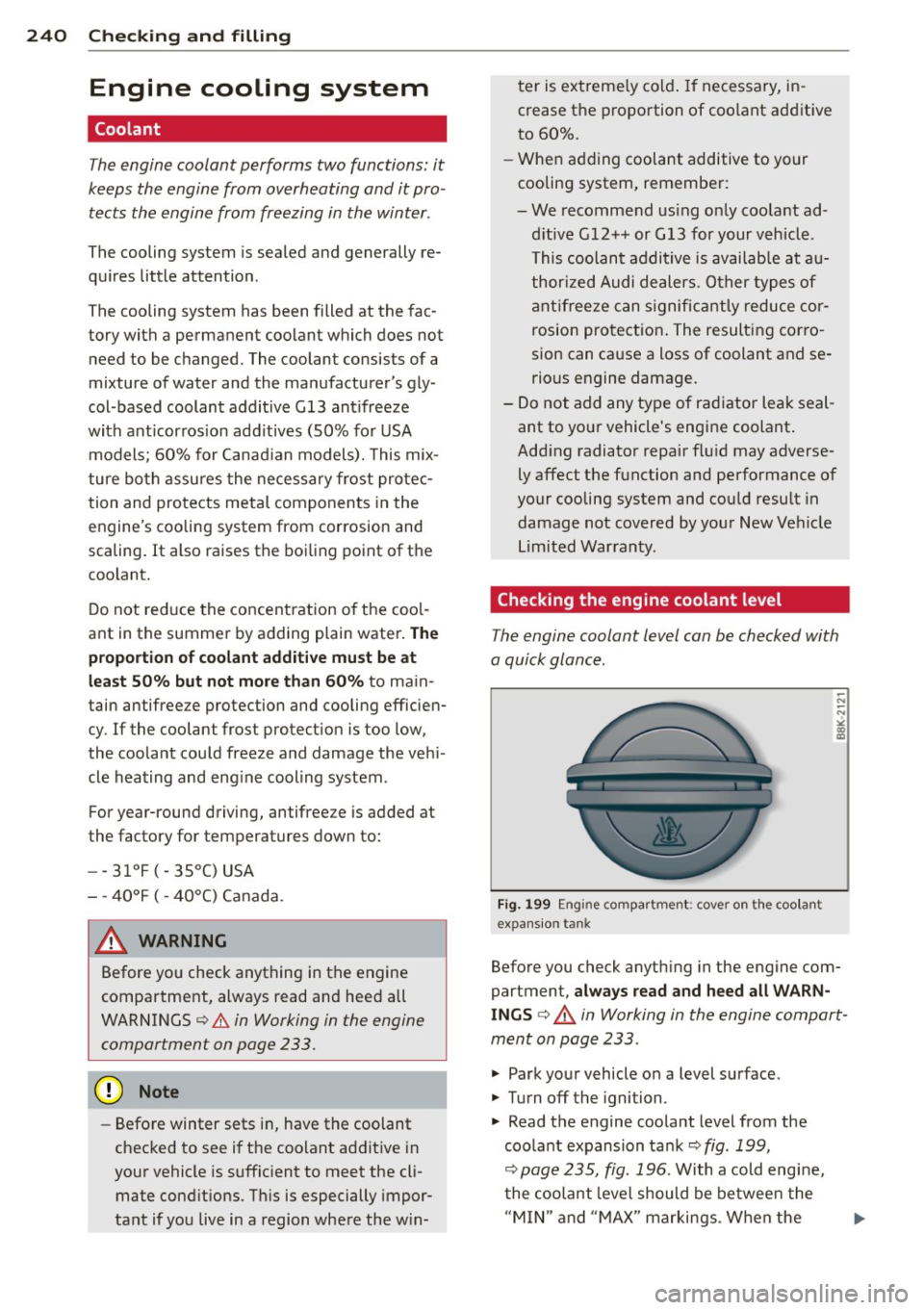
Fig. 199 Engine compartment : cover on t he coolant
expansion tank
Before you check anyth ing in the engine com
partment,
always read and heed all WARN
INGS c:> &. in Working in the engine compart
ment on page 233 .
.. Park your vehicle on a level surface .
.. Turn off the ignition .
.. Read the engine coolant level from the
coolant expansion tank
c:> fig. 199,
c:> page 235, fig. 196 . With a cold engine,
the coolant level should be between the
"MIN" and "MAX" markings. When the
Page 243 of 316
engine is warm, the level may be slightly
above the "MAX" marking .
The location of the coolant expansion tank
can be seen in the engine compartment illus
tration ¢
page 235.
To obtain an accurate reading, the engine
must be switched
off.
The expansion tank in your vehicle is equipped
with an electric coolant level sensor.
When the coolant level is too low, the warning
light in the Auto-Check System¢
page 30 will
blink until you add coolant and the level has
been restored to normal. Even though there is
an electric coolant level sensor, we still rec
ommend you check the coolant level from
time to time.
Coolant loss
Coolant loss may indicate a leak in the cooling
system. In the event of coolant loss, the cool
ing system should be inspected immediately
by your authorized Audi dealer.
It is not
enough merely to add coolant.
In a
sealed system, losses can occur only if
the boiling point of the coolant is exceeded as
a result of overheating.
(D Note
Do not add any type of radiator leak seal
ant to your vehicle's engine coolant. Add
ing radiator repair fluid may adversely af
fect the function and performance of your
cooling system and could result in damage
not covered by your New Vehicle Limited
Warranty.
Adding coolant
Be very careful when adding engine coolant.
Before you check anything in the engine com
partment,
always read and heed all WARN
INGS ¢ A in Working in the engine compart
ment on page 233.
... Turn off the engine .
... Let the engine cool down.
Checking and filling 241
... Place a thick rag over the coolant expansion
tank ¢
page 240, fig. 199 and carefully turn
the cap counter-clockwise ¢
A.
... Add coolant.
... Twist the cap on again
tightly.
Replacement engine coolant must conform to
exact specifications ¢
page 240, Coolant. We
recommend using only coolant additive
Gl2+
+, Gl3
or in an emergency Gl2 +. Do not use a
different additive . In an emergency use plain
water until you can get the correct additive and can restore the correct ratio. This should
be done as soon as possible .
If you have lost a considerable amount of
coolant, then you should add cold antifreeze
and cold water only when the engine is cold.
Always use
new engine coolant when refilling.
Do not fill coolant above the "MAX" mark. Ex
cess coolant will be forced out through the
pressure relief valve in the cap when the en
gine becomes hot.
A WARNING
- The cooling system is under pressure and
can get very hot. Reduce the risk of
scalding from hot coolant by following
these steps.
- Turn
off the engine and allow it to cool
down.
- Protect your face, hands and arms from
escaping fluid and steam by covering
the cap with a large, thick rag.
- Turn the cap slowly and very carefully
in a counter-clockwise direction while
applying light, downward pressure on
the top of the cap .
- To avoid being burned, do not spill an
tifreeze or coolant on the exhaust sys
tem or hot engine parts. Under certain
conditions, the ethylene glycol in en
gine coolant can catch fire.
-Antifreeze is poisonous. Always store an
tifreeze in its original container and well
out of the reach of children.
~
•
•
Page 244 of 316
24 2 Ch ecking and filling
-If you drain the coolant, it must be
caught and safely stored in a p roper
conta iner clearly marked "poison".
(D Note
- Coolant pollutes the env ironment and
could cause an engine fire . Excess coo l-
ant will be forced out through the pres
sure relief valve in the cap when the en
gine becomes hot.
- If, in an emergency, only water can be
added , the correct ratio between water
and antifreeze¢
page 240 must be re
stored as soon as possible .
@ For the sake of the environment
Drained coolant should not be reused. Al
ways dispose of used coolant while observ ing all environmental regulations.
Radiator fan
The radiator fan switches on automatically by
itself
The radiator fan is driven by the engine via the
V-be lt . The viscous clutch regulates the speed
of the fan accord ing to t he temperature of the
coolant.
An auxiliary electric radiator fan* switches on
a nd off depending on coolant temperature
and other ve hicle operating conditions.
After you switch the engine off, the auxiliary
fan can cont inue running for up to 10 minutes
- even with the ignition off. It can even switch
on again later by itself¢&. , if
- the temperature of the engine coolant rises
due to the heat build-up from the engine in
the engine compartment, or
- the engine compartment heats up because
the veh icle is parked in intense sunlight.
_&. WARNING
- To reduce the r isk of personal injury nev
er to uch the radiator fa n. -
The a uxiliary electric fan is temperat ure
controlled and can switch on suddenly
even when the engine is not running.
- The auxiliary radiator fan switches on a u
tomatically when the engine coolant reaches a certai n temperature and will
continue to ru n until the coolant temper
ature drops.
Brake fluid
Checking brake fluid level
The brake fluid level can be checked with a
quick glance.
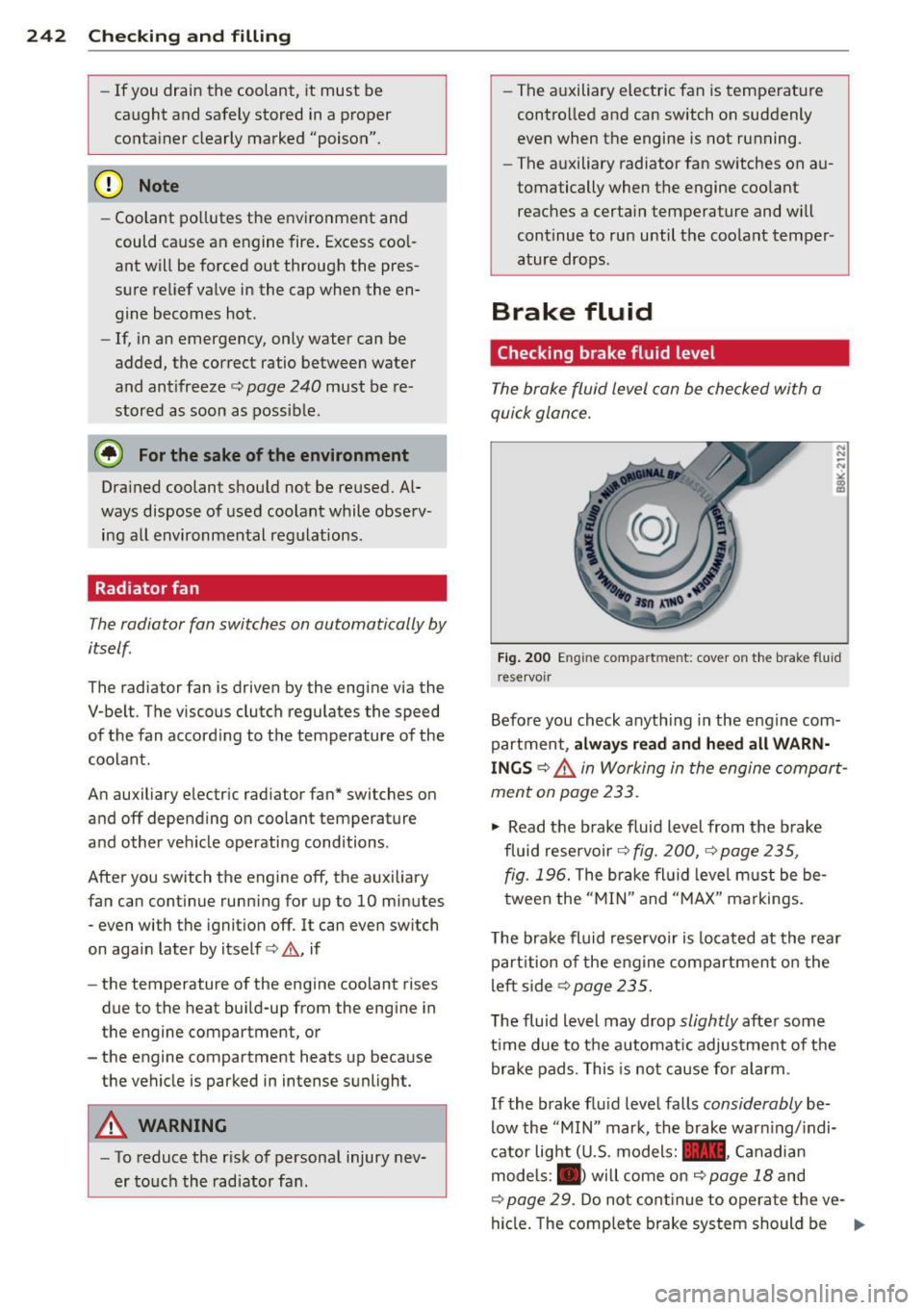
F ig. 2 00 Engine compart men t: cover on t he brake fluid
reservoir
Befo re you check anyth ing in the engine com
partment,
alway s read and he ed all WARN
INGS c::> ,&. in Working in the engine compart
ment on page 233.
.,. Read the brake fluid level from the b rake
fluid reservoir
c::> fig. 200, c::> page 235,
fig. 196.
The brake fl uid level m ust be be
tween the "MIN" and "MAX" markings.
T he bra ke fluid reservo ir is located at the rear
part ition o f the e ngine compartment on the
left s ide
c::> page 235.
The fluid level may drop slightly afte r some
t ime due to the a utomatic adjustment of the
brake pads. This is not cause for a larm .
If the brake fl uid level falls
considerably be
low the
"MIN" mar k, the brake war ning/ indi
cator light ( U.S. models:
1111 , Canadian
models :. will come on
c::> page 18 and
c::>page 29. Do not con tinue to operate the ve-
hicle . The comp lete brake system should be ..,.
Page 249 of 316
install batteries of the same type and manu
facture only (the same as those installed at
the t ime your vehicle was delivered) . Specifi
cations are listed on the battery housing. Your
authorized dealer must code the battery in
the energy management system to enable you
to use the energy management functions cor rectly after replacing the battery .
If it is not possible to use a battery of this
type, the new battery must have the same ca
pacity, voltage (12 volts), amperage, con
struction and plug sea ling .
When installing the battery, make sure the ig
nition and all electr ica l consumers are turned
off.
(D Note
- Make sure the ventilation hose on the
s ide of the batte ry is connected, other
wise fumes or battery acid can leak out .
- Vehicles with the Start-Stop-System* are
equipped with a special cycle-proof AGM
battery . Installing a different type of
battery can cause problems in the vehi
cle elec trical system. When replacing the
vehicle battery, always insta ll one with
the same specifications as the original
battery.
@ For the sake of the environment
Because of the problem of proper disposal
of a battery, we recommend your author
ized Audi dealer change the battery for
you. Batteries contain su lfuric acid and
lead and must always be disposed of prop
erly in compliance with all environmental
regu lations . D isposing of vehicle batteries
improperly is very dangerous to the envi
ronment .
Checkin g and fillin g 247
Windshield/headlight
washer container
Fig. 202 Eng in e compar tment: cov er on the w inds hield
and headl ight* washe r fl uid reservoir
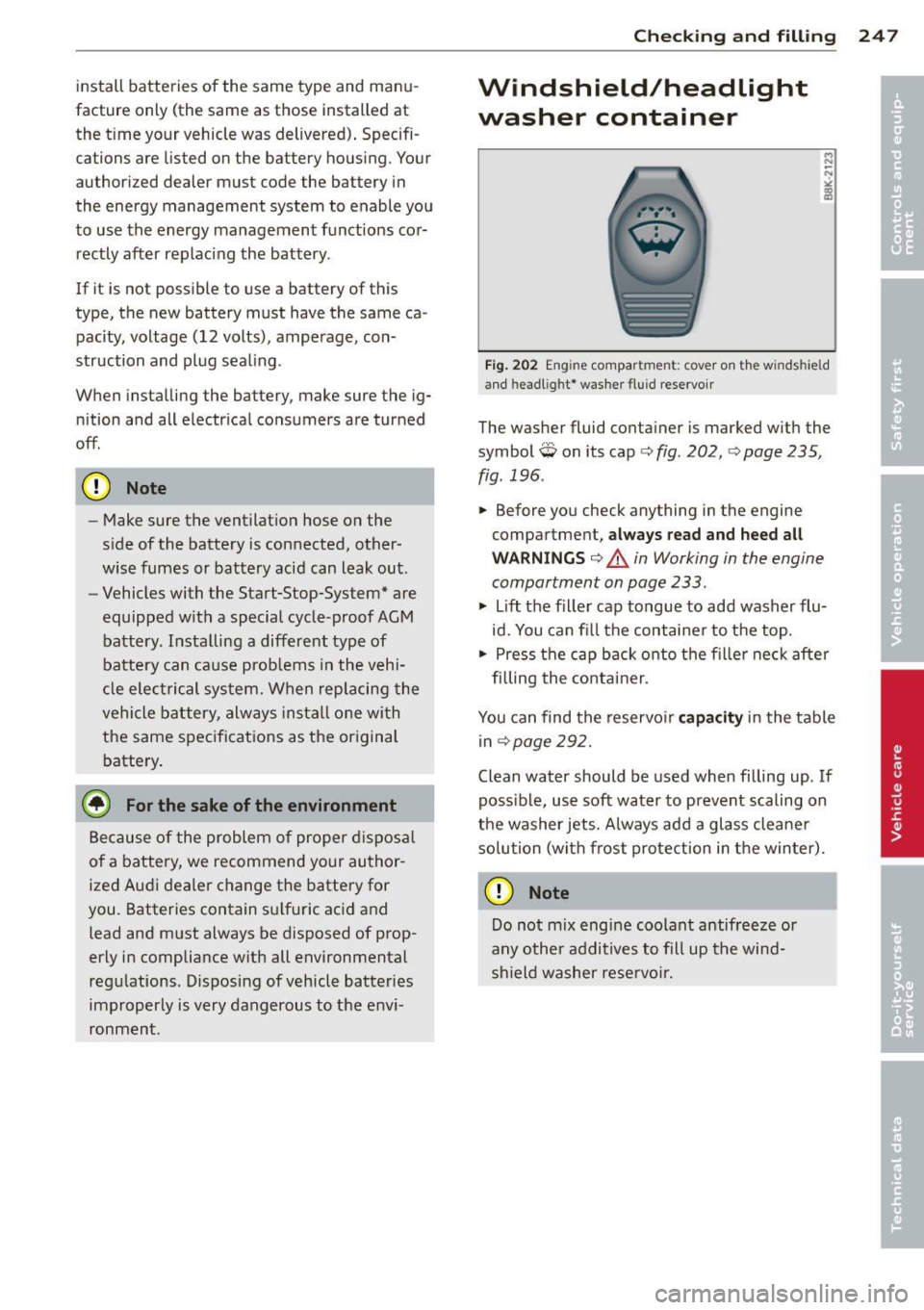
The washer fluid container is marked with the
symbol
Q on its cap c::> fig. 202, c::> page 235,
fig . 196 .
.., Before you check anything in the engine
compartment,
always read and heed all
WARNINGS c::> &. in Working in the engine
compartment on page 233 .
.., Lift the filler cap tongue to add washer flu
id . You can fill the container to the top.
.., Press the cap back onto the filler neck after
f illing the container.
You can find the reservoir
capacity in the table
in
c::> page 292.
Clean water should be used when filling up. If
possible, use soft water to prevent scaling on
the washer jets. A lways add a glass cleaner
solution (with frost protection in the winter).
(D Note
Do not mix engine coolant antifreeze o r
any other additives to fill up the wind
sh ield washer reservoir.
Page 292 of 316
2 90 General information
General information Explanation of
technical data
Some of the technical data listed in this man
ual requires further explanation .
The technical data for your vehicle is listed in
the charts starting on
r:::> page 292. This sec
tion provides general information, notes and restrictions which apply to this data .
Vehicle identification
The key data is given on the vehicle identifica
tion number (VIN) plate and the vehicle data
sticker.
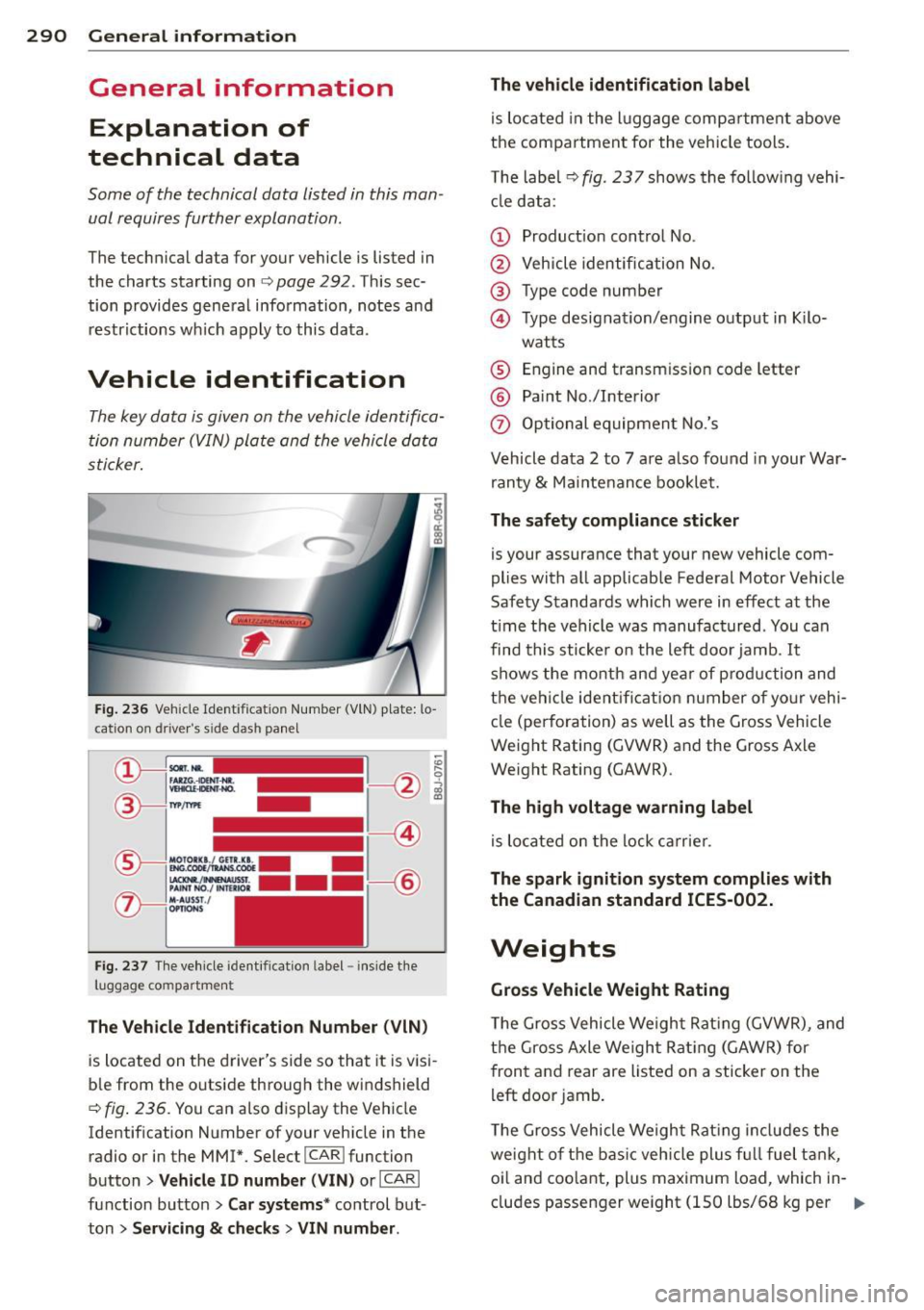
Fig. 236 Veh icle Ide ntific atio n Number (VlN) p late: lo
cation on driver 's sid e das h panel
Fig. 237 The vehicle identi fication label -inside the
luggage co mpa rtmen t
The Vehicle Identification Number (VIN)
is located on the driver's side so that it is visi
b le from the outside through the windshield
r:::> fig . 236. You can also display the Vehicle
Identification Number of your vehicle in the
radio or in the MM!*. Select
! CAR ! function
button>
Vehicle ID number (VIN) or !CARI
function button> Car systems* control but
ton >
Servicing & checks > VIN number . The
vehicle identification label
is located in the luggage compartment above
the compartment for the vehicle tools.
The label¢
fig. 23 7 shows the follow ing vehi
cle data :
(D Production control No.
@ Vehicle identification No.
® Type code number
@ Type designation/engine output in Kilo-
watts
® Engine and transmission code letter
@ Paint No./Interior
(f) Optional equipment No.'s
Vehicle data 2 to 7 are also found in your War
ranty
& Maintenance booklet.
The safety compliance sticker
is you r assurance that your new vehicle com
plies with all applicable Federal Motor Vehicle
Safety Standards which were in effect at the
t ime the vehicle was manufactured . You can
find this sticker on the left door jamb .
It
shows the month and year of production and
the vehicle ident ification number of your vehi
cle (perforation) as well as the Gross Vehicle
Weight Rating (GVWR) and the Gross Axle
Weight Rating (GAWR) .
The high voltage warning label
is located on the lock carrier.
The spark ignition system complies with
the Canadian standard ICES-002.
Weights
Gross Vehicle Weight Rating
The Gross Vehicle Weight Rating (GVWR), and
the Gross Axle Weight Rating (GAWR) for
front and rear are listed on a sticker on the
left door jamb.
The Gross Vehicle Weight Rating includes the
weight of the basic vehicle plus fu ll fuel tank,
oi l and coolant, plus maximum load , which in
cludes passenger weight (150 lbs/68 kg per
Ill>
Page 299 of 316
-Always make sure the transm ission se
lector lever (automatic transmiss ion) is
in P (Park position) and the park brake is
applied.
@) For the sake of the environment
- Changing the eng ine settings w ill ad
versely affect em ission levels. This is det
rimental to the environment and increas
es fuel consumption .
- Always observe env ironmental regula
tions when d isposing of old engine oil,
used brake fluid, dirty engine coolant,
spent batter ies or worn out t ires.
- Undeployed airbag modules and preten
s ioners might be classified as Perchlo
rate Material -specia l hand ling may ap
ply, see www.dts c.ca .gov/hazardous
waste/perch lorate. When the veh icle or
parts of the restraint system includ ing
airbag modules safety belts with preten
sioners are scrapped, all applicable laws
and regulations must be observed. Your
a uthorized Audi dea ler is familiar w ith
these requirements and we recommend
that you have your dea ler perform this
serv ice for you .
Additional accessories,
modifications and
parts replacement
Additional accessories and parts
replacement
Always consult an authorized Audi dealer be
fore purchasing accessories.
Your veh icle incorporates the latest safety de
sig n featu res ensu ring a high standard of ac
tive and passive safety.
This safety could be compromised by non-ap proved changes to the veh icle. For this reason,
if parts have to be replaced, please observe
the following points when install ing addition
a l accessories:
Con sumer In formation 297
Approved Audi accesso ries and genuine Audi
parts are available from authorized Audi deal
ers.
T hese dea lers a lso have the necessary facili
ties, tools and trained specialists to install the
parts and accessories proper ly.
A WARNING
Using the wrong spare parts or using non
approved accessories can cause damage to
the vehicle and serious persona l injury.
- Use on ly accessories express ly approved
by Audi and genu ine Audi spare parts
- These parts and accessories have been
specially designed to be used on your ve
hicle .
- Never install accessories such as tele
phone cradles or beverage holders on air
bag covers or within the airbag deploy
ment zones . Do ing so will increase the
risk of injury if a irbags are triggered in an
accident!
- Before you check anything in the engine
compa rtment, always read and heed all
WARNINGS ~
page 226.
(D Note
-If items other than genuine Audi spare
parts, add-on equipment and accessory
items are used or if repair work is not
performed accord ing to specified meth
ods, this can result in severe damage to
your vehicle's engine and body (such as
corrosion) and adversely affect your vehi
cle's warranty .
- If emergency repairs must be performed
elsewhere, have the vehicle examined by
an authorized Audi dealer as soon as
possible.
- The manufacturer cannot be held liable
for damage wh ich occurs due to failure
to comply with these stipulations.
•
•
Page 304 of 316
302 Index
Chassis Undercoating
Chec king
222
Eng ine coolant leve l ................ 240
Tire pressure ...................... 254
Child restra ints
Danger of us ing ch ild restra ints in the
front seat ... ............ .. .. .. .. .
158
System anchors .......... .. .. .... . 191
Where can I get add it ional information
about child restraints and their use? ..
196
Ch ild safety .................... ... . 178
Conve rtible locking retracto r .. .. .. .. . 188
Important safety instructions for using
chi ld safety seats ..................
181
Important things to know when driving
with chi ldren .. .. ..... ... .. .. .... .
178
Installing a child restraint using the
LATCH system .. ............ .. .... .
193
Mount ing and releasing the anchorage
hook .. .. .... ........ ...... .... ..
193
Tether anchors ................ .... 194
Tether straps ................. .... 194
Chi ld safety locks
Rear doors ... ........... .. .. .... ..
46
Child safety seats .. ..... ... .. .. .... . 184
Booster seats .... ..... ... .. .. .... . 186
Convertible c hild seats .. .. .. ... ... . 185
Convertible locking retractor .. .. ..... 188
Danger of us ing child restra ints in the
front seat ................. .. .... .
158
How do I properly install a child safety
seat in my vehicle? ..... ... .. .. .. .. .
18 1
Infant seats ... .......... .. .. .. .. . 184
Install ing .. ............. .. .. .... . 188
LA T CH system ..................... 193
Lower anchorages ..... ... .. .. .... . 192
Safety instructions ..... ... .. .. .... . 181
Unused safety belts on the rear seat . . 183
C igare tte lighte r ............. .. .... .. 75
Cleaning
Eng ine compartment ........... ....
226
Exhaust tail p ipes .......... .... .... 223
Fabrics and fabr ic coverings ......... 223
Ins trument panel .................. 224
In ter ior .. .. ... .......... .. .. .. .. . 223
Leather .... ... .. ..... ... .. .. .... . 225
Matte finish paint ..... ... .. .. .... . 219
MMI control console . .. ..... .... . .. 223
MMI display ..... ... .. ..... ... .. .. 223
Plastic and vinyl . .... ....... ... .. .. 220
Plastic parts ... .. ............. .... 224
Radio display ..................... 223
Safety belts ..... ................ . 226
Trim strips . . . . . . . . . . . . . . . . . . 220,221
Climate control .... ... .. ..... ... .. .. . 79
Air vents .......................... 81
Automatic recirculation ........... .. . 81
Operation . . . . . . . . . . . . . . . . . . . . . . . . . 80
Setup ...... .. .. .. ... ....... ... .. . 81
Supplementary .. ................ .. 82
Sync hronizing ...................... 81
Cli matized cupholder . . . . . . . . . . . . . . . . . 7 4
Clock . ... .. .... .. .. ... ..... ... .. .. .
12
Closing
Panoramic sliding sunroof ........ .... 4 7
Coat hooks ..... .. ............. .... .
78
Cold tire inflation pressure ..... ... .. .. 252
Compass mirror . . . . . . . . . . . . . . . . . . . . . 59
Compliance ..... .. .. ... ..... ... .. .. 298
Consumer Informa tion . . . . . . . . . . 146, 295
Contac ting NHTSA . ............. .... 146
Convenience
Closing ... .... .. ... .. ..... .... . .. .
47
Opening .. .. .. .. ............. ..... 47
Convenience key . . . . . . . . . . . . . . . . . . . . . 40
Indicator lights ... .............. .. . 88
Locking and unlock ing vehicle .. .. .. .. . 40
Starting engine (START ENGINE STOP
button) ...........................
86
Stopping the engine (START ENGINE
STOP button) ......................
87
Switching on ignition ................ 86
Convertib le child safety seats ... .. .. .. 185
Convertib le loc king ret ractor
A t· t· c 1va mg ... .. .. .... ......... .... 190
D t' . eac 1vatmg . . . . . . . . . . . . . . . . . . . . . . 191
U sing to secure a child sa fety seat lB8, 190
Coolant system . ... .. ... ....... ... .. 240
Cooled cupholder .. ... .......... ..... 7 4
Cooling box in glove compartment . .. .. . 77
Cooling mode (climate control) ...... .. .
80
Cooling System
Expansion tank ... .. ... ..... ...... .
240
Cornering l ight . . . . . . . . . . . . . . . . . . . . . . 51
Page 306 of 316

304 Index
Electronic immobilizer . . . . . . . . . . . . . . . . 38
Electronic power control
( E PC) warn ing/ indicato r light . .. .... .. 15
Electroni c Stab ili za tion Con trol (ESC) ... 197
ESC Offroad mode ......... ... .. .. . 198
H ill descent assist ......... .... .... 199
Warning/indicator lights ....... .. .... 15
E mergency braking . . . . . . . . . . . . . . . . . . . 90
E mergency flasher . . . . . . . . . . . . . . . . . . . 52
Warning/indicator lights ... .. .. .... . . 16
Emergency key .. .. .... ...... .. .. .. .. 36
Starting engine ........... ... .. .. .. 85
Emergency locking of the doo rs . . . . . . . . . 42
E mergency operation
L uggage compartment lid .. .. .. .. ... . 45
Emergency release
Selector lever . .... .... ..... .. .. .. . 128
Emergency star ting ........ .. .. .. .. . 284
Em ergency towing ............. .... . 286
Emergency unlocking
I gn ition key . . . . . . . . . . . . . . . . . . . . . . . 38
Energy management ....... .. .. .. .. . 203
En gin e
Compartment .. ........ .. .. .. .... . 235
Coolant .... ... .......... .. .. .... . 240
Hood .. .... ... .......... ........ . 233
Jump starting ............ .... .... . 105
Start-Stop-System . . . . . . . . . . . . . . . . . . 91
Starting . . . . . . . . . . . . . . . . . . . 83, 86, 98
Starting with jumper cables .. .. .. ... 284
Stopping . . . . . . . . . . . . . . . . . . . 85, 87, 98
E ngine compartment
Safety instructions ........ .. .. .. .. . 233
Working the engine compartment .... 233
Engine coolant system .......... .... . 240
Adding coolant . .......... .. .. .... . 241
Check ing coolant level ....... .. .... . 240
Malfunction . . . . . . . . . . . . . . . . . . . . . . . 30
Radiator fan ... .. ..... ... .... .. .. . 242
Engine coolant temperature Temperature gauge ........... .... . . 10
En gin e data ... ............ .. .. .. .. . 292
Eng ine hood
C losing .. .. ... .. ..... ..... .. .. .. . 233
H ow to release the hood ....... .. ... 233 E
ngine oi l .. .... .. ... .. ........ .. .. 235
Adding ... .... .. .. ... ........ .. .. 238
Additives .. .. .. .. .. ... ........ .. .. 238
Chang ing ..... .. ............. .... 239
Check oil level ... ............. .... 238
Consumption .. .. ................ . 238
Level .... ... .. .. .. ... .. ... ..... .. . 34
Oil consumpt ion .. .......... ...... . 237
Oil grades . .. .. . ............ .... .. 235
Pressure malfunction ....... .... .. .. . 30
Sensor defective . . . . . . . . . . . . . . . . . . . . 34
Specification and viscosity ....... .. .. 235
En gine speed limitation . . . . . . . . . . . . . . . 34
Environment Break-in per iod ... ............. .... 20S
Catalytic converter ................ . 206
Dispos ing of your ve hicle battery ..... 246
Driving at high speeds ............. . 207
Driving to minimize pollution and noise 207
Fuel .... .. .... .. ............. .... 231
Fu el economy .. . .. ............ .. .. 207
Leaks under your vehicle .......... .. 233
Letting the vehicle stand and warm up . 207
Proper disposal of drained brake fluid . 243
Proper disposal of drained engine cool-
ant .. .... .... .. ............. .... 241
Proper disposal of drained engine
o il . . . . . . . . . . . . . . . . . . . . . . . . . 238, 239
Recycling used engine oil ........... . 238
Roof rack . .. .. .. .. ........... .... . 72
Unl eaded fuel .. .. ............. .. .. 22 8
What shoul d I do with an old battery? . 246
EPC
refer to Electronic power control ..... . 15
ESC
refer to Electronic Stabili zation Control
(ESC) .... ... .. .. .. ... .. ... ..... .. . 15
ESC Offroad mode . . . . . . . . . . . . . . . . . . . 198
E thy l alcoho l (Fuel) ..... ... ... ... .. .. 229
Event Data Recorder (EDR) . . . . . . . . . . . . 197
E xhaus t tai l pipes
C leaning . ..... .. .. ... ........ .. .. 223
Expansion tank .. .. ..... ........... . 240
Explanation of some technical terms ... 209