tow AUDI Q5 2014 Owner's Manual
[x] Cancel search | Manufacturer: AUDI, Model Year: 2014, Model line: Q5, Model: AUDI Q5 2014Pages: 316, PDF Size: 78.41 MB
Page 136 of 316
134 Parking system
- On -when the parking system is switched
on, either the visua l d isplay or the picture
from the rearview camera is disp layed .
Warning tones
-Front volum e -front sensor vol ume
- Front frequ enc y-front sensor frequency
-Re ar volum e -rear sensor volume
- Rear frequenc y -rear sensor frequency
- In -ca r entertainme nt fader /Mu sic volume
w hile pa rking -
when the parking system is
switched on , the volume of the active audio
source is lowered .
The new ly adjusted value is briefly heard from
the signal generator.
@ Tips
- The warning tones can a lso be adjusted
directly by the v is ual disp lay or the p ic
ture from the rearview camera. Simp ly
press the
Sett ings contro l button.
- Changed settings are activated when
parking system is switched on again.
- The settings are automatically stored
and ass igned to the remote control key.
Trailer hitch
Applies to vehicles: with Audi parking system plus w ith
rea rview camera a nd trailer hitch
For vehi cles with a facto ry installed trai ler
hitch, or a trai ler hitch installed according to
factory specifications, the parking system rear
sensors do not come on whenever you shift in
to reverse gear or when you press the
P, #J\.
switch. Remember, there is no warning for
d istances to the rear . The front sensors re
main activated. The visual display switches to
the trailer towing mode. The picture from the
rearv iew camera will not show the orientation
l ines nor the blue su rfaces.
If you install a hitch yourself, th is function
may not work .
Error messages
Applies to vehicles: wi th Audi parking sys te m plus with
rearv iew camera
T he re is an error in the system if t he LED on
the
p, q~ switch is blinking and you hea r a con
t in uous alarm for a few se conds after switch
ing on the parking system or when the park
ing system is already activated . Have yo ur au
thorized Audi dea ler correct the error.
(D Tips
If the error is not corrected before you
switch off the ignition, when you switch on
the parking system again, the LED in the
Pw J\. switch will blink.
Page 139 of 316
Programming the transmitter (version B)
A pplies to vehicles: with Horne link and radio
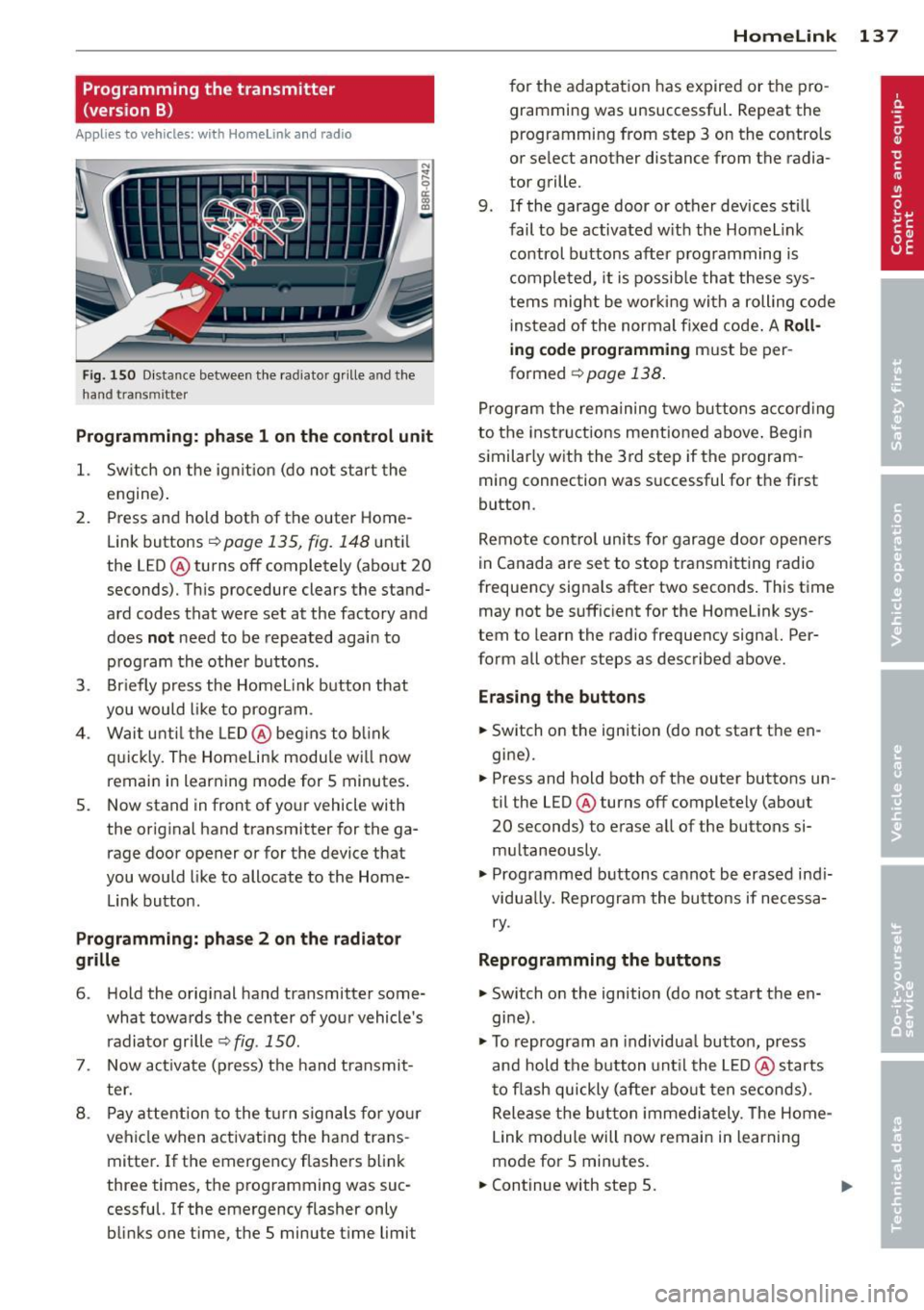
Fig. 150 D istance between t he rad ia to r gr ille a nd the
h and trans mitter
Programming: phase 1 on the control unit
1. Sw itch on the ig nit io n (do no t start the
engine) .
2. Press and hold both of the outer Home
Link buttons
r=>page 135, fig. 148 until
the LED @ turns off completely (about
20
seconds). Th is procedure clears the stand
ard codes that were set at the factory and
does
not need to be repeated agai n to
p rog ram the othe r buttons.
3 . Briefly press the Homelink button that
you would like to prog ram .
4. Wai t u nti l the LED @ beg ins to blink
q ui ckly . The Home Lin k modu le wi ll now
remai n in learning mode for
5 minutes .
5. Now stand in front of your vehicle with
the original hand transmitter for the ga
rage door opener or for the device that
you would like to allocate to the Home
Link button.
Programming: pha se 2 on the radiator
grille
6 . Hold the orig inal hand t ransmitter some
what towa rds the center o f you r vehicle 's
radiato r gr ille
r=> fig . 150.
7. Now activate (p ress) t he hand transmit
ter.
8 . Pay a ttention to the t urn signals for yo ur
vehicle when activating the ha nd trans
mitter . If t he emergency flashers blink
three times, the programming was suc
cessful. If the emergency flasher only bli nks one t ime, the 5 minute t ime limit
Homelink 13 7
for the adaptat ion has expired or the pro
gram ming was unsuccessful. Repeat the
programming from step 3 on the controls
o r se lect another distance from the radia
tor grille.
9. If the garage door or other devices sti ll
fail to be activated w it h the Homelin k
control buttons after p rogramming is
comple ted, it is possib le tha t these sys
tems might be w ork ing wi th a roll ing code
ins tead of the normal fixed co de.
A Roll
ing code programming must be per
formed
r=> page 138 .
Program the rema ining tw o bu ttons a ccord ing
to the instructions mentioned above . Beg in
similar ly w ith the 3rd step if the program
m ing connection was successful for t he fi rst
button .
Remote con trol units fo r garage door opene rs
in Canada are set to stop tra nsmitting radio
frequency signa ls after two seconds . This t ime
may not be suffic ient for the Homelink sys
tem to learn the radio frequency signa l. Per
form all other steps as described above.
Erasing the buttons
.,. Switch on the ignition (do not sta rt the en
gi ne).
.,. Press and hold both o f the outer buttons un
til the LED@ turns off completely (abo ut
20 seconds) to erase a ll of the buttons si
m ultaneously .
.,. Programmed b uttons ca nnot be erased ind i
vidua lly. Reprogram the buttons if necessa
ry .
Reprogramming the buttons
.,. Switch o n the ignition (do not start t he en
gine) .
.,. To reprogram an individua l bu tto n, press
and hold the button unt il the LED @ starts
to f lash quickly (a fter abo ut ten seconds) .
Release t he bu tton imme dia tely. The Home
L ink module will now remain in learning
mo de for 5 minutes.
.,. Continue with step 5.
Page 143 of 316
~ Always keep both feet in the footwell so
that you are in control of the vehicle at all
times.
For detailed information on how to adjust the
driver's seat, see
c:;, page 62.
A WARNING
Drivers who are unbelted, out of position
or too close to the airbag can be seriously
injured by an airbag as it unfolds. To help
reduce the risk of serious personal injury:
- Always adjust the driver's seat and the
steering wheel so that there are at least
10 inches (25 cm) between your breast
bone and the steering wheel.
- Always hold the steering wheel on the
outside of the steering wheel rim with
your hands at the 9 o'clock and 3 o'clock positions to help reduce the risk of per
sonal injury if the driver's airbag inflates.
- Never hold the steering wheel at the
12 o'clock position or with your hands at
other positions inside the steering wheel
rim or on the steering wheel hub. Hold
ing the steering wheel the wrong way
can cause serious injuries to the hands,
arms and head if the driver's airbag de
ploys.
- Pointing the steering wheel toward your
face decreases the ability of the supple
mental driver's airbag to protect you in a
collision.
- Always sit in an upright position and nev
er lean against or place any part of your
body too close to the area where the air
bags are located.
- Before driving, always adjust the front
seats and head restraints properly and
make sure that all passengers are prop
erly restrained.
- Never adjust the seats while the vehicle
is moving . Your seat may move unexpect
edly and you could lose control of the ve
hicle.
- Never drive with the backrest reclined or
tilted far back! The farther the backrests
are tilted back, the greater the risk of in-
Driving Safely 141
jury due to incorrect positioning of the
safety belt and improper seating posi
tion.
- Children must always ride in child safety
seats
c:;, page 178. Special precautions
apply when installing a child safety seat
on the front passenger seat
c:;, page 157.
Proper seating position for the front
passenger
The proper front passenger seating position
is important for safe, relaxed driving.
For your own safety and to reduce the risk of
injury in the event of an accident, we recom
mend that you adjust the seat for the front
passenger to the following position:
~ Adjust the angle of the seatback so that it is in an upright position and your back comes
in full contact with it whenever the vehicle is
moving .
~ Adjust the head restraint so the upper edge
is as even as possible with the top of your
head. If that is not possible, try to adjust
the head restraint so that it is as close to
this position as possible
c:;, page 142.
~ Keep both feet flat on the floor in front of
the front passenger seat .
~ Fasten and wear safety belts correctly
c:;,page 152.
For detailed information on how to adjust the
front passenger's seat, see
c:;, page 61.
A WARNING ,_
Front seat passengers who are unbelted,
out of position or too close to the airbag
can be seriously injured or killed by the air
bag as it unfolds. To help reduce the risk of
serious personal injury:
- Passengers must always sit in an upright
position and never lean against or place
any part of their body too close to the
area where the airbags are located.
- Passengers who are unbelted, out of po
sition or too close to the airbag can be
seriously injured by an airbag as it
•
•
Page 147 of 316

Stowing luggage
Loading the luggage compartment
All luggage and other objects must be prop
erly stowed and secured in the luggage com
partment.
Fig . 153 Safe load pos ition ing: place heavy objects as
low and as far forward as possible.
Loose items in the luggage compartment can
shift suddenly, changing vehicle handling
characteristics . Loose items can also increase
the r isk of serious personal injury in a sudden
veh icle maneuver or in a collision .
~ Distribute the load evenly in the luggage
compartment.
~ Always place and properly secure heavy
items in the luggage compartment as low
and as far forward as poss ible
<=> fig. 153.
~ Secure luggage using the tie-downs provid
ed
¢ page 68.
~ Make sure that the rear seatback is securely
latched in place.
A WARNING
Improperly stored luggage or other items
can fly through the vehicle causing serious
personal injury in the event of hard brak
ing or an acc ident. To help reduce the risk
of serious personal injury:
- Always put objects, for example, luggage
or other heavy items in the luggage com
partment.
- Always secure objects in the luggage
compartment us ing the tie-down eye lets
and suitable straps .
Drivin g Sa fely 145
A WARNING
Heavy loads will influence the way your ve
h icle handles. To help reduce the risk of a
loss of control leading to serious personal
injury:
-Always keep in mind when transporting
heavy objects, that a change in the cen
ter of gravity can also cause changes in
veh icle handling:
- Always distribute the load as evenly as
possible.
- Place heavy objects as far forward in
the luggage compartment as possible.
- Never exceed the Gross Axle Weight Rat
ing or the Gross Vehicle Weight Rating
specified on the safety compliance stick
er on the left door jamb. Exceeding per
missible weight standards can cause the
veh icle to slide and handle differently.
- Please observe information on safe driv
ing<=>
page 139 .
A WARNING
To help prevent poisonous exhaust gas
from being drawn into the vehicle, a lways
keep the rear lid closed while driving.
- Never transport objects larger than
-
those fitting comp letely into the luggage
area because the rear lid cannot be fu lly
closed.
- If you absolutely must dr ive with the rear
lid open, observe the following notes to
reduce the risk of poisoning:
- Close all windows,
- Close the Panoramic sliding sunroof *,
- Open all air outlets in the inst rument
panel,
- Switch off the air rec irculat ion,
- Set the fresh a ir fan to the highest
speed.
A WARNING
A lways make sure that the doo rs, all win
dows, the Pano ramic s liding sunroof* and
the rear lid are securely closed and locked
Page 157 of 316

.. Let the belt wind up on the retractor as yo u
gu ide the belt tongue to its stowed position .
A WARNING
Never unfasten safety belt while the vehi
cle is moving. Doing so will increase your
r isk of being injured or killed .
Adjusting safety belt height
-
With the aid of the safety belt height adjust
ment, the three point safety belt strap rout
ing can be fitted to the shoulder area, accord
ing to body size.
;g 0 0 C) .., m
Fig. 164 Safety be lt height adjustme nt fo r th e fro nt
seats - loop -a rou nd fitt ings
The shoulder belt should lie as close to the
center of the collar bone as possible and
should fit well on the body¢&.
in Safety belt
position on page 154 .
.. Push
the loop-around fittings up ¢ fig. 164
@, or
.. squeeze together the@button, and push
the loop-around fitt ings down @ .
.. Pull the belt to make sure that the upper at
tachment is properly engaged.
A WARNING
Always read and heed all WARNINGS and
other impo rtant information ¢
page 152.
@ Tips
With the front seats, the height adjust
ment of the seat can also be used to adjust
t he posit ion of the safety be lts.
Safety belts 155
Improperly worn safety belts
Incorrectly positioned safety belts can cause
severe injuries .
Wearing safety belts improperly can cause se
rious injury or death. Safety belts can only
work when they are correctly positioned on
the body . Improper seat ing pos itions reduce
the effectiveness of safety be lts and will even
inc rease the risk of injury and death by mov
ing the safety be lt to crit ical areas of the
body. Improper seating positions also in
crease the risk of serious injury and death
when an airbag dep loys and strikes an occu
pant who is not in the correct seating posi
tion. A driver is responsible for the safety of
all vehicle occupants and especially for ch il
dren . Therefore:
.. Never permit anyone to assume an incorrect
sitt ing position in the vehicle while traveling
¢ &,. .
A WARNING
Improperly worn safety belts increase the
risk of serious persona l injury and death
whenever a ve hicle is being used.
- Always make s ure that all vehicle occu
pants are co rrectly restrained and stay in
a correct seating position whenever the
veh icle is being used .
- Always read and heed all WARNINGS and
o ther important information
¢page 152.
Safety belt preten
sioners
How safety belt pretensioners work
In front, side and rear -end collisions above a
particular severity and in a rollover, safety
belts are tensioned automatically .
The safety belts are equipped with safety belt
pretensioners . The system is activated by sen
sors in front, side and rear-end co llisions of
great severity and in a rollover . This tightens
the belt and takes up belt slack¢.&.
in Service Iii>
Page 167 of 316
-Improper repair or disassembly of the
front passenger and driver seat will pre
vent the Advanced Airbag System from
functioning properly .
- Repairs to the front passenger seat must
be performed by qualified and properly
trained workshop personnel.
- Never remove the front passenger or
driver seat from the vehicle .
- Never remove the upholstery from the
front passenger seat .
- Never disassemble or remove parts from
the seat or disconnect wires from it.
- Never carry sharp objects in your pockets
or place them on the seat. If the weight
sensing mat in the passenger seat is
punctured it cannot work properly.
- Never carry things on your lap or carry
objects on the passenger seat . Such
items can increase the weight registered
by the weight-sensing mat and send the
wrong information to the airbag control
unit.
- Never store items under the front pas
senger seat. Parts of the Advanced Air
bag System under the passenger seat
could be damaged, preventing them and
the airbag system from working proper
ly.
- Never place seat covers or replacement
upholstery that have not been specifical
ly approved by Audi on the front seats.
- Seat covers can prevent the Advanced
Airbag System from recognizing child re
straints or occupants on the front pas
senger seat and prevent the side airbag in the seat backrest from deploying prop
erly.
- Never use cushions, pillows, blankets or
similar items on the front passenger
seat . The additional padding will prevent
the weight-sensing mat in the seat from
accurately registering the child restraint
or person on the seat and prevent the
Advanced Airbag System from function
ing properly.
- If you must use a child restraint on the
front passenger seat and the child re-
Airbag system 165
straint manufacturer's instructions re
quire the use of a towel, foam cushion or
something else to properly position the
child restraint, make certain that the
PASSENGER AIR BAG OFF light comes
on and stays on whenever the child re
straint is installed on the front passen
ger seat.
- If the
PASSENGER AIR BAG OFF light
does not come on and stay on, immedi
ately install child restraint in a rear seat
ing position and have the airbag system
inspected by your authorized Audi dealer .
How the Advanced Airbag System
components work together
The front Advanced Airbag System and the
side airbags supplement the protection of
fered by the front three-point safety belts
with pretensioners and load limiters and the
adjustable head restraints to help reduce the
risk of injury in a wide range of accident and
crash situations. Be sure to read the impor
tant information about safety and heed the
WARNINGS in this chapter.
Deployment of the Adv a need Airbag System
and the activation of the safety belt preten
sioners depend on the deceleration measured
by the crash sensors and registered by the
electronic control unit. The amount of infla
tion of the front airbags can also be adapted
to the front sea t position, depending on the
distance between the respective front seat
and the steering wheel or instrument panel as registered by sensors in the seats. Crash se
verity depends on speed and deceleration as
well as the mass and stiffness of the vehicle
or object involved in the crash.
On the passenger side, regardless of safety
belt use, the airbag will be turned off if the
weight on the passenger seat is less than the
amount programmed in the electronic control
unit. The front airbag on the passenger side
will also be turned off if one of the child safe-
ty seats that has been certified under Federal
Motor Vehicle Safety Standard 208 has been
recogni zed on the seat . The
PASSENGER AIR .,,.
•
•
Page 193 of 316
Deactivating the convertible locking
retractor
The convertible locking retractor for child re
straints will be deactivated automatically when the belt is wound all the way back into the retractor.
" Press the red button on the safe ty belt bu ck
le. The bel t tongue w ill pop out of the buck
l e .
" Guide the safety be lt all the way back into
its stowed position .
A lways le t the safety belt retrac t complete ly
into its stowed posit ion . The sa fety belt can
now be used as an ordinary safety belt with
out the convertib le locking ret ractor for chi ld
restra ints.
I f the convertible locking retracto r shou ld be
activated inadve rtently, the safety belt m ust
be unfastened and guided comp letely back in
to its stowed position to deactivate th is fea
ture. If the co nvertib le locking retractor is not
deactivated, the safety belt will gradually be
come tighter and u ncomfo rtable to wea r.
A WARNING
Imprope rly insta lled child saf ety seats in
c rease the risk of ser ious perso nal inju ry
a n d death in a colli sion.
- Never unf asten the safety belt to deacti
va te the convert ible lo cking re tr actor for
c hild re st rain ts w hile the veh icle is mov
ing. You woul d not be rest rained and
cou ld be ser iously injure d in an accident.
- Always read and hee d all WARN INGS
whenever using a child rest rained in ave
hicle is being use d
¢page 178. Special
precautions apply when installing a ch ild
safety seat on the front passenger seat
¢ page 158, Child restraints on the front
seat -some important things to know.
Child Sa fet y 191
LATCH Lower
anchorages and tethers
for children
Child Restraint System anchors and how
are they related to child safety
To p rov ide a simple r and more practicable way
to attach the chil d restra in t on t he vehi cle
seat, Federal regulat ions req uire spec ia l lower
an cho rages in vehicles and devi ces on new
c h ild restraints to at tach to the vehicle ancho
rages.
T he combination o f the tether ancho rages and
th e lower ancho rages is now gener ally c alled
the
LATCH system fo r "L owe r Anchorages and
T ethers for Chil d ren."
Fo rw ard- facing ch ild restr ain ts manufa ctured
after September 1, 19 99, are requ ired by U .S .
f edera l reg ulations to comply wi th new child
head movement performance req uir ements .
These new performance requirements make a
tether necessary on most new child seats.
Installing a chi ld restraint that requires a top
tether without one can seriously impair the performance of the c hild restra int and its abil
ity to protect the child in a coll is ion. Insta lling
a chi ld restraint that requi res a top tether
without the top tether may be a violat io n of
state law.
Child restraint manufacturers offer LATCH
lower anchorages on their child seats w ith
hook-on or push-on con nectors attached to
adjustable straps.
In add ition to the LATCH lower anchorages,
these chi ld restraint systems usually require
the use of tether straps to he lp keep the chi ld
r est raint fi rmly in place .
A WARNING
Imp roper installat io n of ch ild restra ints
will i ncrease the r is k of inj ury a nd deat h in
a c rash.
-
•
•
Page 203 of 316
Fa u lts in th e brake sy stem
If you should notice a sudden increase in
brake peda l travel, then one of the two brake
circuits may have failed~.&..
Low brak e flu id level
Malfunct ions can occur in the brake syste m if
the brake fl uid leve l is too low. The b rake fluid
l eve l is monito red electronically.
Brake boost er
The brake booster increases the pressure that
you generate w ith the brake pedal.
It only op
e rates while the eng ine is running or with the
i gnit ion sw itched on (hybr id dr ive*)~ .&,.
Brake lining wear statu s
Brake lining wear may be checked by visual in
spection of the condition of the brake pads
through the openings in the whee l. If neces
sa ry, the wheel may be removed for this in
spection
~ page 2 73, Changing a wheel.
.&_ WARNING
=
- You should perform braking maneuvers
for the purpose of clean ing the brake
system on ly if road conditions permit.
Other road users must not be put at risk -
you may cause an acc ident!
- Before descending a steep grade, reduce speed and shift transmiss ion into a lower
gear or lower driving range. Do not ride
the brakes or hold the pedal down too long or too often. This could cause the
brakes to get hot and dimin ish b raking
efficiency.
- Do not "ride the brakes" by resting your
foot on the pedal when you do not intend
to brake. Th is may cause the b rakes to
overheat, premat ure wear and increased
stopp ing distance .
- Under certain climat ic and operating
c ondit ions such as passing through wa
ter, driving in heavy rain or after wash ing
the vehicle, the effectiveness of the brakes can be reduced. In winter, ice can
accumulate on the brake pads, linings,
discs and drums. Carefully apply brakes
Int ellig ent technolog y 201
for a test . Brakes will dry and ice coat
ings w ill be cleaned
off after a few care
ful brake applicat ions.
- Driving for an extended period of time on
salt-covered roads without using your
brakes can a lso affect braking efficiency.
Clean
off accumulated salt coating from
brake discs and pads with a few ca reful
brake applications.
- If you damage the front spoiler, or if you install a different spoiler, be sure the ai r
f low to the front brakes is not obst ruct
ed. Otherw ise the bra ke system could
overhea t reducing the effectiveness of
the entire brake system .
- Failure of one b rake circuit will impair
the braking capab ility result ing in an in
creased stopping distance. Avoid driving
the vehicle and have it towed to the near
est a uthorized Audi dea ler or q ualified
workshop.
- Never let the vehicle roll to a stop with
the eng ine shut off .
- If the b rake booster is not working, the
brake peda l must be pressed considera
bly harder to make up for the lack of
booster assistance.
Electromechanical
power assist, Dynamic
steering
The electromechonical power assist helps the
driver when steering.
Power s teer ing adap ts electronically based on
the ve hicle speed .
Indicator lights and messages
• Stee ring d efec tiv e! Do not d rive vehi cle!
If this indicator light turns on and stays on
and this message appears, the power steer ing
may have failed .
Stop the vehicle in a safe location as soon as
poss ible. Do
not continue driving. See your
authorized Aud i dea ler or other qualified re-
pair facility fo r ass istance. ..,.
•
•
Page 208 of 316
206 Driving and en vir onm ent
Catalytic converter
Appl ies to vehicles: with gasoline e ngin e
It is very important that your emission con
trol system (catalytic converter) is function
ing properly to ensure that your vehicle is run
ning in an environmentally sound manner .
.. Always use lead-free gasoline i=> page 222,
Gasoline .
.. Never run the tank down all the way to emp-
ty .
.. Never put too much motor oil in your engine
¢ page 236, Adding engine oil 'l=r. .
.. Never try to push- or tow-start your veh icle.
The catalytic converter is an eff ic ient "clean
up" device built into the exhaust system of
the vehicle. The catalyti c converter burns
many of the pollutants in the exhaust gas be
fore they are released into the atmosphere.
The exclus ive use of unleaded fuel is cr itically
important for the l ife of the cata lytic convert
e r and proper functioning of the engine.
A WARNING
T he temperature o f the exhaust system is
high, both when driving and after stopping
the engine .
- Never touch the exhaust tail pipes once
they have become hot. This could result
in burns.
- Do not park or operate the vehicle in
areas where the hot exhaust system may
come in contact with dry grass, brush,
fuel spill or other material which can
cause a fire.
- Do not apply additional undercoating or
rustproofing on or near the exhaust
man ifold, exhaust p ipes, catalytic con
verter or heat sh ields . During driving, the
substance used for u ndercoating cou ld
overheat and cause a fire.
@) Note
- Be aware that just one tank f illing with
leaded fuel will already seriously de
grade the perfo rmance of the cata lytic
conve rter. -
Do not exceed the correct engine oil level
i=>page 236.
-Do not drive until the fue l tank becomes
completely empty . The engine co uld m is
fire . Unburned fuel could also get into
the exhaust system and this cou ld cause
the catalytic converter to overheat.
- Do not turn off the ignition while the ve
hicle is mov ing .
- Do not continue to ope rate your vehicle
under these conditions, as otherwise fuel
can reach the catalyt ic converter. Th is
cou ld result in overheating of the con
verter, requir ing its replacement .
- To assure efficient operation of the Emis
sion Control System:
- Have you r vehicle maintained p roperly
and in accordance w ith the service rec
ommendations in your Warranty & Maintenance book let.
- Lack of prope r maintenance as we ll as
improper use of the vehicle wi ll impair
the function of the em ission contro l
system and could lead to damage.
@) For the sa ke of the en vironment
Even when the Emission Control System is
ope rat ing properly, the exhaust gas can
have a sulfur-like exhaust gas smell under
some operat ing states. This depends on
the sulfur content of the fuel being used .
Usi ng a different brand of fuel may help,
or f illing the tank with lead-free super
grade gasoline.
Diesel particulate filter
Applies to vehicles: with diese l eng ine
The diesel part icu late filter filters nearly all of
the soot pa rticles out of the exhaust . T he fil
te r cleans itself automat ica lly unde r no rma l
dr iv ing cond itions . If the filte r cannot clean it
self (for example, because you are on ly driving
short distances), the filter becomes clogged
with soot and the
II symbol for the diesel
particulate filter i lluminates
i=> page 34. ..,.
Page 212 of 316
210 Driving o ff road
Driving off road
Driving in difficult road
conditions and offroad
General information
The operation of the E lectronic Stabilization
Control (ESC) is expanded for operation away
from paved roads. In situations where slip or a
d ifferential locking function is required, the
offroad mode can be activated
c::;, page 197.
Your Audi also has permanent all -wheel drive
in addit ion.
However, your Aud i is not a pure offroad vehi
cle . It was not built for driving under extreme
conditions , e.g . for trips that are in the nature
of an expedition .
D riv e only on roads and off road sections
which match the design of your vehicle and
your abil ities a s a driver . Never take ri sks!
Before driving offro ad
- Check the engine oi l level, tire press ure,
coolant leve l, and the fluid level in the w ind
shield washer reservo ir.
- Stow luggage items and other objects in the
l uggage compartment, and secure them
against slid ing around .
After driving offroad
- After trips offroad, remove any twigs and other foreign objects from the grill, the un
derbody and the wheels. Pay specia l atten
t ion to fore ign ob jects (stones) which have
become lodged in the tire tread.
- Clean the body and the vehicle unders ide,
and inspect the veh icle for possible damage.
- Clean dirty w indows, headlamp lenses, rear
li ghts, and license plates .
- Perform a brake check (part icu larly after
trave lling through water) .
A WARNING
- Drive especially attentively and plan
ahead in difficult road conditions and
w hen offroad . Excess ive speed or incor-
-
rect mane uvers can cause injuries and
damage to the vehicle.
- Always adapt your speed and driving
style to road, offroad, traff ic, and weath
er cond itions. Drive especially slowly off
road when your v iew is restricted.
- Please be aware that in offroad mode,
particularly on a smooth and slippery
road , the whee ls may have an increased
tendency to sp in and the vehicle may
b reak away- dange r of skiddi ng!
- Stability is limited in the offroad mode .
® For the sake of the environment
Avoid damage to the environment and re
spect nature.
(D Tips
Only drive w here it is permitte d and stay
on marked roads and paths.
Explanation of some technical terms
The following data refer to ideal cond it ions .
Depend ing on veh icle load and ground condi
t ions and the environment, the numbers may
vary. It is the d river 's responsib ility to d ecide
whethe r a ve hicl e can overcome a spe cific s it
u ati on
c::;, ,&. .
Gradient angle
The number of meters in alt itude ga ined over
a di sta nce of 109 .4 yards or 100 mete rs
(grade) a re given as a pe rcentage o r degrees .
Info rmation abou t the gra dien t the veh icle
c an climb under i ts own power (depends in
part on t he road surfa ce and engine power).
Maximum pe rm itted gra de : 3 1
°
Lateral angle (slope of vehicle)
Ind icates the angle up to which the vehicle
can be d riven diagona lly or a cross the fall line
o n a s lope wi tho ut the vehicle tip ping over
s ideways (depends on center of gravity) . Maxi -
mum pe rmitted lateral angle: 25°
Ill-