Remove rear seat AUDI Q5 2018 Owners Manual
[x] Cancel search | Manufacturer: AUDI, Model Year: 2018, Model line: Q5, Model: AUDI Q5 2018Pages: 392, PDF Size: 60.56 MB
Page 61 of 392
u co ..... N r-N .....
~ 0 co
Installing the head restraints
.,. Slide the posts on the head restraint dow n into
the gu ides unt il the posts click into place .
... Press the button -arrow-c::> fig. 60 and slide the
head restraint all th e way down. You should not
be able to remove the head restraint from the
backrest without pressing the button.
A WARNING
-Always read and follow the applicable warn
ings
c::> page 255 , Proper adjustment of
head restraints .
-Only remove the head restraints from the
rear seats when it is necessary for install ing
a ch ild safety sea t
c::> page 291, Child safe
ty. Install the head restra int aga in immedi
ately once the chi ld safety seat is removed .
Driv ing with the head restraints removed or
not in the upright position inc reases the risk
of serious inj ury.
Memory function
Description
Applies to: vehicles with memory function
Using the memo ry funct ion, you can qu ickly and
eas ily store a pe rsonal seat profile for the dr iver
and recall the setti ngs later. The memory f unc
tion is controlled by the remo te control key and
the memory buttons in the drive r's door.
The drive r's seat p rofile is stored again and as
signed to t he remote contro l key each time the
ve hicle is locked. When you open the door, the
seat prof ile is automatica lly reca lled . If two peo
p le use the vehicle, it is recommended that each
person always uses their
"own" remote control
key .
Two seat profiles can be stored each using the memory buttons . Once they are stored, these
seat profi les can be se lected at any time.
The fo llow ing settings are stored :
Seats and storag e
Remote con- Memory but-
trol key ton
Driver Driver
Seat X X
Both exterior
mirrors*
X X
Remote control key
Applies to: vehicles with memory function
The driver's seat profile can be assigned to the
remote control key when the vehicle is locked .
... Select in the Infotainment system: I MENU! but
ton
> Vehicle > left control button > Vehicle
setting s > Seat s > Driver's seat > Store set
ting s on remote control ke y.
(D Tips
If you do not wish to have the seat prof ile for
anothe r dr iver assigned to the remote control
k ey, sw itch the memory f unction off in the In
fotainment system.
Memory buttons
Applies to: vehicles with memory function
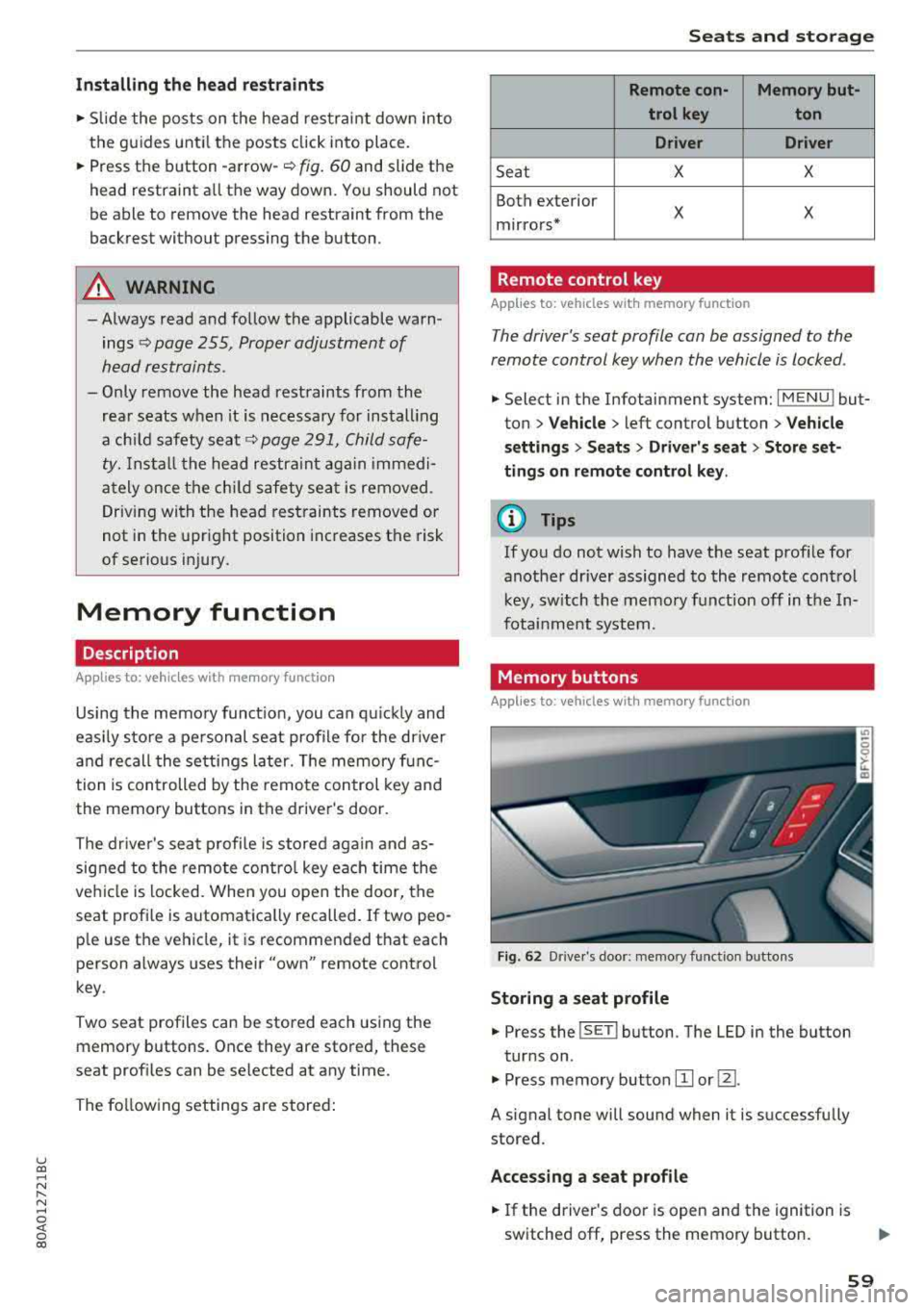
Fig. 62 Drive r's doo r: memory funct io n bu ttons
Storing a seat p rofile
... Press the ISET I button. The LED in the button
tur ns on .
.,. Press memory button IT] or@.
A signal tone will sound when it is successfully
stored.
Acces sing a seat profile
... If the driver's door is open and the ignition is
switched off, press the memory button .
59
Page 64 of 392
Seats and stor age
-In the doo r trim pane ls
-Stor age compartment under t he front cente r
armrest
-Garment hooks above the rear doo rs
-Nets* on the left/right luggage compartment
trim pane l
-Tie-downs* on the left/right luggage compart
ment t rim pa nel
-Bag hooks* in the luggage compartment
A WARNING
-
- Always keep t he g love compartment lid
cl osed while driving to reduce the r is k of in
Jury.
-Only use the storage compartments in the
doo r trim pa ne ls to s to re small objects that
will not st ick o ut of t he compa rtment and
impa ir the range of t he side a irbags.
-Due to strength reasons, only secure objec ts
up to 11 lbs (5 kg) with the tie-downs* .
Heav ier objects are not adequately sec ured .
There is risk of persona l injury.
-Make s ure that the view to the rear is not
obstructed by hanging garments.
-Hang on ly lightwe ight cloth ing and be su re
t h at there a re no heavy or sha rp -edged ob
jects in the pockets.
-Do n ot use coat hangers to h ang the cloth
ing because t his could impair the effective
ness of the side cu rtain airbags .
Luggage compartment
General information
A WARNING
Read and follow t he important safety p recau
tions in
q poge 257 , Storing cargo correctly.
62
Luggage compartment cover
Applies to: vehicles with luggage compartment cover
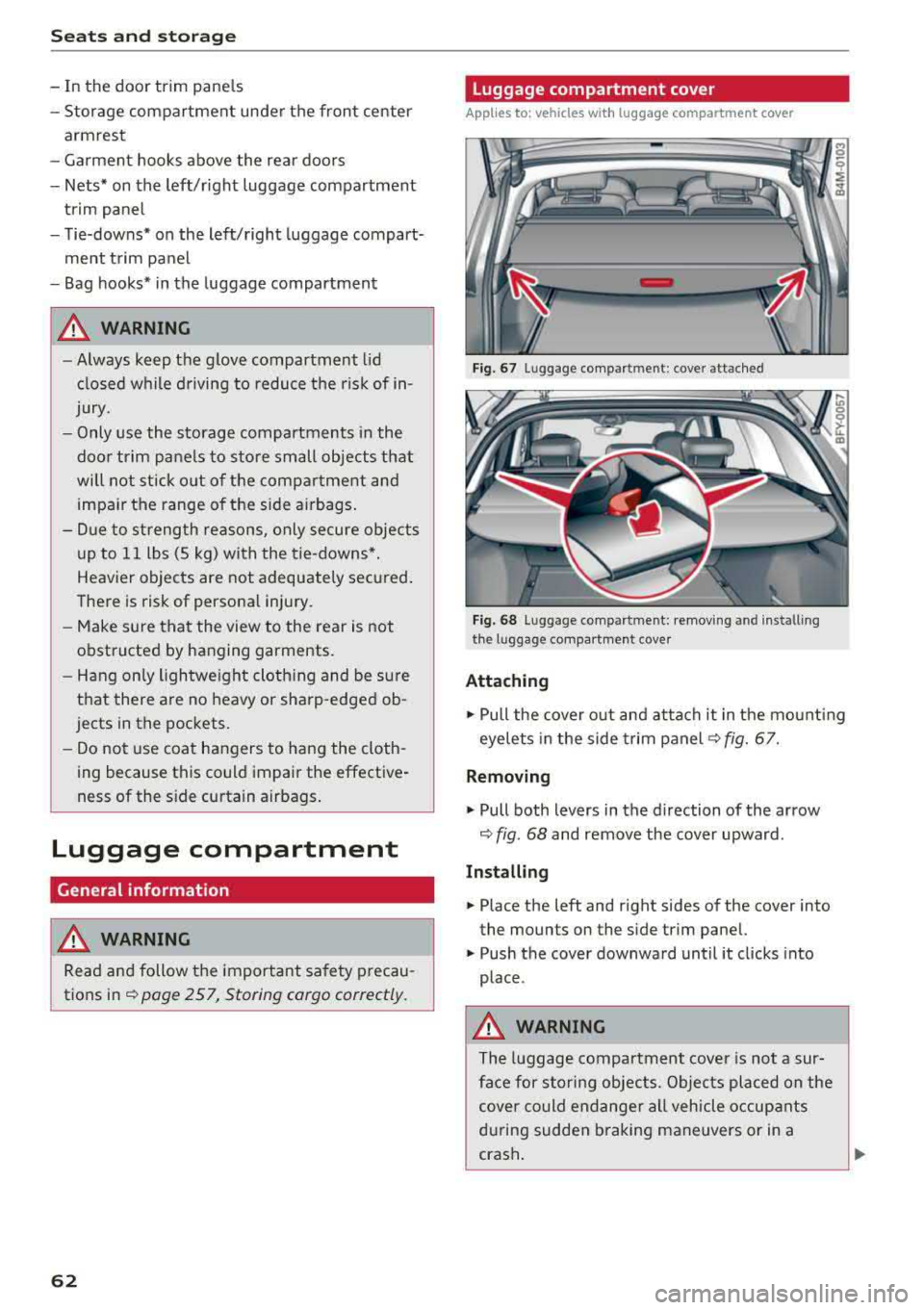
Fig. 67 Lugga ge compar tme nt: c ove r attac hed
Fi g. 68 Lu gga ge compartme nt: remov ing and ins tall ing
t he lu ggage com part ment c ove r
Attaching
.,. Pull the cover o ut and attach it in the mo unt ing
eyelets in the side trim panel
q fig. 67.
Removing
... Pull both levers in the direction of the arrow
q fig . 68 and remove the cover upward.
Installing
... Place the left and right sides of the cover into
the moun ts on the s ide trim panel.
... Push the cover downward until it clicks into
place .
A WARNING
The luggage compar tment cover is not a sur
fa ce for sto rin g objec ts. O bjects pl aced on the
cover could endange r a ll veh icle occup ants
d ur ing sudden braking maneuvers or in a
crash .
-
Page 67 of 392
u co ..... N r-N .....
~ 0 co
The height of the partition net can be adjusted.
This a llows you to transport long objects using
the cargo pass-through, wh ile keep ing the parti
tion net attached at the same time.
(D Tips
-The straps must face tow a rd the rear when
attaching the part ition net.
- You must disengage the part ition net before
fo lding the backrest back into the upright
position.
- The partition net can also be attached to the
adjustable
tie-downs* ~ page 65.
Tie-downs and luggage compartment net
A ppl ies to: ve hicles with tie -dow ns a nd l uggage compartment
n et
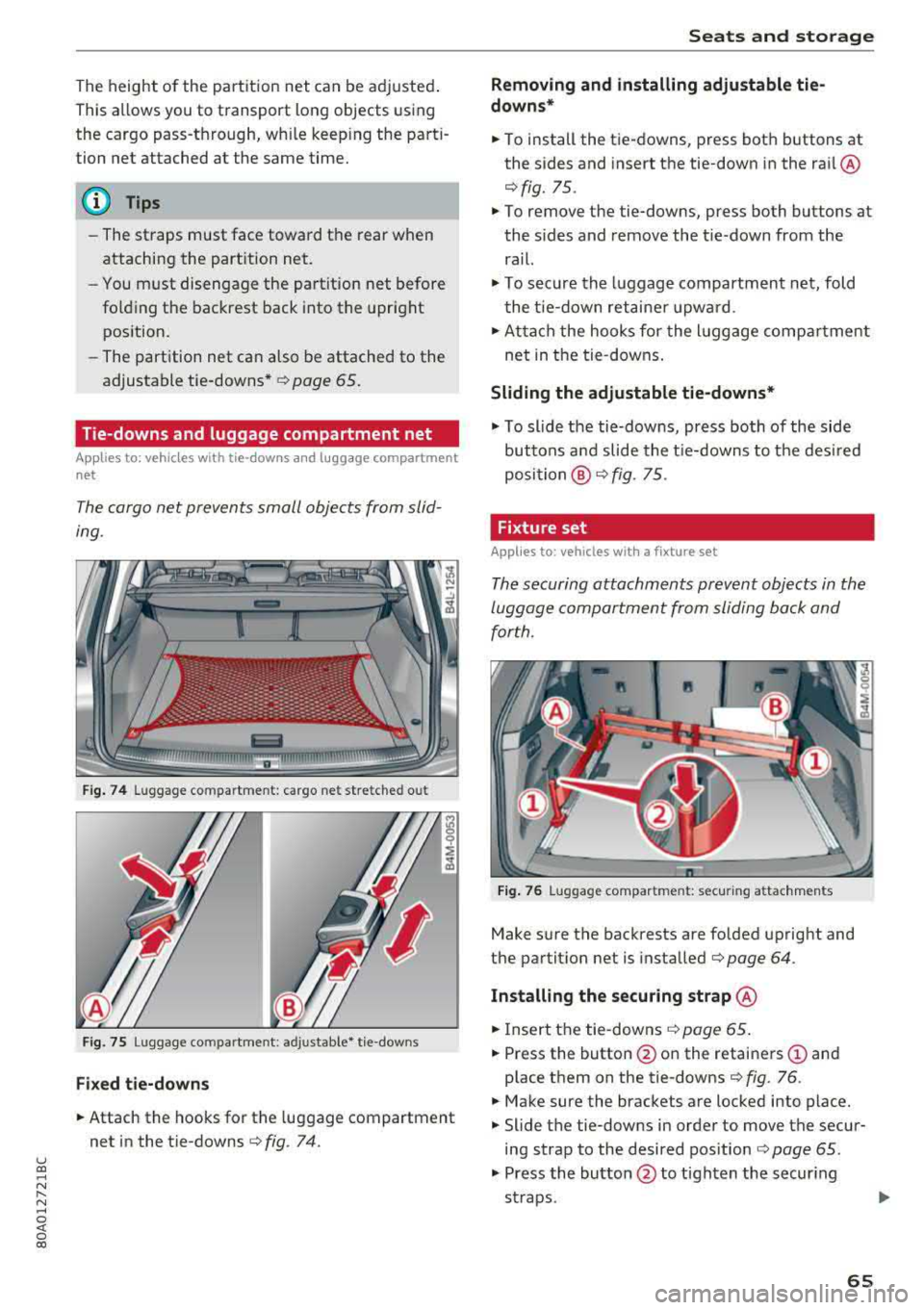
The cargo net prevents small objects from slid
tng .
liil
ell I
Fig. 74 Luggage compartment: cargo net stretched out
Fig. 75 Luggage compartment : adjusta ble* tie-downs
Fixed tie-downs
.. Attach the hooks for the luggage compartment
net in the tie-downs
c>fig . 74.
Seats and storage
Removing and installing adjustable tie
downs*
.. To install the tie-downs, press both buttons at
the sides and insert the tie-down in the rai l@
r=> fig. 75 .
.. To remove the tie-downs, press both buttons at
the sides and remove the tie-down from the
rail.
.. To secure the luggage compartment net, fold
the tie-down retaine r upward .
.. Attach the hooks for the lu ggage compa rtment
net in the tie-downs.
Sliding the adjustable tie-downs*
.. To slide the tie-downs, press both of the side
buttons a nd slide the tie-downs to the desired
position @r=>fig. 75.
Fixture set
A pp lies to: veh icles w ith a fixture se t
The securing attachments prevent objects in the
luggage compartment from sliding back and
for th.
Fig. 76 Luggage compartment: secur ing attachments
Make sure the backrests are folded upright and
the partit ion net is installed
c> page 64.
Installing the securing strap @
.. Insert the tie-downs c> page 65.
.. Press the button @on the retainers (D and
place them on the tie-downs
r::> fig. 76 .
.. Make sure the brackets are locked into place .
.. Slide the tie-downs in order to move the secur
ing strap to the desired pos ition
c> page 65.
.. Press the button @ to tighten the secur ing
straps .
1111>
65
Page 71 of 392
u co ..... N r--N ..... 0 <( 0 00
Warm and cold Climate control system
Description
The climate control system warms , cools and re
moves humidity from the air in the vehicle inte ri
or. It is the most effective when the w indows and
sunroof* are closed . If there is a bu ild -up of heat
inside the ve hicle, ventilation can he lp to speed
up the cooling process.
I n all he ating mode f unct ions except for
defrost ,
the blower on ly switches to a higher speed once
the engine coolant has reached a sufficient tem
perature .
Pollutant filter
The pollutant filte r removes pollutants such as
d ust and pollen from the a ir.
Key recognition
The climate control settings are automatically
sto red and assig ned to the remote control key
that is i n use .
Warm and c old
@ For the sake of the environment
If you wo uld like to reduce fue l consumption,
switch the air conditioning off. T his w ill also
r educe em issions.
(D Tips
- To prevent interference with the heating
and cooling output and to prevent the win
dows from fogging over, the a ir intake in
fro nt of the w indshie ld must be free of ice,
snow o r leaves .
- Condensation from the coo ling system can
dr ip and form a pudd le of water under the
veh icle . Th is is norma l and does not mean
t here is a lea k.
- The e nergy management system may tem
pora rily switch off certa in functions, s uch as
the seat heati ng* o r rear window defogger .
Th ese sys tems are av ailable aga in as soon
as t he e nergy supply has been restore d.
69
Page 73 of 392
u co ..... N ,..._
N ..... 0 <( 0 00
system operates most efficiently in eco cooling
mode.
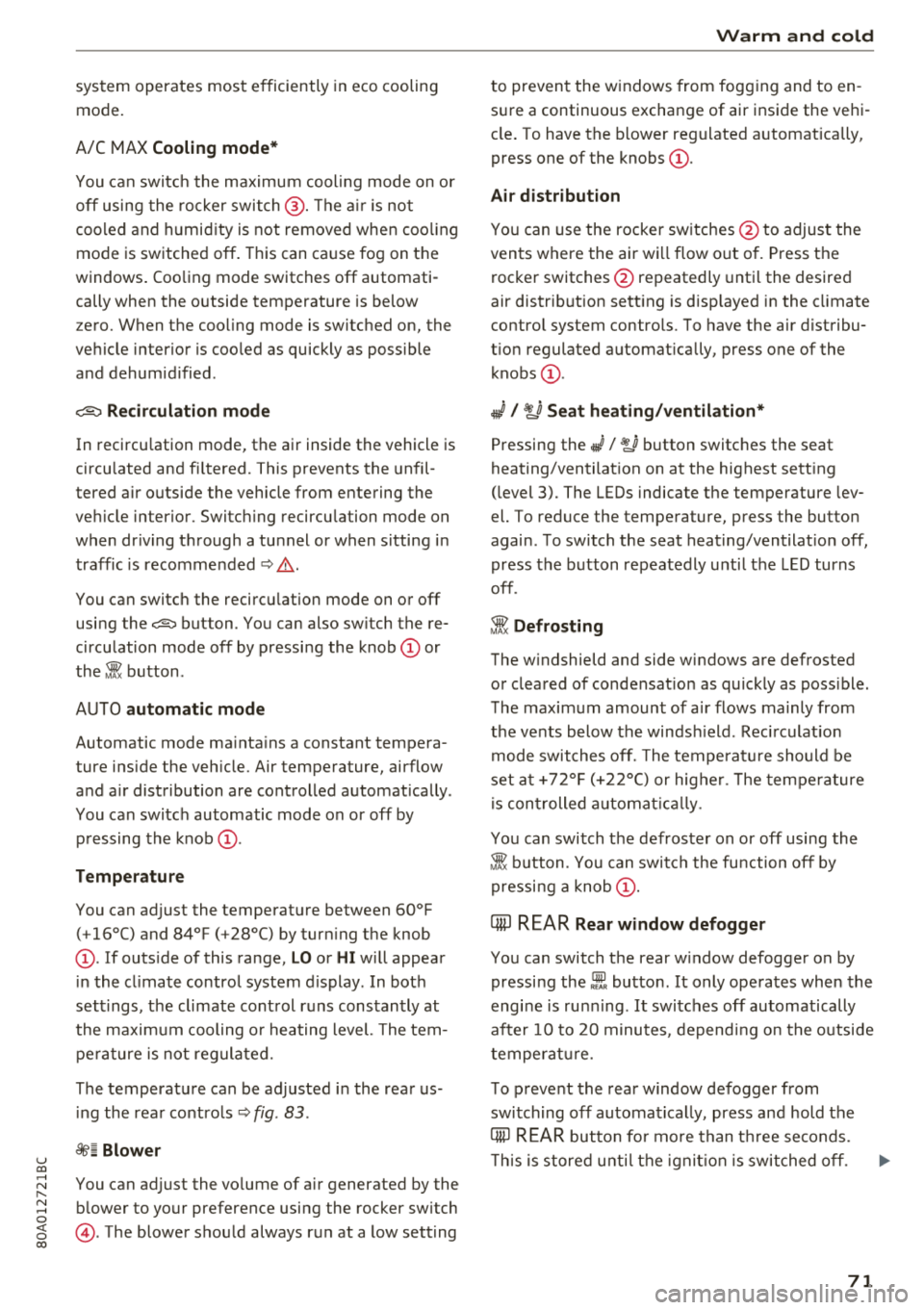
A/C MAX Cooling mode*
You can switch the maximum cooling mode on or
off using the rocker switch@. Th e air is not
cooled and humidity is not removed when coo ling
mode is switched off. This can cause fog on the
windows . Cooling mode switches off automati
cally when the o utside temperature is below
ze ro. When the cooling mode is switched on, the
vehicle interior is cooled as quickly as possible
and dehumidified.
<::E::> Recirculation mode
In recirculation mode, the air inside the vehicle is
circu lated and fi ltered. This prevents the unfil
tered air outside the vehicle from entering the
ve hicle interior . Switch ing recirculation mode on
when dr iv ing through a tunnel or when s itting in
traffic is recommended
~ ,&. .
You can switch the recircu lation mode on or off
using the
6<:> button . You can also sw itch the re
circulation mode off by pressing the knob(!) or
the Sfx button.
AUTO automatic mode
Automatic mode ma inta ins a constant tempera
ture ins ide the veh icle. Air temperature, airflow
and a ir distribution are controlled automatically .
You can switch automatic mode on or off by pressing the
knob @.
Temperature
You can adjust the temperature between 60°F
(+16°() and 84°F (+28°() by turn ing the knob
@. If outs ide of this range, LO or HI will appear
in the climate control system display. In both
sett ings, the climate control runs constantly at
the maximum cooling or heating level. The tem
perature is not regulated.
The temperature can be adjusted in the rear us
in g the rea r controls
~ fig . 83 .
<%'~ Blower
You can adjust the vo lume of air generated by the
blower to your preference using the rocker sw itch
@ . The blower should always run at a low setting
Warm and cold
to prevent the windows from fogging and to en
sure a continuous exchange of air inside the ve hi
cle . To have the blower regulated a utomatica lly,
press one of the
knobs @.
Air distribution
You can use the rocker sw itches @to adjust the
vents where the air wi ll flow out o f. Press the
rocker switches @repeatedly until the desired
air distrib ution setting is disp layed in the climate
contro l system controls. To have the air distribu
t ion regulated automat ically, press one of the
knobs @.
.JI~ Seat heating/ventilation*
Pressing the JI~ button switches the seat
heating/ventilation on at the highest setting
(level 3). The LEDs indicate the temperature lev
el. To reduce the temperature, press the button
again. To switch the seat heat ing/ventilat ion off,
press the button repeatedly until the LED turns
off.
:.f% Defrosting
The w indshield and side windows are defrosted
or cleared of condensat ion as quickly as poss ible.
The maximum amount of a ir flows mainly from
the vents below the windsh ield. Rec ircu lat ion
mode switches off. The temperatu re should be
set at +72°F (+22°() or hig her. Th e temperature
is controlled automat ically.
You can switch the defroster on or off using the
3R button. You can switch the fu nction off by
pressing a
knob @.
[ffi) REAR Rear window defogger
You can switch the rear w indow defogger on by
pressing the
!!P. button . It only operates when the
engi ne is run ning .
It switches off automatically
after 10 to 20 minutes , depending on the outside
temperature.
T o prevent the rear window defogger from
switching off automat ically, press and hold the
QiP REAR button for more than thr ee seconds.
T his is stored until the ignition is switched off .
.,.
71
Page 260 of 392
Driving safety
A WARNING
Heavy loads will influence the way your vehi
cle handles . To help reduce the risk of a loss
of control leading to serious personal injury:
- Always keep in mind when transporting
heavy objects, that a change in the center of
gravity can also cause changes in vehicle
handling:
- Always distribute the load as evenly as
possible.
-Place heavy objects as far forward in the
luggage compartment as possible.
- Never exceed the Gross Axle Weight Rating
or the Gross Vehicle Weight Rating specified
on the safety compliance sticker on th e driv
er's side B-pillar. Exceeding permissible
weight standards can cause the vehicle to
slide and handle differently .
- Please observe information on safe driving
<=) page 252.
A WARNING
To help prevent poisonous exhaust gas from
being drawn into the vehicle, always keep the
rear lid closed while driving .
- Never transport objects larger than those
fitting completely into the luggage area be cause the rear lid cannot be fully closed .
- If you absolutely must drive with the rear lid
open, observe the following notes to reduce
the risk of poisoning:
- Close all windows,
- Close the sunroof*,
-Open all air outlets in the instrument pan-
el,
- Switch off the air recirculation,
- Set the fresh air fan to the highest speed .
A WARNING
Always make sure that the doors, all win
dows, the sunroof* and the rear lid are se
curely closed and locked to reduce the risk of
injury when the vehicle is not being used .
-After closing the rear lid , always make sure
that it is properly closed and locked.
258
-Never leave your vehicle unattended espe
cially with the rear lid left open. A child
could crawl into the vehicle through the lug
gage compartment and close the rear lid be
coming trapped and unable to get out . Be
ing trapped in a vehicle can lead to serious
personal injury.
- Never let children play in or around the vehi
cle .
- Never let passengers ride in the luggage
compartment . Vehicle occupants must al
ways be properly restrained in one of the
ve
hicle 's seating positions.
@ Note
If you are transporting large items with the
backrest folded down*, you should remove
the Rear Seat Entertainment (RSE)* and its
holder* to avoid damage.
© Tips
-Air circulation helps to reduce window fog
ging. Stale air escapes to the outside
through vents in the trim panel. Be sure to
keep these slots free and open .
-The tire pressure must correspond to the
load. The tire pressure label lists the recom
mended cold tire inflation pressures for the
vehicle at its maximum capacity weight and
the tires that were on your vehicle at the
time it was manufactured. For recommend ed tire pressures for normal load condi
tions, please see chapter
Q page 336 .
Tie-downs
The luggage compartmen t is equipped with four
t ie-downs to secure luggage and o ther i tems.
Use the tie-downs to secure your cargo properly
Qpage 25 7, L oading the luggage compartment.
In a collision , the laws of physics mean that even
smaller items that are loose in the vehicle will
become heavy missiles that can cause serious in
jury. Items in the vehicle possess ene rgy which
vary with vehicle speed and the weight of the
item . Vehicle speed is the mos t significant fac tor .
..,.
Page 266 of 392
Safety belts
& WARNING
Not wearing safety belts or wearing them im
properly increases the risk of serious personal
injury and death . Safety belts can work only
when used correctly .
-Always fasten your safety belts correctly be fore driving off and make sure all passen
gers are correctly restrained.
-For maximum protection, safety belts must
always be positioned properly on the body.
-Never strap more than one person, includ
ing small children, into any belt .
-Never place a safety belt over a child sitting
on your lap.
- Always keep feet in the footwell in front of
the seat while the vehicle is being driven .
-Never let any person ride with their feet on
the instrument panel or sticking out the
window or on the seat.
-Never remove a safety belt while the vehicle
is moving . Doing so will increase your risk of
being injured or killed .
- Never wear belts twisted.
-Never wear belts over rigid or breakable ob-
jects in or on your clothing, such as eye
glasses, pens, keys, etc ., as these may cause
injury.
-Never allow safety belts to become dam
aged by being caught in door or seat hard
ware .
-Do not wear the shoulder part of the belt
under your arm or otherwise out of position.
-Several layers of heavy clothing may inter
fere with correct positioning of belts and re duce the overall effectiveness of the system.
-Always keep belt buckles free of anything
that may prevent the buckle from latching
securely .
-Never use comfort clips or devices that cre
ate slack in the shoulder belt. However, spe
cial clips may be required for the proper use
of some child restraint systems.
-Torn or frayed safety belts can tear, and
damaged belt hardware can break in an acci
dent . Inspect belts regularly .
If webbing,
bindings, buckles, or retractors are dam-
264
aged, have belts replaced by an authorized
Audi dealer or qualified workshop.
-Safety belts that have been worn and loaded
in an accident must be replaced with the
correct replacement safety belt by an au
thorized Audi dealer. Replacement may be
necessary
even if damage cannot be clearly
seen . Anchorages that were loaded must al
so be inspected.
-Never remove, modify , d isassemble, or try
to repair the safety belts yourself .
-Always keep the belts clean. Dirty belts may not work properly and can impair the func
tion of the inertia
reel¢ table Interior
cleaning on page 346.
Safety belts
Fastening safety belts
Safety first -everybody buckle up!
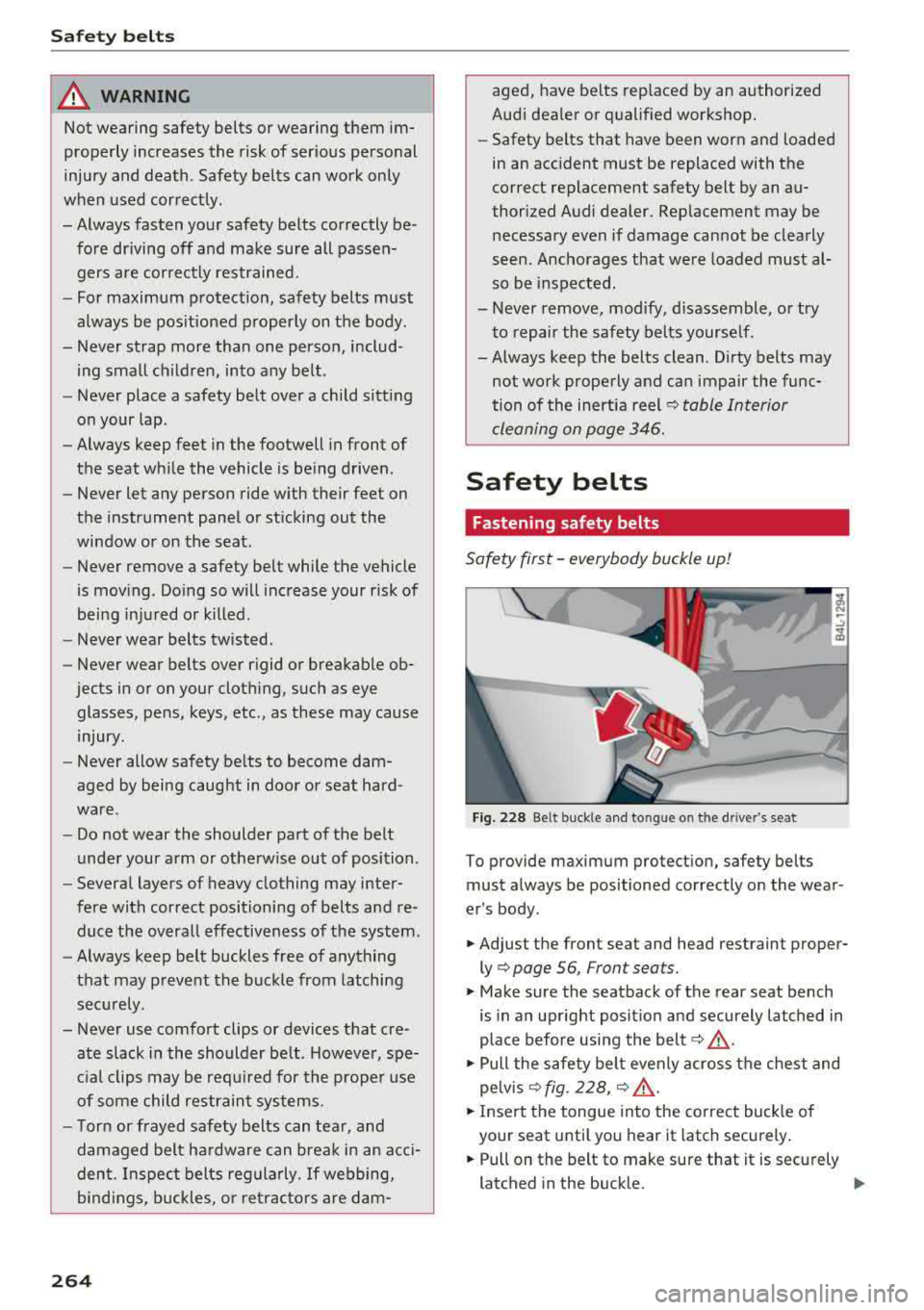
Fig. 228 Belt buckle and tongue on the drive r's seat
To provide maximum protection, safety belts
must always be positioned correctly on the wear
er's body .
.. Adjust the front seat and head restraint proper
ly¢ page 56, Front seats.
.. Make sure the seatback of the rear seat bench
is in an upright position and securely latched in
place before using the belt ¢,&
.
.. Pull the safety belt evenly across the chest and
pelvis
¢ fig . 228, ¢ ,& .
.. Insert the tongue into the correct buckle of
your seat until you hear it latch securely.
.. Pull on the belt to make sure that it is securely
latched in the buckle.
..,.
Page 267 of 392
u co ..... N r-N .....
~ 0 co
Automatic saf ety belt retractor s
Every safety be lt is equ ipped with an automatic
be lt retractor on the shoulder belt. Th is feature
l ocks the belt when the belt is pull ed out fast,
during hard braking and in an accident. The be lt
may a lso lock when you drive up or down a steep
h ill or through a sharp curve. During normal driv
ing the belt lets you move freely .
Safety be lt pret en sioner s
Safety belts with pretensioners he lp to tighten
the safety belt and remove slack when the pre
tensioners are activated
c:> page 267. The func
tion of the pretensioner is monitored by a warn
i ng light
<=> page 26 .
Con vertible loc king retract or
Every safety belt except the one on the driver
seat is equipped with a convertible locking retrac
tor that
m ust be used when the safety belt is
used to attach a child safety seat. Be sure to read
the important information about this feature
<=>page 302 .
A WARNING
Improperly posit ioned safety be lts ca n cause
ser ious injury in an accident
c:> page 265,
Safety belt position.
-Safety belts offer optimum protection only
when the seatback is upright and belts are
prope rly pos itioned on the body.
-Always ma ke sure tha t the rear seat bac k
rest to wh ich the center rear safety be lt is
attached is secure ly latched whenever the
rear center safety belt is being used. If the
backrest is not securely latched, the passen
ger will move forward with the backrest dur
ing sudden braking, in a sudden maneuver
and especially in a cras h.
-Never attach the safety belt to the buckle
for another seat. Attaching the belt to the
wrong buckle w ill reduce safety belt effec
t iveness and can cause serious personal in
jury.
-A passenger who is not properly restrained can be seriously in jured by the safety be lt it
self when it moves from the stronger parts
Safet y bel ts
of the body into critical areas like the abdo
men .
-Always lock the convertible locking retractor
when you are securing a child safety seat in
the vehicle
c:> page 304.
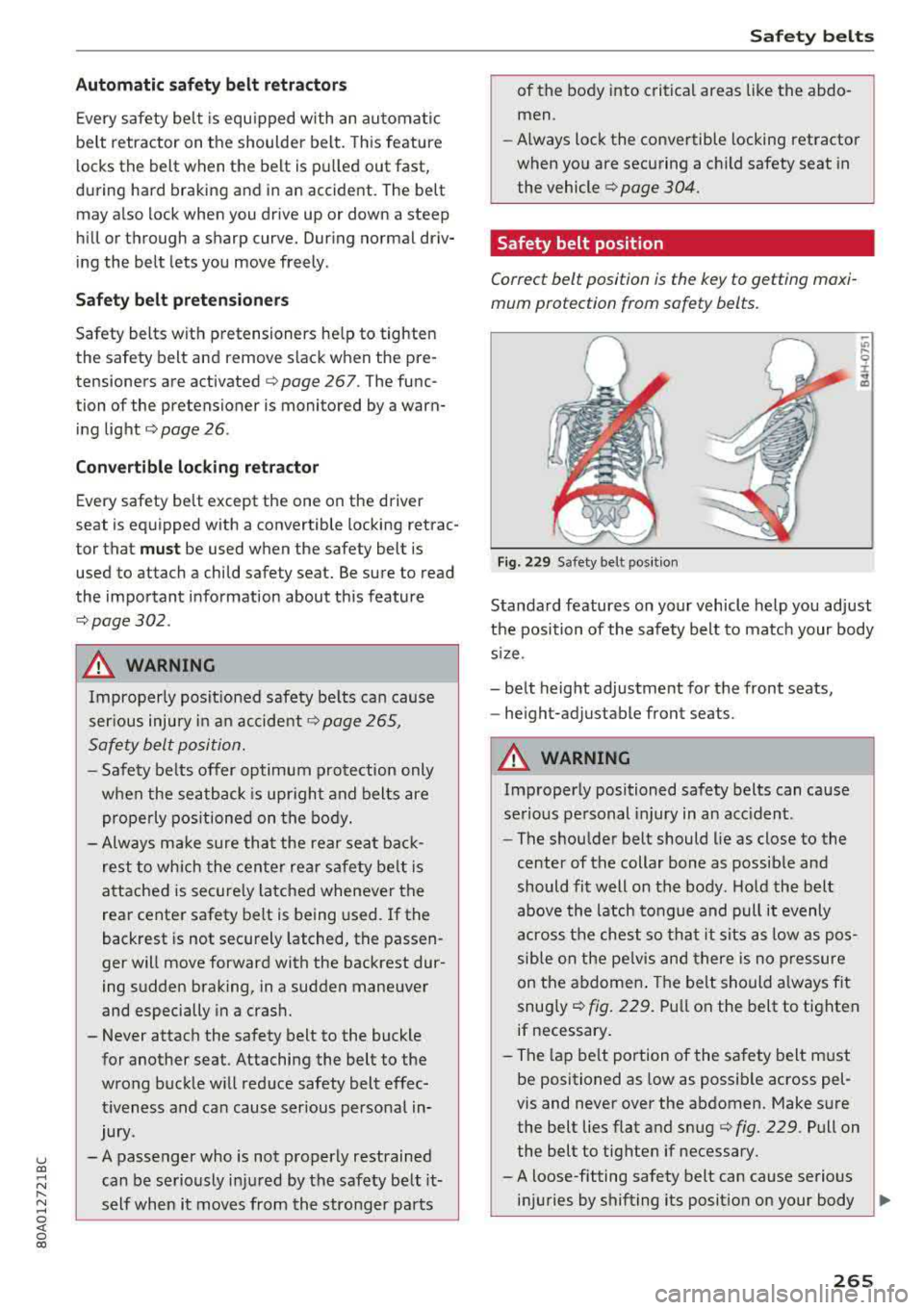
Safety belt position
Correct belt position is the key to getting maxi
mum protection from safety belts.
Fig. 229 Safety belt pos it ion
Standard features on your vehicle help you adjust
the position of the safety belt to ma tch your body
s iz e.
-belt height adjustment for the front seats,
-height-adjustable front seats.
A WARNING
Improperly positioned safety belts can cause
se rious personal injury in an acc ident.
-The shou lder belt should lie as close to the
center of the collar bone as possib le and
should fit well on the body. Ho ld the belt
above the latch tongue and pull it evenly
across the chest so th at it sits as low as pos
sible on the pe lvis and there is no p ressure
on the abdomen . The belt should a lways fit
snug ly
c:> fig. 229. Pu ll on the belt to tighten
if necessary .
-The lap be lt portion of the sa fety belt must
be positioned as low as possible across pel
vis and never over the abdomen. Make sure
the belt lies flat and snug
c:> fig. 229. Pull on
the belt to tighten if necessary.
-A loose-fitting safety belt can cause serious
in juries by shifting its position on your body
ll>
265
Page 284 of 392
Airbag syste m
front seat p assenge r's frontal Ad vanced Airbag.
The PASSENGER AIR BAG
OFF ~; light:
-will come on if the front passenger seat is not
occupied;
- will come on if t he e lectr ica l capacitance meas
u red by the c apac it ive passenger detect ion sys
tem for the front passenger seat equals the
combined capacitance of an infant up to about
one year of age and one of the rearward -facing
or forward-facing chi ld rest raints listed in Fed
eral Motor Vehicle Safety Standard 208 w ith
which the Advanced Airbag System in your veh i
cle was certif ied; For a list ing of the child re
straints that were used to cert ify your vehicle 's
compliance with t he U .S. Safety Standard
¢ page 293.
- will go out if the front passenger seat is occu
pied by an adult as reg istered by the capacitive
passenger detection system .
- T he
PASSEN GER AIR BAG OFF ~; light must
come on and stay on if the ignition is on and . ..
- a car bed has been insta lled on the front pas
senger seat, o r
-a rearward-fac ing ch ild restrai nt has been in
stalled on the front passenger seat , or
- a forward-facing child restra int has been instal
l ed on the front passenger seat,
- and if the electrical capacitance registered on
the front passenger seat is equal to or less than
the comb ined capac itance of a typical 1 year
o ld infant a nd one of t he rearward-fac ing o r
fo rwa rd -fa cing ch ild restrain ts lis ted in Federal
Motor Ve hicle Safety Standard 208 with w hich
the Advanced Airbag System in your vehicle was
certified .
I f t he fron t passenger sea t is no t occ upied, the
fron t ai rbag w ill not dep loy, and the
PA SSENGER
AIR BAG OFF
"1 ; lig ht wi ll stay on.
Neve r install a rearward-fac ing ch ild rest rai nt on
t he fro nt passenge r sea t, the safest p lace for a
chi ld in any k ind of chi ld restraint is at one of t he
seating positions on the rear seat
¢ page 2 70,
Child restraints on the front seat
-some impor
tant things to know
and ¢ page 291, Child safe
ty .
282
If the PASSENGER AIR BAG OFF ~; light
comes on . ..
If the PASSENGER AIR BAG OFF ~; light comes
on when one of the condit ions listed above is
met, be sure to check the light regularly to make
certain that the
PA SSENGER AIR BAG OFF ~;
light stays on cont inuously whenever the ign ition
i s on . If the
PASSENGER AIR BAG OFF ~; light
does not appear on and does not stay on all the
t ime, stop as soon as it is safe to do so and
- reactivate the system by turn ing the ignit ion
off for more than 4 seconds and then tur ning it
on
again;
- remove and re install the ch ild restraint . Make
sure that the child restra int is prope rly insta l
led and that the safety belt for the front pas
senge r sea t has bee n correct ly rou ted th rough
t he ch ild restraint as desc ribed in the c hild r e
straint man ufacturer's instructions;
- ma ke sure that t he convert ible loc king re tra c
tor on the safety belt for the front passenger
seat has been activated and that the safety belt has been pu lled tight .
- make sure that no e lectrica l device (s uch as a
laptop , CD p layer , e lectronic games d evice,
power inverte r or seat heater for chi ld seats) is
placed or used on the front passenger seat if
the device is connected to the 12-volt socket or
the c igarette lighter socket;
- make sure that no seat heater has been retro
fitted or otherw ise added to the front passen
ger seat;
- make sure that noth ing can interfere with the
safety belt buckles and that they are not ob
structed;
- make sure that there are no wet objects (such
as a wet towel) and no water or other liquids on
the front passenger seat cushion .
If the PASSENGER AIR BAG OFF~; light still
does not come on ...
If the PASSENGER AIR BAG OFF ~; light still
does not come on and does not stay on cont in u
ous ly (when the ign ition is switched on),
- take the child restra in t off the front passenger
seat and install it properly at one of the rear
..,.
Page 290 of 392
Airb ag syste m
by being pushed into you as the airbag in
flates.
- Never p lace or attach accessories or other
objects (such as cupho lders, telephone
brackets, or even large, bulky objects) on
the doors, over or near the area marked
"AIRBAG" on the seat backrests.
- Such objects and accessories can become
dangerous projectiles and cause injury
when the supplemental side airbag de ploys.
- Never carry any objects or pets in the de ployment space between them and the
airbags or allow children or other passen
gers to travel in this position.
- Always use the built-in coat hooks* only for
lightweight clothing . Never leave any heavy
or sharp-edged objects in the pockets that
may interfere w ith side airbag deployment
and can cause personal injury in an accident.
- Always prevent the side airbags from being
damaged by heavy objects knocking against
or hitting the sides of the seatbacks.
- The airbag system can only be triggered
once . If the airbag has been triggered, the
system must be replaced by an author ized
Audi dealership .
- Damage (cracks, deep scratches etc .) to the
original seat covers or to the seam in the
area of the side a irbag mod ule m ust always
be repa ired immed iate ly by an authorized
Audi dealer .
-If children are seated imp roperly, their risk
of injury increases in the case of an acc ident
¢ page 291, Child safety.
- Never attempt to modify any components of
the a irbag system in any way.
- In a side collision, side a irbags w il l not func
t ion properly if sensors cannot correct ly
measure increasing air pressure ins ide the
doors when air escapes through larger, un
closed openings in the door panel.
- Never drive with inter ior door tr im panels
removed .
- Never drive when parts have been re
moved from the inside door panel and the
open ings they leave have not been proper
ly closed.
288
- Never drive when loudspeakers in the
doors have been removed unless the
speaker holes have been properly closed.
- Always make certain that openings are
covered or filled if additional speakers or
other equipment is installed in the inside
door panels.
- Always have work on the doors done by an
authorized Aud i dea ler or qualified work
shop.
Side curtain airbags
Description of side curtain airbags
The side curtain airbags can provide supplemen
tal protection to properly restrained occupants.
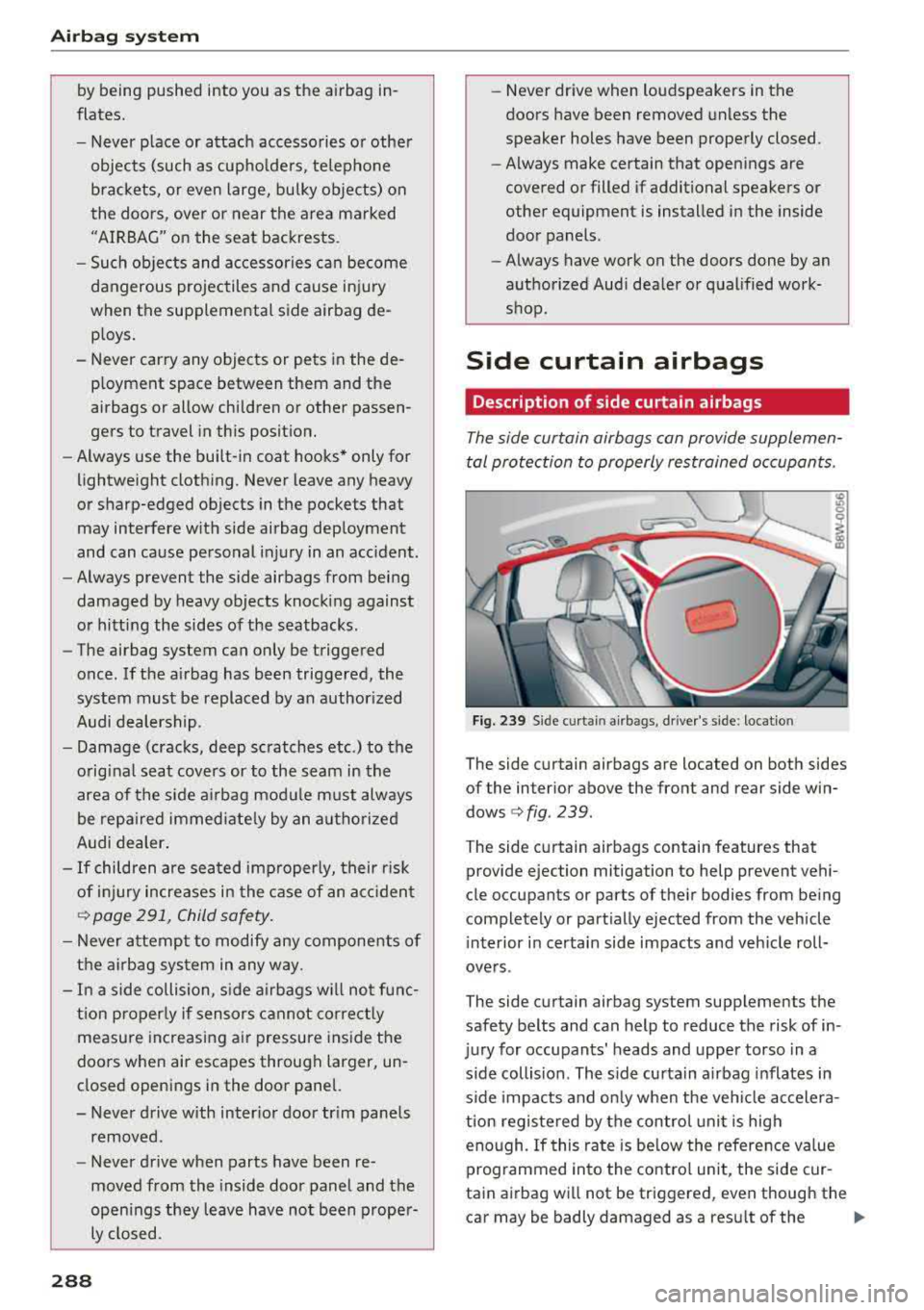
Fig. 239 S id e curt ain air bags, driver's side : loc atio n
The side curtain airbags are located on both sides
of the inter ior
above the front and rear side win
dows
¢ fig . 239 .
The side curtain airbags contain features that
provide ejection mitigation to help prevent vehi
cle occupants or parts of the ir bodies from being
completely or part ially ejected from the vehicle
i nterior i n certa in side impacts and veh icle roll
overs .
The side curtain airbag system supplements the
safety belts and can help to reduce the risk of in
jury for occupants' heads and upper torso in a
s ide collision . The side curtain airbag inflates in
s ide impacts and on ly when the veh icle accelera
tion registered by the control unit is high enough. If this rate is be low the reference va lue
programmed into the contro l unit, the side cur
tain airbag will not be triggered, even though the car may be badly damaged as a result of the
..,.