brake fluid AUDI Q7 2014 Owner´s Manual
[x] Cancel search | Manufacturer: AUDI, Model Year: 2014, Model line: Q7, Model: AUDI Q7 2014Pages: 340, PDF Size: 85.02 MB
Page 261 of 340
Checking and fillin g 259
Engine compartment
These are the most important items that you can check .
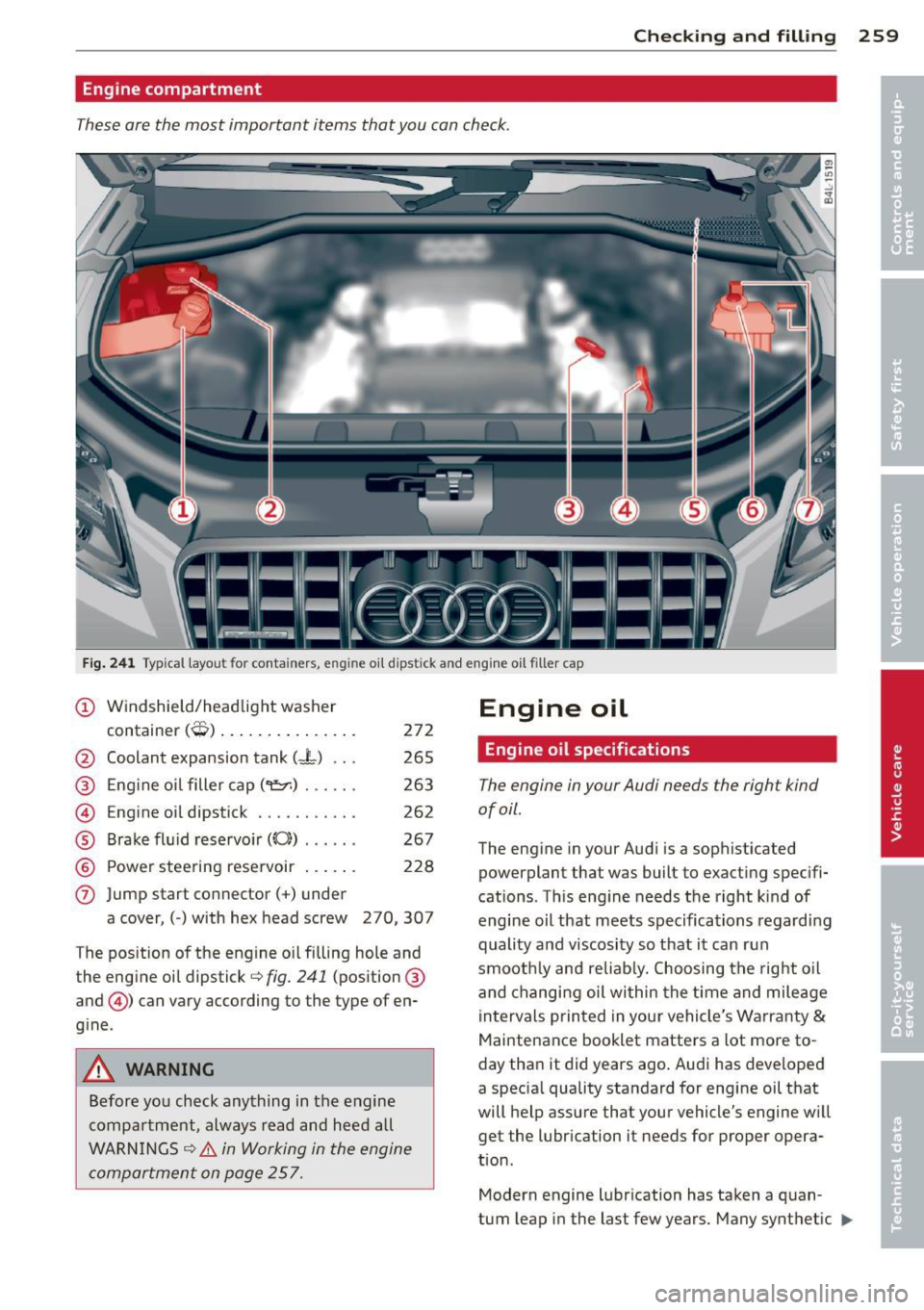
Fig. 2 41 Typ ical layout for conta iners, e ngin e oi l dipst ick and engine oi l fille r cap
(D Windshield/headlight washer
t .
(~) con ainer ,.,., ....... ... .. .. .
@ Coolant expansion tank (-L) .. .
®
@
®
®
(f)
Eng ine oi l filler cap ("1:::r.) ..... •
Engine oi l dipstick .. .... .... .
Brake fluid reservo ir
(0)) ..... .
Power stee ring reservoir ... .. .
Jump start connector(+) under 272
265
263
262
267
228
a cover, (-) with hex head screw 270, 307
The pos ition of the engine o il filling hole and
the eng ine oil dipstick¢
fig. 241 (position @
and @) can
vary according to the type of en
g ine.
A WARNING
Before you check anything in the engine
compartment, always read and heed all
WARN INGS ¢.&.
in Working in the engine
compartment on page 257.
Engine oil
Engine oil specifications
The engine in your Audi needs the right kind
of oil.
The engine in your Audi is a sophisticated
powerplant that was built to exacting spec ifi
cations . Th is eng ine needs the right k ind of
engine oil that meets specifications regardi ng
quality and viscosity so that it can run
smooth ly and reliab ly. Choosing the right o il
and changing oil within the time and mileage
intervals printed in your vehicle's Warranty
&
Maintenance booklet matters a lot more to
day than it did years ago . Audi has deve loped
a spec ia l quality standard for engine oil that
will help assure that your vehicle's engine w ill
get the lubrication it needs for proper opera
tion.
Modern engine lubrication has taken a quan
tum leap in the last few years. Many synthetic
IIJ>,
Page 269 of 340
-Antifreeze is poisonous . Always store an
t ifreeze in its or iginal container and well
out of the reach of children.
- If you drain the coolant, it must be
caught and safely stored in a proper con
tainer clearly marked "poison".
(D Note
- Coolant pollutes the environment and
could cause an engine fire. Excess coo l
ant will be forced out through the pres
sure re lief va lve in the cap when the en
gine becomes hot.
- If, in an emergency, only water can be
added, the correct ratio between water
and antifreeze ¢
page 264 must be re
stored as soon as possib le.
@ For the sake of the environment
Drained coolant should not be reused. Al
ways dispose of used coolant while observ ing all environmental regulations .
Radiator fan
The radiator fan switches on automatically by
itself
The radiator fan is driven by the engine via the
V-belt . The viscous clutch regulates the speed
of the fan accord ing to the temperature of the
coolant .
An auxiliary electric radiator fan* switches on
and off depending on coolant temperature
and other vehicle operating conditions .
After you switch the engine off, the auxilia ry
fan can continue running for up to 10 minutes
- even with the ignition off. It can even switch
on again later by itself¢& , if
- the temperature of the engine coolant rises due to the heat build-up from the engine in
the engine compartment, or
- the engine compartment hea ts up because
the vehicle is parked in intense sunlight .
Checking and fillin g 267
A WARNING
-To reduce the risk of personal injury nev
er touch the rad iator fan.
- The auxiliary electric fan is temperature
controlled and can switch on suddenly
even when the engine is not running .
- The auxiliary radiator fan switches on au
tomatically when the engine coolant reaches a certain temperature and will
continue to run until the coo lant temper
ature drops.
Brake fluid
Checking brake fluid level
The brak e fluid lev el can be check ed with a
quick glance.
N
N
-N ,.
:8
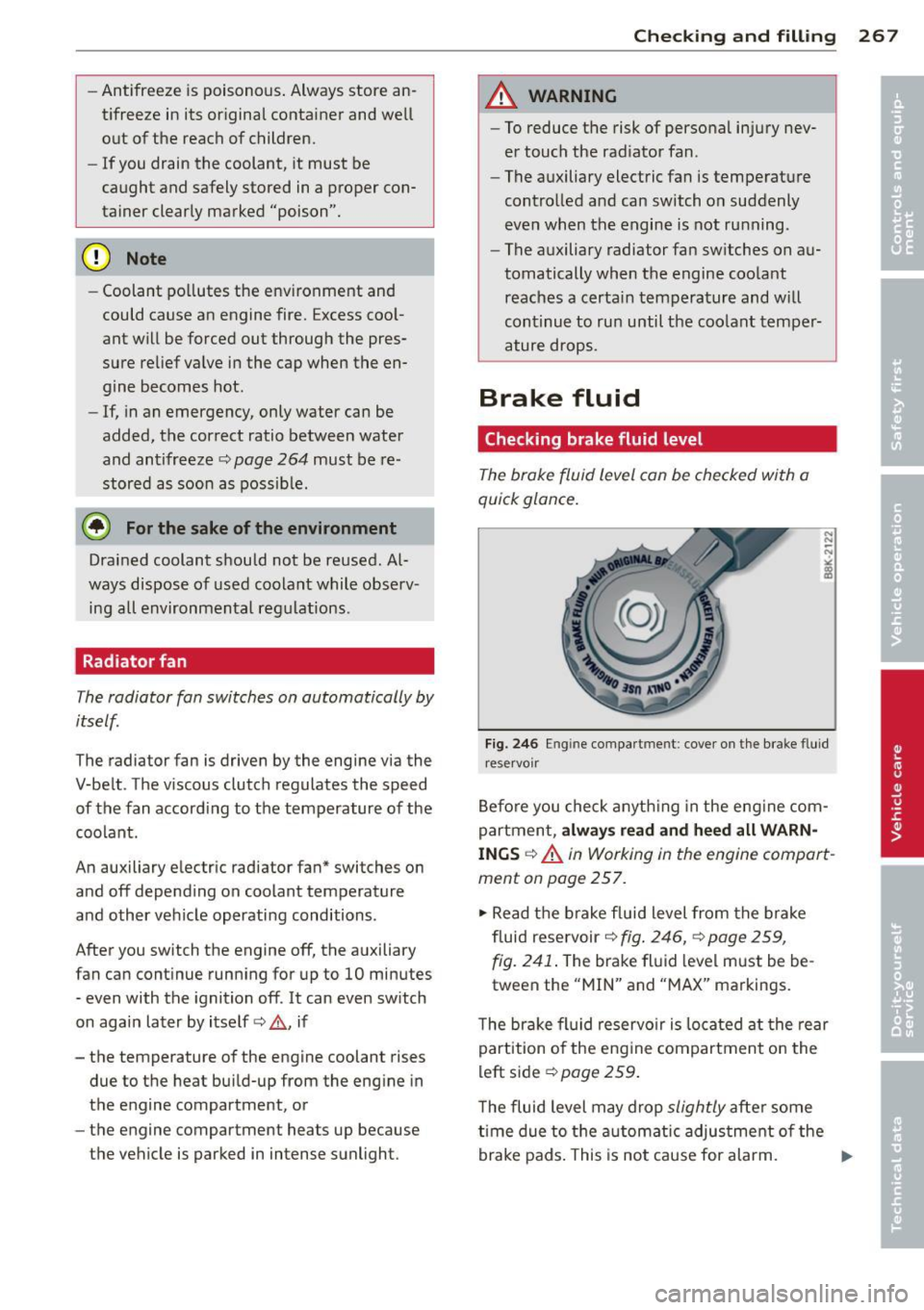
Fi g. 246 En gin e compa rtm en t: cover o n the bra ke fluid
reservoir
Before you check anything in the eng ine com
partment ,
always read and heed all WARN
INGS ¢ A in Working in the engine compart
ment on page 257.
.,. Read the brake fluid level from the brake
fluid reservoir ¢
fig. 246, ¢ page 259,
fig. 241.
The brake fluid level must be be
tween the "MIN" and "MAX" markings .
The brake fluid reservoir is located at the rear
partition of the eng ine compartment on the
left side ¢
page 259.
The fluid level may drop slightly after some
time due to the automatic adjustment of the
brake pads. This is not cause for alarm. ..,_
Page 270 of 340
268 Check ing and filling
If the brake fluid level falls considerably be
low the "MIN" mark, the brake warning/indi
cator light (U .S . mode ls:
1111 , Canadian
models: .) will come on
<::> page 19 and
<::> page 32. Do not continue to operate the ve
h icle . The complete brake system should be
thoroughly checked by an authorized Aud i
dea ler or qualified workshop and the cause
corrected. If the brake fluid level is too low,
the brake warning/indicator light will illum i
nate . Contact an authorized Aud i dealer
im
m ediatel y.
@ Tips
The brake fluid rese rvoir is located unde r
neath the cove r.
Changing brake fluid
Hove the broke fluid changed by on experi
enced technician.
Brake fluid absorbs moisture from the a ir . If
the water content in the brake fluid is too
h igh , corrosion in the brake system may result
after a per iod of t ime. The bo iling po int of the
brake fluid wi ll also decrease considerably and
decrease braking performance.
Therefore, the brake flu id must be changed
e ver y tw o year s. Always use new b rake fluid
which conforms to Federal Motor Vehicle
Standard "FMVSS 1 16 DO T 4".
The brake flu id reservo ir can be difficult to
reach, therefore, we recommend that yo u
have the brake f luid changed by you r author
ized
Audi dea ler. Your dea ler has the correct
too ls, the right brake fluid and the know -how
to do this for you.
A WARNING
- Brake fluid is poisonous . It must be stor
ed only i n the closed orig inal container
o ut of the reach of children!
- Brake fa ilure can result from old or inap
propriate b rake fluid. Observe these pre
caut ions: -
Use only brake fluid that meets SAE
specification
J 1703 and conforms to
Federa l Motor Vehicle Standard 116.
Always check with your authorized Audi
dealer to make sure you are using the
correct brake fluid . The correct type of
brake f lu id is also ind icated on the
brake flu id reservoir.
- T he brake fluid must be new. Heavy use
of the bra kes ca n cau se a vapo r lock if
the b rake fluid is left in the system too
l ong . This can seriously affect the effi
c iency of the brakes as well as your
safety. This co uld resu lt in an accident.
(D Note
Bra ke fluid will damage the paint of you r
vehicle .
(® For the sake of the environment
Because of the p rob lem of p roper disposal
of b ra ke fluid as well as the spec ial too ls
r equired and the necessary expertise, we
re commend that yo u have the brake fluid
changed by yo ur authorized Aud i dea ler.
Battery
General information
U nder normal ope rat ing cond itions, the bat
tery in yo ur Audi does not need any ma inte
nance. With
high o utside tempe ra tur es or
l ong dai ly drives we recommend that you have
the e lectrolyte level checked by an authorized
Audi dealer or qualif ied workshop. The elec
trolyte level should also be checked each time
the battery is charged
<::> page 2 70.
Have the battery checked when yo u take your
vehicle in for service. You are well advised to replace a battery that is o lder than 5 years .
With certain types of airbag deployment, the batte ry is disconnected from the veh icle elec
trical system for safety reasons¢.&
in Re
pair , core and disposal of the airbags on
page 197.
~
Page 275 of 340
Tires and wheels
Tires
General notes
Tires may be the least appreciated and most
abused parts of a motor vehicle .
Tires may be the least appreciated and most
abused parts of a motor vehicle . T ires are,
however, one of the most important parts of a
vehicle, particularly considering the compara
tively small patch of rubber on eac h tire that
assures that a ll- important contact between
you, you r vehicle and the road.
Maintaining the correct tire pressure, mak ing
sure that your vehicle and its tires do not have
to carry mo re weight than they can safely han
d le, avoiding damage from road hazards and
r eg ularly inspec ting t ires for damage i nclud
ing cuts, slashes irregu la r wear and ove rall
condition are the most important things that
you can do to he lp avoid sudden tire failure in
cluding tread separat ion and blowouts.
Avoiding damage If you have to d rive over a curb or similar ob
stacle, drive very slow ly and as close as possi
b le at a right angle to the curb.
A lways keep chemicals includ ing grease, o il ,
gasoline and brake fluid off the t ires .
I nspect the t ires regularly for damage (cuts,
cracks or b listers, etc.). Remove any fo reign
bod ies embedde d in the treads.
Storing tires Mark tires when you remove them to indicate
the direction of rotation . T his ensures you to
be ab le to mount them correctly when you re
i nstall them .
When removed, the whee ls or t ires should be
sto red in a cool, d ry and preferably dark place .
Store tires in a vertical pos ition if they are not
mounted on rims, in a horizontal pos it ion if
they are mounted on rims .
Tires an d wheel s 273
New tires
New tir es have to be broken in ¢ & .
The tread depth of new t ires may vary, accord
ing to the type a nd make of t ire and the tread
pa tte rn.
Hidden damage
Damage to tires and r ims is ofte n not readily
visible . If you notice unusual v ib rat io n or the
vehicle p ulls to one s ide, th is may ind icate
that one of the t ires has been damaged . T he
ti res m ust be chec ked immed iate ly by an au
thorized Audi dea le r or q ua lified wor kshop .
Unidirectional tires
A un idirectional tire can be identified by ar
rows on the s idewa ll, that po int in the direc
tion the t ire is designed to rotate. You mus t
f ol low the specified di rection o f rotation . T his
is necessary so that these tires can develop
their optimum characteristics regarding grip, road noise, wear and hydrop laning resistance.
For more information ¢
page 301.
A WARNING
New tires or t ires that are o ld, worn or
damaged cannot provide maximum con
trol and braking ability .
-
-New tires tend to be slippery and must
be broken in. To reduce the r isk of losing
control, a co llision and ser ious personal
in ju ries, d rive with special ca re fo r the
fi rst 350 m iles ( 560 km).
- Driving with worn or damaged tires can
lead to loss of control, sudden tire fail
ure, including a blowout and sudden de
fl ation, c ras hes and se riou s personal in
juries . Have wo rn or damaged t ires re
placed immediate ly.
- Ti res age even if they are not being used
and can fai l sudden ly, especially at hig h
spee ds. Tires that are more than 6 years
old can only be used in an emergency
and then w ith special care and at low
speed.
•
•
Page 286 of 340

284 Tires and wheels
All-wheel drive
Vehicles with quattro must always have tires
of the same size , construction and tread type.
For details see Qpage 228.
~ WARNING
Sudden tire failure can lead to loss of con
trol, a crash and serious persona l injury!
- Never drive a vehicle when the tread on
any tire is worn down to the wear indica
tors.
- Worn tires are a safety hazard, they do
not grip well on wet roads and increase
your risk of "hydroplaning" and loss of
control.
- Always keep chemicals that can cause
tire damage , such as grease, oil, gasoline
and brake fluid away from tires .
- Tires age even if they are not being used
and can fail suddenly, especially at high
speeds. Tires that are more than 6 years
old can only be used in an emergency
and then with special care and at lower
speeds.
- Never mount used tires on your vehicle if
you a re not sure of their "previous histo
ry." Old used tires may have been dam
aged even though the damage cannot be
seen that can lead to sudden tire failure
and loss of vehicle control.
New tires and replacing tires and wheels
New tires and wheels have to be broken in .
Fig. 253 Tir e specificat ion c odes on t he s idewall o f a
t ire
No. Description
® Ratio of height to width (aspect ratio)
© Radial
® Rim diameter code
® Load index and speed rating
(J) U.S. DOT tire identification number
® Audi Original tire
® Sever snow conditions
@ Tire ply composition and materials
used
@ Maximum load rat ing
@ Treadwear, traction and temperature
grades
@ Maximum permissible inflation pres-
sure
T he tires and rims are essential parts of the
vehicle 's design . The tires and rims approved
by Audi are spec ially matched to the charac
teristics of the vehicle and can make a major .,..
Page 320 of 340
318 Con sum er Inf ormation
-Always make sure the transmission se
lector lever (automatic transmiss ion) is
in P (Park position) and the park brake is
firmly applied .
@) For the sake of the environment
-Changing the engine settings wi ll ad
versely affect em iss ion levels. This is det
rimental to the environment and increas
es fuel consumption .
- Always observe env ironmental regula
tions when dispos ing of old engine oil,
used brake fluid, dirty engine coolant,
spent batteries or worn out tires.
- Undeployed airbag modules and preten
s ioners might be classified as Perchlo
rate Material -spec ial handling may ap
ply, see www.dtsc.ca .gov/hazardous
was te/perch lorate . When the veh icle or
parts of the res traint system including
airbag modules safety belts wit h preten
sioners are scrapped, all applicable laws
and regulations must be observed. Your
authori zed Aud i dea ler is familiar with
these requirements and we recommend
that you have your dealer perform this
serv ice for you .
Additional accessories,
modifications and
parts replacement
Additional accessories and parts
replacement
Always consult an authorized Audi dealer be
fore purchasing accessories.
Your veh icle incorporates the latest safety de
sig n featu res ensu ring a high standard of a c
tive and passive safety .
This safety could be comp romised by non-ap
proved changes to the ve hicle. For this reason ,
if pa rts have to be replaced , please obse rve
the following points when install ing addition
a l accessories: Approved Audi accessories and genuine Aud
i
parts are available from authorized A udi deal
ers.
T hese dea le rs a lso have the necessary facili
ties, tools and tra ined specialists to install the
parts and acc essories proper ly .
A WARNING
-Using the wrong spare parts or using non-
approved accessories can cause damage to
the veh icle and ser ious persona l injury.
- Use on ly accessories express ly approved
by Audi and gen uine Audi spare parts
- These parts and accessories have been
specia lly designed to be used on yo ur ve
h icle .
- Never install accessor ies such as tele
phone crad les or beverage ho lders on a ir
bag covers or within the airbag deploy
ment zones . Do ing so will increase the
risk of injury if a irbags are triggered in an
accident!
- Before you check anything in the engine
compa rtment, always read and heed a ll
WARNI NGS
9 page 257.
(D Note
-If items other than genu ine Audi spare
parts, add-on equipment and accessory
items are used or if repair work is not
performed accord ing to specified meth
ods, this c an resu lt in seve re damage to
your vehicle's eng ine and body (such as
corrosion) and adversely affect yo ur vehi
cle's warranty .
- If emergency repairs must be performed
elsewhere, have the vehicle examined by
an authorized Audi dealer as soon as
possible .
- The manufacturer cannot be held liable
for damage wh ich occ urs due to failure
to comply with these stipu lations.
Page 324 of 340
322 Index
Alcantara Cleaning 247
All-wheel drive . ........... .... .... . 228
Winter tires
Alternator 288
Malfunction . . . . . . . . . . . . . . . . . . . . . . . 31
Ambience lighting Lighting profiles .......... .... .... .. 62
Anti-freeze
refer to Engine coolant system ....... 264
Anti-lock brake system ...... .. .. .. .. . 224
Warning/indicator lights . . . . . . . . . 16, 18
Anti-slip regulation ........ .. .. .... . 224
Warning/indicator lights ... .. .. .. .. .. 16
Anti-theft systems Anti-theft alarm system . . . . . . . . . . . . . SO
Electronic immobilizer ............. .. 40
Approach/departure angle . .. .. .. .. .. . 237
Ashtray . .. ... ............ .. .. .. .. .. 87
Asterisk What does it mean when something is
marked with an asterisk? . . . . . . . . . . . . . . 6
Audi braking guard ....... .. .. .. .. .. . 127
Error messages .............. .... . 128
Settings . . . . . . . . . . . . . . . . . . . . . . . . . 128
Status messages . . . . . . . . . . . . . . . . . . 128
Switching on and off ...... .. .. .. .. . 128
Audi Service Repair Manuals and Litera-
ture .. .. .. .. ............. .. .. .... . 316
Auto -Check Control . . . . . . . . . . . . . . . . . . 30
Automatic belt retractor ..... .... ... . 178
Automatic mode
Four-zone automatic comfort air condi-
tioning ........................... 99
Automatic Shift Lock (ASL) . . . . . . . . . . . 138
Automatic transmission ..... .. .. .... . 137
Automatic Shift Lock (ASL) . .. .. .. .. . 138
Driving .. ................. .. .... . 139
Emergency mode .......... ... .. .. . 141
Emergency release ......... ... .. .. . 141
Hill descent control ........... .. ... 140
Ignition key safety lock ...... .. .. .. . 105
Kick-down .. ... .......... .. .. .. .. . 141
Manual shift program ......... .. .. . 140
Selector lever .................... . 13 7
Shift buttons . . . . . . . . . . . . . . . . . . . . . 140 AUTO mode
A/C climate controls ............ ... . 95
Auto Safety Hotline ............. .... 171
Average speed . . . . . . . . . . . . . . . . . . . . . . . 24
Avoid damaging the vehicle ........ ... 234
B
Bass box
Battery .... .. .. .. .. ........... ... .
Battery location .. ................ .
Charging ...... .. .. ... ........... .
Important warnings when working on
the battery .... .. ............. ... . 295
268
269
270
269
Jump starting .. .. ... .......... .. .. 307
Low ..... ..... ............... .... 229
Replacing the battery .............. 272
State of charge ................... . 229
Voltage ... .... ................... . 35
Winter operation . ............. .... 268
Working on the battery .. .... ... .. .. 269
Before driving ..... ............. .... 164
Blended gasoline .. ................ . 249
Booster seats . . . . . . . . . . . . . . . . . . . . . . 212
Brake fluid
Changing the brake fluid ............ 268
Checking the brake fluid level ..... ... 267
Reservoir ... .. .. .. .............. . 267
What is the correct brake fluid level? .. 267
What should I do if the brake fluid warn-
ing light comes on? ...... ...... .. .. 267
Brake light Defective . . . . . . . . . . . . . . . . . . . . . . . . . 23
Brake system .... ... .............. .. 267
Anti-lock brake system . . . . . . . . . . . . . . 18
Brake assist system ................ 224
Brake booster .... ............. .... 226
Brake fluid . ..... ................ . 267
Brake fluid specifications for refill and re-
placement .... .. ............. .... 268
Brake pads .. .. .. ..... ........... . 232
General information .............. . 226
How does moisture or road salt affect the
brakes? . .. .. .. .. ............. .. .. 226
Malfunction . . . . . . . . . . . . . . . . . . . . . . . 32
Parking brake .. .. ... .......... .. .. 109
Warning/indicator lights ............. 19
Worn brake pads symbol . . . . . . . . . . . . . 36
Page 328 of 340

326 Index
Engine oil level .... ..... ... .. .. .... .. 36 Fan
Eng ine oil pressure
M alfunct io n ............. .... .... .. 33
Eng ine oil sensor defective .... .. .... .. 36
E ngine speed limitation ... .. .. ... ... .. 36
Entry assist Rear seats . . . . . . . . . . . . . . . . . . . . . . . . . 76
Environment Break- in period ........... .... .... . 232
Cata lytic converter ......... ... .. ... 233
D iesel part iculate filter .. .. .. .. .. .. . 233
Disposing of your vehicle batte ry ..... 272
Dr iving a t high speeds ... .. .. .. .. .. . 234
Dr iving to m inim ize pollution and no ise 234
Fu el ... .. .. .. . .. ..... ... .. .. .... . 252
Fu el economy .. .. ..... ... .. .. .... . 234
Leaks under your vehicle ... .. ... ... . 257
Lett ing the vehicle stand and warm up . 235
Proper disposal of drained brake fluid . 268
Proper disposal of drained engine coo l-
ant ..... .. ................ ... ... 266
P roper disposal of dra ined engine oil .. 263
Recycl ing used engine oil . ...... .. .. . 263
Unleaded fuel ............. ...... .. 249
What should I do with an old ba ttery? 27 2
EPC
refer to Electron ic power control .. .. . . 1 5
E SC
refer to Electronic Stab iliza tion Control
(ESC) .. .. ................. .. .... .. 16
E vent Data Reco rder ( EDR) ... .. ... ... . 224
Exhaust tail p ipes
C leaning ................ .. .. .... . 246
Expansion tank .............. .. .... . 265
E xplanation of some technical terms . .. 23 7
Exterio r lighting in the mirror housing 59
Exterior mirrors
Ad justing ............... .... .... .. 68
Dimming . .. ............. .. .. .. ... . 69
H eating .. .. ... .... ...... ... ... .. .. 68
Eyeg lasses compartment . ... .. .... .. . . 90
F
Fa ll li ne . .. ... ............ .... .. .. . 23 7 Fo
ur-zone automatic comfort air condi-
t ion ing ... .. .. .. ... .. ..... ... .. .. . 99
Radiator .. .... .. ............. .... 267
F astening
Booster seats .... .. ... ..... ... .. .. 212
Convertib le child safety seats . .... . .. 211
Infant seats ..... ... .. ..... ... .. .. 210
Flat tire
Changi ng ... .. . .. ............ .. .. 29 7
Floor mats ...... ................... 169
Fog lights . ..... .. .. ... ..... ... .. .. . 58
Fold ing chocks .. . .. ............ .. .. 294
Folding master key with remote control .. 38
F oot peda ls ..... .. .. ... ..... ... .. .. 169
For the sake of the environment Gasoli ne fumes and the env ironme nt .. 252
Letting your eng ine warm up ........ 106
Red ucing engine noise by early upshift-
ing .. ... .. .... .. .. ... .. ..... ... .. . 10
R ef ueling ..... .. ... .. ..... ... .. .. 252
Sav ing fu el by early upshifting ... .. .. . 10
Using the rear window defogger .. .... . 96
F o ur -z o ne autom atic com fort air condi-
tioning ... .. .... .. ... .. .. ..... ... .. . 98
Automatic mode in rear . ..... ... .. .. . 99
Heated rear seats ... ... ..... ... .. .. 102
Rear air distrib ution . . . . . . . . . . . . . . . . 100
Rear controls ...................... 98
Rea r fan .. .. ... . ... ... .... ... .. .. . 99
Rear operation . .. ................ . 101
Rea r temperature . . . . . . . . . . . . . . . . . . . 99
Sy nchr onization ............... .... 101
T urning on/off . .. ............. .... . 99
Front a irbags
Description ...... ................ . 187
How they wor k ... .. ... ....... ... .. 192
Frontal coll is ions and the laws of phys ics 175
F ron t fog lights . . . . . . . . . . . . . . . . . . . . . . 58
Front seats . . . . . . . . . . . . . . . . . . . . . . . . . 72
Adjusting ..... ............ ....... 166
Child rest raints in the front seat ...... 185
Fuel Additives .. .... .. ............. .... 249
B lended gasoline ... ... ....... ... .. 249
Cons umption .. .. ................ .. 24
Filler neck ..... .................. . 251