warning light AUDI Q7 2017 Owner´s Manual
[x] Cancel search | Manufacturer: AUDI, Model Year: 2017, Model line: Q7, Model: AUDI Q7 2017Pages: 402, PDF Size: 100.39 MB
Page 327 of 402
u co ...... N r-... N ...... 0
0
:E: '
oil that matches the Audi oil quality standard listed on the st icker. The sticker is located at the
front of the engine compartment
c> page 324,
fig . 267.
Audi re comm end s
Ocastrot /[g/j;t{E'g Frtw.::<.. ·-:dr,,JA.L
A ud i recommends Longlife h igh perform ance
e ngin e oil from Audi Genui ne Part s
Using the proper engine oil is important for the
functionality and service life of the eng ine. Your
engine was factory -filled with a high-quality oil
which can usua lly be used throughout the entire
yea r.
Note
Your Limited New Vehicle Warranty does not
cover damage o r malfunctions due to failure
to follow recommended maintenance and use requirements as set fo rth in the Aud i Owner's
Manual and Warranty
& Maintenance booklet.
- Use only a high q ual ity eng ine oil that ex-
pressly complies with the Aud i oil q uality
standard specified for your vehi cle's engine .
Using any other oil can cause serious engine
damage .
- Do not mix any l ubricants o r other additives
into the engine oil. Doing so can cause en
gine damage.
(D Tips
If you need to add oil and there is none availa
b le that meets the Audi oil quality standard
your eng ine requires, you may add a total of
no more than 0.5 qt (0.5 l) of a h igh-quality
"synthet ic" o il that meets the following speci
fications .
- Vehicles with gasoline eng ine: ACEA A3 or
API SM with a viscosity grade of SAE OW-30,
SAE 5W -30 or SAE 5W-40 .
- Vehicles with d iesel eng ine : ACEA C3 or
API CF with a v iscosity grade of SAE OW-30
or SAE 5W -30 .
- For more information about engine o il that
has been approved for your vehicle, please
contact e ither you r authorized Audi dea le r
or A udi C ustome r Relat ions at
Ch eck ing and Filling
1 (800) 822 -2834 or visit our web site at
www.audiusa .com or www .audicanada .ca.
Engine oil consumption
The engin e in your v ehicl e dep ends on an ad e
quat e amount of oil to lubricate and cool all of
its moving parts.
In order to provide effect ive lub rication and cool
ing of inte rnal engine components, all inte rnal
combustion engines consume a certain amount
of oil. Oil consumption varies from eng ine to en
gine and may change significantly over the life of
the engine. Typ ically, engines w ith a specified
break -in period (see
c> page 79) consume more
o il dur ing the break-in per iod than they consume
after oil consumption has stabilized .
Under normal cond itions, the rate of oil con
sumption depends on the qua lity and viscos ity of
the oil, the RPM (revolutions per m inute) at
which the engine is operated, the amb ient tem
perature and road condi tions. Further facto rs a re
the amo unt of oil di lution from water co ndensa
tion or fue l resid ue a nd the oxidation level of the
oi l. As any engine is subject to wear as mileage
builds up, the oi l consumption may increase ove r
time unt il replacement of worn components may
become necessary.
With a ll these variab les coming into play, no
standard rate of oi l consumption can be estab
lished or spec ified . There is no alternative to reg
ular and frequent checking of the oi l level, see
Note .
If the y ellow engine oil leve l warning symbo l Bl
in the instrument cluster lights up, you should
check the o il level as soon as possible
c> page 326. Top off the o il at your earliest con
venience
c> page 326 .
A WARNING
--Before you check anyth ing in the eng ine com-
partment, always read and heed all WARN
I NGS
c> .&. in Working in the engine compart-
ment on page 322.
Ill>
325
Page 332 of 402
Check ing and F illing
edge of the reservoir and result in damage
to the vehicle .
- Do not get any bra ke fluid on the ve hicle
paint, beca use it will cor rode t he pa int .
Battery
General warnings about batteries
Because of the complex power s upply, a ll wor k
on batte ries such as disconnecting, rep laci ng,
etc. s hou ld
onl y be per formed by an auth or ized
Aud i dea ler o r autho rized Aud i Serv ice Facility
c;> .&. .
The te rm "vehicle battery " refers to the 12 Vo lt
b at tery i n your veh icle.
Detailed warnings for the vehicle battery:
®
Wear eye protection .
A
Battery acid is highly corrosive. Wear p ro-
tective gloves and eye p rotection.
@
F ire, sp arks , open flame and smo king a re
forbidden.
A
A highly explosive mixtu re of gases can
form when charging ba tte ries.
®
Keep c hildren away from battery acid and
batteries.
A WARNING
All work on the batte ry o r electrical system in
your vehicle can result in injuries, chemical
burns, accide nts o r burns. Because of this, a ll
wor k mu st be perf ormed
only by an au thor
i z e d Aud i de aler o r authorized Aud i Se rv ice
Facility .
A WARNING
California Proposit io n 65 Warning:
- B attery posts, termin als and re late d a cces
so ries contai n lead and lead compounds,
chem ica ls known to the State of California
to cause cance r and rep roduct ive p roblems.
Wash hands after handling.
330
(D Note
P rotect the vehicle battery aga inst freezing if
the ve hicle wi ll be par ked for long periods of
time so t hat it is not destroyed by "freezing"
c;> page 331.
@ For the sake of the environment
'8 Batteries conta in polluting s ubstances such
as sulfur ic acid and lead. Contact an aut ho r
i zed Audi dealer or authorized A udi Service
Fac ility for more informat io n.
· Vehicle battery
The term "vehicle battery" refers to the 12 Volt
battery in your vehicle.
Not running the v ehicl e for long period s of
time
If you do not d rive your vehicle for severa l days o r
weeks, electrical equ ipment is gradually sca led
back or sw itched off . Th is reduces energy use and
ensures the vehicle will be ab le to s tart after long
per iods o f time
9 page 153. Some co nvenience
funct io ns, such as interio r lighting o r power seat
adjus tment, may not be av ail abl e un de r c ertain
c irc umstances. These convenience functions will
be available again once you switch the ignition on
and sta rt the engine .
E ven when ele ctrical eq uipment is swi tched off,
t h e eq uipment can still dra in the vehicle ba tte ry
i f the ve hicle is not driven for long periods of
time. Deep drai ning results in a chemica l reaction
that destroys the ins ide of the vehicle batte ry.
The vehicle battery must be cha rged every month
to reduce the risk of this happening
c;> page 331.
Contact an authorized Aud i dea ler or authorized
Audi Se rvice Fac il ity for more information.
Winter operation
Co ld weather places higher demands on the vehi
cle battery. T his resu lts in reduced starting abili
ty. Have the vehicle battery chec ked by an au
thorized Aud i dea ler or authorized Audi Service
Fac ility befo re t he cold ti me of year.
Page 333 of 402
u (0 ...... N r--. N ...... 0
0
:E
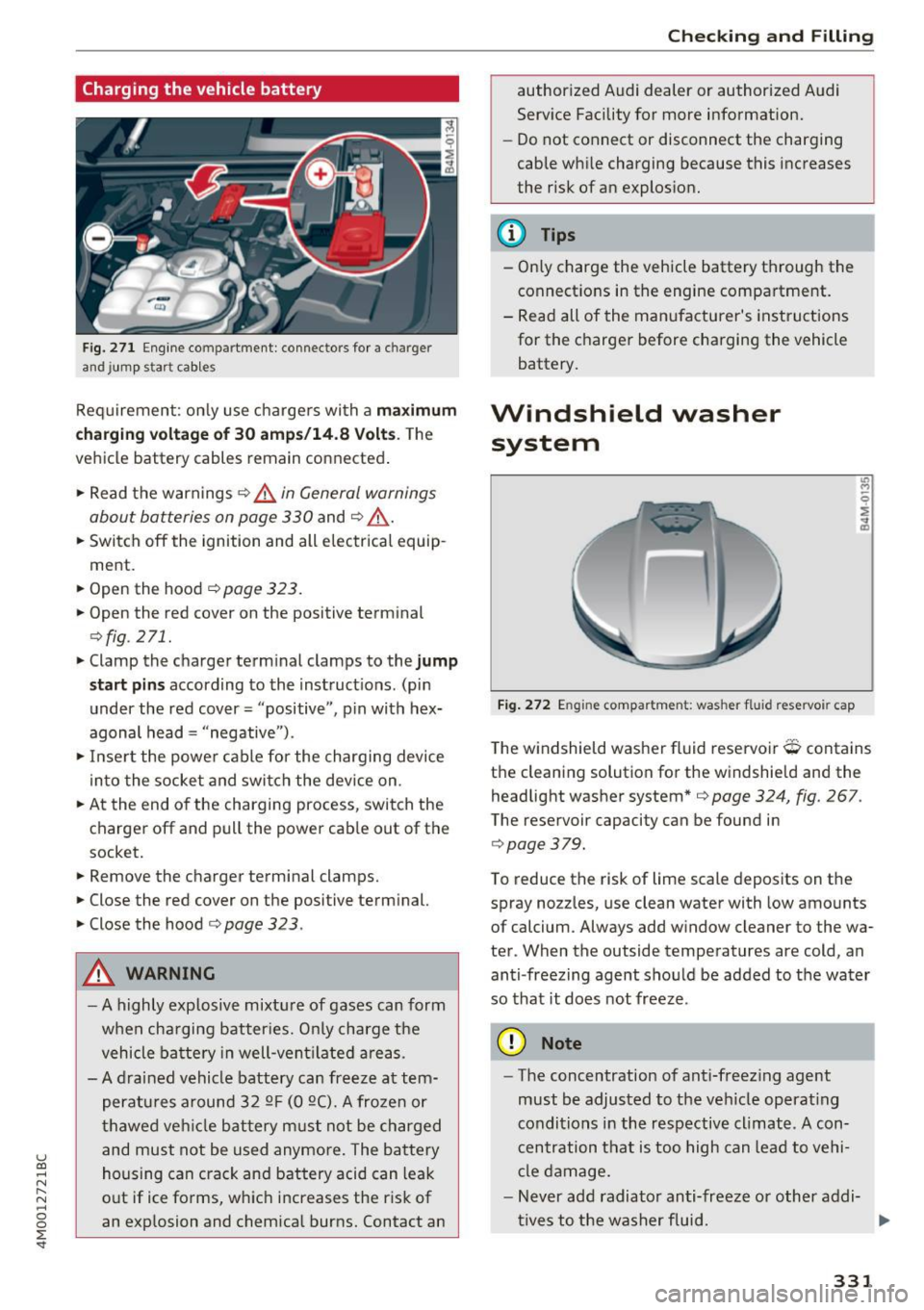
Fig. 271 Engine compartment : connec tor s for a charg er
and jump s ta rt cables
Requirement : only use chargers with a maximum
charging voltage of 30 amps/14.8 Volts.
The
vehicle battery cables remain connected .
.,. Read the warn ings ¢
& in General warnings
about batteries on page 330
and ¢ ,& .
.,. Switch off the ignition and all electrical equip
ment .
.,. Open the hood ¢
page 32 3 .
.,. Open the red cover on the positive terminal
¢ fig . 271 .
.,. Clamp the charger terminal clamps to the jump
start pins
according to the instructions . (pin
under the red cover = "positive", pin with hex
agonal head= "negative ") .
.,. Insert the power cable for the charging device
into the socket and switch the device on .
.,. At the end of the charging process, sw itch the
charger off and pull the power cable out of the
socket .
.,. Remove the charger terminal clamps.
.,. Close the red cover on the pos itive terminal.
.,. Close the hood ¢
page 323.
A WARNING
-A highly explosive mixture of gases can form
when charging batteries. Only charge the
vehicle battery in well-vent ilated areas.
-A drained vehicle battery can freeze at tem
peratures around 32 QF (0 QC). A frozen or
thawed vehicle battery must not be charged
and must not be used anymore. The battery
housing can crack and battery acid can leak
out if ice forms, which increases the risk of
an explosion and chemical burns. Contact an
Checking and Filling
authorized Audi dealer or authorized Audi
Service Facility for more information.
- Do not connect or disconnect the charging
cable while charging because this increases
the risk of an explosion.
@ Tips
- Only charge the vehicle battery through the
connections in the engine compartment.
- Read all of the manufacturer's instructions
for the charger before charging the vehicle
battery.
Windshield washer system
Fig. 272 E ngine compar tm ent: was her fluid re serv oir cap
The windshi eld washer fluid reservoir O contains
th e cleaning solution for the windshield and the
he adlight washer system*¢
page 324, fig. 26 7 .
The reservoir capacity can be found in
¢page 379.
To reduce th e risk of lime scal e deposits on the
spray no zzles, use clean water with low amounts
o f calcium. Alway s add window cleane r to the wa
ter . When the outside temperatures are cold, an
anti -freezing agent should be added to the water
so that it does not freeze.
(D Note
-The concentration of ant i-freezing agent
must be adjusted to the vehicle operating
conditions in the respective climate . A con
centration that is too high can lead to vehi-
cle damage.
- Never add radiator anti-freeze or other addi-
tives to the washer fluid. .,..
331
Page 354 of 402
Wheels
store the pressure again in the Infotainment
system
¢ page 352.
mm (T ir e Pr essure Monito ring System) Tire
pressure : malfunction ! See owner' s manual.
If
mm appears after switch ing the ignit ion on o r
while driving and the
[I] indicator light in the in
strument cluster blinks fo r approximately one
minute and then stays on, there is system mal
function. Try to store the correct tire pressures
¢ page 352 . In some cases, you must drive for
several minutes after storing the pressures until
the ind icator light turns off . If the i ndicator light
does t urn off o r tu rns on aga in afte r a short peri
od of time , d rive to an au tho riz ed A ud i dealer o r
author ized Audi Service Facility immed iate ly to
have the ma lfunction co rrected .
A WARNING
-If the t ire pressu re indicator appears in the
display, reduce your speed immediate ly and
avoid any hard steer ing or braking maneu
vers. Stop as soon as possib le and check the
t ires and their pressu re.
- The driver is responsib le for maintaining the
correct tire pressure. You must check the
t ire pressure regu larly.
- Under certain conditions (such as a sporty
dr iv ing style, winter cond itions o r unpaved
roads), the tire p ressure mon itoring system
indicator may be delayed.
@ Tips
- The t ire pressure monitoring system can al
so stop work ing when there is an ESC mal
funct ion.
- Using snow chains may result in a system
malfunction.
- The t ire pressure monitoring system in your
Audi was calibrated with "A udi Orig inal
Tires"
¢ page 340. Using these ti res is rec
ommended .
352
' Storing tire pressures
If the tire pressure changes or a tire is replaced,
it must be confirmed in the Infotainment sys
tem .
"Make sure before stor ing that the t ire pressures
of all four tires meet the specified values and
are adapted to the load
¢ page 343 .
"Switch the ignit io n on.
" Sele ct in the Infotainment system:
IMENU J but
ton
> V ehicle > Servi ce & checks > Tire pres
s u re monitor
> Store tire pre ssure > Ye s, store
now .
'
(D Tips
Do not store the tire pressures if snow chains
are installed .
Run-flat tires
Introduction
Applies to: vehicles with run-flat tires
A run-flat tire helps to maintain vehicle mobility
when there is a loss of pressure.
Run-flat tires have reinforced sidewalls that pro
tect the tire if there is a loss of pressure.
If the ti re pressure monitoring system indicates a
l oss of pressure in one or severa l ti res, you can
continue driving on run-flat tires fo r at least 20
miles (30 km). Drive to an authorized A udi dealer
or authorized Audi Serv ice Facility immediately to
have the problem corrected.
Continuing to d rive on run-flat tire s is no
longe r po ssible if
- there is visible damage to the tires, such as
cracks in the sidewalls .
- strong vibrat ions are felt wh ile driving, or the
tire beg ins to smoke due to a strong build-up of
heat .
- the t ire was heavily damaged, for example in an
accident There is a r isk that parts of the tire
tread will detach and damage important veh i
cle components .
- the Electron ic Stabilization Contro l (ESC) is not
working or is cont inuously running .
Page 356 of 402

Care and cleaning
Care and cleaning
General information
Regular, proper care helps to maintain your vehi
cle's value.
It can also be a requirement when
submitting warranty claims for corrosion damage
and paint defects on the body.
The required cleaning and care products can be
obtained from an authorized Audi dealer or au
thorized Service Facility. Read and follow the in
structions for use on the packaging .
A WARNING
-Using cleaning and care products incorrectly
can be dangerous to your health .
- Always store cleaning and care products out
of reach of children to reduce the risk of poi
soning .
@ For the sake of the environment
- Preferably purchase environmentally-friend
ly cleaning products.
- Do not dispose of leftover cleaning and care
products with household trash.
Car washes
The longer that deposits such as insects, bird
droppings, tree sap or road salt remain on the ve hicle, the more the surface can be damaged. High
temperatures such as those caused by sunlight
increase the damaging effect .
Before washing, rinse off heavy deposits with
plenty of water.
Stubborn deposits such as bird droppings or tree
sap are best removed with plenty of water and a microfiber cloth.
Also, wash the underside of your vehicle once road salt stops being used for the season .
Pressure washers
When washing your veh icle w ith a pressure wash
er, always follow the operating instructions pro
vided with the pressure washer. This is especially
important in regard to the pressure and spraying
distance. Do not aim the spray directly at the
354
seals on the side windows, doors, lids or the sun
roof* or at tires, rubber hoses, insulating materi
al, sensors* or camera lenses* . Keep a distance of
at least 16 in (40 cm).
Do not remove snow and ice with a pressure
washer.
Never use cone nozzles or high pressure nozzles.
The water temperature must not be above 140 °F
(60 °().
Automatic car washes
Spray off the vehicle before washing.
Make sure that the windows and roof* are closed
and the windshield wipers are off . Follow instruc
tions from the car wash operator, especially if
there are accessories attached to your vehicle.
If possible, use car washes that do not have
brushes.
Washing by hand
Clean the vehicle starting from the top and work
ing down using a soft sponge or cleaning brush.
Use solvent-free cleaning products.
Washing vehicles with matte finish paint by
hand
To avoid damaging the paint when washing, first
remove dust and large particles from your vehi
cle. Insects, grease spots and fingerprints are
best removed with a special cleaner for matte
finish paint .
Apply the product using a microfiber cloth. To
avoid damaging the paint surface, do not use too
much pressure.
Rinse the vehicle thoroughly with water. Then
clean using a neutral shampoo and a soft micro
fiber cloth .
Rinse the vehicle thoroughly again and let it air
dry. Remove any water residue using a chamois .
A WARNING
-
- Only wash the vehicle when the ignition is
off and follow the instructions from the car
Page 359 of 402
u co ...... N r-... N ...... 0
0
:E: '
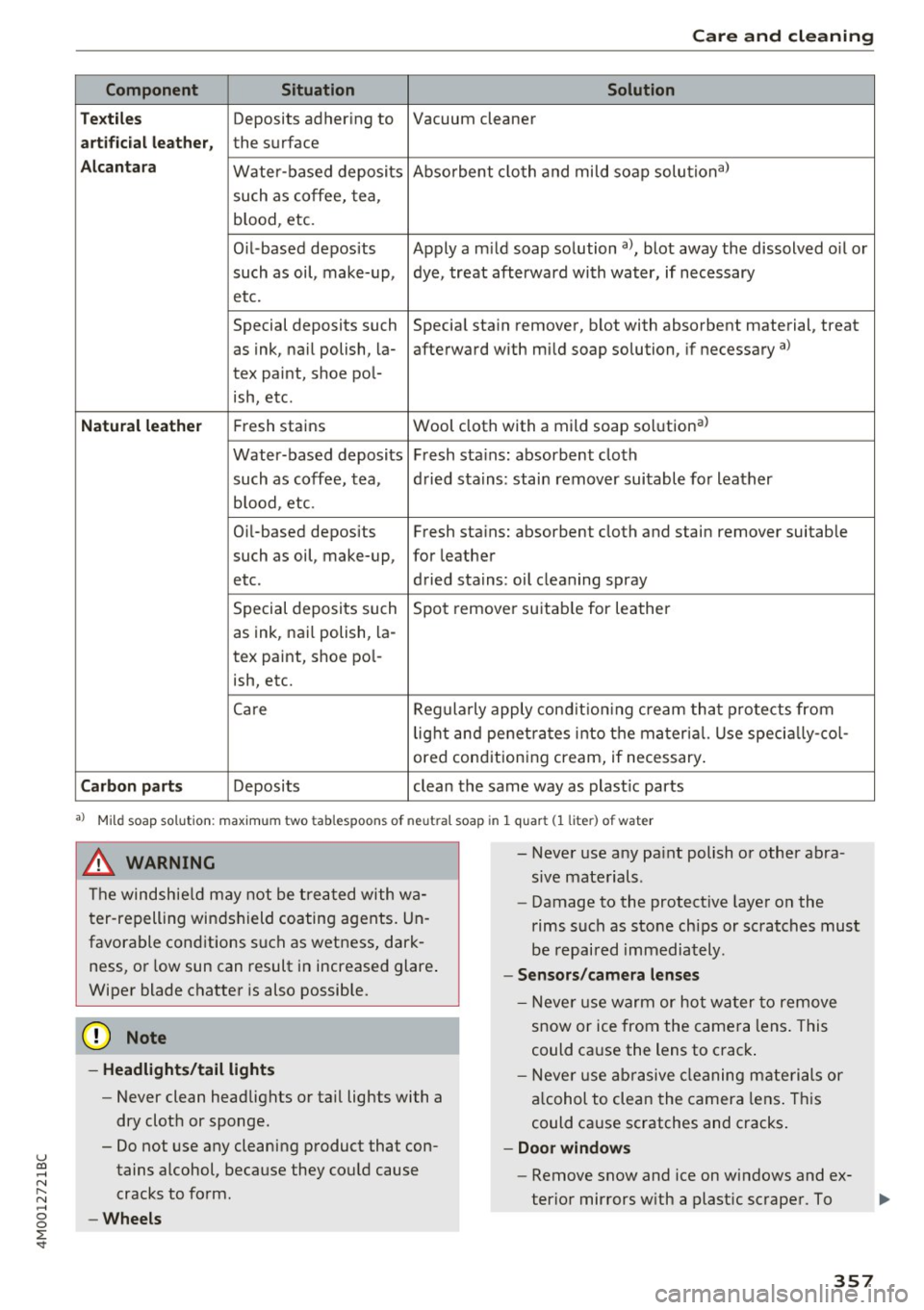
Component Situation Solution
T ex til es
Deposits adhering to Vacuum cleaner
art ifici al leat her, the surface
A lcan tara Water-based deposits Absorbent
cloth and mild soap solutiona>
such as coffee, tea,
b lood, etc.
Oil -based deposits Apply a m ild soap solution
a), blot away the dissolved o il or
such as oil, make-up, dye, treat afterward with water, if necessary
etc.
Special deposits such Special stain
remover, blot with absorbent material, treat
as ink, nail polish, la- afterward with mild soap solution, if necessary
a)
tex paint, shoe pol-
ish, etc.
Natu ral le ath er Fresh stains Wool cloth with a mild soap solution a)
Water-based deposits Fresh stains: absorbent cloth
such as coffee, tea, dried stains: stain
remover suitable for leather
b lood , etc.
Oi [-based deposits Fresh stains: absorbent cloth and stain
remover suitable
such as oil, make-up, for leather
etc. dried stains: oil cleaning spray
Special deposits such Spot remove r suitab le for leather
as ink, nail polish, la-
tex paint, shoe pol-
ish, etc.
Care Regularly apply condit ion ing c ream that protects from
lig ht and penet rates into the material. Use specia lly-co l-
ored conditioning cream, if necessary .
Carbon part s Deposits clean the same way as plast ic parts
a) Mi ld soap solution: maximum two tablespoons of neutral soap in 1 q uart (1 liter) of water
.8, WARNING
The windshield may not be trea ted with wa
ter-repelling windshield coating agents. Un
favorable cond itions such as wetness, dark
ness, or low sun can result in increased glare.
Wiper blade chatter is also possible.
@ Note
- Headlight s/tail li ght s
-Never clean headlights or tail lights with a
dry cloth or sponge.
- Do not use any cleaning product that con
tains alcohol, because they could cause
cracks to form.
- Whe els
-
- Never use any pa int polish or other abra
sive materials .
- Damage to the protect ive layer on the
rims such as stone chips or scratches must
be repaired immediately .
-Sen sor s/cam era l enses
- Neve r use warm or hot water to remove
snow or ice from the camera lens . This
could cause the lens to crack .
- Neve r use ab rasive cleaning materials or
a lcohol to clean the camera lens. This
could cause scratches and cracks .
-Doo r window s
-Remove snow and ice on windows and ex-
terior mirrors w ith a plast ic scraper . To
357
Page 366 of 402

Emerg ency assis ta nce
• Using the hex socket wrench © (from the vehi
cle tool kit), turn the vehicle jack* under the
li ft ing point on the side sill unt il it is high
enough that the arm@¢
fig. 283 is under the
designated plastic mount.
• Al ign the vehicle jack* so the arm @engages in
the des ignated lift ing po int i n the door s ill and
the base @ lies f lat on the ground . The base @
mus t be d irectly unde r the lifting point @.
• To lift the vehicle , place the ratchet @(from
the vehicle too l kit) with the correct side on the
hex socket wrench ©-
• Move the ratchet @clockwise back and forth
unt il the wheel lifts up slightly from the
ground.
A WARNING
- Make sure the vehicle jack* is stable. There
is a risk of injury when the ground is slick or
soft, because the vehicle jack* could slide or
sink.
- Only raise your vehicle with the vehicle jack*
provided by the facto ry .
If you use a vehicle
jack des igned for ano ther veh icle, yo ur vehi
cle can slide and cause in jury.
- Position the vehicle jack* on ly at the desig
nated mounting points on the s ide s ill and
align the jac k. O therwise, the veh icle jack *
could slip and ca use an in jury if it does not
have sufficient hold on the vehicle.
- Vehicles with a ir suspension*: changes in
temperature or load can affect the height of
the stopped vehicle.
- To reduce the risk of an accident, never start
the engine when the vehicle is raised.
- T o reduce the risk of injury, support the ve
hicle securely with suitab le stands if work is
to be performed underneath the vehicle.
- To help prevent injury to you rself and yo ur
passenge rs :
- Do not ra ise the vehicle unt il you are sure
the jack* is securely engaged.
- Passengers must not remain in the vehicle
when it is jacked up .
- Make sure that passengers wait in a safe
place away from the vehicle and well away
from the road and traff ic .
364
- Make sure jack position is correct, adjust
as necessary and then continue to ra ise
the jack*.
- If work has to be done under the vehicle,
ensure that it is safely supported on suita
ble stands -risk of injury!
- Never start the engine when the vehicle is
on the jack* -risk of accident!
(D Note
Do not lift the vehicle by the si ll. Position the
vehicle jack* only at the designated mounting po ints on the side sill. Otherw ise, your vehicle
will be damaged.
@ Tips
The vehicle jack mode* switches off automati
cally at speeds above 6 mph (10 km/h).
Removing and installing a wheel
Fig . 28 4 Whee l: in terna l hex socke t to t urn th e whee l
bo lts
Fig . 285 Whee l: alignme nt pin in t he top ho le
Remo ving a wheel
• Remove the top wheel bolt completely using
the hex socket in the screwdriver handle (in the .,,_
Page 370 of 402
Fuses and bulbs
Fuse color identification
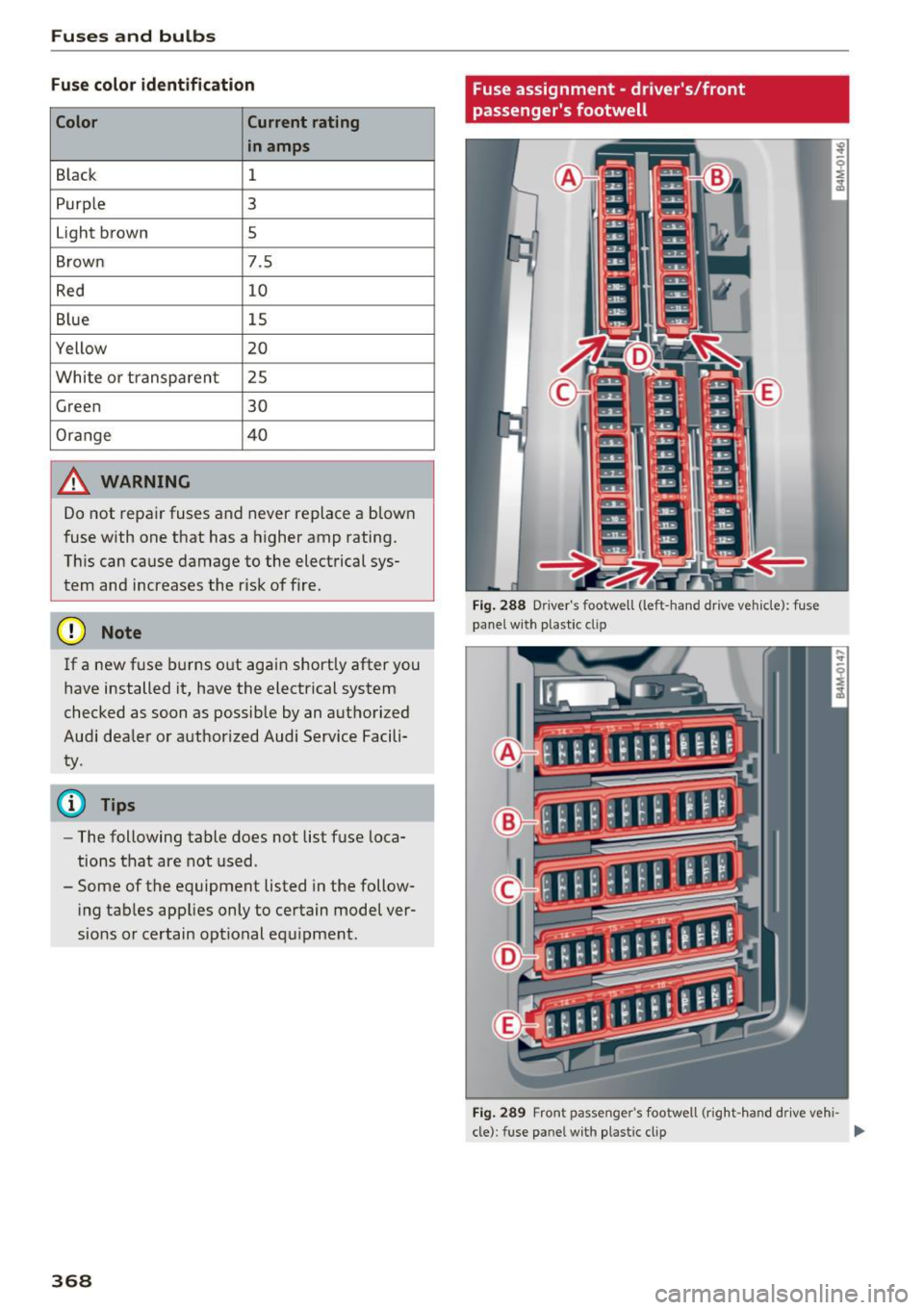
Color Current rating
in amps
Black 1
Purple 3
Light brown 5
Brown 7.5
Red 10
Blue 15
Yellow 20
White or transparent 25
Green 30
Orange 40
A WARNING
Do not repair fuses and never replace a blown
fuse with one that has a higher amp rating.
This can cause damage to the electrical sys
tem and increases the risk of fire.
(D Note
If a new fuse burns out again shortly after you
have installed it, have the electrical system
checked as soon as possible by an authorized
Audi dealer or authorized Audi Service Facili
ty .
Q) Tips
-The following table does not list fuse loca
tions that are not used.
- Some of the equipment listed in the follow
ing tables applies only to certain model ver
sions or certain optional equipment.
368
Fuse assignment - driver's/front
passenger's footwell
Fig. 288 Driver's footwell (left-hand drive vehicle): fuse
panel with plas tic clip
Fig. 289 Front passe nger's footwell (right -hand drive vehi-
cle): fuse panel with plastic clip
Ill>
Page 373 of 402
u co .... N r-... N .... 0
0
:E: '
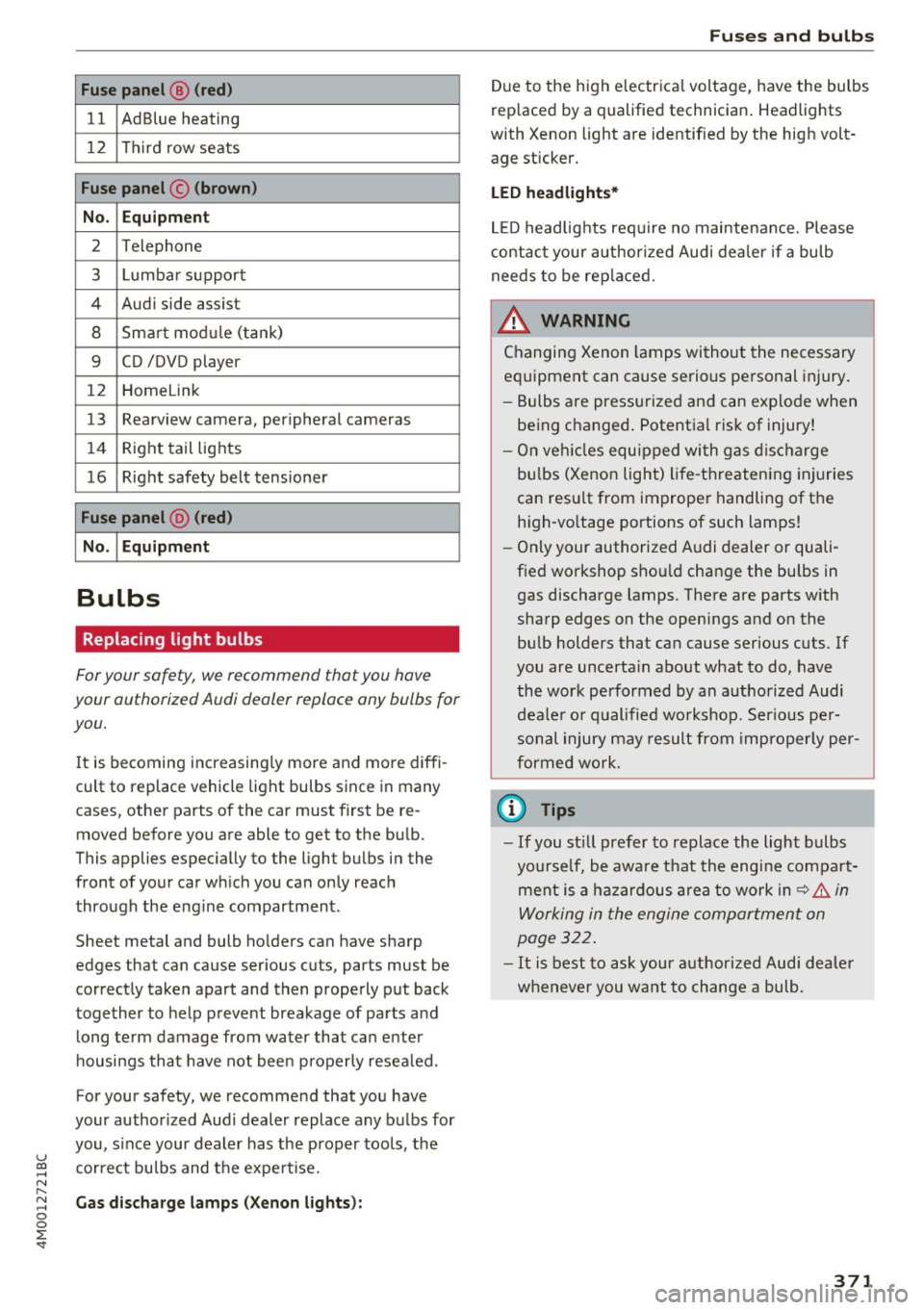
11 AdBlue heating
12 Third row seats
Fuse panel © (brown)
No . Equipment
2 Telephone
3 Lumbar support
4 Audi side assist
8 Smart module (tank)
9 CD /DVD player
12 Homelink
13 Rearview camera, peripheral cameras
14 Right tail lights
16 Right safety belt tensioner
Fuse panel @ (red)
No .
I Equipment
Bulbs
Replacing light bulbs
For your safety, we recommend that you have
your authorized Audi dealer replace any bulbs for
you.
It is becoming increasingly more and more diffi
cult to replace vehicle light bulbs since in many
cases, other parts of the car must first be re
moved before you are able to get to the bulb.
This applies especially to the light bulbs in the
front of your car wh ich you can only reach
through the eng ine compartment.
Sheet metal and bulb ho lders can have sharp
edges that can cause serious cuts, parts must be
correctly taken apart and then properly put back
together to help prevent breakage of parts and long term damage from water that can enter
housings that have not been properly resea led.
For your safety, we recommend that you have
your author ized Audi dealer replace any bulbs for
you, s ince your dealer has the proper tools, the
correct bulbs and the expert ise.
Gas discharge lamps (Xenon lights):
Fuses and bulbs
Due to the high e lectrica l voltage, have the bulbs
rep laced by a qualified technician. Headlights
with Xenon light are identified by the high volt
age sticker.
LED headlights*
LED headlights require no maintenance. Please
contact your authorized Audi dealer if a bulb
needs to be replaced.
& WARNING ~ -
Changing Xenon lamps without the necessary
equipment can cause serious personal injury.
- Bulbs are pressurized and can explode when
being changed . Potential risk of injury!
- On veh icles equipped with gas discharge
bu lbs (Xenon light) life-threatening injuries
can resu lt from improper handling of the
h igh-vo ltage portions of such lamps!
- Only your authorized Audi dealer or quali
fied workshop shou ld change the bulbs in
gas discharge lamps. There are parts with
sharp edges on the openings and on the bulb holders that can cause serious cuts. If
you are uncerta in about what to do, have
the work performed by an authorized Audi deale r or qualified workshop. Ser ious per
sonal injury may result from improperly per
formed work.
(D Tips
-If you st ill prefer to replace the light bulbs
yourself, be awa re that the engine compa rt
ment is a hazardous area to work in~.&..
in
Working in the engine compartment on
page 322.
-It is best to ask your authorized Audi dealer
whenever you want to change a bulb.
371
Page 374 of 402
Emergency situations
Emergency situations
General
This chapter is intended for trained emergency crews and working personnel who have the nec
essary tools and equipment to perform these
operations.
Starting by pushing or
towing
(D Note
Vehicles with an automatic transmission
cannot be started by pushing or towing.
Starting with jumper
cables
If necessary, the engine con be started by con
necting it to the battery of another vehicle.
If the engine should fail to start because of a dis
charged or weak battery, the battery can be con
nected to the battery of
another vehicle, using a
pair of jumper cables to start the engine.
Jumper cables
Use only jumper cables of sufficiently large cross
section
to carry the starter current safely. Refer
to the manufacturer's specifications.
Use only jumper cables with
insulated terminal
clamps which are distinctly marked :
plus(+) cable in most cases colored red
minus(-) cable
in most cases colored black.
A WARNING
Batteries contain electricity, acid, and gas.
Any of these can cause very serious or fatal in
jury. Follow the instructions below for
safe
handling of your vehicle's battery.
-Always shield your eyes and avoid leaning
over the battery whenever possible.
-A dead battery can freeze at temperatures
around 32 °F (0 °C) . If the vehicle battery is
frozen, you must thaw it before connecting
the jump start cables.
If you do not, this in-
372
creases the risk of an explosion and chemi
cal burns. After jump starting the vehicle,
drive to an authorized Audi dealer or author
ized Audi Service Facility immediately to
have the vehicle battery checked.
- Do not allow battery acid to contact eyes or
skin . Flush any contacted area with water
immediately.
- Improper use of a booster battery to start a
vehicle may cause an explosion .
- Vehicle batteries generate explosive gases.
Keep sparks, flame and lighted cigarettes
away from batteries.
- Do not try to jump start any vehicle with a
low acid level in the battery.
- The voltage of the booster battery must also
have a 12-Volt rating. The capacity (Ah) of
the booster battery should not be lower
than that of the discharged battery. Use of
batteries of different voltage or substantial
ly different "Ah" rating may cause an explo
sion and personal injury.
- Never charge a frozen battery. Gas trapped
in the ice may cause an explosion.
- Never charge or use a battery that has been
frozen. The battery case may have be weak
ened.
- Use of batteries of different voltage or sub
stantially different capacity (Ah) rating may
cause an explosion and injury. The capacity (Ah) of the booster battery should not be
lower than that of the discharged battery.
- Before you check anything in the engine
compartment, always read and heed all
WARNINGS
r=:> poge 322.
([) Note
-Applying a higher voltage booster battery
will cause expensive damage to sensitive electronic components, such as control
units, relays, radio, etc.
- There must be no electrical contact between
the vehicles as otherwise current could al
ready start to flow as soon as the positive
(+) terminals are connected.