service AUDI R8 SPYDER 2011 Owner's Manual
[x] Cancel search | Manufacturer: AUDI, Model Year: 2011, Model line: R8 SPYDER, Model: AUDI R8 SPYDER 2011Pages: 244, PDF Size: 59.74 MB
Page 173 of 244

-Blend must contain not more than 15%
MTBE.
Seasonally adjusted gasoline
Many gasoline grades are blended to perform
espec ially we ll for winter or summer driving.
During seasonal change-over, we suggest that
you fill up at busy gas stat ions where the sea
sonal adjustment is more likely to be made in
time .
(D Note
-Methanol fuels which do not meet these
requirements may cause corrosion and
damage to plastic and rubber compo
nents in the fuel system .
- Do not use fue ls that fail to meet the
specified criter ia in this chapter.
- If you are unable to determine whether
or not a particular fue l blend meets the
specifications, ask your service station or
its fuel supp lier.
- Do not use fuel for which the contents
cannot be identified.
- Fuel system damage and performance
problems resulting from the use of fuels
different from those specified are not
the responsibility of Audi and are not
covered under the New Vehicle or the Emission Control System Warranties.
- If you experience a loss of fuel economy
or driveability and performance prob l ems due to the use of one of these fuel
blends, we recommend that you switch
to unblended fuel.
Gasoline additives
A major concern among many auto manufac
turers is carbon deposit build- up caused by
the type of gasoline you use.
Although gasoline grades differ from one manufacturer to another , they have certain
things in common. All gasoline grades contain
substances that can cause deposits to collect
on vital engine parts, such as fuel injectors
and intake valves. Although most gasoline brands include additives to keep engine and
Fuel supply and filling your fuel tank 171
fuel systems clean, they are not equally effec
tive .
A udi recommends using TOP TIER Detergent
Gasoline. For more information on TOP TIER
Detergent Gasoline, please go to the official
website (www.toptiergas.com).
After an extended period of using inadequate
fuels, built-up carbon deposits can rob yo ur
engine of peak performance.
Q) Note
Damage or malfunction due to poor fue l
quality is not covered by the Aud i New Ve
hicle Limited Warranty.
Fuel tank
Fuel filler neck
The fuel filler neck is located on the right rear
side panel behind the fuel fille r flap.
If the unlocking system should fail, you can
still open the flap manually -for detailed in
structions see ¢
page 173.
You can find the fuel tank capacity of your ve hicle in
Technical Data ¢ page 228.
The label on the inside of the fuel fi ller flap
tells you the correct fue l for your vehicle. For
more information about fuel specifications,
see ¢
page 170.
Your vehicle fue l tank has an on -board refue l
ing vapor recovery system. This feature helps
to prevent fuel vapors from escaping from the
tank and polluting the environment while you refuel your vehicle . In order to fill the tank
properly while protecting the environment,
please fo llow this refueling procedure careful
ly.
_&. WARNING
Under normal operating conditions, never
carry additional fue l conta iners in yo ur car.
Gas canisters and other containers used to
transport f uel can be dangero us. Such con
tainers, full or empty, may leak and could
cause a fire in a collis ion. If you must
•
•
Page 181 of 244
The engine oil and oil filter must be changed
according to the mi leage (kilometers) and
time interva ls specified in your vehicle's War
ranty & Maintenance booklet. Do not exceed
these intervals -harmful deposits from old
engine o il can reduce engine performance and
can lead to expensive engine repairs.
Changing the o il at the recommended inter
vals is so very important because the lubricat
ing properties of oil decrease gradually during
normal vehicle use . If you are not sure when
you have your oi l changed, ask your author
i zed A udi Service Advisor.
Under some circumstances the engine o il
should even be changed more frequently.
Change o il more often if you drive mostly
short distances, ope ra te the vehicle in dusty
areas or mostly under s top-and-go traffic con
d itions, or when yo u use your vehicle whe re
temperatures stay below freezing point for
l ong periods.
D etergen t additives i n the o il w il l make fresh
oil look dark after the eng ine has been run
ning for a short time . This is norma l and is not
a reason to change the oi l more often than
recommended.
Damage or malfunction s due t o lack of
m aintenance
It is essen tial that you change your oil at the
r ecommended inte rva ls using only engine o il
that complies with A udi oil standard
VW 502 00. Yo ur Limited New Vehicle War
ranty does not cover damage or malfunctions
d ue to fai lure to fo llow recommended mainte
nance and use req uirements as set forth in
the Audi Owner's Manua l and Warranty&
Ma intenance book let . Your autho rized Aud i
deale r will have to deny warranty coverage un
l ess you present to the dealer p roof in the
fo rm of Se rvice o r Repair Orde rs t hat all
sched uled main tenance w as performed in a
time ly manner .
Checkin g and fillin g 179
Engine oil consumption
The engine in your vehicle depends on an ade
quate amount of oil to lubricate and cool all
of its moving parts .
In order to provide effective lubrication and
cooling of interna l eng ine components, all in
te rnal combust io n engines consume a certain
amount of oil. Oil consumpt io n va ries from
engine to e ngine and may change sig nifican tly
ove r the life of the engine. Typically, engines
with a spec ified break -in pe riod (see
c::> page 158) consume more oil d uri ng the
break-in pe riod than they consume afte r oi l
consumption has stabilized.
U nder normal cond itions, the rate of oi l con
s u mption depends on t he q uality and viscos ity
of the oil, the RP M (revolut ions per minute) at
which the engine is operated, the ambient
temperature and road conditions. Further fac
tors are the amount of oil dilut ion from water
condensa tion or fue l residue a nd the oxida
tion level of the oil. As any eng ine is subject to
wear as m ileage builds up, t he oil co nsump
t ion may increase over time until repla cement
of wo rn components may be come necessary.
Wi th a ll these va riab les coming into p lay, no
standard rate of oil consumpt io n can be es
t a bl is h ed o r spec ified . There is no alte rnative
to regular and frequent chec king of the o il lev
el, see
Note.
If the yellow engine o il level wa rning symbo l
i n the instrument cluster
1\11 lights up, yo u
sho uld check the oil leve l as soon as possib le
c::> page 180 . Top off the oil at your ear liest
convenience
c::> page 180 .
A WARNING
-Before you check anything in the engine
compartment, always read and heed a ll
WARNINGS
c::> & in Working in the engine
compartment on pag e 175.
(D Note
Driving w ith an insufficient o il level is like-
-
ly to cause severe damage to the engine. .,.
•
•
Page 184 of 244
182 Checking and filling
may seriously degrade the corros ion pro
tection. The resu lting damage can cause
l oss of coo lant and subsequent ly lead to
se rious engine damage.
- The coolant additive
Gl2++ must not be
mixed w it h other coo lant add itives.
- Do not add any type of radiator leak sea l
ant to your ve hicle's engine coo lant.
Adding rad iator repair fluid may adve rse
ly affect the function and performance of
your cooling system and could result in
damage not covered by your New Vehicle
Limited Wa rranty.
Checking the engine coolant level
Proceed carefully when checking the coolant .
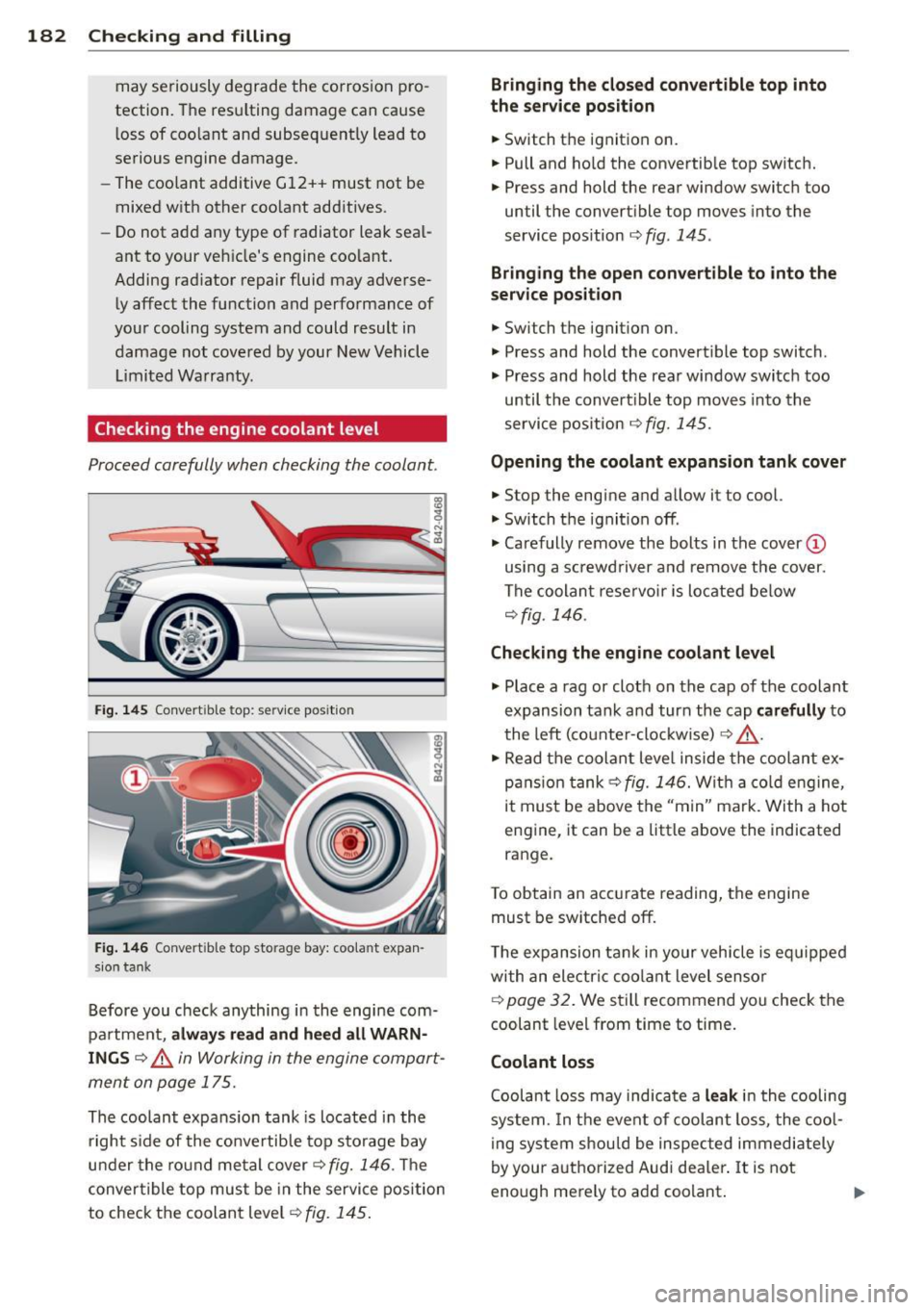
Fig. 145 Convert ible top: serv ice pos iti on
Fig. 146 Convert ible top storage bay: coo la n t expa n
s ion tank
Before you check anything i n the eng ine com
pa rtment,
alway s read and heed all WARN
INGS c:::> ,&. in Working in the engine compart
ment on page 175.
T he coolant expa nsion tank is located i n the
r ight s ide of the co nvertib le top s to rage bay
under the ro und metal cover
c::>fig. 146. The
conver tible top must be in the servi ce position
to check the coolan t leve l
c:::> fig. 145 .
Bringing the closed convertible top into
the service position
.,. Switch t he ignition on.
.,. Pull and ho ld the convertib le top switch.
.,. Press and hold the rear window switc h too
until the convert ible top moves into the
service pos ition
c:::> fig. 145 .
Bringing th e open convertible to into the
service position
.,. Switch th e ignit ion on.
.,. Press and hold the convert ible top switch.
.,. Press and hold the rea r window switc h too
until t he convert ible top moves into the
service pos it ion
c:::> fig. 145.
Opening the coolant expansion tank cover
.,. Stop the engine a nd a llow it to cool.
.,. Switch t he ignit ion off .
.,. Carefully remove the bolts in the cover
(D
using a sc rewd river and remov e th e cover.
The coolan t rese rvo ir i s located be low
c:::> fig. 146 .
Checking the engine coolant level
.,. Place a rag or cloth on the cap of the coolant
e xpansion tank a nd turn the cap
carefully to
the left ( counte r-cloc kw ise)
c:::> .&_ .
.,. Read the coolan t leve l inside the coolan t ex
pa nsion tank
c:::> fig. 1 46. W it h a co ld eng ine,
it must be above the "min" mark . With a hot
engine, it can be a litt le above the indicated
range.
T o obtain an acc urate reading, the engine
must be sw itched off.
T he e xpansion ta nk in your vehicle is eq uipped
with an electr ic coo lant level senso r
c::> page 32. We s till rec om mend you check the
coolant leve l from time to time.
Coolant loss
Coolant loss may indicate a leak in the cooling
system. In t he eve nt of cool ant los s, the cool
ing system should be inspec ted immedi ately
by your a uthorized Audi dea ler . I t is not
eno ugh mere ly to a dd coo lant .
ll-
Page 186 of 244
184 Checking and filling
Brake fluid
Notice
Have the brake fluid changed by an experi
enc ed technician .
Brake fluid abso rbs moisture from t he a ir. If
the water content in the brake fluid is t oo
high, corrosion in the brake system may result
after a per iod of t ime . The bo iling po int of the
brake fluid w ill also decrease considerably and
dec rease b rak ing performance.
Therefore, the brake flu id must be changed
e ver y two y ear s. Always use new brake fluid
which confo rms to Fede ral Motor Vehicle
Standa rd "FMVSS 1 16 DO T 4".
Brake fluid is rep laced according to the Audi
maintena nce service schedule . Your author
ized Audi dealer is equipped with the necessa
ry special tools and rep lacement parts , has
the necessary expe rtise, and c an d ispose of
the used fluid .
& WARNING
-Brake fluid is po isonous. It must be sto r
ed on ly in the closed orig inal container
o ut o f the reach of children!
- Brake fa ilure can result from old or inap
propriate b rake fluid . Observe these pre
caut ions:
- Use only bra ke fluid that meets SAE
specifi cation
J 1 703 and co nfo rms to
F ederal Motor Vehicle St andard 116 .
A lways check with you r a uthorized Aud i
dea ler to make s ure you are using the
correct brake fl uid. T he correct type of
brake fluid is a lso indicated on the
brake fluid reservoir.
- The brake fluid must be new. Heavy use
of the brakes can cause a vapor lock if
the brake fl uid is left in the system too
long . This can ser ious ly affect the effi
cie ncy of the bra kes as well as yo ur
safety. This could result in an acc ident .
(D Note
Brake fluid will damage the paint of you r
vehicle .
@ For the sake of the environment
Because o f the prob lem of p rope r disposal
of brake fluid as well as the spec ial too ls
r equired and the necessary expertise, we
recommend that yo u have the brake fl uid
changed by yo ur authorized Aud i dea le r.
Battery
General information
All work on the battery requires technical
knowledge.
The battery is located behind the cover i n the
l uggage compa rtme nt. Remove the cover by
pushing it to the left and lift ing it o ut.
The battery is practically maintenance-free
and is checked as pa rt of your ve hicle's main
tenance se rv ices .
You are we ll advised to replace a battery that
is older than S years .
Disconnecting the battery terminal s
Some vehicle functions (power window reg u
lators, for example) are lost if the battery te r
mina ls are disconnected . T hese functions have
to be relearned after the battery termina ls are
connected again . To prevent th is, the battery
shou ld only be disco nnected from the ve hicle
electrica l system when abso lutely necessary
f o r repai rs.
Vehicles not driven for long periods
The battery becomes d ischarged due to quies
cent current consume rs even when the vehicle
i s not used . With extended pe riods of non-use
i n the
cold season, you should have the ve hi
cl e battery removed by an autho rized Aud i
de aler or qu alified workshop and stored in an
frost -free place. This preven ts the battery
from "freezing" and thereby being dest royed.
D uring the
warmer seasons it is eno ugh to liJ>
Page 198 of 244
196 Tires and wheels
wheels you have to adjust the tire pressures
on all wheels.
A WARNING
Incorrect tire pressures and/or underinfla
tion can lead sudden tire failure, loss of
control, collision, serious personal injury
or even death.
- When the warning symbol
RI] appears in
the instrument cluster, stop and inspect
the tires .
- Incorrect tire pressure and/or underinfla
tion can cause increased tire wear and
can affect the handling of the vehicle and
stopping ability .
- Incorrect tire pressures and/or underin flation can also lead to sudden tire fail
ure, including a blowout and sudden de
flation, causing loss of vehicle control.
- The driver is responsible for the correct
tire pressures for all tires on the vehicle .
The applicable pressure values are locat
ed on a sticker on the driver's side 8-pil
lar.
- Only when all tires on the vehicle are fil
led to the correct pressure, the tire pres
sure monitoring system can work cor
rectly.
- The use of incorrect tire pressure values
can lead to accidents or other damage.
Therefore it is essential that the driver
observe the specified tire pressure values
for the tires and the correct pressures for
the function of the tire pressure monitor
ing system .
- Always inflate tires to the recommended
and correct tire pressure before driving
off .
- Driving with underinflated tires bend
more, letting them get too hot resulting
in tread separation, sudden tire failure
and loss of control.
- Excessive speed and/overloading can
cause heat build-up, sudden tire failure
and loss of control.
- If the tire pressure is too low or too high,
the tires will wear prematurely and the
vehicle will not handle well. -
If the tire is not flat and you do not have
to change a wheel immediately, drive at
reduced speed to the nearest service sta
tion to check the tire pressure and add
air as required .
(D Note
Driving without valve stem caps can cause
damage to the tire valves. To prevent this,
always make sure that factory installed
valve stem caps on all wheels are securely mounted on the valve.
@ For the sake of the environment
Underinflated tires will also increase the
fuel consumption .
Tires and vehicle load limits
There are limits to the amount of load or
weight that any vehicle and any tire can carry .
A vehicle that is overloaded will not handle
well and is more difficult to stop. Overloading
can not only lead to loss of vehicle control,
but can also damage important parts of the
vehicle and can lead to sudden tire failure, in cluding a blowout and sudden deflation that
can cause the vehicle to crash.
Your safety and that of your passengers also depends on making sure that load limits are
not exceeded. Vehicle load includes everybody
and everything in and on the vehicle . These
load limits are technically referred to as the
vehicle 's
Gross Vehicle Weight Rating
("GVWR").
The "GVWR" includes the weight of the basic
vehicle, all factory installed accessories, a full
tank of fuel, oil, coolant and other fluids plus
maximum load. The maximum load includes
the number of passengers that the vehicle is
intended to carry ("seating capacity") with an
assumed weight of 150 lbs. (68 kg) for each
passenger at a designated seating position
and the total weight of any luggage in the ve-
hicle. ..,_
Page 200 of 244
198 Tires and wheels
cargo and lugg age load ca
pacity is 650 lb s. (1400-750
(5
X 150) = 650 lb s.)
5. Determin e the combined
weight of luggage and cargo
being loaded on the vehicle .
That weight may not safely exceed the a vailable cargo
and luggage load capacity
c alculated in Step
4.
6. If your vehicle will be towing
a trailer , load from your trail
er w ill be tran sferred to your
vehi cle . Consult this manual
to determine how thi s re
duces the available cargo
and luggage load capacity of
your vehicle.
.,.Che ck the tire sidewall
( ¢ page 199 , fig. 153) to de
termine the designated load rating for a specific tire.
Tire service life
The service life of tires depends on a lot of
diff erent things i ncluding prop er installation
and balancing, correct tire pressure and driv ·
ing s tyle.
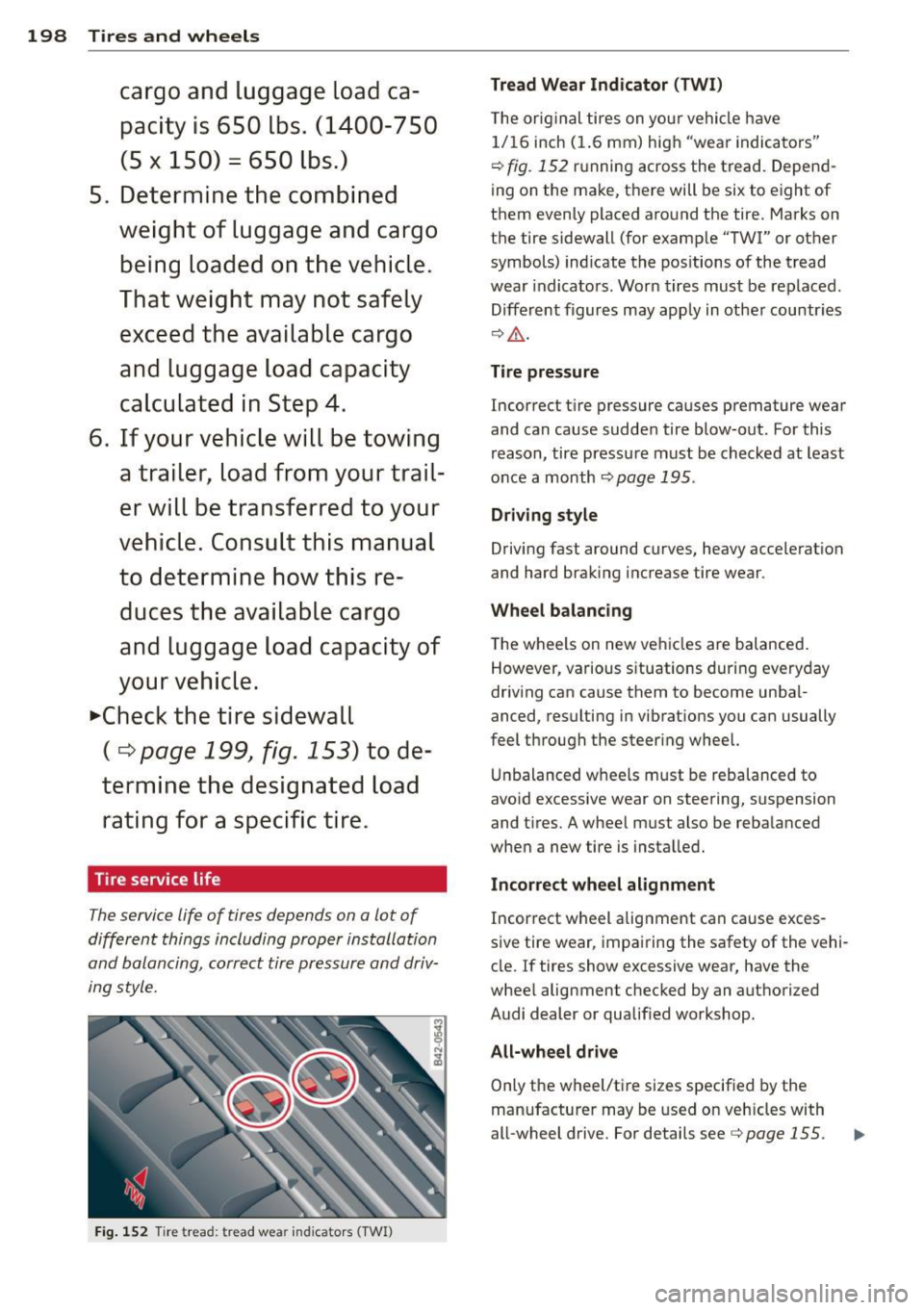
Fig. 152 T ire tread: trea d wea r ind icators (TWI)
Tread Wear Indicator (TWI)
The orig in al tires on yo ur vehi cle ha ve
1/ 16 inch ( 1.6 mm) hig h "wear indica tors"
¢ fig . 152 ru nning acro ss the tread . Depend·
ing on the ma ke , t here will be six to e ight of
them even ly placed aro und the tire. Marks on
t he tire sidewall (for example "TWI" or ot her
symbols) ind icate the pos itions of the tread
wea r indica to rs. Wor n tir es must be rep laced .
Differ ent figures may apply in othe r countries
¢ .&_ .
Tire pressure
Incor rect t ire pressure causes premature wea r
and can cause sudde n tire blow-out . For this
reason, tire pressu re must be checked at least
o nce a month
¢ page 195.
Driving style
Driving fast around c urves, heavy accele rat ion
and hard braking increase tire wear .
Wheel balancing
The wheels on new ve hicles are balance d.
However, va rious s ituations dur ing everyday
driv ing can cause them to become unbal·
anced, resulting in vib rations you can usually
feel t hrough the steer ing whee l.
Unb alanced w hee ls m ust be rebalance d to
avo id excessive wear on steering, suspension
and ti res. A whee l m ust also be reba lanced
whe n a new tire is insta lled.
Incorrect wheel alignment
Incor rect wheel alig nment can cause exces
s ive tire wear , impa iring the safety of the vehi
cle.
If tires show excessive wear , have the
w hee l alignment chec ked by an authoriz ed
Audi deal er or qualified wo rksh op.
All-wheel drive
Only the wheel/ti re sizes specif ied by the
manufacture r may be used on veh icles with
all-wheel drive. For detai ls see ¢
page 155.
Page 211 of 244
Consumer Information
Warranty coverages
Your Audi is covered by the following war
ranties :
-New Vehicle Limited Warranty
- Limited Warranty Against Corrosion Perfo-
ration
- Emissions Control System Warranty
- Emissions Performance Warranty
- California Emissions Control Warranty (USA
vehicles only)
- California Emissions Performance Warranty
(USA vehicles only)
Detailed information regarding yo ur warran
ties can be found in your
Warranty & Mainte
nance booklet .
Operating your vehicle
outside the U.S.A. or
Canada
Government regulations in the United States
and Canada require that automobiles meet
specific emission regulations and safety
standards. Therefore, veh icles built for the
U.S.A. and Canada differ from vehicles sold in
other countries .
I f you p lan to take your vehicle outside the
continental limits of the United States or Can
ada, there is the possibility that
- unleaded fuels for vehicles with cata lytic
converter may not be available;
- fuel may have a considerably lower octane
rating . Improper fuel may cause engine
damage;
- service may be inadequate due to lack of
proper service facilities, tools or testing
equipment;
- replacement parts may not be readily availa
ble.
- Navigation systems for vehicles built for the
U.S.A. and Canada will not necessari ly work
in Europe, and may not work in other coun
tries outside of North America.
Consumer Information 209
@ Note
Audi cannot be responsible for mechanical
damage that could result from inadequate
fuel, serv ice or parts availab ility.
Audi Service Repair
Manuals and Literature
Audi Offic ial Factory Service Manuals and Lit
erature are published as soon as possible after
model introduct ion. Service Manuals and liter
at ure are available to order from the Audi
T echnical Literature Ordering Center at:
https: //www. audi.techliterature.com
Maintenance
' General
Your vehicle has been designed to help keep
maintenance requirements to a minimum.
However, a certain amount of regular mainte
nance is still necessary to assure your vehicle's
safety, economy and reliability . For detailed
vehicle maintenance consult your Warranty& Maintenance booklet.
Under difficult operating conditions , for ex
ample at extremely low outside temperatures,
in very dusty regions, etc., some service work
shou ld be pe rformed between the intervals
specified. This applies particularly to:
- oil changes, and
- cleaning or replacing the air fi lter.
@ For the sake of the environment
By regu larly maintaining your vehicle, you
help make sure that emission standards
are maintained, thus minimizing adverse
effects on the environment.
Important considerations for you and
your vehicle
T he increasing use of electron ics, soph isticat
ed fuel injection and emission control sys
tems, and the genera lly increasing technica l
complexity of today's automobiles, have ..,_
•
•
Page 213 of 244
-Undeployed airbag modules and preten
sioners might be classified as Perchlo
rate Material -spec ia l hand ling may ap
ply, see www.dtsc.ca.gov/hazardous
waste/perch lorate. When the veh icle or
parts of the restraint system includ ing
airbag modules safety belts with p reten
s ione rs are scrapped, all applicable laws
and regulations must be observed. Your
a utho rized Aud i dea le r i s f amiliar w ith
these req uirements and we recommend
that you have your dea le r perform this
service for you.
Additional accessories, modifications and
parts replacement
Additional accessories and parts
replacement
Always consult on authorized Audi dealer be
fore purchasing accessories .
Your vehicle incorporates the latest safety de
sign features ensuring a high standard of ac
tive and passive safety .
This safety could be compromised by non -ap
proved changes to the veh icle. For this reason,
if parts have to be replaced, please observe
the following points when installing addition
al accessories:
Approved Audi accessor ies and genuine Audi
parts are ava ilable from authorized Audi deal
ers.
These dealers also have the necessary faci li
ties, too ls and trained specialists to insta ll the
parts and accessor ies properly .
A WARNING
Using the wrong spare parts or using non
approved accessories can cause damage to
the vehicle and se rious personal injury .
- Use only accessor ies expressly approved
by Audi and genuine Aud i spa re parts
Con sumer In formation 21 1
-These parts and accessories have been
specially designed to be used on yo ur ve
hicle.
- Never install accessor ies such as tele
phone crad les or beverage ho lders on air
bag covers or within the airbag deploy
men t zones . Do ing so wi ll increase the
ris k of injury if a irbags are triggered in an
accident!
- Before you check anything in the engine compa rtment, always read and heed a ll
WARNINGS
r:::;> poge 175.
(D Note
-If items other than genu ine Audi spare
parts, add-on equipment and accessory
items are used o r if repair wo rk is not
performed ac cord ing to specified met h
ods, this ca n resu lt in severe damage to
yo ur vehicle's engine and bo dy (s uch as
co rrosion) and adve rsely affect yo ur vehi
cle 's warranty.
- The innovat ive a luminium concep t of
your Audi means that a ll servicing, re
pairs or other work on the vehicle body
must be carr ied out exclusive ly by an Au
di workshop.
- If emergency repa irs must be performe d
elsewhere , have the veh icle examined by
an authorized Audi dealership as soon as
possible .
- The manufacturer cannot be held liable
for damage wh ich occurs due to failure
to comply with these stipu lations.
Technical Modifications
Our guidelines must be complied with when
technical modifications ore mode .
Always consult an author ized Audi dealer be·
fore start ing work on a ny modifications.
T his will help ensure t hat veh icle function,
performance and safety are not impaired
c> _&. .
Attempt ing to work on e lec tronic componen ts
and t he software used with them can ca use
Iii>
•
•
Page 221 of 244
Tightening wheel bolts
.,. Fit the wh eel b olt wrench ove r the wheel
bolt and push it down as far as it will go
1l.
.,. Close your grip around the
end of the
wrenc h handle fo r maximum torque and
turn each wheel bolt
clockwi se u nti l it sits
t ight.
H ave the
tightening torque of the whee l bolts
checked as soon as possible with a torque
wrench . It shou ld be 120 Nm.
Chec k the
tire pre ssure as soon as possible.
Return the vehicle tool kit to its proper place.
A WARNING
Loose ning t he wheel bo lts is prohib ited;
da nger of an accident!
@ Tips
- Never try and use the hexagona l socke t
i n the handle of the screwdr iver to loos
en or tighten the w heel bolts.
- If yo u have dete rm ined t hat wheel bolts
a re cor roded and difficult to t urn, the
bo lts must be rep laced befo re checking
the to rque.
- Unti l the tig hte ning torque is checked,
d rive at redu ced speeds as a pre caution.
Notes on wheel change
Pl ease read the information¢ page 199, New
tires and replacing tires and wheels,
if you are
going to use a spare tire which is different
from the tires on your veh icle.
Afte r you change a tire:
- Check the tire pressure on the spare imme
dia tely after mounting.
- Have the whee l bolt t ightening torque
chec ked w ith a torq ue wrench as soon as
poss ible by your author ized A udi dealer or a
qu alified service sta tion.
1 ) You need th e appropr iate adapter to tighte n the a nti
t h eft wheel bolts
c:, page 216.
What do I do now? 219
- With stee l and alloy whee l rims, the whee l
bolts are correctly tightened at a torque of
90 ft lb (120 Nm) .
- If you notice while changing a tire that the
wheel bo lts are corroded and difficu lt to
turn, then they should be rep laced before
you check the tightening torque.
- Replace the flat tire with a new one and
have it installed on your vehicle as soon as
possible. Remount the wheel cover.
Until then , d riv e with e xtra care and at re
duced speeds.
A WARNING
- If you are going to equ ip your vehicle
with tires or rims which differ from those
which were facto ry installed, then be
sure to read the information ¢
page 199,
New tires and replacing tir es and
wheels.
- Always sto re the tools secu rely in lug
gage compartment. Othe rwise, in a n ac
cident o r su dden maneuver they cou ld fly
forwdrd, CciU5ing injury to pd55enger5 in
the vehicle.
(D Note
Do not use comme rcially avai lab le tire
sea lants. Otherwise, the e le ctr ic al com po
nen ts of t he tire p ressu re monitoring sys
tem * wi ll no longe r work proper ly an d the
sensor fo r the tire pressure mon itor ing
system will have to be rep laced by a quali
fied wor kshop.
Jump-starting
General
If necessary, the engine can be started by
connecting it ta the battery of another vehi
cle.
If the engi ne should fail to start because of a
discharged or weak battery, the battery ca n be.,.. •
•
Page 223 of 244
Use of jumper cables
Make sure to connect the jumper cable
clamps in exactly the order described below'
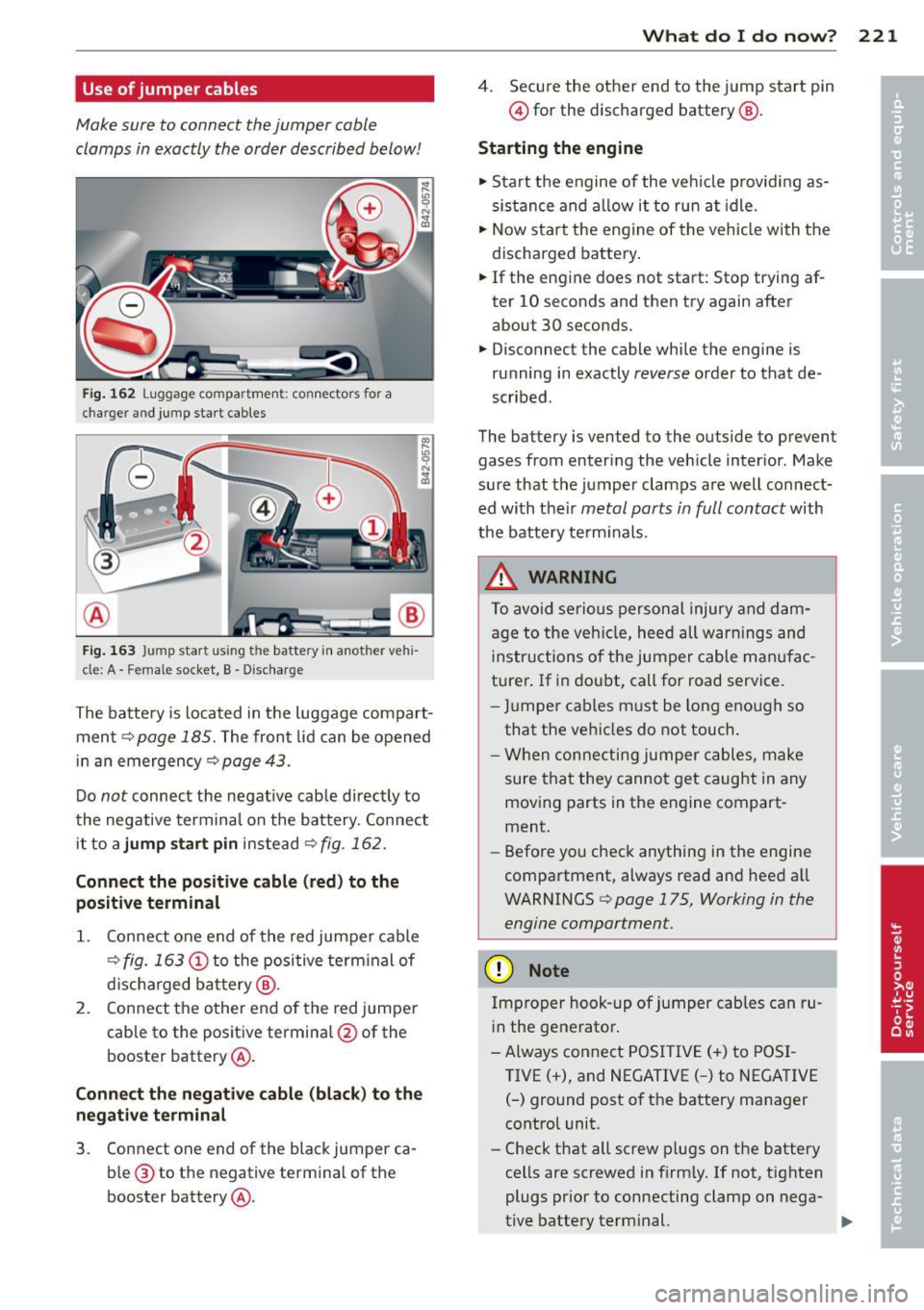
Fig . 162 Luggage co m pa rtme nt: connec tor s for a
ch arge r and jump start cab les
F ig . 163 Ju m p sta rt usin g t he batte ry in a not her ve hi
cl e: A -Fem ale socket , B · Dis charge
The batte ry is located in the luggage compart
ment ¢
page 185. The front lid can be opened
in an emergency
C? page 43 .
Do not connect the negat ive cable directly to
the negative termina l on the battery. Connect
it to a
j u mp start pin instead ¢ fig. 162.
Connect the posi tive cable (red) to the
posit ive t ermin al
1. Connect one end of the red jumper cable
¢
fig. 163 (D to the positive te rm inal of
d ischarged battery @.
2. Connect the other end of the red jumper
cable to the positive termina l@ of the
booster battery @.
Conn ect the negat ive cable (black ) to the
n egati ve ter minal
3. Connect one end of the black jumper ca
b le @ to the negative terminal of the
booster battery @.
What do I d o now ? 221
4. Secure the other end to the jump start pin
@for the discharged battery @.
Starting the engine
~ Start the engine of the veh icle providing as
sistance and al low it to run at idle.
~ Now sta rt the engine of the vehicle with the
discharged battery .
~ If the engine does not start: Stop trying af
ter 10 seconds and then try again after
about 30 seconds.
~ Disconnect the cable while the engine is
running in exactly
reverse order to that de
scribed .
The ba ttery is ven ted to the ou tside to prevent
gases from entering the vehicle interior . Make
sure that the jumper clamps are well connect
ed with their
metal parts in full contact with
the battery term inals .
.&, WARNING
To avoid serious personal injury and dam
age to the veh icle, heed all warnings and
instructions o f the jumper cable manufac
turer . If in doubt, call for road service.
- Ju mper cables m ust be long enough so
that the vehicles do not touch.
- When connecting jumper cables, make
sure that they cannot get caught in any
mov ing parts in the engine compart
ment.
- Before you check anything in the engine
compartment, always read and heed a ll
WARNINGS ¢
page 175, Working in the
engine compar tment.
(D Note
Improper hook-up of jumper cables can ru
in the generator .
- Always connect POSITIVE(+) to POSI
TIVE(+), and NEGATIVE( -) to NEGATIVE
( - ) ground post of the battery manager
control unit.
- Check that all screw p lugs on the battery
cells are screwed in firm ly. If not, tighten
plugs prior to connecting clamp on nega-
-
tive battery terminal. .,..