steering wheel AUDI R8 SPYDER 2011 Owner's Manual
[x] Cancel search | Manufacturer: AUDI, Model Year: 2011, Model line: R8 SPYDER, Model: AUDI R8 SPYDER 2011Pages: 244, PDF Size: 59.74 MB
Page 141 of 244
A WARNING ,~
If, in exceptional circumstances, you must
install a forward-facing child restraint on
the front passenger's seat:
- Always make sure the forward-facing
seat has been designed and certified by
its manufacturer for use on a front seat
with a passenger front and side airbag.
-Always follow the manufacturer's in
structions provided with the child safety
seat or carrier.
- Always move the passenger seat into its
rearmost position in the seat's fore and
aft adjustment range, as far away from
the airbag as possible before installing
the child restraint. The backrest must be
adjusted to an upright position.
- Always make sure that the
PASSENGER
AIR BAG OFF light comes on and stays
on all the time whenever the ignition is
switched on.
Advanced front airbag system and children
Your vehicle is equipped with an "Advanced
Airbag System" in compliance with United
States Federal Motor Vehicle Safety Standard
(FMVSS) 208 as applicable at the time your
vehicle was manufactured.
The Advanced Airbag system in your vehicle
has been certified to meet the "low-risk" re
quirements for 3- and 6- year-old children on
the passenger side and small adults on the
driver side. The low risk deployment criteria
are intended to reduce the risk of injury
through interaction with the airbag that can
occur, for example, by being too close to the
steering wheel and instrument panel when
the airbag inflates. In addition, the system has been certified to comply with the "sup
pression" requirements of the Safety Stand
ard, to turn
off the front airbag for infants up
to 12 months who are restrained on the front
passenger seat in child restraints that are list
ed in the Standard.
Child Safety 139
Even though your vehicle is equipped with an
Advanced Airbag system, a child should al
ways ride in the seat properly restrained for
its age and si ze. The airbag on the passenger
side makes the front seat a potentially dan
gerous place for a child to ride . The front seat
is not the safest place for a child in a forward
facing child safety seat . It can be a very dan
gerous place for an infant or a larger child in a
rearward-facing seat.
Advanced Airbags and the weight
sensing mat in the front seat
The Advanced Airbag System in your vehicle detects the presence of an infant or child in a
child restraint on the front passenger seat us
ing the weight -sensing mat in the seat cush
ion and the sensor below the safety belt latch
on the front passenger seat that measures the
tension on the safety belt.
The weight -sensing mat measures total
weight of the child and the child safety seat
and a child blanket on the front passenger
seat. The weight on the front passenger seat
is related to the design of the child restraint
and its "footprint", the size and shape of the
bottom of the child restraint as it sits on the
seat. The weight of a child restraint and its
"footprint" vary for different kinds of child re
straints and for the different models of the
same kind of child restraint offered by child
restraint manufacturers .
The weight ranges for the individual types,
makes and models of child restraints that the
NHTSA has specified in the Safety Standard
together with the weight ranges of typical in
fants and typical 1 year-old child have been
stored in the control unit of the Advanced Air
bag System. When a child restraint is being
used on the front passenger seat with a typi
cal 1 year-old child, the Advanced Airbag Sys
tem compares the weight measured by the
weight sensing mat with the information stor
ed in the electronic control unit.
The electronic control unit also registers the
tension on the front passenger safety belt. ..,. •
•
Page 152 of 244
150 Intelligent te chn olog y
Intelligent technology
Notice about data
recorded by vehicle
control modules
Your veh icle is not equipped with an Event Da
ta Recorder (EDR), installed by some manu
facture rs fo r the express p urpose o f capturing
data for retrieval after an accident or cras h
event. EDR's are sometimes called "crash re
corders".
Some state laws restrict the retrieval or down loading of data stored by EDR 's that were in
stalled in a vehicle for the express purpose of retrieving data after an accident or crash
event without the owner's consent.
A lthough yo ur vehicle is not equ ipped wit h an
EDR, it is equipped with a number of elect ron
ic control modules for various v ehicl e systems
such as, for examp le, eng ine function, emis
sion control, as well as for the airbags and
sa fety belts .
These electron ic co ntrol modules also record
vehicle-re lated data du ring norma l vehicle op
er ation for diagno stic and repa ir purposes .
T he recording capacity of the elec tronic con
trol modules is limited to data (no sound is re
corded) and only a small amount of data is ac
tually recorded ove r a ve ry limited pe riod of
time and stored when a system fault or other condition is sensed by a cont ro l u nit. Some of
the data t hen stored may re late to vehicle
speed, direction, braking as we ll as restraint
syst em use and performanc e in the event of a
c rash or other condition. Stored data can only
be read and downloaded w ith special equip
ment .
Electronic Stabilization
Program (ESP)
The Electronic Stabilization Program increas
es driving stability .
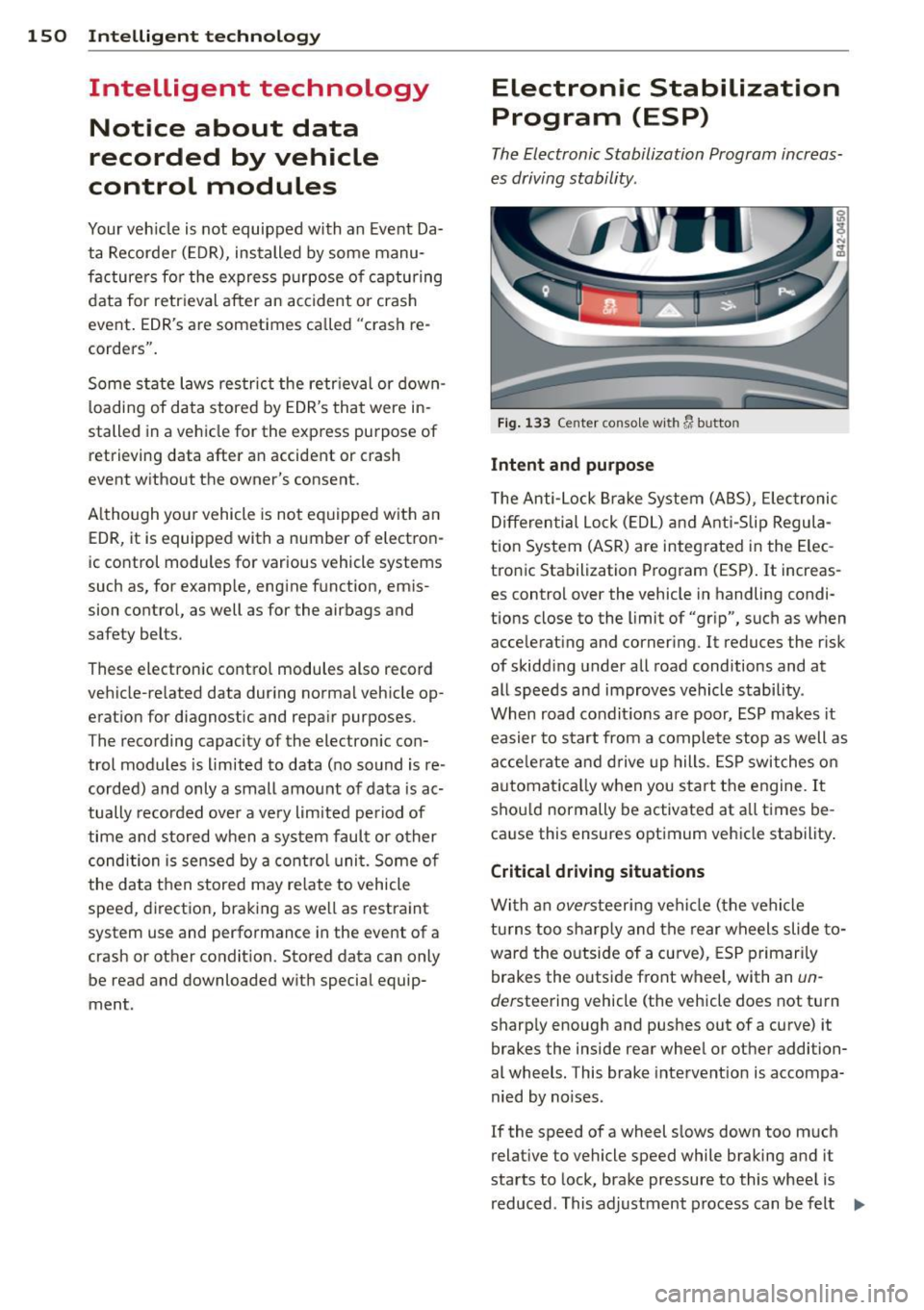
Fig . 1 33 Ce nt er conso le wi th~ bu tto n
Intent and purpose
T he Anti-Lock Brake System (ABS), Elec tronic
D ifferential Lock (EDL) a nd Anti-Slip Regula
tion System (ASR) are integrated i n the Elec
tronic Stabilization Program (ES P).
It increas
es control over the vehicle in handling condi
tions close to the limit of "grip", such as when
acce lerat ing and cornering .
It reduces the r isk
of skidd ing under all road conditions and at
all speeds and improves vehicle stability .
When road condit ions are poor, ES P makes it
easier to start from a complete stop as well as
acce le rate a nd d rive up hills . E S P s witches o n
automatica lly when you start the engine. It
shou ld normally be activated at a ll t imes be
cause this ensures optimum veh icle stability .
Critical driving situations
Wi th an oversteering vehi cle ( the vehicle
tu rns too sharply and the rear wheels slide to
ward the o utside of a cu rve), ESP primari ly
brakes the o utside front wheel, with an
un
dersteering vehicle (the vehicle does not turn
sharp ly enough and pushes out of a curve) it
brakes the inside rear whee l or other addition
al wheels. This brake inte rvent ion is accompa
nied by noises .
If the speed of a wheel s lows down too m uch
rela tive to vehicle speed while braking and i t
starts to lock, brake pressure to this whee l is
reduced . This adjustment process can be felt ..,.
Page 156 of 244
154 Intelligent technology
Other road users must not be put at risk -
you may cause an accident!
- Before descending a steep grade, reduce
speed and shift transmission into a lower
gear or lower driving position . Do not
ride the brakes or hold the pedal down
too long or too often. This could cause
the brakes to get hot and diminish brak ing efficiency .
- Do not "ride the brakes" by resting your
foot on the pedal when you do not intend
to brake . This may cause the brakes to
overheat, premature wear and increased
stopping distance.
- Under certain climatic and operating
conditions such as passing through wa
ter, driving in heavy rain or after washing
the vehicle, the effectiveness of the
brakes can be reduced. In winter, ice can
accumulate on the brake pads, linings,
discs and drums. Cautiously apply brakes
for a test . Brakes will dry and ice coat
ings will be cleaned off after a few cau
tious brake applications .
- Driving for an extended period of time on
salt-covered roads without using your
brakes can also affect braking efficiency .
Clean off accumulated salt coating from
brake discs and pads with a few cautious
brake applications.
- If you damage the front spoiler, or if you
install a different spoiler, be sure the air
flow to the front brakes is not obstruct
ed. Otherwise the brake system could
overheat reducing the effectiveness of
the entire brake system.
- Failure of one brake circuit will impair
braking capability, resulting in increased
stopping distance. Avoid driving the vehi
cle and have it towed to the nearest au
thorized Audi dealer or qualified work
shop.
- Never let the vehicle roll to a stop with
the engine shut off .
- If the brake booster is not working, for
example when towing your vehicle, or because the brake booster has somehow
been damaged, the brake pedal must be pressed considerably harder to make up
for the lack of booster assistance.
Power steering
When the engine is running , power steering
makes i t easier for the driver to steer.
Power steering helps the driver steer the vehi
cle with little physical effort.
If the engine is not running, the power steer
ing system is also not working . In this case ,
you will find it extremely difficult to turn the
steering wheel.
If you turn the steering fully to the left or
right when the vehicle is stationary, you place
a very heavy load on the power steering sys
tem. Turning the steering wheel fully to the left or right will cause noise in the system. It
also reduces engine idle speed.
(D Note
Do not hold the steering turned fully to
the left or right for more than 10 seconds
when the engine is running . There is a risk
of damage to the power steering system .
(D Tips
-In the event of a power steering system
failure, or if the engine is not running
(while being towed), you will still be able
to steer the vehicle. However, you will re
quire more effort to do so .
- If the power steering system has a leak
or is defective, you should immediately
contact a qualified workshop .
- The power steering system requires a
special hydraulic fluid. The power steer
ing fluid reservoir is located in the en
gine compartment. The correct hydraulic
fluid level is important for proper opera
tion of the power steering system. The
power steering fluid level is checked ac
cording to the Audi maintenance service
schedule.
Page 200 of 244
198 Tires and wheels
cargo and lugg age load ca
pacity is 650 lb s. (1400-750
(5
X 150) = 650 lb s.)
5. Determin e the combined
weight of luggage and cargo
being loaded on the vehicle .
That weight may not safely exceed the a vailable cargo
and luggage load capacity
c alculated in Step
4.
6. If your vehicle will be towing
a trailer , load from your trail
er w ill be tran sferred to your
vehi cle . Consult this manual
to determine how thi s re
duces the available cargo
and luggage load capacity of
your vehicle.
.,.Che ck the tire sidewall
( ¢ page 199 , fig. 153) to de
termine the designated load rating for a specific tire.
Tire service life
The service life of tires depends on a lot of
diff erent things i ncluding prop er installation
and balancing, correct tire pressure and driv ·
ing s tyle.
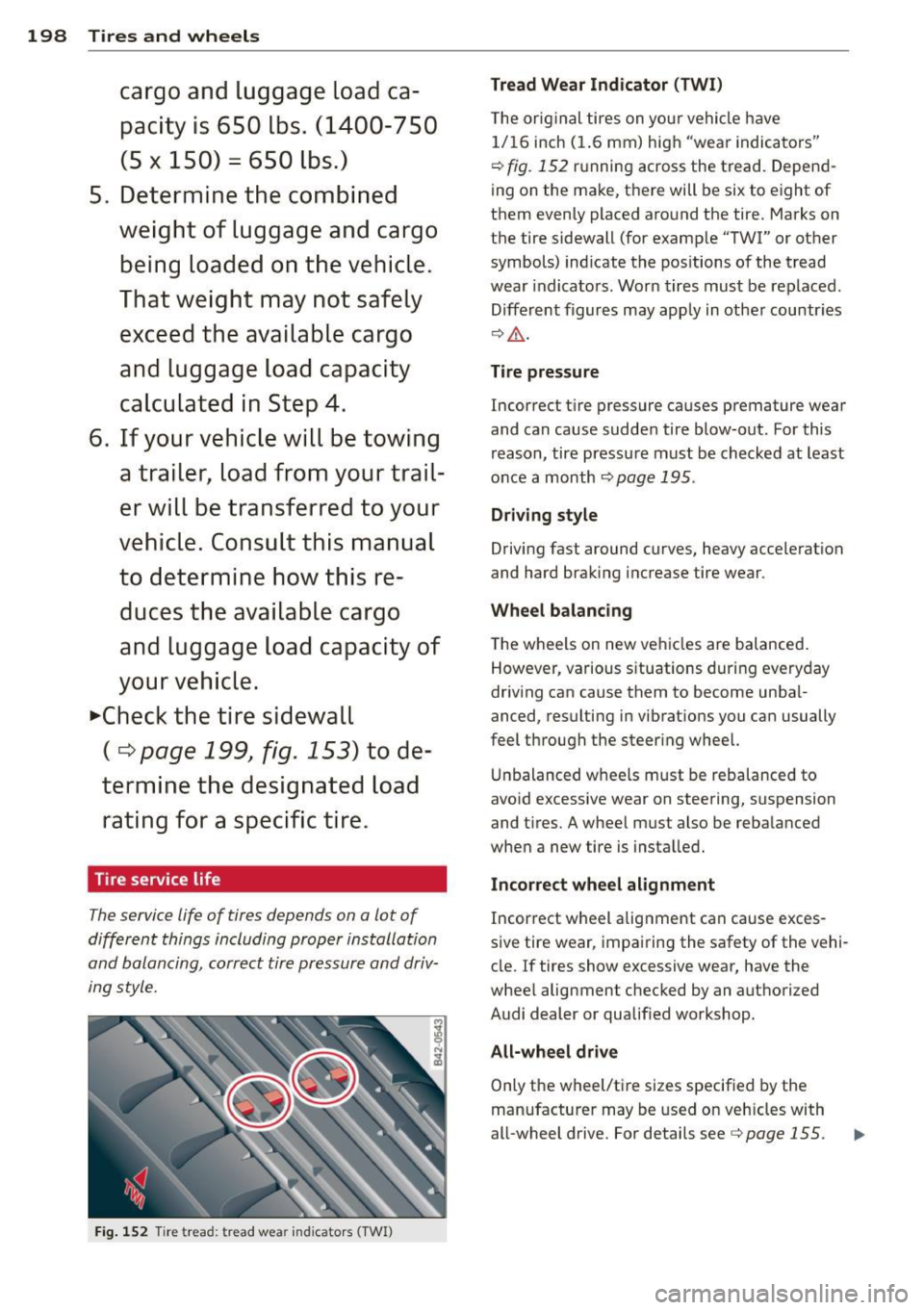
Fig. 152 T ire tread: trea d wea r ind icators (TWI)
Tread Wear Indicator (TWI)
The orig in al tires on yo ur vehi cle ha ve
1/ 16 inch ( 1.6 mm) hig h "wear indica tors"
¢ fig . 152 ru nning acro ss the tread . Depend·
ing on the ma ke , t here will be six to e ight of
them even ly placed aro und the tire. Marks on
t he tire sidewall (for example "TWI" or ot her
symbols) ind icate the pos itions of the tread
wea r indica to rs. Wor n tir es must be rep laced .
Differ ent figures may apply in othe r countries
¢ .&_ .
Tire pressure
Incor rect t ire pressure causes premature wea r
and can cause sudde n tire blow-out . For this
reason, tire pressu re must be checked at least
o nce a month
¢ page 195.
Driving style
Driving fast around c urves, heavy accele rat ion
and hard braking increase tire wear .
Wheel balancing
The wheels on new ve hicles are balance d.
However, va rious s ituations dur ing everyday
driv ing can cause them to become unbal·
anced, resulting in vib rations you can usually
feel t hrough the steer ing whee l.
Unb alanced w hee ls m ust be rebalance d to
avo id excessive wear on steering, suspension
and ti res. A whee l m ust also be reba lanced
whe n a new tire is insta lled.
Incorrect wheel alignment
Incor rect wheel alig nment can cause exces
s ive tire wear , impa iring the safety of the vehi
cle.
If tires show excessive wear , have the
w hee l alignment chec ked by an authoriz ed
Audi deal er or qualified wo rksh op.
All-wheel drive
Only the wheel/ti re sizes specif ied by the
manufacture r may be used on veh icles with
all-wheel drive. For detai ls see ¢
page 155.
Page 232 of 244

230 Index
A
A/C operation ................. .... .. 75
ABS
refer to Anti-Lock Brake System . .. .. . 150
A cces sories . . . . . . . . . . . . . . . . . . . . . . . . 211
Active rollover protection system . .. ... 107
Retracting rollover protection ... .. ... 107
Adding
Eng ine coolant ... ..... ... .. .. .. .. .
183
Eng ine oil .. .. . ... ... .. .. .. .. .. .. . 180
Addit ional accessories .. .... .... .. .. . 211
Additives .................. ... .... . 180
Adjustable steering column ...... .. .... 77
Adju sting front sea ts ....... .. .. .. .. . .
66
Advanced Airbag System
Children ... ............... .. .... .
139
Compon ents ................ ..... . 124
Front ai rbags . . . . . . . . . . . . . . . . . . . . . 122
How the component s work togethe r .. 125
Mon ito ring . .... .. ... .. .. .. .. .. .. . 128
Weight-sen sing mat .. .... .. .. .. .. . 139
Airbag system . . . . . . . . . . . . . . . . . 117, 136
Car e ... .. .. ................ ..... . 130
Child restraints .. .. ... ...... .. .. .. .
140
Components (fron t air bags) .. .. .... . 124
Danger of fitting a child safety seat on
the front passenger seat . . . . . . . . . . . .
119
Disposal ............. ........ .... 130
Front airbags ... .. ... .... .. .. .. .. . 121
H ow do the front airbags work? . .... . 126
How many airbags does my vehicle
have? .................... .. .... .
124
Important safety instructions on the
knee airbag system ....... .. .. .. .. .
134
Important things to know . . . . . . . . . . . 117
Indica tor ligh t .... .... ..... .. .. .. . 128
Knee airbags ... ... .... ..... .. .. .. . 132
Monitoring ................. ... ... 128
PASSENGER AIR BAG OFF light . . . . . . . 128
Service .. ...... .. ... .... .. .. .. .. . 130
Side airbags ..... .. .. .... .. .. .. .. . 135
Warning/indicator light ..... ... .... .. 17
When must the system be inspected? . 128
Air cond itioning
A/C operation . .... .... ..... .. .. .. .. 75
A ir distribution .... ....... .. .. .. .. ..
74
Air recirculation mode ......... .... .. 75 Automatic mode
.............. .... . 75
Controls . . . . . . . . . . . . . . . . . . . . . . . . . .
72
Defrost ..... .. .. .. .............. .. 75
E conomi cal use .. ....... ..... ..... .
76
Fan .. .... .. .. .. ...... ... .... .... . 74
Rear window defogger . . . . . . . . . . . . . . . 76
Switching on and off .... ......... .. . 74
Temperature ... ............ ........ 73
Air d istribution . . . . . . . . . . . . . . . . . . . . . . 7 4
Air recirculation mode Air condit ioning . ................. .. 75
All-wheel drive .. ............ .......
155
Winter tires . .. .. ... .. ..... ... .... 203
Anti-free ze
refer to Engine cool ant system ... .. .. 181
Anti-Lock Brake System .......... .... 150
Warning/indicator light ............ .. 18
Anti-Slip Regulation System .. .... .... 150
Anti- theft alarm system ... .... ... .... . 43
Anti-theft whee l bolts .............. . 216
Ashtray ........... .... ........... .. 69
ASR
refer to An ti-Slip Regulation System .. 150
Asterisk .... .. .. .. .. ................ . 6
Audi magnetic ride ................. ..
82
Description . . . . . . . . . . . . . . . . . . . . . . . . 82
Wa rning/ind icator light ... .. .. .. .. .. . 15
Aud i Servi ce Repa ir Manuals and Li te ra-
ture ........ ... .. .. ... ....... .... .
209
Automated manua l transmission
ref er to R tronic . ................. .. 85
Automat ic be lt retractor ...... .. ... .. 112
Autom atic car w ash
refer to Washing ........... ....... 16 1
Automatic headlight ................. 55
Automat ic headl ight control ...... .. .. .
62
Automatic headlight s
Defective . . . . . . . . . . . . . . . . . . . . . . . . . 3 5
Auto Safety Hotline ............. ....
105
Average fuel mileage . . . . . . . . . . . . . . . . . 23
Aver age speed . .. .. .. ..... .. .. .. .... . 23
B
Battery ..... ..... .. ............... 184
Cha rging .. .. .. .. ...... .. .. ... .... 186
Checking . . . . . . . . . . . . . . . . . . . . . . . . . 184
Page 238 of 244
236 Index
Parking systemadvanced
Switching on and
off ....... .... ... .. 91
Parts replacement ........... .. .... . 211
PASSENGER AIR BAG OFF light . . . . . . . . 128
Passive safety system . . . . . . . . . . . . . . . . . 99
Pedals .. .... .......... ...... ... .. . 104
Phys ica l pr inciples of a frontal collis ion . 111
Polishing .. .. ............. .. .. .. .. . 161
Pollen filter . . . . . . . . . . . . . . . . . . . . . . . . . 73
Power locking system ........ ... .... .. 39
Emergency locking .................. 42
Front lid . .... ........... .... .... .. 42
Locking .. .. ............. .. .. .. ... . 40
Locking and unlocking the vehicle from
inside ... .. ................ ... .. .. 41
Opening/clos ing the windows . .. .. .. .. 40
Sw itches . .. .. . .......... .. .. .... .. 41
Unlock ing .. .. . .......... .. .. .. .. .. 40
Power seats . . . . . . . . . . . . . . . . . . . . . . . . . 67
Power steering ................ .... . 1S4
Power windows ............. ... .. ... . 44
Power locking system . . . . . . . . . . . . . . . 40
Reactivating the system . .. .. .. .. .. .. 45
Pregnant women Special considerations when wearing a
safety belt . . . . . . . . . . . . . . . . . . . . . . . 114
Proper safety belt position . . . . . . . . . . . . 113
Proper seating pos ition
Driver ..................... ..... . 100
Fr ont passenger .............. .... . 101
Q
Quartz clock . . . . . . . . . . . . . . . . . . . . . . . . 11
R
Ra in sensor ............... .. .. .... .. S9
Defective .... ........... .. .. .. .. .. 35
Rear light Defective . . . . . . . . . . . . . . . . . . . . . . . . . 3 5
Rear spoiler . . . . . . . . . . . . . . . . . . . . . . . . 152
Warning/indicator light ...... .. .. .. . . 16
Rear view camera Parallel Parking .............. .... .. 92
Reverse parking .................. .. 92
Rear window . ... ....... ... .. .. .... .. 48 Rear
window defogger . . . . . . . . . . . . . . . . 76
Refueling ...... ... .. .............. . 172
Remote contro l
refer to Remote master key . . . . . . . . . . . 38
Remote contro l garage door opener
(Homelink ®) . ... .. ................ .. 95
Remote master key ...... ........... .. 37
Battery replacement . . . . . . . . . . . . 37, 38
Check light . . . . . . . . . . . . . . . . . . . . . . . . 3 7
Resetting the remote control . . . . . . . . . 38
Unlocking and locking .............. . 40
Repair manuals .. .. .......... ...... . 209
Rep lacement parts . ... .......... .. .. 211
Replacing Bu lbs ..... .... .. .. .............. . 224
Fuses ......... .. .. .............. . 223
Rims ......... .. ............. .... 199
Tires and wheels . ... .......... .. .. 200
Wheel rims .... .. ............. .... 201
Reporting Safety Defects . . . . . . . . 105, 106
Reset button . . . . . . . . . . . . . . . . . . . . . . . . 12
Retractor ... .... .. ............. .... 112
Reverse gear R tronic ........................... 85
Rims Replac ing . . . . . . . . . . . . . . . . . . . 199, 201
Rollbar
refer to Active rollover protection sys-
tem .. .. .. .... .. .. ...... .... ..... 107
R tronic ... ..... .. .. .............. .. 85
Description .... .. ................ .. 85
Gearbox malfunction ............. .. . 36
Kick-down . .... .. ............. .... . 87
Launch Control Program . .... ... .. .. . 87
Manual operation . .................. 86
Steering wheel with shift paddles ..... . 87
s
SAFE 12,38
Safe driving habits ................. .. 99
Safety belt position Safety belts worn by pregnant women 114
Safety bel t pretensione r
Service and disposal .............. . llS