steering wheel AUDI R8 SPYDER 2014 Owner's Manual
[x] Cancel search | Manufacturer: AUDI, Model Year: 2014, Model line: R8 SPYDER, Model: AUDI R8 SPYDER 2014Pages: 244, PDF Size: 61.06 MB
Page 130 of 244

128 Airbag system
Important safety instructions on the
knee airbag system
Airbags are only supplemental restraints. Al
ways wear safety belts correctly and ride in a
proper seating position.
There is a lot that you and your passenger
must know and do to help the safety belts and
airbags to provide supplemental protection.
.&_ WARNING
An inflating knee airbag can cause serious injury. Wearing safety belts incorrectly and
improper seating positions increase the
risk of serious personal injury and death
whenever a vehicle is being used.
-
- The knee airbag system cannot protect
you properly if you are seated too close
to any of the airbag locations. When ad
justing their seat positions, it is impor
tant that both the driver and the front
passenger keep their upper bodies and
knees at the following min imum safe
distances:
- at least 10 inches (25 cm) between the
chest and the steering wheel/instru
ment panel.
- at least 4 inches (10 cm) between the
knees and the lower part of the instru
ment panel.
- The risk of personal injury increases if
you lean forward or to the side, or if the
seat is improperly positioned and you are
not wearing your safety belt. The risk in
creases even more should the airbag de
ploy.
- Always make sure that the knee airbag
can inflate without interference. Objects
between you and the airbag can increase
the risk of injury in an accident by inter
fering with the way the airbag dep loys or
by being pushed into you as the airbag
deploys .
- Never let anybody, especially children
or animals in the footwell in front of
the passenger seat.
If the airbag de- ploys, this can result in serious or fatal
injuries.
- No objects of any kind should be car
ried in the footwell area in front of the
driver's or passenger's seat. Bulky ob
jects (shopping bags, for example) can
hamper or prevent proper deployment
of the airbag . Small objects can be
thrown through the vehicle if the air bag deploys and injure you or your pas
sengers.
- Make sure there are no cracks, deep
scratches or other damage in the area of
the instrument panel where the knee air
bags are located.
- If children are incorrectly seated, their
risk of injury increases in a collision
~page 132, Child Safety.
Side airbags
Description of side airbags
The airbag system can provide supplemental
protection to properly restrained front seat
occupants.
Fig. 123 S ide a irbag location in the driver's seat
The side airbags are located in the sides of the
front seat backrests
q fig. 123 facing the
doors. They are identified by the word "AIR
BAG".
Th e side airbag system basically consists of:
-the electronic control module and external
side impact sensors
- the two side airbags located in the sides of
the front backrests
- the airbag warning light in the instrument
cluster .
Page 135 of 244

A WARNING
-=
If, in exceptional circumstances, you must
install a forward-facing child restraint on
the front passenger's seat:
- Always make sure the forward-facing
seat has been designed and certified by
its manufacturer for use on a front seat
with a passenger front and side airbag.
-Always follow the manufacturer's in
structions provided with the child safety
seat or carrier.
- Always move the passenger seat into its
rearmost position in the seat's fore and
aft adjustment range, as far away from
the airbag as possible before installing
the child restraint. The backrest must be
adjusted to an upright position.
- Always make sure that the
PASSENGER
AIR BAG OFF light comes on and stays
on all the time whenever the ignition is
switched on.
(D Tips
Always replace child restraints that were
installed in a vehicle during a crash. Dam
age to a child restraint that is not visible
could cause it to fail in another collision
situation.
Advanced front airbag system and children
Your vehicle is equipped with an "Advanced
Airbag System" in compliance with United
States Federal Motor Vehicle Safety Standard
(FMVSS) 208 as applicable at the time your
vehicle was manufactured.
The Advanced Airbag system in your vehicle
has been certified to meet the "low-risk " re
quirements for 3- and 6- year-old children on
the passenger side and small adults on the
driver side. The low risk deployment criteria
are intended to reduce the risk of injury
through interaction with the airbag that can
occur, for example, by being too close to the
steering wheel and instrument panel when
the airbag inflates. In addition, the system
Child Safety 133
has been certified to comply with the "sup
pression" requirements of the Safety Stand
ard, to turn off the front airbag for infants up
to 12 months who are restrained on the front passenger seat in child restraints that are list
ed in the Standard .
Even though your vehicle is equipped with an
Advanced Airbag system, a child should al
ways ride in the seat properly restrained for
its age and size . The airbag on the passenger
side makes the front seat a potentially dan
gerous place for a child to ride. The front seat
is not the safest place for a child in a forward
facing child safety seat .
It can be a very dan
gerous place for an infant or a larger child in a
rearward-facing seat.
Advanced Airbags and the weight
sensing mat in the front seat
The Advanced Airbag System in your vehicle
detects the presence of an infant or child in a
child restraint on the front passenger seat us
ing the weight-sensing mat in the seat cush
ion and the sensor below the safety belt latch
on the front passenger seat that measures the
tension on the safety belt.
The weight-sensing mat measures total
weight of the child and the child safety seat
and a child blanket on the front passenger
seat. The weight on the front passenger seat
is related to the design of the child restraint
and its "footprint", the size and shape of the
bottom of the child restraint as it sits on the
seat. The weight of a child restraint and its
"footprint" vary for different kinds of child re
straints and for the different models of the
same kind of child restraint offered by child restraint manufacturers.
The weight ranges for the individual types,
makes and models of child restraints that the
NHTSA has specified in the Safety Standard
together with the weight ranges of typical in
fants and typical 1 year-old child have been
stored in the control unit of the Advanced Air
bag System. When a child restraint is being
used on the front passenger seat with a
ll-
•
•
Page 151 of 244
Power steering
When the engine is running, power steering
makes it easier for the driver to steer.
Power steering he lps the driver steer the vehi
cle with little physical effort .
If the engine is not runn ing, the power steer
ing system is also not wo rking. In this case,
you will find it extreme ly difficult to turn the
steering whee l.
If you t urn t he steering fully to the le ft or
right when the vehicle is stationary, you place
a very heavy load on t he power steering sys
tem . T urning the steering wheel fu lly to the
left or r ight will cause noise in the system . It
a lso reduces engine idle speed.
(D Note
Do not hold the steering turned fully to
the left or right for more than 10 seconds
when t he engine is running. There is a risk
of damage to the power steeri ng system .
@ Tips
-In the event of a power steering system
failure, or if the eng ine is not running
(while being towed), you wi ll st ill be able
to stee r the ve hicle . However, you will re
quire more effort to do so .
- If the power steer ing system has a leak
or is defective, you should immed iately
contact a qualif ied wo rkshop.
- The powe r stee ring system requires a
spec ial hyd raulic f luid. The powe r stee r
i ng fl uid reservo ir is lo cated in the en
g ine compar tment . Th e cor re ct hydra ulic
f lui d leve l is important for p ro per opera
tion o f the power steering sys tem . The
power steer ing fl uid leve l is checked ac
cord ing to the Aud i maintenance service
schedule.
Dry sump Lubrication
H igh lateral and long itud inal forces affect the
engine and the vehicle d uring sporty driving.
Ory sump lubr ication ensures that your eng ine
Int ellig ent technolog y 149
is supplied wi th oi l and properly lubricated
even under these conditions .
In a "no rma l" veh icle the o il pump sends the
o il from the o il p an t o the lubr ication points in
t h e engine. The oi l then ret urns to the o il pan .
In extreme situations , the oil p ump may draw
in a ir, which results in insufficient oi l pressure.
Wi th dr y sump lubri cat ion, the o il is not in the
oi l pan (it is "dry"), but in a separate oil tank.
While one p ump supplies t he e ngine with oil ,
a second pump suctions the oil out of the en
gine and returns it to the oil tank. Because the
o il tank is tall and narrow, oil pressure is con
stant even under extreme conditions .
In add ition, the oi l pan in vehicles with dry
sump l ubrication is noticeab ly shallower. This
allows the engine to be installed lower in the
vehicle , bring ing down the center of grav ity .
T his imp roves your ve hicle's handling .
Driving with your
quattro ®
With all-wheel drive, all four wheels are driv
en.
General information
With a ll-wheel d rive, powe r is distr ib uted to
al l four wheels. This happens autom atic ally
depen ding on your d riving s tyle and the ro ad
conditions a t the time . See also ¢
page 144.
The all-whee l dr ive concept is des igned for
high eng ine power. Your veh icle is except ion
al ly powe rf ul and h as ex cellen t driving charac
teristics both under normal driving cond itions
and on snow and ice . Always read and follow
safety precaut ions ¢&. .
Winter tires
When dr iving in the win ter, yo ur vehicle wi th
a ll- wheel d rive h as an advantage, even w it h
regular tires. In winter road conditions it may
be advisable to mount winter tires (or all-sea
son tires) for improved driveability and brak
ing : these tires must be mounted on
all four
wheels . See also¢ page 203, Winter tires. .,..
•
•
Page 192 of 244
190 Tire s and wheel s
-Never mount used tires on yo ur vehicle if
yo u are not sure of their "previous histo
ry." Old used tires may have been dam
aged even though the damage cannot be
seen that can lead to sudden t ire failure
and loss of vehicle control.
- If you notice unusual vibration or if the
vehicle pulls to one side when driving, al
ways stop as soon as it is safe to do so
and check the wheels and tires for dam
age.
(D Note
Please note that summer and winter tires
are designed for the cond itions that are
Glossary of tire and loading terminology
Accessory weight
means the comb ined we ight (in excess of
those standard items which may be rep laced)
of au toma tic tra nsmission, power steer ing,
power brakes, power windows, power seats,
radio, and heater, to the extent that these
items are availab le as factory -installed equip
ment (whether installed or not) .
Aspect ratio
means the ratio of the he ight to the w idth of
the tire in percent . Numbers of 55 or lower in
dicate a low sidewall for improved steering re
sponse and better overall handling on dry pavement .
Bead
means the part of the ti re that is made of
steel wires, wrapped or reinforced by ply cords
and that is shaped to fit the rim.
Bead s eparation
means a b reakdown of the bond between
components in the bead.
Cord
means the strands forming the plies in the
tire . typ
ica l in those seasons . Audi recommends
using winter tires during the winter
months . Low temperatures signif icant ly
decrease the e lasticity of summer tires,
which affects tract ion and brak ing ability.
If summer tires are used in very co ld tem
peratures, cracks ca n form on the tread
bars, res ulting in permanent tire damage
that can cause loud driving no ise and un
balan ced t ires. Audi is not responsible for
th is type of damage .
Cold tire inflation pre ssure
means the t ire p ressure recommended by the
vehicle manufacturer fo r a tire of a des ignated
s ize that has not bee n driven for more than a
coup le of miles (k ilometers) at low speeds in
the three hour period before the tire pressure
is measured or adjusted.
Curb weight
means the we ight of a motor ve hicle w ith
standard equipment including the max imum
capacity of fuel, oil, and coolant, air condi
tioning and additional weight of optiona l
equipment.
E x tra load tire
means a t ire designed to ope rate a t higher
loads and at highe r inflation p ressu res than
the corresponding standard tire. Extra load
tires my be identified as "XL", "xl", "EXTRA
LOAD", or "RF" on the sidewall.
Gross A xle Weight Rating ("GAWR ")
means the load -carry ing capacity of a s ingle
axle system , measured at the tire-ground in
terfaces.
Gr oss Vehicle Weight Rating ("GVWR ")
means the maximum total loaded we ight of
t h e vehi cle. .,.
Page 200 of 244
198 Tires and wheels
shown on the sti cker
¢ page 193, fig. 149 .
4. The re sulting figure equals
th e available amount of car
go and luggage load capa ci
ty . For example, if the
"XXX"
amount equals 1400 lb s.
and there will be five
150
lbs . passengers in your vehi
cle , the amount of available
cargo and luggage load ca
pacity is
650 lb s. (1400-7 SO
(5
x 150) = 650 lb s.)
5. Determine the combined
weight of luggage and cargo being loaded on the vehicle .
That weight may not safely
exceed the available cargo
and luggage load capacity
calculated in Step
4.
6.
If your vehicle will be towing
a trailer, load from your trail
er will be transferred to your
vehicle. Consult this manual
to determine how this re duces the available cargo
and luggage load capacity of
your vehicle.
..,.Check the tire sidewall
(¢ page 199, fig . 152) to de
termine the designated load rating for a specific tire .
Tire service life
The service life of t ires depends on a lot of
different things including proper installation
and balancing, c orrect tire p ressur e and dr iv
ing style .
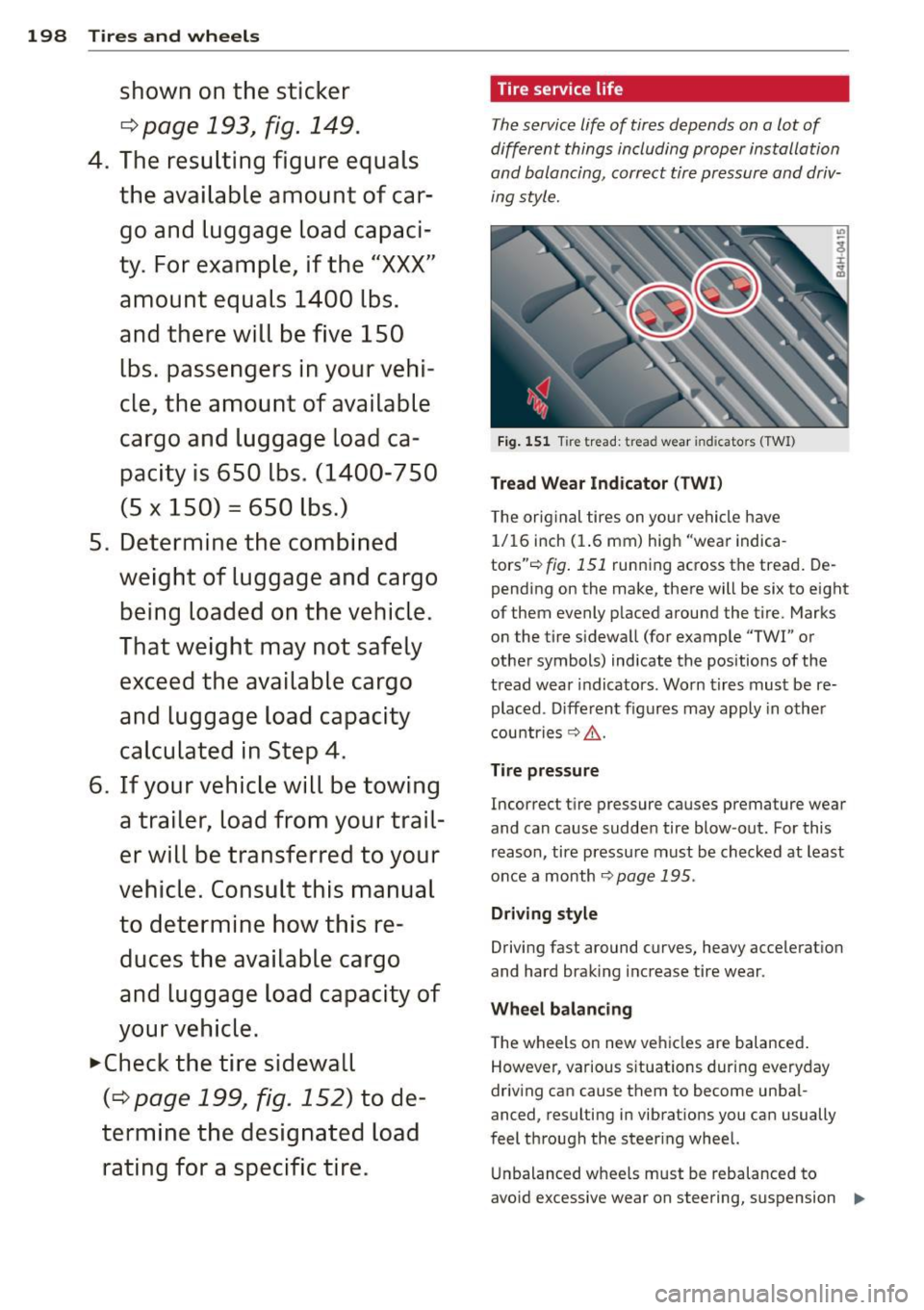
Fig. 151 Tire tread: tread wear indicators (TWI)
Tread Wear Indicator (TWI)
T he or iginal tires on your vehicl e ha ve
1/ 16 inch ( 1.6 mm) hig h "wea r indic a-
tors"<=:>
fi g. 15 1 run ning ac ross the tread . De
pend ing on the make, the re wi ll be six to eight
of them evenly p laced arou nd the ti re. Mar ks
o n the tire s idewall (for example "TWI" or
othe r symbols) ind icate the positions of the
t read wea r indicators. Worn tires mus t be re
placed. Diffe ren t fig ures may apply in oth er
co unt ries
c::> .& -
Tire pressure
Incorrect tire pressure causes premature wea r
and can cause sudd en tire blow-o ut. For this
re as on, tir e pre ssu re m ust be ch ecked at least
o nc e a month
c::>page 195.
Driving style
Driving fast ar ound c urves , heavy accel erat io n
and hard braki ng increase tire wear.
Wheel balancing
T he w heels on new ve hicles are balance d .
H oweve r, va rious s ituati ons dur ing everyday
driv ing can cause them to become unba l
anced, resulti ng i n vib rat ions y ou can usually
f eel th rough th e steer ing whee l.
Un balanced w hee ls m ust be rebalance d to
avo id excessive wear on steering , su sp ension ..,.
Page 239 of 244

Polishing .... ... .......... .. .. .. ... 156
Pollen filter . . . . . . . . . . . . . . . . . . . . . . . . . 64
P ower locking system . . . . . . . . . . . . . . . . . 3 0
Emergency locking ........ .. .. .. .. .. 33
Front lid . . . . . . . . . . . . . . . . . . . . . . . . . . 3 3
Lock ing .. ..... ....... .... ... ... ... 32
Lock ing and unlocking the vehicle from
in side ... .. .... ............. .. .. .. 3 2
Sw itches . .. .. ........... .. .. .. .... 3 2
Un loc kin g .. ............. .. .. .. .. .. 32
Un loc king and locking vehicle ... .. .. .. 31
Powe r seats . . . . . . . . . . . . . . . . . . . . . . . . . 58
Power steering . . . . . . . . . . . . . . . . . . . . . 149
P ower windows ............ .... .. .... 35
Reac tiva ting the system ... .. .. .. .. .. 36
Pregnant women Specia l cons iderations when weari ng a
safety be lt . ............. .... .. ... 108
Programming the Homelink ® universal re
mote contro l . . . . . . . . . . . . . . . . . . . . . . . . 90
Proper safety belt pos ition ... .. .. .. .. . 107
P rope r seat ing pos it ion
D river ... .. .. ............. .. .. .... 94
Fr ont passenge r .......... .. .. .. .. .. 95
Q
Quartz clock . . . . . . . . . . . . . . . . . . . . . . . . . 9
Question What happens to unbelted occupants? 104
Why safety belts? .............. ... 103
R
Rain sensor defect ive ....... .. .. .. .. .. 19
Rear light Defective .. .. .. .. .... ... .. .. .. .... 18
Rear spoiler . . . . . . . . . . . . . . . . . . . . . . . . 148
Rear view camera Parallel Parking .......... .. .. .. .. .. 87
Reverse pa rking ..... ..... .. .. .. .. .. 87
Rear view mirror . . . . . . . . . . . . . . . . . . . . . 50
Rear window . .. ........... .. .. .. .... 39
Rear window defogger . . . . . . . . . . . . . . . . 67
Refueling .... .. ... ..... ... .. .. .. ... 169
Remote control . . . . . . . . . . . . . . . . . . . . . . 32
also refer to Remote mast er key . . . . . . . 29
Inde x 237
Remote contro l garage door opener
(Homelink®) . ... .... . ... ...... ... .. . 90
Remote maste r key
B attery replacement . . . . . . . . . . . . 28, 29
Check lig ht .. .. .. ................. . 28
U nlocking and locking ... .... ... .. .. . 31
Repa ir man uals .. .. .. ............... 227
Repairs Airbag system 124
Rep lacement parts ... . .. ..... ... .. . . 229
Replacing Bu lbs ........ ... .. ..... ......... . 222
F uses ... .. .... .. .. . .............. 221
Rims ..... .. .. .. .. .. ........... .. 199
T ires and wheels ... .. .. .... ... .. .. 200
Wheel rims . ..... ... .. .. ..... ... .. 201
Repo rting Safety Defects . . . . . . . . . 99, 100
Reset button . . . . . . . . . . . . . . . . . . . . . . . . 10
Resetting remote cont ro l . . . . . . . . . . . . . . 32
Retractor ......... .. ............... 106
Reve rse gear (S tronic) . . . . . . . . . . . . . . . . 78
R ims
Rep laci ng . . . . . . . . . . . . . . . . . . . 199, 201
Rollbar
refer to Active rollover protection sys-
tem ......... ... .. ............... 101
s
SAFE 10,29
Safe driving habits ... . .. .. ..... ... .. . 93
Safety be lt pos ition ............. .... 10 7
Safety be lts wo rn by pregnan t women 108
Safety be lt p retensioner
Serv ice and d isposa l .............. . 109
Safety be lts ... .... ... .. .. ..... ... .. 106
Cleaning .. .. .. .. .. ............... 165
Danger to passengers who do not wear a
safety belt .... .. .. . .............. 104
Fastening ....... .. ..... .......... 106
Improperly worn ... . .. .... .... .. .. 108
Not wor n ... .. .. .. ............... 104
pre tensione rs .. .. .... ............. 109
S afety be lt pos ition ............ .... 107
Sa fety instr uctions . .. .. .. ..... ... .. 105
Securing child safety seats ... ... .. .. 140
•
•
Page 240 of 244
238 Index
Special considerations for pregnant
women .... ................ ..... . 108
Unfasten ing . ............. ... .... . 108
Warning/indicator light ...... .. .... . 103
Why YOU MUST wear them . .. .. .... . 103
Worn properly . . . . . . . . . . . . . . . . . . . . 105
Safety belt warning light ........ .... . . 14
Safety compliance sticker . .. .. .. .. .. . 223
Safety equipment . . . . . . . . . . . . . . . . . . . . 93
Safety features for occupant restraint and
protection . . . . . . . . . . . . . . . . . . . . . . . . . . 93
Safety guidelines
Seat adjustment . ....... .. .. .. .. .. .. 57
Safety instructions For using child safety seats ..... .. .. .
For using safety belts ..... .. .. .. .. .
Monitoring the Advanced Airbag Sys
tem
. .. .. .... ............. .. .... .
Seat adjustmen t 135
105
123
Driver 's seat .......... .... ... .. .. .. 57
Front passenger's seat . . . . . . . . . . . . . . . 58
Front seats . .............. ... .. ... . 57
H ead restraints . . . . . . . . . . . . . . . . . . . . 96
Power seats . . . . . . . . . . . . . . . . . . . . . . . 58
Safety guidelines
Seating capacity
Seating position 57
103
Driver ... .. .... ........... .. .... .. 94
Front passenger . . . . . . . . . . . . . . . . . . . . 95
Incorrect seat position . . . . . . . . . . . . . . . 97
Seats Number of seats 103
Selector lever (S tronic)
Positions . . . . . . . . . . . . . . . . . . . . . . . . . . 78
Service and disposal Safety belt pretens ioner . ........ .. . 109
Service interval display ....... ... .. .. .. 24
Service position for w indshield w ipers .. . 53
Se t menu .. .. ... .. ..... ... .... .. .. .. 24
Setting the time ............ ... .... .. . 9
Shift paddles (S tronic) .......... .. .... 81
Shutting down vehicle ...... .... .... . 154
Side airbags
Description ............... ... .... . 128
How they work . . . . . . . . . . . . . . . . . . . . 130
Side marker lights ......... .. .. .. .. .. 46
Snow chains 204 Socket
......... .. ............. ..... 60
Sound system display . . . . . . . . . . . . . . . . . 20
Sources of information about child re-
straints and their use ............ .... 143
Speedometer . . . . . . . . . . . . . . . . . . . . . . . 10
Speed rating letter code ........... ... 200
Speed warning system . . . . . . . . . . . . . . . . 72
Spoiler ... .. .. .. .. ............. .. .. 148
Sport function (S tronic) ...... ... .. .. . 78
Sport mode ..... .. .. .............. . 146
Starting on hills
Hill hold assist . .. ............. .... . 71
Starting the engine . . . . . . . . . . . . . . 68, 69
What should I do if the engine does not
start? ...... .. .. .. ..... ...... .. .. . 69
Steering co lumn
Adjusting . . . . . . . . . . . . . . . . . . . . . . . . . 68
Locking the steering . . . . . . . . . . . . . . . . 68
Steering wheel
Shift paddles (S tronic) .............. 81
Steps for determin ing correct load limit . 197
Stopping the engine ............. .... . 70
Storage ... ..... .. .. .............. .. 60
S tronic (Automatic transm ission) . . . . . . . 78
Automatic shift ing ................ .. 80
Kick-down . . . . . . . . . . . . . . . . . . . . . . . . . 80
Launch control program ........ .... . 80
Manual shifting . ................. .. 79
Parking ........................... 79
Sport function ... ................ .. 78
Steering wheel with shift paddles . .. .. . 81
Sun visors .. .. .. .. ............. .. .. . 51
Symbols Red symbols in the center display ..... . 11
Yellow symbols in the center display .. . 12
also refer to Warning/Indicator lights . . 11
T
Tachometer . . . . . . . . . . . . . . . . . . . . . . . . . . 9
Tank flap Unlocking the fuel filler flap by hand .. 170
T echnical modifications .......... .. .. 229
Temperature .. .. .. .. ........ ...... .. 64
Tightening wheel bolts ............ ... 214
T ire mobility system ... .......... .. .. 210
Tire pressure .... .. ............. .... 195