light AUDI R8 SPYDER 2015 Manual Online
[x] Cancel search | Manufacturer: AUDI, Model Year: 2015, Model line: R8 SPYDER, Model: AUDI R8 SPYDER 2015Pages: 232, PDF Size: 58.36 MB
Page 151 of 232
..... N
r-N "': ..... \!) 1.1'1
N 1.1'1 .....
-Never use gasoline, stain remover, ben
zene, paint thinner or other solvents to re
move.
-Windows
- Remove snow and ice on windows and ex-
terior mirrors with a plastic scraper. To avoid scratches, move the scraper only in
one direction and not back and forth.
- Never remove snow or ice from windows
and mirrors using warm or hot water be
cause this could cause cracks to form.
- To avoid damage to the rear window de
fogger, do not apply any stickers on the
heating wires on the inside of the window.
-Decorative parts/trim
- Never use chrome care or cleaning prod-
ucts.
-Paint
-To reduce the risk of scratches, the vehicle
must be free of dirt and dust before pol
ishing or waxing.
- To prevent paint damage, do not polish or
wax the vehicle in direct sunlight.
- To reduce the risk of paint damage, do not
polish away rust film.
- Remove cosmetics and sunblock immedi
atedly. Otherwise, the paint could be dam
aged.
-Trim
- To reduce the risk of damage, do not treat
the trim around the panorama sunroof
with paint polish.
- Decorative decals
-To reduce the risk of damage, do not use
any rough powder or abrasive cleaning
products.
- To reduce the risk of damage, do not pol
ish decorative parts that have a matte fin
ish.
- Displays
-To avoid scratches, do not use dry cleaning
methods on displays.
- Controls
- Make sure that no fluids enter the con-
trols, because this could cause damage.
- Safety belts
Vehicle care and cleaning
- Do not remove the safety belts to clean
them.
- Never clean safety belts or their compo
nents chemically or with corrosive fluids
or solvents and never allow sharp objects
to come into contact with the safety belts .
This could cause damage to the belt web bing .
- If there is damage to the webbing, the
connections, the retractors or the buckles,
have them replaced by an authorized Audi
dealer or a qualified workshop.
- Textiles/Vinyl/ Alcantara
- Never treat Vinyl/Alcantara with leather
care products, solvents, floor polish, shoe
polish, stain remover or similar products.
- To avoid damage , have stubborn stains re
moved by an authorized Audi dealer or a
qualified workshop.
- Never use steam cleaners, brushes, hard
sponges, etc. when cleaning.
- Do not turn on the seat heating* to dry
the seat.
- Objects with sharp edges such as zippers,
rivets on clothing or belts can cause dam
age to the surface.
- Open hook and loop fasteners, for exam
ple on clothing, can damage seat covers.
Make sure hook and loop fasteners are
closed.
- Natural leather
- Never treat leather with solvents, floor
polish, shoe polish, stain remover or simi
lar products .
- Objects with sharp edges such as zippers,
rivets on clothing or belts can cause dam
age to the surface .
- Never use steam cleaners, brushes, hard
sponges, etc. when cleaning .
- Do not turn on the seat heating* to dry
the seat.
- To help prevent the leather from fading,
do not leave the vehicle in direct sunlight
for long periods of time. If leaving the ve
hicle parked for long periods of time, you
should cover the leather to protect it from
direct sunlight . .,.
149
Page 152 of 232
Vehicle care and cleaning
(D Tips
-Insects are easie r to remove from paint that
has been freshly waxed .
- Regu lar wax ing can prevent rust fi lm from
forming.
- Decorative par ts can go through an agent
process, for example by becoming brittle,
d ue to various environmental conditions .
The intensity of their color may change if ex
posed to excessive sunlight.
150
Page 153 of 232
..... N
r-N "': ..... \!) 1.1'1
N 1.1'1 .....
Fuel supply and filling
your f uel tank
Gasoline
Fuel supply
Using the right fuel helps keep the environment
clean and prevents engine damage.
Fuel recommendation
The fuel recommended for you r vehicle is unlead
e d premium
g rade gasoline . See also . Audi rec
ommends using TOP T IER Detergent Gasolin e
w ith a m inimum oc tane ra ting of 91 A KI (9 5
RO N). Fo r more informa tion on TOP TIER Dete r
gent Gasoline, p lease go to the off icia l webs ite
(www .toptiergas .com) .
The re commended gasoline octane rating for
your eng ine can also be fo und o n a label loca ted
on the inside of the fue l filler flap . This rating
may be specified as AKI or RON.
Your veh icle may also be operated using unlead
ed reg ular gaso li ne wi th a minim um oct ane r at
ing of
8 7 AKI/9 1 RON . Howeve r, usi ng 87 AK I/91
RON octane fue l will s light ly red uce eng ine per
forma nce .
Use unleaded gasoline only. Unleaded g asoline
is availab le t hro ugho ut the USA, C anada, and in
most E uropean countries . We recommend that
you do not ta ke yo ur vehicle to areas or countr ies
where unleaded gasoline may not be ava ilab le.
F or mo re in forma tion on refue ling your ve hicle,
see
r:¢, page 152.
Octane rating
Octa ne rating ind icates a gaso line's ability to re
sis t engine damaging " knock" cause d by prema
ture ign ition and de ton ation. There fore, buyi ng
the co rrec t grade of gasoline is very important to
h e lp p revent possib le eng ine damage and a loss
of eng ine performance .
Ga soline mos t commo nly used i n the Uni ted
S tates an d Canada has the following octane rat
i ngs that can usually be fo und on the filler pump:
- P rem ium G rade : 91 - 96 A KI
Fuel suppl y and filling your fuel tank
-Regular Grade: 8 7 -90 AKI
E xpla nation of the abb revia tions:
AKI =
Anti Knock Index = (R +M)/2 = (RON+MON)/
2
RON= Research Octane Number
M ON = M oto r O ctane Num ber.
(D Note
- D o no t use any f ue l w ith oc tane ra ti ng s low
er th a n 8 7 AKI or 91 RON othe rw ise expe n
s ive engine damage w ill occur .
- D o
not use le ade d gas olin e! The use of lead
ed gasoline will seve rely damage your ve hi
cle's cataly tic conver ter an d it s a bili ty to
cont ro l exha ust em issions.
Blended gasoline
Use of gasoline containing alcohol or MTBE (methyl tertiary butyl ethe r)
You may use unleaded gasoline blended with a l
co hol o r MTBE (commonly referred to as oxygen
ates) if th e b le nded mixtu re mee ts the following
c riter ia :
Blend of gasoline methanol (wood alcohol or
methyl alcohol)
- Anti -knoc k index must be 87 AKI or higher.
- Blend must contain no more t han 3% metha-
nol.
- Blend mus t contain more than 2% co -solvents.
Blend of gasoline and ethanol (grain alcohol or
ethyl alcohol)
- Anti-knoc k index mus t be 87 AKI or higher .
- Blend must not co nta in mo re than 10% etha-
nol.
Blend of gasoline and MTBE
- Anti -kno ck index mus t be 8 7 AKI or higher.
- Blend mus t contain no t mo re th an 1 5% M TBE.
Seasonally adjusted gasoline
Many gasoline grades are blended to perfo rm es
pecially well for w inter or s ummer dr iv ing . D ur-
i ng seasonal cha nge-over, we suggest that you .,,.
151
Page 157 of 232
.... N
l'
N "1: .... I.O
"' N
"' ....
Checking and filling Engine compartment lid
Releasing the engine compartment lid
The engine compartment lid is released from in
side the vehicle.
~
-------- .J;
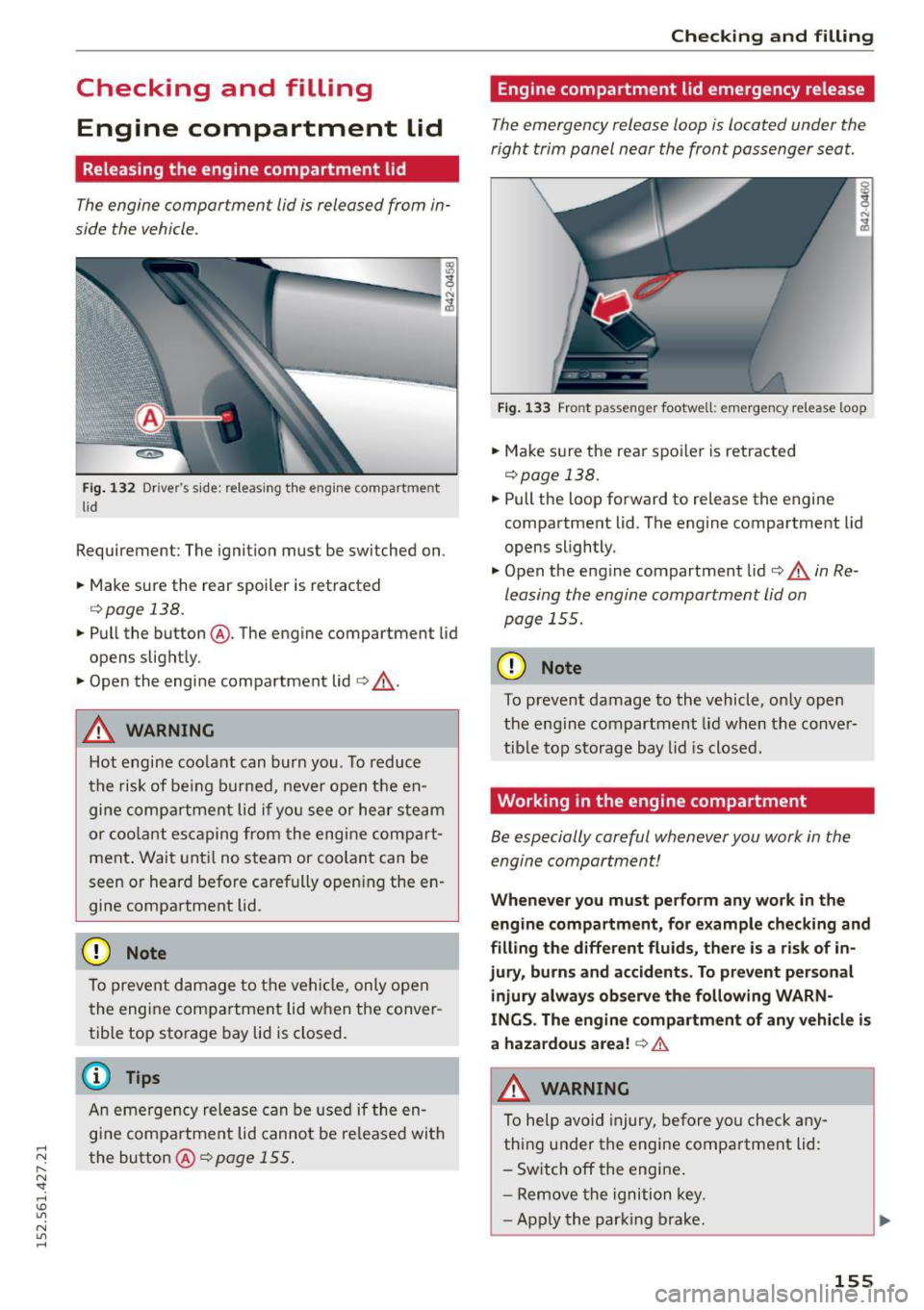
Fig. 132 Driver's side: releasing t he engine compartment
lid
Requirement: The ignition must be switched on .
" Make sure the rear spoiler is retracted
¢page 138.
"Pull the button @. The engine compartment lid
opens slight ly.
" Open the engi ne compartment lid¢_&, .
& WARNING
Hot engine coo lant can burn you. To reduce
t he risk of be ing burned, never open the en
gi ne comp artment lid i f yo u s ee or he ar s team
or cool an t es caping from the engine compart
ment . Wait unt il no steam or coo lant can be
seen or heard befo re carefully open ing the e n
gine compartment lid.
CD Note
To preve nt d amage to t he veh icle, only open
t he engine compartment lid when the conver
tible top storage bay lid is closed.
@ Tips
An emergency release can be use d if the en
gi ne compa rtment lid canno t be re leased with
the button @¢
page 155 .
-
Checking and filling
Engine compartment lid emergency release
The emergency release loop is located under the
right trim panel near the front passenger seat.
F ig . 1 33 Front passenger footwell: emerge ncy release loop
"Ma ke su re the rea r spoile r is retracted
¢page 138.
" Pull the loop forward to release the engine
compartment lid. The engine compartment lid
opens slightly.
" Open the engine compartment lid¢ &,
in Re
leasing the engine compartment lid on
page 155.
CD Note
To prevent damage to the vehicle, o nly open
the engine compartment lid when the conve r
tib le to p storage bay lid is closed.
Working in the engine compartment
Be especially careful whenever you work in the
engin e compartment!
Whenever you must perform any work in the
eng ine compartm ent, for example checking and
filling the differ ent fluid s, there is a ri sk of in
jury, burns and accident s. To prevent personal
injury alway s ob serve the following WARN
INGS . The engine compartment of any vehicle is
a hazardou s area !
c:> &.
,&. WARNING
To help avoid injury, be fore yo u check any
thing u nder the engine compartment lid:
- Sw itch off the engi ne .
- Remove the ignition key .
- Apply the par king brake.
-
155
Page 161 of 232
.... N
l'
N "1: .... I.O
"' N
"' ....
If the yellow engine oil level warning symbol in
the instrument cluster
Ell lights up, you should
check the oil leve l as soon as possible
¢ page 159. Top off the oil at your earliest con
venience
¢ page 160.
A WARNING
Before you check anything in the engine com
partment, always read and heed all WARN
INGS
¢&. in Working in the engine compart
ment on page 155.
(D Note
Dr iving with an insufficient oil level is like ly to
cause severe damage to the engine.
@ Tips
- The oil pressure warning display. is not
an indicator of the oil l evel. Do not rely on
it . Instead, check the oil l evel in your en
gine at regular interval s, pref erably each
time y ou refu el, and alway s before going
o n a long trip .
- If
you have the imp ression your e ngine co n
s u mes ex cess ive amo unts of o il, we re com
mend tha t you cons ult yo ur A udi dealer to
have the cause of your concern properly di
agnosed. Keep in mind that the accurate measurement of oil consumpt ion requires
great care and may take some time. Your
A udi dealer has instructions about how to
measure oil consumpt ion accurately.
Checking the engine oil level
Ap plies to vehicles: with ma nual transmission
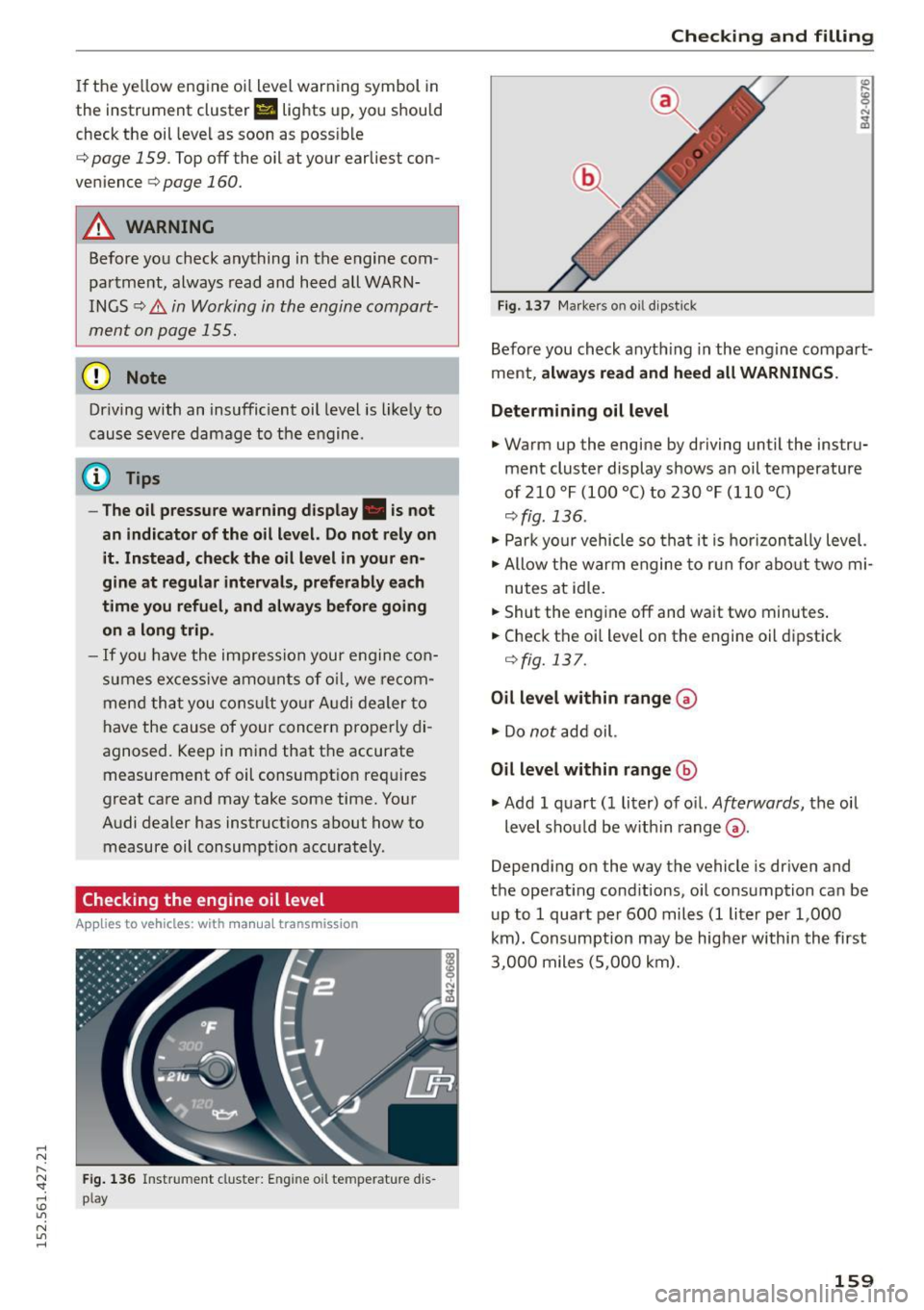
F ig . 1 36 Ins trument cluste r: Engine oil temperature dis
p lay
Chec king and filling
Fig. 137 Ma rke rs on oi l d ipst ick
Before you ch eck a nyth ing in the engine compart
ment,
alwa ys read and h eed all WARNINGS .
Determin ing
oil level
.,. Warm up the engine by driving until the instru
ment cluste r display shows an oil temperature
of 210 °F (100 °C) to 230 °F (110 °C)
¢ fig. 136 .
.,. Park your vehicle so tha t it is hor izon tally level.
.,. Allow t he warm engine to r un fo r abo ut two mi
nutes at idle.
.. Shut the engine off and wait two minutes .
.. Check the oil level on the engine oil dipst ick
¢fig. 137.
Oil level within range (v
.,. Do not add oil.
Oil level within range@
.,. Add 1 quart (1 liter) of o il. Afterwards, the oil
level shou ld be w ith in range
G) .
Depend ing on the way the vehicle is driven and
the operat ing cond itions, oil consumption ca n be
u p to 1 quart per 600 miles(! liter per 1,000
km). Consumption may be higher withi n th e first
3,0 00 miles (5,000 km) .
159
Page 166 of 232
Checking and filling
-Turn the cap slowly and very carefully in a
counter-clockwise direction while applying
light, downward pressure on the top of
the cap .
- To avoid being burned, do not spill anti
freeze or coolant on the exhaust system or hot engine parts. Under certain condi
tions, the ethylene glycol in engine cool
ant can catch fire .
- Antifreeze is poisonous. Always store anti
freeze in its original container and well out of the reach of children .
- If you drain the coolant, it must be caught
and safely stored in a proper container
clearly marked "poison".
CD Note
-Coolant pollutes the environment and could
cause an engine fire . Excess coolant will be
forced out through the pressure relief valve
in the cap when the engine becomes hot.
-If, in an emergency, only water can be add
ed, the correct ratio between water and an
tifreeze
¢ page 161 must be restored as
soon as possible.
@ For the sake of the environment
Drained coolant should not be reused. Always
dispose of used coolant while observing all
environmental regulations.
Brake fluid
Have the brake fluid changed by an experienced
technician.
Brake fluid absorbs moisture from the air. If the
water content in the brake fluid is too high, cor
rosion in the brake system may result after a peri
od of time. The boiling point of the brake fluid
will also decrease considerably and decrease
braking performance.
Therefore, the brake fluid must be changed
every
two years.
Always use new brake fluid which con
forms to Federal Motor Vehicle Standard "FMVSS
116 DOT 4".
164
Brake fluid is replaced according to the Audi
maintenance service schedule . Your authorized
Audi dealer is equipped with the necessary spe
cial tools and replacement parts, has the neces
sary expertise, and can dispose of the used fluid .
A WARNING
-Brake fluid is poisonous . It must be stored
only in the closed original container out of
the reach of children!
- Brake failure can result from old or inappro priate brake fluid. Observe these precau
tions:
- Use only brake fluid that meets SAE speci
fication
J 1703 and conforms to Federal
Motor Vehicle Standard
116. Always check
with your authorized Audi dealer to make
sure you are using the correct brake fluid .
The correct type of brake fluid is also indi cated on the brake fluid reservoir.
- The brake fluid must be new . Heavy use of
the brakes can cause a vapor lock if the brake fluid is left in the system too long.
This can seriously affect the efficiency
of
the brakes as well as your safety . This
could result in an accident.
CD Note
Brake fluid will damage the paint of your vehi
cle.
@ For the sake of the environment
Because of the problem of proper disposal of
brake fluid as well as the special tools re
quired and the necessary expertise, we rec
ommend that you have the brake fluid
changed by your authorized Audi dealer.
Battery
General information '
Your vehicle is equipped with a special battery, an
ACM battery . This battery is located in the lug
gage compartment and must be replaced with an
original equipment battery. Under normal oper
ating conditions, the battery is
maintenance-
free. ..,_
Page 167 of 232
..... N
r-N "': ..... \!) 1.1'1
N 1.1'1 .....
Have the battery checked when you take your ve
hicle in for service. You are well advised to re
place a battery that is older than 5 years .
Disconnecting the batt ery terminal s
Some vehicle funct ions (power w indow regula
tors , fo r example) are lost if the battery termi
na ls are disconnected. These functions have to be
re learned after the battery terminals are con
nected again. To prevent this , the batte ry shou ld
only be disconnected from the vehicle electrical
system when absolutely necessary for repairs.
V ehicl es not dri ven fo r lo ng p eriod s
If you do not drive your vehicle over a period of
several days or weeks , e lectrica l components are
gradually cut back or switched off. This reduces
energy consumption and maintains s tarting ca
pability over a longer period<=> page 140. Some
of the convenience funct ions may not operate ,
such as the inter ior lights or powe r seat ad just
ment. The convenience functions will be ava ilable
again when you switch on the ignition and start
the eng ine.
Wint er op erati on
During the winter months, battery capacity tends
to decrease as temperatures drop . This is because
more power is also consumed w hile start ing , and
the head lights, rear w indow defogger, etc., are
used more often.
Avoid unnecessary power consumption, part icu
l arly in city traffic o r when traveling only short
d ista nces . Let you r a utho rized Aud i dea le r check
the capacity of the vehicle battery before w inter
sets in <=> page 167. A well charged battery will
not on ly prevent starting prob lems when the
w eather is cold, but will also last longer.
R eplacing battery
The new battery mu st ha ve the same capacity,
voltage
(12 vo lts), amperage, construction and
p lug sealing, as the original battery . Specifica
tions are listed on the battery housing. Batteries
specia lly deve loped by Audi fulfill the mainte
nance, output, and safety requ irements .
Check ing and fillin g
When installing the battery, make sure the igni
tion and all electrica l consumers are switched off
<=> 0 .
We recommend that you use main tenance-free or
cycle -res istant /leak-p roof batteries according to
the standards TL
825 06 (from Apri l 2008) and
VW 7
50 73 (from Apr il 2010).
Replac ing the bat tery shou ld be carried by a
qualified workshop. Please fo llow the ins truc
tions on the battery cover .
(D Note
-All work on the battery req uires techn ica l
knowledge . Please contact an Audi dealer
ship or another authorized facility for ques
tions about the battery - danger of ac id
burns and explosion ha zard!
- The battery must not be opened! Do not try
to change the battery's liquid level, other
w ise detonating gas will escape from the
battery- exp losion hazard!
- The AGM battery in the luggage compart ment cannot leak, because the e lectrolyte
for this battery is absorbed into a special glass mat . This leak-proof battery must not
be replace with a convent ional battery.
- Make sure the ventilation hose on the side
of the battery is connected, otherwise
fumes or battery ac id can leak out.
- Battery holder and terminals always have to
be sec ured correctly .
- Before all work on the battery follow the
warnings be low <=>&. in Working on the bat
tery on page 166.
@ For the sake of the environment
Because of the prob lem of proper disposal of
a battery, we recommend your autho rized
Audi dealer change the battery for you . Bat
teries contain sulfur ic acid and lead and must
a lways be d isposed of properly in compliance
with all envi ronmental regula tions . Disposing
of vehicle batteries improperly is very danger
ous to the environment . Make sure that the
removed battery cannot overba lance, other
wise sulf uric ac id might escape!
165
Page 168 of 232
Checking and filling
(D Tips
If your vehicle is left standing for several
weeks at extremely low temperatures, the
ve
hicle battery should be removed and stored
where it will not freeze. This will prevent it
from being damaged and having to be re placed .
Working on the battery
Be especially careful when working on or near
the battery!
The battery is located in the luggage compart
ment behind a
cover. Before you work on or near
the battery ,
read and heed all WARNINGS c> &_.
Always heed the safety warnings, when working
on the vehicle battery or the vehicle electrical
system to prevent injury.
The following WARNINGS are very important
when working on the battery:
Always heed the following WARNING SYM-
BOLS and safety precautions when working on
the battery.
®
Always wear eye protection.
&
Battery acid contains sulfuric acid. Al·
ways wear gloves and eye protection.
@
No
- sparks
- flames
- smoking.
~
When a battery is charged, it produces
hydrogen gas which is explosive and
could cause personal injury.
®
Always keep the battery well out of reach
of children.
.&_ WARNING
Whenever working on the battery or on the
electrical system, there is the risk of injury,
accident and even fire. Read and heed the fol
lowing WARNINGS:
- Always wear eye protection. Do not let bat
tery acid or any lead particles get on your
166
skin or clothing. Shield your eyes. Explosive
gases can cause blindness or other injury.
- Battery acid contains sulfuric acid. Sulfuric
acid can cause blindness and severe burns.
-Always wear gloves and eye protection . Do
not tilt the battery because acid could leak
out of the ventilation openings.
- If you get battery acid in your eyes or on
your skin, immediately rinse with cold wa
ter for several minutes and get medical at
tention.
- If you should ingest any battery acid, seek
medical attention immediately.
- Do not expose the battery to an open flame,
electric sparks or an open light.
- Do not smoke.
- Do not interchange the positive and nega- tive cables.
- When working on the battery, be sure not to
short-circuit the terminals with tools or oth
er metal objects. This would cause the bat
tery to heat up very quickly, which could
lead to damage or explosion and personal
injury.
- When a battery is charged, it produces hy
drogen gas which is explosive and could
cause personal injury.
- Always keep the battery well out of the
reach of children.
- Before work is done on the electrical sys
tem, disconnect the negative ground cable.
- Before performing any work on the electri
cal system, switch off the engine and igni
tion as well as any electrical equipment. The
negative cable on the battery must be dis
connected. If you are just going to replace a
light bulb, then it is enough to switch off
the lights.
- Before disconnecting the battery, switch off
the anti-theft alarm system! Otherwise you
will set off the alarm.
- When disconnecting the battery, first dis
connect the negative cable and then the
positive cable.
- Before reconnecting the battery, make sure all electrical consumers are switched off. Re
connect the positive cable first and then the
~
Page 170 of 232
Checking and filling
thaw completely before attempting to charge it
c> &. . However, we recommend not us ing a
thawed battery again because the battery casing
can be cracked due to ice format ion and can leak
battery acid.
Do no t open the battery caps when charging the
battery .
A WARNING
Charging a battery can be dangerous.
- Never charge a frozen battery. It may ex
plode because of gas trapped in the ice. Al
low a frozen battery to thaw out first.
- Do not reuse batteries which were frozen.
The battery housing may have cracked and
weakened when the battery froze.
- Charge the battery in a we ll ventilated area.
Keep away from open flame or electrical
spark. Do not smoke . Hydrogen gas generat
ed by the battery is explosive .
- To reduce the danger of explosion, never
connect or disconnect charger cables while
the charger is operating .
- Fast charg ing a battery is dangerous and
should only be attempted by a competent
technician with the proper equipment .
- Battery acid that may spill during charg ing
sho uld be washed off w ith a solution of
warm water and baking soda to neutralize
the acid.
CD Note
Never use a fast charger as a booster to start
the engine. This will seriously damage sensi
tive electronic components, such as control
units, re lays, radio, etc., as well as the batte ry
charger.
@ Tips
- The vehicle battery must not be charged
with a standard small charger that plugs in
to the cigarette lighter or outl et.
- Only charge the battery through the connec
tions in the luggage compartment.
168
Windshield washer
container
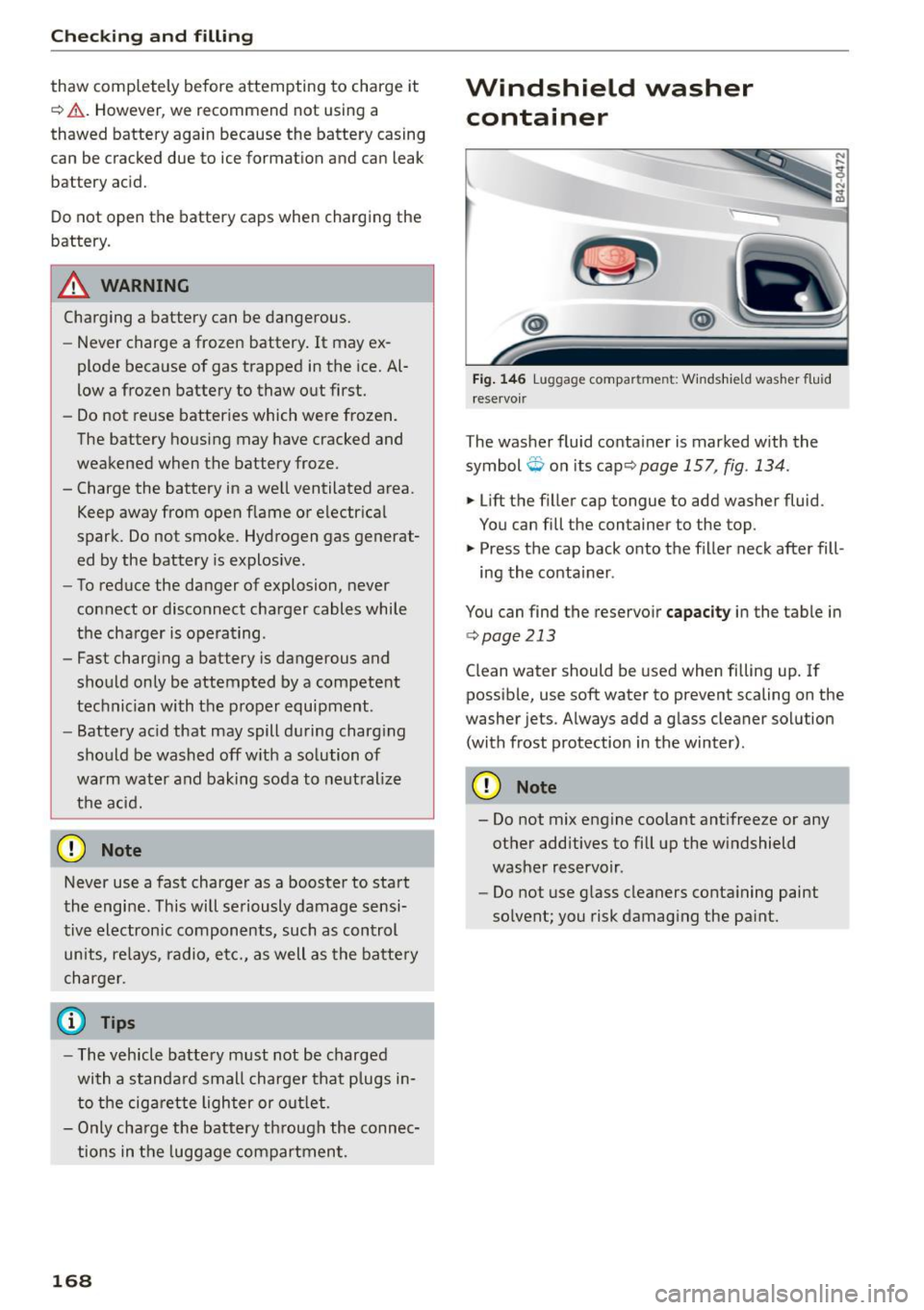
Fig. 146 Lu ggage compar tment: Wind shi eld wash er fl uid
reservoir
The washer fluid container is marked with the
symbol
Q on its cap c>page 157, fig . 134.
.. Lift the filler cap tongue to add washer fluid.
You can fill the container to the top .
.. Press the cap back onto the filler neck after fill -
ing the container .
You can find the reservoir capacity in the table in
¢page 213
Clean water should be used when filling up. If
possible, use soft water to prevent scaling on the
washer jets. Always add a glass cleaner solution
(with frost protection in the winter).
CD Note
- Do not mix engine coolant antifreeze or any
other additives to fill up the windshield
washer reservoir .
- Do not use glass cleaners containing paint
solvent; you risk damaging the paint.
Page 179 of 232
...
would then be underinflated a nd
could fail suddenly .
M ainta ining proper tire pressure
is one of the most important
things you can do to he lp avoid
s u dden tire fai lure . Under inflated
tires are a major cause of sudden
tire fa ilure . Keeping tires at the
r ight pressure is also important
for safe and responsive vehic le
handling, traction, braking and
load carrying.
Tire pressures are
particularly important when the
vehicle is be ing dr iven at higher
speeds, and then especially when
heavily loaded even within the
permissib le load-carrying capaci
ties approved for your vehicle .
The recommended tire pressures
for your Audi depend on the kind of tires on your vehicle and the
number of passengers and/or
amount of luggage you will be
transport ing .
The tire pressure label is located
on the driver's side 8-pillar . The
tire pressure label lists the recom mended cold tire inflation pres
s u res for the vehicle at its maxi
mum capacity weight and tires
~ that were on your vehicle at the
": ;;; time it was manufactured. "? N
"' ....
Tir es a nd whe els
If you wish to improve comfort
when operating the vehicle at
normal load (up to 2 occupants ),
you can adjust tire pressu res to
those specified for normal vehi
cle load . Before operating the ve
hicle at ma ximum load, you
must increa se the ti re pressures
to those specified for maximum
vehic le load
c:::> .&. .
Bear in mind that the tire pres
sure monitoring system can only monitor the tire pressures that
are stored. The system does not recognize the load condition of
your vehicle .
See the illustration
c:::> fig. 147 for
the location of the labe l on driv
er's side 8-pillar (color of the ac
tual label and exact location on
the vehicle will vary slightly).
Note that the following table is
accurate a t the time of going to
press and is subject to change . In
the event of discrepancies, the
tire pressure label on driver's side 8-pillar always takes precedence.
The table below lists the recom
mended cold tire inflation pres
sures for the Audi model covered by your Owner 's Literature at the
vehicle's capac ity weight and the .,.
177