belt AUDI RS5 CABRIOLET 2013 Owner's Manual
[x] Cancel search | Manufacturer: AUDI, Model Year: 2013, Model line: RS5 CABRIOLET, Model: AUDI RS5 CABRIOLET 2013Pages: 286, PDF Size: 71 MB
Page 135 of 286
The front seats are equipped with belt posi
tioners so it is easier to fasten the safety be lts . The belt positioners automatically ex
tend when the door closes and the ignition
switches on ¢
fig. 147.
The belt positioner returns to its starting posi
tion again when
- the tongue in the belt latch engages o r the
belt was not fastened within 60 seconds .
- yo u sw itch the igni tion off.
- you ope n the door.
_& WARNING
- O nly you r autho rized Aud i de ale r shou ld
wor k on the sys tem or remove and instal
ling system components when perform
ing other work .
- T he be lt positioners could cause in jury or
damage if they pinc h peop le or objects
when extending or retracting .
Fastening safety belts
Safety first -everybody buckle up!
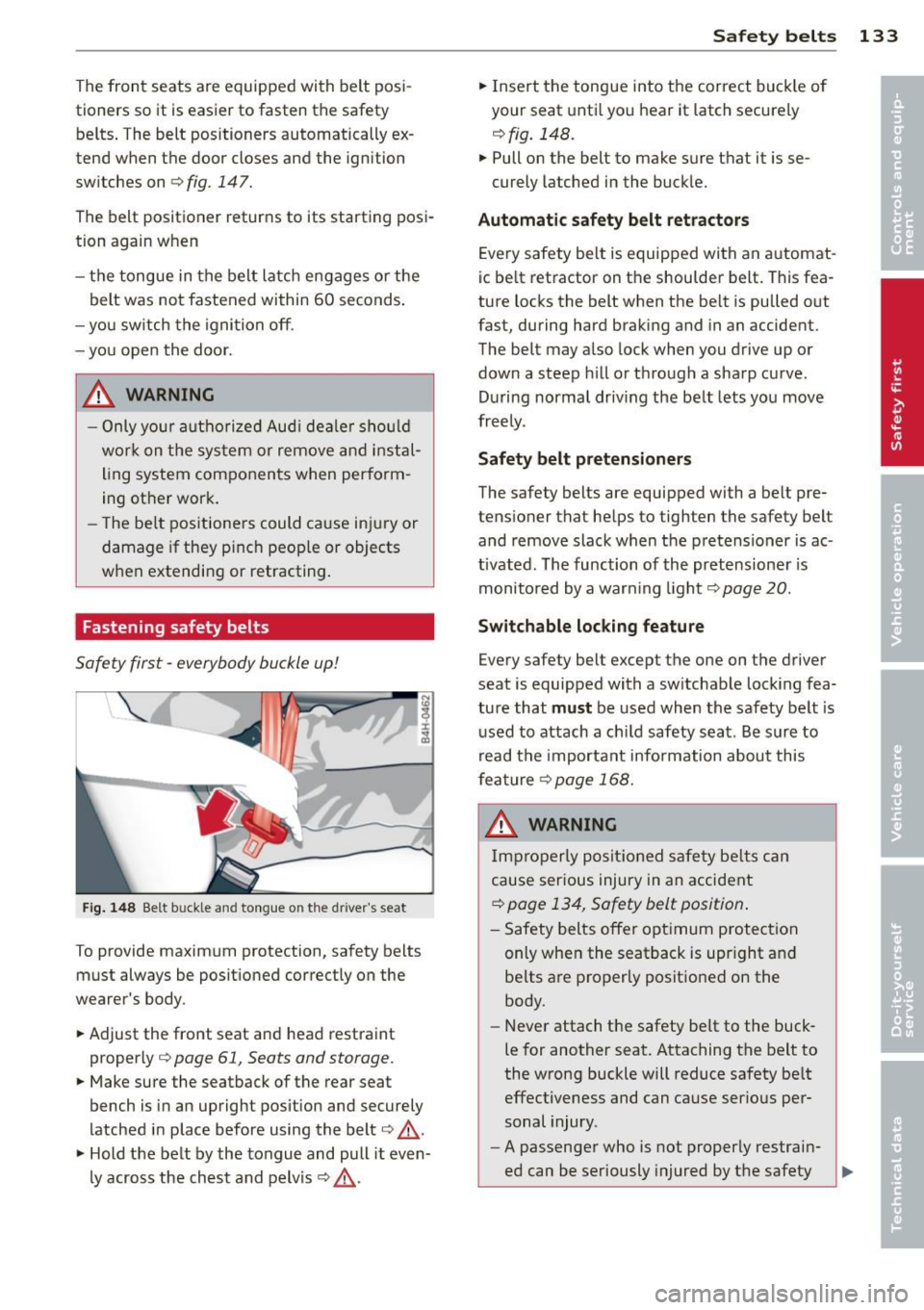
Fig . 14 8 Be lt buckle and tongue on t he driver's seat
To provide maximum protection, safety belts
must always be posit ioned correctly on the
wearer's body .
~ Adjust the front seat and head restraint
properly¢
page 61, Seats and storage.
~ Make sure the seatback of the rear seat
bench is in an upright pos ition and securely
latched in place before using the belt¢ ..
&.
~ Hold the belt by the tongue and pull it even-
ly across the chest and pelvis¢,&..
Safety belts 133
~ Insert the tongue into the correct buck le o f
your seat unti l you hear it latch securely
¢ fig. 148.
~ Pull on the belt to make sure that it is se-
curely latched in the buckle.
Automat ic safety belt r etractor s
Every safety belt is equipped with an automat
ic be lt ret ractor on the shoulder belt. This fea
ture locks the belt when the be lt is pulled out
fast, during hard brak ing and in an accident.
The belt may also lock when you drive up or
down a steep h ill or th rough a sharp cu rve.
During normal driv ing the belt lets you move
freely.
Safety belt pretensioners
The safety belts are equipped with a belt pre
tensioner that helps to tighten the safety belt
and remove slack when the pretensioner is ac
tivated. The function of the pretensione r is
monito red by a warn ing light¢
page 20.
Switchable locking fe ature
Every safety belt except the one on the driver
seat is equipped with a sw itchable lock ing fea
ture that
must be used when the safety belt is
used to attach a ch ild safety seat . Be s ure to
read the important information about this
feature
¢page 168.
_& WARNING
Imp roperly posit ioned safety be lts can
cause serious injury in an accident
¢ page 134, Safety belt position .
-Safety belts offer opt imum protection
only when the seatback is upr ight and
be lts are properly posit io ned on the
body.
-
- Never attach the safety be lt to the buck
le for another seat. Attaching the belt to
the wrong buckle will reduce safety be lt
effectiveness and can cause ser ious per
sonal injury.
- A passenger who is not properly restrain-
ed can be seriously injured by the safety .,.
Page 136 of 286

134 Safet y belt s
belt itself when it moves from the stron
ger parts of the body into critical areas
like the abdomen.
- Always lock the convertible locking re
tractor when you are secur ing a child
safety seat in the vehicle
c::> page 170.
Safety belt position
Correct belt position is th e key to getting
maximum protection from safety belts .
Fig. 14 9 Safety belt pos it io n
;;; r-0 ± .., CD
Standard features on your vehicle help you ad
just the position of the safety belt to match your body size .
- height -adjustable front seats .
A WARNING
Improperly positioned safety belts can
cause se rious personal injury in an acci
de nt.
- T he shoulder belt sho uld lie as close to
the cente r of the collar bone as poss ible
and should fit we ll on the body. Ho ld the
bel t above the latch tongue and pull it
even ly across the chest so that it sits as
low as possible on the pelvis and there is
no p ress ure on the abdomen. The be lt
should a lways fit snugly
c:> fig . 149. Pull
on the be lt to tighten if necessary.
- The lap belt portion of the safety be lt
must be positioned as low as possible
across pe lvis and never over the abdo
men . Make s ure the be lt lies flat and
snug
c::> fig . 149. Pull o n the belt to tight
en if n ecessary. -
A loose-fitting safety belt can cause seri
ous injuries by shift ing its posit ion on
your body from the strong bones to more
vulnerable, soft tissue and cause ser ious
in ju ry.
- Always read and heed all WARNINGS a nd
other important information
<=:>page 132.
Pregnant women must also be correctly
restrained
The best way to protect the fetus is to make
sure that expe ctan t mothers always wear
safety belts corre ctly -throughout the preg
nan cy.
Fi g. 1 50 Saf ety belt pos it ion dur ing p re gnan cy
To prov ide max imum protect ion, safety belts
must a lway s be positioned correctly on the
wearer's body
<=:>page 134.
.,. Adjust the front seat and head restraint cor
rectly
c::> page 61, Seats and storage .
.,. Make sure the seatback of the rear seat
benc h is in an upright position and secure ly
latched in place before using the belt .
"' Ho ld the belt by the tongue and pull it even
ly ac ross the chest and pelvis
c::> fig . 150,
c::> &_ .
.,. In sert the tong ue i nto the correct buckl e of
your seat unt il yo u hear i t latch secu re ly
c;, page 133, fig . 148 .
.,. Pull on the belt to make sure t hat it is se
curely latched in the buck le.
Page 137 of 286
_& WARNING
Improperly positioned safety belts can
cause serious personal injury in an acci
dent .
- Expectant mothers must a lways wear the
lap portion of the safety belt as low as
poss ible across the pelv is and be low the
rounding of the abdomen.
- Always read and heed all WARNINGS and
other important information
¢ &. in Fas
tening safety belts on page 133.
Unfastening safety belts
Unbuckle the safety belt with the red release
button only after the vehicle has stopped .
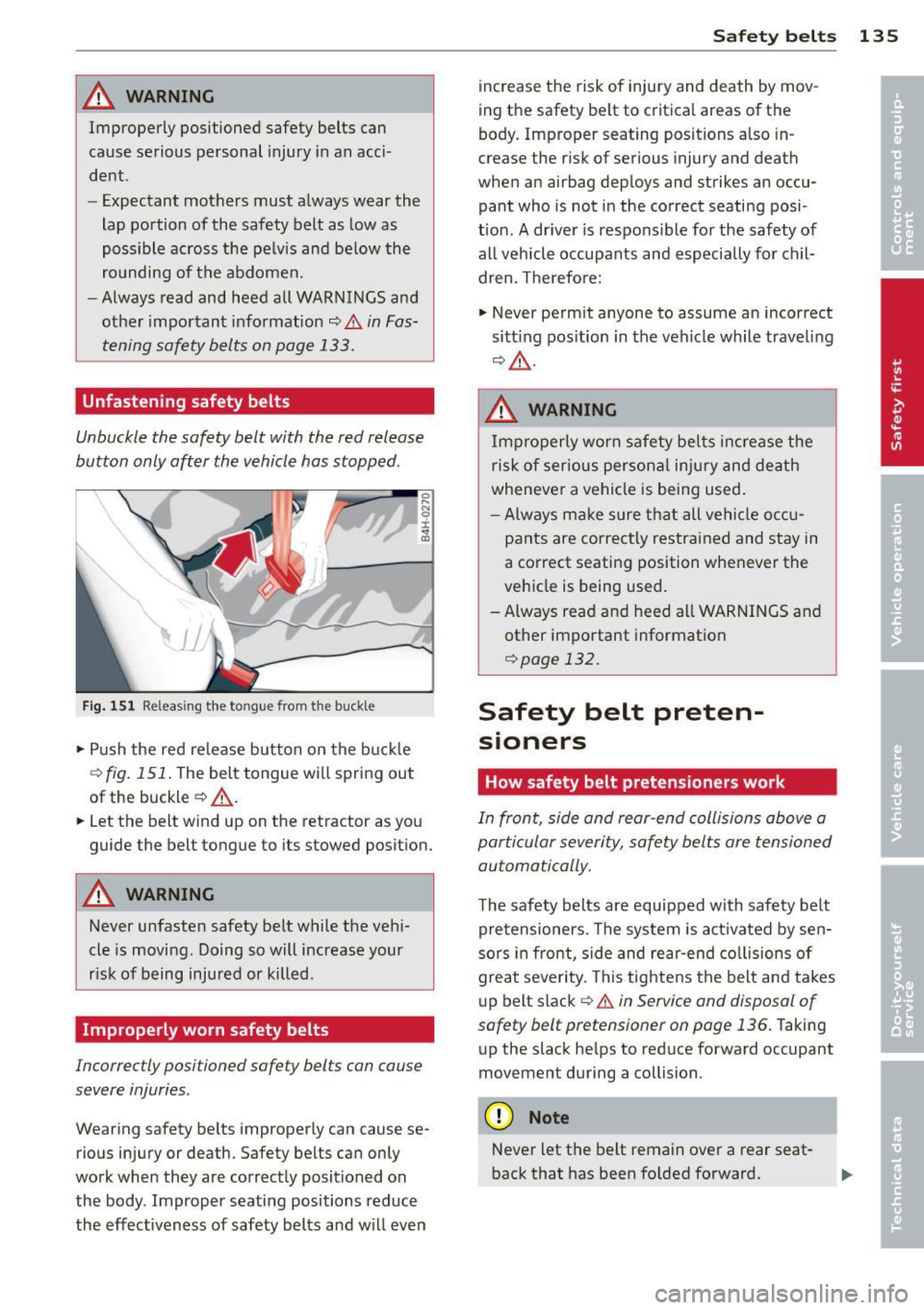
Fig. 151 Relea sing the to ngue from the buckle
... Push the red re lease but ton on the buc kle
¢
fig. 151 . The belt tongue wi ll spring out
of the buckle
¢ ,&. .
0 .... N 9 :r
~
... Let the belt wind up on the retractor as you
gu ide the belt tongue to its stowed position.
_& WARNING
Never unfasten safety belt while the veh i
cle is moving. Doing so will increase your
r isk of being injured or killed .
Improperly worn safety belts
Incorrectly positioned safety bel ts can cause
severe injuries .
Wearing safety be lts improperly can cause se
rious injury or death. S afety belts can only
work when they are correctly positioned on
the body . Improper seating positions reduce
the effect iveness of safety belts and w ill even
Safety belts 135
increase the risk of injury and death by mov
ing the safety be lt to critica l areas of the
body. Improper seating positions a lso in
crease the risk of serious injury and death
when an airbag deploys and strikes an occu
pant who is not in the correct seating posi
t ion. A driver is respo ns ible for the safety of
all vehicle occupants and especially for chil
dren. Therefore:
... Never perm it anyone to assume an incorrect
sitt ing pos ition in the vehicle while traveli ng
¢ ,&. .
_& WARNING
Improperly worn safety bel ts increase the
r isk of ser ious persona l injury and death
whenever a vehicle is being used .
- Always ma ke s ure that all vehi cle occu
pants are correctly restrained and stay in
a co rrect seating position whenever the
veh icle is being used .
- Always read and heed a ll WARNI NGS and
other important information
¢ page 132.
Safety belt preten-
• s1oners
How safety belt pretensioners work
In front, side and rear-end collisions above a
particular severity, safety belts are tensioned automatically.
T he safety belts are equipped with safety belt
pretensioners . The system is act ivated by se n
sors i n fro nt, side and rear -end co llisions of
great seve rity . This tightens the belt and takes
up belt slack¢
& in Service and disposal of
safety b elt pretension er on page 136.
Taking
up the slack he lps to reduce fo rward occupant
movement during a collision .
(D Note
Never let the belt remain ove r a rear seat
back that has been fo lded forward .
Page 138 of 286
136 Safety belts
The safety belt pretensioner can only be
activated once.
- In minor frontal and side collisions in
'
rear-end collisions and in accidents in-
volving very little impact force, the safe
ty belt pretensioner are not activated .
- When the safety belt pretensioners are
activated, a fine dust is released. This is
normal and is not caused by a fire in the
vehicle.
- The relevant safety requirements must
be observed when the vehicle or compo
nents of the system are scrapped . An au
thorized Audi dealer or qualified work
shop is familiar with these regulations
and will be pleased to pass on the infor
mation to you.
- Be sure to observe all safety, environ
mental and other regulations if the vehi
cle or individual parts of the system , par
ticularly the safety belt or airbag, are to
be disposed. We recommend you have
your authorized Audi dealer perform this
service for you .
Service and disposal of safety belt
pretension er
The safety belt pretensioners are parts of the
safety belts on your Audi . Installing, remov
ing , servicing or repairing of belt pretension
ers can damage the safety belt system and
prevent it from working correctly in a colli
sion.
There are some important things you have to
know to make sure that the effectiveness of
the system will not be impaired and that dis
carded components do not cause injury or pol
lute the environment.
A WARNING
Improper care, servicing and repair proce
dures can increase the risk of personal in
jury and death by preventing a safety belt
pretension er from activating when needed
or activating it unexpectedly: -
The belt pretensioner system can be acti
vated only once. If belt pretensioners have been activated, the system must be
replaced .
- Never repair, adjust, or change any parts
of the safety belt system.
- Safety belt systems including safety belt pretensioners cannot be repaired. Spe
cial procedures are required for removal, installation and disposal of this system.
- For any work on the safety belt system,
we strongly recommend that you see
your authorized Audi dealer or qualified technician who has an Audi approved repair manual, training and special equip
ment necessary.
@ For the sake of the environment
Undeployed airbag modules and preten
sioners might be classified as Perchlorate
Material -special handling may apply, see
www .dtsc.ca.gov/hazardouswaste/per
chlorate. When the vehicle or parts of the
restraint system including airbag modules
safety belts with pretensioners are scrap
ped, all applicable laws and regulations
must be observed. Your authorized Audi
dealer is familiar with these requirements
and we recommend that you have your
dealer perform this service for you.
Page 139 of 286
Airbag system Important things to know
Importance of wearing safety belts and
sitting properly
Airbags are only supplemental restraints. For
airbags to do their job , occupants must al
ways properly wear their safety belts and be
in a proper seating position.
For your safety and the safety of your passen
gers, before driving off, always:
"" Adjust the driver's seat and steering wheel
properly ¢
page 119,
"" Adjust the front passenger's seat properly
¢page 62 ,
""Wear safety be lts properly ¢ page 132,
"" Always properly use the proper child re-
straint to protect chi ldren
r::::> page 158.
In a collision airbags must inflate within th e
blink of an eye and with considerable force.
The supplemental airbags can cause injuries if
the driver or the front seat passenger is not
seated properly . Th erefore in order to help the
a ir bag to do its job, it is important, both as a
driver and as a passenge r to s it properly at all
times.
By keeping room between your body and the
steer ing whee l and the front of the passenger
compartment, the airbag can inflate fully and
comp lete ly and provide supplemental protec
tion in certain frontal collisions
r::::> page 119,
Proper occupant seating positions.
F or details
on the operation of the seat adjustment con
trols
¢ page 62.
It's especially important that children are
properly restrained
r::::> page 158.
There is a lot that the driver and the passen
gers can and must do to help the individua l
safety features installed in your Aud i work to
gether as a system.
Proper seating pos ition is important so that
the front airbag on the driver side can do its
job. If you have a physical impairment or con-
Airbag system 137
dition that prevents you from sitting properly
on the driver seat with the safety belt properly
fastened and reaching the pedals, spec ial
modifications to yo ur vehicle may be necessa
ry.
Contact your authorized Audi dea ler, or call
Audi Customer Re lations at 1-800-822-2834.
When the airbag system dep loys, a gas gener
ator will fi ll the airbags, break open the pad
ded covers, and inf late between the steering
whee l and the driver and between the instru
ment panel and the front passenger. The air
bags will deflate immediately after deploy
ment so that the front occupants can see
through the windshield aga in without inter
ruption .
All of th is takes place in the blink of an eye, so
fast that many people don't even realize that
the air bags have deployed . The airbags also
inflate with a great deal of force and noth ing
shou ld be in their way when they deploy.
Front airbags in combination with properly
worn safety belts slow down and limit the oc
cupant's forward movement. Together they
help to prevent the driver and front seat pas
senge r from hitting parts of the inside the ve
hicle while reducing the forces acting on the
occupant dur ing the crash. In this way they
help to reduce t he risk of injury to the head
and upper body in the crash . A irbags do not
protect the arms or the lower parts of the
body .
Both front air bags w ill not inflate in all frontal
collisions . The triggering of the airbag system
depends on the vehicle deceleration rate
caused by the collision and registered by the
electron ic control unit. If this rate is below
the reference value programmed into the con
trol unit, the airbags will not be triggered,
ev en though the car may be bad ly damaged as
a resu lt of the co llision . Vehicle damage, re
pair costs or even the lack of ve hicle damage
is no t necessarily an indication of whether an
airbag should inflate o r not .
It is not possib le to define a range of vehicle
speeds that w ill cover every possible kind and ..,.
•
•
Page 140 of 286
138 Airbag sys te m
angle of im pact that will always trig ger the
airbags, since the circumstances wi ll vary con
siderably between one collision and another.
Important factors include, for example, the
nature (hard or s oft) of the object which the
car h its, the angle of impact, vehicle speed,
etc. The front airbags will also not inflate in
side or re ar collisions, or in roll-overs .
Always remember : Airbags will deploy only
once, and only in certa in kinds of collisions .
Your safety belts are always there to offe r pro
tection in those s ituations in which airbags
a re not supposed to deploy , or when they have
a lready deployed; for example , when yo ur ve
h icle strikes or is st ruck by another after the
first collision .
This is just one of the reaso ns why an a irbag is
a supplementary restra int and is not a s ubst i
tute for a safety be lt. The airbag system
works most effective ly when used with the
safety be lts. Therefore, always properly wear
you r safety belts ¢
page 129 .
A WARNING
Sitting too close to the steer ing wheel or
instrument panel will decrease the effec
tiveness of the airbags and will increase
the risk of pe rsonal injury in a collision .
- Never sit closer than 10 inches (25 cm)
to the stee ring wheel or instr ument pan
el.
- If you cannot sit more than 10 inches
(25 cm) from t he steer ing wheel, investi
gate whethe r adaptive equipment may
be available to help you reach the pedals
and incre ase your sea ting dis tance from
the steering wheel.
- If you are unrestr ained, lean ing fo rward,
s itting sideways or out of posi tion in any
way, your risk of injury is much higher.
- Yo u w il l a lso receive serio us in juries and
co uld even be killed if you are up against
the airbag or too close to it when it in
flates -even with an Advanced Airbag.
- To reduce the r is k of i njury when an air
bag inf lates, a lways wear safety belts
properly
c::> page 132, Safety belts .
-Always make certain that ch ild ren age 12
or younger always ride in the rear seat. If
children are not properly restrained, they
may be severe ly injured or killed when an
airbag inflates .
- Never let c hildren ride unrestrained or
improperly restrained in the vehicle . Ad
just the front seats prope rly .
- Never ride with the back rest reclined.
- Always sit as far as possible from the
steer ing whee l or the instrument pane l
¢page 119.
-Always sit upright with your back against
the backrest of your seat.
- Never p lace your feet on the instrument
panel or on the seat. Always keep both
feet on the floor in front of the seat to
he lp prevent serious in ju ries to the legs
and h ips if the airbag inflates .
- Never recline the front passenger 's seat
to transport objects . Items can a lso
move i nto the a rea of the s ide airbag or
the front a irbag d uring br akin g or in a
sudden maneuve r. Obje cts ne ar the air
bags can become projec tiles and cause
inj ury when an airbag inflates.
.&, WARNING
A irbags that have deployed in a crash must
be replaced.
- Use on ly original eq uipment airbags ap
proved by Audi and installed by a trained
technician who has the necessary too ls
and d iagnost ic equipment to properly re
p lace any airbag in your vehicle and as
sure system effectiveness i n a crash .
- Never permit salvaged or recycled air
bags to be installed in your vehicle .
Child restraints on the front seat - some
important things to know
.,. Be s ure to read the importa nt information
and head the WAR NINGS for important de
t ails about children and Advanced A irbags
c::> page 158 . ..,.
Page 143 of 286
-Never place additional items on the seat
that can increase the total weight regis
tered by the weight-sensing mat and can
cause injury in a crash.
Front airbags
Description of front airbags
The airbag system can provide supplemental
protection to properly restrained front seat o ccupan ts.
F ig . 15 2 Location of driver airbag: in steer ing whee l
Fig. 153 Location of front passenger's airbag: in the in
st rument panel
Your veh icle is equipped w ith an "Advanced
Ai rbag System" in compliance with United
States Federal Motor Vehicle Safety Standard (F MVSS) 208 as app licab le at the time your
ve hicle w as manufac tured. The system senses
the position of the front seats and controls
front airbag inflation with a va lve, depending
on the distance between the respect ive seat
and the steering wheel or instrument panel.
The safety belts for the seats have "preten
sioners" that he lp to take slack out of the belt
system . The pretensioners are also activated
by the electron ic contro l unit for the airbag
sys tem.
A irba g sy stem 141
The front sa fety belts also have load limiters
to help reduce the forces applied to the body
in a crash .
T he airbag for the drive r is in the stee ring
whee l hub
q fig. 152 and the airbag for the
front passenger is in the instrument panel
~fig. 153 . The general locat ion of the a irbags
is marked "AIRBAG".
There is a lot you need to know about the ai r
bags in your vehicle . We urge you to read t he
detailed information about airbags, safety
belts and child safety i n this and the other
chapters that make up the owner's literature. Please be sure to heed the WARNINGS -they
are extremely important for your safety and
the safety of yo ur passengers, especially in
fants and small children.
_&. WARNING
N ever rely on airbags alone for protec tion.
- E ven w hen they deploy, airbags provide
only s uppleme nta l pro tect ion .
- Airbag work most effective ly when used
wit h properly wor n safety belts.
- Therefore, always wea r you r safe ty belts
and make sure that eve rybody i n your ve
hicle is p rope rly res trained.
_&. WARNING
A pe rson on the fron t passe nger seat, es
pe cial ly infants and sma ll children, will re
ceive serious injuries and can even be kil l ed by being too close to the airbag when
it inflates .
- Altho ugh the Advanced Airbag System in
your veh icle is designed to tur n off the
front passenge r airbag if an infant or a
small child is on the front passenger
seat, nobody can absolutely guarantee
that deployment under these specia l
conditions is imposs ible in all conceiva
b le sit uat ions that may happen during
t he useful life of your vehicle.
- The Advanced Airbag System can dep loy
in acco rdance with the "low risk" option
un der the U.S. Fede ral Standa rd if a child
that is he avie r than the typical one-year
-
..
Page 144 of 286
142 Airbag system
old child is on the front passenger seat
and the other conditions for airbag de
ployment are met .
- Accident statistics have shown that chil
dren are generally safer in the rear seat
area than in the front seating position.
- For their own safety, all children, espe cially 12 years and younger, should al
ways ride in the back properly restrained
for their age and size.
Advanced front airbag system
Your vehicle is equipped with a front Advanced
Airbag System in compliance with United
States Federal Motor Vehicle Safety Standard
208 as applicable at the time your vehicle was
manufactured.
The front Advanced Airbag System supple ments the safety belts to provide additional
protection for the driver's and front passeng
er's heads and upper bodies in frontal crashes .
The airbags inflate only in frontal impacts
when the vehicle deceleration is high enough.
The front Advanced Airbag System for the
front seat occupants is not a substitute for
your safety belts. Rather, it is part of the over
all occupant restraint system in your vehicle.
Always remember that the airbag system can
only help to protect you , if you are sitting up
right, wearing your safety belt and wearing it
properly . This is why you and your passengers
must always be properly restrained, not just
because the law requires you to be.
The Advanced Airbag System in your vehicle has been certified to meet the "low risk" re
quirements for 3 and 6 year-old children on
the passenger side and very small adults on
the driver side . The low risk deployment crite
ria are intended to help reduce the risk of in
jury through interaction with the front airbag
that can occur, for example , by being too
close to the steering wheel and instrument panel when the airbag inflates.
In addition, the system has been certified to
comply with the "suppression" requirements of the Safety Standard
, to turn
off the front
airbag for infants 12 months old and younger
who are restrained on the front passenger
seat in child restraints that are listed in the
Standard ¢
page 160, Child restraints and
Advanced Airbags .
"Suppression" requires the front airbag on the
passenger side to be turned
off if:
- a child up to about one year of age is re
strained on the front passenger seat in one
of the rear-facing or forward-facing infant restraints listed in Federal Motor Vehicle
Safety Standard 208 with which the Ad
vanced Airbag System in your vehicle was
certified . For a listing of the child restraints
that were used to certify your vehicle's com pliance with the US Safety Standard
¢page 160,
-weight less than a threshold level stored in
the control unit is detected on the front pas
senger seat.
When a person is detected on the front pas
senger seat, weighing more than the total
weight of a child that is about 1 year old re
strained in one of the rear-facing or forward
facing infant restraints (listed in Federal Mo
tor Vehicle Safety Standard 208 with which
the Advanced Airbag System in your vehicle
was certified), the front airbag on the passen ger side may or may not deploy.
The
PASSENGER AIR BAG OFF light comes on
when the electronic control unit detects a to
tal weight on the front passenger seat that re
quires the front airbag to be turned
off. If the
PASSENGER AIR BAG OFF light does not
come on, the front airbag on the passenger
side has not been turned
off by the control
unit and can deploy if the control unit senses
an impact that meets the conditions stored in
its memory.
If the total weight on the front passenger
seat is more than that of a typical 1 year-old ,
but less than the weight of a small adult, the
front airbag on the passenger side may deploy
(the
PASSENGER AIR BAG OFF light does not
come on).
ll-
Page 145 of 286
Fo r exa mple, the airbag may depl oy if:
- a small child that is heavier than a typical 1
year-o ld child is on the front passenger seat
(regardless of whether the child is in one of
the chi ld safety seats listed
¢ page 160),
-a ch ild who has outgrown child rest raints is
on the front passenger seat.
I f the front passenger airbag is turned off , the
PA SSENGER AIR B AG OFF light in the center
of the inst rument panel w il l come on and stay
on.
The front a irbag on the passenger side may
not deploy (the PASSENGER AIR BAG OFF
light does not illuminate and stay lit) if:
- a small adult or teenager is on the front pas
senger seat
- a passenger who is not sitt ing upr ight w ith
their back against a non-reclined backrest
with their feet on the veh icle floo r in front
of the sea t is on the front passenge r seat.
If the front passenger airbag deploys, the
Federal Standard requires the airbag to meet
the " low risk " deployment criteria to help re
duce the risk of inj ury through in teraction
with the airbag . "Low risk" deployment occurs
in those crashes that take place at lower de
celerations as defined in the electronic control unit.
¢ page 148
Alway s remember : Even though you r vehicle
is equipped with Advanced Airbags, the safest
p lace for children is properly restrained on the
back seat . Please be sure to read the impor
tant information in the sect ions that follow
and be sure to heed all of the WARNINGS.
_&. WARNING
To reduce the risk of injury when an airbag
inflates, always wear safety belts properly .
- If you are unrestrained, lean ing forward,
sitting sideways or out of position in any
way, your risk of injury is much highe r.
- You w ill also receive serious injuries and
could even be killed if you are up against
the a irbag or too close to it when it in-
A irbag system 143
flates - even with an Advanced Ai rbag
¢page 137 .
_&. WARNING
A child in a rearward-fac ing ch ild safety
seat installed on the front passenger seat
will be ser ious ly injured and can be killed if
the front airbag inflates - even with an Ad
vanced A irbag System .
-Although the Advanced Airbag System in your veh icle is designed to turn off the
front airbag when a rearward-facing child restraint has been instal led on the
front passenge r seat, nobody can abso
lutely guaran tee that dep loymen t is im
possible in all conceivable situations that
may happen during the usefu l life of your
veh icle.
- The inflating airbag will hit the child
safety seat or infant carrier with great
force and will smash the child safety seat
and child against the backrest, center
armrest, door, or roof .
-Always install rearward -facing chi ld re
straints in the back seat.
- If you must install a rearward fac ing
child safety seat on the front passenger
seat because of exceptional c ircumstan
ces and the
PASSENGER AIR BAG OFF
light does not come on and stay on, im
mediately insta ll the rear-fa cing ch ild
safety seat in a rear seating position and
have the airbag system inspected by your
author ized Audi dealer .
A WARNING
-=
If, in exceptiona l circumstances, you must
install a forward-facing child restraint on
the front passenger's seat:
- Always make s ure the forward-facing
seat has been designed and certified by its manufacturer for use on a front seat
with a passenger front and s ide a irbag.
- Never put the forward-facing child re
straint up against or very near the instru-
ment panel.
~
•
•
Page 146 of 286

144 Airbag sys tem
-Always move the passenger seat into its
rearmost position in the seat's fore and
aft adjustment range, as far away from
the a irbag as poss ible, before insta lling
the forward-facing child restraint. The backrest must be adjusted to an upr ight
posit io n.
- Make sure that the
PASSENGER AIR BAG
OFF
light comes on and stays on all the
t ime w henever the ignition is switched
on.
Advanced Airbag System components
The fron t passenger sea t in your vehicle h as a
lot of very important par ts of the Advanced
Airbag System in it. These parts include t he
weight -sensing mat, sensors, wiring, brack
ets, and more. The function of the system in
the front passenger seat is checked by the
e lectronic control u nit when the ignit ion is on.
The control unit mo nitors the Advanced Air
bag System and turns the airbag indicator
l ight on when a ma lfunction in t he system
components is detected. The func tion of the
a ir bag ind icator light is described in greater
detai l be low . Because the front passenger
seat contains important parts of the Ad
vanced A irbag System, you m ust take care to
prevent it from be ing damaged. Damage to
the seat may prevent the Advanced Airbag for
the front passenger seat from doing its job in
a crash .
The front Advanced Airb ag Sy stem
consists of the following:
- Crash sensors in the front of the veh icle that
measure veh icle acceleration/deceleration
to provide information to the Advanced Air
bag System abou t the seve rity of the crash.
- An electron ic co ntrol unit, with integ rated
crash sensors for front and side impacts .
T he cont ro l unit "dec ides " w het her to fire
the front airbags based on the information
received from the crash senso rs . The contro l
unit a lso "decides" whethe r the safety be lt
pretensioners should be activated . -
An Advanced A irbag w ith gas generator and
cont ro l valve for the d river inside the steer
ing wheel h ub.
- An Advanced A irbag with gas ge nerator and
contro l valve inside the instrument pane l for
the front passenger.
- A weight-sensing mat under the up ho lstery
pad ding of the front passenger seat cushion
that measures the total weight on the seat.
The informat ion registered is sent continu
ously to the electronic contro l unit to regu
late deployment of the front Advanced Air bag on the passenger side .
- An airbag monitor ing system and i ndicator
light in the i nstr ument cluster ~
page 148 .
-A sensor in each front seat registers the dis
tance between the respective seat a nd the
steer ing whee l o r i ns trument panel. The i n
formation registered is sent cont inuo usly to
t he ele ctr onic cont ro l uni t to regula te de
p loyment o f the front Advance d Airbags .
- The
PASSENGER AIR BAG OFF ligh t comes
on and st ays on in the cen ter o f the instr u
ment panel
~ page 148, fig . 155 and tells
you whe n the front Advanced Airbag on the
passenger side has been tu rned off .
- A sensor below the safety be lt latch for the
front seat passenger to measure the tension on the safety be lt . The tension on the safety
be lt and the weight registered by the
weight-sensing mat he lp the control unit
"decide" whether the front airbag for the
front passenger seat should be turned off or
not
~ pag e 138, Child restraints on the
front seat -some important things to
know.
- A senso r in the safety belt latch fo r th e d riv
er and fo r the front sea t passenger tha t
senses w het he r th at safety bel t is latched or
not and transmi ts this information to the
electronic control unit.
A WARNING
Damage to the front passenger seat can
p revent the front airbag from work ing
properly.
-