lock AUDI RS7 SPORTBACK 2015 Workshop Manual
[x] Cancel search | Manufacturer: AUDI, Model Year: 2015, Model line: RS7 SPORTBACK, Model: AUDI RS7 SPORTBACK 2015Pages: 302, PDF Size: 74.76 MB
Page 181 of 302
M N
0:: <.J 'SI: ,...., \!) 1.1"1 ,...., 1.1"1 ,....,
If the convertible locking retracto r shou ld be
activated inadvertently, the safety belt must be unfastened and guided comp letely back in
to its stowed position to deactivate th is fea
ture. If the co nvertible locking retractor is not
deactivated, the safety belt will gradually be
come tighter and u ncomfortable to wear.
A WARNING
Improperly insta lled child safety seats in
crease the risk of ser ious personal inju ry
and death in a collision.
- Never unfasten the safety belt to deacti
vate the convert ible lock ing ret ra ctor for
child restrain ts w hile the veh icle is mov
ing. You would not be rest rained and
cou ld be seriously injured in an accident.
- Always read and heed all WARN INGS
whenever using a child rest rained in ave
hicle is being used
c:!) page 165. Spec ial
precautions apply when installing a ch ild
safety seat on the front passenger seat
c:!) page 141, Child restraints on the front
seat -some important things to know.
LATCH Lower
anchorages and tethers
for children
Child Restraint System anchors and how
are they related to child safety
To provide a s impler and more pract icable way
to attach the child restraint on the vehicle
seat, Federa l regu lations require specia l lower
anchorages in vehicles and devices on new
chi ld restraints to attach to the vehicle ancho
rages.
The combination of the tether anchorages and
the lower anchorages is now generally called
the
LAT CH system for " Lower Anchorages and
T ethers for Children."
F orward-facing child restraints manufactured
after September 1, 1999, are required by U.S.
federal regulations to comply with new child head movement performance requirements.
Child Sa fet y 1 79
These new performance requirements make a
tether necessary on most new child seats.
Installing a ch ild restra int that requires a top
tether without one can seriously impair the
performance of the child restraint and its abil
ity to protect the child in a collision . Insta lling
a chi ld restraint that requires a top tether
without the top tether may be a violat ion of
state law.
Child restraint manufacturers offer LA TCH
l ower anchorages on their child seats w ith
hook-on or push-on connectors attached to
adjustable straps.
In addition to the LATCH lower anchorages,
these chi ld restraint systems usually require
the use of tether straps to he lp keep the child
restraint f irmly in place.
A WARNING
Improper installat ion of child restra ints
will increase the r isk of injury and death in
a crash.
- Always follow the instructions provided
by the manufacturer of the child re
straint you intend to install in your vehi
cle.
- Never install a child restraint without a
properly attached top tether strap if the
child restraint manufacturer's instruc
tions require the top tether st rap to be
used .
- Improper use of child restraint LATC H
lower anchorage points can lead to injury
in a collision. The LATCH lowe r anchorage
points are designed to withstand on ly
those loads imposed by correctly fitted
child restraints.
- Never mo unt two child restraint systems
on one LATCH lower anchorage point.
- Never secure or attach any luggage or
other item to the LATCH lower anchorag
es.
-
•
•
Page 183 of 302
"' N
a:: I.J "". rl I.O
"' ......
"' rl
proper installation of the child restraint
and proper use of the lower anchora ges
or safety belts in your vehicle.
- Never secure or attach any luggage or
other items to the LATCH lower ancho
rages.
- Always read and heed the important in
formation about child restraints in this
chapter and WARNINGS¢
page 165,
Child Safety.
Installing a child restraint with LATCH
lower anchorages
Whenever you install a child restraint always
follow the child restraint manufacturer's in
structions.
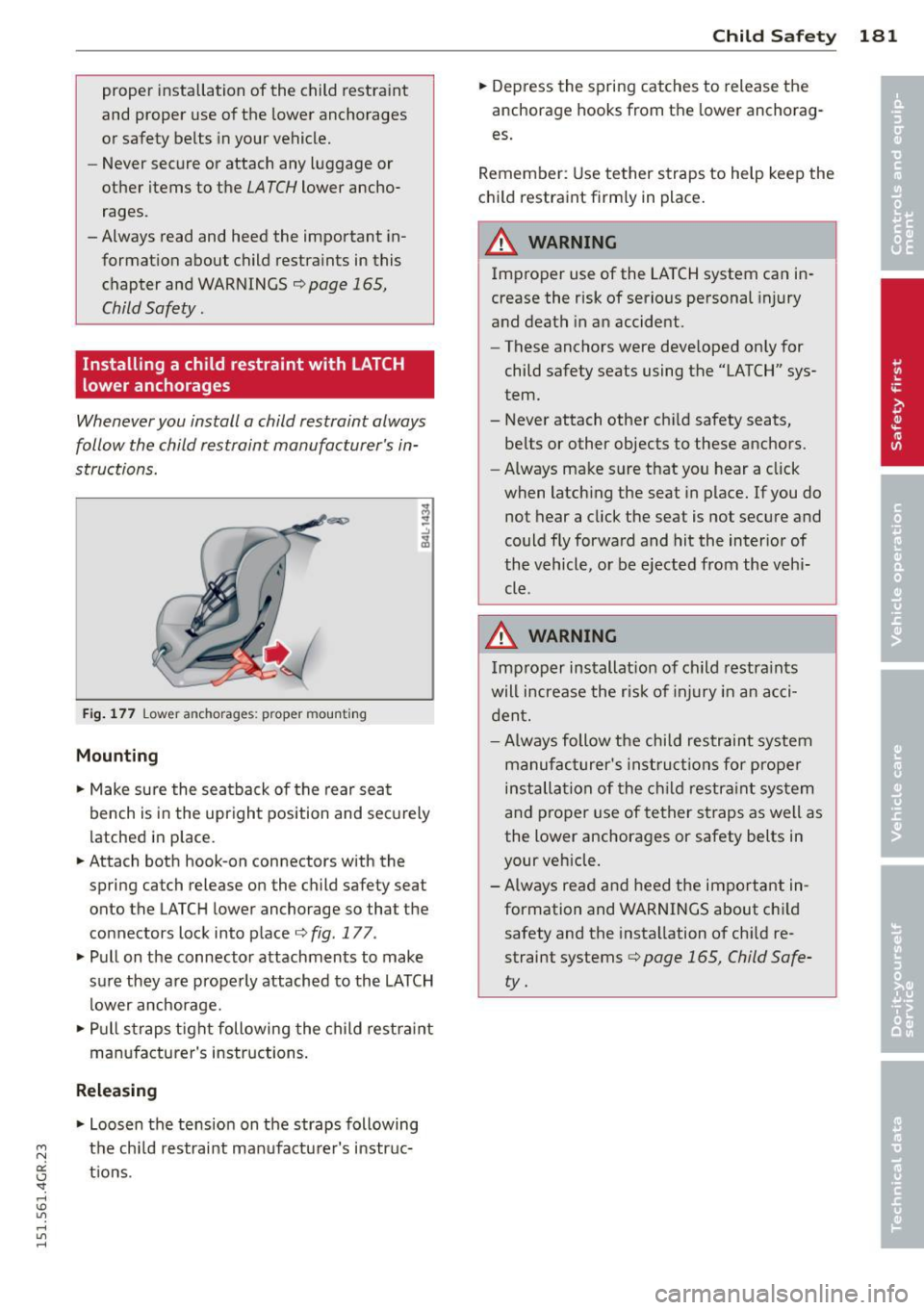
Fig. 177 Lower anchorages: p roper mo unting
Mounting
.. Make sure the seatback of the rear seat
bench is in the upright position and securely
latched in place.
.. Attach both hook-on connectors with the
spring catch release on the child safety seat
onto the LATCH lower anchorage so that the
connectors lock into place¢
fig. 177 .
.. Pull on the connector attachments to make
s ure they are properly attached to the LATCH
lower anchorage .
.. Pull straps tight following the child restra int
manufacturer's instructions.
Releasing
.. Loosen the tension on the straps following
the child restraint manufacturer's instruc
tions .
Child Safety 181
.. Depress the spring catches to release the
anchorage hooks from the lower anchorag
es.
Remember: Use tether straps to help keep the
child restraint firmly in place.
& WARNING ~
Improper use of the LATCH system can in-
crease the risk of serious personal injury
and death in an accident.
- These anchors were developed only for
child safety seats using the "LATCH" sys
tem.
- Never attach other child safety seats,
belts or other objects to these anchors.
- Always make sure that you hear a click
when latching the seat in place. If you do
not hear a click the seat
is not secure and
could fly forward and hit the interior of
the vehicle, or be ejected from the veh i
cle .
& WARNING
Improper installat ion of child restraints
will increase the risk of injury in an acci
dent.
- Always follow the child restraint system
manufacturer's instructions for proper
installation of the child restraint system
and proper use of tether straps as well as
the lower anchorages or safety belts in
your vehicle .
-Always read and heed the important in
formation and WARNINGS about child safety and the installation of child re
straint systems¢
page 165, Child Safe
ty.
-
Page 189 of 302
M N
0:: <.J 'SI: ,...., \!) ..,.,
,...., ..,., ,....,
@ Tips
Your vehicle may be equipped with Audi
connect. Your use of certain Aud i connect
features req uires wireless serv ices that are
provided by a third party wireless telecom
municat ions provider. For details regard
ing how information obtained through
Aud i connect is collected, processed,
transmitted, used, and shared, please see
your contra ct w ith the wire less telecom
municat ions provider and the "About A udi
connect" tab in your vehicle's MMI:
!MENU !
button > Audi connect > About Audi con·
nect .
Electronic Stabilization
Control (ESC)
Description
ESC helps to improve road holding and vehicle
dynamics to help reduce the probability of
skidd ing and loss of veh icle control. It works
only when the eng ine is running. ESC detects
certain difficult driv ing s ituations, including
when the vehicle is beginning to spin (yaw)
out of cont ro l and helps you to get the vehicle
back under control by select ively brak ing the
wheels, and/or red ucing engine powe r and
p roviding steering assistance to help hold the
ve hicle on the driver's intended course . The in
dicator light
m in the instrument cluster
blinks when ESC is taking action to help you
control the vehicle.
ESC has limitations.
It is important to remem
ber that ESC cannot overcome the laws of
phys ics. It will not a lways be able to help out
under all conditions you may come up against.
For example, ESC may not always be able to
h elp you master situat ions where there is a
sudden change in the coefficient of fr iction of
the road surface. When there is a sect io n of
d ry road that is s udden ly cove red with water,
slush o r snow, ESC canno t perform the same
way it would on the dry su rface.
If the vehicle
hydroplanes (rides on a c ush ion of wate r in
stead of the road surface), ESC wi ll not be
ab le to he lp you steer the veh icle because con-
Int ellig ent technolog y 187
tact with the pavement has been interrupted
and the vehicle cannot be braked or steered .
D uring fast corner ing, particular ly on wind ing
roads, ESC cannot always deal as effectively
with difficult dr iv ing s ituations than at lower
speeds.
A lways adjust your speed and driving style to
road, traffic and weather condit ions. ESC can
not override the vehicle's physical lim its, in
crease the availab le tract ion, or keep a veh icle
o n the road if road departu re is a result of
drive r inattent io n. Instead, ESC imp roves the
poss ibility of keep ing the vehicle unde r con
trol and on the road dur ing extreme maneu
vers by using the driver's steering inp uts to
help keep the vehicle going in the intended di
rection . If you are traveling at a speed that
causes you to run off the road before ESC can
provide any assistance, you may not experi
ence the benefits of ESC.
ESC is switc hed on all the time . In certain sit
uat ions when you need less traction, yo u can
switch off ASR by pressing the button
[&I
c::> page 189, fig. 180. Be sure to switch ASR
o n again when you no longer need less t rac
t ion.
The following systems are integrated in the
ESC:
Anti-lock bra king sy stem (ABS )
ABS prevents the whee ls from locking up
whe n brak ing. The vehicle can sti ll be stee red
even dur ing hard braking. App ly steady pres
s u re to the brake pedal. Do not pump the ped
al. A pulsing in the brake pedal indicates that
the system is helping you to brake the vehicle.
Brake as sist sy stem
The brake assist system can decrease braking
distance. It increases brak ing power when the
driver presses the brake peda l quickly in emer
gency s ituations. You must press and hold the
brake pedal until the situation is over. In
vehicles with adapt ive c ruise control*, the
brake assist system is more sensitive if the
distance detected to the vehicle ahead is too
small.
•
•
Page 190 of 302
188 Intelligent technology
Anti-slip regulation (ASR )
ASR reduces engine power when the drive
wheels begin to spin and adapts the force to
the road conditions. This makes it easier to
start, accelerat e and drive up hills .
Electronic differential lock (EDL )
The ED L brakes wheels that are spinn ing and
transfers the drive powe r to the o ther wheels.
This function is not availab le at higher speeds.
I n extreme cases , ED L automat ica lly switches
off to help keep the brake on the braked whee l
from ove rheating. EDL wi ll sw itch on aga in au
tomatically when conditions have returned to
norma l.
Steering recommendation
The ESC helps to stabilize the ve hicle by
changing the steering to rque.
In vehicles with dynam ic steering*, ESC also
he lps to stabilize the stee ring in critical s itua
tions.
Selective wheel torque control
Selective wheel torque control is used when
driving on curves . The front wheel on the in
side of the curve o r both wheels on the inside
of the curve are braked selective ly as needed.
This a llows more prec ise driving in curves. The
appl icable system may no t activ ate when driv
ing in wet or snowy condi tions .
A WARNING
- The ESC and its integrated systems can
not overcome the lim its posed by natural
physical laws. This is especia lly impor- tant on slippery or wet roads
. If the sys
tems beg in acting to stabilize your vehi
cle, you should immediately change your
speed to match the road and traffic con
ditions . Do not let the increased safety
provided by these systems tempt you to
take risks. Do ing so will increase the risk
of a loss of veh icle contro l, collision and
serio us pe rsonal inj uries.
- Always ad apt your speed to road, traffic
a nd wea ther conditions. The risk of los
ing con trol of the vehicle increases when
driving too fast, especially through
curves and on slippe ry or wet roads, and
when dr iv ing too close to vehicles up
ahead . The ESC and its integrated sys
tems cannot a lways prevent collisions -
there is still a risk of acc idents!
- Always accelerate with special care on
even, smooth su rfaces such as those that
are wet or covered with ice and snow.
The drive wheels can spin even w ith
these assistan ce sys tems that cannot al
ways he lp to re duce the risk of loss of ve
h icle control.
(D Tips
- ABS and ASR o nly wo rk correctly when
all four wheel s are equipped with identi
c al tires . D iffe ren t tire sizes can lead to a
reduction in engine power.
- Yo u may hear noises when the systems
descr ibed are working.
- If the ind icator lig ht
BJ or rJlll (USA
mode ls)/ l§J (Can ada models) appears,
t here may be a malfunction ¢
page 18,
r:!>page 18.
Page 192 of 302
190 Intelligent technology
Rear spoiler
The rear spoiler improves vehicle handling
and enhances driver control.
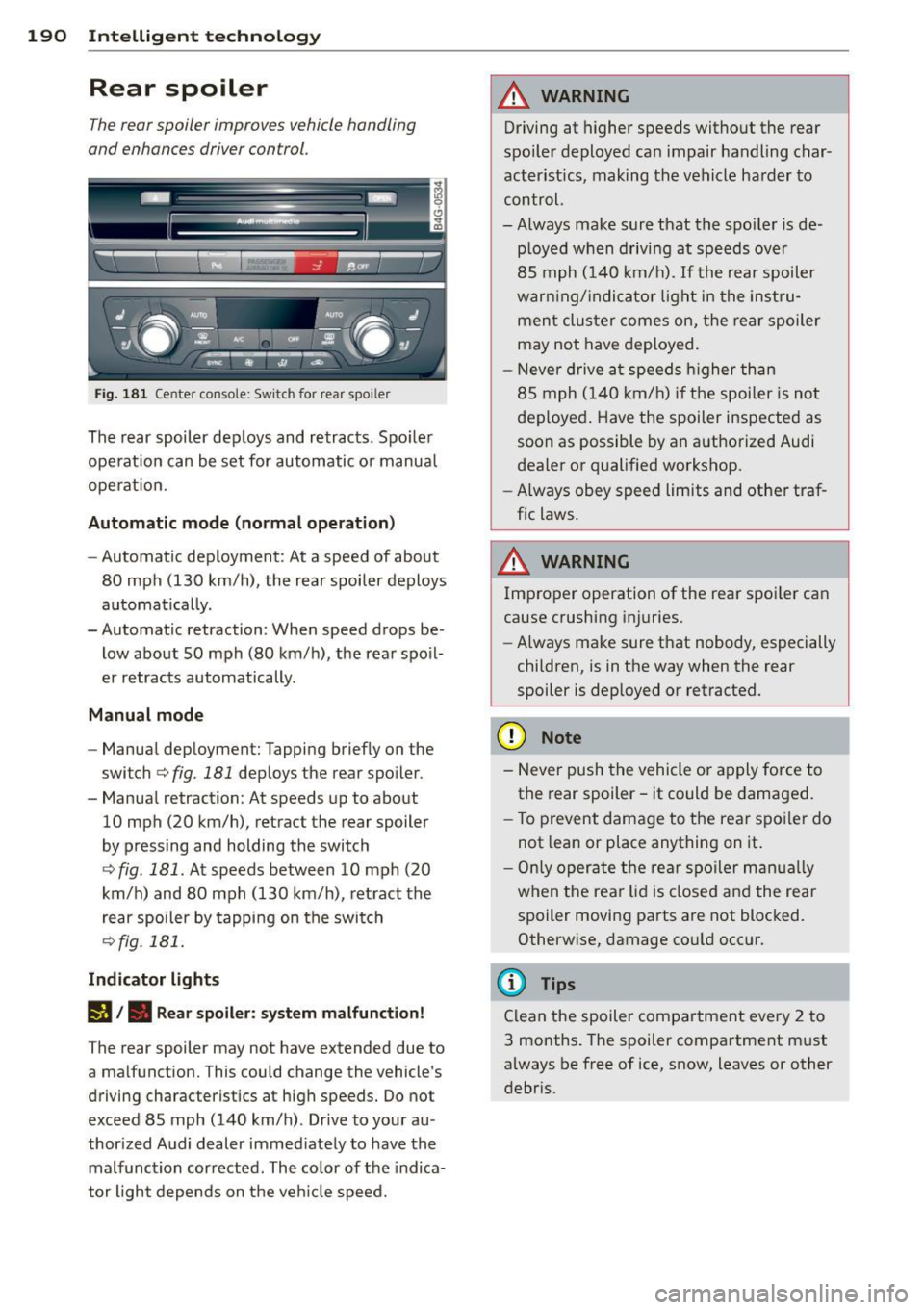
Fig. 181 Center console: Switch for rear spo iler
The rear spoiler deploys and retracts. Spoiler
operation can be set for automatic or manual
operat ion.
Automatic mode (normal operation)
-Automatic deployment: At a speed of about
80 mph (130 km/h), the rear spoiler deploys
automatically.
- Automatic retraction: When speed drops be
low about SO mph (80 km/h), the rear spoil
er retracts automatically.
Manual mode
- Manual deployment: Tapping briefly on the
switch
c:> fig. 181 deploys the rear spoiler .
- Manual retraction: At speeds up to about
10 mph (20 km/h), retract the rear spoiler
by pressing and holding the switch
c:> fig. 181 . At speeds between 10 mph (20
km/h) and 80 mph (130 km/h), retract the
rear spoiler by tapping on the switch
<=?fig. 181.
Indicator lights
I)/. Rear spoiler: system malfunction!
The rear spoiler may not have extended due to
a malfunction. This could change the vehicle's
driving characteristics at high speeds. Do not
exceed 85 mph (140 km/h). Drive to your au
thorized Audi dealer immed iately to have the
malfunction corrected . The co lor of the indica
tor light depends on the veh icle speed.
A WARNING
-Driving at higher speeds without the rear
spoiler deployed can impair handling char
acteristics, making the vehicle harder to
control.
-Always make sure that the spo iler is de
p loyed when driving at speeds over
85 mph (140 km/h) . If the rear spoiler
warn ing/ indicator light in the instru
ment cluster comes on, the rear spoiler
may not have deployed.
- Never drive at speeds higher than
85 mph (140 km/h) if the spoiler is not
deployed. Have the spoiler inspected as
soon as possible by an authorized Audi
dealer or qualified workshop.
- Always obey speed limits and other traf
fic laws.
A WARNING
Improper operation of the rear spoi ler can
cause crushing injuries.
- Always make sure that nobody, especially
children, is in the way when the rear
spoiler is deployed or retracted.
(D Note
- Never push the vehicle or apply force to
the rear spoiler -it could be damaged.
- To prevent damage to the rear spo iler do
not lean or place anything on it.
- Only operate the rear spoiler manually
when the rear lid is closed and the rear
spoiler moving parts are not blocked. Otherwise, damage cou ld occur.
(D Tips
Clean the spoiler compartment every 2 to
3 months. The spoiler compartment must
always be free of ice, snow, leaves or other
debris.
Page 209 of 302
M N
0:: <.J 'SI: ,...., \!) ..,.,
,...., ..,., ,....,
-Blend must contain not more than 15%
MTBE.
Seasonally adjusted gasoline
Many gasoline grades are blended to perform
espec ially we ll for winter or summer driving.
During seasonal change-over, we suggest that
you fill up at busy gas stat ions where the sea
sonal adjustment is more likely to be made in
time .
(D Note
-Methanol fuels which do not meet these
requirements may cause corrosion and
damage to plastic and rubber compo
nents in the fuel system .
- Do not use fue ls that fail to meet the
specified criter ia in this chapter.
- If you are unable to determine whether
or not a particular fue l blend meets the
specifications, ask your service station or
its fuel supp lier.
- Do not use fuel for which the contents
cannot be identified.
- Fuel system damage and performance
problems resulting from the use of fuels
different from those specified are not
the responsibility of Audi and are not
covered under the New Vehicle or the Emission Control System Warranties.
- If you experience a loss of fuel economy
or driveability and performance prob l ems due to the use of one of these fuel
blends, we recommend that you switch
to unblended fuel.
Gasoline additives
A major concern among many auto manufac
turers is carbon deposit build- up caused by
the type of gasoline you use.
Although gasoline grades differ from one manufacturer to another , they have certain
things in common. All gasoline grades contain
substances that can cause deposits to collect
on vital engine parts, such as fuel injectors
and intake valves. Although most gasoline brands include additives to keep engine and
Fuel supply and filling your fuel tank 207
fuel systems clean, they are not equally effec
tive .
A udi recommends using TOP TIER Detergent
Gasoline. For more info rmation on TOP TIER
Detergent Gasoline, please go to the official
website (www.toptiergas.com).
After an extended period of using inadeq uate
fuels, carbon deposit build-ups can rob your
engine of peak performance.
Q) Note
Damage or malf unct ion due to poor fue l
quality is not covered by the Aud i New Ve
hicle Limited Warranty.
Fuel tank
Fuel filler neck
The fuel filler neck is located on the right rear
side panel behind the fuel fille r flap.
If the power locking system should fail, you
can still open the flap manually -for deta iled
instruct ions see
¢ page 209 .
You can find the fuel tank capacity of your ve
hicle in
¢ page 280 .
The label on the inside of the fuel fi ller flap
tells you the correct fue l for your vehicle. For
more information about fuel specifications,
see
¢ page 206.
Your vehicle fue l tank has an on board refuel
li ng vapor recovery system. This feature helps
to prevent fuel vapors from escaping from the
tank and polluting the environment while you refuel your vehicle . In order to fill the tank
properly while protecting the environment,
please fo llow this refueling procedure careful
ly.
_&. WARNING
Under normal operating conditions, never
carry additional fuel containers in your car.
Gas canisters and other containers used to
transport f uel can be dangero us. Such con
tainers, full or empty, may leak and could
cause a fire in a collision. If you must ..,.
•
•
Page 210 of 302
208 Fuel suppl y and filli ng your fuel t ank
transport fue l to use for your lawn mower,
snow blower, etc., be very careful and al
ways observe local and state laws regard
ing the use, transportat ion and storage of
such fuel containers . Make certain the con
tainer meets industry standards (ANSI/
AS TM F852 -86) .
(D Note
Never drive your vehicle until the fuel tank
is completely empty. The irregular supply
of fuel can cause misfiring . Gasoline could
e nte r the exhaust sys tem and damage t he
catalyt ic converter.
Refuelling
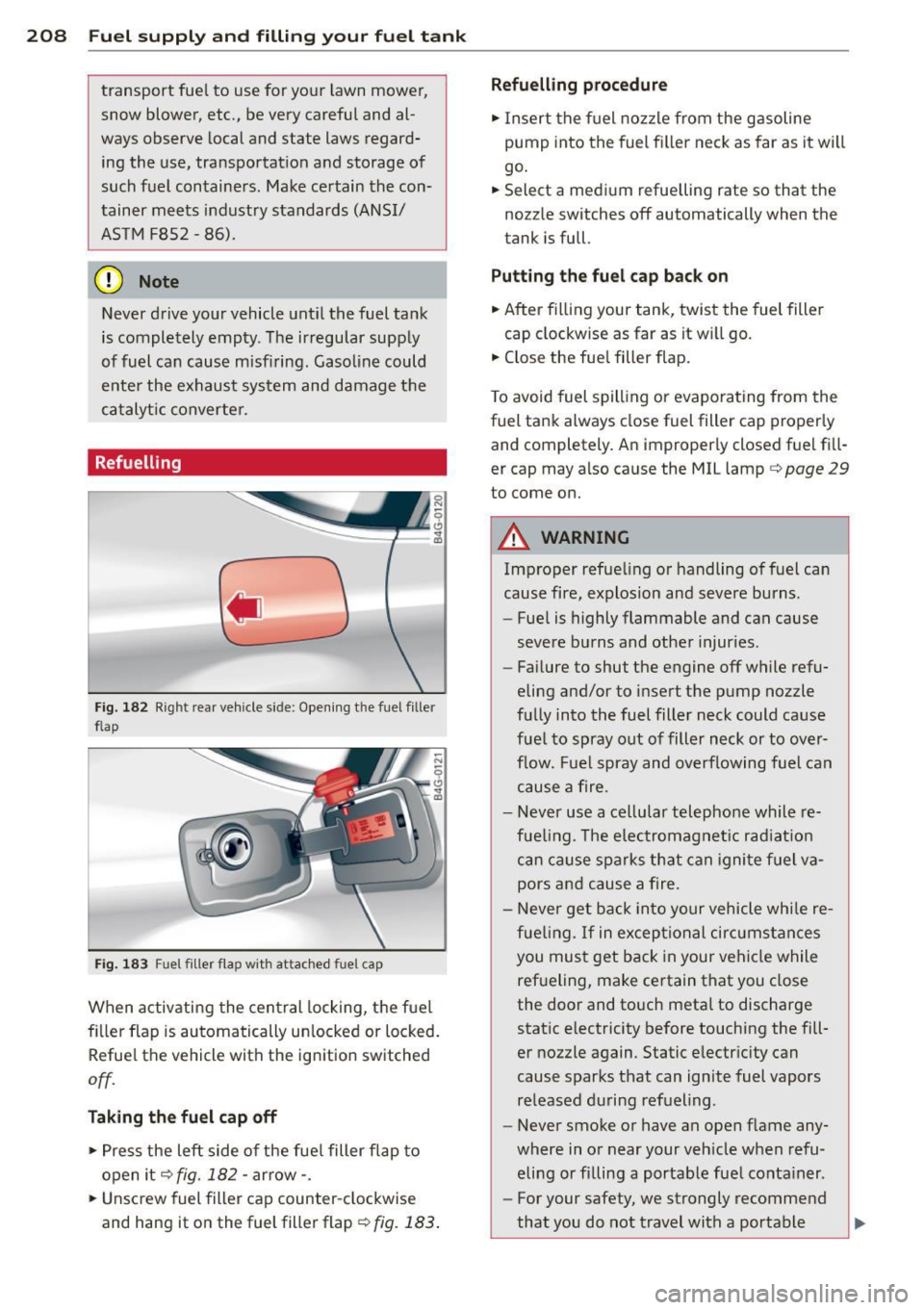
Fig. 18 2 Rig ht rea r veh icle s ide: Ope ning the fuel fille r
f lap
Fi g. 1 83 Fuel filler fla p with attached fuel c ap
When activating the central locking, the fuel
fi ller flap is automatically un locked or locked.
Refue l the vehicle with the ignition switched
off.
Taking the fu el cap off
• Press the left side of the fue l filler flap to
open it
q fig . 182 -arrow-.
• Unsc rew fuel filler cap counter-clockwise
and hang it on the fuel fill er flap
¢ fig. 183 .
Refuelling proc edur e
• Insert the fuel nozzle from the gasoline
pump into the fuel fi ller neck as far as it wi ll
go .
• Sele ct a med ium r efuelling rate so that the
no zz le switches off automatically when the
tank is full.
Putting the fu el cap back on
• After fi lling your tank, twist the fuel filter
cap clockwise as far as it w ill go.
• Close the fue l fill er flap.
T o avoid fuel spilling or evaporating from the
fuel tank always close fuel filter cap properly and completely. An improperly closed fuel fi ll
er cap may also cause the MIL lamp¢
page 29
to come on.
A WARNING
Improper refue ling or handling of fuel can
cause fire, explosion and severe burns.
- Fuel is highly flammable and can cause
severe burns and other injur ies .
- Fai lure to shut the engine off while refu
eling and/or to insert the pump nozzle
fully into the fuel filter neck could cause
fuel to spray out of filler neck or to over
flow. Fue l spray and overflowing fuel can
cause a fire.
- Never use a ce llular telephone while re
fue ling . Th e electromagnet ic rad iat io n
can cause sparks that can igni te fuel va
pors and cause a fire.
- Never get back into your vehicle whi le re
fue ling.
If in exceptional circumstan ces
you must get back in your vehicle while
ref ueling, make certain that you close
the door and touch metal to discharge
static electricity before touching the fill
er nozzle again . Static electricity can
cause sparks that can ignite fuel vapors
re leased during refueling .
- Never smoke or have an open f lame any
where in or near your veh icle when refu
eling or filling a portable fue l conta iner .
- For your safety, we strongly recommend
that you do not travel with a portable
Page 211 of 302
"' N
a:: I.J "". rl I.O
"' rl
"' rl
fuel container in your vehicle. The con
tainer, full or empty may leak and co uld
cause a fire, especially in a crash.
- If, under exceptional circumstances, yo u
must transport a portable fuel container,
please observe the following:
- Never fi ll a po rtable fue l container
while it is anywhe re in or on the vehicle
(for examp le, in the luggage compar t
ment, or on the tr unk). Static electric i
ty can bui ld up while fi lling and can ig
n ite fue l vapors causing a fire .
- Always p lace a portable fuel container
on the gro und before filling.
- Always keep the fi ller nozzle comp lete
ly inside the po rtable conta iner before
and during filling.
- If filling a portable container made of
metal, the filler nozz le must always be
in contact with the container. Th is w ill
he lp prevent static electricity from dis
charging and cause a fi re .
- Never sp ill fuel inside the vehicle or
luggage compartment. Fue l vapors are
h ighly f lammable .
- Always observe local and state/provin
cial laws regard ing the use, storage
and tra nsporta tion of fuel co ntainers .
- Make certai n the fuel container meets
industry standards (ANSI/ ASTM
F 8 52 -86) .
(D Note
If any f uel has spilled onto t he car, it
should be removed immediate ly to prevent
damage to the paint.
~ For the sake of the environment
As soon as the correctly operated nozzle sw itches off automatically fo r the fi rst
time, the tank is full. Do not try to add more fue l because fue l may spill out . In
add it io n, th e expans io n sp ace in the fuel
t ank will be fi lled -cau sin g the fue l to
over flow whe n it be come s w arm a nd pol
lu te the env iro nment.
Fu el suppl y and filli ng your fuel t ank 209
@ Tips
- Ru nning your eng ine whi le refue lli ng
may cause vapors to escape or even
cause fuel to sp ill out of the tank. T his
would then shut off the fuel nozzle be
f o re the ta nk is f ull.
- Do not refuel you r vehicle with the ign i
tion switched on. The fuel gauge may
ot herwise not i nd icate the correct fue l
lev el after r ef u ell ing .
- The fue l filler flap of yo ur vehicle is not
locked when you lock t he ve hicle from
t he insid e.
Fuel filler flap emergency release
You can open the fuel filler flap by hand if the
power locking system should fail .
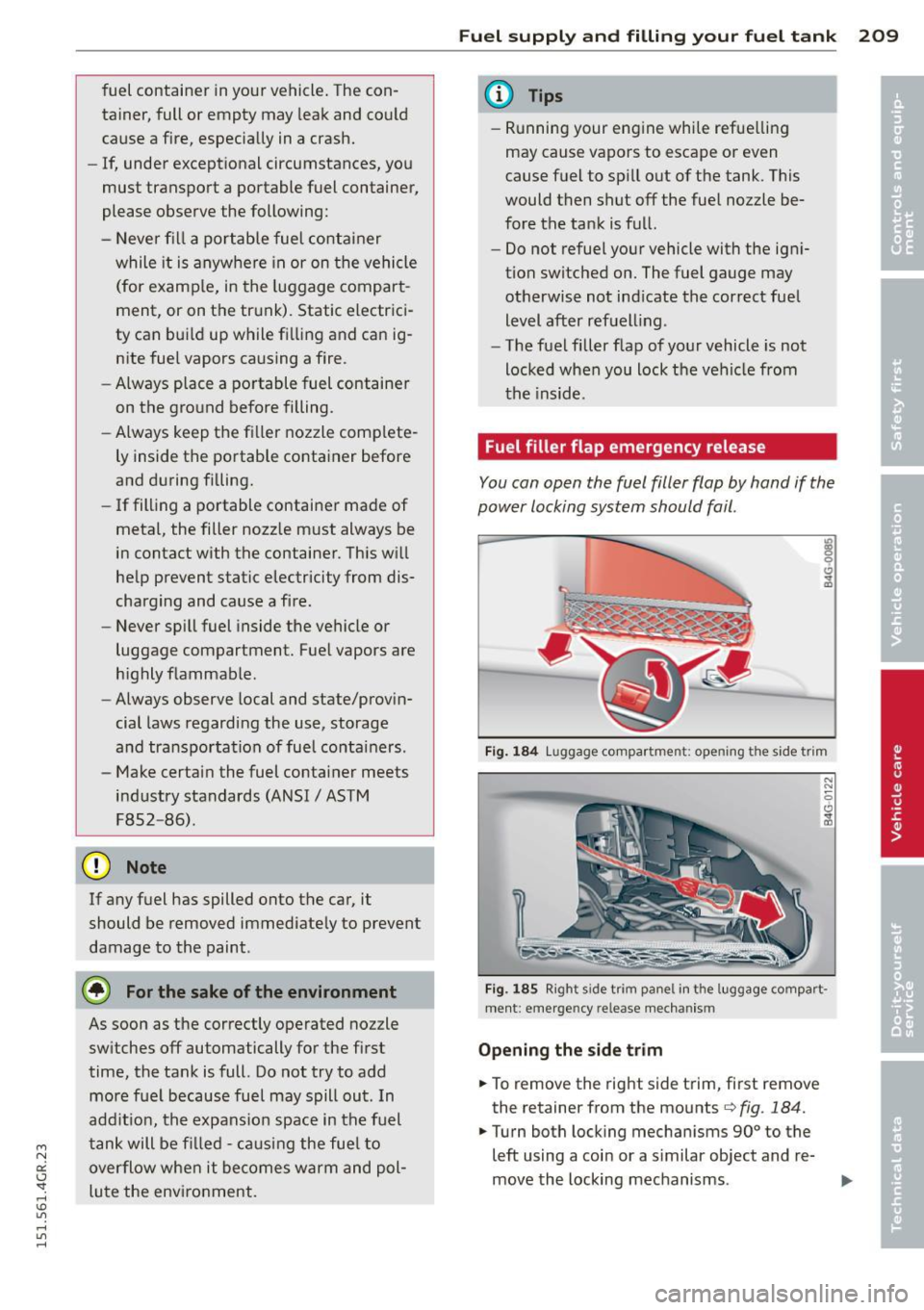
Fig. 184 Luggage compa rtme nt: ope ning th e side trim
N
"' 0
~
Fig . 185 Right s ide tri m pane l in th e luggage com part ·
m ent : eme rge ncy re lease mechan is m
Opening the side trim
.. To remove the rig ht side t rim, first remove
the retainer from the mounts¢
fig. 184.
.. Turn both lock ing mechan isms 90° to the
left using a coin or a s imilar object and re-
move the locking mechanisms .
11J,,
Page 214 of 302
212 Check ing and filling
- Always disconnect the battery.
- Never smoke or work near heaters or open flames . Fluids in the engine com
partment could start a fire.
- Keep an approved fire extinguisher im
mediately available.
- To avoid electrical shock and persona l in
jury while the engine is running or being started, never touch:
- Ignition cables
- Other components of the high voltage
electronic ignition system.
- If you must perform a check or repa ir
with the engine running:
- Fi rst, fully apply the parking bra ke,
move se lec to r lever to P (Pa rk) .
- Always use extreme caution to preven t
clot hing, jewe lry, or long h air from ge t
ting caught in the radiator fan, V -belts
or other moving parts, or from contact ing hot parts. Tie back hair before
start ing, and do not wear cloth ing that
will hang or droop into the eng ine.
- Min imize exposure to emission and
chemica l hazards¢ ,&..
A WARNING
California Propos ition 65 Warning:
- Engine exhaust, some of its constituents,
and certa in veh icle components conta in
or emit chemicals known to the State of
Califor nia to cause cancer and b irth de
fec ts a nd reproduct ive ha rm. In addition,
certain fluids conta ined in vehicles and
certa in prod ucts of co mponent wear co n
ta in o r emi t chemicals known to the
State o f Ca lifornia to cause can cer and
birth defects or ot her reproductive harm. -
Battery posts, terminals and re lated ac
cessories conta in lead and lead com
pounds, chemicals known to the State of
California to cause cance r and reproduc
tive harms. Wash hands after handling .
(D Note
When adding flu ids, always make sure that
they are poured into the proper conta iner
or f iller opening, otherwise serious dam
age to vehicle systems w ill occur.
® For the sake of the environment
To detect leaks in time, inspect the vehicle
floor pan from underneath regularly. If
you see spots from oil or other ve hicle flu
i ds, have yo ur vehicle inspected by a n au
thori zed Audi dea le r.
Closing the engine hood
.,. Pull the hood down un til the pressure from
t he struts is reduced.
.,. Let the hood drop down and latch in p lace .
Do not try to push it shut; it may fail to en
gage ¢&_ .
A WARNING
-
A hood that is not completely latched
could fly up and b lock your view while dr iv
ing.
- When you close the engine hood, check it
to make sure the safety catch has p roper
ly engaged. The hood sho uld be flush
with the surrou nding vehicle body pa rts.
- If you notice while driv ing t hat the hood
is not s ecured prope rly, stop at onc e and
close it.
Page 220 of 302
218 Check ing and filling
fig . 188. With a cold engine, the coo lant
l evel should be between the "min" and
"max" markings . When the engine is warm ,
the leve l may be slightly above the "max"
mark ing .
The location of the coolant expansion tank
can be seen in the engine compartment illus
tration
9 page 213.
To obtain an accurate reading, the engine
must be switched off .
The expans ion tank in you r vehicle is equipped
with an e lectric coolant level sensor.
When the coolant level is too low, the warning l ight in the Auto-Check System
9 page 15 w ill
illum inate unti l you add coolant and the level
has been restored to normal. Even though
there is an electric coolant level senso r, we
still recommend you check the coolant leve l
from time to time .
Coolant loss
Coolant loss may indicate a le ak in the cooling
system . In the event of coolant loss, the cool
ing system should be inspected immediately
by your authorized Audi dealer. It is not
enough merely to add coolant.
I n a
s ealed system, losses can occur only if
the boiling point of the coolant is exceeded as
a result of overheating.
A WARNING
The cooling system is under pressure and can get very hot. Reduce the risk of scald
ing from hot coolant by followi ng these
steps .
- Turn off the engine and allow it to coo l
down.
- Protect your face, hands and arms from
escaping fluid and steam by covering the
cap with a large, thick rag .
- Turn the cap slowly and very carefu lly in
a counter-clockwise direction w hile ap
plying light, downward pressure on the
top of the cap . -
To avoid being burned, do not spi ll anti
freeze or coolant on the exha ust system
or hot engine parts. Under certain cond i
tions, the ethylene glycol in engine coo l
a nt can catch fire.
(D Note
Do not add any type of radiator leak sea l
ant to your veh icle's engine coolant. Add
i ng radiator repair fluid may adverse ly af
fect the funct ion and pe rformance of you r
cooling system and could result in damage
not cove red by your New Veh icle Limited
War ran ty.
Adding coolant
Be very careful when adding engine coolant.
Befo re you check anyth ing in the eng ine com
partment,
always read and he ed all WARN
INGS ¢ ..&. in Working in the engine compart
ment on page
211.
" Requirement: There must be a residua l
amo unt of coolant in the expansion ta nk
¢ (D .
"Tu rn off the engi ne.
" Le t the eng ine cool down.
" Place a thick rag over the coolant expansion
t ank
9 page 217, fig. 191 and ca refully
twist the cap counter-clockwise ¢&,, .
" Add coolant m ixed in the correct rat io
¢
page 217, Coolant up to the MAX mark
ing.
" Make sure that the flu id leve l remains sta -
ble . Add more coo la nt if necessary .
" Twist the cap o n again
tightly .
Replacement engine coo lant must conform to
exact spec ificat ions ¢
page 217, Coolant.
We recommend using only coolant add i-
tive
Gl2++, Gl3 or in an emergency Gl2 +. Do
not use a d ifferent addit ive . In an emergency
use p la in water until you can get the correct
additive and can resto re the co rrect rat io . This
shou ld be done as soon as possib le. .,..