instrument panel AUDI S4 2016 User Guide
[x] Cancel search | Manufacturer: AUDI, Model Year: 2016, Model line: S4, Model: AUDI S4 2016Pages: 278, PDF Size: 70.26 MB
Page 144 of 278
Airbag syste m
Front airbags
Description of front airbags
The airbag system can provide supplemental
protection to properly restrained front seat occu
pants.
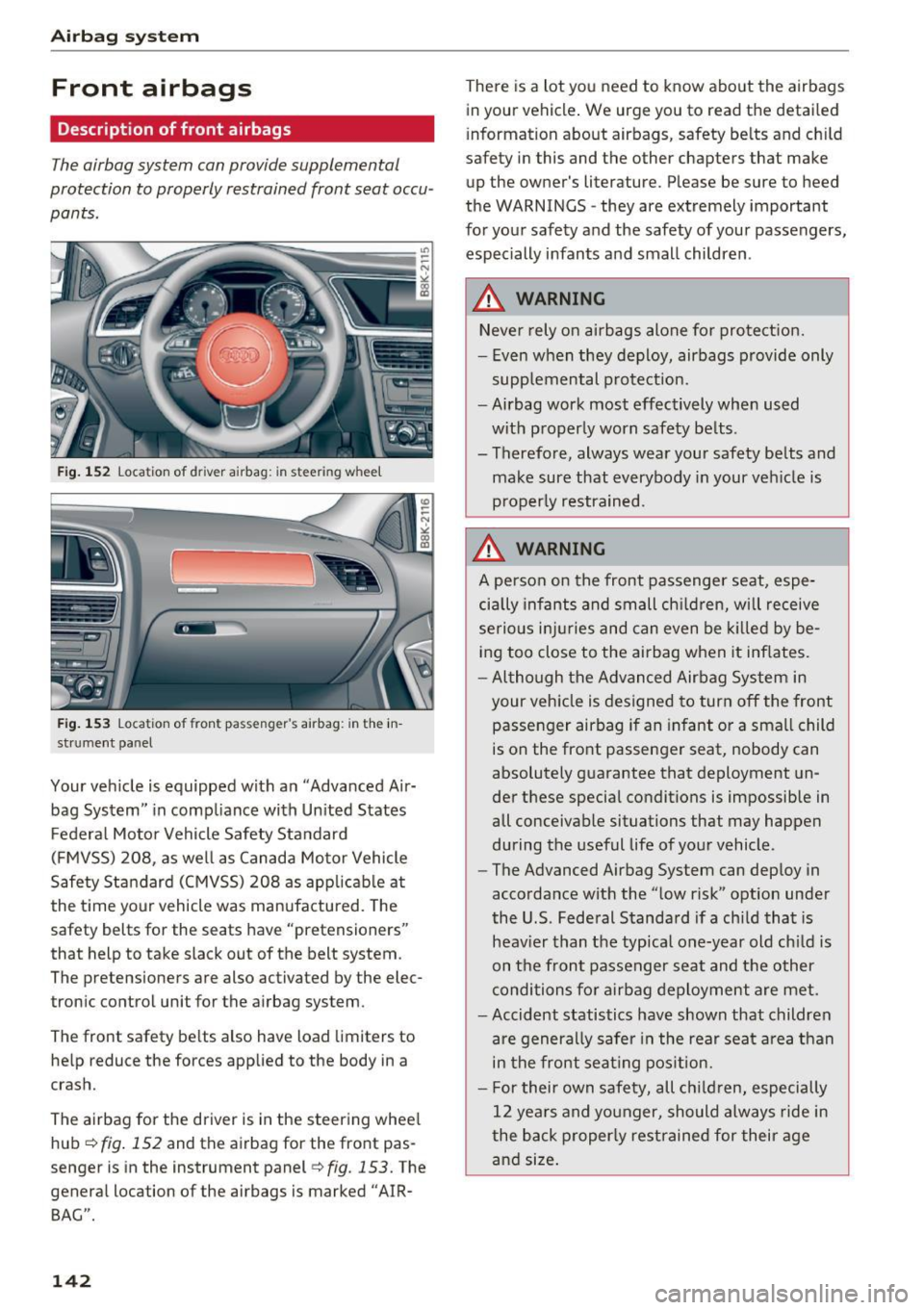
Fig. 152 Location of driver airbag: in steering whee l
Fig. 153 Location of front passenger's airbag: in the in
strument panel
Your veh icle is equipped with an "Advanced Air
bag System" in compliance with Un ited States
Federa l Motor Vehicle Safety Standard
(FMVSS) 208, as well as Canada Motor Vehicle
Safety Sta ndard (CMVSS) 208 as app licable at
the time your vehicle was manufactured. The
safety belts for the seats have "pretensioners"
that help to take slack out of the belt system.
The pretensioners are also activated by the elec
tronic control unit for the airbag system.
The front safety be lts also have load limiters to
help reduce the forces applied to the body in a
crash.
The airbag for the driver is in the steering wheel
hub
<=>fig . 152 and the airbag for the front pas
senger is in the instrument panel
<=>fig. 153. The
general location of the airbags is marked "AIR
BAG".
142
There is a lot you need to know about the airbags
in your vehicle . We urge you to read the detailed
i nformation about airbags, safety belts and child
safety in this and the other chapters that make
up the owner's literature. Please be sure to heed
the WARNINGS -they are extremely important
for your safety and the safety of your passengers,
especially infants and small children .
.&_ WARNING -
Never rely on airbags alone for prote ct ion.
- Even when they deploy, airbags provide only supp lemental protection.
- Airbag work most effectively when used with properly worn safety be lts.
- Therefore, always wear your safety belts and make sure that everybody in your veh icle is
properly restrained .
.&_ WARNING
A person on the front passenger seat, espe
cially infants and small ch ildren, wi ll receive
serious inju ries and can even be killed by be
ing too close to the airbag when it inf lates.
- Although the Advanced Airbag System in
-
your vehicle is designed to turn off the front passenger airbag i f an infant or a small child
is on the front passenger seat, nobody can
absolutely guarantee that deployment un
der these special conditions is impossible in
all conceivable situations that may happen
during the useful life of your vehicle.
- The Advanced Airbag System can deploy in
accordance with the "low risk" option under
the U.S. Federal Standard if a child that is
heav ier than the typical one-year old ch ild is
on the front passenger seat and the other
conditions for airbag deployment are met.
- Accident statistics have shown that children are generally safer in the rear seat area than
in the front seat ing pos ition.
- For their own safety, all chi ld ren, especially
12 years and younger, should always ride in
the back proper ly restrained for their age
and size .
Page 145 of 278
..... N
0 ::..:: co .....
Your vehicle is equipped with a front Advanced
Airbag System in compliance with Un ited States
F edera l Motor Vehicle Safety Standard 208, as
well as Canada Motor Vehicle Safety Standard
(CMVSS) 208 as applicable at the time your vehi
cle was manufactured .
The front Advanced Airbag System supp lements
the safety belts to provide additional protection
for the driver 's and front passenger's heads and
upper bodies in frontal crashes . The airbags in
f late only in frontal impacts when the veh icle de
celerat ion is high enough.
The front Advanced Airbag System for the front
seat occupants is not a substitute for your safety be lts . Rather, it is part of the overall occupant re
stra int system in your vehicle. Always remember
that the airbag system can on ly help to protect
you, if you are sitting upr ight, wear ing your safe
ty belt and wear ing it prope rly . This is why you
and your passengers must always be prope rly re
stra ined, not just beca use the law req uires yo u to
be .
The Advanced Airbag System in your veh icle has
been ce rtified to meet the "low r is k" requi re
ments fo r 3 and 6 ye ar-old children o n the pas
senger side and very sma ll adults on the drive r
side . The low risk dep loyment cr iteria are intend
ed to help reduce the risk of injury through inter
action with the front a irbag that can occur, for
examp le, by being too close to the steering wheel
and instrument panel when the airbag inflates .
In addition, the system has been certified to
comp ly with the "suppression" requirements of
the Safety Standard, to turn off the front a irbag
for i nfants 12 months old and younger who are
restrained on the front passenger seat in child re
stra ints that are listed in the Standa rd
¢ page 160, Child restraints and Advanced Air
bags.
"Suppress ion" requ ires the front a irbag on the
passenger side to be turned off if:
- a ch ild up to about one year of age is restra ined
on the front passenger seat in one of the rear
facing or forward -fac ing infant restra ints listed
Airb ag sys tem
in Federal Motor Veh icle Safety Standard 208
with which the Advanced Airbag System in your
veh icle was certif ied. For a List ing of the child
restraints that were used to certify your vehi
cle's compliance with the US Safety Standard
¢page 160,
-weight less than a threshold level stored in the
control un it is detected on the front passenger
seat .
When a person is detected on the front passen ger seat, weighing more than the total weight of
a chi ld that is about
1 year old restra ined in one
of the rear-facing or forward -fac ing infant re
straints (listed in Federal Motor Veh icle Safety
Standard 208 with w hich the Advanced A irbag
System i n your veh icle was certified), the front
airbag on the passenge r side may o r may not de
ploy .
T he
PAS SENGER AIR BAG OFF lig ht comes o n
whe n the elect ronic con trol uni t detects a tota l
weight on the fron t passenger sea t th at req uires
the front a irbag to be turned off . If th e
PASSEN
GER AIR BAG OFF
light does not come on, the
front airbag on the passenger side has not been
turned off by the control unit and can dep loy if
the control unit senses an impact that meets the
condit io ns stored in its memory .
If the total weight on the front passenger seat is
more than that of a typica l 1 year-old, but less
than the weight of a small adult, the front airbag
o n the passenger s ide may deploy (the
PAS SEN
GER AIR BAG OFF
light does not come on) .
For example , the ai rb ag may deploy if :
- a small ch ild that is heav ier than a typ ica l 1
yea r-o ld child is on the front passenger seat
(regard less of whether the child is in one of the
child safety seats listed
¢ page 160),
- a child who has outgrown c hild restraints is on
the front passenger seat.
If the front passenge r a irbag is t urned off, the
PASSENGER AIR BAG OFF light in the center of
the instr ument pane l wi ll come on and stay on .
T he front airbag on the passenger s ide m ay
not
deploy (the PASSENGER AIR BAG OFF light does
not illuminate and stay lit) if: ..,.
143
Page 147 of 278

..... N
0 ::..:: co .....
ger seat contains important parts of the Ad
vanced A irbag System, you must take care to pre
vent it from being damaged. Damage to the seat may prevent the Advanced Airbag for the front
passenger seat from doing its job in a crash .
The front Adv anced Airb ag Sy stem con sist s
of the following :
-Crash sensors in the front of the vehicle that
measure vehicle accelerat ion/decelerat io n to
provide information to the Advanced Airbag
System about the severity of the crash .
- An electronic control un it, with integrated
crash sensors fo r front and side impacts . The
contro l unit "decides" whether to fire the front
airbags based on the information received from
the crash sensors. The control unit also "de
cides" whether the safe ty be lt pretens ioners
sho uld be activated.
- An Advanced Airbag wi th gas generato r and
contro l valve for the driver ins ide the steer ing
whee l hub .
- An Advanced Airbag with gas generator and
contro l valve inside the instrument pane l for
the front passenger.
- A weight -sensing mat under t he upho lstery
padding of the front passenger seat cushion
that meas ures the total weight on the seat . The
information registered is sent continuously to
the electron ic control unit to regulate dep loy
ment of the front Adva need A irbag on the pas
senger side.
- An airbag monitoring system and indicator
light i n the instrument cluster
¢ page 148.
-A sensor in each front seat registers the dis
tance between the respective seat and the
steering wheel or instrument panel. The infor
mation reg istered is sent cont inuous ly to the
electroni c control unit to regulate deployment
of the fro nt Adv a need A irbags.
- T he
PASS EN GE R AIR BAG OFF light comes on
and stays on in the center of the instrument
pane l¢
page 148, fig . 155 a nd tells you when
the fron t Advan ced Airbag on the passenge r
side has been turned off.
- A se nsor below the safe ty bel t lat ch fo r th e
front seat passenger to meas ure the tens ion on
Airb ag sys tem
the sa fe ty belt. The tension on the safety belt
and the weight registered by the weight-sens
ing mat help the contro l unit "decide" whether
the front airbag for the front passenger seat
should be turned off or not¢
page 139, Child
restraints on the front seat -some important
things to know.
- A sensor in the safety belt latch for the driver
and for the front seat passenger that senses
whether that safety belt is latched o r not and
t ransmits this information to t he electronic
cont rol un it.
_& WARNING
Da mage to the front passenge r seat can pre
vent the front airbag from working properly.
- Imp roper repair or disassembly of the fro nt
passenger and driver seat will p revent the
Advanced Airbag System from f unct ioning
p roperly.
- Repairs to the front passenger seat must be
performed by qualified an d properly trained
wo rkshop personne l.
- Never remove the front passenge r or driver
seat from the vehicle.
- Never remove the upholstery from the front
passenger seat.
- Never disassemble o r remove par ts from the
seat o r disconnect w ires from it.
- Never ca rry sharp objects in your pocke ts or
p la ce them on the seat. If the weight-sens
ing mat in the passenger seat is punctu red
it cannot work proper ly.
- Never carry things on your lap or carry ob
jects on the passenge r seat. S uch items can
increase the weight reg istered by the
weight-sensing mat and send the wrong in
formation to the a irbag control unit.
- Never store items unde r the front passenger
seat. Parts of the Advanced Airbag System
under the passenger seat could be dam
aged, p reventing them and the airbag sys
tem from worki ng p roper ly.
- Never p lace seat covers or replacement up
holstery tha t have not been specifically ap
p roved by A udi on the front seats.
- Seat covers can prevent the Advanced A ir
bag Sys tem from recognizing chi ld
145
Page 151 of 278

..... N
0 ::..:: co .....
the center of the instrument panel
¢ fig. 155 .
The PASS ENGER AIR BAG OFF light will come on
and stay on to tell you when the front Advanced
Airbag on the passenger side has been turned off
by the electronic control unit . Each time you turn
on the ignition, the
PASSENGER AIR BAG OFF
light will flash for a few seconds and:
- will stay on if the front passenger seat is not
occupied,
- will stay on if the re is a sma ll child or child re
straint on the front passenger seat,
- wi ll go out if the front passenge r seat is occu
pied by an adult as registered by the weight
sensing mat.
The
PA SSENGER AIR BAG O FF light mu st c ome
on and sta y on
if the igni tion is on and
- a car bed has been insta lled on the front seat,
o r
- a rearward-facing child restrai nt has been in
stalled on the front passenger seat , or
- a forward-facing child restra int has been instal
led on the front passenger seat, or
- the weight reg istered on the front passenger
seat is equal to or less than the comb ined
weight of a typical 1 yea r-o ld restrained in one
of the rear-facing or forward-fac ing infant re
strain ts listed in Federal Motor Vehicle Safety
Standard 208 w ith which the Advanced A irbag
System in your vehicle was certified.
I f the front passenger seat is no t occupied, the
fron t air bag w ill not deploy, and the
PASSENGER
AIR BAG OFF
light will stay on . Never inst all a
rearward -fac ing child restraint on the front pas
senger seat, the safest p lace for a child in any
kind of child restraint is at one of the seating po
sitions on the rear seat
¢page 139, Child re
strain ts on the front seat -some important
things to know
and ¢ page 158, Child safety .
If the PASSENGER AIR BAG OFF light comes on
when one of the condit ions listed above is met,
be sure to check the light regularly to make cer
tain that the
PASSENGER AIR BA G OFF light
stays on cont inuously whenever the ign ition is
on . If the
PASSENGER A IR BAG OFF lig ht does
Airb ag sys tem
not appear and not stay on all the time, stop as
soon as it is safe to do so and
- react ivate the system by tur ning t he ignit ion
off and then t urn ing it on again ;
- remove and re insta ll the chi ld restrain t. M ake
sure that the chi ld restraint is properly ins ta l
led and that the safety belt for the front pas
senger seat has bee n correct ly routed around
the child restraint as desc ribed in the c hild re
straint manufacturer's instruct ions;
- make sure that the convertible locking retrac
tor on the safety belt for the front passenge r
seat has been activated and that the safety belt
has been pulled tight. The belt must not be
loose or have loops of slack so that the sensor
below the safety belt latch on the seat can do
its job
¢ page 167.
-make sure that th ings that may increase the
weight of the child and ch ild safety seat are not
be ing transported on the front passenger seat;
- make sure that the safety belt tens ion sensor is
not b locked . Shake the safety belt la tch on the
front passenger seat bac k and forth;
- If a strap or tether is being used to tie the child
safety seat to the front passenger seat, make
sure that it is not so tight t hat i t causes the
weight-sensing mat to me asu re more weight
than is actua lly on the sea t.
If the PASSENGER AIR BAG OFF light still do es
not come on
and does not stay on co nti nuously
(whe n the ignition is switched on),
- take the child restraint off the front passenge r
seat and install it p roper ly at one of the rear
seat pos itions . Have the airbag system inspect
ed by yo ur au thori zed Audi deale r immedi ately .
- move the child to a rear seat pos ition and ma ke
sure that t he chi ld is proper ly rest rained in a
child restra int that is appropr iate for its s ize
and age .
T he
PASSENGER AIR BAG OFF lig ht should NOT
come on when the ignit io n is on and an adu lt is
s itting in a prope r seat ing pos ition on the front
passenge r seat. If the
PASSENGER AIR BAG OFF
light comes on and stays on or flashes for about
5 seconds whi le dr iv ing, under these c ircumstan-
ces, make sure that :
Ill-
149
Page 152 of 278
Airbag syste m
-the adu lt on the front passenger seat is proper
ly seated on the center of the seat cushion with
his or her back up against the backrest and the
backrest is not reclined
c> page 122, Correct
passenger seating positions,
-the adu lt is not taking weight off the seat by
holding on to the passenger assist handle
above the front passenger door or supporting
their we ight on the armrest,
- the safety belt is being properly worn and that
there is not a lot of slack in the safety belt web
bing,
- accessory seat covers or cushions or other
th ings that may cause an incorrect read ing or
impression on the weight-sensing mat under
the upho lstery of the seat have been removed
from the front passenge r seat,
- a safety be lt extender has not been left in the
safety belt latc h for the front passenge r seat.
In addition to the
PASSE NGER AIR BAG OFF
light in the center of the instrument panel, the
message
PASSENGER AIR BAG OFF or PASSEN
GER AIR BAG ON
w ill briefly appear in the inst ru
ment cluster display . T his is to inform the driver
of the current front passenger airbag status.
Important safety instructions on
monitoring the Advanced Airbag System
A WARNING
An airbag system that is not funct ion ing prop
er ly cannot p rovide supplemental p rotection
in a frontal crash.
- If the airbag indicato r light
r=>page 19
comes when the vehicle is be ing used, h ave
the system inspected immediate ly by yo ur
authorized Aud i dealer. It is possible that
the airbag will inflate when it is not s up
posed to, or will not inflate when it should.
A WARNING
If the front airbag inflates, a child without a
child restraint, in a rearward-facing child safe
ty seat or in a forward-facing child restraint
that has not been properly installed will be
ser iously injured and can be killed .
150
-Even though your vehicle is equipped with
an Advanced A irbag System, make certain
that all children, espec ia lly 12 years and
younger, always ride on the back seat prop
erly restrained for their age and s ize.
- Always install forward or rear-facing child
safety seats on the rear seat -even with an
Advanced A irbag System.
- If you must install a rearward-facing child
safety seat on the front passenger seat be
cause of exceptional circumstances and the
PASSENGER AIR BAG OFF l ight does not
appear and s tay on, immedi ately ins tall the
rear-facing child safety seat in a re ar seat ing
position and have the a irbag system in
spected by your a uthorized Audi dea ler.
- A t ight tether or other s trap on a rearward
facing chi ld restraint attached to the front
passenger seat can put too much pressure
on the weight-sensing mat in the seat and
register more weight than is actually on the
seat. The heavier weight registered can
make the system work as thoug h an adu lt
were on the seat and deploy the Advanced
Airbag when it must be suppressed causing
serious or even f atal injury to the child.
- If, in exceptional circumstances, you must
install a forward-fa cing child res traint on
the front p assenge r seat, always move the
seat into i ts rearmost posi tion in the sea t's
fore and aft ad justment range, as far away
from the ai rbag as possible . The back rest
must be adjusted to an upr ight position.
Make sure that the
PASSENGER AIR BAG
OFF
li ght comes on and stays on all the time
wheneve r the ignit ion is switched on.
A WARNING
- If the PASSENGER AIR BAG OFF light does
not go out when an adult is sitting on the
front passenger seat afte r taking the steps
described above, make s ure the adult is
p roper ly sea ted and restra ined at one o f the
rear sea ting posit ions .
- Have the ai rbag system inspec ted by your
author ized Audi dealer befo re t ransporting
anyone on the front passenger seat.
Page 153 of 278
..... N
0 ::..:: co .....
If the weight-sensing mat in the front passen
ger seat detects an empty seat, the front air
bag on the passenger side will be turned off,
and
P ASS ENGER AIR B AG OFF will stay on.
Repair , care and disposal of the airbags
Parts of the a irbag system are installed at many
d ifferent p laces on your Aud i. Installing, remov
ing, servicing o r repa iring a part in an area of the
vehicle can damage a pa rt of an airbag system
and prevent that system from working properly in a co llision.
There are some importa nt things you have to
know to make sure that the effectiveness of the
system w ill not be impaired and that discarded
components do not cause injury or pollute the
environment.
A WARNING
Improper care, serv icing and repair proce
dures can increase the r isk of personal injury
and death by preventing an airbag from de
ploying when needed or deploying an airbag
unexpectedly :
-
-Never cover, obstruct, or change the steer
ing wheel horn pad or a irbag cover or the in
strument panel or mod ify them in any way .
- Never attach any objects such as cupholders
or telephone mountings to the surfaces cov
er ing the airbag units .
- For cleaning the horn pad or instrument panel, use only a soft, dry cloth or one mois
tened with plain water. Solvents or cleaners
cou ld damage the a irbag cover or change
the stiffness or strength of the mater ial so
that the airbag cannot dep loy and protect
properly.
- Never repair, adjust, or change any parts of
the airbag system.
- All wo rk on the stee ring wheel, instr ument
pane l, front seats or electrical system (in
cluding the installation of audio equipment,
cellu lar telephones and CB radios, etc .)
must be performed by a qualified technician
Airb ag sys tem
who has the training and special equ ipment
necessary.
- For any wo rk on the airbag system, we
strong ly recommend that you see your au
thorized Audi dealer or qualified workshop .
- Never modify the front bumper or parts of
the vehicle body.
- Always make sure that the side a irbag can
inflate without interference:
- Never install seat covers or replacement
upholstery ove r the front seatbacks that
have not been specifica lly approved by
Audi .
- Never use addi tional seat c ushions that
cove r the areas where the side airbags in
flate.
- Damage to the orig inal seat cove rs or to
the seam in the area of the s ide airbag
module must a lways be repaired immedi
ate ly by an authorized Aud i dealer.
- The airbag system can be activated only
once . A fter an airbag has inflated, it must
be replaced by an authorized Audi dealer or
qualified technic ian who has the technical
information, t raining and spec ial equ ipment
necessary.
- The airbag system can be deployed only
once . After an airbag has been deployed, it
must be replaced with new rep lacement
parts des igned and approved especially for
your Aud i model version. Replacement of
comp lete airbag systems or airbag compo
nents must be performed by qualified work
shops only. Ma ke sure that any airbag serv
ice act ion is en tered in your Aud i Wa rranty
& Maintenance booklet under AIRBAG RE
PLACEMENT RECORD.
- In accidents when an airbag is dep loyed, the
vehicle battery separates the alternator and
the starter from the veh icle electrical sys
tem for safety reasons w ith a pyrotechnic
circu it interrupter.
- Wo rk on the pyrotechnic c ircuit inte rrupt
er must on ly be performed by a qu alified
dealer -risk of an acc ident!
- If the vehicle or the circuit interr upter is
scrapped, all applicable safe ty p recautions
must be followed .
151
Page 158 of 278

Airbag system
The airbag system is not a substitute for your
safety belt. Rather, it is part of the overa ll occu
pant restraint system in your vehicle. Always re member that the airbag system can only help to
protect you if you are wearing your safety belt
and wearing it properly . This is another reason
why you should always wear your safety belts, not just because the law requires you to do so
¢ page 130, General information.
It is important to remember that while the side
curtain airbag system is des igned to help reduce
the likelihood of serious injuries, other injuries,
for example, swe lling, bruising, and m inor abra
sions can also be associated with these airbags.
Remember too, these airbags will dep loy o nly
once and only in certain kinds of accidents -your
safety belts are always there to offer protection .
The side curtain airbag system basically
consists of:
- The electronic control module and external side
impact sensors
- The side curtain airbags above the front and
rear side windows
- The airbag indicator light in the instrument
panel
The airbag system is monitored electronically to
make ce rta in it is fun ction ing p roperly at all
times. Each time you turn on the ignit ion , the air
bag system indicator light will come on for a few
seconds (self diagnostics).
The side curtain airbag is not activated:
-if the ignit ion is tu rned off,
- in s ide collisions when the accelerat ion meas-
ured by the senso r is too low,
- in rear-end collisions,
- in rollovers.
A WARNING
-Safety belts and the a irbag system w ill only
provide protection when occupants are in
the proper seating position<>
page 59,
Seats and storage.
-If the airbag indicator light ¢page 19
comes when the vehicle is being used, have
the system inspected immediately by your
156
author ized Audi dealer . It is possible that
the airbag will inflate when it is not sup
posed to, or will not inflate when it should.
How side curtain airbags work
Side curtain airbags can work together with side
airbags to help reduce the risk of head and upper torso injuries for occupants who are properly re
strained.
Fig. 159 Illustration of principle: Inflated sid e curtain air
bags on the left side
The side curtain airbags inflate between the oc
cupant and the windows on the side of the veh i
cle that is struck in a side collision
¢ fig . 159 .
When the system is triggered, the s ide curtain
airbag is filled with propellant gas and breaks
through a seam above the front and rear side
windows identified by the AIRBAG label. In order
to help provide this additional protection, the
s ide curta in airbag must inflate within the blink
of an eye at very high speed and with g reat fo rce .
The side curtain airbag could injure you if yo ur
seating position is not proper or upright or if
items are located in the area where the supple
mental side curtain airbag inflates. This applies
especially to chi ldren
¢ page 158.
Although they are not a soft pillow, side curtain
airbags can "cushion" the impact and in this way
they can help to reduce the r isk of injury to the
head and the upper part of the body.
A fine dust may develop when the airbag deploys.
This is quite normal and does not mean there is a
fire in the vehicle.
Page 161 of 278
..... N
0 :,,:: co .....
GER AIR BAG OFF
light does not come on
and stay on, immediately insta ll the rear
ward-facing child safety seat in a rear seat
ing posit ion and have the airbag system in
spected immediately by your authorized
Audi dealer.
A WARNING
If, in except ional circumstances, you must in
stall a forward-facing chi ld restraint on the
front passenger's seat :
- Always make sure the forward-fac ing seat
has been designed and certified by its man
ufacturer for use on a front seat with a pas
senger front and s ide airbag .
- Always follow the manufac turer 's instruc
tions provided with the chi ld safety seat or
carrier.
- Always move the passenger seat into its
rearmost position in the seat's fore and aft
adjustment range, as far away from the air
bag as possib le before installing the child
restra int. The backrest must be adjusted to
an upr ight position.
-Always make sure that the
PA SSENGER AIR
B AG OFF
light comes on and stays on all the
t ime whenever the ignition is switched on.
Always replace ch ild restraints that were in
stalled in a vehicle dur ing a crash. Damage to
a child restraint that is not visib le could cause
it to fail in another collision situation.
Advanced front airbag system and children
Your veh icle is equipped with a front "Advanced
A irbag System" i n compliance w ith United States
F edera l Moto r Vehicle Safety Standard ( FMVSS)
208, as well as Canada Motor Ve hicle Safety
Standard (CMVSS) 208 as applicable at the time
your vehicle was manufactured .
The Advanced Airbag system in your ve hicle has
been ce rtified to meet the " low-risk" requ ire
ments for 3 -and 6-yea r old children on the pas
senger side and sma ll adults on the driver side .
Child safety
The low risk deployment criteria a re intended to
reduce the risk of injury through interaction with
the a irbag that can occur, for example, by be ing
too close to the steering wheel and instrument panel when the airbag inflates. In addition, the
system has been certified to comply with the "suppression" requirements of the Safety Stand·
ard, to turn off the front airbag for infants up to
12 months who are restrained on the front pas
senger seat in ch ild rest raints that are listed in
the Standard.
Even though your veh icle is equipped with an Ad·
vanced Airbag system, all ch ild ren, especially
those 12 yea rs and you nger, sho uld a lways ride
in the back seat proper ly restrained for their age
and size . The airbag on the passenger side makes
the front seat a potentially dangerous p lace for a
child to ride. The front seat is not the safest place
for a ch ild in a forward-fac ing ch ild safety seat. It
can be a very dangerous place for an infant or a
larger ch ild in a rearward-facing seat .
' Advanced Airbags and the weight-sensing
mat in the front seat
The Advanced A irbag System in you r vehicle de
tects the presence of an infant or chi ld in a chi ld
restraint on the front passenger seat using the
weight -sensing mat in the seat cushion and the
sensor below the safety belt latch on the front
passenger seat that measures the tens ion on the
safety belt.
The weight-sensing mat measures total weight of the child and the chi ld safety seat and a child
blanket on the front passenger seat . The weight
on the front passenger seat is related to the de
s ign of the child restra int and its "footprint", the
s ize and shape of the bottom of the ch ild re-
straint as it sits on the seat. The weight of a ch ild
restra int and its "footprint" va ry for different
k inds of child restra ints and for the different
models of the same kind o f chi ld rest raint of -
fered by chi ld restraint manufacturers.
T he we igh t ranges for the indiv id ual types,
makes and mode ls of ch ild restraints that the
NH TSA has specified in the Safety Standard to
gether with the weight ranges of typical infants .,.
159
Page 205 of 278
,....,
N
0
""' CX) ,....,
I.Cl U"I ,....,
I.Cl ,....,
Checking and Filling Hood
Releasing and opening the engine hood
The engine hood is released from inside the vehi
cle.
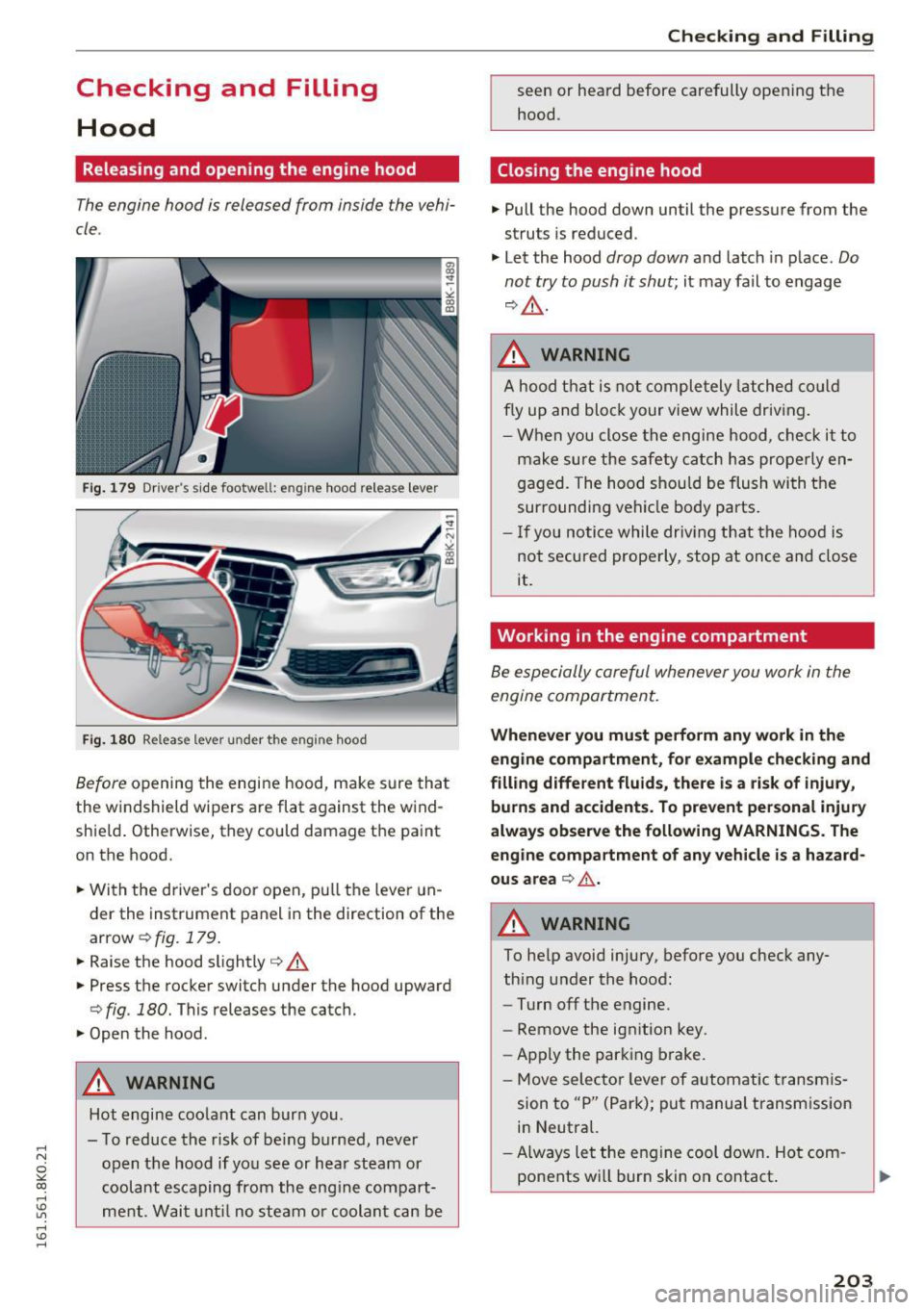
Fig. 179 Driver's side footwell: engine hood re lease lever
... ~ - -
Fig. 1 80 Release lever under the engine hood
Before opening the engine hood, make sure that
the windshield wipers are flat against the w ind
shie ld. Otherwise, they could damage the paint
on the hood.
.. Wi th the driver's door open, pu ll the leve r un
der the instrument panel in the direction of the
arrow ¢
fig. 179 .
.. Raise the hood slightly¢&.
.. Press the rocker switch under the hood upward
¢fig . 180. This releases the catch.
.. Open the hood.
A WARNING
Hot engine coo lant can burn you.
- To reduce the risk of be ing burned, never
open t he hood if yo u see or hear steam or
coolant esca ping from the eng ine compart
me nt. Wait unt il no s team or coolant ca n be
Checking and Filling
seen or hea rd before carefully opening the
hood.
Closing the engine hood
.. Pull the hood down until the pressure from the
struts is reduced.
"' Le t the hood
drop down and latch in p lace. Do
not try to push it shut;
it may fail to engage
¢ &, .
A WARNING
A hood that i s not comple tely latched co uld
fly up a nd blo ck your view while driv ing.
- W hen you close the engine hood, check it to
ma ke sure the s afety catch h as prope rly en
ga ged. The hood should be flush with t he
surroundi ng ve hicl e body pa rts.
- If you no tic e while driv ing t hat t he hoo d is
not secured properly, stop at once and close
it.
Working in the engine compartment
Be e specially careful whenever you work in the
engine compartment.
-
Whenever you mu st perform an y work in the
engine compartment, for example checking and
filling different fluids, there is a risk of injury, burn s and a ccidents. To prevent per sonal injury
always observe the following WARNINGS. The
eng ine compa rtment of any vehicle is a hazard
ous area
¢ .&. .
A WARNING
-~
To help avoid injury, before you check any
th ing under the hood:
- Turn off the engine.
- Remove the ignition key .
- Apply the par king brake.
- Move selector leve r of autom atic t ransm is-
sion to "P" (Park); put manual transm ission
in Neutral.
- Always let the engine cool down. Ho t com
ponents w ill bur n skin on contact .
203
Page 249 of 278

.... N
0
""' CX)
.... I.Cl U"I
.... I.Cl ....
Fuse panel @ (black)
No . Consumer
1 Dynamic steering
2 Electronic Stabilization Cont rol (mod ule)
A/C system press ure sensor, elect rome -
chan ica l park ing brake , Homelink, auto-
3 mat
ic dimming interior rear v iew mirror,
air q uality/outside a ir sensor, Electronic
Stabili zation Cont rol (button)
5 Sound actuator
6 Headlight range control/
headlight (cor-
ne ring light)
7 Headlight (corner ing light)
Con trol modules (e lectrom echan ica l par k-
8 ing brake , s hock ab so rbe r, q uattro s port),
DCDC converter
9 Adapt ive cru ise control
1 0 Shift ga te/clu tch se nsor
1 1 Side assist
12 Headlight range control
, p arkin g sys tem
13 Airbag
14 Rear wiper (a
llroad)
1 5 Auxiliary fuse (instrument panel)
1 6 Auxiliary fuse terminal 15 (engine area
)
Fuse panel@ (brown)
No . Consumer
2 Brake light senso r
3 Fuel pump
4 Clutch sensor
5
Left seat heating w it h /w it h out seat venti-
l a tion
6 Electronic Stabili zation Cont rol (e lectr ic)
7 Ho rn
8
F ront left door (window regulator, central
locki ng, mirror, switch, lig hting)
9 Windshield wiper moto r
10 Electronic Stabilization Cont rol (va lves)
Fuses and bulbs
No . Consumer
Two-door mode ls: rear left w indow reg ula-
1 1 tor; Four-door mode
ls: rear left door (w in-
dow regu lator, central locking, switch,
li ght ing)
1 2 Rain and
light sensor
Fuse panel © (red)
No . Consumer
3 Lumbar support
4 Dynam ic steering
5 Inter
io r ligh ting ( Cabr io let)
6 W
indshie ld washer system, headlight
wash er system
7 Vehicle e lectrica l system control module 1
8 Ve hicl e e lec trica l sy stem con trol module 1
9
Left rear window regu lator motor (Cabr io-
l et)/s unroof
1 0 Vehicle e lec tric al system con trol module 1
1 1 R
ight rear window regulator (Cabriolet)/
su n shade motor
1 2 A
nti- theft alarm warning system
Right cockpit fuse assignment
Fig. 20 7 Rig h t cockp it : f use pane l wit h plast ic cl ip
247