Service AUDI S4 2018 Owners Manual
[x] Cancel search | Manufacturer: AUDI, Model Year: 2018, Model line: S4, Model: AUDI S4 2018Pages: 403, PDF Size: 66.81 MB
Page 329 of 403

Check ing and F illing
@ For the sake of the environment
- Oil should never enter the sewer system or
come into contact with the gro und.
- Pay attention to legal requirements when
disposing of empty oil containers .
@ Tips
- The oil leve l indicator in the d isplay is only
an informationa l disp lay .
If the oil leve l is
too low, a minimum oil warning appea rs in
the instrument cluster. Add oil and close
the hood . The current oil level is displayed
i n the instrument cluster the next t ime the
i gnition is switched on .
- The engine oil consumption may be up to
0 .5 quart/600 miles (0 .5 liter/1,000 km),
depend ing on driving style a nd operating
cond itions . Consumption may be higher
d ur in g the first 3,000 miles (5,000 km). Be
cause of t his, the engi ne oil level m ust be
chec ked regular ly.
It would be best to check
each time you ref uel your veh icle and before
l ong drives.
Changing the engine oil
We recommend that hove your oil changed by an
authorized Audi dealer or a qualified service sta
tion .
Before you c heck a nyth ing in the eng ine compart
men t,
alway s read and heed all WARNINGS ¢.&
in Working in the engine compartment on
page 323.
T he engine oil must be change d accord ing to the
intervals specified in your Warranty
& Mainte
nance booklet . This is very important because the
lubricat ing propert ies of oi l diminish gradually
during normal vehicle use.
Under some circ umstances the engine o il should
be changed more frequently. Change oil more of
ten if yo u drive most ly short distances, operate
the vehicle in dusty areas or under predominantly
stop-and-go traffic cond it ions, or have yo ur vehi
cle where temperatures remain below freezing
for extended periods .
328
Detergent add itives in the oi l will make fres h oil
l ook dark after the engine has been r unning for a
sho rt time . This is normal and is not a reason to
change the oil more often than recommended.
Because o f the p roblem o f prope r disposa l, along
with t he specia l too ls and necessary expertise re
quired, we strongly recommend that yo u have
yo ur oil changed by an authori zed
Audi dealer or
a qua lified service station.
If you choose to change your oil yourself , please
note the fo llow ing important information:
_& WARNING
To reduce the risk of persona l injury if you
must change the eng ine oil in your vehicle
yourself:
- Wea r eye protect ion.
- To red uce the r is k of bur ns from hot engine
oil, let the engine cool down to the touch.
-
- W hen removin g the oil drain plug with your
fingers, stay as far away as possible. Always
keep your forearm pa rallel to the gro und to
he lp prevent hot oil from run ning down your
arm .
- Drain the oil into a container designed for
this purpose, one la rge enough to hold at
least the tota l amount of oi l in you r engine.
- Engi ne oil is poisonous. Keep it well out of
the reach of childre n.
- Continuous contact with used eng ine o il is
ha rmf ul to your skin . Always protect your
skin by washi ng oil off thoroughly with soap
a nd wate r.
(D Note
N eve r mix oil additives with you r engine oil.
These add itives can damage your engine and
advers ely affect you r Audi Limit ed New Veh i
cle Warranty .
@ For the sake of the environment
-Before cha ng ing you r oi l, first make s ure
you know where you can properly dispose o f
t h e used oil.
- Always dispose of used e ngine o il pro perly .
Do not dump i t on garden soil, wooded
Page 330 of 403
areas, into open streams or down sewage
drains.
- Recycle used engine oil by taking it to a used
engine oil collection facility in your area, or
contact a service stat ion .
Cooling system
Coolant
The engine coo ling system is filled with a mixture
of purified water and coolant additive at the fac
tory. This coolant must not be not changed.
The coolant level is monitored through
the. in
dicator light
¢ page 30. However , we do recom
mend occasiona lly checking the coolant level
manually.
If you must add coolant, use a mixture of water
and coolant addit ive. Mixing the coolant additive
with distilled water is recommended.
Coolant additive
The coolant additive is made of anti -freezing and
corrosion protection agents. Only use the fol low
ing coolant additives . These additives may be
mixed with each other.
Coolant additive Specification
G13
TL 774 J
G12++ TL
774 G
The amount of coo lant additive that needs to be
mixed with water depends on the climate where
the vehicle will be operated. If the coolant addi
tive percentage is too low, the coolant can freeze
and damage the engine.
Coolant Freeze protec-
additive tion
Warm min . 40% min. -13 °F
regions max .
45% (
- 25 °()
Cold min.
50% max
. -40 °F
regions max.
55% (-40 °()
(D Note
-
Before the start of winter, have an author
ized Audi dealer or authorized Audi Service
Facility check if the coolant additive in your
Checking and Filling
vehicle matches the percentage appropriate
for the climate. This is especia lly important
when driving in colder climates.
- If the appropriate coo lant additive is not
available in an emergency, do not add any
other additive. You could damage the en
gine. If this happens, only use water and re
store the correct mixture ratio with the
specified coolant add itive as soon as poss i
ble .
- Only refill w ith new coolant.
- Radiator sealant must not be mixed with
the coolant.
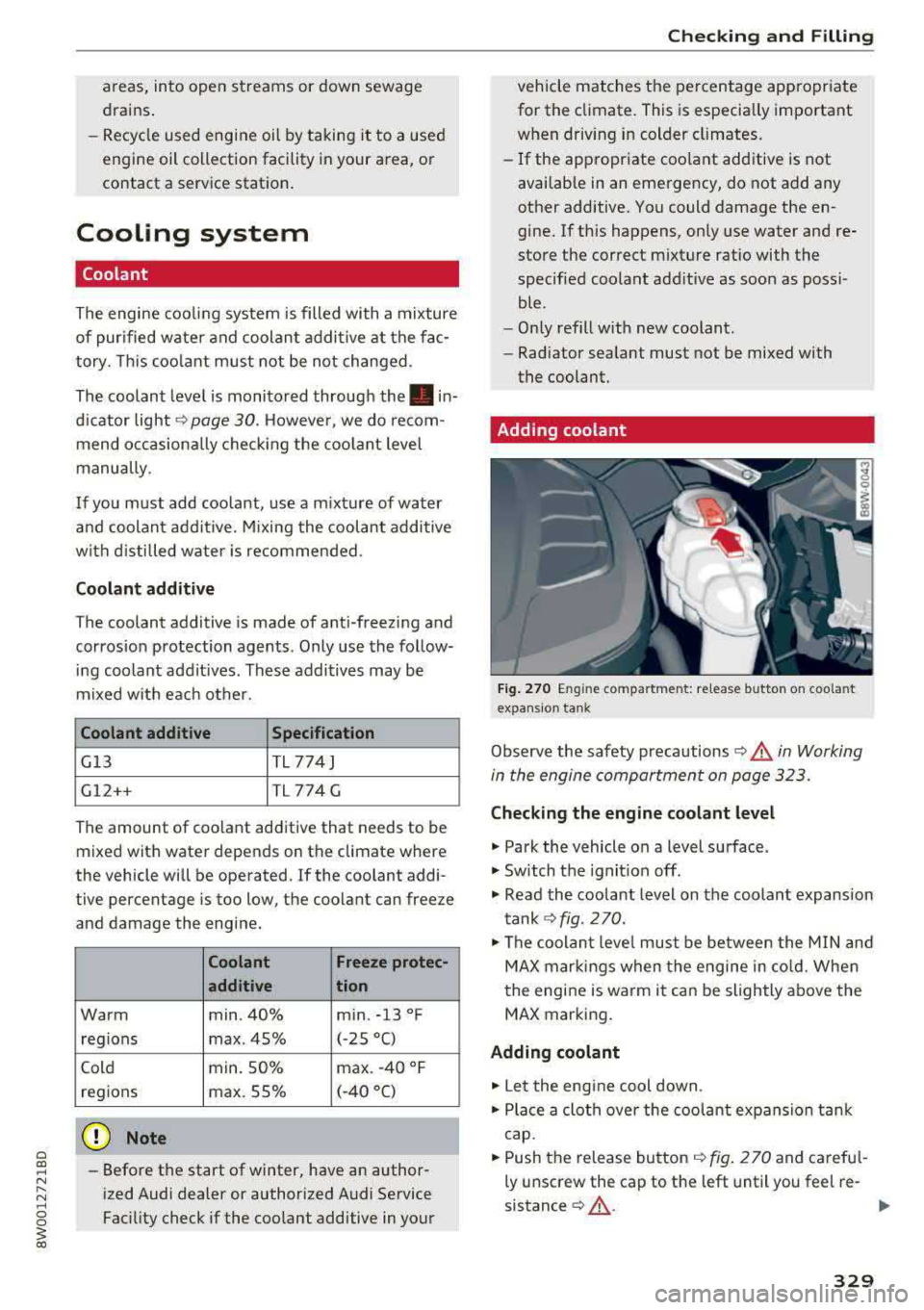
Adding coolant
Fig. 270 E ngine compartment: re lease button on coolant
expansion tank
Observe the safety precautions ¢,&. in Working
in the engine compartment on page 323.
Checking the engine coolant level
.. Park the vehicle on a level surface .
.. Switch the ignition off .
.. Read the coolant level on the coolant expansion
tank
¢ fig. 270.
.. The coolant level must be between the MIN and
MAX markings when the engine in co ld. When
the engine is warm it can be slightly above the
MAX marking.
Adding coolant
.. Let the eng ine cool down .
.. Place a cloth over the coolant expansion tank
cap .
.. Push the release button ¢ fig. 2 70 and carefu l
ly unscrew the cap to the left until you feel re-
sistance¢ ,A. IIJ,-
329
Page 331 of 403
Checking and Filling
.,. Push the release button again and remove the
cap comp lete ly .
.,. Make sure that the fluid level rema ins stable.
Add more coolant if necessary .
.,. Turn the cap to the right to secure it until you
feel resistance a second t ime.
Coolant loss usually indicates there is a leak . Im
mediately drive your vehicle to an authorized
Audi dealer or authorized Audi Serv ice Facility
and have the cooling system inspected . If the
coo ling system is not leaking, a loss can come
from the coolant boiling through overheating
and being pushed out of the cool ing system.
_& WARNING
- T he coo ling system is under pressure. Do
not open the coolant expansion tank cap
when the engine is hot. This increases the
risk of burns.
- The coo lant add itive and the coolant can be
dangerous to your healt h. For this reason,
keep the coolant in the origina l container
and away from children. There is a risk of poison ing.
- When working in the engine compartment, remember that the radiator fan can switch
on even if the ign ition is switc hed off, which
increases the risk of in jury.
(D Note
Do not add coolant if the expansion tank is
empty. There may be air in the cooling sys
tem, wh ic h increases the risk of engine dam
age.
If th is is the case, do not continue dr iv
ing . See an a uthorized Aud i dea le r or author
ized Aud i Service Fa cil ity fo r assistance.
330
Brake fluid
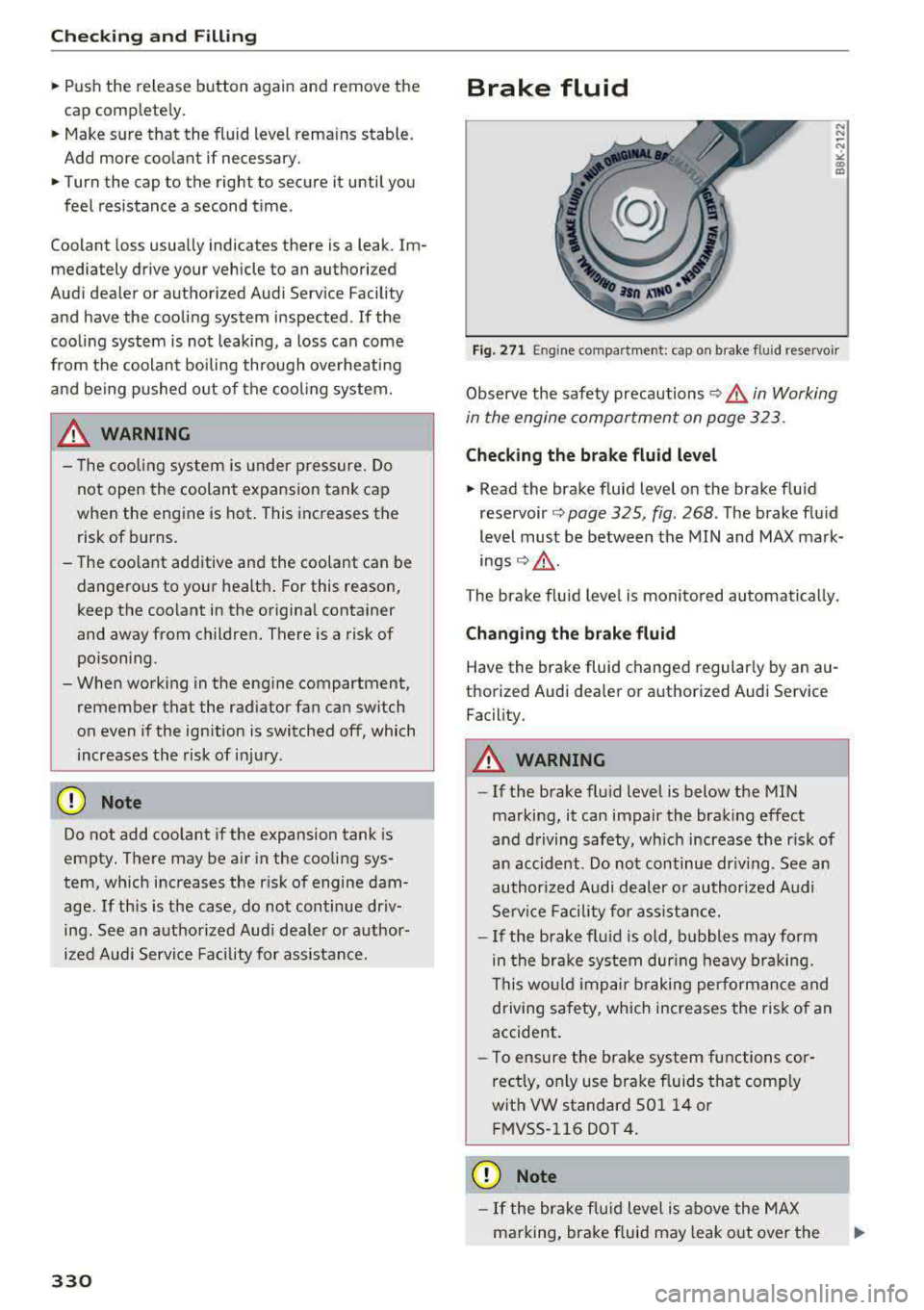
Fig. 271 En gine compa rtment: cap o n brake fluid reservo ir
Observe the safety precautions¢.&, in Working
in the engine compartment on page 32 3 .
Check ing the brake fluid level
.,. Read the brake fluid level on the brake fluid
reservoir ¢ page 325, fig . 268 . The brake flu id
level must be between the MI N and MAX ma rk
ings ¢.&, .
The brake f lu id level is monito red automatically.
Changing the brake fluid
Have the brake fluid changed regularly by an au
thorized Audi dea ler or authorized Audi Service
Facility.
_& WARNING -
- If the brake flu id leve l is below the MIN
marking, it ca n impair the brak ing effect
and driving safety, wh ich increase the r isk of
an accident. Do not continue dr iv ing . See an
author ized Audi dealer or au thori zed Audi
Serv ice Facility fo r ass ist ance.
- I f the brake fl uid is old, b ubbles may form
in the bra ke system dur ing heavy bra king.
This wo uld im pair b raking per formance and
driving safety, which increases the risk of an
accident.
- To ensure the brake system functions cor
rectly, only use bra ke fluids tha t comp ly
wit h VW standard 50 1 14 or
FMVSS- 116 DOT 4 .
(D Note
-If the bra ke f lu id leve l is ab ove the MAX
marking, bra ke fluid may le ak o ut over the
Page 332 of 403
a co .... N ,....
N .... 0 0
3 co
edge of the reservoir and result in damage
to the vehicle .
- Do not get any brake fluid on the vehicle
paint, beca use it will corrode the paint .
Battery
General warnings about batteries
Because of the complex power supply, all work
on batteries such as disconnecting, replacing,
etc. shou ld
onl y be performed by an a uthorized
Aud i dealer o r autho rized Aud i Serv ice Facility
¢ ,&. .
The term "vehicle battery" refers to the 12 Volt
battery in your veh icle.
Detailed warning s for th e vehicl e batter y:
®
Wear eye protection .
A
Battery acid is highly corrosive. Wear pro-
tective gloves and eye protect ion.
@
Fire, spa rks, open flame and smoking are
forbidden.
~
A highly explosive mixture of gases can
form when charging batteries.
®
Keep children away from battery acid and
batteries.
A WARNING
All work on the battery or electrical system in
your vehicle can result in injuries, chemical
burns, accide nts o r burns. Be cause of this, a ll
work m ust be perfo rmed
only by an a uthor
ized Aud i deale r or a utho rized Aud i Serv ice
Facility.
_&. WARNING
California Proposition 65 Warning:
- Battery posts , termina ls and re lated acces
sories contain lead and lead compounds,
chemicals known to the State of California
to cause cancer and reproductive problems.
Wash hands after handling.
Ch eck ing and Filling
(D Note
Protect the vehicle battery against freezing if
the veh icle w ill be parked for long periods of
time so that it is not destroyed by "free zing"
¢ page 332.
@ For the sa ke of the environment
i Batteries contain polluting substances such
as sulfur ic acid and lead. Contact an author
i zed Audi dealer or authorized Audi Service
Fac ility for more informat ion .
Vehicle battery
The term "vehicle ba ttery" refers to the 12 Vol t
ba ttery in your vehicle.
Not running th e vehicle fo r long p eriod s of
time
If you do not drive your vehicle for severa l days or
weeks, electrical equ ipment is gradually scaled
back or sw itched off . Th is reduces energy use and
ensures the vehicle will be able to start after long
per iods of t ime
¢ page 151. Some convenie nce
funct ions, such as inte rio r ligh ting or power seat
adjustment, may not be ava ilable under certain
c ircumstances. These convenience functions will
be available again once you switch the ignition on
and start the engine.
Even when elect rical equipment is switched off,
the eq uipment can sti ll drain the vehicle battery
if the vehicle is not driven for long periods of
time. Deep draining results in a chemica l reaction
that destroys the inside of the vehicle battery .
The veh icle battery must be charged every month
to reduce the risk of this happening
¢ page 332 .
Contact an authorized Aud i dealer or authorized
Audi Service Facility for more information .
Winter operation
Co ld weather places higher demands on the vehi
cle battery. Th is results in reduced starting ab ili
ty. Have the vehicle battery checked by an au
thorized Audi dea ler or authorized Audi Service
Facil ity before the cold time of year.
33 1
Page 333 of 403
Checking and Filling
Charging the vehicle battery
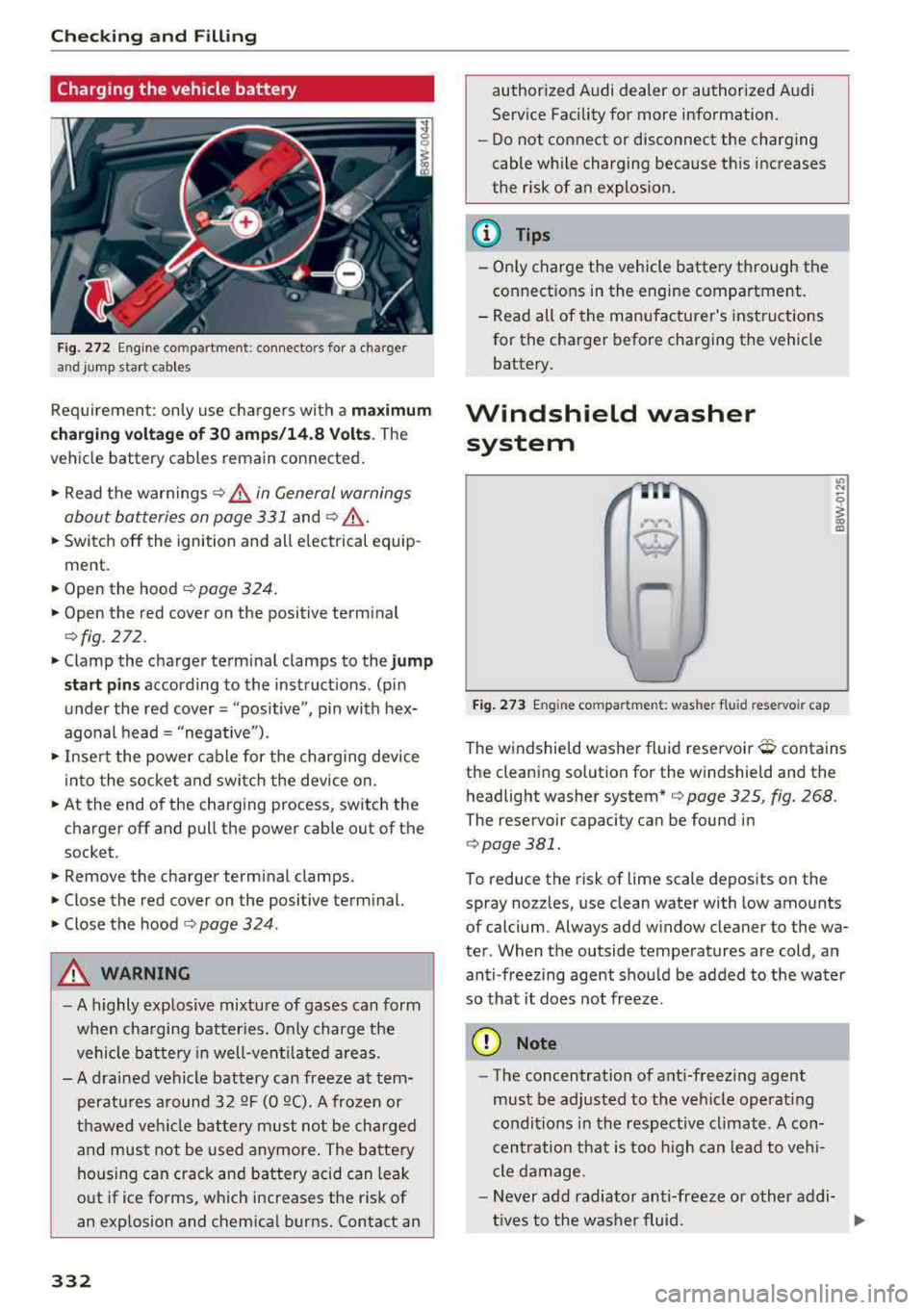
Fig. 272 Engine co mpa rtment : connec tors for a c harger
and jump start cab le s
Req uirement: only use chargers with a m aximum
c hargi ng vo lta ge of 30 amp s/14.8 Volt s.
The
vehicle battery cables remain connected .
.,. Read the warnings c> .&. in General warnings
about batteries on page 331
and c> ,&. .
.,. Switch off the ignition and all electrical equip
ment .
.,. Open the hood 9 page 324 .
.,. Open the red cover on the positive terminal
c>fig. 272 .
.,. Clamp the charger terminal clamps to the jump
s ta rt pin s
according to the instruct ions . (pin
under the red cover = "positive ", p in with hex
agonal head= "negative ") .
.,. Inse rt the powe r cable for the charg ing device
i nto the socke t and switch the dev ice on .
.,. At the end of the charging process , switch the
charger off and pull the power cab le out of the
socket .
.,. Remove the charger terminal clamps.
.,. Close the red cover on the positive terminal.
.,. Close the hood c> page 324 .
A WARNING
-A highly explosive mixtu re of gases can form
when cha rging batter ies. On ly charge the
vehicle batte ry in well-ven tilated areas.
- A drai ned vehicle battery can freeze at tem
peratu res a round 32
QF (0 QC). A froze n or
thawed veh icle bat tery must not be charged
and must not be used anymore. The ba ttery
housing can crac k and battery acid can leak
o ut if ice forms, wh ich increases the r isk of
an exp losion and chemical burns. Contact an
332
author ized Audi dealer or authorized A udi
Service Facility for more information.
- Do not connect or disconnect the charging
cable whi le charging because this increases
the risk of an explos ion.
@ Tips
- Only charge the vehicle battery t hrough the
connect ions in the engine compartme nt.
- Read all of the manufacturer's instructions
for the charger before charging the vehicle
battery.
Windshield washer system
Fi g. 2 7 3 Engine compar tm ent: washer flui d res ervoir cap
The windshield washer fluid reservoir¢ contains
t he cleaning solution for the windshield and th e
headlight washer system *
c> page 325, fig. 268 .
The reservoir capaci ty can be found in
c> page 381.
To reduce the risk of lime scale deposits on the
spray no zzles, use clean water with low amounts
of calcium . Always add w indow cleaner to the wa
ter . When the outside temperatures are cold, an
anti -freezing agent should be added to the water
so that it does not freeze .
(D Note
-The concentration o f ant i-freez ing agent
must be adjusted to the ve hicle operat ing
conditions in the respective climate . A con
cent ration t hat is too high can lead to vehi
cl e damage.
- Never add radiator anti-freeze or other addi
t ives to the washer fluid.
Page 334 of 403
a co .... N ,....
N .... 0 0
3 co
-Do not use a glass cleaner that contains
paint solvents, because this could damage
the paint.
Service interval display
The service interval display detects when your ve
hicle is due for service.
Checking service intervals
You can check the remaining distance or time un
til the next oil change or next inspection in the
Infotainment system .
.,. Select in the Infotainment system: the I MENU I
button >
Vehicle > left control button > Service
& checks > Service intervals.
Resetting the indicator
An authorized Audi dealer or authorized Audi
Service Facility will reset the service interval dis
play after performing service.
If you have changed the oil yourself, you must re
set the oil change interval.
.,. Select in the Infotainment system: the !MENUI
button >
Vehicle > left control button > Service
& checks > Service intervals > Reset oil change
interval.
If an oil change or inspection is due, you can ac
cess it in the Infotainment system. The display
works in two stages:
-Service reminder: after a certain distance is
driven, a message appears in the instrument
cluster display every time the ignition is switch
ed on. The remaining distance and time is dis
played briefly.
- Service due: if your vehicle has reached a serv
ice interval , a message appears briefly after
switching the ignition on.
(D Note
-Only reset the oil change indicator if the oil
was changed.
- Following the service intervals is critical to
maintaining the service life and value of
your vehicle, especially the engine. Even if
Checking and Filling
the mileage on the vehicle is low, do not ex
ceed the time for the next service.
333
Page 342 of 403
for the number of seating posi
tions. Refer to the table ¢
table
on page 346
for the number of
people that correspond to the ve
hicle normal load.
New tires or wheels
Audi recommends having all work on tires or wheels performed by
an author ized Audi dealer or au
thorized Audi Service Facility.
These facilities have the proper
knowledge and are equipped with
the required tools and replace
ment parts.
.,.New tires do not yet have the
optimum gripping properties. Drive carefully and at moderate
speeds for the first 350 miles
(500 km) with new tires.
.,.Use tires of the same construc
tion, size (rolling circumference)
and as close to the same tread
pattern as possible on all four
wheels.
.,.Do not replace tires individually .
At least replace both tires on the
same axle at the same time.
.,.Audi recommends that you use
Audi Original Tires. If you would
~ like to use different tires, please .-<
~ note that the tires may perform .-< 0
~ a:,
Wheels
differently even if they are the
same
size ¢.&,. .
.,. If you would like to equip your
vehicle with a tire/rim combina
tion that is different from what
was installed at the factory, con
sult with an authorized Audi
dealer or authorized Audi Service
Facility before making a pur
chase¢ .&,..
If the spare tire is different from
the regular tires installed on the
vehicle
-for example, if winter
tires or wide tires are installed
-
then only use the spare tire tem
porarily in case of emergency and
drive carefully while it is in use . It
should be replaced with a regular
tire as soon as possible.
On
all wheel drive vehicles, all
four wheels must be equipped
with tires that are the same brand
and have the same construction
and tread pattern so that the
drive system is not damaged by different tire speeds. For this rea
son, in case of emergency, only
use a spare tire that has the same
circumference as the regular
tires.
341
Page 343 of 403
Wheels
&,. WARNING
-Do not use steel rims that are 17 inches or larger . Other
wise, damage to the vehicle
and an accident could result.
-For technical reasons, it is not
possible to use tires from oth
er vehicles - in some cases,
you cannot even use tires from
the same vehicle model.
-Make sure that the tires you
select have enough clearance
to the vehicle. Replacement
tires should not be chosen
simply based on the nominal
size, because tires with a dif
ferent construction can differ greatly even if they are the
same size . If there is not
enough clearance, the tires or
the vehicle can be damaged
and this can reduce driving
safety and increase the risk of an accident.
-Only use tires that are more than six years old when abso
lutely necessary and drive
carefully when doing so .
-Do not use run-flat tires on your vehicle. Using them when
not permitted can lead to ve
hicle damage or accidents.
342
-If you install wheel covers on the vehicle, make sure they al
low enough air circulation to
cool the brake system. If they
do not, this could increase the
risk of an accident.
Tire wear /damage
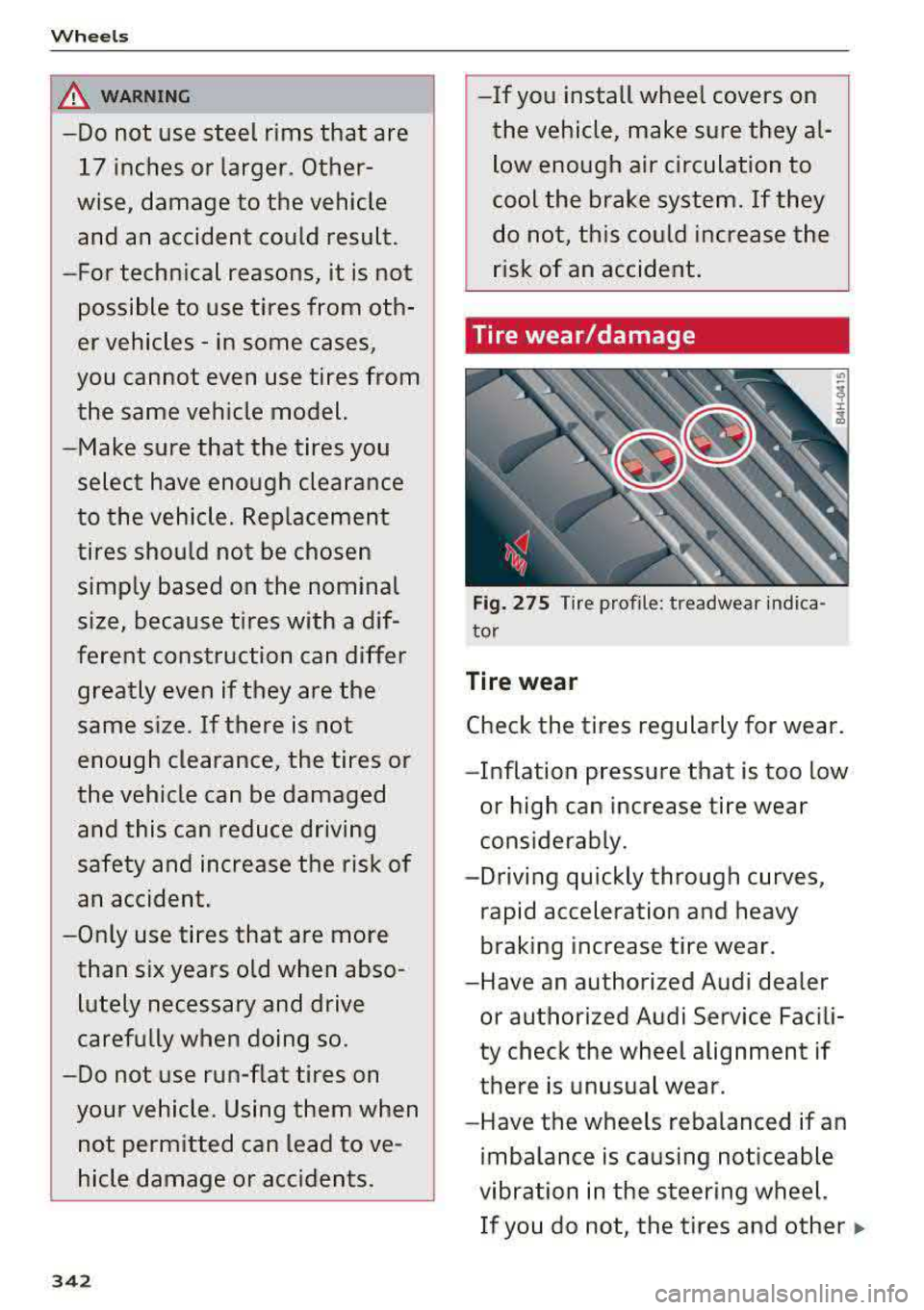
Fig. 275 Tire profile: treadwear indica
tor
Tire wear
Check the tires regularly for wear.
-Inflation pressure that is too low
or high can increase tire wear
considerably.
- Driving quickly through curves,
rapid acceleration and heavy
braking increase tire wear.
-Have an authorized Audi dealer or authorized Audi Service Facili
ty check the wheel alignment if
there is unusual wear .
-Have the wheels rebalanced if an
imbalance is causing noticeable
vibration in the steering wheel. If you do not, the tires and other
..
Page 344 of 403
0 C0 .-< N ,...
vehicle components could wear more quickly.
Treadwear indicator
Original equipment tires contain
treadwear indicators in the tread pattern, which are bars that are
1/16 in (1.6 mm) high and are
spaced evenly around the tire per
pendicular to the running direc
tion¢ fig. 275. The letters "TWI"
or triangles on the tire sidewall indicate the location of the tread
wear indicators.
The tires have reached the mini mum tread depth
l) when they
have worn down to the treadwear
indicators. Replace the tires with
new ones
¢ A.
Tire rotation
Rotating the tires regularly is rec
ommended to ensure the tires
wear evenly. To rotate the tires,
install the tires from the rear axle
on the front axle and vice versa.
This will allow the tires to have
approximately the same length of
service life.
For unidirectional tires, make
sure the tires are installed accord-
8 l) Obey any applicable regulations in your
! country.
Wheels
ing to the running direction indi
cated on the tire sidewall
¢ page 366 .
Hidden damage
Damage to tires and rims can of
ten occur in locations that are hidden. Unusual vibrations in the
vehicle or pulling to one side may indicate that there is tire damage.
Reduce your speed immediately.
Check the tires for damage. If no
damage is visible from the out
side, drive slowly and carefully to
the nearest authorized Audi deal
er or authorized Audi Service Fa
cility to have the vehicle inspect
ed.
A WARNING
Tread that has worn too low or
different tread depths on the
tires can reduce driving safety.
This can increase the risk of an
accident because it has a nega
tive effect on handling, driving
through curves, and braking,
and because it increases the
risk of hydroplaning when driv
ing through deep puddles.
343
Page 351 of 403
Wheels
the risk of a n acc ident beca use it can cause
the tire to burst.
- Always adapt your driving to the road and
traff ic conditions. Drive carefully and red uce
yo ur speed on icy or slippery roads. Even
winter tires can lose traction on b lack ice.
@ For the sake of the environment
Reinstall summe r tires at the approp riate
time, because they provide better hand ling
when roads are free of snow and ice. S ummer
tires cause less road noise, tire wear and fuel
consumption.
(D Tips
You can also use all season tires instead of
w inter t ires. Please note that in some coun
tries w here w inte r ti res are req uired, only
w inter t ires with the
& symbol may be per
m itted.
Snow chains
Snow ch ains not only i mprove the d riving in win
t er ro ad cond itions, b ut also the brak ing.
... Only insta ll snow chains o n the front wheels .
T h is applies also to ve hicles w ith all wheel
drive* .
... Check an d cor rect the sea ting of the snow
c h ains a fte r dr iv ing a few feet, i f necessary. Fo l
l ow the instructions from the manufacturer .
... Note the maximum permitted speed when d riv
ing with snow chains . Do not exceed 30 mp h
(SO km/h).
Use of snow chains is on ly pe rmitted with certain
rim/t ire combinations due to technical reasons.
Check with an authorized Audi dealer o r autho r
ized Aud i Service Fac ility to see if yo u may use
snow chains.
Use
fine -mesh snow chains . They must not add
more t han 0.53 in (13.5 mm) in height, includ ing
the chain lock .
You must remove the snow c hains on roads wit h
out snow. Othe rw ise, you could impa ir dr iv ing
ab ility and damage the tires.
350
A WARNING ~
Using incorrect snow chains or installing snow
cha ins i ncor rectly can result in loss of veh icle
con trol, which increases the risk of a n acci
d ent.
(D Note
Snow chains can damage the rims/whee l cov
e rs* if the chains come into direct contact
wi th them . Remove the whee l covers* first.
Us e coated snow chai ns.
(D Tips
When using snow chains, it may be useful to
swi tc h on spo rt mode/offroad mode
<:;> pag e 147.
Low-profile tires
Applies to: vehicles with low-profile tires
Your vehicle is equip ped wi th low -profi le t ires* at
t h e factory. Compa re d t o o ther tire/r im com bina
tions, low -profi le tires offer a w ider tread surface
and a larger rim diameter with shorter tire side
walls . This results in an agile dr iv ing style. How
ever, it may reduce the leve l of com fort and in
crease road noise whe n driving on roads in poor
cond it ion.
Low-p rofile ti res can become damaged mo re
q uick ly than standard tires when dr iv ing ove r
l a rge bumps, potholes, manhole covers, speed
bumps and curbs . Therefore, it is particularly im
po rtan t to maintain the correct tire pressure
<:;> page 344.
To reduce the risk of damage to the tires and
rims, drive very caref ully on poor roads.
Check your wheels regu larly eve ry 2,000 mi
(3,000 km) for damage. For example, check for
bulges/cracks on the tires or deformations/
cracks on the rims .
After a heavy impact o r damage, have the tires
and rims inspected or replaced immediately by
an authorized Audi dea ler or authorized Audi
Service Facility .