battery AUDI S4 2018 Owner's Manual
[x] Cancel search | Manufacturer: AUDI, Model Year: 2018, Model line: S4, Model: AUDI S4 2018Pages: 403, PDF Size: 66.81 MB
Page 248 of 403
a co .... N ,....
N .... 0 0
3 co
Audi smartphone interface
Opening a menu item
Select and confi rm a menu item using the MMI
control panel.
Troubleshooting
Applies to: vehicles with Audi smartphone interface
Problem Solution
Audi smartphone
Check the charge level of your smartphone battery.
interface cannot be Check the USB cable and use a different one if necessary.
opened. Check if Android Auto or Apple CarPlay is available in your country.
Android Auto : check if the Android Auto app is installed on your smartphone.
Connecting the Check if you are using the correct USB adapter and if the USB adapter is connect-
smartphone to the ed correctly to your smartphone and the Audi music interface
q page 233.
MMI failed . Apple CarPlay: check if AppLe Ca rPlay is activated on your smartphone.
Android Auto: check in the Android Auto app if Android Auto permits new
veh icles .
The smartphone is Check if you are using the correct USB adapter and if the USB adapter is connect-
not automatically ed correctly to your smartphone and the Audi music interface ¢
page 233.
detected. Check if the requirements needed to connect a smartphone have been met.
247
Page 288 of 403
-For safety reasons in severe accidents, the
alternator and starter are separated from
the vehicle battery with a pyrotechn ic circuit
interrupter.
-Work on the pyrotechnic circ uit interrupt
er must only be performed by
a qualified
technicians who have the experience, in
formation and special tools necessary to
perform the work safely.
-I f the vehicle or the circuit interrupter is
scrapped, all app licab le safety precautions
must be followed .
@) For the sake of the environment
Undeployed airbag modu les a nd pretension
ers might be classified as Perch lorate Materi
al
-special handling may apply, see
www.dtsc .ca.gov/hazardouswaste/perchlo
rate. When the vehicle or parts of the re
straint system including airbag modules and
safety belts with pretensioners are scrapped,
all applicable laws and regulations must be
observed. Your authorized Audi dealer is fa
m iliar with these requi rements a nd we recom
mend t hat you have you r dealer perform this
service for you.
Other things that can affect Advanced
Airbag performance
Changing the vehicle's suspension system can
change the way that the Advanced Airbag System performs in a crash . For example, using tire-r im
comb inat ions not approved by Audi, lowering the
ve hicl e, chang ing the stiffness of the suspens io n,
in clud ing the spr ings, suspens ion str uts, shock
absorbers et c. can change the forces that are
measured by the airbag sensors and sent to the
e lectronic contro l unit. Some suspension changes
can, for example, increase the force levels meas
ured by the sensors and make the airbag system
deploy in crashes in wh ich it would not deploy if
the changes had not been made. Other ki nds of
changes may reduce the fo rce levels meas ured by
the sensors and prevent the airbag from deploy
in g when i t should .
Airbag sys tem
A WARNING
-Changing the vehicle's suspension including
use of unapproved tire-rim combinations can
change Advanced Airbag performance and in
crease the risk of serious persona l injury in a
crash.
- Never install suspension components that
do not have the same pe rformance charac
teristics as the components o rigina lly ins tal
led on your vehicle.
- Never use tire-rim combinations t hat have
not been approved by Audi.
Knee airbags
Description of knee airbags
The knee airbag system can provide supplemen
tal protection to prop erly restrained front sea t
occupants.
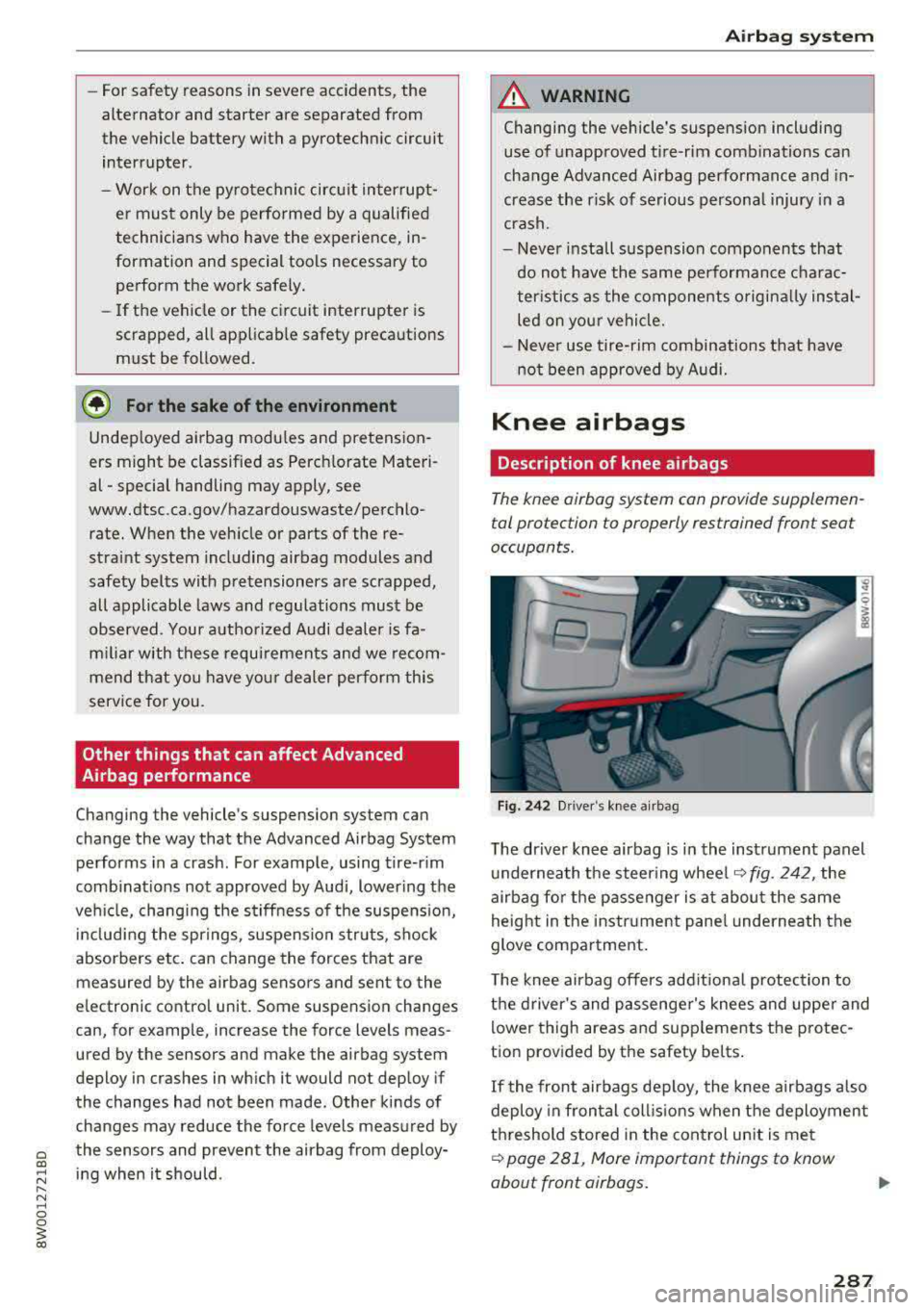
F ig. 2 42 D river 's knee a irbag
The driver knee airbag is in the instrument panel
u nderneath the steering whee l
~fig. 242, the
airbag fo r the p asse nger is at about the same
height in the instr ument pane l underneath the
glove compa rtment.
T he knee airbag offers add itiona l protection to
the driver's and passenge r's knees and uppe r and
lower thigh areas and supp lements the protec
tion provided by the safety be lts .
If the front airbags deploy, the knee airbags a lso
deploy in fron tal coll is ions when the deploymen t
threshold stored in the cont rol un it is me t
~ page 281, More important things to know
about front airbags.
287
Page 324 of 403
a co .... N ,....
N .... 0 0
3 co
Engine compartment
Working in the engine compartment
Special care is required if you are working in the
engine compartment
F or wo rk in th e en gine c ompar tment , suc h as
ch eckin g and fi llin g flu id s, th ere is a risk of in
j u ry , sca lding , acci dent s, a nd b urn s. Fo r this
re aso n, follow all the warnin gs and ge nera l
safet y pr eca uti ons pr ov ided in the follow ing in
form ation . Th e e ng ine c ompartm en t is a d an
ger ous a re a .
~ ,&. .
_& WARNING
- T urn the engine off.
- Switch the ign ition off .
- Set the parking brake .
- Shift the gearshift lever to neutral in vehicles with a manual transm ission and se
lect the P selector lever posit ion in vehicles
with an automatic transmission .
- Let the engine coo l down.
- Never open the hood when there is steam or coolant escaping from the eng ine compart
ment, because there is a risk that you cou ld
be burned . Wait until no steam or coolant is
escaping.
- Keep children away from the engine com
partment.
- Never spill flu ids on a hot engine. These flu
ids (such as the anti-freezing agent con
tained in the coolant) can ignite.
- Avoid sho rt circu its in the e lectrical system.
- When working in the engine compartment,
remember that the radiator fan can sw itch
on even if the ign ition is switched off , which
increases the risk of inj ury .
- Never open the cap on the coolant expan
sion tank when the eng ine is warm. The
cooling system is under press ure.
- T o protect your face, hands, and arms from
hot steam or coolant, cover the cap with a
large cloth when opening.
- Do not remove the eng ine cover under any
c ircumstances . This increases the risk of
burns .
Check ing and Filling
-If tests need to be performed with the en
gine running, there is add itiona l danger due
to mov ing components (such as the ribbed
belt, alternator and radiator fan) and from
the high-voltage ignition system.
-Do not under any circumstances activate the
throttle inadvertently (for example, by hand
from the engine compartment) if the veh i
cle is stat ionary but the eng ine is running
and a gea r is engaged. Otherwise, the veh i
cle will start to move immed iate ly and this
could result in an accident.
- Pay attent ion to the following warn ings
when wor k on the fue l system is required :
- Do not smoke.
- Never work near open flames.
-Always have a working fi re extinguisher
nearby.
-All work on the battery or electrical system in your vehicle can result in injuries, chemi
cal burns, accidents or burns. Because of
this, all work must be performed
o nly by an
author iz ed Audi dealer or author iz ed Audi
Serv ice Facility.
-To reduce the r isk of electric shock and in
jury, never touch the following components
when the engine is runn ing or is being start
ed:
- Ign ition cable
- Other components in the e lectronic high-
vo ltage ign ition system
-I f you must check or perform wo rk on the
engine wh ile it is running:
-First, set the parking brake and and move
the gearshift lever to neutral (for manual
transm issions) or select the P selector lev
er position (for automatic transm iss ions).
- Always proceed w ith extreme caution so
that clothing, jewelry or long hair do not become caught in the radiator fan, fan
belt or other moving components or do
not come into contact with hot compo
nents. Tie bac k long hair befo re beginning
work and do not wear clothing that can hang down into the engine.
-Lim it your exposure to exhaust and chemi
cals to as short a time as possible
¢ .&. .
32 3
Page 325 of 403
Checking and Filling
_& WARNING
California Proposition 65 Warning:
- Engine exhaust, some of its constituents ,
and certain vehicle components contain or emit chemicals known to the State of Cali
fornia to cause cancer and birth defects and reproductive harm. In addition, certain flu
ids contained in vehicles and certain prod
ucts of component wear contain or emit
chemicals known to the State of California
to cause cancer and birth defects or other reproductive harm.
- Battery posts, terminals and related acces
sories contain lead and lead compounds, chemicals known to the State of California
to cause cancer and reproductive harms.
Wash hands after handling.
(D Note
When filling fluids, be sure not to mix the flu ids up . Otherwise severe malfunctions and
en
gine damage will occur.
@ For the sake of the environment
You should regularly check the ground under
your vehicle in order to detect leaks quickly . If
there are visible spots from oil or other fluids,
bring your vehicle to an authorized Audi deal
er or authorized Audi Service Facility to be
checked.
Opening and closing the hood
The hood is released from ins ide the vehicle.
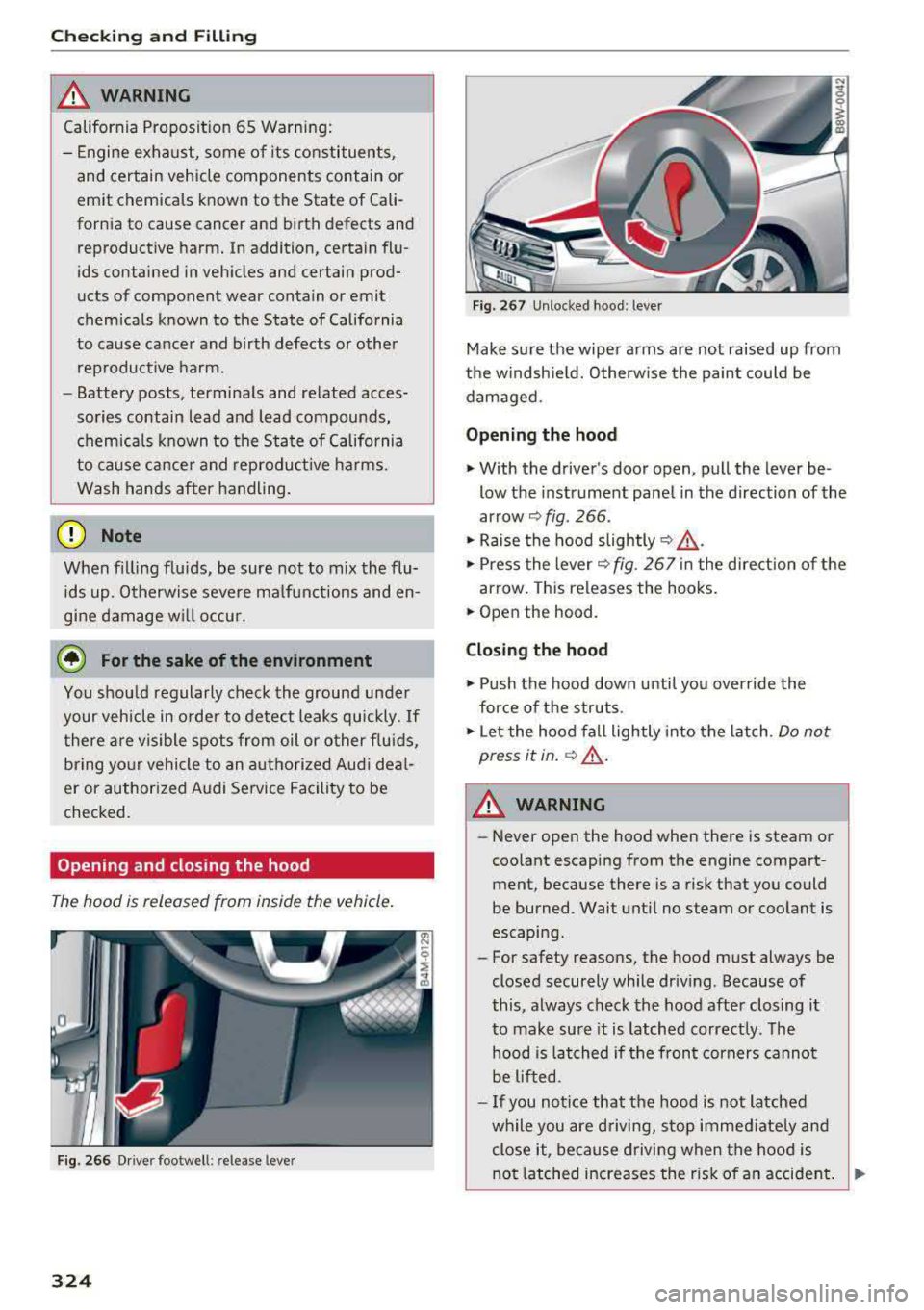
Fig. 266 Drive r footwell : rele ase le v er
324
Fig. 267 Unlocked hood: lev er
Make sure the wiper arms are not raised up from
the windshield. Otherwise the paint could be
damaged .
Opening the hood
"'With the driver's door open, pull the lever be
low the instrument panel in the direction of the
arrow
9 fig . 266 .
"' Raise the hood slightly 9 ,&.
"'Press the lever ~ fig. 267 in the direction of the
arrow. This releases the hooks.
"' Open the hood.
Closing the hood
"' Push the hood down until you override the
force of the struts .
"'Let the hood fall lightly into the latch . Do not
press it in.
9 ,& .
_& WARNING
-Never open the hood when there is steam or
coolant escaping from the engine compart
ment, because there is a risk that you could
be burned. Wai t until no steam or coolan t is
escaping.
- For safety reasons, the hood must always be
closed securely while driving . Because of
this, always check the hood after closing it
to make sure it is latched correctly . The
hood is latched if the front corners cannot
be lifted .
- If you notice that the hood is not latched
while you are driving, stop immediately and
close it, because driving when the hood is
not latched increases the risk of an accident.
,...
Page 332 of 403
a co .... N ,....
N .... 0 0
3 co
edge of the reservoir and result in damage
to the vehicle .
- Do not get any brake fluid on the vehicle
paint, beca use it will corrode the paint .
Battery
General warnings about batteries
Because of the complex power supply, all work
on batteries such as disconnecting, replacing,
etc. shou ld
onl y be performed by an a uthorized
Aud i dealer o r autho rized Aud i Serv ice Facility
¢ ,&. .
The term "vehicle battery" refers to the 12 Volt
battery in your veh icle.
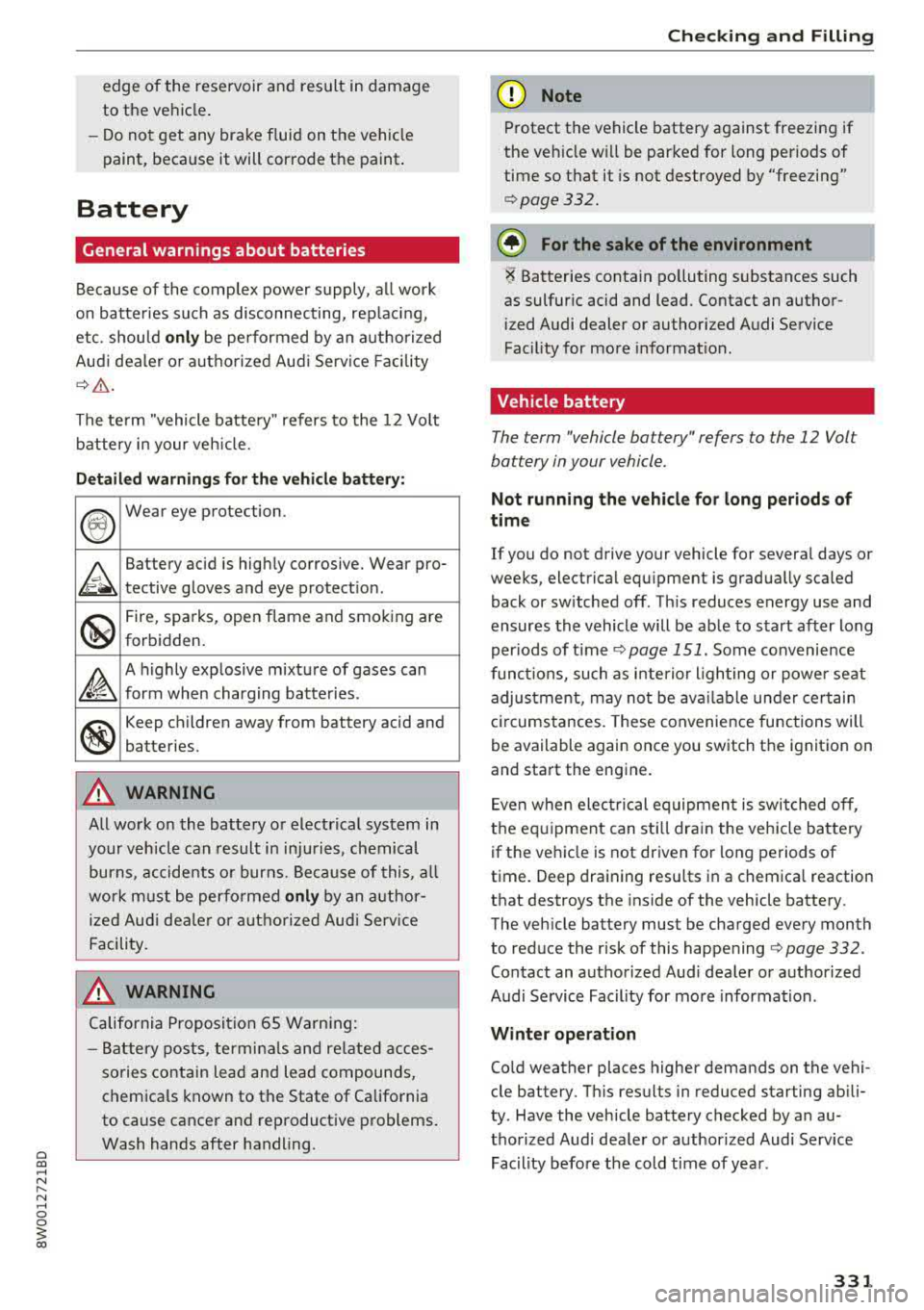
Detailed warning s for th e vehicl e batter y:
®
Wear eye protection .
A
Battery acid is highly corrosive. Wear pro-
tective gloves and eye protect ion.
@
Fire, spa rks, open flame and smoking are
forbidden.
~
A highly explosive mixture of gases can
form when charging batteries.
®
Keep children away from battery acid and
batteries.
A WARNING
All work on the battery or electrical system in
your vehicle can result in injuries, chemical
burns, accide nts o r burns. Be cause of this, a ll
work m ust be perfo rmed
only by an a uthor
ized Aud i deale r or a utho rized Aud i Serv ice
Facility.
_&. WARNING
California Proposition 65 Warning:
- Battery posts , termina ls and re lated acces
sories contain lead and lead compounds,
chemicals known to the State of California
to cause cancer and reproductive problems.
Wash hands after handling.
Ch eck ing and Filling
(D Note
Protect the vehicle battery against freezing if
the veh icle w ill be parked for long periods of
time so that it is not destroyed by "free zing"
¢ page 332.
@ For the sa ke of the environment
i Batteries contain polluting substances such
as sulfur ic acid and lead. Contact an author
i zed Audi dealer or authorized Audi Service
Fac ility for more informat ion .
Vehicle battery
The term "vehicle ba ttery" refers to the 12 Vol t
ba ttery in your vehicle.
Not running th e vehicle fo r long p eriod s of
time
If you do not drive your vehicle for severa l days or
weeks, electrical equ ipment is gradually scaled
back or sw itched off . Th is reduces energy use and
ensures the vehicle will be able to start after long
per iods of t ime
¢ page 151. Some convenie nce
funct ions, such as inte rio r ligh ting or power seat
adjustment, may not be ava ilable under certain
c ircumstances. These convenience functions will
be available again once you switch the ignition on
and start the engine.
Even when elect rical equipment is switched off,
the eq uipment can sti ll drain the vehicle battery
if the vehicle is not driven for long periods of
time. Deep draining results in a chemica l reaction
that destroys the inside of the vehicle battery .
The veh icle battery must be charged every month
to reduce the risk of this happening
¢ page 332 .
Contact an authorized Aud i dealer or authorized
Audi Service Facility for more information .
Winter operation
Co ld weather places higher demands on the vehi
cle battery. Th is results in reduced starting ab ili
ty. Have the vehicle battery checked by an au
thorized Audi dea ler or authorized Audi Service
Facil ity before the cold time of year.
33 1
Page 333 of 403
Checking and Filling
Charging the vehicle battery
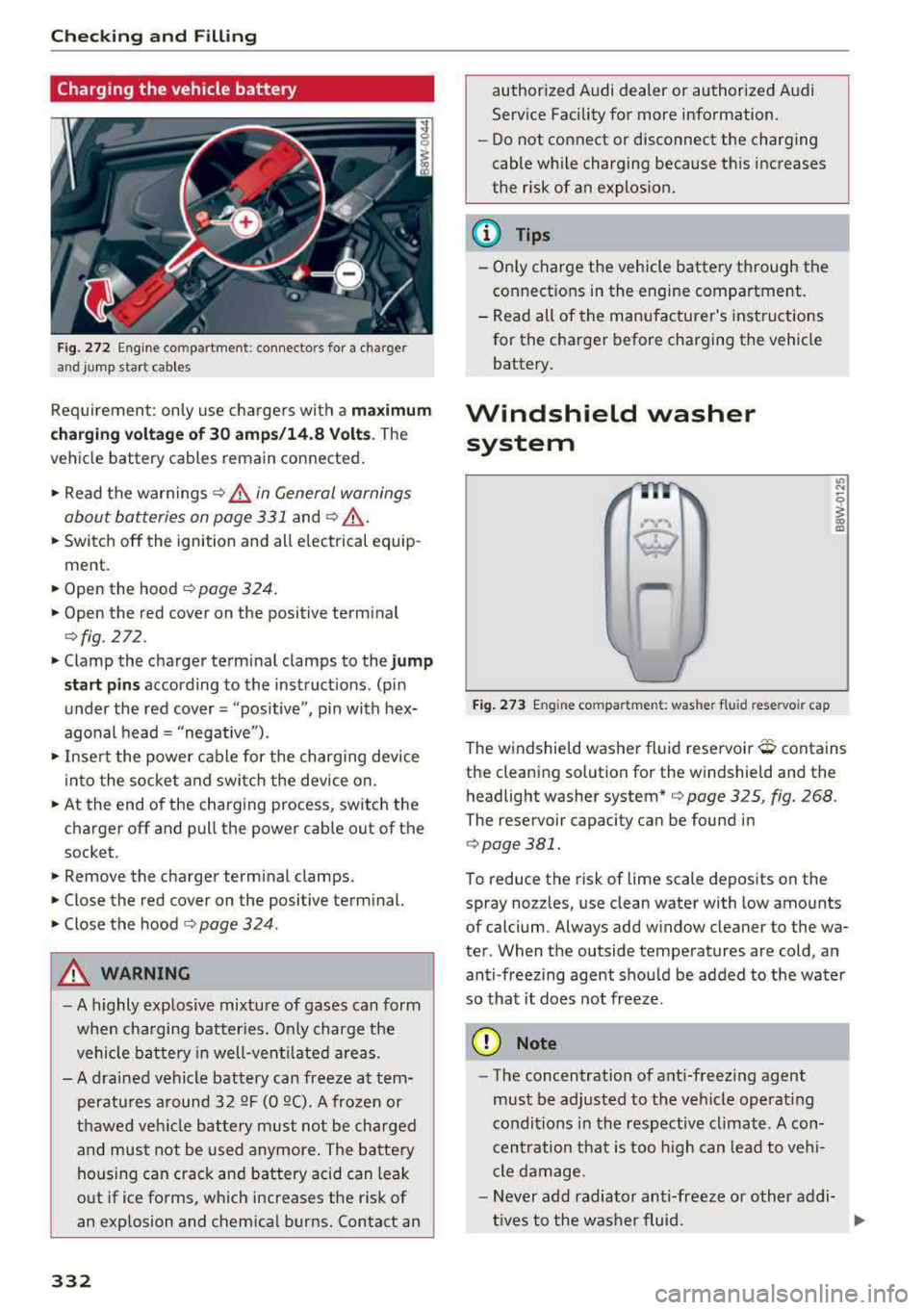
Fig. 272 Engine co mpa rtment : connec tors for a c harger
and jump start cab le s
Req uirement: only use chargers with a m aximum
c hargi ng vo lta ge of 30 amp s/14.8 Volt s.
The
vehicle battery cables remain connected .
.,. Read the warnings c> .&. in General warnings
about batteries on page 331
and c> ,&. .
.,. Switch off the ignition and all electrical equip
ment .
.,. Open the hood 9 page 324 .
.,. Open the red cover on the positive terminal
c>fig. 272 .
.,. Clamp the charger terminal clamps to the jump
s ta rt pin s
according to the instruct ions . (pin
under the red cover = "positive ", p in with hex
agonal head= "negative ") .
.,. Inse rt the powe r cable for the charg ing device
i nto the socke t and switch the dev ice on .
.,. At the end of the charging process , switch the
charger off and pull the power cab le out of the
socket .
.,. Remove the charger terminal clamps.
.,. Close the red cover on the positive terminal.
.,. Close the hood c> page 324 .
A WARNING
-A highly explosive mixtu re of gases can form
when cha rging batter ies. On ly charge the
vehicle batte ry in well-ven tilated areas.
- A drai ned vehicle battery can freeze at tem
peratu res a round 32
QF (0 QC). A froze n or
thawed veh icle bat tery must not be charged
and must not be used anymore. The ba ttery
housing can crac k and battery acid can leak
o ut if ice forms, wh ich increases the r isk of
an exp losion and chemical burns. Contact an
332
author ized Audi dealer or authorized A udi
Service Facility for more information.
- Do not connect or disconnect the charging
cable whi le charging because this increases
the risk of an explos ion.
@ Tips
- Only charge the vehicle battery t hrough the
connect ions in the engine compartme nt.
- Read all of the manufacturer's instructions
for the charger before charging the vehicle
battery.
Windshield washer system
Fi g. 2 7 3 Engine compar tm ent: washer flui d res ervoir cap
The windshield washer fluid reservoir¢ contains
t he cleaning solution for the windshield and th e
headlight washer system *
c> page 325, fig. 268 .
The reservoir capaci ty can be found in
c> page 381.
To reduce the risk of lime scale deposits on the
spray no zzles, use clean water with low amounts
of calcium . Always add w indow cleaner to the wa
ter . When the outside temperatures are cold, an
anti -freezing agent should be added to the water
so that it does not freeze .
(D Note
-The concentration o f ant i-freez ing agent
must be adjusted to the ve hicle operat ing
conditions in the respective climate . A con
cent ration t hat is too high can lead to vehi
cl e damage.
- Never add radiator anti-freeze or other addi
t ives to the washer fluid.
Page 339 of 403

Wheel s
Maximum (permissible)
inflation pressure
means the max imum cold infla
tion pressure to which a t ire may
be inflated . Also called "maxi
mum inflation pressure."
Normal occupant weight
means 150 lbs. (68 k ilograms)
times the number of occupants seated in the vehicle up to the to
tal seating capacity of your vehi
cle .
Occupant distribution
means distribution of occupants
in a vehicle.
Outer d iameter
means the overall diamete r of an
inflated new tire.
Overall width
means the linear distance be
tween the exteriors of the side
walls of an inflated tire , including
elevations due to labeling, deco rations, or protective bands or
ribs .
Ply
means a layer of rubber-coated
para llel cords.
338
Production options we ight
means the combined weight of
those installed regular product ion
options weighing over 5 lbs . (2 .3
kg) in excess of those standard
items which they replace, not pre
viously considered in curb weight or accessory weight , including
heavy duty brakes, ride levelers,
roof rack, heavy duty battery, and
special trim.
Radial ply ti re
means a pneumatic tire in which
the ply cords that extend to the beads are la id at substantially 90
degrees to the centerline of the
tread.
Recommended inflation
pressure
see ¢ page 33 7, Cold tire infla
tion pressure.
Reinforced tire
means a tire designed to operate
at higher loads and at higher in
flation pressures than the corre
sponding standard tire . Rein
forced tires may be identified as
"XL", "xl", "EXTRA LOAD", or "RF"
on the sidewall. ...
Page 374 of 403
a co .... N ,....
N .... 0 0
3 co
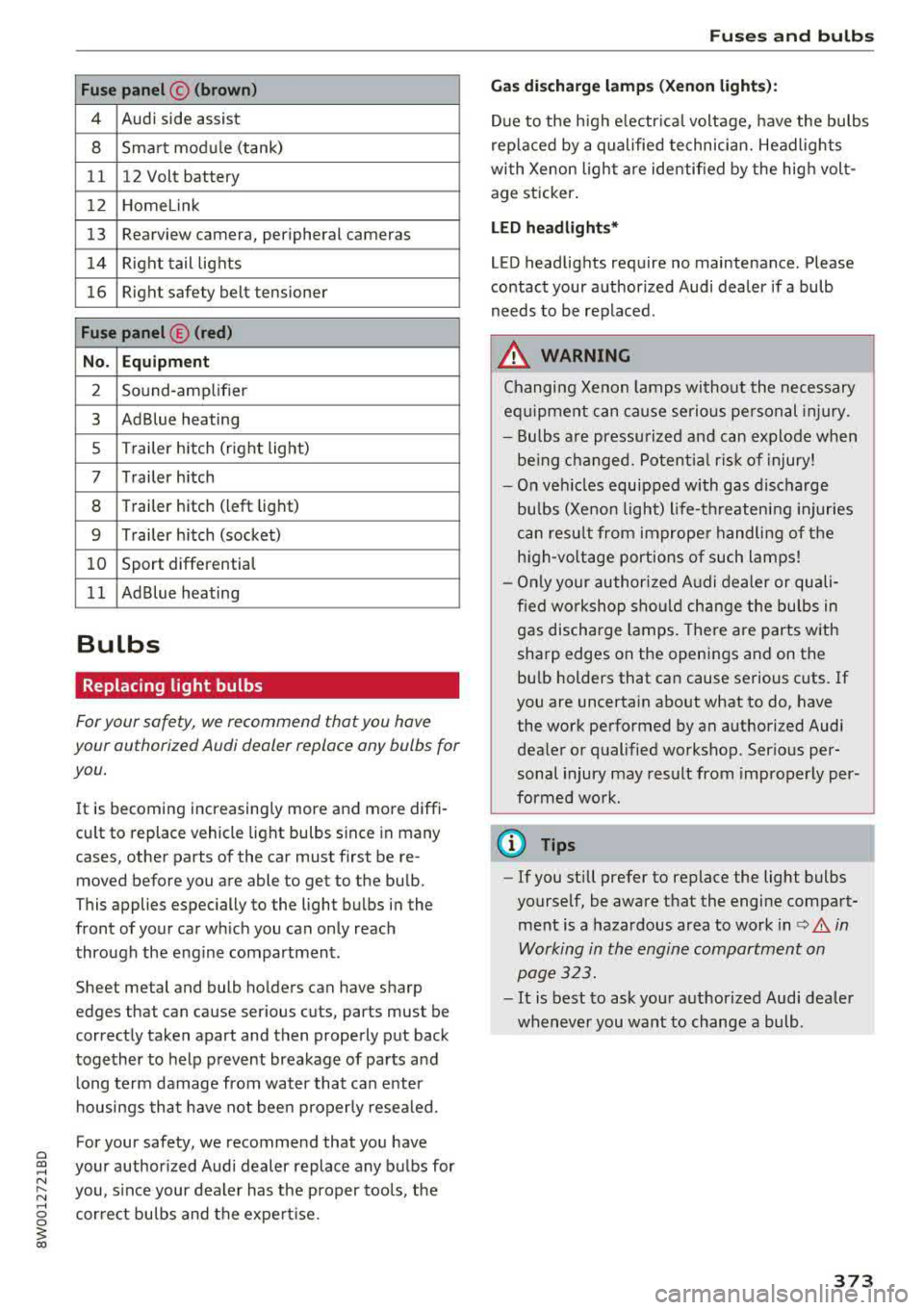
Fuse panel © (brown)
4 Audi side assist
8 Smart module (tank)
11 12 Volt battery
12 Homelink
13 Rearview camera, peripheral cameras
14 Right tail lights
16 Right safety belt tensioner
Fuse panel © (red)
No . Equipment
2 Sound-amp
lifier
3 AdBlue heating
5 Trailer hitch (right light)
7 Trailer h
itch
8 Trailer hitch (left light)
9 Trailer h itch (socket)
10 Sport differential
11 AdBlue heating
Bulbs
Replacing light bulbs
For your safety, we recommend that you have
your authorized Audi dealer replace any bulbs for
you.
It is becoming increasingly more and more diffi
cult to replace vehicle light bulbs since in many
cases, other parts of the car must first be re moved before you are able to get to the bulb.
This applies especially to the light bulbs in the
front of your car which you can only reach
through the engine compartment.
Sheet metal and bulb holders can have sharp
edges that can cause serious cuts, parts must be
correctly taken apart and then properly put back
together to help prevent breakage of parts and
l ong term damage from water that can enter
housings that have not been properly resealed.
For your safety, we recommend that you have
your author ized Audi dealer replace any bulbs for
you, s ince your dealer has the proper tools, the
correct bulbs and the expert ise.
Fuses and bulbs
Gas discharge lamps (Xenon lights) :
Due to the high e lectr ical voltage, have the bulbs
replaced by a qualified technician. Headlights
with Xenon light are identified by the high volt
age sticker .
LED headlights*
LED headlights require no maintenance. Please
contact your authorized Audi dealer if a bulb
needs to be replaced .
.&, WARNING
Changing Xenon lamps without the necessary
equipment can cause serious personal injury.
- Bulbs are pressurized and can explode when
be ing changed. Potential risk of injury!
- On veh icles equipped with gas discharge
bu lbs (Xenon light) life-threatening injuries
can resu lt from improper handling of the
h ig h-vo ltage portions of such lamps!
- Only your authorized Audi dealer or quali
fied workshop should change the bulbs in
gas discharge lamps. There are parts with
sharp edges on the openings and on the
bulb holders that can cause serious cuts. If
you are uncertain about what to do, have the work performed by an authorized Audi
dealer or qualified workshop. Ser ious per
sonal injury may result from improperly per
formed work.
(D Tips
- If you st ill prefer to replace the light bulbs
yourself, be aware that the engine compart ment is a hazardous area to work
in¢ A in
Working in the engine compartment on
page 323.
- It is best to ask your authorized Audi dealer
whenever you want to change a bulb .
373
Page 375 of 403

Emergency situations
Emergency situations
General
This chapter is intended for trained emergency crews and working personnel who have the nec
essary tools and equipment to perform these
operations.
Starting by pushing or
towing
(D Note
Vehicles with an automatic transmission
cannot be started by pushing or towing.
Starting with jumper
cables
If necessary, the engine con be started by con
necting it to the battery of another vehicle.
If the engine should fail to start because of a dis
charged or weak battery, the battery can be con
nected to the battery of
another vehicle, using a
pair of jumper cables to start the engine.
Jumper cables
Use only jumper cables of sufficiently large cross
section
to carry the starter current safely. Refer
to the manufacturer's specifications.
Use only jumper cables with
insulated terminal
clamps which are distinctly marked :
plus(+) cable in most cases colored red
minus(-) cable
in most cases colored black.
A WARNING
Batteries contain electricity, acid, and gas.
Any of these can cause very serious or fatal in
jury. Follow the instructions below for
safe
handling of your vehicle's battery.
-Always shield your eyes and avoid leaning
over the battery whenever possible.
-A dead battery can freeze at temperatures
around 32 °F (0 °C) . If the vehicle battery is
frozen, you must thaw it before connecting
the jump start cables.
If you do not, this in-
374
creases the risk of an explosion and chemi
cal burns. After jump starting the vehicle,
drive to an authorized Audi dealer or author ized Audi Service Facility immediately to
have the vehicle battery checked.
- Do not allow battery acid to contact eyes or
skin . Flush any contacted area with water
immediately.
- Improper use of a booster battery to start a
vehicle may cause an explosion .
- Vehicle batteries generate explosive gases.
Keep sparks, flame and lighted cigarettes
away from batteries.
- Do not try to jump start any vehicle with a
low acid level in the battery.
- The voltage of the booster battery must also
have a 12-Volt rating. The capacity (Ah) of
the booster battery should not be lower
than that of the discharged battery. Use of
batteries of different voltage or substantial
ly different
"Ah" rating may cause an explo
sion and personal injury.
- Never charge a frozen battery. Gas trapped
in the ice may cause an explosion.
- Never charge or use a battery that has been
frozen. The battery case may have be weak
ened.
- Use of batteries of different voltage or sub
stantially different capacity (Ah) rating may
cause an explosion and injury. The capacity (Ah) of the booster battery should not be
lower than that of the discharged battery.
- Before you check anything in the engine
compartment, always read and heed all
WARNINGS
r=:> poge 323.
([) Note
-Applying a higher voltage booster battery
will cause expensive damage to sensitive electronic components, such as control
units, relays, radio, etc.
- There must be no electrical contact between
the vehicles as otherwise current could al
ready start to flow as soon as the positive
(+) terminals are connected.
Page 376 of 403

@ Tips
The discharged battery must be properly con
nected to the vehicle's electrical system .
When jump starting or charg ing the battery,
never connect the negative ground cable to
the battery negative post because the battery
manager system must be able to detect the
battery's state of charge. Always connect the
negative ground cable to the negative ground
post of the battery manager control unit.
Using the jump start
cable
Both jump start cables must be connected in the
correct order!
Fig. 295 Engine compartment: connec tors for jump start
cables and a charger
Fig. 296 Ju mp starting us ing a battery in another vehicle:
@ -providing current, @-drained
The procedure described below for connecting
jumper cables is intended to prov ide a jump start
for your vehicle .
Vehicle with discharged battery
•Turnoff lights and accessories, move the auto
matic transmission* selecto r lever to N (Neu
tral) or P (Par k), and set the park ing brake.
Emergency situations
Connecting the positive cable (red) to the
positive terminal
• Open the red cover on the positive terminal
c:>fig. 295 .
1. Secure one end of the positive cable (red) to
the jump start pin
c:> fig. 296 (D (pin under
the red cover = "posit ive") on the vehicle that
needs to be started @.
2. Secure the other end of the positive cable
(red) to the positive termina l@ on the
bat
tery provid ing the current @.
Connecting the negative cable (black) to the
negative terminal
3. Secure one end of the negative cable (black)
to the nega tive term inal @ on the battery
that is providing the current @.
4. Secure the other end of the negative cable
(black) to the jump start
pin @ (hex head pin
= "negative") on the vehicle that needs to be
started @.
Starting the engine
• Start the engine on the vehicle providing the
jump start @and let it run at idle.
• Now start the engine on the vehicle with the
drained battery @.
• If the engine does not start, stop the starting
procedure after 10 seconds and then repeat it
after approx imately 30 seconds.
• Remove the cables when the engines are run
ning. Remove them in reverse order from the
way they were installed.
• Close the red cover on the positive terminal.
T he battery is vented to the outside to prevent
gases from enter ing the vehicle interior . Make
sure that the jumper clamps are well connected
with their
metal parts in full contact with the
battery terminals.
_& WARNING
-To avoid serious personal injury and damage to the vehicle, heed all warnings and instruc
tions of the jumper cable manufacturer. If in
doubt, call for road service.
-Jumper cables must be long enough so that
the vehicles do not touch .
..,_
375