instrument cluster AUDI S6 2012 User Guide
[x] Cancel search | Manufacturer: AUDI, Model Year: 2012, Model line: S6, Model: AUDI S6 2012Pages: 298, PDF Size: 74.43 MB
Page 70 of 298
68 Warm and cold
(D Note
To avoid damage to the heating e lements
in the seats, do not kneel on the seats or
place heavy loads on a small area of the
seat .
Setup
Applies to vehicles: with four-zone a utomat ic climate con·
trol
The climate control system setup is accessed
through the MMI .
.,. Se lect : ICARI funct ion button> Car sy stem s
control b utton > AC .
Rear cabin settings*
When th is fu nction is selected, all sett ings for
the rear can be adjusted through the climate
control sys tem in the cockpit. The cl imate
con trol sys tem se tt ings cannot be adjusted in
the rea r seat a t the same time. This func tion
switches
off after a certain period of time or
when one of the dials in the cockpit is press
ed .
Auto recirculation*
The sensit ivity level of the au tomatic rec ircu
lation mode can be set at vario us leve ls from
off to sensit ive. The recirculation mode is con
trolled a utomat ica lly. You must p ress the ~
button if fog forms on the windows.
Footwell temperature
You can adju st the footwell temperat ure so
that it is cooler or wa rme r.
AC mode
The strength of the airflow can be adjusted to
light, med ium or strong.
Steering wheel heating
Applies to vehicles: wit h heated stee rin g wheel
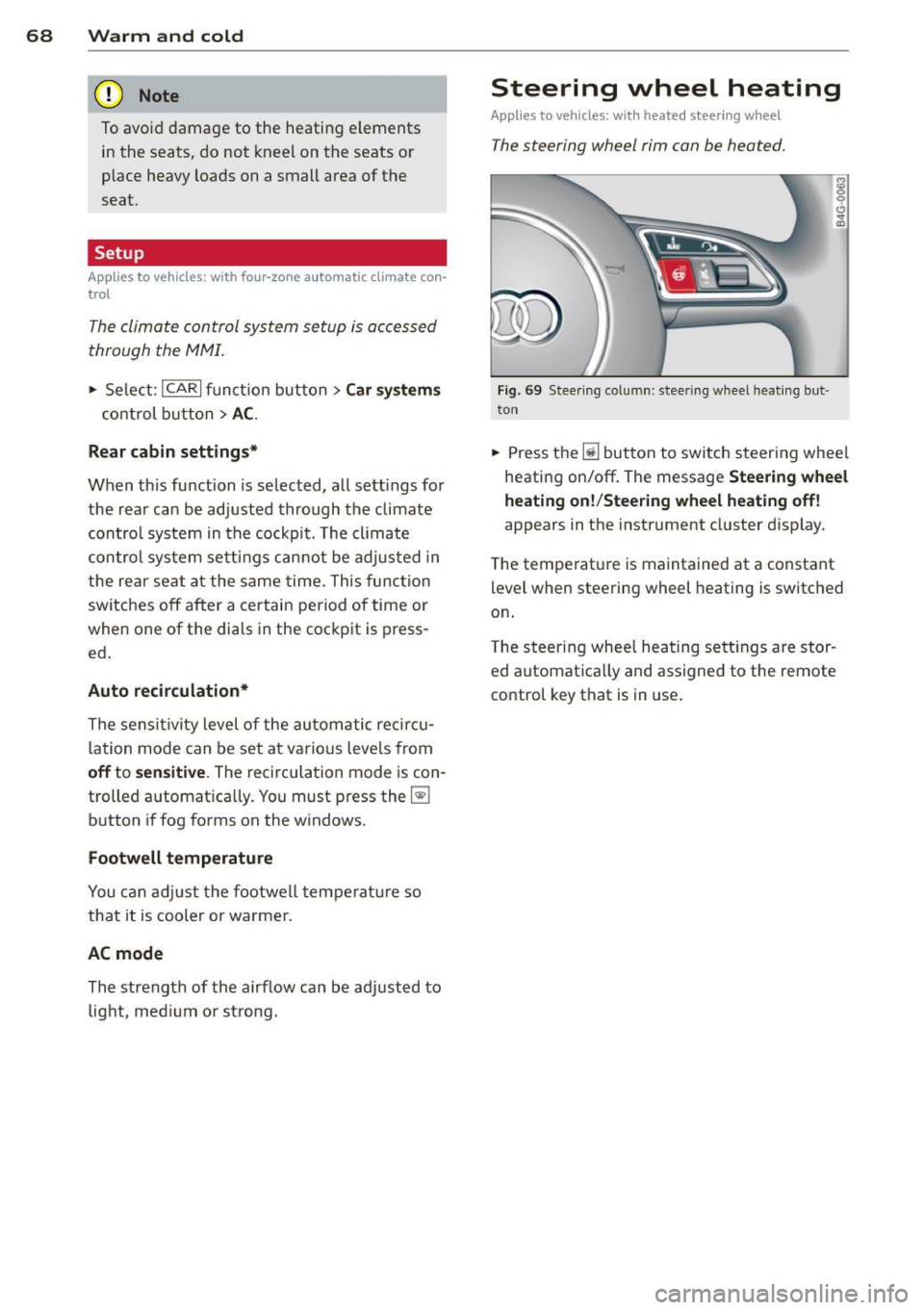
The steering wheel rim can be heated .
Fig. 6 9 Stee ring colu mn: steeri ng wheel hea tin g but ·
ton
.,. Press th e ~ button to switch steering whee l
heati ng on/off . The message
Steering wheel
heating on !/Steering wheel heating off !
appears in the instrument cluster d isplay.
T he temperat ure is maintained at a constant
level when steering wheel heating is switched
on.
T he steering wheel heating se tt ings are stor
ed automat ica lly and assigned to the remote
control key that is in use .
Page 75 of 298
Electromechanical
parking brake
Operation
The electromechanical parking brake replaces
the hand brake.
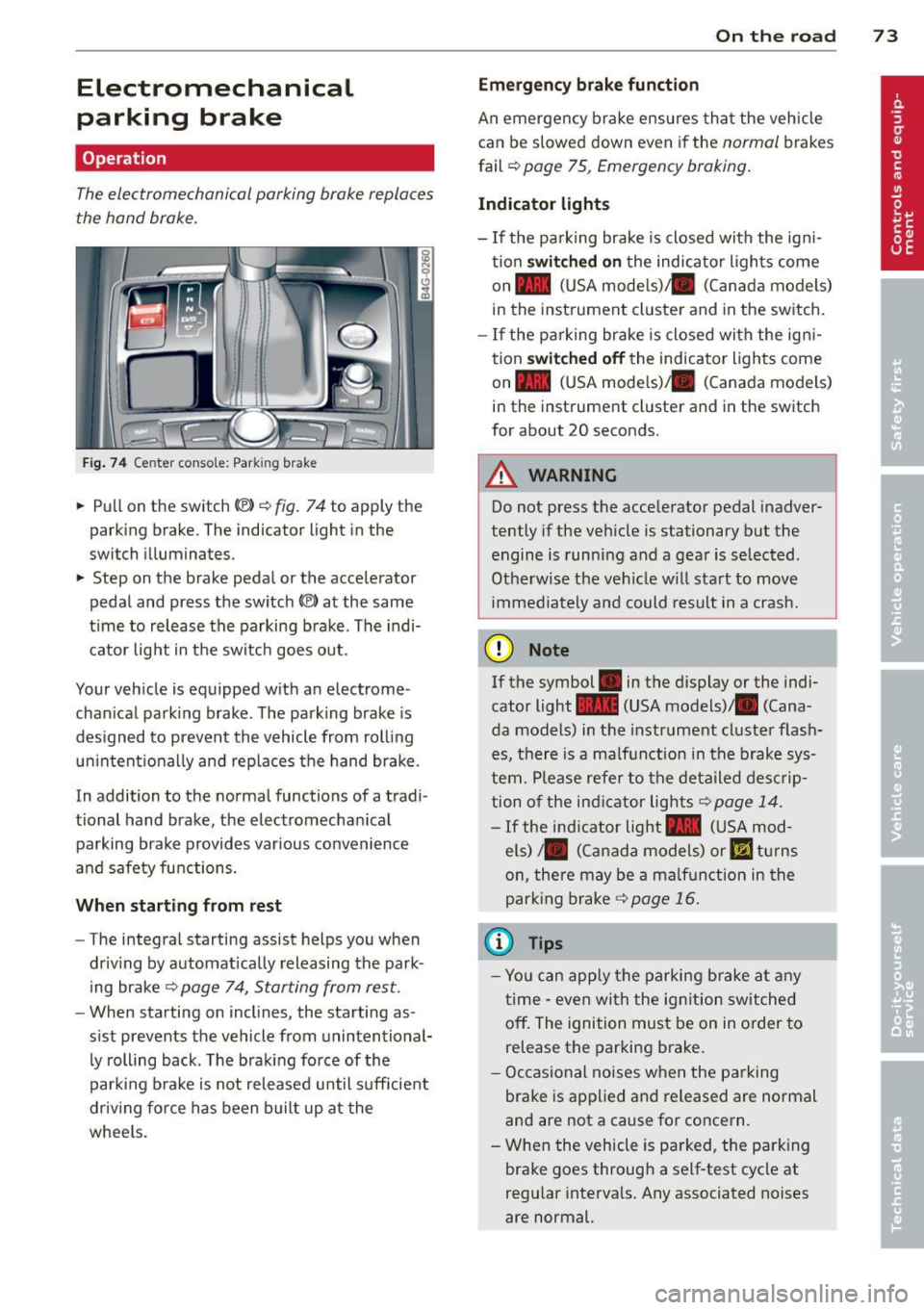
Fig. 74 Center conso le: Park ing brake
.. Pull on the switch<®> Q fig. 74 to apply the
parking brake. The indicator light in the
switch illuminates.
.. Step on the brake pedal or the accelerator
pedal and press the switch
(®) at the same
t ime to release the parking brake. The indi
cator light in the switch goes out.
Your vehicle is equipped with an electrome
chan ical park ing brake . The parking brake is
designed to prevent the vehicle from rolling
un intent ionally and rep laces the hand brake.
In addition to the normal functions of a tradi
tional hand brake, the electromechan ical
parking brake provides var ious convenience
and safety functions.
When starting from rest
-The integral starting assist helps you when
driving by automat ically releasing the park
ing brake ¢
page 74, Starting from rest.
-When starting on inclines, the starting as
sist prevents the vehicle from unintentional
ly rolling back . The braking force of the
parking brake is not released until suff icient
driv ing force has been built up at the
wheels.
On the road 73
Emergency brake function
An emergency brake ensures that the vehicle
can be slowed down even if the
normal brakes
fail ¢
page 75, Emergency braking.
Indicator lights
-If the parking brake is closed with the ign i
tion
switched on the indicator lights come
on - (USA mode ls)/ . (Canada models)
in the instrument cluster and in the switch.
- If the parking brake is closed with the ign i
tion
switched off the indicator lights come
on - (USA mode ls)/ . (Canada models)
in the instrument cluster and in the switch
for about 20 seconds.
A WARNING
Do not press the accelerator pedal inadver
tently if the veh icle is stationary but the
engine is running and a gear is selected .
Otherwise the vehicle w ill start to move
immediately and could result in a crash.
(D Note
If the symbol . in the display or the indi
cator light
1111 (USA models)/ . (Cana
da models) in the instrument cluster flash
es, there is a malf unction in the brake sys
tem. Please refer to the deta iled desc rip
tion of the indicat or lights¢
page 14.
-If the ind icator light - (USA mod-
els)/ . (Canada models) or
I.I turns
on, there may be a ma lfunction in the
parking brake
Q page 16.
(0 Tips
-Yo u can apply the parking brake at any
time -even with the ignition switched
off. The ignition must be on in order to
release the parking brake.
- Occasional noises when the parking
brake is applied and released are normal
and are not a cause for concern .
- When the vehicle is parked, the parking
brake goes through a self-test cycle at
regu lar intervals. Any associated noises
are normal.
Page 78 of 298
76 On the road
Cruise control
Switching on
Applies to vehicles: wit h crui se contro l
The cruise control system makes it possible to
drive at a constant speed starting at 20 mph
(30 km/h).
0
f
~
0
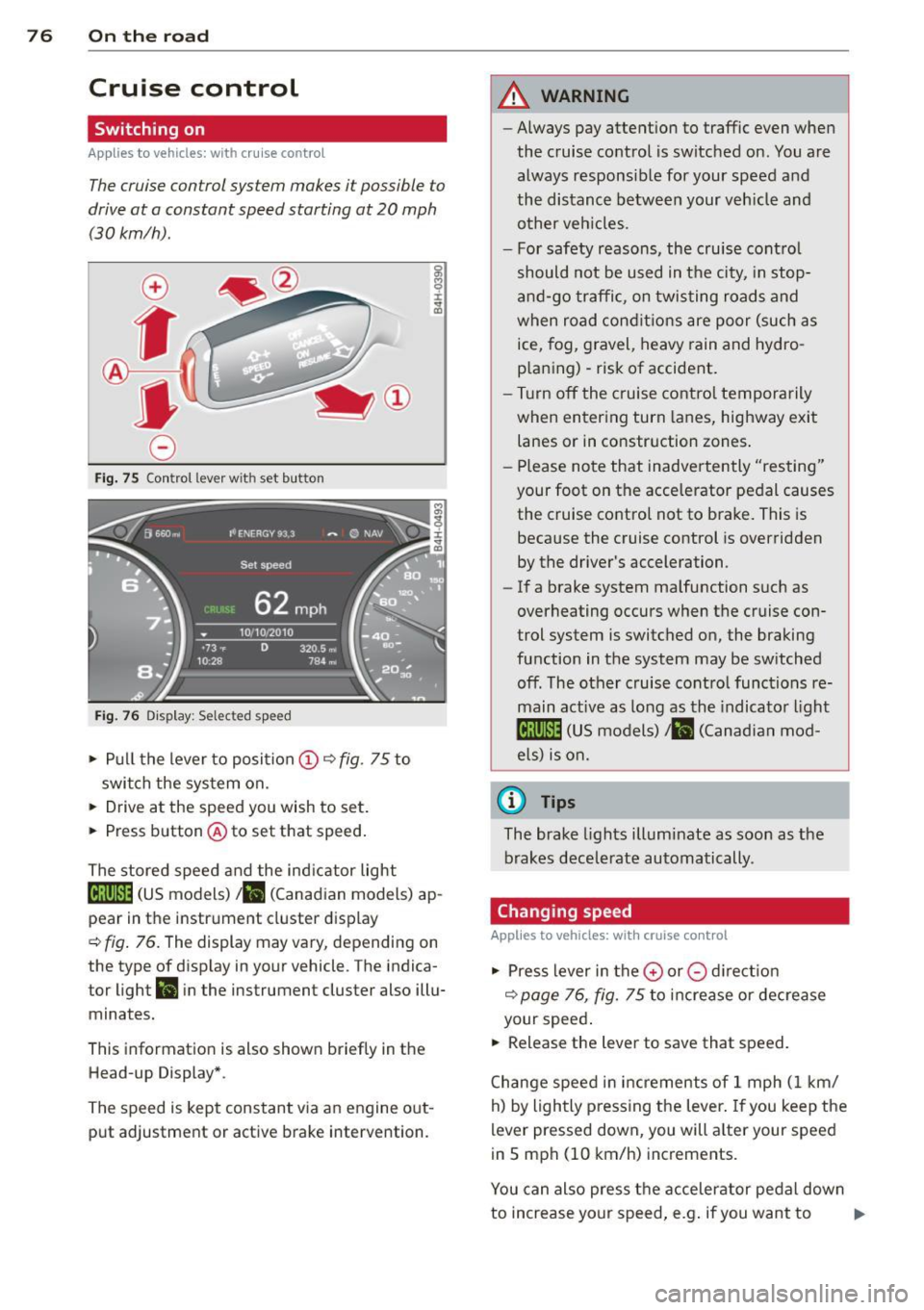
Fig. 75 Control lever with set b utto n
Fig. 76 Display: Selected speed
• Pull the lever to position @~ fig. 75 to
switch the system on.
• Drive at the speed you wish to set.
• Press button @to set that speed.
The stored speed and the indicator light
18;\0~1~ (US models)/ . (Canadian models) ap
pear in the instrument cluster display
~ fig. 76. The display may vary, depending on
the type of display in your vehicle . T he indica
tor light
ll in the instrument cluster also illu
minates.
This information is also shown briefly in the
Head-up Display* .
The speed is kept constant via an engine out
put adjustment or active brake intervention.
A WARNING
-- Always pay attention to traffic even when
the cruise control is switched on. You are always responsible for your speed and
the distance between your vehicle and
other veh icles.
- For safety reasons, the cruise contro l
should not be used in the city, in stop
and-go traffic , on twisting roads and
when road condit ions are poor (such as
ice, fog, gravel, heavy rain and hydro
p laning) - risk of accident.
- Turn off the cruise control temporarily
when entering turn lanes, highway exit
lanes or in construction zones.
- Please note that inadvertently "resting"
your foot on the accelerator pedal causes the cruise control not to brake. This is
because the cruise control is overridden
by the driver's acceleration.
- If a brake system malfunction such as
overheating occurs when the cruise con
trol system is switched on, the braking
function in the system may be switched
off. The other cruise control functions re
main active as long as the indicator light
mmJI (US models)/ . (Canadian mod
els) is on.
(D Tips
The brake lights illuminate as soon as the
brakes decelerate automatically .
Changing speed
Applies to vehicles: w ith cruise co ntrol
• Press lever in the 0 or 0 direct ion
~ page 76, fig. 75 to increase or decrease
your speed .
• Release the lever to save that speed.
Change speed in increments of 1 mph (1 km/
h) by lightly pressing the lever . If you keep the
lever pressed down, you will alter your speed
in 5 mph (10 km/h) increments.
You can also press the accelerator pedal down
to increase your speed, e.g . if you want to .,..
Page 84 of 298
82 Adaptive cruise control and braking guard
@ Tips
-If adaptive cruise contro l is active and
your vehicle does not start dr iving as ex
pected after pulling the lever once, you
can start out aga in by tapp ing the accel
erator pedal.
- If an obstacle is detected when your ve
hicle starts dr iv ing, the system w ill
prompt you to take over
c> page 82.
Your vehicle w ill dr ive more slowly when
starting. This may a lso happen in some
situations when there no obstacle is ap
parent.
Interrupting cruise control
Applies to vehicles: with adaptive cruise control
Requirement: adaptive cruise control must be
switched on.
Overriding cruise control
., To accelerate manually, pull the lever to
ward you into position @~
page 80, fig. 81
and hold it there. The message ACC override
appears . Or
.. press the accelerator peda l.
.. To resume cruise control, release the lever
or take your foot off the accelerator pedal.
Canceling cruise control while driving
.. Move the lever into position @. The mes
sage
ACC standby appears. Or
.. press the brake peda l.
.. To resume the stored speed, move the lever
into position @.
Canceling cruise control when stopped
.. Push the lever away from you into position
· @ . The message
ACC standby appears .
.. To resume cruise control, press the brake
pedal and pull the lever toward you into po
sition @.
A WARNING
Improper use of the adaptive cruise con
trol can cause collisions, othe r acc idents
and serious personal injuries. -
Never resume t he stored speed if the
speed is too high for prevailing road,
traffic or weather conditions.
Prompt for driver intervention
Applies to vehicles: with adaptive cruise control
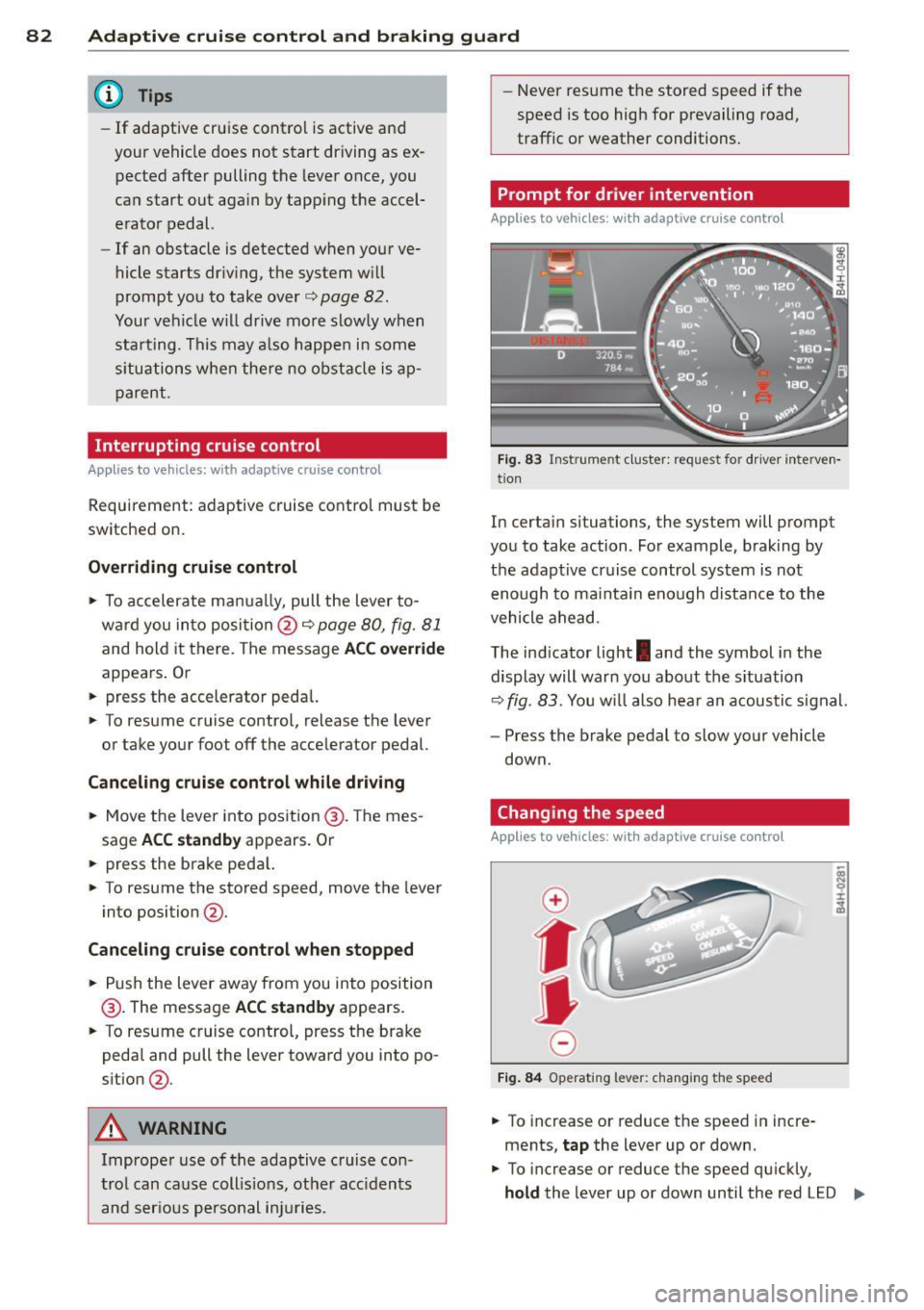
Fig. 83 Instrument cluster: requ est for driv er interve n·
tion
In certa in situations, the system will prompt
you to take action . For example, braking by
the adaptive cruise control system is not enough to mainta in enough distance to the
vehicle ahead.
The indicator light
I and the symbol in the
display will warn you about the situation
~ fig. 83. You wi ll also hear an acoustic signal.
- Press the brake pedal to slow your vehicle
down.
Changing the speed
Applies to vehicles: with adaptive cruise control
0
f
jJ
0
Fig. 84 Operating lever: changing the speed
.. To increase or reduce the speed in incre
ments,
tap the lever up or down.
.. To increase or reduce the speed qu ickly,
hold the lever up or down until the red LED ..,.
Page 85 of 298
Adaptive cruise control and braking guard 83
@ reaches the desired speed ¢ page 80,
fig . 82.
Setting the distance and driving
program
App lies to vehicles: with adaptive cruise control
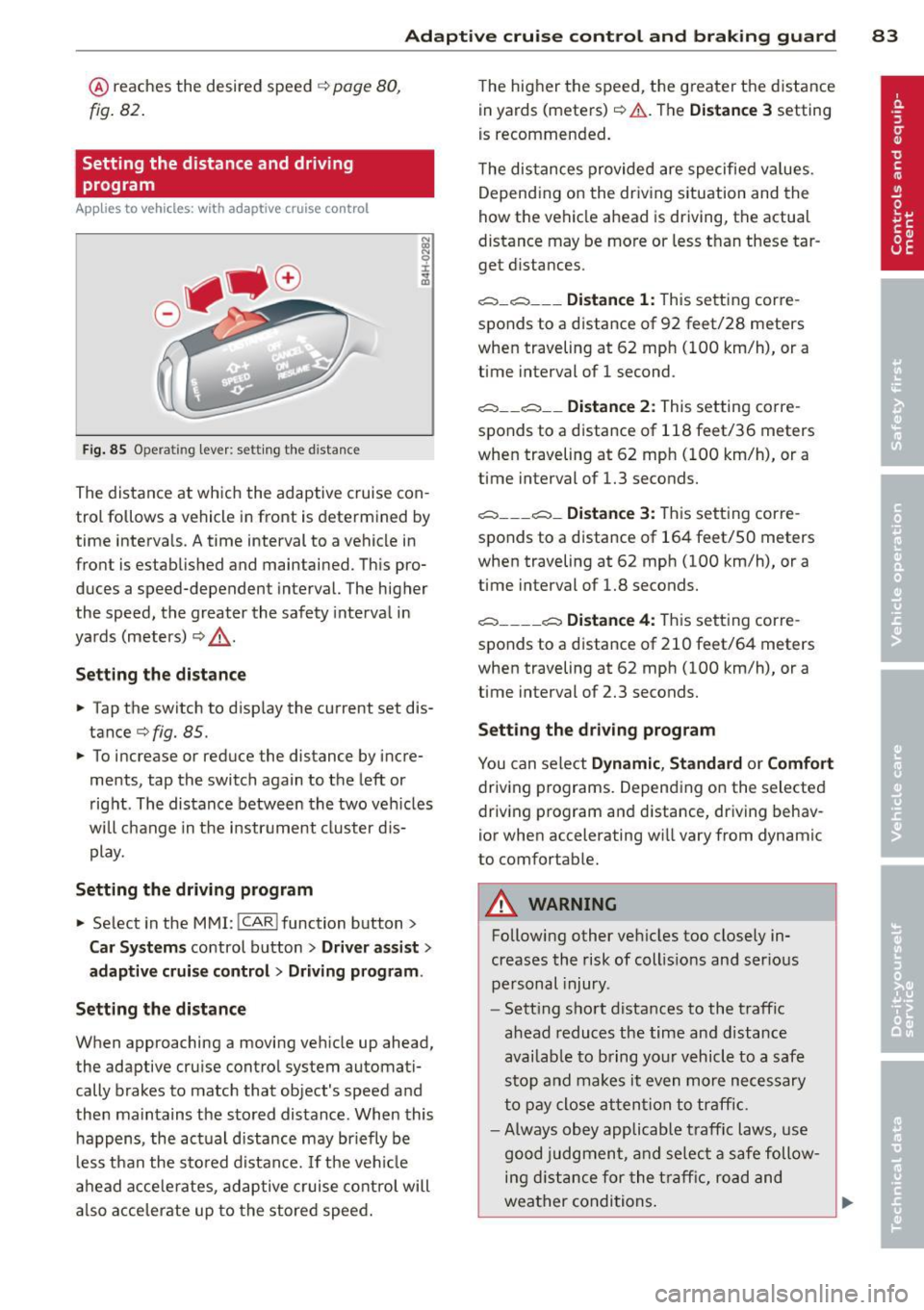
Fig. 85 Opera tin g le ve r: se tt ing th e distanc e
The distance at wh ich the adaptive cruise con
trol fo llows a vehicle in front is determined by
time intervals. A time interval to a vehicle in
front is estab lished and maintained. This pro
duces a speed-dependent interval. The higher
the speed, the greater the safety interval in
yards (meters) ¢&, .
Setting the distance
.. Tap the switch to display the current set dis
tance¢
fig. 85 .
.. To increase or reduce the distance by incre
ments , tap the switch again to the left or
right . The distance between the two vehicles
will change in the instrument cluster dis
play.
Setting the driving program
.. Select in the MMI: !CAR I function button>
Car Systems control button > Driver assist >
adaptive cruise control > Driving program .
Setting the distance
When approaching a moving vehicle up ahead,
the adaptive cruise control system automati
cally brakes to match that object's speed and
then maintains the stored distance . When this
happens , the actual distance may briefly be
less than the stored distance. If the vehicle
ahead accelerates, adaptive cruise control will
also accelerate up to the stored speed. The
higher the speed , the greater the d istance
in yards (meters) ¢&,. .The
Distance 3 setting
is recommended.
The distances provided are specified values .
Depending on the driving situation and the
how the vehicle ahead is driving, the actual
distance may be more or less than these tar
get distances .
c=::,_c=::, ___ Distance 1: This setting corre -
sponds to a distance of 92 feet/28 meters
when traveling at 62 mph (100 km/h), or a
time interval of 1 second .
c=::, __ c=::, __ Distance 2: This setting corre
sponds to a distance of 118 feet/36 meters
when traveling at 62 mph (100 km/h), or a
time interval of 1.3 seconds.
c=::, ___ c=::,_ Distance 3: This setting corre-
sponds to a distance of 164 feet/SO meters
when traveling at 62 mph (100 km/h), or a
time interval of 1.8 seconds.
c=::, ____ c=::, Distance 4: This setting corre-
sponds to a distance of 210 feet/64 meters
when traveling at 62 mph (100 km/h), or a
time interval of 2.3 seconds .
Setting the driving program
You can select Dynamic , Standard or Comfort
driving programs. Depending on the selected
driving program and distance, driving behav
ior when accelerating wi ll vary from dynamic
to comfortable.
A WARNING
Following other vehicles too closely in
creases the risk of collis ions and ser ious
personal injury .
- Setting short distances to the traffic
ahead reduces the time and distance
availab le to bring your vehicle to a safe
stop and makes it even more necessary
to pay close attention to traffic.
-
- Always obey applicable traffic laws, use
good judgment, and select a safe follow
ing distance for the traffic, road and
weather conditions.
Page 95 of 298
right of your travel lane, depending on wheth
er you driv e in the center of your lane or closer
to the edge .
I f yo u drive in narrow lanes, s ide ass ist's de
tection area may a lso include other lanes -es
pecia lly if you tend to drive on the edge of
your lane¢
fig. 95. Under these condit ions,
ve hicles can also be detected that are two
lanes away, and side assist then could sw itch
between the informat ional and warn ing stage
sig nals .
When driving in very w ide lanes, vehicles in
the adjacent lane may not be detected be
cause they are not inside the detection area .
Notes
Messages in instrument cluster display
Applies to vehicles: with side assist
If side assist turns off automatically, the indi
cator light on the button wi ll go out and you
will see a message in the instrument cl uster
d isplay:
Aud i side a ssist : not availab le. s en sors
blocked
T he side assist sensors are built into the rear
bumper on the left and right (not visible on
the outside) ¢
page 87, fig. 87. To ensure that
you do not adversely affect the way side assist functions, foreign objects (such as stickers o r
b icycle racks) shou ld not be attached to the
a rea on the rear bumper where the sensors
a re loca ted.
If side ass ist func tions a re ad
versely affected, yo u will see this message in
the instrument cluster display. Remove any
thing that may be blocking the sensors .
If no vehicle is detected for a longer period of
time while driving, side assis t will a lso switch
off a utomatica lly.
Audi side as sist currently not available
If there is a tempora ry problem (such as the
veh icle's battery charge being low), s ide ass ist
cannot be activated tempo rarily.
Audi side a ssis t 93
Audi side assist: system fault
Have the system checked by an author ized Au
di dealer or qualified workshop .
Audi side assist: not available when
to wing
T he radar sensor's view is limited when tow
ing a trai ler . F or vehicles with a facto ry instal
led towing hitch or a trailer hitch that was in
stalled later according to factory specifica
tions, side assist is automatically deactivated
a s soon as the electrical connection to the
trailer 's electrical socket is made, and this sta
tus message appears in the instrument clus
ter display . Deactivation cannot be guaran
teed when using a ret rofitted towing hitch
that was
not installed acco rd ing to facto ry
spe cifica tions.
Safety tips
Applies to vehicles: with side assist
T he side assist detection may be limited when
driving around narrow street corners, on hi lly
streets, and under poor weather conditions.
It is possible that the radar sensors may a lso
detect other objects, s uch as high or stag
gered guardrails .
S ide assist does not measure act ual lane
width. The system assumes a fixed lane width.
Detection in the left and right lanes is based
on this ass umed lane width . When driving on
narrow roads or when driving to the left or
right of the center of a travel lane, it is poss i
ble that vehicles will be detected that are
not
in the lane next to the lane you are using .
A WARNING
-Improper reliance on the side assist sys
tem can cause coll is ions and serio us pe r
sonal injury:
- Never rely on ly on side assist when
changing lanes .
- Always check rear view mirrors to make
sure that it is safe to change lanes.
- Side assist cannot detect all vehicles un-
der all conditions- danger of accident!
~
Page 99 of 298

Night vision assistant
Night vision assistant
with detected pedestrian marking
Description
App lies to vehicles: with night v isio n assistant
Fig . 97 D isplay: n ight vision ass istant
"Night v is ion assistant with pedestrian detec
tion" uses an infrared camera to monitor the
area in front of your vehicle at night. Within
the limits of the system, it can display objects
up to about 1000 feet (300 meters) away. The
heat image of a pedestrian detected by the
camera is shown in the instrument cluster dis
play
Q fig . 97 . Warm areas appear lighter and
cold areas appear darker .
Pedestrian detection
Applies to vehicles: with n ig ht v ision ass istant
F ig. 98 Display : yellow pedest rian mark in g
Night vision assistant 97
Fig. 99 Display: symbol when infrared image is not
visible
Night vision assistant can detect pedestrians
that are between about 50 and 300 feet (15
and 90 meters) in front of the vehicle, under
ideal conditions . If a pedestrian is detected
when it is dark outside and the vehicle head
lights are switched on, the pedestrian is high
l ighted in yellow
Q fig . 98, Q page 98, Gen
eral information .
If another display such as
navigation replaces the image from the night
vision assistant , the symbo l~,, appears in a
tab
r::',> fig . 99.
(D Tips
If the night vision assistant image does
not appear when the system is switched
on, you can access it with the buttons on
the m ultifunction steering wheel
¢pa ge 24.
Page 105 of 298

N -N eutr al
The transmission is in neutra l in this position .
Shift to this posit ion for standing with the
brakes applied
¢ &. in Driving the automatic
transmission on page 101.
When the veh icle is stationary or at speeds
be low 3 mph (5 km/h) , you must always apply
the footbrake before and while moving the
lever out of
N.
D /S -Normal position for dr iving forward
I n the D /S position, the transmission can be
operated e ither in the normal D mode or in
the S sport mode. To select the 5 sport mode,
pu ll the se lector lever back briefly . Pulling the
l ever back again will select the normal D
mode. The instrument cluster display shows
the selected driving mode.
In the
no rmal mode D , the transmission auto
matica lly selects the best gear ratio. It de
pends on engine load, veh icle speed and the
dynamic control program (DRP).
Select the
s port mode S for sporty driving .
The vehicle makes full use of the engine's
power. S hifting is more noticeable when accel
erating.
When the veh icle is stationary or at speeds
be low 3 mph (5 km/h), you must always apply
the foot brake before and while moving the lever to
D /S out of N .
In certain circumstances it may be advanta
geous to temporarily switch to the manual
shift program to manually select gear ratios
to match specif ic driving conditions
¢ page 105.
A WARNING
Read and follow alt WARNI NGS ¢ A in
Driving the automatic transmission on
page 101.
(D Note
-
Coast ing downh ill with the transmission in
N and the engine not runn ing will result in
Automatic Tra nsmi ssi on 10 3
damage to the automatic transmission
and possib ly the cata lytic converter.
Automatic Shift Lock (ASL)
Applies to veh icles: w ith mult itronic
The Automatic Shift Lock safeguards you
against accidentally shifting into a forward or
the reverse gear and causing the vehicle to
move unintentionally.
0, N 0 0
0
a1i
) ( )
Fi g. 107 Shi ft ga te: selector leve r lock pos it ions and
i n te rlock bu tton highligh ted
The selector lever lock is re leased as follows:
.. Tu rn the igni tion on.
.. Step on the brake pedal.
At the same time
press and hold the inte rlock bu tton on the
side of the gear selector knob
Q fig. 107
with your thumb until yo u have moved the
selector lever to the desired posit ion .
Automatic selector leve r lock
The selector lever is locked in the P and N po
s itions when the ig nition is tu rned on. To
move t he lever from these positions the driver
must depress the brake peda l. As a reminder
to the driver, the following warning appears in
the instrument cluster display when the selec
tor is in
P and N :
When stationar y apply footbrake while se
lecting gear
A time delay element p reven ts the selector
lever from locking when it is moved through
the
N position (going from R to 0 /5 ). The
locking element wi ll lock the se lector lever if
the lever is left in N (Neutral) for more than approximately 1 second, w ithout the brake
pedal being pressed .
Page 110 of 298
108 Automatic Transmission
-If you must g et out of the vehicle, move
the selector lever securely into the P po
sition and apply the parking brake f irmly.
-If the engine must remain running, never
have any driving position engaged when
checking under the hood. Make sure the
selector lever has securely engaged and
is locked in P with the parking brake
firmly set
r:!;> page 214, Engine compart
ment.
Otherwise, any increase in engine
speed may set the vehicle in motion,
even with the parking brake applied.
Selector lever posit ions
Appl ies to vehicles: with tiptronic
This section describes the selector lever posi
tions and driving ranges.
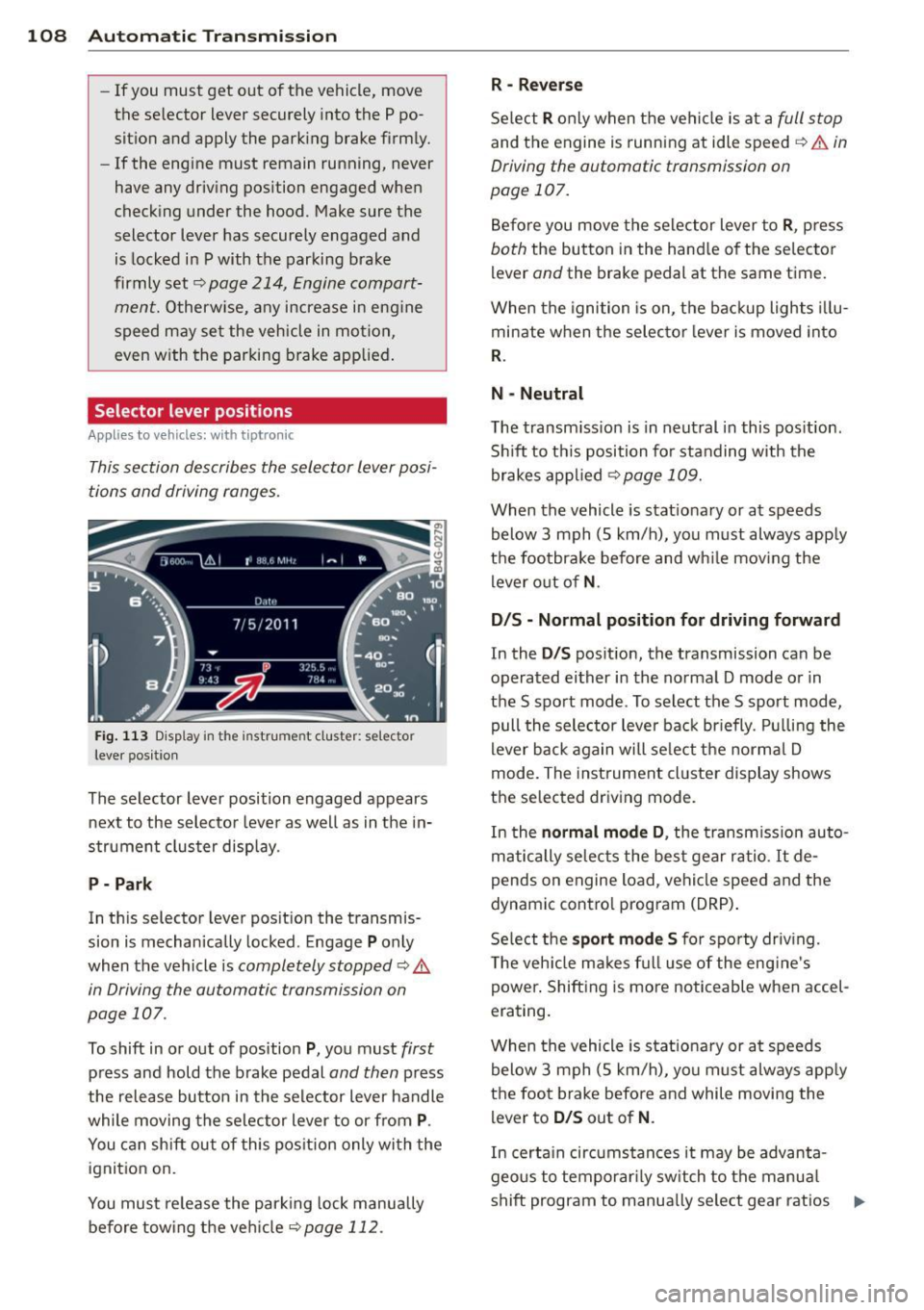
Fig. 113 Display in the instrume nt cluster: se lector
lever pos itio n
The selector lever position engaged appears
next to the selector lever as well as in the in
strument cluster display.
P - Park
In this selecto r lever position the transmis
sion is mechanically locked . Engage
P only
when the vehicle is
completely stopped ¢ A
in Driving the automatic transmission on
page 107 .
To shift in or out of position P, you must first
press and hold the brake pedal and then press
the release button in the selector lever handle
while moving the selector lever to or from
P.
You can shift out of this position only with the
ignition on.
You must release the parking lock manually
before towing the vehicle
<:!;>page 112.
R -Reverse
Select R only when the vehicle is at a full stop
and the engine is running at idle speed r:!;> ,& in
Driving the automatic transmission on
page 107.
Before you move the selector lever to R, press
both the button in the handle of the selector
l ever
and the brake pedal at the same time.
When the ignition is on, the backup lights illu
minate when the selector lever is moved into
R.
N - Neutral
The transmission is in neutral in this position .
Shift to this position for standing with the
brakes applied
<:!;>page 109.
When the vehicle is stationary or at speeds
below 3 mph (5 km/h), you must always apply
the footbrake before and while moving the
lever out of
N.
D/S - Normal position for driving forward
In the D/S position, the transmission can be
operated either in the normal D mode or in
the S sport mode . To select the S sport mode,
pull the selector lever back briefly. Pulling the
lever back again will select the normal D
mode. The instrument cluster display shows
the selected driving mode.
In the
normal mode D , the transmission auto
matically selects the best gear ratio.
It de
p ends on engine load, vehicle speed and the
dynamic control program (DRP).
Select the
sport mode S for sporty driving.
The vehicle makes full use of the engine's
power. Shifting is more noticeable when accel
erating.
When the vehicle is stationary or at speeds
below 3 mph (5 km/h), you must always apply
the foot brake before and while moving the
lever to
D/S out of N .
In certain circumstances it may be advanta
geous to temporarily switch to the manual
shift program to manually select gear ratios .,..
Page 111 of 298

to match specific driving conditions
¢page 110.
A WARNING
Read and follow all WARNINGS ¢.& in
Driving the automatic transmission on
page 107.
(D Note
Coasting downhill with the transmission in
N and the engine not running will resu lt in
damage to the automatic transmiss ion
and possibly the catalytic converter.
Automatic Shift Lock (ASL)
Appl ies to vehicles: with tiptro nic
The Automatic Shift Lock safeguards you
against accidentally shifting into a forward or
the reverse gear and causing the vehicle to
move unintentionally .
I
Fig. 114 Shift gate selector lever lock pos itions and
inte rlock butto n highlighted
The selector lever lock is released as follows :
• Turn the ignition on.
• Step on the brake peda l.
At the same time
press and hold the interlock button on the
side of the gear selector knob¢
fig. 114
with your thumb until you have moved the
selector lever to the desired position .
Automatic selector lever lock
"' N 0 0 (!)
cb
The selector lever is locked in the P and N po
sitions when the ignition is turned on. To
move the lever from these positions the driver
must depress the brake pedal. As a reminder
to the driver, the following warning appears in
Automatic Transmission 109
the instrument cluster display when the selec
tor is in
P and N :
When stationary apply footbrake while se
lecting gear
A time delay element prevents the selector
lever from locking when it is moved through
the
N posi tion (going from R to D/S ). The
locking element will lock the selector lever if
the lever is left in N (Neutral) for more than
approximately 1 second, without the brake
pedal being pressed .
At speeds above abo ut 3 mph (5 km/h) the
Automatic Shift Lock is automatically deacti
vated in the
N position .
Interlock button
The lock button on the selecto r lever prevents
the lever from being accidentally shifted into
certain positions. Pressing this button deacti
vates the selector lever lock. Depending on
the direction of the shift, the selector lever
locks at different positions . The positions are
highlighted in the illustration¢
fig. 114.
Kick-down
App lies to vehicles: wit h tiptro ni c
The kick-down feature allows the vehicle to
generate maximum acceleration .
When you press the accelerator pedal beyond
the resistance point that is reached at full
throttle, the transmission will select a lower
gear ratio based on vehicle speed and engine
RPM. The engine RPM will be controlled to
produce maximum vehicle acceleration as
long as you continue to press the accelerator
pedal beyond this resistance point .
_&. WARNING
Be careful when using the kick-down fea
ture on slippery roads. Rapid acceleration
may cause the vehicle to skid .
-